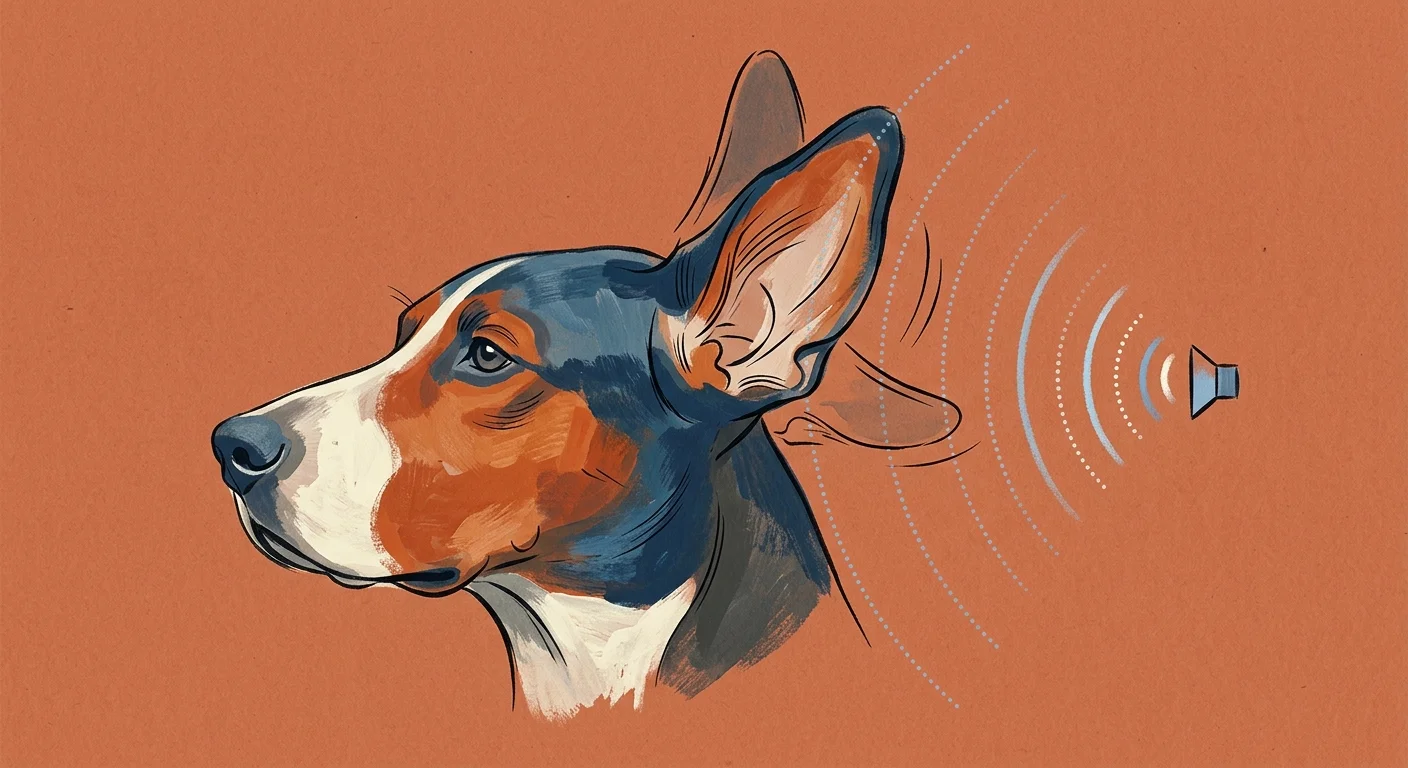
Locating the Sound: Ear Flaps and Auditory Pinpointing
Beyond visual clearing and mental processing, the head tilt serves a highly specialized auditory function. A dog’s hearing capabilities far exceed our own, allowing them to detect high-frequency pitches and faint rustlings that human ears cannot register. This heightened sense of hearing is supported by a complex and flexible muscular network.
While human ears remain mostly stationary on the sides of our heads, dogs possess approximately 18 independent muscles controlling their ear canals and pinnae (the visible ear flaps). This muscular array allows them to independently rotate, lower, raise, and flatten their ears to act like living radar dishes, aggressively capturing acoustic information from their immediate environment.
When you speak or make a sudden noise, your dog’s brain rapidly attempts to calculate the exact origin point of the sound. Sound waves travel through the air and strike each ear drum at fractionally different times. The canine brain processes this minuscule time-of-arrival difference to accurately determine the horizontal direction of the noise. If the sound hits the right ear just a fraction of a millisecond before the left, the dog inherently knows the source is located to their right side.
However, calculating vertical elevation is mathematically more difficult for the mammalian brain. When a sound originates from directly in front of the dog, the acoustic waves strike both ears simultaneously, offering very little data regarding the height of the noise. To gather more precise spatial data, the dog will instinctively tilt their head.
By shifting the horizontal axis of their ears into a slanted position, the dog intentionally alters the moment the sound waves arrive at each ear. This slight positional adjustment provides their brain with the exact geometric data needed to pinpoint the source of the noise. If you notice your dog tilting their head intensely when you speak in an unusually high-pitched voice, they are utilizing this acoustic technique to map the strange sound.