Understanding Trust Signals Versus Appeasement Signals
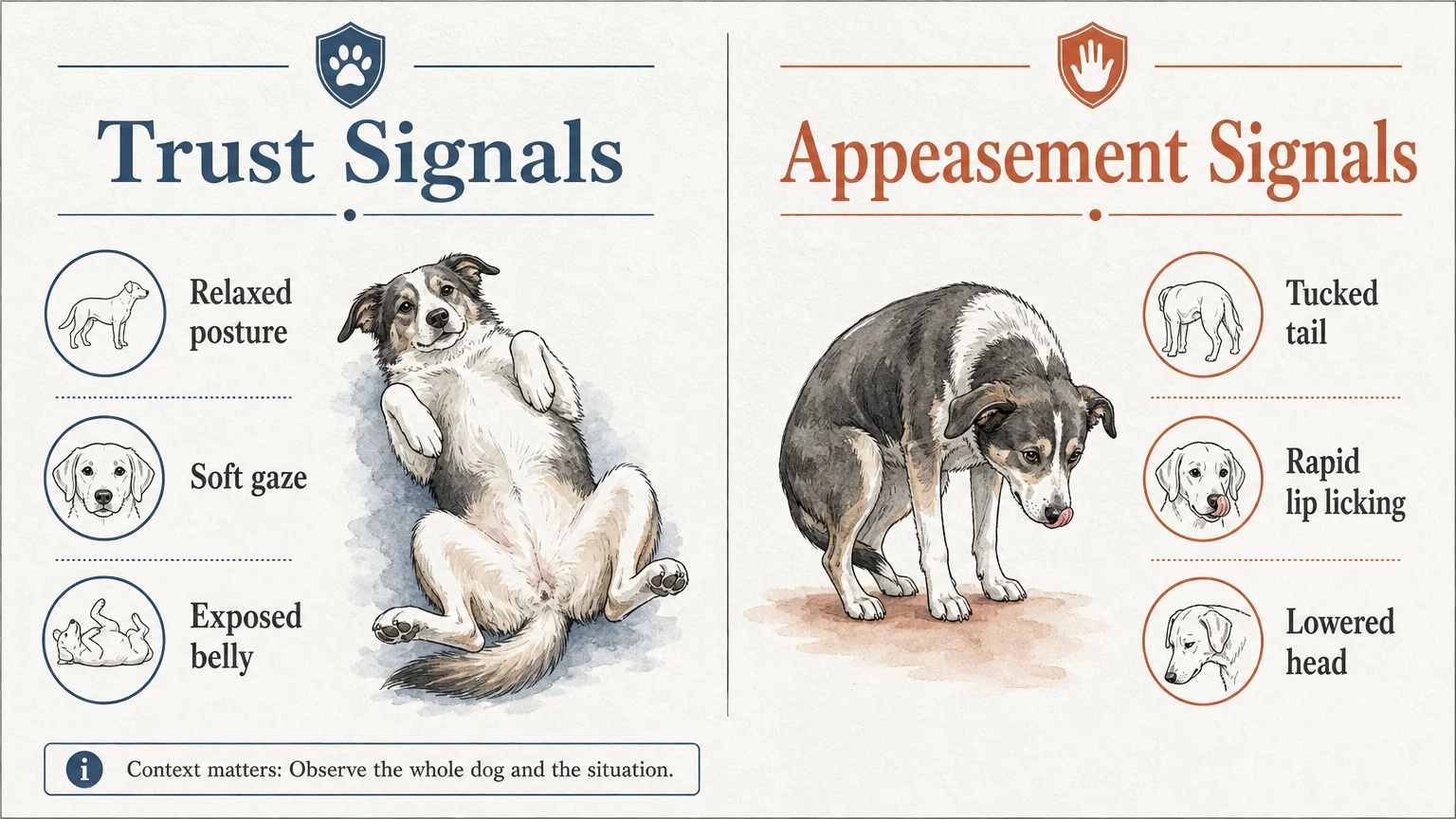
Sometimes, what looks like trust or affection is actually a dog trying to defuse a highly stressful situation. These are known as appeasement or calming signals. Understanding the nuanced difference is crucial for accurately reading your dog’s emotional state and responding appropriately.
| Behavior | Trust Signal Interpretation | Appeasement Signal Interpretation |
|---|---|---|
| Eye Contact | Soft, relaxed gaze; eyelids slightly heavy; steady but calm. | “Whale eye” (showing the whites of the eyes); rapid blinking; actively looking away. |
| Rolling Over | Body is loose and floppy; legs are relaxed and splayed; mouth is open. | Body is stiff and frozen; tail is tightly tucked; lips are pulled back tightly. |
| Licking | Gentle, deliberate kisses offered during calm moments of mutual connection. | Frantic, obsessive licking; rapid lip-licking when no food is present. |
| Posture | Loose, curved spine; leaning comfortably and heavily into your physical space. | Crouching low to the ground; trembling; shifting physical weight backward. |

Worth Keeping in Mind
Even the strongest and most secure bonds can experience moments of stress or misunderstanding. Here are a few specific scenarios where your dog’s standard trust signals might temporarily look different:
- During veterinary visits: The clinical smells, slippery floors, and strange physical handling at a vet clinic can cause even the most confident dog to revert to fearful body language. This does not mean they have lost trust in you; they are simply overwhelmed by the environmental stimuli.
- Adjusting to a new home: If you have recently moved to a new house or apartment, your dog’s baseline of security has been severely disrupted. They may pace, vocalize, or struggle to settle into vulnerable sleeping positions until they learn the new environmental routines and sounds.
- The decompression phase: According to American Kennel Club guidelines, newly adopted rescue dogs require significant time to decompress in a new environment. It generally takes three days for a dog to stop feeling entirely overwhelmed, three weeks to learn the daily routine, and three months to truly feel at home. Do not expect immediate signs of deep trust from a new adoption.
- Navigating the senior years: As dogs age, they frequently lose their hearing or vision. A senior dog might startle much more easily or become surprisingly defensive of their personal space. This is not a loss of emotional trust, but a natural physical result of feeling more vulnerable. You can adapt by approaching them more heavily on your feet or using stronger scent cues before touching them.