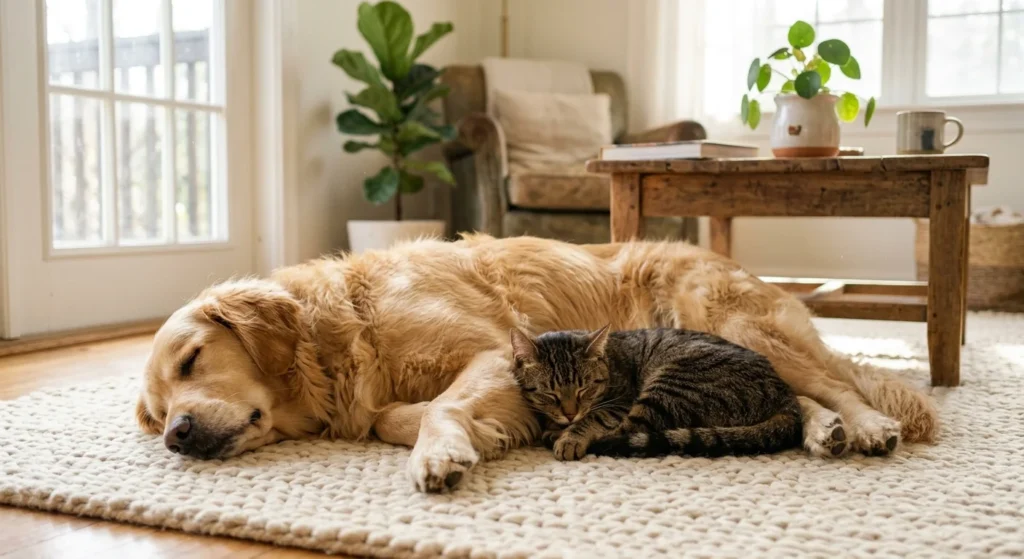
Bringing a dog into a home that already has a feline resident does not have to end in shredded curtains and nonstop barking. The secret to a peaceful multi-pet household often comes down to choosing the right canine companion. While any dog requires carefully managed introductions, certain breeds possess natural traits that make coexistence much easier. Dogs with low prey drives, adaptable temperaments, and easygoing personalities are far more likely to see a cat as a family member rather than a target to chase. Whether you want a large, goofy playmate or a small, affectionate lap dog, you can find a breed perfectly suited to share the couch with your feline friend.
The Bigger Picture
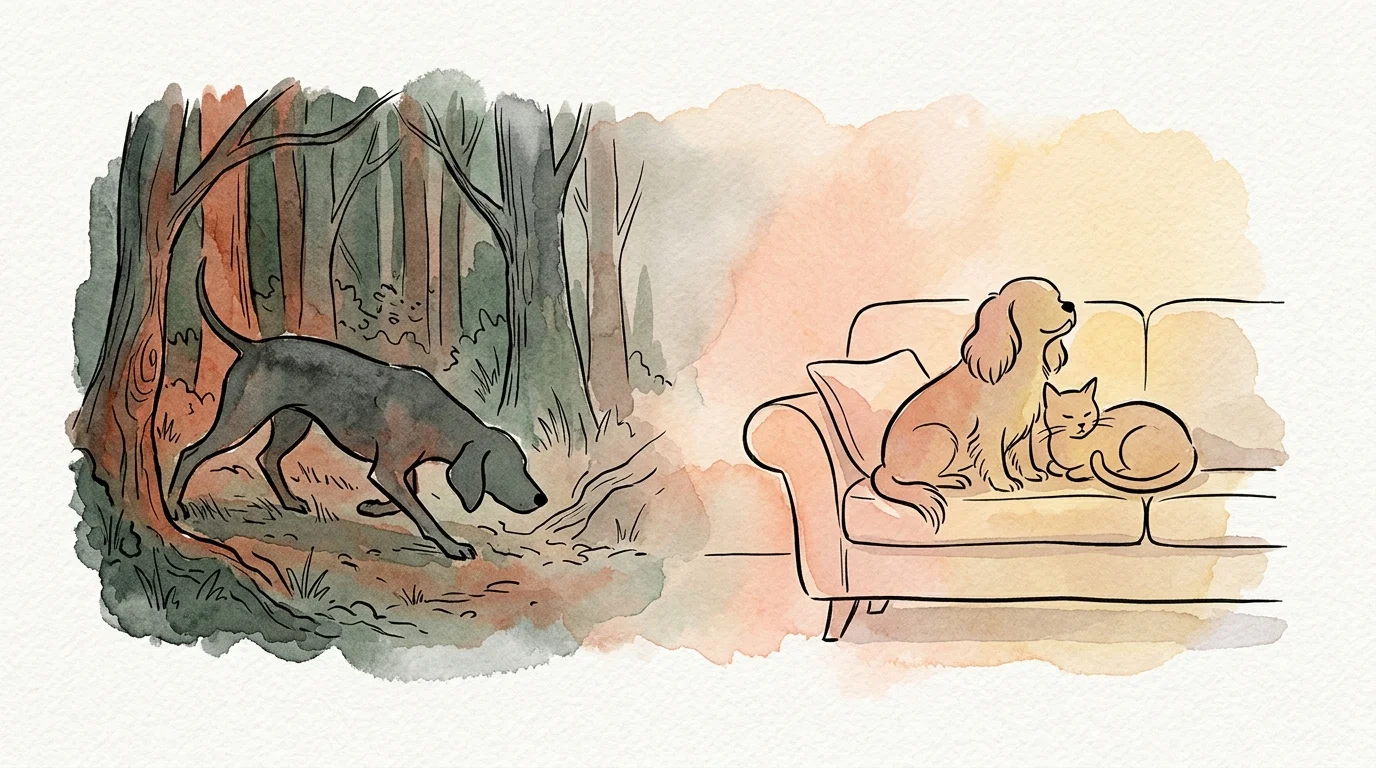
The cultural stereotype of cats and dogs as mortal enemies stems from a grain of truth regarding predatory instincts. For thousands of years, humans bred dogs to perform specific jobs. Some were engineered to hunt fast-moving game, while others were bred to guard property or eradicate vermin. When a dog with a high prey drive sees a cat dart across the living room, their brain does not register a fellow pet; it registers a target. This instinctual response is incredibly difficult to train away, which is why matching a dog’s genetic predispositions to your household is the most critical step in maintaining peace.
However, when you select a breed with a history rooted in companionship, retrieving, or gentle herding, you bypass many of these instinctual hurdles. These dogs are genetically wired to look to their human handlers for cues and to prioritize social harmony. By choosing a breed naturally inclined toward cooperation, you set a strong foundation for a loving, cross-species friendship.
What Makes a Dog Cat-Friendly?
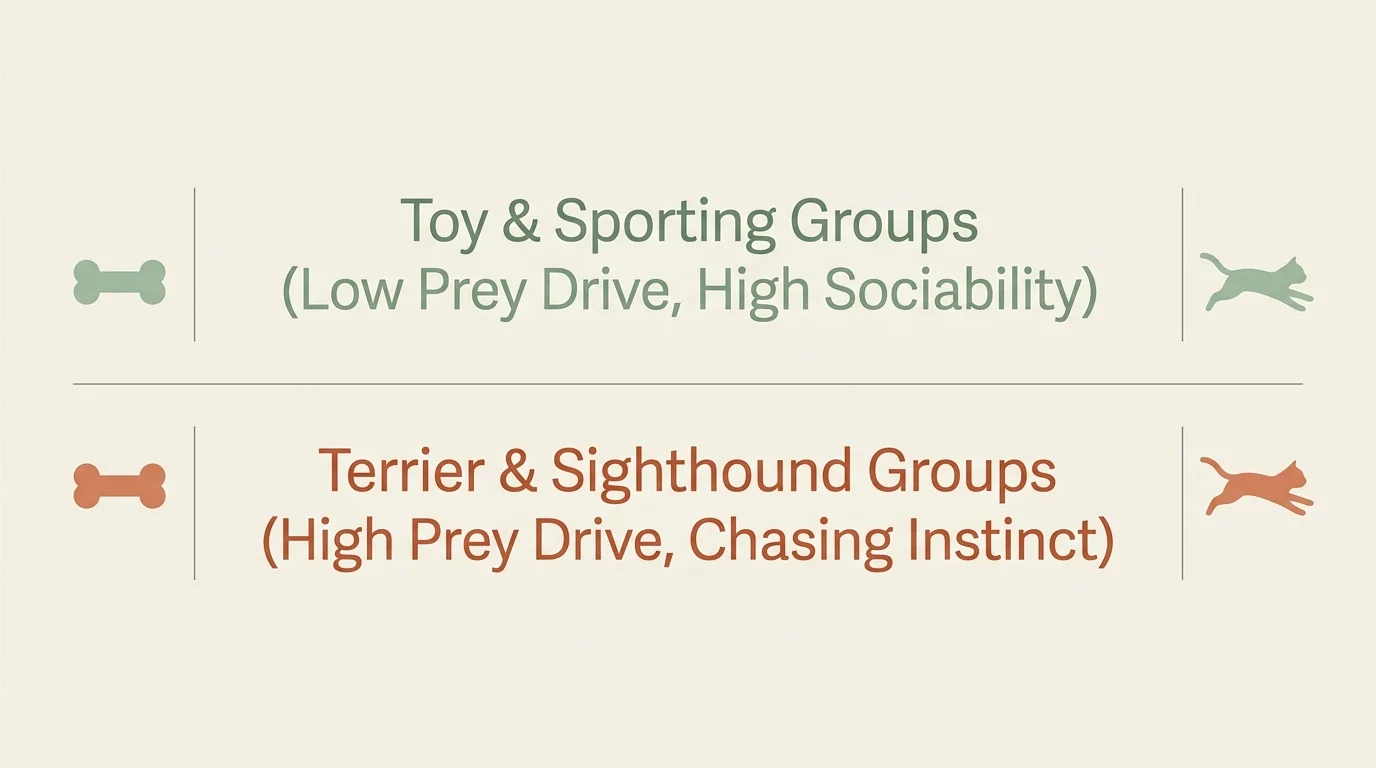
Not every dog will look at a cat and see a friend. Genetics and historical breeding purposes heavily influence how a dog reacts to a fast-moving feline. Dogs bred to hunt vermin or chase game—such as many terriers and sighthounds—often have high prey drives. When a cat moves unpredictably, these dogs instinctively want to give chase, making them high-risk roommates for felines.
Conversely, breeds developed for companionship, retrieving, or herding livestock tend to have lower prey drives and higher sociability. According to the American Kennel Club (AKC), dogs in the Toy and Sporting groups often make excellent cat companions because they are inherently friendly, eager to please, and highly adaptable to new social dynamics.
1. Golden Retriever
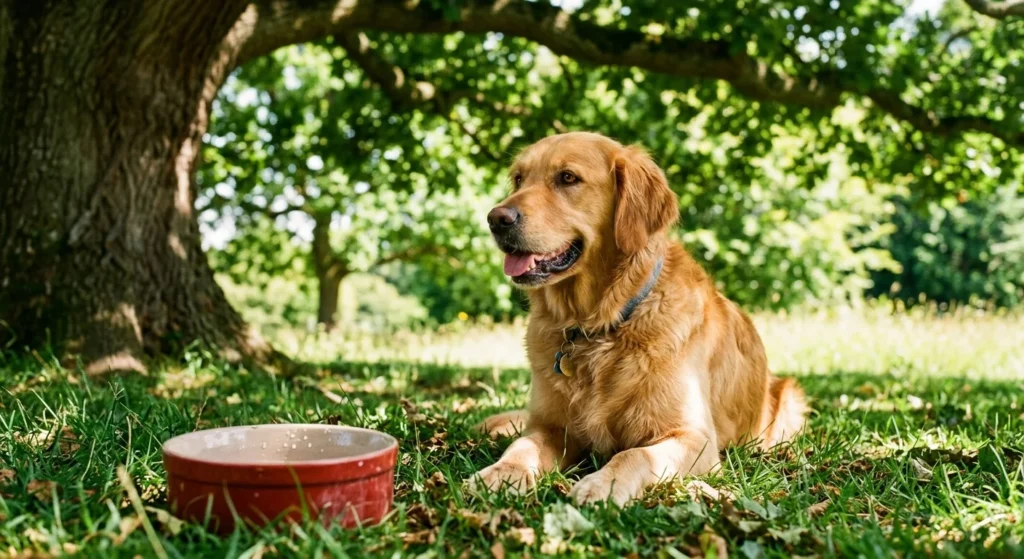
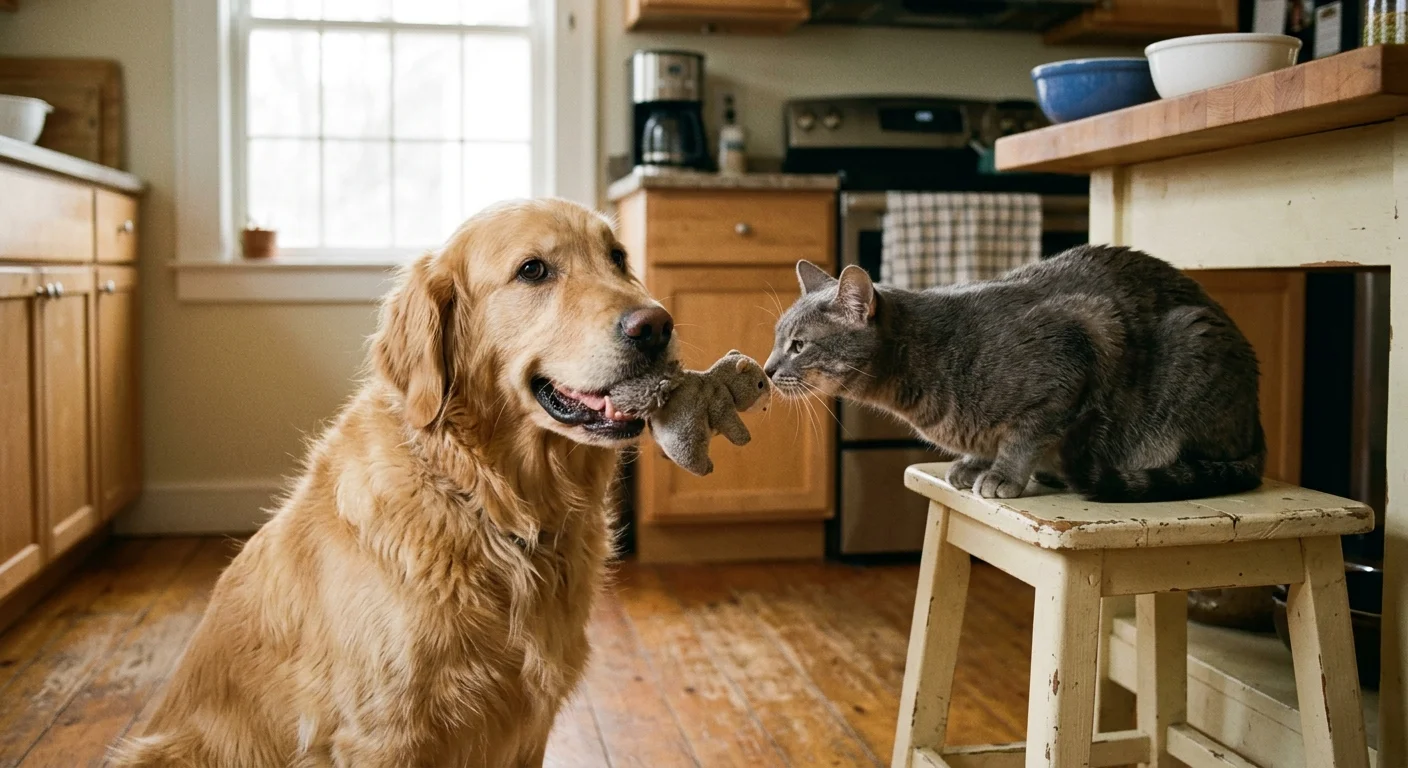
Golden Retrievers are famous for their gentle nature, boundless patience, and eagerness to please. These traits make them one of the most reliable choices for a household with cats. Because they belong to the Sporting group, they were bred to retrieve waterfowl without damaging the bird—a trait known as a “soft mouth.” This translates to a natural bite inhibition that keeps playtimes safe.
A Golden Retriever is more likely to offer your cat a toy than to chase it up a tree. They thrive on companionship and generally view a confident cat as just another family member to love. Early socialization helps, but even an older, well-mannered Golden Retriever can quickly learn to respect a cat’s boundaries. You will need to manage their high energy during the puppy phase so they do not accidentally trample the cat, but their highly trainable demeanor makes teaching boundaries straightforward.

2. Basset Hound
While hounds are typically known for tracking and chasing, the Basset Hound operates at a much slower, more relaxed pace. They are fiercely loyal, patient, and famously low-key. Their heavy, low-slung bodies make them slow-moving, which nervous cats greatly appreciate.
The AKC notes that the Basset Hound’s mild-mannered attitude makes them highly tolerant of other animals. They prefer napping over running, meaning they rarely have the energy or desire to harass a house cat. You will often find a Basset Hound and a cat curled up on the same rug, quietly enjoying each other’s company. Just keep an eye on those long ears; playful kittens might mistake them for toys, and while Basset Hounds are tolerant, you want to ensure the cat does not scratch their sensitive skin.
3. Beagle
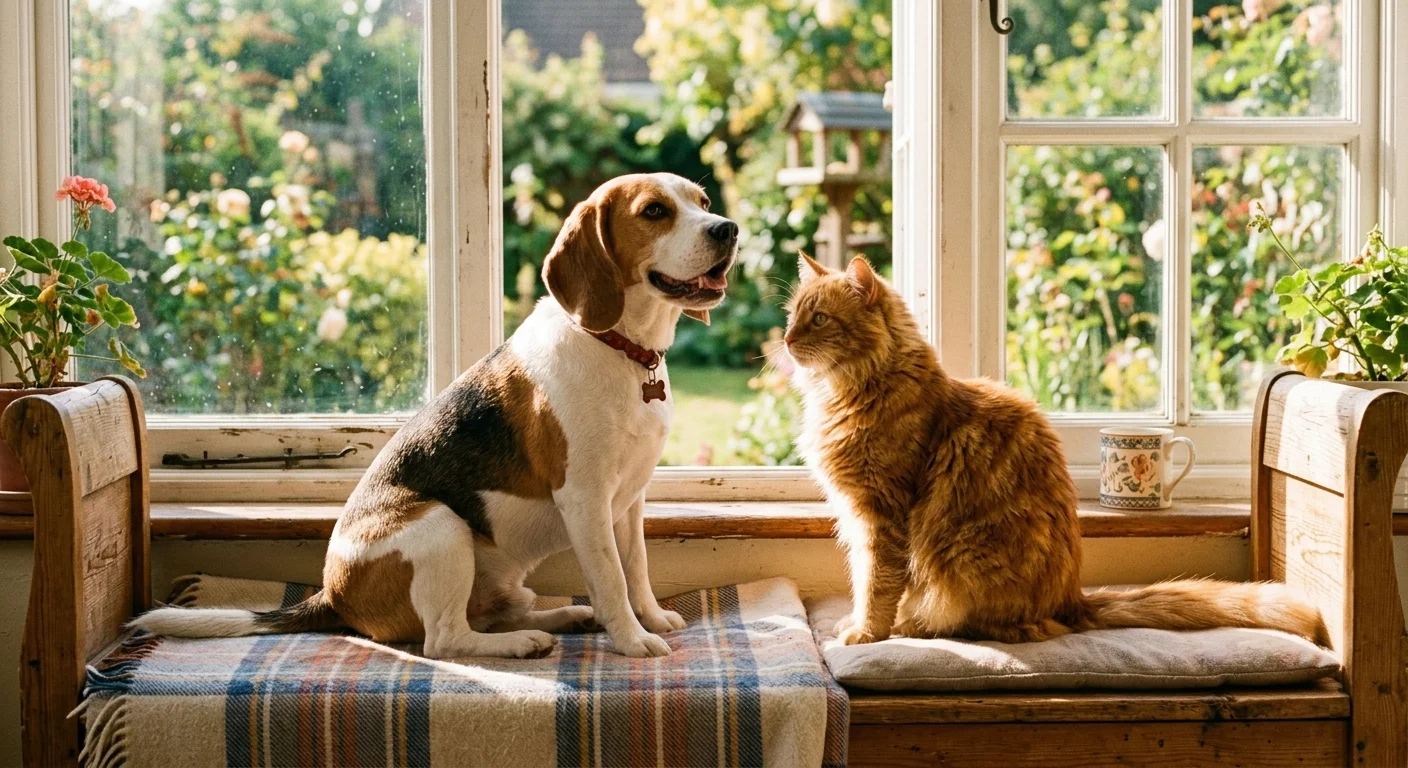
Beagles were originally bred to hunt in large packs, which means they are genetically predisposed to get along well with other animals. They are highly sociable, happy-go-lucky dogs that thrive in a lively household. Because they view their family as their pack, Beagles usually accept cats as fellow members of the team.
As scent hounds, they will undoubtedly spend time sniffing your cat, but they are generally amiable rather than aggressive. Providing your Beagle with plenty of outdoor exercise ensures they do not direct their excess energy toward bothering the cat indoors. Be aware that Beagles can be vocal; their distinct baying might startle a cat at first, so acclimatizing the cat to the dog’s vocalizations gradually is a helpful step.

4. Labrador Retriever
Much like the Golden Retriever, the Labrador Retriever is a gentle, intelligent, and highly trainable companion. Labs are known for their outgoing personalities and their ability to get along with virtually everyone they meet, regardless of species. Their eager-to-please attitude means they respond beautifully to positive reinforcement training.
A Labrador Retriever has more than enough love to go around. If you teach a Lab early on that the cat is off-limits for roughhousing, they will readily comply. Their adaptable nature allows them to handle the sudden movements and quirky behaviors of cats without becoming overly stimulated. English Labradors, which are generally stockier and slightly mellower than American Labradors, often excel in homes with indoor cats due to their slightly lower energy levels.

5. Cavalier King Charles Spaniel
If you want a dog that matches your cat in size, the Cavalier King Charles Spaniel is a superb option. These elegant little dogs weigh between 13 and 18 pounds and possess an incredibly affectionate, gentle disposition. They were bred strictly for companionship, spending centuries warming the laps of European nobility.
Cavaliers are fearless but never aggressive, meaning a swat from a grumpy cat will likely result in a graceful retreat rather than a fight. They form strong bonds with their human and animal housemates alike. Because of their small stature, the cat might actually assume the dominant role in the relationship. Do not be surprised if you catch your Cavalier grooming the cat or sharing a sunbeam on the living room floor.
6. Collie
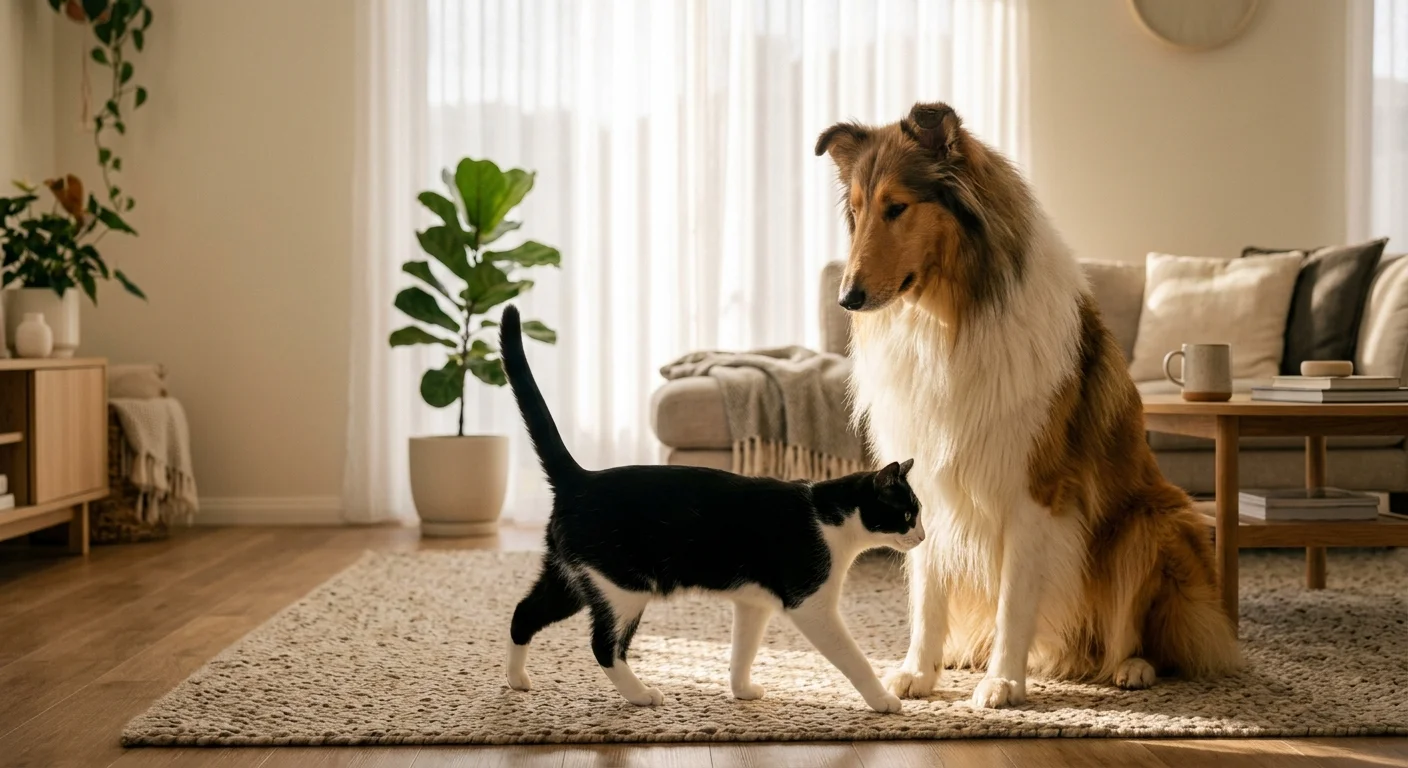
Collies are members of the Herding group, known for their athleticism, deep intelligence, and famous devotion to children. That deep well of tolerance and affection frequently extends to cats. They are highly attuned to the emotions and dynamics of their household, making them sensitive and respectful companions.
While some herding breeds might try to relentlessly round up a feline roommate, Collies are typically gentle and well-mannered indoors. A well-exercised Collie will calmly observe the cat rather than herd it. They tend to use their bodies to gently block movement rather than using their mouths, which minimizes the risk of injury during interactions. Their protective nature often means they view the family cat as a precious member of their flock to be watched over.
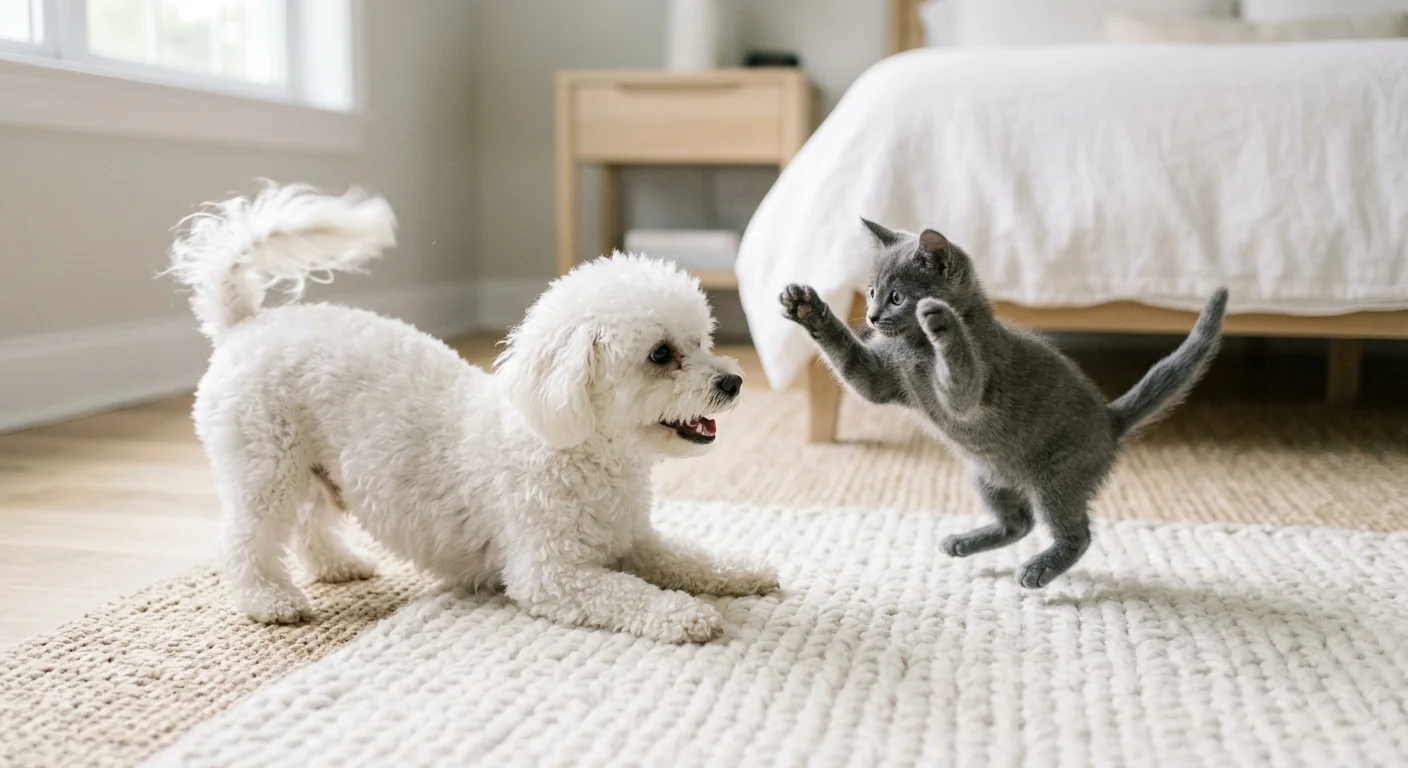
7. Bichon Frise
The Bichon Frise is a sturdy, playful, and relentlessly cheerful companion. Weighing roughly 12 to 18 pounds, they are small enough to be non-threatening to an adult cat but robust enough to handle a little inter-species wrestling if the cat feels playful.
Bichons have virtually no prey drive. They simply want to be part of the action and are happy to share their home with anyone who will give them attention. Their naturally affectionate demeanor means they often seek out cats for playtime or snuggles. Because their soft, curly coats require significant grooming, some Bichons even enjoy mutual grooming sessions with a friendly cat, resulting in an incredibly tight bond.

8. Pug
Pugs pack a massive personality into a compact, sturdy frame. They are incredibly adaptable and live comfortably in bustling families or quiet apartments. Because they belong to the Toy group, their primary instinct is to love and be loved.
A Pug’s easygoing nature makes them highly tolerant of cats. They are more interested in food and naps than in chasing anything. Pugs are completely devoid of hunting instincts, which allows them to coexist peacefully with even the most temperamental felines. Their brachycephalic (flat-faced) anatomy inherently limits their physical stamina, meaning their exercise requirements match perfectly with a cat’s preference for lounging. Cats may need a few days to realize the Pug’s frequent snorting and snoring are just normal breathing sounds, rather than growls.
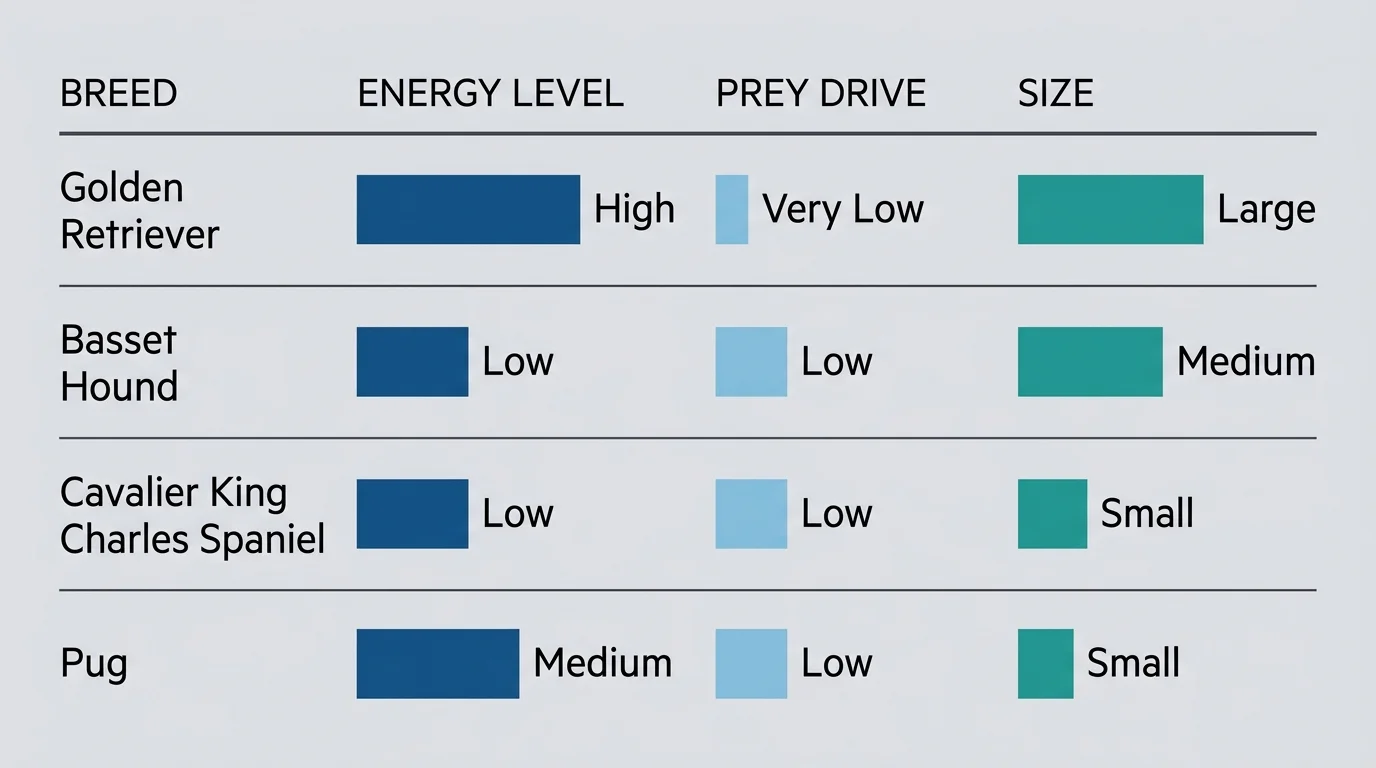
Comparing Cat-Friendly Breeds
To help you choose the right fit for your lifestyle, here is a quick look at how these eight breeds compare in size, energy level, and grooming needs. Always consider how these factors align with your cat’s current routine.
| Breed | Size Category | Energy Level | Grooming Needs |
|---|---|---|---|
| Golden Retriever | Large (55-75 lbs) | High | High (Frequent brushing required) |
| Basset Hound | Medium (40-65 lbs) | Low | Moderate (Routine ear cleaning essential) |
| Beagle | Small-Medium (20-30 lbs) | High | Low (Occasional brushing) |
| Labrador Retriever | Large (55-80 lbs) | High | Moderate (Seasonal heavy shedding) |
| Cavalier King Charles Spaniel | Small (13-18 lbs) | Moderate | High (Regular brushing to prevent mats) |
| Collie | Large (50-75 lbs) | High | High (Extensive brushing for rough coats) |
| Bichon Frise | Small (12-18 lbs) | Moderate | High (Professional grooming required) |
| Pug | Small (14-18 lbs) | Low | Moderate (Daily facial fold cleaning) |
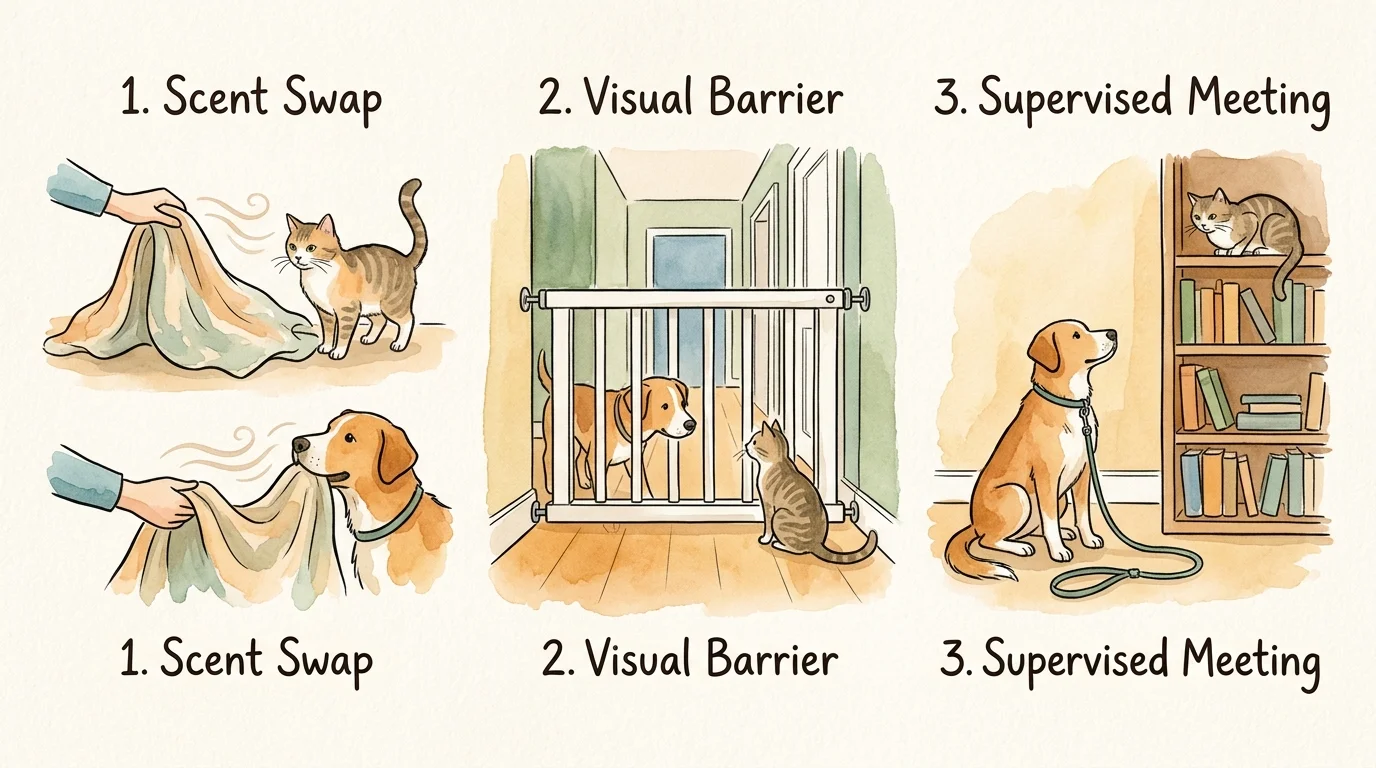
How to Introduce Your New Dog and Cat
Even the most docile Golden Retriever needs a proper introduction to a household cat. Rushing the process causes unnecessary stress and can ruin the relationship before it even begins. Best Friends Animal Society recommends a process of gradual desensitization to ensure both animals feel safe.
- Keep them separated initially: Set up a safe, designated room for your cat with their food, water, and litter box. Allow the dog and cat to smell each other under the door for several days without making visual contact. Swap their bedding so they become accustomed to each other’s scent.
- Use a physical barrier: When you are ready for visual introductions, place a tall baby gate between them. Keep the dog on a leash and reward them with high-value treats for looking at the cat and remaining calm. If the dog fixates or whines, move them further away.
- Provide escape routes: Cats feel safest when they have the high ground. Ensure your cat has access to cat trees, high shelves, or clear pathways out of the room so they never feel cornered during face-to-face interactions.
- Supervise all interactions: Never leave a dog and cat alone together until you are entirely confident in their relationship. This process can take weeks or even months, depending on the animals involved.
“A successful dog-cat relationship relies entirely on boundaries. The dog must learn that the cat is a family member to respect, not a toy to chase, and the cat must always feel they have a safe avenue of escape.”
Worth Keeping in Mind
Before you bring a new pet home, consider these common pitfalls associated with multi-pet households.
- Personality trumps breed: Breed traits are general guidelines, not absolute guarantees. A high-strung Labrador might harass a cat, while a surprisingly mellow Terrier might ignore one. Always evaluate the specific dog’s temperament before committing.
- Age matters: Puppies are easily trained to respect cats, but their bouncy, unpredictable energy can heavily stress an older, arthritic cat. Conversely, adopting an older, cat-tested rescue dog might provide a smoother transition and immediate peace.
- Litter box raiding: Many dogs cannot resist the temptation of a cat’s litter box. You must place the litter box in an area the dog cannot access. The AKC notes that clumping cat litter is toxic to dogs and can cause severe intestinal blockages if ingested.
- Protect the dog’s eyes: Even a friendly dog can suffer a severe corneal scratch if a frightened cat swats at them. Keep your cat’s claws trimmed during the introduction phase to prevent serious veterinary emergencies.

When to Get Professional Help
Not every dog and cat introduction goes according to plan. You should consult a certified animal behaviorist or your veterinarian if you observe any of the following scenarios:
- Obsessive fixation: If the dog stares intensely, stiffens, whines, or cannot be distracted from the cat even with high-value treats, this indicates a dangerous prey drive that requires expert assessment.
- Aggression from either animal: Unprovoked lunging, snapping, or severe hissing and swatting that does not diminish over time requires professional intervention to keep both animals safe.
- Extreme feline stress: If your cat stops eating, hides continuously, grooms obsessively until bald patches appear, or begins urinating outside the litter box after the dog arrives, the environment has become too stressful for them to handle alone.
Frequently Asked Questions
Do male or female dogs get along better with cats?
The sex of the dog rarely dictates their compatibility with a cat. Temperament, breed traits, and proper socialization play far bigger roles. However, spaying or neutering both pets reduces hormonal behaviors and territorial marking that can cause friction.
Can a dog with a high prey drive ever live with a cat?
It is extremely difficult and often unsafe. While rigorous training can teach a high-prey-drive dog to ignore a cat while you are in the room, instinct often takes over the moment the cat runs or the dog is left unsupervised. It is generally best to avoid pairing these dogs with felines.
How long does it take for a dog and cat to get used to each other?
It typically takes two to three weeks for a dog and cat to establish a basic level of tolerance, but true comfort can take several months. Patience is essential; let the cat set the pace of the relationship and never force them into close proximity.
Choosing a dog breed known for its gentle, adaptable nature sets you up for success when blending a household. By prioritizing slow introductions, positive reinforcement, and mutual respect, you can build a peaceful home where your pets genuinely enjoy each other’s company. This article provides general information only. Every reader’s situation is different—what works for others may not be the right fit for you. For personalized guidance on health, legal, or financial matters, consult a qualified professional.
Last updated: July 2026. Rules, prices, and details change—verify current information with official sources before acting on it.