Finding a feline companion that won’t coat your furniture in fur is entirely possible when you choose breeds like the Sphynx, Cornish Rex, or Russian Blue.
While no cat is completely hypoallergenic, selecting a low-shedding breed drastically reduces the amount of hair and dander in your home. Loose cat hair is a constant battle that triggers allergies and requires endless vacuuming.
If you love animals but hate the mess, focusing on single-coated, short-haired, or hairless varieties is your best strategy. These specific breeds lack the thick undercoats that cause standard domestic cats to leave a trail of fur everywhere.
You can finally enjoy the affection of an indoor cat without sacrificing the cleanliness of your living space.
The Reality of Hypoallergenic Cats
Many people search for a completely hypoallergenic cat, but medical experts confirm that such a creature does not exist.
According to the American College of Allergy, Asthma, and Immunology, cat allergies are twice as common as dog allergies, and the primary culprit is not the fur itself.
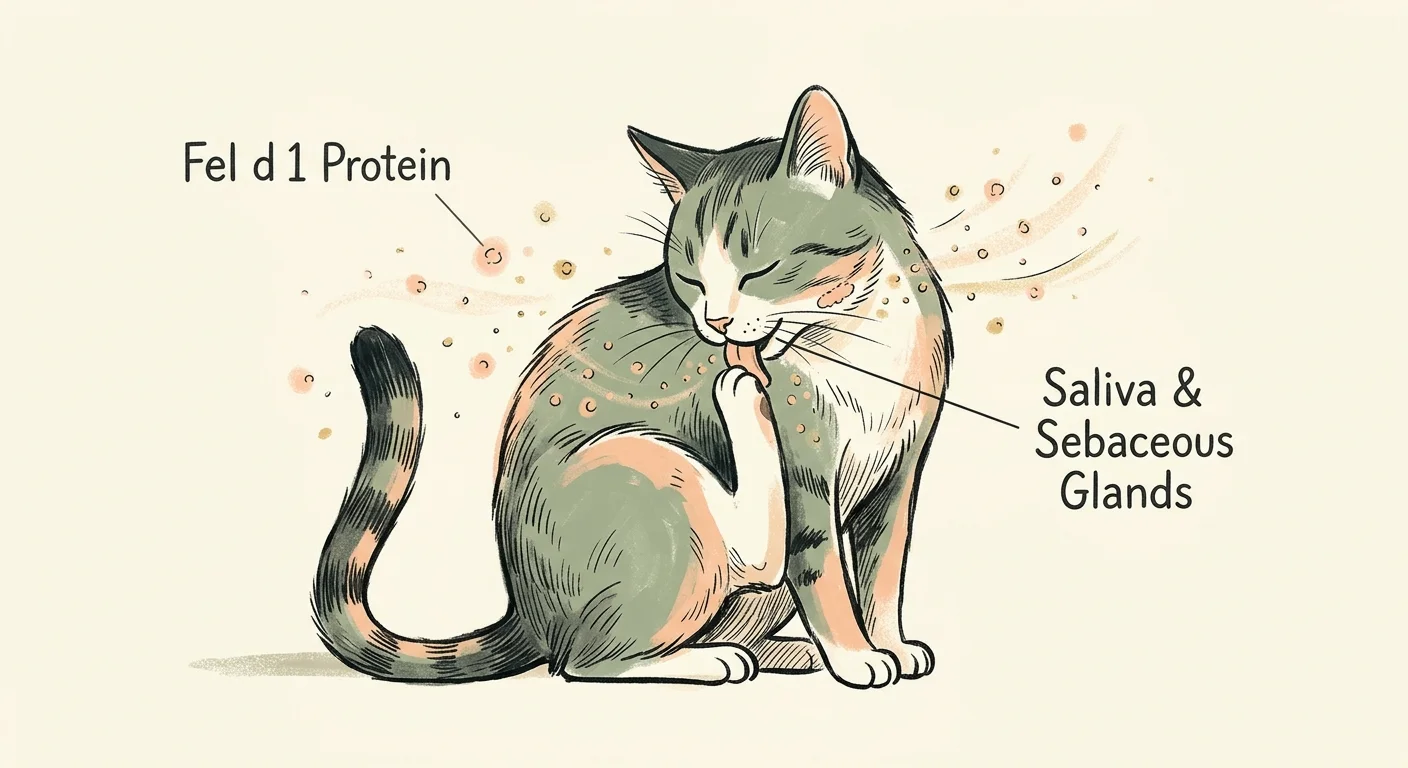
Instead, most allergic reactions are triggered by a microscopic protein called Fel d 1, which cats produce in their saliva and sebaceous glands.
When a cat grooms, it spreads this protein across its coat. The saliva dries and flakes off as microscopic dander, floating through your home and attaching to furniture, carpets, and clothes.
Because the allergen hitchhikes on hair and dander, low-shedding cats naturally spread less of it around your living space. This distinction makes a massive difference if you suffer from mild allergies or simply want to keep your home cleaner.
Research published by the National Institutes of Health confirms that Fel d 1 is the main allergen responsible for feline-induced allergic reactions, making its management critical for sensitive households.
10 Low-Shedding Cat Breeds
1. Sphynx
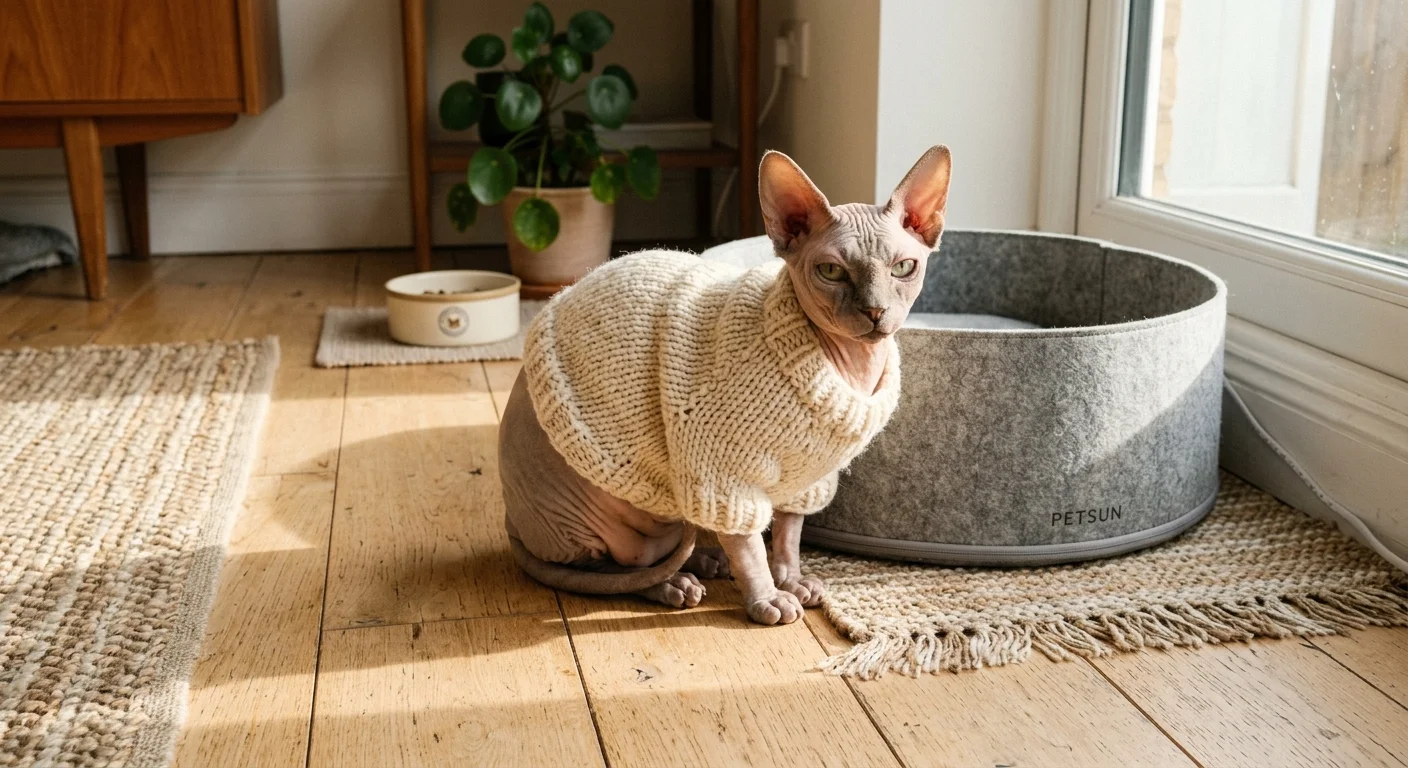
Famous for being hairless, the Sphynx actually possesses a fine, peach-fuzz down that feels like warm suede. Because they lack a traditional coat, they cannot leave hairballs or shed clumps of fur on your couch.
However, their skin still produces natural oils. Without fur to absorb those oils, you must bathe a Sphynx every one to two weeks to prevent greasy skin, clogged pores, and oily stains on your furniture.
They run slightly warmer than other cats and often require heated beds or sweaters to stay comfortable in colder climates.
2. Cornish Rex
Most cats have three distinct layers of hair: the outer guard hairs, the middle awn hair, and the undercoat. The Cornish Rex only grows the soft, curly undercoat.
This single layer of downy fur means they shed very little and feel like crushed velvet. Originating from a natural mutation in Cornwall, England, these cats feature a greyhound-like tuck, arched backs, and large bat ears.
They remain highly active and affectionate, though their sparse coat requires you to keep them warm during the winter months.
3. Devon Rex
Similar to the Cornish Rex, the Devon Rex sports a wavy, single-layer coat, but with a slightly thicker texture. Known affectionately as “poodle cats,” they even have brittle, curly whiskers.
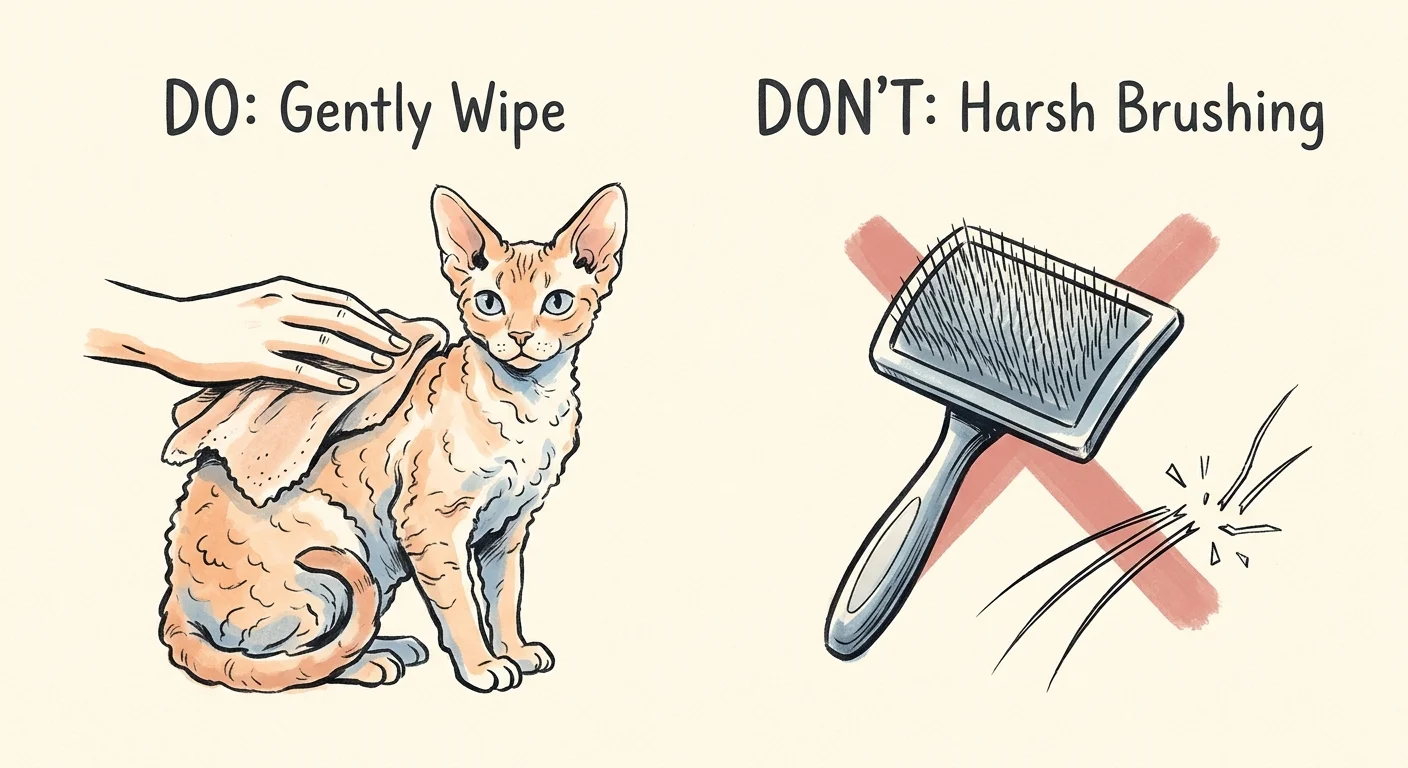
Their delicate curls are prone to breaking, so you should avoid heavy brushing. Instead, wiping them down with a damp chamois cloth easily removes dead hair and keeps their coat healthy.
They are deeply devoted cats that love riding on their owners’ shoulders and participating in whatever you are doing.
4. Russian Blue
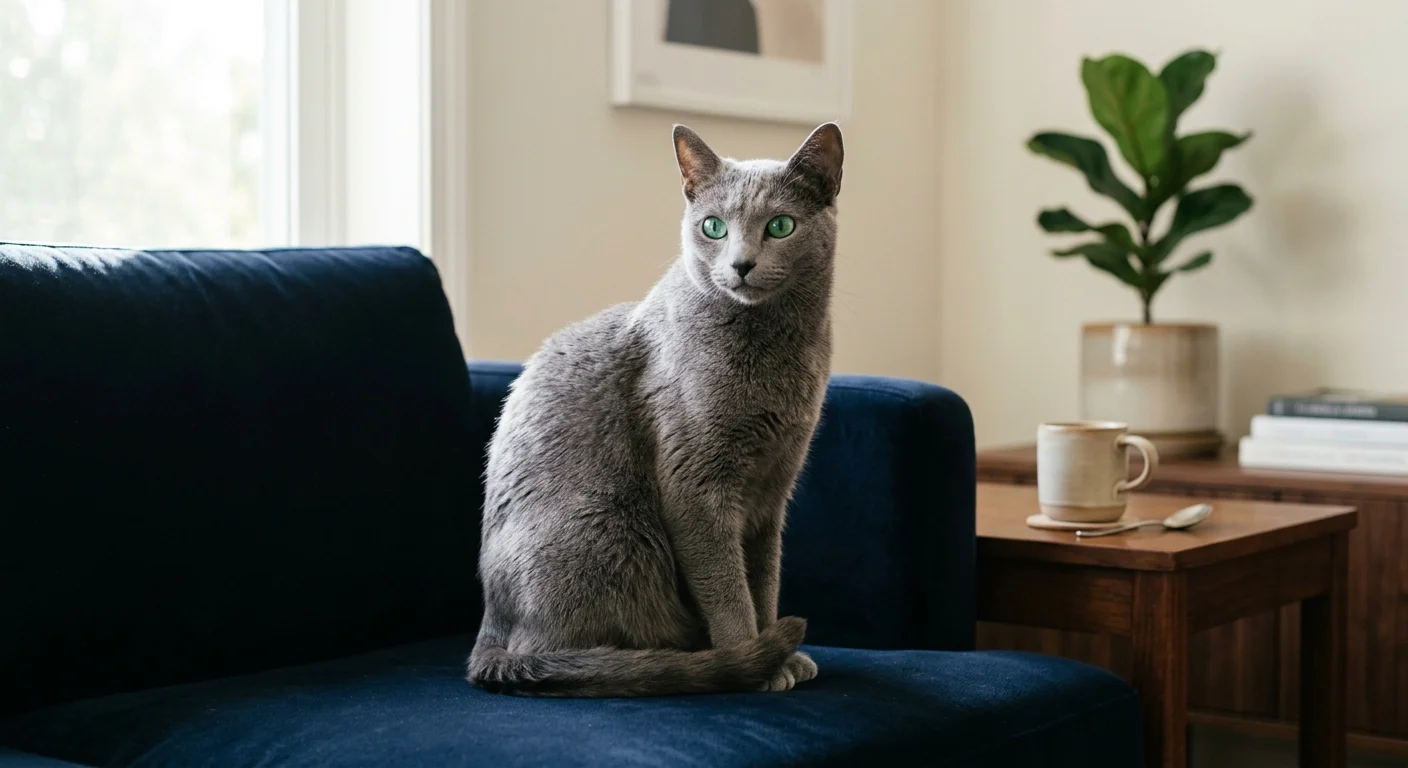
The Russian Blue features a dense, plush double coat that stands out from their body, but they are remarkably low shedders for most of the year. Historically kept on merchant ships, these cats possess a natural fastidiousness, grooming themselves meticulously.
You will only notice significant shedding during the spring and fall seasonal transitions. Regular weekly brushing during these periods keeps loose hair firmly in check, allowing you to enjoy their stunning silvery-blue coat and brilliant green eyes without the usual mess.
5. Siamese
An ancient breed originating in Thailand, Siamese cats have a short, fine, and sleek coat lying tightly against their skin. They lack a woolly undercoat entirely, drastically minimizing the amount of fur they drop.
A gentle weekly pass with a rubber grooming mitt removes the few dead hairs they produce, leaving their coat glossy and your furniture clean. Beyond their low-maintenance grooming needs, you can expect a highly vocal, social companion that demands conversation and engagement.
6. Bengal
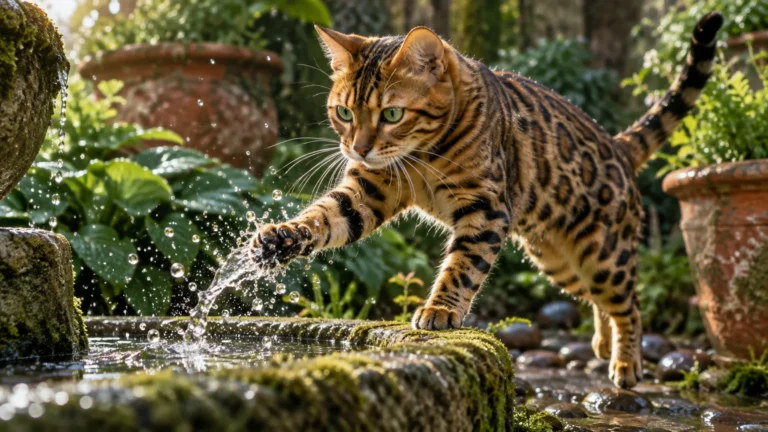
Created by crossing domestic cats with the Asian leopard cat, the Bengal boasts a unique, pelt-like coat. This ultra-soft, slick fur behaves differently than standard cat hair, shedding very infrequently.
Bengals actually spend less time grooming themselves than other breeds because their pelt maintains itself naturally with minimal effort.
Their low-shedding nature, combined with their high intelligence and love for playing in the water, makes them a favorite for highly active households willing to provide them with enrichment.
7. Bombay
Bred specifically to look like miniature black panthers, Bombay cats feature a jet-black, incredibly shiny coat. Their short hair lies extremely tight against their muscular bodies, and they drop almost zero fluff around the house.
They thrive on human companionship and enjoy being the center of attention. A quick weekly wipe with a soft cloth keeps their black coat gleaming and completely free of loose hair.
8. Burmese
Burmese cats share genetic roots with the Siamese and exhibit the same tight, short coat. They possess a surprisingly heavy, muscular build for their size and carry a silky texture to their fur, coming in rich colors like sable, champagne, and platinum.
Because their coat is so short and sparse, shedding goes practically unnoticed. They are heavily dog-like in personality, often following you from room to room to keep tabs on your activities and demanding lap time.
9. Colorpoint Shorthair
A direct offshoot of the Siamese breed, the Colorpoint Shorthair comes in a wider variety of point colors, such as red and tortoiseshell. They share the exact same single-layer, low-maintenance coat as their Siamese cousins.
You get the same vocal, affectionate personality and the same benefit of nearly non-existent shedding, making them an excellent choice for an owner who wants a colorful, tidy feline.
10. Oriental Shorthair
The Oriental Shorthair features the same slender, athletic body type as the Siamese but comes in over 300 spectacular color and pattern combinations. They lack an undercoat completely.
While they do shed a tiny amount of hair, the individual strands are so short and fine that you will rarely spot them on your clothing or carpets. They form intense, loyal bonds with their families and demand regular interaction and interactive playtime.
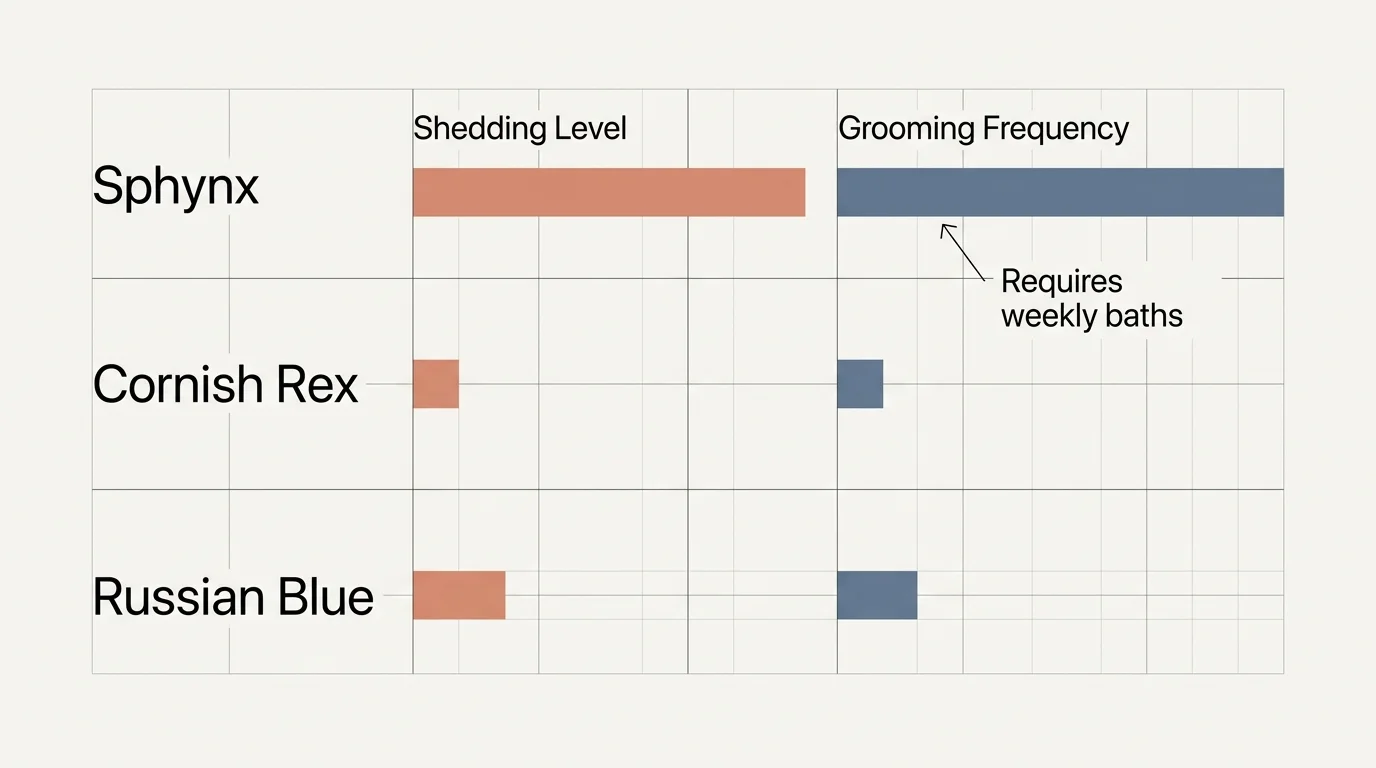
Shedding vs. Grooming: Comparing the Top Contenders
Selecting the right cat requires balancing how much they shed against how much effort you must put into maintaining their skin and coat. Review this comparison to match a breed to your lifestyle:
| Breed | Coat Type | Shedding Level | Grooming Need |
|---|---|---|---|
| Sphynx | Hairless / Peach fuzz | None to minimal | High (Weekly bathing required) |
| Cornish Rex | Single downy layer (curly) | Very low | Low (Occasional damp wipe) |
| Devon Rex | Single layer (wavy) | Very low | Low (Occasional damp wipe) |
| Russian Blue | Dense double coat | Low (Except seasonal) | Moderate (Weekly brushing) |
| Bengal | Short, sleek pelt | Very low | Low (Occasional brushing) |
| Siamese | Short, fine single coat | Low | Low (Weekly rubber mitt) |
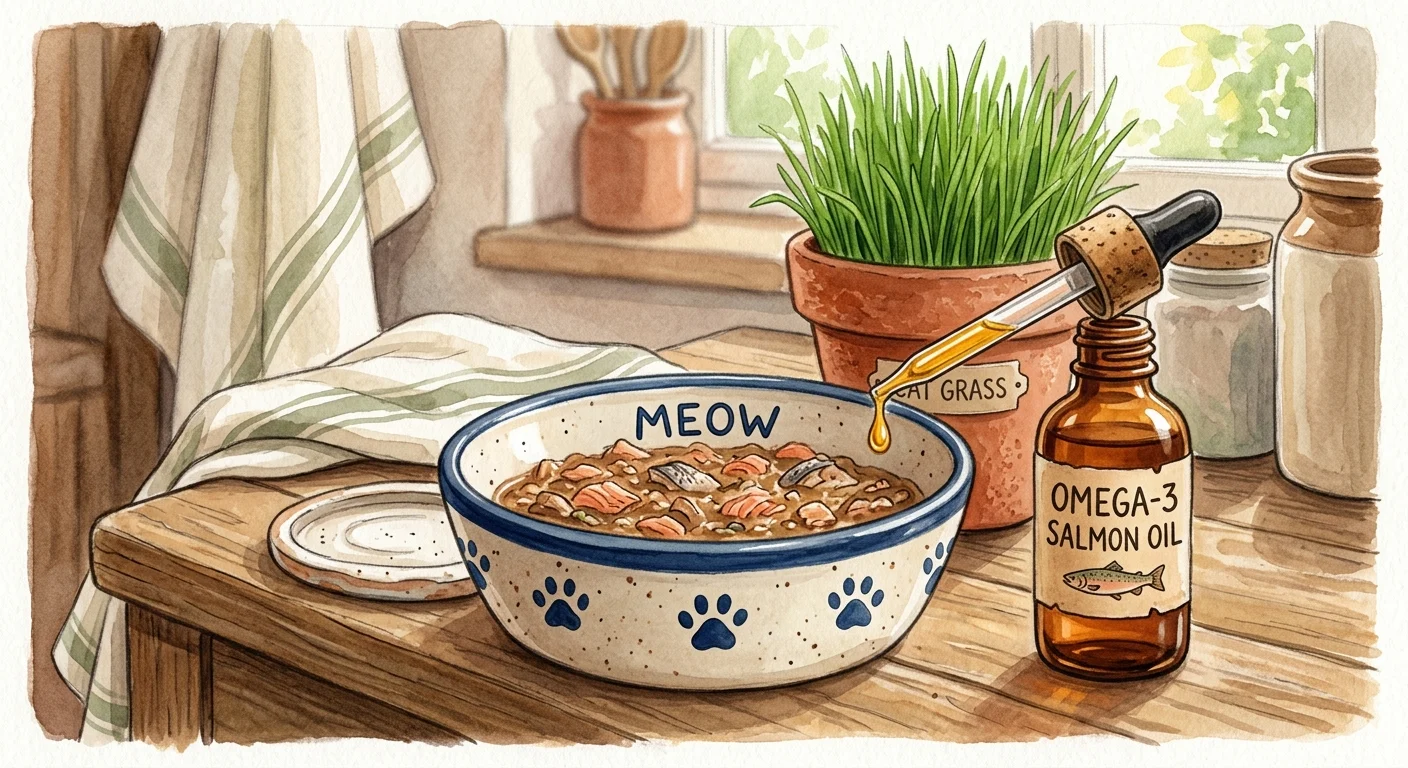
Why Diet Matters for Low-Shedding Cats
Even if you select a breed genetically predisposed to minimal shedding, their actual hair loss depends heavily on their internal health. A cat fed a low-quality diet will shed more, regardless of its breed.
Cats require a robust intake of animal-based proteins and specific fatty acids to maintain strong hair follicles and supple skin.
- Omega-3 and Omega-6 Fatty Acids: These essential fats prevent dry, flaky skin. When the skin remains moisturized, the hair shafts stay firmly rooted, reducing daily fallout. Look for high-quality foods containing salmon oil, krill oil, or flaxseed.
- Optimal Hydration: Cats are notoriously bad at drinking enough water, leading to systemic dehydration that weakens their coat. Feeding high-moisture wet food rather than strictly dry kibble provides the hydration necessary to maintain a vibrant, low-shedding coat.
- Allergen-Reducing Diets: Recent veterinary advancements have introduced specialized cat foods that neutralize the Fel d 1 protein in the cat’s saliva before they groom themselves. If you combine a low-shedding breed with a specialized allergen-reducing diet, you drastically cut down the environmental allergens in your home.
Common Mistakes to Avoid
When choosing a low-shedding cat, people often make a few incorrect assumptions. Avoid these specific pitfalls to ensure a smooth transition into pet ownership:
- Assuming hairless means maintenance-free: Many assume the Sphynx is the ultimate low-effort pet. In reality, hairless cats require frequent bathing, ear cleaning, and nail bed maintenance to manage oil buildup that fur usually absorbs.
- Stopping environmental cleaning: Even if your cat sheds very little, they still produce the Fel d 1 protein. You must continue using HEPA vacuums and air purifiers if you want to keep allergens at bay.
- Brushing delicate coats too harshly: Breeds like the Devon and Cornish Rex have fragile fur that breaks easily. Using a stiff-bristled brush damages their coat; always use a soft cloth or a rubber grooming mitt instead.
- Ignoring seasonal cycles: Even low-shedding cats experience seasonal shifts. Do not panic when your Russian Blue sheds slightly more in April; understand the natural spring and fall coat blows so you do not mistake it for a health issue.
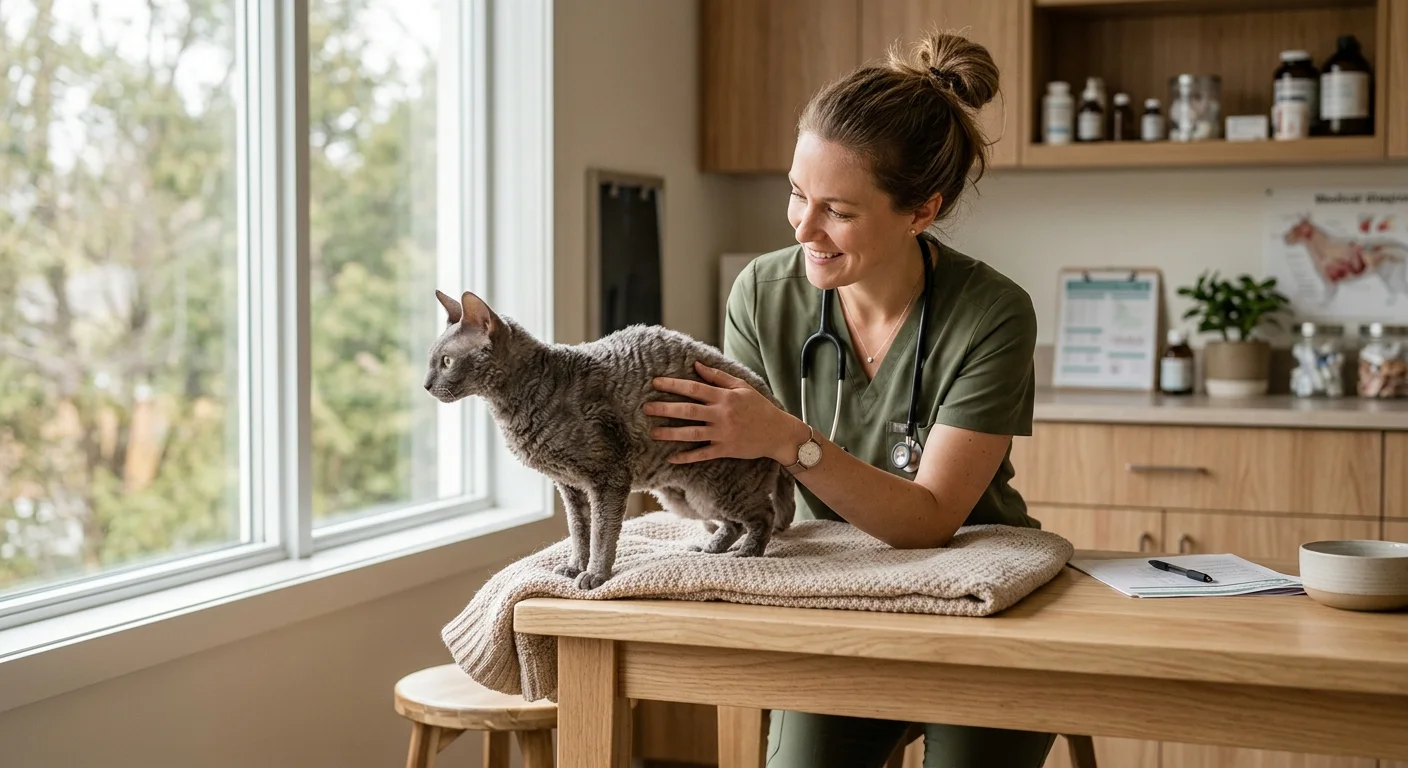
Getting Expert Input
If you are managing allergies or notice unexpected changes in your cat’s coat, you need personalized professional advice. Consider consulting an expert in these specific situations:
- Allergy testing before adoption: Before bringing a cat home, consult a board-certified allergist. They can test your specific sensitivity to the Fel d 1 protein and advise whether environmental controls and a low-shedding breed will be enough to keep you comfortable.
- Sudden coat changes: If your low-shedding cat suddenly begins dropping clumps of fur or developing bald patches, schedule a veterinary exam immediately. This often signals underlying dermatological issues, thyroid imbalances, or nutritional deficiencies. The Mayo Clinic notes that managing pet allergies effectively requires a combination of medical vigilance and strict environmental controls.
- Grooming guidance: If you adopt a Sphynx and struggle with their bathing routine, ask your veterinarian or a professional groomer to demonstrate the proper technique. Using the wrong shampoo can severely dry out their sensitive skin and lead to painful rashes.
Frequently Asked Questions
Do indoor cats shed all year long?
Yes, indoor cats shed continuously because artificial lighting and climate control disrupt their natural seasonal shedding cycles. However, low-shedding breeds drop significantly less hair during this continuous cycle than thick-coated breeds.
Does shaving a cat stop them from shedding?
No; shaving only makes the shed hairs shorter. It does not stop the natural shedding process and can actually damage double-coated breeds by disrupting their ability to naturally regulate their body temperature.
Can I build an immunity to my cat’s allergens?
Some individuals report their allergy symptoms lessening over time through continuous exposure to their specific cat, but this is highly unpredictable. Immunotherapy—administered by an allergist through shots or under-the-tongue drops—remains the most reliable medical method for building tolerance over time.
Welcoming a low-shedding cat into your life offers the perfect balance of feline affection without the overwhelming burden of constant cleanup.
Whether you prefer the warm-suede feel of a Sphynx, the crushed-velvet waves of a Cornish Rex, or the sleek elegance of a Bombay, you have plenty of stunning options that keep your home relatively fur-free.
Last updated: July 2026. This is general informational content based on widely accepted guidance. Individual results vary. Verify current details—rules, prices, eligibility, regulations—with official sources before making important decisions.