At a Glance: Size and Lifespan of Gentle Giants
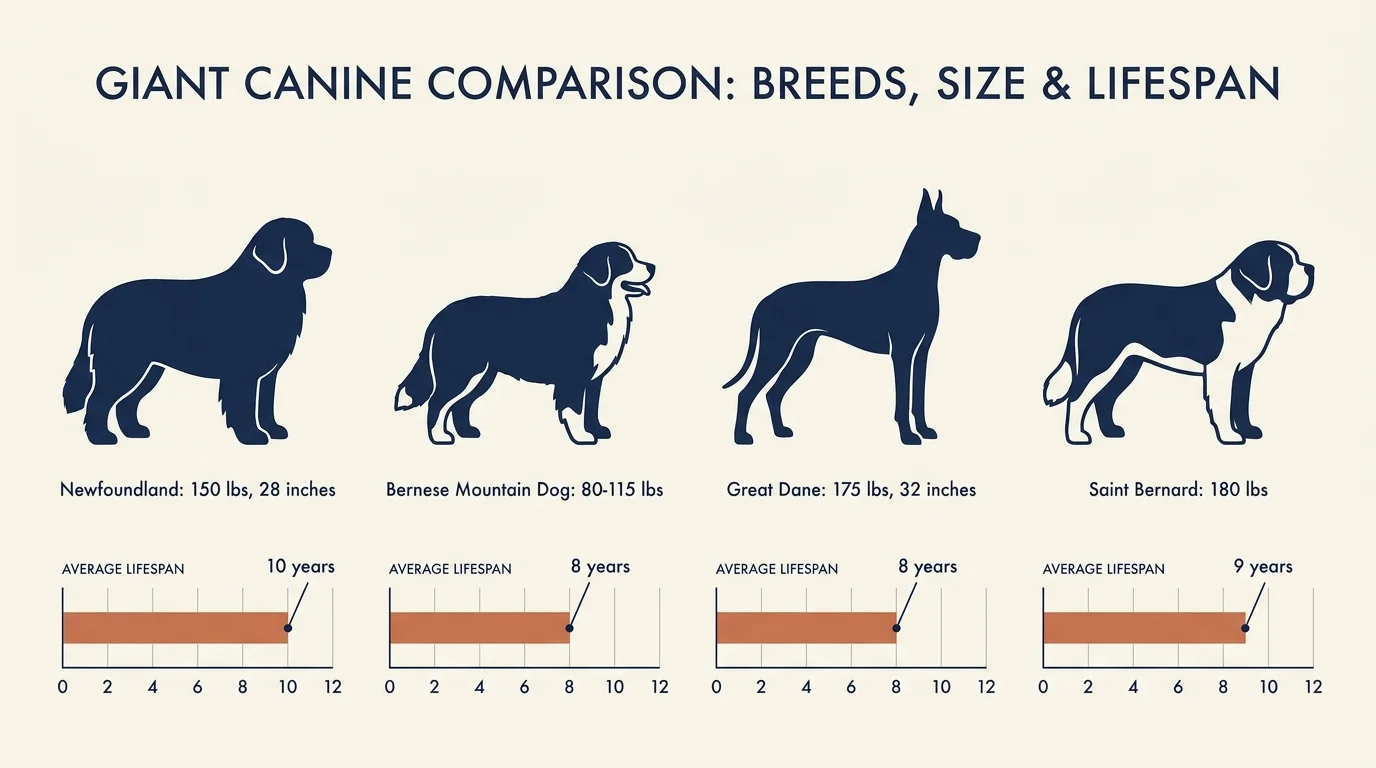
If you want a quick visual comparison of these magnificent dogs, use this chart based on standard breed averages. Keep in mind that individual dogs can fall slightly outside these ranges.
| Breed | Typical Weight (lbs) | Typical Height (inches) | Average Lifespan (years) |
|---|---|---|---|
| Newfoundland | 100–150 | 26–28 | 9–10 |
| Bernese Mountain Dog | 70–115 | 23–27.5 | 7–10 |
| Great Dane | 110–175 | 28–32 | 7–10 |
| Saint Bernard | 120–180 | 26–30 | 8–10 |
| Mastiff | 120–200+ | 27.5–30+ | 6–10 |
| Leonberger | 90–170 | 25.5–31.5 | 7–11 |
| Irish Wolfhound | 105–180 | 30–35 | 6–8 |
| Great Pyrenees | 85–100+ | 25–32 | 10–12 |
What Can Go Wrong
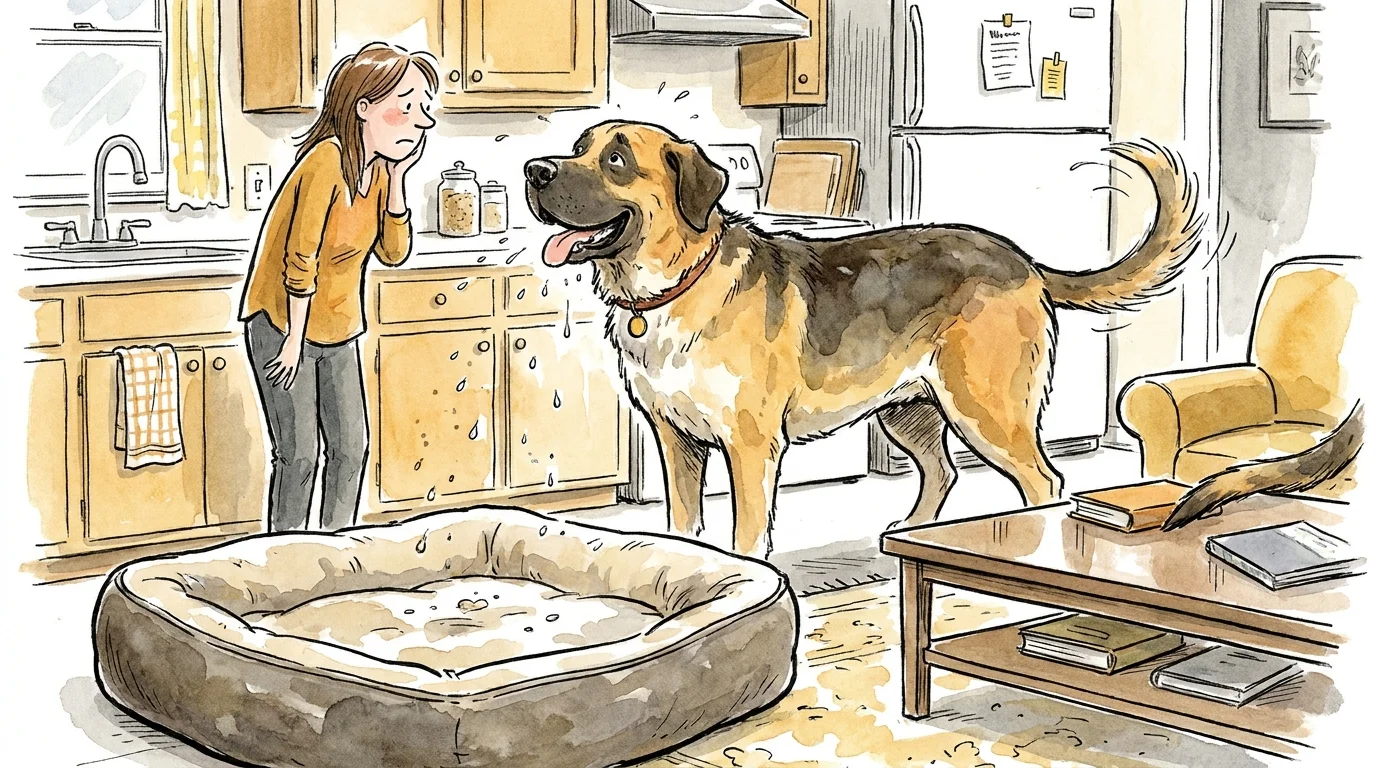
Living with a giant breed requires substantial lifestyle adjustments. While their personalities are universally appealing, their massive biology introduces several distinct challenges you must prepare for before bringing one home.
- Gastric Dilatation-Volvulus (Bloat): Giant breeds with deep chests face a high risk of bloat, a sudden and life-threatening condition where the stomach fills with gas and twists. You will need to monitor their eating habits, feed them smaller meals, and prevent heavy exercise immediately after they eat.
- Orthopedic Stress: Carrying 150 pounds puts immense strain on a dog’s joints. Conditions like hip dysplasia, elbow dysplasia, and arthritis are common. You must prevent puppies from overexerting themselves while their growth plates are still open.
- The Financial Footprint: Everything costs more when your dog weighs as much as an adult human. Heartworm medication, flea prevention, antibiotics, and anesthesia are dosed by weight. You will also spend significantly more on premium food, heavy-duty leashes, and oversized orthopedic beds.
- Shorter Lifespans: The hardest reality of loving a giant breed is the heartbreak of an accelerated aging process. Many of these breeds only live seven to ten years, meaning you get a shorter window of time to enjoy their company compared to smaller dogs.