When an animal is cornered by a predator and fight or flight are no longer options, some species rely on a final, dramatic trick to survive: they fake their own death. This biological phenomenon, formally known as thanatosis or tonic immobility, is an involuntary and profound physical response to extreme fear. By going completely limp, emitting odors of decay, or contorting their bodies into unnatural poses, these animals hijack a predator’s instinct to avoid scavenging rotting meat. While the Virginia opossum is the most famous actor in the animal kingdom, this bizarre survival strategy is practiced by insects, birds, reptiles, and amphibians alike. Here are ten animals that literally play dead to live another day.
1. Virginia Opossum
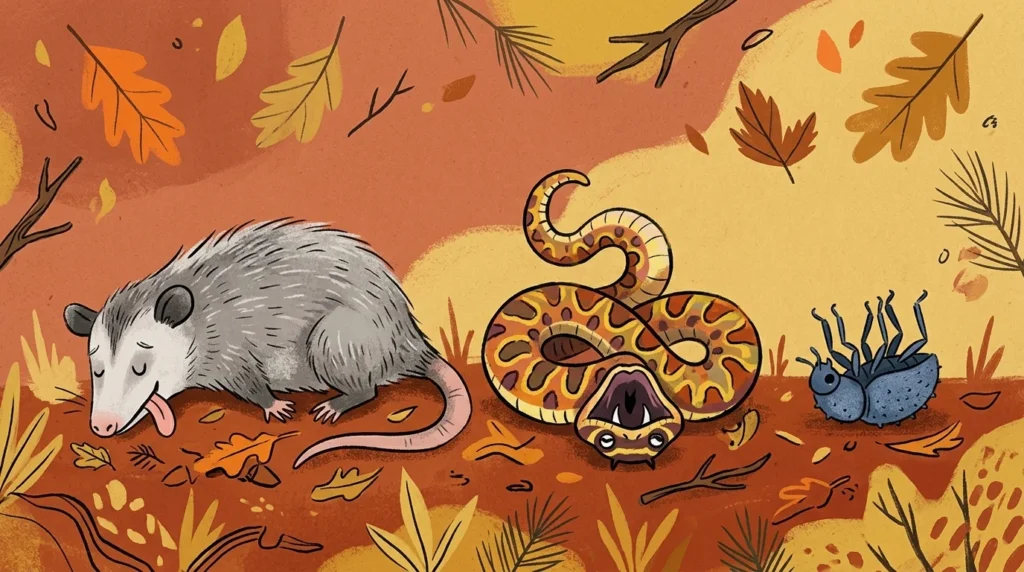
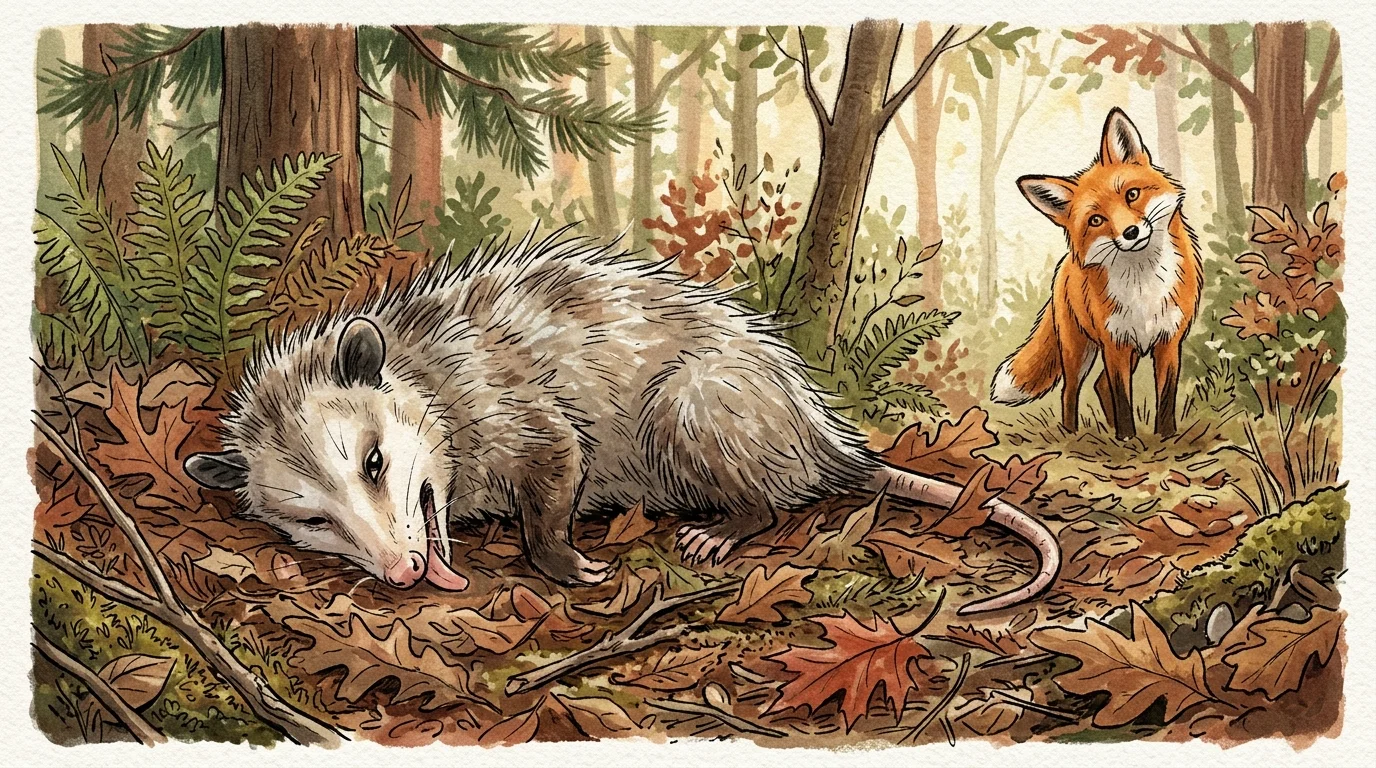
The Virginia opossum is the undisputed champion of thanatosis; in fact, the creature is solely responsible for the phrase “playing possum.” When confronted by a dog, coyote, or bobcat, an opossum will initially try to bare its teeth, hiss, and look as threatening as possible. If the predator continues to press the attack, the opossum’s nervous system takes over, plunging the animal into a state of involuntary shock.
The performance is incredibly convincing because it is entirely physiological rather than a conscious choice. The opossum collapses onto its side, its eyes gloss over, and its tongue lolls out of its open mouth. Its heart rate drops significantly, and its breathing becomes shallow enough to be virtually undetectable. To seal the illusion, the opossum excretes a foul-smelling green fluid from its anal glands that smells distinctly like a rotting corpse. Most predators are hard-wired to avoid diseased or rotting carrion, so they typically sniff the limp body, lose interest, and walk away. This state of tonic immobility can last anywhere from a few minutes to an astonishing six hours, ending only when the animal’s brain registers that the environment is quiet and the threat has fully passed.
2. Eastern Hognose Snake
If the opossum wins an award for physiological realism, the eastern hognose snake deserves an award for pure theatrical melodrama. Found throughout the eastern United States, this relatively harmless snake has an elaborate, multi-step defense mechanism designed to ward off hawks, foxes, and larger snakes.
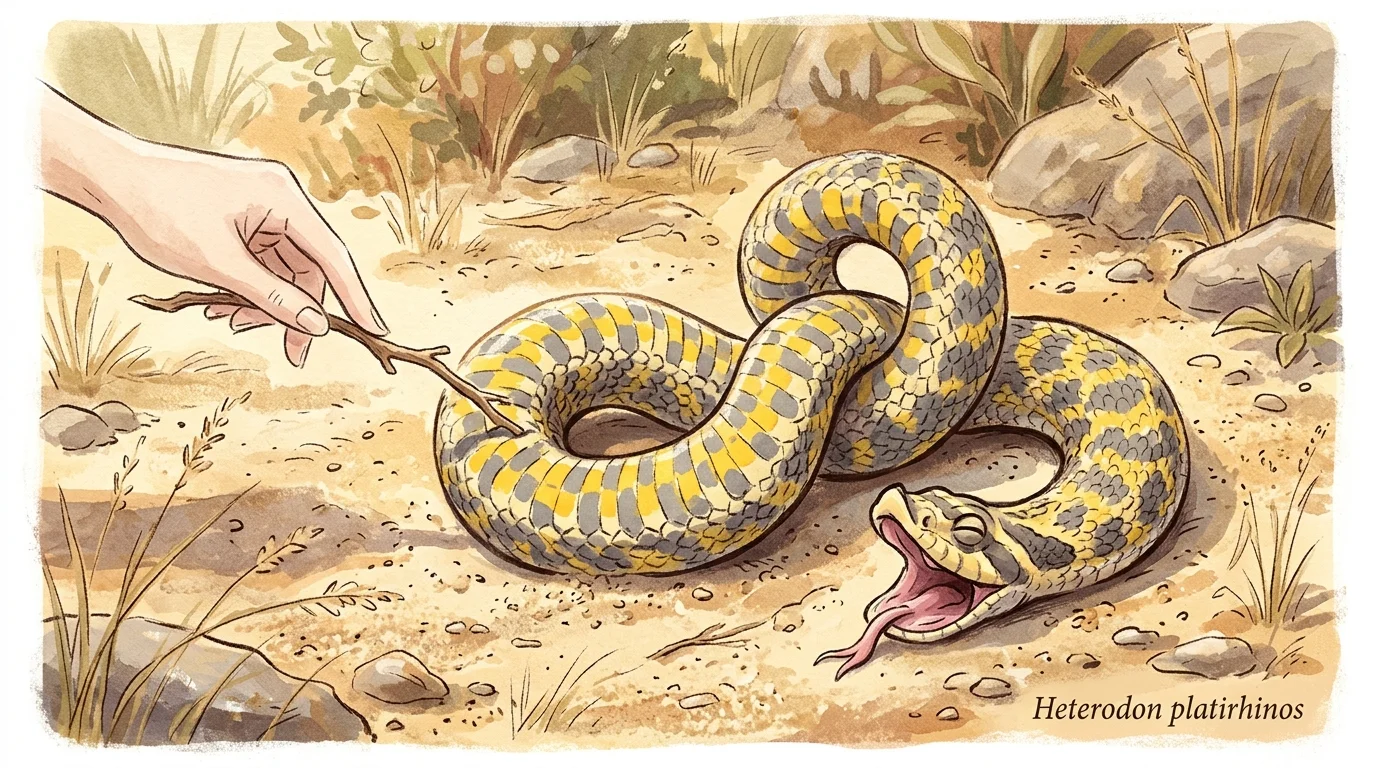
According to the Florida Museum of Natural History, an eastern hognose will first flatten its neck to mimic a dangerous cobra, hiss loudly, and perform false strikes with a closed mouth. If the predator calls its bluff, the snake shifts gears entirely. It will violently writhe around as if in the throes of a painful death, eventually flipping onto its back. It leaves its mouth wide open, hangs its tongue in the dirt, and occasionally regurgitates its last meal or bleeds slightly from the mouth. The only flaw in this spectacular performance is the snake’s rigid commitment to the script. If you gently flip the “dead” snake back onto its belly, it will immediately roll back over onto its spine—as if to insist that a truly dead snake simply must be upside down.
3. Blue Death-Feigning Beetle
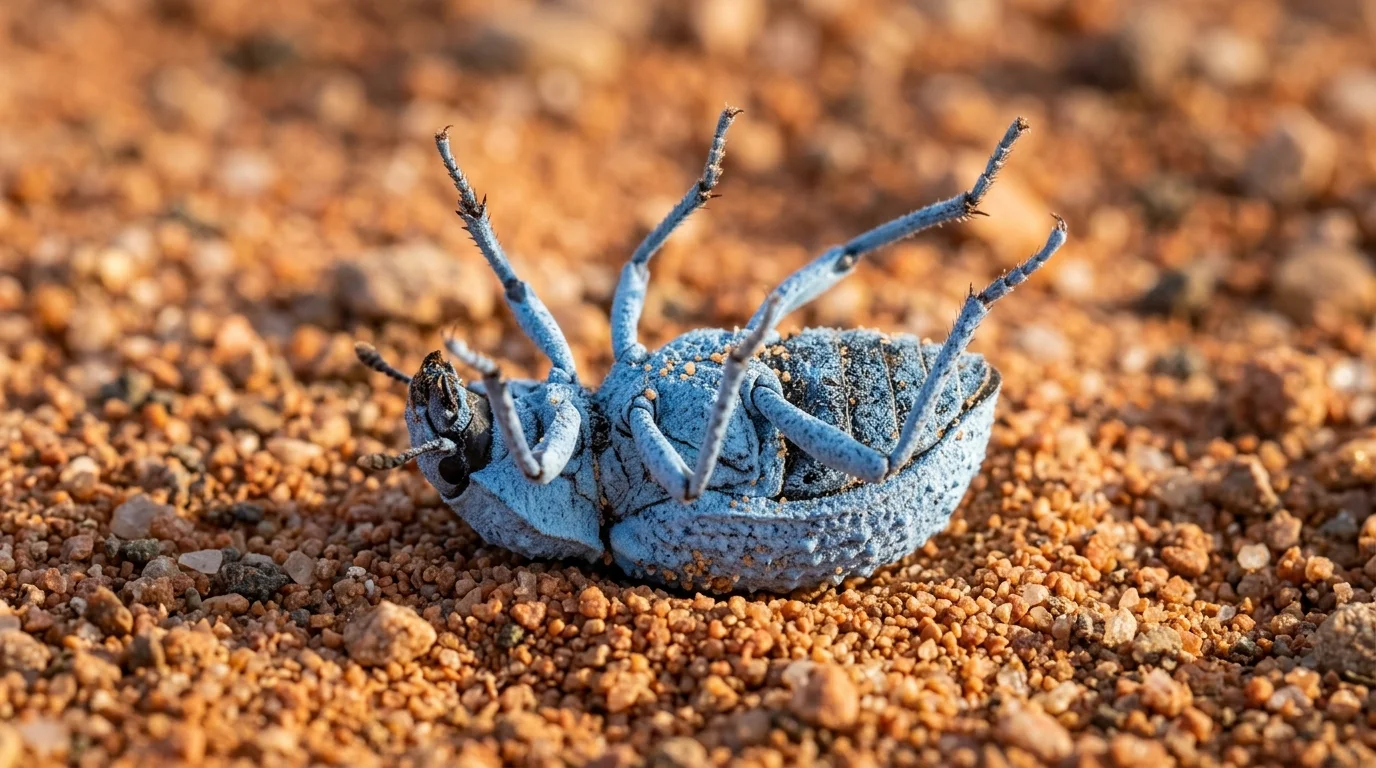
Native to the punishing environments of the Sonoran and Mojave deserts in the American Southwest, the blue death-feigning beetle wears its survival strategy in its name. This darkling beetle is covered in a waxy, powdery blue coating that helps protect it from the blistering desert sun and prevents crucial moisture from evaporating from its body.
Because these beetles cannot fly and move rather slowly, they are easy targets for fast-moving desert predators like tarantulas, scorpions, and lizards. However, these predators have evolved to detect and hunt moving prey. When a blue death-feigning beetle senses the vibration of approaching footsteps, it immediately pulls its legs tight against its body, rolls onto its back, and stiffens into absolute rigidity. To a spider or lizard, the sudden lack of movement essentially makes the beetle invisible or signals that it is an empty, unappetizing husk. The beetle will remain frozen for several minutes until the predator wanders off in search of a livelier meal.
4. Mallard Duck
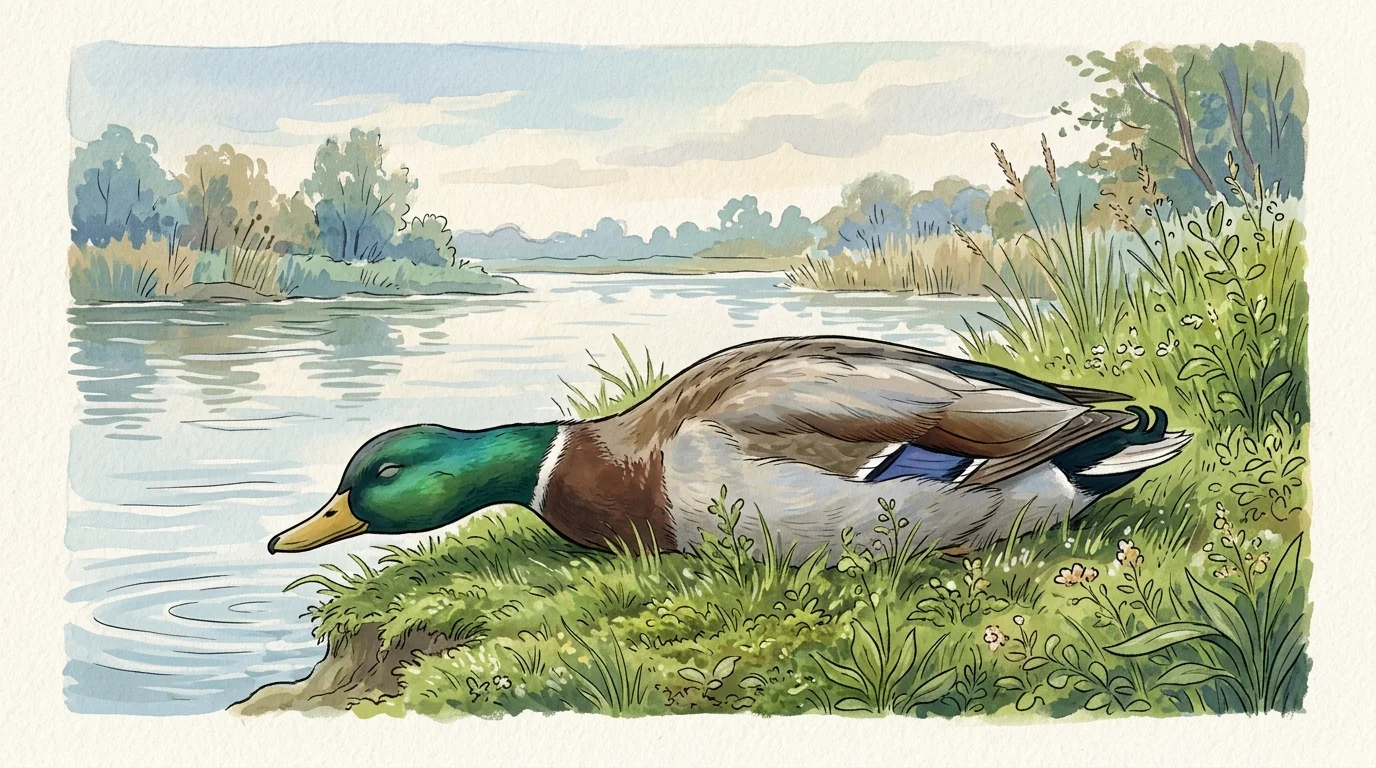
While we usually associate death-feigning with reptiles and mammals, certain birds are fully capable of utilizing tonic immobility when caught in a desperate situation. The mallard duck is a prime example, particularly when it finds itself in the jaws of a terrestrial predator like a red fox.
Foxes are notorious for caching their food; they often catch multiple prey items, kill them, and bury them to eat later. When a fox grabs a mallard duck, the duck’s nervous system frequently triggers an instant state of tonic immobility. The duck goes completely limp, its muscles slacken, and it appears lifeless. Assuming the bird is already dead, the fox will routinely set the duck down on the ground to re-grip it or to scan the area for additional prey. The moment the fox drops its guard and looks away, the duck abruptly snaps out of its trance and launches itself into the air. This delayed escape tactic exploits the predator’s handling behavior, giving the duck a fleeting but vital window to survive what should have been a fatal encounter.
5. Ladybug (Ladybird Beetle)
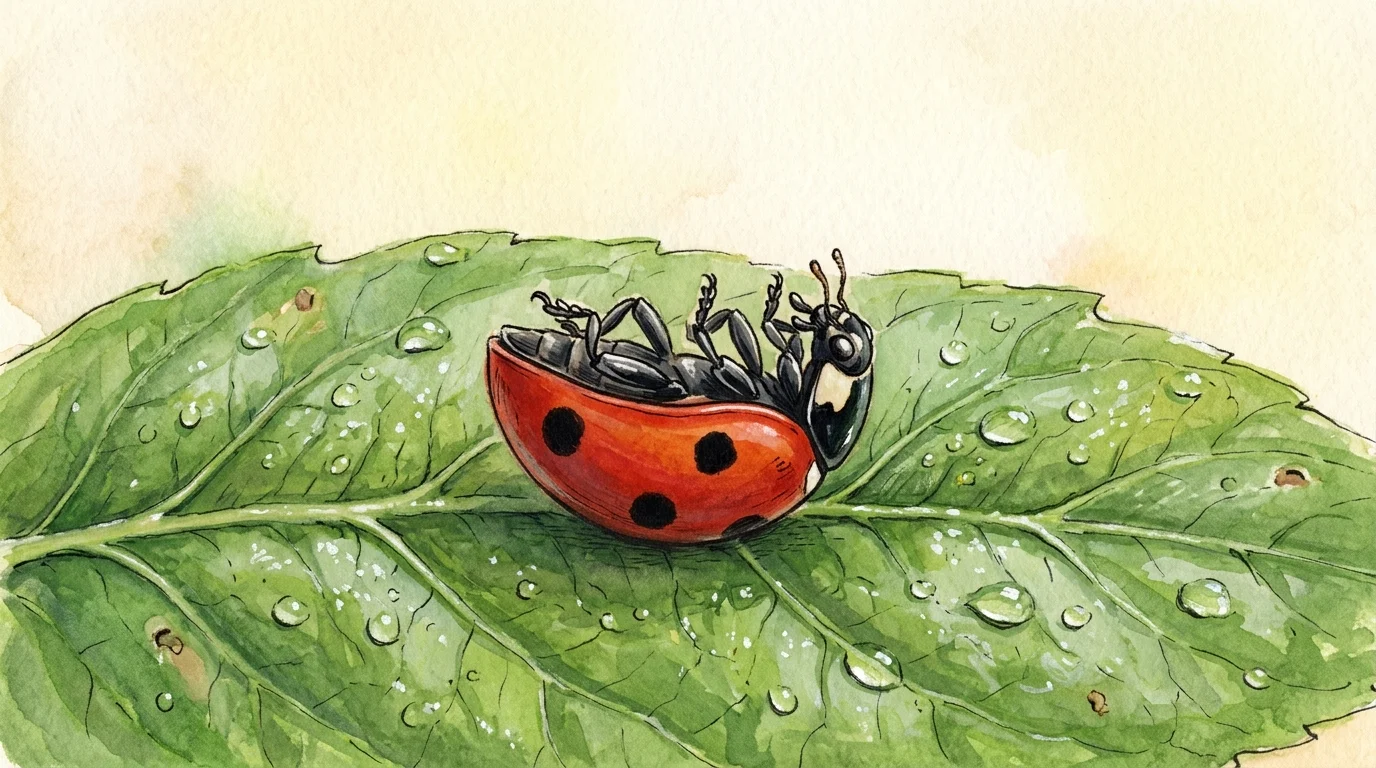
The charming ladybug pacing across your garden leaves is actually a heavily armored, chemical-warfare specialist. While their bright red and orange shells serve as a visual warning to birds and frogs that they taste terrible, sometimes a predator will ignore the warning and attack anyway.
When a ladybug is pecked at or threatened, it immediately tucks its tiny legs into its body and falls off the leaf, tumbling into the grass below like a tiny, dead pebble. But the insect takes the deception one step further through a process called reflex bleeding. The ladybug forces hemolymph—the insect equivalent of blood—out through the joints in its legs. This yellowish fluid contains toxic alkaloids that smell acrid and taste exceptionally bitter. By combining the visual cue of death with a highly unpleasant chemical deterrent, the ladybug convinces the predator that it is toxic, dead, and entirely unworthy of being eaten.
6. European Grass Snake
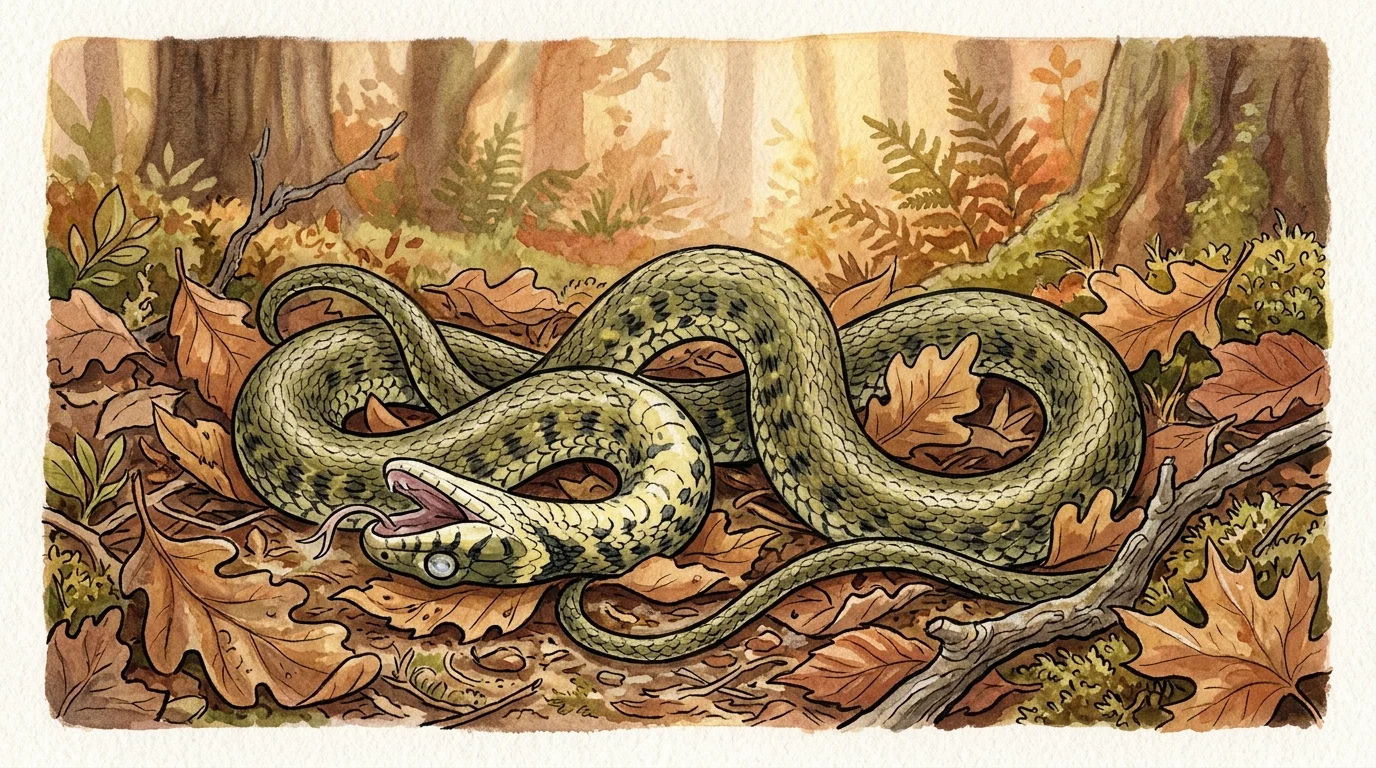
Much like the eastern hognose snake in North America, the European grass snake utilizes a highly evolved combination of chemical and behavioral deception. Commonly found near water across Europe, this non-venomous snake is a favorite snack for badgers, foxes, domestic cats, and predatory birds.
When cornered, the grass snake will first try to intimidate its attacker by inflating its body to look larger and hissing aggressively. If this fails, it shifts into thanatosis. The snake will knot itself into a loose, limp coil, flip completely upside down, and let its jaw hang slack. Simultaneously, it empties its cloacal glands, releasing a milky, pungent fluid that smells like rotting tissue and garlic. The stench is so powerful and enduring that it not only deters the predator from taking a bite, but it also lingers on the hands of human handlers for hours after the snake is released.
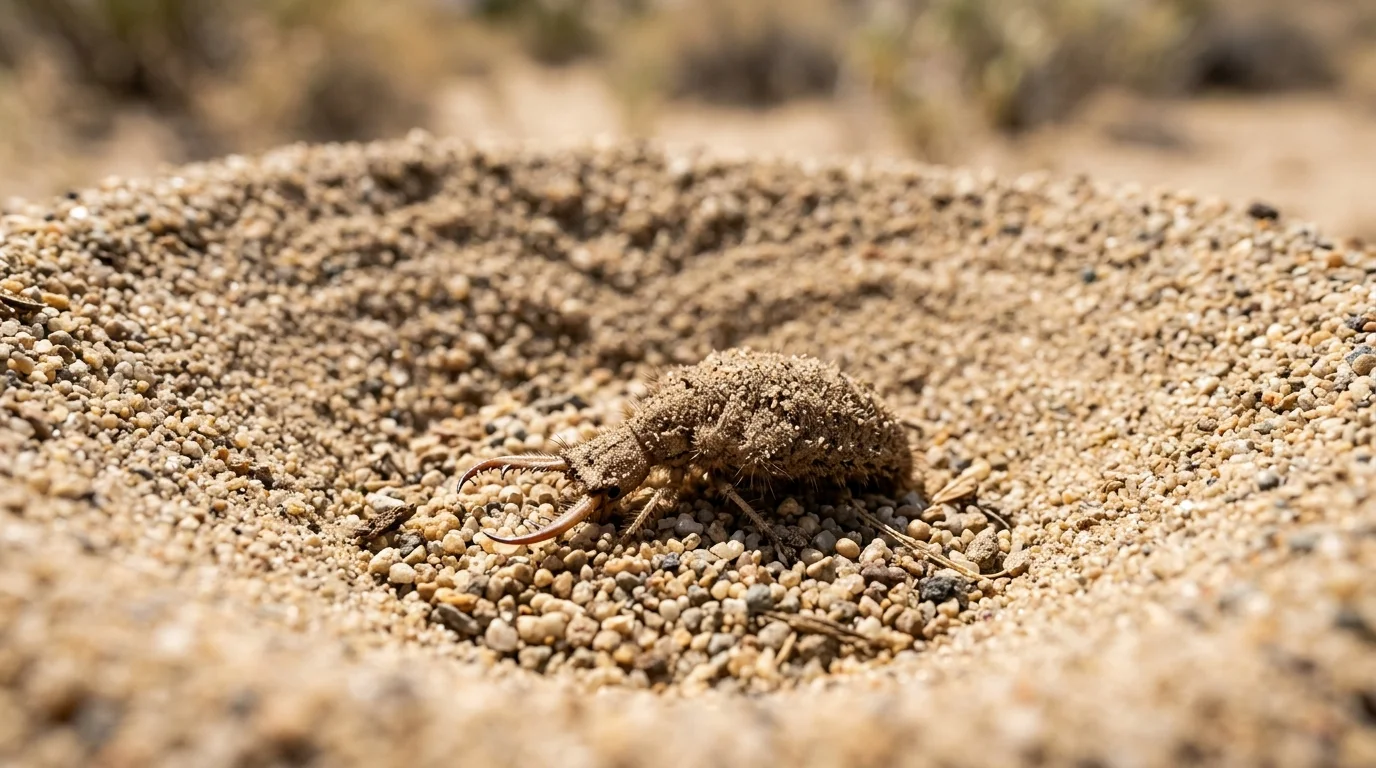
7. Antlion Larva
Antlions are fierce ambush predators in their larval stage, digging conical pits in soft sand and waiting at the bottom with massive jaws to snatch any ant that falls in. But despite being formidable hunters of smaller insects, antlion larvae are highly vulnerable to being eaten by birds and larger wandering insects if they are exposed.
If a bird scratches apart an antlion’s sandy trap and unearths the larva, the insect employs an extreme form of tonic immobility. It will freeze completely, refusing to twitch even a single appendage. Because the larva is covered in bristles that trap sand and dust, its frozen posture makes it look exactly like a small clump of dirt. An antlion can maintain this absolute stillness for well over an hour, outlasting the patience of almost any hungry bird. Once the coast is entirely clear, it finally revives and quickly burrows backward into the sand to build a new trap.
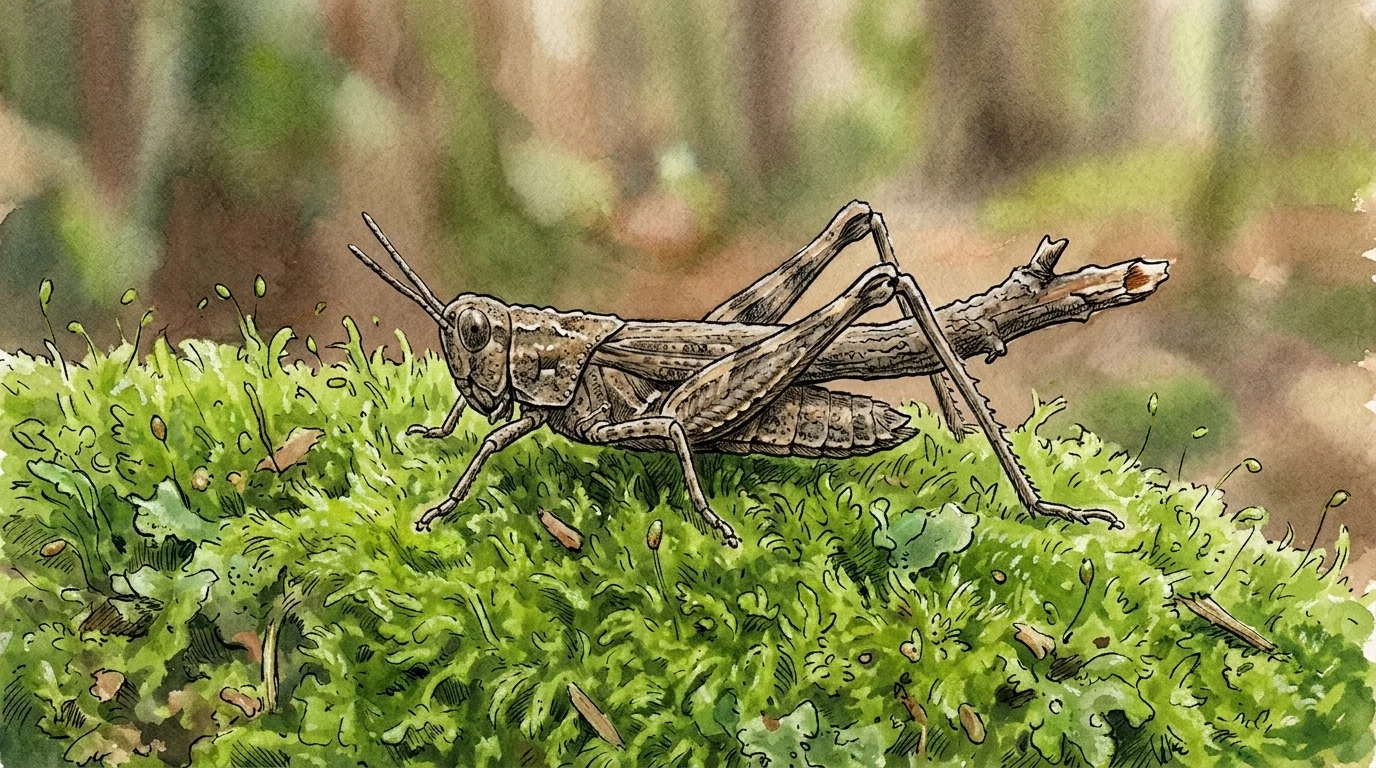
8. Pygmy Grasshopper
Amphibians heavily rely on visual triggers to hunt; a frog will generally ignore a stationary object but will instantly shoot its tongue out at a moving insect. The pygmy grasshopper exploits this predatory glitch with a highly specialized form of thanatosis that involves both stillness and physical contortion.
When a pygmy grasshopper spots a frog or toad approaching, it does not simply go limp. Instead, it rigidly extends its legs away from its body in a stiff, unnatural posture and freezes. This behavior serves a dual purpose. First, the lack of movement makes the grasshopper difficult for the frog’s motion-based vision to track. Second, if the frog does manage to grab the insect, the rigid, splayed legs make the grasshopper incredibly difficult and uncomfortable to swallow. Frustrated by the stiff, uncooperative, and seemingly dead meal, the frog will often spit the grasshopper out, allowing it to recover and hop away.
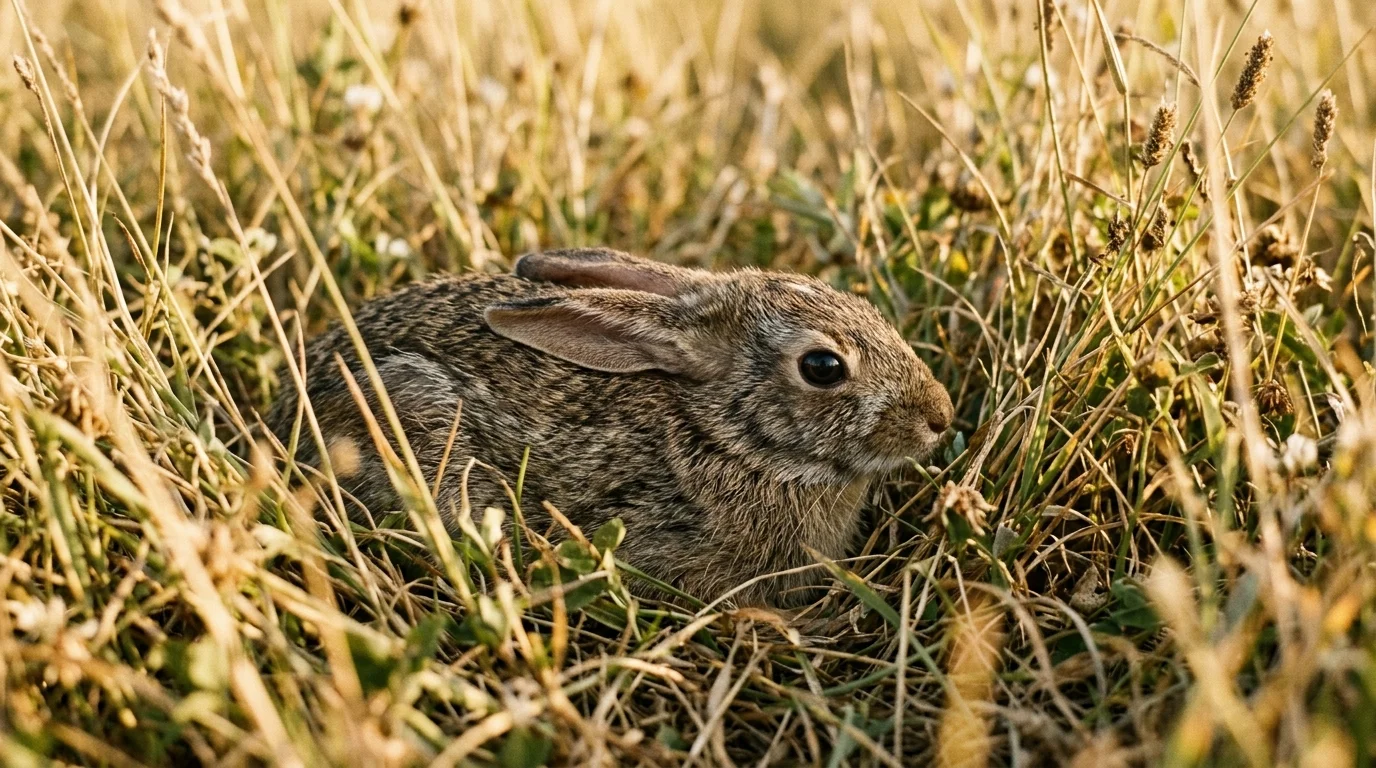
9. Eastern Cottontail Rabbit
For prey animals that sit near the bottom of the food chain, extreme fear dictates physical responses. When an eastern cottontail rabbit is captured by a hawk, fox, or even a domestic dog, it may enter a state of profound tonic immobility. The rabbit’s body goes completely limp, its breathing slows, and it stares blankly ahead.
While this might look like the rabbit has surrendered to its fate or died of fright, it is actually an involuntary evolutionary mechanism. By going limp, the rabbit reduces the predator’s instinct to violently shake or crush struggling prey. The predator will often loosen its grip to adjust its hold or to carry the “dead” rabbit back to a den. The instant the predator relaxes its jaw or sets the rabbit down, the rabbit’s nervous system re-engages, and it violently kicks off the ground to sprint toward the nearest dense brush.
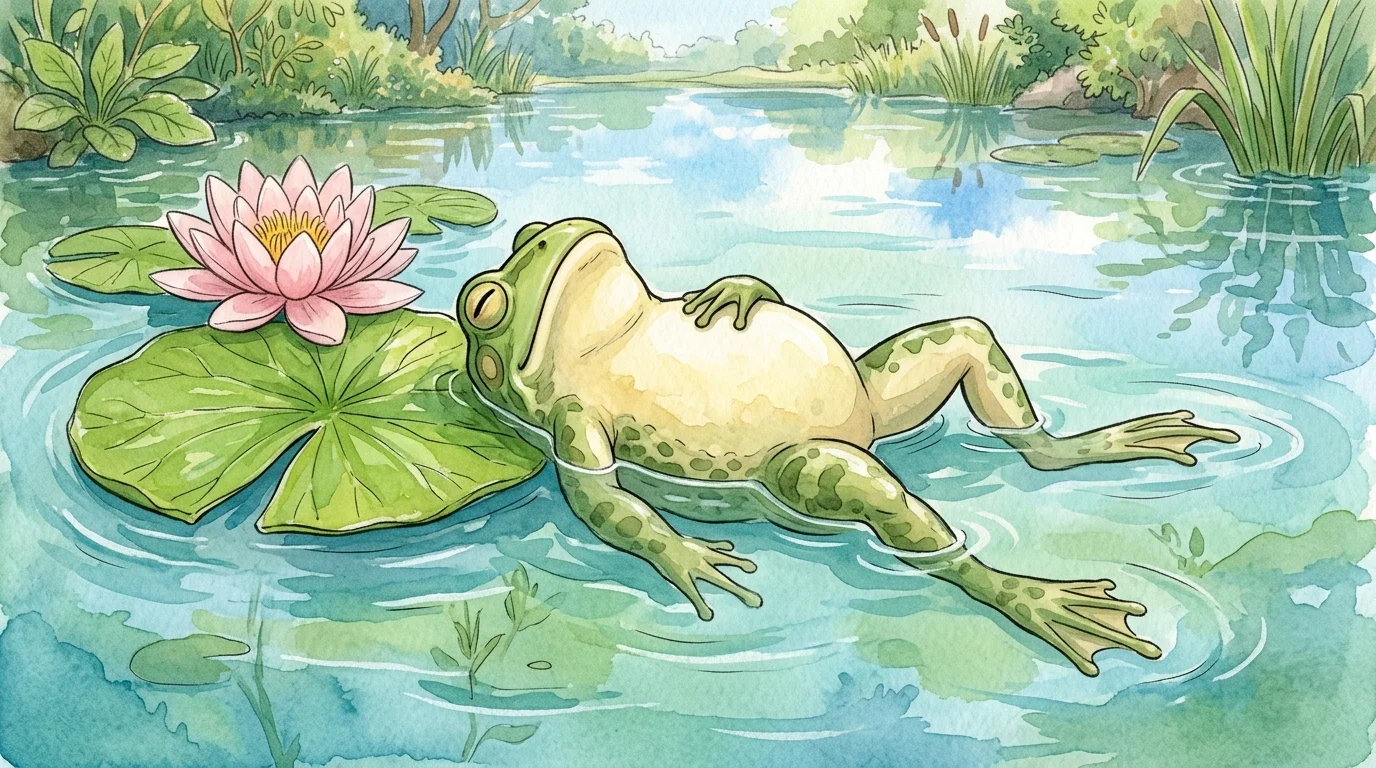
10. Bullfrog
While many frogs rely heavily on camouflage or rapid, erratic jumping to escape predators, the heavy-bodied bullfrog sometimes uses thanatosis when the chips are down. Large birds like herons and predatory mammals prefer to hunt thrashing, lively prey.
If a predator manages to pin a bullfrog down, the amphibian may stretch its limbs out, close its eyes, and go completely limp. Because a heron often tosses a fish or frog around in its beak to position it for swallowing—relying on the prey’s struggles to dictate how tightly to hold on—a completely limp frog changes the dynamic. A momentary lapse in the bird’s grip gives the bullfrog the microsecond it needs to snap back to reality and propel itself into the murky water below, instantly disappearing into the mud.
“While many assume animals play dead as a conscious choice to trick a predator, researchers increasingly view tonic immobility as an involuntary, profound physiological shutdown—a final emergency brake pulled by the nervous system when all other escape routes fail.”

Comparing Death-Feigning Strategies
Nature has developed multiple variations of this survival tactic. The table below highlights how different species combine physical stillness with other deterrents to escape their most common threats.
| Animal | Death-Feigning Behavior | Chemical Defense Used? | Primary Target Predators |
|---|---|---|---|
| Virginia Opossum | Goes limp, heart rate slows, mouth hangs open | Yes (foul-smelling anal fluid) | Dogs, coyotes, bobcats, owls |
| Eastern Hognose Snake | Writhes, flips onto back, leaves mouth agape | Yes (musk and regurgitation) | Hawks, foxes, larger snakes |
| Blue Death-Feigning Beetle | Rolls onto back, legs stiffen rigidly | No | Tarantulas, scorpions, lizards |
| Ladybug | Tucks legs in, drops to the ground | Yes (bitter, toxic yellow fluid) | Birds, frogs, mantises |
| Pygmy Grasshopper | Freezes with legs stiffly extended | No | Frogs and toads |
What Can Go Wrong When Animals Play Dead
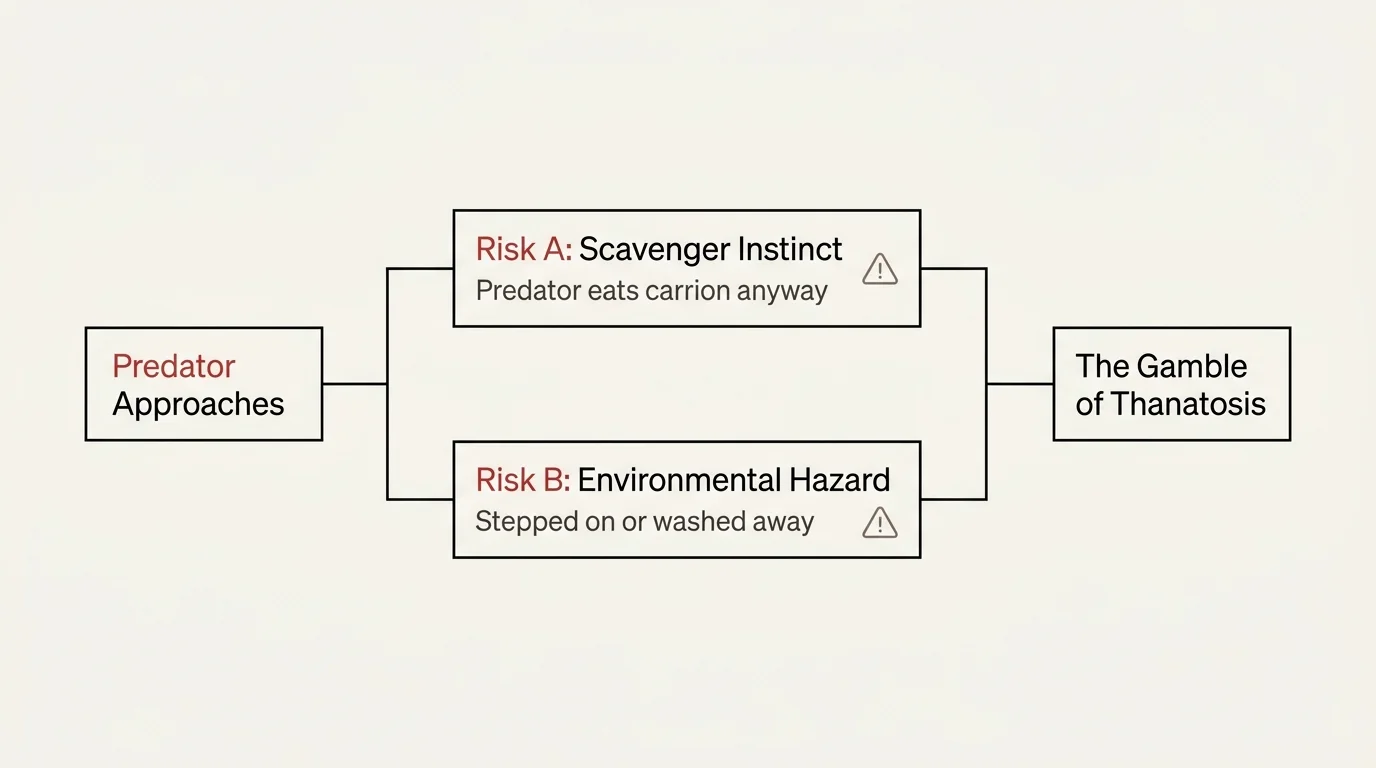
While thanatosis is a brilliant evolutionary adaptation, it is not flawless. In human-dominated environments, this defense mechanism frequently misfires, leading to dangerous scenarios.
- Traffic collisions: When a Virginia opossum is startled by the bright headlights and roaring engine of an oncoming car, its natural instinct is often to freeze or play dead. A tactic that works perfectly against a coyote fails completely against a speeding vehicle, resulting in high mortality rates on roads.
- Well-meaning human interference: Homeowners often find an unresponsive opossum or snake in their yard or garage. Believing the animal is truly dead, they may place it in a plastic trash bag or bury it, inadvertently suffocating an animal that was simply waiting for the humans to leave.
- Pet rabbit handling: According to a comprehensive review of animal behavior published by the National Institutes of Health, tonic immobility is an extreme fear response. When pet owners flip a rabbit onto its back and it goes completely still, they often mistakenly believe the rabbit is relaxed. In reality, the rabbit is terrified and experiencing a severe physiological stress response.
- Dog attacks: A curious pet dog sniffing a “dead” hognose snake or opossum might decide to play with it. If the dog bites, shakes, or paws heavily at the limp animal, the animal can sustain severe internal injuries before it realizes it needs to drop the act and attempt an escape.
Frequently Asked Questions
Do animals know they are playing dead?
In most cases, no. For mammals like opossums and rabbits, thanatosis is not a conscious, theatrical choice. It is an involuntary physiological response triggered by extreme, overwhelming fear, similar to a human fainting. Once the threat is removed and the animal’s nervous system calms down, it regains consciousness and motor control.
How do you know if an opossum is actually dead or just playing?
If you find an unresponsive opossum with no obvious physical injuries, look closely at its ribs; a playing opossum will still have very shallow, slow breathing. Additionally, their bodies remain warm and flexible during thanatosis. If the animal is cold, stiff with rigor mortis, or visibly injured, it has likely passed away. When in doubt, leave the animal alone in a quiet area for a few hours to see if it walks away.
Can you wake up an animal that is playing dead?
You cannot easily “snap” an animal out of tonic immobility by poking or prodding it; in fact, touching the animal only reinforces its fear and prolongs the state. The only effective way to help the animal recover is to remove yourself, your pets, and any loud noises from the immediate area so its nervous system can naturally reset.
Final Thoughts
The animal kingdom is packed with incredible adaptations, and the ability to mimic death stands out as one of the most drastic and fascinating. Whether it is an opossum emitting the scent of decay or a tiny desert beetle stiffening its legs, these creatures demonstrate the lengths to which life will go to preserve itself. If you ever encounter wild animals engaging in this behavior, the best thing you can do is simply walk away and give them the space they need to safely “come back to life.”
This is general informational content based on widely accepted guidance. Individual results vary. Verify current details—rules, prices, eligibility, regulations—with official sources before making important decisions. Last updated: May 2026.