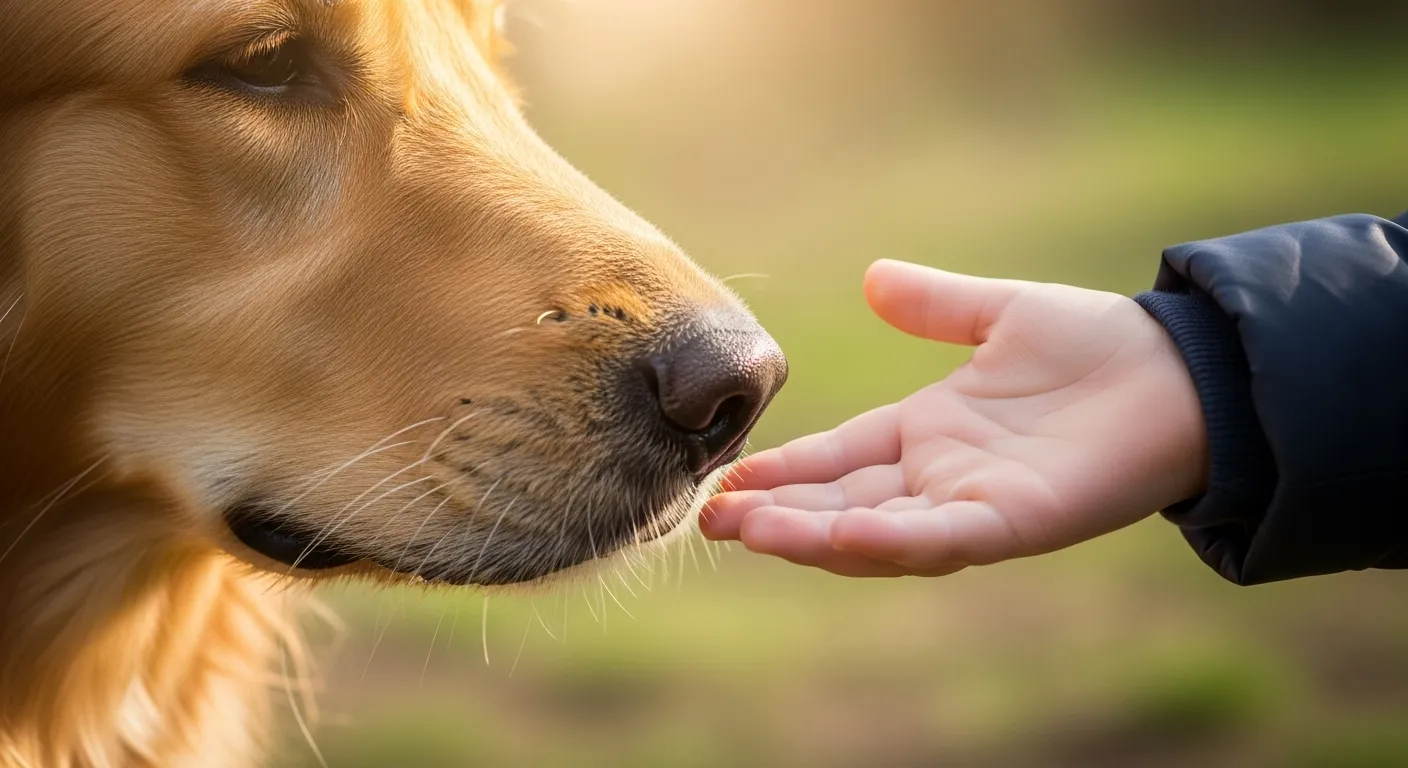
Nature often surprises us with relationships that defy the survival-of-the-fittest stereotype. While competition drives much of the animal kingdom, cooperation and affection thrive in unexpected places. Across oceans, savannas, and deep forests, distinct species team up to share food, provide protection, or simply enjoy each other’s company. Some of these bonds form through mutualistic survival strategies, where both partners gain a tactical advantage. Other connections seem driven entirely by social needs or emotional comfort, like zoo predators finding solace in a domestic companion. Understanding these interspecies friendships changes how we view animal intelligence and social behavior. Here are eight remarkable pairings that prove animals are capable of complex, cross-species bonds.
1. Cheetahs and Dogs: Calming Companions in Zoos
Cheetahs are notoriously anxious animals; they are hardwired for a fight-or-flight response that served them well on the African savanna but creates chronic stress in a captive environment. This high baseline anxiety can compromise their immune systems and inhibit successful breeding programs. Starting in the early 1980s at institutions like the San Diego Zoo Safari Park and the Cincinnati Zoo, conservation biologists devised an ingenious solution: pairing hand-reared cheetah cubs with confident companion dogs. Animal behaviorists often choose Labrador Retrievers, Golden Retrievers, or Anatolian Shepherds for their even-tempered, sociable natures.
The mechanics of this friendship rely on observation. Dogs have been domesticated for thousands of years and naturally look to humans for cues; they show relaxed, loose body language when they feel safe. Because cheetahs are highly observant, they pick up on this confident energy. When a new stimulus appears—a loud noise, a crowd of people, or a new enclosure—the cheetah looks to the dog. If the dog is unbothered, the cheetah learns there is nothing to fear. You will often see these cross-species pairs sharing a habitat, grooming each other, wrestling, and resting side by side. They remain steadfast friends well into adulthood, proving that emotional support animals exist even in the wild kingdom.
2. Coyotes and Badgers: The Underground Hunting Duo
In 2020, the Peninsula Open Space Trust captured a piece of nature-video gold: a remote camera recorded a coyote playfully bowing and waiting for a stout badger before the two trotted together through a culvert under a busy California highway. While the video charmed millions on social media, this cross-species partnership is an ancient, highly effective survival tactic. Native American folklore is full of tales describing these hunting partnerships, and early European settlers frequently noted the phenomenon.
A landmark 1992 study published in the Journal of Mammalogy confirmed the science behind the stories. When coyotes and badgers hunt together, they significantly increase their prey capture rates while expending less energy. Ground squirrels and prairie dogs represent a common, vital meal for both predators, but catching them requires entirely different skill sets.
| Trait | Coyote | Badger |
|---|---|---|
| Hunting Style | Above-ground chase and pounce | Below-ground digging and excavation |
| Speed & Agility | Fast bursts of speed in open areas | Slow, methodical burrowing |
| Role in Partnership | Cuts off escape routes above ground | Flushes out prey from deep tunnels |
When working as a team, the two predators corner their prey completely. The coyote saves energy by waiting quietly in the brush while the badger acts as a living backhoe, churning up the earth. If the squirrel stays underground, the badger gets a meal; if the terrified prey bolts for the surface, the coyote strikes. Although they do not physically share the meat of the catch, their mutual tolerance—often accompanied by relaxed, friendly body language—reveals a highly functional, cooperative hunting friendship.
3. Ravens and Wolves: The Yellowstone Scavenger Bond
Yellowstone National Park hosts one of the most complex, fascinating predator-scavenger relationships on the planet. Ravens are frequently called “wolf-birds” by naturalists and indigenous cultures because of their deep, historical association with wolf packs. Whenever wolves make a kill, ravens are almost always the first scavengers to arrive on the scene—sometimes gathering by the dozens before the wolves have even finished their meal.
For decades, observers assumed ravens simply followed wolf packs around all day, waiting for them to hunt. However, tracking research published in the journal Science revealed a far more sophisticated dynamic. Ravens use advanced spatial memory to monitor the specific geographical areas where wolves have historically made kills. They fly directly to these productive hunting grounds. But the relationship extends far beyond simple scavenging; it is highly cooperative. Ravens lack the sharp, specialized teeth necessary to tear through thick elk or bison hide. By vocally alerting wolves to a dead, injured, or dying animal, ravens essentially recruit the wolves to do the heavy lifting of opening the carcass.
In exchange for the meal, ravens have been observed acting as sentries. They will call out loud warnings to the feeding wolves if rival predators, like grizzly bears or mountain lions, approach the kill site. Beyond survival, the bond frequently turns playful. Biologists and wildlife watchers frequently observe ravens playing tug-of-war with wolf pups using sticks, or teasing the young canines by swooping low and flying just out of reach.
4. Asian Elephants and Dogs: A Story of Sanctuary Devotion
One of the most famous and emotionally profound cross-species friendships in recent history unfolded at The Elephant Sanctuary in Hohenwald, Tennessee. Tarra, an Asian elephant who officially retired to the sanctuary in 1995 after decades in the entertainment industry, struck up an incredibly unlikely friendship with a small, stray white dog named Bella. The two became entirely inseparable, spending eight years eating, sleeping, and exploring the sanctuary’s 2,700 acres together.
Elephants are known to be highly emotional, deeply social creatures with immense cognitive capacities. Tarra treated Bella not as a pet, but as an equal member of her herd. Their bond was tested when Bella suffered a spinal injury and required a long, slow recovery inside the sanctuary’s heated office building. Tarra refused to leave her friend behind. The massive elephant stood patiently outside the building’s gate for days, waiting for her companion to heal enough to be carried outside for visits.
Sadly, the friendship ended tragically in 2011 when coyotes attacked Bella in the sanctuary grounds. Demonstrating incredible loyalty and profound grief, Tarra found Bella’s body and carried her nearly a mile home to the barn they shared. Sanctuary staff gave Tarra extra attention and specialized care as she deeply mourned the loss of her best friend. The depth of Tarra and Bella’s devotion remains a powerful testament to how deeply animals can connect across the species divide, driven by pure emotional attachment rather than mere survival.
5. Moray Eels and Grouper Fish: The Multipredator Attack
If you dive the vibrant coral reefs of the Red Sea, you might witness a partnership that looks like something out of a meticulously planned heist movie. Groupers and giant moray eels actively team up to flush out hidden prey, demonstrating a level of underwater communication rarely seen outside of marine mammals. In 2006, behavioral ecologist Redouan Bshary published extensive observational findings detailing how these two distinct predators execute highly coordinated hunts.
Groupers are fast, open-water predators that rely on rapid bursts of speed to catch small fish. When a grouper chases a smaller fish, the terrified prey often darts deep into the narrow, branching crevices of the coral reef where the grouper’s bulky body cannot follow. Faced with this insurmountable problem, the grouper swims over to a resting moray eel and vigorously shakes its head—a deliberate, high-frequency visual signal inviting the eel to join the hunt.
“It was immediately obvious they had started hunting together,” Bshary noted when describing the rare interaction.
The moray eel responds to the signal by gliding out of its resting spot and threading its serpentine body through the reef’s complex crevices. If the eel manages to catch the prey inside the hole, it eats the meal itself. If the prey panics and flees into the open water to escape the eel, the waiting grouper strikes. Because both predators swallow their food whole, there are no scraps left to fight over, which researchers believe prevents aggressive competition. This coordinated effort creates a multipredator attack that leaves the prey with no safe harbor.
6. Warthogs and Banded Mongooses: The Savanna Spa
If you ever travel to Queen Elizabeth National Park in Uganda, you might stumble upon a highly unusual, entirely natural grooming service on the open savanna. Common warthogs purposefully seek out sprawling family groups of banded mongooses to clean frustrating parasites off their tough, leathery bodies.
According to the Wildlife Conservation Society, this interaction is a textbook example of mutualism, but the sheer level of physical trust involved sets it apart from typical wildlife encounters. Warthogs are large, heavily tusked wild pigs that could easily crush, injure, or even eat a small mongoose. Yet, upon approaching a mongoose troop, the warthogs willingly lie down in the dirt and lift their legs, actively signaling to the smaller mammals that they are ready for a thorough cleaning.
Here is exactly why this savanna spa partnership is so highly effective:
- Vital pest control for the warthog: Ticks, fleas, and other blood-sucking parasites latch onto the warthog’s skin, causing severe irritation and acting as vectors for potential diseases.
- A free, protein-packed meal for the mongoose: The mongooses enthusiastically pick off the blood-engorged ticks, turning the annoying pests into a highly nutritious, easy-to-catch snack.
- Access to hard-to-reach spots: The mongooses will boldly climb directly on top of the resting warthog to clean its back, ears, and face, demonstrating total comfort and an absence of fear between the two species.
7. Sperm Whales and Bottlenose Dolphins: The Unlikely Adoption
In the vast, competitive open ocean, bottlenose dolphins and sperm whales usually do not mix. In fact, pods of agile bottlenose dolphins are known to actively harass slow-moving sperm whales and their calves. But in 2013, marine researchers working off the coast of the Azores observed an incredibly rare event: a pod of adult sperm whales had seemingly adopted an adult male bottlenose dolphin into their family structure.
This specific dolphin suffered from a severe spinal malformation—a form of scoliosis that gave the back half of his body a distinct, permanent S-shape. This physical curvature likely made it extremely difficult for him to keep up with the fast-paced, highly athletic swimming of his own species, effectively rendering him a slow-moving social outcast. Sperm whales, however, travel at a much slower, more deliberate pace. Over a period of eight days, researchers documented the deformed dolphin traveling, foraging, and playing safely amidst the giant whales and their calves. When the dolphin affectionately rubbed his body against the massive whales, they occasionally rubbed back.
Marine biologists speculate that the sperm whales simply accepted the harmless dolphin into their complex social structure out of tolerance. Because adult sperm whales leave designated “babysitters” at the surface to watch over calves while the rest of the pod dives into the freezing depths for giant squid, the dolphin was able to find a safe, steady community in the upper water column.
8. Tarantulas and Dotted Humming Frogs: The Eight-Legged Bodyguard
Deep within the humid, dense rainforests of South America, a tiny microhylid amphibian known as the dotted humming frog shares a dark underground burrow with a massive, hairy, burrowing tarantula. At first glance, this looks like a fatal mistake. The tarantula is a highly efficient, venomous predator more than capable of easily killing and eating a frog of this size. In fact, these specific spiders readily hunt and consume other, similarly sized frog species.
Yet, the dotted humming frog gets a permanent free pass. Scientists believe the spider recognizes the dotted humming frog through specific chemical cues secreted on the amphibian’s skin, which signal that the frog is unpalatable. But the spider does not just tolerate the frog’s presence; it actively protects it. The tarantula fiercely guards the burrow entrance, acting as a massive, venomous bodyguard that keeps deadly predators like snakes and rival spiders away from the vulnerable frog.
In return, the frog acts as an interior exterminator. Foraging ants are a major biological threat to tarantula eggs; a large colony of ants can easily overwhelm and consume the spider’s nest. The dotted humming frog specializes in hunting and eating ants and other small, burrow-invading insects, keeping the underground home completely clear of pests. This extraordinary eight-legged and four-legged alliance proves that sometimes, the best defense in the jungle is an unexpected friend.
What This Means for You
You might wonder what a tarantula protecting a frog or a badger hunting with a coyote has to do with your daily life. Observing these intricate, cross-species partnerships reminds us that the natural world is not solely driven by ruthless competition and conflict. Empathy, cooperation, and mutual benefit are deeply ingrained survival strategies across the animal kingdom.
For pet owners, understanding these dynamics can change how you introduce new animals into your home. Just as a companion dog can soothe the nervous system of an anxious cheetah, a calm, confident pet can often help socialize a fearful rescue animal. Furthermore, these wild friendships prove that emotional connections and the need for a safe community are universal traits. By recognizing the emotional intelligence required for a whale to adopt a deformed dolphin or an elephant to mourn a stray dog, you gain a deeper appreciation for the complex, rich inner lives of the animals around you.
Frequently Asked Questions
Do animals actually feel friendship for other species?
Yes, many biologists and animal behaviorists believe that animals experience genuine social attachments. While some cross-species bonds are strictly transactional—like hunting partnerships—others, such as a dog comforting an elephant or a whale adopting a dolphin, suggest complex emotional connections and the capacity for interspecies empathy.
Why do coyotes and badgers hunt together?
Coyotes and badgers hunt together because their skills complement each other. The badger digs underground to flush out prey like ground squirrels, while the coyote waits above ground to catch any prey that escapes the tunnels. This cooperative strategy saves energy and increases hunting success for both animals.
Why do zoos pair cheetahs with dogs?
Cheetahs are naturally anxious and easily stressed in captivity. Zoos pair cheetah cubs with confident companion dogs, such as Labrador Retrievers, because the dogs have a calming influence. The cheetah observes the dog’s relaxed body language and learns that its environment is safe.
Whether it is a hunting alliance on the open plains or a gentle bond forged in a sanctuary, cross-species friendships showcase the incredible adaptability of the animal kingdom. The next time you see a bird riding on the back of a grazing mammal, or watch a surprising friendship unfold between your own household pets, you will know you are witnessing an ancient, beautiful tradition of natural cooperation.
This is general informational content based on widely accepted guidance. Individual results vary. Verify current details—rules, prices, eligibility, regulations—with official sources before making important decisions.