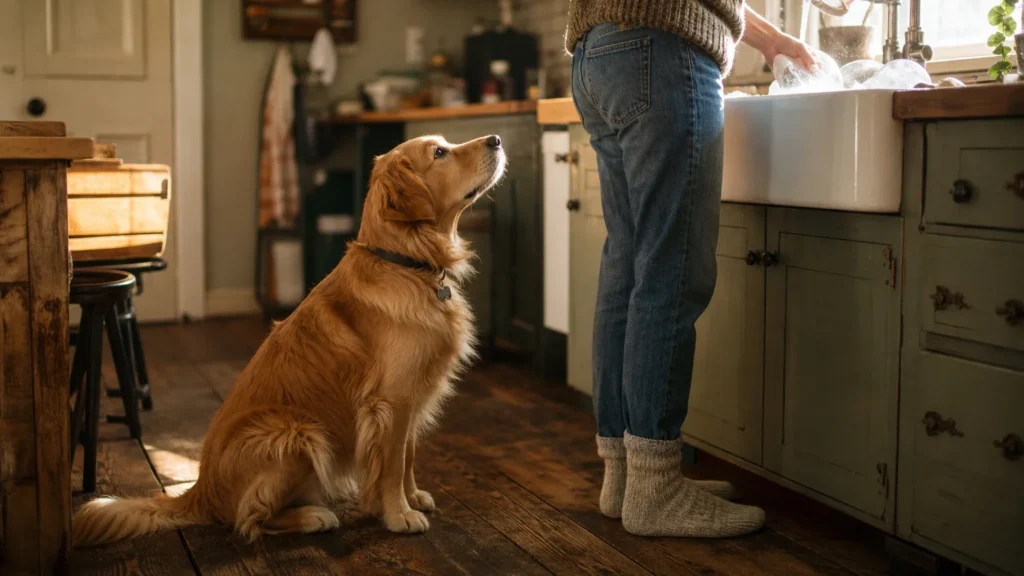
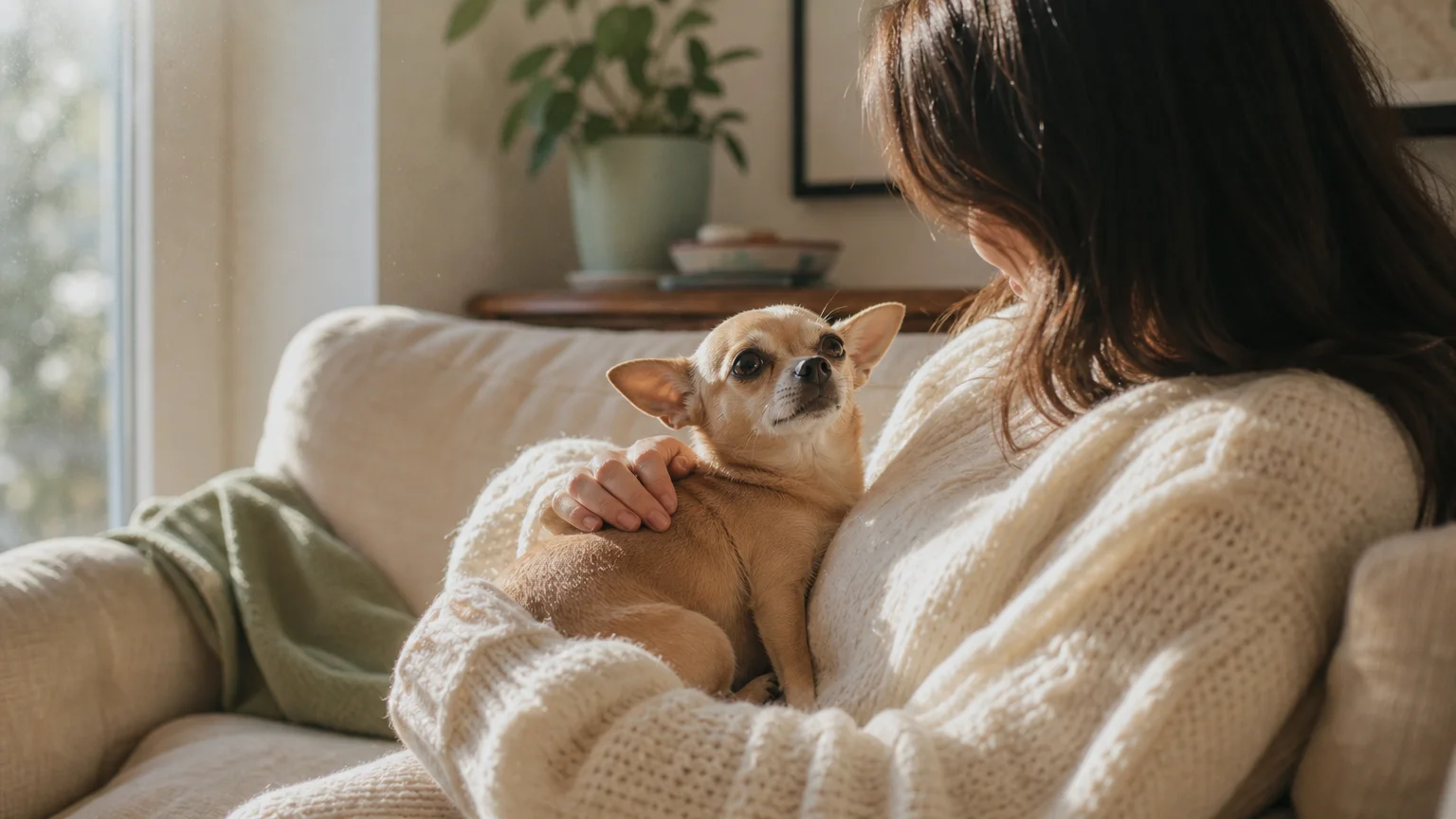
If your dog shadows your every move from the kitchen to the bathroom, you are witnessing a fascinating intersection of genetics, domestication, and classical conditioning. “Velcro dogs” stick close because thousands of years of selective breeding have wired their brains to view human companionship as their primary source of security. Beyond basic pack instincts, modern pet psychology reveals that canine companions constantly analyze our body language for cues about walks, meals, and affection. While this relentless following often signifies a healthy bond, it can occasionally cross the line into separation anxiety. Understanding the root causes behind these clinging dog habits empowers you to nurture an independent, confident pet while maintaining that cherished connection.
The Biology of the Bond: Oxytocin and Domestication
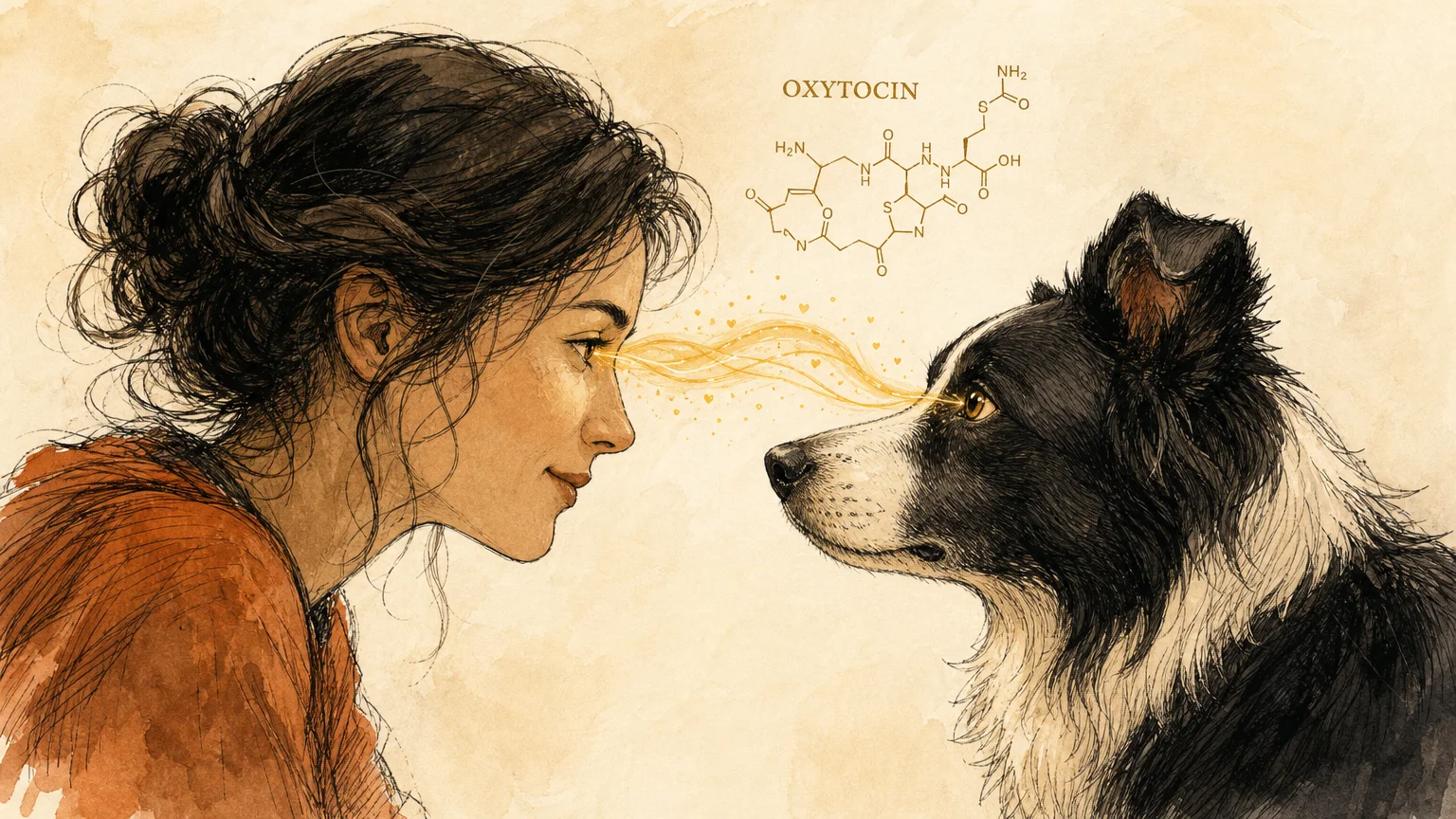
Research highlights a fascinating evolutionary divergence between dogs and their wild ancestors. In behavioral studies comparing domestic dogs and tamed wolves, scientists discovered that wolves generally avoid prolonged eye contact with humans, often viewing it as a threat. Dogs, however, have effectively hijacked the human maternal bonding system. By locking eyes with us, they trigger the exact same neurochemical pathways that bond human parents to their children.
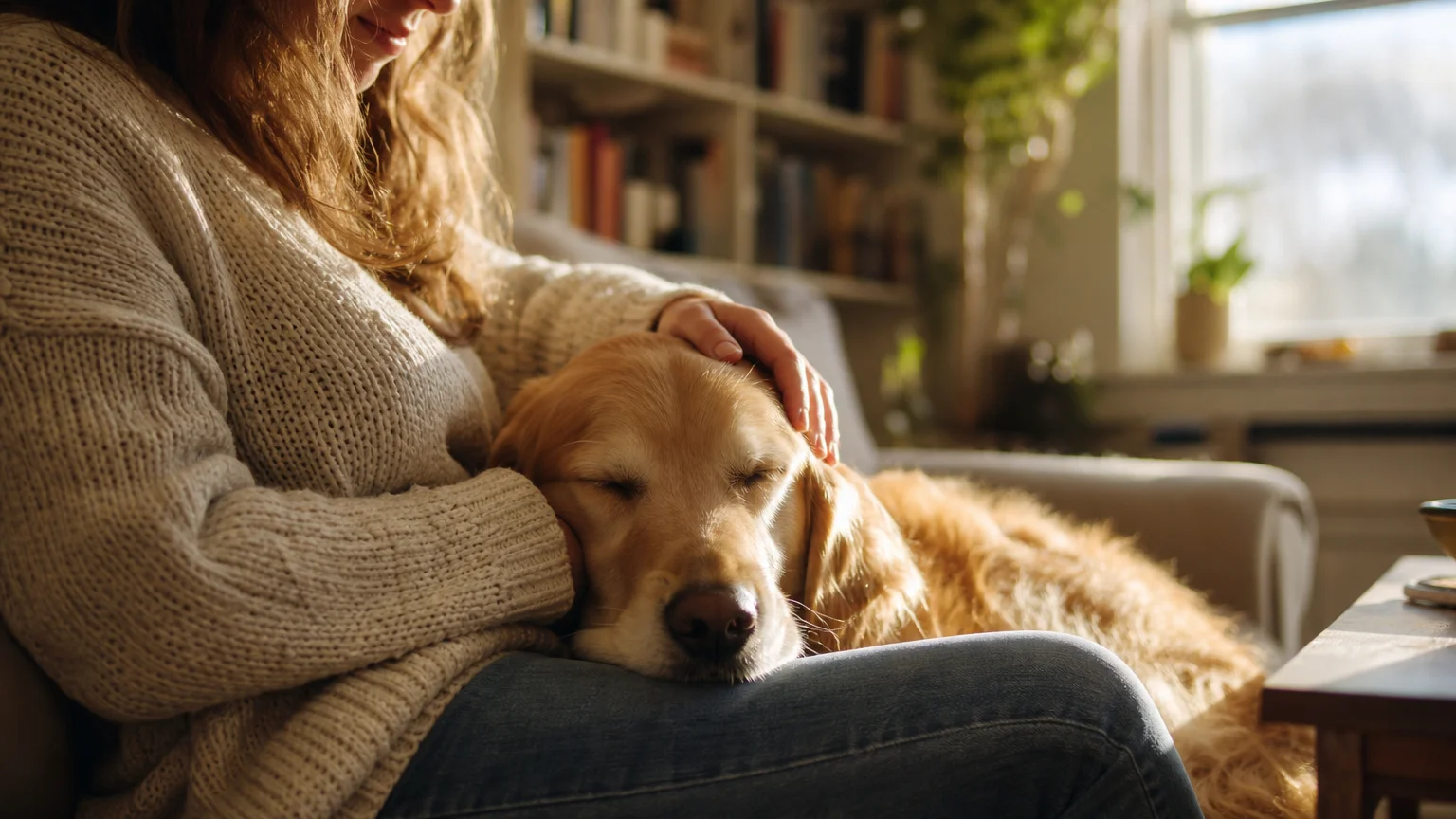
According to research published by the National Institutes of Health, when humans and their deeply bonded dogs engage in positive interactions—such as gazing into each other’s eyes or playing—both experience a significant surge in oxytocin. This hormonal feedback loop means your dog is biologically rewarded for your presence. They follow you from room to room because physical proximity guarantees a steady drip of the brain chemicals that make them feel safe, happy, and relaxed.
Bred to Be by Your Side: The Genetics of Velcro Dogs
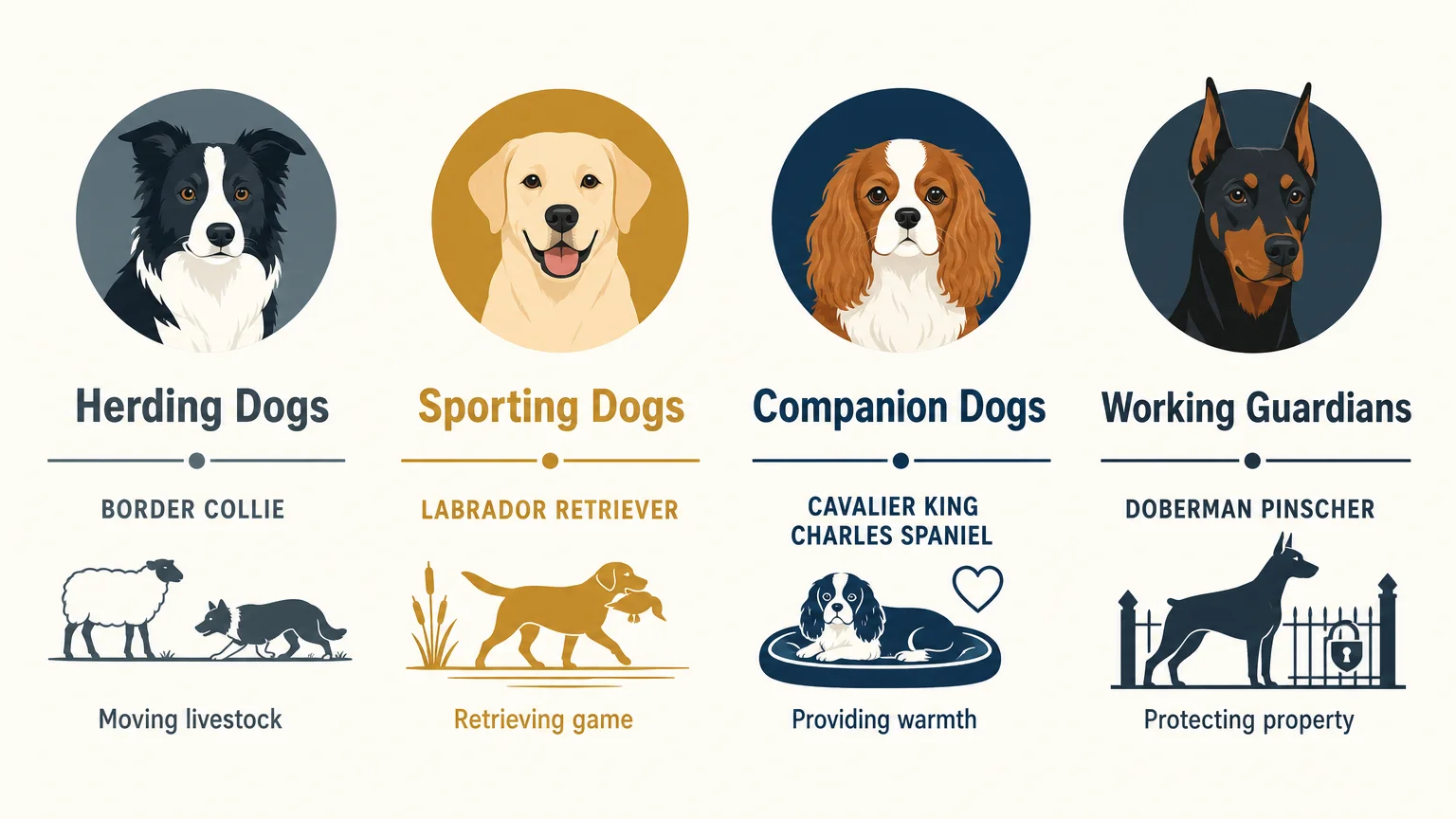
While any dog can develop a highly attached personality, certain breeds are genetically predisposed to function as your permanent shadow. Humans selectively bred specific types of dogs to perform jobs that required constant attention to a human handler. If you own a working dog, a herding dog, or a companion breed, you likely share your home with a natural Velcro dog.
| Dog Group | Common Breeds | Original Purpose | Why They Follow You |
|---|---|---|---|
| Herding Dogs | Border Collies, Australian Shepherds, Corgis | Moving livestock alongside a human shepherd. | They are hardwired to scan your body language to anticipate the next job or command. |
| Sporting Dogs | Labrador Retrievers, Vizslas, Pointers | Retrieving game and working closely with hunters. | They thrive on teamwork and look to you for immediate direction. |
| Companion (Toy) Dogs | Maltese, Cavalier King Charles Spaniels, Havanese | Providing warmth and companionship to royalty. | They were specifically designed to sit in laps and crave constant physical proximity. |
| Working Guardians | Cane Corsos, Doberman Pinschers | Protecting property and specific individuals. | They stick close to monitor their environment and keep their primary person safe. |
How We Accidentally Train Clingy Pet Habits
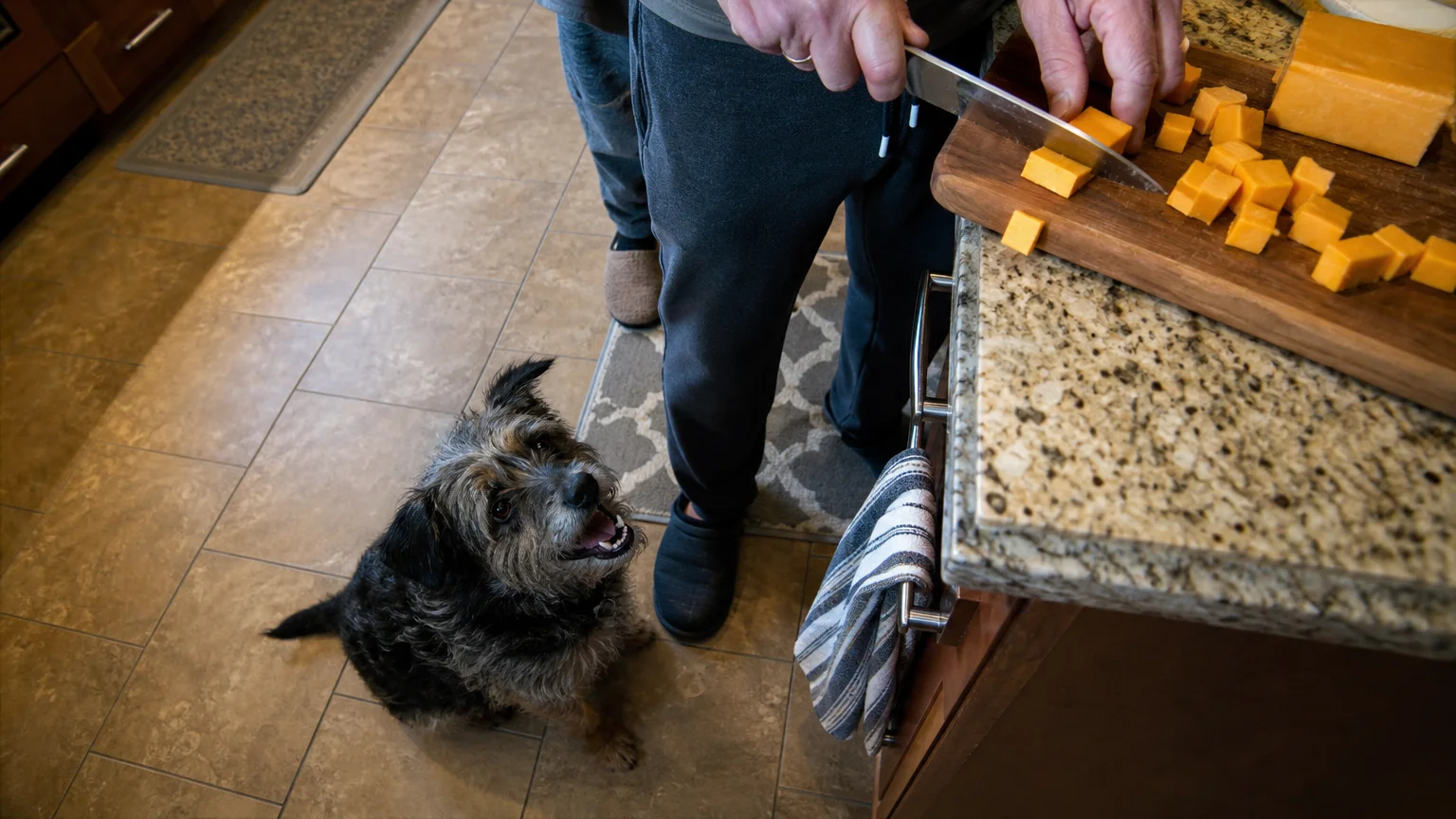
Genetics provide the foundation for a Velcro dog, but our daily reactions solidify the behavior. Every time your dog follows you into the kitchen and you drop a piece of cheese, or they follow you to the couch and you offer a belly rub, you engage in powerful positive reinforcement.
Dogs are opportunistic and highly observant learners. They quickly realize that staying within a three-foot radius of you yields a high return on investment. If you habitually talk to your dog, pet them, or offer treats when they trail behind you, you actively train them to continue the behavior. Even simple eye contact serves as a reward. For a social animal, attention is a highly valuable currency.
Conversely, when your dog is sleeping quietly in the other room, you likely leave them alone to avoid waking them. By doing this, you inadvertently withhold attention when they display independence and shower them with attention when they are clingy.
The Sensory World of the Shadow Dog
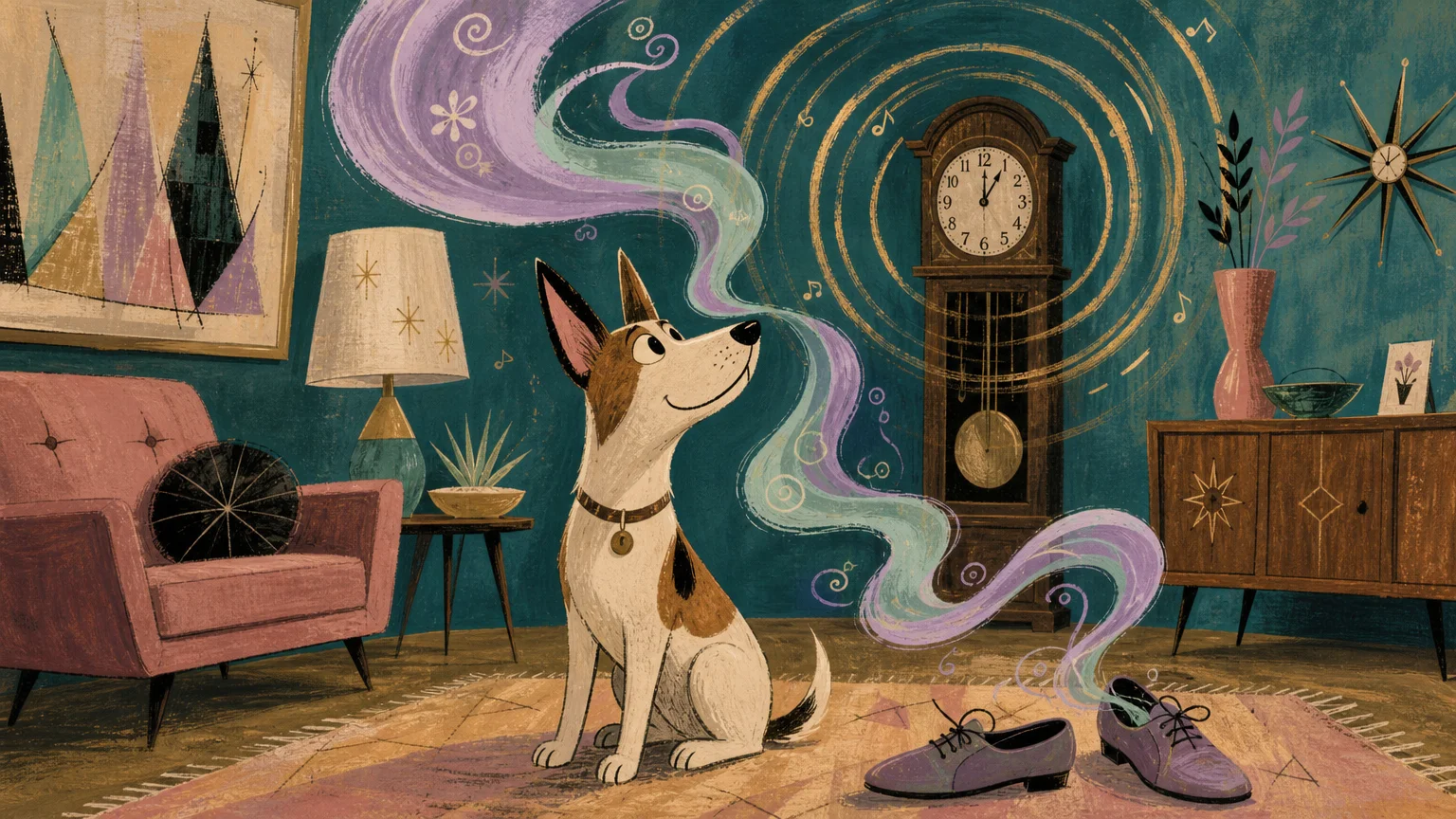
Beyond genetics and training, dogs experience the world primarily through their noses and ears. You are the center of their sensory universe. Your unique scent profile provides them with profound emotional comfort. When you move through the house, you disturb the air currents, leaving a fresh trail of scent molecules that your dog instinctively wants to investigate.
Additionally, you control the access to the outdoors, the food bins, and the toys. By keeping you in their line of sight, your dog ensures they will never miss out on an opportunity for an adventure or a snack. They also act as self-appointed guardians. While your golden retriever might not be an elite protection dog, they still feel a pack-driven responsibility to know where the members of their family are located at all times.
Things to Watch Out For
Having a fiercely loyal dog feels wonderful, but intense attachment can occasionally create friction in your daily life. Keep an eye on these specific scenarios:
- Tripping hazards: Small dogs or heavily attached large breeds that weave between your legs can cause serious falls. This is especially dangerous on stairs, in tight kitchens, or when you are carrying heavy objects.
- Resource guarding: A dog that views you as their exclusive property might growl, snap, or position themselves aggressively when another pet or family member tries to sit next to you.
- Reinforcing fear-based shadowing: If your dog suddenly refuses to leave your side during a thunderstorm or fireworks display, constantly petting them can unintentionally validate their panic.
- Sleep disruption: Dogs that refuse to sleep anywhere but directly pressed against your side can disrupt your sleep architecture, leaving you exhausted.
- Burnout for the owner: Constant physical contact and monitoring can lead to sensory overload. You are allowed to want personal space without feeling guilty about shutting the bathroom door.
Velcro Dog vs. Separation Anxiety
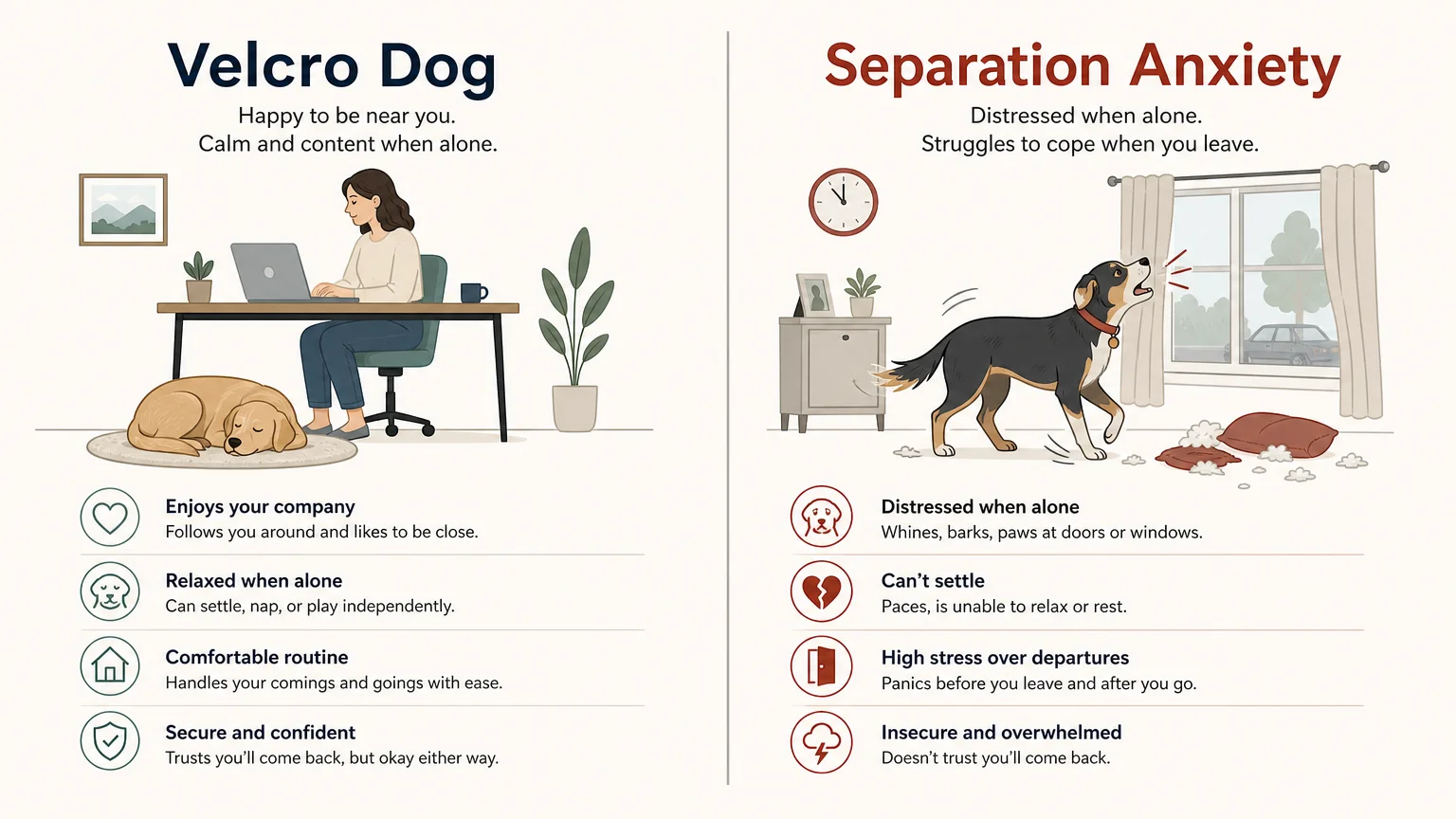
A crucial distinction in dog behavior lies between a pet that prefers your company and a pet that panics in your absence. A Velcro dog wants to be with you when you are home, but they generally settle down and sleep when you leave for work.
Separation anxiety is a diagnosed distress condition. According to the American Society for the Prevention of Cruelty to Animals (ASPCA), dogs with true separation anxiety experience a severe panic response when separated from their owners.
“The big difference between separation anxiety and being a Velcro dog is anxiety itself. While Velcro dogs prefer to be glued to their owners, dogs with true separation anxiety actually panic when they’re away from their owners.”
A dog experiencing a panic disorder frequently tears up door frames, shreds window blinds, or chews through drywall in desperate attempts to escape and find you. They may bark or howl continuously, annoying neighbors and exhausting themselves. Inappropriate elimination is another hallmark symptom; the sheer terror of being alone causes an otherwise perfectly house-trained dog to lose control of their bladder or bowels.
When DIY Isn’t Enough
While basic clinginess responds well to at-home training, certain canine habits require a professional evaluation. Consult your veterinarian or a certified animal behaviorist if you encounter these situations:
- Sudden onset clinging in older dogs: If your senior dog suddenly becomes your shadow, they may be experiencing vision loss, hearing loss, or Canine Cognitive Dysfunction (dog dementia). They follow you because they feel disoriented and use you as a safe anchor.
- Self-harm during your absence: Dogs that break teeth on crate doors, scrape their paws bloody digging at carpets, or hurl themselves through windows require immediate veterinary intervention and often anti-anxiety medication.
- Severe house soiling: If your adult dog suddenly starts urinating indoors only when you leave the house, rule out urinary tract infections or gastrointestinal issues before treating it as a behavioral problem.
- Aggressive guarding: If your dog attempts to bite anyone who approaches you, a professional trainer is necessary to correct the behavior safely before someone gets hurt.
Practical Steps to Encourage Canine Independence
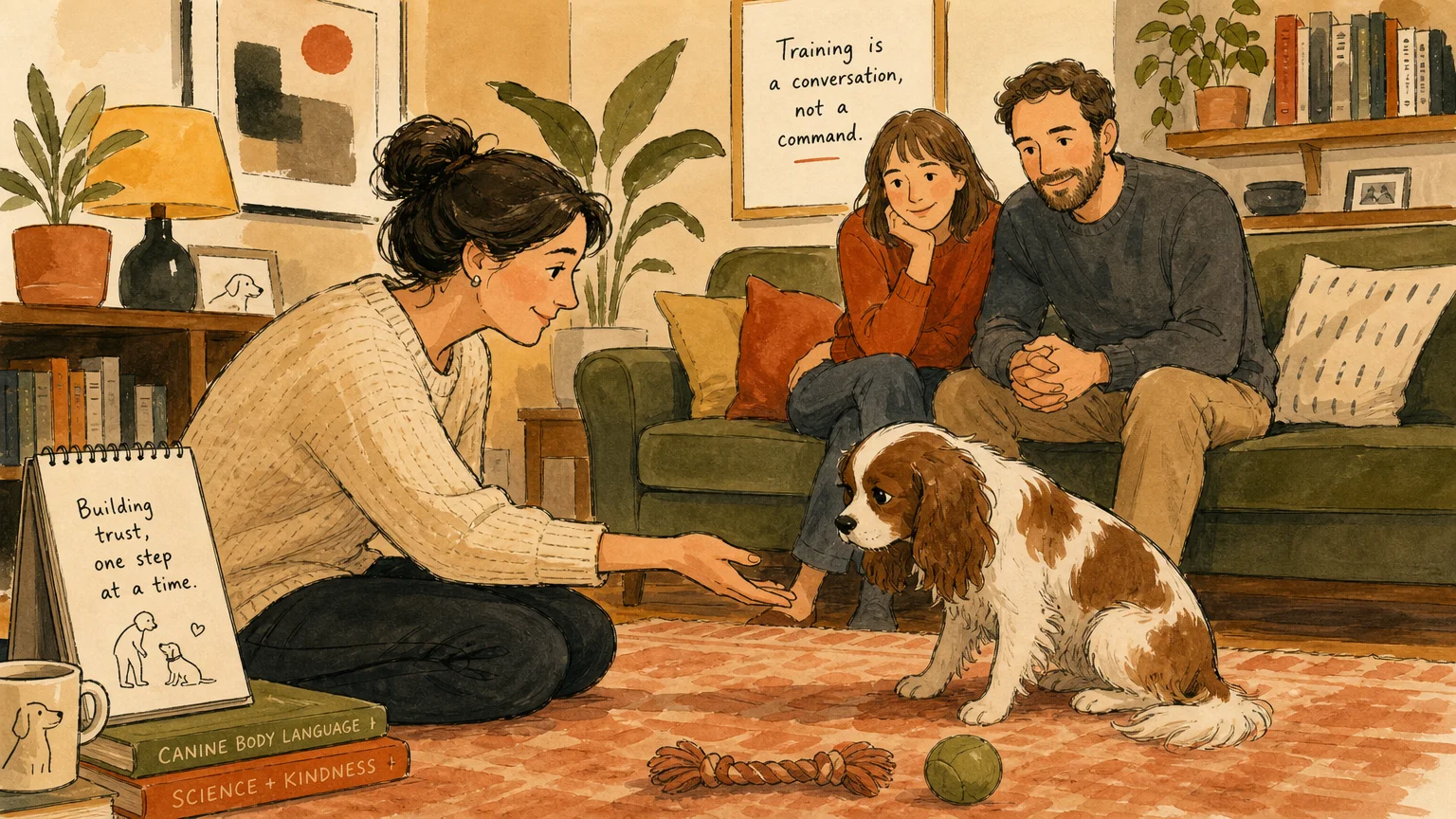
You can maintain a deep, loving relationship with your dog while teaching them that independence is safe and rewarding. Build their confidence with a few structural changes to your routine.
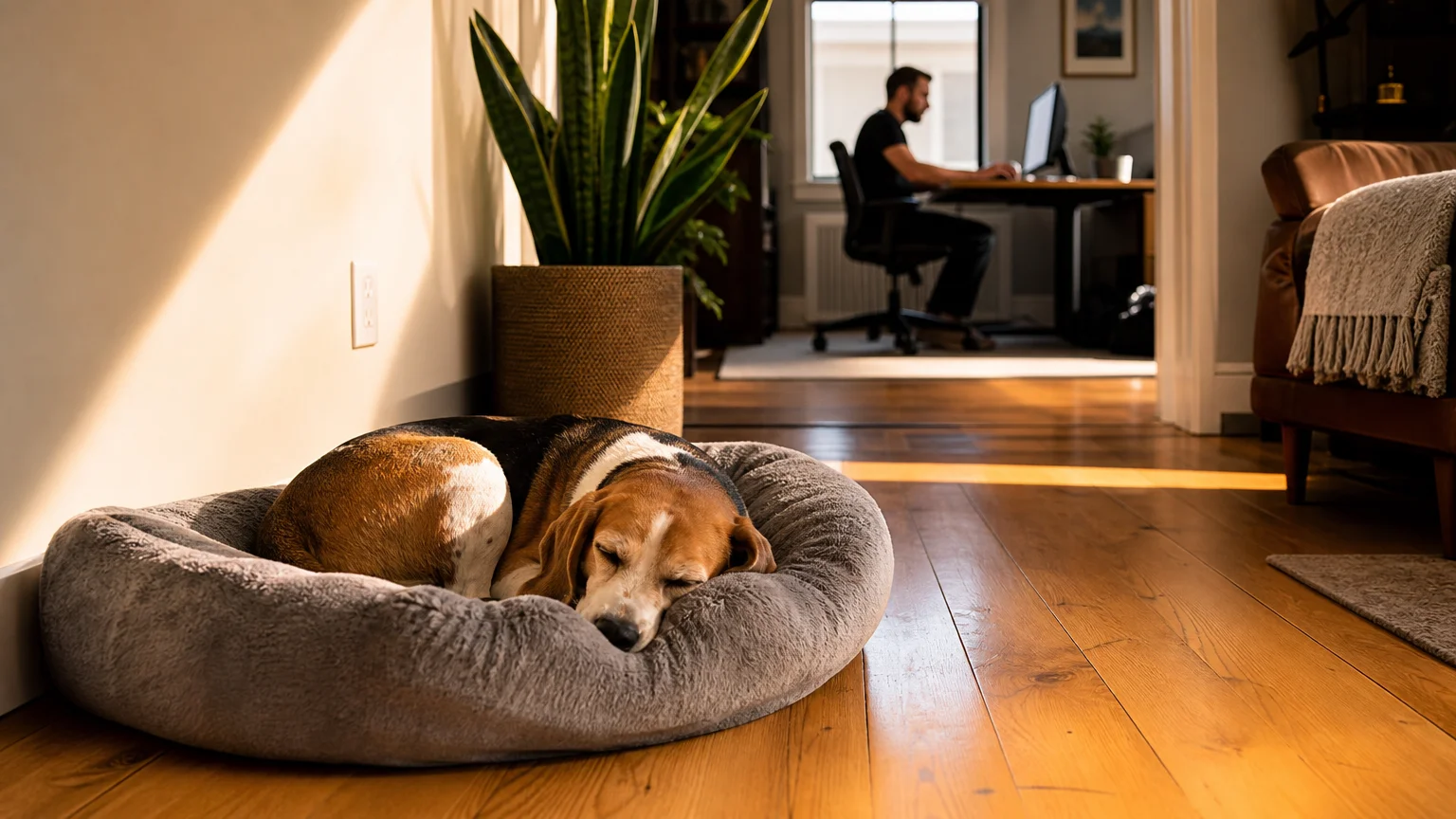
Establish a “Place” Command: This is the foundation of canine independence. Choose a comfortable dog bed or a specific rug. Lure your dog to the bed with a high-value treat and say “Place.” When all four paws are on the bed, reward them. Gradually increase the distance you step away from the bed. Over weeks of consistent practice, your dog learns that staying on their bed is highly profitable. You can eventually cook dinner while your dog watches calmly from their designated spot across the room.
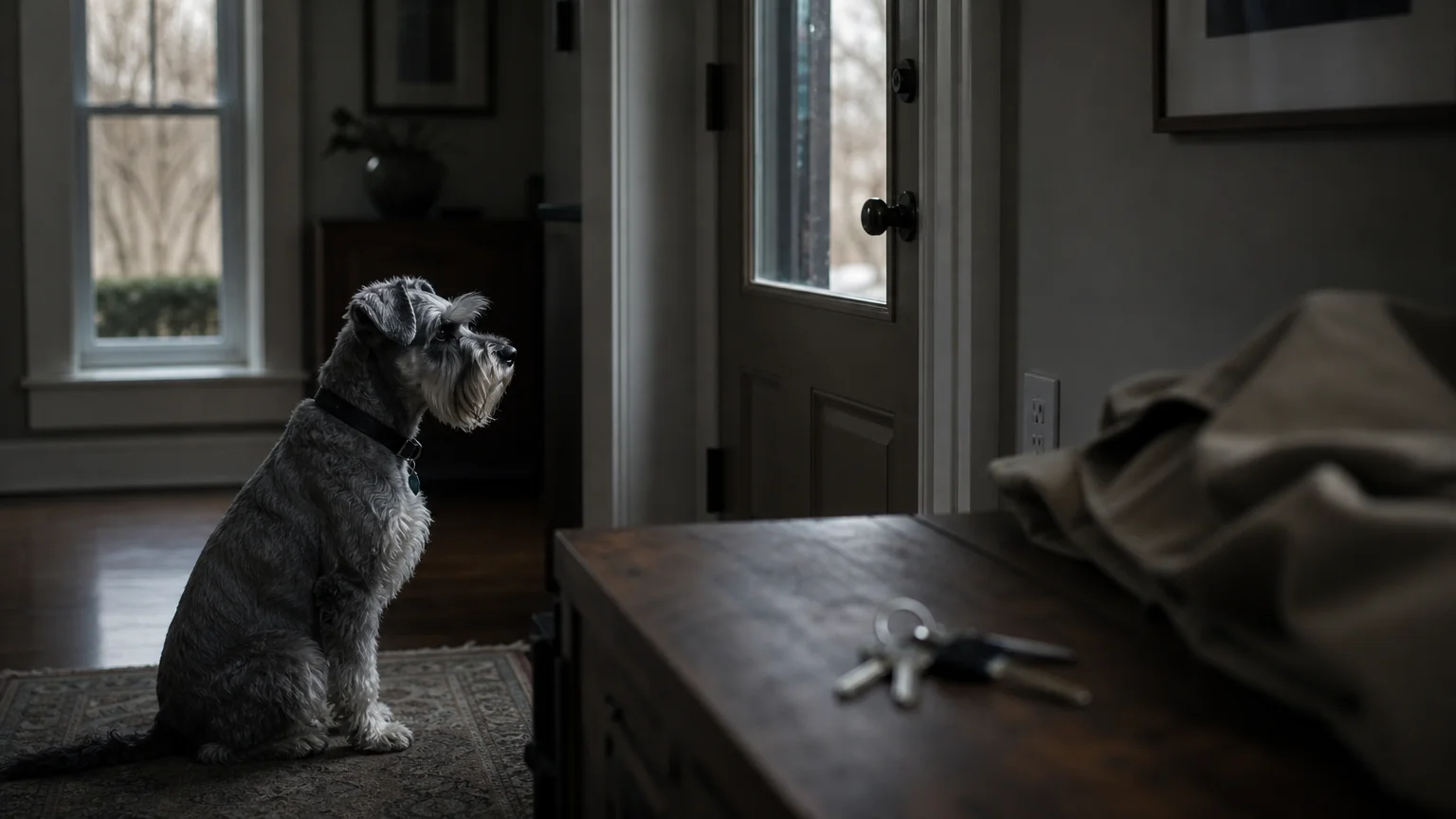
Desensitize Departure Cues: Dogs are masters at predicting when you are about to leave. They know that shoes, keys, and a coat mean isolation. To strip these objects of their anxiety-inducing power, perform fake departures. Put on your work shoes and sit on the couch to read a book. Jingle your car keys while you make a cup of coffee. When these cues no longer predict your absence, your dog’s pre-departure anxiety will plummet.
Offer Mental Enrichment: A tired dog is an independent dog, but physical exercise is only half the equation. Mental fatigue is incredibly powerful. Feed your dog their meals out of puzzle toys or snuffle mats. Give them frozen lick mats smeared with plain yogurt or peanut butter while you are in another room. When their brain is focused on extracting food, they forget to worry about what you are doing in the home office.
Frequently Asked Questions
Is it normal for my dog to follow me to the bathroom?
Yes. Dogs are pack animals that do not understand human concepts of privacy. To them, the bathroom is just another room where their favorite person happens to be. They may also follow you because they know you are a captive audience likely to give them attention while you are in there.
Can a dog suddenly become a Velcro dog?
Sudden changes in dog habits usually indicate a shift in their physical or emotional environment. Moving to a new house, introducing a new family member, or a sudden change in your work schedule can trigger insecurity, leading to clinginess. Sudden shadowing can also indicate an underlying medical issue or physical pain, warranting a vet check.
Are rescue dogs more likely to be clingy?
Yes, dogs adopted from shelters often exhibit heightened attachment behaviors. The chaotic environment of a shelter, combined with the loss of their previous home, creates deep insecurity. When a rescue dog finally finds a safe, loving person, they may shadow that person relentlessly to ensure they do not lose their home again. This honeymoon phase clinginess often subsides after a few months once the dog realizes their new environment is permanent.
Should I ignore my dog to stop them from following me?
You do not need to ignore your dog completely, but you should stop inadvertently rewarding the behavior. If you want some space, withhold petting, eye contact, and talking when they follow you uninvited. Instead, proactively reward them when they choose to relax on their own bed or explore the yard independently.
Teaching your dog to be comfortable on their own takes patience, but the effort pays off by reducing their stress and giving you a bit of breathing room. Celebrate their loyalty, respect their genetics, and give them the tools they need to feel secure even when you step into the next room. A confident dog makes for a happier home and an even stronger human-animal bond. This article provides general information only. Every reader’s situation is different—what works for others may not be the right fit for you. For personalized guidance on health, legal, or financial matters, consult a qualified professional.
Last updated: June 2026. Rules, prices, and details change—verify current information with official sources before acting on it.