Our planet features boiling deserts, frozen tundras, and oxygen-deprived mountain peaks, yet some animals have evolved to thrive in these seemingly unlivable spaces. You might assume only microscopic bacteria can handle crushing deep-earth pressure or sub-zero ice, but complex creatures have developed fascinating biological cheats to conquer extreme environments. From frogs that freeze completely solid during winter to tiny water bears that can survive the vacuum of outer space, nature continually pushes the boundaries of survival. Understanding how these resilient animals regulate their body temperatures, store water, and protect their cells gives you a fresh perspective on biology—and might even inspire future breakthroughs in human medicine. Here are nine incredible animals built to withstand the harshest conditions on Earth.
The Bigger Picture: Why Extreme Survival Matters
Studying animals that endure extreme climates goes far beyond satisfying basic curiosity. When you observe how nature solves complex biological problems, you uncover blueprints for technological and medical advancements. If a tiny fish can manage extreme salinity and a fuzzy fox can sleep comfortably in a blizzard, their biological mechanisms hold secrets that scientists can adapt for human benefit.
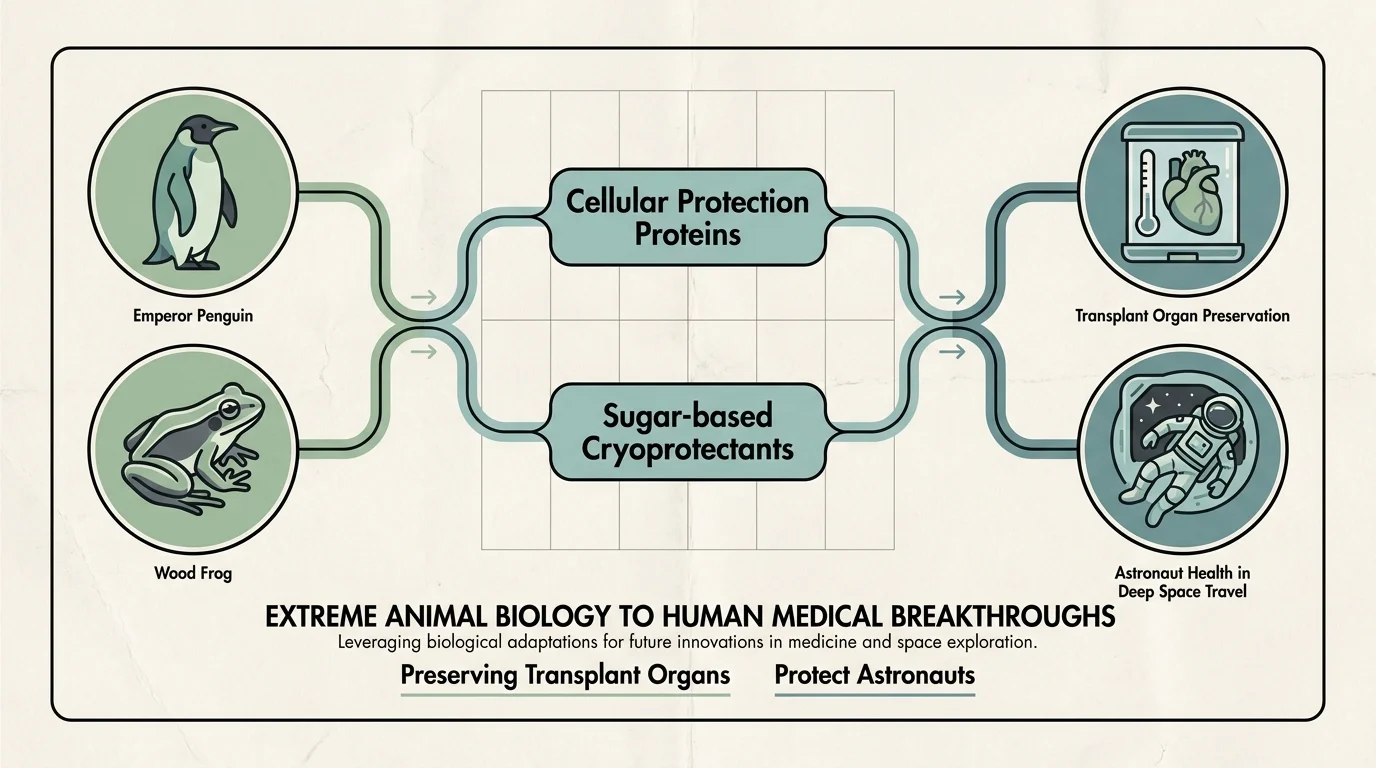
Researchers map the genomes of extreme survival animals to understand cellular protection. By isolating the exact proteins and sugars that prevent an animal’s cells from freezing, bursting, or mutating under radiation, scientists unlock potential treatments for human diseases, new methods for preserving transplant organs, and better ways to protect astronauts during deep space travel.
| Animal | Primary Superpower | Extreme Environment |
|---|---|---|
| Tardigrade | Suspended animation and DNA repair | Vacuum of space, extreme radiation |
| Wood Frog | Freezes up to 70% of its body water | Sub-zero winters |
| Camel | Withstands up to 30% body water loss | Scorching desert heat |
| Devil Worm | Extreme heat and pressure resistance | Miles deep underground |
| Emperor Penguin | Countercurrent heat exchange | Antarctic ice and hurricane-force winds |
1. The Tardigrade: Surviving the Vacuum of Space
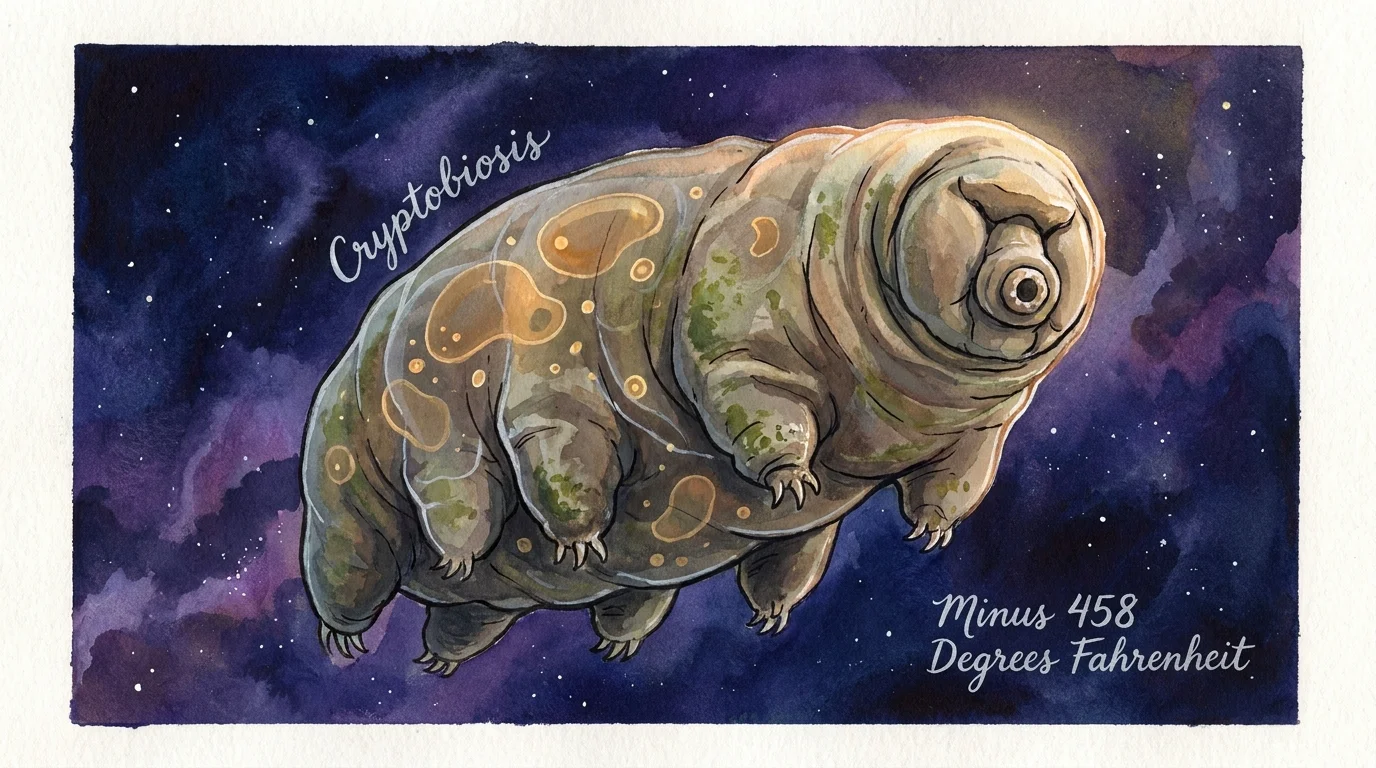
Tardigrades, affectionately known as water bears or moss piglets, measure barely a millimeter long, yet they boast the most impressive survival resume on the planet. These eight-legged microscopic animals thrive everywhere from lush forest moss to the bottom of the ocean. However, their true claim to fame is their ability to survive conditions that no other known animal can endure.
When faced with lethal environments, tardigrades enter a state of suspended animation called cryptobiosis. They retract their heads and legs, curl into a tiny ball known as a tun, and expel nearly all the water from their bodies. To prevent their cells from collapsing, they manufacture a specialized sugar called trehalose that encases their internal structures. In this state, tardigrades drop their metabolic rate to less than one percent of normal.
Because of this biological cheat code, tardigrades can survive temperatures plunging to minus 458 degrees Fahrenheit and spiking to 300 degrees Fahrenheit. In 2007, scientists placed a colony of tardigrades on the outside of a satellite. For ten days, the water bears were exposed to the absolute vacuum of space and bombarded with deadly cosmic radiation. When brought back to Earth and rehydrated, the vast majority simply woke up and went about their normal lives.
2. The Wood Frog: Freezing Solid Without Dying
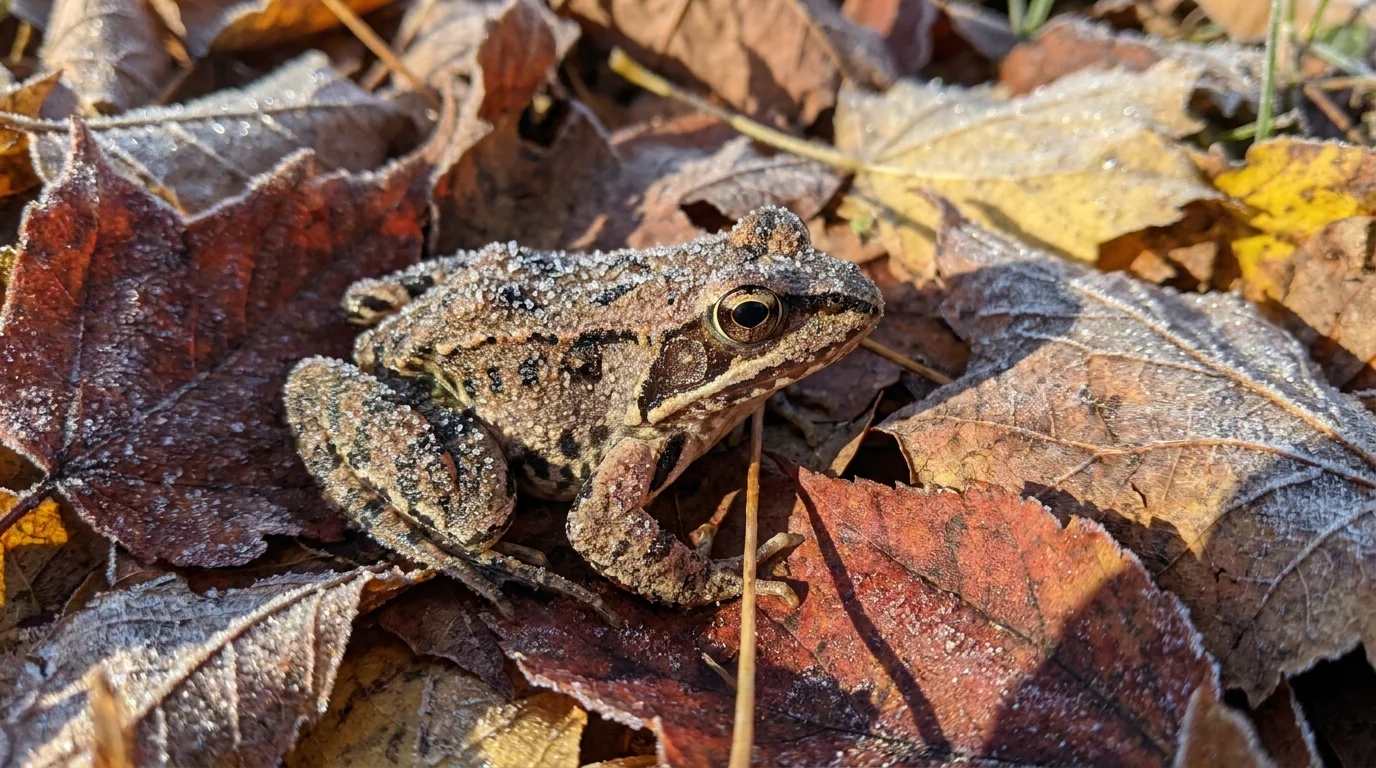
While most frogs burrow deep into mud at the bottom of ponds to escape the winter freeze, the North American wood frog takes a completely different approach. It settles beneath a shallow layer of leaf litter on the forest floor and actively allows the winter chill to overtake its body. As temperatures drop, the wood frog undergoes a physical transformation that would kill almost any other vertebrate: it freezes completely solid.
During the depths of winter, the wood frog stops breathing. Its brain activity ceases, and its heart stops beating. Up to 70 percent of the water inside its body turns into solid ice. If this happened to a human, the sharp ice crystals would rupture our cell walls, causing irreversible tissue damage.
The wood frog avoids this fate through a remarkable chemical defense. As ice touches the frog’s skin, its liver rapidly produces massive amounts of glucose. This sugar floods the bloodstream and packs into the frog’s cells, acting as a natural antifreeze. The syrup-like glucose prevents the cells themselves from freezing and dehydrating, even while the fluid surrounding the cells turns to ice. When spring arrives and the forest warms, the frog thaws from the inside out, restarts its heart, and hops away to find a mate.
3. The Emperor Penguin: Enduring Bone-Chilling Antarctic Winters
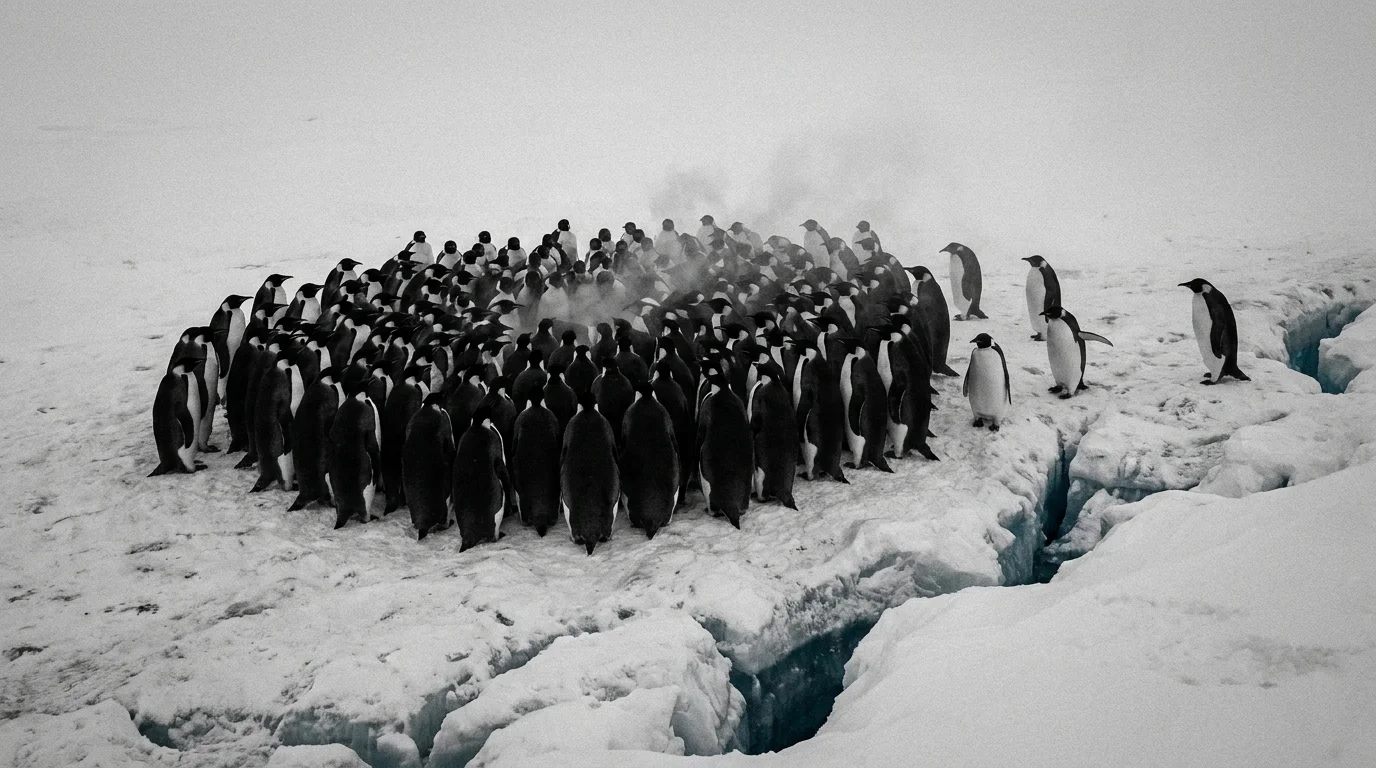
The emperor penguin does not just survive the brutal Antarctic winter; it actively chooses this season to breed. While other animals flee the ice shelves, the emperor penguin stands its ground in temperatures that regularly plummet to minus 58 degrees Fahrenheit, coupled with blinding winds blowing up to 124 miles per hour.
To endure these punishing extremes, emperor penguins rely on highly specialized physical traits. Research from the World Wildlife Fund shows that they have two dense layers of scale-like feathers that lock out the wind, backed by a thick reserve of insulating body fat. They also have proportionally tiny beaks and flippers, which reduces the surface area where body heat can escape. Inside their feet and wings, a complex network of blood vessels uses countercurrent heat exchange—warm blood traveling from the heart transfers heat to the cold blood returning from the extremities, ensuring their core stays warm without their feet freezing to the ice.
Beyond physical adaptations, emperor penguins rely on intense social cooperation. Thousands of males—who fast for up to four months while incubating a single egg on their feet—pack together in a massive huddle. The temperature inside the center of the huddle can reach a balmy 75 degrees Fahrenheit. To ensure fairness and collective survival, the penguins continuously shuffle in a slow, coordinated rotation, allowing the freezing birds on the outside edge to eventually move into the warm center.
4. The Naked Mole-Rat: Cheating Aging and Oxygen Deprivation
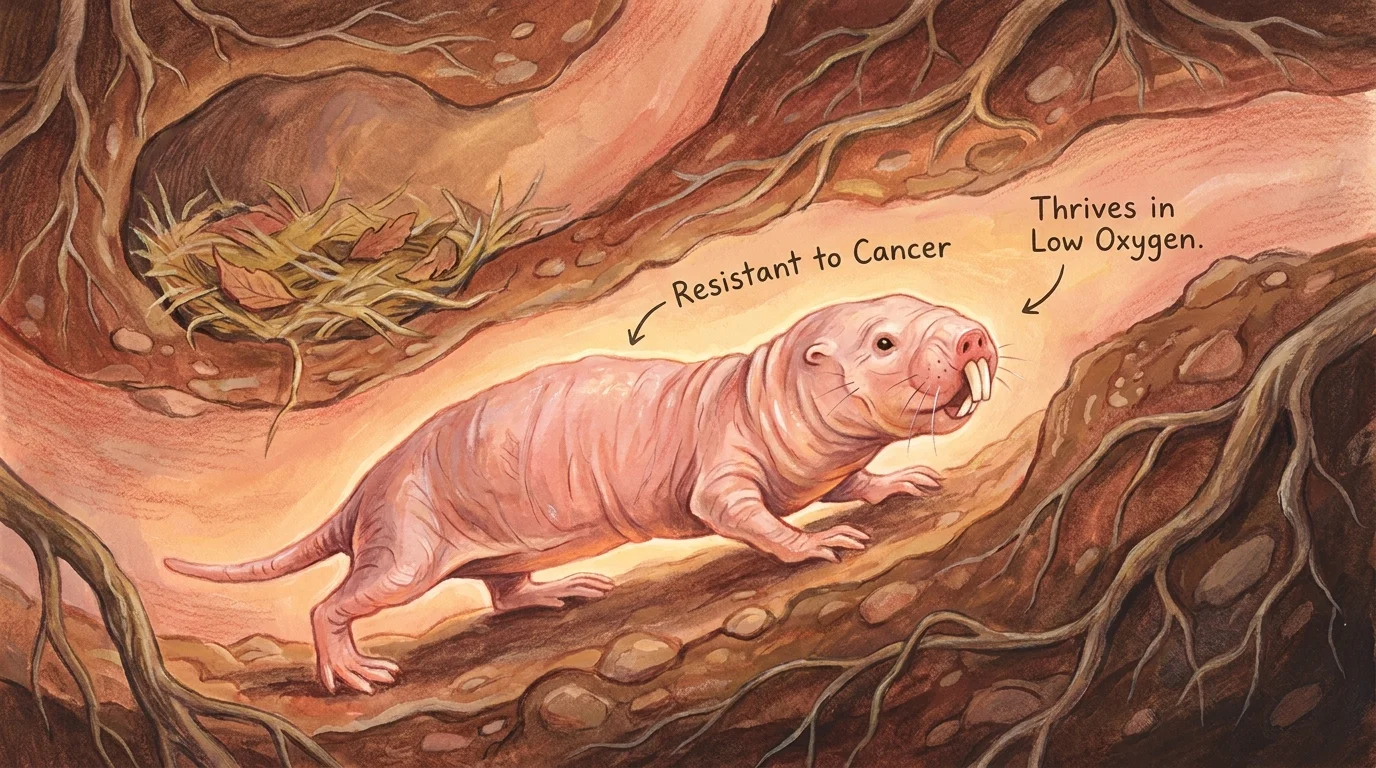
The naked mole-rat is arguably one of the strangest mammals on Earth. These hairless, wrinkly rodents live in massive underground colonies beneath the deserts of East Africa. Because they pack dozens of individuals into tight, unventilated tunnels, the air they breathe is incredibly stale and toxic by human standards.
If you were placed in an environment with the oxygen levels of a mole-rat burrow, you would likely suffocate within minutes. The naked mole-rat, however, can survive up to 18 minutes in an environment with zero oxygen. When deprived of air, they simply stop moving, lower their heart rate, and alter their metabolic process to survive without lasting brain damage.
Their subterranean lifestyle has gifted them other extreme superpowers. They do not feel pain from acid or capsaicin—the chemical that makes chili peppers spicy. More astonishingly, they exhibit near-total immunity to cancer and live for more than 30 years, which is roughly five times longer than similar-sized rodents. Scientists studying their biology have discovered that naked mole-rats do not show the typical signs of aging; their risk of mortality does not increase as they get older, making them a prime subject for longevity research.
5. The Camel: Conquering Desert Heat and Dehydration
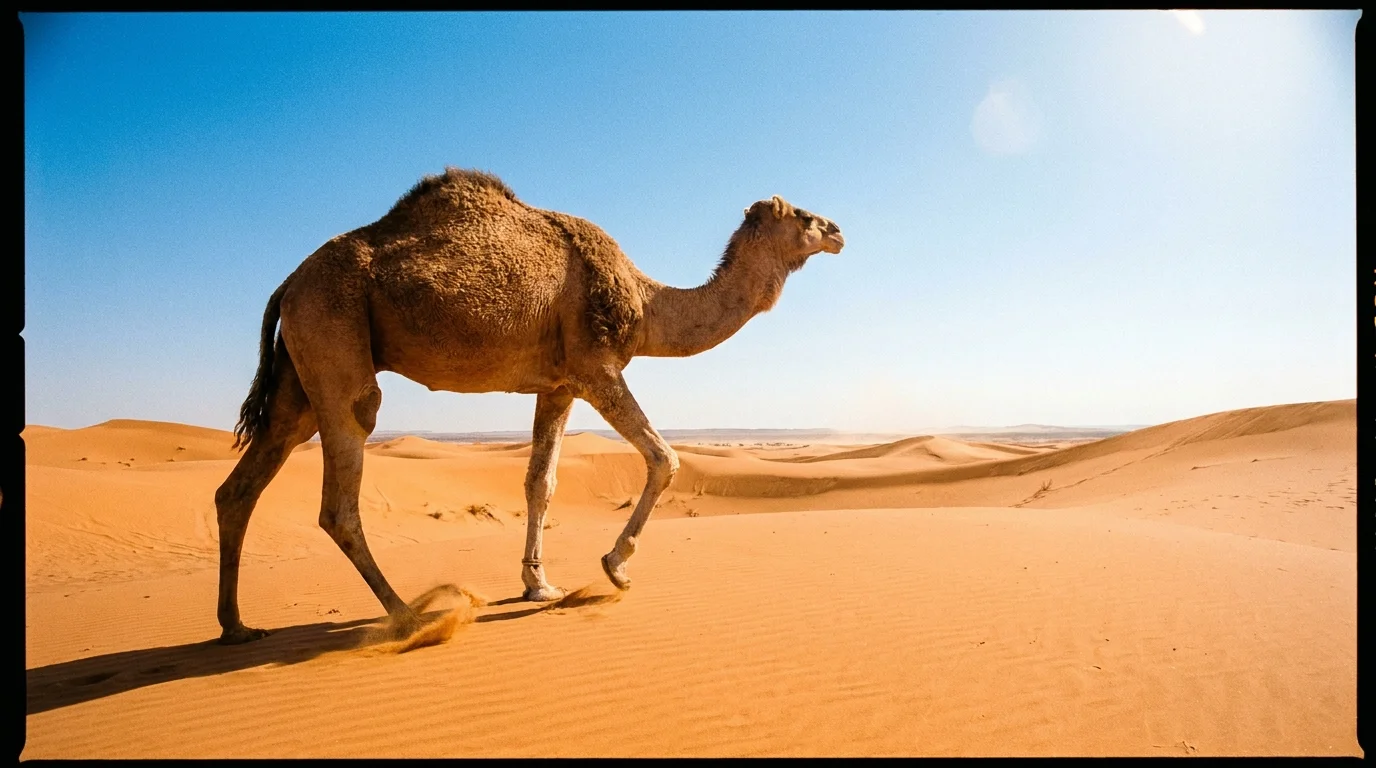
The camel is universally recognized as the ultimate desert survivor, but the reality of how it handles heat and thirst is far more fascinating than the popular myth that it stores water in its humps. The humps actually store fat, which the camel breaks down for energy when food is scarce. The camel’s true water storage secret lies deep within its bloodstream.
Most mammals will face catastrophic organ failure if they lose just 15 percent of their body weight in water. A camel can comfortably lose up to 30 percent of its body weight through dehydration and keep walking. When a camel finally reaches an oasis, it rehydrates at a staggering pace, capable of drinking up to 30 gallons of water in just 13 minutes. In humans or cattle, drinking that much water that quickly would cause red blood cells to swell and burst. Camels possess unique, oval-shaped red blood cells that easily expand to 240 percent of their original size without rupturing.
According to Britannica, a camel also conserves water by allowing its internal body temperature to rise as high as 106 degrees Fahrenheit before it even begins to sweat. By tolerating a higher body temperature, the camel eliminates the need to cool itself through evaporation, hoarding every precious drop of moisture inside its body.
6. The Arctic Fox: Thriving in the Frozen Tundra
The Arctic fox is a small, striking predator perfectly engineered to withstand the harshest blizzards of the far north. Native to the tundra regions of Canada, Russia, Greenland, and Scandinavia, this canine routinely endures temperatures that drop to minus 58 degrees Fahrenheit.
To survive the deep freeze, the Arctic fox wears the most insulating pelt of any mammal. Its winter coat features a dense, moisture-wicking undercoat topped by long guard hairs that trap body heat. Unlike most other canines, the Arctic fox even has thick fur covering the pads of its paws, acting like built-in snow boots that protect against frostbite and provide traction on slippery ice.
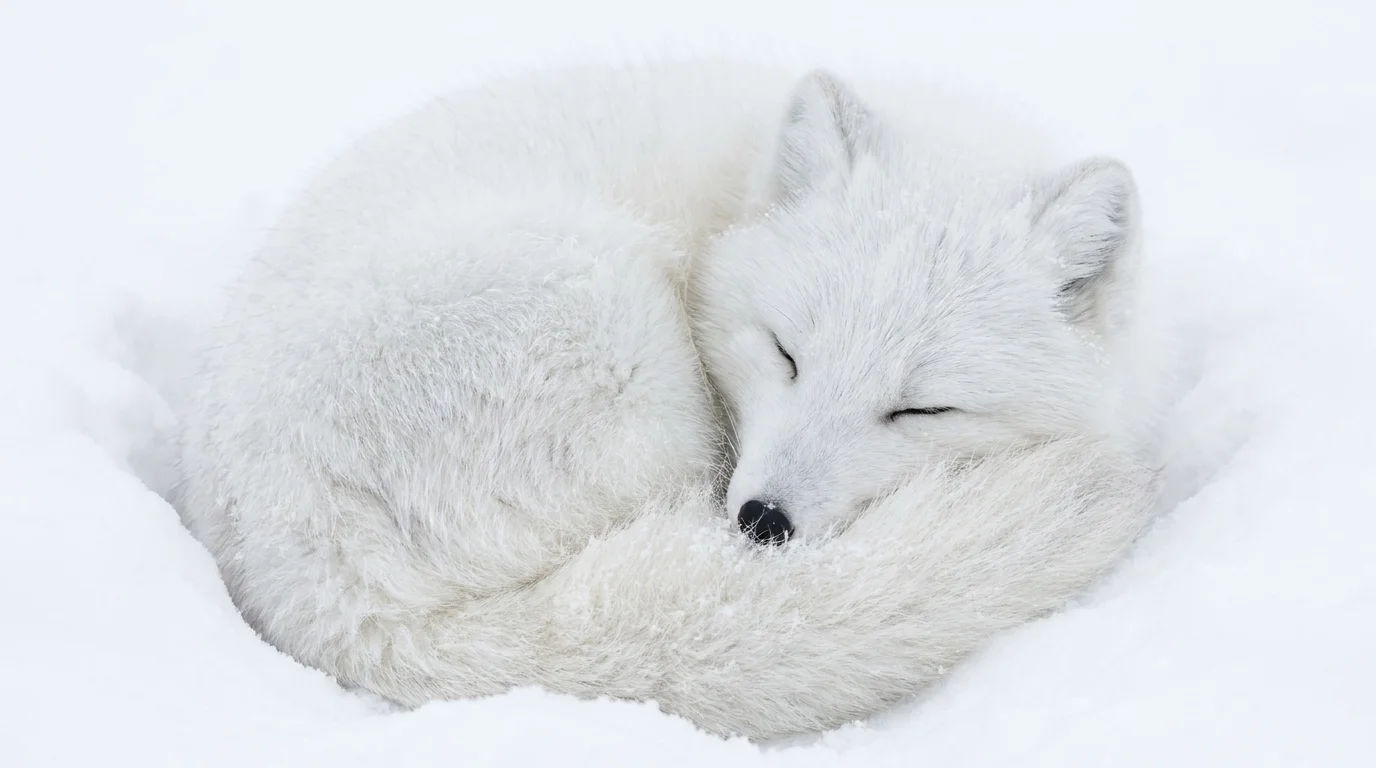
Its compact body shape is a masterclass in thermal efficiency. By having short legs, a blunt muzzle, and small, rounded ears, the fox minimizes the amount of surface area exposed to the freezing air. When a severe winter storm hits, the Arctic fox digs a shallow depression in the snow, curls up tightly, and wraps its long, heavily furred tail over its face. This bushy tail acts as a built-in sleeping bag, trapping the warm air expelled from the fox’s lungs and keeping its core temperature perfectly stable.
7. Rüppell’s Vulture: Soaring at Unthinkable Altitudes
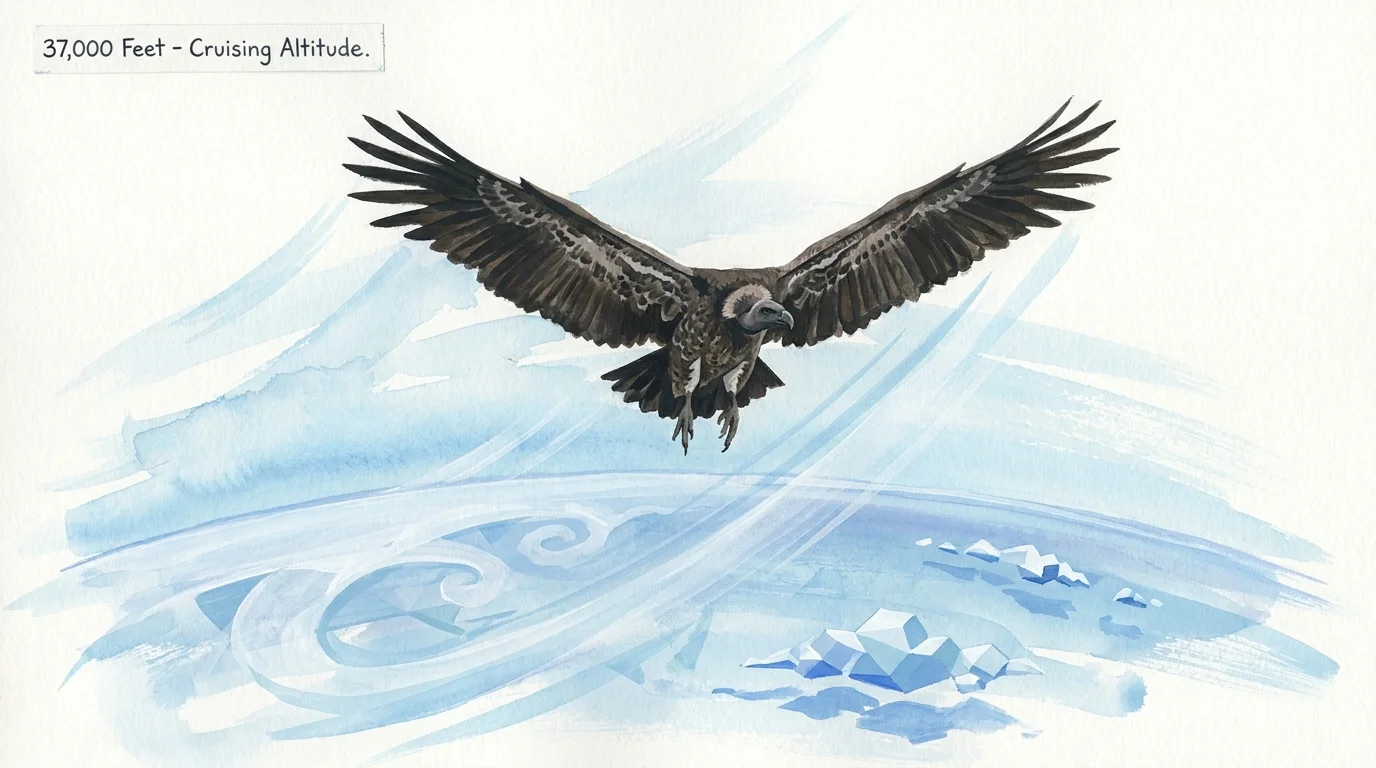
Most birds fly below 5,000 feet, but Rüppell’s vulture regularly cruises the skies over Central and East Africa at altitudes that rival commercial jetliners. This large scavenger currently holds the record for the highest-flying bird on Earth, a fact discovered in 1973 when an individual unfortunately collided with an airplane engine at a staggering 37,000 feet over the Ivory Coast.
At 37,000 feet, the environmental conditions are instantly lethal to most forms of life. The temperature hovers around minus 69 degrees Fahrenheit, and the air pressure is so low that the atmosphere holds only a fraction of the oxygen found at sea level. If a human were suddenly exposed to this altitude without a pressurized cabin or an oxygen mask, they would lose consciousness in seconds.
Rüppell’s vulture navigates this deadly zone effortlessly thanks to a specialized mutation in its blood. The bird possesses a unique variant of the hemoglobin alpha D subunit, a protein that binds to oxygen with incredible efficiency. This hyper-affinity for oxygen allows the vulture’s bloodstream to extract and distribute whatever thin oxygen is available in the upper troposphere, fueling its massive eight-foot wingspan as it scans the ground miles below for meals.
8. The Devil Worm: Thriving Miles Underground
For decades, scientists believed that the only lifeforms capable of surviving deep within the Earth’s crust were single-celled bacteria and simple microbes. That assumption shattered in 2011 with the discovery of Halicephalobus mephisto, appropriately dubbed the Devil Worm.
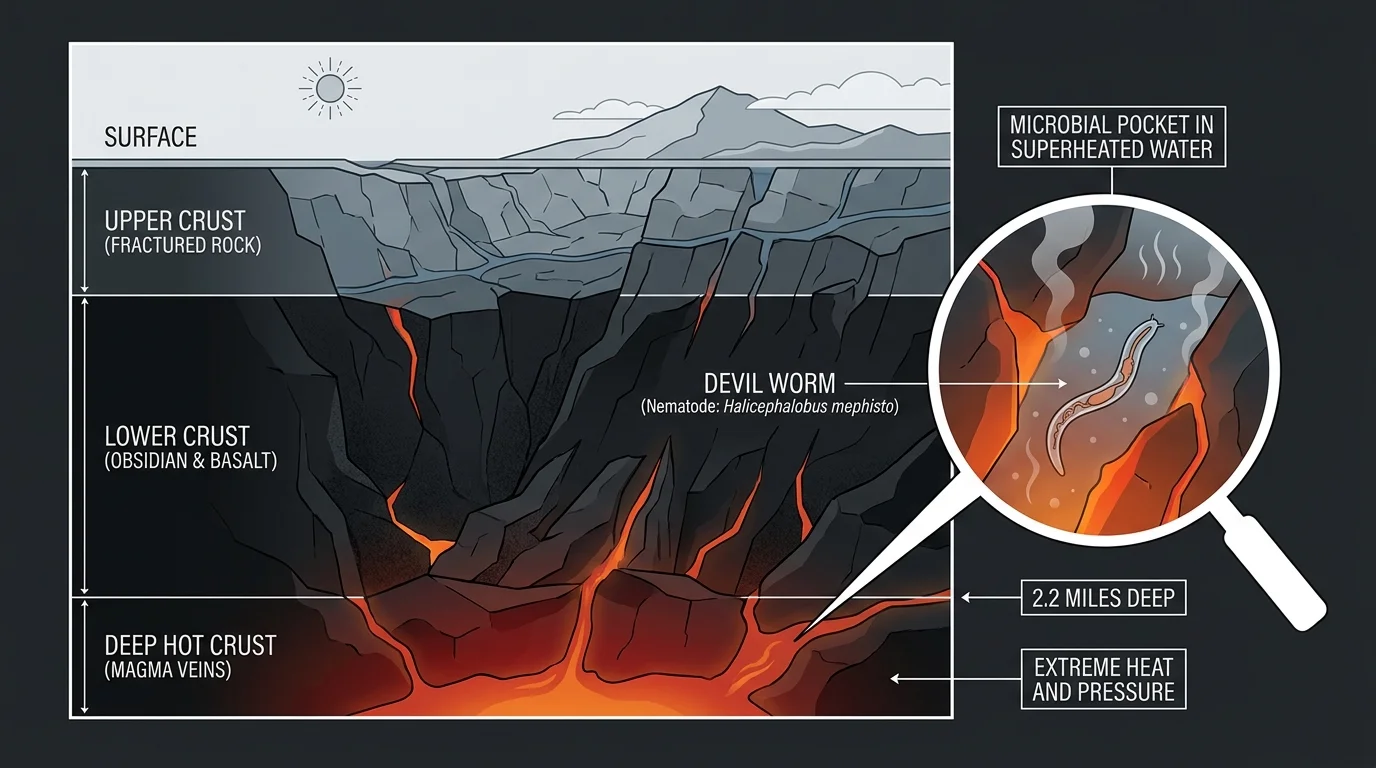
Researchers discovered this microscopic nematode swimming in fracture water located 2.2 miles deep inside a South African gold mine. At this extreme depth, the environment is utterly pitch-black, starved of oxygen, rich in methane, and subjected to crushing geological pressure. To make matters worse, the ambient temperature of the rock frequently exceeds 100 degrees Fahrenheit.
Genome sequencing of the Devil Worm revealed exactly how it manages to endure conditions that mimic the underworld. The worm has rapidly duplicated genes responsible for producing heat-shock proteins, specifically Hsp70. These proteins act as a microscopic repair crew, constantly fixing cellular damage caused by the intense heat and preventing the worm’s biological structures from breaking down.
“The boundary of multicellular life has been extended significantly into our planet.” — Tullis Onstott, geomicrobiologist
As reported by National Geographic, the discovery of the Devil Worm proves that complex life can adapt to the most punishing pressures, expanding our understanding of where life might exist not only on Earth but potentially on other planets.
9. The Desert Pupfish: Swimming Through Extreme Heat
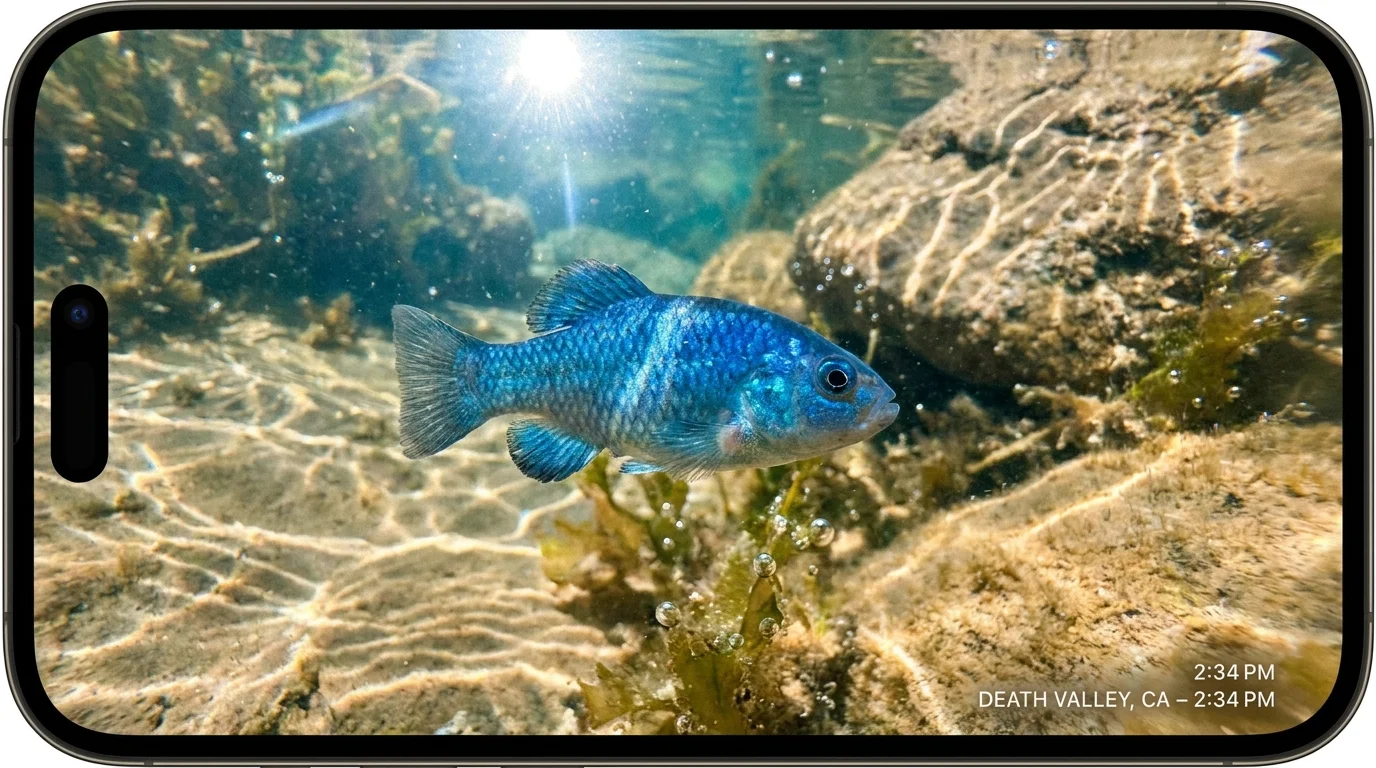
If you visit the scorching landscape of Death Valley National Park in California, you might assume the small, isolated pools of water scattered across the salt flats are entirely barren. In reality, they are home to the desert pupfish, a tiny, iridescent blue survivor that thrives where no other fish can.
Measuring barely two inches long, the desert pupfish has adapted to an aquatic environment that regularly experiences violent extremes. During the summer, the shallow pools they inhabit can heat up to 116 degrees Fahrenheit. Because the desert sun rapidly evaporates the water, the remaining pools become heavily concentrated with minerals, creating a habitat that can be up to four times saltier than the ocean.
Most fish require highly stable environments and will die if the water temperature or salinity shifts even slightly. The desert pupfish, however, can tolerate massive daily temperature swings and rapid changes in water chemistry. When the sun beats down and the water grows dangerously hot, the pupfish dives down into the mud at the bottom of the pool to regulate its temperature. These robust little fish are the evolutionary leftovers of a massive ancient lake that dried up at the end of the last Ice Age, proving that sheer adaptability is the ultimate survival tool.
What Extreme Animals Can Teach Us
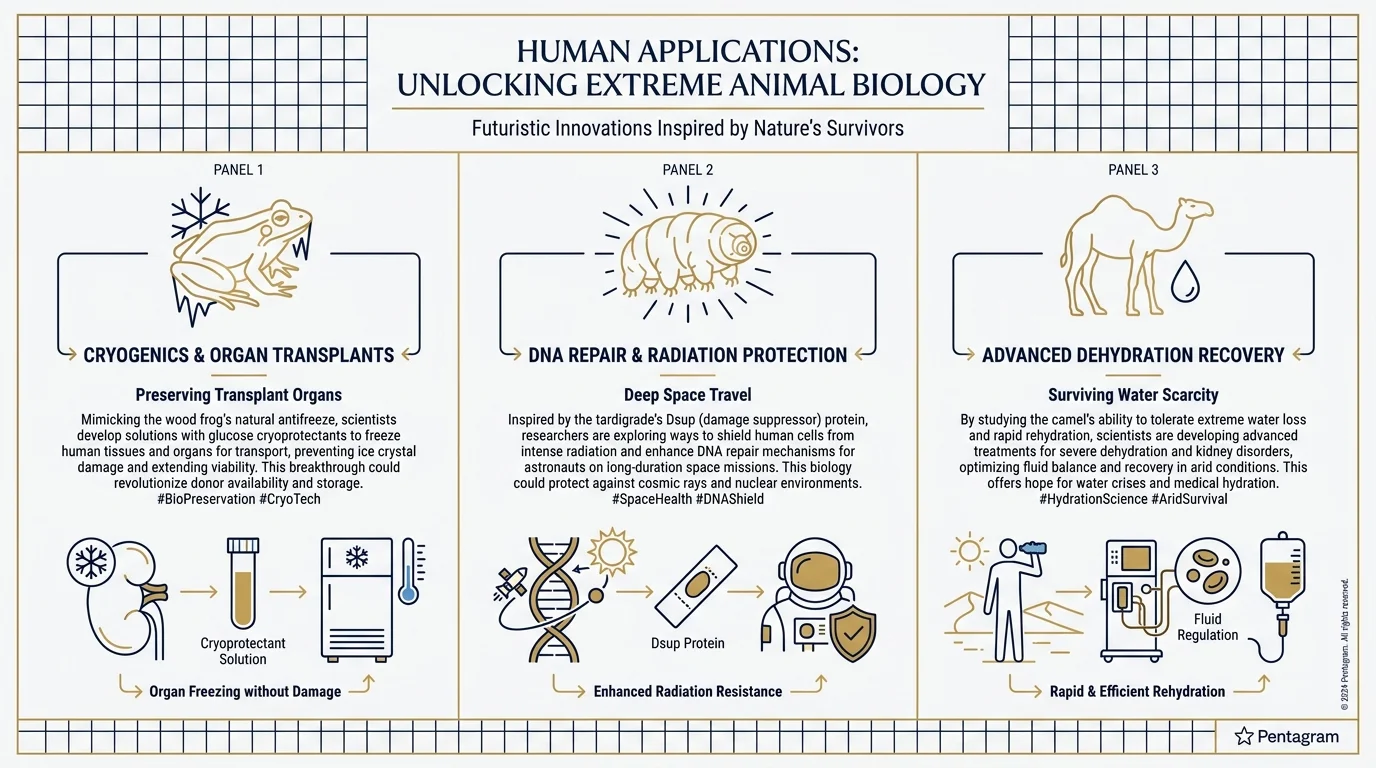
When you look closely at these nine incredible survivors, you realize that nature has already engineered solutions to some of our most difficult scientific challenges. Exploring extreme animal biology offers highly practical insights:
- Organ preservation: Medical researchers study the wood frog’s glucose antifreeze mechanism to develop new ways to freeze and transport human organs, potentially extending their viability from mere hours to several days.
- Cancer and aging: The naked mole-rat’s resistance to tumors and stable aging process provides a living roadmap for extending human longevity and treating cellular decay.
- Space exploration: By identifying the specific proteins that protect tardigrades from deadly radiation, scientists hope to eventually develop protective therapies for astronauts traveling to Mars.
- Climate resilience: Understanding how camels and desert pupfish manage severe water scarcity and rapid temperature spikes helps biologists manage vulnerable ecosystems as global temperatures rise.
Appreciating Nature’s Resilience
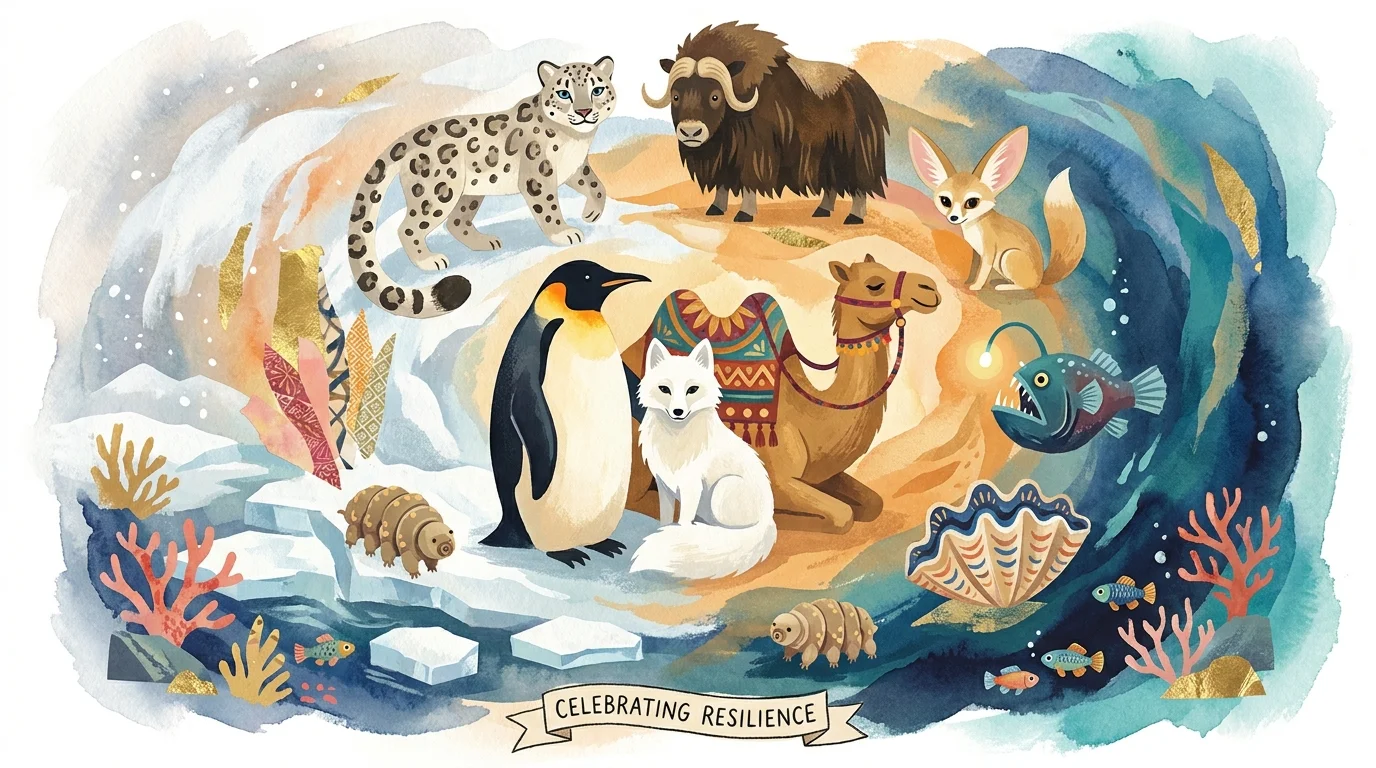
The animals that inhabit the most hostile corners of our world prove that life is incredibly stubborn. From the vacuum of space to the crushing depths of underground mines, these creatures demonstrate that biological adaptation knows very few limits. The next time you find yourself complaining about a chilly winter morning or a sweltering summer afternoon, take a moment to appreciate the Arctic foxes sleeping in the snow and the pupfish swimming through hot salt water. They are a constant reminder of the resilience woven into the natural world.
This is general informational content based on widely accepted guidance. Individual results vary. Verify current details—rules, prices, eligibility, regulations—with official sources before making important decisions.
Last updated: May 2026. Rules, prices, and details change—verify current information with official sources before acting on it.