Most animals react to a mirror as if they are facing a stranger, choosing to fight, court, or run away from their own reflection. However, a select group of highly intelligent species can actually recognize that the face looking back is their own. In 1970, psychologists developed the mirror self-recognition test—also known as the mark test—to measure this rare cognitive ability. Researchers secretly place a colored mark on an animal’s body to see if they use the mirror to examine it. From massive elephants to tiny coral reef fish, the ability to pass this test reveals a profound level of self-awareness. Here are ten remarkable animals that have proven they know exactly who they are.
1. Chimpanzees
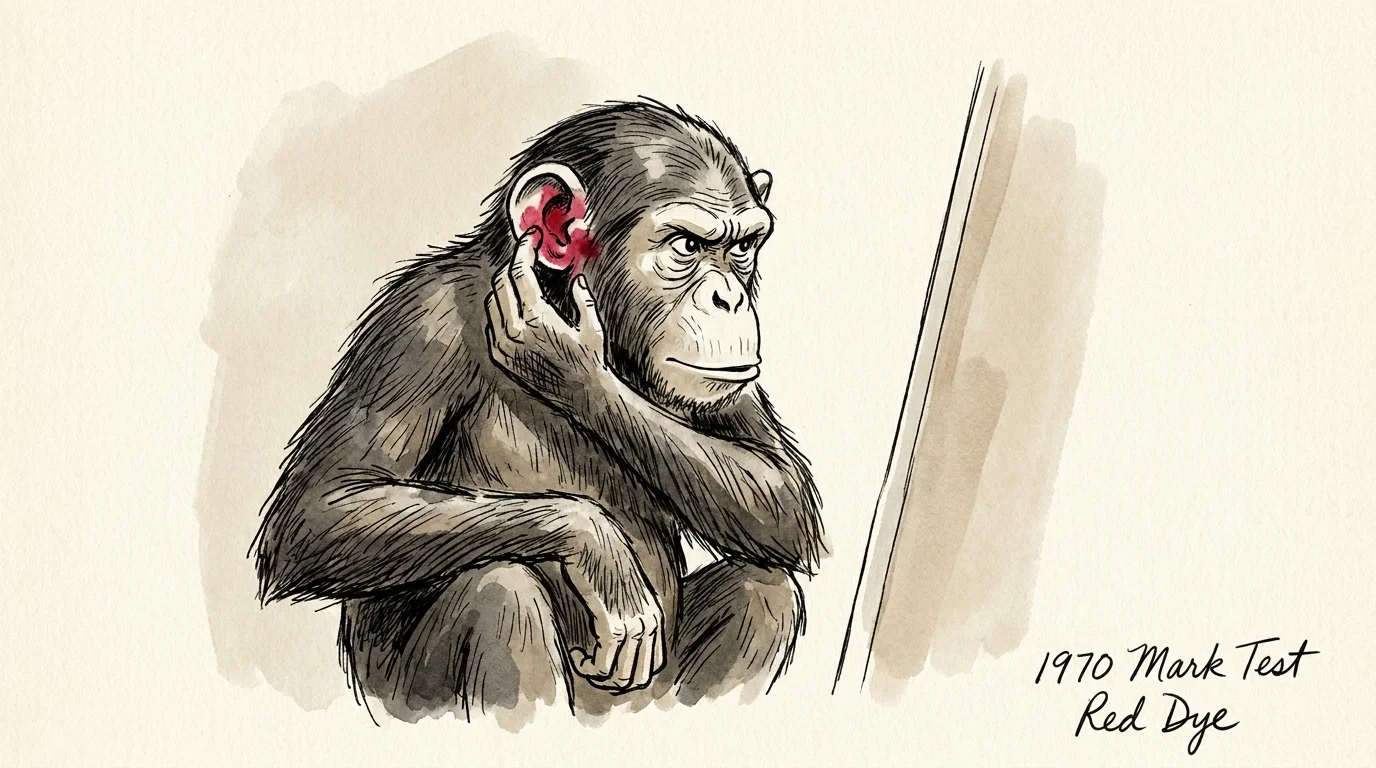
In 1970, psychologist Gordon Gallup Jr. introduced the mirror self-recognition test, and chimpanzees were his very first subjects. Researchers placed anesthetized chimps in a room and painted a red, odorless dye on their eyebrows and ears—spots the animals could not see without a reflection. Upon waking and looking in a mirror, the chimpanzees immediately touched the red marks on their own faces, checked their fingers, and even smelled their fingers afterward. This groundbreaking study proved that chimpanzees do not just see another ape; they recognize themselves. Because chimps are our closest living relatives, this discovery opened the floodgates for studying consciousness and advanced cognition across the animal kingdom.
2. Bottlenose Dolphins
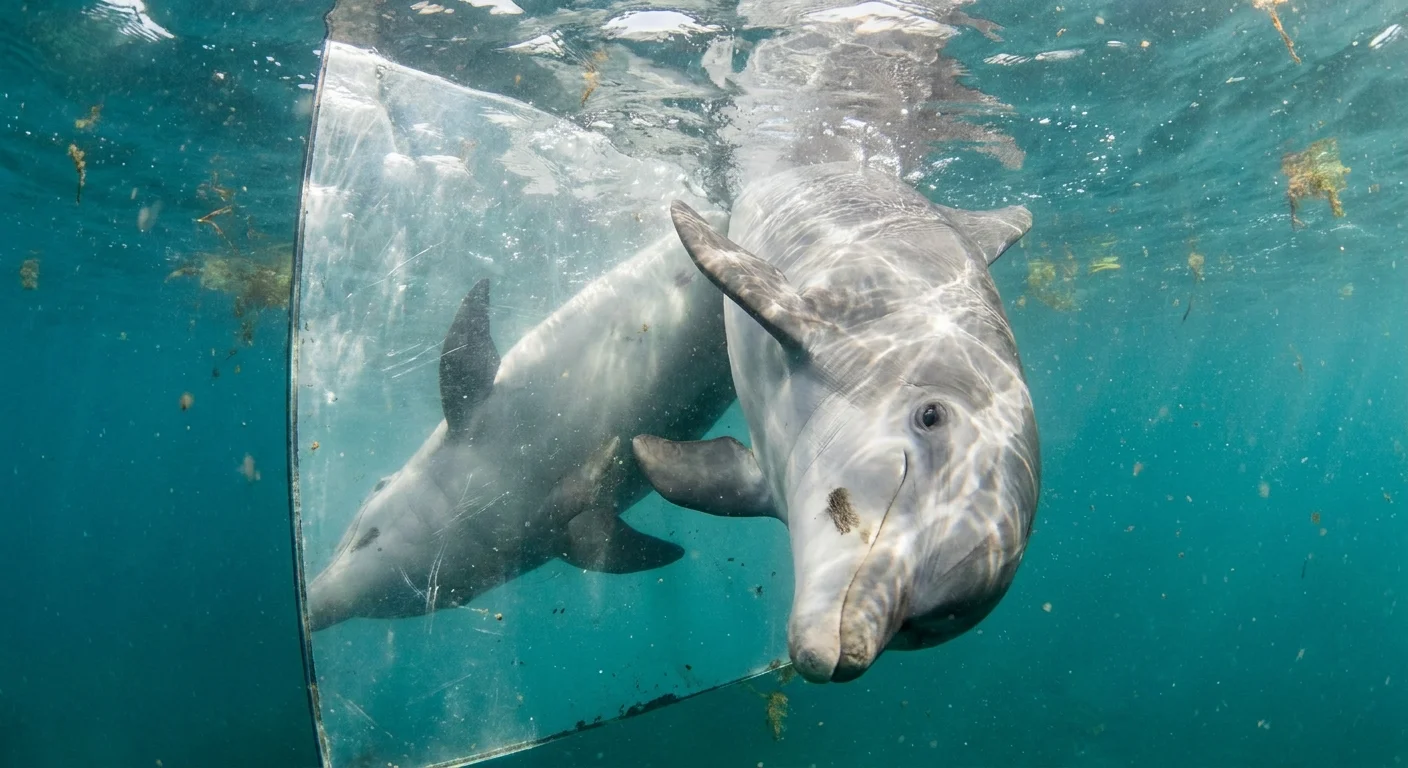
Dolphins are legendary for their complex social structures and massive brains, so it comes as no surprise that they belong to the exclusive club of self-aware species. In a famous 2001 study, researchers marked the bodies of bottlenose dolphins with temporary black ink. The dolphins quickly swam over to the mirror and twisted their bodies to investigate the markings. Unlike primates, dolphins do not have hands to physically touch a mark, but their deliberate behavioral changes—spending extra time angling themselves to view the exact spot where the ink was applied—provided concrete evidence of self-recognition. They even blew bubbles while examining themselves, showcasing a playful but deliberate interaction with their own image.
3. Orangutans
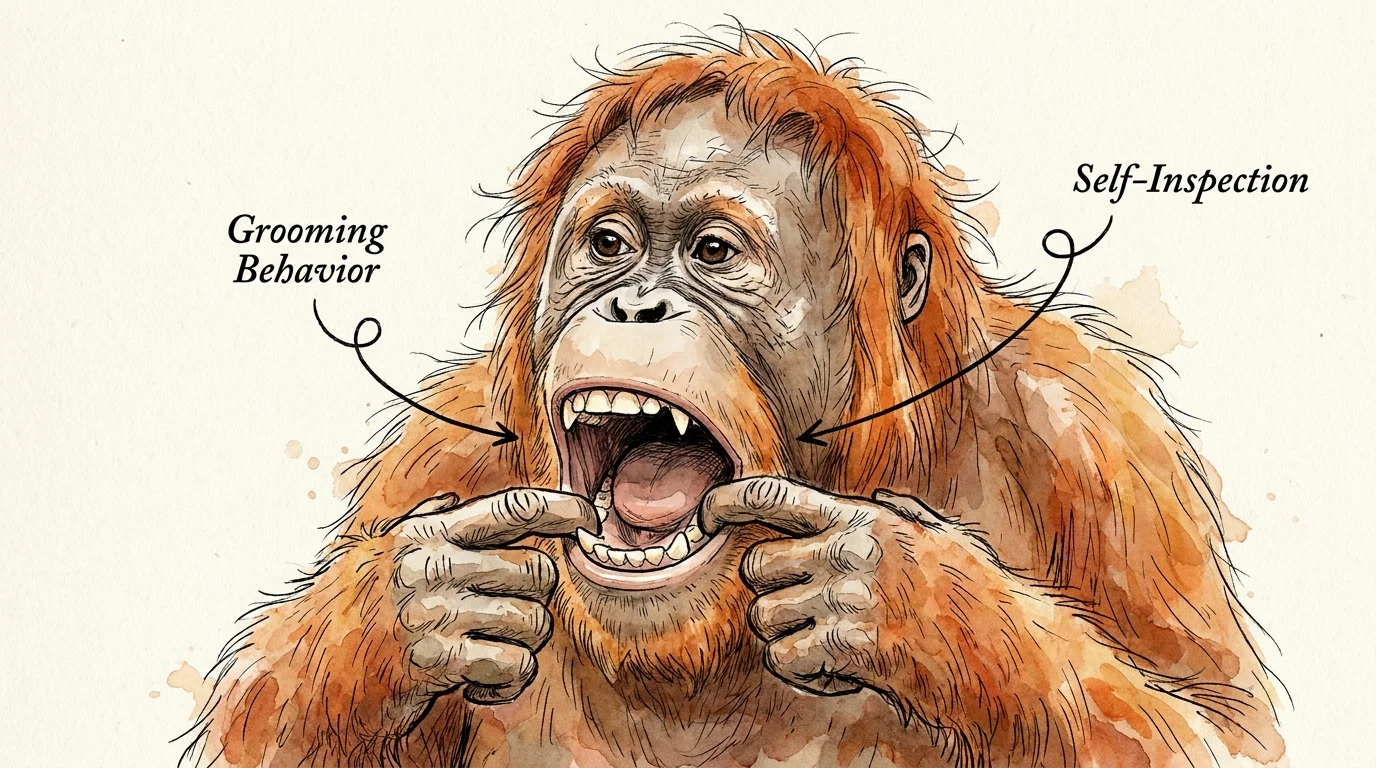
Known for their high intelligence and thoughtful, deliberate demeanor, orangutans consistently pass the mirror test. In 1973, shortly after the initial chimpanzee study, researchers documented orangutans actively using mirrors to investigate their own bodies. Unlike many other animals that require a bright red mark to prompt interaction, orangutans will spontaneously use a mirror for personal grooming. They will open their mouths to inspect their teeth, pick at their gums, and examine body parts that remain completely hidden from their regular field of view. While adult male orangutans often live solitary lives in the wild, they spend their early years closely bonded to their mothers, which researchers believe provides the social foundation necessary to develop a strong sense of self.
4. Asian Elephants
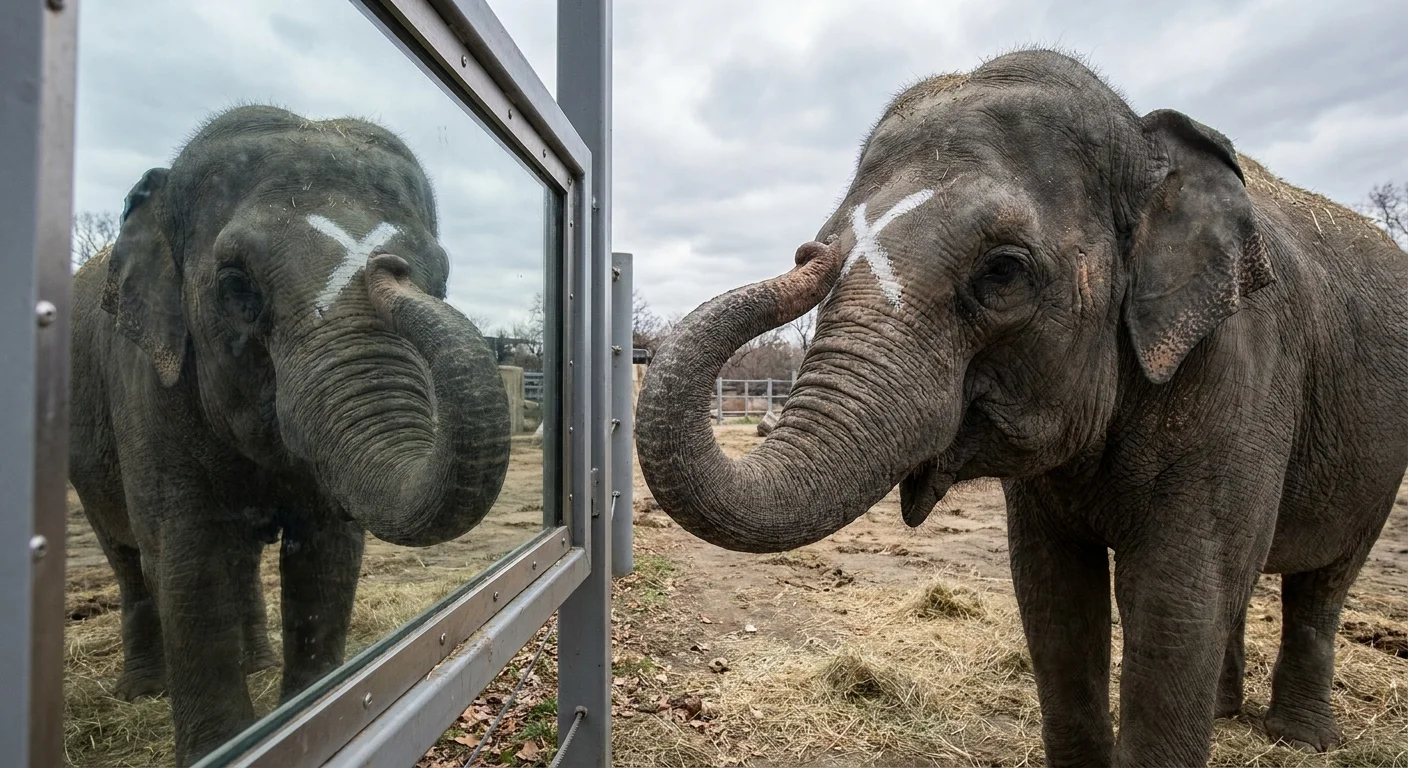
For decades, scientists believed that self-awareness might be restricted to primates and cetaceans. That assumption changed at the Bronx Zoo in 2006. Researchers placed a large shatterproof mirror inside the elephant enclosure and marked the animals with a visible white cross on their foreheads, alongside a control mark made with invisible water. One of the elephants, a female named Happy, repeatedly used her trunk to touch the white cross on her head while completely ignoring the invisible mark. She also used the mirror to inspect the inside of her mouth. Because elephants are deeply empathetic creatures that mourn their dead and live in complex matriarchal societies, their ability to pass the mirror test reinforces the link between strong social bonds and advanced self-awareness.
5. Eurasian Magpies
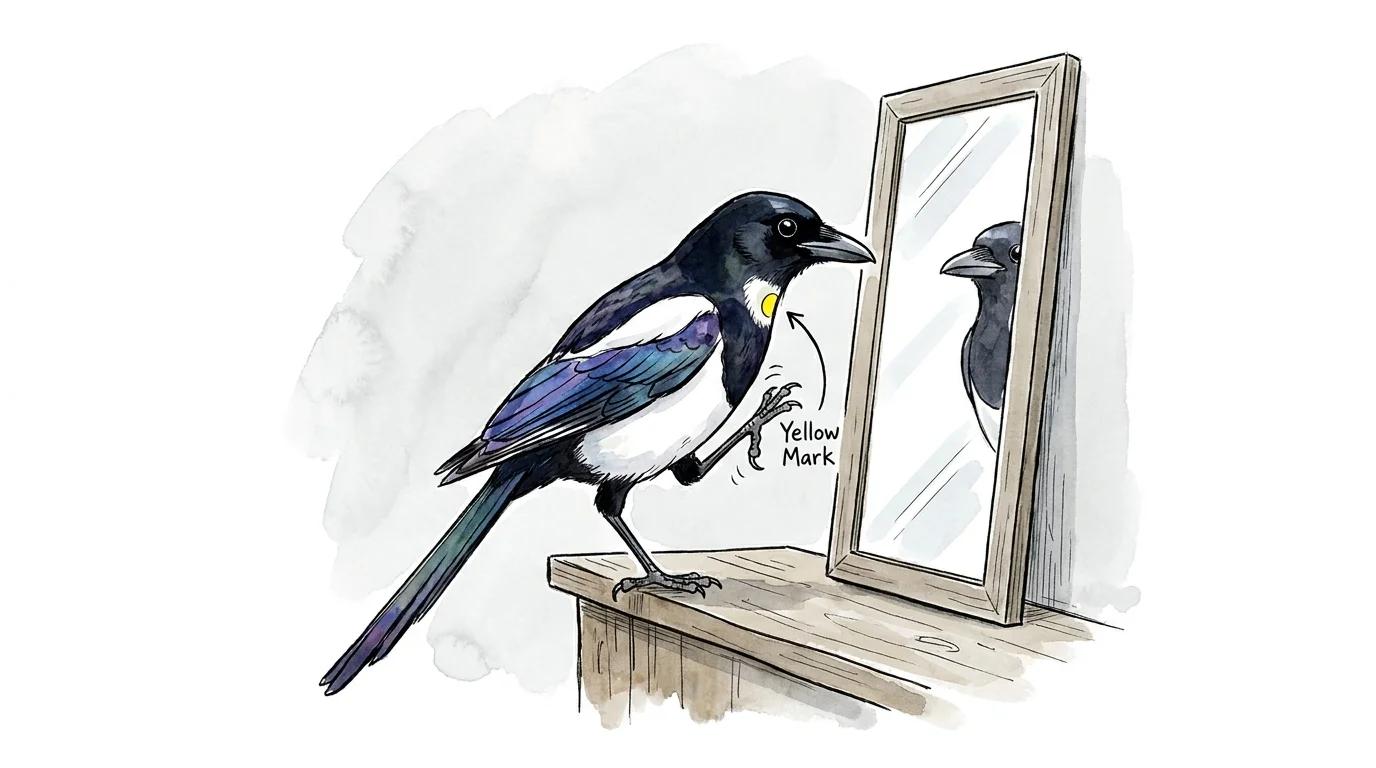
Prior to 2008, scientists largely assumed that visual self-recognition required a neocortex—a brain region found exclusively in mammals. Eurasian magpies completely shattered this long-held belief. When researchers placed brightly colored stickers on the throats of these highly intelligent birds, the magpies immediately attempted to scratch the stickers off with their claws upon seeing their reflection. They entirely ignored invisible stickers used as a control. Magpies belong to the corvid family, which includes crows and ravens, and are famous for their remarkable problem-solving skills. Their ability to pass the mirror test proves that self-awareness can arise from entirely different brain structures; a fascinating and beautiful case of convergent evolution.
6. Bonobos
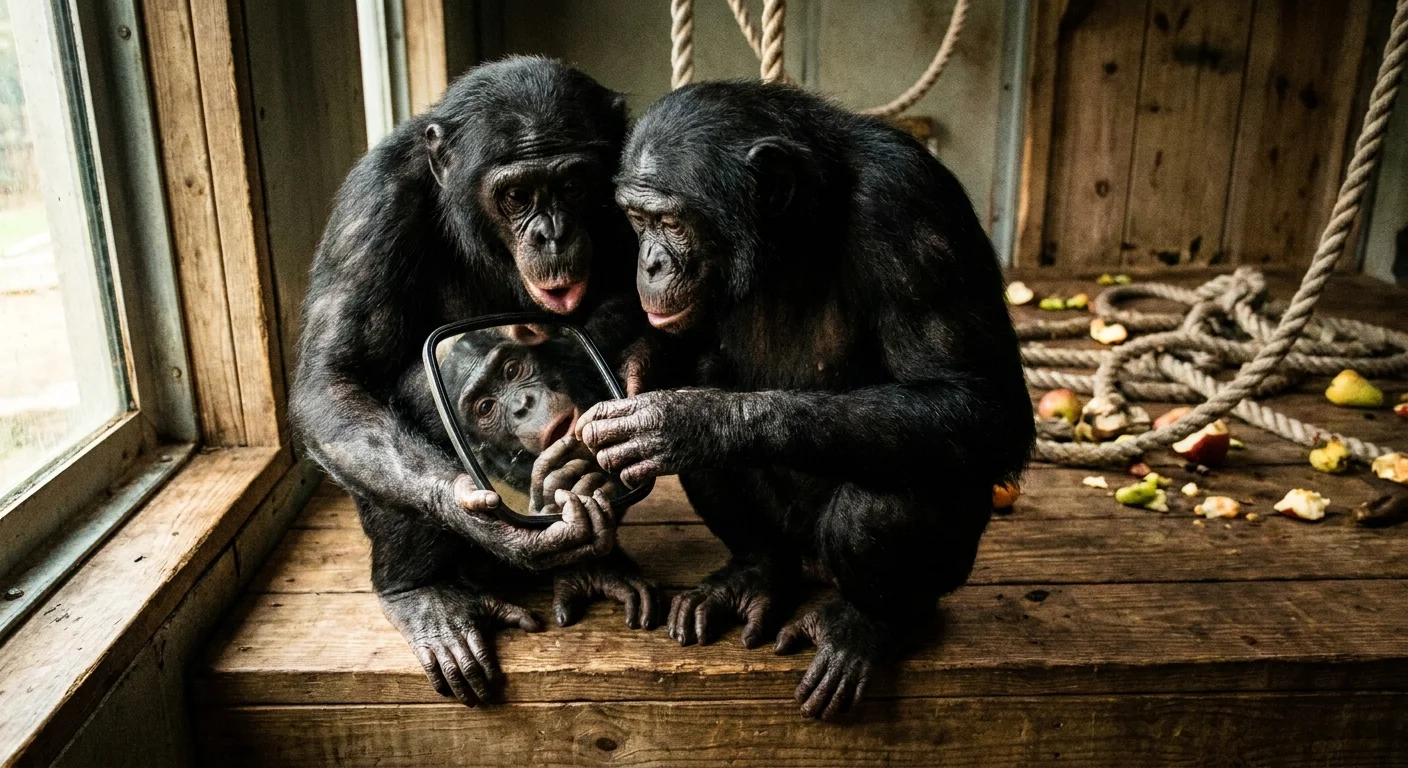
Bonobos share roughly 98.7% of their DNA with humans, making them just as closely related to us as chimpanzees. Naturally, they also pass the mirror test with flying colors. A 1994 study observed bonobos utilizing mirrors to examine their bodies, particularly focusing on areas they could not easily see without a reflection. Bonobos are known for their incredibly complex, matriarchal, and peaceful societies. Their strong reliance on social communication, deep empathy, and emotional intelligence perfectly aligns with the prevailing scientific theory that self-awareness develops in species that must constantly interpret the intentions and feelings of others within a group.
7. Gorillas
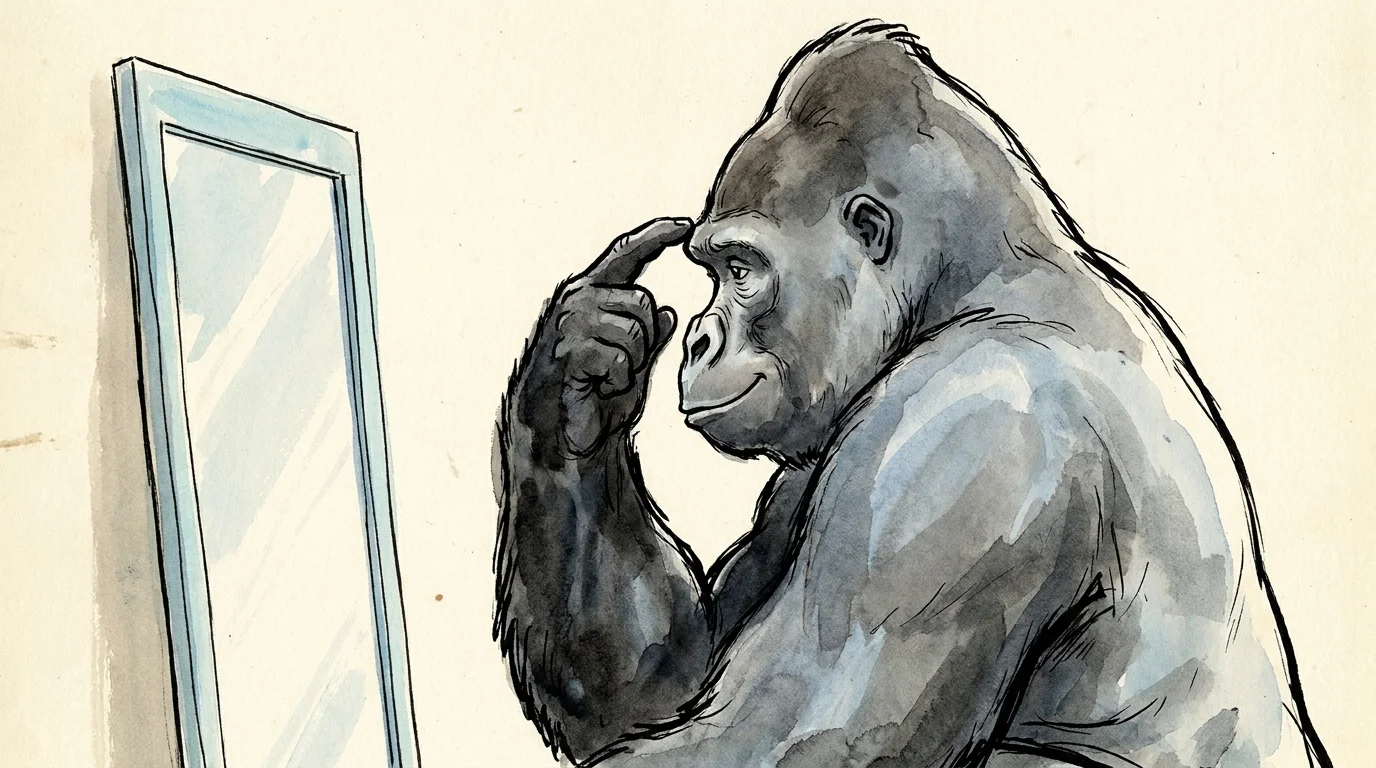
Gorillas present one of the most fascinating case studies in animal cognition because their results on the mirror test are notoriously mixed. Most wild or zoo-raised silverback gorillas fail the test. When they see their reflection, they either ignore it entirely or act aggressively toward it. However, context is everything. In gorilla society, prolonged eye contact is considered a direct challenge or a sign of aggression. By deliberately avoiding eye contact with the “rival” in the mirror, many gorillas simply never look at themselves long enough to realize it is their own reflection. Gorillas raised closely with humans, such as the famous Koko who learned American Sign Language, have successfully passed the test. This suggests that gorillas absolutely possess the cognitive capacity for self-recognition, but their strict natural social etiquette often overrides their curiosity.
8. Cleaner Wrasse
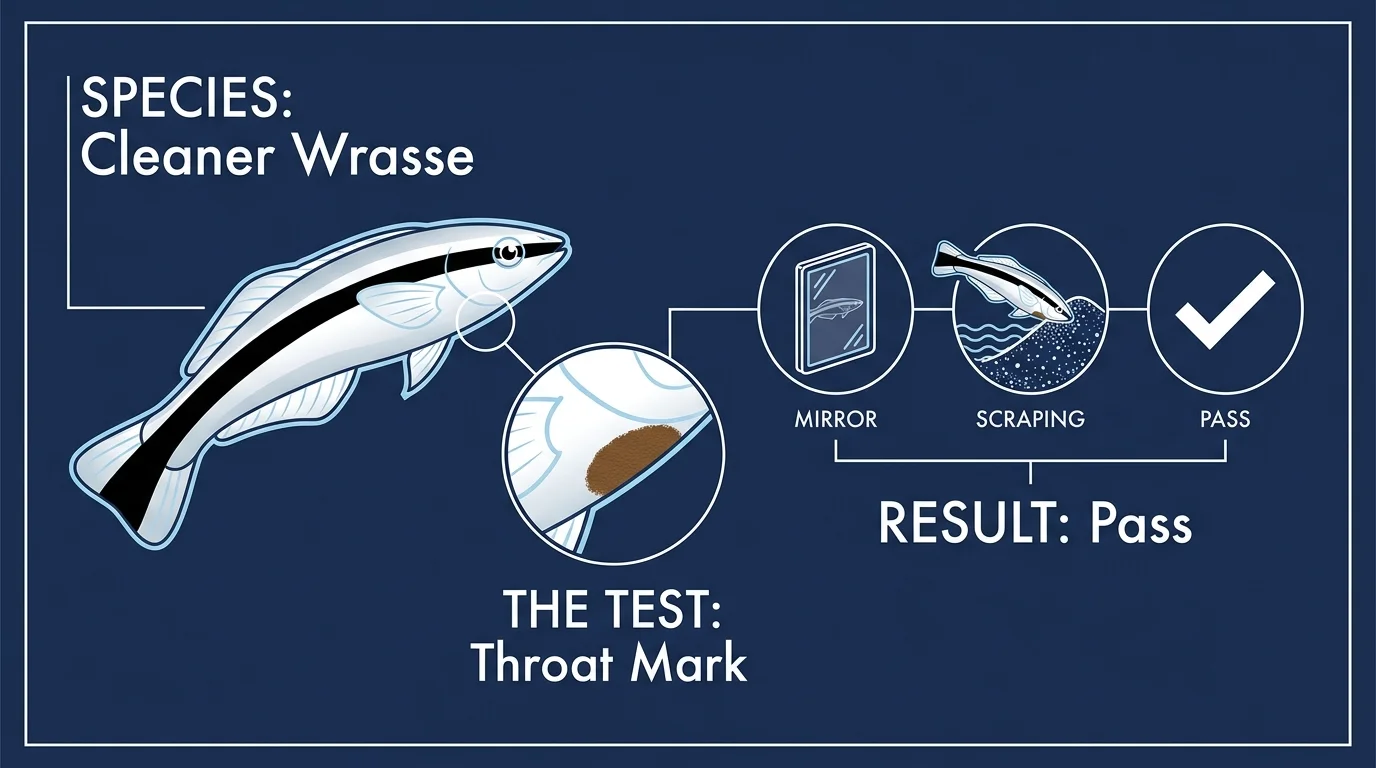
If magpies proved you do not need a mammalian brain to be self-aware, the cleaner wrasse proved you do not even need a large brain at all. In 2019, scientists tested this tiny coral reef fish using a modified mark test. Cleaner wrasses naturally survive by picking parasites off the scales of larger fish. When researchers injected a harmless brown mark under the skin of the fish’s throat—designed to resemble a parasite—and placed a mirror in the tank, the wrasses swam up, observed the mark, and proceeded to scrape their throats against rocks to remove it. They did not attempt to scrape off transparent control marks. This staggering discovery completely revolutionized our understanding of fish intelligence and the depth of aquatic cognitive capabilities.
9. Mice
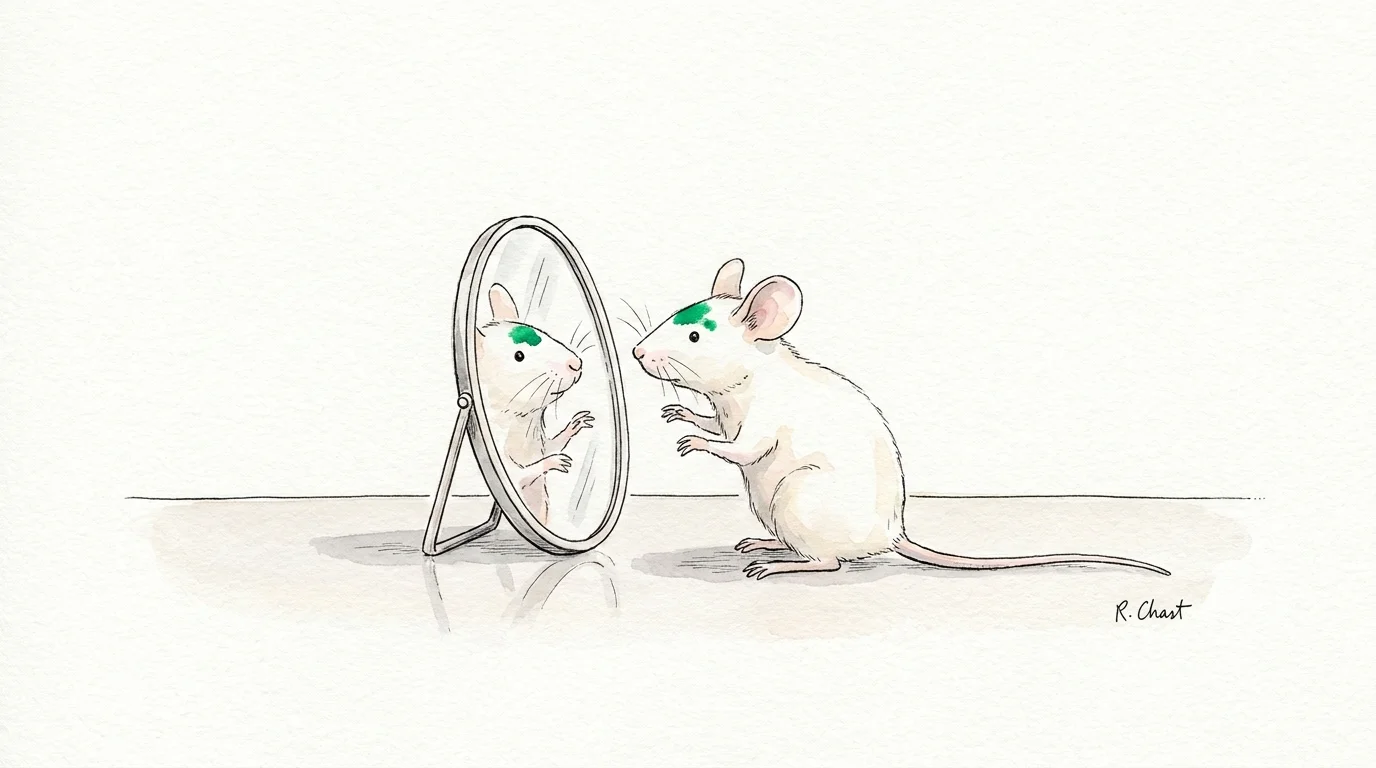
One of the most recent breakthroughs in animal cognition occurred in late 2023. According to a landmark study published in the journal Neuron, mice exhibit mirror-induced self-directed behavior under specific, controlled conditions. Researchers marked black-furred mice with a large spot of white ink on their foreheads. When placed in front of a mirror, the marked mice spent significantly more time grooming their heads to wash away the spot. Interestingly, the mice only succeeded if they were already accustomed to mirrors and had been raised socially alongside other black-furred mice. This groundbreaking research identified specific neurons in the hippocampus that activate during self-recognition, proving that even seemingly simple rodents possess a complex visual self-image.
10. Pigs
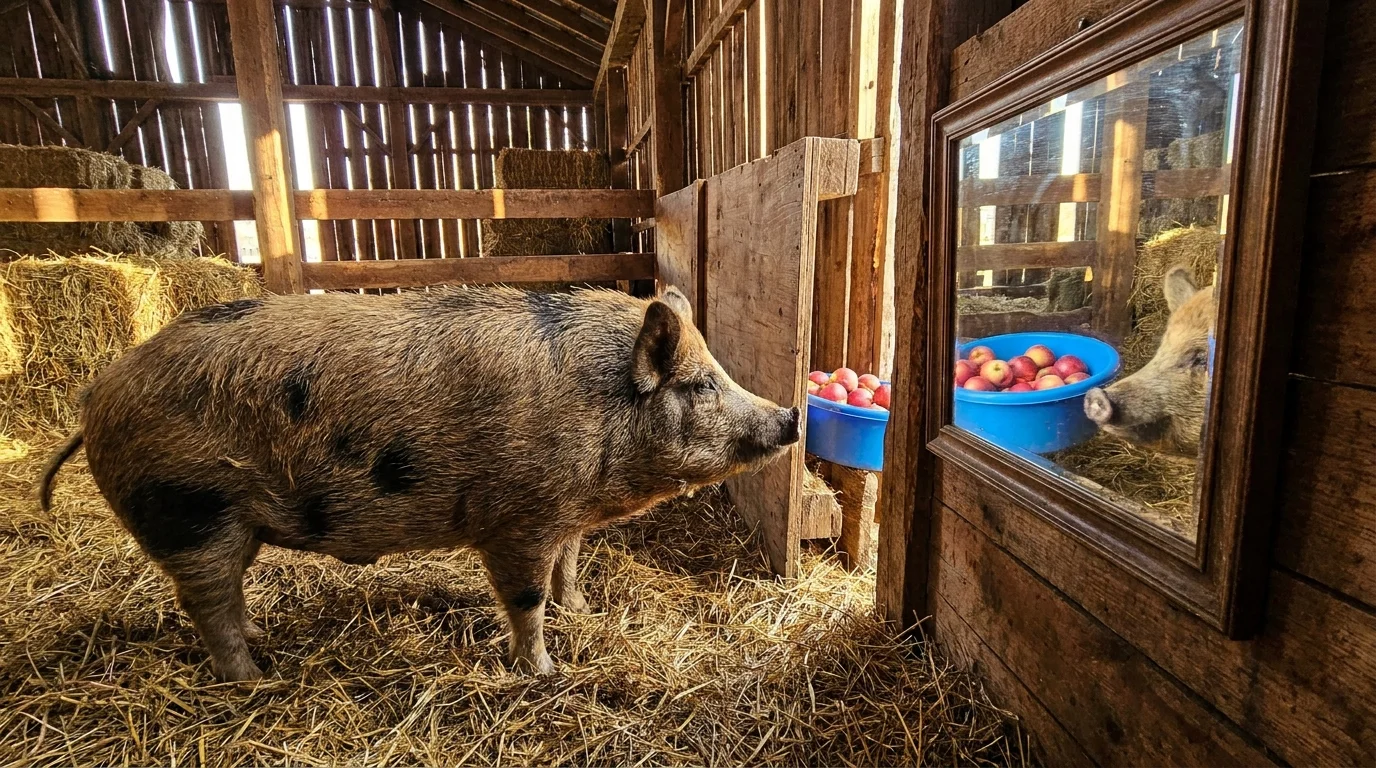
While pigs have not conclusively passed the classic mark test by touching a dye spot on their own bodies, they demonstrate a brilliant mastery of mirror use that demands inclusion on this list. In studies conducted at Cambridge University, researchers placed food bowls behind barriers where they could only be seen through a mirror. Instead of looking behind the mirror to find the food—a common spatial mistake made by many household pets—the pigs used the reflection to calculate the food’s actual physical location in the room, turning around and walking directly to the hidden bowls. This behavior requires advanced spatial understanding; pigs recognize that the mirror reflects their environment and their own physical position within it, proving a highly practical form of self-awareness.
At a Glance: The Mirror Test Elite
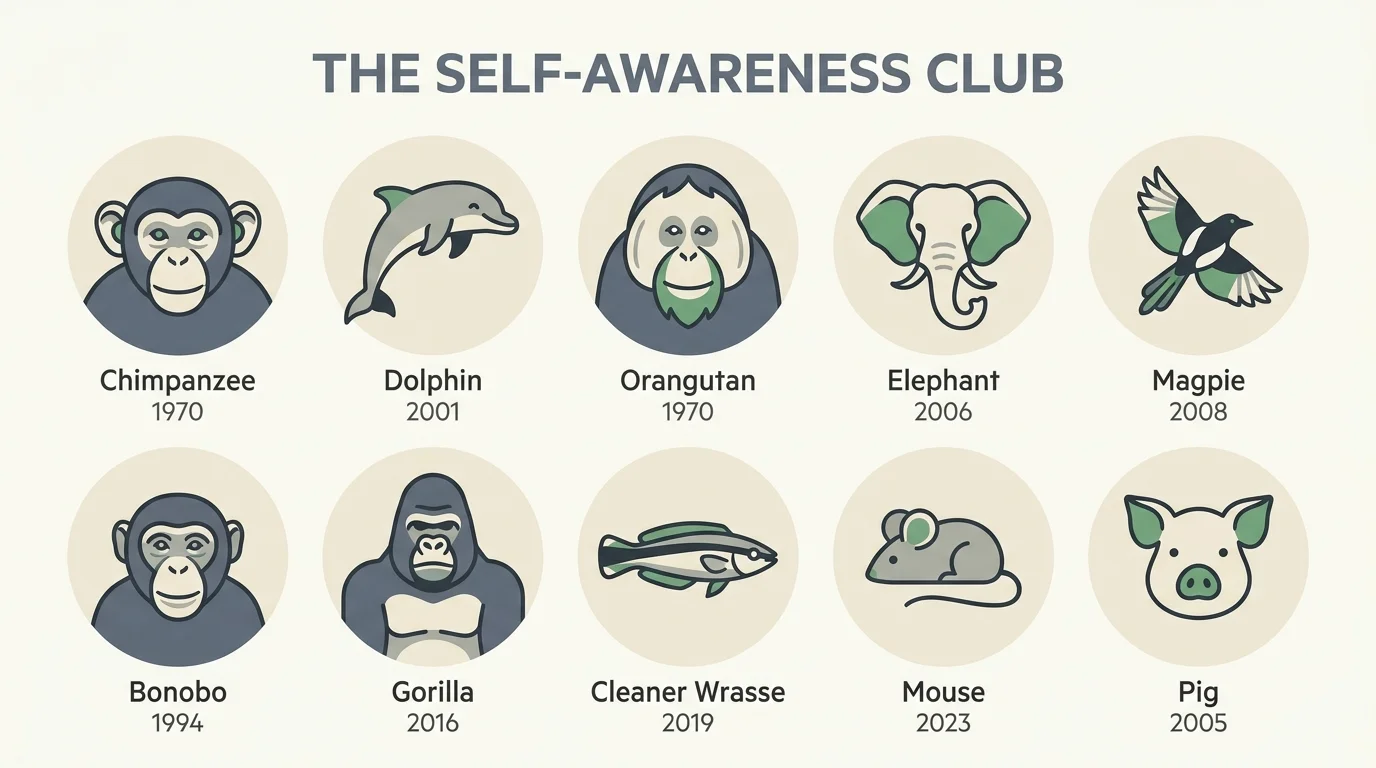
If you want a quick breakdown of the diverse species capable of passing the mirror test (or advanced mirror use), here is how the timeline of discovery breaks down across the animal kingdom.
| Species | First Documented Test (Approx.) | Scientific Class | Fascinating Detail |
|---|---|---|---|
| Chimpanzee | 1970 | Mammal | The first non-human animal proven to reliably pass the test. |
| Bottlenose Dolphin | 2001 | Mammal | Twisted their bodies and blew bubbles to view hidden marks. |
| Orangutan | 1973 | Mammal | Uses mirrors spontaneously to pick their teeth and groom. |
| Asian Elephant | 2006 | Mammal | Used their trunks to repeatedly touch white marks on their heads. |
| Eurasian Magpie | 2008 | Bird | The first non-mammal proven to possess visual self-recognition. |
| Bonobo | 1994 | Mammal | Shares 98.7% of DNA with humans and easily recognizes its reflection. |
| Gorilla | 1981 (Koko) | Mammal | Usually fails due to avoiding eye contact, but human-raised gorillas can pass. |
| Cleaner Wrasse | 2019 | Fish | Scraped their throats on rocks to remove a mark resembling a parasite. |
| Mouse | 2023 | Mammal | Groomed large white ink spots off their heads if socially raised. |
| Pig | 2009 | Mammal | Demonstrates spatial awareness by using mirrors to navigate to hidden food. |
The Bigger Picture: What the Mirror Test Tells Us
Why does mirror self-recognition matter so much to behavioral scientists? For decades, researchers viewed humans as the only creatures capable of deep introspection. The ability to recognize a reflection requires a profound cognitive leap: the understanding that “I am an individual, separate from the rest of the world, and that image is me.”
Research strongly links this form of self-awareness to complex social structures. Research published in Frontiers in Psychology found that only social animals have consistently demonstrated self-recognition. Species that must navigate intricate social hierarchies, exhibit empathy toward peers, and cooperate with others seem naturally equipped with a strong internal sense of self.
Furthermore, the mirror test highlights the absolute beauty of convergent evolution. A dolphin, a magpie, and a tiny cleaner wrasse do not share a recent common ancestor with humans. Yet, the environmental and social pressures they faced pushed them to independently evolve similar cognitive abilities using entirely different brain structures.
The mirror test reminds us that intelligence is not a single ladder with humans at the top. Instead, it is a vast, branching tree where different animals evolve the exact skills they need to survive.

Worth Keeping in Mind: Why Failing Doesn’t Mean “Not Smart”
While passing the mirror test is an impressive feat, failing it does not mean an animal lacks intelligence or self-awareness. The traditional mark test is heavily biased toward visually dominant creatures equipped with hands, trunks, or beaks capable of touching their own bodies.
Here are a few reasons why incredibly smart animals might fail the classic mirror test:
- Scent-based realities: Dogs consistently fail the visual mirror test because their primary sense is smell, not sight. However, when researchers adapted the concept into an “olfactory mirror” test—altering the scent of a dog’s own urine—dogs passed with flying colors. A 2017 study confirmed that dogs investigate their modified scent significantly longer, proving they clearly recognize their own unique odor.
- Spatial reasoning over grooming: As seen with pigs, some animals fundamentally understand how a mirror works and use it to navigate their environment, even if they do not care enough about a temporary paint mark on their skin to physically touch it.
- Social rules: As mentioned earlier, gorillas often avoid eye contact to prevent conflict. If staring into a mirror violates an animal’s natural social etiquette, they will never look at the glass long enough to realize who is staring back.
- Body awareness vs. visual awareness: Many animals demonstrate self-awareness in ways a mirror simply cannot capture. For example, research in Scientific Reports demonstrated that dogs easily recognize their own bodies as physical obstacles when asked to hand a blanket they are sitting on to their owner.
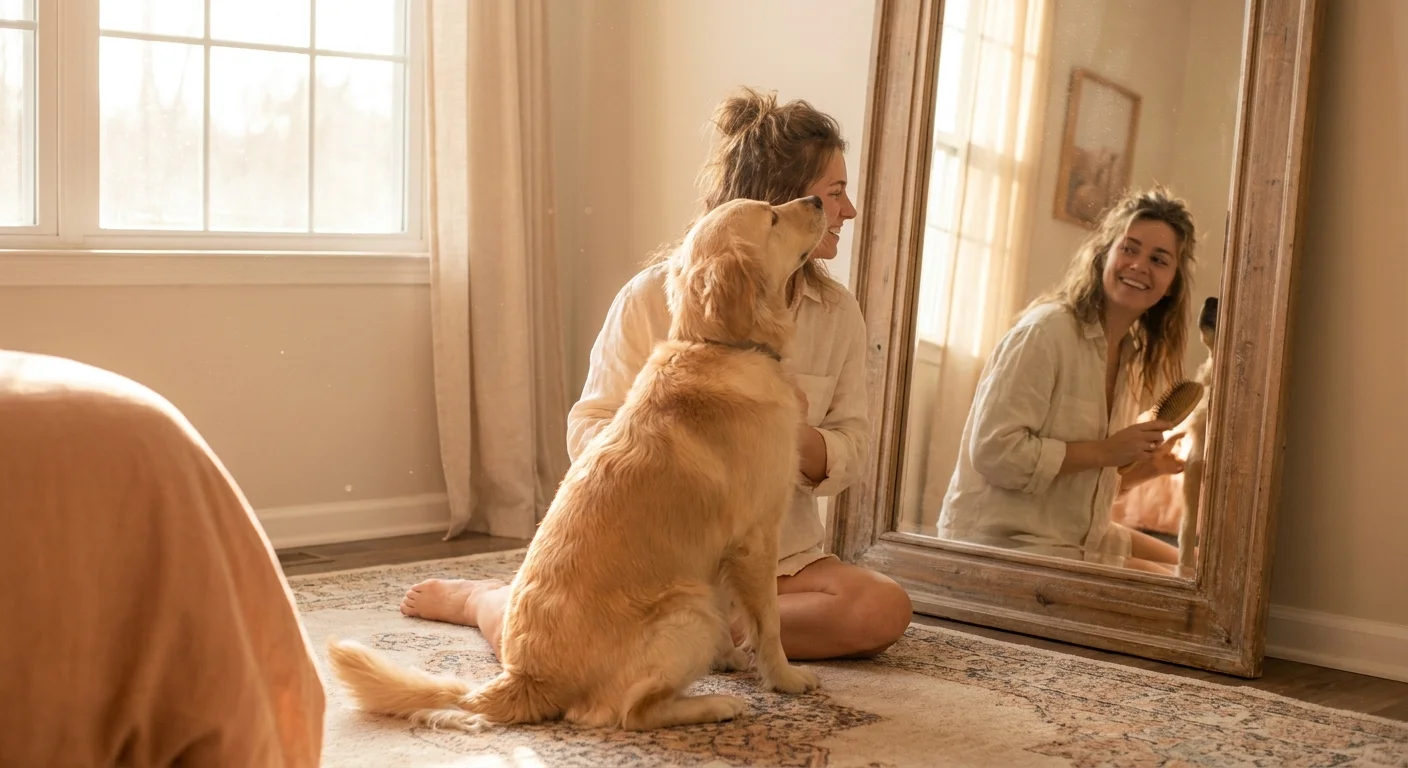
Next Time You Look in the Mirror
The next time you catch your reflection, take a moment to appreciate the complex brain processing required to simply know that you are you. While humans might take this ability for granted, sharing this cognitive milestone with massive elephants, curious magpies, and tiny reef fish makes the natural world feel just a little more connected. If you share your home with a dog or cat, try placing a mirror on the floor. Even if they don’t pass the classic mark test, simply observing how they interact with their environment offers a fascinating glimpse into their uniquely beautiful minds.
This is general informational content based on widely accepted guidance. Individual results vary. Verify current details—rules, prices, eligibility, regulations—with official sources before making important decisions.