When your dog leans heavily against your leg or your cat falls asleep on your keyboard, they are doing more than seeking warmth or attention. These everyday behaviors are rooted in complex neurobiology that proves just how deeply our pets bond with us. Research shows that domestic animals form distinct attachment styles that closely mirror the connection between human parents and children. From subtle shifts in their body language to the specific direction of a wagging tail, your pet constantly communicates their trust and affection. By learning to decode these specific signals, you can better understand their emotional world. Here are eight scientifically backed signs that your dog or cat feels deeply connected to you.

1. They Maintain Soft, Prolonged Eye Contact
In the wild, a hard, unbroken stare between animals is often interpreted as a threat or a challenge. However, domestic dogs have evolved to use eye contact as a primary way to communicate affection and seek guidance from humans. When you and your dog share a relaxed, lingering gaze, it triggers the release of oxytocin in both of your brains. Oxytocin is the exact same hormone responsible for building emotional bonds between human parents and their infants. If your dog naturally seeks out your eyes when they are calm, they are actively engaging in a physiological bonding loop.
To practice this with your own dog, avoid staring them down, which can feel confrontational. Instead, wait for them to look at you while relaxing on the couch, and offer a soft smile and relaxed eyes. Cats also use eye contact to communicate, though they generally prefer a softer, less direct approach to avoid feeling overstimulated.

2. They Give You the “Slow Blink”
For cats, affection is often communicated through their eyelids rather than a wide-eyed gaze. If your cat looks at you and slowly lowers their eyelids before gently opening them again, they are giving you a “slow blink.” A study published in Scientific Reports demonstrated that this behavior functions as a form of positive emotional communication between cats and humans.
The researchers found that cats are significantly more likely to approach a human who slow blinks at them compared to one who maintains a neutral facial expression. You can easily return this gesture of trust. When your cat is resting nearby, look at them softly, close your eyes slowly, hold them shut for a brief second, and slowly open them. If your cat blinks back, they are openly reciprocating your affection.
3. They Use You as a “Secure Base”
In developmental psychology, human children use their caregivers as a “secure base” from which to confidently explore the world. Research confirms that our pets do the exact same thing. When scientists adapted the famous Mary Ainsworth “Strange Situation” test for domestic dogs, they found that dogs are far more likely to explore novel environments and interact with new puzzle toys when their owner is present.
If you take your pet to a new environment—like a crowded park or the veterinarian’s office—you might notice them periodically checking in with you. They might sniff a new object and immediately look back at your face, or retreat to lean against your legs when startled. Returning to your side before moving forward proves they view you as their anchor of safety.
4. Their Tail Wags to the Right
A wagging tail is a reliable sign of emotional arousal, but it does not automatically mean a dog is happy. The specific direction of the wag tells a much deeper story. Because the brain’s hemispheres control opposite sides of the body, the direction of a dog’s tail wag reflects which side of their brain is currently most active.
Veterinary research reveals that dogs wag their tails more to the right side of their body when they see something that triggers positive, approach-oriented emotions—like their favorite human. This asymmetrical right-sided wagging is tied to left-hemisphere brain activation. Conversely, a left-biased wag indicates withdrawal, stress, or anxiety. The next time you grab the leash or walk through the door, watch the base of their tail carefully to spot this subtle physical declaration of love.
5. They Develop a Unique Language Just for You
Kittens meow frequently to get their mother’s attention, but wild felines generally drop this behavior entirely as they reach adulthood. Domestic cats, however, retain the meow specifically to communicate with humans. If your cat trills, chirps, or has a specific meow they only use around you, they have developed a unique vocal relationship tailored entirely to your presence.
Cats also employ specific frequencies of purring to solicit care and comfort from their favorite people. Dogs adapt their vocalizations in a similar way, learning exactly which pitch of bark, playful growl, or soft grumble will prompt you to engage with them. When your pet vocalizes in a way they reserve only for you, they are confirming their special social bond.
6. They Seek Physical Proximity When Resting
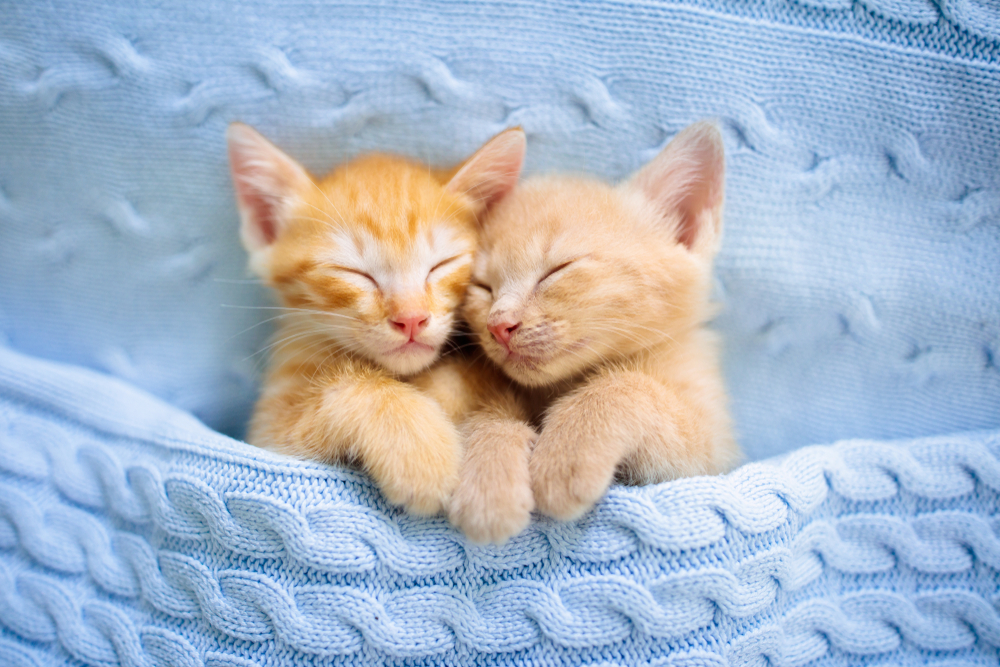
Sleep leaves any animal inherently vulnerable. When your pet chooses to sleep pressed against your leg, curled up in your lap, or resting their head on your foot, they are demonstrating profound trust. In the wild, resting near a trusted pack member ensures safety from predators. By choosing to rest in direct physical contact with you, your pet indicates that they view you as their ultimate source of protection.
Dogs often lean their body weight against their owners as a way of maintaining physical contact while they scan their environment. Cats show their claiming behavior through head-bunting. Felines possess scent glands on their cheeks and forehead; rubbing their head against your shin or chin deposits their unique pheromones. This behavior effectively marks you as a cherished and trusted member of their family unit.
7. They Display Relaxed, Vulnerable Body Language
Tension in a pet’s body is a clear indicator of stress, fear, or uncertainty. A pet that feels deeply connected to you will exhibit fluid, relaxed body mechanics in your presence. For dogs, this looks like a loose, wiggly spine, soft ears, and a gently open mouth. A dog experiencing stress might show “whale eye”—where the whites of their eyes are visible—or repeatedly lick their lips. A bonded, comfortable dog allows their weight to sink heavily into their bed when you are nearby.
Exposing the belly is often a sign of ultimate comfort for both species. For cats, stretching out fully or sleeping with their belly completely exposed shows they feel completely secure in their environment without the need to protect their vital organs. Keep in mind that a cat’s exposed belly is usually a demonstration of deep trust rather than an open invitation for a belly rub.
8. They Greet You with Unrestrained Joy
Reunion behavior is one of the most reliable metrics scientists use to assess attachment styles. When you return home from work or a simple errand, a securely attached dog will likely greet you with full-body wiggles, bring you a toy, or initiate a session of play. A securely attached cat might greet you at the front door with an upright tail—often with a slight hook or quiver at the tip—and vocalize their excitement.
It is important to note the difference between a joyful greeting and separation anxiety. A securely attached pet will express intense happiness but eventually settle down and return to a calm state once you are settled on the couch. A highly anxious or hyper-attached pet may struggle to calm down long after you arrive.
Editorial Note: Understanding your pet’s emotional language requires setting aside human expectations. We often look for obvious gestures, but an animal’s highest compliment is simply choosing to be physically vulnerable in your presence.
At a Glance: How Dogs and Cats Show Affection Differently
While both species form deep emotional attachments to their human caregivers, their different evolutionary backgrounds mean they express that love in distinctly different ways. Here is how common bonding behaviors diverge between dogs and cats.
| Bonding Behavior | How Dogs Show It | How Cats Show It |
|---|---|---|
| Vocalizing | Whining softly, sighing when resting near you, or utilizing playful barks to initiate engagement. | Meowing, trilling, chirping, and utilizing distinct solicitation purrs. |
| Eye Contact | Seeking direct, soft eye contact to trigger a mutual oxytocin release. | Offering a slow blink to signal trust and positive emotion. |
| Scent Marking | Rolling on your belongings, carrying your shoes, or sleeping on your laundry. | Head-bunting and aggressively rubbing their cheeks against your hands or legs. |
| Physical Touch | Leaning their heavy body weight against your legs; resting their chin on your knee. | Kneading your lap (often called “making biscuits”); curling up directly on your chest. |
Frequently Asked Questions
How long does it take for a pet to bond with a new owner?
Animal welfare experts frequently reference the “3-3-3 rule” for rescued pets. Generally, it takes three days for an animal to decompress and stop feeling overwhelmed, three weeks to learn your routine and start showing their true personality, and three months to build a secure attachment and feel completely at home. Consistency, patience, and positive reinforcement are the most effective ways to accelerate this timeline.
Do cats feel as strong a bond with humans as dogs do?
Yes. Despite a persistent cultural stereotype that cats are aloof or entirely independent, behavioral research proves that cats form attachments to their owners that are just as secure as those seen in dogs. Cats simply express their emotional connections differently, relying heavily on subtle body language, scent marking, and physical proximity rather than the overt enthusiasm common in most dogs.
What does it mean if my pet follows me into the bathroom?
Following you from room to room—including into the bathroom—is a textbook example of the secure base effect. Because your pet views you as their primary source of safety, they want to maintain a line of sight to ensure you are safe and accessible. Furthermore, pack animals and colony felines naturally view communal activities as vital bonding opportunities.
Can a pet be too attached to their owner?
Yes; there is a distinct difference between a secure bond and hyper-attachment. A securely attached pet is thrilled to see you but can confidently relax, eat, and sleep when you are not home. Hyper-attachment often manifests as clinical separation anxiety, leading to destructive behaviors, excessive vocalization, or house-soiling when you leave. If your pet genuinely panics when you depart, consider working with a certified veterinary behaviorist.
Nurturing the Bond
Recognizing how your pet says “I love you” is the first step in deepening your relationship. Whether it is a subtle slow blink from across the room or a vigorous, right-sided tail wag at the front door, these behaviors are genuine expressions of immense trust. To continue building on that foundation, try incorporating these habits into your daily routine:
- Let them initiate: Allow your pet to come to you for physical affection rather than forcing interactions or picking them up when they are resting.
- Learn their baseline: Pay close attention to their normal resting posture and facial expressions so you can easily spot when they feel tense, anxious, or unwell.
- Reward the check-ins: When your dog looks back at you on a walk or your cat wanders into your office just to say hello, offer gentle praise to reinforce the connection.
By responding to their cues with patience and affection, you actively reinforce the safety of their environment and ensure your pet feels secure for years to come.
This is general informational content based on widely accepted guidance. Individual results vary. Verify current details—rules, prices, eligibility, regulations—with official sources before making important decisions.
Last updated: June 2026. Rules, prices, and details change—verify current information with official sources before acting on it.