Practical Steps to Encourage Canine Independence
You can maintain a deep, loving relationship with your dog while teaching them that independence is safe and rewarding. Build their confidence with a few structural changes to your routine.
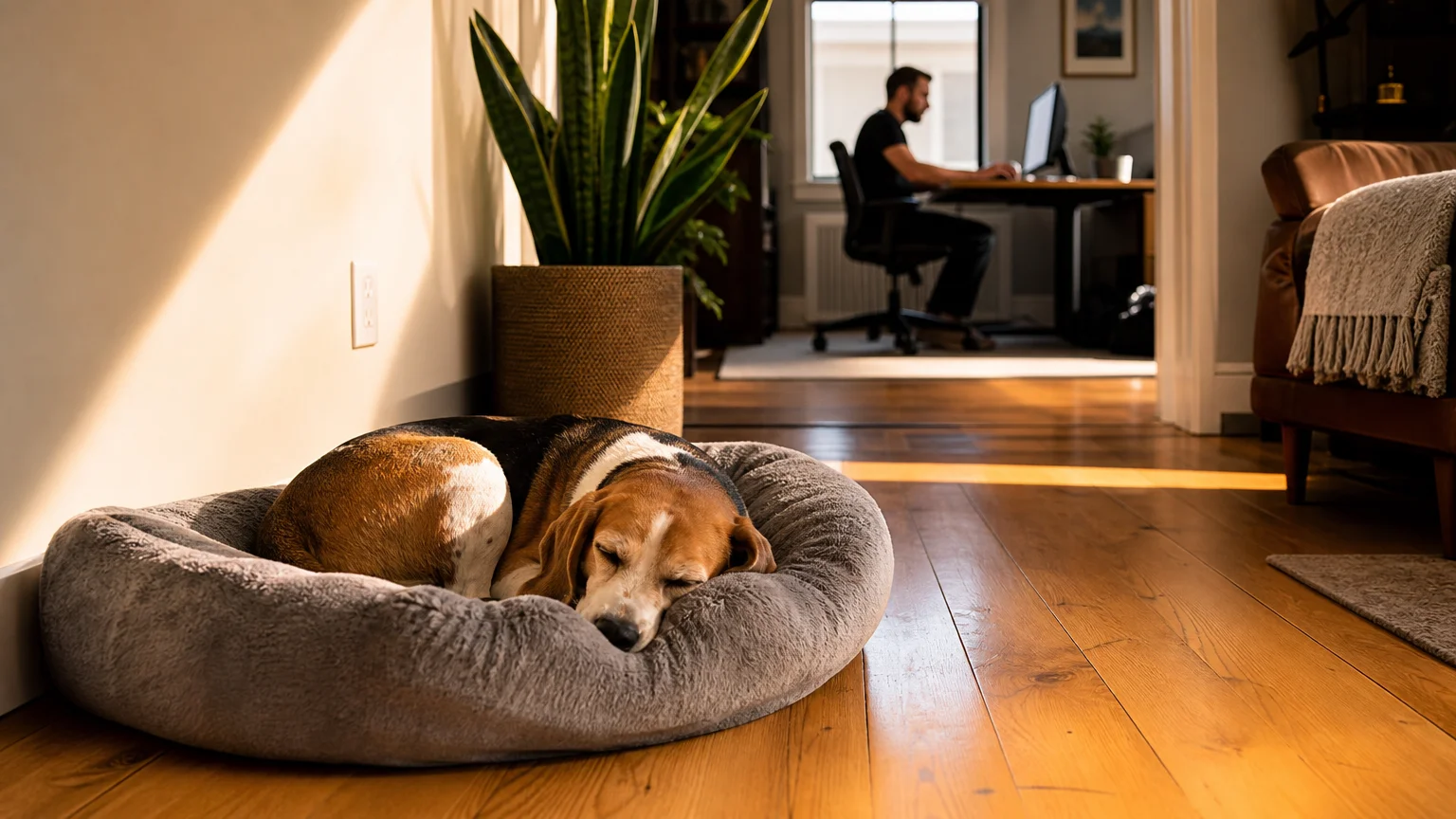
Establish a “Place” Command: This is the foundation of canine independence. Choose a comfortable dog bed or a specific rug. Lure your dog to the bed with a high-value treat and say “Place.” When all four paws are on the bed, reward them. Gradually increase the distance you step away from the bed. Over weeks of consistent practice, your dog learns that staying on their bed is highly profitable. You can eventually cook dinner while your dog watches calmly from their designated spot across the room.
Desensitize Departure Cues: Dogs are masters at predicting when you are about to leave. They know that shoes, keys, and a coat mean isolation. To strip these objects of their anxiety-inducing power, perform fake departures. Put on your work shoes and sit on the couch to read a book. Jingle your car keys while you make a cup of coffee. When these cues no longer predict your absence, your dog’s pre-departure anxiety will plummet.
Offer Mental Enrichment: A tired dog is an independent dog, but physical exercise is only half the equation. Mental fatigue is incredibly powerful. Feed your dog their meals out of puzzle toys or snuffle mats. Give them frozen lick mats smeared with plain yogurt or peanut butter while you are in another room. When their brain is focused on extracting food, they forget to worry about what you are doing in the home office.
Frequently Asked Questions
Is it normal for my dog to follow me to the bathroom?
Yes. Dogs are pack animals that do not understand human concepts of privacy. To them, the bathroom is just another room where their favorite person happens to be. They may also follow you because they know you are a captive audience likely to give them attention while you are in there.
Can a dog suddenly become a Velcro dog?
Sudden changes in dog habits usually indicate a shift in their physical or emotional environment. Moving to a new house, introducing a new family member, or a sudden change in your work schedule can trigger insecurity, leading to clinginess. Sudden shadowing can also indicate an underlying medical issue or physical pain, warranting a vet check.
Are rescue dogs more likely to be clingy?
Yes, dogs adopted from shelters often exhibit heightened attachment behaviors. The chaotic environment of a shelter, combined with the loss of their previous home, creates deep insecurity. When a rescue dog finally finds a safe, loving person, they may shadow that person relentlessly to ensure they do not lose their home again. This honeymoon phase clinginess often subsides after a few months once the dog realizes their new environment is permanent.
Should I ignore my dog to stop them from following me?
You do not need to ignore your dog completely, but you should stop inadvertently rewarding the behavior. If you want some space, withhold petting, eye contact, and talking when they follow you uninvited. Instead, proactively reward them when they choose to relax on their own bed or explore the yard independently.
Teaching your dog to be comfortable on their own takes patience, but the effort pays off by reducing their stress and giving you a bit of breathing room. Celebrate their loyalty, respect their genetics, and give them the tools they need to feel secure even when you step into the next room. A confident dog makes for a happier home and an even stronger human-animal bond. This article provides general information only. Every reader’s situation is different—what works for others may not be the right fit for you. For personalized guidance on health, legal, or financial matters, consult a qualified professional.
Last updated: June 2026. Rules, prices, and details change—verify current information with official sources before acting on it.