Cats communicate in a complex language of subtle movements, strange vocalizations, and seemingly inexplicable antics. If you want to build a stronger bond with your feline companion, understanding the science behind their quirks is the best place to start. While your cat’s sudden midnight sprints or habit of pushing water glasses off the counter might feel like intentional mischief, these actions are deeply rooted in their biology and evolutionary history as both predators and prey. By decoding these natural instincts, you can reduce their stress, recognize their affection, and create a more enriching environment for them to thrive. Here is the science behind eight of the most common—and peculiar—feline behaviors.
1. The Slow Blink (Feline Kisses)
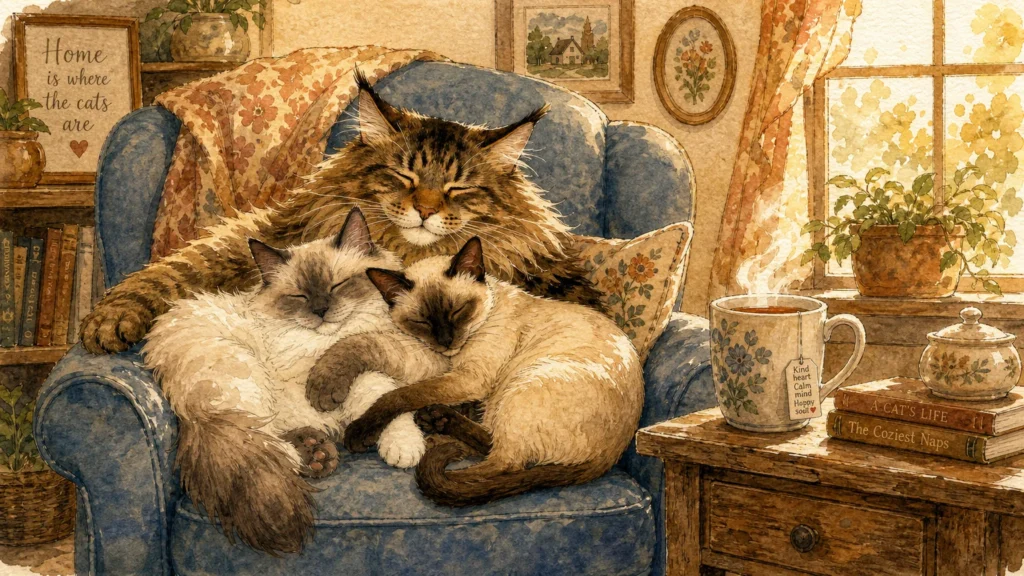
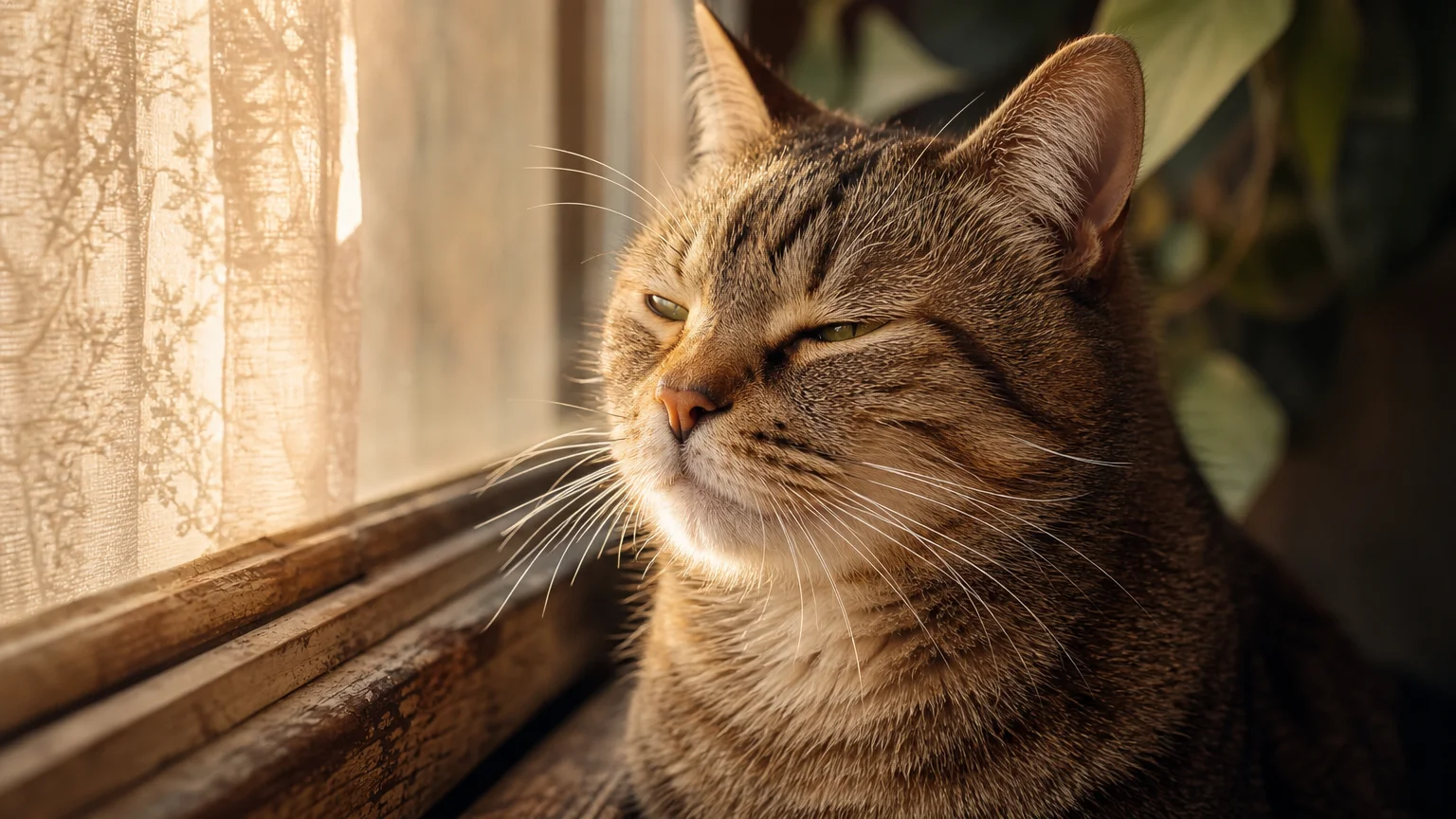
If you catch your cat staring at you from across the room and slowly closing and opening their eyes, you are receiving the feline equivalent of a warm smile. In the animal kingdom, an unbroken, hard stare is usually a sign of aggression or a predatory threat. By purposefully closing their eyes in your presence, your cat is communicating that they do not view you as a threat. They are deliberately making themselves vulnerable, which requires a high degree of trust.
Science backs up this heartwarming behavior. According to a study on cat behavior published in Scientific Reports, cats are significantly more likely to approach a person—even a stranger—if that person initiates a slow blink. The researchers found that this simple eye-narrowing technique acts as a form of positive emotional communication. You can easily use this built-in language to strengthen your relationship with your pet.
To communicate using the slow blink, follow these simple steps:
- Wait until your cat is resting quietly and feeling calm.
- Catch their eye, but avoid staring intensely. Keep your facial expression relaxed.
- Slowly lower your eyelids until your eyes are almost entirely closed.
- Hold your eyes shut for one to two seconds, then slowly open them.
- Look away casually to release any social pressure.
2. The “If It Fits, I Sits” Box Obsession
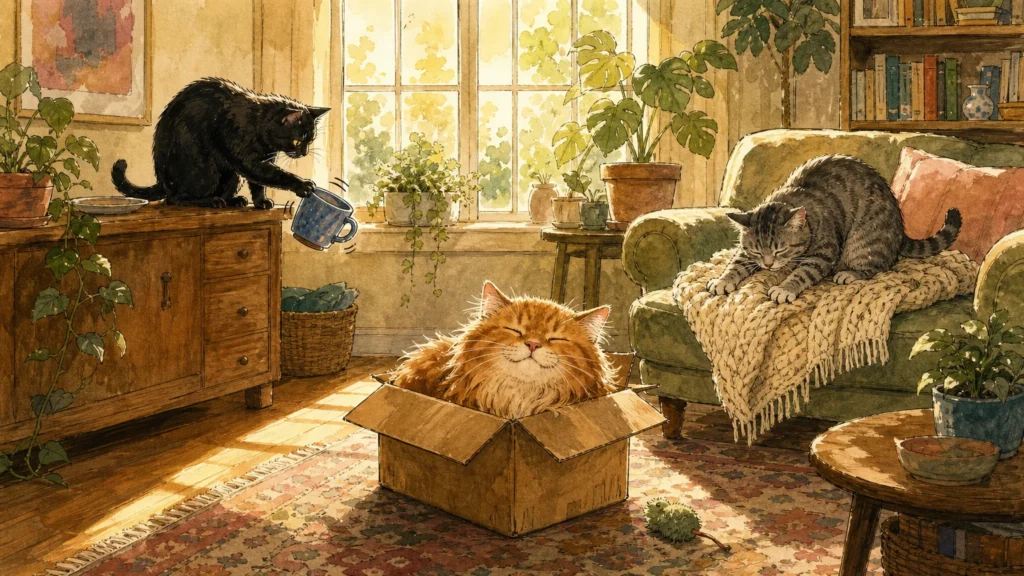
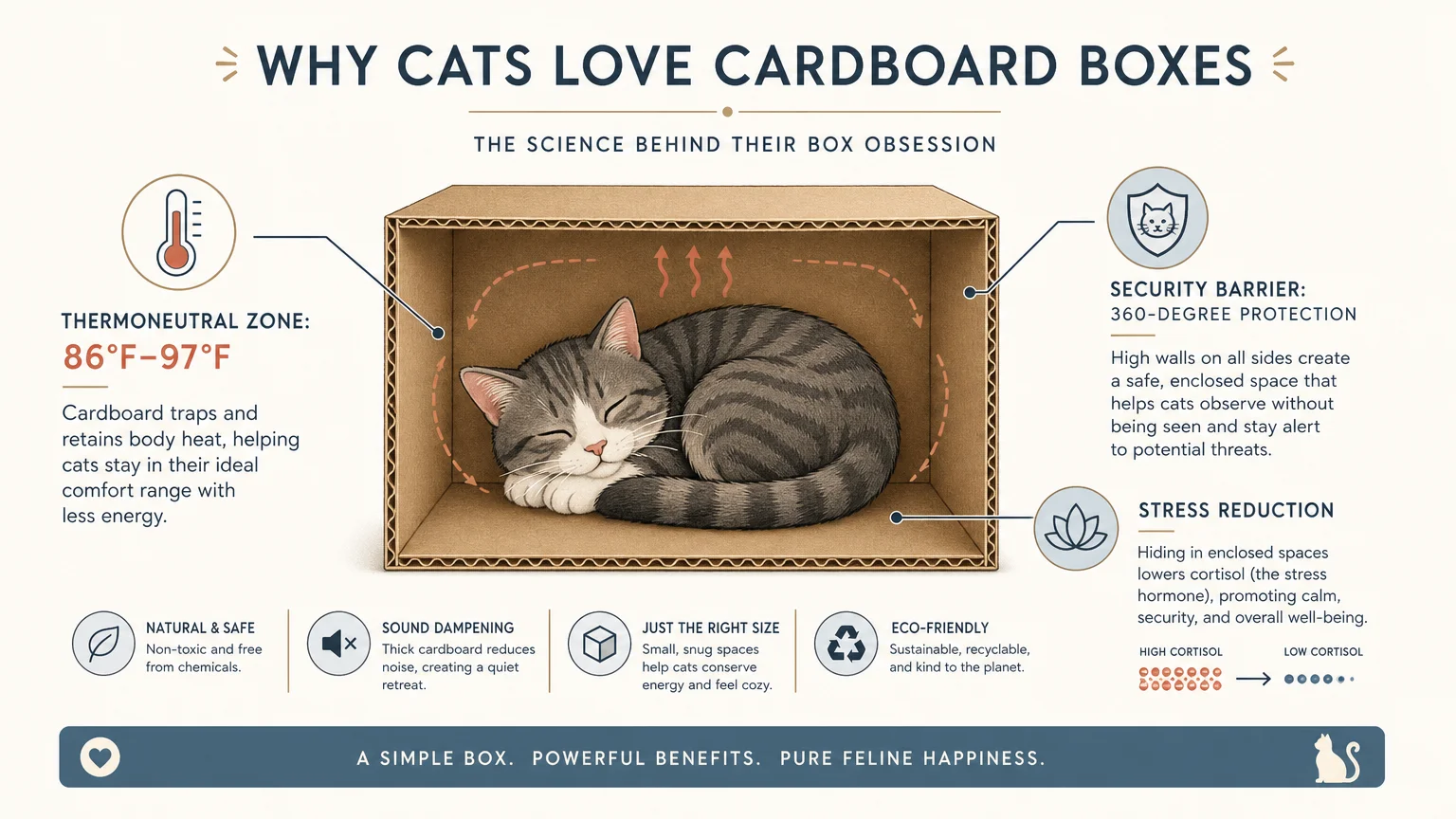
Bring home an expensive, plush cat bed, and your cat will likely ignore it in favor of the cardboard box it shipped in. The feline obsession with enclosed spaces is a legendary internet trope, but it serves a crucial biological purpose. Cats are ambush predators. They feel safest when they can observe their surroundings without being seen, and a box provides the perfect vantage point while protecting their back and flanks from surprise attacks.
Boxes also act as a powerful coping mechanism for environmental anxiety. Research led by ethologist Claudia Vinke at Utrecht University demonstrated that shelter cats provided with hiding boxes experienced significantly lower stress levels than those without them. The cats with boxes adapted to their new environments faster and showed more willingness to interact with humans. Giving your cat a designated hiding spot allows them to safely retreat when they feel overwhelmed by loud noises, guests, or changes in the home.
Furthermore, corrugated cardboard is an excellent insulator. A domestic cat’s thermoneutral zone—the temperature range where they do not have to expend extra energy to stay warm or keep cool—is between 86 and 97 degrees Fahrenheit. This is significantly higher than standard human room temperature. Curling up in a small, insulated cardboard box helps them conserve body heat and maintain their ideal temperature comfortably.
3. Kneading or “Making Biscuits”
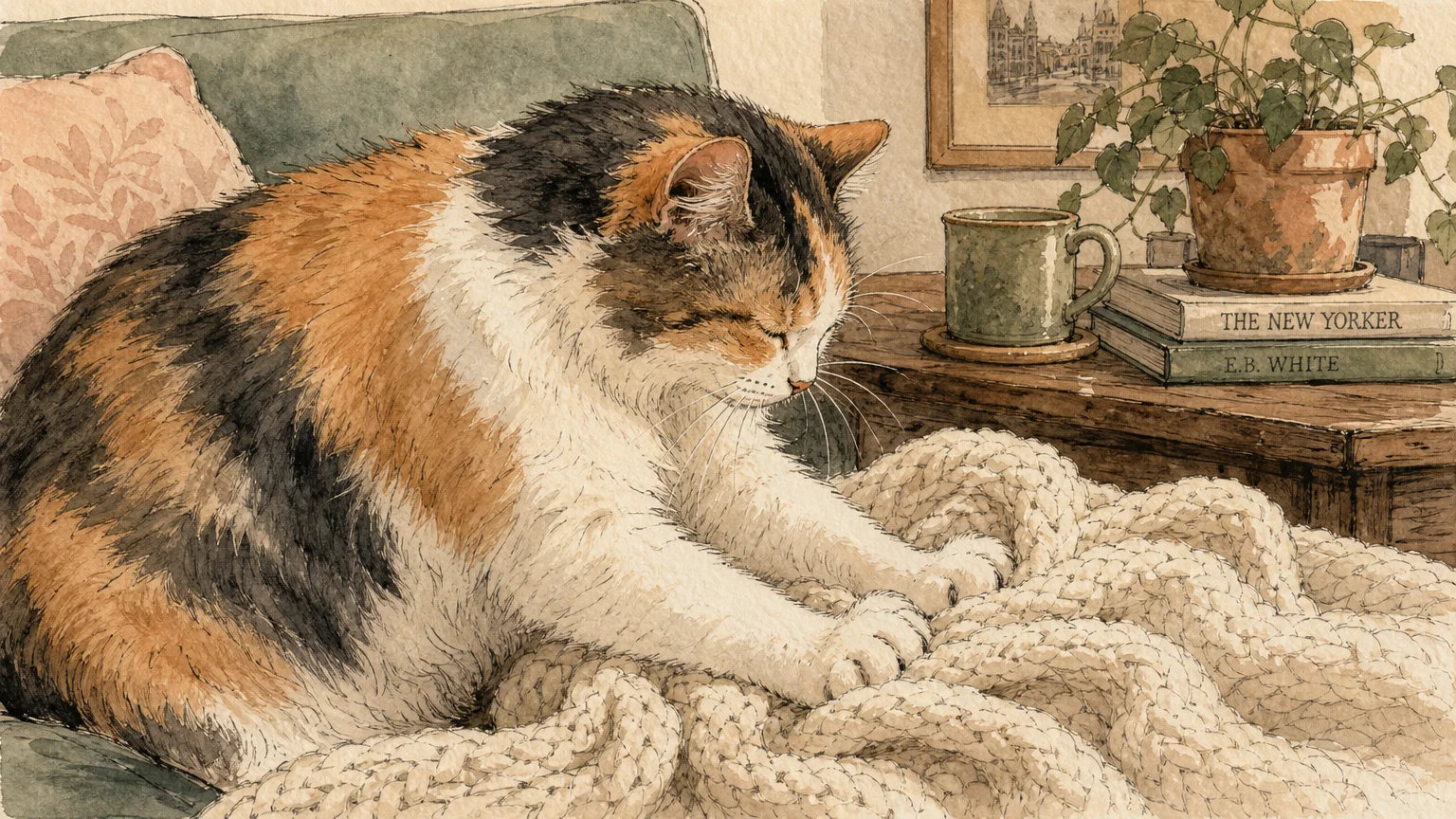
Many cats rhythmically push their front paws in and out against a soft blanket, a pillow, or your lap. This behavior, affectionately known as “making biscuits,” is a leftover trait from early kittenhood. Neonatal kittens knead their mother’s abdomen to stimulate the release of oxytocin and encourage milk letdown during nursing. Because adult domestic cats are cared for by humans throughout their lives, they often retain juvenile behaviors well into adulthood—a phenomenon known as neoteny.
When your adult cat kneads you, they are essentially reverting to the ultimate feeling of safety and maternal comfort. Veterinary experts at the American Animal Hospital Association (AAHA) note that kneading also serves a territorial purpose. Cats have scent glands hidden in the soft pads of their paws. By pressing their paws into a surface, they release unique pheromones that mark the area—or the person—as their own safe property.
Some wild feline species also knead tall grass or leaves to create a soft, flat area for sleeping. Your domestic cat might be acting on this exact same instinct when they dramatically knead the couch cushions before finally settling down for a nap.
4. The 3 AM Zoomies
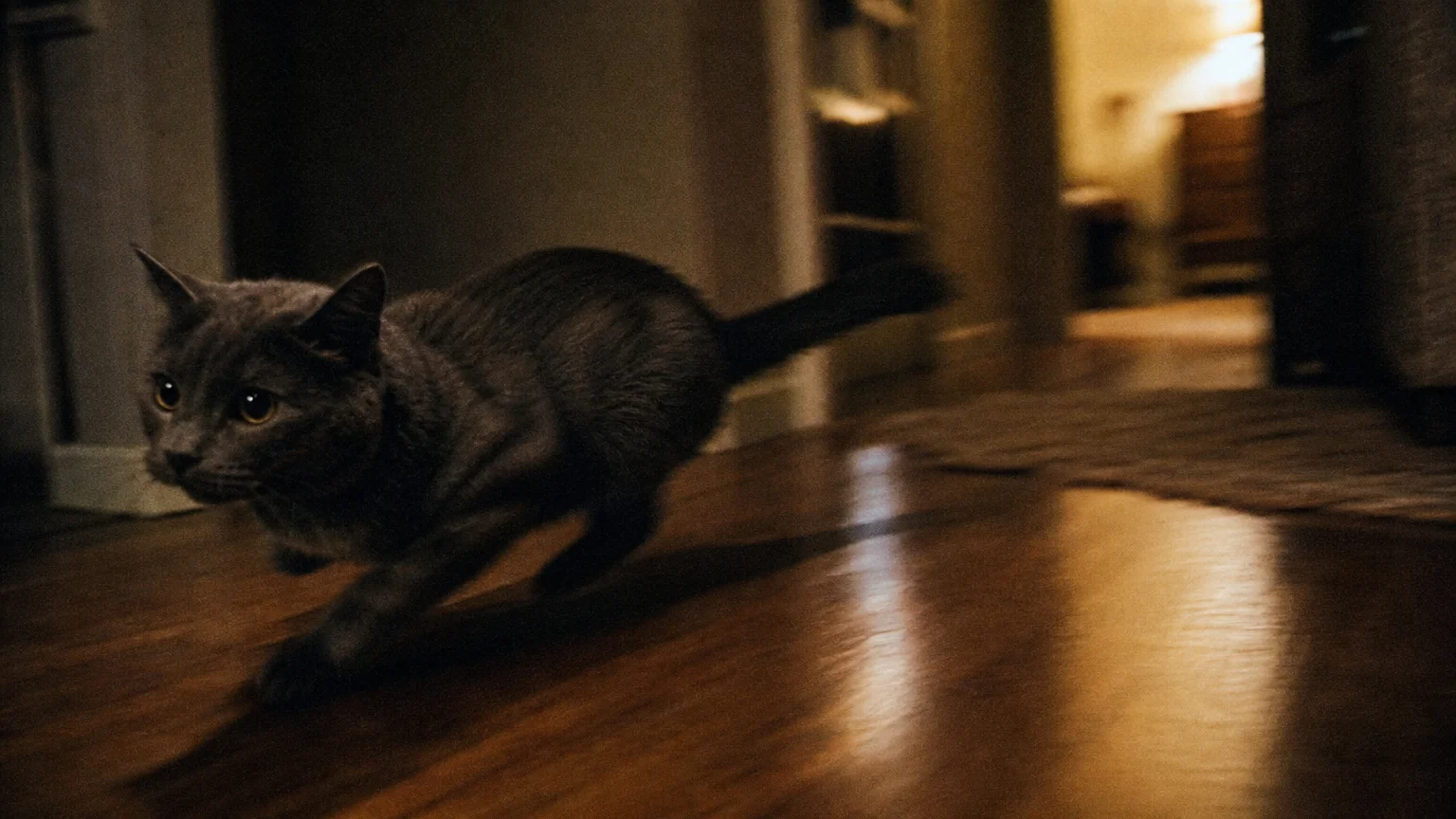
You are fast asleep when suddenly your cat tears down the hallway, banks hard off the living room sofa, and skids across the hardwood floor like they are fleeing an invisible monster. Behaviorists at VCA Animal Hospitals refer to these sudden explosions of energy as Frenetic Random Activity Periods, or FRAPs. While they can be startling, zoomies are a completely normal way for cats to burn off accumulated physical and nervous energy.
Cats are crepuscular, meaning their natural rhythms make them most active at dawn and dusk. This evolutionary trait allowed their wild ancestors to hunt when prey was active but larger predators were resting. If your cat spends the entire day sleeping while you are at work, they have an enormous reserve of energy waiting to be released just as you are winding down for the night.
Interestingly, many cats also experience zoomies immediately after using the litter box. This post-bathroom sprint can be a survival instinct to run away from the scent of their waste, preventing larger predators from tracking them. It may also result from the stimulation of the vagus nerve during digestion, which provides a sudden rush of relief and energy. To manage nighttime zoomies, try scheduling a vigorous 15-minute play session with a wand toy right before your bedtime to help them expend that hunting energy.
5. Knocking Objects Off Tables
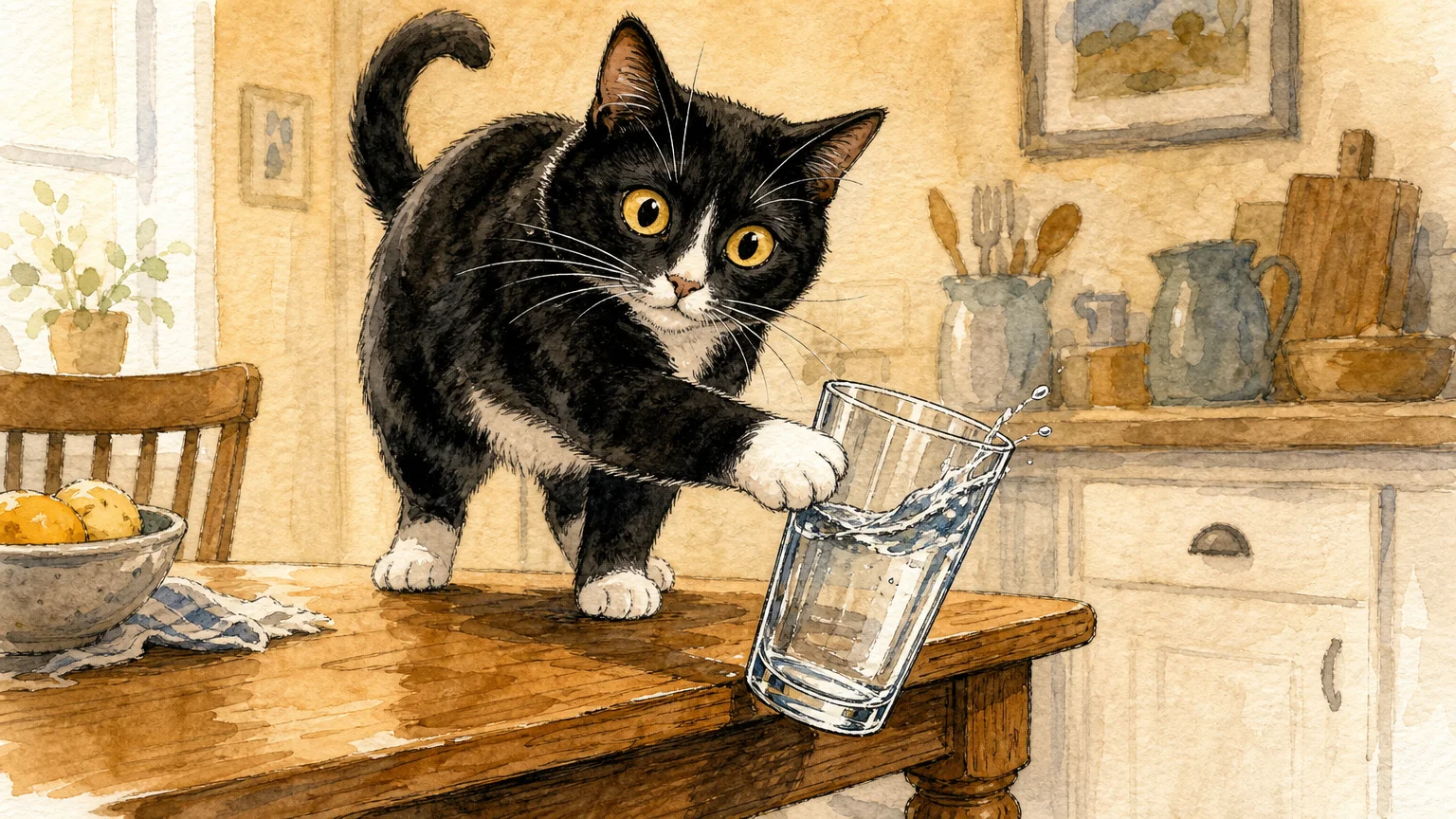
There are few things more frustrating than watching your cat lock eyes with you, slowly extend a paw, and deliberately push a glass of water off the kitchen counter. While this seems like an act of defiance, cats do not possess the psychological capacity for spite. Instead, this behavior stems from a combination of sensory exploration and simple behavioral conditioning.
Cats rely heavily on their paws to understand their environment. Here is why they feel compelled to bat at your belongings:
- Sensory exploration: A cat’s paw pads are packed with nerve endings. Tapping and pushing an object helps them determine its weight, texture, and whether it is safe to interact with.
- Hunting instincts: A stationary pen or lip balm resembles a motionless bug or a hiding mouse. Swatting the object is a cat’s way of testing whether the “prey” will scurry away.
- Attention seeking: Cats are brilliant at training their owners. If knocking a remote control onto the floor causes you to immediately stand up, speak to them, or feed them, they quickly learn that gravity equals attention.
To discourage this habit, avoid reacting when they drop something. Instead, redirect their energy by providing complex puzzle toys or designated scratching posts that reward their curiosity without destroying your household items.
6. Head Bunting (Giving “Headbutts”)
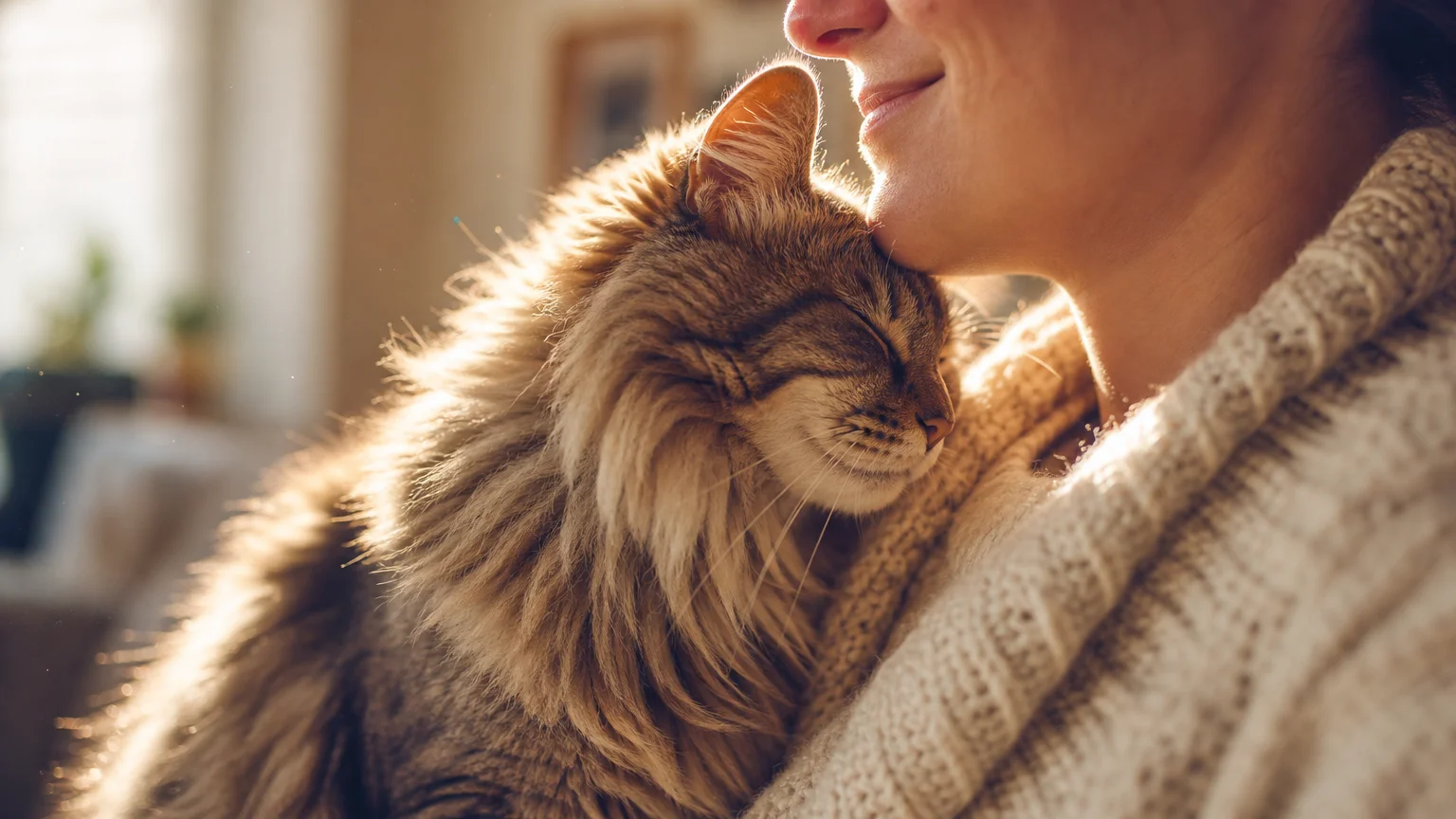
When your cat walks up and firmly bonks their forehead against your chin or shin, they are offering you one of the highest compliments in the feline world. This behavior is called head bunting. Cats possess specialized scent glands on their forehead, cheeks, and chin. When they rub these glands against you, they are transferring their unique facial pheromones onto your skin and clothes.
In feral cat colonies, cats that live together will frequently rub against one another to create a communal scent. This shared scent acts as a biological passport; it helps them immediately identify who belongs to the family and who is an intruder. By bunting you, your cat is claiming you as part of their inner circle. It is a comforting, self-soothing gesture that indicates they feel entirely secure in your presence.

7. Chattering at Birds and Windows
If your cat enjoys watching birds or squirrels through a glass window, you have likely heard them make a strange, stuttering sound. Their jaw vibrates rapidly, producing a staccato chattering or chirping noise that sounds entirely un-feline. This unique vocalization happens almost exclusively when a cat spots prey that they cannot reach.
Animal behaviorists propose two main theories for this reaction. The first is that the chattering is a physical manifestation of extreme frustration and excitement. The surge of adrenaline from spotting prey, combined with the barrier of the window, causes their jaw muscles to involuntarily spasm.
The second theory suggests that the jaw vibration mimics the precise “kill bite” cats use in the wild. When a feline catches a bird or a mouse, they deliver a swift, vibrating bite to the back of the neck to sever the prey’s spinal cord instantly. Watching a bird may trigger the muscle memory of this lethal bite, causing them to practice the jaw movement from the safety of your living room.
8. Bringing You “Gifts” (Toys or Prey)
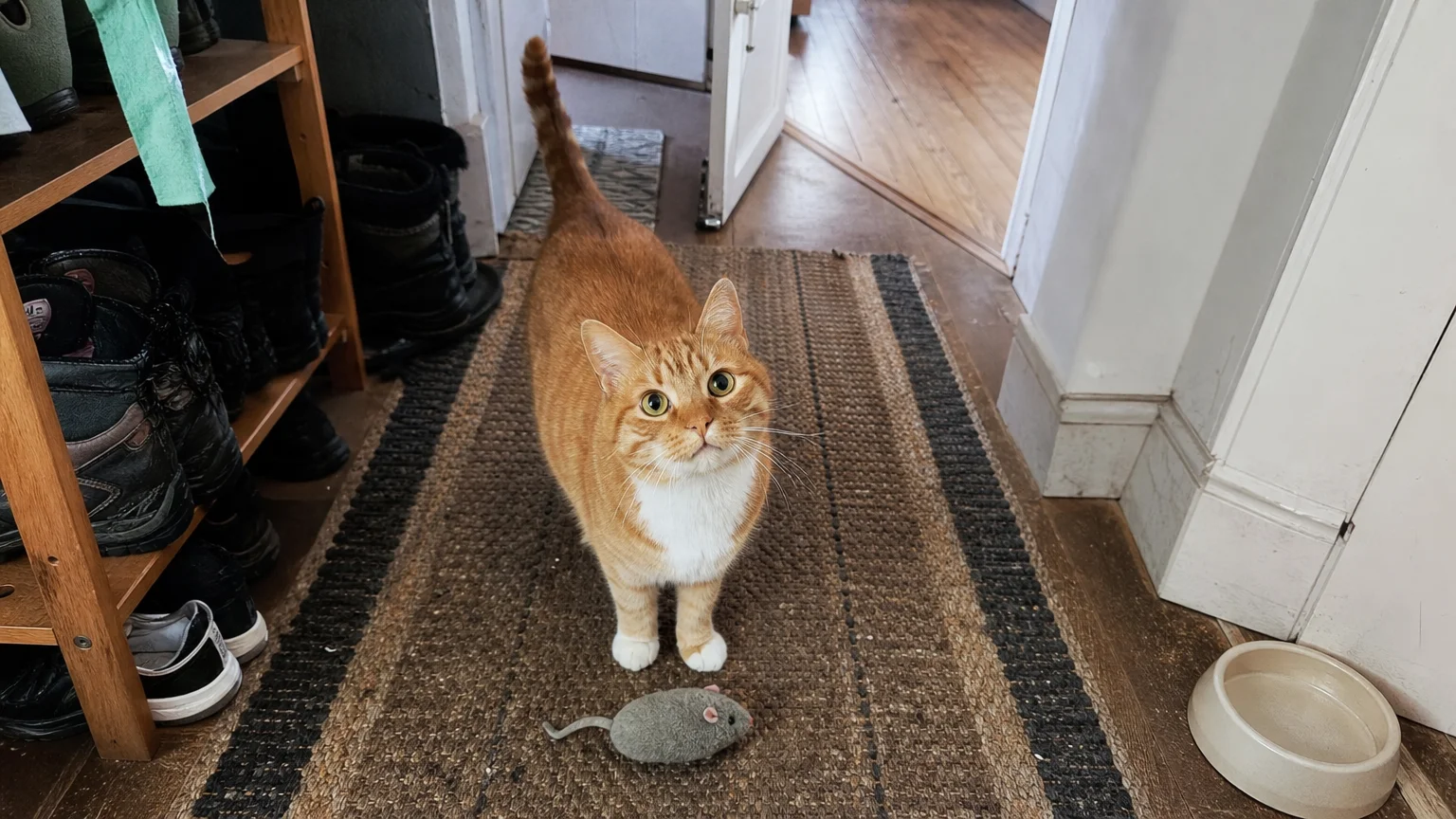
Outdoor cats are notorious for dropping dead mice or insects at their owner’s feet. Indoor cats exhibit the exact same behavior by proudly delivering a stuffed toy mouse or a crumpled receipt to your bed. While stepping on a wet toy in the dark is unpleasant, you should understand the deeply affectionate motivation behind the delivery.
In the wild, a mother cat is responsible for teaching her kittens how to survive. She begins by bringing dead prey to the den for them to eat, eventually progressing to bringing live, injured prey so the kittens can practice hunting safely. Because spayed and neutered domestic cats often redirect their maternal and family-bonding instincts onto their human owners, they view you as a beloved but incompetent member of their family.
Since they never see you successfully catch a mouse, they assume you are a terrible hunter who needs to be fed or taught. When your cat brings you a toy and yowls loudly to announce their arrival, they are acting as a provider. The best way to respond is to praise them for their successful hunt and safely dispose of the “catch” when they are no longer looking.
Things to Watch Out For
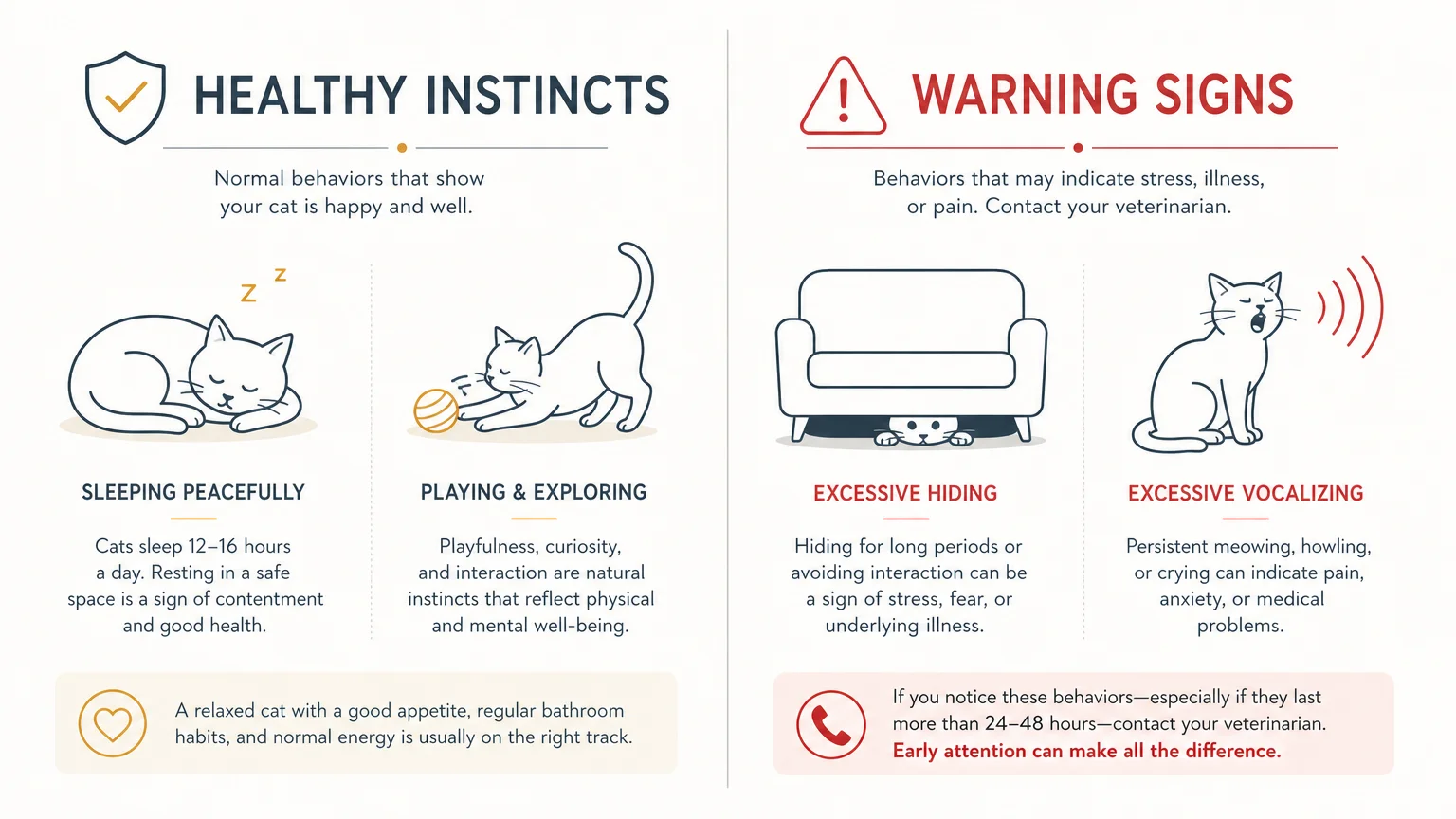
Because cats evolved as small predators that also fall prey to larger animals, they are masters at masking physical vulnerability. A sick or injured cat will instinctively hide their pain so they do not appear weak to predators. Consequently, serious medical issues often disguise themselves as minor behavioral quirks. You must remain vigilant about sudden changes in your cat’s established routine.
If a normally social cat suddenly spends all day hiding under a bed, or if an independent cat becomes excessively clingy and vocal, it is time to pay closer attention. Over-grooming is another common red flag. While cats are fastidious groomers, licking a specific patch of fur until it is bald often indicates anxiety, flea allergies, or localized pain underneath the skin.
| Behavior Category | Normal Feline Trait | Potential Medical Red Flag |
|---|---|---|
| Vocalization | Occasional chattering at windows or meowing for breakfast. | Sudden, constant yowling (could indicate hyperthyroidism, cognitive dysfunction, or severe pain). |
| Activity Levels | Short, intense bursts of energy (zoomies) followed by long naps. | Extreme lethargy, refusal to play, or sudden reluctance to jump onto furniture (often a sign of arthritis). |
| Bathroom Habits | Sprinting away joyfully after using a clean litter box. | Straining in the box, crying out while urinating, or eliminating outside the box entirely. |
Frequently Asked Questions
Why does my cat stare at me without blinking?
Cats use unbroken eye contact to assess potential threats. If a cat is staring at you with wide, unblinking eyes, they are likely trying to figure out your intentions or waiting to see what you do next. You can defuse the tension by breaking the stare with a slow blink, which communicates that you are relaxed and friendly.
Why does my cat bite me gently when I pet them?
These gentle nips are often referred to as “love bites,” but they are usually a sign of overstimulation. Feline hair follicles are highly sensitive, and repetitive stroking can suddenly shift from feeling pleasant to feeling overwhelming. A gentle bite is their way of saying they have had enough physical contact for the moment.
Is it normal for my cat to sleep all day?
Yes. Adult cats typically sleep 12 to 16 hours a day, while older cats and growing kittens may sleep up to 20 hours. Because they are crepuscular, they reserve their peak energy for the low-light hours of dawn and dusk, choosing to conserve their strength during the bright daylight.
Living with a cat means accepting a certain level of mystery, but taking the time to learn their unique language transforms a confusing pet into a deeply communicative companion. The next time your cat pushes a pen off your desk or brings you a battered toy, remember that they are simply acting out thousands of years of survival instincts. This is general informational content based on widely accepted guidance. Individual results vary. Verify current details—rules, prices, eligibility, regulations—with official sources before making important decisions.
Last updated: June 2026. Rules, prices, and details change—verify current information with official sources before acting on it.