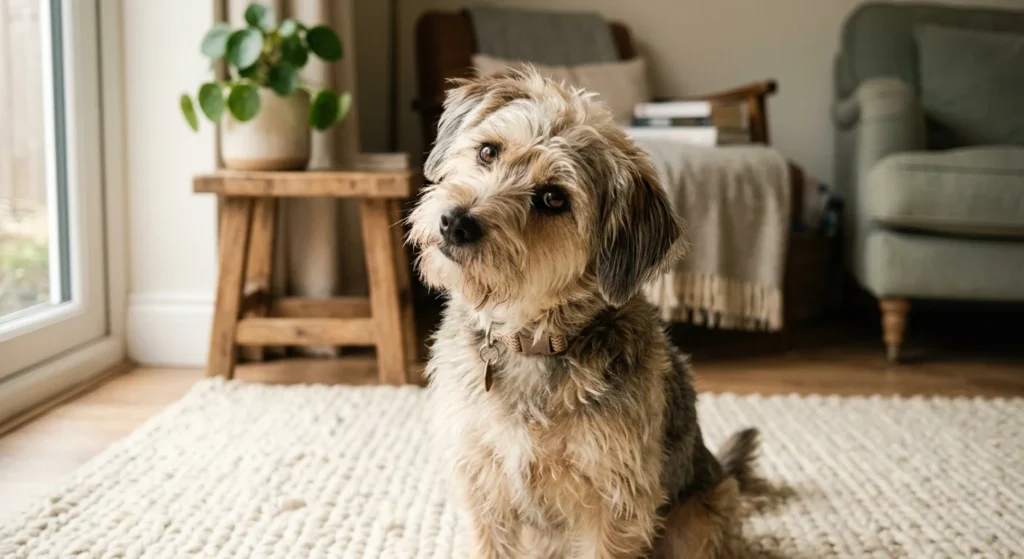
When your dog looks up at you and tilts their head to the side, they are actively processing your words and trying to match them to meaningful concepts. This endearing behavior is not just a plea for treats; it is a sign of deep cognitive engagement and intense focus. Dogs rely on head-tilting to better see your facial expressions around their muzzle and to parse the specific inflections in your voice. Recent studies on canine intelligence show that dogs capable of memorizing toy names tilt their heads significantly more than average dogs when listening to commands. Far from simple confusion, that signature head tilt demonstrates your dog’s specialized evolutionary drive to understand human language and emotion.
The Science Behind the Tilt: Cognitive Processing
Canine researchers and animal behaviorists have long debated the exact mechanics behind a dog’s head tilt. For decades, pet owners assumed their dogs were simply expressing confusion or attempting to hear a strange noise more clearly. However, landmark research has provided concrete data proving that a head tilt is an indicator of deep mental processing and high-level canine cognition.
In 2021, an exploratory study published in the peer-reviewed journal Animal Cognition observed the behaviors of “Gifted Word Learner” dogs. Conducted by researchers at Eötvös Loránd University in Hungary, the study specifically sought to understand how highly trained canines process human language. The researchers tested a group of 40 canines over a period of several months. This group was divided into 33 typical family dogs and seven exceptionally gifted border collies capable of memorizing the names of dozens of specific toys.
During the trials, owners were instructed to stand in one room and ask their dogs to retrieve a specific toy located in another room. The researchers carefully monitored the dogs’ physical reactions upon hearing the retrieval command. The observational data revealed a staggering behavioral contrast between the two groups. The gifted dogs tilted their heads approximately 43 percent of the time when their owner spoke the target toy’s name. In stark comparison, the typical dogs tilted their heads just 2 percent of the time.
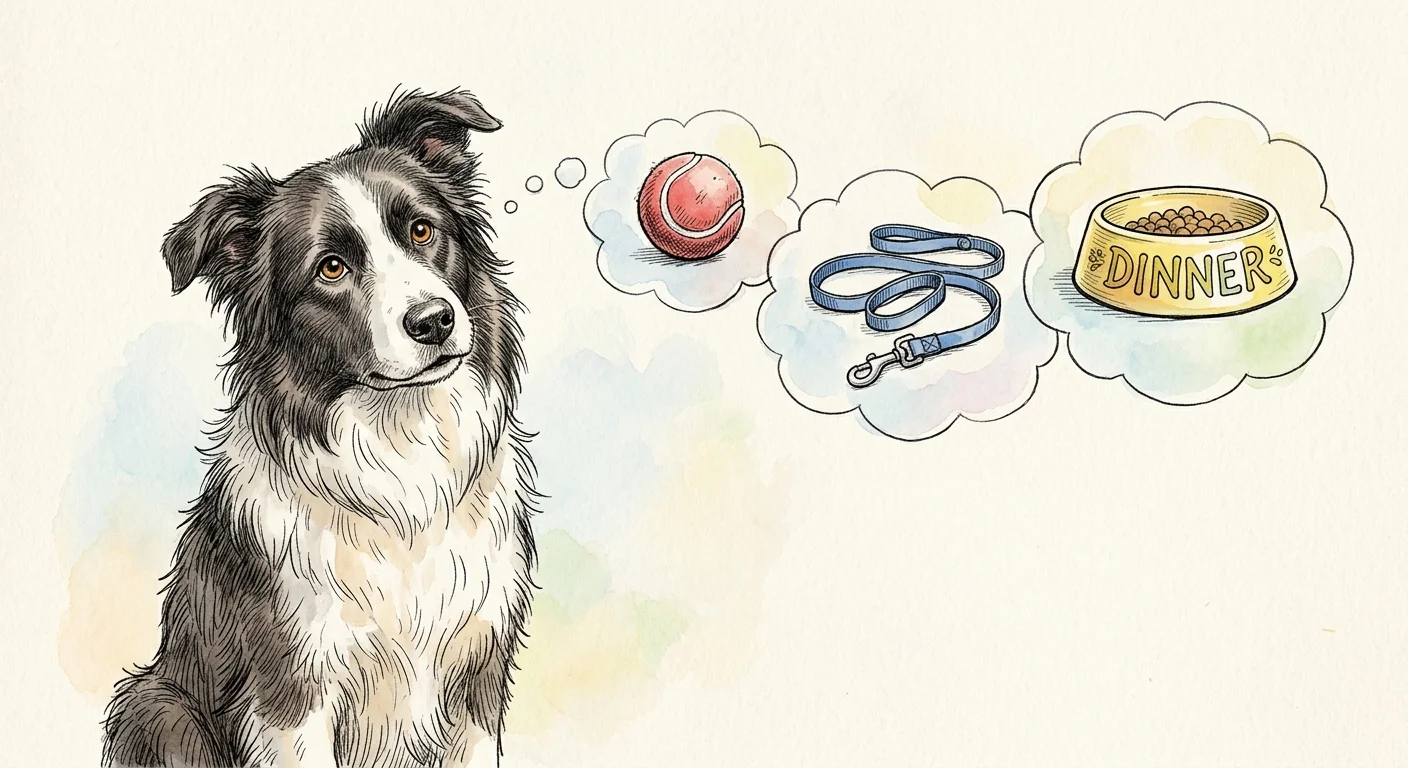
Because the gifted dogs already fully understood the meanings of the spoken words, their head tilting was clearly not a sign of confusion. Instead, the research team concluded that the physical tilt is an outward manifestation of a dog actively cross-referencing an auditory signal with a stored visual memory. When you speak directly to your dog and they cock their head, they are likely searching their mental database for familiar keywords—such as “walk,” “dinner,” or “car”—and attempting to visualize the object or action associated with your voice. The tilt signifies a brief moment of intense mental concentration.
Clearing the View: The Muzzle Vision Theory
While cognitive processing explains the mental trigger of the head tilt, anatomical factors often dictate the physical movement itself. Dr. Stanley Coren, a professor emeritus of psychology at the University of British Columbia and a renowned expert on canine behavior, proposed a highly compelling theory regarding dog vision and facial structure.
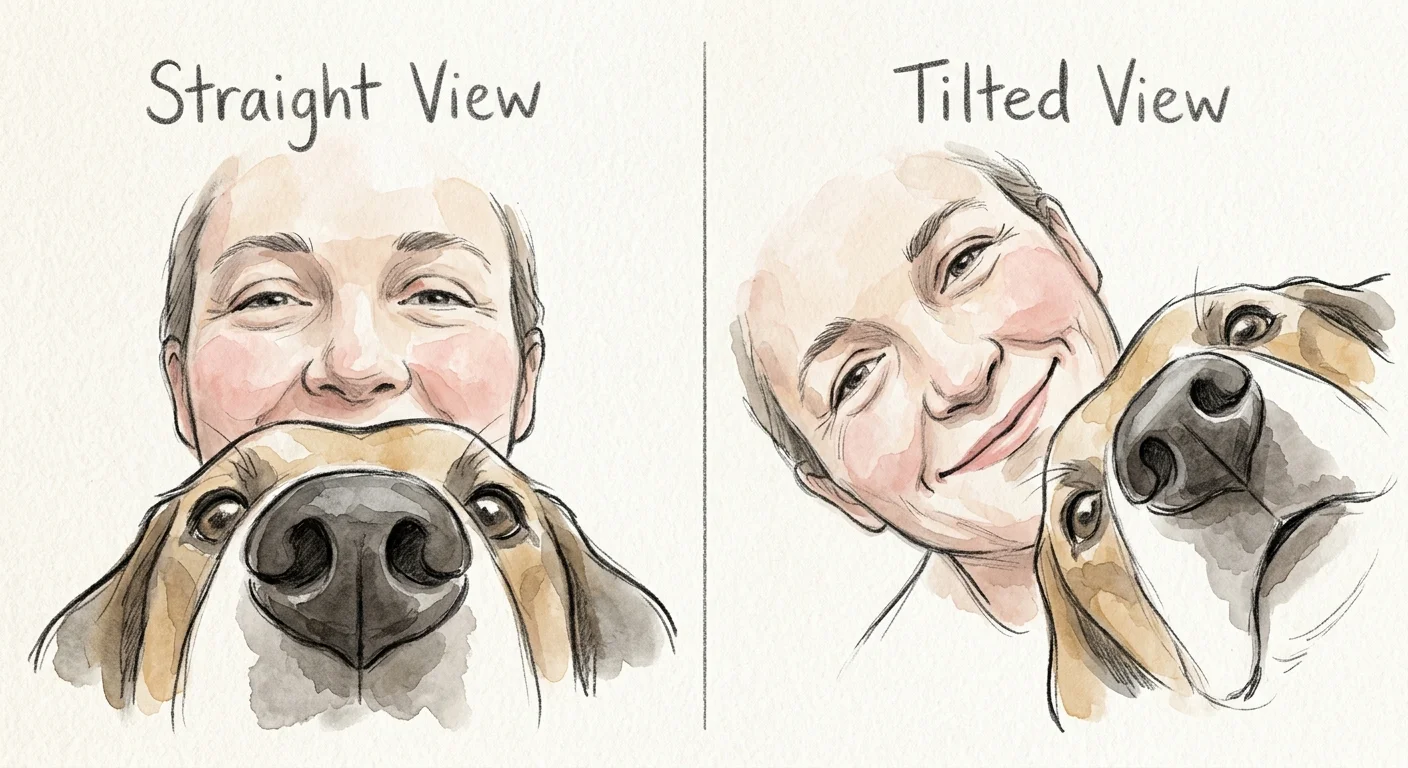
Dogs possess excellent peripheral vision, allowing them to detect motion across a wide landscape. However, their forward-facing binocular vision is partially obstructed by their own anatomy. A dog’s muzzle acts as a persistent visual barrier, blocking the lower central portion of their forward field of view. Because dogs rely heavily on reading human facial expressions to gauge emotional states, gather context clues, and interpret intentions, this anatomical blind spot creates a significant communication hurdle. When you speak, your dog actively wants to monitor your mouth to read your micro-expressions.
To fully understand this visual obstruction, Coren suggests a simple physical exercise. Make a fist with your hand, hold it thumb-side up, and place it directly against your nose. When you look forward, you will instantly notice that your fist obscures the lower half of your vision, making it incredibly difficult to see the mouth and chin of a person standing directly in front of you. If you tilt your head slightly to the left or right, your line of sight instantly clears around the obstruction, allowing you to view the person’s entire face.
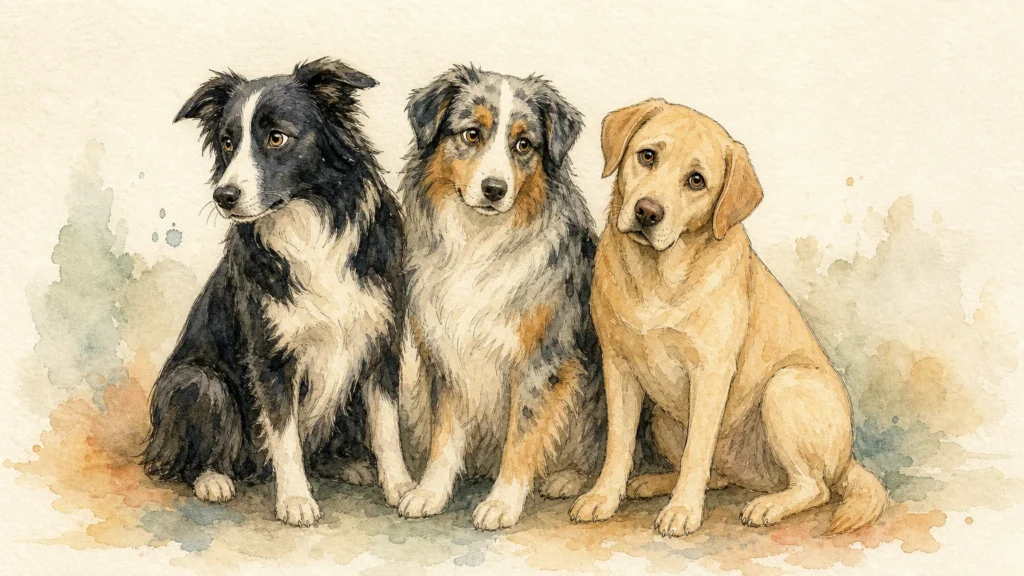
In a detailed survey published in Psychology Today, Dr. Coren put this theory to the test. He gathered data from 582 dog owners and categorized their pets by skull shape. He separated the dogs into two primary groups: brachycephalic dogs with flat faces (such as pugs, French bulldogs, and Boston terriers) and dogs with pronounced muzzles (such as greyhounds, German shepherds, and golden retrievers).
The survey results demonstrated a clear statistical trend. Among the owners of long-muzzled dogs, 71 percent reported that their pets frequently tilted their heads when spoken to. For owners of flat-faced brachycephalic dogs, only 52 percent reported frequent head-tilting. While flat-faced dogs still tilt their heads—indicating that visual obstruction is not the only cause—the significant gap in frequency strongly supports the idea that long-snouted dogs use the tilt to improve their line of sight. They tilt their heads to physically see the words coming out of your mouth.
Locating the Sound: Ear Flaps and Auditory Pinpointing
Beyond visual clearing and mental processing, the head tilt serves a highly specialized auditory function. A dog’s hearing capabilities far exceed our own, allowing them to detect high-frequency pitches and faint rustlings that human ears cannot register. This heightened sense of hearing is supported by a complex and flexible muscular network.
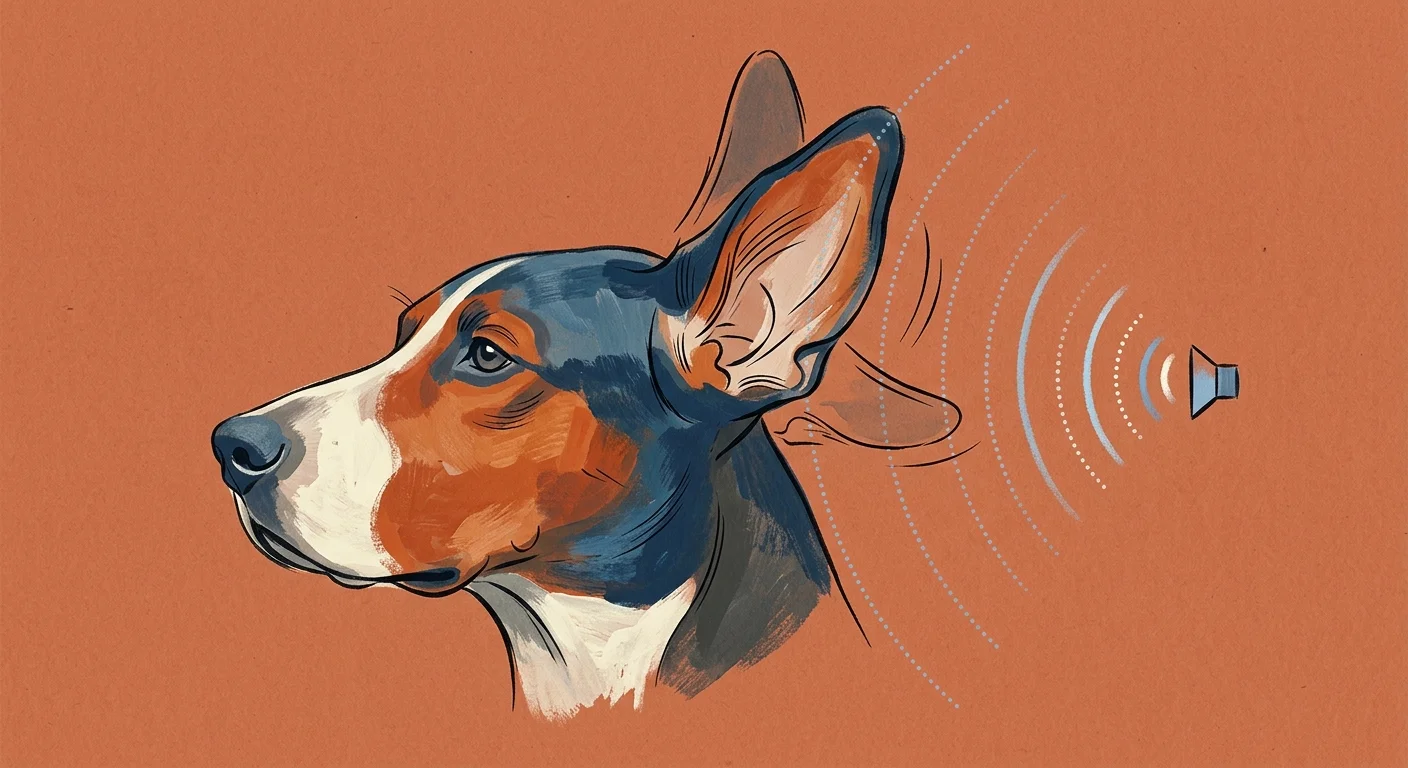
While human ears remain mostly stationary on the sides of our heads, dogs possess approximately 18 independent muscles controlling their ear canals and pinnae (the visible ear flaps). This muscular array allows them to independently rotate, lower, raise, and flatten their ears to act like living radar dishes, aggressively capturing acoustic information from their immediate environment.
When you speak or make a sudden noise, your dog’s brain rapidly attempts to calculate the exact origin point of the sound. Sound waves travel through the air and strike each ear drum at fractionally different times. The canine brain processes this minuscule time-of-arrival difference to accurately determine the horizontal direction of the noise. If the sound hits the right ear just a fraction of a millisecond before the left, the dog inherently knows the source is located to their right side.
However, calculating vertical elevation is mathematically more difficult for the mammalian brain. When a sound originates from directly in front of the dog, the acoustic waves strike both ears simultaneously, offering very little data regarding the height of the noise. To gather more precise spatial data, the dog will instinctively tilt their head. By shifting the horizontal axis of their ears into a slanted position, the dog intentionally alters the moment the sound waves arrive at each ear. This slight positional adjustment provides their brain with the exact geometric data needed to pinpoint the source of the noise. If you notice your dog tilting their head intensely when you speak in an unusually high-pitched voice, they are utilizing this acoustic technique to map the strange sound.

Comparing the Causes of a Canine Head Tilt
Because there is no single reason for a dog’s head tilt, identifying the root cause requires paying attention to the surrounding context. Use the following table to help determine why your dog is exhibiting this behavior in different scenarios.
| Cause of Head Tilt | Primary Mechanism | Key Behavioral Indicators |
|---|---|---|
| Cognitive Processing | Mental recall and vocabulary matching | Occurs directly after hearing familiar commands, toy names, or specific trigger words; lasts only a few seconds. |
| Visual Obstruction | Clearing the muzzle’s blind spot | Happens when you are speaking directly to the dog face-to-face; highly common in long-snouted breeds. |
| Auditory Pinpointing | Adjusting ear positioning for sound location | Triggered by new, high-pitched, confusing, or unusually localized sounds; often accompanied by ear twitching. |
| Learned Behavior | Positive reinforcement loop | The dog repeats the tilt while begging or seeking attention, expecting a treat, verbal praise, or physical affection. |
| Medical Issue | Inner ear or neurological disruption | A persistent, unchanging tilt accompanied by loss of balance, stumbling, lethargy, or rapid eye movements. |

The Bigger Picture
To truly appreciate why dogs put so much effort into understanding us, you have to look at the extensive history of canine domestication. Over thousands of years of selective breeding and co-evolution, dogs have fundamentally adapted to live alongside humans. They are uniquely attuned to our behaviors in ways that other animals are not.
Unlike wolves, who rarely make direct eye contact with humans unless threatened, domestic dogs actively seek out human faces. They rely on us for food, shelter, safety, and affection. From an evolutionary standpoint, a dog’s survival is directly linked to their ability to read our moods and understand our commands. The head tilt is a beautiful byproduct of this interspecies partnership.
Dogs have spent thousands of years studying human behavior. When your dog tilts their head, they are not just reacting to a noise; they are actively working to bridge the communication gap between two entirely different species.
Every time your dog adjusts their ears, shifts their line of sight, or searches their memory bank to decipher your words, they are displaying the incredible adaptability that makes them such successful companions.
Worth Keeping in Mind
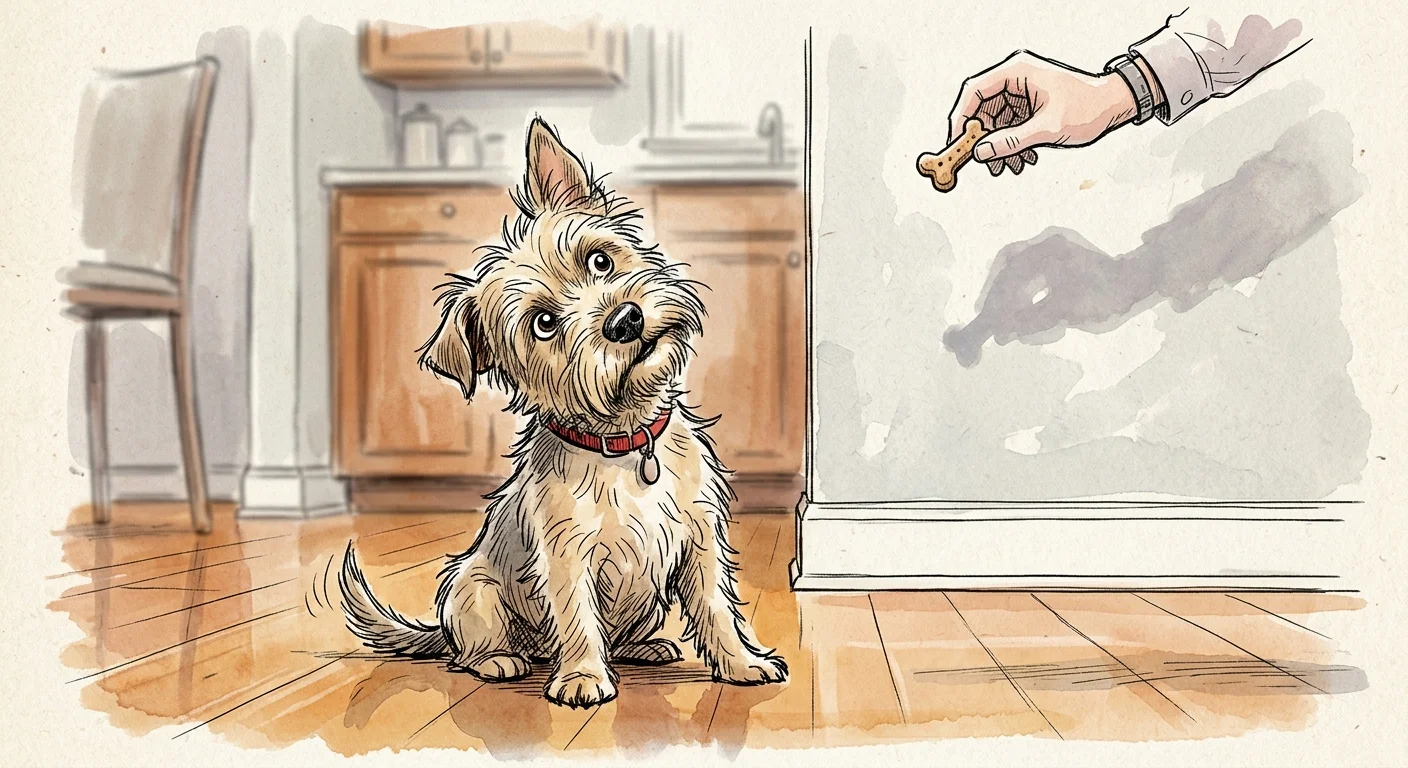
While there are proven cognitive and physical reasons behind a canine head tilt, it is crucial to recognize your own role in reinforcing this behavior over time. Dogs are exceptionally skilled at reading human emotional responses and identifying behavioral patterns that lead to high-value rewards.
- The human feedback loop: When a dog tilts their head, the human reaction is almost universally positive. We tend to smile widely, soften our tone of voice, offer affectionate physical touch, or even hand out a high-value food treat.
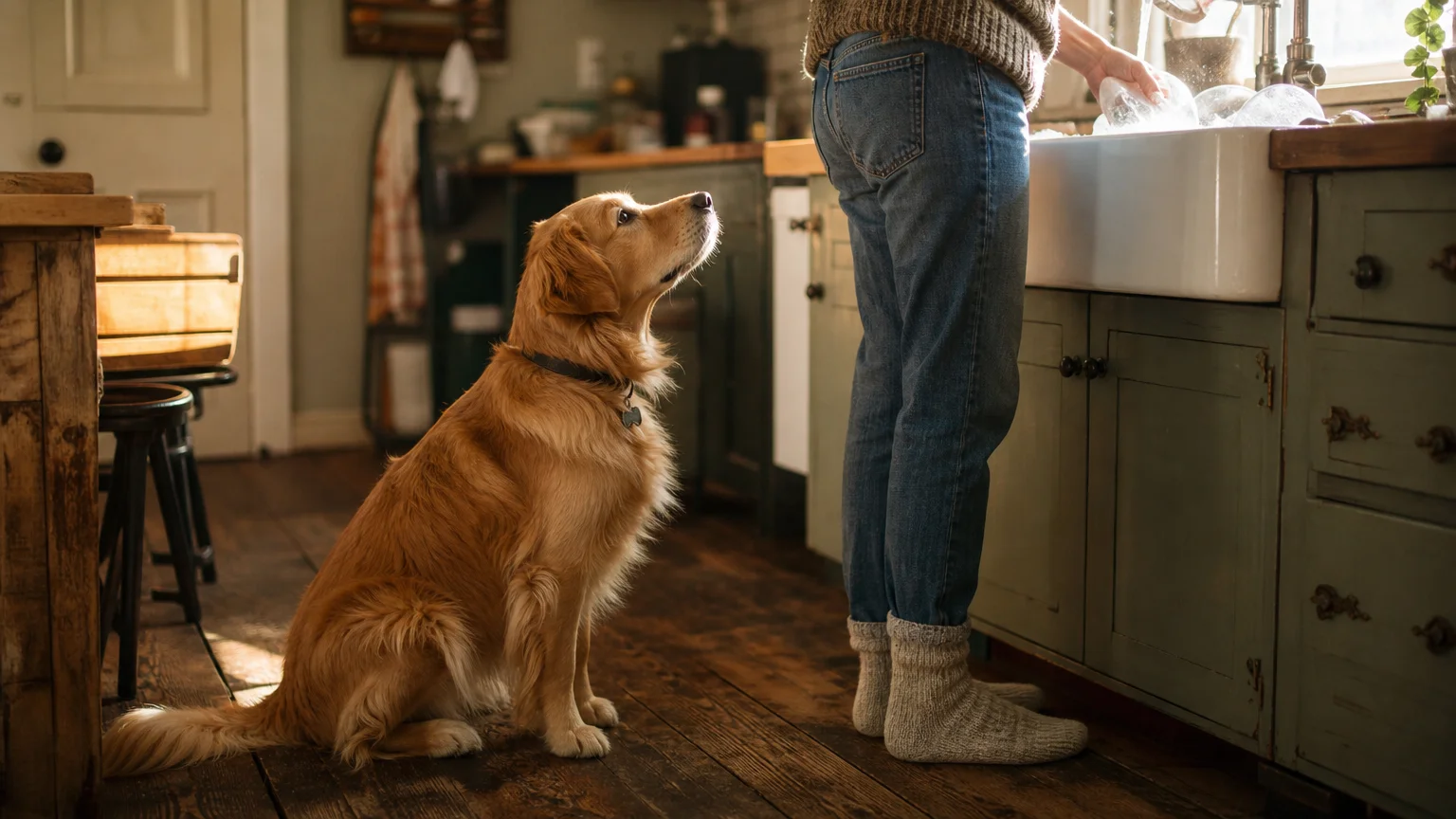
- Strategic behavior: Your dog quickly registers this predictable sequence of events. They learn that adopting a specific physical posture yields an immediate, positive outcome. Even if your dog initially tilted their head to see around their muzzle, they will likely continue performing the action simply because they know it delights you.
- Intentional reinforcement: This learned behavior is entirely harmless and serves as an excellent, joyful bonding mechanism. However, if you are eating dinner and your dog throws in an exaggerated head tilt, recognize that they might be utilizing their emotional intelligence to politely manipulate you for a table scrap.
When to Get Professional Help
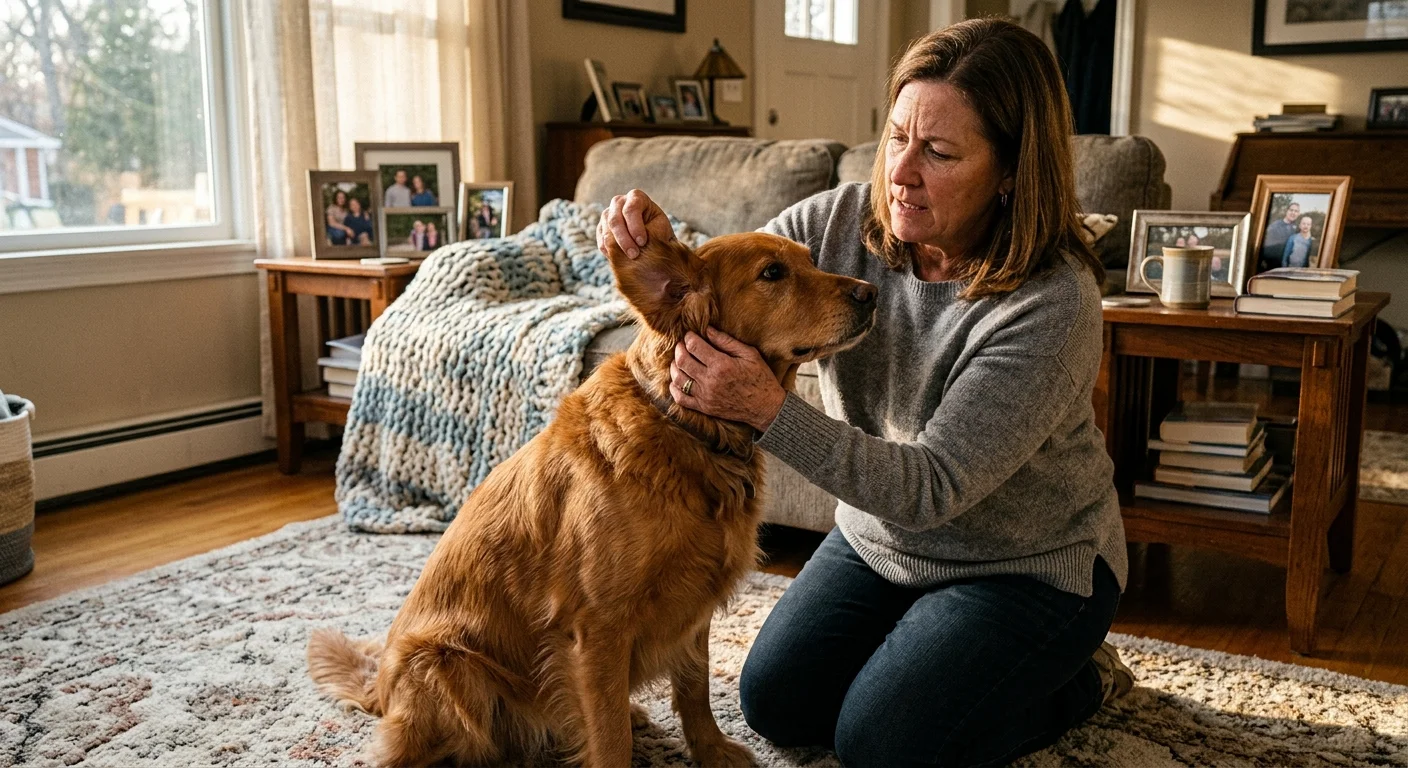
An occasional head tilt during a conversation or play session is normal and healthy. However, a persistent head tilt that does not resolve is a medical red flag that requires immediate veterinary attention. A continuous tilt often points to vestibular disease, a severe disturbance in the body’s balance system.
The vestibular system is responsible for maintaining spatial orientation and coordination. It consists of central components located within the brain and peripheral components housed deep inside the inner and middle ear. According to VCA Animal Hospitals, symptoms of vestibular disease appear suddenly and include a constant head tilt, a severe loss of balance, walking in tight circles, falling over, and profound disorientation.
One of the most telling signs of a vestibular issue is nystagmus, which is characterized by irregular, rapid, and uncontrollable jerking eye movements. Dogs experiencing these symptoms will often lean heavily or physically collapse in the direction that their head is tilted. You might also notice strabismus, where the eyes rest in an unusual, unaligned position.
The underlying causes of a medical head tilt vary widely. The disruption could stem from a severe middle or inner ear infection, a ruptured eardrum, physical trauma, a brain tumor, or an underactive thyroid gland (hypothyroidism). In many older dogs, the condition is diagnosed as idiopathic vestibular syndrome. Idiopathic cases are defined by a sudden onset of dramatic clinical signs that typically improve rapidly on their own with supportive care. Because a persistent head tilt can indicate anything from a treatable ear infection to a neurological emergency, you should never wait to seek an expert diagnosis. Your veterinarian will likely need to perform a thorough ear exam using an otoscope, run blood tests, and potentially order an MRI to determine the correct course of treatment.
Frequently Asked Questions
Do all dogs tilt their heads when you talk to them?
No, not all dogs tilt their heads. The frequency of the behavior depends heavily on the dog’s breed, their muzzle length, their individual cognitive processing style, and how much the behavior has been reinforced by the owner. If your dog never tilts their head, it is perfectly normal and not a sign of poor intelligence.
Should I encourage my dog to tilt their head?
Yes, if you enjoy the behavior, there is no harm in encouraging it. You can reinforce the action by offering praise, smiling, or providing a small treat when they do it. It is a safe, natural behavior that fosters positive engagement between you and your pet.
Can a sudden head tilt indicate a stroke in dogs?
While pet owners commonly mistake the sudden onset of a head tilt and balance loss for a stroke, true vascular strokes are quite rare in dogs. These dramatic symptoms are far more likely to be caused by vestibular disease or a deep inner ear infection. However, because the symptoms overlap with serious neurological conditions, immediate veterinary care is essential.
Why does my dog only tilt their head to one specific side?
Many dogs show a lateral preference, choosing to favor one ear or eye over the other when investigating stimuli. This is completely normal. However, if your dog’s head is physically locked to one side and they cannot straighten it, this indicates reduced muscle tone and a potential medical issue requiring an exam.
Whether they are parsing your vocabulary, looking past their own nose to see your smile, or trying to pinpoint a funny sound, your dog’s head tilt is a testament to their dedication to you. Enjoy these moments of connection, keep rewarding their attention, and rest easy knowing that your dog is actively working to understand your world.
This article provides general information only. Every reader’s situation is different—what works for others may not be the right fit for you. For personalized guidance on health, legal, or financial matters, consult a qualified professional.
Last updated: July 2026. Rules, prices, and details change—verify current information with official sources before acting on it.