For pet parents, retirement planning goes far beyond comparing tax rates and golf courses. You need a town where your dog is welcome on the beach, high-quality veterinary care is readily available, and the climate is gentle on aging paws. Across the country, a new wave of destinations is emerging to cater specifically to this lifestyle. From the historic streets of St. Augustine, Florida, to the mountain trails of Fort Collins, Colorado, these communities offer sprawling dog parks, top-tier animal hospitals, and vibrant senior populations. If you are ready to relocate for your next chapter, here are 12 fast-growing, pet-friendly retirement towns where both you and your animal companion can thrive.
Why It Matters Now
Retiring with an animal companion is no longer an afterthought; it is a central driver for relocation. Research demonstrates that pet ownership frequently leads to a more active lifestyle, better cardiovascular health, and a slower rate of cognitive decline. However, bringing a pet into your retirement years requires strategic planning. As dogs and cats age, they face mobility issues, sensory decline, and chronic health conditions. Ensuring you have immediate access to specialized veterinary care, safe walking paths, and a supportive community is just as vital as managing your own healthcare needs.
Comparing Top Pet-Friendly Retirement Destinations
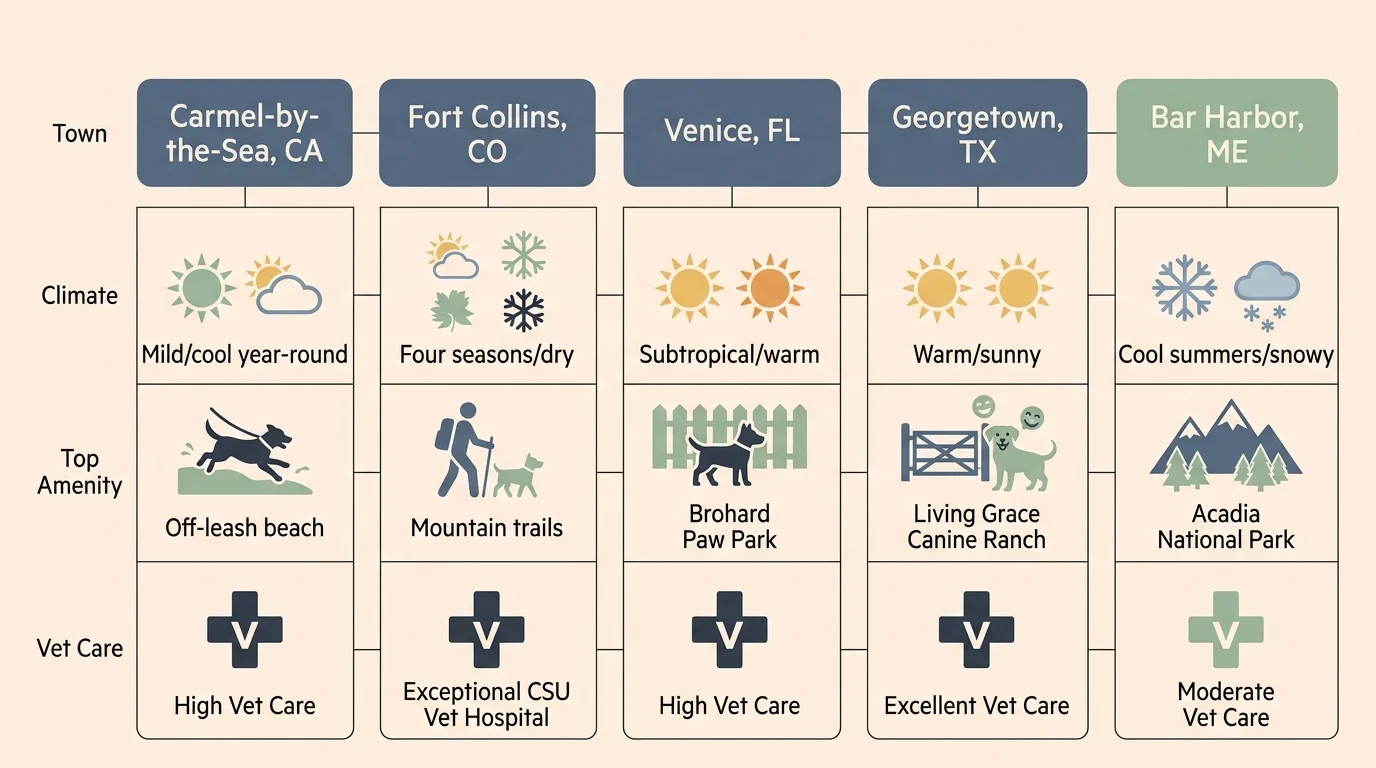
When evaluating where to spend your retirement, prioritizing climate and amenities makes a significant difference in your daily routine. Here is a quick look at how a few of the top contenders compare:
| Town | Climate for Pets | Top Pet Amenity | Vet Care Access |
|---|---|---|---|
| Carmel-by-the-Sea, CA | Mild, cool year-round | Off-leash beach | High |
| Fort Collins, CO | Four seasons, dry | Extensive mountain trails | Exceptional (CSU Vet Hospital) |
| Venice, FL | Subtropical, warm winters | Brohard Paw Park | High |
| Georgetown, TX | Warm, sunny | Living Grace Canine Ranch | Excellent |
| Bar Harbor, ME | Cool summers, snowy winters | Acadia National Park | Moderate (Regional clinics) |
12 Pet-Friendly Retirement Towns That Are Gaining Popularity Fast
1. Carmel-by-the-Sea, California
Often considered the gold standard for dog lovers, Carmel-by-the-Sea treats animals like esteemed citizens. This charming coastal town is famous for its idyllic mile-long crescent beach, where dogs are legally allowed to roam off-leash as long as they respond to voice commands. The local business district caters heavily to pets, with many shopkeepers providing water bowls and treats at the door. For retirees, the cool, fog-kissed climate is incredibly gentle on senior dogs who struggle with heat, and the walkability of the town ensures you rarely need a car for daily errands.
2. Georgetown, Texas
Located just north of Austin, Georgetown is a massive hub for active adults, primarily due to the sprawling Sun City Texas community. Beyond the human amenities, the area is deeply committed to animal welfare. Georgetown is home to the Living Grace Canine Ranch, a renowned 501(c)(3) sanctuary dedicated exclusively to senior dogs. The town features numerous paved trails, excellent veterinary clinics, and a warm climate that helps soothe arthritic joints during the winter months.
3. Fort Collins, Colorado
If you prefer mountain air and four distinct seasons, Fort Collins is an exceptional choice. What truly sets this town apart for retirees with pets is its unparalleled access to medical care. Colorado State University operates a world-class Veterinary Teaching Hospital here, handling everything from routine checkups to complex oncology and orthopedic surgeries. In addition to top-tier healthcare, you and your dog can enjoy miles of paved paths along the Poudre River Trail, avoiding the steep, rocky inclines that might challenge an older pet.
4. Venice, Florida
Situated just south of Sarasota, Venice is a rapidly growing retirement destination that offers one of the best coastal experiences for pets in the state. It is home to Brohard Paw Park, the only dog-friendly beach in Sarasota County. The park features a fenced play yard that leads directly to an open section of the beach where dogs can splash in the Gulf of Mexico. With an abundance of local veterinarians, dog-friendly cafes, and year-round sunshine, Venice offers a highly social environment for active seniors and their animals.
5. Asheville, North Carolina
Nestled in the Blue Ridge Mountains, Asheville is renowned for its vibrant arts scene, craft breweries, and welcoming attitude toward pets. Many of the city’s outdoor patios welcome dogs, making it easy to socialize. Retirees flock here for the moderate mountain climate, which avoids the severe heat of the deep South and the bitter cold of the North. You can walk your leashed dog through the manicured grounds of the historic Biltmore Estate or enjoy easy, flat sections of the nearby Blue Ridge Parkway.
6. Scottsdale, Arizona
Routinely ranking among the most pet-friendly cities in the United States, Scottsdale offers an upscale retirement experience. The dry desert heat is often therapeutic for older adults and pets suffering from arthritis. While summer temperatures require early morning walks, the rest of the year is perfectly suited for outdoor exploration. The McDowell Sonoran Preserve offers miles of wide, well-maintained trails. Additionally, Scottsdale features a high density of luxury pet resorts, specialty veterinarians, and dog parks equipped with shade structures and water features.
7. Bend, Oregon
For retirees who want to maintain a highly active lifestyle, Bend is a premier destination. The city boasts a massive off-leash dog culture, with numerous designated parks and river access points where dogs can swim. The Deschutes River Trail provides miles of scenic, flat walking paths right through the center of town. Bend also supports a robust network of holistic and traditional veterinarians, ensuring your pet has access to comprehensive care as they age.
8. Greenville, South Carolina
Greenville has transformed into one of the most desirable retirement towns in the Southeast, largely due to its award-winning downtown and affordability. The centerpiece of the city is the 22-mile Swamp Rabbit Trail, a multi-use greenway that is perfect for long walks with your dog. The city features several well-maintained dog parks, including the popular Conestee Nature Preserve. With mild winters and a rapidly expanding healthcare infrastructure for both humans and pets, Greenville offers a balanced, comfortable lifestyle.
9. Bar Harbor, Maine
If you prefer a quiet, coastal retreat away from the crowds, Bar Harbor is an outstanding choice. It serves as the gateway to Acadia National Park, which is widely considered one of the most dog-friendly national parks in the country. Dogs are welcome on over 100 miles of hiking trails and 45 miles of carriage roads, provided they are kept on a leash no longer than six feet. The cool summer climate prevents overheating, making it an ideal seasonal or year-round home for thick-coated breeds.
10. Traverse City, Michigan
Located on the shores of Lake Michigan, Traverse City is a haven for retirees who love the water. The town offers access to the Sleeping Bear Dunes National Lakeshore, which features several dog-friendly beach zones. During the summer and fall, the town is bustling with outdoor farmers markets and pet-friendly winery tours. The local veterinary network is highly rated, and the community is heavily invested in maintaining clean, accessible green spaces for its residents.
11. Henderson, Nevada
Just outside of Las Vegas, Henderson provides the tax benefits of Nevada living without the chaos of the Strip. The city is master-planned, meaning it offers an extensive network of paved walking trails and neighborhood parks. Heritage Park Dog Park is a local favorite, featuring separate areas for large and small breeds, agility equipment, and shaded seating for owners. Because it borders Las Vegas, Henderson residents have immediate access to some of the most advanced veterinary specialists in the Southwest.
12. St. Augustine, Florida
History and pet-friendliness merge beautifully in St. Augustine. The historic downtown district is highly walkable, with many brick-paved streets leading to dog-friendly outdoor restaurants and cafes. For beach lovers, Crescent Beach allows leashed dogs year-round on its hard-packed, white sand. The town’s slower pace, combined with its robust amenities and flat terrain, makes it an incredibly comfortable place to navigate with a senior dog.

Common Mistakes to Avoid When Retiring With Pets
Relocating is stressful, and doing it with an animal requires extra vigilance. Avoid these frequent pitfalls to ensure a smooth transition:
- Ignoring HOA restrictions: Many 55+ and active adult communities advertise themselves as “pet-friendly” but enforce strict weight limits—often capping at 30 pounds—or ban specific breeds entirely. Always request the exact homeowner’s association bylaws before making an offer on a home.
- Overlooking extreme climates: A move to the desert might sound wonderful for your joints, but scorching summer pavement can severely burn a dog’s paws. Conversely, deep snow in northern states can make it impossible for small or arthritic dogs to navigate the yard.
- Assuming vet care is universal: Rural or highly isolated coastal towns may look idyllic, but they often lack 24/7 emergency veterinary clinics. If your pet has a chronic heart condition or diabetes, ensure a specialist is within a reasonable driving distance.

Getting Expert Input
Before packing up the moving truck, it pays to consult professionals who can help safeguard your pet’s health and future.
- Talk to your veterinarian about the journey: The American Veterinary Medical Association (AVMA) recommends consulting your vet well in advance of a major move. They can provide motion sickness medication, update necessary travel certificates, and advise whether your senior pet is healthy enough to fly or if a ground transport service is safer.
- Consult an estate planner: Retirement is the right time to establish a pet trust. An estate planner can help you designate a caretaker and set aside funds to ensure your animal is cared for if you face an unexpected medical emergency or pass away.
- Reach out to local pet care networks: Before moving, contact dog walkers or pet sitters in your target town. Finding out if there is a waitlist for these services can save you a massive headache once you arrive.
Frequently Asked Questions
How do I find a pet-friendly 55+ community?
When touring 55+ or active adult communities, ask for the homeowner’s association (HOA) covenants immediately. Many communities advertise as pet-friendly but enforce strict weight limits or ban specific breeds. Working with a real estate agent who specializes in senior relocations can help you bypass communities that won’t welcome your specific pet.
Should I travel by car or plane when relocating my senior pet?
The American Veterinary Medical Association generally recommends ground travel for senior pets, particularly brachycephalic (short-nosed) breeds, to reduce the risk of respiratory distress and temperature fluctuations. If you must fly, speak to your veterinarian about cabin travel versus cargo, and ensure all vaccinations are up to date.
Are there retirement communities that allow large dogs?
Yes, but they take more effort to find. Master-planned communities with single-family homes (rather than condos) are much more likely to accommodate large breeds like Golden Retrievers and German Shepherds. Towns with sprawling outdoor access, such as Fort Collins and Bend, tend to have more relaxed residential rules regarding dog size.
Finding the right town for your next chapter is an exciting process. By prioritizing outdoor access, mild climates, and excellent veterinary care, you can ensure that your retirement is just as rewarding for your animal companion as it is for you. Take your time, visit your top choices, and watch how your pet reacts to the local environment.
This is general informational content based on widely accepted guidance. Individual results vary. Verify current details—rules, prices, eligibility, regulations—with official sources before making important decisions.