Selecting a naturally curly-coated dog means welcoming a brilliant, low-shedding companion into your home—and committing to a strict grooming schedule. While tightly coiled coats trap dander rather than scattering it across your furniture, making these breeds a frequent choice for allergy sufferers, you still need to be prepared for the realities of coat maintenance. The canine world features a diverse lineup of curly haired dog breeds ranging from hardworking retrievers to cheerful lap dogs, all linked by shared genetics. Beyond the famous Poodle, many popular dog breeds sport these beautiful ringlets. Understanding the distinct temperaments, energy levels, and daily needs of these cute dog breeds helps you find the right match for your family.
The Genetics Behind the Curls
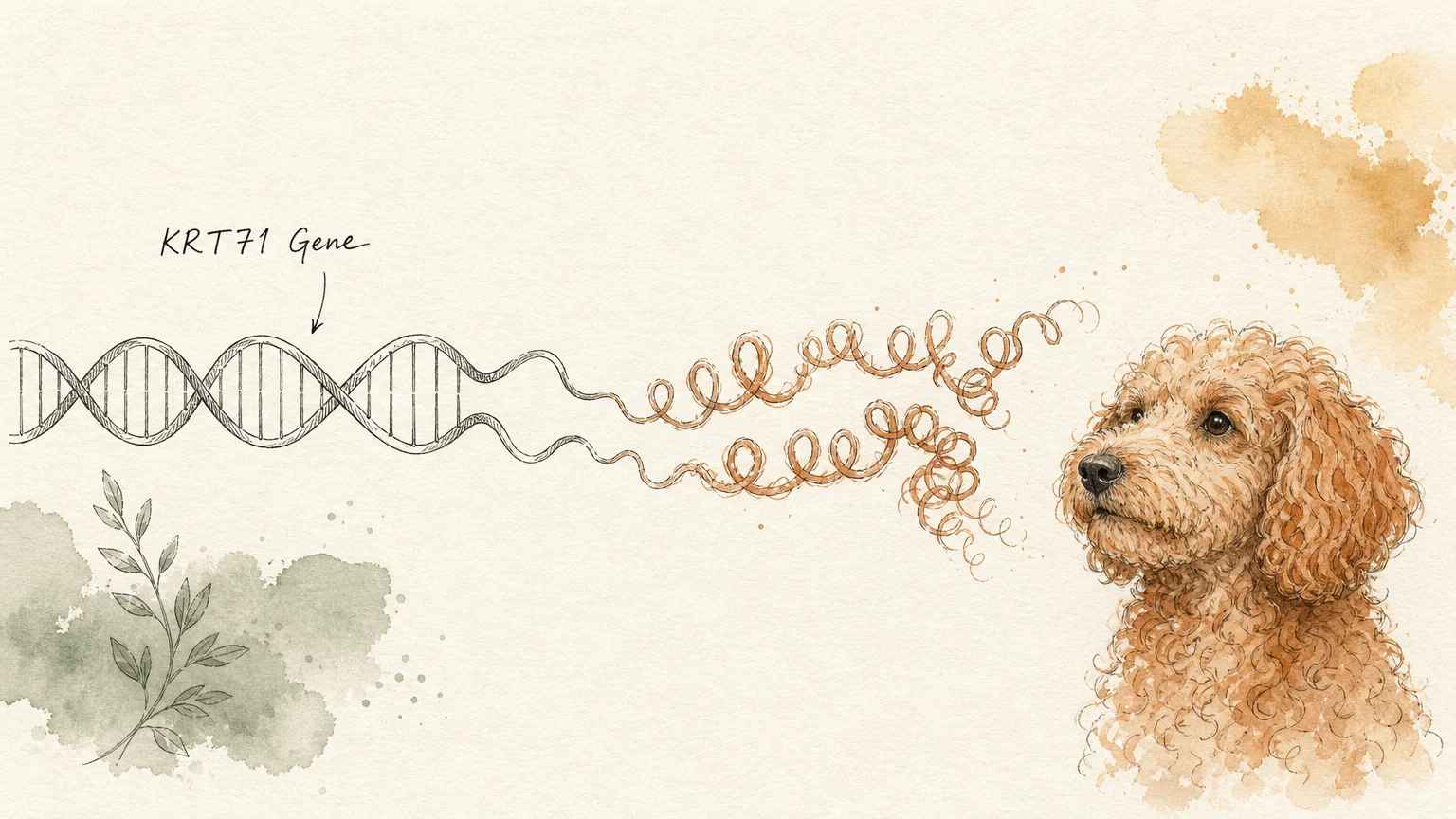
You might wonder why a Poodle and a water retriever share such similar coat textures despite having vastly different body types and historical purposes. Based on research published by the National Institutes of Health, the distinct curly coat seen in many modern dogs stems directly from a specific mutation in the KRT71 gene. This genetic variant alters the structural development of the hair follicle, causing the hair shaft to grow in a tightly coiled pattern rather than a straight line.
Because this trait is dominant, dogs only need to inherit the curly gene from one parent to exhibit a wavy or curly coat. This explains why crosses between straight-haired and curly-haired dogs often produce litters with unpredictable coat textures. However, in purebred lines where the KRT71 variant is fixed, you can dependably predict the density and shape of the curls.
10 Popular Dog Breeds With Naturally Curly Hair
Whether you want a tireless hiking partner or a snuggly lap dog, the curly coated group offers a wide variety of sizes and temperaments. Here are ten of the most captivating breeds to consider.
1. Poodle
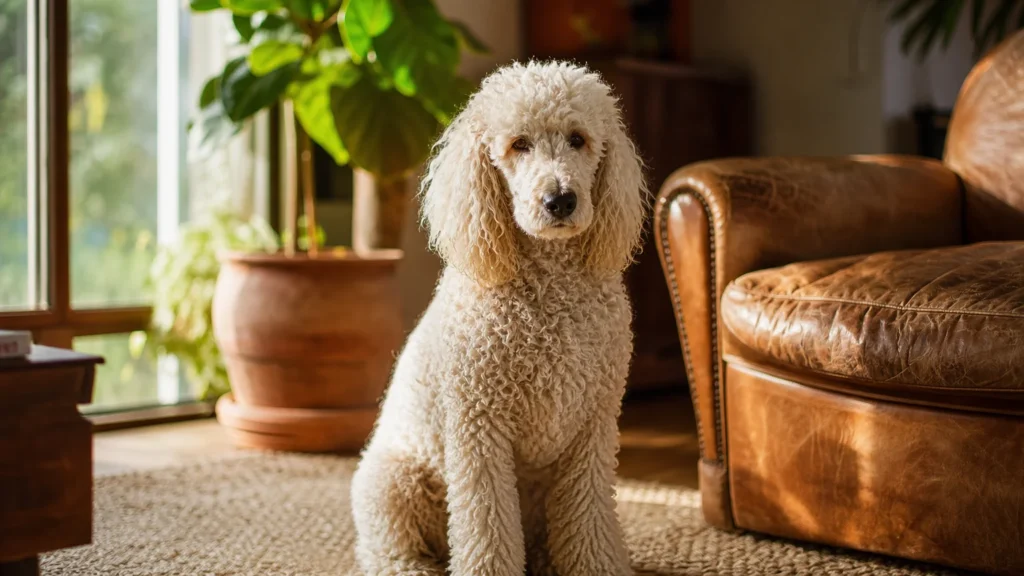
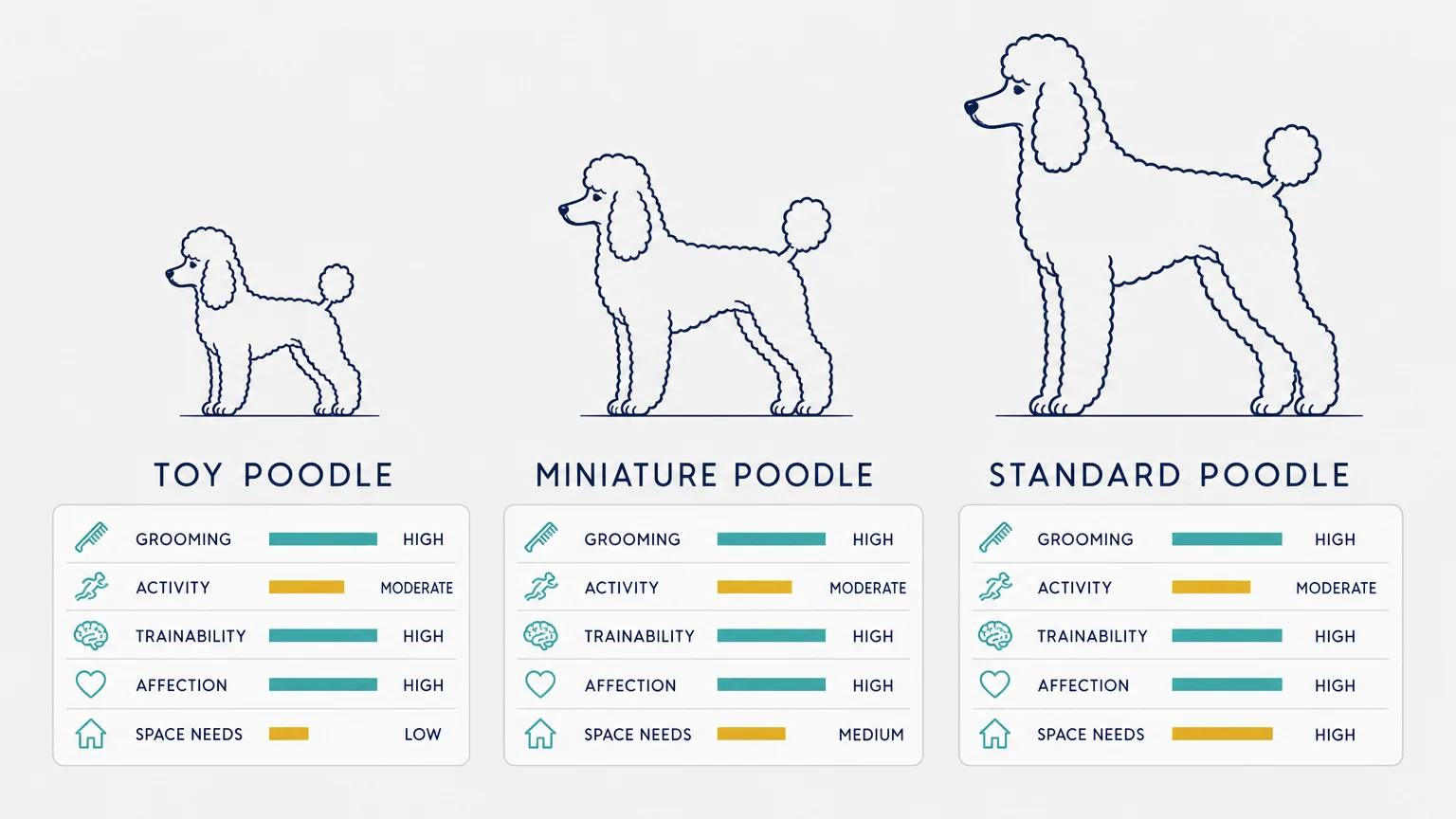
Originating as duck hunters in Germany, Poodles stand out as the undeniable ambassadors of the curly canine world. They come in three recognized sizes—Toy, Miniature, and Standard—meaning you can find a Poodle to fit comfortably into a small city apartment or a sprawling country home. Their crisp, dense curls were originally developed to protect their vital organs from freezing water while retrieving waterfowl, a testament to their rugged working heritage.
Beyond their elegant appearance, Poodles possess exceptional intelligence and an eagerness to please. They consistently rank among the smartest of all dog breeds. You must provide them with daily mental stimulation, such as puzzle toys, advanced obedience training, or agility courses, to prevent boredom. A bored Poodle will quickly invent their own games, which often involves chewing your favorite shoes or disassembling your couch cushions.
Grooming a Poodle requires serious dedication. If you prefer the classic show look, you will need to invest in weekly maintenance to keep their elaborate pompoms perfectly shaped. However, most pet owners opt for a shorter “puppy clip” or “sporting clip” that keeps the hair an even length across the body. You must still brush them thoroughly several times a week to prevent the curls from matting at the base.
2. Bichon Frise
If you want a compact companion with a stark white, powder-puff coat, the Bichon Frise makes an excellent choice. Originating in the Mediterranean, these cheerful dogs were bred specifically to serve as companion animals for sailors and royalty alike. They possess a merry, curious disposition and adapt seamlessly to busy family households.
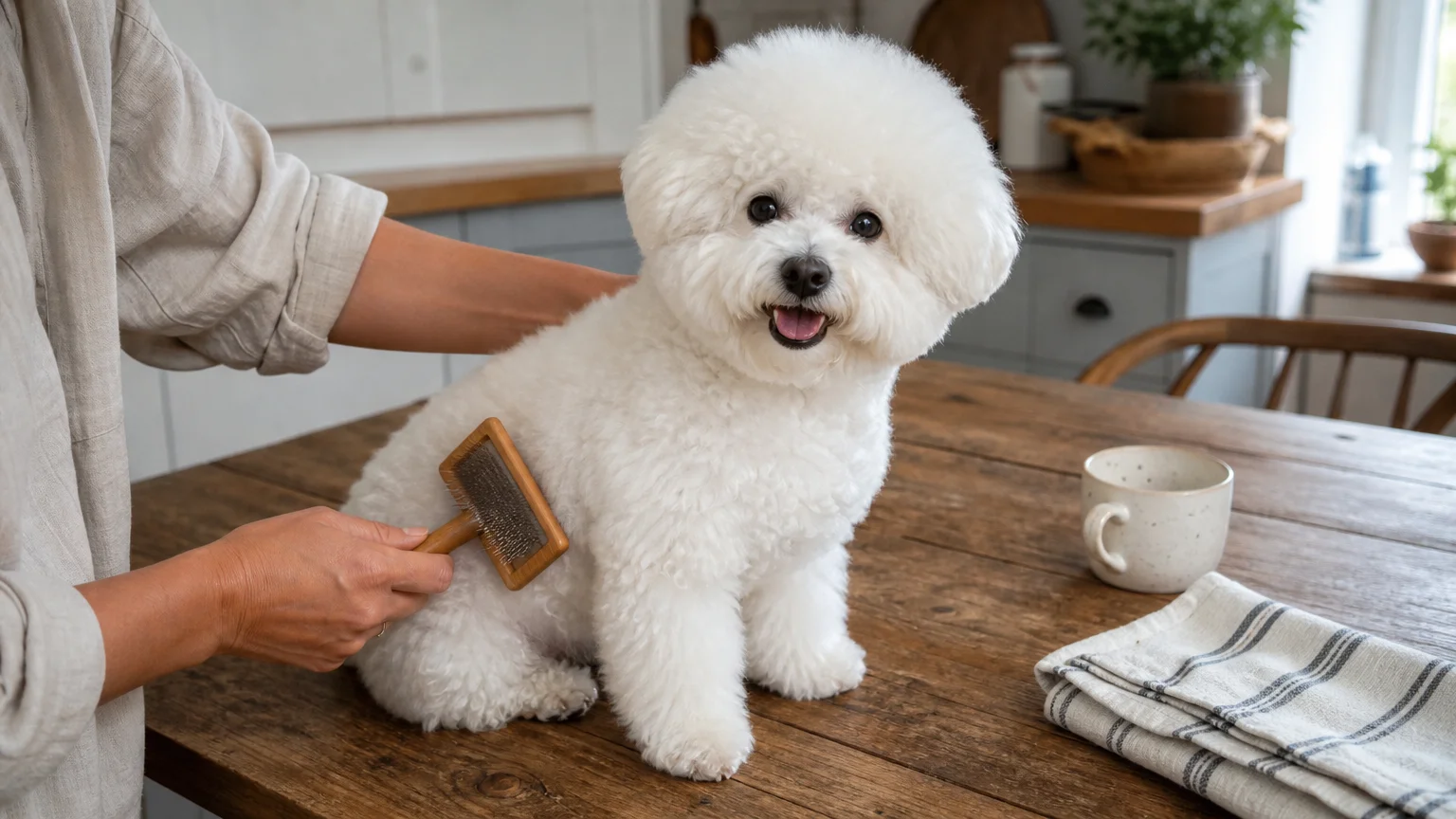
The Bichon Frise features a double coat consisting of a soft, dense undercoat and a coarser, curly outer coat. This unique combination gives them a plush, velvety appearance. Because their hair continuously grows and rarely sheds, you must brush them daily using a slicker brush and a metal comb to prevent tight tangles from forming near the skin.
You also need to pay special attention to their eyes. Bichons are prone to tear staining, which turns the white fur around their eyes a reddish-brown color. Wiping their face daily with a damp cloth helps keep their coat looking pristine.
3. Portuguese Water Dog
Historically employed by fishermen along the coast of Portugal to herd fish into nets, retrieve lost tackle, and carry messages between ships, the Portuguese Water Dog is a robust, athletic partner. They possess naturally webbed feet, which makes them incredibly powerful and efficient swimmers.
Their waterproof coat comes in tight ringlets or loose waves, usually in black, brown, or white. If you live an active lifestyle and spend your weekends near the beach or a lake, this loyal worker makes a perfect family dog. They require vigorous daily exercise; a simple walk around the block will not satisfy their high energy levels.
Owners typically keep Portuguese Water Dogs in one of two styles: a retriever clip, where the entire coat is scissored to about one inch in length, or a lion clip, where the muzzle and hindquarters are shaved close to the skin while the front half of the body remains long.
4. Lagotto Romagnolo
Hailing from the Romagna sub-region of Italy, the Lagotto Romagnolo serves as the world’s premier truffle-hunting dog. While they originally worked as water retrievers, locals eventually discovered that the breed’s sharp nose and focused work ethic made them perfectly suited for sniffing out valuable truffles hidden deep underground.
They sport a wooly, dense coat that protects them from thorny underbrush while foraging in the woods. Unlike the refined curls of a Poodle, the Lagotto’s coat feels distinctly rustic. You must trim their coat evenly across the body, paying special attention to the hair around their eyes and ears to prevent irritation.
Because they retain a strong instinct to search and dig, you should provide them with an outlet for their natural behaviors. Building a dedicated sandbox in your yard where they can dig for hidden toys helps keep their foraging instincts satisfied without ruining your garden.
5. Irish Water Spaniel
As the tallest of the spaniel breeds, the Irish Water Spaniel makes an immediate impression. According to the American Kennel Club, this breed is distinguished by a dense coat of liver-colored curls and a completely smooth “rat tail.” The stark contrast between their heavily curled body and the tapering, straight-haired tail remains a unique trait in the canine world.
Bred to retrieve waterfowl from cold bogs and rivers, they possess powerful hindquarters and exceptional stamina. When you take an Irish Water Spaniel to a lake, you will quickly see their historical instincts take over as they dive into the water with unmatched enthusiasm. Because of this high drive, you need to provide them with rigorous physical exercise.
While they show incredible focus in the field, these spaniels act playful and clownish inside the home. They often display a mischievous sense of humor with their families but tend to remain reserved around strangers. You must comb their tight ringlets regularly to remove debris, paying special attention to the longer hair on their head, known as a topknot.
6. Curly-Coated Retriever
Recognized as one of the oldest retriever breeds, the “Curly” possesses a coat of crisp, tight, waterproof ringlets. These dense curls wrap closely against the dog’s skin, protecting them from freezing water and prickly brush during long hunting trips. Unlike other retrievers, they do not have a dense undercoat.
Curly-Coated Retrievers display a distinctly different temperament from the overly eager Golden Retriever. While deeply loyal and affectionate with their own families, they remain aloof and discerning around people they do not know. This makes them excellent, level-headed watchdogs.
Maintaining their coat requires a light touch. Brushing a dry Curly-Coated Retriever causes their tight ringlets to frizz out uncontrollably. Instead, you should simply bathe them, gently towel-blot the moisture, and let the coat air dry to maintain the crisp definition of the curls.
7. Bedlington Terrier
With an arched back, a pear-shaped head, and a fleecy coat, the Bedlington Terrier looks remarkably like a small lamb. Do not let the gentle appearance fool you; bred to hunt rats in the copper mines of England, they possess the explosive speed and tenacity of a true terrier.
Their crisp, curly coat consists of a mixture of hard and soft hairs that stand off from the skin. Because the coat grows quickly, you need to schedule professional grooming appointments frequently. The traditional Bedlington trim features a shaved neck and a distinctive tasseled shape left on the tips of the ears.
Inside the house, they act as mild-mannered, affectionate companions who love lounging on soft furniture. Outside, they transform into lightning-fast runners who will happily give chase to any squirrel that crosses their path.
8. Kerry Blue Terrier
The Kerry Blue Terrier begins life with a completely black coat. Thanks to a dominant fading gene, the coat gradually clears to a stunning blue-gray color by the time the dog reaches 18 months of age. Originally bred in Ireland as all-around farm dogs, they herded sheep, hunted pests, and guarded the homestead.
You will appreciate their soft, wavy-to-curly coat that completely lacks an undercoat, significantly reducing the amount of hair left on your clothes. However, the lack of shedding means the hair requires daily brushing to prevent severe matting, especially around their long, heavily bearded faces.
They possess a strong-willed, determined personality. You must utilize firm, positive reinforcement training from an early age to ensure they grow into well-mannered adults. Because of their high prey drive, they generally do best in homes without small pets like cats or rabbits.
9. Spanish Water Dog
The Spanish Water Dog is a rustic, versatile breed historically used for herding sheep and retrieving waterfowl in the Iberian Peninsula. They possess an incredibly strong work ethic and thrive in environments where they can accompany you on long hikes or participate in canine sports.
Their single coat is distinctly wooly and curly. Unlike almost every other breed on this list, you should never brush a Spanish Water Dog. If you allow the coat to grow naturally, it will eventually separate into thick, felted cords. If you prefer a lower-maintenance routine, you can simply have a groomer shear the coat down completely a few times a year.
Bathing a corded Spanish Water Dog requires patience. You must squeeze the shampoo gently into the cords without scrubbing, as scrubbing will damage the structured locks. Rinsing takes a considerable amount of time to ensure no soap residue remains trapped near the skin.
10. Puli
The Puli is a highly active Hungarian herding dog instantly recognizable by its spectacular floor-length coat of natural dreadlocks, known as cords. While those dense cords provide exceptional protection against harsh weather and predators, they require a massive commitment from the owner.
As the puppy coat transitions to the adult coat around nine months of age, the undercoat naturally intertwines with the outer coat. You must manually separate these sections into cords by hand to prevent the dog from becoming one giant, painful mat. Bathing a fully corded Puli takes hours, as you must squeeze the water out of each cord individually and use high-velocity dryers to prevent mildew from forming.
Despite carrying heavily corded coats, Pulis are incredibly agile and light on their feet. They form deep, protective bonds with their families and remain highly vocal watchdogs, quick to alert you to any changes in their environment.
Comparing the Curly Breeds
To help you decide which dog fits your lifestyle, use this quick comparison chart detailing the size, energy level, and standout traits of each breed.
| Breed | Weight Range | Energy Level | Standout Trait |
|---|---|---|---|
| Poodle (Standard) | 40–70 lbs | High | Exceptional intelligence and trainability |
| Bichon Frise | 12–18 lbs | Moderate | Cheerful, compact lap dog |
| Portuguese Water Dog | 35–60 lbs | High | Webbed feet for powerful swimming |
| Lagotto Romagnolo | 24–35 lbs | High | World-class truffle hunting instincts |
| Irish Water Spaniel | 45–68 lbs | High | Distinctive smooth “rat tail” |
| Curly-Coated Retriever | 60–95 lbs | High | Crisp, waterproof ringlets |
| Bedlington Terrier | 17–23 lbs | Moderate | Unique lamb-like appearance |
| Kerry Blue Terrier | 33–40 lbs | High | Coat fades from black to blue-gray |
| Spanish Water Dog | 31–49 lbs | High | Rustic, unbrushed corded coat |
| Puli | 25–35 lbs | High | Floor-length natural dreadlocks |
Things to Watch Out For
While curly haired dog breeds make wonderful companions, their unique coats and high intelligence present specific challenges you should prepare for before bringing one home.
The Pelted Coat Trap
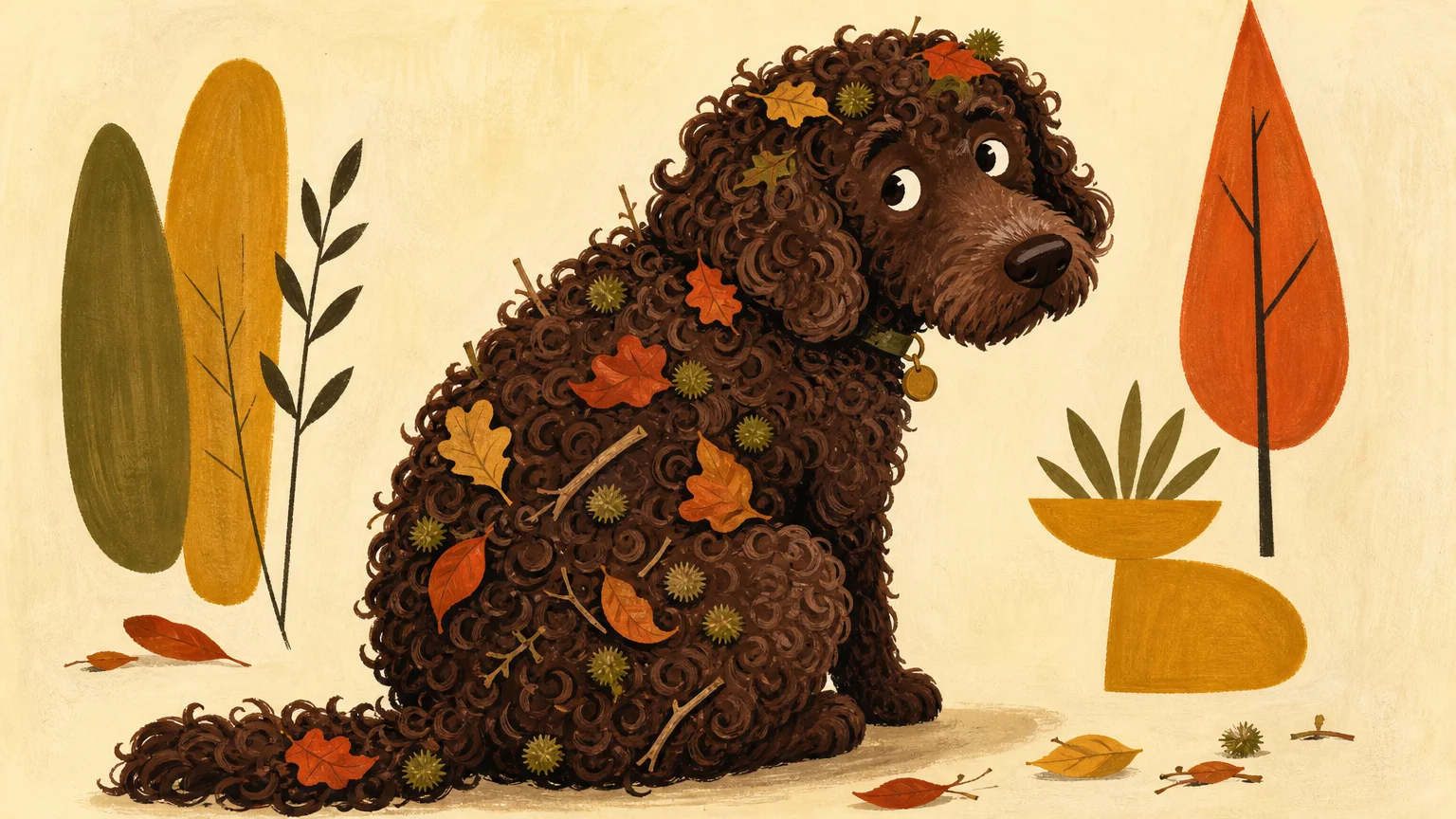
Curly hair does not shed out onto your floor; instead, dead hairs fall back into the coat and wrap securely around live hairs. If you only brush the top layer of the coat, tight mats form close to the dog’s skin. Over time, these mats weave together into a solid layer known as a pelt. Pelting restricts blood flow, traps moisture, and causes painful skin infections. Once a dog becomes severely pelted, a groomer cannot brush the tangles out. They must shave the coat entirely down to the skin to relieve the animal’s pain.
Underestimating Grooming Costs
Maintaining these beautiful coats requires a considerable financial commitment. Professional grooming for a medium-to-large curly breed typically ranges from $90 to $130 per session, and prices climb much higher if the dog’s coat requires dematting. Because these dogs need a full haircut every four to eight weeks, you should realistically budget over $1,000 annually just for standard coat maintenance.
The Hypoallergenic Guarantee Myth
According to the Mayo Clinic, no dog is truly hypoallergenic. Allergic reactions are triggered by proteins found in a dog’s dander, saliva, and urine, rather than the hair itself. While tightly curled coats excel at trapping dander—preventing it from circulating in your home’s air—sensitive individuals can still experience severe reactions. You should spend significant time interacting with a specific breed indoors before committing to bringing a puppy home.
Frequently Asked Questions
Are curly-haired dogs truly hypoallergenic?
No dog is entirely hypoallergenic. Allergies are triggered by proteins in dander, saliva, and urine, not the hair itself. However, tightly coiled coats trap dander rather than shedding it around the house, which often helps allergy sufferers manage their symptoms more effectively.
How often do curly dogs need a haircut?
Most curly-haired breeds require a professional haircut every 4 to 8 weeks. Without regular trimming, their hair continues to grow indefinitely and easily forms painful mats against their skin. You must also brush them multiple times a week between professional grooming sessions.
Do curly dogs shed at all?
All dogs lose hair as a natural part of the growth cycle. In curly breeds, the loose hairs get caught in the surrounding curls instead of falling onto your furniture. You must brush these loose hairs out manually to prevent tangling.
Can I brush my curly dog when their coat is dry?
It is best to lightly mist the coat with a specialized detangling spray before brushing. Dry brushing can break the delicate hair shafts and cause the hair to frizz, which actually makes tangles worse over time.
Finding Your Perfect Match
Welcoming a curly-coated dog into your life brings endless joy, deep companionship, and the undeniable benefit of keeping your furniture free from loose fur. By understanding the distinct exercise needs and grooming commitments associated with each breed, you can confidently choose a dog that seamlessly fits your daily routine.
Last updated: June 2026. This is general informational content based on widely accepted guidance. Individual results vary. Verify current details—rules, prices, eligibility, regulations—with official sources before making important decisions.