5. Vizsla
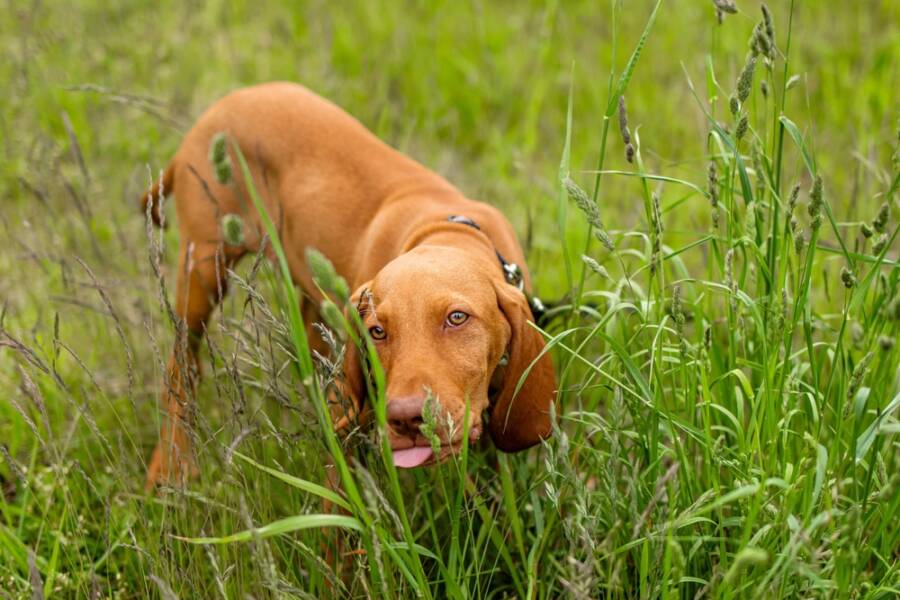
Affectionately and accurately nicknamed the “Velcro dog,” the Vizsla was bred to hunt closely alongside their human partners. They thrive on physical contact and emotional closeness. While this makes them deeply affectionate companions, any separation from their owner can feel catastrophic to a Vizsla.
This breed frequently experiences clinical separation anxiety, displaying signs of profound distress—such as drooling, pacing, and vocalizing—the moment they realize they are being left behind. Vizslas do best in households where someone works from home, but they still require structured independence training, such as learning to settle on a mat in a separate room while you are nearby.
6. Bichon Frise
The Bichon Frise is a classic companion dog. Unlike working breeds, their sole historical job has been to sit in laps, entertain, and keep humans company. Because they thrive entirely on social interaction, they can develop anxiety very quickly when their routines are disrupted or when they are left alone for long stretches.
Bichons thrive on predictability. Establishing a strict daily routine for feeding, walking, and play helps them feel secure. If you must leave your Bichon alone, creating a comfortable, safe space with familiar scents and soft background noise can ease their stress.