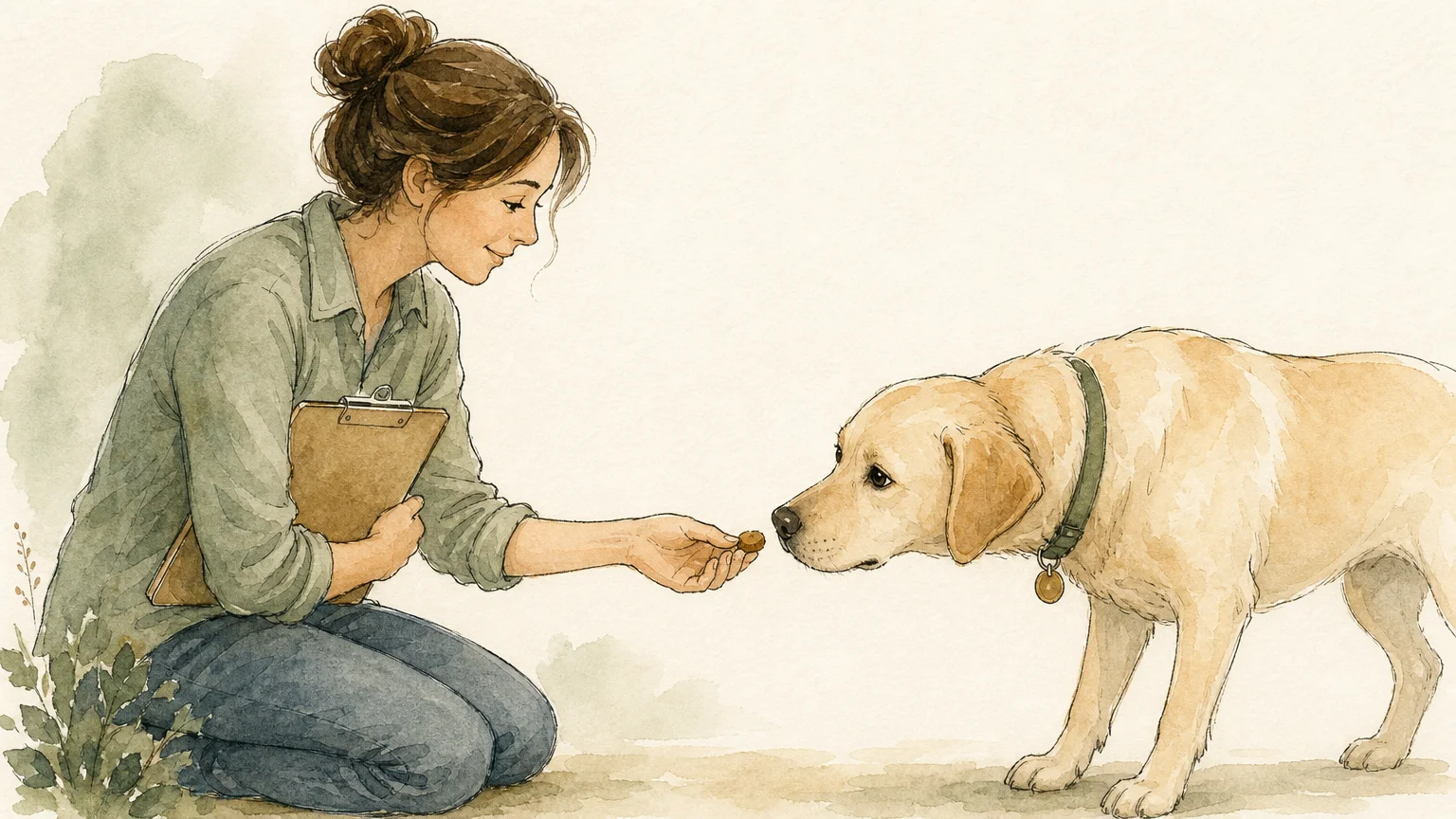
When to Get Professional Help
Sometimes, love, exercise, and basic training are not enough to help a highly anxious dog. Canine anxiety can severely impact a dog’s physical health and your family’s quality of life. Seek help from a veterinarian or a certified veterinary behaviorist if you encounter these scenarios:
- Self-harm during panic: If your dog is breaking their teeth trying to escape a crate, chewing their own paws raw, or throwing themselves through glass windows during a thunderstorm, this is a medical emergency that requires immediate professional intervention.
- Fear-based aggression: A dog pushed to the absolute limit of their anxiety may bite. If your dog growls, lunges, or snaps when they feel cornered or frightened, you need a professional to help manage the environment safely.
- Sudden onset of anxiety in an older dog: If your previously calm six-year-old dog suddenly becomes terrified of being left alone, do not assume it is just a behavioral quirk. A 2020 review published in the journal Animals found that a conservative estimate of around a third of referred behavior cases involve some form of underlying painful condition. Sudden anxiety is often a symptom of pain, vision loss, or cognitive decline.
Frequently Asked Questions
Can a dog eventually outgrow anxiety?
Anxiety is not a phase that dogs simply outgrow. In fact, without intervention, anxiety tends to worsen over time as the dog practices the fearful behavior. However, with consistent desensitization training and a secure environment, dogs can learn robust coping mechanisms that significantly reduce their stress levels.
Do weighted vests or anxiety shirts actually work?
For some dogs, yes. Products like Thundershirts apply gentle, constant pressure to a dog’s torso, similar to swaddling a baby. This pressure can release calming endorphins. While they don’t cure anxiety, they are a helpful, low-risk tool to use alongside behavioral training, particularly for noise phobias.
Should I get a second dog to calm my anxious dog?
Usually, no. If your dog suffers from true separation anxiety, their distress is tied to being separated from you, not a general fear of being alone. A second dog rarely fixes this. In some cases, the new dog may actually pick up on your first dog’s nervous habits, leaving you with two anxious dogs.
What is the difference between fear and anxiety in dogs?
Fear is a direct reaction to a present, observable threat (like jumping back from a loud vacuum). Anxiety is the anticipation of a future threat (like pacing and panting when the sky gets dark, anticipating a thunderstorm that hasn’t started yet). Both require patience and careful counter-conditioning to resolve.
Every dog has their own unique personality, but their genetics provide the blueprint. By understanding the historical purpose of your anxious dog’s breed, you can stop fighting their natural instincts and start channeling them in healthier directions. Whether it means giving your Border Collie a puzzle to solve or teaching your Vizsla how to relax on a mat, your patience provides the security they are looking for.
This is general informational content based on widely accepted guidance. Individual results vary. Verify current details—rules, prices, eligibility, regulations—with official sources before making important decisions.