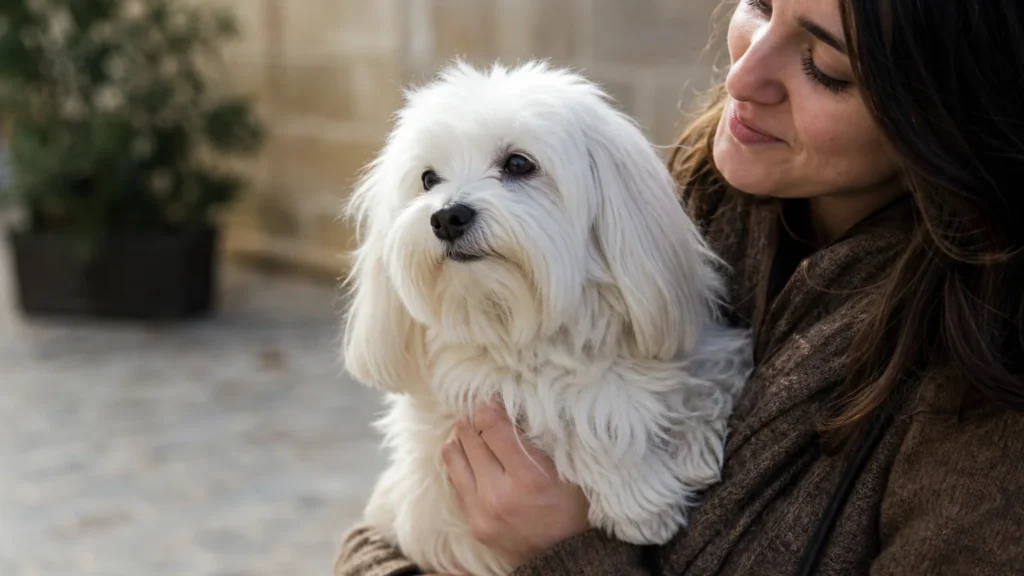
13. Maltese
Another ancient companion breed, the Maltese is known for its glamorous coat and profound attachment to its owner. They are prone to developing a hyper-attachment to one specific person in the household. When that person is out of sight, the Maltese can experience sheer panic.
To prevent this single-person hyper-attachment from ruining their quality of life, it is important to have multiple people in the household handle feeding, walking, and training. Encouraging your Maltese to engage in independent play with food-dispensing toys also builds their self-reliance.
14. Schnauzer
Whether Miniature or Standard, Schnauzers were bred to be alert watchdogs and ratters. They are highly vocal and quick to sound the alarm when someone approaches the property. If a Schnauzer is not taught how to switch off this guarding instinct, they can remain in a state of chronic, generalized anxiety.
Schnauzers need to know that you are managing the environment so they don’t have to. Teaching a “quiet” or “thank you” cue acknowledges their alert bark, but signals that you have the situation under control, allowing them to stand down and relax.
15. Shetland Sheepdog (Sheltie)
Shetland Sheepdogs are brilliant, vocal herders known for their sensitivity. They are particularly prone to noise phobias. The sharp crack of thunder, a fireworks display, or even the rumble of a vacuum cleaner can send a Sheltie into a trembling, hiding state of panic.
Because they are so environmentally sensitive, Shelties benefit greatly from sound desensitization training. Playing recordings of thunderstorms at a very low volume while feeding them high-value treats can slowly change their emotional response to loud noises over time.