While humans need a comfortable mattress and a quiet room to catch eight hours of sleep, the animal kingdom operates on an entirely different set of rules. Survival in the wild demands creative resting strategies that balance physical restoration with the constant threat of predators, harsh environments, and the search for food. From marine mammals suspending themselves vertically in the crushing depths of the ocean to tiny birds napping mid-flight miles above the earth, animal behavior reveals fascinating evolutionary adaptations. Exploring these wildlife facts opens a window into how diverse species survive their most vulnerable hours. Here are eight remarkable animals that sleep in places and positions that defy human logic.
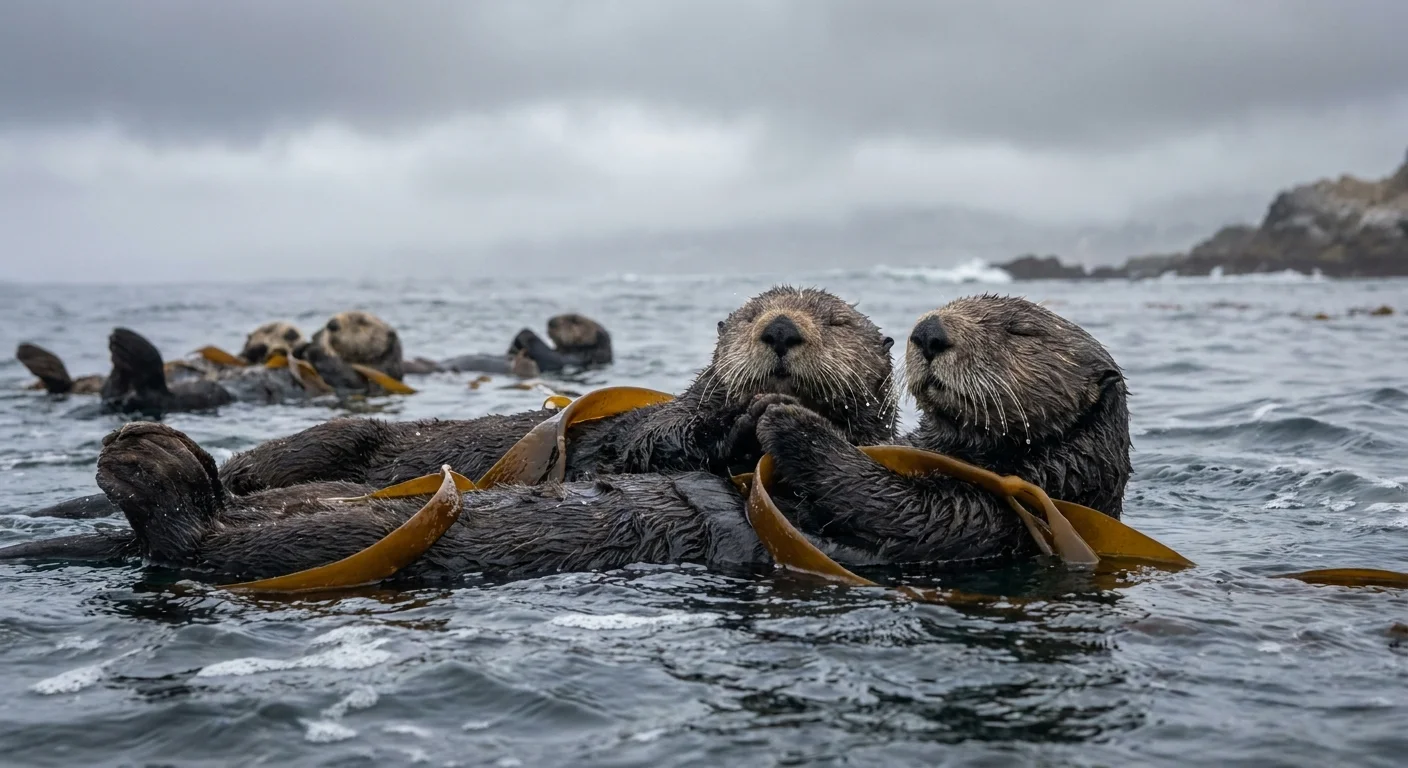
1. Sea Otters: Anchored in Kelp Beds
If you have ever seen a sea otter resting, you know they almost never leave the water to catch some sleep. Because sea otters lack the thick blubber that keeps other marine mammals warm, they rely on a dense fur coat and a hyperactive metabolism to survive frigid ocean temperatures. This means they must burn massive amounts of energy—often eating up to 25 percent of their body weight daily—and conserve whatever warmth they can while resting.
To avoid drifting into open, dangerous waters while they snooze, sea otters employ a brilliant anchoring strategy. They wrap themselves in long strands of coastal kelp, tying their bodies to the ocean floor. Even more adorably, otters often sleep in large, gender-segregated groups called rafts. Within these rafts, you will frequently see them holding paws. This physical connection prevents individuals—especially mothers and their vulnerable pups—from being separated by strong ocean currents. Resting on their backs with their paws out of the water also helps them regulate their body heat, ensuring they wake up ready to hunt for urchins and crabs.
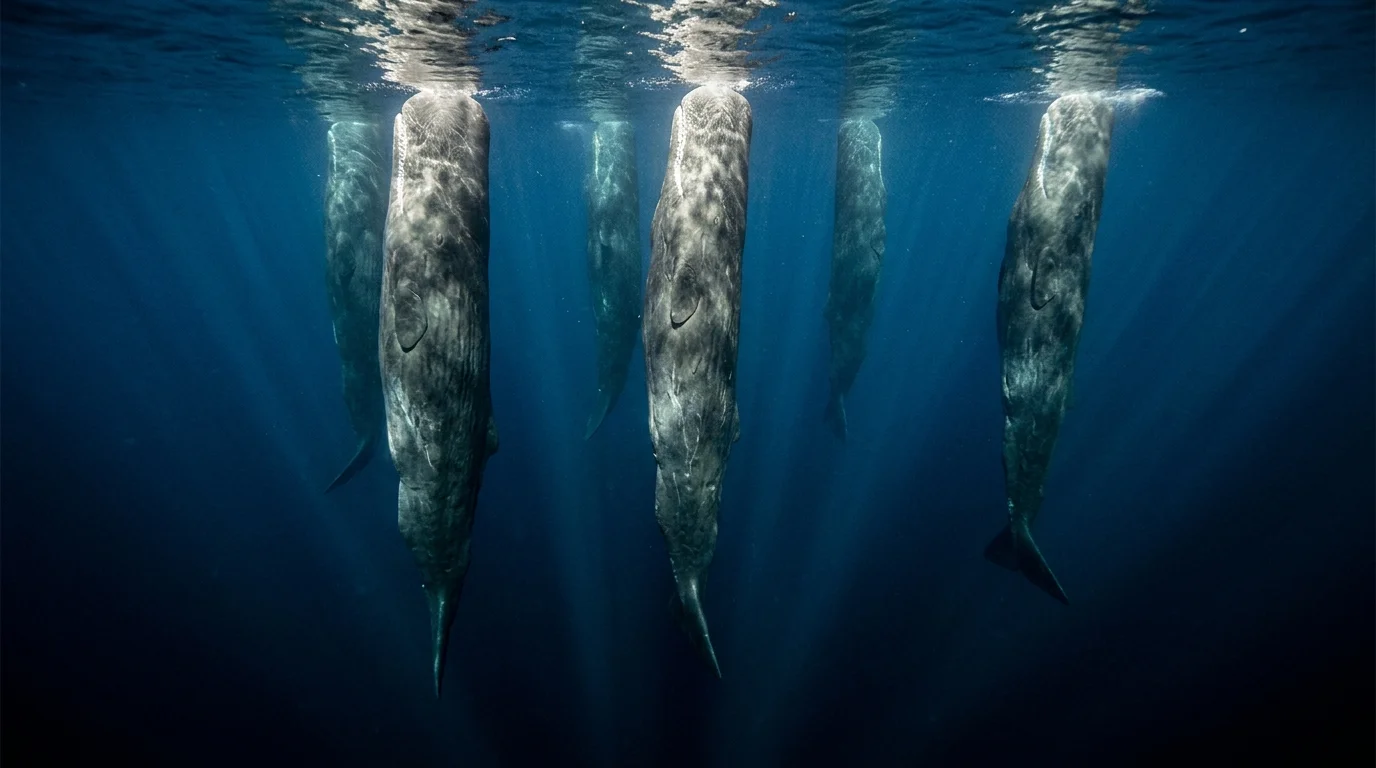
2. Sperm Whales: Vertical Pillars in the Deep
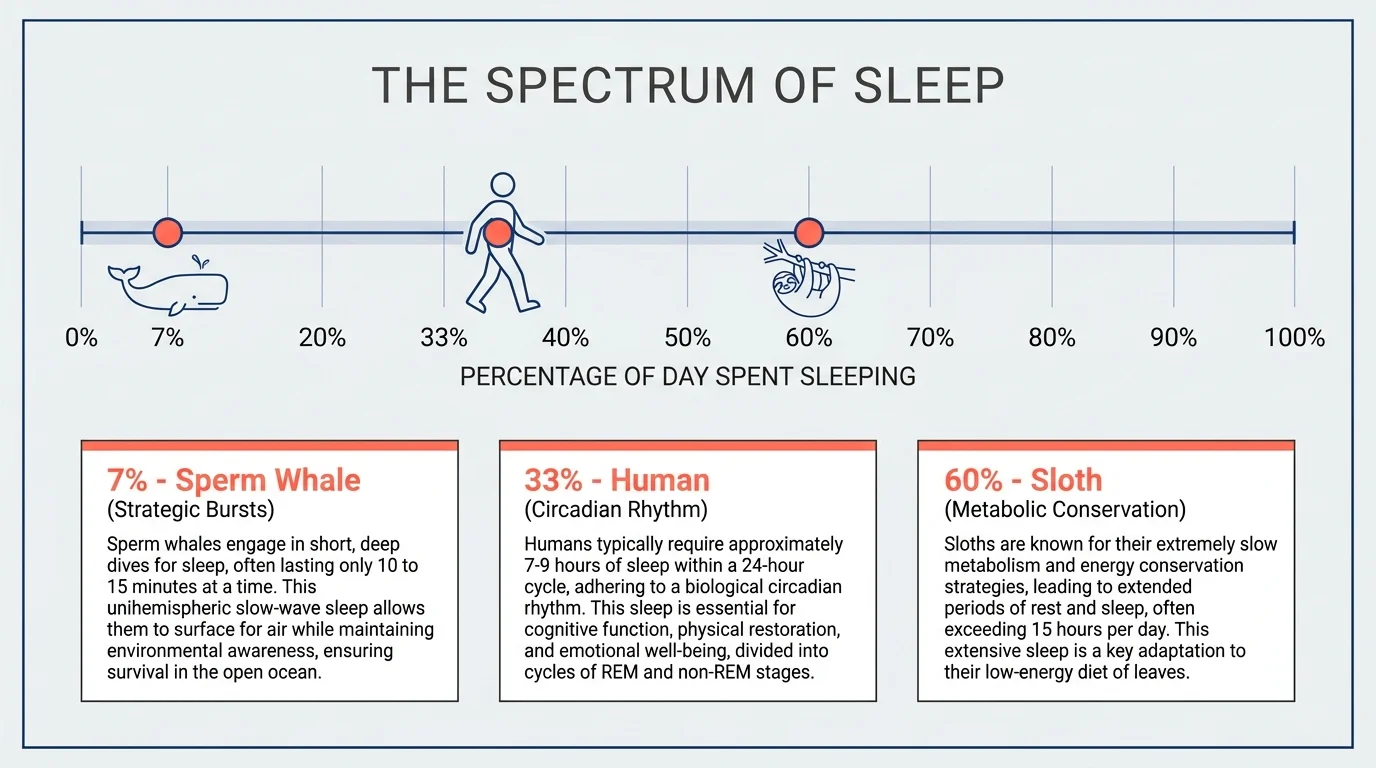
Sperm whales possess the largest brain of any animal on Earth, and maintaining that massive cognitive engine requires a highly specialized resting routine. Unlike humans who power down for the night, sperm whales sleep in short, intense bursts lasting only 10 to 15 minutes at a time. In total, they spend just about 7 percent of their day sleeping, making them one of the least sleep-dependent mammals on the planet.
When it is time for a nap, a pod of sperm whales will dive down together and stop moving entirely. Slowly, their bodies drift into a perfectly vertical posture, with their heads pointing toward the surface and their tails suspended below. This behavior, known as a drift dive, makes a pod of sleeping sperm whales look like a silent forest of giant underwater pillars. Scientists believe this vertical alignment allows them to rest effectively while keeping their blowholes aimed toward the surface, ensuring they can easily swim up for a breath of air the moment they wake.
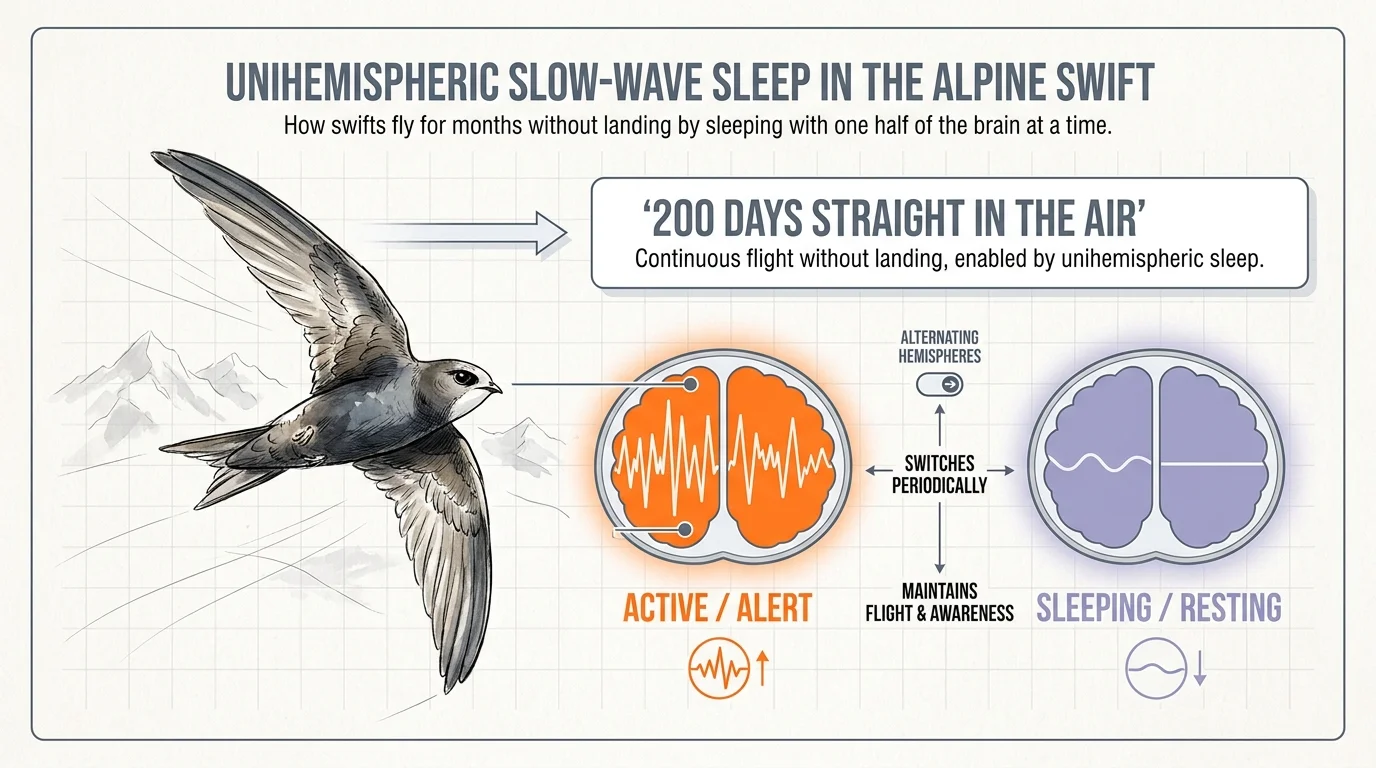
3. Alpine Swifts: Catching Zs on the Wing
The idea of sleeping while flying seems physically impossible, yet the Alpine swift has mastered the art of the airborne nap. These small but mighty birds migrate thousands of miles between their breeding grounds in Europe and their wintering habitats in West Africa. Once they arrive in Africa, they do not touch the ground. In fact, research shows they can remain completely airborne for over 200 days straight.
To pull off this grueling marathon, Alpine swifts eat, drink, and sleep entirely on the wing. They catch small insects in mid-air and scoop water from the surface of lakes without ever landing. When they need to sleep, they enter a state called unihemispheric slow-wave sleep. This means they shut down half of their brain to rest while the other half remains alert, allowing them to ride thermal currents and maintain their altitude.
“When we looked at the data, we were totally blown away. During their non-breeding period in Africa, they were always in the air.” — Felix Liechti, Swiss Ornithological Institute
This groundbreaking discovery, detailed in research reported by Smithsonian Magazine, redefined our understanding of avian endurance. The swifts simply glide on the wind, effectively napping while soaring miles above the African continent.
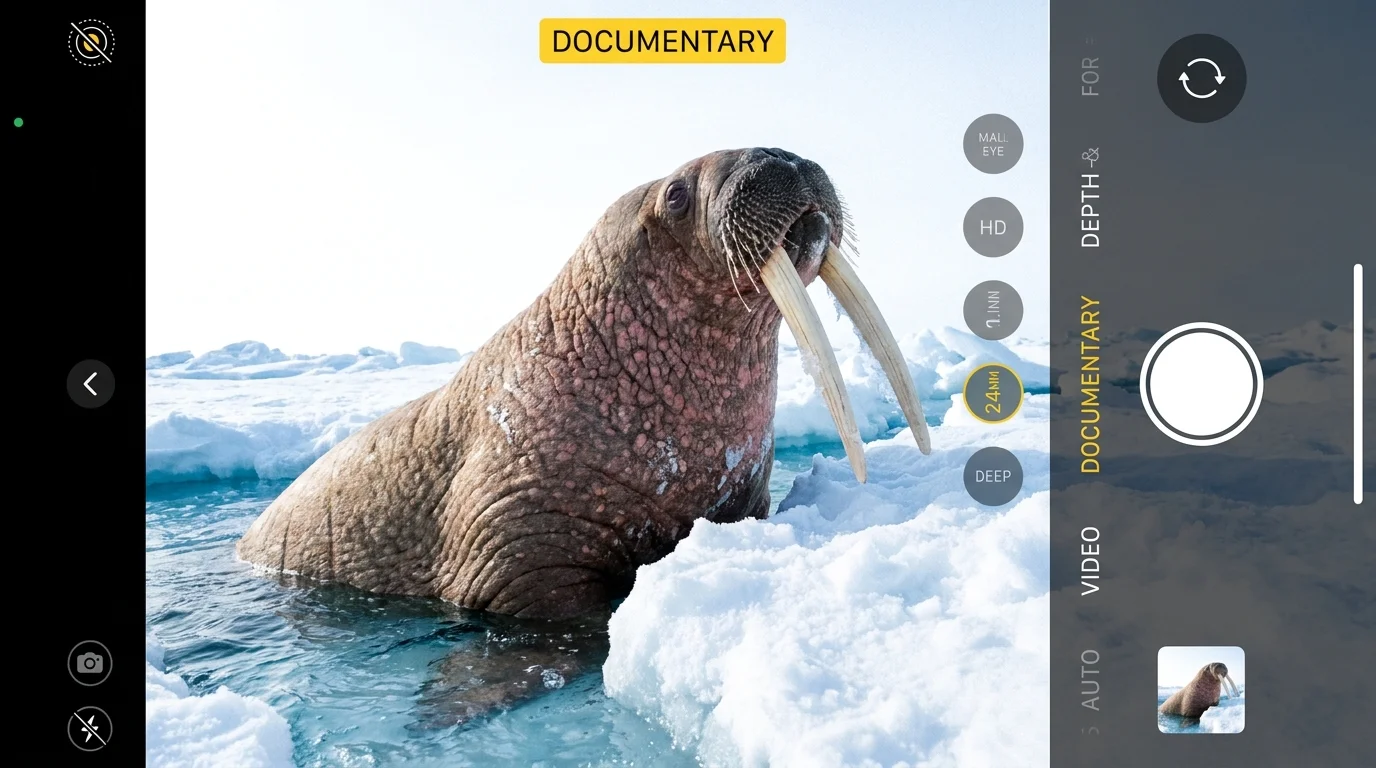
4. Walruses: Hooked on Ice
Walruses are massive creatures that can weigh up to 4,000 pounds. While they often sleep piled on top of one another on rocky beaches or sea ice, they are also entirely capable of catching up on sleep while submerged in the freezing Arctic Ocean.
To avoid drowning while resting in the water, a walrus utilizes an inflatable air pouch in its throat known as a pharyngeal sac. By filling this sac with up to 50 liters of air, the walrus can float vertically, bobbing like a massive, blubbery buoy. However, ocean currents can still push a floating walrus far away from its feeding grounds. To solve this, a tired walrus will sometimes swim up to a floating sheet of sea ice, dig its massive ivory tusks directly into the frozen surface, and simply hang there. According to the National Oceanic and Atmospheric Administration (NOAA), these tusks serve multiple vital functions, but using them as a built-in ice anchor allows the walrus to sleep securely without drifting out to sea.
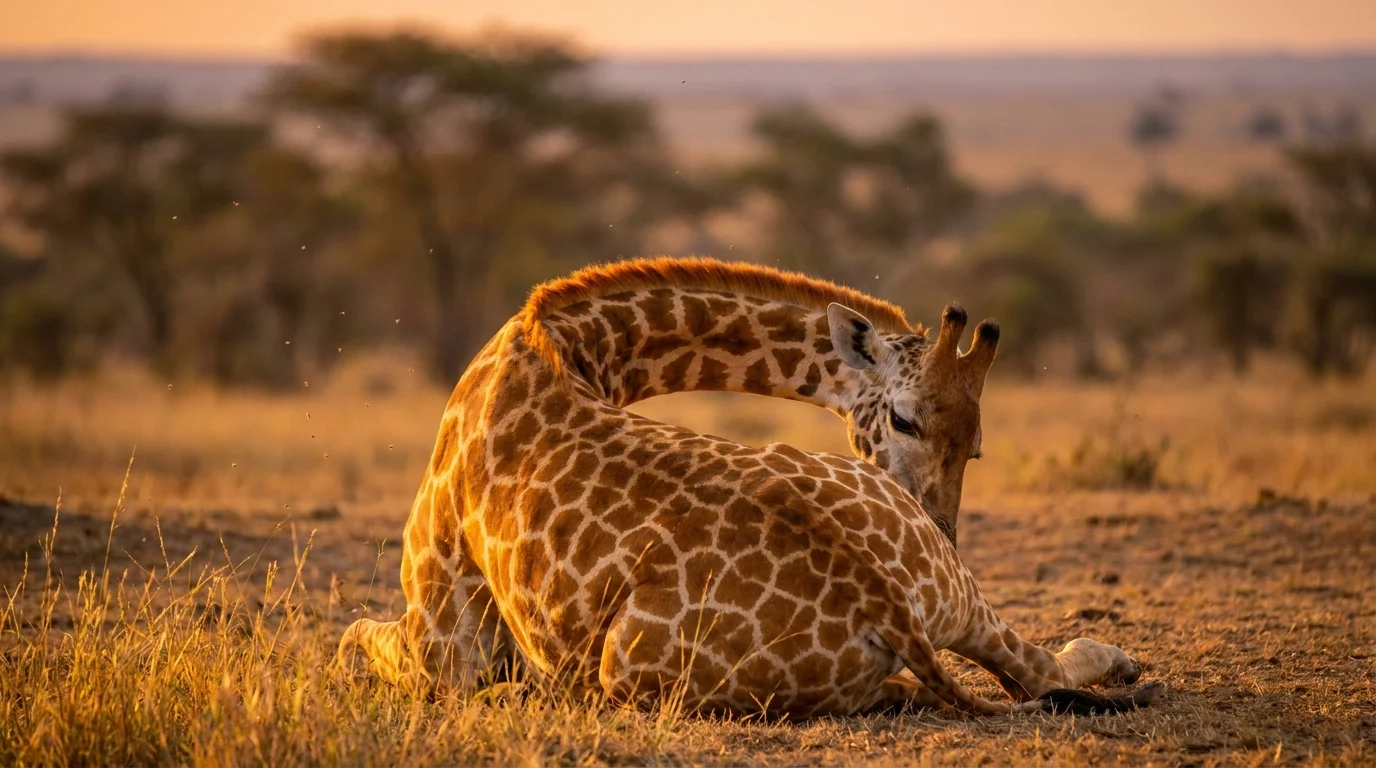
5. Giraffes: The Briefest of Benders
When you stand up to 18 feet tall, lying down on the ground is a major logistical challenge—and a dangerous one. Because it takes a giraffe several seconds to fold its long legs to the ground and even longer to stand back up, resting on the savanna makes them incredibly vulnerable to apex predators like lions. As a result, giraffes sleep very little, often logging no more than 30 minutes to two hours of total sleep per day.
Most of this sleep occurs in brief, five-minute naps while standing upright. A standing giraffe will lock its leg joints, allowing it to relax its muscles without collapsing. However, to achieve REM sleep—the deep, restorative stage of the sleep cycle—a giraffe must sit down. Because they lose muscle control during REM sleep, they cannot simply let their heavy heads dangle. Instead, a resting giraffe will arch its incredibly long neck backward and rest its head directly on its own hip or thigh. This yoga-like pose turns their own body into a pillow, ensuring their neck is supported during their fleeting moments of deep sleep.
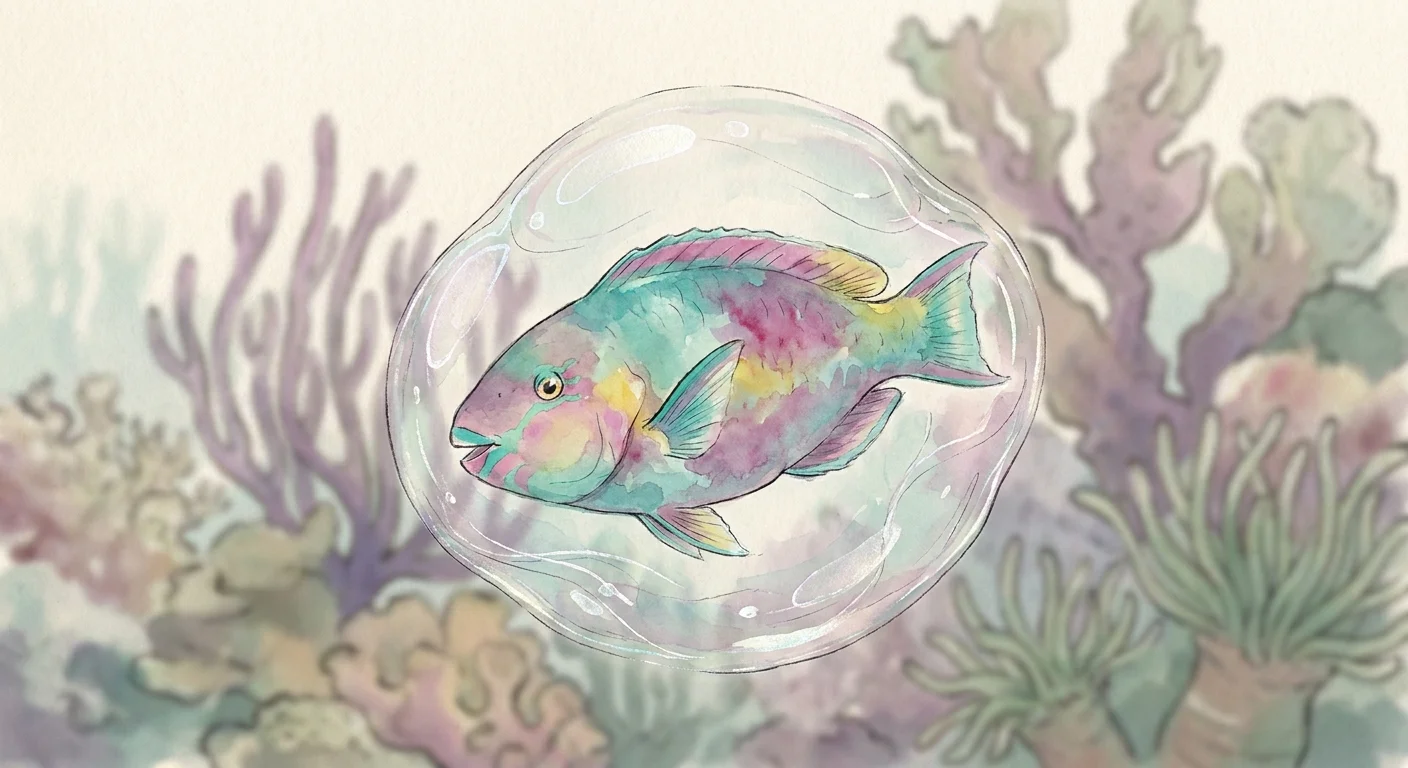
6. Parrotfish: Enclosed in a Mucus Sleeping Bag
The coral reef is a dangerous place after dark. For the vibrant parrotfish, dusk signals the start of a bizarre and highly effective bedtime routine. Before settling into a crevice for the night, certain species of parrotfish secrete a thick, transparent bubble of mucus from a gland near their gills. This slime gradually envelops their entire body, creating a custom-made sleeping bag.
This gelatinous cocoon serves two major purposes. First, it acts as a physical barrier against gnathiid isopods—tiny, blood-sucking parasites that swarm the reef at night looking for a meal. The mucus acts much like a human mosquito net, keeping the bugs at bay. Second, the cocoon acts as an olfactory cloak. By trapping the fish’s natural scent inside the bubble, the parrotfish effectively hides from nocturnal predators like moray eels, which rely heavily on their sense of smell to hunt in the dark. Once morning arrives, the parrotfish simply bursts out of its bubble and swims away.
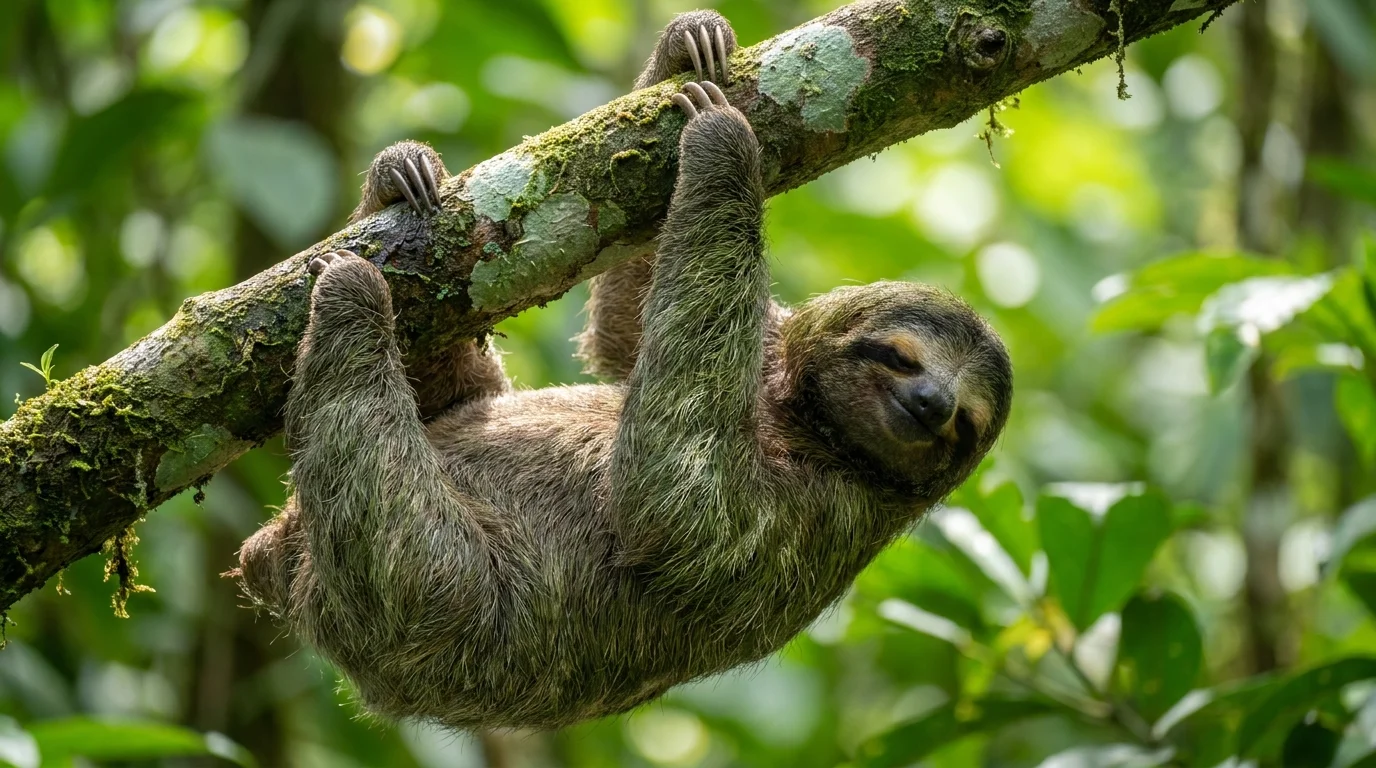
7. Sloths: Upside-Down Canopy Dreamers
Sloths are famous for their sluggish lifestyle, and their sleep habits reflect their low-energy diet of tough, toxic leaves. Because it takes a sloth up to 30 days to digest a single leaf, they must conserve as much energy as possible. They accomplish this by spending up to 10 hours a day sleeping, almost exclusively while hanging completely upside down high in the jungle canopy.
If you tried to hang from a tree branch while sleeping, your muscles would quickly fatigue, and you would fall. Sloths sidestep this problem through specialized anatomy. The tendons in a sloth’s hands and feet work opposite to yours; their default, relaxed position is a tightly closed grip. To open their claws, a sloth must actively expend energy. When they fall asleep and their muscles relax, their claws naturally lock onto the branch.
Furthermore, hanging inverted for hours should crush a mammal’s lungs under the weight of its own heavy stomach. However, researchers from the Sloth Conservation Foundation discovered that sloths possess internal fibrinous adhesions—essentially organic “coat hangers”—that anchor their stomach and liver to their lower ribs, allowing them to breathe effortlessly while catching upside-down Zs.
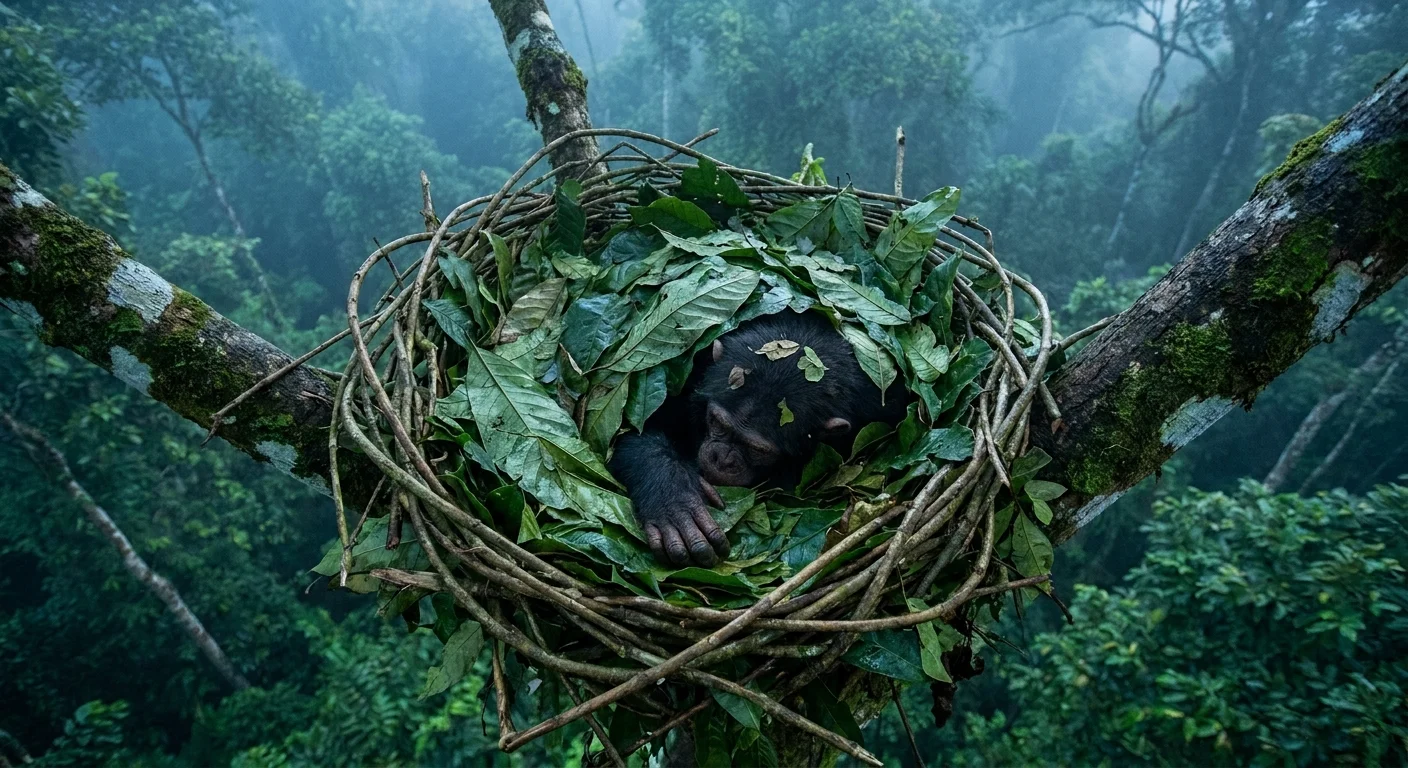
8. Chimpanzees: Custom-Built Tree Beds
Unlike monkeys that might casually drape themselves over a branch, chimpanzees are meticulous architects when it comes to sleep. Every single evening, a chimpanzee will climb high into the forest canopy and construct a brand-new bed from scratch.
Using their hands and feet, chimps bend and weave sturdy branches into a secure foundational ring. They then line the inside of this bowl-shaped platform with softer, leafy twigs to create a springy mattress. They build these nests at the end of flexible branches, which serves as an early-warning system—if a predator like a leopard tries to climb out to the nest, the vibrations will wake the chimp long before the threat arrives.
Fascinatingly, chimpanzees also tailor their beds to the local weather. On cold or rainy nights, they build deeper nests with thicker foliage to trap body heat and block the wind. They even selectively harvest specific leaves known to possess insect-repelling properties, ensuring a bug-free night of rest.
What Animal Sleep Tells Us About Biology
The diversity of animal sleep habits reveals a fundamental truth about biology: sleep is an unavoidable necessity, but exactly how a species gets that sleep is entirely shaped by evolution. When you look across the animal kingdom, resting strategies generally balance three driving factors: predator evasion, energy conservation, and environmental demands.
Marine mammals and migratory birds highlight the incredible adaptation of unihemispheric sleep. Because a dolphin cannot stop swimming to breathe, and an Alpine swift cannot land in the middle of the Sahara, they have evolved the ability to rest one hemisphere of their brain at a time. This keeps them physically moving and aware of threats while still performing the cellular maintenance required for survival.
Here is a quick breakdown of how these distinct sleep strategies compare across different environments:
| Animal | Primary Sleep Location | Average Daily Sleep | Unique Sleep Mechanism |
|---|---|---|---|
| Giraffe | Open Savanna | 30 mins – 2 hours | Resting head on own hip during REM |
| Sperm Whale | Deep Ocean | ~7% of the day | Vertical drift dives in pods |
| Sloth | Rainforest Canopy | 8 – 10 hours | Tendon-locking grip; internal organ anchors |
| Parrotfish | Coral Reefs | Nightly | Protective mucus cocoon |
Whether it is a sea otter anchoring itself with kelp or a chimpanzee weaving a fresh mattress out of leaves, animal sleep is a masterclass in adapting to a hostile world.
Common Questions About Animal Sleep
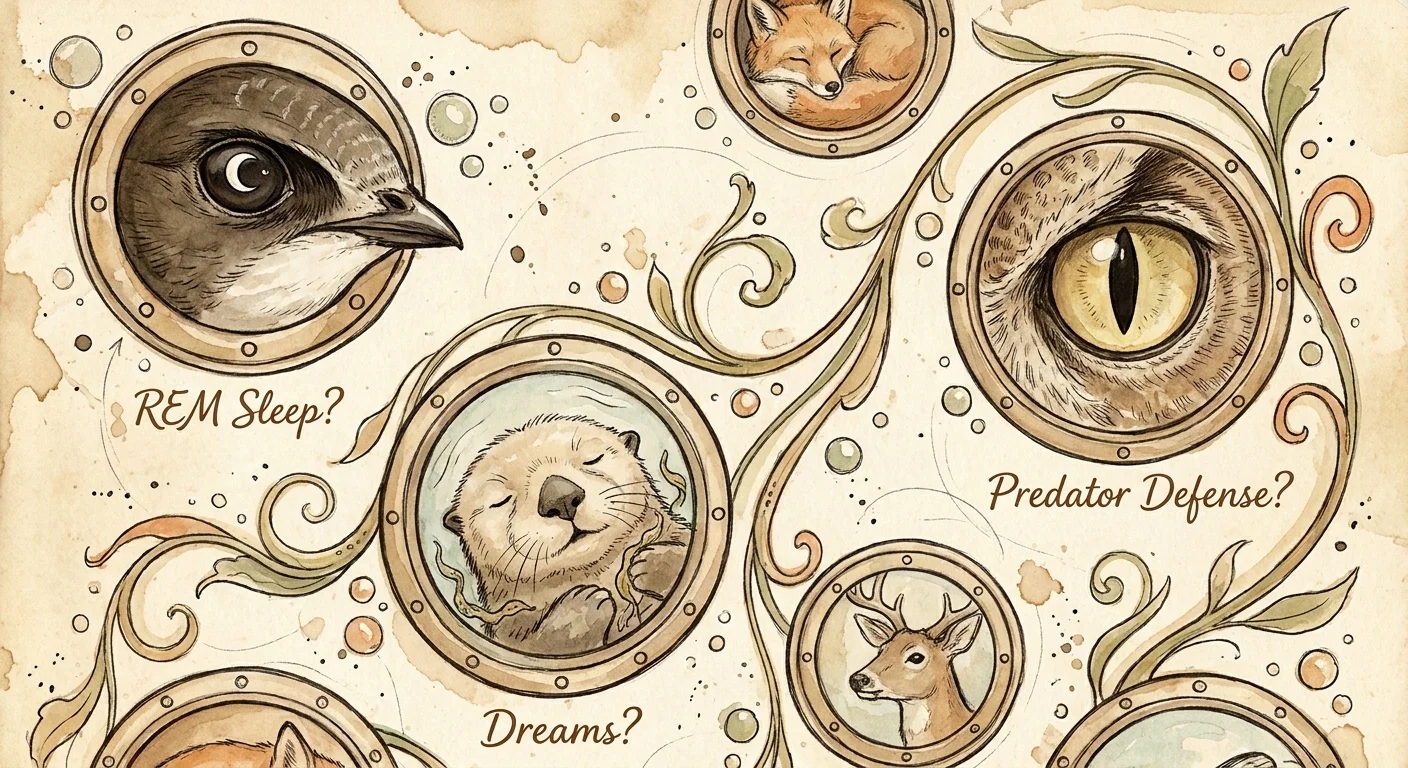
Can animals really sleep with half their brain awake?
Yes. This phenomenon is called unihemispheric slow-wave sleep. It is utilized heavily by marine mammals like dolphins and whales, as well as several bird species. It allows the animal to maintain basic motor functions, such as swimming to the surface for air or gliding on wind currents, while the resting half of the brain recovers.
Which animal sleeps the least?
Elephants and giraffes hold the record for the least amount of sleep among mammals. Both species generally sleep for roughly two hours a day, broken up into short bursts. Because of their immense size, laying down and standing back up requires significant effort and leaves them vulnerable to predators, encouraging them to stay alert.
Do fish sleep with their eyes open?
Fish do not have eyelids, which means they cannot physically close their eyes. However, they do enter a state of suspended animation that functions similarly to human sleep. During this time, their breathing slows, their metabolic rate drops, and they remain mostly motionless, often hovering near the bottom of a tank or hiding in a reef.
Bringing It All Together
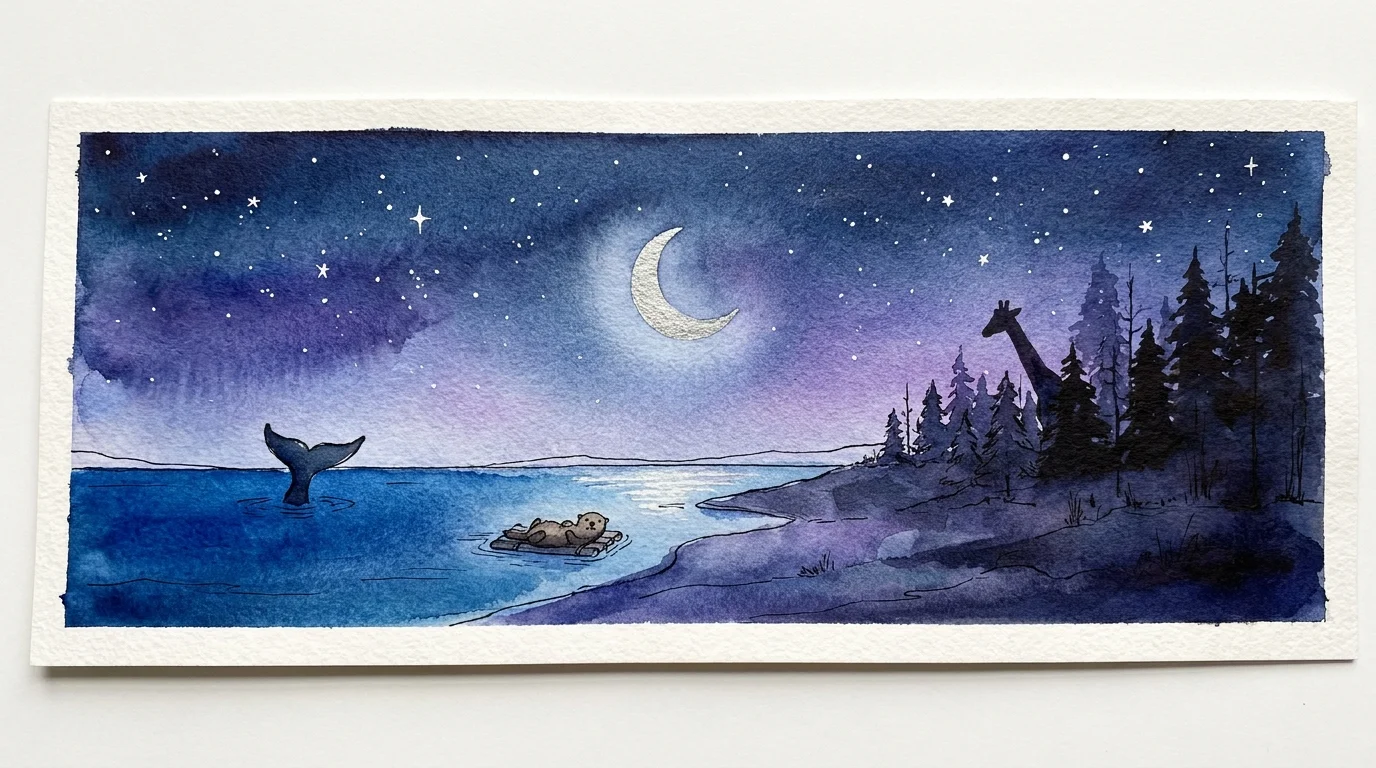
The animal kingdom proves that there is no single right way to get a good night of rest. From floating vertically in the darkest depths of the ocean to wrapping up in a blanket of natural slime, these eight animals showcase how life adapts to its surroundings to fulfill a basic biological need. The next time you find yourself tossing and turning in a comfortable bed, just be glad you do not have to hook your teeth into a block of ice to avoid floating away.
The information here is meant for educational purposes. Specific circumstances—including health conditions, finances, location, and goals—may require different approaches. When in doubt, consult a licensed professional or check official sources directly.
Last updated: May 2026. Rules, prices, and details change—verify current information with official sources before acting on it.