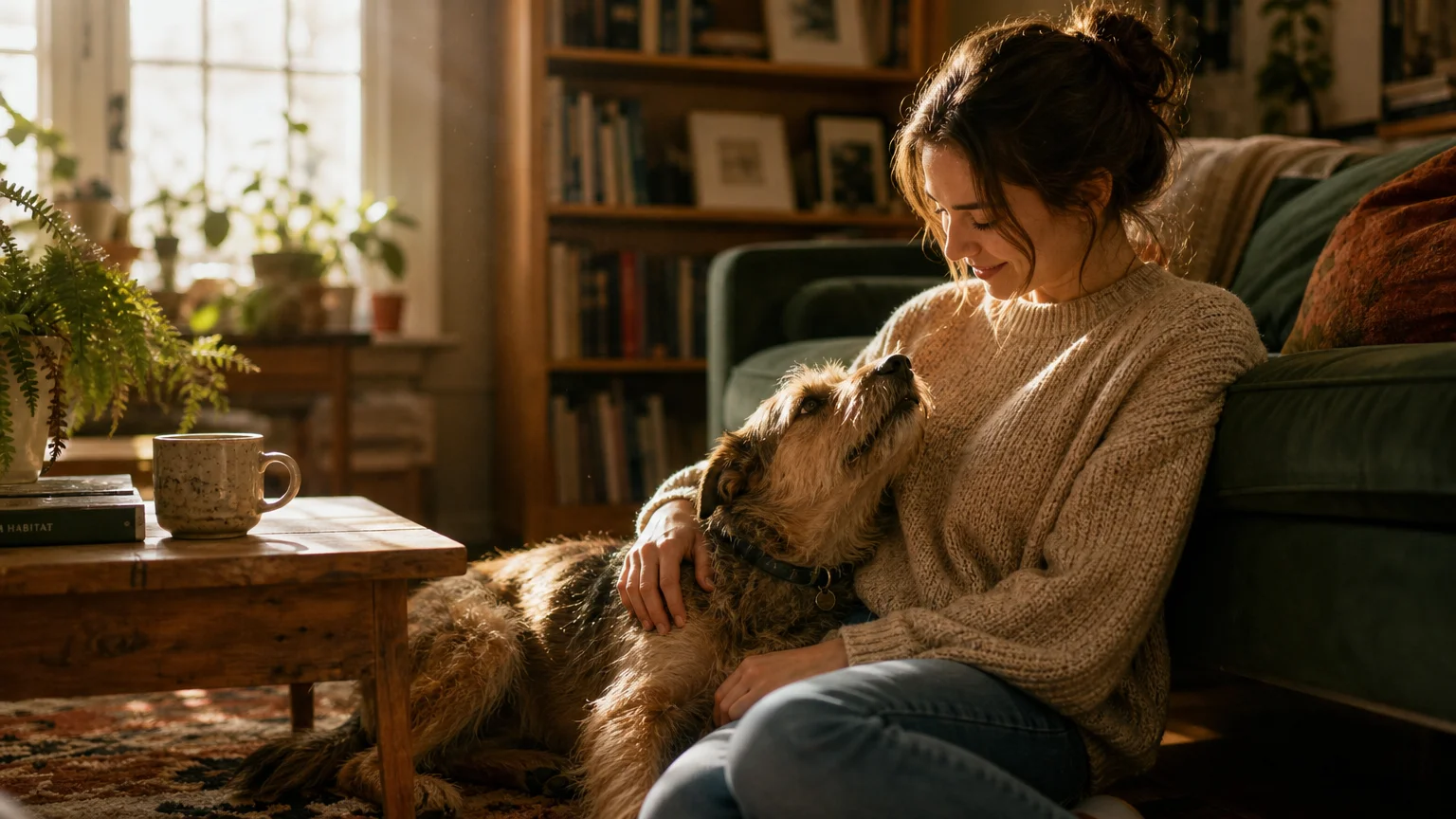
Nature occasionally writes a script that defies every biological rule, bringing together vastly different species in profound companionship. You might expect a lion, tiger, and bear to fiercely defend their territories against one another, yet one famous trio chose to cuddle instead. These cross-species bonds reveal an emotional complexity in animals that scientists are only beginning to understand. Whether formed in the wild for mutual hunting success or nurtured in sanctuary environments after a shared trauma, these remarkable connections show us that empathy exists far beyond human relationships. Read on to discover eight extraordinary animal friendships that challenge everything you thought you knew about the animal kingdom.
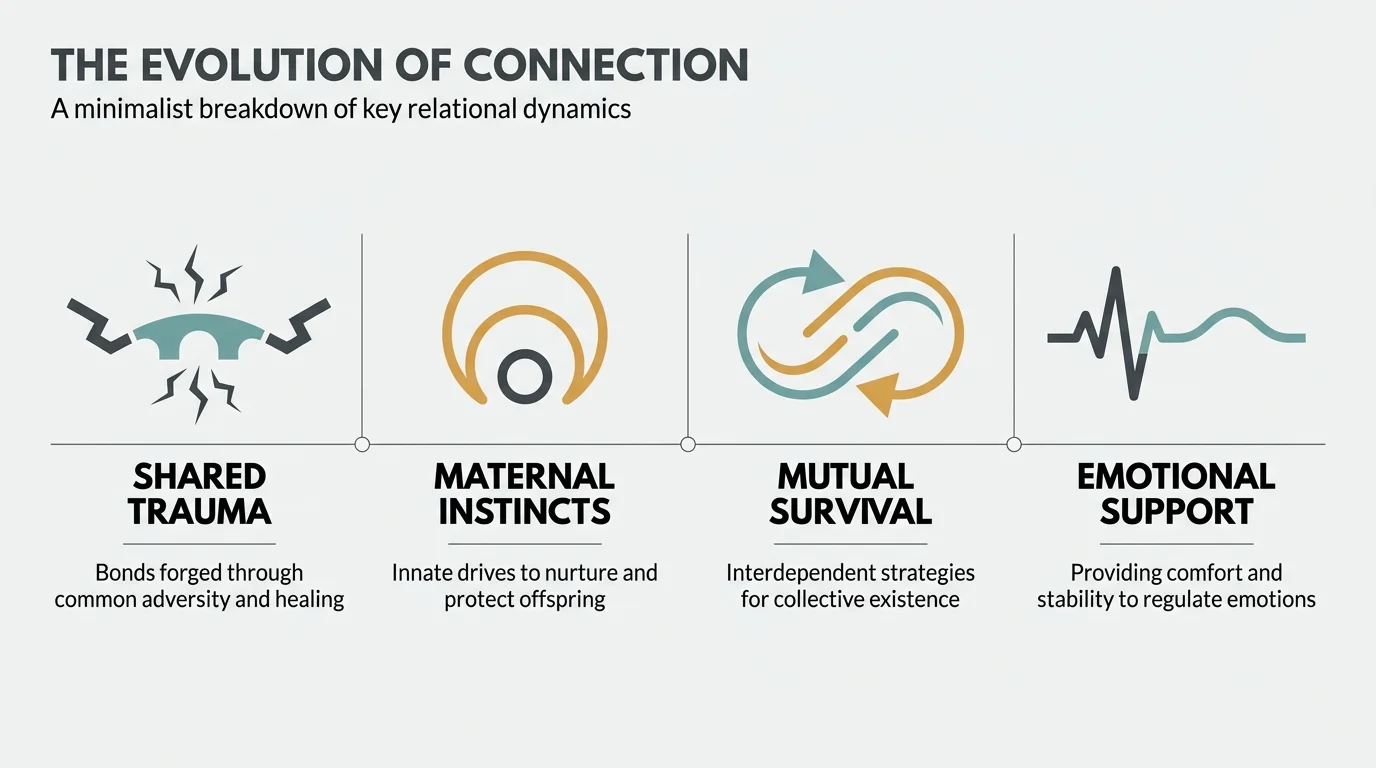
At a Glance: The Essentials of Animal Bonds
If you are exploring the fascinating world of unlikely animal friendships, here are the primary reasons these cross-species connections occur:
- Shared Trauma: Animals rescued from abusive or stressful environments often cling to whoever is nearby, regardless of species.
- Maternal Instincts: Certain species, especially domestic animals like sheep or dogs, possess overwhelming surrogate instincts that compel them to care for orphaned wildlife.
- Mutual Survival: In the wild, two different species will occasionally team up to increase their hunting efficiency and secure more food.
- Emotional Support: Zoos frequently pair highly anxious wild animals with confident domestic pets to provide behavioral cues and lower stress levels.
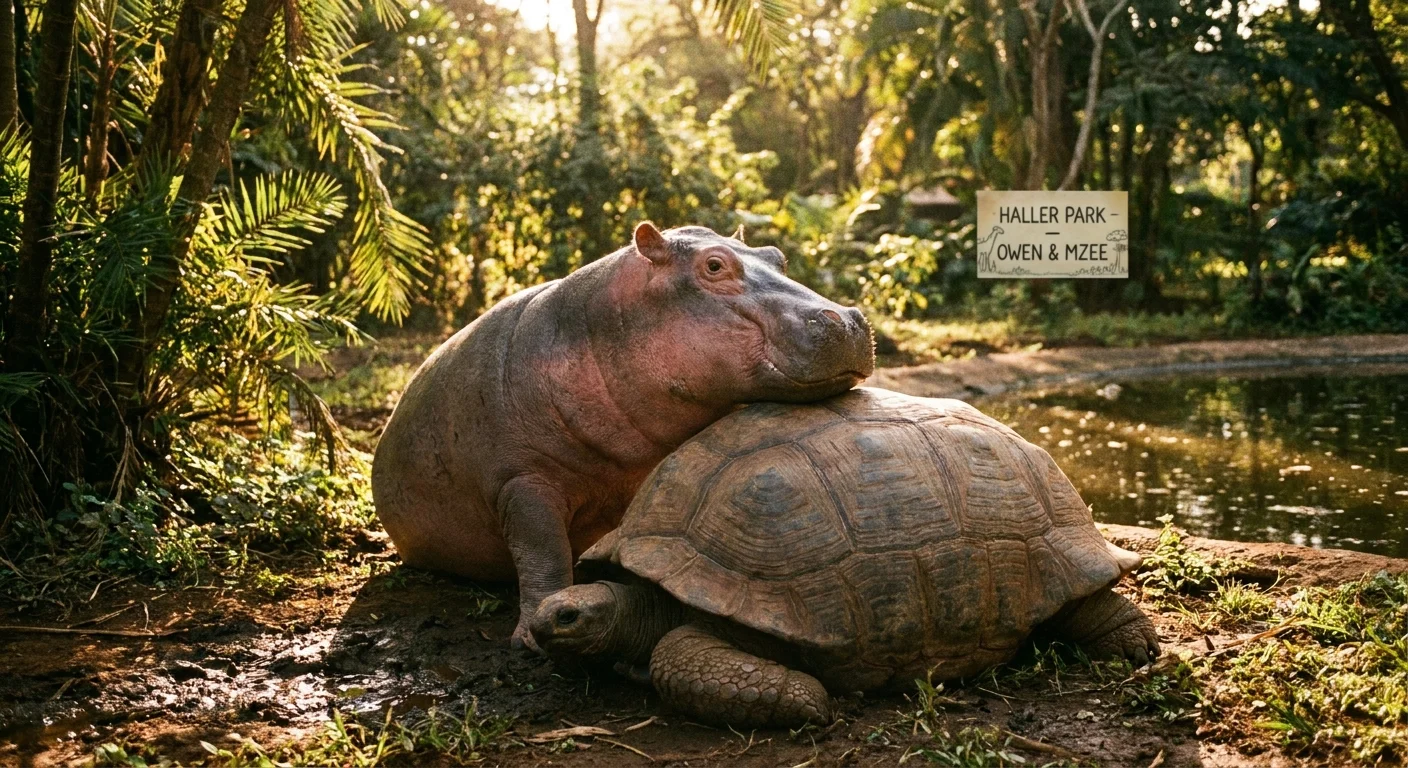
1. Owen the Baby Hippo and Mzee the Giant Tortoise
In December 2004, the devastating Indian Ocean tsunami struck the Kenyan coast, separating a young hippopotamus from his pod near Malindi. Wildlife officials and locals struggled to rescue the frightened, 600-pound calf, eventually transporting him to Haller Park, a thriving ecological sanctuary near Mombasa. With no other hippos available for him to interact with, the orphaned hippo—named Owen by his rescuers—sought out the closest substitute he could find.
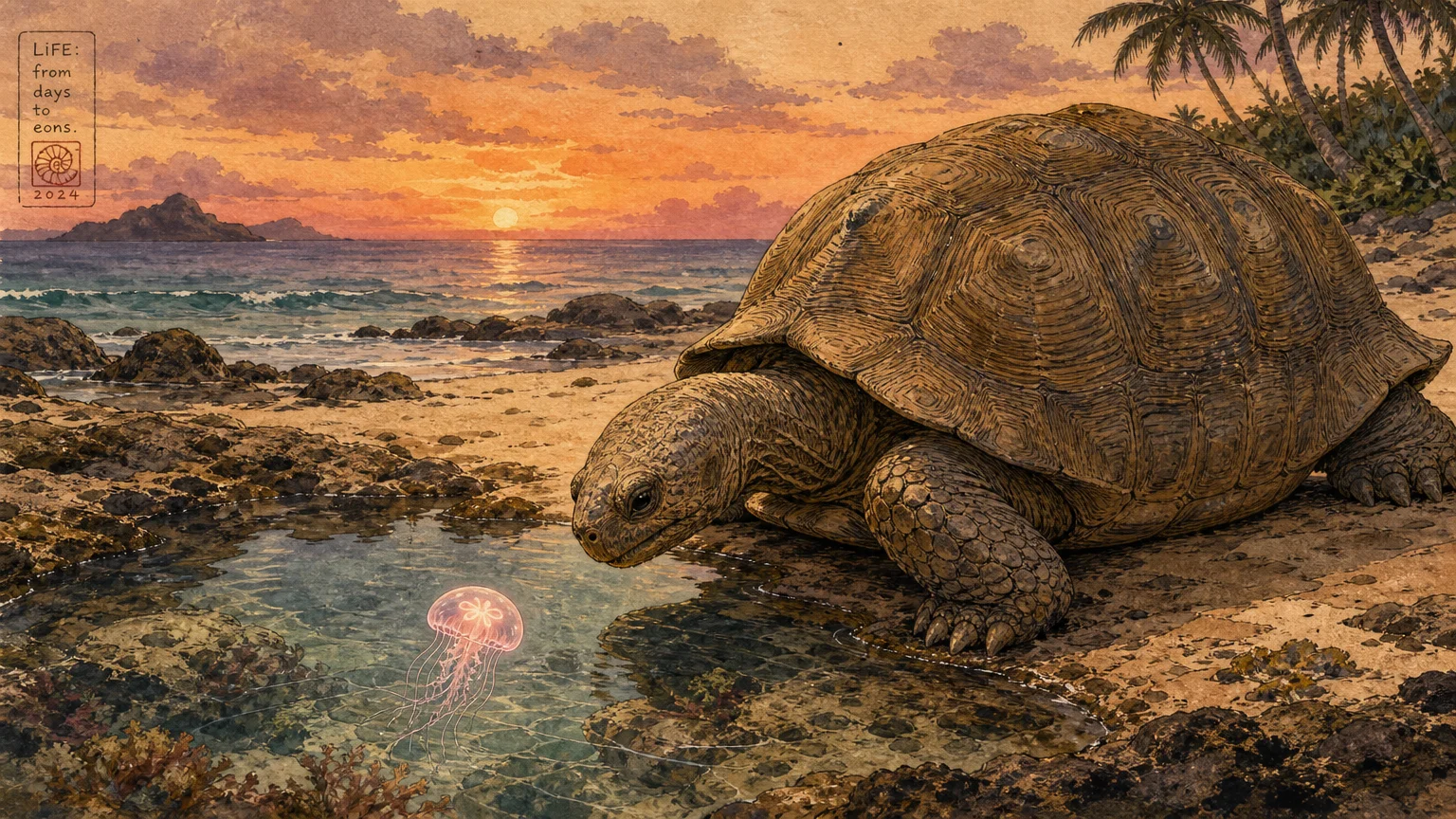
He set his sights on Mzee, a 130-year-old Aldabra giant tortoise. Owen likely viewed Mzee’s large, domed brown shell as a stand-in for an adult hippo. While the elderly tortoise initially wanted nothing to do with the persistent youngster, he eventually relented. The two formed a deeply moving bond, eating leaves together, bathing in the same pond, and sleeping side by side. They even developed their own unique communication system, using gentle nudges and tail nips to signal when they wanted to move around the enclosure.
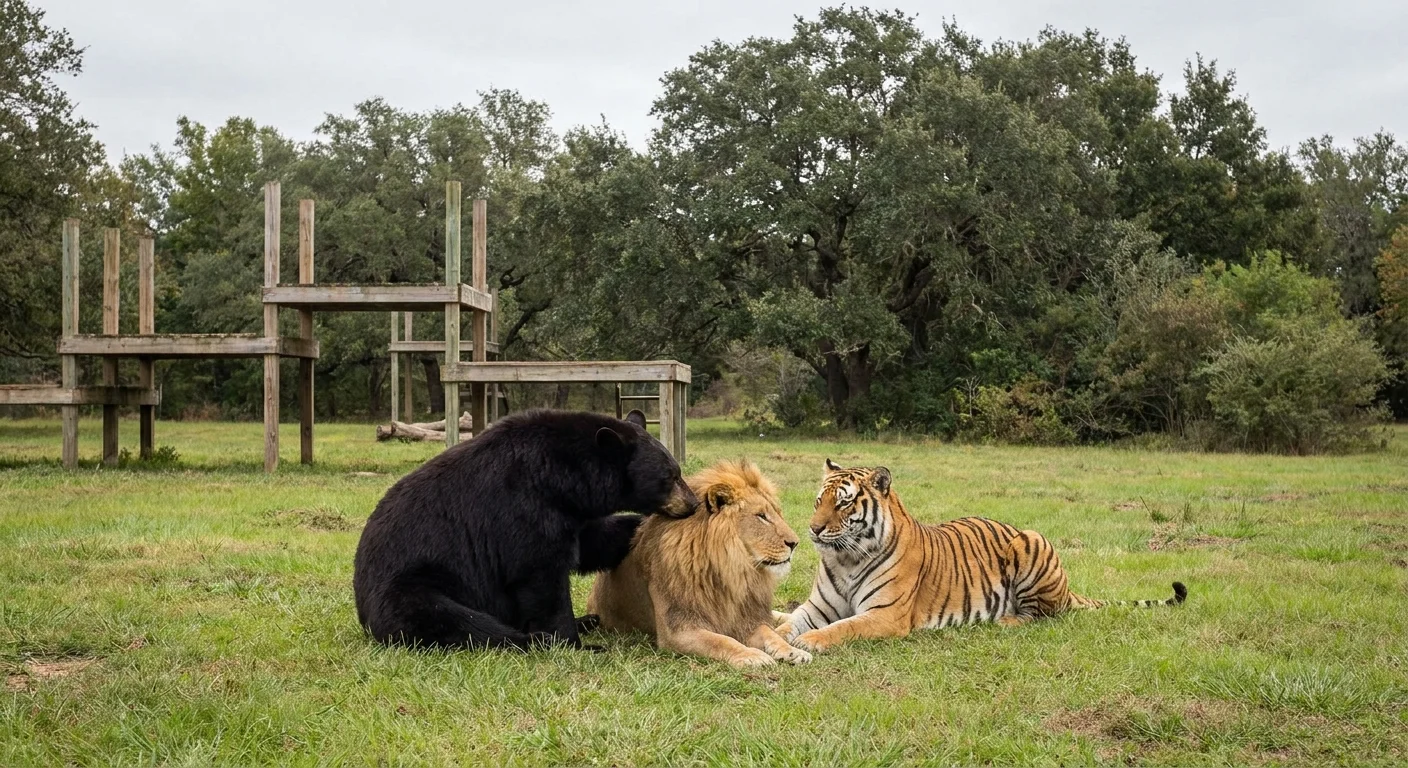
2. The BLT Trio: Baloo the Bear, Leo the Lion, and Shere Khan the Tiger
When you think of apex predators, you generally picture fiercely territorial animals. However, a police drug raid in Atlanta in 2001 uncovered an American black bear, an African lion, and a Bengal tiger confined together in a tiny basement. The three cubs were severely malnourished, terrified, and suffering from various injuries. Baloo the bear required surgery to remove a deeply ingrown harness, while Leo the lion suffered from an infected wound on his nose from his small crate.
After their rescue, the Georgia Department of Natural Resources transferred the trio to the Noah’s Ark Animal Sanctuary in Locust Grove. Recognizing their intense trauma bond, caretakers decided to keep the three predators together in a shared three-acre enclosure. For 15 years, the “BLT” (Bear, Lion, Tiger) trio slept, ate, and groomed each other without a hint of aggression. Leo lived until 2016, Shere Khan until 2018, and Baloo, the last surviving member, passed away in 2025 at the age of 23. Their legacy remains one of the most remarkable examples of natural enemies choosing family over instinct.
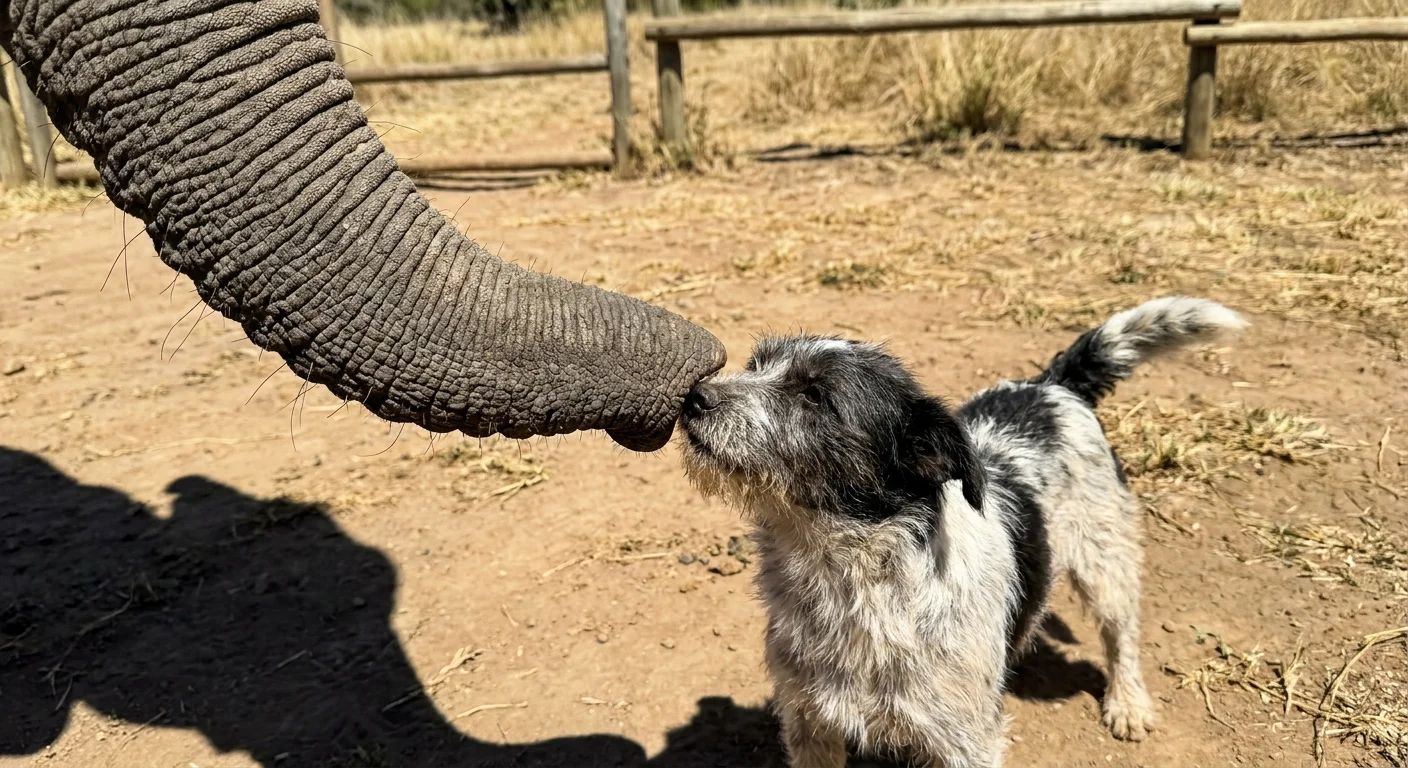
3. Tarra the Elephant and Bella the Stray Dog
The Elephant Sanctuary in Hohenwald, Tennessee, spans over 2,700 acres and provides a safe haven for retired exhibition and performing elephants. While the sanctuary focuses heavily on the companionship of the herd, one resident Asian elephant named Tarra found a best friend in a completely different species.
A stray mutt named Bella wandered onto the sanctuary grounds and immediately caught Tarra’s attention. The two quickly became inseparable, proving that size differences do not matter when it comes to companionship. The true depth of their bond showed when Bella sustained a severe spinal injury. Caretakers brought the dog indoors to the sanctuary office to recover for three weeks. Instead of roaming her vast acreage, Tarra stood vigil right outside the office corner, waiting patiently until her little dog could walk out the door and rejoin her.
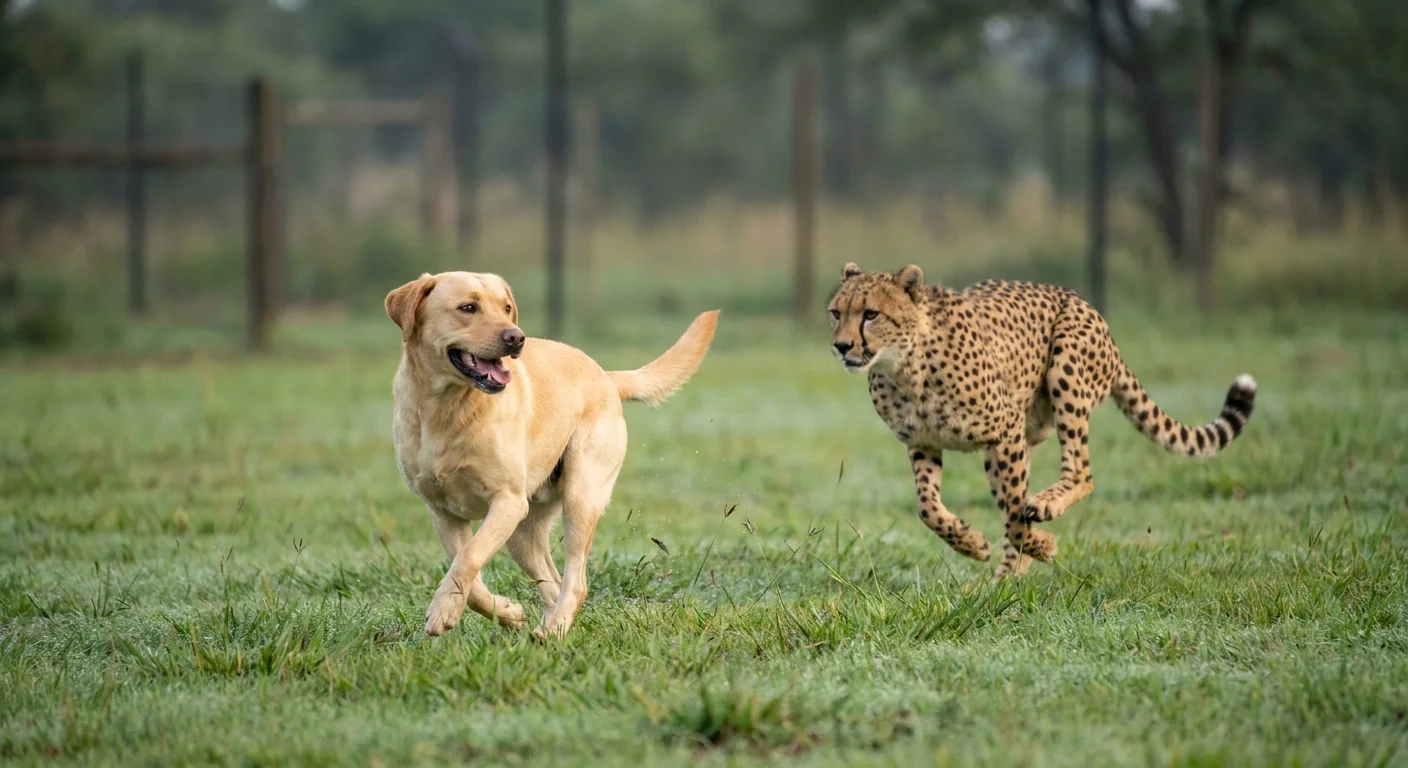
4. Kumbali the Cheetah and Kago the Labrador Mix
Cheetahs are built for incredible speed, but their nervous systems are notoriously sensitive. They easily become spooked and stressed in captive environments. To help manage this anxiety, several facilities—a practice pioneered by the San Diego Zoo—pair cheetah cubs with domestic emotional support dogs.
At the Metro Richmond Zoo in Virginia, a cheetah cub named Kumbali was born in May 2015. He was the runt of his litter, consistently losing weight, which forced animal caretakers to hand-raise him. To give him the confidence he lacked, the zoo introduced him to a yellow Labrador mix named Kago. As they grew up side by side, Kumbali learned to read Kago’s relaxed behavioral cues. Because dogs are naturally confident and fearless in new environments, the cheetah realized he did not need to be afraid. Ten years later, the two remain fiercely bonded brothers.
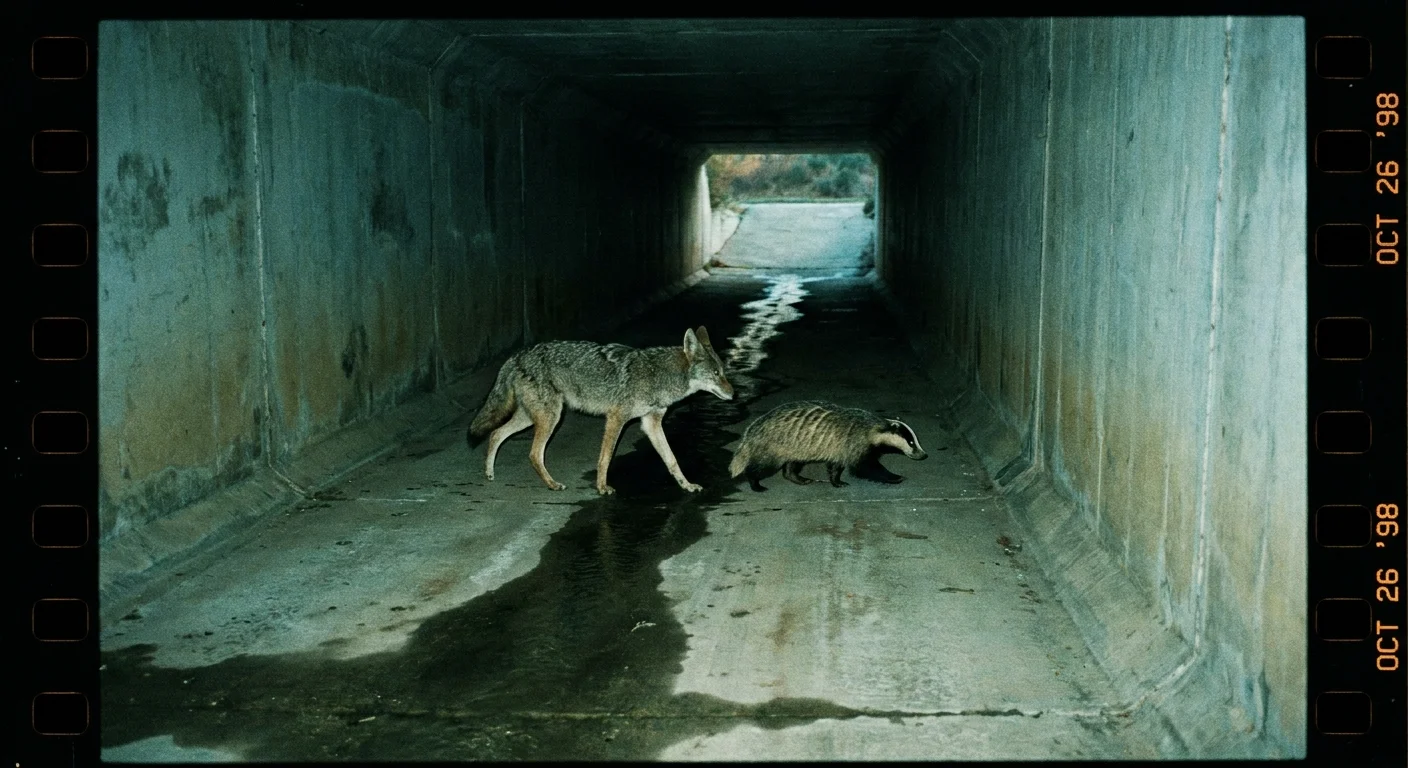
5. A Wild Coyote and an American Badger
Not all cross-species animal friends live in sanctuaries or zoos. In late 2019, a trail camera set up by the Peninsula Open Space Trust (POST) in California’s Southern Santa Cruz Mountains captured a viral moment between a wild coyote and an American badger. The footage showed the coyote playfully bowing and wagging its tail, waiting for the badger before the two trotted together through a highway culvert.
This commensal hunting partnership is a well-documented survival strategy in the wild. As the U.S. Fish & Wildlife Service explains:
“Coyotes and badgers are known to hunt together and can even be more successful hunting prairie dogs and ground-squirrels when they work in tandem. The coyote can chase down prey if it runs and the badger can dig after prey if it heads underground.”
By bringing their complementary skills together, both predators enjoy a much higher hunting success rate than they would alone.
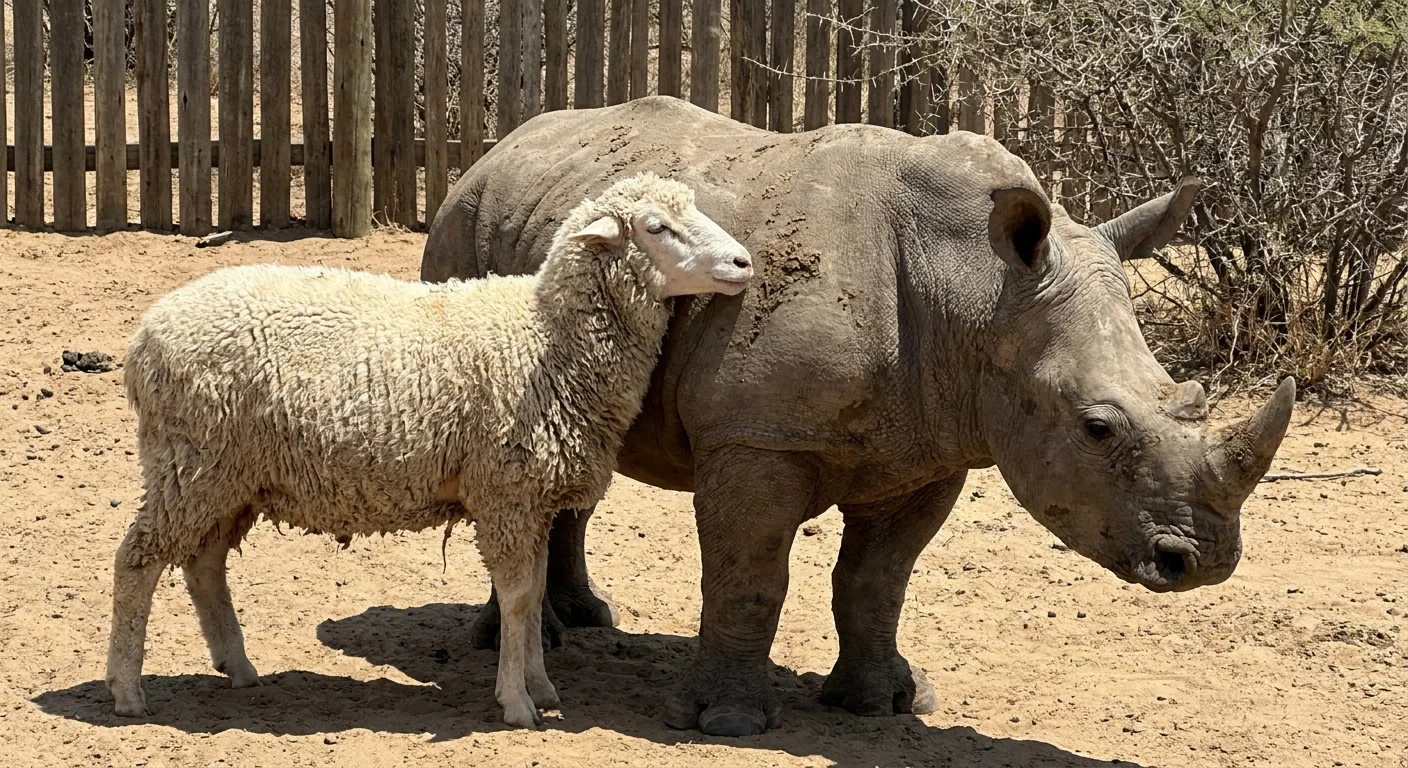
6. Lammie the Sheep and Gertjie the Rhino
The poaching crisis in South Africa leaves many young wildlife orphans behind. In 2014, a baby rhino named Gertjie arrived at the Hoedspruit Endangered Species Centre (now associated with the HERD elephant orphanage) after rescuers found him crying next to his butchered mother. Traumatized and unable to sleep alone, Gertjie desperately needed comfort.
Enter Lammie, a local Thaba-Manzi Pedi sheep. Known for their hardiness and incredible mothering instincts, Pedi sheep make phenomenal surrogate mothers. Lammie immediately stepped up, staying by the grieving rhino’s side, walking with him, and providing the physical reassurance he needed to recover. Lammie devoted her entire life to acting as a surrogate mother for multiple orphaned rhinos and elephants at the center before she peacefully passed away in late 2025 at the age of 11.
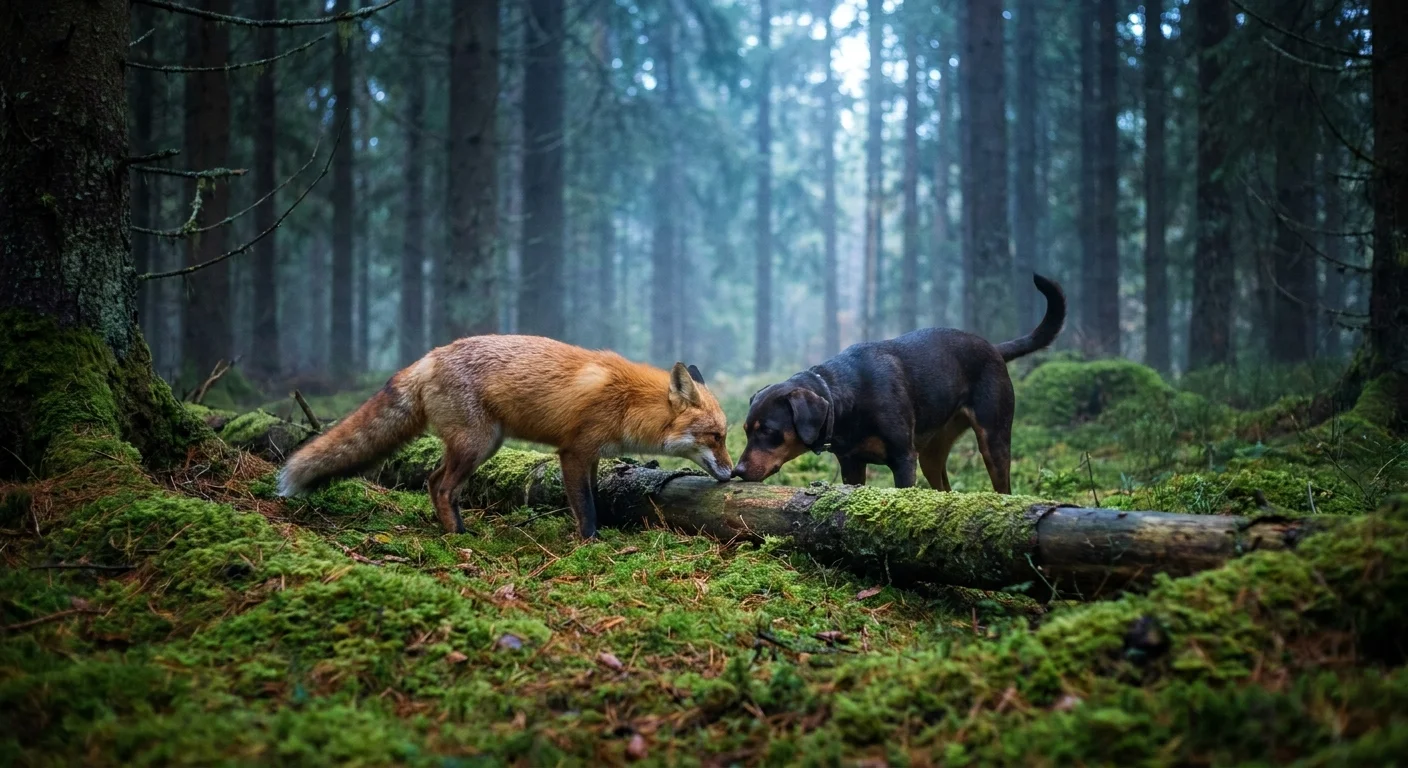
7. Sniffer the Wild Fox and Tinni the Dog
Sometimes a simple walk in the woods changes everything. Photographer Torgeir Berge lived in the remote forests of Norway with his German Shepherd mix, Tinni. One afternoon, while out exploring, they crossed paths with a wild red fox. Despite tens of thousands of years of separate evolution, the dog and the fox immediately recognized each other as playmates.
Berge named the fox Sniffer, and he regularly documented the two wrestling, chasing each other, and behaving just like two dogs at a local park. Watching the wild fox display the exact same joyful, emotional behaviors as his domestic pet profoundly impacted Berge. He utilized the immense popularity of Sniffer and Tinni’s story to launch an awareness campaign against the local fox fur trade, arguing that foxes are just “dogs of the forest” who deserve the same freedom and respect.
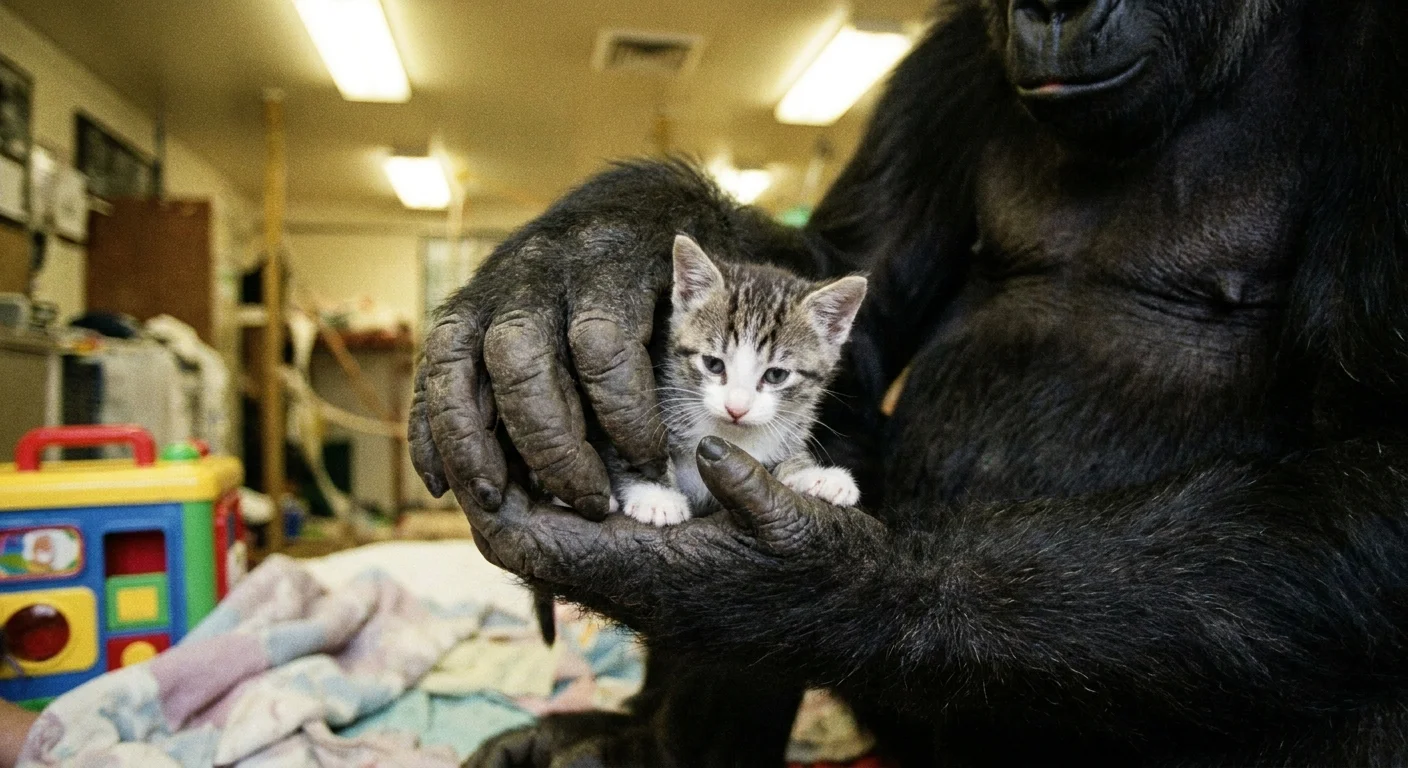
8. Koko the Gorilla and All Ball the Kitten
Koko, the famous western lowland gorilla who mastered over 1,000 signs in American Sign Language, repeatedly demonstrated her deep capacity for empathy. By 1984, Koko had been asking her caregivers for a pet cat. For her birthday, they presented her with a litter of abandoned kittens.
Koko carefully selected a gray-and-white Manx kitten. Because the kitten lacked a tail, just like a gorilla, and looked small and round, she used sign language to name him “All Ball.” Koko treated the kitten like her own baby—cradling him, trying to nurse him, and playing gentle games of chase. Her profound grief when the kitten tragically escaped and was hit by a car months later proved to the world that primates experience love, loss, and mourning just as deeply as humans do.
The Bigger Picture: Understanding Interspecies Bonds
When you look closely at these unusual animal friendships, it becomes clear that biology and instinct are only part of the equation. Animals make deliberate choices based on their environment, their trauma, and their need for connection. Below is a breakdown of why these fascinating relationships form:
| Bond Type | Common Triggers | Primary Examples |
|---|---|---|
| Mutualistic / Commensal | Shared survival goals and increased hunting efficiency. | Wild Coyote & American Badger |
| Surrogate / Maternal | Orphaned young paired with an animal possessing strong nurturing instincts. | Lammie the Sheep & Gertjie the Rhino |
| Trauma Bonding | Shared past abuse or being forced into confined spaces early in life. | Baloo, Leo & Shere Khan |
| Emotional Support | High anxiety species needing behavioral cues from confident animals. | Kumbali the Cheetah & Kago the Dog |
Frequently Asked Questions
Why do zoos pair cheetahs with dogs?
Cheetahs are naturally anxious and easily spooked. Zoos pair them with confident, even-tempered dogs because the cheetahs learn to read the dog’s relaxed behavioral cues, which helps keep them calm in captive environments.
Can wild animals form friendships without human intervention?
Yes. Wild animals sometimes form mutualistic relationships, such as coyotes and badgers hunting together. While purely affectionate bonds are rarer in the wild without human intervention, mutual cooperation for survival is heavily documented.
Do animals experience grief when they lose a companion?
Many species—including elephants, primates, and even some apex predators—display behavioral changes that strongly resemble grief. When their companions pass away, they may hold vigils, stop eating, or become withdrawn and depressed.
Seeing animals look past their profound differences to find comfort in one another is a powerful reminder for all of us. If a towering elephant can carefully nurture a tiny dog, and a natural predator can share its space with a lamb, it proves that compassion is a universal language. The next time you visit a sanctuary or watch wildlife, keep an eye out; you never know what kind of connection you might witness.
Last updated: May 2026. This is general informational content based on widely accepted guidance. Individual results vary. Verify current details—rules, prices, eligibility, regulations—with official sources before making important decisions.