Vision Changes in Senior Dogs: A Guide for Compassionate Care
Just like humans, dogs experience physical changes as they age, and their vision is often one of the first things to be affected. For owners, especially those who are seniors themselves and understand the challenges of aging, providing compassionate care for a dog with diminishing eyesight is a profound way to honor the bond you share.
It’s important to keep up with regular veterinary check-ups, as your vet can screen for common age-related eye conditions like cataracts (a clouding of the lens), glaucoma (increased pressure within the eye), or nuclear sclerosis (a normal, benign hardening and slight clouding of the lens that affects focus). Early detection is key. Always consult your veterinarian for a proper diagnosis and treatment plan. General pet health information is also available from respected organizations like the American Animal Hospital Association (AAHA).
Even with normal aging, you may notice your senior dog’s vision isn’t what it used to be. They might become more hesitant on stairs, bump into furniture, or seem startled when you approach them. The good news is that dogs are incredibly resilient and adapt well to vision loss, especially when their loving owners make a few simple accommodations.
Practical Tips for Living with a Vision-Impaired Dog
Maintain Consistency. This is the single most important rule. Try to keep your furniture, your dog’s food and water bowls, and their bed in the same place. A predictable environment builds confidence and helps them navigate their world through memory and routine.
Use Other Senses. Engage their powerful sense of smell and hearing. You can use different textured rugs or mats to signal different areas of the house—for example, a rubber mat by the back door and a fuzzy rug by their water bowl. Scent can also be a powerful landmark; a drop of a dog-safe essential oil (like lavender) on their bed can help them locate it. Always talk to your dog as you approach to avoid startling them. Your voice will be a comforting guide.
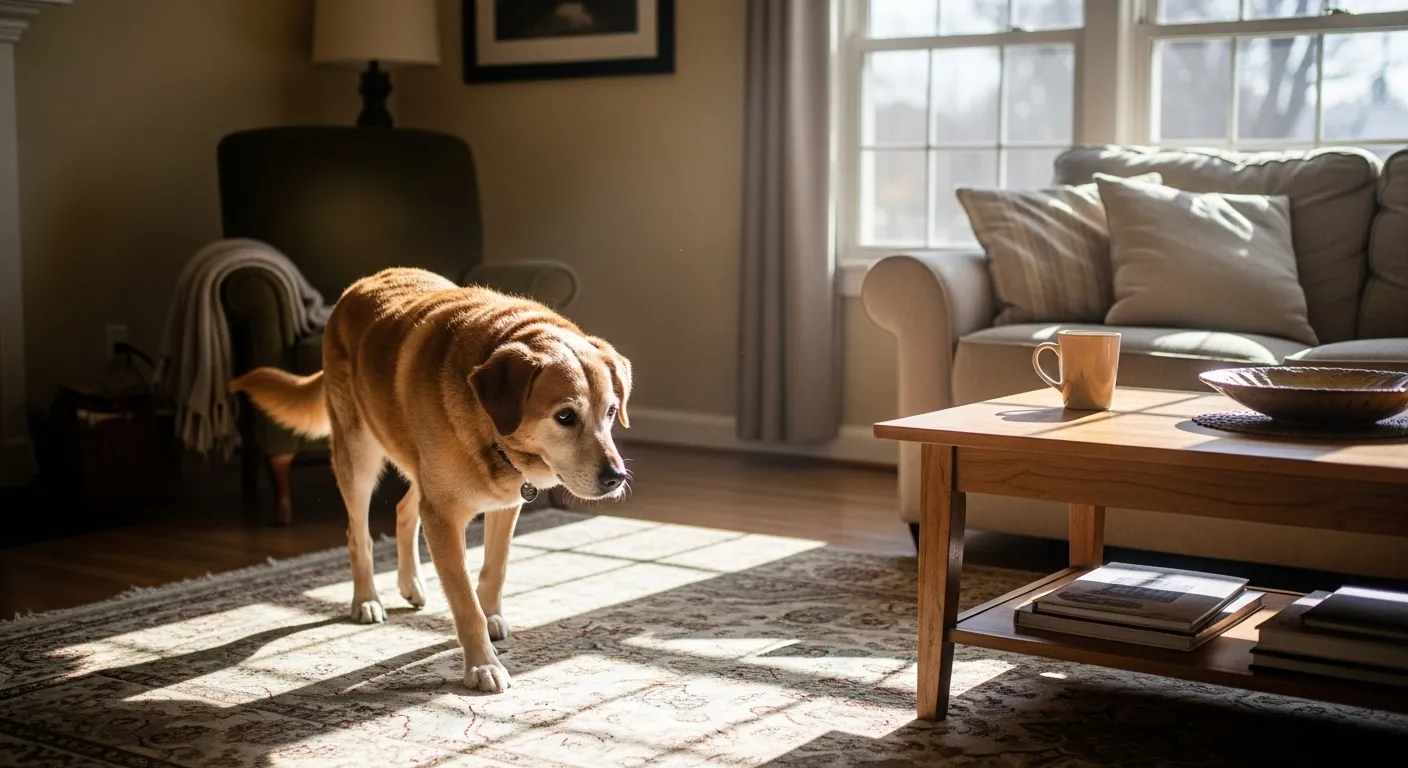
Create Safe Pathways. Walk through your home at your dog’s level. Look for sharp corners on coffee tables that could be cushioned, or clutter that could become a trip hazard. Baby gates can be used to block off dangerous areas like stairs until they learn to navigate them safely with supervision.
Worked Mini-Example: A Peaceful Evening for a Senior Dog.
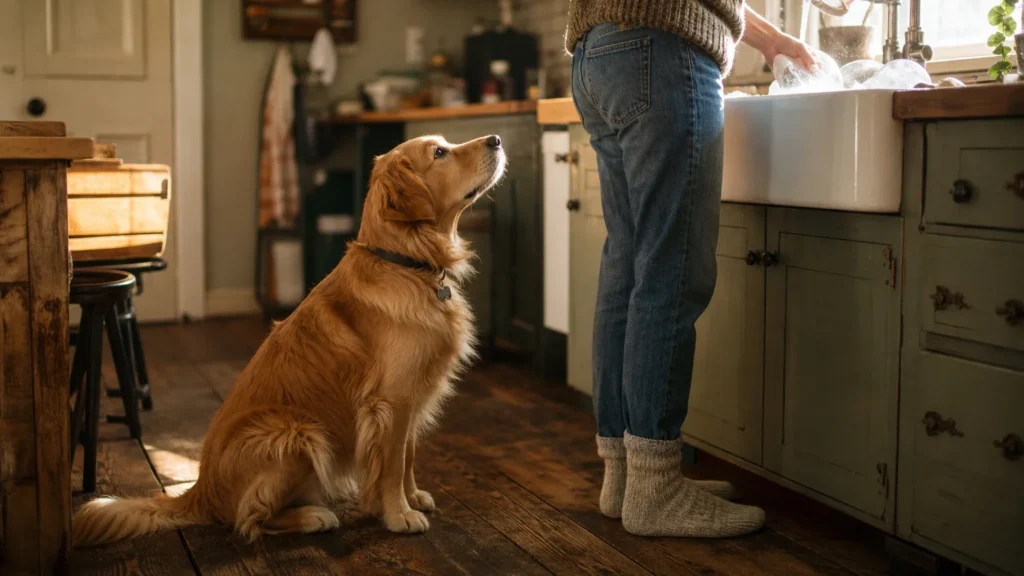
Your 12-year-old dog, Bailey, has noticeable cataracts. As evening approaches and the light dims, you make a few small adjustments. You turn on a soft lamp near her favorite path from the living room to the kitchen. Before you get up from your chair, you say in a calm voice, “Okay, Bailey, let’s go outside.” She hears your voice and wags her tail, already anticipating the routine. You keep her on a leash, even in your fenced yard, to guide her gently. When you come back inside, you lead her to the water bowl, which is in the exact same spot it has been for years. She drinks confidently. These small acts of consistency and verbal reassurance transform what could be an anxious experience into a peaceful, predictable routine, keeping her safe and secure.