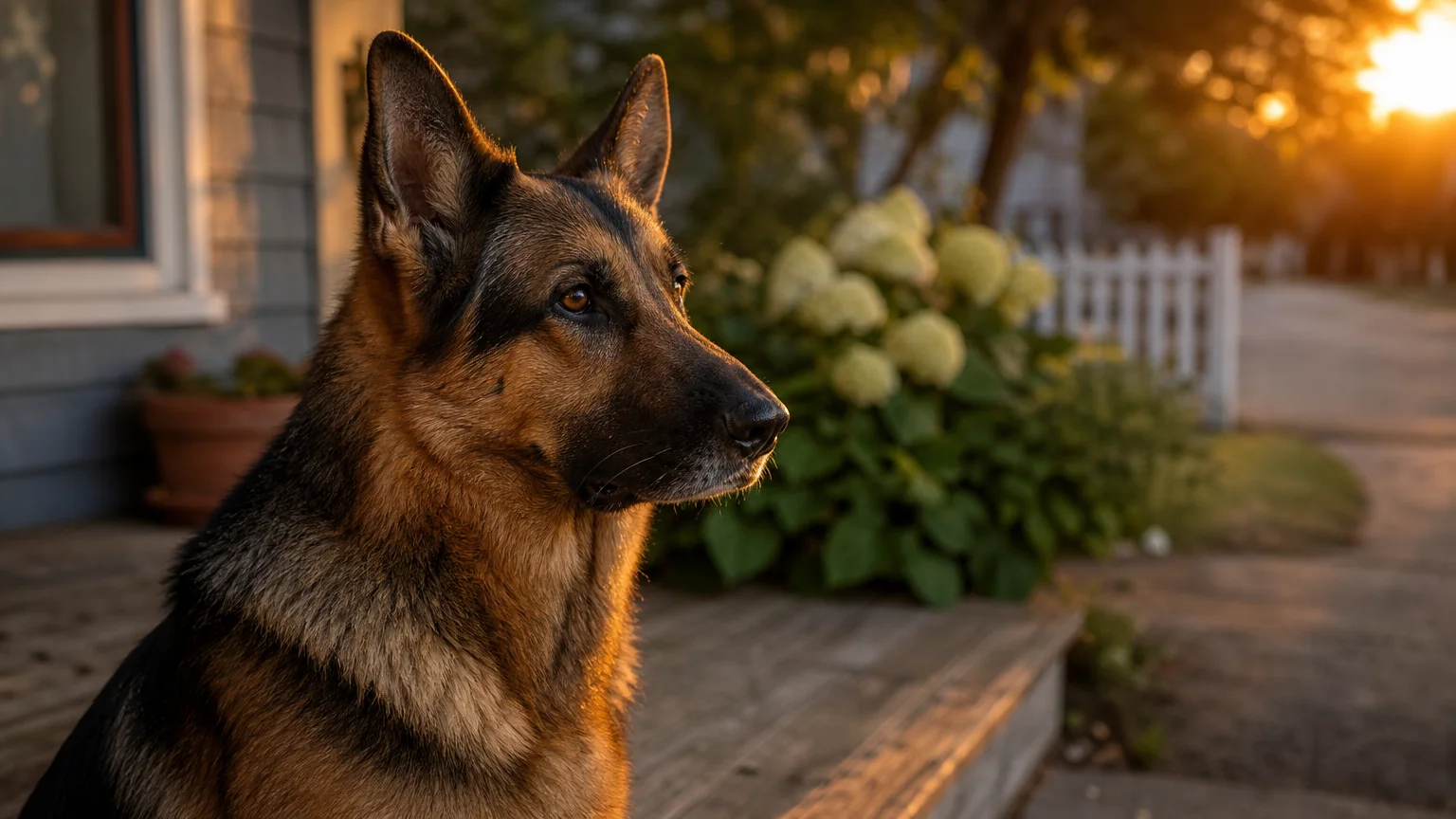
Bringing a cat into a home with a dog can feel like a high-stakes gamble, but finding the right feline match makes all the difference. While pop culture portrays them as natural enemies, many felines actually thrive alongside canine companions. Choosing cat breeds that get along with dogs requires looking for traits like confidence, a relaxed demeanor, and a sturdy build. If you want a harmonious multi-pet household, focus on dog friendly cat breeds that match your pup’s energy level. From the famously laid-back Birman to the highly active Abyssinian, these seven friendly cat breeds have proven track records for forming deep bonds with their canine housemates, proving a peaceful, playful home is entirely within reach.

Why People Are Talking About This
More households are choosing to become multi-pet environments, and the desire for cohesive animal families is stronger than ever. Historically, people kept dogs and cats strictly separated or assumed they simply could not co-exist safely. Today, veterinary behaviorists emphasize that interspecies friendships are not just possible; they provide excellent mental stimulation and companionship for both animals.
While early socialization plays an enormous role in a cat’s comfort around dogs, genetics and breed temperaments provide a massive head start. Some felines possess a natural self-assurance that prevents them from darting away at the first sign of a wagging tail. Darting and running often trigger a dog’s predatory chase reflex. By choosing a confident, sturdy feline, you bypass that initial trigger. Instead of hoping for the best with a random pairing, pet parents are actively researching cat and dog compatibility to ensure a low-stress environment from day one.

The Top 7 Dog Friendly Cat Breeds
Not every cat appreciates a wet nose in their personal space, but these seven breeds stand out for their adaptability, confidence, and genuine affection for canine roommates.

1. Maine Coon
The Maine Coon is frequently referred to as the “dog of the cat world,” making it a highly logical fit for a canine household. These gentle giants can weigh up to 20 pounds. Their sheer size means they aren’t easily intimidated by a curious golden retriever or an energetic spaniel. According to the Cat Fanciers’ Association (CFA), the Maine Coon is an intelligent, inquisitive breed that gets along explicitly well with dogs.
They have a relaxed, easygoing personality and often enjoy activities you would typically associate with dogs—like playing fetch and splashing in water bowls. Because of their heavy build, they are less fragile than smaller breeds, which minimizes the risk of accidental injuries during supervised play. Their high intelligence also means they can set boundaries with a dog without resorting to extreme fear or aggression. If you have a larger dog, the Maine Coon’s robust physical presence provides a wonderful balance.
2. Birman
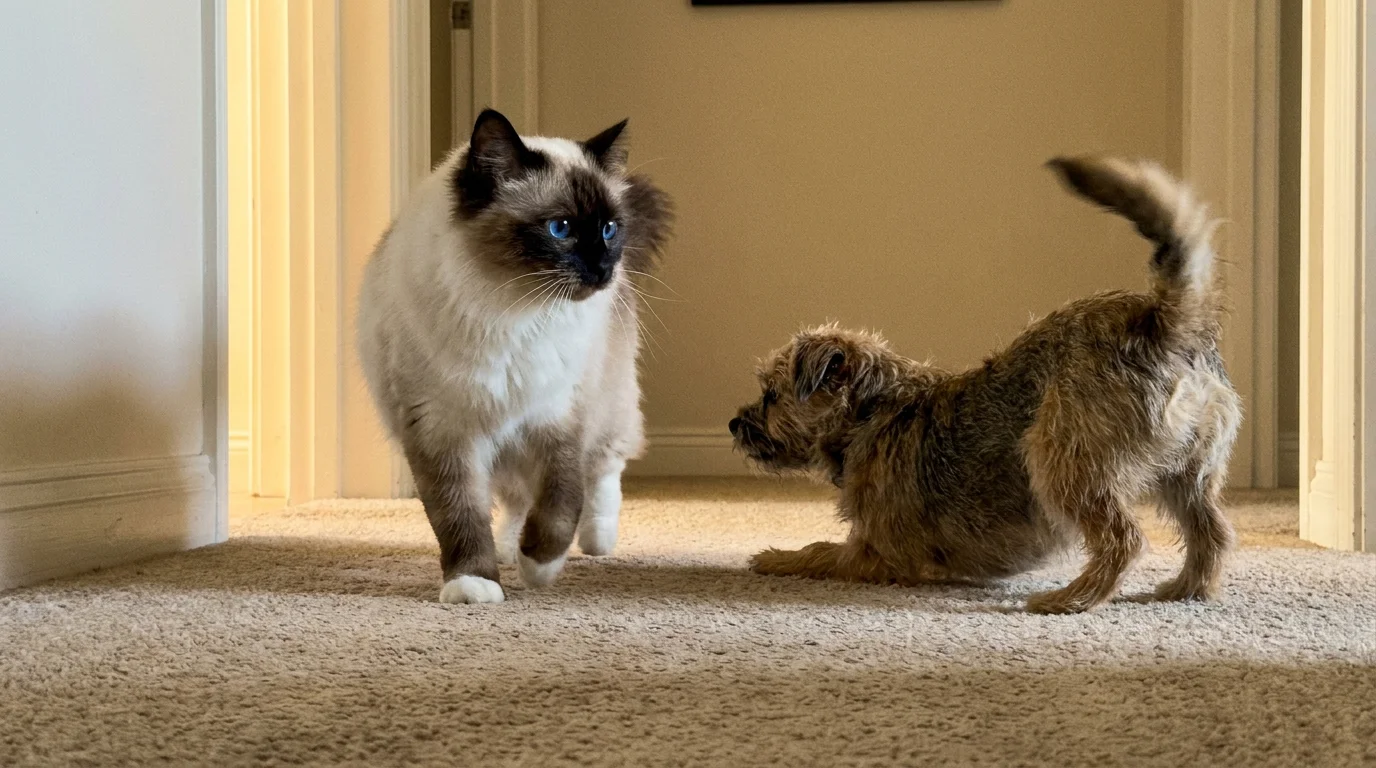
With striking sapphire-blue eyes and four white-gloved feet, the Birman is a calm, affectionate feline with a surprisingly playful side. Veterinary resources like Vetstreet note that Birmans are not the type of cat to demand your attention constantly, but they absolutely despise being an “only pet.” They thrive on companionship, and they genuinely do not care whether that companion is another cat or a dog.
Birmans are famous for taking turns in games of tag, comfortably shifting from the chaser to the chased. This dynamic play style meshes beautifully with a friendly dog who understands basic boundaries. Because the Birman is naturally placid, they rarely trigger a dog’s prey drive through frantic running. Instead, they confidently hold their ground and engage entirely on their own terms.

3. Siberian
Siberians are powerful, barrel-chested cats that boast an incredibly fearless demeanor. They possess a natural calm and equanimity that makes them unbothered by the sudden noises and chaotic energy a dog might bring into the living room. It takes a lot to startle a Siberian.
The CFA highlights that Siberians actively enjoy the company of dogs. Many Siberian owners report their cats sleeping as sentinels at the foot of the bed alongside the family dog. Because they are highly intuitive and devoted, they tend to integrate into the family “pack” seamlessly. A Siberian will view a dog not as a predator, but as a roommate and a potential ally.

4. Norwegian Forest Cat
Often affectionately called “Wegies,” Norwegian Forest Cats are large, heavily muscled cats designed to survive harsh Scandinavian winters. They are exceptionally nosy and love to supervise family activities, which means they won’t simply hide under a bed when a dog enters the room.
Wegies are highly athletic and possess incredibly strong claws, allowing them to scale vertical surfaces—like cat trees or scratching posts—headfirst and with total ease. This natural climbing ability gives them a distinct advantage in a dog household. They can confidently observe the dog from a high vantage point, engaging only when they feel perfectly safe. Their robust size and confident nature make them a stellar match for medium to large dogs.

5. Tonkinese
If you want a cat that will actively seek out your dog for a play session, the Tonkinese is a brilliant choice. A cross between the Siamese and the Burmese, the Tonkinese is gregarious, vocal, and deeply social. They thrive in active households and are known to be highly tolerant of both children and dogs.
Tonkinese cats are not wallflowers; they are highly intelligent and will quickly figure out how to communicate with a canine housemate. They are known for their strong personalities and will confidently strut past a dog, often instigating a wrestling match or a friendly game of chase. Because they are so outgoing, they do not suffer from the timidness that often causes other cats to trigger a dog’s chase instinct.
6. Abyssinian
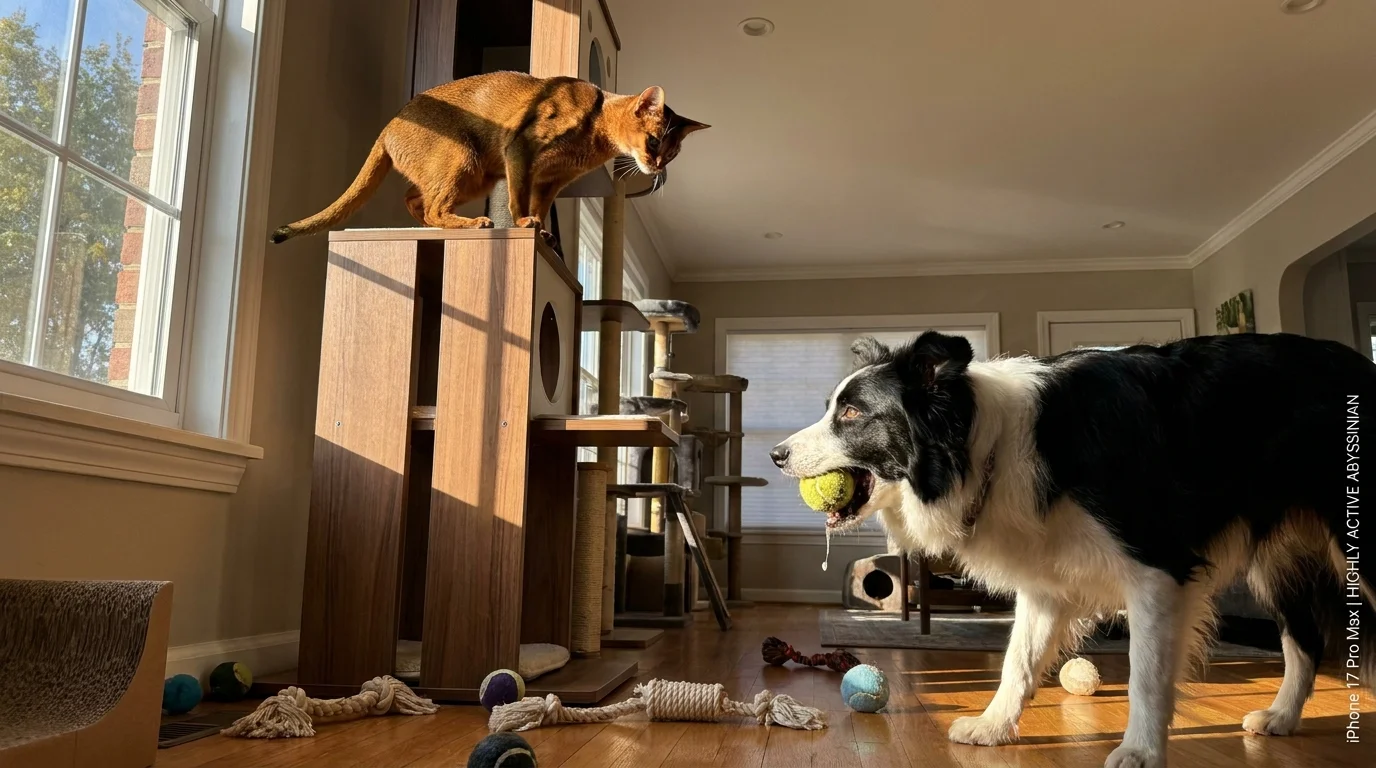
The Abyssinian is one of the most active, athletic, and curious cat breeds in existence. They are constantly in motion, exploring their environment, and looking for something to do. While their high energy might seem like a liability around a dog, it actually makes them a fantastic companion for a playful, cat-friendly canine.
Abyssinians are not lap cats; they are doers. If properly introduced, an Abyssinian will happily team up with a dog to explore the house, chase toys, and generally cause mischief. They are incredibly smart and will learn your dog’s daily routines quickly. An Abyssinian’s confidence ensures they view the family dog as an interactive toy rather than a threat.

7. Japanese Bobtail
Identifiable by their unique, pom-pom-like tails, Japanese Bobtails are hardy, spirited, and beguiling cats. Originally bred to keep vermin out of Japanese streets and farms, they are tough and highly adaptable. Interestingly, while they can sometimes be cliquish with other cat breeds, they are remarkably open and friendly toward dogs.
The Japanese Bobtail is an energetic breed that loves to play fetch and is often fascinated by water. A dog who loves to retrieve balls or splash in a kiddie pool will find a kindred spirit in the Bobtail. They are fearless and upstanding, meaning they won’t back down from a dog’s curiosity. This builds mutual respect very early in the relationship.

At a Glance: Feline and Canine Compatibility
Use this table to evaluate which breed best aligns with your current dog’s size and energy level.
| Cat Breed | Average Weight | Energy Level | Ideal Dog Match |
|---|---|---|---|
| Maine Coon | 12–20 lbs | Moderate | Large, gentle dogs (e.g., Golden Retrievers, Mastiffs) |
| Birman | 7–12 lbs | Low to Moderate | Calm, affectionate dogs (e.g., Basset Hounds, Pugs) |
| Siberian | 10–20 lbs | Moderate | Loyal pack dogs (e.g., Shepherds, Collies) |
| Norwegian Forest Cat | 12–16 lbs | Moderate to High | Active, athletic dogs (e.g., Pointers, Setters) |
| Tonkinese | 6–12 lbs | High | Playful, social dogs (e.g., Labradors, Boxers) |
| Abyssinian | 6–10 lbs | Very High | High-energy working dogs (e.g., Border Collies, Kelpies) |
| Japanese Bobtail | 6–10 lbs | High | Water-loving or fetching dogs (e.g., Spaniels, Retrievers) |
How to Introduce Your Dog and Cat
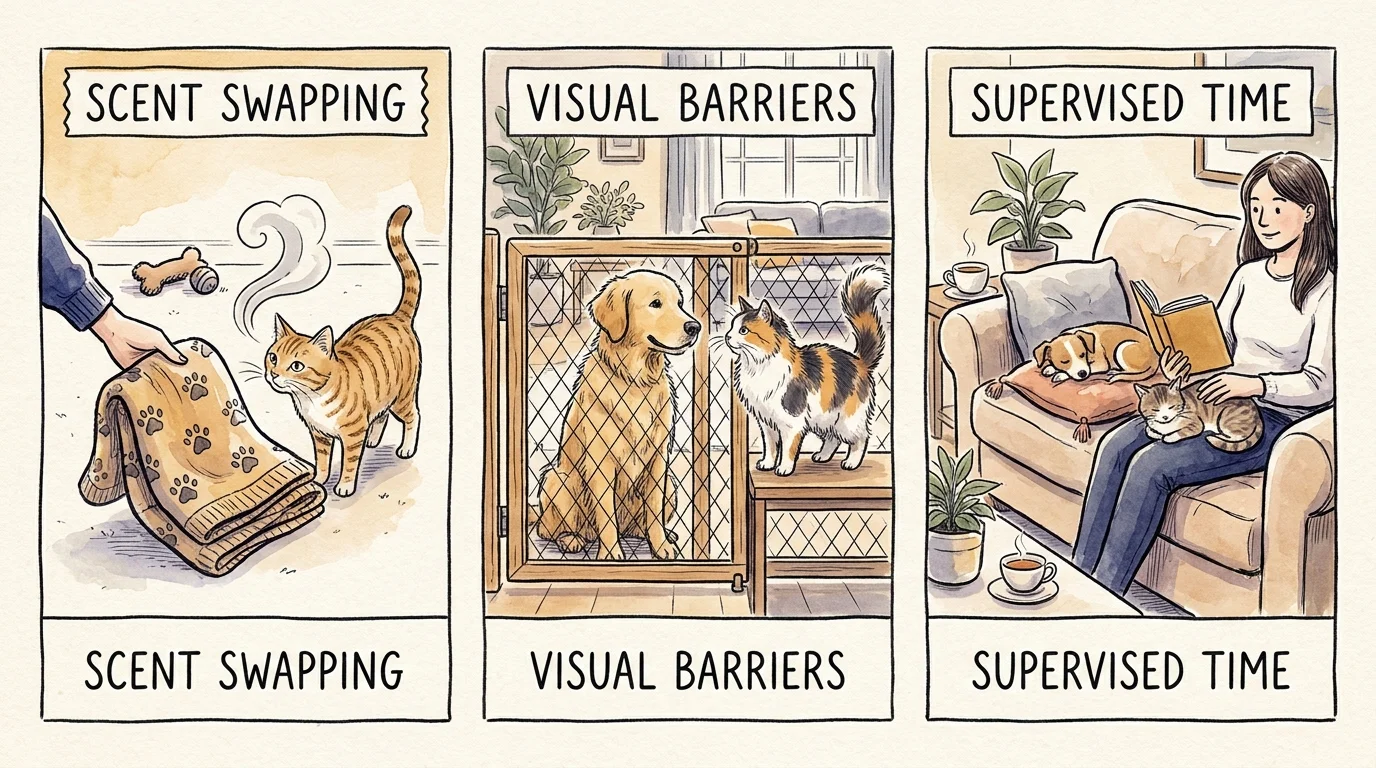
Even if you select the most confident, dog-friendly cat breed on the planet, throwing them into a room together is a recipe for disaster. A structured, gradual introduction builds a foundation of trust.
- Keep them entirely separated initially: When you bring your new cat home, place them in a dedicated “safe room” equipped with a litter box, food, water, and toys. Keep the door closed. Allow your dog and cat to hear and smell each other beneath the door without making visual contact.
- Swap their scents: Animals map their world through smell. Take a blanket your dog has slept on and place it in the cat’s room. Take a towel you have rubbed on your cat’s cheeks and place it near your dog’s bed. Reward both animals with treats when they investigate the new smells.
- Use a visual barrier: After a few days of scent swapping, place a tall baby gate across the doorway of the cat’s room. Allow the dog to view the cat briefly while keeping the dog on a leash. Reward your dog for focusing on you rather than fixating on the cat.
- Supervise short interactions: Once both animals are relaxed at the gate, allow them to share the same room. Keep the dog on a loose leash and allow the cat to roam freely. Keep these sessions brief—just five to ten minutes—and end on a positive note with plenty of treats.
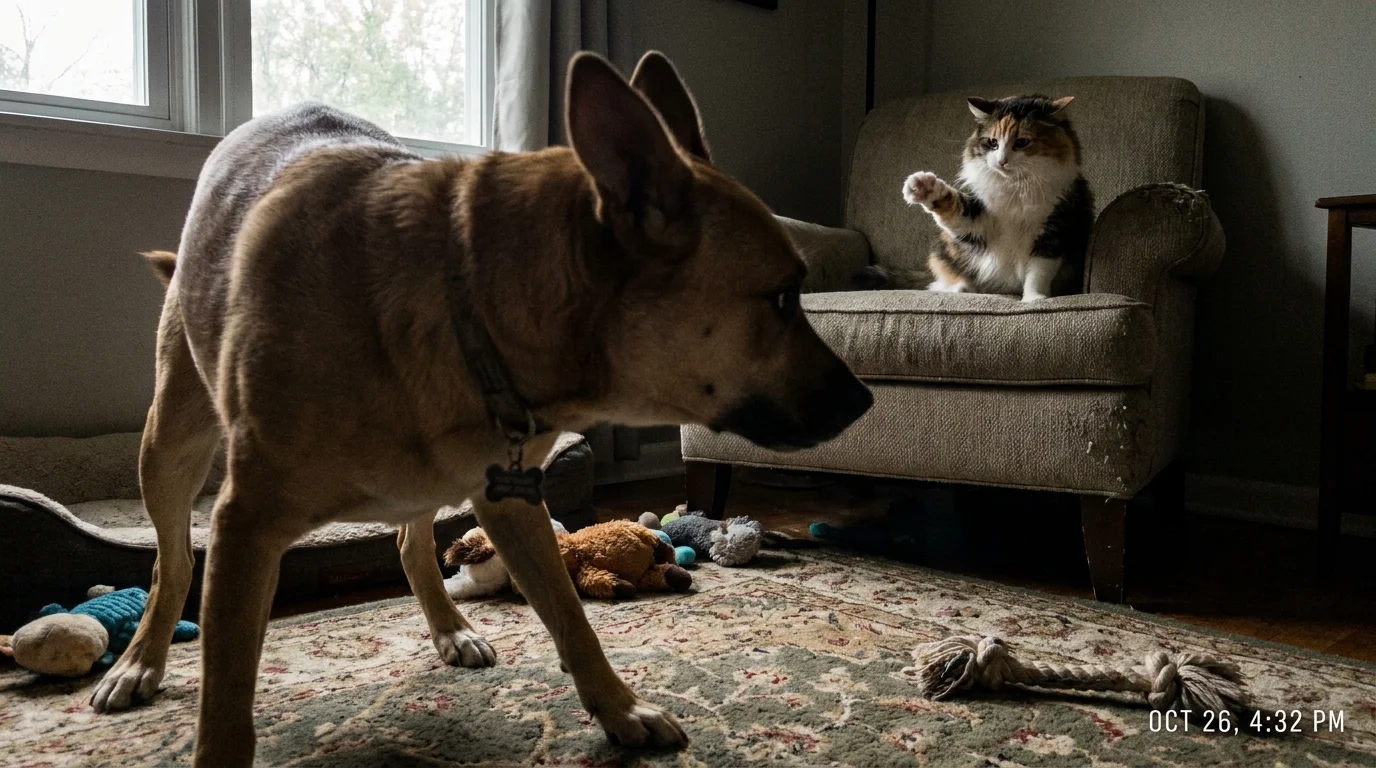
“If your dog has a strong prey drive, they might become very focused on the cat. The dog will stiffen, stare, and possibly bark or whine. If you see these signs, do not let your dog near the cat.” — Best Friends Animal Society
Things to Watch Out For
Mixing species always carries an element of unpredictability. Keep a close eye on these specific warning signs during the transition period:
- Resource Guarding: Dogs can become highly protective of their food bowls, toys, and sleeping areas. If your new cat wanders too close to a high-value bone, a normally friendly dog might snap. Always feed your cat on an elevated surface out of the dog’s reach.
- Fixation and Staring: If your dog cannot break their gaze away from the cat, even when offered high-value treats like chicken or hot dogs, their prey drive is likely activated. A hard, unblinking stare is a precursor to a chase.
- Lack of Vertical Escape Routes: Cats navigate their territory vertically. If a room only has floor space, a cat will feel trapped. Ensure you have tall cat trees, sturdy floating shelves, or accessible bookcases where the cat can observe the dog safely from above.
- The Litter Box Trap: Dogs love to investigate (and unfortunately consume) what is inside a litter box. Furthermore, if a dog traps a cat inside a covered litter box, the cat will develop severe anxiety around bathroom habits. Place the litter box in a room sectioned off by a dog-proof gate.

When DIY Isn’t Enough
Sometimes, despite your best efforts and careful breed selection, the dynamic simply does not work safely. Recognizing when you need professional intervention prevents injuries and long-term behavioral damage.
- Persistent Aggression: If the dog lunges, growls, or snaps at the cat unprovoked—or if the cat relentlessly attacks the dog’s face—you need to halt all physical contact immediately.
- Extreme Fear and Stress: If your cat refuses to eat, stops using the litter box, or spends weeks hiding under the sofa in terror, their quality of life is suffering. Chronic stress can induce severe feline medical conditions like urinary blockages.
- Redirected Aggression: Sometimes a cat becomes so overstimulated by the presence of a dog that they attack the nearest target—often you. If you are experiencing bites or scratches when trying to mediate, it is time to call for help.
In these scenarios, contact a certified animal behaviorist or a specialized trainer who focuses on interspecies integration. They can read the micro-body language you might be missing and build a customized desensitization plan.
Fostering a genuine friendship between your dog and a new cat requires patience, observation, and a willingness to move at their pace. By choosing a confident breed and setting up the environment for success, you drastically improve the odds of peaceful cohabitation. This article provides general information only. Every reader’s situation is different—what works for others may not be the right fit for you. For personalized guidance on health, legal, or financial matters, consult a qualified professional.
Last updated: May 2026. Rules, prices, and details change—verify current information with official sources before acting on it.