Common Backyard Birds Identification Guide
As you begin your birdwatching journey, you’ll likely start seeing the same familiar faces over and over. Getting to know these “regulars” is a rewarding first step. Here are a few of the most common and easily recognizable backyard birds across much of North America.
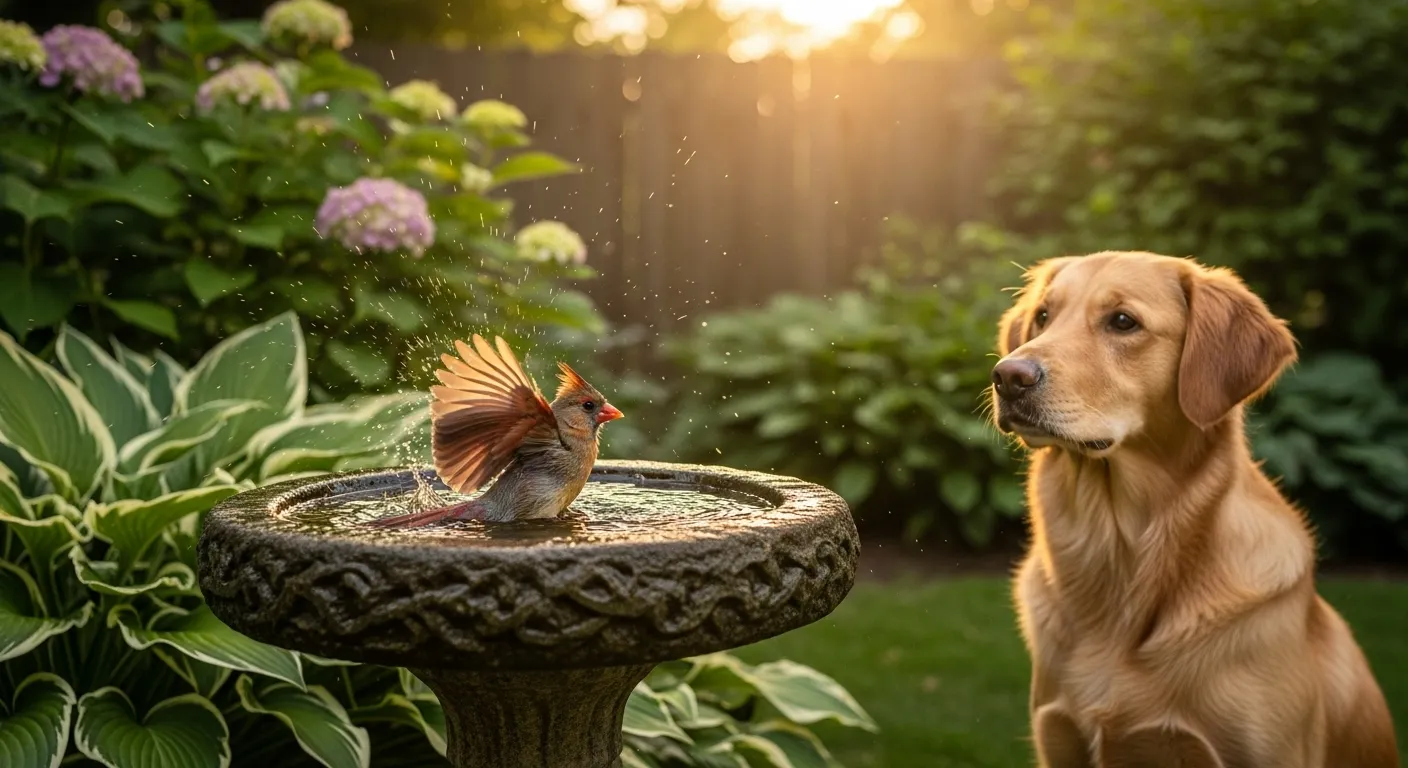
Northern Cardinal: You can’t miss the male cardinal! He is a brilliant, fiery red all over with a pointed crest on his head and a black mask around his face. The female is more subtle but just as beautiful, with warm, brownish-tan feathers, reddish tinges on her crest, wings, and tail. Both have a thick, cone-shaped, reddish-orange beak perfect for cracking seeds. They are frequent visitors to feeders offering sunflower and safflower seeds.
American Robin: Often seen hopping across lawns, the American Robin is a sign of spring for many. It has a round, gray back, a rusty orange-red breast, and a dark head. Robins are less likely to visit a seed feeder, but they are highly attracted to bird baths and yards with fruit-bearing trees and earthworms.
Blue Jay: Loud, intelligent, and striking, the Blue Jay is a bold visitor. They are easily identified by their bright blue feathers on top, a whitish-gray breast, and a prominent blue crest. They have a black “necklace” and white bars on their wings and tail. Blue Jays can be bullies at the feeder, but their family bonds are strong and their intelligence is fascinating to watch.
Mourning Dove: These gentle, graceful birds are often seen walking on the ground beneath feeders, cleaning up spilled seeds. They are a soft, grayish-tan color overall with a slender body and a long, pointed tail. You’ll recognize them by their plump shape and the sad, cooing sound that gives them their name: “coo-OOO, coo, coo, coo.”
Black-capped Chickadee: A tiny, acrobatic, and curious bird. The chickadee is a bundle of energy, easily identified by its black cap and “bib,” bright white cheeks, and soft gray back. They are incredibly bold for their size and will often be the first to investigate a new feeder. Their call sounds just like their name: “chick-a-dee-dee-dee.”
Downy Woodpecker: The smallest woodpecker in North America, the Downy is a common sight at suet feeders. Look for its black-and-white checkered pattern, a white stripe down its back, and a small bill. Males have a small patch of red on the back of their head. They often hitch their way up tree trunks and feeder poles in a jerky motion.
House Finch: A social and cheerful bird, the male House Finch has a rosy-red head and breast, with brown streaks on its back and belly. Females are a plain, grayish-brown with blurry streaks. They love sunflower and Nyjer seeds and can often be seen in noisy groups at tube and hopper feeders.