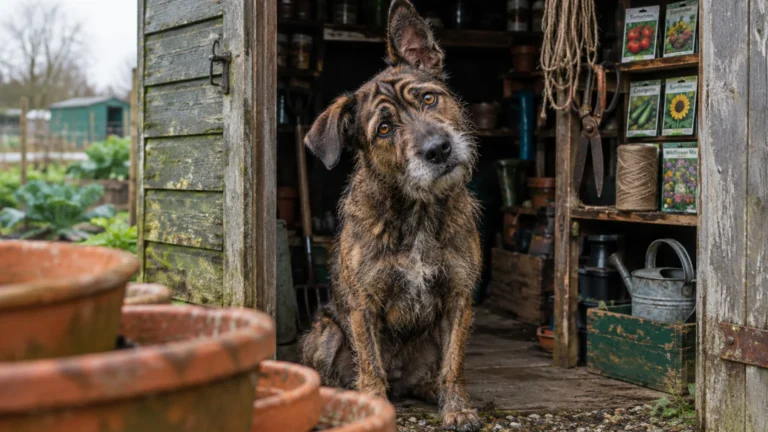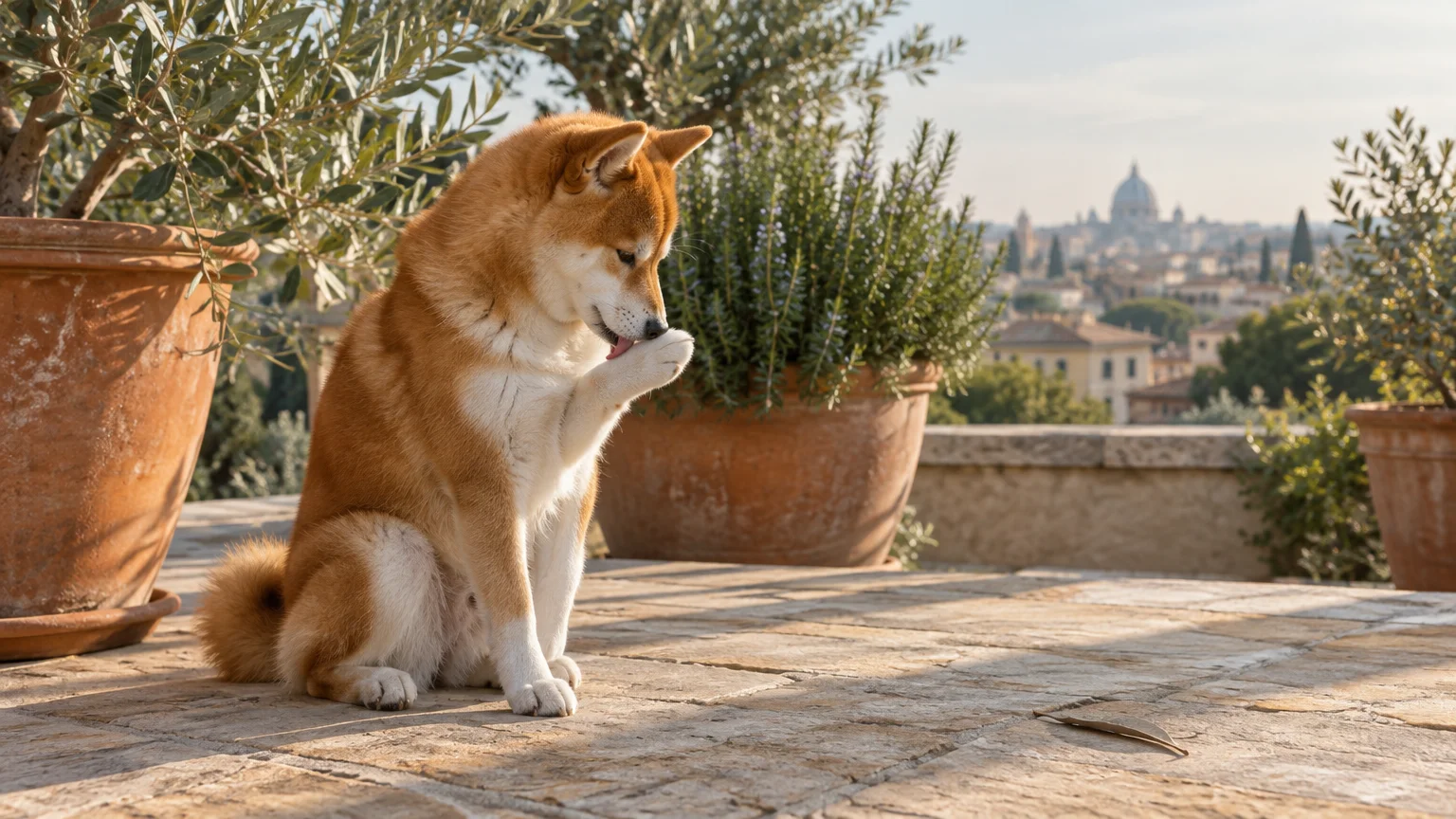
If you dread wrestling a soaked, thrashing dog into the bathtub, you can choose a breed that handles hygiene on its own terms. Certain dogs obsessively groom their coats and naturally repel muck.
These tidy canines share feline habits, such as licking their paws clean and stepping carefully around muddy puddles. Their unique coats shed dried grime effortlessly without trapping stubborn smells.
Adopting one of these self-cleaning dogs saves you hours of scrubbing, wet towels, and bathroom cleanup. Here are ten remarkable breeds that keep themselves impeccably tidy.
01 Basenji
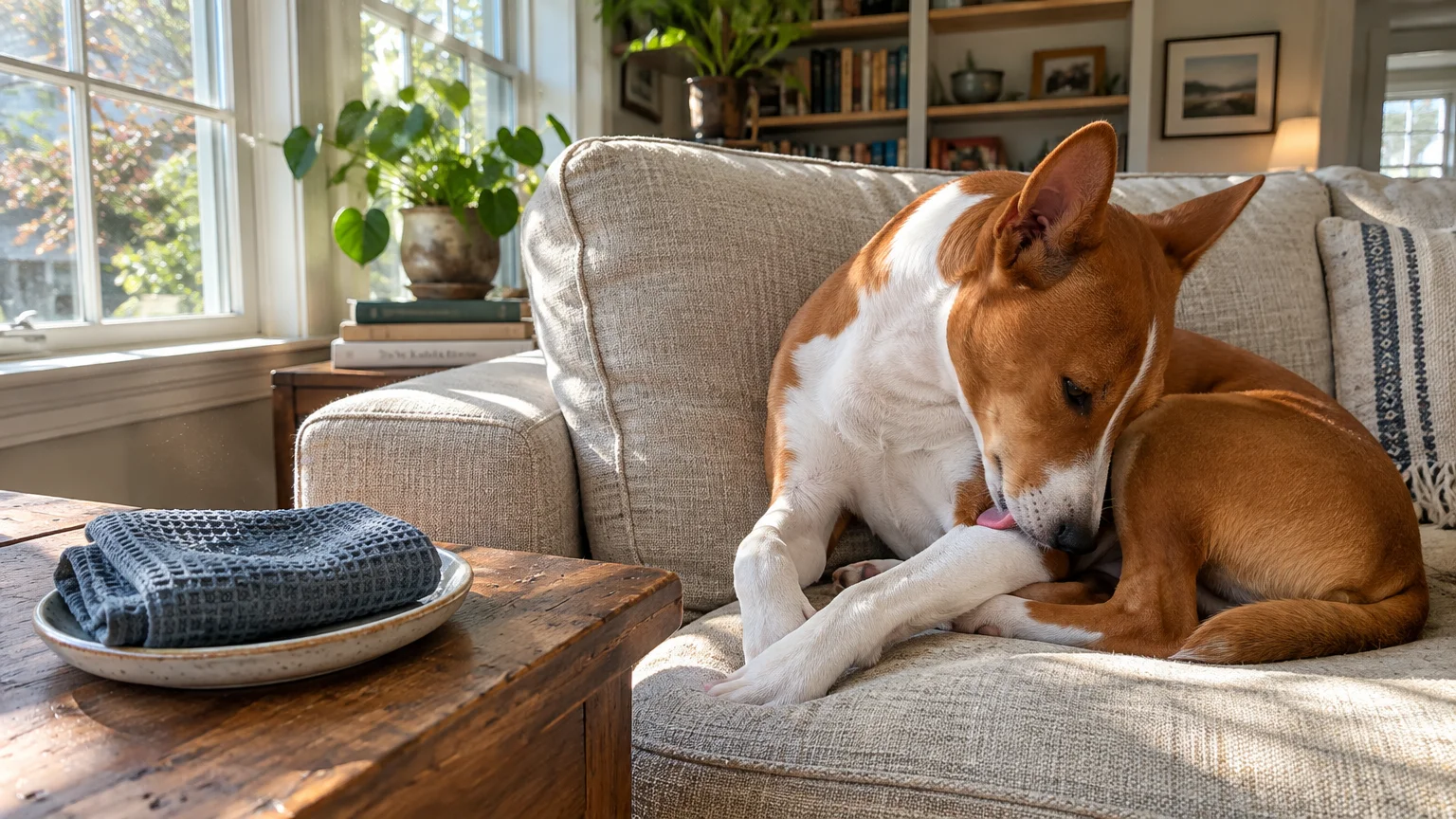
The Basenji earns the title of the canine world’s premier self-cleaner. Originating in Central Africa as an agile hunting companion, this hound exhibits meticulous personal hygiene.
Much like a domestic cat, a Basenji licks its coat and paws throughout the day. Their short, fine hair traps very little dirt and virtually no dander.
Because their skin produces minimal sebum, they lack the characteristic doggy odor found in heavy-coated breeds. You will rarely notice any pungent smells lingering on your rugs or furniture.
According to the American Kennel Club, their fastidious grooming habits make them exceptionally pleasant indoor companions. A quick weekly wipe with a damp washcloth easily replaces a chaotic tub bath.
02 Shiba Inu
The Shiba Inu brings a legendary sense of independence and fastidiousness to your household. This ancient Japanese breed dislikes getting messy and actively avoids dirty outdoor spots.
Watch a Shiba after an outdoor walk, and you will notice them cleaning their legs immediately. They use their tongue and paws to wash their face, muzzle, and toes.
Their dense, plush double coat features stiff outer guard hairs that shed soil as it dries. Dirt that clings to them after a hike simply flakes off onto the porch.
Shiba Inus also maintain a dry, odor-free coat naturally. Aside from routine seasonal brushing during shedding cycles, they rarely require commercial shampooing or salon visits.
03 Whippet
Whippets present an elegant, low-maintenance profile that fits cleanly into any quiet home. Their ultra-short single coat produces negligible oil, eliminating the greasy residue common to many breeds.
Because Whippets possess very little body fat and thin skin, they loathe getting wet or dirty. They step gingerly over mud and clean their paws after outdoor excursions.
Their smooth hair does not trap organic debris, seeds, or burrs while running outdoors. Any loose dust wipes away in seconds with a soft microfiber cloth.
Whippet owners rarely deal with stale, musty hound smells. You can keep them clean for months with occasional spot cleaning and routine nail trims.
04 Japanese Chin
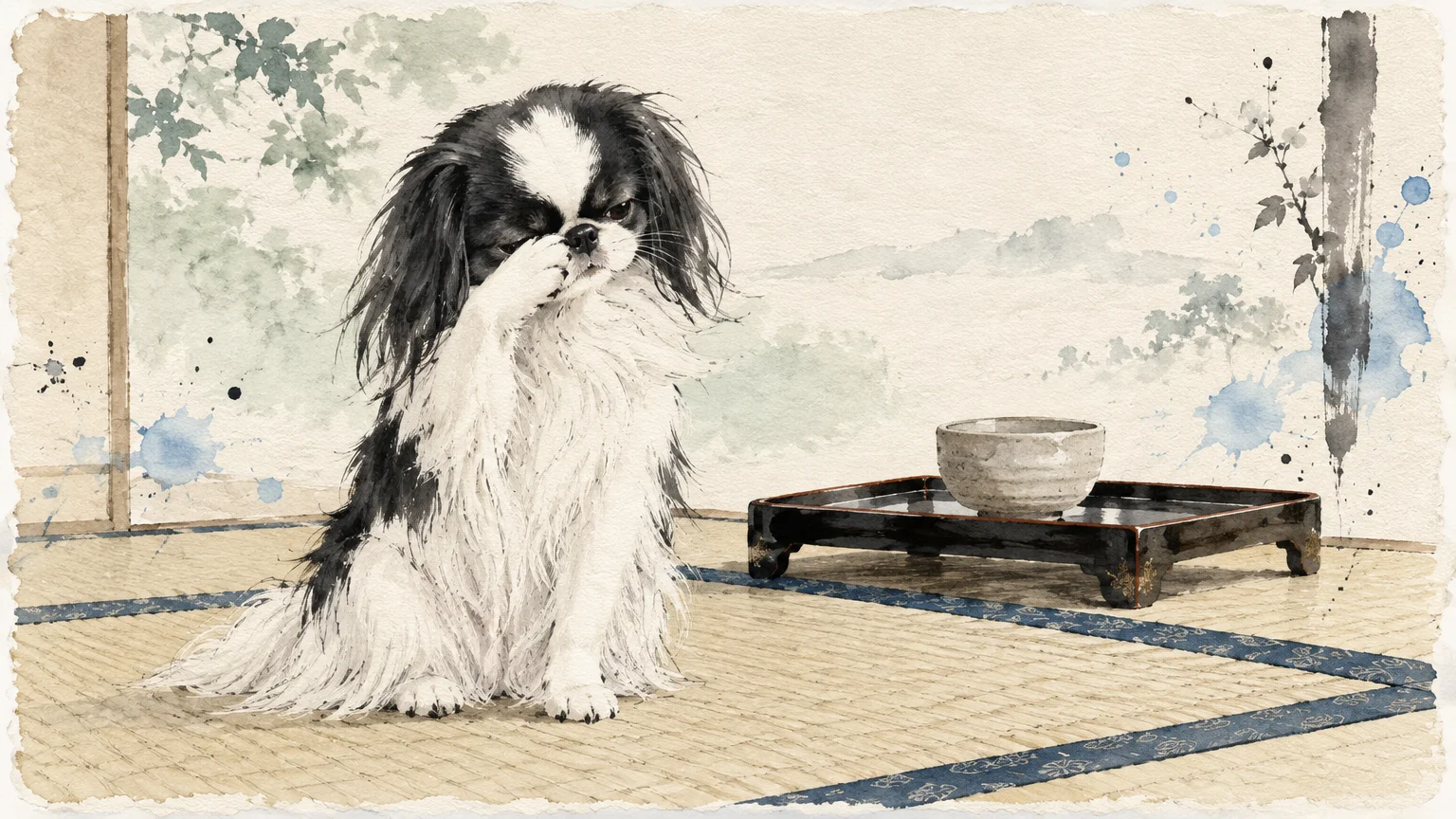
Bred as companions for Japanese aristocracy, Japanese Chins behave more like pampered felines than typical toy dogs. They possess an instinctual drive to keep their silky fur spotless.
These small companions repeatedly lick their front paws and rub them over their faces. They groom their ears, muzzles, and chest ruffs with rhythmic precision.
Despite their flowing coats, Japanese Chins do not possess a thick, oily undercoat. Dirt falls away easily once it dries, leaving their single-layer coat surprisingly pristine.
Their delicate nature keeps them out of puddles and muck altogether. A brief daily comb and occasional face wipe keep their silky feathering immaculate.
05 Siberian Husky
A double-coated Arctic working dog might seem like an unlikely candidate for a tidy breed. Yet Siberian Huskies boast remarkable self-grooming behaviors and practically zero canine odor.
Huskies groom their thick fur meticulously, licking down their paws, legs, and bellies just like cats. They spend considerable resting time preening their coats to maintain loft and insulation.
Their weather-resistant double coat functions as an organic shield against dirt and water. Mud dries quickly into dust and falls right out during daily movement.
Unless your Husky rolls in something noxious, they seldom require a full wet bath. Regular brushing removes dead hair and keeps their skin smelling clean all year.
06 Dalmatian
Dalmatians carry a sleek, dense coat renowned among pet lovers as a “Teflon” coat. Particles of grit and damp soil simply struggle to adhere to their slick hairs.
If a Dalmatian runs through a muddy field, the dried soil flakes away shortly after they return indoors. A quick rubber curry brush restores their striking white-and-black coat instantly.
This breed produces negligible coat sebum, which prevents the development of classic wet-dog smells. Their skin stays dry, balanced, and fresh without routine detergent baths.
Their short coat dries in minutes when exposed to rain. You only need a warm towel and five minutes of brushing to maintain their showroom shine.
07 Italian Greyhound
The diminutive Italian Greyhound is perhaps the neatest toy companion you can bring home. Their fine, satin-like single coat sheds almost no dander and carries no grease.
Italian Greyhounds show a dramatic aversion to bad weather and muddy terrain. They will actively hop around damp grass blades to keep their slender feet clean.
When dust does settle on their short coat, they clean themselves with quiet focus. They groom their legs and abdomen with gentle licking throughout the afternoon.
Because they lack an insulating undercoat, baths can chill them rapidly and dry out their skin. A warm damp cloth keeps them fresh while sparing them bath-time stress.
08 Pharaoh Hound
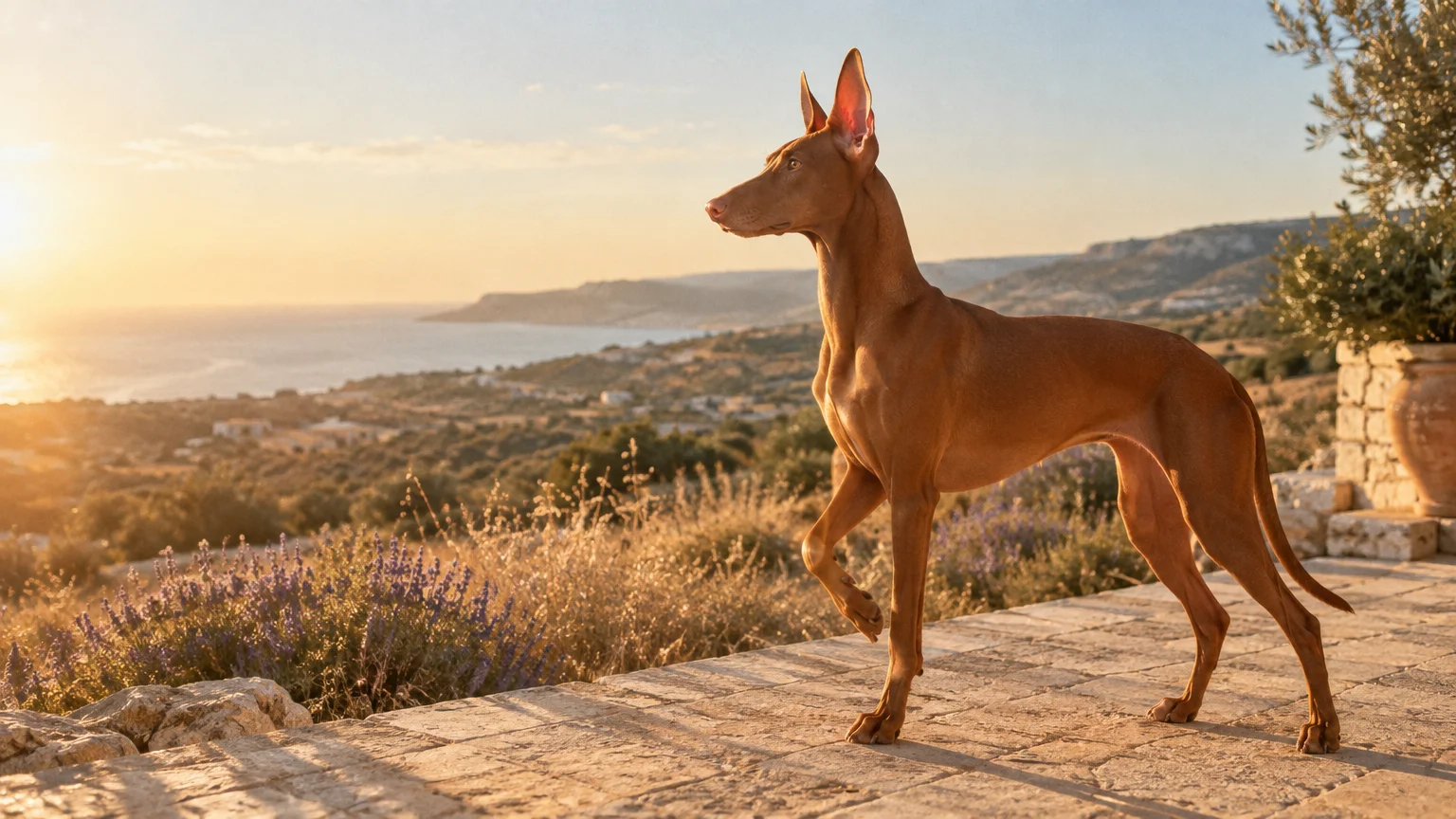
The Pharaoh Hound is an ancient Mediterranean coursing breed with an exceptionally clean profile. Their fine, glossy coat sits close to the skin without an undercoat.
These hounds rarely carry grease or strong odors, even after vigorous sprint sessions in warm weather. Their skin remains balanced without producing the heavy musk of scent hounds.
Pharaoh Hounds clean their own toes, pasterns, and flanks with cat-like devotion. They dislike foul environments and choose clean lounging spots whenever possible.
Dust and dirt wipe off their sleek coats with minimal effort. You can keep this noble hound looking polished using only a hound glove once weekly.
09 Chow Chow
People often assume the lion-maned Chow Chow demands endless bathing, but their personal habits tell a different story. Chows are famously fastidious dogs that prioritize their own cleanliness.
Chow Chows housebreak faster than almost any other breed because they despise foul odors in their territory. They carry this cleanliness directly into their daily grooming routines.
They lick their thick coats to keep dead fur and foreign particles under control. While their thick mane requires consistent brushing, their skin rarely produces offensive odors.
According to veterinary guidance on skin health from VCA Animal Hospitals, over-washing thick-coated breeds can trap moisture and cause dermatitis. Thorough line-brushing serves a Chow far better than frequent soaking.
10 Greyhound
Full-sized Greyhounds are calm, dignified couch potatoes that demand remarkably little grooming effort. Their short, single layer of hair holds virtually no lingering outdoor scents.
Greyhounds spend hours resting and quietly licking their paws clean after outdoor exercise. Their low-sebum skin prevents grease buildup on their fur and your home fabrics.
When you walk a Greyhound along dusty paths, a brisk toweling removes all surface particles. Mud rarely penetrates beneath their smooth outer hair layer.
Their lack of typical dog odor makes them beloved by sensitive owners. You can easily go four to six months between full baths without any unpleasant smells.
The Science of Natural Canine Cleanliness
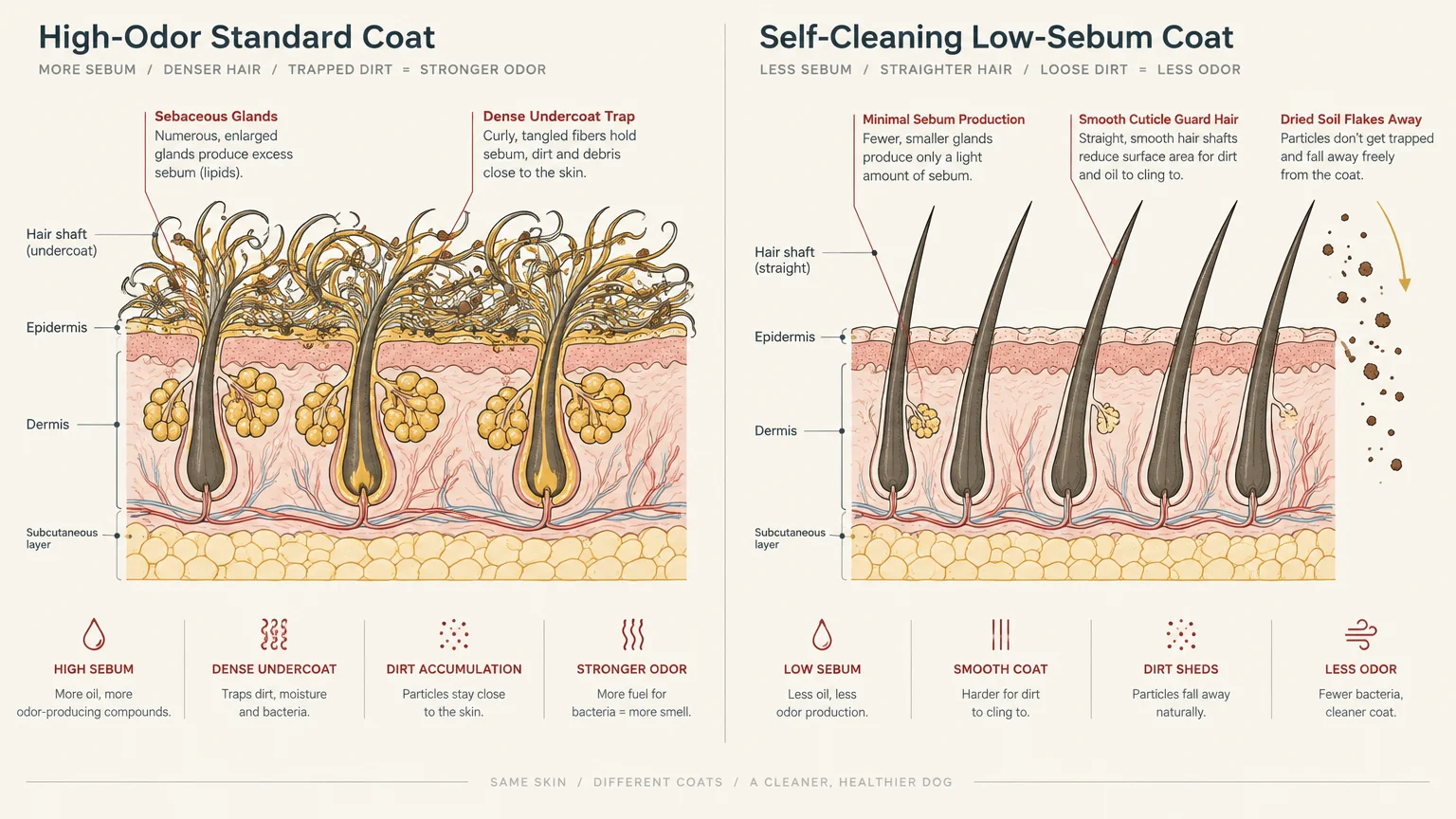
Why do some breeds stay spotless while others smell musty within days of a bath? The answer lies in canine sebum production, coat architecture, and evolutionary genetics.
Water-retrieving dogs produce abundant sebaceous oils to waterproof their coats against icy lakes. Breeds like Labradors and Spaniels hold onto these lipids, which oxidize and feed odor-causing bacteria.
In contrast, sighthounds and desert breeds evolved in dry climates where dense oils were unnecessary. Their sebaceous glands produce minimal grease, leaving the skin naturally odorless.
Furthermore, breeds with slick guard hairs benefit from a smooth cuticle structure. Dirt cannot bind to the hair shaft, allowing dried debris to slide off naturally.
Comparison of Self-Cleaning Dog Breeds
Compare the grooming traits and physical characteristics of these tidy breeds in the table below to find your ideal match.
| Breed | Coat Type | Self-Grooming Style | Natural Odor Level | Bath Frequency |
|---|---|---|---|---|
| Basenji | Short, fine single coat | Licks coat and paws like a cat | Extremely Low | Every 4 to 6 months |
| Shiba Inu | Dense double coat | Washes paws, avoids mud puddles | Very Low | Every 3 to 4 months |
| Whippet | Short, smooth single coat | Licks paws, avoids wet ground | Virtually None | Only when soiled |
| Japanese Chin | Long, silky single coat | Uses paws to wash face and ears | Low | Every 6 to 8 weeks |
| Siberian Husky | Thick, weather-proof double coat | Extensive preening and fur licking | Low | Twice a year |
| Dalmatian | Short, sleek “Teflon” coat | Dries mud quickly, sheds debris | Very Low | Every 3 to 4 months |
| Italian Greyhound | Ultra-thin, smooth coat | Meticulous paw cleaning, puddle-averse | Virtually None | Only when soiled |
| Pharaoh Hound | Fine, glossy single coat | Licks legs and flanks thoroughly | Extremely Low | Every 3 to 5 months |
| Chow Chow | Thick, coarse double coat | Clean habits, fastidious toilet habits | Low to Moderate | Every 2 to 3 months |
| Greyhound | Short, fine single coat | Gentle paw and body licking | Virtually None | Every 4 to 6 months |
How to Support Your Dog’s Natural Grooming Routine
Even self-cleaning breeds need light human partnership to stay comfortable and healthy. You can preserve their coat health and avoid the tub by following these practical strategies:
- Use damp microfiber cloths: Wipe your dog’s paws, underbelly, and muzzle with warm water after muddy walks to lift surface dust before it spreads indoors.
- Brush before you wash: Regular brushing with a rubber curry comb or slicker brush removes loose dirt, detangles hair, and distributes skin oils naturally.
- Keep pet-safe paw wipes near the door: Cleaning road grime, chemical salts, and pollen prevents your dog from ingesting contaminants during self-grooming sessions.
- Check ears and teeth weekly: Clean dogs rarely smell from their coats; foul odors usually stem from dirty ear canals or periodontal plaque buildup.
- Dry wet coats promptly: Towel your dog thoroughly after rainstorms so moisture does not get trapped against their skin, which protects against fungal irritation.
The ASPCA grooming guidelines highlight that gentle brushing stimulates healthy blood circulation across your dog’s skin. Brushing also collects loose undercoat hairs before your dog swallows them while licking.
Common Mistakes to Avoid with Tidy Breeds
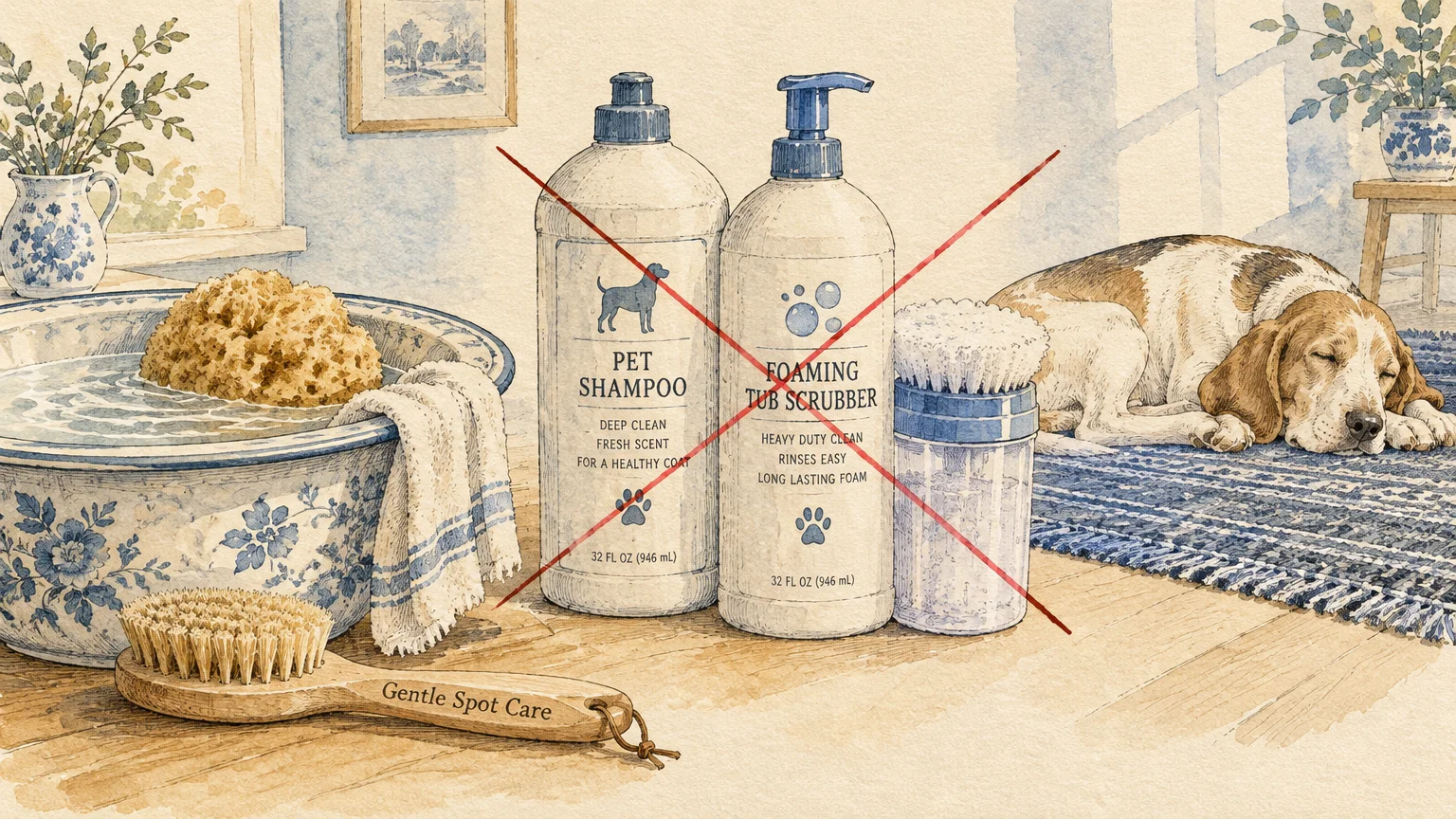
Caring for a self-cleaning breed comes with specific pitfalls that well-meaning pet owners often overlook. Avoid these common errors to protect your dog’s skin barrier.
First, never bathe these breeds on a rigid weekly schedule out of habit. Frequent soap application strips natural lipids, leading to dry, flaky skin and compensatory oil production.
Second, do not confuse self-grooming with self-shedding. Breeds like Shiba Inus and Siberian Huskies still blow their undercoats twice per year and need thorough deshedding brushes.
Third, never ignore sudden, obsessive licking at a single body part. While general preening is normal, focused licking on one joint or paw often signals allergies, hot spots, or thorns.
Finally, avoid leaving dense double coats damp after accidental drenching. If water sits deep inside a Chow or Husky coat, trapped bacteria can trigger painful acute moist dermatitis.
Frequently Asked Questions
Do self-cleaning dogs still need baths?
Yes, but far less frequently than standard breeds. Most tidy dogs only require a bath every few months or when they roll in smelly organic matter.
Why do some dog breeds groom like cats?
Primitive and hunting breeds retain ancestral survival instincts. Eliminating their own scent helped them hunt prey without detection while avoiding detection by larger predators.
Are odorless dog breeds automatically hypoallergenic?
No, because pet allergies stem from proteins in canine saliva and dander rather than coat grease. A self-grooming dog deposits dried saliva onto its coat, which can trigger sensitive allergies.
Can you train a messy dog to clean itself?
Grooming behavior is largely instinctual and linked to coat genetics. You cannot train an oily-coated retriever to groom like a Basenji, though you can train paw-wiping routines.
The Clean Canine Takeaway
Choosing an easy-care dog breed lets you skip messy bathroom wrestling matches while enjoying an odorless, tidy home. Breeds like the Basenji, Whippet, and Shiba Inu keep themselves immaculate through built-in feline habits and dirt-shedding coats.
With a trusty brush, paw wipes, and gentle spot cleaning, you can keep your companion clean with minimal effort. You gain more time for playful walks and cuddle sessions on the sofa.
The information here is meant for educational purposes. Specific circumstances—including health conditions, finances, location, and goals—may require different approaches.
When in doubt, consult a licensed professional or check official sources directly.
Last updated: November 2026. Rules, prices, and details change—verify current information with official sources before acting on it.