Cute Animal Planet

Featuring Cute Animals from All Around the World

  • Home
  • Cute Animals
  • Dogs
  • Cats
  • Birds

12 Cat Behaviors That Actually Mean Your Cat Loves You

September 11, 2026 · Cats

Cats express devotion through subtle gestures that many casual observers easily overlook. Learning to interpret these quiet signs reveals how deeply your feline companion trusts and values you.

While dogs display energetic greetings, felines communicate their love through delicate body language, shared scents, and calm proximity. Peer-reviewed research confirms that domestic cats form secure emotional attachments to their human caregivers.

Decoding these signals bridges the communication gap between species and strengthens your everyday bond. Here are twelve scientifically grounded behaviors that prove your cat genuinely loves you.
The Evolutionary Science of Feline Affection

For decades, popular culture depicted domestic cats as aloof, solitary opportunists. Modern animal behavior research paints a remarkably different picture.

A landmark study from Oregon State University revealed that roughly 65 percent of domestic cats form secure attachments to their guardians. This attachment rate closely mirrors the bond observed between human infants and their parents.

Unlike pack animals, felines do not rely on constant submission or noisy displays of affection. Instead, cats demonstrate love by welcoming you into their inner circle of physical security and chemical familiarity.

When a cat chooses to share their limited social energy with you, they are expressing deep evolutionary trust. Understanding their unique communicative vocabulary allows you to appreciate that devotion fully.

1. The Slow Blink (“Cat Kisses”)

When your cat looks into your eyes and slowly closes their eyelids, they are offering a profound sign of affection. Animal behaviorists widely refer to this gesture as a cat kiss.

In the predatory animal kingdom, unbroken eye contact often signals immediate confrontation or hunting intent. By closing their eyes around you, your cat communicates that they do not perceive you as a threat.

Research published in Nature Scientific Reports confirmed that slow blinking acts as a form of positive emotional communication between cats and humans. Cats respond warmly when humans return the signal.

To reply in their native language, catch your cat’s eye with a soft expression. Slowly close your eyes for two seconds, reopen them gently, and look slightly to the side.

2. Head Bunting and Cheek Rubbing

When your cat marches up and firmly bumps their forehead or cheeks against your hand, they are performing a behavior called bunting. This physical press represents one of their most intimate social gestures.

Cats have specialized scent glands located along their chin, lips, cheeks, and between their ears. These glands release chemical messengers called pheromones that communicate familiarity, territory, and safety.

By rubbing their facial glands against your body, your cat leaves behind their unique scent signature. They are actively claiming you as an essential part of their personal family group.

This scent-sharing ritual creates a communal group scent that comforts your cat whenever they approach you. Let them initiate this contact, and hold out your knuckles to let them rub against you.

3. Kneading (“Making Biscuits”)

Kneading occurs when a cat rhythmically pushes their front paws against a soft blanket or your lap. This rhythmic movement looks remarkably like a baker kneading dough.

This instinctual behavior traces back to kittenhood, when nursing kittens knead their mother’s belly to stimulate the release of milk. It produces a surge of comforting maternal hormones in young kittens.

When adult cats knead your legs or stomach, they are reverting to that state of blissful contentment. Your presence makes them feel as safe and nurtured as they felt beside their mother.

Because cats possess scent glands in their paw pads, kneading also deposits comforting scents onto your clothing. Place a thick blanket on your lap so sharp claws do not interrupt their loving rhythm.

4. Following You From Room to Room

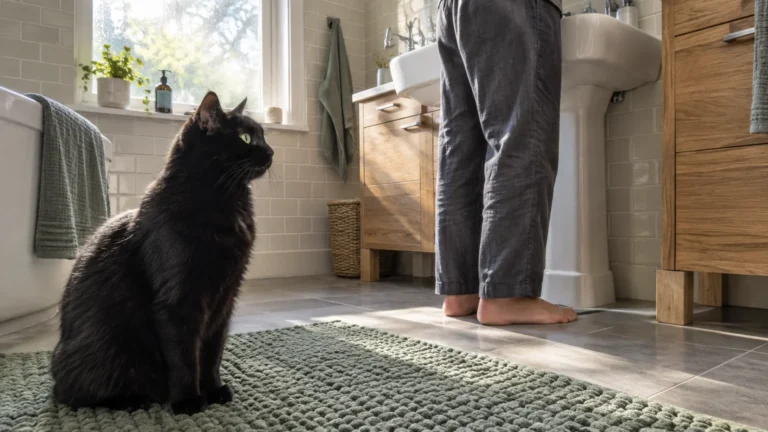
If your cat follows you into the kitchen, sits outside your bathroom, and naps beneath your desk, they are seeking social closeness. Felines value proximity to the individuals they love.

Behaviorists differentiate between hungry begging and companionable shadowing. When a cat follows you without crying for food, they simply enjoy living within your energetic sphere.

Cats are independent territorial animals that choose where to spend their waking hours carefully. Choosing to remain in the same room as you demonstrates that your companionship provides emotional reassurance.

You do not have to hold or pet your cat constantly during these moments. Often, simply coexisting quietly in the same space fulfills your cat’s desire for companionable attachment.

5. Exposing the Belly

Few sights are more endearing than a cat rolling onto their back to reveal their fluffy belly. This dramatic display represents an extraordinary exhibition of pure trust.

A cat’s abdomen houses all their vital organs, making it the most vulnerable area on their body. In predatory confrontations, felines fiercely guard their stomach to prevent fatal strikes.

When your cat exposes their underside in your living room, they are stating that they feel completely secure in your presence. They trust that you would never harm or startle them.

However, exposing the belly is rarely an invitation for vigorous belly rubs. Touching the abdomen often triggers an instinctive predatory grab, so respond by gently stroking their head or cheeks instead.

6. Allogrooming (Licking Your Hair and Skin)

When your cat licks your hands, face, or hair with their sandpaper tongue, you are experiencing mutual grooming, or allogrooming. In the wild, allogrooming occurs only between closely bonded social partners.

Cat colonies use mutual grooming to establish social bonds, reduce group tension, and clean hard-to-reach areas. It reinforces harmonious relationships among trusted family members.

By licking your skin, your cat removes unfamiliar scents from the outside world and replaces them with their own saliva. This deliberate act merges your scent profiles into a single harmonious family odor.

Allogrooming shows that your cat considers you an intimate member of their personal social group. Accept the gesture gracefully, or redirect enthusiastic licking toward a soft brush if their tongue becomes abrasive.

7. The Upright Tail with a Question-Mark Curve

A feline tail serves as a sensitive visual barometer of mood and intentions. When your cat approaches with their tail pointing straight up into the air, they are signaling friendly confidence.

If the very tip of that upright tail forms a gentle curve resembling a question mark, their greeting is especially enthusiastic. Ethologists recognize this posture as a direct invitation for friendly interaction.

Mother cats use upright tail signals to invite their kittens to follow them across safe territory. Adult cats preserve this greeting strictly for companions they respect and enjoy being around.

If the base of your cat’s upright tail vibrates or quivers as they approach, you are witnessing peak happiness. Reach out your hand to welcome their approach and reaffirm your bond.

8. Bringing You “Gifts”

Many cat owners have received unusual gifts from their felines, ranging from stuffed mice and wool balls to outdoor prey. While this gesture can feel surprising, it stems from deep communal devotion.

In feline social groups, skilled hunters carry prey back to their home base to provision kittens and companions who cannot hunt. They view gift-giving as an act of family care.

Your cat recognizes that you are part of their primary social unit. Offering you their prized “catch” demonstrates an innate desire to contribute to the family’s shared resources.

Never scold or punish your cat when they present you with an unwanted toy or natural prize. Acknowledge their generosity with calm praise, and quietly remove the item when they look away.

9. Sleeping Directly On or Beside You

Domestic cats spend up to sixteen hours every day sleeping, but they never lose their instinctive awareness of danger. When resting, an animal cannot actively defend against sudden environmental threats.

Because sleep leaves cats completely vulnerable, they carefully select sleeping locations based on absolute safety. Choosing to curl up on your chest, lap, or pillow reflects profound emotional trust.

Your steady breathing, heartbeat, and natural warmth provide your cat with sensory comfort reminiscent of their earliest kitten memories. They sleep deeply because they know you are keeping watch.

If your cat presses their back directly against your side while sleeping, they are securing their blind spot. This defensive positioning proves they trust you to protect their most exposed angle.

10. Welcoming You at the Door

Walking through your front door after a long workday to find your cat waiting attentively is a wonderful feeling. This dedicated welcome reveals that your cat missed your presence.

Cats possess acute hearing and an impressive circadian rhythm. They quickly learn the distinctive sound of your vehicle’s engine, your footsteps in the corridor, and the timing of your daily return.

Rather than remaining asleep on their favorite cushion, your cat makes the conscious choice to meet you at the threshold. They greet you with trills, rubbing, and high-carried tails.

This enthusiastic greeting proves that your companionship holds immense value in their daily life. Spend two or three uninterrupted minutes greeting them before diving into your evening household chores.

11. Chirping, Trilling, and Soft Meows

Adult cats rarely vocalize to one another in natural outdoor colonies, reserving sounds like yowls and hisses for territory defense. Instead, domestic cats evolved a vocal language aimed specifically at their humans.

High-pitched meows, sweet chirps, and melodic rolling trills are positive communicative tools. Mother cats use gentle trills to herd and reassure their kittens as they explore the world.

When your adult cat directs these friendly trills at you, they are adopting a maternal or affectionate dialect. They are vocalizing to connect with you, share enthusiasm, and invite polite conversation.

Respond to their vocalizations with a soft, gentle voice of your own. Engaging in back-and-forth verbal exchanges strengthens your cat’s communication confidence and deepens your daily mutual connection.

12. Tail Wrapping

When a cat walks beside you and curls their tail around your ankle or wrist, they are performing tail wrapping. This elegant motion represents the feline equivalent of holding hands.

In wild and feral colonies, friendly cats intertwine their tails during casual social strolls. This tactile interaction confirms mutual acceptance and diffuses potential tension among group members.

Tail wrapping requires intentional muscle coordination and deliberate body alignment. Your cat deliberately seeks physical contact with you to reinforce your shared emotional bond.

Pause for a moment when your cat wraps their tail around your leg. Acknowledging this tactile greeting with a soft word and gentle stroke lets them know their affection is warmly returned.

Deciphering Mixed Signals: Affection vs. Stress

Cats communicate with delicate nuances, meaning some affectionate signs can look deceptively similar to signs of stress or discomfort. Accurately reading the whole cat prevents painful misunderstandings.

According to behavioral guidance from the Cornell Feline Health Center, body language must always be evaluated in complete context. A single gesture never tells the whole story.

The following comparison table breaks down how to distinguish genuine affection from subtle stress or overstimulation in common everyday scenarios.

Behavior Affection Sign Stress or Warning Sign Recommended Response
Purring Soft, rhythmic purring during cuddles or relaxation. Strained, high-pitched purring accompanied by a hunched posture. Pet gently if relaxed; consult a veterinarian if hunched or reclusive.
Exposing Belly Loose, limp body posture with slow blinks and gentle stretching. Tense limbs, dilated pupils, and flattened ears. Praise softly without touching the stomach; give immediate space if tense.
Tail Movement Held upright with a soft hook at the tip; gentle base vibration. Low carriage, twitching tip, or rapid horizontal thrashing. Approach with open hands when upright; pause petting if the tail lashes.
Kneading Soft, rhythmic front-paw pumping while purring on your lap. Frantic, rigid kneading paired with excessive skin licking. Provide a thick blanket; introduce calming interactive play if frantic.
Eye Contact Soft, languid gaze broken by deliberate slow blinks. Unblinking, wide-eyed stare with stiffened facial whiskers. Return the slow blink softly; break direct eye contact if staring coldly.

Observing your cat’s ears, whiskers, and pupil dilation alongside these behaviors gives you an accurate assessment of their mood. Relaxed ears and soft eyes invariably accompany true affection.

Things to Watch Out For

Even the most loving domestic cats experience physical limits during social interaction. Recognizing these natural boundaries keeps your daily relationship happy and stress-free.

Petting-induced overstimulation occurs when repetitive physical strokes trigger sensory overload in feline skin receptors. Watch for skin twitching, tail lashing, or pinned ears, which signal that petting should stop immediately.

Misinterpreting an exposed belly as a green light for vigorous scratching often ends with scratched hands. Always honor the exposed stomach as a sign of trust rather than an interactive toy.

Purring can occasionally mask physical discomfort, respiratory issues, or extreme fear. If your cat purrs continuously while hiding, refusing meals, or adopting a hunched posture, seek prompt veterinary attention.

Sudden changes in your cat’s normal affection patterns should never be ignored. If an affectionate companion suddenly becomes reclusive, aggressive, or uncharacteristically vocal, schedule a comprehensive health checkup.

How to Deepen Your Bond With Your Cat

Building a deeper relationship with your cat does not require complicated training or expensive accessories. Consistent, empathetic daily habits make your feline feel cherished and safe.

You can strengthen your emotional partnership by adopting these simple, research-backed everyday practices:

  • Practice the slow blink: Initiate soft eye contact and blink gently whenever your cat enters the room to signal warmth and safety.
  • Establish interactive play: Spend ten to fifteen minutes daily using feather wands to let your cat complete natural hunting sequences.
  • Respect personal space: Allow your cat to initiate physical contact, and stop petting before they show subtle signs of sensory fatigue.
  • Provide high perches: Install cat trees or window shelves where your cat can survey their territory while remaining close to you.
  • Maintain consistent routines: Keep meal, play, and quiet times predictable to reduce feline anxiety and foster enduring emotional security.

When you respect your cat’s autonomy, they reward you with greater trust. A cat that feels safe to say no will say yes to affection far more often.

Frequently Asked Questions

Do cats choose a single favorite person?

Many domestic cats develop a primary attachment to one specific individual in a household. Cats naturally gravitate toward the person who feeds them, understands their body language, and respects their personal space.

However, cats can form meaningful, loving bonds with multiple household members at once. Each relationship reflects the unique interactions and play styles shared between the cat and that individual.

Why does my cat headbutt me so hard?

Firm headbutting, or bunting, represents an intense display of affection and trust. When your cat bumps you with enthusiasm, they are depositing facial pheromones while seeking close physical contact.

This tactile enthusiasm demonstrates that your cat feels safe and exuberant around you. Offer your knuckles or forehead in return to validate their sweet greeting.

Can an aloof or shy cat learn to show affection?

Yes, shy and independent cats can gradually learn to express deep affection over time. Building trust with a reserved cat requires patient consistency, quiet environments, and never forcing physical interaction.

As reserved cats realize their boundaries are respected, they begin expressing love through quiet proximity, slow blinks, and gentle tail greetings. Progress may take months, but the resulting bond is incredibly strong.

Why does my cat purr when they are at the veterinary clinic?

Cats purr in response to intense emotional states, including severe fear, stress, or pain. In stressful environments like veterinary clinics, cats purr to calm their racing nervous systems and soothe physical distress.

Low-frequency purring vibrations between 25 and 150 Hertz may also facilitate tissue repair and reduce pain. Always evaluate purring alongside your cat’s overall posture and clinical context.

Nurturing a Lifelong Feline Friendship

Feline love is subtle, elegant, and deeply grounded in evolutionary trust. Recognizing these quiet gestures transforms your relationship from simple coexistence into a rich, reciprocal friendship.

Take time today to slow-blink at your companion, admire their rhythmic kneading, and celebrate the small ways they welcome you into their world.

This is general informational content based on widely accepted guidance. Individual results vary.

Verify current details—rules, prices, eligibility, regulations—with official sources before making important decisions.


Last updated: May 2026. Rules, prices, and details change—verify current information with official sources before acting on it.

Share this article

Facebook Twitter Pinterest LinkedIn Email

Search

Most Popular

  • 9 Human Foods That Are Secretly Dangerous for Pets
  • 12 Surprising Facts About How Pets Communicate
  • 11 Ways to Keep an Older Pet Comfortable and Healthy
  • 8 Common Pet-Owner Mistakes Vets Wish People Knew About
  • 12 Cat Behaviors That Actually Mean Your Cat Loves You

Get Daily Animal Facts

Subscribe to our newsletter for your daily dose of cuteness delivered straight to your inbox.

Related Articles

cat

8 Most Aggressive Cat Breeds in The US

Do you love cats? Well, good news! You’re not alone! Actually, the American Veterinary Medical…

Read More →

8 Surprising Signs Your Cat Actually Likes You

Many people have the idea that cats are cold-hearted creatures. Yes, it is true that…

Read More →
A spotted Bengal cat stretches upward while sharpening its claws on a tall sisal rope scratching post in a living room.

12 Cat Breeds Known to Scratch Furniture, Curtains, and Everything Else

Discover the 12 cat breeds most prone to scratching furniture, explore feline claw biology, and…

Read More →

Man Uses His Morning Coffee To Rescue Kittens Stuck To The Icy Ground

Most of us have our usual cup of joe in the morning. However, one man…

Read More →
A ginger tabby cat pauses while grooming itself on a cozy living room rug, looking up with an expressive expression.

6 Common Reasons Your Cat Won’t Stop Licking Itself

Discover the 6 major reasons your cat won't stop licking itself, from hidden skin allergies…

Read More →
cat

7 Ridiculous Cat Myths You Should STOP Believing

People love cats, and that’s not a secret. These fluffs make great purring companions that…

Read More →
A ginger tabby cat rests on a cream wool blanket in a sunlit modern living room during golden hour.

Why Cats Are Better Than Dogs, According to 3 Vets

Discover why cats are better than dogs according to three veterinarians, from lower annual costs…

Read More →
An orange tabby and a grey cat sleeping cuddled head-to-head in a cozy cream bed, showcasing a deep social bond.

7 Signs Two Cats Are Actually Friends, Not Just Tolerating Each Other

Discover the 7 clear signs your cats are true friends rather than just tolerating each…

Read More →

Watch Out! These 6 Cat Breeds Can Destroy Your Home

The most mischievous cat breeds are frequently those who enjoy sticky situations or aren’t hesitant…

Read More →

Cute Animal Planet

Featuring Cute Animals from All Around the World

Inedit Agency S.R.L.
Bucharest, Romania

contact@cuteanimalplanet.com

Explore

  • Contact Us
  • About Us
  • Editorial Policy
  • Advertiser Disclosure
  • FAQ
  • Subscribe
  • Unsubscribe
  • Our Newsletters
  • Privacy Policy
  • Disclaimer
  • Request to Know
  • Request to Delete
  • CA Privacy Policy

Categories

  • Animals
  • Birds
  • Cats
  • Cute Animals
  • Dogs
  • Elephants
  • Foxes
  • Funny stories
  • Goat
  • Lions
  • Llamas
  • Monkeys
  • Raccoons
  • Squirrels
  • Tortoise

© 2026 Cute Animal Planet. All rights reserved.