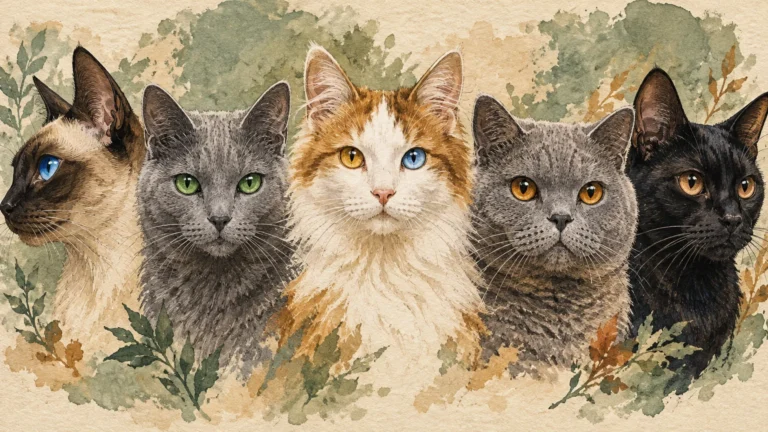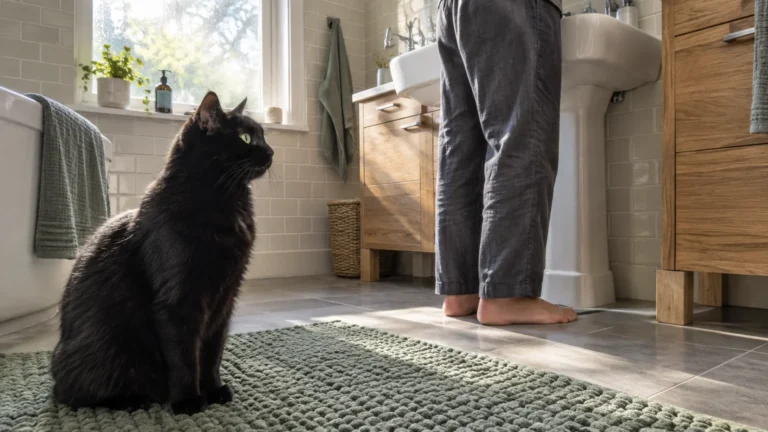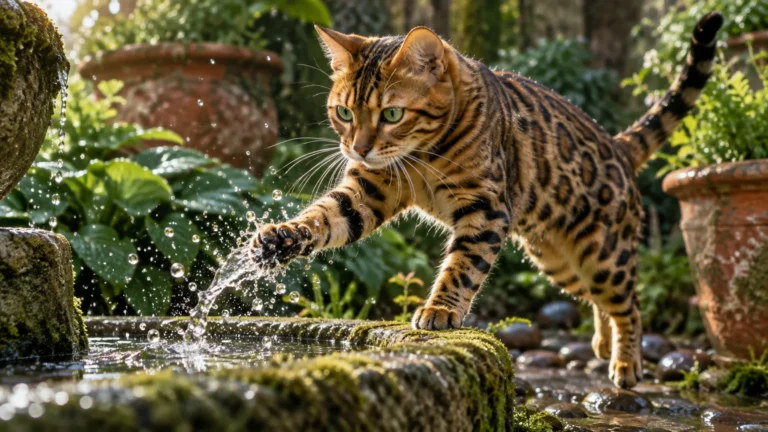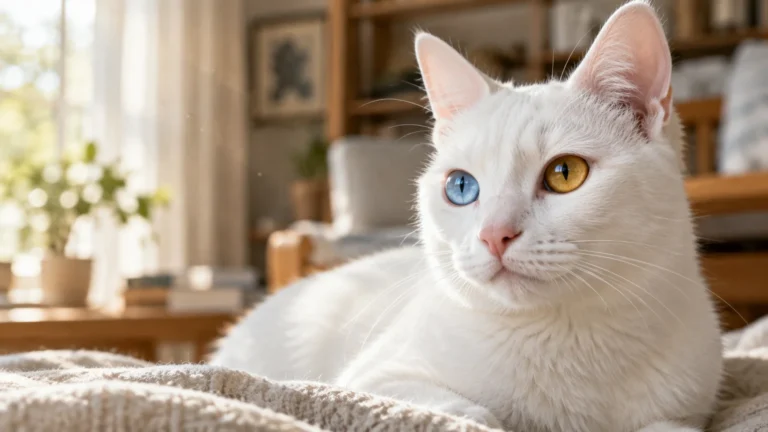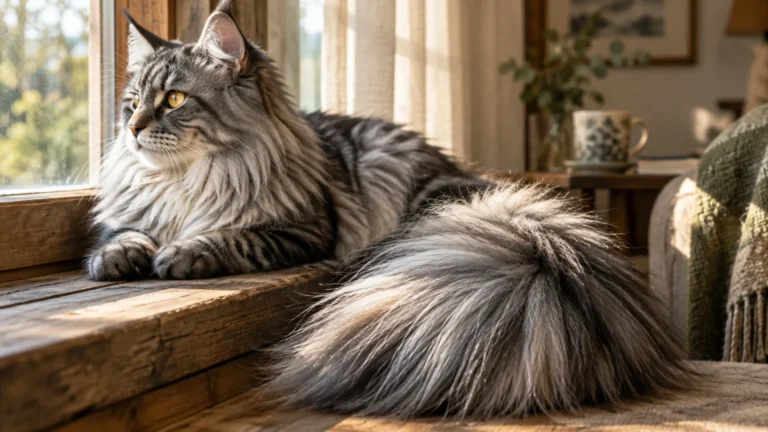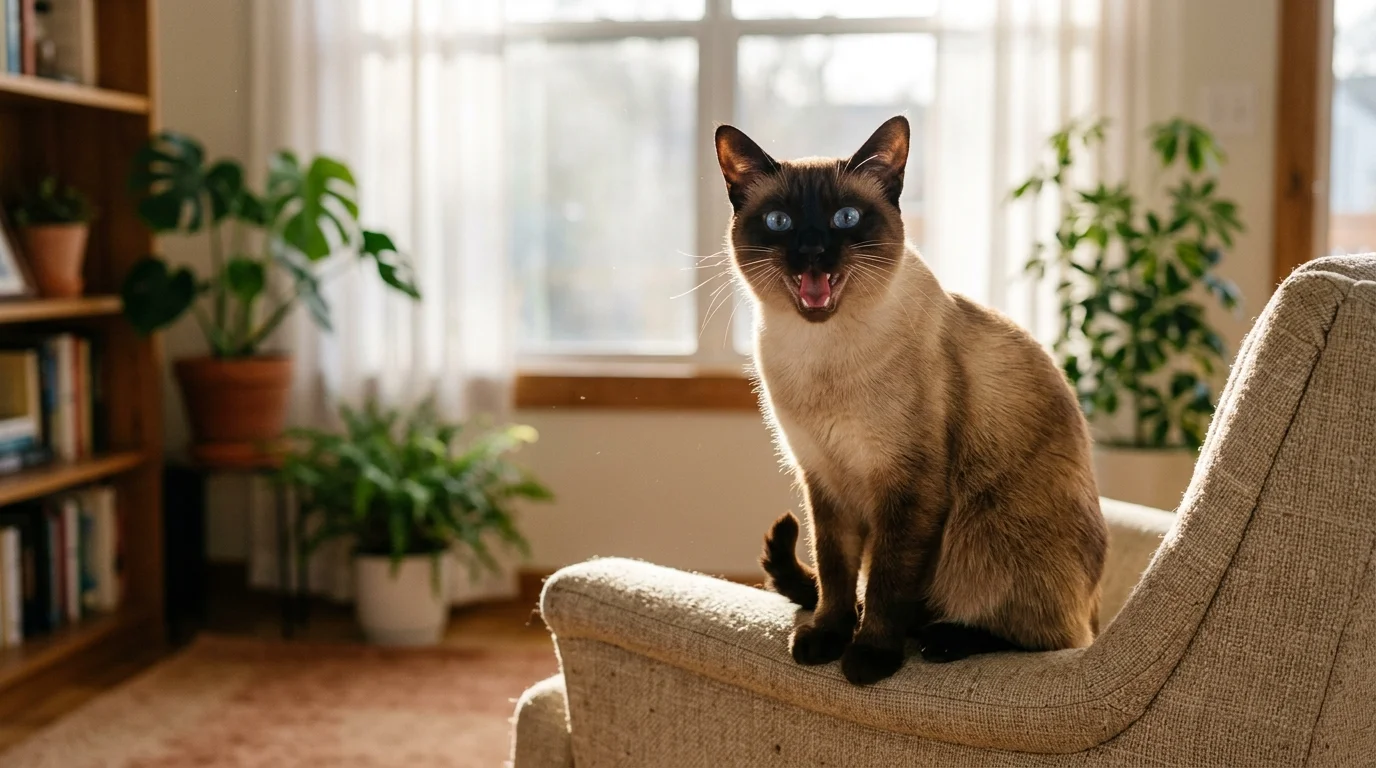
Some cats greet you with quiet purrs, while others hold full conversations the moment you walk through the door. If you want a communicative feline companion, certain vocal cat breeds make their feelings unmistakably clear.
While average domestic cat meows measure between 45 and 60 decibels, chatty breeds use an extensive repertoire of chirps, yowls, and trills to get your attention.
From demanding Siamese calls to melodic Japanese Bobtail chirps, here are ten talkative cat breeds that love speaking their minds.
The Science of Feline Chatter: Why Cats Vocalize at Humans
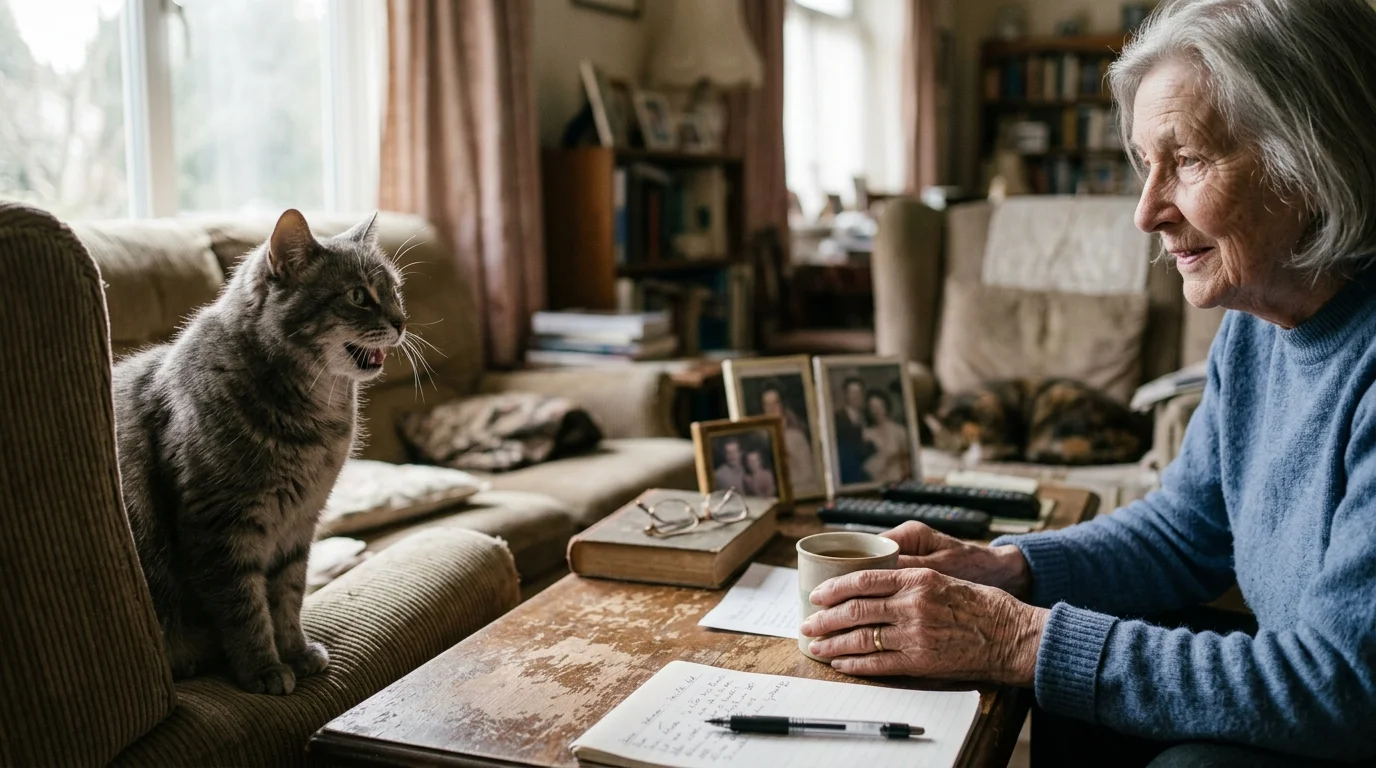
Adult cats rarely meow to communicate with other felines. Instead, behavioral researchers note that meowing evolved almost entirely as an acoustic bridge between cats and humans.
While a standard purr registers around 25 decibels, typical cat meows reach between 45 and 60 decibels; this matches normal human conversational volume.
Some purrs reach astonishing volumes as well. According to Guinness World Records, a domestic cat named Bella set the record for the loudest purr by a living cat at 54.59 decibels in August 2023.
Certain breeds possess a genetic predisposition toward social engagement, leading to frequent and diverse vocal expressions throughout the day.
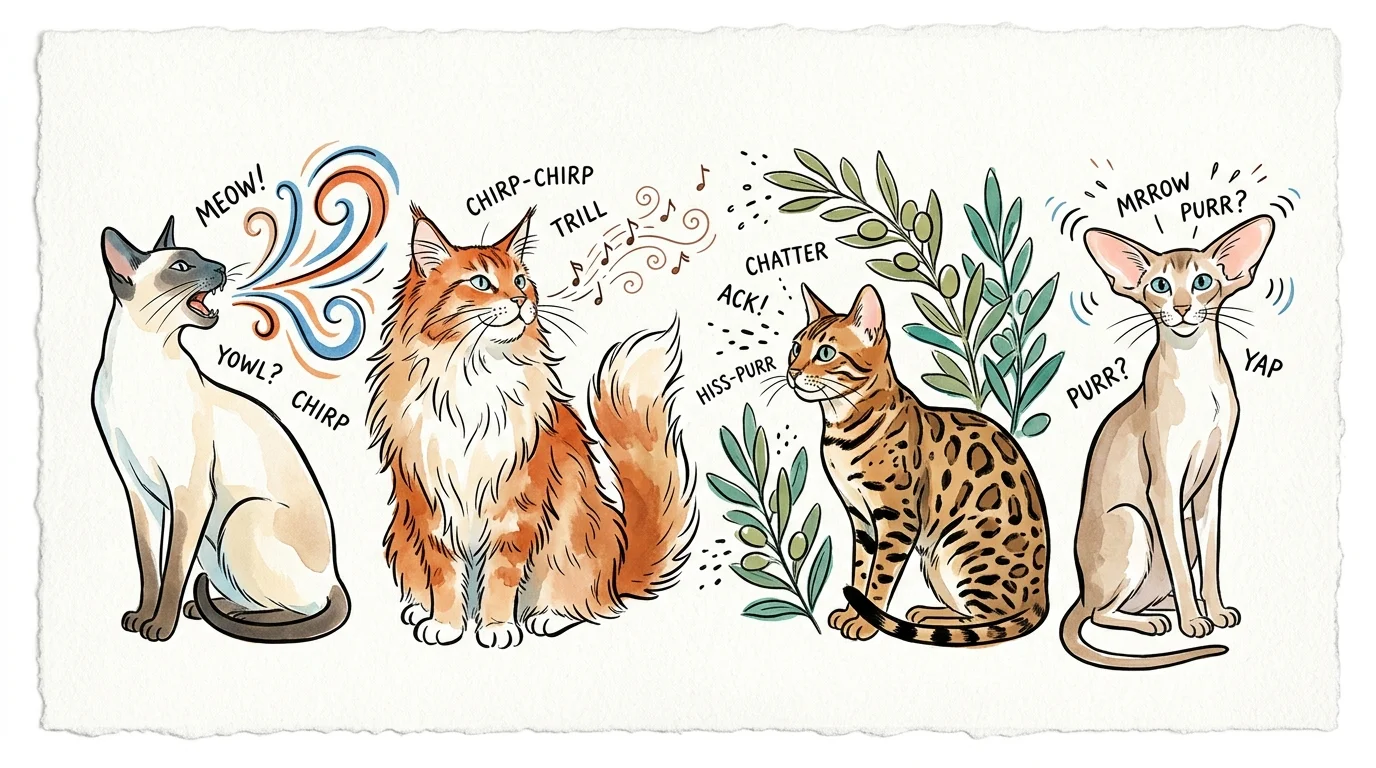
10 Cat Breeds Known for Being Unusually Vocal
1. Siamese
The Siamese tops nearly every list of chatty cat breeds. Known for a deep, raspy cry that sounds remarkably like a human baby, this breed shares its opinion on everything.
They demand direct eye contact and will persistently follow you from room to room until you respond. According to the Cat Fanciers’ Association, their social personality requires plenty of daily companionship and active communication.
2. Oriental Shorthair
Closely related to the Siamese, the Oriental Shorthair shares an identical desire for constant dialogue. They possess a distinctive vocal tone often described by owners as an expressive “honk.”
If you leave an Oriental Shorthair alone for too long, they will loudly announce their dissatisfaction. Their vocal range spans soft squeaks to piercing bellows when seeking playtime or dinner.
3. Bengal
Developed by crossing domestic felines with Asian leopard cats, Bengals exhibit a distinct acoustic style. Their vocalizations sound raspy, wild, and gravelly compared to regular domestic shorthairs.
Bengals chirp when tracking birds, chatter during intense play sessions, and yowl loudly if they feel bored. They require significant environmental enrichment to keep their energetic minds occupied.
4. Maine Coon
Despite being one of the largest domestic cat breeds, the Maine Coon rarely relies on a conventional meow. Instead, these gentle giants communicate using delicate chirps, trills, and soft sighs.
They frequently use rising vocal inflections when welcoming you home or discovering a new toy. This charming combination of massive physical size and melodic vocalizations makes their chatty nature especially endearing.
5. Burmese
Burmese cats are deeply people-oriented companions that thrive on regular social interaction. They maintain a steady running commentary with a softer, slightly raspy vocal tone.
While not as piercing as their Siamese ancestors, Burmese cats are exceptionally persistent. They will vocalize politely at your feet until you pick them up for a cuddle.
6. Tonkinese
A cross between the Siamese and Burmese, the Tonkinese inherits the conversational instincts of both parent breeds. They speak in a moderate, warm tone rather than a loud, demanding wail.
Tonkinese cats treat vocalization as a two-way dialogue. If you speak directly to them in full sentences, they will consistently answer back with distinct chirps and mews.
7. Sphynx
The hairless Sphynx craves warmth and physical closeness, and they use their voices freely to secure both. They produce high-pitched chirps, raspy trills, and urgent meows whenever they want attention.
Because they burn calories rapidly to regulate body temperature, they frequently vocalize around feeding times. Expect an energetic morning greeting complete with continuous, vocal demands for affection.
8. Japanese Bobtail
Japanese Bobtails are celebrated for their melodious, song-like voices. Unlike breeds with harsh yowls, their vocal repertoire features an impressive scale of soft, varied chirps.
Many owners describe their speech patterns as almost musical. They readily engage in long call-and-response vocal games whenever their favorite humans interact with them.
9. Siberian
The Siberian is an ancient, natural breed from Russia known for an affectionate and interactive demeanor. Siberians express themselves through soft trills, chirps, and powerful purrs rather than harsh cries.
They love following family members throughout the house while offering gentle commentary on household activities. Their vocalizations often increase when they invite you to play or investigate something interesting.
10. Peterbald
Originating in St. Petersburg, Russia, the Peterbald shares genetic roots with the Oriental Shorthair. This athletic, elegant breed possesses an outspoken personality and a surprisingly loud vocal projection.
Peterbalds dislike being left out of daily routines and will announce their presence with assertive calls. They use vocal cues to request lap time, warmth, or interactive puzzle games.
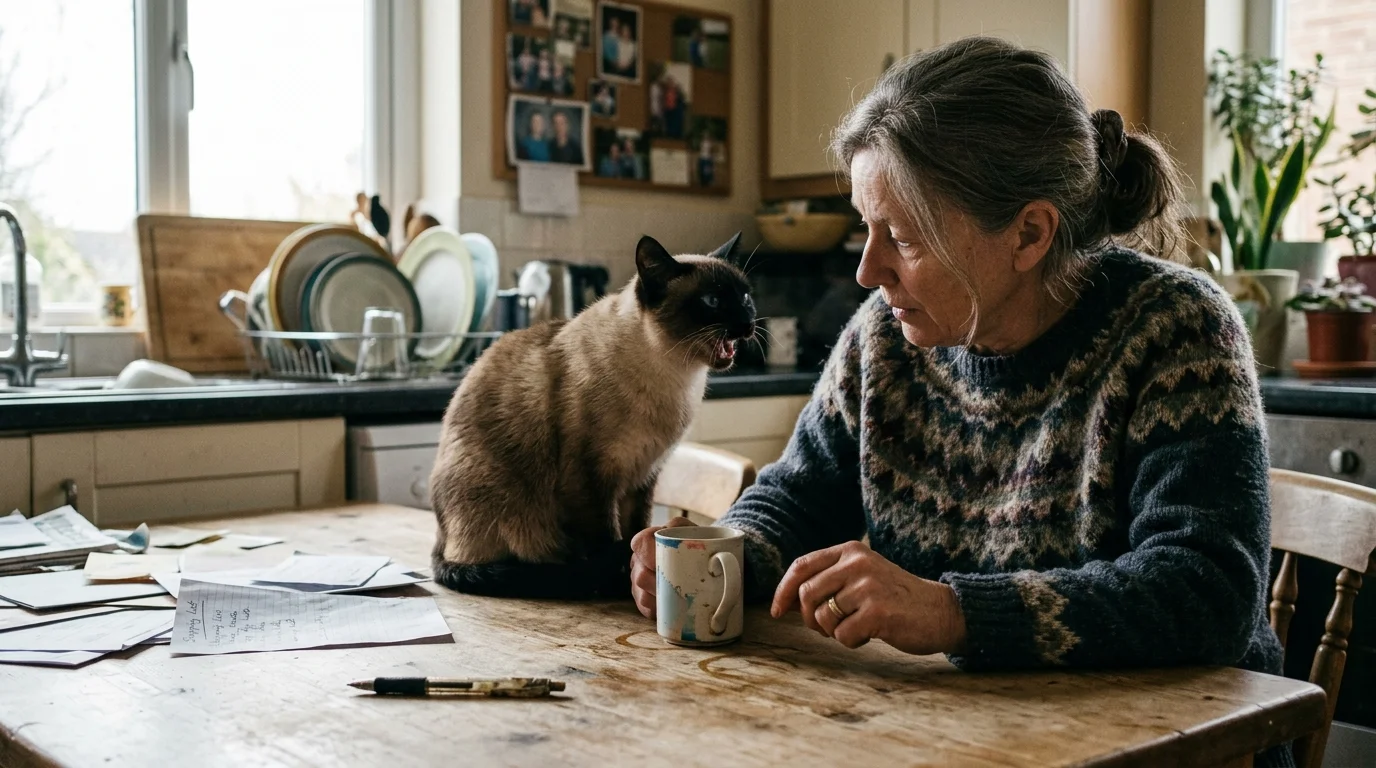
Vocal Characteristics by Cat Breed
Comparing vocal styles can help you determine which breed matches your lifestyle and acoustic tolerance. The table below highlights how these ten breeds communicate.
| Cat Breed | Primary Sound Type | Typical Volume Level | Main Vocal Trigger |
|---|---|---|---|
| Siamese | Raspy wails, baby-like cries | High (55–60 dB) | Demanding immediate companionship or food |
| Oriental Shorthair | Nasal honks, loud squeaks | High (55–60 dB) | Expressing boredom, seeking active engagement |
| Bengal | Gravelly yowls, bird-like chirps | High (50–60 dB) | High energy levels, hunting instincts, play requests |
| Maine Coon | Melodic chirps, high-pitched trills | Low to Moderate (40–50 dB) | Greetings, curiosity, social affection |
| Burmese | Sweet, persistent raspy mews | Moderate (45–50 dB) | Requesting cuddles, following owners around |
| Tonkinese | Warm, conversational chirps | Moderate (45–55 dB) | Interactive dialogue, daily check-ins |
| Sphynx | High-pitched chirps, raspy mews | Moderate to High (50–55 dB) | Seeking physical warmth, mealtime excitement |
| Japanese Bobtail | Musical notes, multi-toned trills | Low to Moderate (40–48 dB) | Playful games, responding to human speech |
| Siberian | Gentle trills, low murmurs | Low to Moderate (40–48 dB) | Family bonding, interactive curiosity |
| Peterbald | Direct calls, urgent yowls | High (50–60 dB) | Seeking lap access, requesting attention |
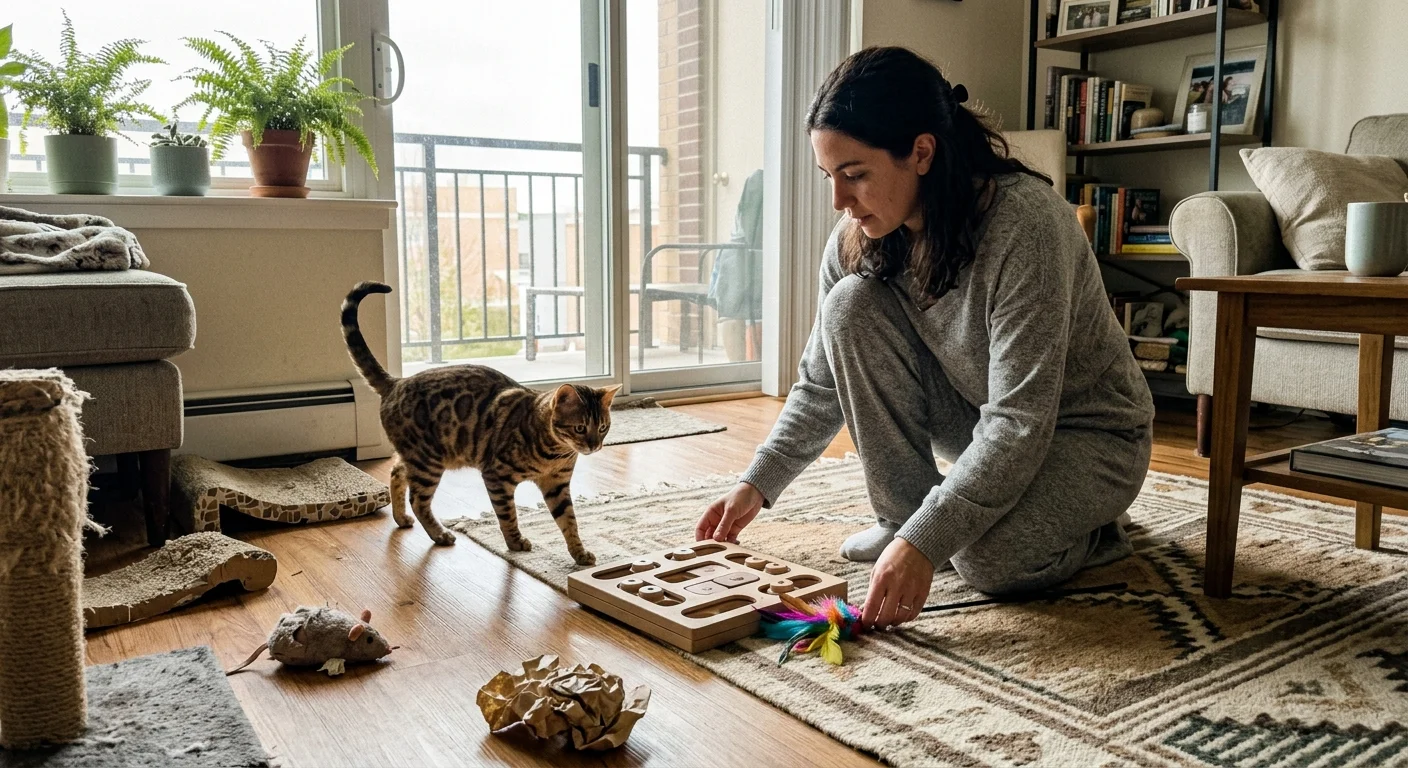
Tips for Living With a Talkative Cat
Sharing your home with an unusually vocal cat brings continuous entertainment, but it also requires mindful management. You can maintain a peaceful household by meeting your cat’s communicative needs.
- Provide structured mental stimulation: Use puzzle feeders, climbing towers, and daily interactive wand play to burn excess energy.
- Avoid rewarding midnight yowls: Do not give food or immediate cuddles when your cat meows during the middle of the night.
- Establish reliable feeding schedules: Predictable meal routines prevent anxiety-driven vocal demands before dinner.
- Create quiet resting spaces: Offer heated beds and cozy retreats to help talkative cats settle down peacefully.
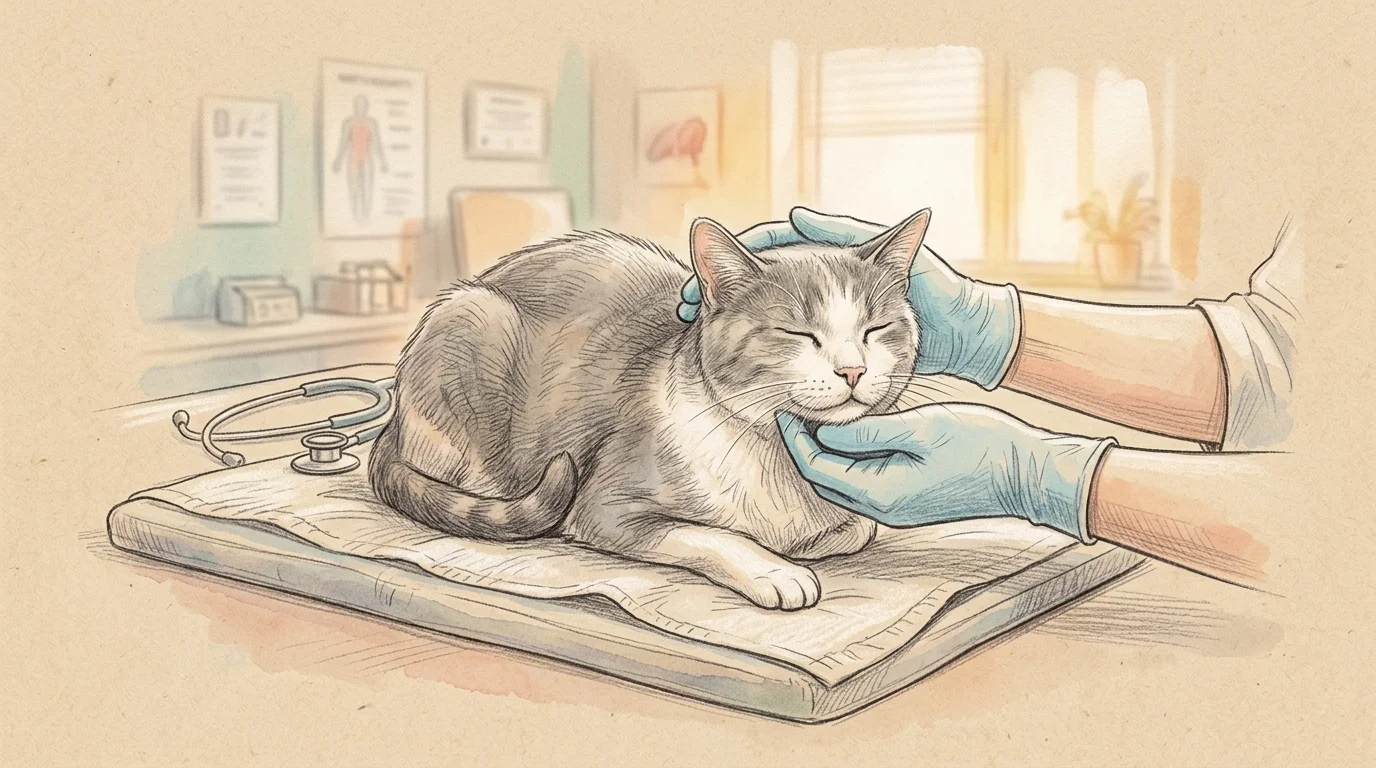
When Excessive Vocalization Indicates a Health Concern
While breed genetics often explain talkativeness, sudden changes in vocal habits require veterinary attention. If a normally quiet cat suddenly begins howling, an underlying medical issue may be responsible.
According to veterinary guidance from the Cornell Feline Health Center, conditions like feline hyperthyroidism, hypertension, and sensory loss often trigger persistent vocalizations in senior cats.
Cognitive Dysfunction Syndrome can also cause older cats to wander and yowl at night due to disorientation. Always consult your veterinarian if your cat’s vocal patterns shift abruptly.
Frequently Asked Questions
Are vocal cat breeds suitable for apartment living?
Yes, but you should consider neighbor proximity if you choose louder breeds like the Siamese or Bengal. Breeds with softer chirps, such as the Maine Coon or Japanese Bobtail, adapt easily to shared buildings.
Can you train a chatty cat to be quiet?
You cannot change a cat’s genetic personality, but you can curb nuisance meowing. Reward calm behavior and ignore demanding vocalizations instead of offering immediate treats or attention.
Why do cats chirp instead of meowing?
Chirps and trills typically indicate excitement, curiosity, or greeting. Cats often chirp when spotting prey through windows or when joyfully inviting their human companions to interact.
Living with a talkative feline ensures you will never feel lonely at home. By understanding their unique vocal language, you can build a deeper, more rewarding bond with your chatty companion.
This article provides general information only. Every reader’s situation is different—what works for others may not be the right fit for you.
For personalized guidance on health, legal, or financial matters, consult a qualified professional.
Last updated: May 2026. Rules, prices, and details change—verify current information with official sources before acting on it.