Run your fingers across an ordinary domestic cat, and you feel smooth, sleek fur. Several distinctive breeds break this mold entirely with tight crimps, woolly spirals, or velvety bare skin.
These unusual coat textures stem from rare genetic mutations that reshape feline hair follicles. Each unique coat also creates specific grooming and wellness demands that every pet parent must understand.
Whether you want plush curls or warm suede-like skin, learning these physical traits helps you provide proper care. Here are nine standout cat breeds with unusual coats.
The Science Behind Feline Coat Variations
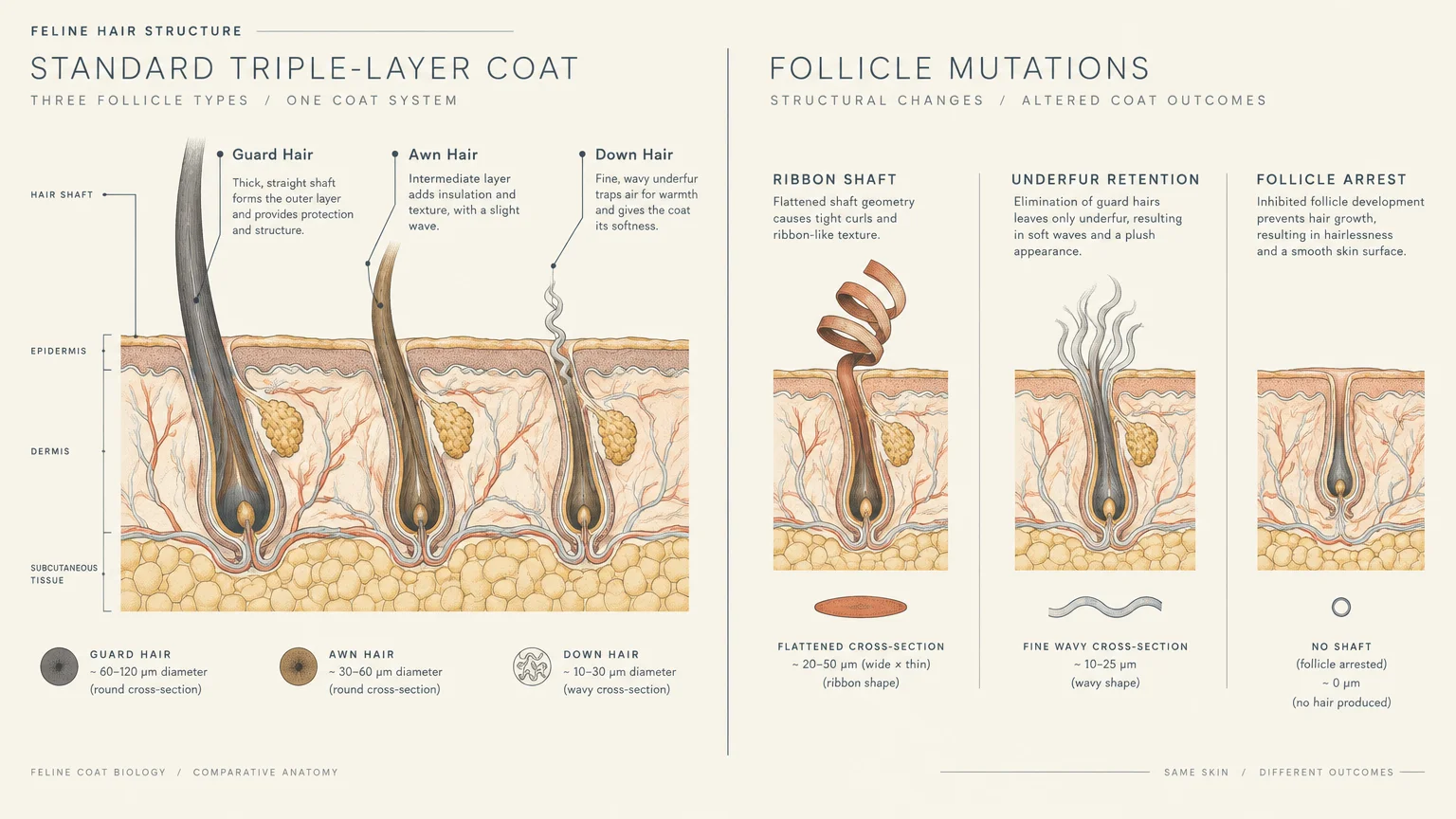
Most domestic felines display a triple-layered coat designed for warmth and water resistance. This system includes long guard hairs, middle awn hairs, and fine down hairs near the skin.
Unusual textures emerge when spontaneous genetic mutations alter how hair follicles synthesize keratin proteins. These genetic shifts disrupt normal hair shaft development.
When a gene eliminates guard hairs, the cat retains only soft, rippled underfur. Other mutations flatten cylindrical hair shafts into ribbon-like structures that bend into tight corkscrews.
Complete hairlessness occurs when mutations hinder follicle development entirely. Understanding these genetic mechanisms explains why each texture feels distinct and demands specialized daily maintenance.
01 Cornish Rex: The Silken Marcel Wave
The Cornish Rex originated in Cornwall, England, in 1950 from a spontaneous mutation in a barn cat litter. The Cat Fanciers’ Association (CFA) granted the breed full championship status in 1964.
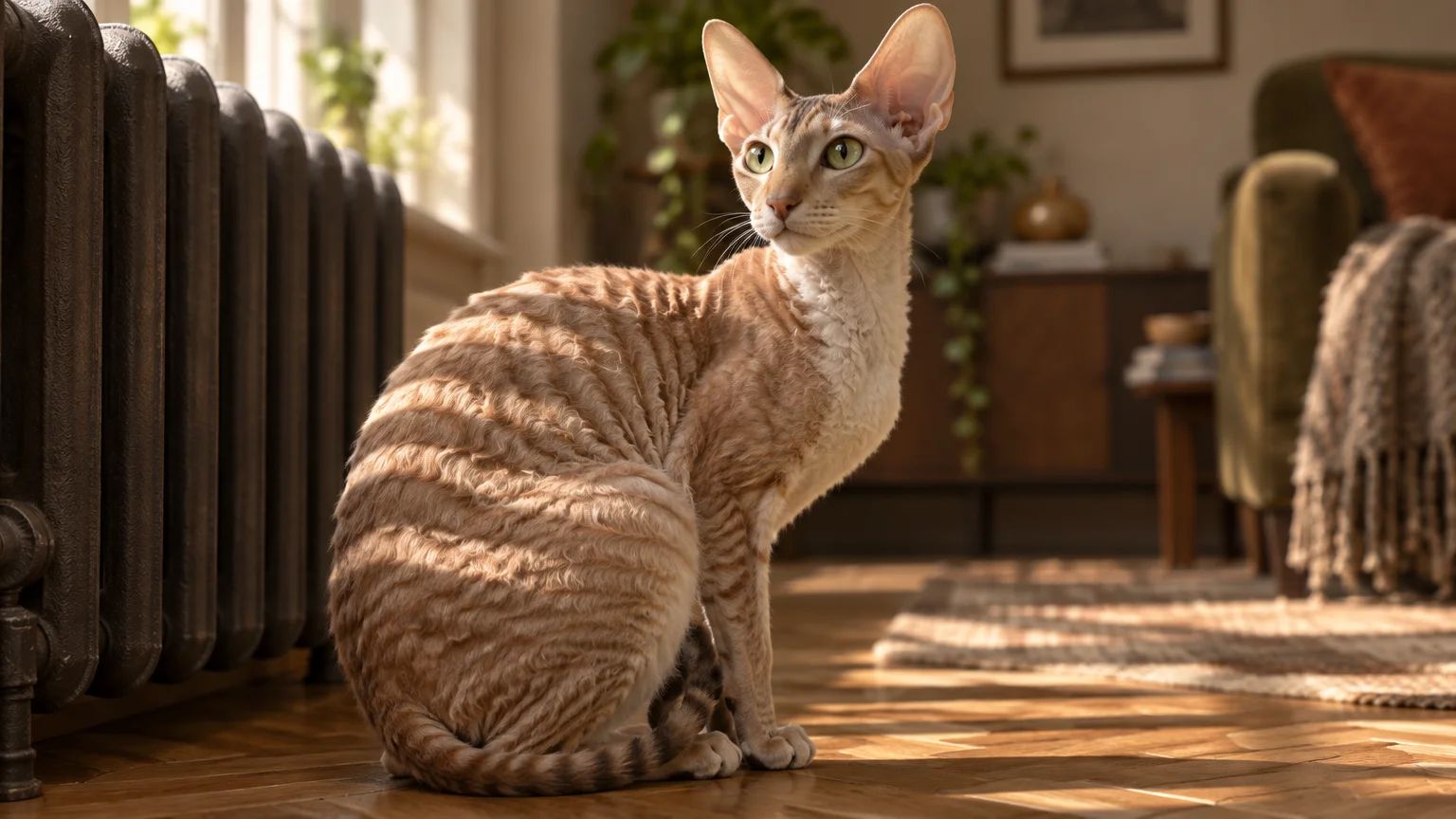
This cat completely lacks outer guard hairs and intermediate awn hairs. It carries only a fine undercoat arranged in uniform ripples known as a “Marcel wave.”
When you stroke a Cornish Rex, the fur feels like crushed velvet or sheared mink. The coat lies tightly against an arched, slender body with oversized, alert ears.
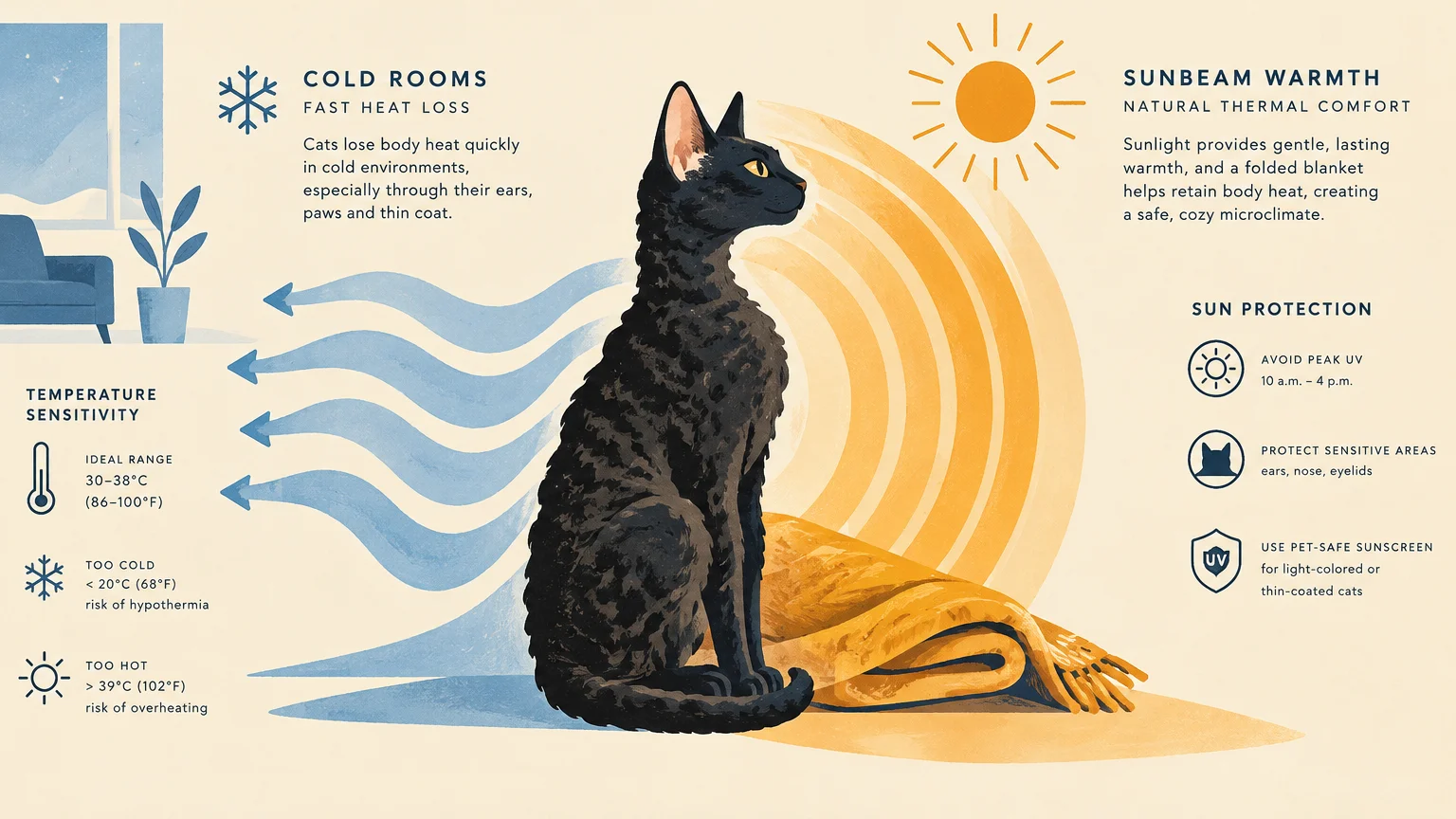
Because they lack protective outer fur, Cornish Rex cats radiate surface heat quickly. They actively seek warm resting places such as sunny windowsills, heating vents, and cozy blankets.
Pedigree kittens from registered breeders typically cost between $1,200 and $2,500. Their fragile, single-layer coat requires gentle hand-grooming rather than aggressive wire brushing.
02 Devon Rex: The Soft Rippled Poodle Cat
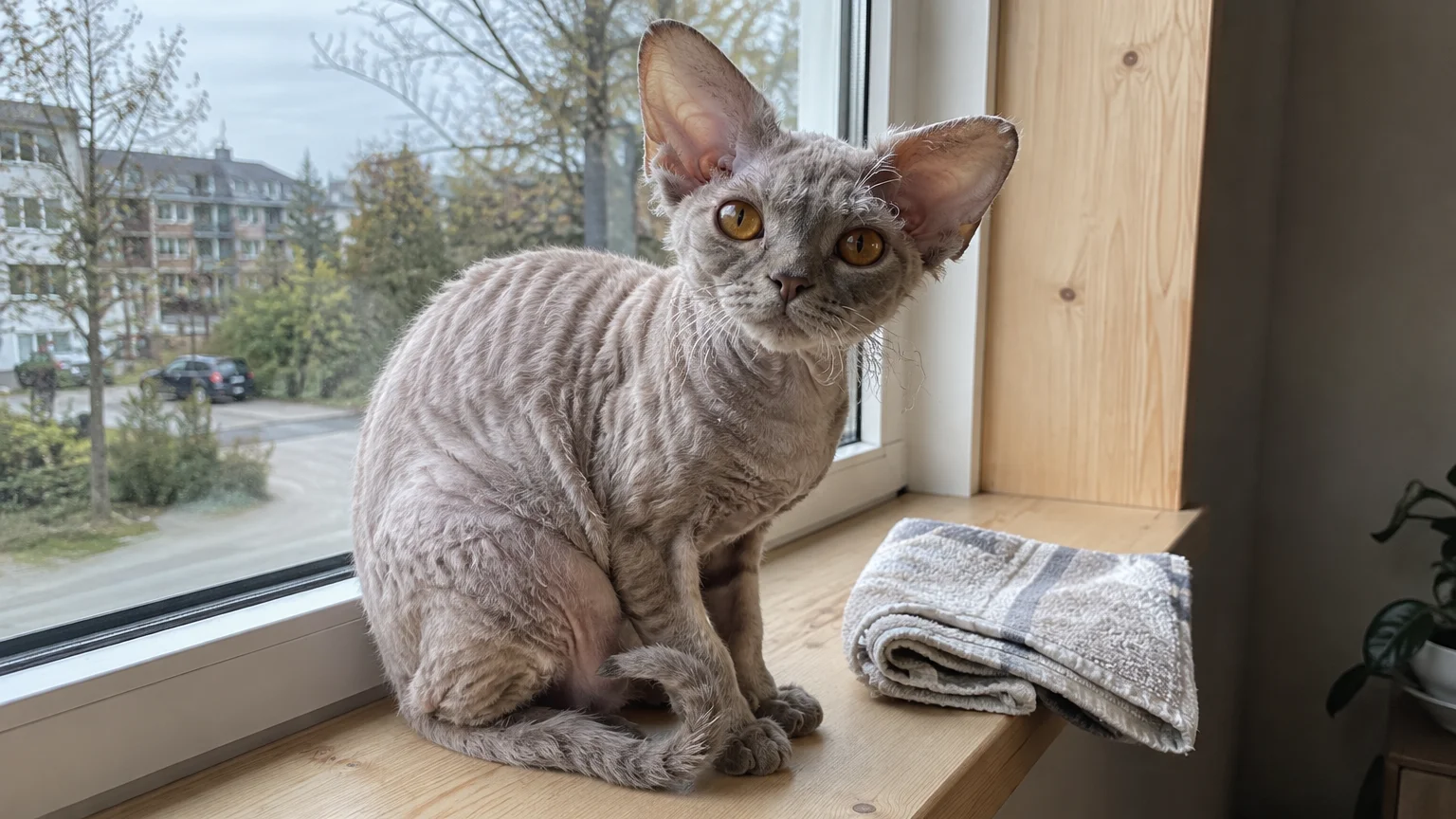
The Devon Rex trace their lineage to a curly kitten named Kirlee, born in Devonshire, England, on July 15, 1959. Official CFA recognition followed decades later in 1983.
Unlike the Cornish Rex, the Devon Rex possesses all three coat layers. However, its guard hairs are sparse, short, and fragile, producing an open, rippled texture resembling fine suede.
Their coats feature loose waves that feel remarkably soft and slightly dry to the touch. Even their whiskers and eyebrows curl tightly, often snapping off due to natural brittleness.
Devon Rex cats shed minimally, which appeals to many indoor pet owners. However, their sparse coat leaves them vulnerable to extreme temperatures and accidental skin scrapes.
Due to high demand, pedigree Devon Rex kittens average between $2,000 and $5,000. Plan to handle their delicate fur with a soft bristle brush or a damp washcloth.
03 Selkirk Rex: The Heavy Sheepskin Curls
The Selkirk Rex lineage began in 1987 in Montana with a rescued shelter kitten named Miss DePesto. Recognized by The International Cat Association (TICA) in 1992 and the CFA in 2000, this breed features a dominant curly gene.
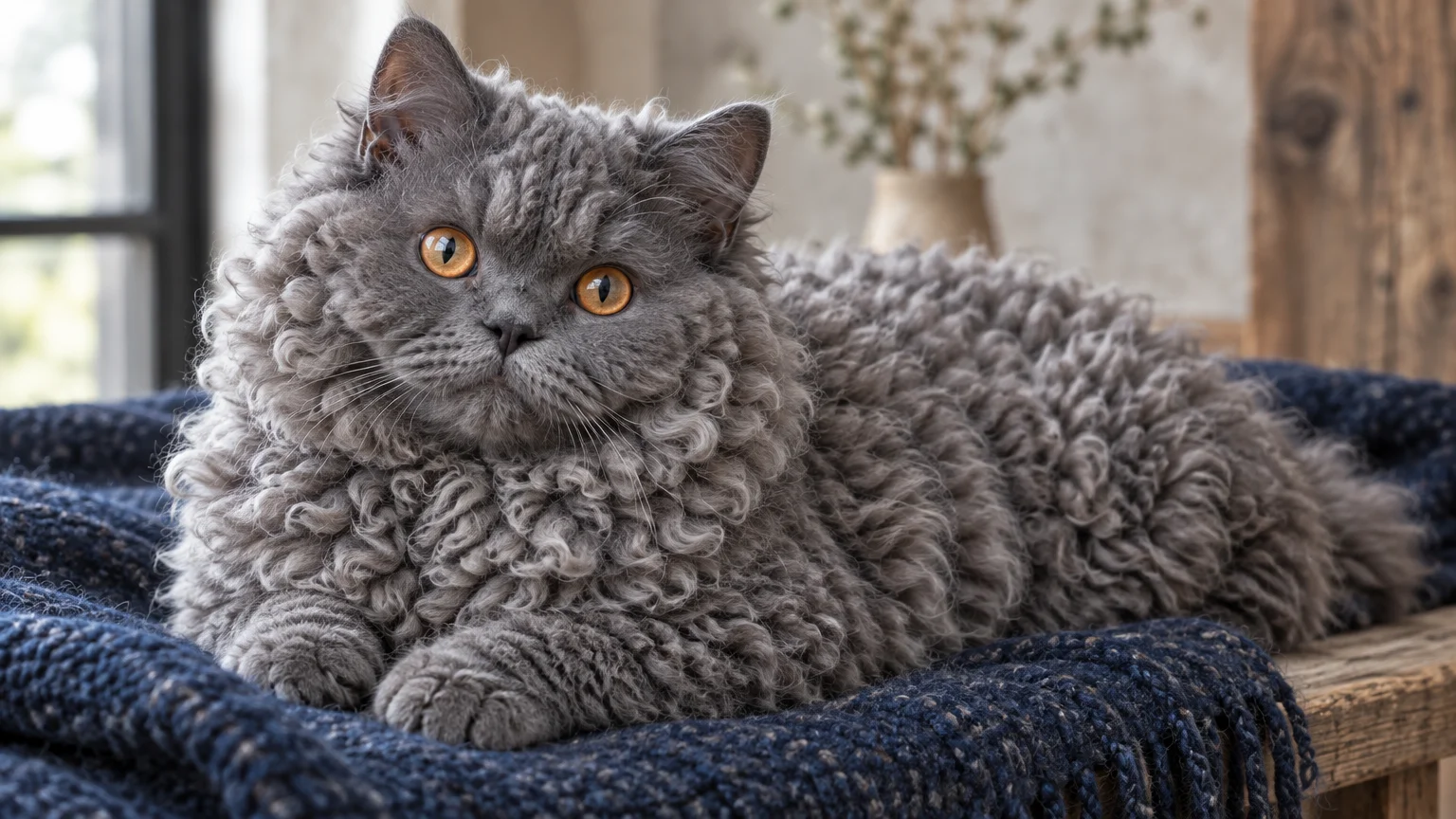
This dominant mutation creates a thick, woolly coat with loose, unstructured ringlets. Breeders celebrate both shorthair and longhair varieties, each resembling a plush stuffed lamb.
The coat feels dense, springy, and remarkably soft under your fingers. Three complete hair layers curl together, producing a full ruff around the neck and curled whiskers.
Shorthair Selkirk coats feel like dense teddy-bear fleece; longhair varieties showcase cascading ringlets. Unlike breeds with delicate fur, this cat possesses a heavy-boned, robust body structure.
Kittens from reputable breeders usually range from $1,200 to $2,500. You must comb their dense fleece twice weekly with a wide-tooth metal comb to prevent painful knots.
04 LaPerm: The Rustic Ringlet Pioneer
The LaPerm emerged on March 1, 1982, on an Oregon cherry orchard in The Dalles. A barn cat produced a hairless kitten that eventually developed soft, wavy curls.
TICA approved the breed for championship competition in February 2003, with CFA recognition following in 2008. A dominant gene governs their spiral curls and textured waves.
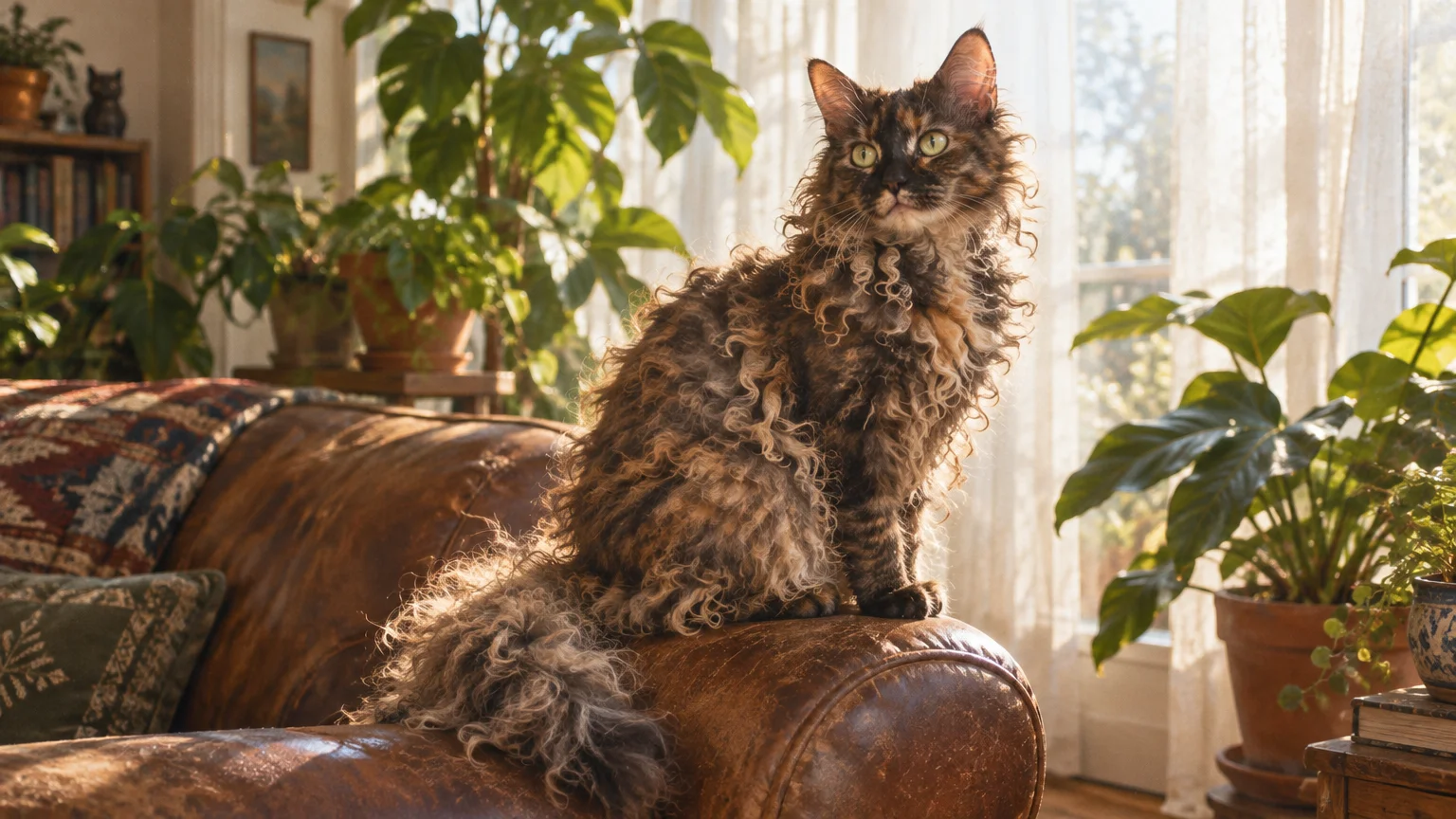
A LaPerm’s coat feels uniquely light, airy, and textured rather than dense or slick. Long corkscrews frame the neck and ears, while looser waves cover the back and belly.
Fascinatingly, many LaPerm kittens lose their entire coat within their first few weeks of life. They remain completely bare before growing their signature adult ringlets around four months of age.
Expect to pay $1,200 to $2,500 for a well-bred kitten. Their coat resists heavy matting, needing only occasional combing and a light water mist to refresh spiral ringlets.
05 American Wirehair: The Resilient Steel Wool Texture
The American Wirehair appeared in upstate New York in 1966 after a spontaneous mutation occurred in a farm litter. The CFA granted the breed championship status in 1978.
This breed showcases a dense, coarse coat where individual hairs hook and bend at the tips. When you touch an American Wirehair, the fur feels springy, wiry, and surprisingly crisp.
Even the whiskers feel stiff and crimped. The coat resembles a textured steel-wool scouring pad, though it remains gentle against human hands.
Unlike fragile curly coats, the Wirehair mutation produces robust, resilient shafts that naturally repel outdoor dirt. The hair resists moisture and maintains its springy architecture through normal play.
You should avoid brushing this cat vigorously because mechanical friction can fracture the hooked tips. Gentle, infrequent combing preserves their distinctive crimp without damaging delicate hair shafts.
06 Sphynx: The Warm Peach-Fuzz Companion
The modern Sphynx lineage began in 1966 in Toronto, Canada, through a natural recessive mutation. The CFA accepted the breed in 1998 and granted full championship status in 2002.
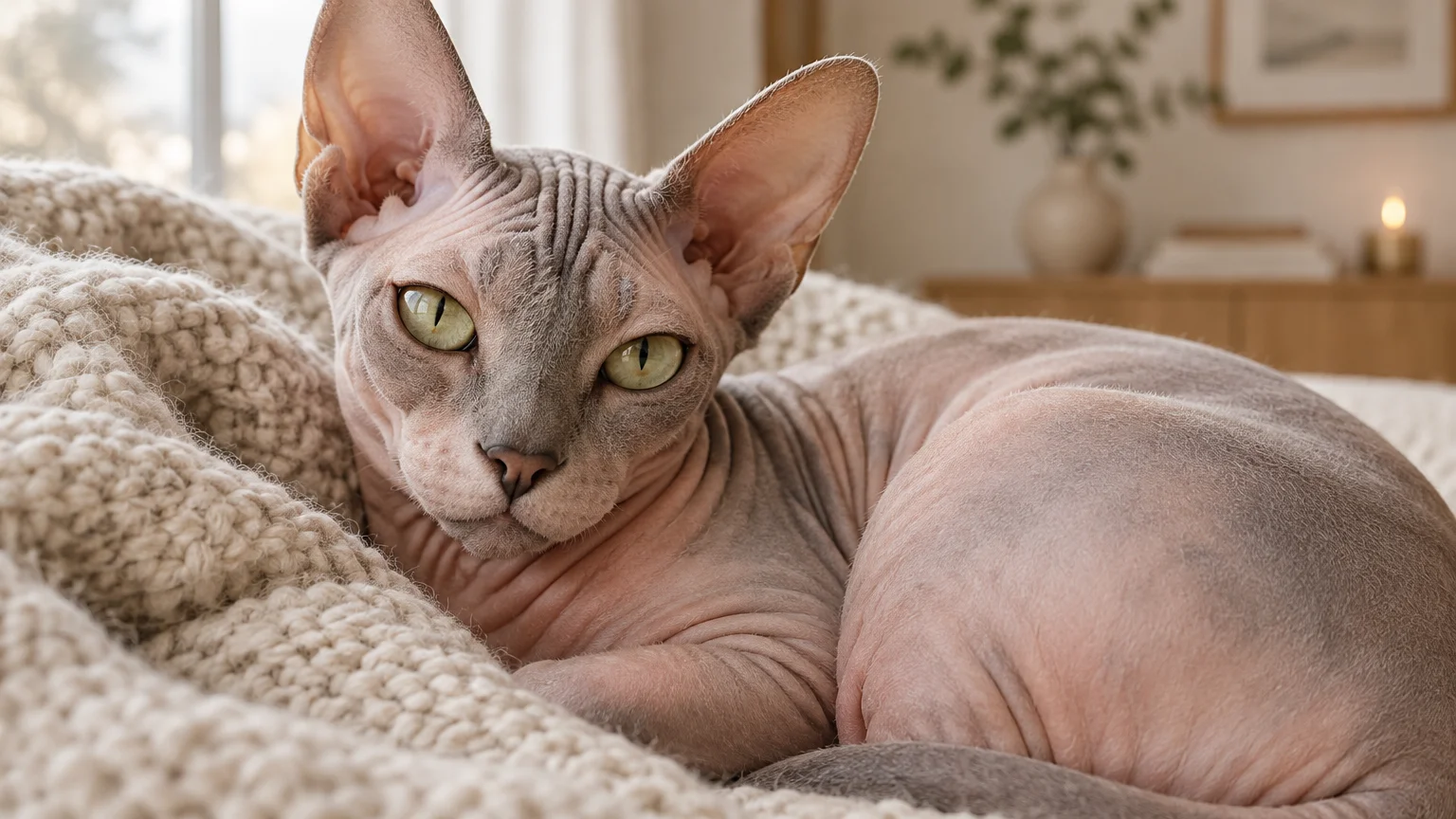
While commonly called hairless, the Sphynx actually carries a fine coat of microscopic down across its body. Touching a Sphynx feels like handling a warm chamois cloth or a ripe peach.
Because these cats lack hair shafts to absorb natural sebum, oils accumulate directly on their skin. Unchecked sebum soils your furniture, stains bedding, and clogs delicate feline pores.
You must bathe a Sphynx every two to four weeks using gentle, moisturizing feline cleansers. You should also clean their ear canals and claw sheaths weekly to remove brown sebaceous wax.
Pedigree Sphynx kittens cost between $2,000 and $5,000 from established catteries. Specialized cleansers, ear flushes, and skin wipes add $10 to $40 per month to your care routine.
07 Donskoy: The Dominant Hairless Enigma
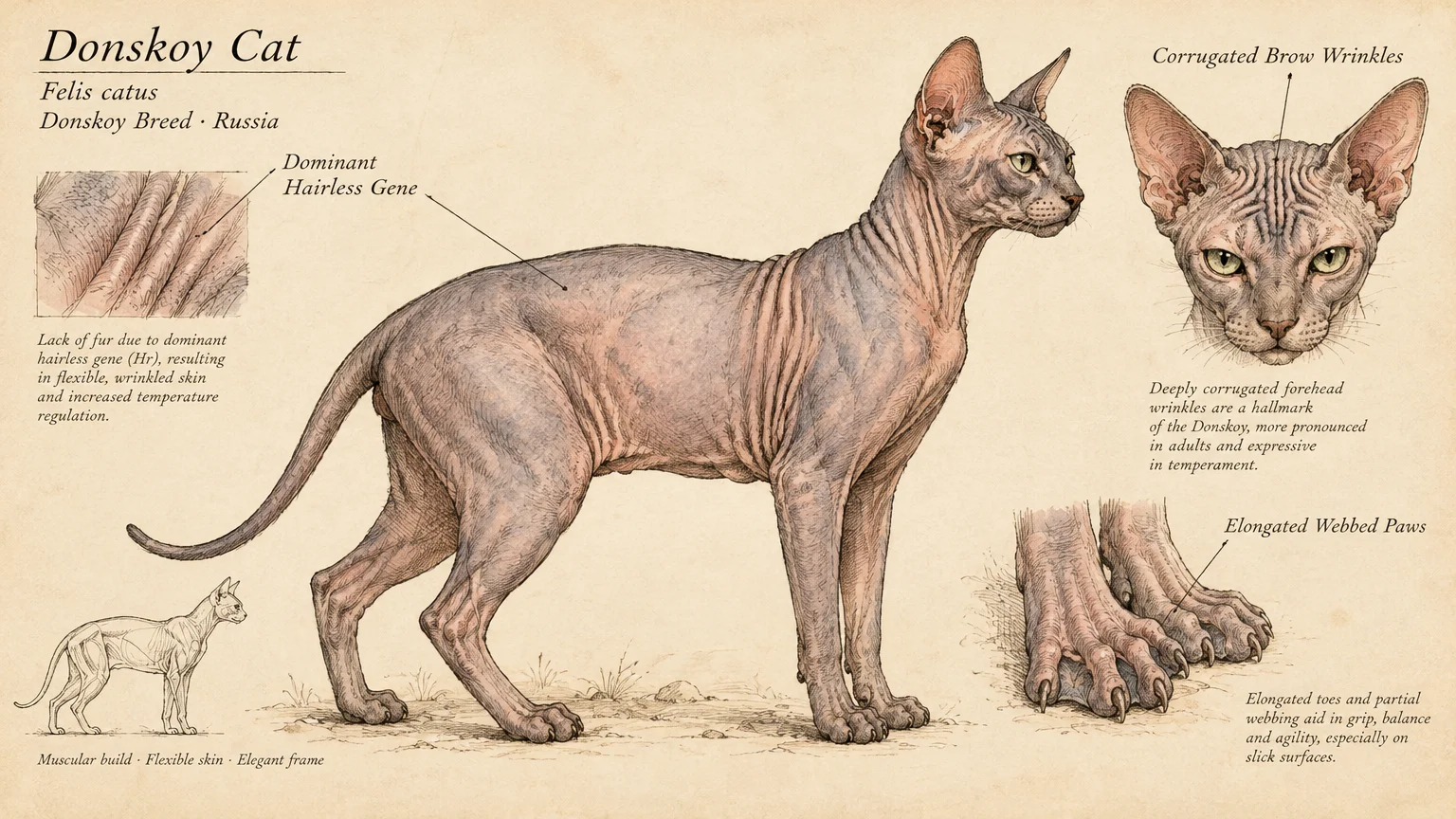
The Donskoy, also called the Don Sphynx, surfaced in 1987 in Rostov-on-Don, Russia. TICA registered the breed in 1997, and the World Cat Federation (WCF) granted recognition in 1998.
Unlike the Canadian Sphynx, a dominant genetic mutation controls the Donskoy’s coat loss. This distinct genetic mechanism produces four different textural varieties across the breed.
Rubber Bald kittens arrive completely hairless and maintain warm, elastic, rubbery skin throughout adulthood. Flocked varieties sport fine down resembling smooth velvet that often disappears as the cat matures.
Velour coats feel like plush suede, while brush varieties retain coarse, wiry patches across the back and legs. Their thicker skin produces deep wrinkles along the cheeks, neck, and chest.
Donskoys require regular bathing and strict indoor protection against temperature fluctuations. Their heavy sebum production necessitates diligent skin hygiene to prevent bacterial infections.
08 Peterbald: The Versatile Russian Texture Chameleon
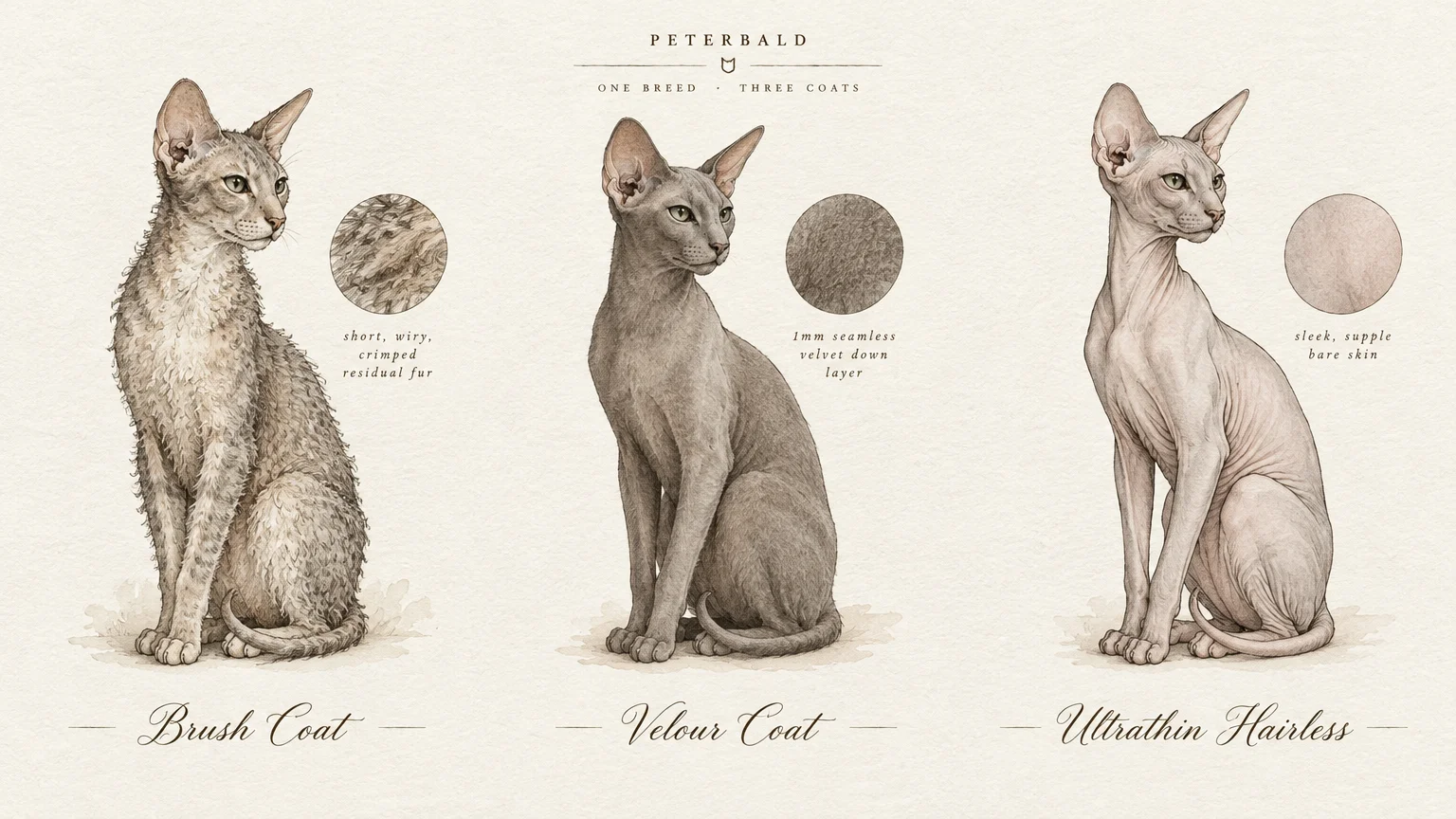
Breeders created the Peterbald in 1994 in St. Petersburg, Russia, by crossing a Donskoy with an Oriental Shorthair. TICA recognized the breed in 1997, and CFA approved registration in May 2009.
TICA awarded full championship honors in 2005, expanding that status to brush-coated cats in May 2008. The Peterbald combines sleek, angular Oriental elegance with unique Russian hairless genetics.
Their coats range from sticky-bald and peach-velour to coarse, irregular brush fur. Some Peterbald kittens enter the world with heavy coats and lose them completely over two years.
The brush coat feels stiff, dense, and crinkled, creating an eccentric tactile sensation unlike any other cat. The ultra-bald variety feels warm, supple, and slightly adhesive to human fingertips.
Like other hairless varieties, Peterbalds lack protective outer defenses against ultraviolet radiation and cold drafts. Owners must provide heated beds and regulate indoor room temperatures carefully.
09 Lykoi: The Roan “Werewolf” Pattern
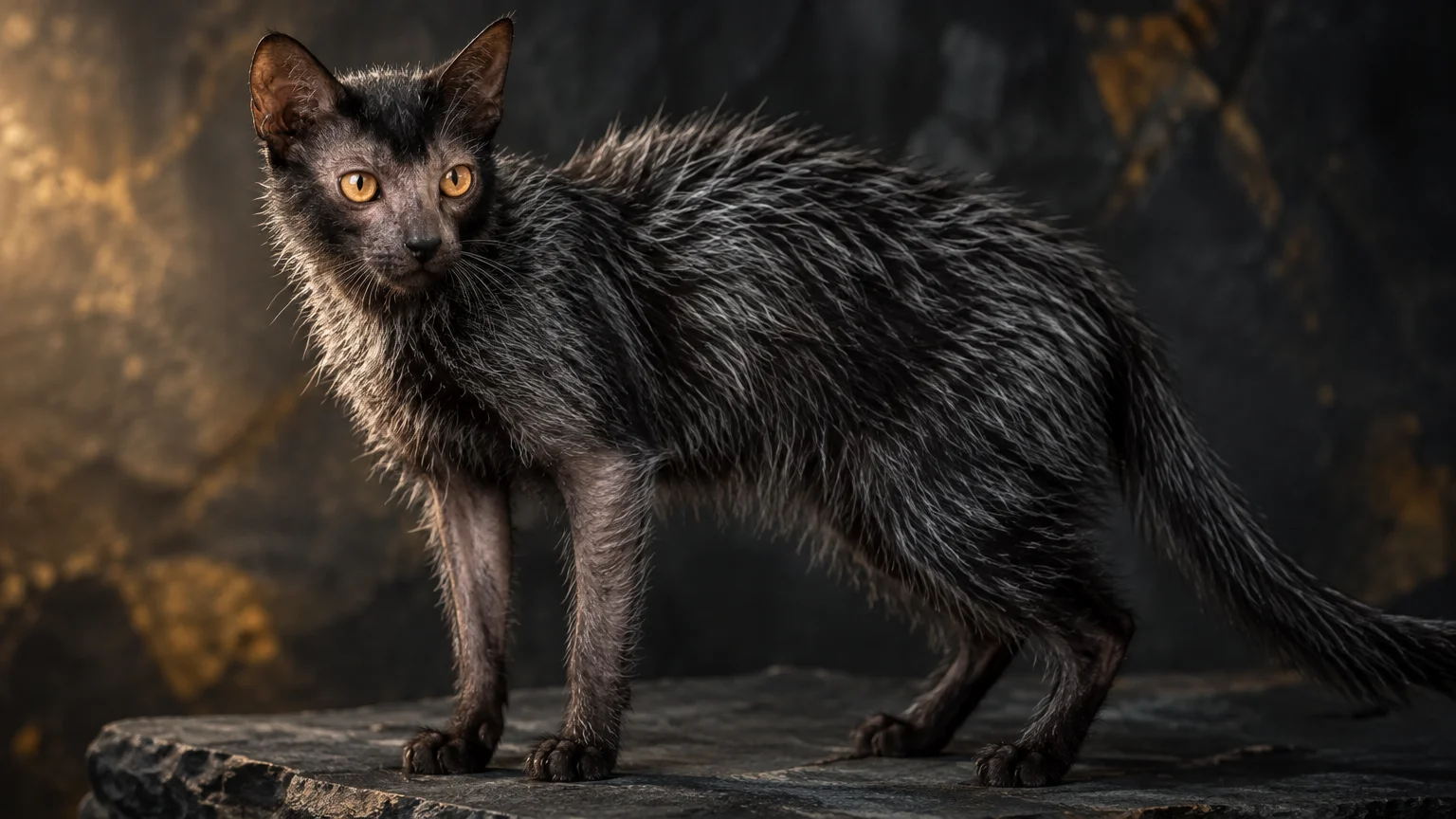
The Lykoi originated from natural mutations discovered in feral cat populations in Virginia and Tennessee in 2010. Intentional breeding programs began in 2011 to establish breed health.
TICA granted championship status in 2017, and the CFA awarded full championship status in 2023. The name “Lykoi” derives from the Greek word for wolf, referencing their wild appearance.
This breed displays an unmistakable roan pattern composed of solid black hairs mingled with unpigmented white hairs. A unique hair follicle mutation deprives the cat of all undercoat.
The Lykoi coat feels coarse and bristly, resembling animal roan fur rather than plush feline velvet. They feature bare skin around the eyes, muzzle, ears, and paws.
Lykoi cats cycle through dramatic shedding periods where they molt into almost complete baldness before regrowing fur. Pedigree kittens from certified breeders command prices between $1,500 and $3,000+.
“Genetics reshaped the domestic cat into extraordinary textures, yet each distinct coat demands deliberate, specialized human stewardship.”
Texture Comparison at a Glance
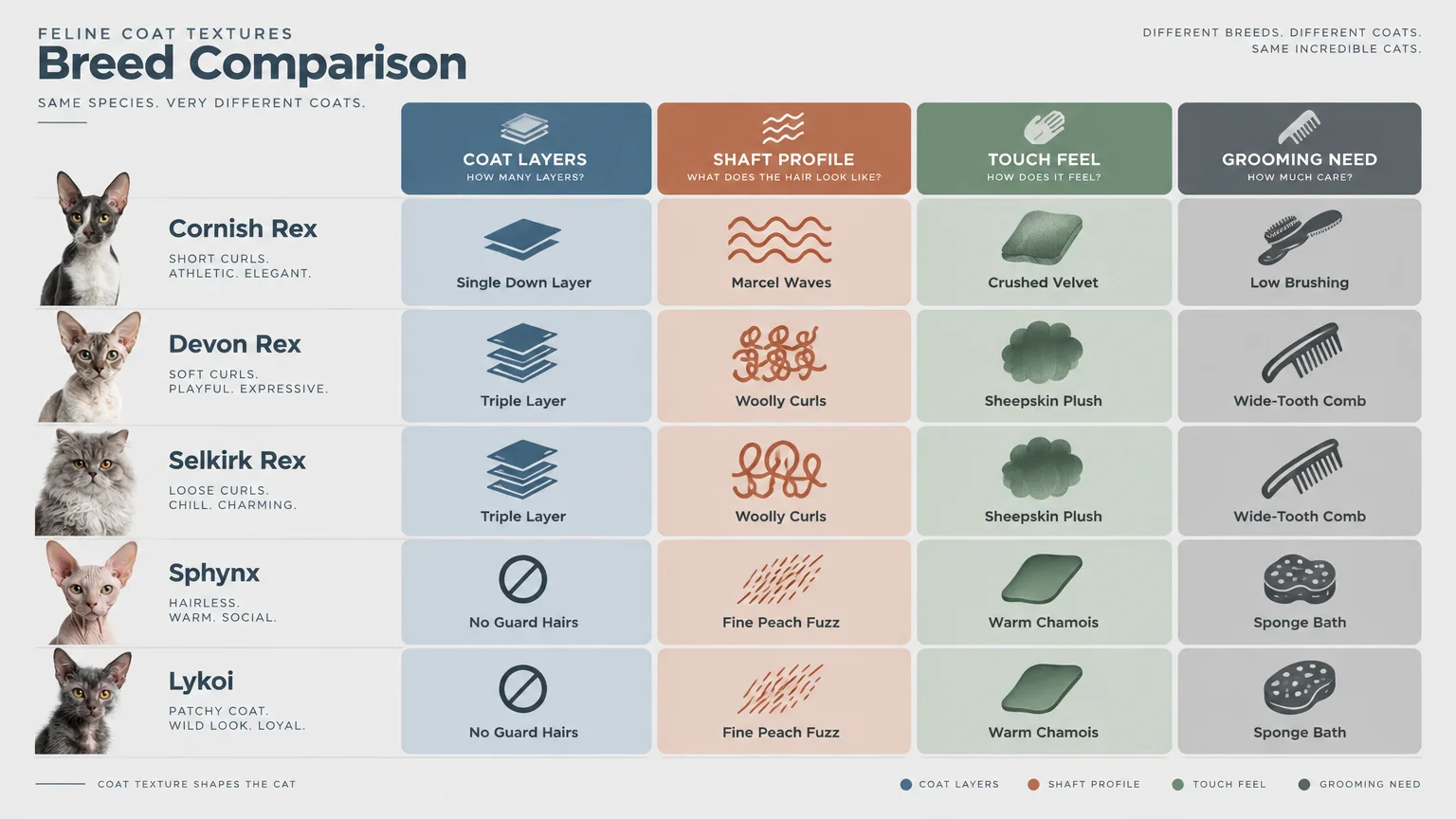
Choosing between curly, hairless, or crimped coats depends heavily on your grooming schedule and budget. The following overview details physical traits, layer structures, and baseline maintenance requirements across all nine breeds.
| Breed | Primary Coat Texture | Hair Layers | Weekly Grooming Effort | Average Cost |
|---|---|---|---|---|
| Cornish Rex | Velvety Marcel wave | Down hair only | Low (Hand rub) | $1,200 – $2,500 |
| Devon Rex | Rippled, soft suede | All 3 (sparse guard) | Low (Gentle cloth) | $2,000 – $5,000 |
| Selkirk Rex | Plush sheepskin curls | All 3 (thick, curly) | Moderate (Wide comb) | $1,200 – $2,500 |
| LaPerm | Airy spiral ringlets | All 3 (loose curls) | Low to Moderate | $1,200 – $2,500 |
| American Wirehair | Coarse, crimped wire | All 3 (crimped shafts) | Low (Minimal combing) | $1,000 – $2,000 |
| Sphynx | Warm, soft peach fuzz | Microscopic down | High (Routine baths) | $2,000 – $5,000 |
| Donskoy | Rubbery bare to velour | None to variable | High (Skin wiping) | $1,500 – $3,000 |
| Peterbald | Bald to wiry brush | Variable types | Moderate to High | $1,500 – $3,500 |
| Lykoi | Bristly, patchy roan | Guard and awn only | Low to Moderate | $1,500 – $3,000+ |
Daily Care and Grooming Realities
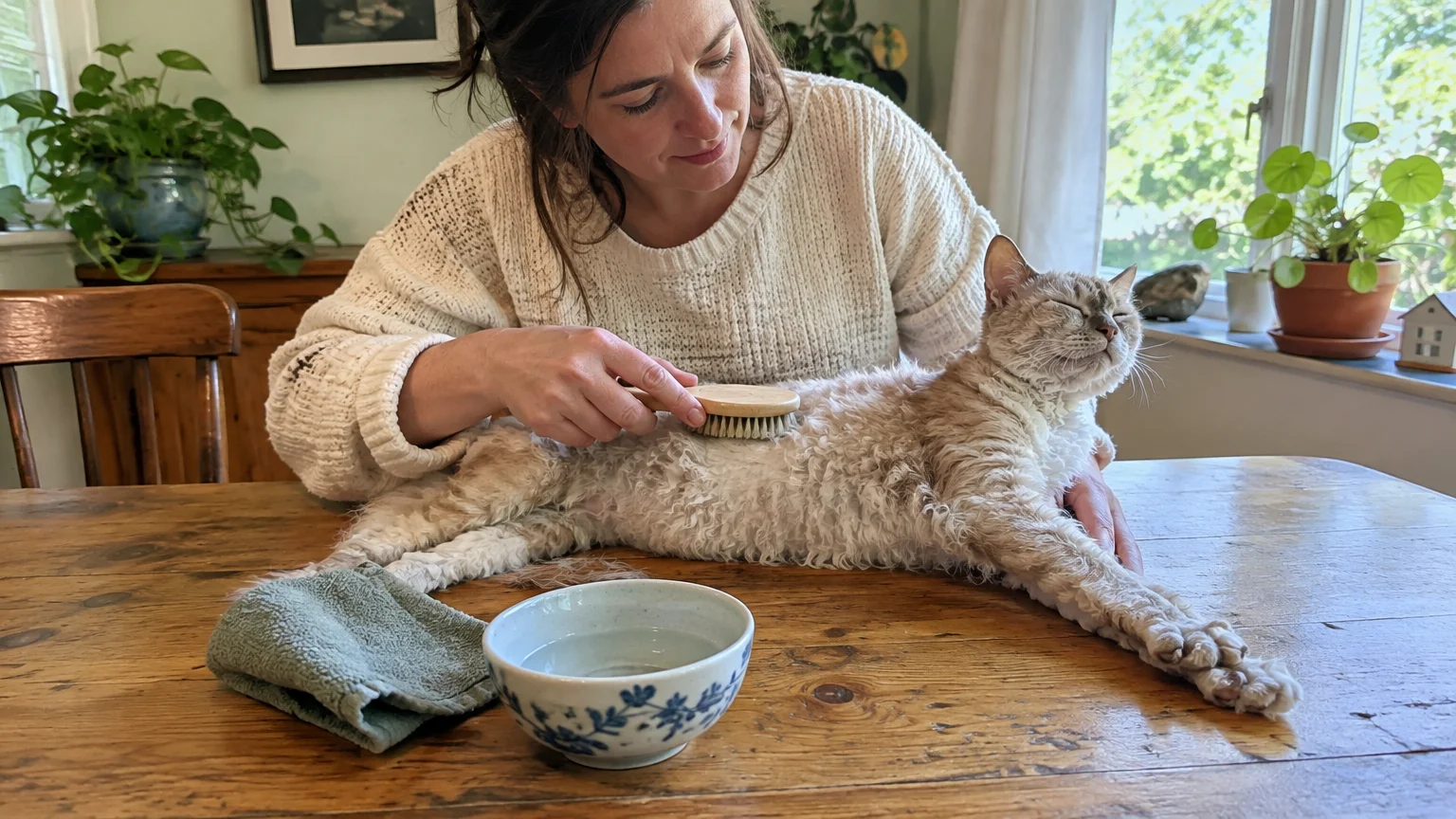
Unusual coats require unique care techniques compared to ordinary short-haired domestic felines. Using wrong tools on fragile crimped or wavy fur can snap hair shafts near the skin.
Curly-coated breeds like the Selkirk Rex and LaPerm benefit most from wide-spaced, stainless-steel combs. Fine slicker brushes snag fragile curls and pull delicate roots painfully.
Comb curly fur gently when dry; misting lightly with water afterward restores their natural spiral bounce. Over-brushing a Devon or Cornish Rex strips their thin fur and exposes delicate skin.
Hairless cats present the opposite grooming challenge because they generate significant oil without fur to absorb it. Without biweekly bathing, body sebum deposits brown grease rings on furniture.
Choose an unperfumed, soap-free cat shampoo that preserves the natural acidic balance of feline skin. Keep bathing sessions brief, rinse thoroughly, and wrap your cat in pre-warmed towels immediately.
Worth Keeping in Mind
Prospective owners must evaluate several critical legal, financial, and environmental factors before purchasing an unusual breed. These traits require serious lifestyle commitments and awareness of evolving pet welfare standards.
- International Legal Bans: The Government of the Netherlands enacted a national ban effective January 1, 2026, prohibiting keeping, buying, selling, or importing hairless cats. Violations carry a mandatory fine of €1,500. Grandfathered cats microchipped before 2026 are barred from all cat shows.
- German Torture Breeding Statutes: Under Section 11b of the German Animal Welfare Act, breeding cats lacking functional tactile whiskers (vibrissae) qualifies as illegal torture breeding (*Qualzucht*). Some hairless and Rex bloodlines face strict breeding prohibitions across central Europe.
- Sunburn and Temperature Sensitivity: Hairless and thin-coated breeds lack ultraviolet defense, causing severe sunburn and malignant skin changes after sun exposure. You must install UV-blocking window film and maintain indoor heating during cold seasons.
- Elevated Care Expenses: Specialized hypoallergenic body washes, non-abrasive skin wipes, and medicated ear cleansers add $10 to $40 monthly. In addition, hairless breeds consume extra calories simply to sustain their body temperature.
- Impaired Tactile Navigation: Breeds with brittle, curled, or missing whiskers experience spatial disorientation in dim rooms. Whiskers serve as vital navigational sensors; fragile facial hairs snap easily during play.
When to Get Professional Help
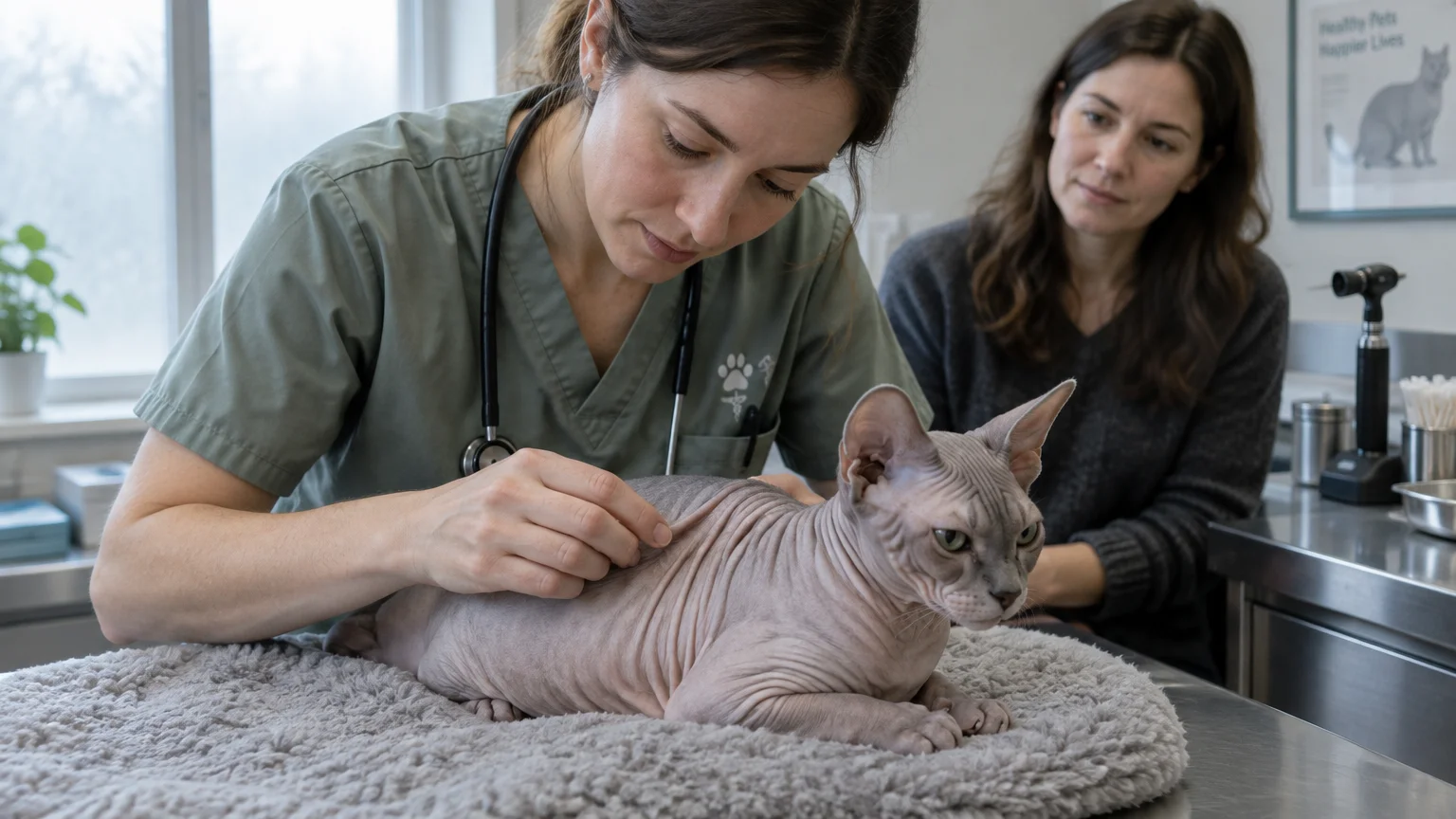
Cats with abnormal coat structures experience dermatological vulnerabilities rarely seen in standard domestic felines. Monitor your pet’s skin regularly to address subtle health concerns before painful complications arise.
Consult your veterinarian immediately if you observe redness, blackheads, or greasy brown patches in your cat’s skin folds. Fungal organisms like *Malassezia* thrive inside warm, humid skin creases.
Seek medical care if you observe severe head-shaking or foul-smelling debris inside your cat’s ears. Hairless breeds generate heavy brown sebum, which owners frequently confuse with parasitic ear mite infestations.
Contact a veterinarian if you detect dry, peeling skin, scabs, or thickened red patches across exposed areas. These signs often point to actinic solar dermatitis, which can progress toward cutaneous squamous cell carcinoma.
Prompt professional diagnosis prevents minor follicular inflammation from developing into chronic, systemic skin infections. Your veterinary team can prescribe topical antiseptic rinses tailored to sensitive feline skin.
Frequently Asked Questions
Are curly or hairless cat breeds hypoallergenic?
No cat breed is completely hypoallergenic. Humans react to the Fel d 1 protein found in feline saliva, sebum, and dander rather than the fur itself.
While hairless breeds shed less hair around your home, their skin still produces the Fel d 1 protein. Spend time around your chosen breed before adopting to test your sensitivity.
How often should you bathe a hairless cat?
Most hairless cats require a gentle bath every two to four weeks. Bathing too frequently strips essential barrier lipids, prompting oil glands to produce even more sebum.
Between bath sessions, wipe your cat’s armpits, groin, and neck folds with warm water or non-alcoholic pet wipes.
Do rex breeds require professional grooming haircuts?
No, Rex cats never require clipping, shaving, or professional salon trims. Their delicate, wavy hair is fragile and grows at a controlled, genetic length.
Regular hand-petting and gentle combing with a wide-tooth metal comb provide all the routine coat maintenance they need.
Why do some hairless kittens have fur at birth?
Breeds like the Peterbald and Donskoy carry complex genetic variations that alter hair follicle expression over time. Kittens often start life with fine velour or brush fur.
As the kitten matures, shifting hormone levels and follicle shedding cause the infant coat to drop out completely by two years of age.
Practical Takeaway for Cat Lovers
Selecting an unusual cat breed offers an engaging window into feline genetics and evolution. However, these distinct coats trade self-sustaining protection for extraordinary looks and textures.
Ensure you can commit the necessary time to weekly combing or regular skin hygiene before adopting. When matched with dedicated caregivers, these textured companions thrive happily inside comfortable indoor environments.
This article provides general information only. Every reader’s situation is different—what works for others may not be the right fit for you.
For personalized guidance on health, legal, or financial matters, consult a qualified professional.
Last updated: October 2026. Rules, prices, and details change—verify current information with official sources before acting on it.