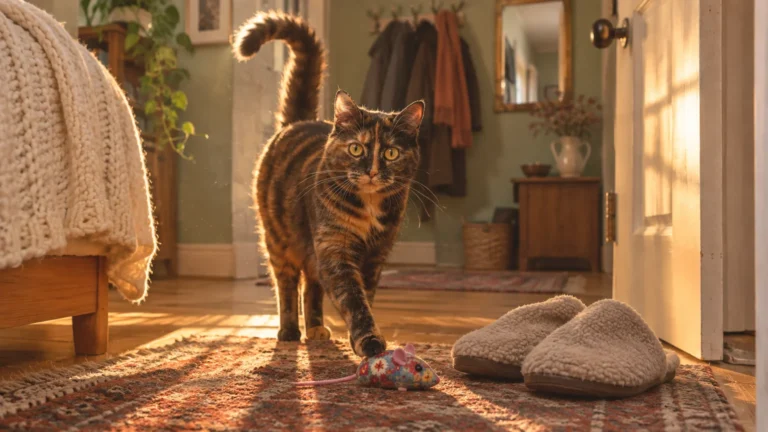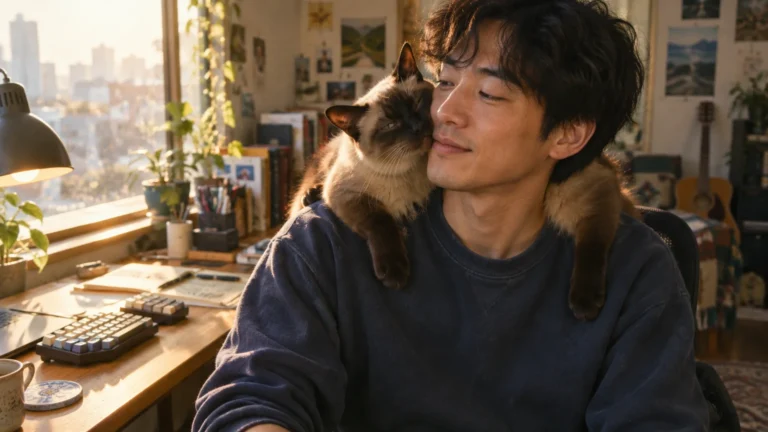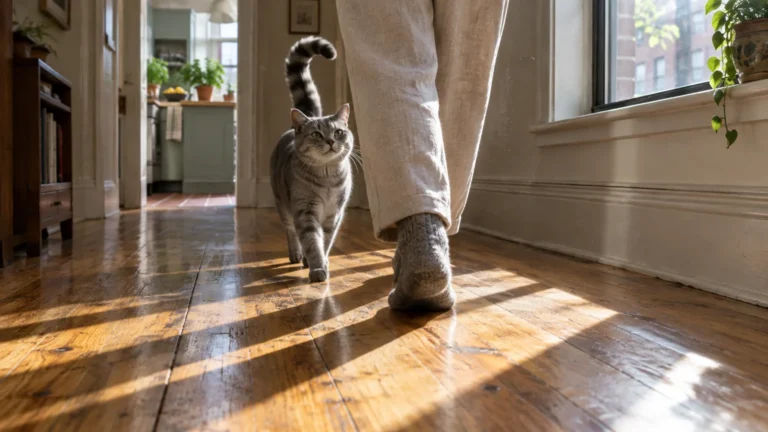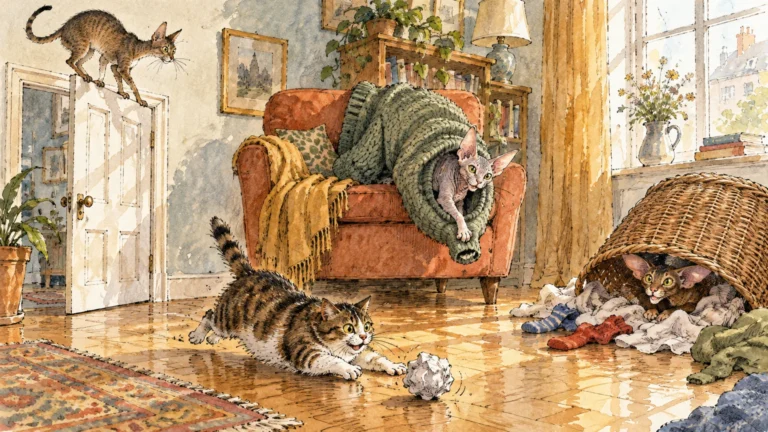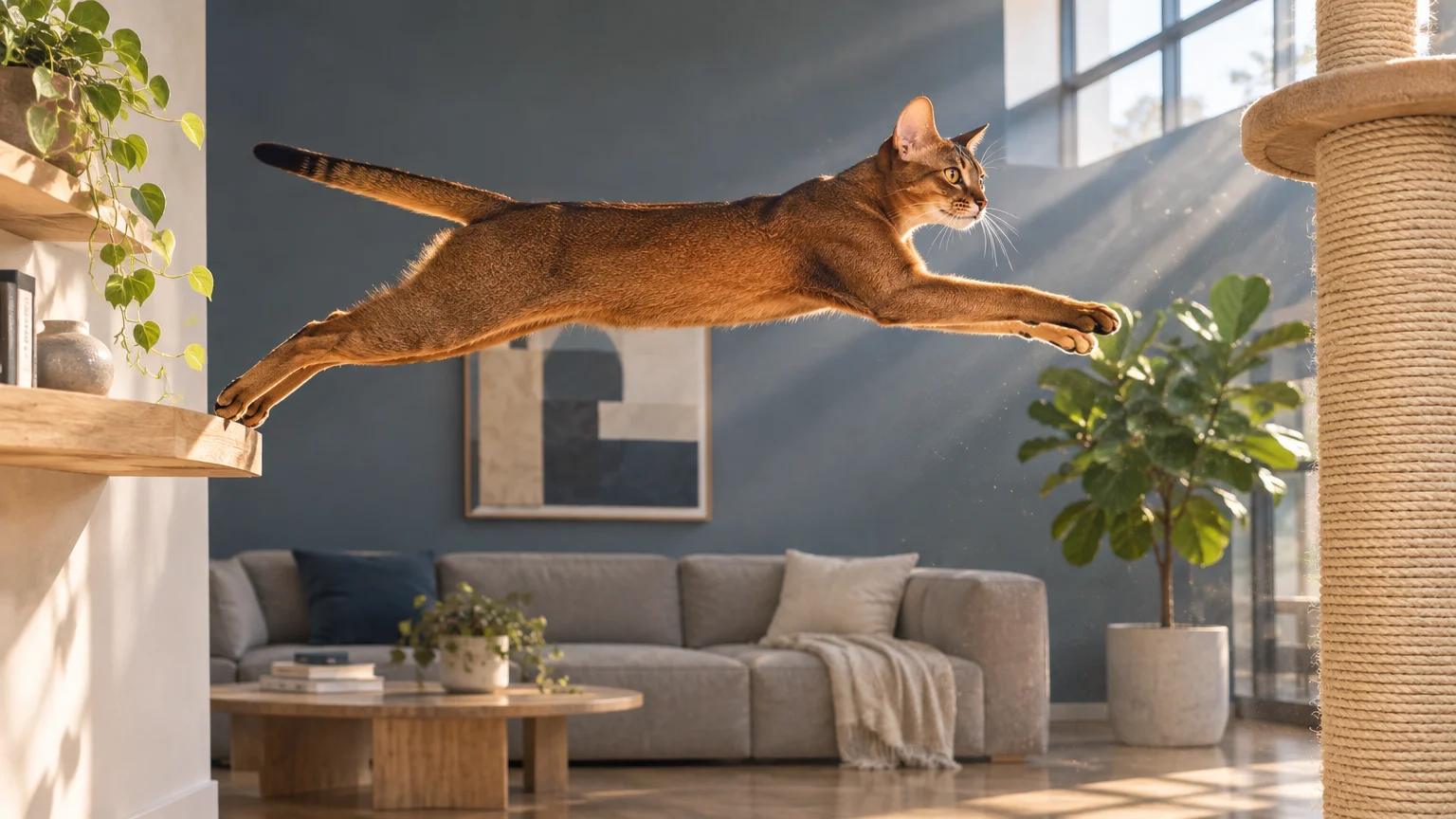
Your cat just launched off the sofa, ricocheted down the hallway, and scaled the bookshelf before your coffee even finished brewing. That sudden burst of acrobatic speed does not mean your pet is misbehaving; it means you share your home with a wired-to-move athlete.
Although any feline can catch the midnight zoomies, certain active cat breeds turn relentless motion into a daily routine. Their curiosity demands more than a lonely plush mouse on the living room rug.
Here are ten famously restless breeds, the biology behind their stamina, and practical strategies to help you channel their nonstop energy.
Why Some Cats Never Seem to Run Out of Fuel
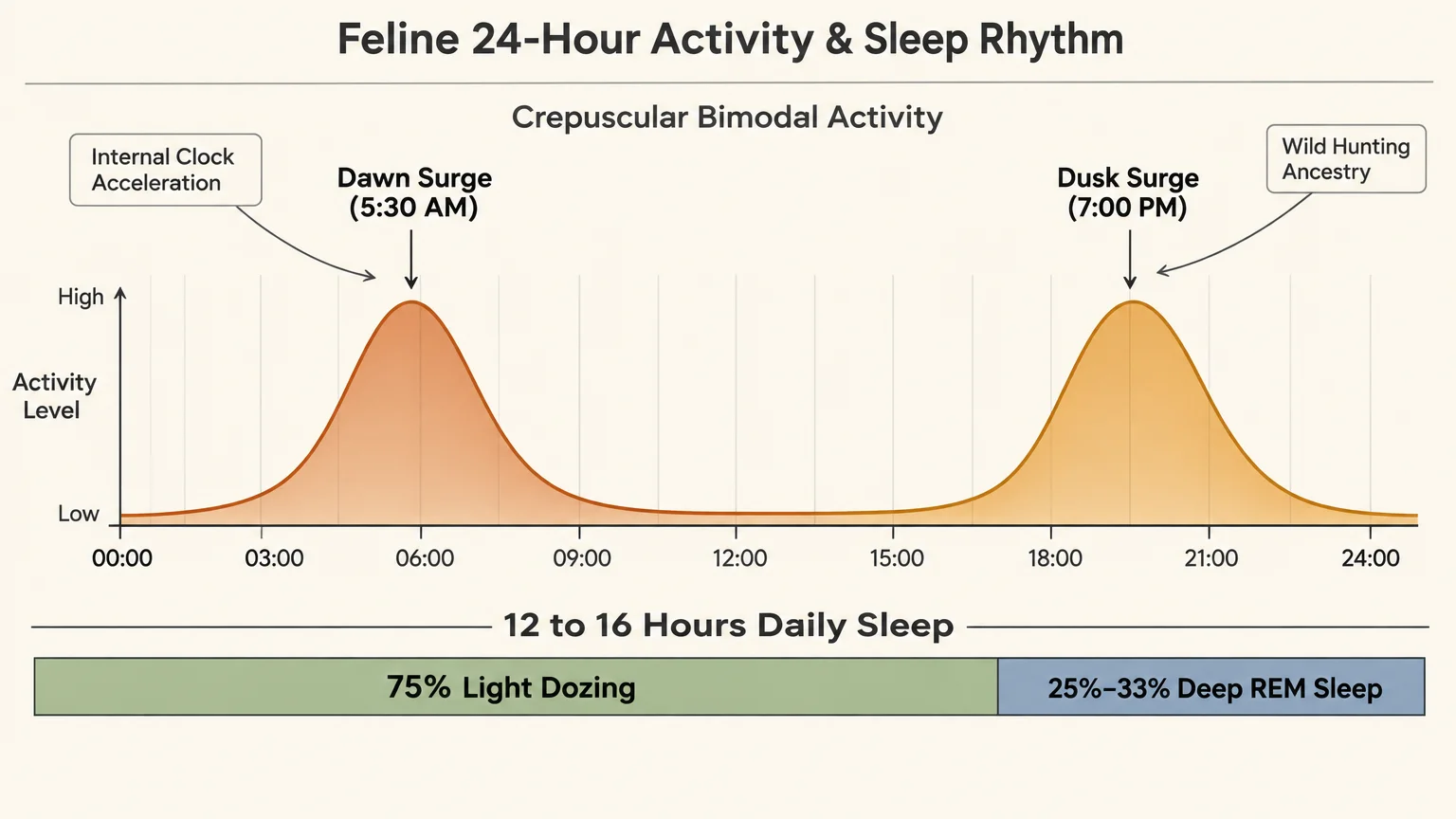
Even the most energetic feline spends plenty of time recharging. Adult domestic cats sleep an average of 12 to 16 hours per day—and kittens sleep up to 20 hours—with roughly 75% spent in light dozing and 25% to 33% in deep REM sleep.
When high energy cats wake up, their internal clock hits the accelerator at very specific hours. Research compiled by the Cornell Feline Health Center and International Cat Care confirms that cats are crepuscular, showing bimodal activity peaks in brain-temperature recordings at dawn and dusk.
That twilight surge explains why your cat treats 5:30 a.m. like an Olympic qualifying heat. Wild ancestors hunted small prey during dim light, and selective breeding amplified those instincts in several modern pedigreed lines.
Selective genetics also shape how readily cats interact with humans during those waking windows. According to the Cat Fanciers’ Association (CFA), which recognizes 45 pedigreed breeds, several of the most athletic and inquisitive breeds consistently sit near the top of registration charts.
Playfulness often shows up in surprising ways, including spontaneous retrieving games. A 2023 global survey of 1,154 cats published in Nature Scientific Reports found that 94.4% of cats that fetch learned the behavior without formal training, while 48% of cat owners now actively train their pets.
Keeping up with a restless cat also protects its long-term health. In the Association for Pet Obesity Prevention (APOP) 2022 clinical survey, veterinary professionals scored 61% of evaluated U.S. cats as overweight (28%) or having obesity (33%).
Owner awareness is climbing, yet follow-through remains tough for busy households. APOP’s 2025 survey showed 43% of U.S. cat owners rated their cats above ideal weight—up from 33% in 2024 and 28% in 2023—and while 53% attempted weight-loss efforts, only 19% reached a healthy target weight.
Rising veterinary diagnoses tell a similar story. The American Pet Products Association (APPA) 2024 Cat & Dog Report documented vet-diagnosed feline obesity climbing from 11% in 2018 to 17% in 2024, alongside prescription weight-loss diets rising from 8% to 13%.
If your cat belongs to one of the breeds below, boredom and extra calories do not mix. Channeling their natural drive keeps both your furniture and your pet’s waistline intact.
The 10 Most Restless Cat Breeds—and How to Keep Up With Them
1. Abyssinian
Few cats inspect a room with the laser focus of an Abyssinian. Ranking #6 in the CFA’s 2025 Top 10 breed list, this lithe, ticked-coat mover treats every curtain rod, doorway, and shoulder as an open invitation to climb.
Abyssinians rarely act like lap ornaments for long; they prefer supervising your daily chores from the highest available perch. Their intelligence and agility even helped shape the foundation of modern hybrid breeds like the Bengal.
To keep an Abyssinian satisfied, install staggered wall shelves or a tall cat tree near a sunny window. Pair vertical routes with short clicker-training sessions so your cat can burn mental and physical energy simultaneously.
2. Bengal
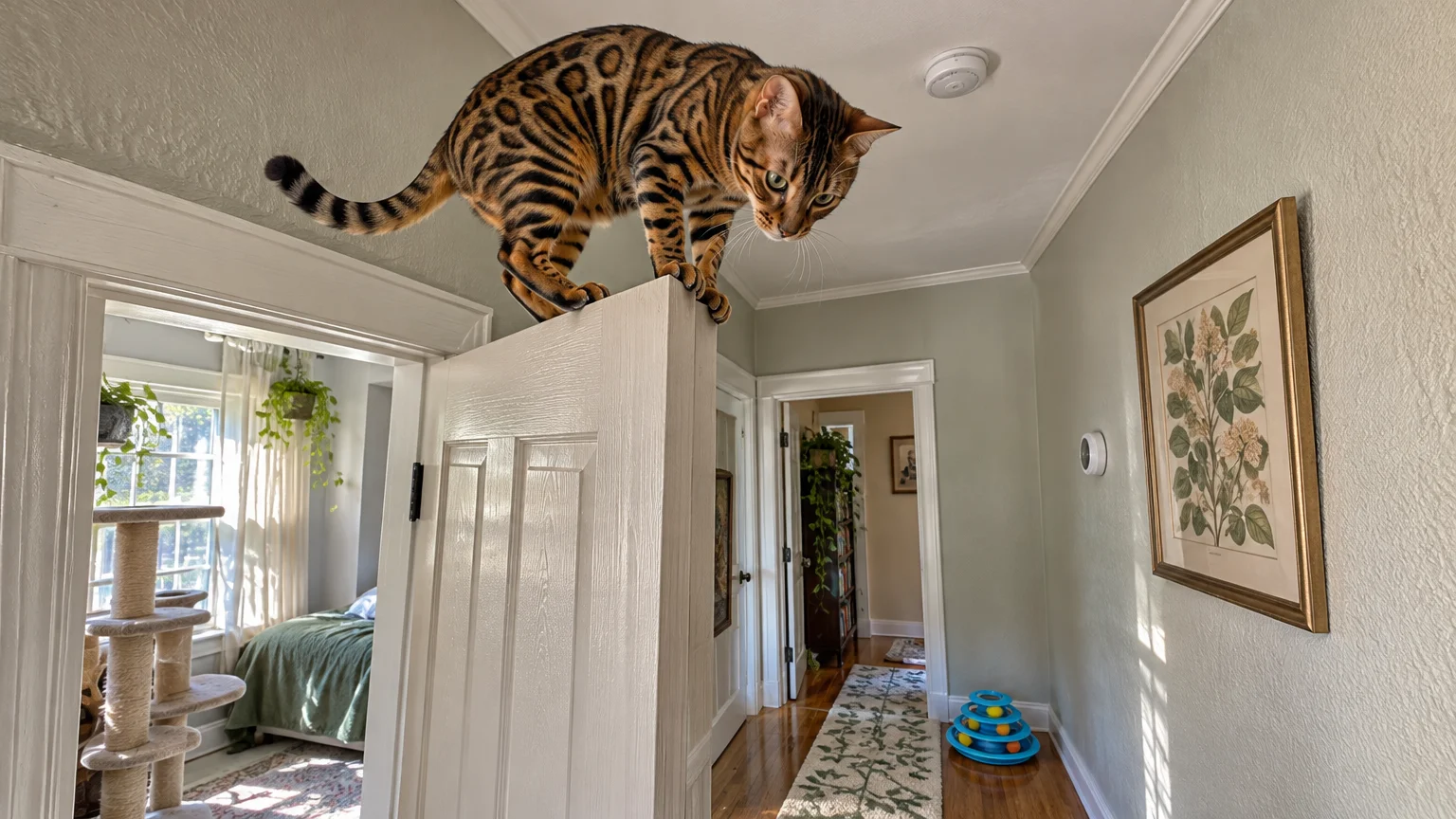
Created by crossing the wild Asian leopard cat (Prionailurus bengalensis) with domestic breeds including the Egyptian Mau and Abyssinian, the Bengal wears its athleticism on its coat. It remains the only domestic breed sporting wild-style rosette markings.
Recognized by the CFA in 2018 and ranked #15 in its 2023 registration report, an adult Bengal weighs 8 to 15 pounds and stands 8 to 10 inches tall. The International Cat Association (TICA) estimates the breed’s life expectancy at 12 to 20 years.
Bengals come with high expectations for both space and budget, with August 2026 U.S. pet-quality asking prices ranging from $1,500 to $3,500. Because early hybrids retain strong wild drives, animal welfare group FOUR PAWS advises against keeping hybrid breeds like Bengals as pets.
If you already share your home with a Bengal, structured daily outlets are mandatory. Rotate interactive wand toys, introduce safe shallow-water play, and use sturdy feline exercise wheels or harness walks to prevent destructive boredom.
3. Savannah
First born on April 7, 1986 from a cross between an African serval (Leptailurus serval) and a domestic cat, the Savannah towers over ordinary housecats in both stature and vertical reach. TICA accepted the breed in 2001 and granted championship status in 2012.
Show-eligible F4 and F5 Savannahs typically weigh 11.0 to 18.1 pounds (5.0 to 8.2 kg), and athletic individuals can jump up to 8 feet straight into the air. An F2 male named Arcturus Aldebaran Powers earned the Guinness World Record for tallest domestic cat at 19.05 inches (48.4 cm) in November 2016.
That wild heritage brings serious legal and welfare caveats before you ever consider bringing one home. Ownership depends on filial generation—F1 equals 50% serval, F2 equals 25%, and F3 equals 12.5%—and FOUR PAWS notes that only F5 and later generations lose exotic-hybrid status in many jurisdictions.
All Savannah generations are banned in Australia (since August 2008) as well as in Georgia, Hawaii, Nebraska, and Rhode Island. Early generations face strict limits in Alaska, Colorado, Iowa, Massachusetts, New Hampshire, New York, and Vermont, plus city bans in New York City, Denver, and Seattle.
Savannah owners need reinforced screen doors, cabinet child-locks, and generous indoor running lanes. Harness training and heavy-duty puzzle feeders help give these powerhouse jumpers a legitimate job to do.
4. Egyptian Mau
If speed is your metric for restlessness, the Egyptian Mau owns the crown. Guinness World Records certifies it as the fastest domestic cat breed, capable of hitting top speeds of 48 km/h (30 mph).
Two anatomical advantages fuel that burst: proportionally longer hind legs and a loose flap of belly skin running back to the hind limbs that lets the body stretch mid-stride. Individual Maus can clear leaps reported up to 70 inches.
Recognized by the CFF in 1968, the CFA in 1977, and FIFe in 1992, the Egyptian Mau is the only naturally spotted domestic breed in the CFA. Adults weigh 8 to 14 pounds, and TICA lists their life expectancy at 10 to 15 years or more.
Give an Egyptian Mau long, unobstructed hallway sprints using fast-moving teaser lures. Just make sure rug runners stay anchored down so your speedster has reliable traction when rounding corners.
5. Devon Rex
With oversized bat ears, a short rippled coat, and relentless clownish charm, the Devon Rex rarely misses a household moment. It held the #5 spot on the Cat Fanciers’ Association Top 10 list in both March 2025 and March 2026.
Accepted as a separate breed from the Cornish Rex by the GCCF in 1967 and the CFA in 1979, this compact sprite weighs just 5 to 10 pounds. Its distinctive coat stems from a mutation in the KRT71 gene—the same gene involved in the Sphynx.
Devon Rexes combine agile leaps with a deep craving for human company, often perching on shoulders while you cook or type. Small crinkle balls, lightweight fetch toys, and heated beds for post-play naps suit this petite acrobat best.
6. Cornish Rex
Do not confuse the Cornish Rex’s soft, wavy coat with that of its Devon cousin; its curls arise from a completely different deletion in the LPAR6 gene. Underneath those marcel waves sits an elongated, oriental-style frame built for greyhound-like acceleration.
Cornish Rexes stay kittenish well into adulthood and show remarkable paw dexterity. Many owners watch them pick up small foam balls, toss them into the air, and play solo or interactive games of fetch down the stairs.
Keep plenty of lightweight, cat-safe toys scattered in rotation so your Cornish Rex can bat, carry, and retrieve without improvising with hair ties or paperclips. Elevated window hammocks also satisfy their love for warmth after a high-speed dash.
7. Sphynx
Ranked #9 in the CFA’s 2025 Top 10 list, the Sphynx brings theatrical energy and fearless curiosity to every room it enters. Adults typically weigh 6 to 12 pounds and carry a life expectancy of 8 to 14 years.
Despite its hairless reputation, standards from the CFA and 4-H Cat Project note that a Sphynx has fine, short hair up to 1/8 inch long on its ears, muzzle, tail, and parts of its body, while lacking whiskers.
It also shares the KRT71 gene mutation seen in the Devon Rex.
Before assuming this active clown solves allergy problems, check the science carefully. International Cat Care emphasizes that no cat—including the Sphynx—is hypoallergenic, because feline allergies are triggered by proteins in saliva and skin glands rather than fur.
Because Sphynx cats burn extra calories staying warm and seek heat aggressively, active indoor play pairs naturally with cozy fleece blankets. International Cat Care also notes the breed is prone to heart, skin, and eye conditions, making routine veterinary screening essential.
8. Siamese
Part of TICA’s Siamese Breed Group, the Siamese pairs a sleek 6-to-12-pound frame with a social motor that rarely idles. If you ignore a Siamese when it wants engagement, you will hear a thorough, opinionated protest.
Adult domestic cats use 20 distinct vocalization types, and the Siamese seems determined to cycle through all of them while herding you toward the toy drawer. Left alone without mental stimulation, they quickly invent their own mischievous entertainment.
Treat a Siamese like an interactive partner rather than a quiet roommate. Teach simple tricks like sitting, high-fiving, or ringing a bell before meals to turn that chatter into focused play.
9. Oriental Shorthair
Sharing TICA’s Siamese Breed Group alongside the Siamese, Balinese, and Oriental Longhair, the Oriental Shorthair delivers the same slender 6-to-12-pound build in hundreds of coat colors and patterns. Think of it as an athletic, long-legged extrovert with endless curiosity.
Orientals love opening unlocked drawers, investigating grocery bags, and shadowing family members from room to room. Their lean muscle mass thrives on daily climbing and chasing challenges.
Puzzle feeders, rotating cardboard obstacle boxes, and brisk evening wand sessions work wonders for this clever breed. Many Orientals also enjoy living with a second equally energetic cat to wrestle with when you are away.
10. Turkish Van
Recognized by the CFA, TICA, GCCF, and ANCATS, the Turkish Van stands apart for one surprising hobby: many individuals genuinely love water. Its semi-long, water-resistant coat has no undercoat, drying quickly after a splash.
Marked by the classic Van pattern—a mostly white body with color confined to the head and tail—this sturdy swimmer brings muscular energy to every game. Turkish Vans frequently take well to fetch, vigorous wand chases, and safe outdoor harness training.
Set up a shallow tub or wide ceramic dish with floating ping-pong balls for supervised splash sessions. Just remember to keep toilet lids closed and mop slippery bathroom floors after playtime wraps up.
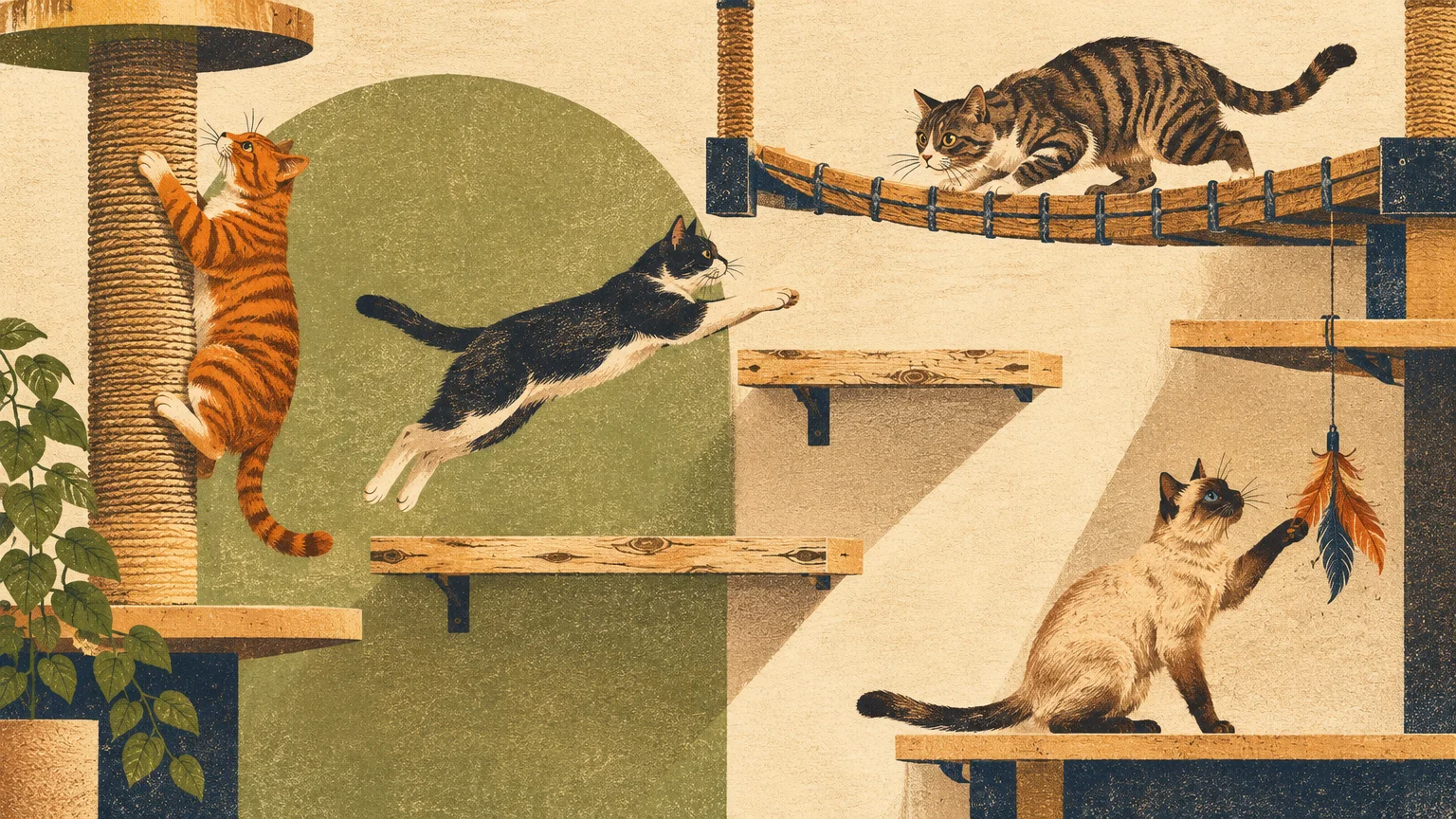
High-Energy Cat Breeds at a Glance
Comparing size, standout traits, and practical care demands helps you match a breed’s athletic profile to your actual living space. The table below summarizes verified benchmarks and primary play styles across all ten breeds.
| Breed | Typical Adult Weight | Standout Physical Trait | Primary Play Style | Key Care or Legal Note |
|---|---|---|---|---|
| Abyssinian | Light to medium athletic build | Ticked coat; agile climbing frame | High perches and interactive puzzles | Needs tall vertical routes |
| Bengal | 8–15 lb | Wild-style rosette markings | Chasing, climbing, and water play | High cost ($1,500–$3,500); hybrid welfare caution |
| Savannah | 11.0–18.1 lb (show F4–F5) | Up to 8-foot vertical leap | Full-room sprints and harness walks | Strict state, city, and national bans |
| Egyptian Mau | 8–14 lb | 48 km/h (30 mph) top speed; loose belly skin | Long-distance hallway dashes | Needs secure traction on floors |
| Devon Rex | 5–10 lb | Large ears; rippled KRT71 coat | Fetch, shoulder-perching, acrobatics | Craves close social attention |
| Cornish Rex | Slender oriental-style frame | Curly LPAR6 coat; agile paws | Tossing toys and stair fetch | Keep small non-toy items put away |
| Sphynx | 6–12 lb | Fine hair up to 1/8 in; no whiskers | Fast social play and heat-seeking | Not hypoallergenic; heart/skin/eye screening |
| Siamese | 6–12 lb | Slender, vocal breed-group build | Trick training and interactive chat | Vocalizes intensely when bored |
| Oriental Shorthair | 6–12 lb | Long-bodied Siamese-group silhouette | Problem-solving and energetic chases | Thrives on puzzle feeders and company |
| Turkish Van | Sturdy athletic build | Water-resistant coat; no undercoat | Splash play, fetch, harness walks | Supervise water and keep lids down |
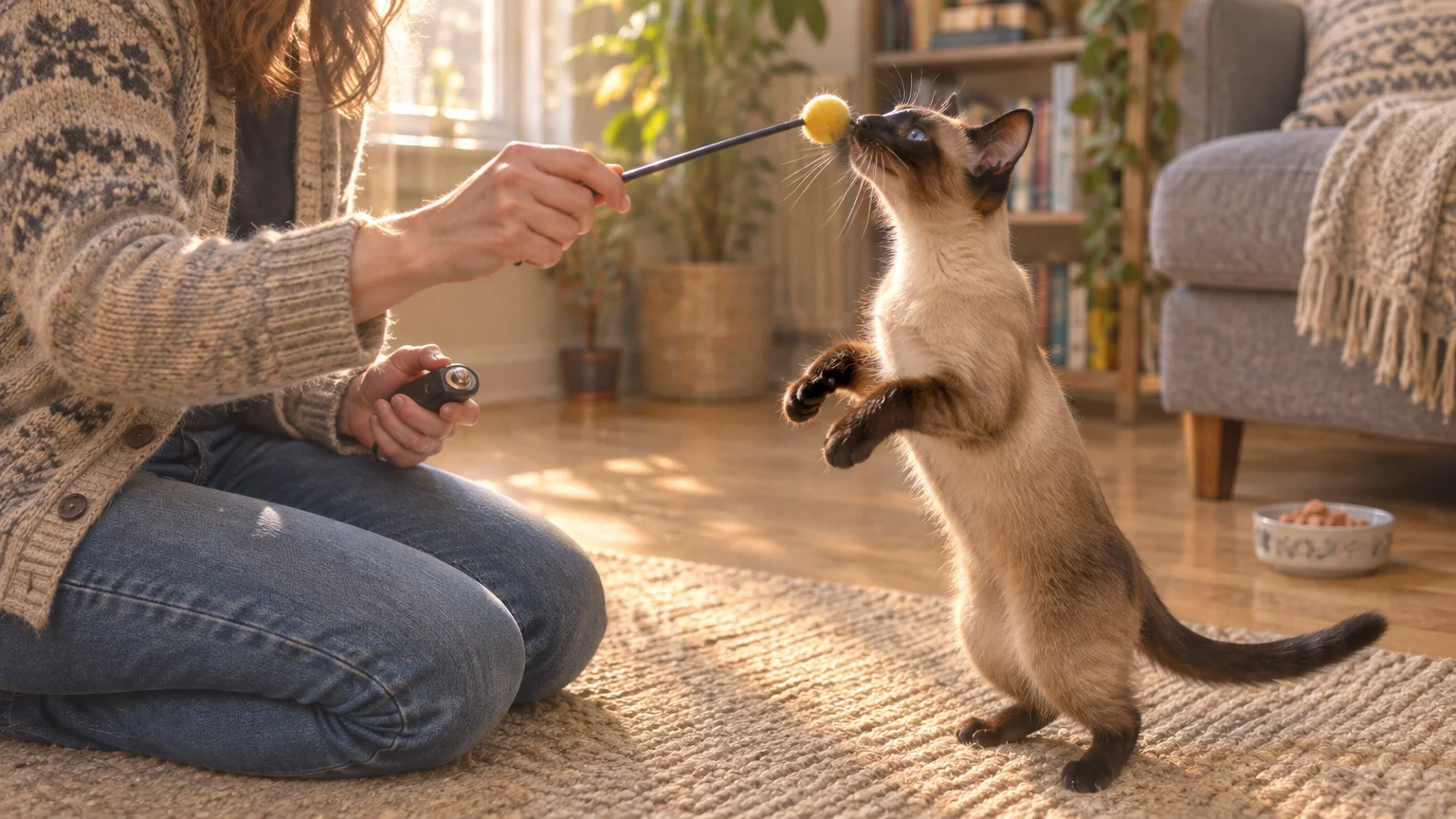
How to Channel High-Energy Cat Behavior Every Day
You do not need a mansion to keep high energy cats happy, nor do you need to buy every gadget in the pet aisle. Consistency and structure matter far more than square footage.
Veterinary resources from the American Animal Hospital Association (AAHA), ASPCA, and Cornell Feline Health Center recommend at least 15 to 20 minutes of interactive play every day. Splitting that minimum into two 5-to-10 or 10-to-15 minute sessions works best for restless breeds.
Follow these practical steps to build a daily routine that drains excess energy without draining your schedule:
- Mirror the natural hunt cycle: Lead your cat through stalking, chasing, pouncing, and catching a wand lure, then serve a meal right afterward so your pet feels satisfied and ready to groom and sleep.
- Build upward instead of outward: AAHA highlights vertical climbing space, scratching posts, and quiet hiding spots as core indoor enrichment, turning a compact apartment into a three-dimensional playground.
- Make meals require brainwork: Use puzzle feeders or treat balls for dry kibble, and keep any extra training treats under 10% of your cat’s total daily calories as recommended in Cornell-referenced veterinary guidance.
- Reward spontaneous fetching and training: Since nearly half of cat owners now train their cats, reinforce natural retrieving or teach simple cues like jumping onto a mat using tiny, measured food rewards.
- Optimize your home layout: Guidance updated in September 2025 by International Cat Care advises arranging perches, litter boxes, and play zones to support natural feline behaviors while reducing household stress.
Rotating just three or four toys every few days keeps old favorites feeling brand new. Store away unused wands in a closed closet rather than leaving them scattered on the floor.
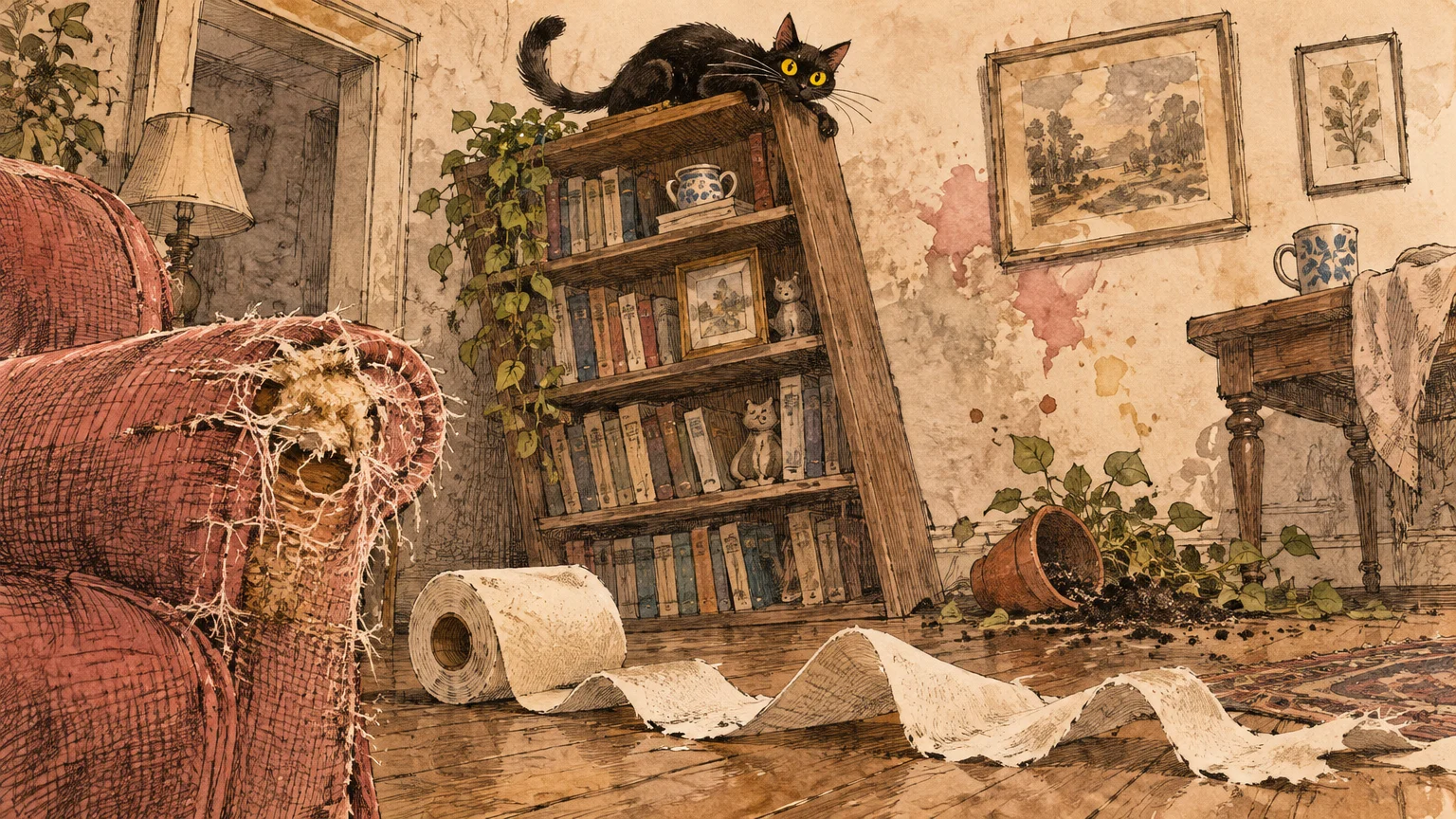
What Can Go Wrong With High-Energy Cats
Bringing home—or already living with—a fearless mover comes with real pitfalls when enthusiasm outpaces household preparation. Watching out for four common trouble spots prevents expensive emergencies and heartbreak.
- Swallowed string and linear foreign bodies: The Cornell Feline Health Center specifically warns against leaving string-like toy parts, wand strings, or loose feathers within reach unsupervised because swallowed string can tangle in the intestines and require surgery.
- Unexpected legal bans on hybrids: Buying a Savannah without checking municipal, state, and national laws can lead to confiscation; early generations face bans across multiple U.S. states and cities, while Australia prohibits all generations.
- Allergy myths and pedigree health bills: Choosing a Sphynx expecting zero allergies leads to disappointment since saliva and skin glands drive reactions, and a primary-care study of over 4,000 cats in England (JFMS, 2015) found pedigree cats had a shorter median lifespan of 12.5 years compared to 14 years for mixed-breed cats.
- Mistaking sudden calm for maturity: When a normally bouncy cat stops leaping onto counters or hides more often, owners sometimes celebrate the newfound peace instead of spotting joint pain, heart trouble, or systemic illness.
Even mixed-breed cats can carry the same nonstop spark as their pedigreed cousins.
In the UK, Cats Protection’s 2024 CATS Report found that 65% of owned cats are mixed-breed, yet between March 2023 and March 2024, 45% of newly acquired cats were pedigree versus 43% mixed-breed—meaning more households are actively choosing pedigree cats.
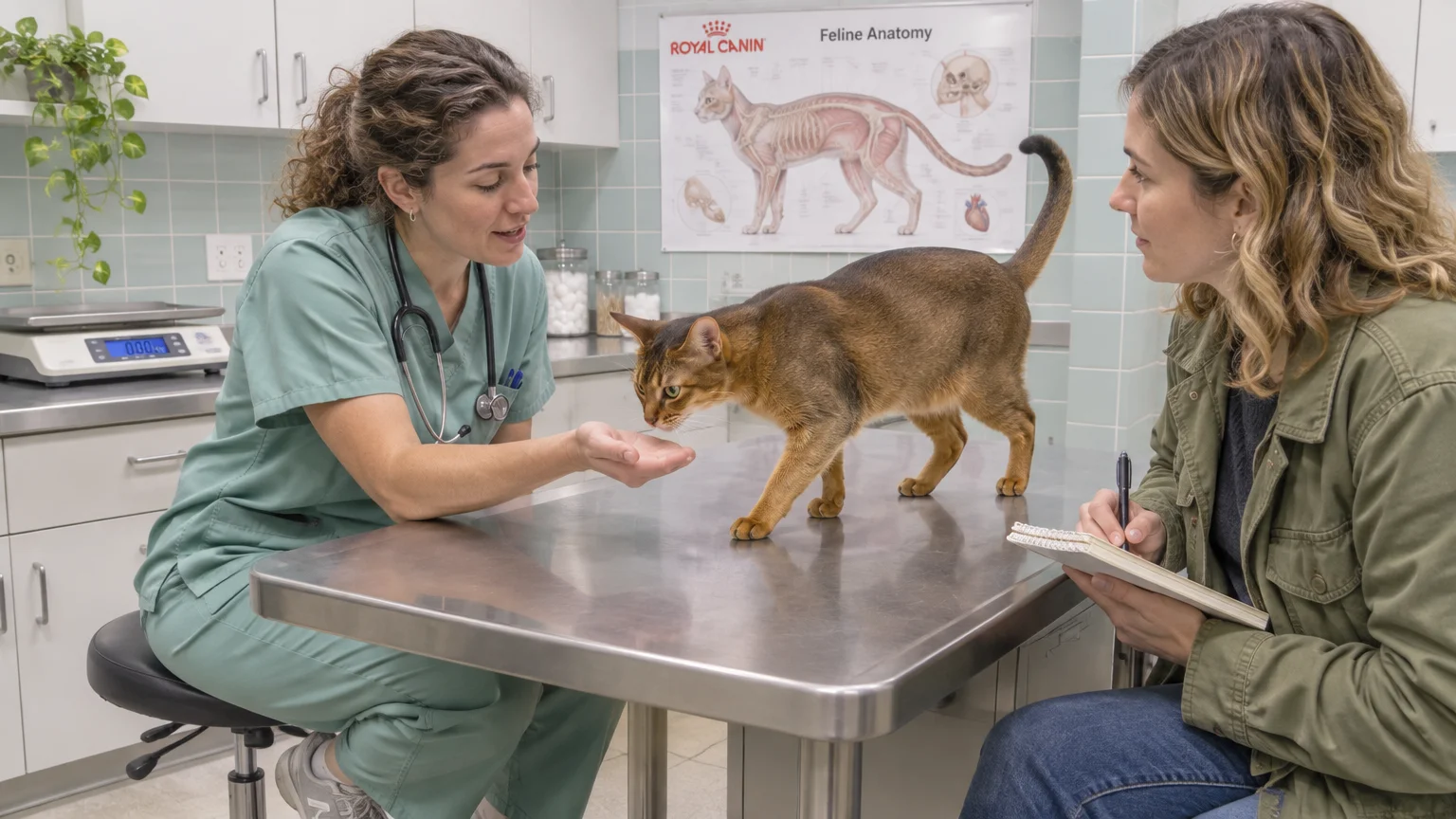
Where Outside Advice Pays Off
Smart enrichment solves boredom, yet certain red flags call for a professional rather than another toy purchase. Seeking expert help early saves both money and stress in these four situations:
- Any sudden or lasting drop in activity: AAHA advises prompt veterinary evaluation whenever a cat shows an unexplained decline in movement or jumping, rather than assuming it is normal aging or trying to fix it with extra toys.
- Stubborn weight gain despite active play: Because only 19% of owners attempting feline weight loss hit their target in APOP’s 2025 survey, ask your veterinarian for exact calorie targets or prescription nutrition plans.
- Breed-specific health screening: If you own a Sphynx, Bengal, or other pedigreed cat prone to inherited conditions, establish routine heart, skin, and eye checkups before symptoms appear.
- Severe restlessness or legal questions: Consult a veterinary behaviorist for destructive pacing or nonstop vocalizing, and verify written local wildlife regulations before placing a deposit on any hybrid breed.
Frequently Asked Questions About Active Cat Breeds
How much playtime does a high-energy cat actually need each day?
Veterinary guidelines from AAHA, ASPCA, and Cornell recommend at least 15 to 20 minutes of interactive daily play, usually split into two focused sessions. High-drive breeds like Bengals, Abyssinians, and Savannahs often thrive on extra puzzle feeding and climbing routes beyond that baseline.
Can an active cat breed live happily in a small apartment?
Yes, provided you maximize vertical territory with tall cat trees, window perches, and secure wall shelves. Scheduling predictable dawn and dusk wand sessions also matters far more than raw floor space.
Are hairless or short-coated active breeds like the Sphynx hypoallergenic?
No—International Cat Care stresses that no cat breed, including the Sphynx, is truly hypoallergenic. Cat allergies come from proteins produced in saliva and skin glands, not from hair length.
Why does my active cat suddenly sprint around the house at dawn and dusk?
Cats are crepuscular animals biologically primed for peak alertness during twilight hours. Scheduling a brisk play session followed by dinner right before your bedtime helps shift that natural energy peak away from your sleep.
Whether you live with a record-setting Egyptian Mau, a water-loving Turkish Van, or a mixed-breed tabby with Abyssinian energy, matching your routine to your cat’s biology transforms daily chaos into teamwork.
Pick one new habit this week—like an extra 10-minute wand chase before dinner—and watch how quickly your restless athlete settles in beside you.
The information here is meant for educational purposes. Specific circumstances—including health conditions, finances, location, and goals—may require different approaches.
When in doubt, consult a licensed professional or check official sources directly.
Last updated: November 2026. Rules, prices, and details change—verify current information with official sources before acting on it.