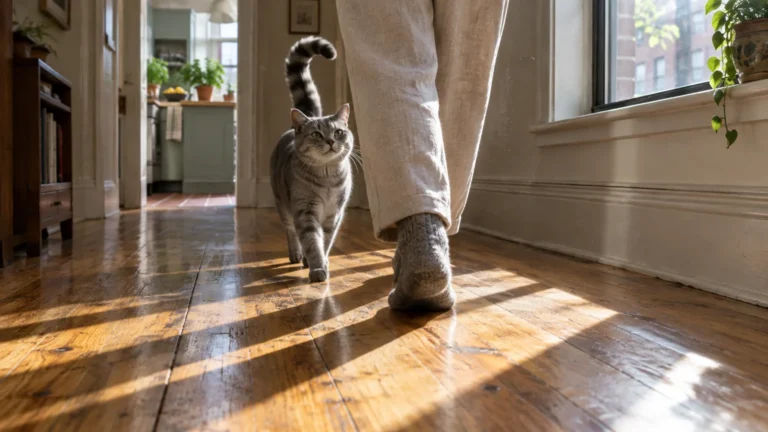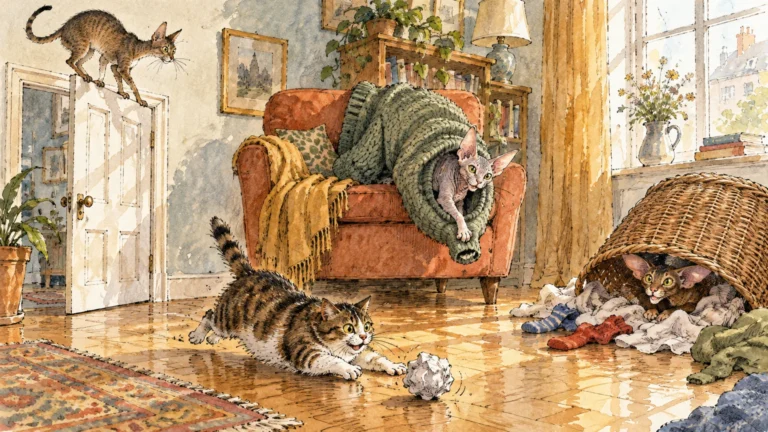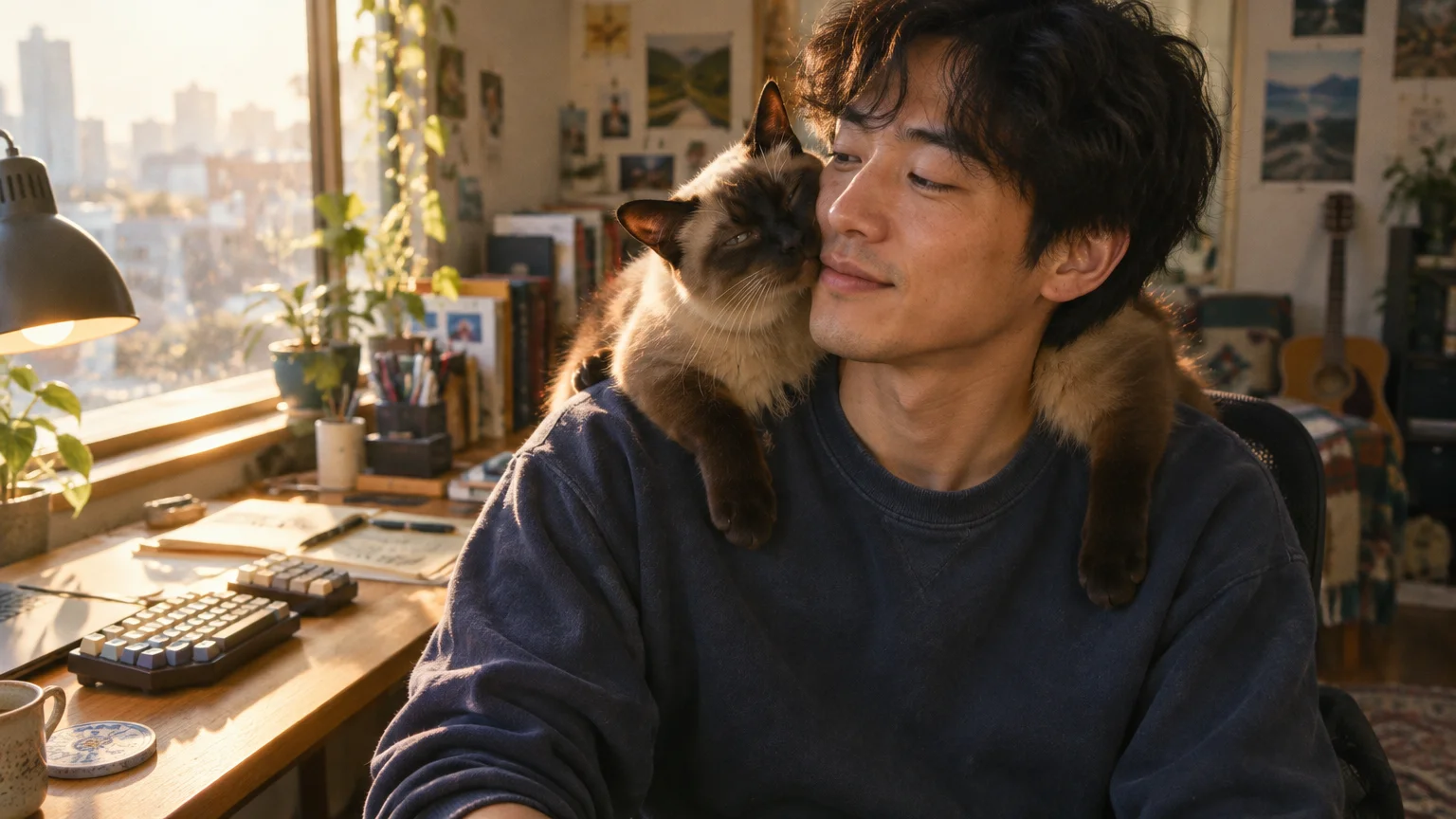
You sit down with a mug of tea, and within ten seconds, a warm purring weight claims your knees. That daily ritual explains why so many people actively search for velcro cats that crave constant human company.
Not every feline prefers aloof independence, and choosing the right affectionate breed transforms your home life. In this guide, you will discover ten clingy cat breeds that follow you from room to room, plus what they cost to keep healthy.
You will also learn how to spot separation stress early and avoid breeds linked to painful genetic disorders.
What Makes a Cat a True Lap Shadow (and What It Costs)
More households than ever are bringing cats home specifically for close companionship. According to the American Veterinary Medical Association (AVMA) 2026 Pet Ownership and Demographics Sourcebook, the U.S. pet cat population reached 77 million across 46 million households in 2026.
That represents 34.1% of all U.S. households, with recent cat acquisitions rising by 6.1 percentage points between 2025 and 2026. Across the Atlantic, Cats Protection’s CATS Report 2026 notes 11.7 million owned cats in the UK, where specific breeds make up over half of recent acquisitions.
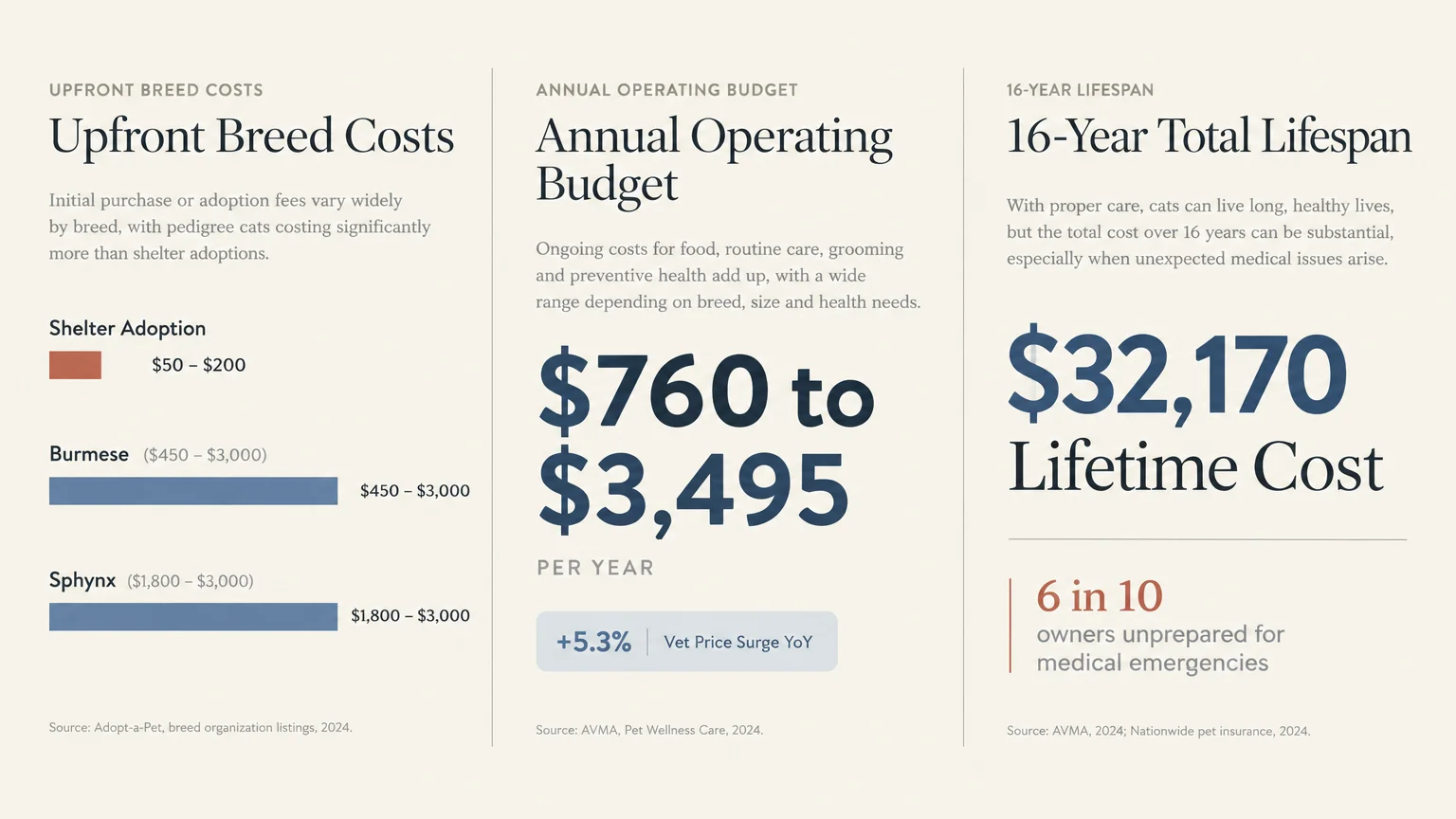
Before you fall for a fluffy face, you need to budget for long-term care. Rover’s 2025 True Cost of Pet Parenthood Report places ongoing annual cat expenses between $760 and $3,495, totaling roughly $32,170 over a 16-year lifespan.
Medical costs are climbing too, with U.S. Bureau of Labor Statistics figures from March 2026 showing veterinary service prices up 5.3% year-over-year. Meanwhile, ASPCA data from 2026 reveals that 6 in 10 pet owners do not feel confident they could cover a sudden medical emergency.
Purebred kittens also carry steep upfront fees—Cats.com reports typical breeder prices of $450 to $3,000 for Burmese kittens and $1,800 to $3,000 for Sphynx kittens. Adopting an adult purebred or mixed-breed lap cat from a shelter often delivers the same devotion at a fraction of the price.
Keep in mind that clingy cat breeds express attachment in two distinct ways. Some melt quietly onto your thighs for hours, while others supervise every chore from your shoulder and demand lively conversation.
| Breed | Typical Weight | Lifespan | Affection Style | Primary Health Watchout |
|---|---|---|---|---|
| Ragdoll | 9–20 lbs | 12–17 years | Calm, heavy lap lounger | Hypertrophic cardiomyopathy (HCM) |
| Birman | 6–12 lbs | 10–15 years | Gentle shadow, soft voice | Needs daily interactive play |
| Maine Coon | 8–25 lbs | 12–15 years | Dog-like follower beside you | Hypertrophic cardiomyopathy (HCM) |
| Siberian | Varies (sturdy build) | Varies | Warm greeter and lap buddy | Triple-coat shedding management |
| Burmese | 6–12 lbs | 12–18+ years | Dense, persistent cuddler | 4x higher diabetes mellitus risk |
| Tonkinese | 6–12 lbs | 12–18 years | Playful, people-focused | Prone to boredom if isolated |
| Siamese | 8–12 lbs | 10–15+ years | Loud, deeply bonded talker | PRA, amyloidosis, and asthma |
| Bombay | 8–12+ lbs | 9–13+ years | Heat-seeking sofa partner | Needs social stimulation |
| Devon Rex | Under 8–9 lbs | 9–15 years | Shoulder-perching clown | HCM and fragile curly coat |
| Sphynx | 6–14 lbs | 8–15 years | Under-the-covers snuggler | HCM, skin care, and legal bans |
The Calm Cuddlers: Four Classic Lap Cats That Love to Lounge
If your ideal evening involves reading or streaming shows with a serene companion, these four affectionate cat breeds excel at quiet closeness. They tend to stay near you without bouncing off the bookshelves at midnight.
1. Ragdoll
Ranking second overall in the Cat Fanciers’ Association (CFA) 2026 popularity list, the Ragdoll earns its reputation as a devoted companion. Recognized by TICA in the late 1970s and CFA in 1993, these large cats weigh 9 to 20 pounds and live 12 to 17 years.
Contrary to popular folklore, Ragdolls do not possess a proven biological limpness reflex when picked up. Instead, selective breeding for calm temperaments makes many individuals relax comfortably in your arms, though each cat has its own boundaries.
Plan to brush a Ragdoll’s silky coat at least twice a week to prevent mats, as recommended by Whiskas UK care guidance.
Because the breed carries the MYBPC3-R820W mutation tied to hypertrophic cardiomyopathy (HCM), ask breeders for American College of Veterinary Internal Medicine (ACVIM) heart screening records.
2. Birman
The Birman nearly vanished during World War II until just two surviving cats in France, Orloff and Xenia de Kaabaa, rebuilt the entire breed. Today, TICA explicitly nicknames the Birman a Velcro cat for its habit of trailing humans quietly around the house.
Weighing 6 to 12 pounds with a lifespan of 10 to 15 years, Birmans offer silky semi-long coats without heavy undercoat tangles. They love sitting beside your keyboard or resting across your ankles while you unwind.
Social Birmans still need structured engagement so they do not grow restless. Vet-reviewed guidance from Catster recommends short interactive play bursts lasting about 15 minutes several times a day to keep them content.
3. Maine Coon
The Maine Coon holds the number one spot in CFA’s 2026 rankings and stands as North America’s largest recognized domestic cat breed. Adult females weigh 8 to 15 pounds, while males reach 13 to 22 pounds and occasionally top 25 pounds.
These gentle giants mature slowly, taking 3 to 5 years to reach full size, and typically live 12 to 15 years. Because of their heft, many Maine Coons drape half their body across your legs rather than curling into a tiny ball.
They follow owners from the kitchen to the bathroom with soft chirps and trills rather than shrill meows. Responsible breeders test for the breed-specific MYBPC3-A31P mutation linked to HCM, as advised by ACVIM and UC Davis Veterinary Genetics Laboratory.
4. Siberian
Sitting at eighth place in CFA’s 2026 Top 10, the Siberian brings sturdy athleticism paired with surprising tenderness. Owners routinely describe them as dog-like cats that greet you at the front door and settle close during evening downtime.
Their plush, water-resistant coat makes them look imposing, yet they thrive on gentle family routines and steady affection. They often pick up interactive fetch games easily, blending playful energy with long stretches of lap time.
Give a Siberian tall scratching posts and weekly grooming sessions during seasonal sheds to keep your furniture clear of loose fur. When their energy is spent, they gladly nap within arm’s reach.
The Vocal Shadows: Four Expressive Breeds That Follow Every Step
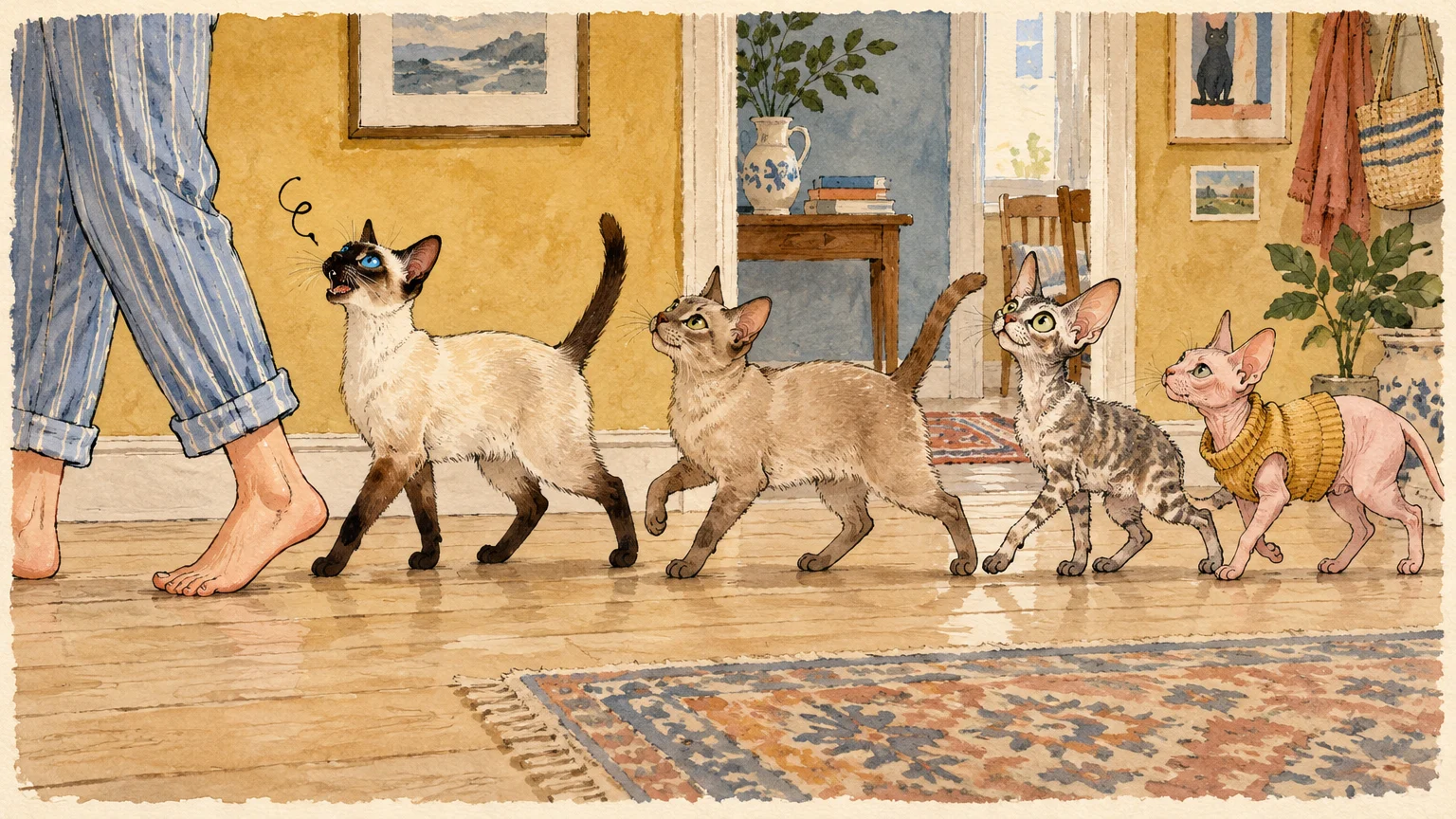
Some cat breeds that follow you everywhere refuse to stay silent while doing it. These four breeds blend intense physical affection with curious, talkative personalities that suit busy, interactive households.
5. Burmese
Every modern American Burmese traces back to a single foundation cat named Wong Mau, imported to the United States in 1930. CFA recognized the breed in 1936, and TICA followed in 1979.
Breeders often describe the 6-to-12-pound Burmese as a brick wrapped in silk because its muscular frame feels unexpectedly heavy in your lap. Living 12 to 18 years—with some reaching 20—this breed stays deeply engaged with its favorite humans well into senior age.
Before committing, check health backgrounds carefully. Carelogy veterinary data notes that Burmese cats face roughly four times higher incidence of diabetes mellitus than other breeds, alongside hereditary hypokalemic myopathy, making regular weight monitoring essential.
6. Tonkinese
Created by crossing the Siamese and the Burmese, the Tonkinese delivers the best of both attentive parents. Females average 7 to 9 pounds while males reach 8 to 12 pounds, reaching full muscle maturity around 2 years old.
With a typical lifespan of 12 to 18 years—and up to 20 cited by PetMD—a Tonkinese bonds tightly with people and welcoming pets alike. Expect them to climb onto your chest the moment you lie down, purring loudly while inspecting whatever book or phone you hold.
Because they inherit strong social drives, Tonkinese cats hate empty houses. Pairing two compatible cats or scheduling midday puzzle feeders helps prevent frustration when your schedule runs late.
7. Siamese
Native to Thailand, pointed Siamese cats appeared in Tamra Maew manuscripts dating between the 14th and 18th centuries, according to the Governing Council of the Cat Fancy (GCCF). Their famous dark ears, paws, and faces come from temperature-sensitive albinism that darkens cooler skin areas.
Weighing 8 to 12 pounds and living 10 to 15 years or longer, Siamese cats treat their owners as conversational equals. They follow your heels across the house, offering low-pitched commentary until you sit down and invite them onto your lap.
GCCF advises watching for progressive retinal atrophy—for which DNA screening exists—as well as amyloidosis and feline asthma. Daily 15-minute interactive play sessions help channel their razor-sharp focus into healthy exercise.
8. Bombay
Kentucky breeder Nikki Horner created the Bombay in the 1950s by crossing sable Burmese with black domestic and American Shorthairs to resemble a miniature panther. CFA registered the breed in 1970, and TICA recognized it in 1979.
Always solid black with striking copper-to-gold eyes, a Bombay weighs 8 to 12 pounds or more and lives 9 to 13-plus years. Like its Burmese ancestors, it seeks body warmth relentlessly and often burrows under blankets beside your legs.
The connection between the two breeds remains active today. CFA rules continue to allow Burmese outcrossing with sable Bombays through the end of 2031 to preserve genetic diversity.
The Heat-Seeking Snugglers: Two High-Touch Breeds With Unique Coat Needs
Minimal fur means these two clingy cat breeds constantly hunt for warm skin, sunny windowsills, and cozy laps. You gain an unmatched level of physical closeness, though you also take on specialized grooming duties.
9. Devon Rex
Ranked fifth overall in CFA’s 2026 registrations, the Devon Rex has remained the most popular shorthaired pedigreed breed for five consecutive years. Weighing under 8 to 9 pounds and living 9 to 15 years, these pixie-eared cats love perching on shoulders as much as laps.
Their soft, wavy coat requires gentle handling rather than standard grooming tools. Hill’s Pet Nutrition warns that you should never brush a Devon Rex because its delicate curls break easily; wiping them gently with a damp cloth works much better.
Devon Rex cats also carry a predisposition to HCM, so routine veterinary heart checks belong on your annual calendar. Their cheerful curiosity turns every household task into a shared activity.
10. Sphynx
The Sphynx began in Toronto, Canada, in 1966 with a naturally hairless kitten named Prune, later earning CFA recognition in 2002 and TICA status in 2005. Weighing 6 to 14 pounds and living 8 to 15 years, this breed sleeps plastered against your ribs for warmth.
Ignore the persistent myth that hairless cats are hypoallergenic. ASPCA clarifies that cat allergies stem from the Fel d1 protein found in saliva and skin oils, not fur, meaning Sphynx cats still trigger reactions in sensitive people.
Without a coat, Sphynx cats burn extra calories staying warm and need roughly 20% more food than furred cats, according to Lassie care guidance.
The International Cat Association (TICA) also notes that strict weekly baths are a myth that can irritate skin; instead, bathe only as skin oils build up using lukewarm water around 99°F.
Check their ears weekly for wax buildup, and protect pale skin from sunburn near bright windows. Never apply human sunscreens containing zinc oxide or salicylates without veterinary approval, as VCA Animal Hospitals and Merck warn those ingredients poison cats.
You also must check local laws before seeking this breed. Effective January 1, 2026, the Netherlands outlawed keeping, breeding, importing, and trading hairless cats, imposing a €1,500 administrative fine—though hairless cats born and microchipped before that date may stay with their owners for life.
How to Keep Clingy Cat Breeds Happy Every Day
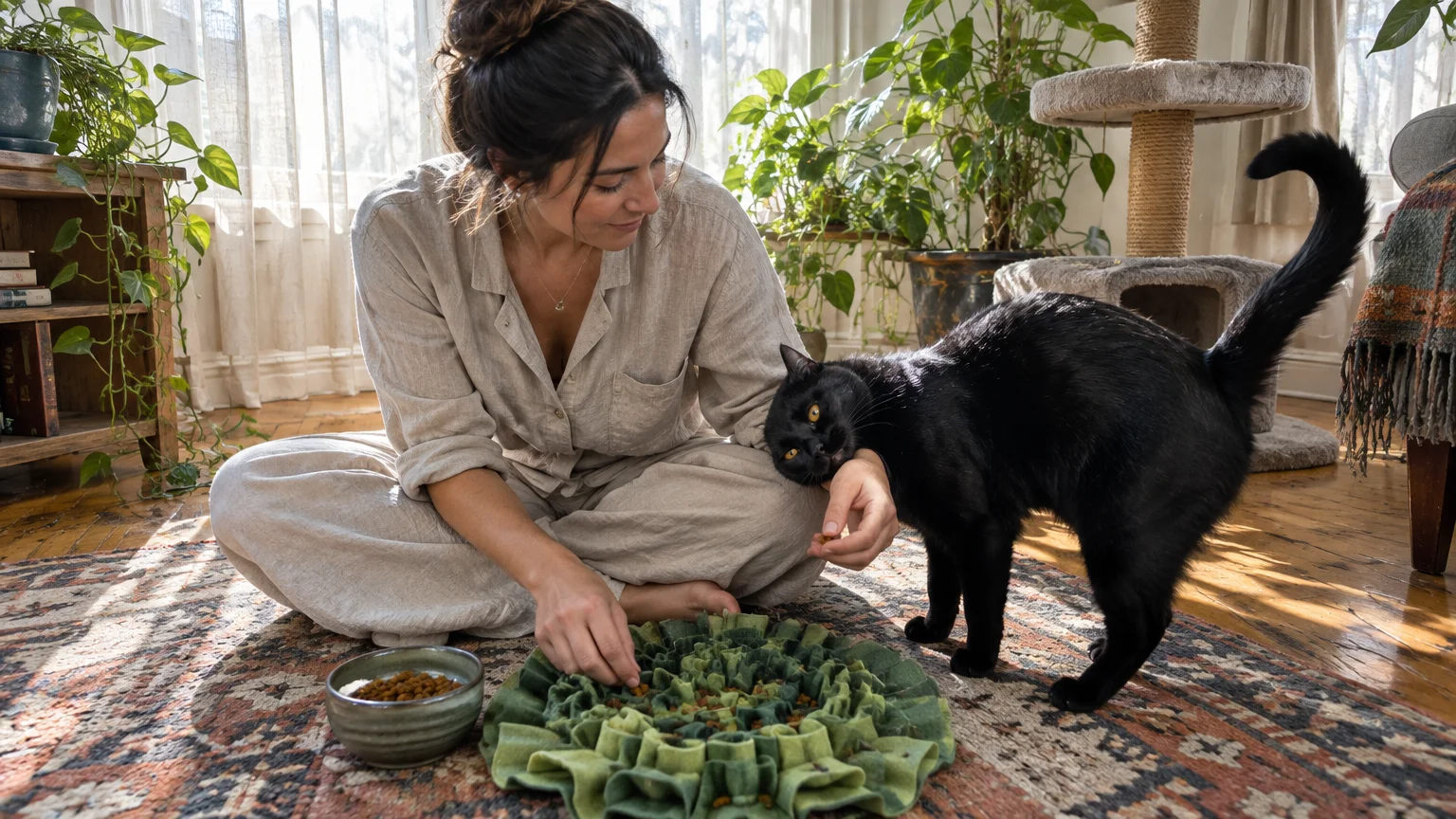
Loving a Velcro cat means managing their emotional needs so devotion never turns into distress. Veterinary behavior guidelines from the American Association of Feline Practitioners (AAFP) and the International Society of Feline Medicine (ISFM) outline five environmental pillars for indoor cats.
- Provide elevated safe spaces: Offer at least as many cozy perches or hideaways as you have cats so your companion can supervise without feeling underfoot.
- Double up key resources: Place at least two separated options for food bowls, water stations, litter boxes, and resting spots to prevent competition.
- Schedule predatory play: Run two or three 15-minute wand-toy sessions daily, ending with a meal or treat to satisfy hunting instincts.
- Respect feline scent signals: Avoid harsh chemical cleaners on favorite rubbing spots so your cat feels secure in its territory.
- Desensitize alone time early: Practice brief 5-to-10-minute departures before building up gradually, as ASPCA Pet Health Insurance notes that sudden 8-hour workdays alone fuel boredom and anxiety.
Timing matters just as much when you first adopt a kitten. ISFM behavioral summaries warn that kittens separated from their mothers before 8 weeks of age face significantly higher risks of poor socialization and separation anxiety later in life.
If you work long shifts away from home, consider adopting a bonded pair of lap cats rather than a single Velcro kitten. Having a feline roommate keeps social breeds engaged until you walk back through the door.
What Can Go Wrong When You Bring Home a Velcro Cat
A super-affectionate cat sounds effortless until real-world challenges surface. Watching out for four common pitfalls saves you heartbreak, surprise bills, and legal trouble.
- Separation anxiety spirals: A 2020 peer-reviewed study by de Souza Machado and colleagues in PLOS ONE found that roughly 13.5% of domestic cats show at least one separation-related behavior problem. Left unaddressed, stressed Velcro cats may urinate outside the box, yowl for hours, or scratch doorframes.
- Painful genetic traits and breed bans: While Scottish Folds are sometimes marketed as gentle lap cats, the British Veterinary Association (BVA) calls for a breeding ban because the TRPV4 (c.1024G>T) mutation causes feline osteochondrodysplasia and painful arthritis in every folded-ear cat. Following Flanders’ October 2021 ban on breeding and trading folded-ear cats, the Netherlands banned keeping, breeding, and trading both folded-ear and hairless breeds in January 2026.
- Steep hereditary medical expenses: Ragdolls, Maine Coons, Devon Rexes, and Sphynxes all carry documented genetic predispositions to HCM, including the ALMS1 (HCM4) variant flagged in Sphynx testing by LABOGEN. Add Burmese diabetes risks and rising 2026 vet prices, and skipping pet insurance or an emergency fund puts tough choices on your plate.
- Misjudged allergy triggers: Bringing home a Sphynx or short-coated Devon Rex expecting zero sneezing often backfires when Fel d1 proteins accumulate on bedding and sofas. Always spend unhurried time in a cat’s actual living space before signing adoption papers.
Where Outside Advice Pays Off
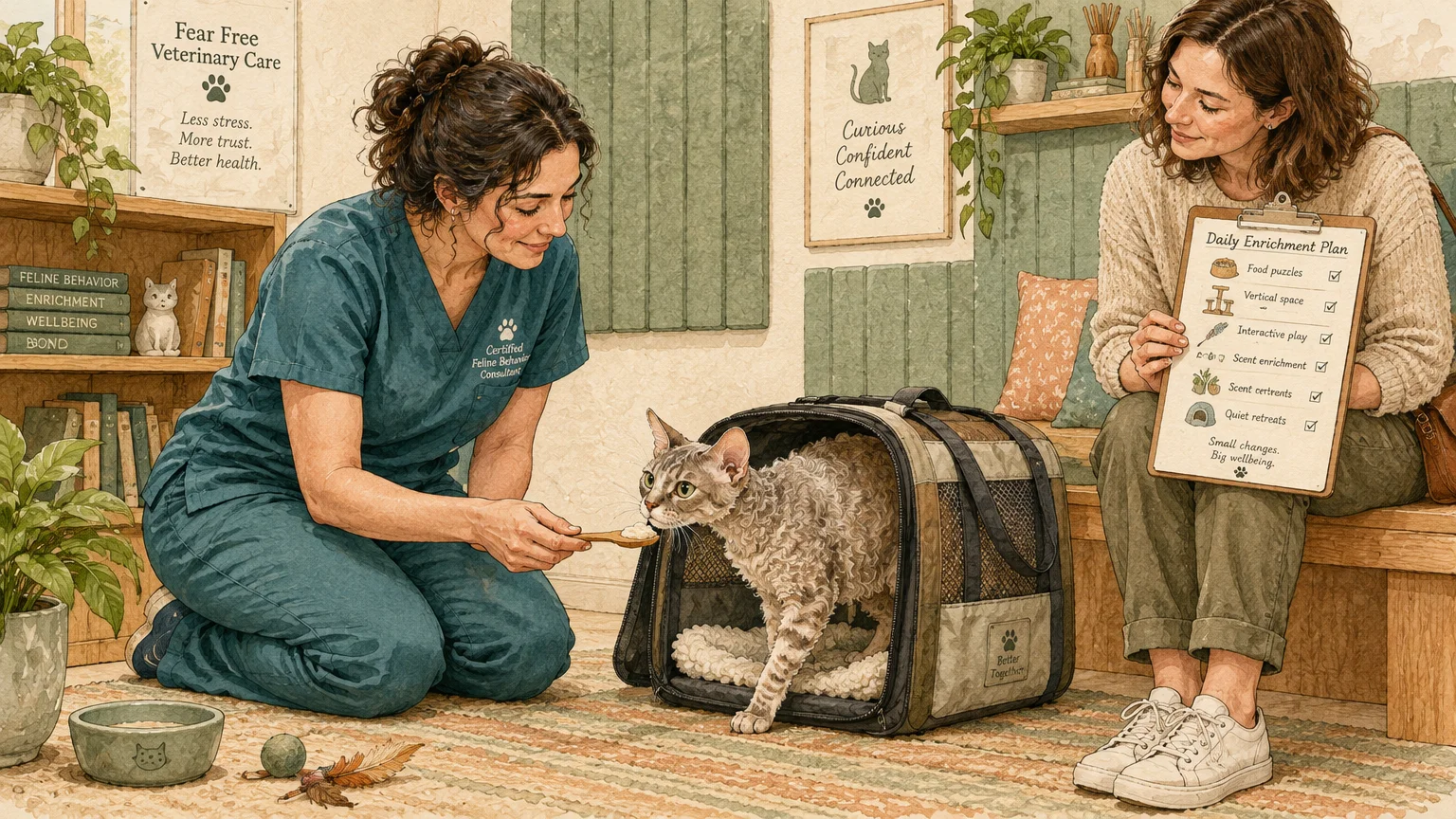
General breed profiles give you a solid starting line, yet individual cats often need tailored support. Reaching out to qualified professionals pays off quickly in four specific situations.
First, consult your veterinarian or a credentialed feline behaviorist if your cat cries inconsolably, overgrooms, or misses the litter box when you leave. Medical issues like urinary pain frequently mimic separation anxiety, so ruling out illness always comes first.
Second, ask a veterinary cardiologist or a breeder using ACVIM-aligned protocols about echocardiograms and DNA screening before buying an HCM-prone breed. Genetic tests catch known variants early, while periodic heart scans detect changes before symptoms appear.
Third, lean on your vet for breed-specific nutrition and skin plans, especially for heat-seeking Sphynxes or diabetes-prone Burmese cats. Safe calorie targets and approved topical products protect sensitive skin and stable blood sugar far better than guesswork.
Finally, verify local animal welfare regulations and breeder ethics before paying a deposit. If you live in Europe or plan to relocate internationally, confirm current keeping and import rules for breeds with extreme physical traits.
Frequently Asked Questions About Lap Cats
Are male or female cats more likely to be lap cats?
Early socialization and individual temperament matter far more than sex when predicting lap-sitting habits. Wait until a kitten is at least 8 weeks old before bringing it home, and look for adult shelter cats with a documented history of seeking laps.
Can an aloof rescue cat turn into a Velcro cat?
Many shy rescue cats become deeply affectionate once they feel safe, establish predictable feeding routines, and enjoy gentle interactive play. However, forcing a fearful cat onto your lap backfires, so let your cat initiate physical contact at its own pace.
Which Velcro cat breed sheds the least?
The Sphynx sheds no fur, though it leaves skin oils on fabrics and carries the same Fel d1 allergy protein as furred cats. Among coated breeds, the short-haired Burmese, Bombay, and fragile-coated Devon Rex drop relatively light amounts of hair compared to thick-coated Maine Coons.
How long can you leave a clingy cat breed alone?
Most deeply bonded cats handle several hours comfortably once desensitized through short 5-to-10-minute practice absences, provided they have two sets of key resources and engaging toys.
Leaving a single Velcro cat alone for a full 8-hour workday without stimulation often sparks stress or destructive boredom.
Your Next Step Toward a Loyal Feline Companion
Choosing among the best affectionate cat breeds comes down to matching a cat’s social volume and grooming needs to your daily routine.
Whether you picture a tranquil Ragdoll melting across your knees or a talkative Siamese shadowing your morning coffee, thoughtful prep keeps both of you thriving.
Spend an afternoon visiting local shelters or vetted, health-testing breeders to meet adult cats in person before deciding. When a cat chooses your lap first, you will know you have found your match.
This article provides general information only. Every reader’s situation is different—what works for others may not be the right fit for you.
For personalized guidance on health, legal, or financial matters, consult a qualified professional.
Last updated: November 2026. Rules, prices, and details change—verify current information with official sources before acting on it.