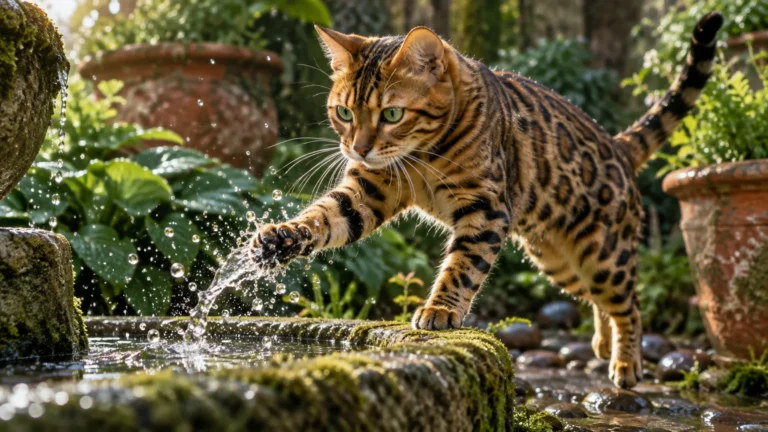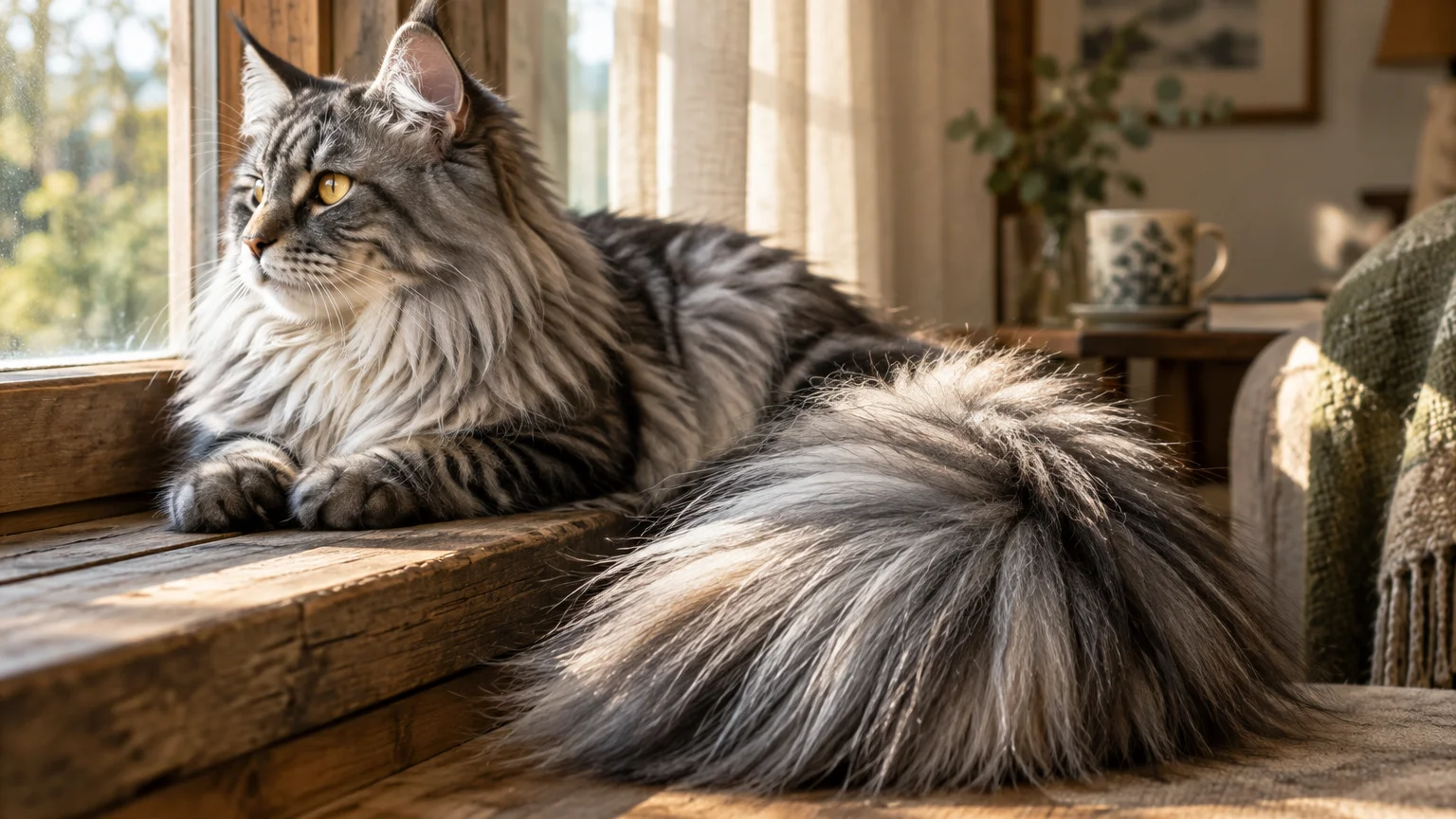
A majestic, bottle-brush tail transforms a domestic cat into a miniature snow leopard or woodland fox. If you want a feline companion whose tail flows like an elegant silk banner, several long-haired cat breeds boast spectacular plumed tails.
These dramatic tails serve practical evolutionary purposes beyond turning heads in your living room. From high-altitude snowdrifts to historic trading ships, thick fur shielded these cats from harsh elements while aiding agile balance.
Here are 11 cat breeds with fluffy tails that bring warmth, playful energy, and striking beauty to your home.
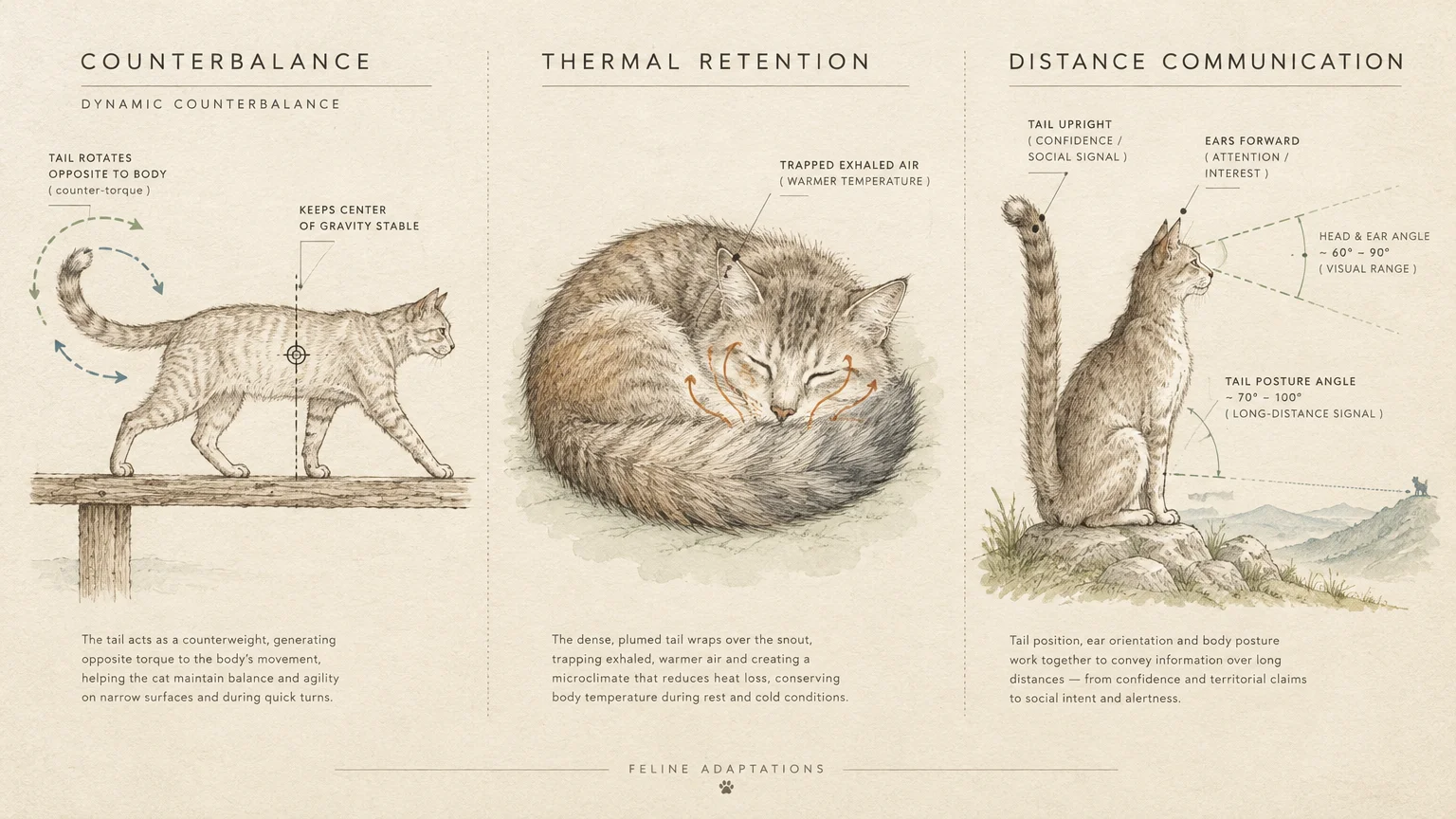
Why Cats Developed Long, Bushy Tails
Feline tails act as precise counterweights during high-speed sprints and daring vertical leaps. When your cat sprints along a narrow fence, rapid tail shifts keep the body stable.
In cold climates, a bushy tail serves as an essential thermal scarf. Cats curl tightly into balls and drape their furred tails over their noses to trap warm, exhaled air.
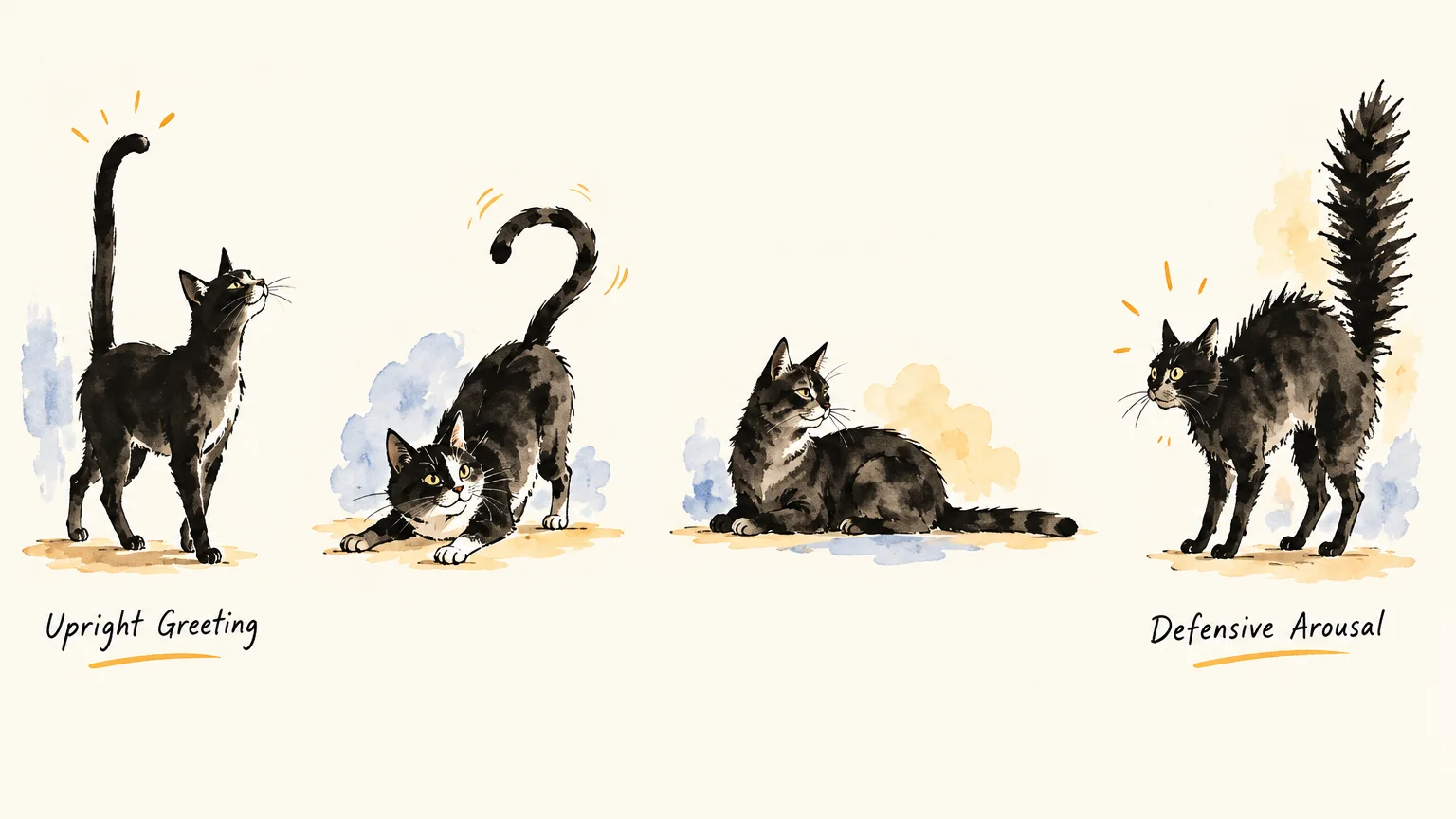
Tail plumage also amplifies feline body language across long distances. A high, upright tail signals a friendly greeting, while a bristled brush communicates defensive arousal.
According to research from the Cornell Feline Health Center, cats communicate complex social cues through tail carriage and subtle micro-movements. A wider plume makes those vital signals immediately visible to other animals.
11 Remarkable Cat Breeds With Bushy Tails
1. Maine Coon
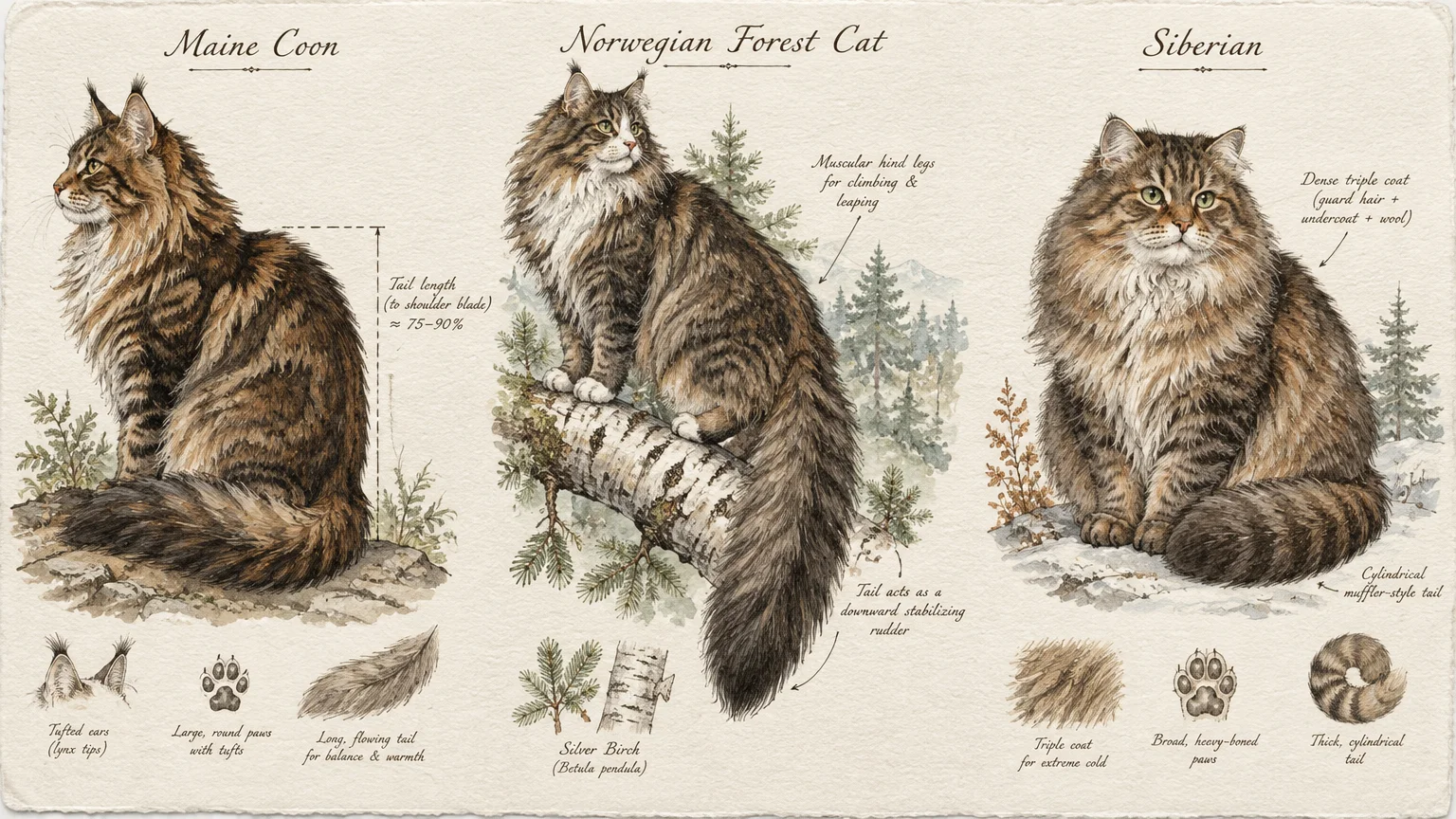
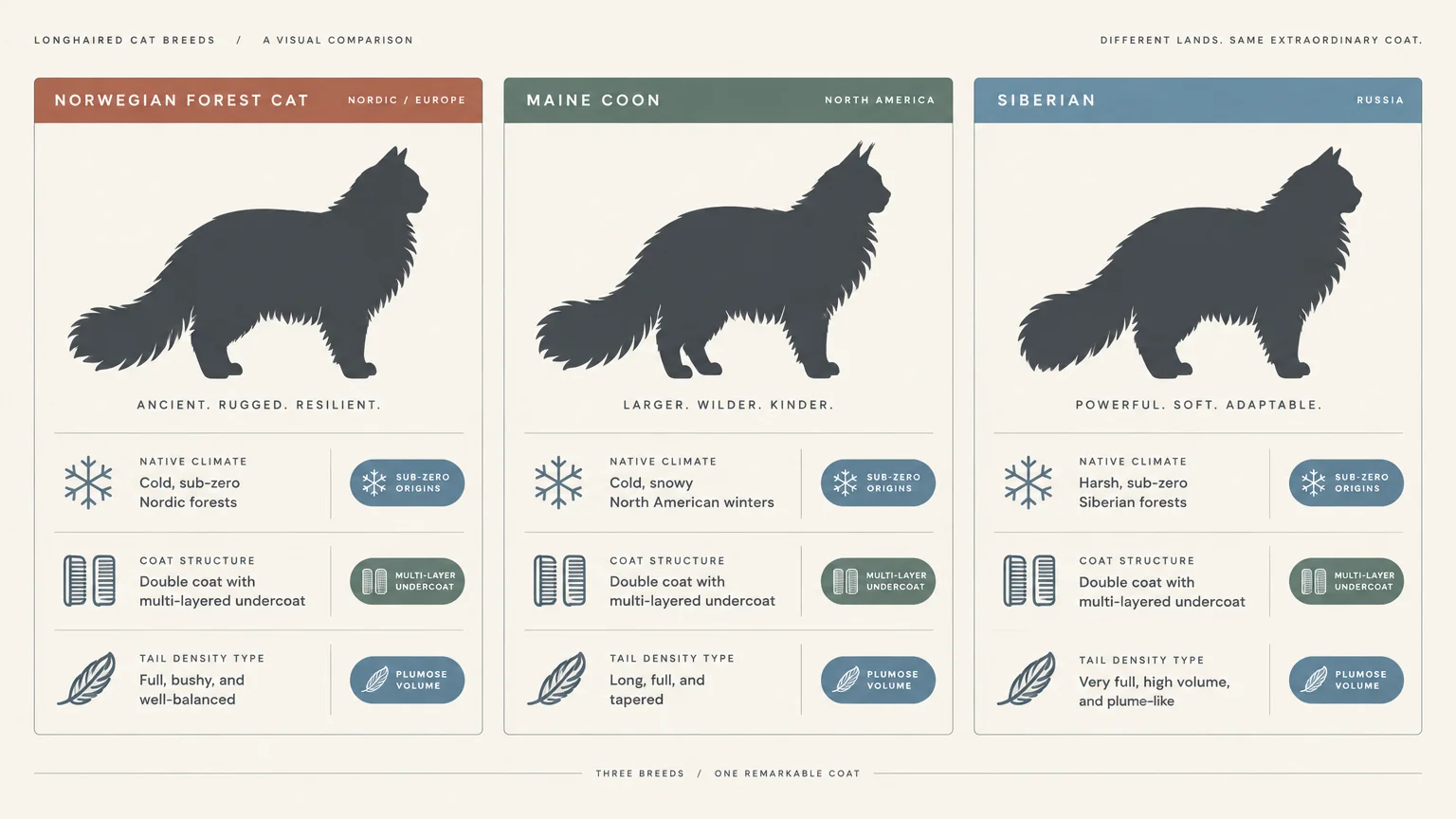
The Maine Coon tail stands out as one of the most magnificent sights in the cat world. It stretches nearly the entire length of the cat’s torso and fans out into an astonishingly dense brush.
Official breed standards from the Cat Fanciers’ Association (CFA) require the Maine Coon tail to reach at least the shoulder blade when pulled along the flank. This impressive length provided vital cold-weather protection in native New England.
During harsh blizzards, these rugged cats wrapped their tails around their faces and paws like insulated sleeping bags. The thick guard hairs also shed melting snow effortlessly.
Despite their imposing size, Maine Coons possess a gentle, chirpy personality that makes them wonderful family companions. You will often see them walking with their grand tails held proudly upright.
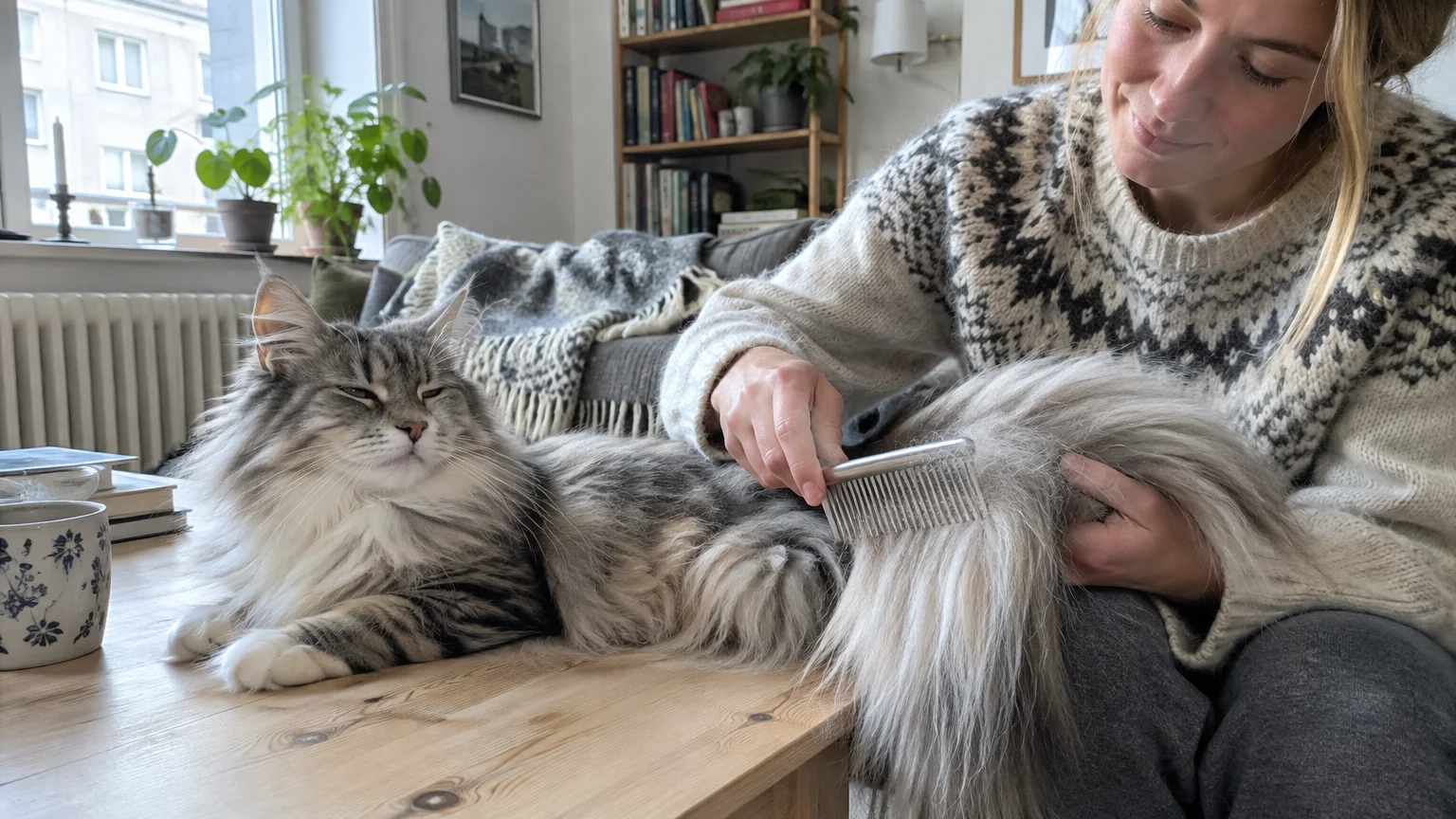
Groom this tail gently using a wide-toothed metal comb to prevent tangles near the spine. Never pull aggressively; tail hairs take months to regrow if damaged.
2. Norwegian Forest Cat
Known affectionately as the “Wegie,” the Norwegian Forest Cat evolved in the freezing woodlands of Scandinavia. Its tail is exceptionally long, bushy, and covered in flowing water-repellent guard hairs.
Norwegian Forest Cats use their thick tails as natural rudders when descending steep tree trunks headfirst. Their muscular hind legs and plumed tail provide unmatched stability in high perches.
Underneath the glossy outer coat lies a dense, woolly undercoat designed to resist Nordic frost. You will find that the tail fur remains dry even after your cat walks through wet grass.
These cats display an independent yet affectionate nature, enjoying interactive play followed by quiet companionship. They love climbing cat trees where their sweeping tails can hang gracefully over the edge.
Weekly combing keeps the double coat free of mats, particularly around the tail base and hindquarters. Pay close attention during seasonal shedding periods in early spring.
3. Siberian
Hailing from the sub-arctic forests of Russia, the Siberian cat carries an extraordinarily dense, barrel-shaped tail. The fur tapers slightly toward a rounded tip, resembling a thick winter muffler.
Siberians sport a rare triple coat consisting of coarse guard hairs, insulating awn hairs, and soft down. This heavy plumage protected the breed from punishing Siberian winters for over a thousand years.
Many pet lovers seek out Siberians because they often produce lower levels of the Fel d 1 protein. While no cat is completely hypoallergenic, many people with mild pet allergies tolerate them well.
In your home, a Siberian acts like a playful, dog-like acrobat that loves jumping to great heights. Their dense tail provides balance when they leap effortlessly across wide gaps.
Brush their tail coat once or twice weekly with a slicker brush, working in smooth layers from root to tip. Take extra care around the rump where the dense undercoat tends to compact.
4. Ragdoll
The Ragdoll boasts a long, plume-like tail covered in soft, rabbit-like fur. As the cat strolls through your home, this luxurious tail flows behind with graceful, fluid motion.
Breed guidelines established by The International Cat Association (TICA) emphasize that the Ragdoll tail should be long and bushy, tapering slightly toward the tip. It complements the breed’s substantial, muscular frame.
Ragdolls lack a dense undercoat, which makes their plush fur surprisingly resistant to heavy mats. However, the long hairs on the tail still require regular attention to prevent small knots.
True to their name, Ragdolls often relax completely when you pick them up in your arms. Their docile, affectionate temperament makes them ideal housemates for quiet households and active families alike.
Use a steel grooming comb twice a week to keep the tail plume smooth and free of debris. Always inspect under the tail to ensure hygiene remains clean and sanitary.
5. Birman
The Birman, often called the Sacred Cat of Burma, features a medium-long tail that blossoms into a lush plume. The fur carries a silky texture that glistens in direct sunlight.
Birmans possess a single coat that lies smoothly along the body, making the bushy tail stand out dramatically. They carry this glorious tail upright, curving it gently over their back like a soft feather.
Distinctive snow-white paws, known as “gloves,” pair beautifully with their colored tail and deep sapphire eyes. Their harmonious physical symmetry has charmed cat enthusiasts for over a century.
Birmans thrive on human interaction and follow their owners from room to room with soft, melodic voices. They prefer gentle indoor environments where they receive abundant affection and structured playtime.
Because their fur does not easily mat, a light brushing once a week preserves the tail’s fullness. Always use gentle strokes to keep the delicate hair shafts intact.
6. Turkish Angora
The Turkish Angora possesses perhaps the most ethereal tail in the entire feline world. It flares out into a magnificent, feather-light plume that the cat carries proudly above its back like a banner.
Originating in central Turkey, this ancient natural breed once served as a prized gift among European royalty. Their elegant silhouette and flowing tail hairs create an impression of living artwork in motion.
Turkish Angoras have no insulating undercoat, which gives their silky tail fur remarkable buoyancy and movement. The tail hairs float gently through the air with every graceful step the cat takes.
These cats are spirited, curious problem-solvers that enjoy perching on high doors and refrigerators. They use their feathered plumes to maintain dynamic equilibrium during daring leaps.
Maintain their delicate tail fur by brushing it weekly with a soft bristle brush. The fine texture rarely mats, making grooming a quick and pleasurable bonding ritual.
7. Persian
The Persian tail resembles a giant, round powder puff bursting with luxurious fur. Although the tail bones are relatively short, the sheer density of the hair creates an extraordinarily bushy profile.
Persians sport a massive double coat with long, fine hairs extending outward across their entire frame. The tail plume blends seamlessly into their thick rump ruff, creating a magnificent sphere of soft fur.
Their calm, dignified temperament suits peaceful living rooms where they can lounge on plush cushions. Persians rarely leap to high shelves, preferring to show off their glamorous tails at floor level.
This breed requires diligent daily grooming to prevent dense tangles from tightening against the sensitive skin. If neglected, Persian tail fur can form severe mats that require veterinary intervention.
Work through the tail fur daily using a fine-toothed metal comb and detangling spray. Keep the rear sanitary area trimmed neatly to prevent litter box accidents.
8. Somali
With its rich agouti coat and massive plume, the Somali earned the affectionate nickname “the fox cat.” Its spectacular, bottle-brush tail features multiple bands of warm color and a dramatic dark tip.
The Somali originated as a long-haired variation of the Abyssinian cat, combining wild beauty with athletic prowess. Its full tail balances a lithe, muscular body built for sprinting and leaping.
Somalis display tireless curiosity and will investigate every open drawer or cardboard box in your home. They often flick their bushy tails with expressive flair when tracking a feathered wand toy.
Their medium-long coat feels exceptionally soft to the touch and resists severe tangling better than heavier double coats. You will love watching their bushy tail twitch in excitement during play.
Comb the Somali tail two to three times a week using a stainless steel comb. Focus gently on the fluffy base where loose hairs can collect over time.
9. Balinese
The Balinese is the elegant, long-haired counterpart to the traditional Siamese cat. It features a slender, tubular body that terminates in a strikingly delicate, plume-like tail.
Unlike the thick brush of northern breeds, the Balinese tail boasts fine, flowing hairs that spread out like an airy silk fan. It carries no dense undercoat, so the fur drapes smoothly without excessive volume.
Balinese cats inherited the vocal, extroverted personality of their Siamese ancestors. They will follow you through the house, chatting enthusiastically while swaying their plumed tails with dramatic expression.
Their sleek single coat sheds minimally compared to double-coated breeds, making them easier to manage around furniture. The flowing tail adds high-fashion elegance to their athletic, svelte silhouette.
Grooming a Balinese tail takes only minutes per week with a soft pin brush. The silky hairs glide smoothly without stubborn mats or dead undercoat buildup.
10. Nebelung
The Nebelung is a rare, mystical breed whose German name translates to “creature of the mist.” Its dense, shimmering blue-gray coat ends in an astonishingly thick, bottle-brush tail.
Silver-tipped guard hairs give the tail a luminous halo effect when light passes over the cat. The tail fur grows notably longer than the body coat, creating a dramatic, sweeping contrast.
Nebelungs tend to form deep, devoted bonds with their chosen family members while acting reserved around strangers. They flourish in quiet, predictable homes where they can relax beside you on the sofa.
These cats move with quiet grace, holding their silver-tipped tails horizontally as they explore their territory. Their bushy tail matches their gentle demeanor, conveying calm composure through slow, rhythmic waves.
Comb their semi-long coat twice weekly to remove loose hairs and prevent knots at the tail base. Consistent grooming keeps the silver tips gleaming and prevents the dense fur from clumping.
11. Turkish Van
The Turkish Van hails from the rugged Lake Van region of eastern Turkey, where extreme temperatures shaped its resilient coat. It carries a heavy, plumed tail that contrasts boldly with its pristine white body.
The breed displays the famous “Van pattern,” featuring a chalk-white torso accented by a colorful, bushy tail. The tail often shows vivid auburn or red rings resembling a raccoon’s tail.
Turkish Vans possess a water-repellent coat with a cashmere texture that dries rapidly after swimming. These adventurous cats famously love water and will happily paddle in shallow bathtubs or garden ponds.
Their muscular bodies require substantial physical activity, and they use their wide tail plumes for balance when leaping onto doors. Their bold, energetic character makes them thrilling companions for active pet parents.
Because the Turkish Van coat lacks a woolly undercoat, the tail rarely develops tight mats. A weekly comb-through with a wide-tooth comb preserves its brilliant cashmere texture.
Fluffy-Tailed Cat Breeds at a Glance
Choosing the right breed requires balancing tail beauty with daily grooming commitments and household energy levels. Use this quick reference table to compare coat structures and maintenance needs.
| Cat Breed | Coat Type | Tail Style | Grooming Need | Energy Level |
|---|---|---|---|---|
| Maine Coon | Heavy Double Coat | Voluminous plume | 2–3 times weekly | Moderate |
| Norwegian Forest Cat | Waterproof Double Coat | Thick brush | 2–3 times weekly | Moderate to High |
| Siberian | Dense Triple Coat | Barrel bottle-brush | 2–3 times weekly | High |
| Ragdoll | Semi-Long Plush Coat | Silky plume | Twice weekly | Low to Moderate |
| Birman | Silky Single Coat | Feathery plume | Once weekly | Moderate |
| Turkish Angora | Fine Single Coat | Ethereal plume banner | Once weekly | High |
| Persian | Dense Long Double Coat | Round powder-puff brush | Daily | Low |
| Somali | Ticked Semi-Long Coat | Fox-like bottle-brush | 2–3 times weekly | High |
| Balinese | Fine Single Coat | Airy fan plume | Once weekly | High |
| Nebelung | Semi-Long Double Coat | Silver-tipped brush | Twice weekly | Moderate |
| Turkish Van | Cashmere Water-Repellent | Full auburn ringed brush | Once weekly | Very High |
Cats with single coats require far less detangling time than those with heavy double or triple undercoats. Match your personal schedule with the breed’s grooming demands before bringing a kitten home.
How to Care for a Cat’s Bushy Tail
Caring for a plumed tail requires delicate handling because feline tails contain fragile vertebrae and sensitive nerve endings. Never pull hair or yank through stubborn knots with brute force.
Invest in high-quality grooming tools to protect your cat’s coat and skin. These essential accessories keep bushy tails free of painful snarls and mats:
- Wide-toothed metal comb: Detangles long tail guard hairs without snapping the shafts.
- Soft-bristled brush: Smooths fine single coats like those of the Turkish Angora and Balinese.
- Leave-in cat conditioning spray: Loosens minor knots and reduces static electricity during dry winter months.
- Blunt-tipped grooming shears: Provides clean, safe sanitary trims beneath the tail base.
Support the base of the tail with your free hand while combing through the plume. This simple step prevents painful pulling on the cat’s spine and tail muscles.
Work in gentle sections starting from the tail tip and gradually moving toward the rump. If you encounter a knot, apply detangling spray and tease the hairs apart with your fingers.
Perform regular sanitary trims around the base of the tail and hindquarters. Trimming long fur around the anus prevents messy litter box accidents and keeps your cat comfortable.
What Your Cat’s Bushy Tail Communicates
A cat’s fluffy tail serves as an emotional barometer that reveals internal moods within seconds. Learning these visual signals helps you understand your feline companion on a deeper level.
When your cat approaches you with their tail held upright and a soft curve at the tip, they are greeting you warmly. This confident posture indicates security, happiness, and affection.
A tail puffed out to twice its normal size indicates extreme fear or defensive agitation. This involuntary reflex, called piloerection, makes the cat appear larger to deter potential threats.
Slow, rhythmic swishing from side to side shows intense focus, often seen right before a cat pounces on a toy. However, rapid tail thumping warns of rising irritation and tells you to pause petting.
Frequently Asked Questions
Why do cats wrap their fluffy tails around their paws?
Cats wrap their tails around their bodies to conserve core warmth and protect sensitive paw pads from cold surfaces. In domestic settings, this cozy posture also conveys a feeling of safety and contentment.
How often should you brush a cat with a fluffy tail?
Double-coated breeds like Persians and Siberians need daily brushing to prevent painful mats from developing. Breeds with silky single coats, such as Turkish Angoras, usually require brushing only once or twice weekly.
Can a cat’s tail hairs break easily?
Yes, tail hairs are more fragile than body fur and take considerably longer to grow back if broken or pulled out. Always groom the tail with a gentle hand and avoid using harsh de-shedding blades directly on the plume.
Do cats with bushy tails shed more fur than short-haired cats?
Long-haired cats do not necessarily produce more individual hairs, but their shed fur is much longer and more visible on furniture. Regular combing traps loose undercoat hairs before they scatter across your living room.
Final Thoughts on Fluffy-Tailed Felines
A cat with a long, fluffy tail brings undeniable elegance, playful drama, and gentle warmth into any household. Whether you prefer the giant Maine Coon or the sleek Turkish Angora, regular grooming keeps their spectacular plumes thriving.
The information here is meant for educational purposes. Specific circumstances—including health conditions, finances, location, and goals—may require different approaches.
When in doubt, consult a licensed professional or check official sources directly.
Last updated: May 2026. Rules, prices, and details change—verify current information with official sources before acting on it.