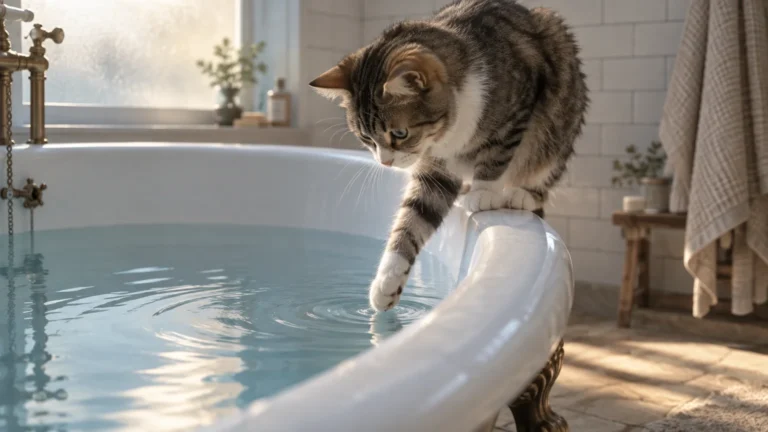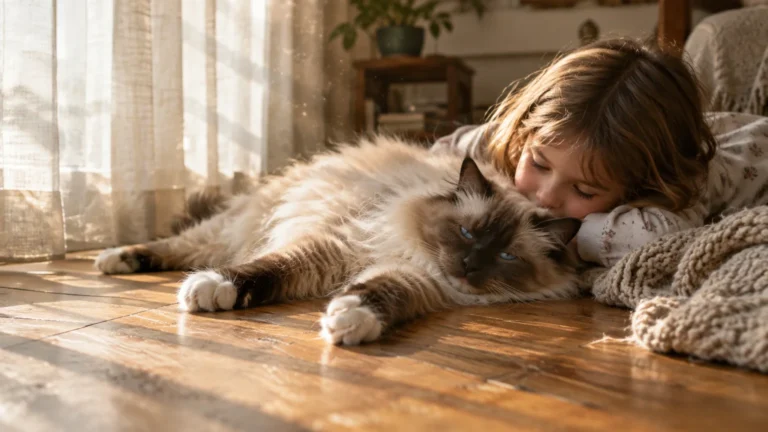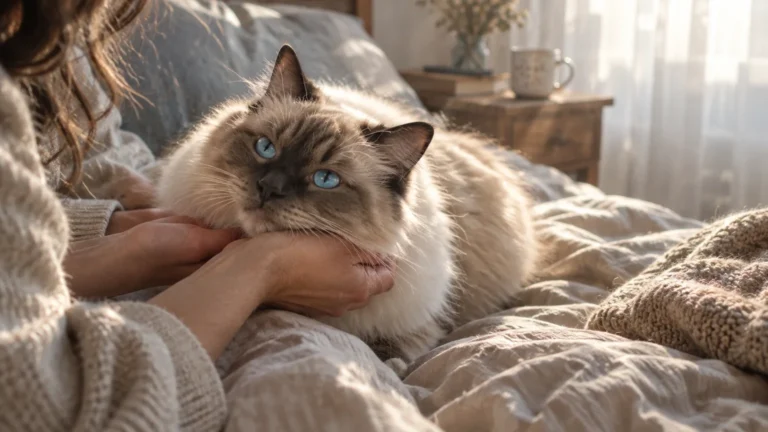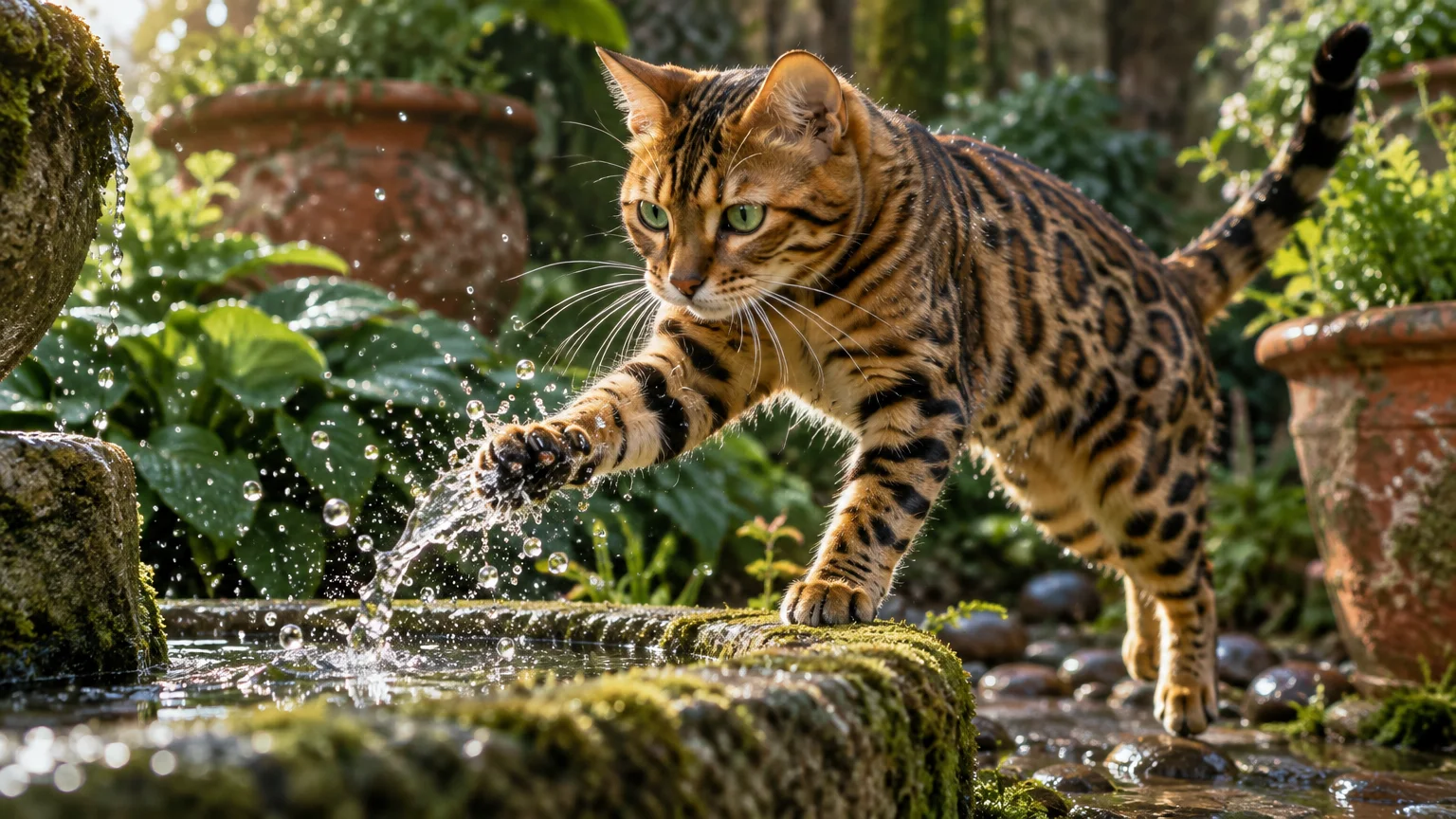
Most domestic cats avoid full bathtubs; however, several adventurous breeds actively seek out water. You will find these aquatic felines splashing in bathroom sinks, batting at garden hoses, or paddling across swimming pools.
Coat genetics and working history explain why certain cats love water while others run away. Specific breeds evolved water-repellent coats that shed moisture quickly and keep their skin warm.
If you want an adventurous companion who investigates dripping faucets or joins you near the shower, these twelve breeds stand out. Here is how their unique biology and history shape their love for water.
The Science Behind Cats That Love Water
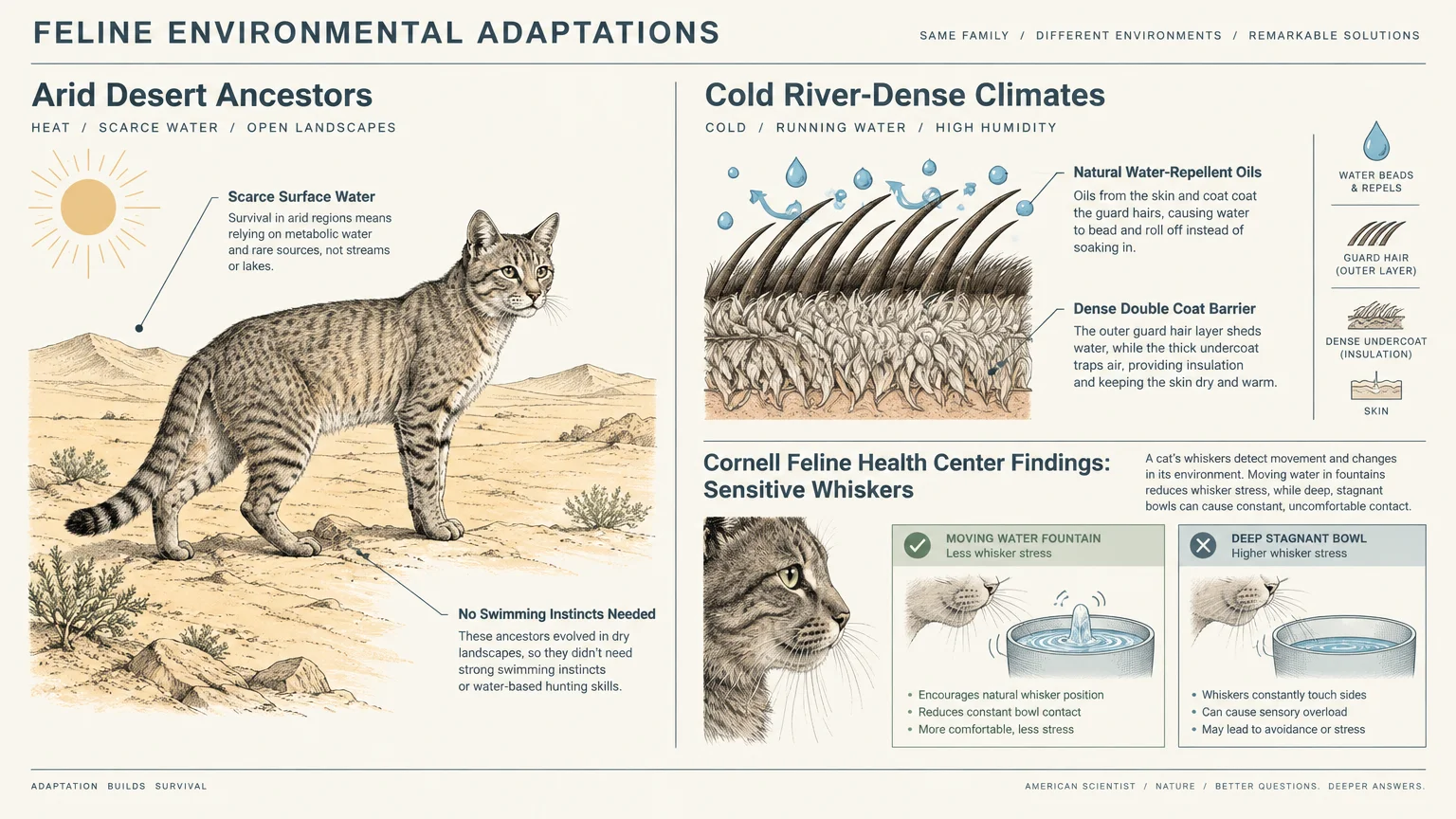
Wild ancestors of modern domestic cats inhabited arid Middle Eastern deserts where bodies of water were scarce. Because moisture was hard to find, those early felines never developed swimming instincts.
In contrast, breeds that developed in cold, river-dense climates adapted specialized double and triple coats. These water-repellent coats produce natural oils that prevent dampness from chilling their skin.
High play drives and predatory instincts also encourage cats to investigate running water. Dripping taps produce unpredictable ripples and glints of light that mimic the quick movements of small prey.
Research from the Cornell Feline Health Center shows that cats also possess highly sensitive whiskers. Running water from a fountain often feels far more comfortable to drink than stagnant water in a deep bowl.
12 Cat Breeds That Love Water
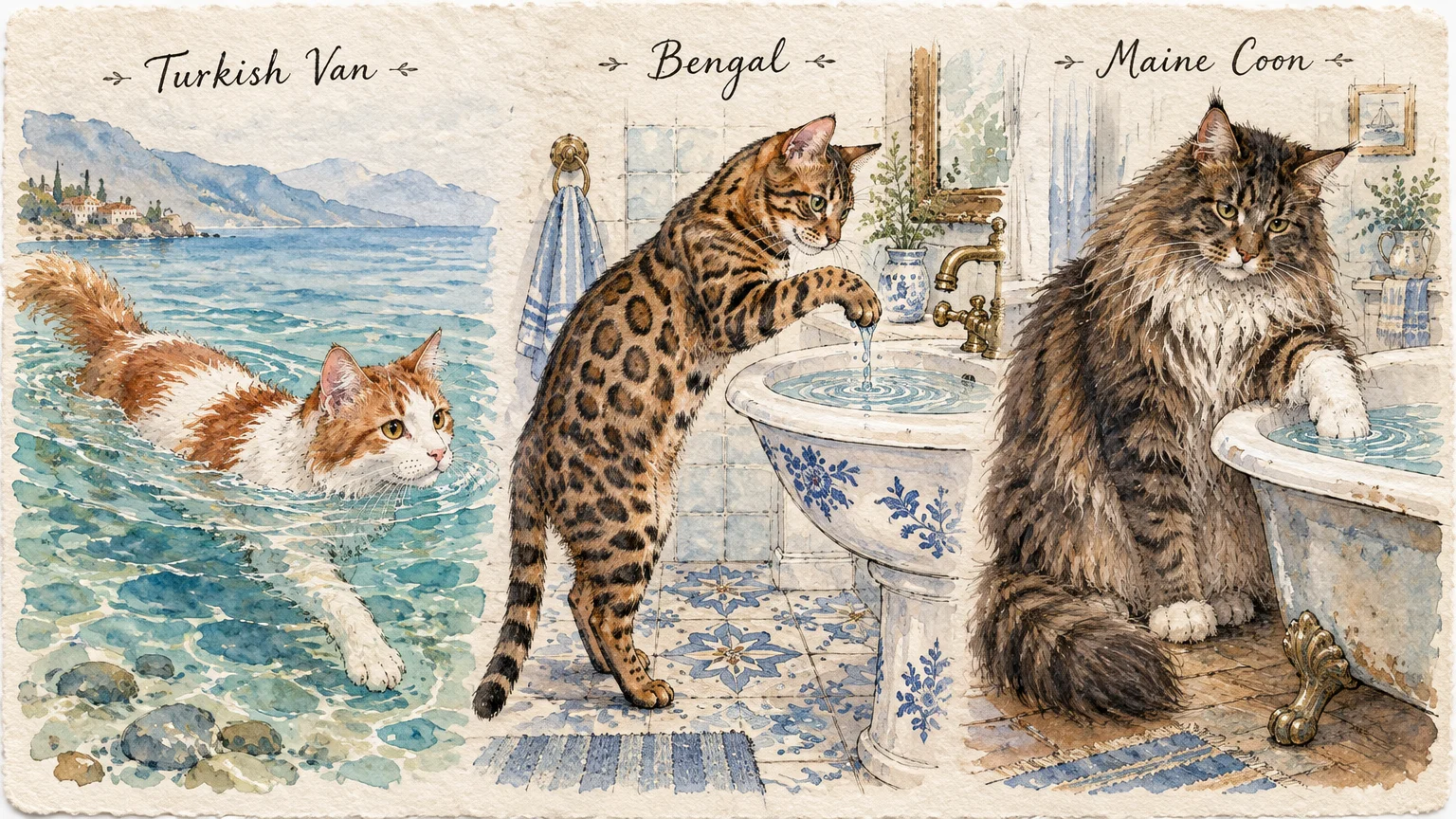
1. Turkish Van
Known widely as the swimming cat, the Turkish Van originated near Lake Van in eastern Turkey. Generations of exposure to the lake led this breed to swim naturally in shallow waters.
The Cat Fanciers’ Association (CFA) recognized the Turkish Van in 1988 and advanced it to championship status in 1994. Its cashmere-like coat lacks an insulating undercoat entirely.
This unique single coat naturally repels moisture, which allows the fur to dry remarkably fast. You will often find Turkish Vans splashing in sinks or exploring filled tubs.
2. Bengal
The Bengal cat pairs striking leopard markings with an adventurous, high-energy personality. Breeders created this athletic cat by crossing domestic felines with the wild Asian leopard cat (Prionailurus bengalensis).
The International Cat Association (TICA) registered the Bengal in 1983 and granted championship status in 1991. The CFA followed with full championship recognition in 2016.
Bengals inherit an intense fascination with water from their wild ancestors. They frequently jump into showers with their owners or scoop water from their bowls with their paws.
3. Maine Coon
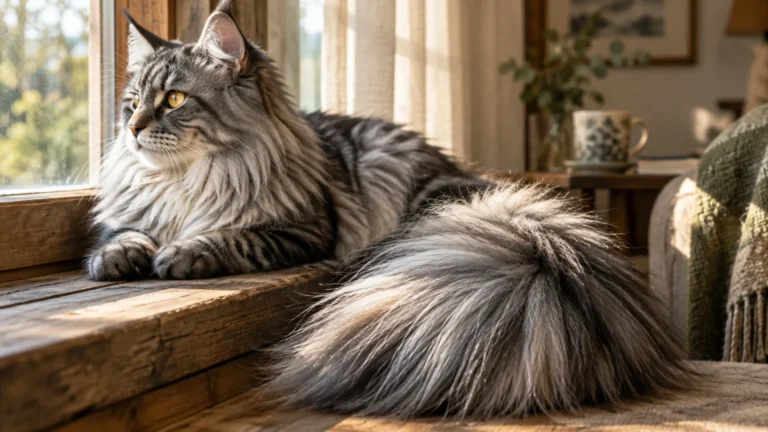
Maine designated this gentle giant as its official state cat in 1985. Developed in the rugged northeastern United States, the Maine Coon evolved to survive harsh, snowbound winters.
Its heavy, water-resistant topcoat features long fur along the belly and ruff to insulate against cold moisture. This rugged barrier keeps the cat dry when trekking through deep snow.
Maine Coons love dipping their large paws into water dishes and splashing puddles across the floor. They are also known to sit patiently on the edge of the tub during bath time.
4. Savannah Cat
The Savannah cat is a striking cross between a domestic cat and the African serval (Leptailurus serval). TICA awarded the Savannah full championship status in 2012.
Savannahs exhibit bold, dog-like personalities and eagerly join humans around bathtubs, showers, and backyard hoses. Their athletic build enables them to leap and splash with boundless enthusiasm.
However, ownership laws depend strictly on hybrid generation numbers. States like Georgia and Hawaii, as well as New York City, ban Savannahs completely; other areas restrict ownership to F4 generations or later.
5. Siberian Cat
Hailing from the freezing forests of Russia, the Siberian cat is built to withstand extreme subarctic conditions. It is one of the rare domestic breeds possessing a true triple coat.
This triple coat includes long guard hairs, stiff awn hairs, and a dense undercoat treated with natural oils. These oils repel rain, slush, and standing water before moisture can reach the skin.
Because their dense fur prevents them from feeling chilled, Siberians show little fear of water. You will frequently catch them batting at running faucets or dipping their paws into ponds.
6. Norwegian Forest Cat
Known in Scandinavia as the Skogkatt, the Norwegian Forest Cat served on Viking ships as an adept mouser. Surviving maritime storms required exceptional physical endurance and a weather-proof coat.
The breed features a coarse, water-shedding top layer of guard hairs over a woolly undercoat. This dual coat insulates the body against freezing downpours and icy coastal spray.
Norwegian Forest Cats enjoy exploring wet surfaces and playing with dripping garden hoses. Their calm demeanor and weather-resistant fur make them enthusiastic water companions.
7. Abyssinian
Abyssinians are renowned for their slender, athletic builds and boundless energy. While their short coats lack heavy water repellency, their fearless curiosity draws them straight to running water.
Many Abyssinians quickly figure out how to nudge faucet handles with their heads to start the flow. They enjoy batting at falling streams and will gladly sit beside you during your shower.
Because they jump into sinks without hesitation, you should always monitor open tubs around them. Their bold nature means they will investigate full water basins without second thoughts.
8. Turkish Angora
The Turkish Angora is an ancient, naturally occurring breed from the Ankara region of Turkey. Despite their delicate, silky appearance, these cats possess robust physical agility and a love for exploration.
Like the Turkish Van, the Angora has a single, shimmering coat that lacks a woolly undercoat. This lightweight coat dries quickly after splashing, preventing the cat from feeling damp or heavy.
Turkish Angoras frequently wade into shallow sinks and splash in warm bathwater. They enjoy batting at bubbles and watching ripples form on the water’s surface.
9. Japanese Bobtail
The Japanese Bobtail is an ancient breed celebrated throughout Asian art for its characteristic bunny-like tail. This lively feline has a muscular build and a water-resistant coat that sheds moisture easily.
Japanese Bobtails love dipping their front paws into water dishes and swirling the liquid before drinking. They will readily carry floating toys into bowls to create their own splashing games.
If you keep home aquariums, make sure your tank lids fit snugly. A curious Japanese Bobtail will not hesitate to go fishing if an open water surface presents itself.
10. Kurilian Bobtail
Originating on the rugged Kuril archipelago between Russia and Japan, the Kurilian Bobtail is a natural fisher. Wild ancestors of this breed caught fish directly from rushing mountain streams.
Their thick double coat easily sheds driving rain and cold river water. Long outer guard hairs repel moisture while the dense undercoat maintains the cat’s core body temperature.
This ancestral background gives Kurilian Bobtails total confidence around wet environments. They love paddling in shallow streams and exploring damp outdoor patios.
11. Manx
Hailing from the windswept Isle of Man, the Manx is famous for its tailless body and hunting prowess. Generations of maritime farm living conditioned this breed to thrive in wet climates.
The Manx possesses a plush double coat that resembles thick wool and naturally resists moisture. This dense barrier repels water droplets and shields the cat from cold drafts.
Manx cats often dunk their toys into water bowls or drop small balls into sink basins. Their calm temperament ensures they stay relaxed around splashing water.
12. Egyptian Mau
The Egyptian Mau is the only naturally spotted domestic feline breed in the world. Historical records and ancient Egyptian murals show these agile hunters retrieving prey along the banks of the Nile.
Egyptian Maus are fascinated by moving water and frequently test running faucets with their paws. They will dip their paws into deep bowls to create waves before taking a drink.
Their high intelligence and lightning-fast reflexes make water play an engaging game. If you turn on a sink faucet, your Egyptian Mau will likely run over to bat at the stream.
Comparing Water-Loving Cat Breeds
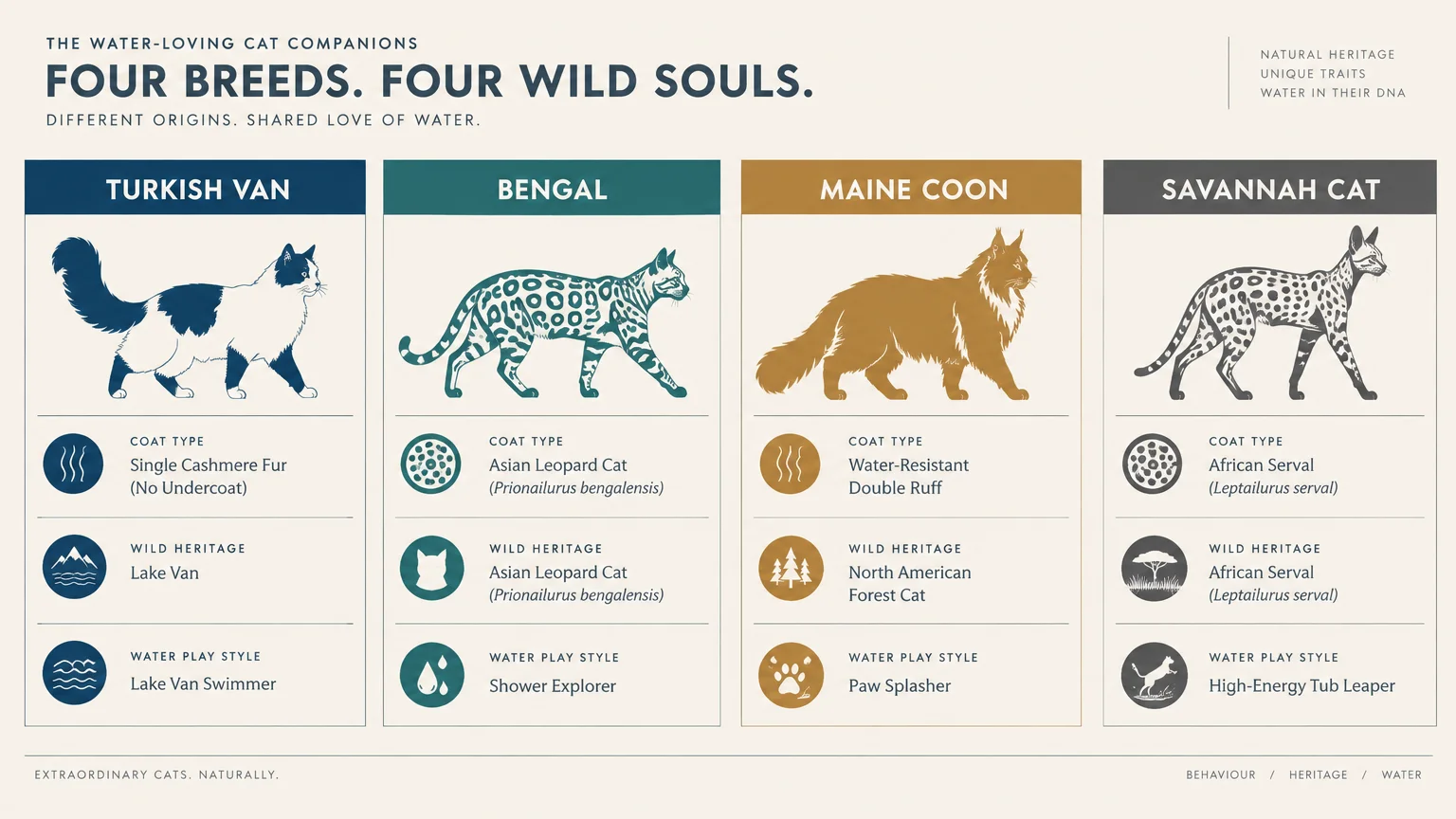
Understanding the differences between these water-loving breeds helps you pick the right companion for your home. The table below outlines coat types, water habits, and key traits for each breed.
| Breed | Coat Type | Primary Water Behavior | Key Physical Trait |
|---|---|---|---|
| Turkish Van | Single coat (no undercoat) | Swims and wades in open water | Cashmere-like water-repellent fur |
| Bengal | Short, sleek coat | Joins showers and plays with faucets | Spotted or marbled leopard pattern |
| Maine Coon | Dense double coat | Dips paws and splashes drinking bowls | Large tufted paws and ruffed coat |
| Savannah Cat | Short to medium coat | Wades into tubs and bats at hoses | Tall frame and serval-like spotting |
| Siberian Cat | Oily triple coat | Fearlessly explores sinks and puddles | Dense weather-proof barrier fur |
| Norwegian Forest Cat | Water-shedding double coat | Splashes in shallow water basins | Coarse topcoat and woolly undercoat |
| Abyssinian | Short, fine coat | Turns on faucets and bats water droplets | Slender athletic body and ticked coat |
| Turkish Angora | Single silky coat | Wades into warm bathwater | Fast-drying semi-long coat |
| Japanese Bobtail | Water-resistant double coat | Swirls water bowls and dips toys | Short, pom-pom tail |
| Kurilian Bobtail | Heavy double coat | Paddles in streams and puddles | Kinked bobtail and muscular build |
| Manx | Plush double coat | Drops toys into water dishes | Tailless spine and round frame |
| Egyptian Mau | Medium resilient coat | Swats at moving sink streams | Natural spots and rapid agility |
While single-coated breeds dry quickly after water play, double- and triple-coated breeds require regular brushing to prevent matting. Always dry your cat’s fur thoroughly after any aquatic adventure.
Water Safety Guidelines for Adventurous Cats
Even breeds that love water face serious safety hazards around deep or treated water sources. You must take sensible precautions to keep your curious feline safe around the house.
- Secure swimming pools: Chlorinated water and pool chemicals can irritate feline skin and cause severe stomach upset if ingested.
- Provide shallow water depths: Never fill play basins higher than your cat’s chest, ensuring they can stand securely at all times.
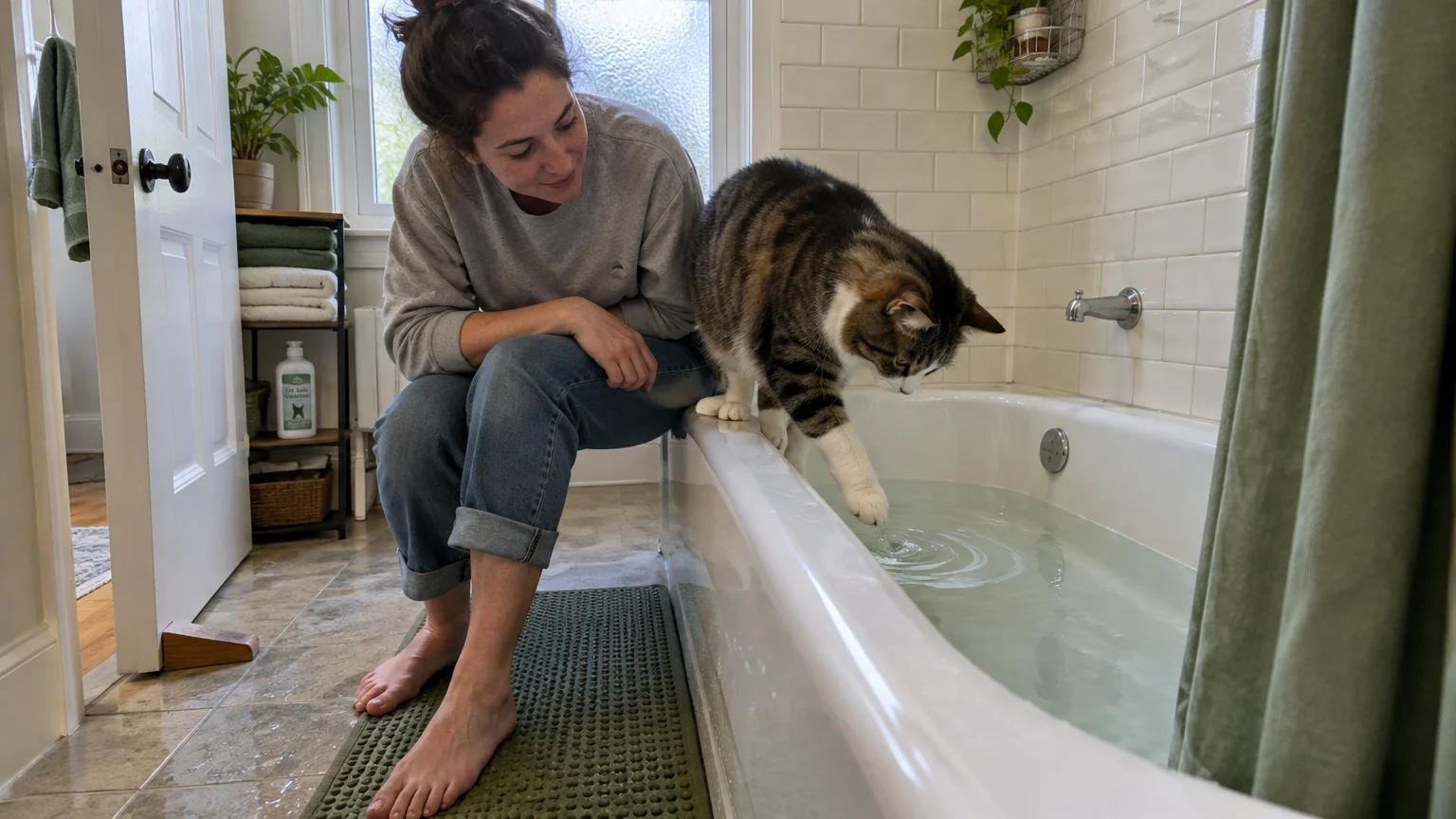
- Maintain escape routes: Keep tub sides clear and place rubber bath mats inside so your cat can climb out easily.
- Dry outer ears thoroughly: Moisture trapped inside feline ear canals can lead to bacterial or yeast infections.
- Supervise every session: Never leave a curious cat unattended near filled bathtubs, hot tubs, or garden ponds.
Never force a cat into water, regardless of breed expectations. Forcing immersion causes panic and breaks trust; aquatic exploration must always remain your cat’s voluntary choice.
Fun Ways to Satisfy Your Cat’s Water Curiosity
You do not need a full bathtub to keep an aquatic cat happy and engaged. Simple household setups offer plenty of sensory stimulation without soaking your furniture.
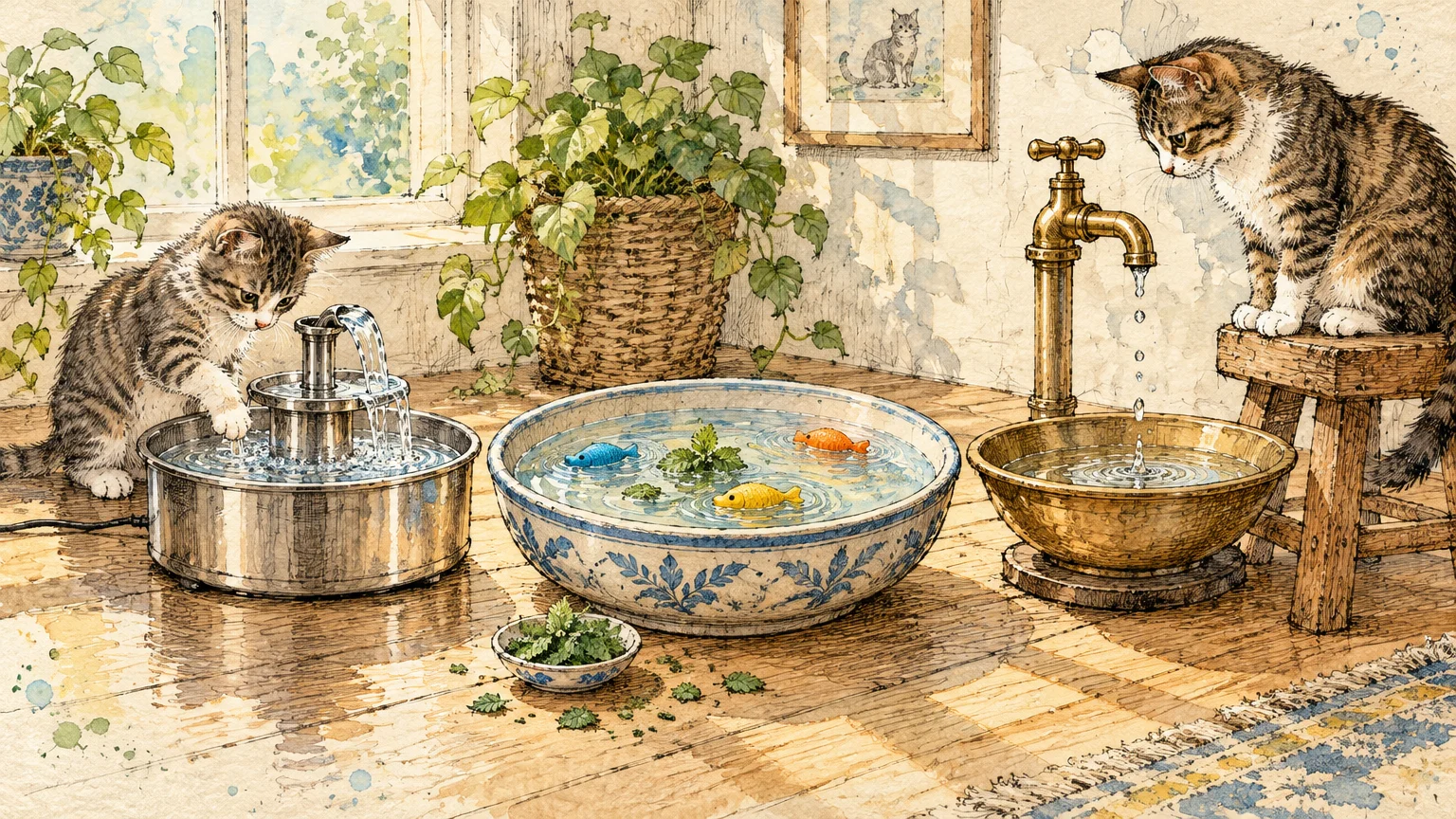
A continuous-flow pet fountain provides clean running water while satisfying your cat’s desire to swat at moving streams. Filtered fountains also encourage healthy daily hydration.
You can also float plastic ping-pong balls or robotic swimming fish inside a wide, shallow roasting pan. Your cat can bat at the floating targets without submerging its entire body.
Place a heavy microfiber mat beneath all water bowls and play basins. This absorbent barrier catches rogue splashes and protects your hardwood floors from warping.
Frequently Asked Questions
Why do most cats hate water while these breeds enjoy it?
Most domestic cats descend from desert-dwelling felines that rarely encountered large bodies of water. Water-loving breeds either originated near rivers or evolved water-resistant coats that keep their skin warm and dry.
Can I bathe my water-loving cat regularly?
Frequent baths with shampoo can strip away your cat’s natural skin oils and cause severe dryness. Unless your cat gets into something sticky or toxic, plain water splashes are much safer.
Do all cats within these twelve breeds love water?
Individual personalities always vary; not every single cat from these breeds will want to swim. While genetic traits create a strong predisposition, you should always respect your individual cat’s comfort level.
Are hybrid cat breeds legal in all states?
Hybrid breeds like Savannahs face strict ownership bans in Georgia, Hawaii, and New York City. Other states require special permits or permit only F4 and F5 generations.
Embracing Your Cat’s Water Adventures
Sharing your life with a water-loving cat adds daily amusement and playful curiosity to your home. Provide safe enrichment, supervise water access, and enjoy your pet’s unique aquatic personality.
This article provides general information only. Every reader’s situation is different—what works for others may not be the right fit for you.
For personalized guidance on health, legal, or financial matters, consult a qualified professional.
Last updated: May 2026. Rules, prices, and details change—verify current information with official sources before acting on it.