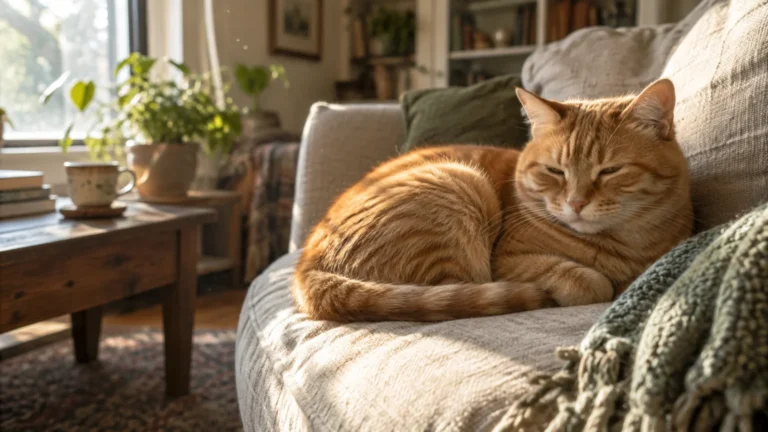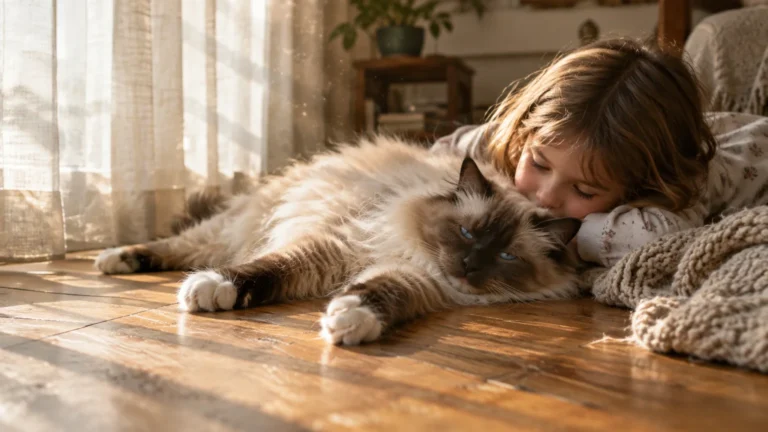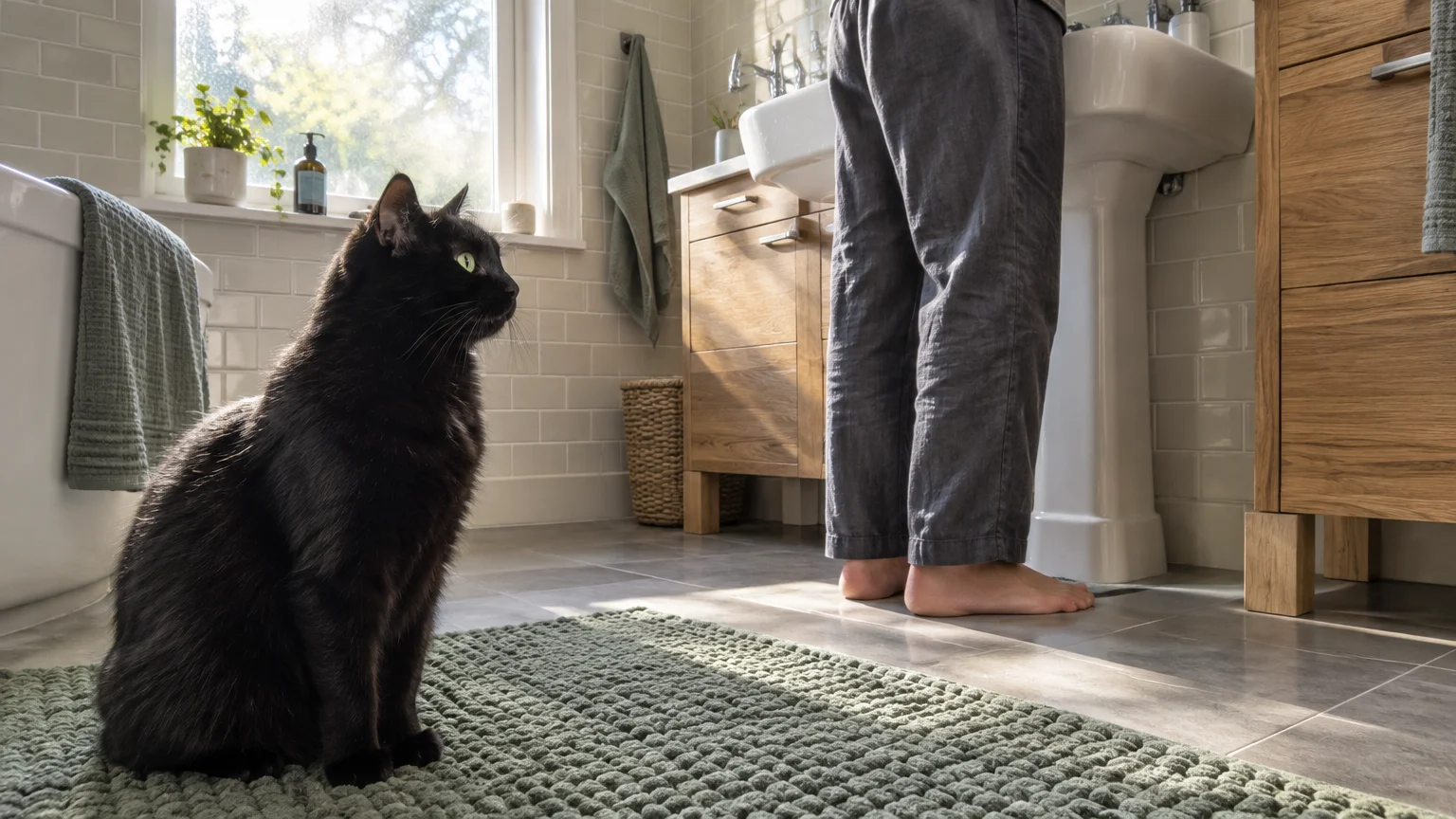
You close the bathroom door, only to hear immediate scratching and indignant meows outside. Cats view your daily personal routines as prime opportunities for territory checks, curiosity, and companionship.
While this escort behavior looks comical, it stems from deep evolutionary instincts and social bonding. Understanding these motivations helps you enrich your cat’s environment and recognize signs of stress.
From scent marking to captive attention, felines visit bathrooms for specific physical and psychological reasons. Here is what science and feline behaviorists reveal about your curious shadow.
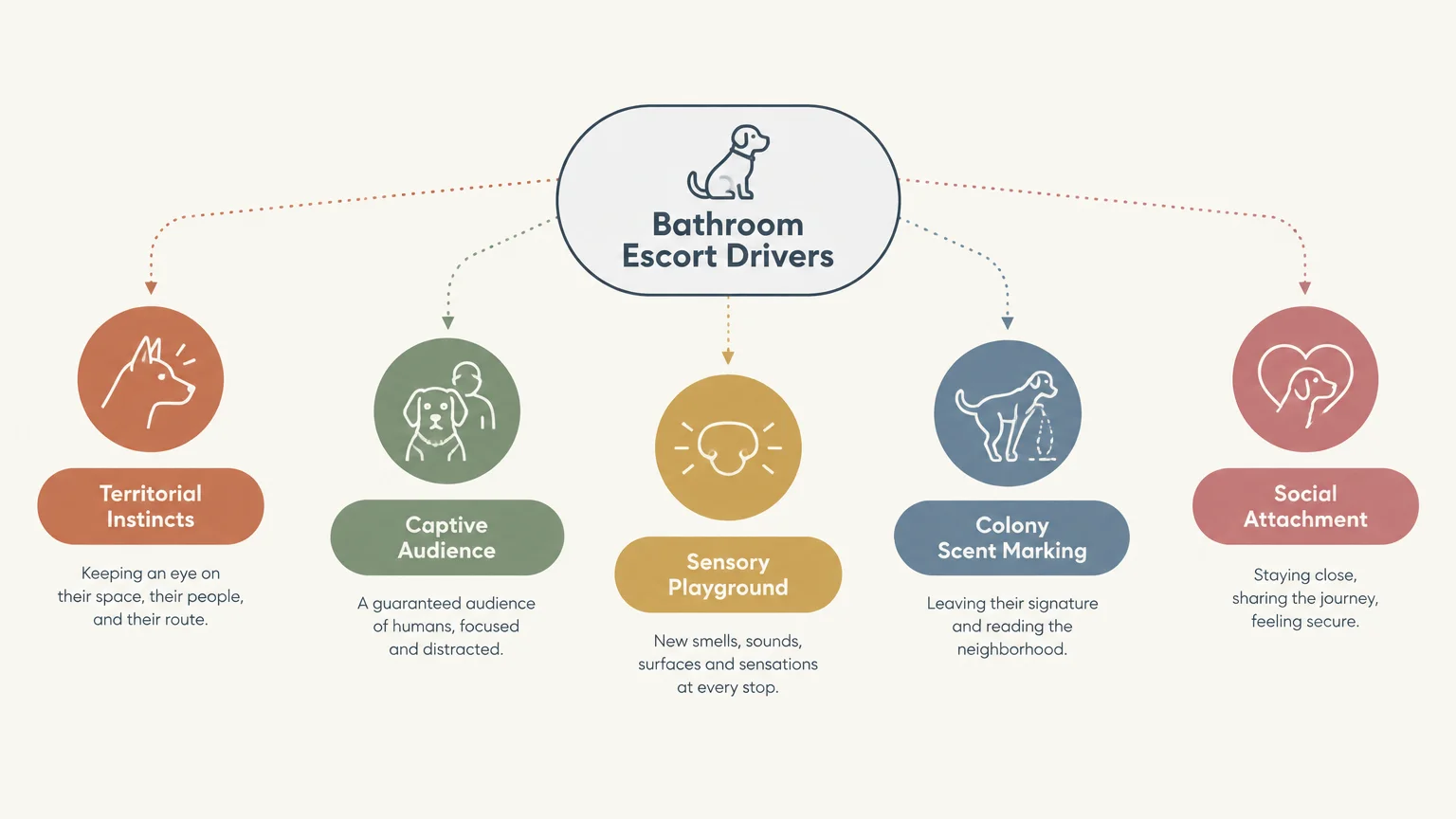
The Essentials: Bathroom Behavior at a Glance
Cats follow humans into bathrooms for a combination of social, territorial, and sensory motivations. Most of the time, this quirk simply reflects a healthy bond between you and your pet.
- Territorial instincts: Closed doors block access to established patrol routes within your home.
- Captive audience: Stationary humans provide prime opportunities for focused petting and chin scratches.
- Sensory playground: Running water, echoing acoustics, and paper rolls offer rich environmental enrichment.
- Colony scent marking: Bathing strips your natural scent, prompting your cat to reapply its scent glands.
- Social attachment: Securely bonded cats desire physical proximity to their primary caregivers.
Observing your cat’s body language in the bathroom reveals whether this habit stems from playful interest or emotional worry. Simple environmental adjustments keep the experience safe and pleasant for everyone.
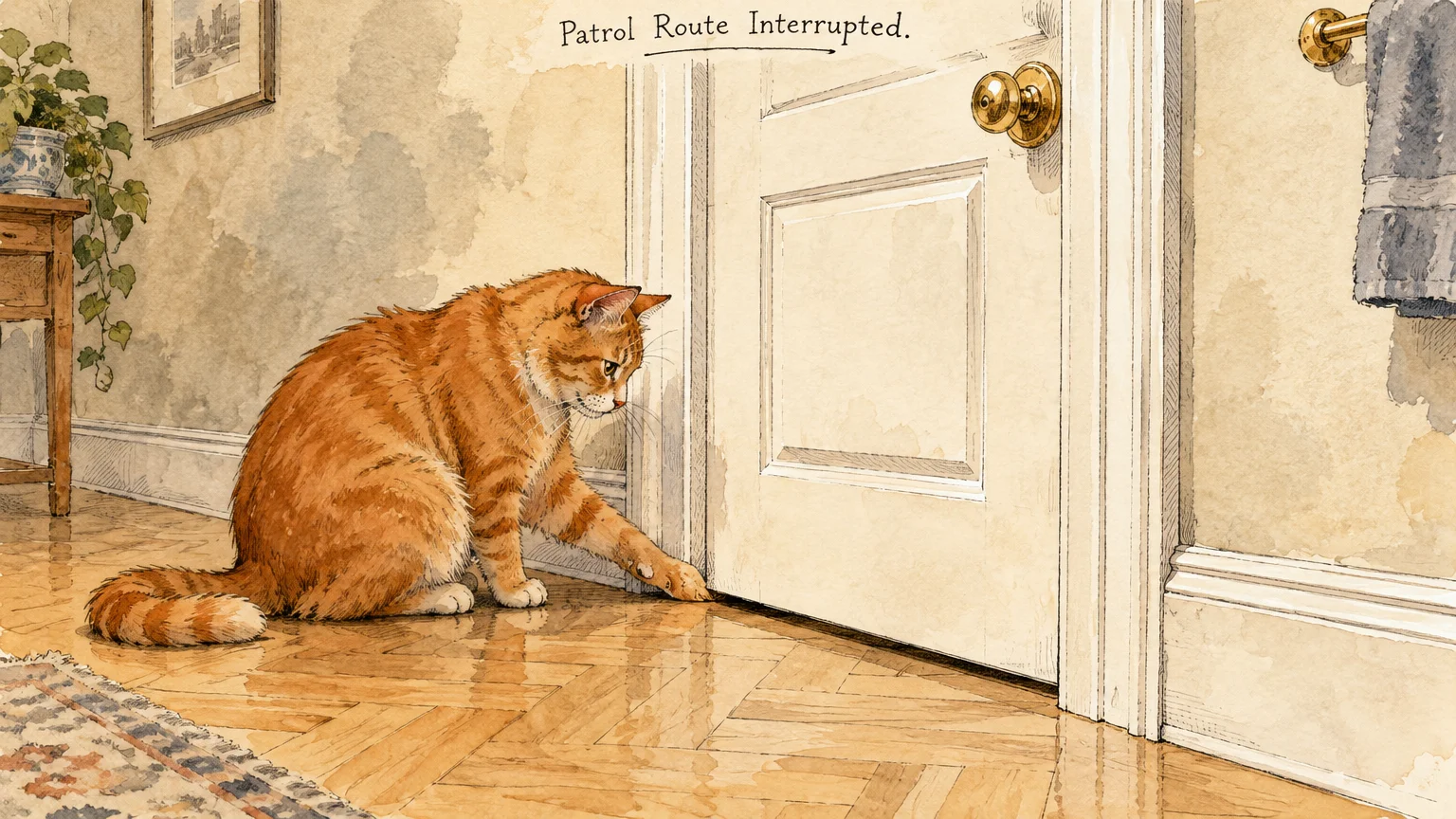
01 Closed Doors Violate Territorial Instincts
In the wild, felines maintain continuous oversight of their physical boundaries to detect threats. A closed interior door suddenly cuts off access to a known portion of their established home range.
Cats patrol living spaces multiple times each day to confirm that boundaries remain unchanged. When you seal the bathroom door, you create an unpredictable barrier that sparks immediate territorial frustration.
Research from veterinary behaviorists at the Cornell Feline Health Center confirms that environmental control remains critical for feline stability. Depriving cats of visual access triggers persistent efforts to breach the entryway.
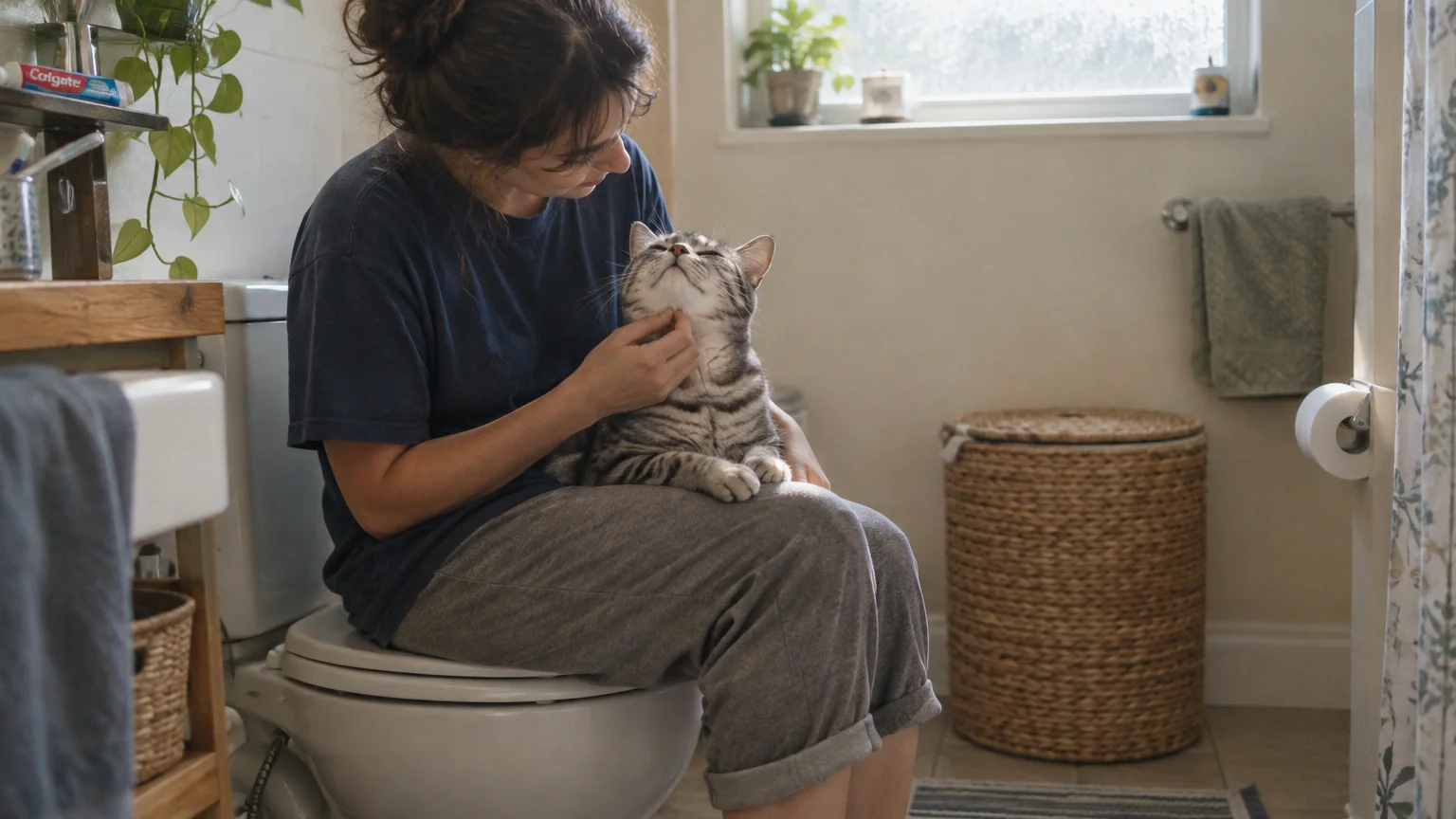
02 You Are a Captive Audience for Attention
Throughout the day, you walk briskly between rooms, cook meals, and focus on digital screens. Your cat recognizes that your ongoing household chores leave little room for sustained cuddle sessions.
The bathroom alters this dynamic because you remain stationary in one confined space. Whether you sit down or brush your teeth at the mirror, you cannot easily walk away.
Your pet exploits this stationary posture as an ideal window for scratches and affection. Positive reactions reinforce this behavior, turning your bathroom visits into an expected petting station.
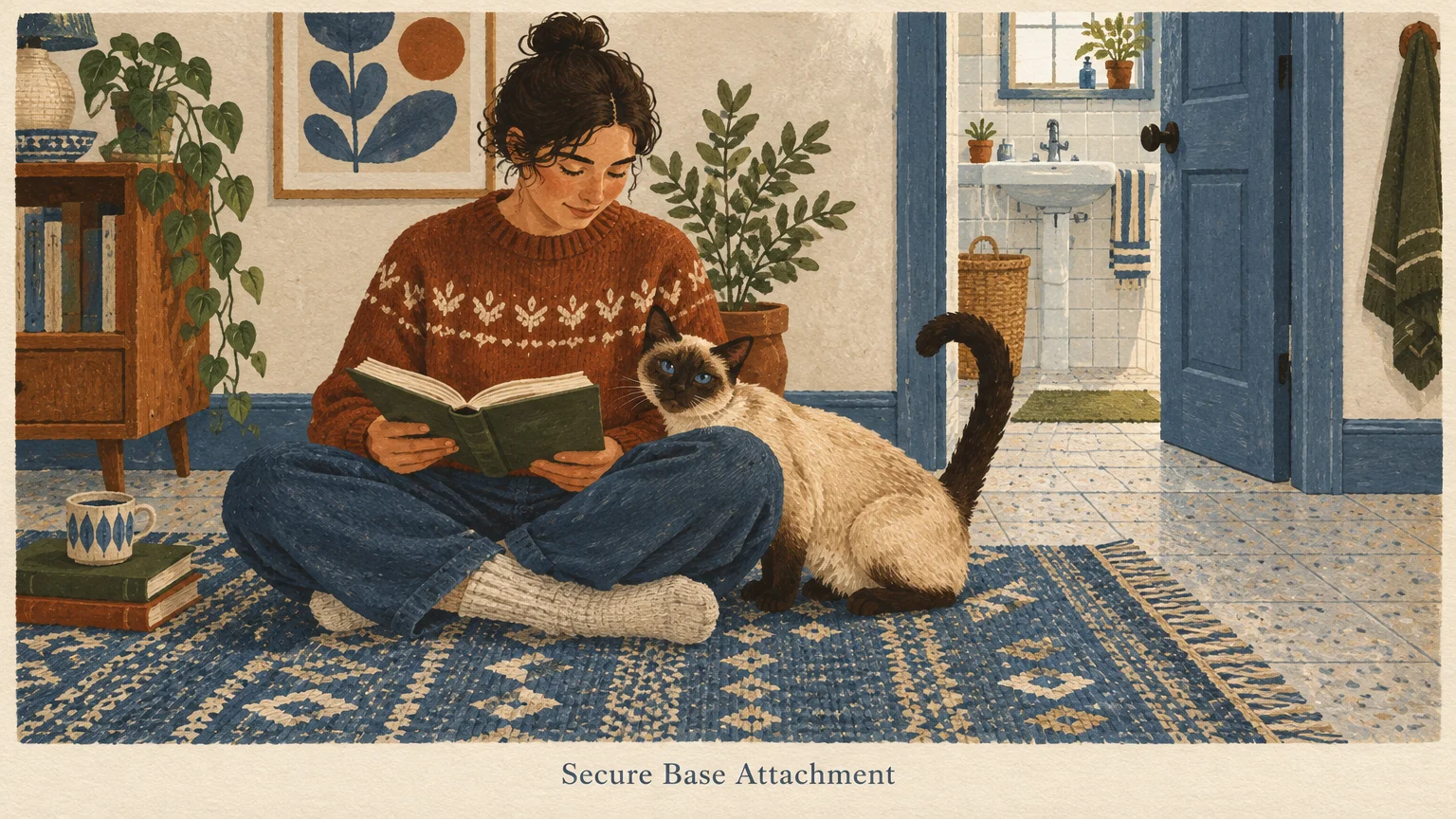
03 Secure Attachment and Social Companionship
Popular culture often stereotypes cats as detached solitary creatures who shun affection. In reality, understanding cats reveals that domestic felines develop deep emotional ties to their human families.
A 2019 study published in Current Biology demonstrated that felines form secure cat attachment styles comparable to human children. Cats treat their primary caregivers as a safe anchor when exploring or resting.
A cat following owner routines confirms that your pet views you as a treasured family member. They simply enjoy sharing the room where you spend your time.
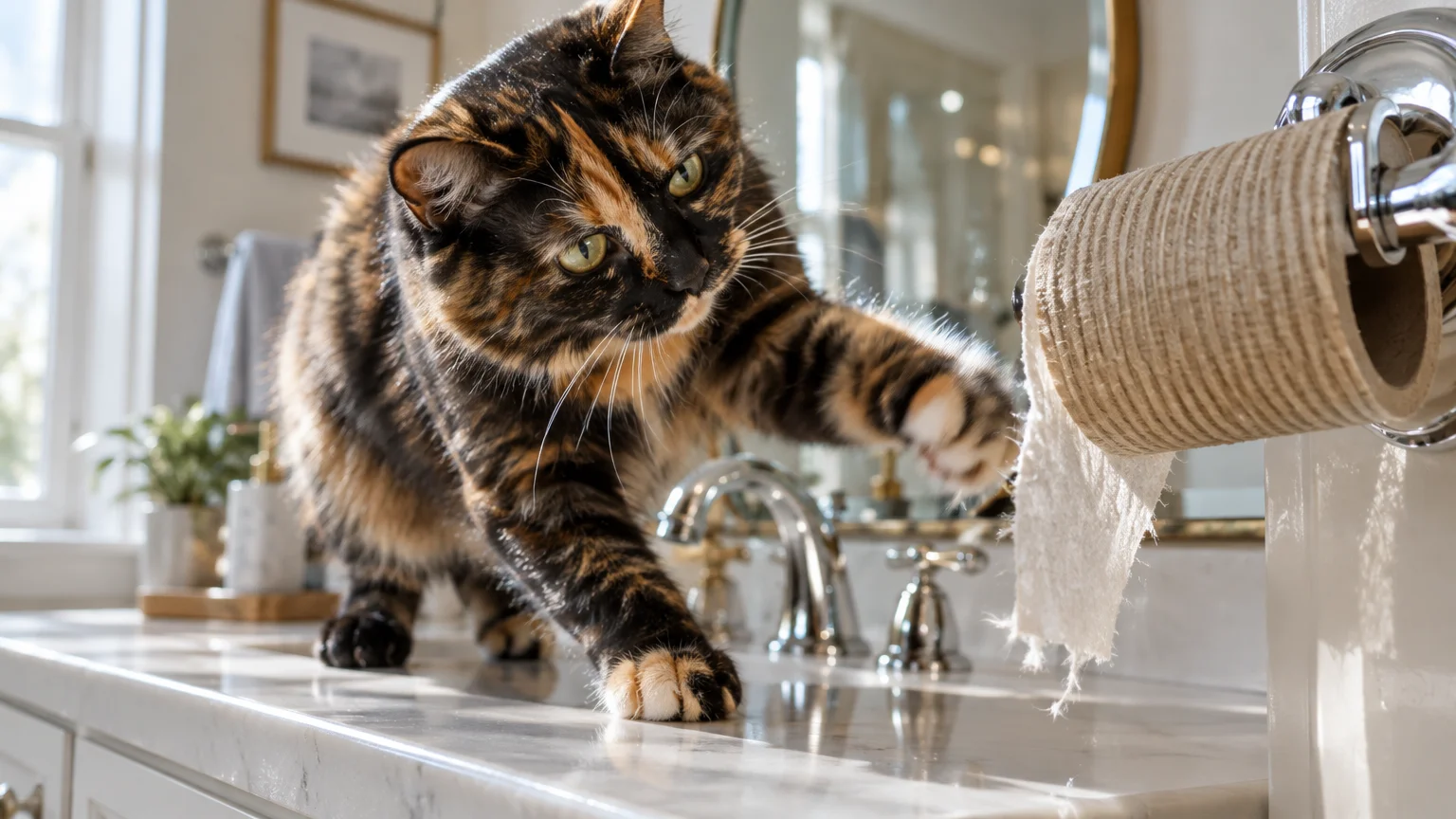
04 Sensory Enrichment and Intense Curiosity
Bathrooms provide a dense playground of unfamiliar sounds, smells, and textures absent from other rooms. Fluffy hanging towels, spinning toilet paper rolls, and echoing acoustics offer irresistible stimulation.
Cats possess extraordinary sensory organs that detect slight shifts in warmth and moisture. When you step into a steamy room, you naturally trigger your cat’s investigative drive.
Swatting at paper rolls or sprawling across textured bath mats delivers immediate mental engagement. For an indoor feline, your bathroom serves as a rotating sensory arcade.
05 The Lure of Running Water and Cool Porcelain
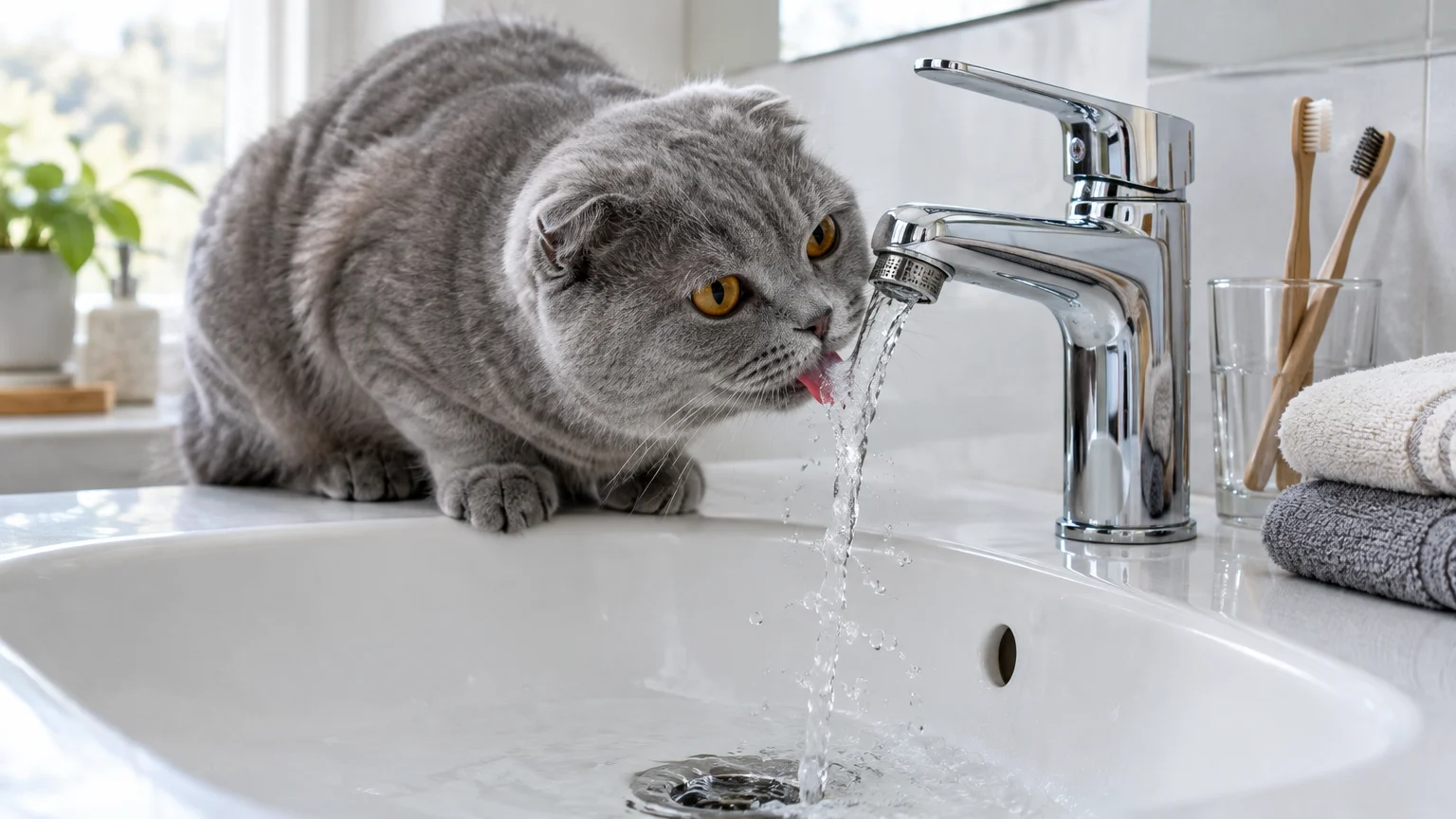
Domestic cats descend from desert wildcats that learned to avoid stagnant water pools. In nature, still water collects bacteria, prompting wild felines to prioritize clean, moving sources.
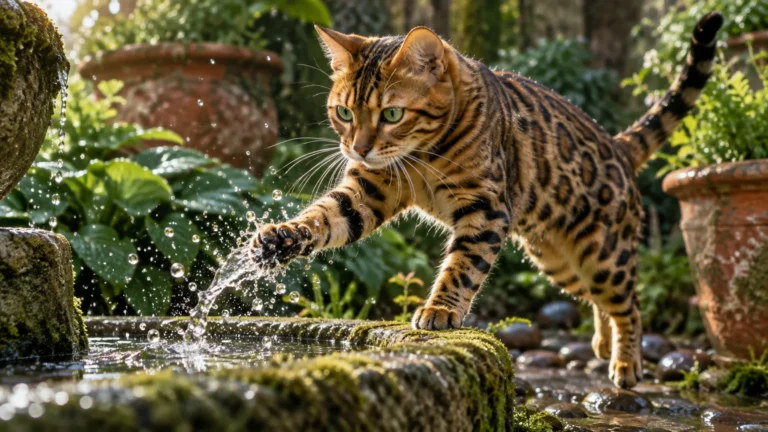
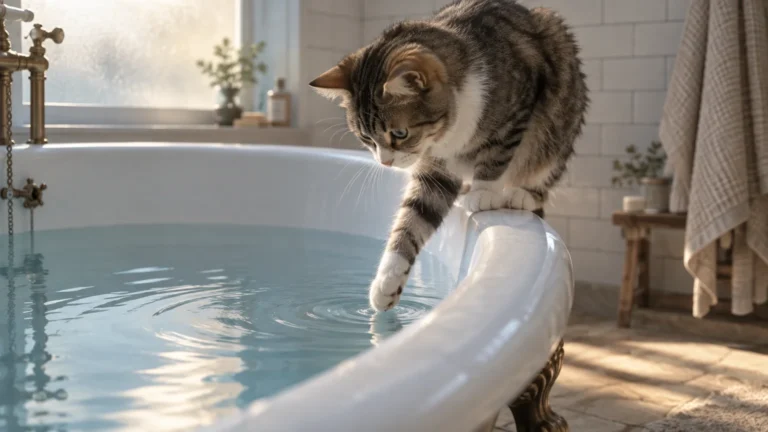
Dripping sink faucets and running shower streams supply oxygenated water that catches feline ears. Many cats adore pawing at trickling streams or licking droplets from cool tile walls.
Porcelain sinks and bathtubs also supply cool retreats during warmer parts of the day. The curved ceramic bowl comfortably supports a curled feline while providing an elevated vantage point.
06 Routine-Oriented Habits and Predictability
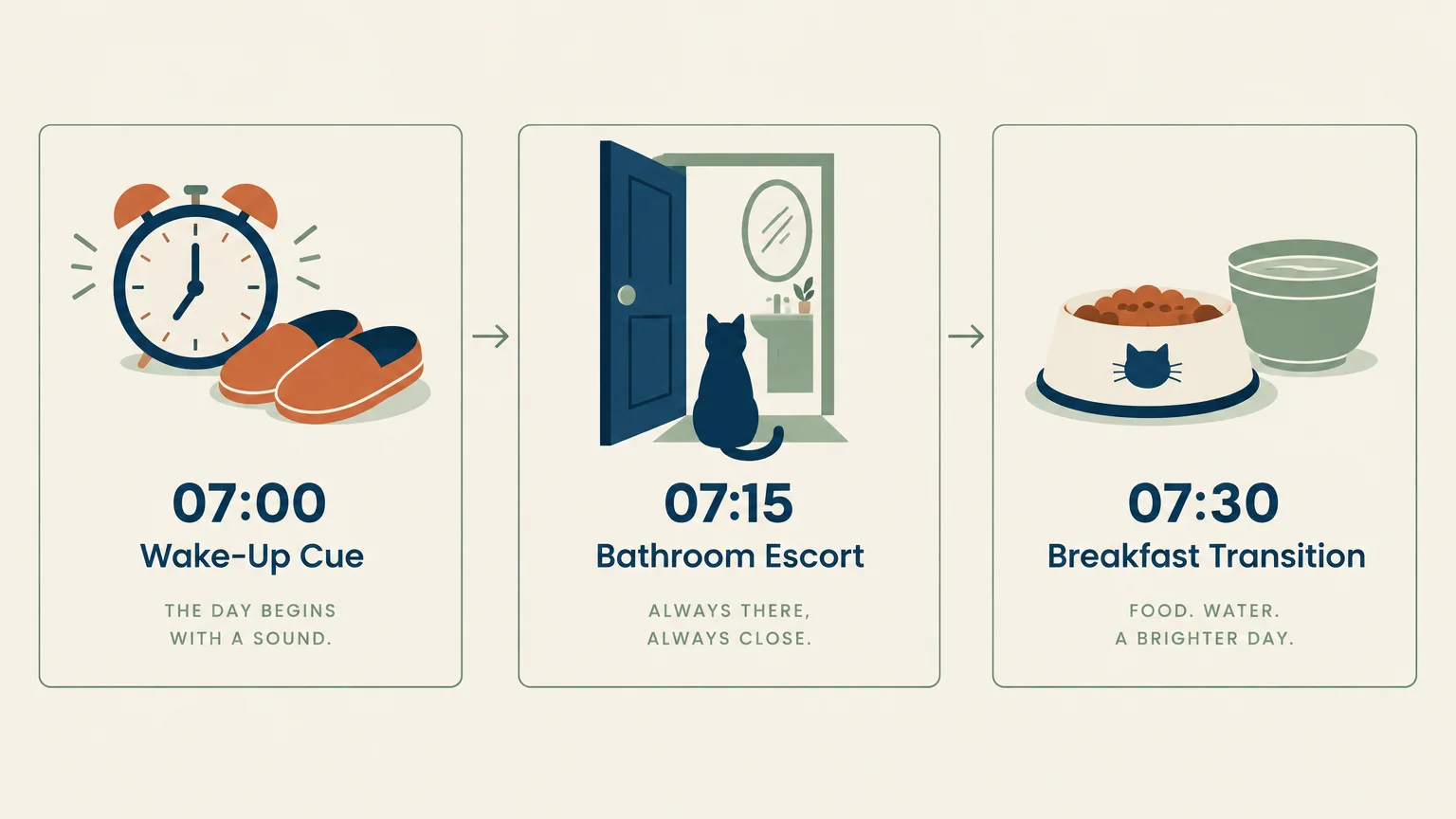
Felines thrive on strict schedules that establish predictability and order throughout the household. They track your morning alarms and evening hygiene routines with astounding accuracy.
If you wash your face every morning at eight, your cat integrates that event into its internal clock. Any disruption generates concern, so your cat arrives promptly to oversee the routine.
Consistent daily habits soothe feline nerves by eliminating erratic environmental surprises. Accompanying you into the bathroom gives your pet a stabilizing sense of comfort and structure.
07 Mutual Vulnerability and Protective Guarding
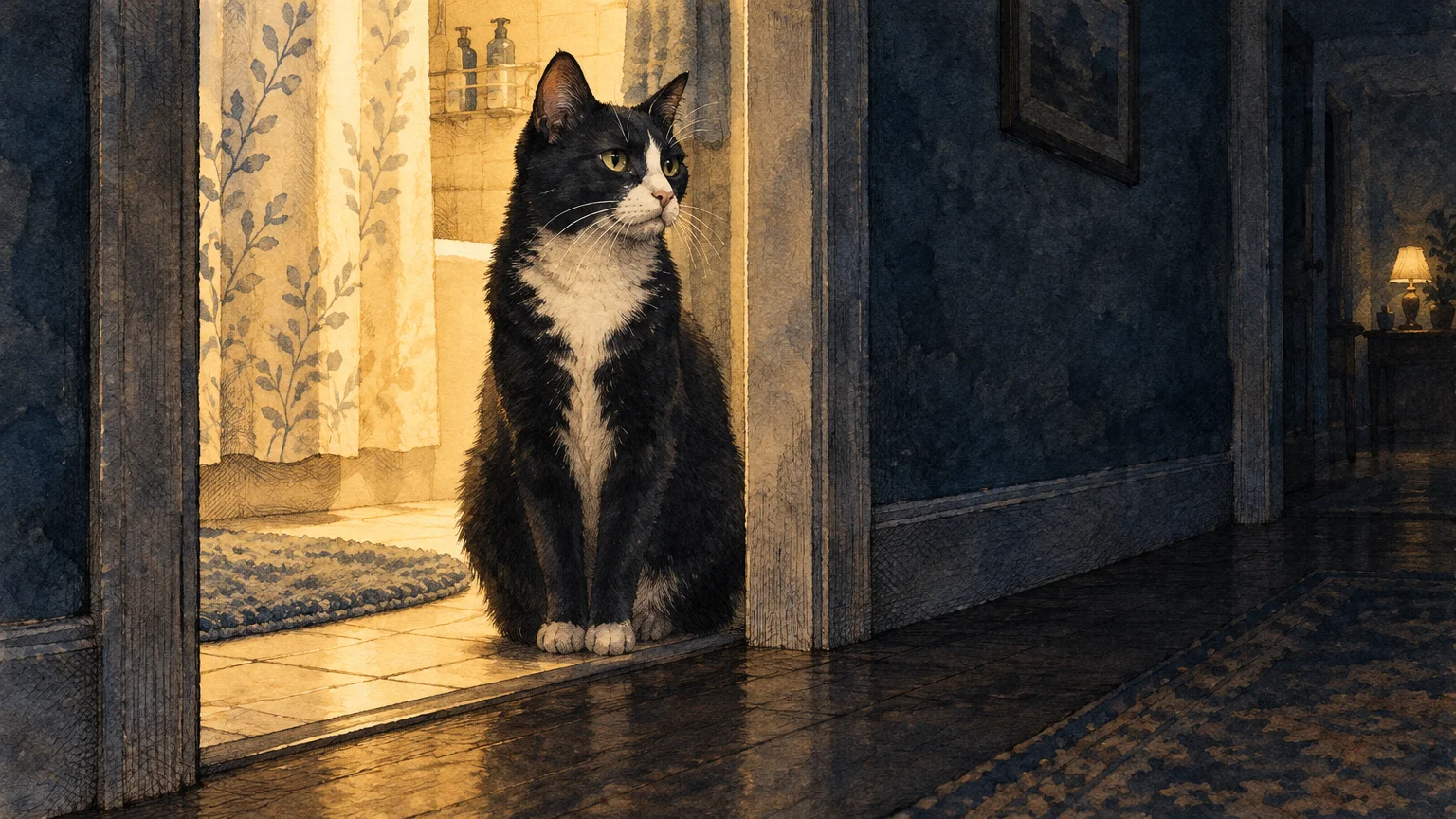
In wild environments, elimination forces small predators into an exposed, defenseless posture. Wild felines stay alert during these moments to prevent unexpected attacks from competitors.
Your cat may perceive that you become vulnerable whenever you use the bathroom facilities. Sitting nearby or watching the hallway represents an instinctual attempt to stand guard for you.
Conversely, many cats prefer to use their litter pan only while you stand close. They interpret your presence as protective backup while they attend to bodily functions.
08 Scent Mingling and Colony Reassurance
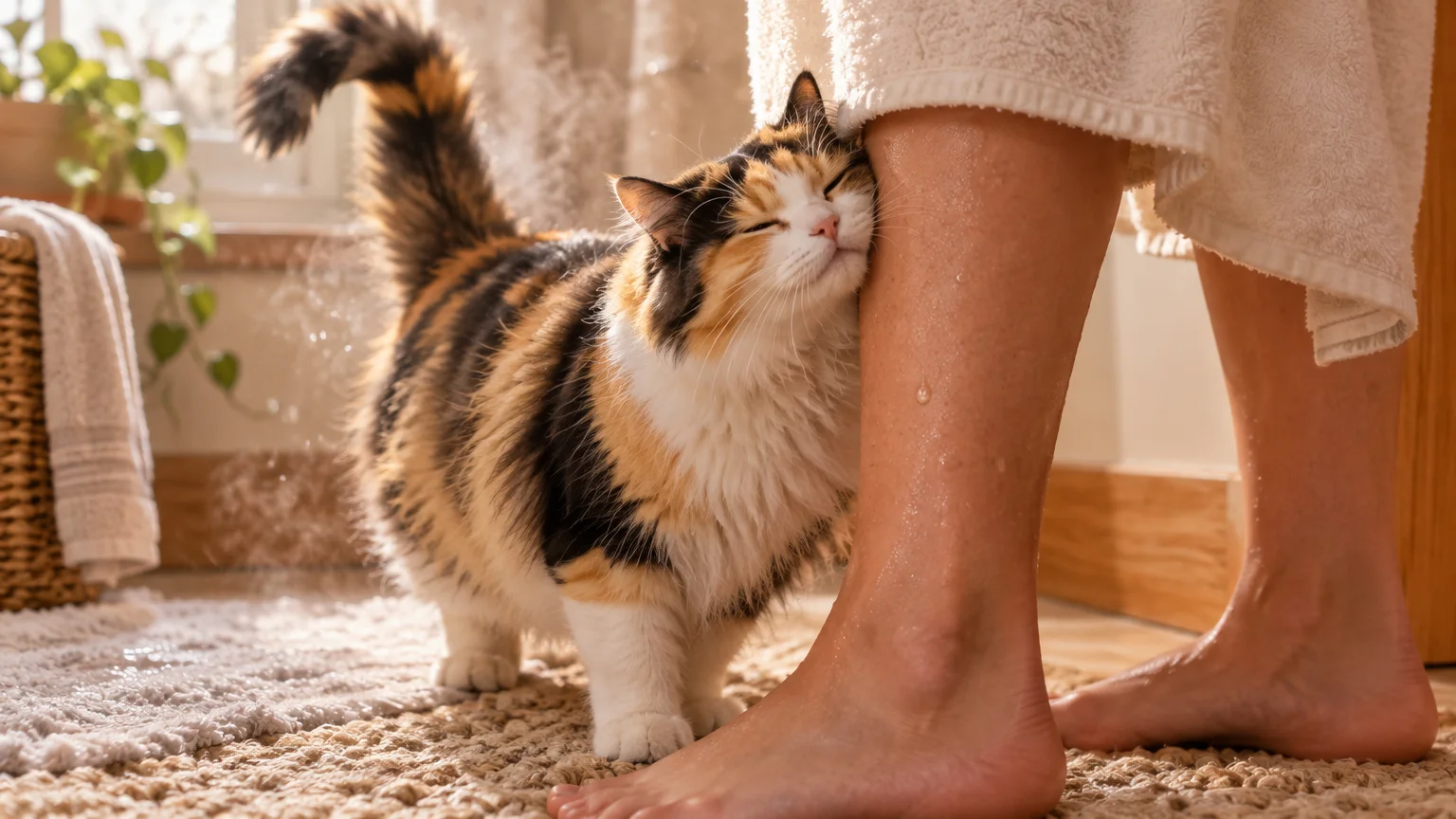
Cats communicate through complex scent cues, using facial glands to mark familiar objects. Rubbing their cheeks across your ankles deposits comforting pheromones that confirm social belonging.
Showers, shampoos, and bath soaps wash away your natural body odor in minutes. Your cat detects this loss immediately and moves quickly to reapply its signature scent.
This mutual grooming and scent exchange renews your shared household scent profile. It reassures your cat that you still belong to the same bonded social group.
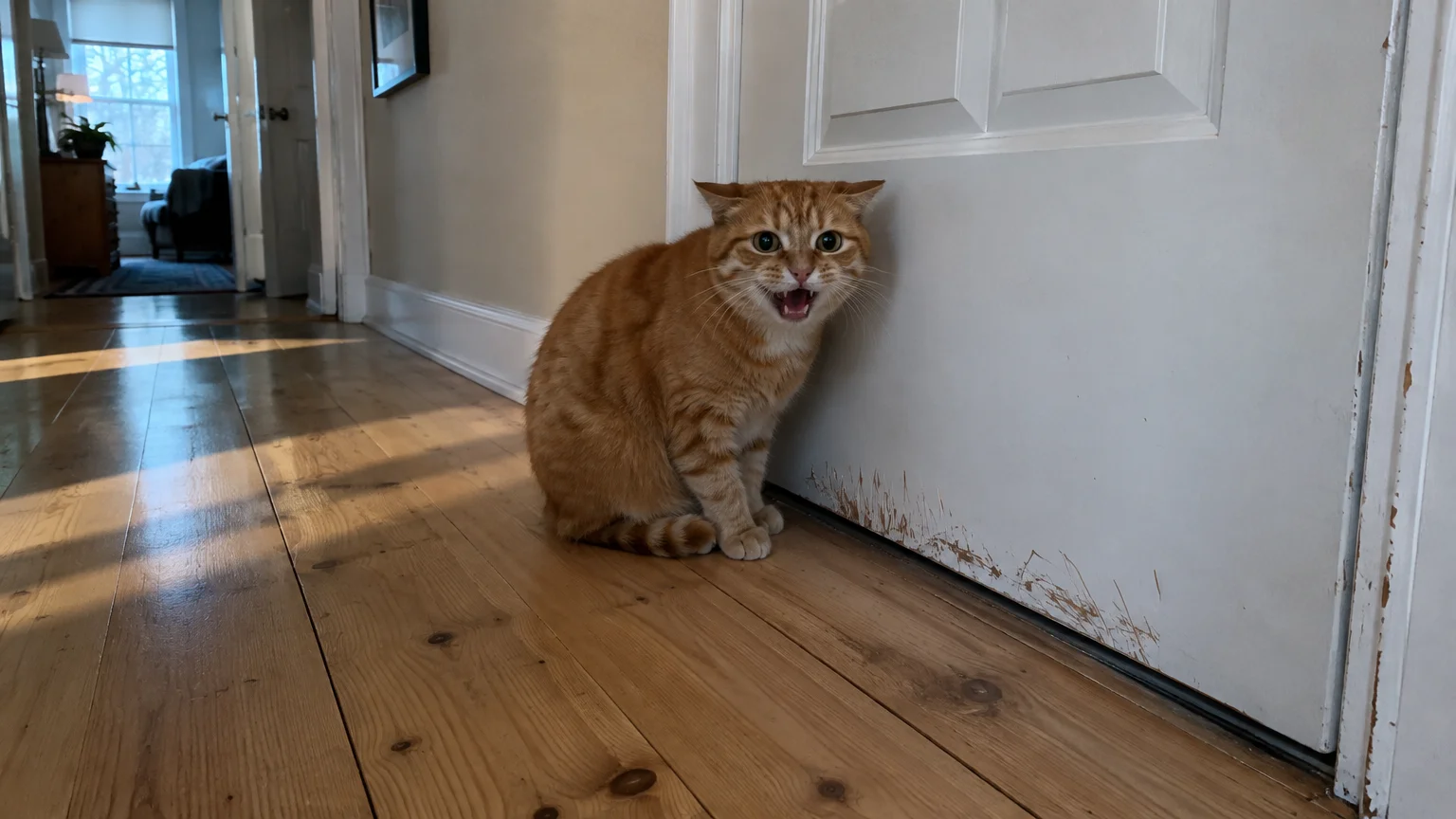
09 Separation Anxiety and Emotional Distress
While trailing behind you usually signals love, it can occasionally reveal underlying psychological stress. Some cats develop severe anxiety when separated from their human companions by a barrier.
Guidance from the ASPCA indicates that anxious cats frequently show distress through relentless howling, pacing, or frantic door scratching. These pets experience overwhelming distress when separated from their humans.
If your pet shows panting, drooling, or house soiling during brief separations, monitor them closely. True anxiety warrants therapeutic support rather than casual dismissal as mere curiosity.
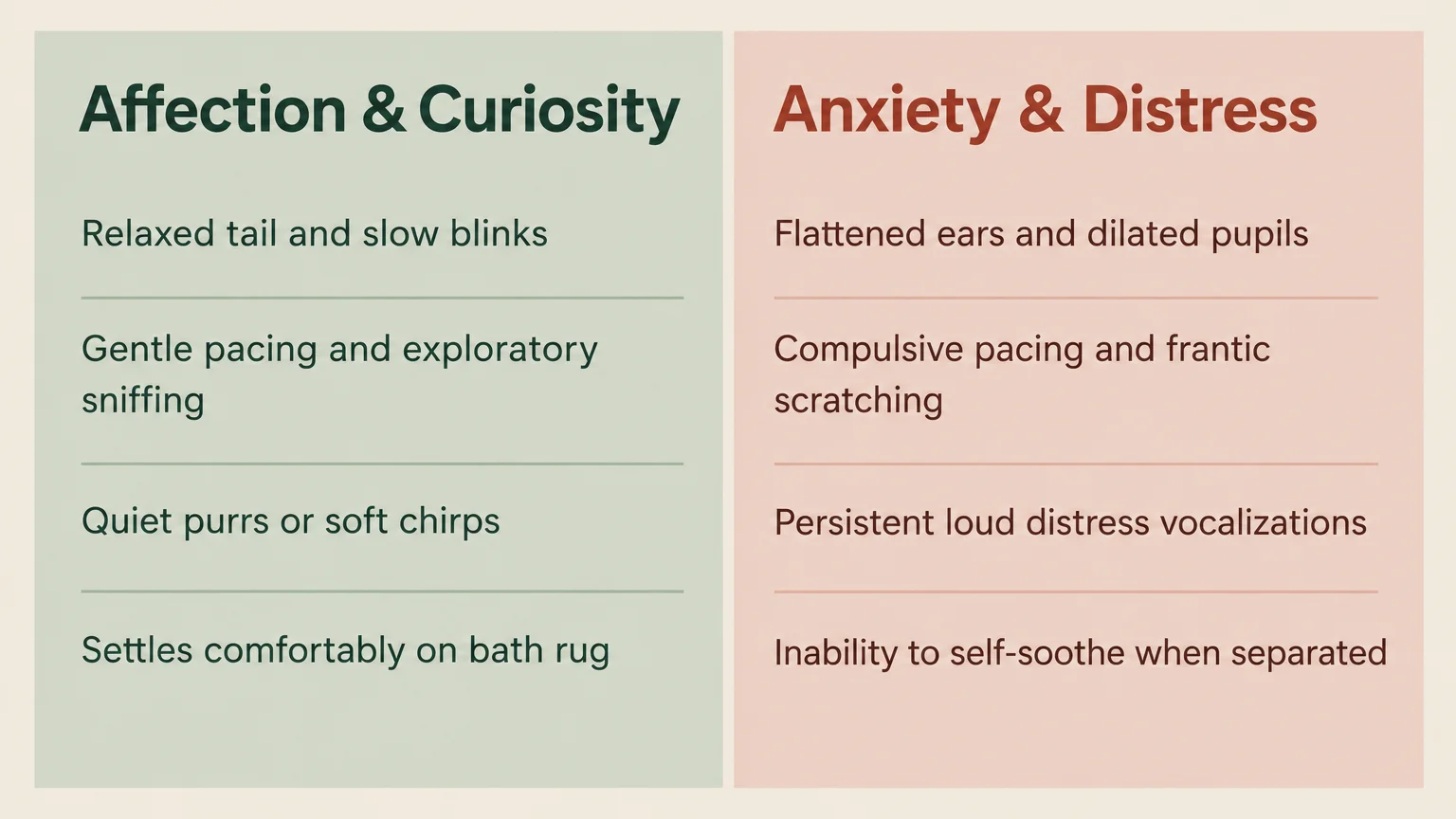
Distinguishing Affection from Anxiety: A Behavioral Comparison
Differentiating between healthy feline curiosity and genuine emotional panic protects your pet’s wellbeing. Use this practical comparison table to evaluate your cat’s everyday bathroom habits.
| Behavior Feature | Healthy Curiosity and Bonding | Underlying Separation Anxiety |
|---|---|---|
| Door Reaction | Waits patiently nearby or wanders away after a brief inspection. | Scratches frantically, paws violently under the door, and throws body weight against the wood. |
| Vocalization Patterns | Emits a brief chirp or greeting meow upon entering. | Produces loud, persistent yowling and distressed cries that escalate over time. |
| Body Language | Tail held upright with a relaxed, curved tip; relaxed ear posture. | Dilated pupils, flattened ears, crouching posture, and rapid tail swishing. |
| General Independence | Naps comfortably in separate rooms throughout the afternoon. | Refuses to remain alone in any room and follows every footstep compulsively. |
| Response to Distraction | Engages happily with treats, toys, or scratching posts instead. | Ignores high-value food and interactive play to maintain door focus. |
Healthy felines remain relaxed when doors close and find alternative activities without panic. In contrast, distressed pets experience escalating anxiety until you restore physical contact.
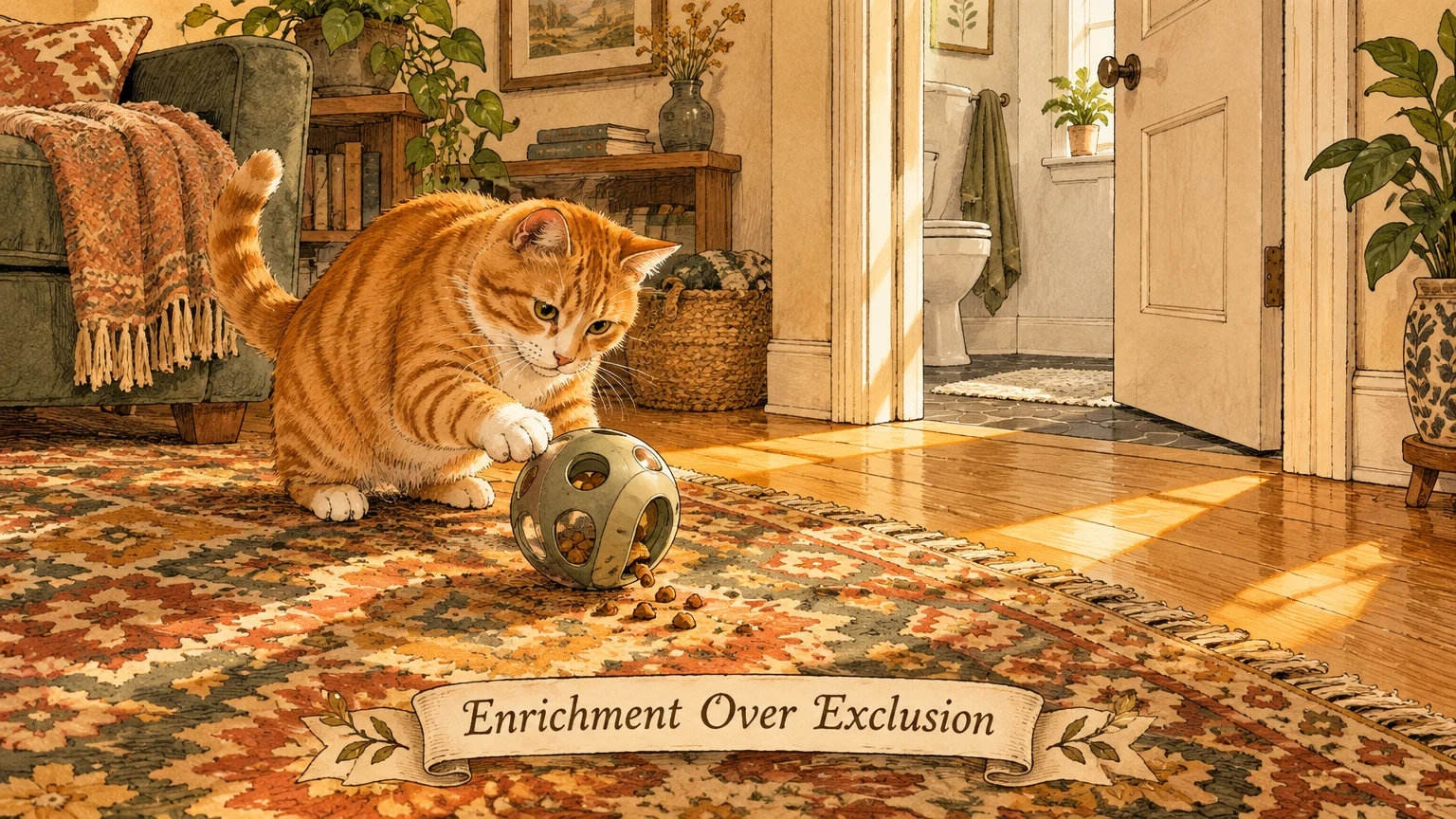
Practical Steps to Manage Bathroom Intrusion
If you welcome your cat’s presence, you do not need to change their daily habits. However, establishing gentle boundaries helps when you require uninterrupted personal privacy.
Never shout at or push your cat away when they follow you inside. Harsh corrections induce fear, which damages your social bond without resolving the underlying behavior.
- Distract with high-value enrichment: Offer a puzzle feeder or lick mat in the living room before heading to the bathroom.
- Provide an elevated bathroom station: Place a folded towel or dedicated stool near the counter to keep your cat off clean surfaces.
- Practice low-key departures: Close doors casually during non-routine hours for brief intervals without making a dramatic fuss.
- Reward quiet patience: Offer verbal praise and healthy treats when your cat rests peacefully outside closed doors.
Redirecting attention with positive incentives teaches your pet that closed doors do not signal abandonment. Consistency allows your companion to feel secure while respecting your personal space.
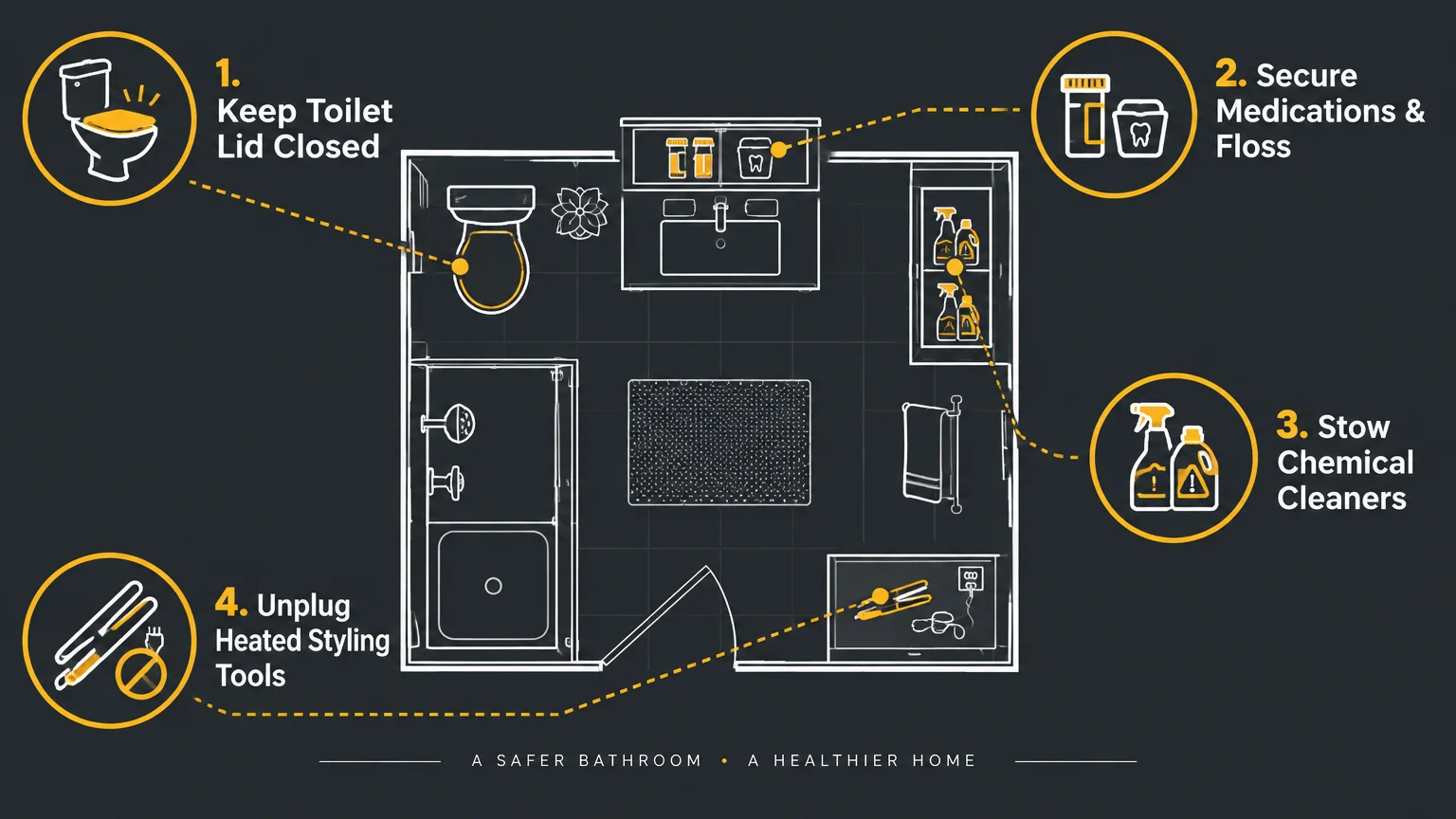
Bathroom Hazards Every Pet Owner Must Prevent
Curious bathroom visitors encounter several common household hazards that threaten feline health. Taking proactive safety measures keeps your curious companion protected during their visits.
Always close toilet lids to eliminate drowning risks and prevent exposure to corrosive bowl cleaners. Chemical residues on porcelain can cause severe oral ulcerations if licked.
Secure dental floss, medications, and disposable razors inside closed medicine cabinets. Swallowing string-like items can cause catastrophic intestinal blockages that require immediate emergency surgery.
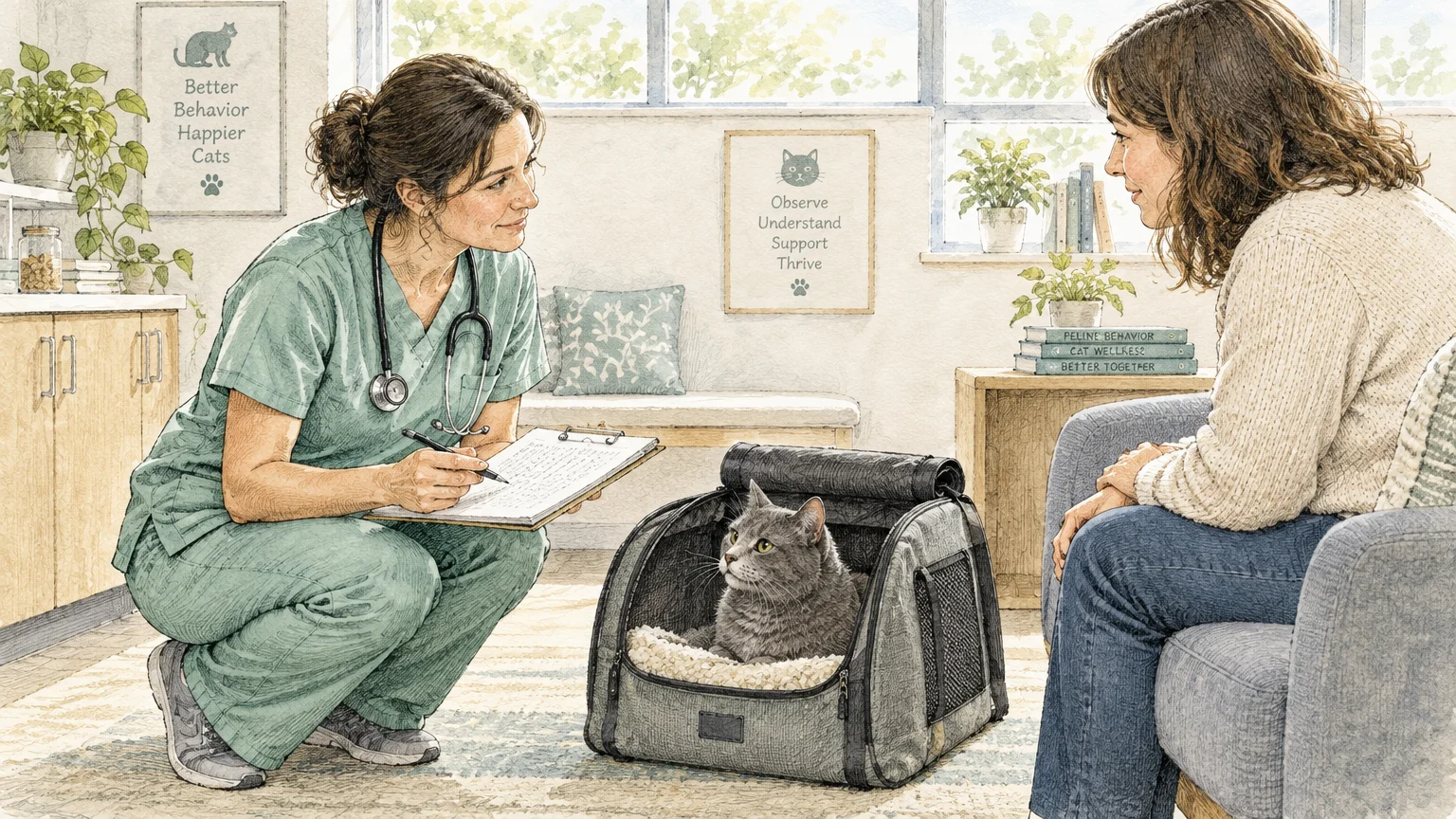
Getting Expert Input: When to Consult a Professional
Most feline bathroom visits stem from playful curiosity, but sudden behavioral shifts deserve medical evaluation. Abrupt clinginess can signify underlying medical issues such as hyperthyroidism or cognitive decline.
Aging cats suffering from sensory deficits often shadow owners to navigate their home securely. A comprehensive veterinary exam rules out hidden physical ailments before addressing behavioral factors.
If medical exams show clean health but separation panic continues, seek a certified animal behaviorist. Professional behavioral therapy restores emotional stability and comfort for your beloved pet.
Frequently Asked Questions About Feline Bathroom Habits
Why does my cat sit inside the bathroom sink?
Bathroom sinks mimic protective nesting bowls, offering cats physical security and comfortable support. The cool porcelain also aids body temperature control while offering an elevated viewpoint.
Is it safe for cats to drink from running faucets?
Fresh municipal tap water from a clean faucet is generally safe for cats. However, prevent pets from licking residual soap scum or standing water collected in tubs.
Why does my cat rub against my legs after a shower?
Soaps and running water strip away your natural, familiar scent profile during bathing. Your cat rubs against you to reapply facial pheromones and reclaim you into the colony.
Should I let my cat into the bathroom or keep the door shut?
This choice depends entirely on your personal privacy preferences and household safety steps. Provided you secure hazardous cleaners and close toilet lids, bathroom access is harmless.
Closing Thoughts and Practical Takeaways
Your cat’s bathroom routine reflects genuine attachment, sensory curiosity, and instinctive territory patrol. Embracing these funny habits deepens your bond and provides wonderful insight into cat behavior.
This is general informational content based on widely accepted guidance, and individual results vary. Verify current details—rules, prices, eligibility, regulations—with official sources before making important decisions.
Last updated: May 2026. Rules, prices, and details change—verify current information with official sources before acting on it.