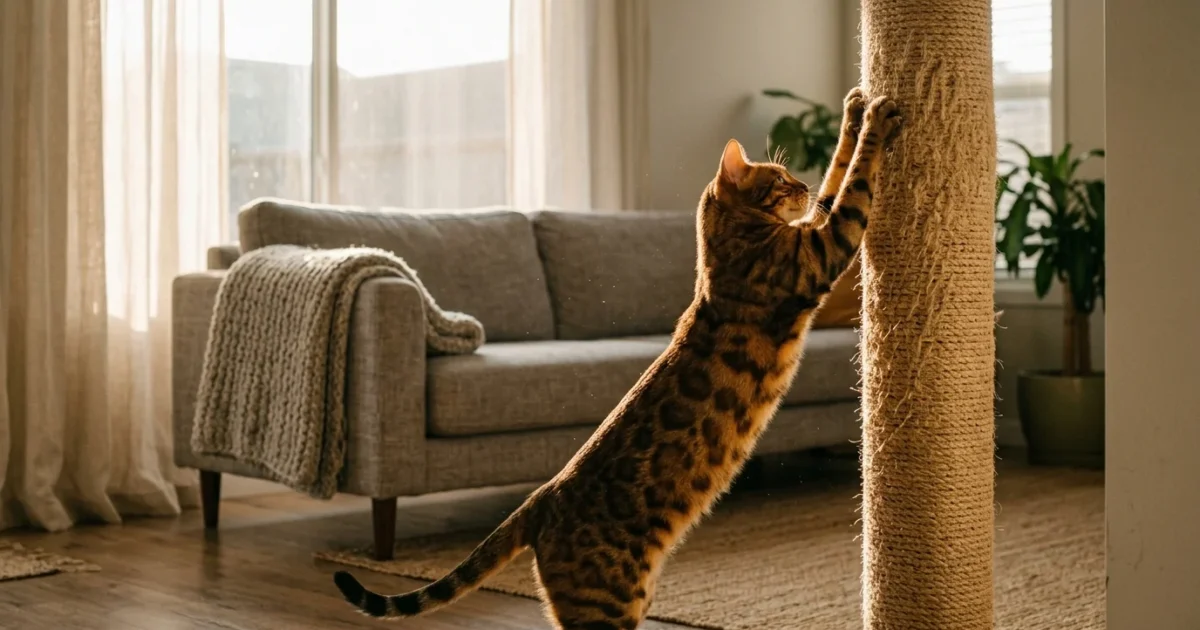
Your sofa corners and hanging curtains often bear the brunt of feline instincts. Understanding which breeds possess the highest energy helps you protect your home before claw marks ruin your upholstery.
Scratching is normal biology; felines shed worn claw husks, exercise spine muscles, and leave chemical scent markers from their paw pads. Veterinary surveys show that 60 percent of pet owners encounter destructive scratching.
When exceptional athleticism and restless intelligence combine, specific breeds scratch with intense vigor if they lack dedicated physical outlets.
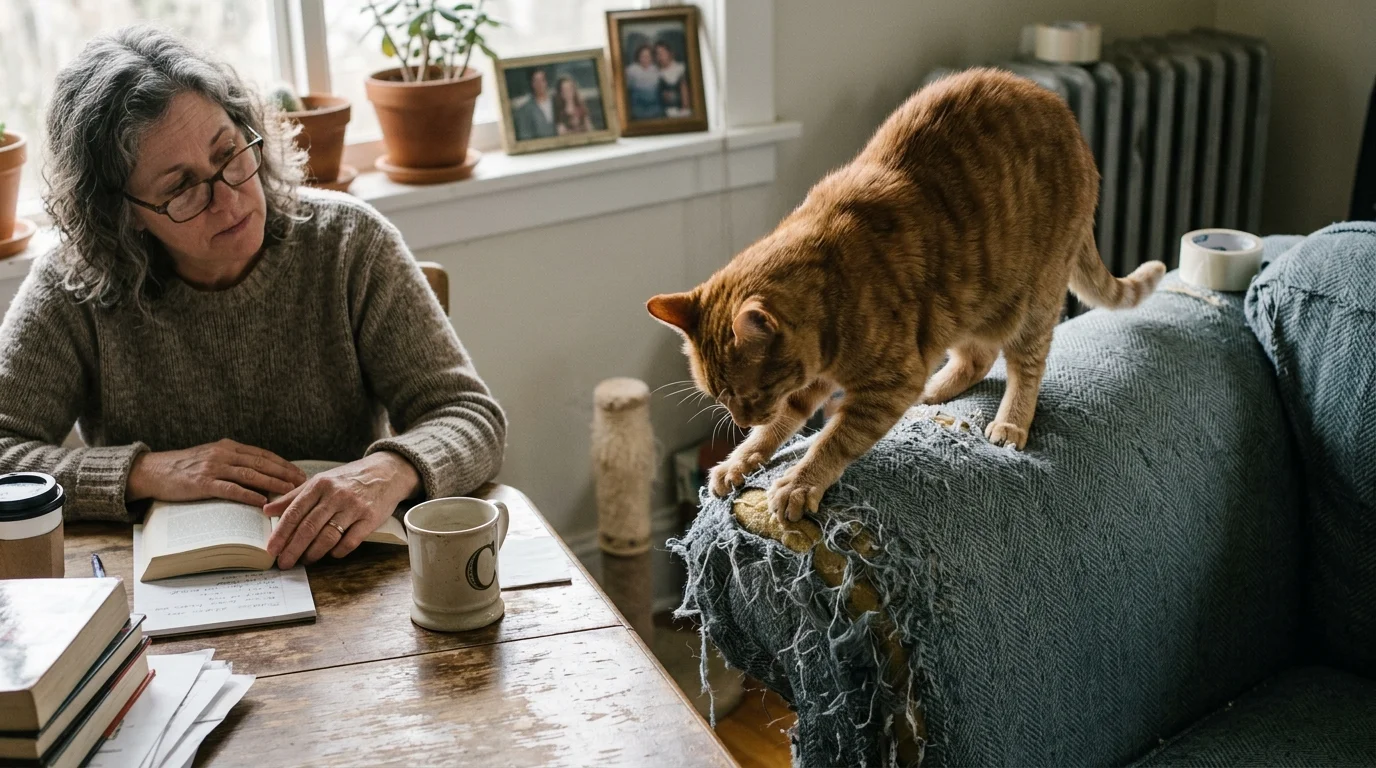
The Science of Feline Scratching Behavior
Before you blame your cat for ruining your favorite armchair, you must understand that scratching is an innate, multi-functional behavior essential to feline health. Cats do not scratch out of spite or malice; they perform the motion to fulfill distinct anatomical and communication needs:
- Claw Maintenance and Sheath Removal: Feline claws grow in concentric layers. Scratching against rough surfaces strips away the dull outer stratum corneum sheath, revealing a razor-sharp, healthy nail beneath.
- Territorial Scent and Visual Marking: Interdigital glands located between the paw pads deposit unique pheromones onto scratched items. The shredded texture provides an unmistakable visual billboard announcing your cat’s presence to other animals.
- Full-Body Musculoskeletal Conditioning: Hooking their claws into a stable surface allows cats to pull their entire body weight backward, decompressing the spine and toning the latissimus dorsi and shoulder muscles.
- Emotional Regulation and Stress Relief: Scratching releases pent-up excitement, frustration, and anxiety. A cat experiencing sudden environmental changes or excess energy often dashes to the nearest vertical surface to scratch furiously.
According to a 2024 behavioral study published in Frontiers in Veterinary Science evaluating 1,211 domestic felines, undesirable scratching correlates strongly with high nocturnal activity, extended play bouts, elevated excitability, and household environmental stressors. Breeds bred for high prey drives, boundless agility, and acute intelligence demonstrate much higher rates of furniture marking when their indoor environments lack structured physical outlets.
12 Cat Breeds Known to Scratch Furniture and Curtains
While every individual cat requires scratching opportunities, the following twelve breeds exhibit exceptional athletic drive, inquisitiveness, and physical power—traits that translate to shredded home furnishings if you do not actively manage their environment.
1. Bengal
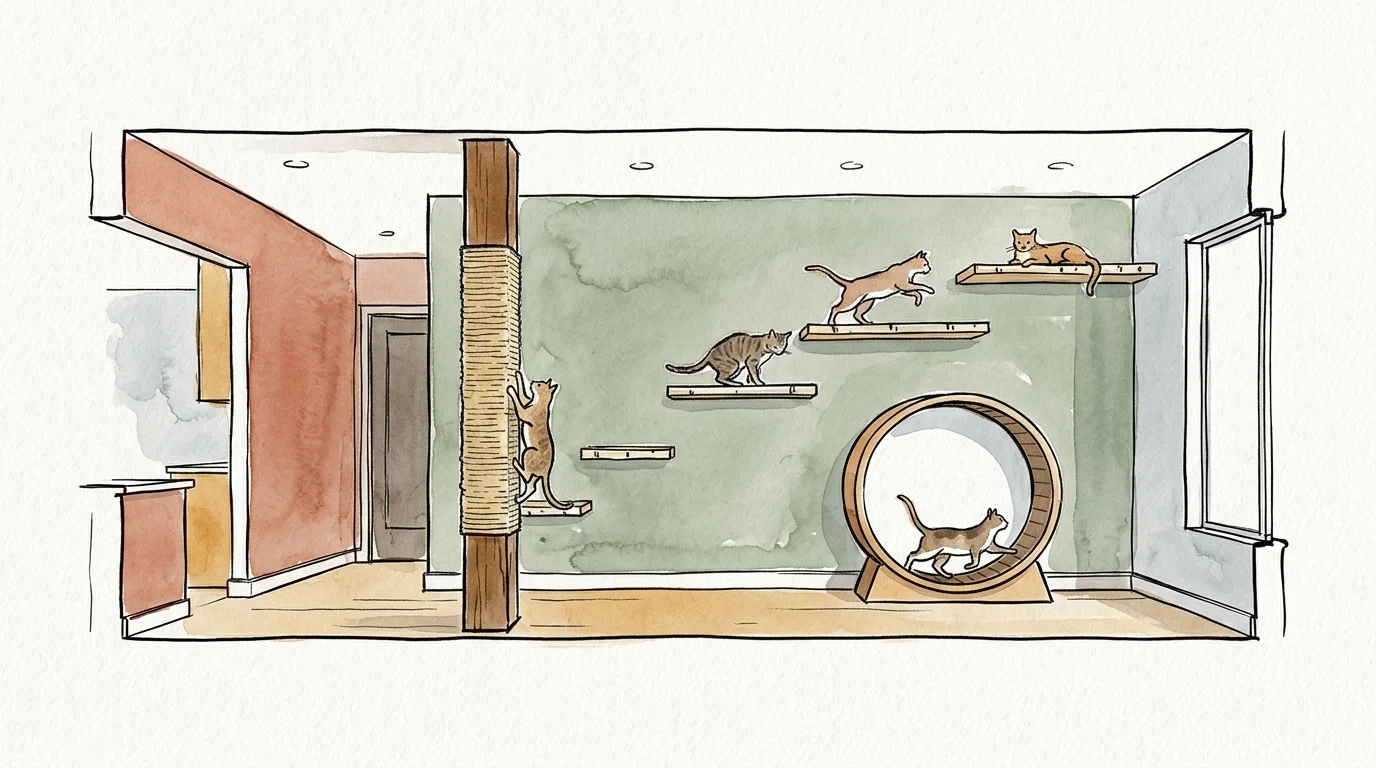
Developed by crossing domestic cats with the Asian leopard cat (Prionailurus bengalensis), the Bengal is a muscular powerhouse with boundless stamina. Bengals do not simply live in your home; they patrol and dominate it. If they experience an ounce of boredom, their wild-derived territorial drive compels them to gouge wooden trim, scale sheer curtains to ceiling level, and shred upholstered furniture. Bengals require rigid, tall vertical posts, cat running wheels, and intensive daily interactive playtime to keep their claws off your home decor.
2. Abyssinian
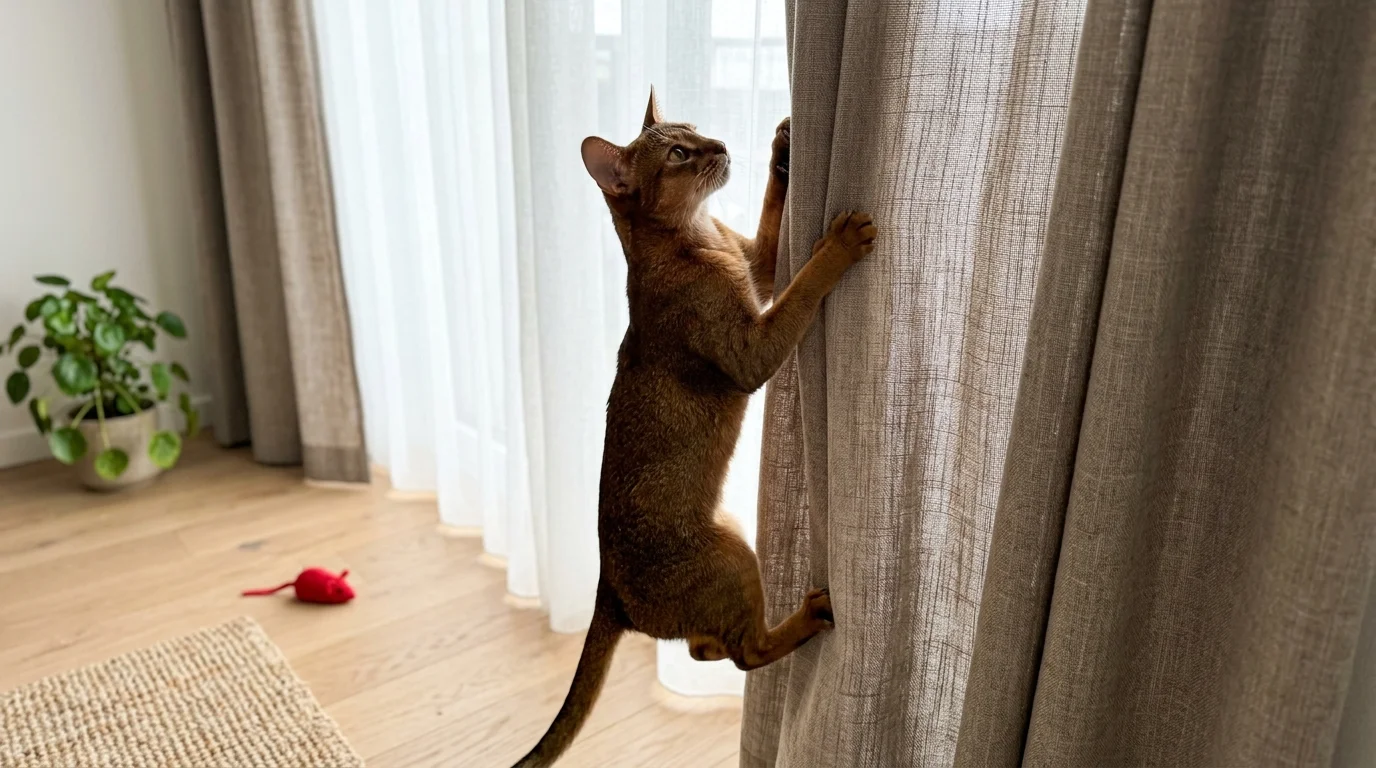
Often nicknamed the “clowns of the cat kingdom,” Abyssinians are constantly moving. These slender, athletic felines seek the highest vantage points in every room. If a standard cat tree is unavailable, your floor-length drapes, valances, and fabric shower curtains become their private climbing ropes. Abyssinians possess rapid claw-growth cycles and strong visual marking instincts, meaning they regularly test their claws against textured wallpaper, carpeted stair risers, and couch arms.
3. Siamese
Siamese cats are famously vocal, fiercely intelligent, and intensely attached to their human companions. When a Siamese feels neglected, understimulated, or stressed by changes in routine, they frequently channel their emotional frustration into destructive clawing. Because they demand interactive engagement, they often select a high-visibility target—such as the corner of your living room couch right in front of you—and scratch vigorously to demand immediate attention.
4. Savannah Cat
A hybrid between a domestic feline and an African serval, the Savannah cat possesses extraordinary physical power, jumping reach up to eight feet, and immense jaw and paw strength. Standard cardboard scratchers collapse into confetti within minutes under their heavy claws. Savannahs naturally scale doorframes, window treatments, and leather sectionals. Owners must install heavy-duty, solid-timber climbing trees anchored directly into wall studs to satisfy their intense vertical urges.
5. Oriental Shorthair
Closely related to the Siamese, the Oriental Shorthair combines sleek elegance with high-strung, acrobatic athleticism. These curious cats explore their environment tactilely; they hook their paws into woven fabrics, pull carpet threads, and scale sheer tapestries. Their hyperactive curiosity means they investigate every new piece of furniture with an exploratory claw rake. Supplying various textured surfaces throughout their territory is essential to preserve your belongings.
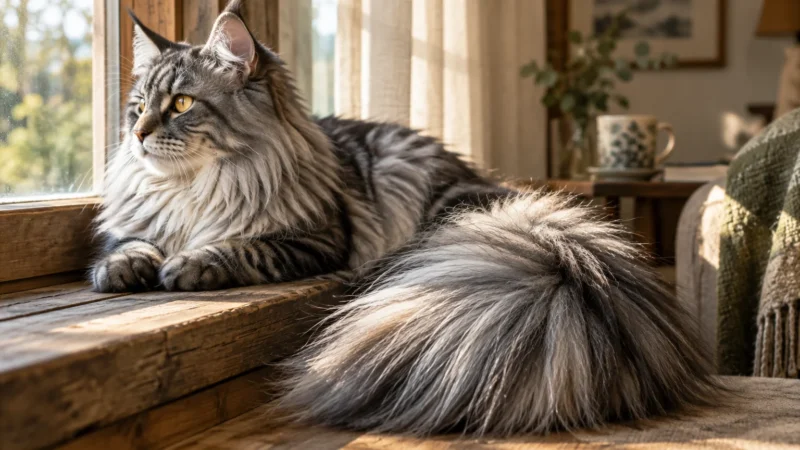
6. Maine Coon
Maine Coons are sweet-tempered gentle giants, but their sheer physical mass presents a serious hazard to household furnishings. Weighing up to 20 pounds or more with large, tufted paws, a Maine Coon stretching to full vertical height easily reaches your waist. When they sink their heavy claws into an armchair for a morning stretch, the sheer leverage causes substantial fabric damage. They frequently topple lightweight, store-bought scratching posts, prompting them to abandon the post in favor of your heavy, immovable sofa.
7. Sphynx
Without an insulating fur coat, the Sphynx maintains a high metabolic rate to regulate body temperature, fueling astonishing bursts of physical energy. Sphynx cats are relentless explorers that love leaping onto drapery rods, door tops, and fabric chairs. Because their skin secretes natural oils that typically disperse through feline fur, their frantic scratching against furniture and curtains not only frays fabrics but can also leave stubborn grease stains on light-colored upholstery.
8. Cornish Rex
With their greyhound-like arched backs, long legs, and spring-loaded hindquarters, Cornish Rex cats move with explosive speed. They treat living rooms as vertical obstacle courses, using curtain panels and tapestry-covered headboards as launching pads to reach the tops of cabinets. Their slender toes and quick claw action make fast work of woven rugs, loosely knit throws, and sofa skirting during daily zoomies.
9. Devon Rex
The mischievous Devon Rex possesses a monkey-like curiosity and an affinity for perching on human shoulders and high ledges. Devons love tactile exploration, actively kneading and raking their claws across textured surfaces, including corduroy, linen, and leather. If denied suitable climbing routes, they use sofa corners and hung garments in open closets to climb upward, shredding delicate fibers along their path.
10. Burmese
Burmese cats are compact, muscular, and exceptionally persistent. When a Burmese decides that the corner of your box spring or leather armchair provides the perfect resistance for an upper-body stretch, breaking the habit takes genuine dedication. They possess strong territorial marking instincts and return repeatedly to the same specific target unless you place an equally dense, appealing substrate directly in front of the damaged spot.
11. Siberian
Hailing from the harsh climate of Russia, the Siberian is an ancient, heavy-boned forest cat built for climbing rugged terrain. Siberians possess incredible leaping power and a strong predatory instinct. They naturally target wooden door trims, thick carpeted hallways, and heavy draperies for claw conditioning. Like Maine Coons, their immense physical strength demands rugged, wide-base scratching installations that do not shift when struck by an 18-pound jumping cat.
12. Japanese Bobtail
Bold, inquisitive, and highly energetic, the Japanese Bobtail loves carrying toys, splashing in water bowls, and engaging in vigorous paw play. These felines use their front paws with remarkable dexterity, frequently hooking claws into looped carpets, woven wall hangings, and curtain hems to explore textures. Their playful, busy personality means they require constant rotational enrichment to keep their active paws away from your decor.
Breed Scratching Profiles and Enrichment Needs
To help you compare the behavioral tendencies of these dynamic breeds, the following table details their primary scratching planes, ideal materials, and management priorities.
| Cat Breed | Primary Risk Area | Preferred Scratching Plane | Recommended Substrate | Key Management Strategy |
|---|---|---|---|---|
| Bengal | Curtains, Door Trim, Sofas | Vertical (Extreme High) | Thick Sisal Rope & Natural Bark | Cat exercise wheel and ceiling-height towers |
| Abyssinian | Draperies, High Upholstery | Vertical Climbing | Sisal-Wrapped Poles & Wood | Wall-mounted shelves and vertical runways |
| Siamese | Sofa Corners, Armchairs | Vertical & Low-Angle | Tight Sisal Weave & Cardboard | Scheduled interactive wand play and puzzle toys |
| Savannah Cat | Doors, Trim, Heavy Furniture | Vertical (Overhead Reach) | Solid Wood & Heavy-Gauge Sisal | Wall-anchored timber posts; high-impact agility toys |
| Oriental Shorthair | Woven Upholstery, Rugs | Both Vertical & Horizontal | Sisal Fabric & Corrugated Cardboard | Tactile puzzle mats and foraging enrichment |
| Maine Coon | Sofa Arms, Carpet Runners | High Vertical & Horizontal | Dense Sisal Rope & Thick Carpet | Heavy, broad-based scratching posts (3+ feet tall) |
| Sphynx | Fabric Chairs, Curtains | Vertical & Angled Incline | Cardboard & Soft Wood Planks | Heated perches to reduce restlessness; regular claw trims |
| Cornish Rex | Hanging Fabrics, Drapes | Vertical Climbing | Sisal Posts & Climbing Ramps | Curtain tiebacks and designated vertical climbing tracks |
| Devon Rex | Leather, Wood Trim, Bedding | Multi-Angle & Horizontal | Corrugated Cardboard & Jute | Shoulder perches, foraging boxes, and claw-friendly mats |
| Burmese | Mattress Corners, Armchairs | Low-to-Mid Vertical | Tight Woven Sisal Fabric | Targeted deterrents alongside dedicated scratch posts |
| Siberian | Carpet, Heavy Curtains, Chairs | High Vertical | Solid Log Scratchers & Sisal | Heavyweight, unshakeable cat furniture and climbing trees |
| Japanese Bobtail | Looped Carpets, Drapes | Horizontal & Low Incline | Cardboard Blocks & Flat Sisal Mats | Rotational floor scratchers and interactive fetch toys |
Evidence-Based Solutions to Save Your Furniture
Stopping destructive scratching does not involve suppressing your cat’s natural instincts; it requires redirecting those instincts toward appealing, dedicated targets. Research offers precise blueprints for creating acceptable alternatives your cat will naturally choose over your upholstery.
1. Match Scratching Post Dimensions to Feline Anatomy
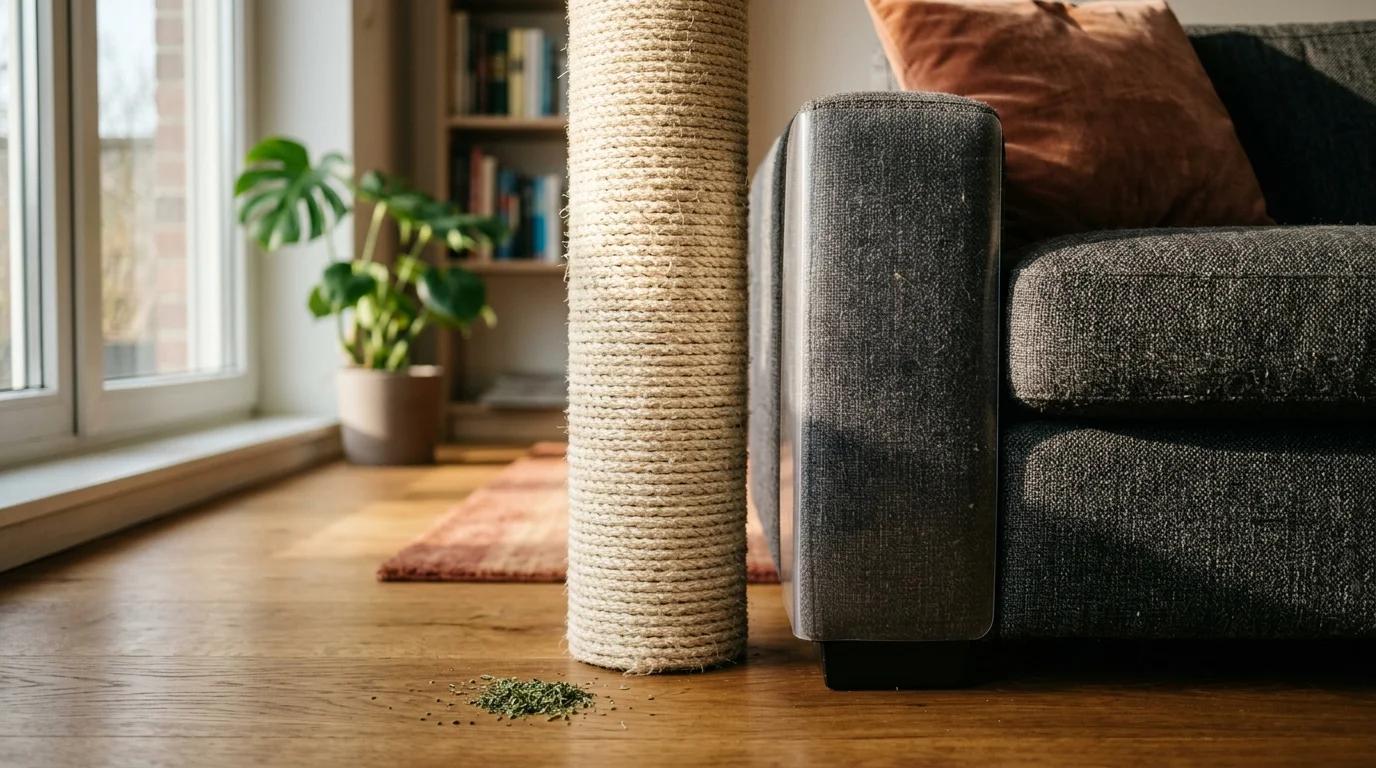
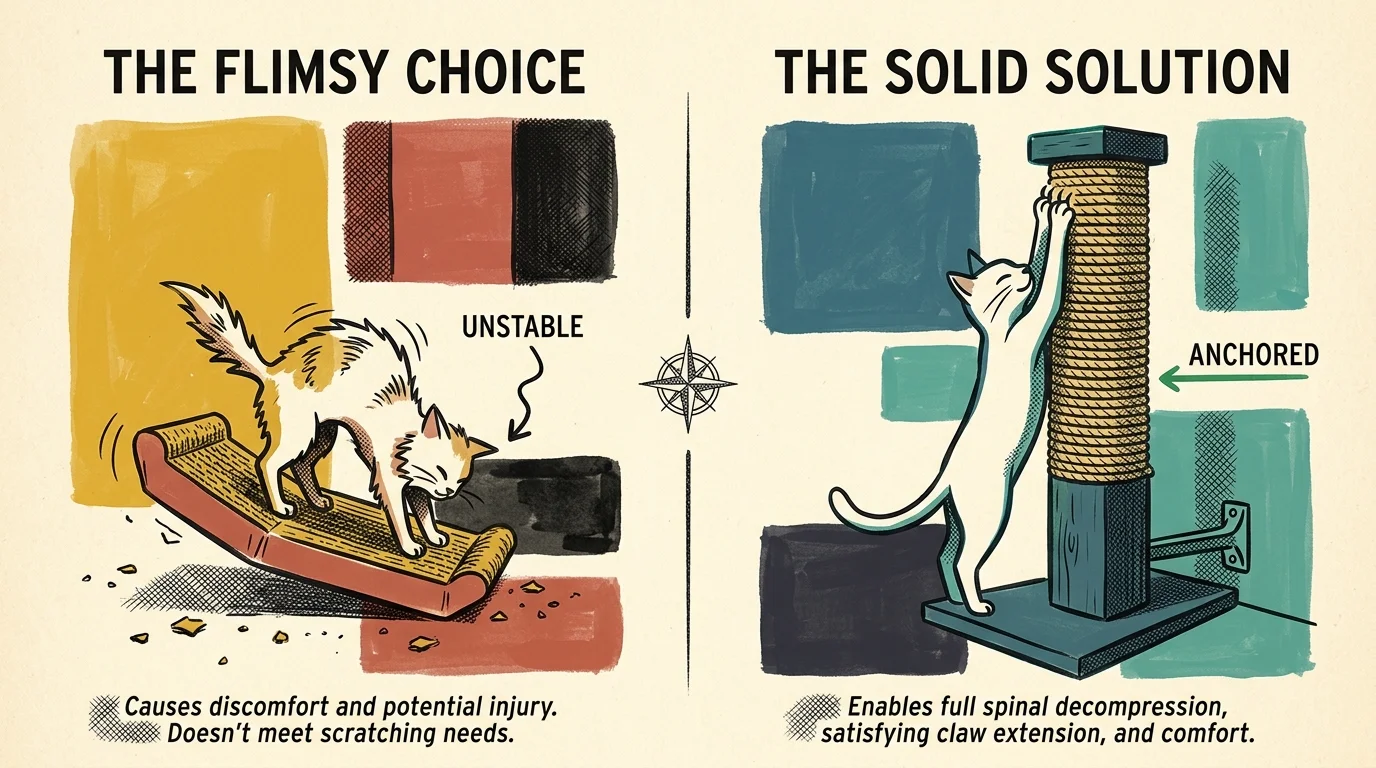
Research published in the Journal of Feline Medicine and Surgery involving 4,331 cats across 39 countries revealed clear post preferences. Cats significantly prefer vertical scratching posts that stand at least 3 feet (0.9 meters) tall with a sturdy base width of 3 feet or less. If a scratching post wobbles, bends, or prevents your cat from achieving a full, overhead spinal stretch, they will abandon it for the rigid anchor of your heavy sectional sofa.
2. Select Preferred Substrates
The same international veterinary research demonstrated that cats across almost all adult age groups overwhelmingly favor sisal rope and woven sisal fabric over carpet, bare wood, or corrugated cardboard. Interestingly, geriatric cats (ages 10 to 14) show an increased preference for softer carpeted and cardboard surfaces due to age-related joint stiffness. Avoid purchasing scratchers covered in plush residential carpet if your cat scratches your floor rugs; doing so confuses the cat regarding which carpeted surfaces are acceptable.
3. Position Posts Along Strategic Territorial Pathways
Placing a scratching post in an isolated basement corner guarantees failure. Cats scratch upon waking and along primary territorial boundaries. Place sturdy vertical scratchers directly adjacent to:
- Your cat’s favorite sleeping and napping spots.
- Entryways to main living areas where family members congregate.
- The exact piece of furniture your cat currently damages (placing the post directly in front of the targeted couch corner).
4. Deploy Humane Sensory Deterrents
While establishing attractive new scratching stations, make your furniture temporarily unappealing. Apply wide medical-grade double-sided cat training tape to couch arms and fabric edges; cats dislike the tacky sensation against their paw pads. You can also hang lightweight sheer curtain panels inside window frames using tension rods that give way gently under weight, discouraging energetic breeds from climbing upward.
5. Implement Routine Claw Maintenance
Trim the sharp, hooked tips of your cat’s front claws every two to three weeks using specialized feline claw trimmers. Removing the razor edge drastically reduces structural fabric damage if an accidental claw snag occurs. For persistent high-energy scratchers, consider soft vinyl nail caps, which adhere over the claws and provide four to six weeks of reliable furniture protection without interfering with natural claw extension and retraction.
According to the Humane Society of the United States, regular nail trimming, environmental enrichment, and proper post placement completely eliminate the need for surgical declawing (onychectomy). Declawing is an elective amputation of the last bone of each toe that leads to chronic nerve pain, back pain, and litter box avoidance. Recognizing these animal welfare concerns, six U.S. states—New York (2019), Maryland (2022), Virginia (2024), California (effective 2026), Massachusetts (2025), and Rhode Island (2025)—along with Washington, D.C. (2023) and over 40 countries worldwide have banned non-therapeutic declawing outright.
Common Mistakes to Avoid With Active Scratchers
When redirecting destructive scratching, pet owners frequently make well-intentioned errors that inadvertently prolong the problem. Avoid these four common pitfalls:
- Throwing Away Shredded Scratching Posts Too Quickly: Humans see frayed, shredded sisal as an eyesore, but your cat views it as an established, pheromone-soaked territorial victory. Discarding a well-loved post and replacing it with an unfamiliar, scentless post often drives your cat straight back to the sofa. Wrap fresh sisal rope over old frames instead of replacing them entirely.
- Using Physical or Verbal Punishment: Yelling, clapping, or spraying water when your cat scratches furniture creates fear and territorial insecurity. Stress-induced anxiety actually triggers cats to mark territory more urgently, worsening the scratching behavior behind your back. Always redirect calmly by enticing the cat to a post with a feather wand or catnip spray.
- Buying Unstable, Lightweight Scratchers: If a scratching post rocks or tips over when your cat puts their weight on it, they may refuse to touch it again. Ensure every post features a broad, weighted wooden base or anchors securely into the floor or wall.
- Offering Only One Scratching Plane: Some cats prefer vertical stretching; others are dedicated horizontal carpet scratchers; breeds like the Abyssinian and Cornish Rex demand high-angle diagonal ramps. Providing only a single flat floor pad frustrates a cat whose biology demands vertical climbing.
Frequently Asked Questions
Why is my cat ignoring their scratching post and choosing my sofa instead?
Cats often reject scratching posts that wobble, lack adequate height for a full body stretch, or feature unappealing materials. If your post is shorter than 3 feet or made of soft carpet instead of tight sisal rope, your cat naturally seeks out the stability and textured resistance of your heavy sofa.
Why do cats scratch furniture immediately when their owners arrive home?
Greeting-related scratching is an emotional release mechanism. When you walk through the door, your cat experiences a surge of excitement and marks territory using the interdigital scent glands in their paw pads while stretching their spine.
Do vinyl nail caps stop destructive scratching safely?
Soft vinyl nail caps effectively blunt the impact of scratching without interfering with normal claw extension and retraction. They glue onto trimmed claws and fall off naturally every four to six weeks as the outer claw sheath sheds.
Can you retrain an older cat that has scratched furniture for years?
Yes. Older cats easily adopt new habits when you provide sturdy, attractive scratching surfaces directly adjacent to their preferred furniture targets while temporarily covering the damaged upholstery with double-sided deterrent tape.
Living harmoniously with an energetic, highly intelligent cat does not mean sacrificing your furniture, draperies, or home decor. By understanding your cat’s specific breed drives, selecting tall and stable sisal posts, and redirecting instinctual marking behaviors with patience, you preserve both your furniture and your bond with your companion.
This is general informational content based on widely accepted guidance. Individual results vary. Verify current details—rules, prices, eligibility, regulations—with official sources before making important decisions.
Last updated: May 2026. Rules, prices, and details change—verify current information with official sources before acting on it.