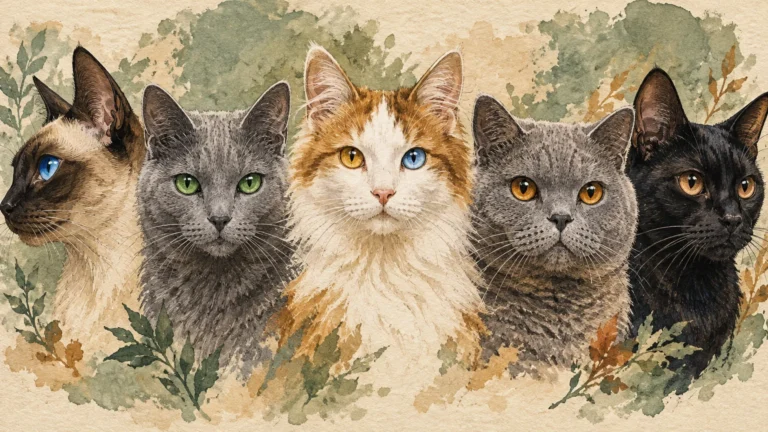
Most domestic felines gaze at you through familiar shades of hazel, green, or gold. However, rare genetic mutations and selective breeding produce mesmerizing ocular shades that defy the norm.
These striking feline gazes range from piercing aqua and fiery copper to complete heterochromia, where each eye displays a completely different hue.
If you want to identify or adopt a cat with an extraordinary gaze, understanding breed genetics reveals why these hues develop. Here are twelve cat breeds renowned for their unusual eye colors and the biology behind them.
The Science Behind Rare Feline Eye Colors
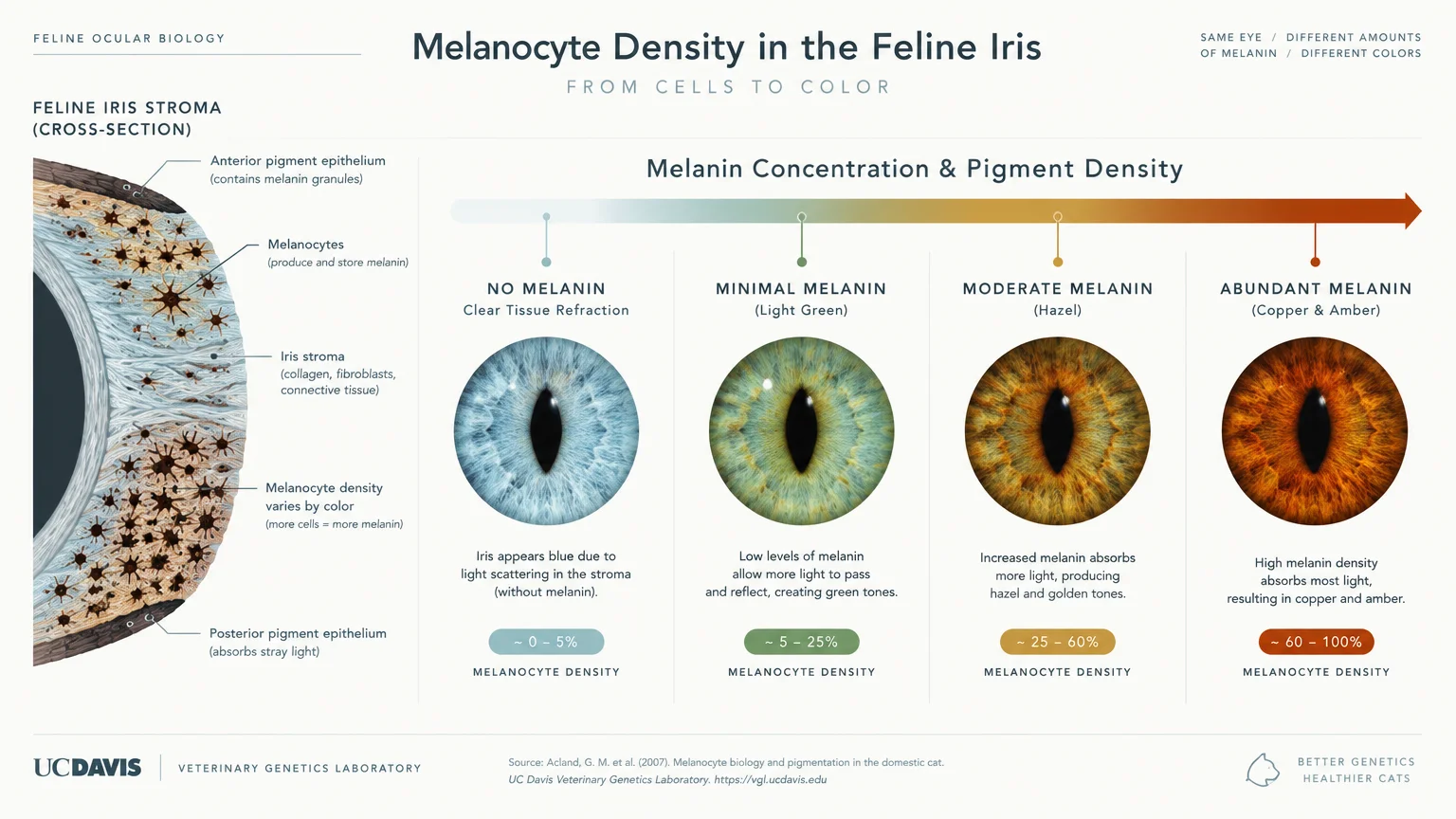
Feline eye color comes from specialized pigment cells called melanocytes within the iris stroma. The quantity and activity of these cells dictate whether your cat develops pale blue, light green, or deep copper eyes.
Cats with minimal melanin production exhibit green eyes, while abundant melanin produces rich amber, hazel, or fiery orange shades. When an iris lacks melanin completely, light refracts through the clear tissue, creating an icy blue appearance.
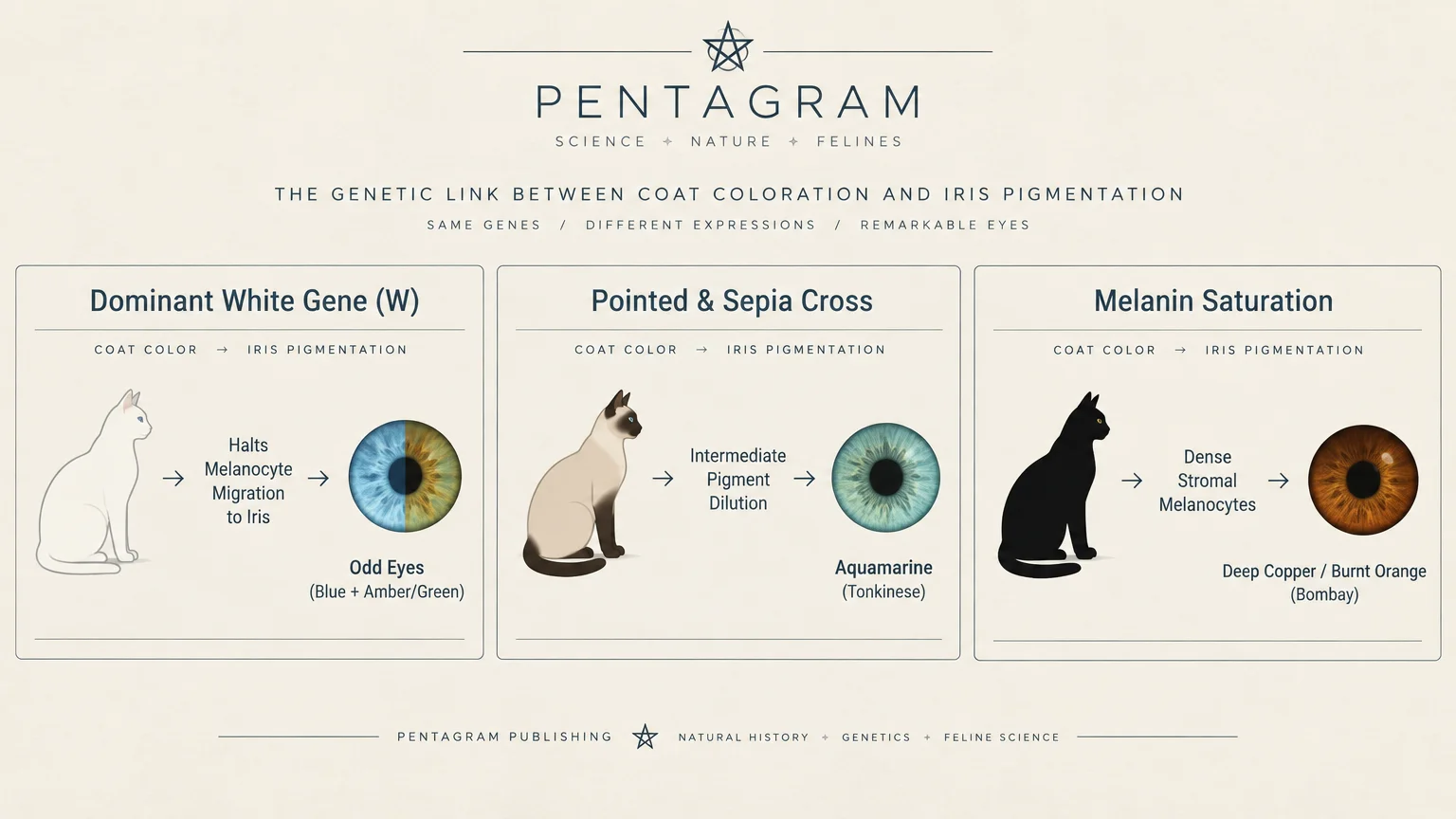
According to the UC Davis Veterinary Genetics Laboratory, coat color genetics closely intertwine with iris pigmentation. Epistatic genes that mask coat pigments can also halt melanocyte migration into developing eyes.
12 Cat Breeds With Unusual Eye Colors
1. Khao Manee
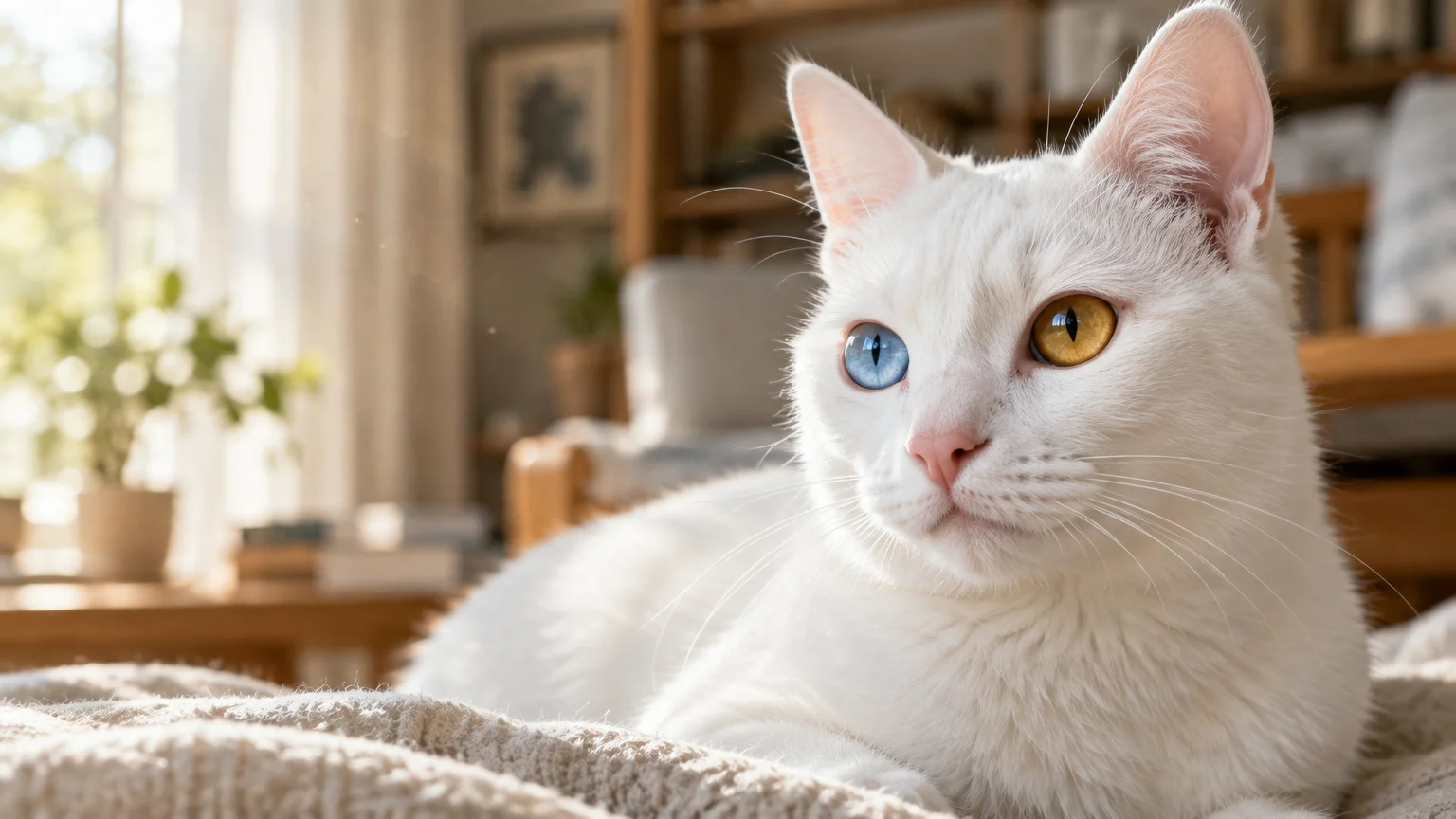
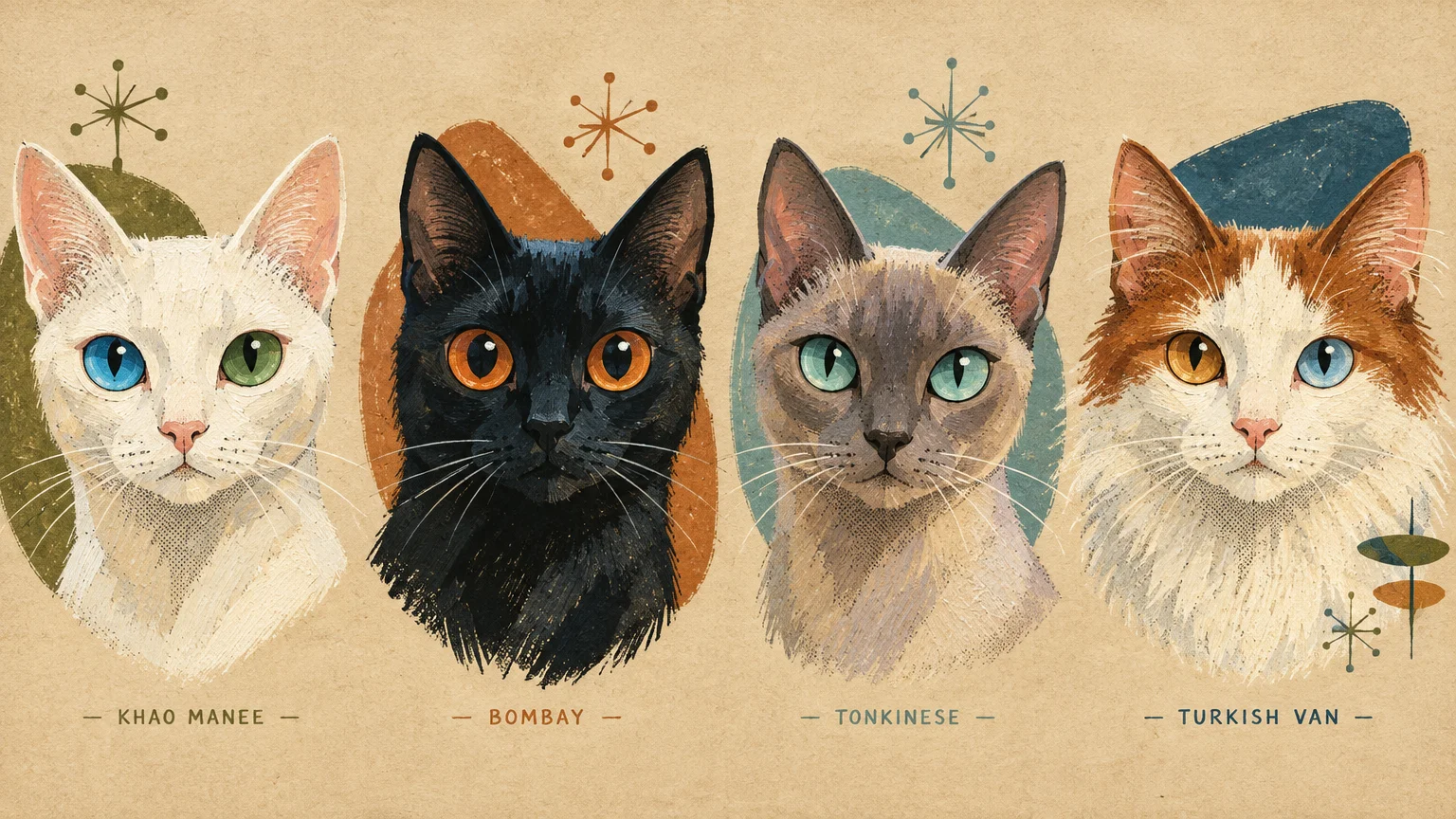
Cherished for centuries in Thailand as the “Diamond Eye” feline, the Khao Manee possesses one of the world’s most dramatic gazes. Breeders selectively preserve their signature heterochromia, pairing a jewel-like blue eye with an amber, green, or gold iris.
Their pure white coat results from the dominant white gene, which blocks pigment cells from migrating to the eyes during fetal development. When pigment enters only one eye, the cat develops an enchanting mismatched appearance.
While odd-eyed white cats historically suffered high rates of congenital deafness, responsible preservationists test hearing using Brainstem Auditory Evoked Response technology.
2. Turkish Van
Originating from the rugged Lake Van basin in Turkey, the Turkish Van features a water-resistant white coat with distinct auburn head and tail patches. Their large, oval eyes frequently appear in mismatched jewel tones.
You will often encounter Turkish Vans with one sky-blue eye and one warm amber eye. Others display matched pairs of intense amber or luminous blue.
Breed standards from The Cat Fanciers’ Association emphasize eye clarity and depth above all else. Their expressive gaze contrasts beautifully against their chalk-white facial fur.
3. Turkish Angora
The graceful Turkish Angora boasts one of the most flexible eye color palettes in the domestic cat fancy. While solid white Angoras often display odd eyes, their mismatched irises can pair sky blue with vivid green, hazel, or amber.
Non-white Angoras also display remarkable ocular variety, sporting deep gold, cool green, or brilliant copper. This wide genetic variation means kittens in the same litter can look completely distinct.
Their wide-set, almond eyes slant slightly upward, giving the cat an inquisitive, refined expression that complements their silky coat.
4. Tonkinese
The Tonkinese produces an eye color rarely found elsewhere in nature: shimmering aquamarine. This seafoam hue appears almost translucent, glowing with mixed green and blue tones.
This distinct shade emerges from crossing the pointed Siamese with the sepia Burmese. Because the Tonkinese inherits one gene from each parent, pigment dilution settles into a striking intermediate pastel range.
Their eyes shift in appearance depending on lighting conditions, appearing bright turquoise in direct sun and soft cyan indoors.
5. Bombay
Breeders developed the Bombay in the 1950s to resemble a pint-sized black leopard. They paired an inky, patent-leather black coat with arresting copper eyes that resemble new pennies.
High concentrations of active melanocytes generate this deep, fiery hue. While other black cats frequently carry yellow or dull hazel eyes, show-quality Bombays must display rich amber or molten copper.
Young kittens start life with grayish-blue eyes that gradually turn yellow. The signature glowing copper emerges slowly, often requiring up to two years to reach peak intensity.
6. Chartreux
Documented in French historical accounts since the sixteenth century, the Chartreux pairs a dense blue-gray coat with luminous orange irises. Their eye color ranges from warm gold to deep, burnt pumpkin.
French Carthusian monks reportedly valued these quiet felines for pest control in dim monastic cellars. In low light, their copper irises stand out vividly against their ash-colored fur.
Official breed registries strictly penalize green flecks or pale yellow rings. Breeders protect this legacy by preserving deep, pure orange saturation across generations.
7. Russian Blue
The Russian Blue features one of the clearest, most vivid emerald green gazes in the domestic cat kingdom. This jewel-like hue provides a sharp contrast against their double-thick, silver-tipped blue coat.
Russian Blue kittens are born with standard slate-blue eyes that transition to yellow around four months old. Soon after, a bright emerald ring emerges around the pupil and gradually engulfs the iris.
Low melanin density allows light to scatter through the iris stroma without browning, yielding an exceptionally clean, brilliant green tone.
8. Ojos Azules
The Ojos Azules represents a unique genetic anomaly: deep cornflower blue eyes independent of white fur or pointed markings. Historically, cats required albinism genes or dominant white mutations to possess blue irises.
Feral colonies in New Mexico revealed this dominant mutation in the 1980s, producing striking blue eyes on tortoiseshell and solid black cats.
However, genetic evaluations highlighted by The International Cat Association revealed severe cranial defects in kittens inheriting two copies of the gene. Consequently, reputable feline associations discontinued active breeding programs to protect animal health.
9. British Shorthair
While British Shorthairs come in dozens of color variations, the classic “British Blue” is famous for its glowing copper-orange eyes. Their circular irises look like polished topaz beads set into thick plush fur.
Intense melanin production yields this warm, fiery tone, which harmonizes with their stout, muscular build. By contrast, silver varieties of the breed feature striking sea-green eyes ringed by black pigment.
Their large ocular size accentuates their rounded cheeks, producing their trademark teddy-bear facial expression.
10. Siamese
The Siamese stands as the archetype of vivid, crystalline blue feline eyes. Their piercing sapphire stare draws immediate attention, distinguished by exceptional color depth and clarity.
This ocular trait stems from the Himalayan gene, a temperature-sensitive form of albinism. Melanin cannot develop in warm body zones, including the irises, causing incoming light to scatter blue.
Careful pedigree selection over decades has intensified this trait. Today’s show-line Siamese display irises saturated with dramatic cobalt and twilight navy tones.
11. Sphynx
The hairless Sphynx features oversized, lemon-shaped eyes that command the entire face. Without fur or lashes to soften their appearance, their irises look extraordinarily vivid and jewel-like.
Sphynx cats exhibit an expansive eye color range, including ice blue, vivid green, hazel, and striking odd-eyes. Their exposed facial skin accentuates subtle radial patterns within the iris stroma.
Because hairless cats lack protective eyelashes, you should wipe around their eyes regularly with a damp cloth to prevent dust accumulation.
12. Singapura
Known as the world’s smallest domestic cat breed, the Singapura carries oversized hazel, celadon green, or yellow eyes. Dark rings of black pigment encircle each eye, creating a natural eyeliner effect.
Cheetah-like tear lines stream from the inner corners down their muzzle, accentuating their luminous gaze. Their warm, ticked agouti coat provides a neutral backdrop that makes their eyes sparkle.
Breed standards require their eyes to be set at least one eye-width apart, which emphasizes their open, inquisitive facial expression.
Comparing Rare Feline Eye Colors and Coat Genetics
To help you compare these ocular traits, the following table summarizes how genetics influence eye and coat combinations across rare breeds:
| Breed | Signature Eye Color | Typical Coat Pattern | Underlying Genetic Cause |
|---|---|---|---|
| Khao Manee | Odd-eyed (Blue & Amber/Green) | Solid White | Dominant White gene suppresses melanocytes |
| Turkish Van | Amber, Blue, or Odd-eyed | Van Pattern (White with Auburn) | Piebald spotting gene halts unilateral pigment |
| Turkish Angora | Odd-eyed, Blue, Green, Amber | Solid White, Smokes, Tabbies | Polygenic eye color selection |
| Tonkinese | Aquamarine (Seafoam Green) | Mink Pointed | Heterozygous Siamese and Burmese alleles |
| Bombay | Penny Copper or Molten Gold | Solid Glossy Black | High melanocyte density from Burmese heritage |
| Chartreux | Pumpkin Orange to Warm Copper | Solid Blue-Gray | Concentrated melanin production |
| Russian Blue | Vivid Emerald Green | Solid Shimmering Blue | Low melanin dispersion without browning |
| Ojos Azules | Deep Cornflower Blue | Any Color (Non-pointed) | Dominant SOa mutation (historical breed) |
| British Shorthair | Fiery Copper or Topaz | Blue, Solid, and Tabby shades | Selective breeding for dense stromal pigment |
| Siamese | Deep Sapphire Blue | Colorpoint | Himalayan temperature-sensitive albinism |
| Sphynx | Any Color; Frequent Odd-eyes | Hairless (Visible Skin Pigment) | Broad polygenic allowance under breed standard |
| Singapura | Hazel or Celadon with Black Rims | Sepia Agouti Ticked | Heavy melanin deposition at lid margins |
The Biology of Heterochromia in Cats
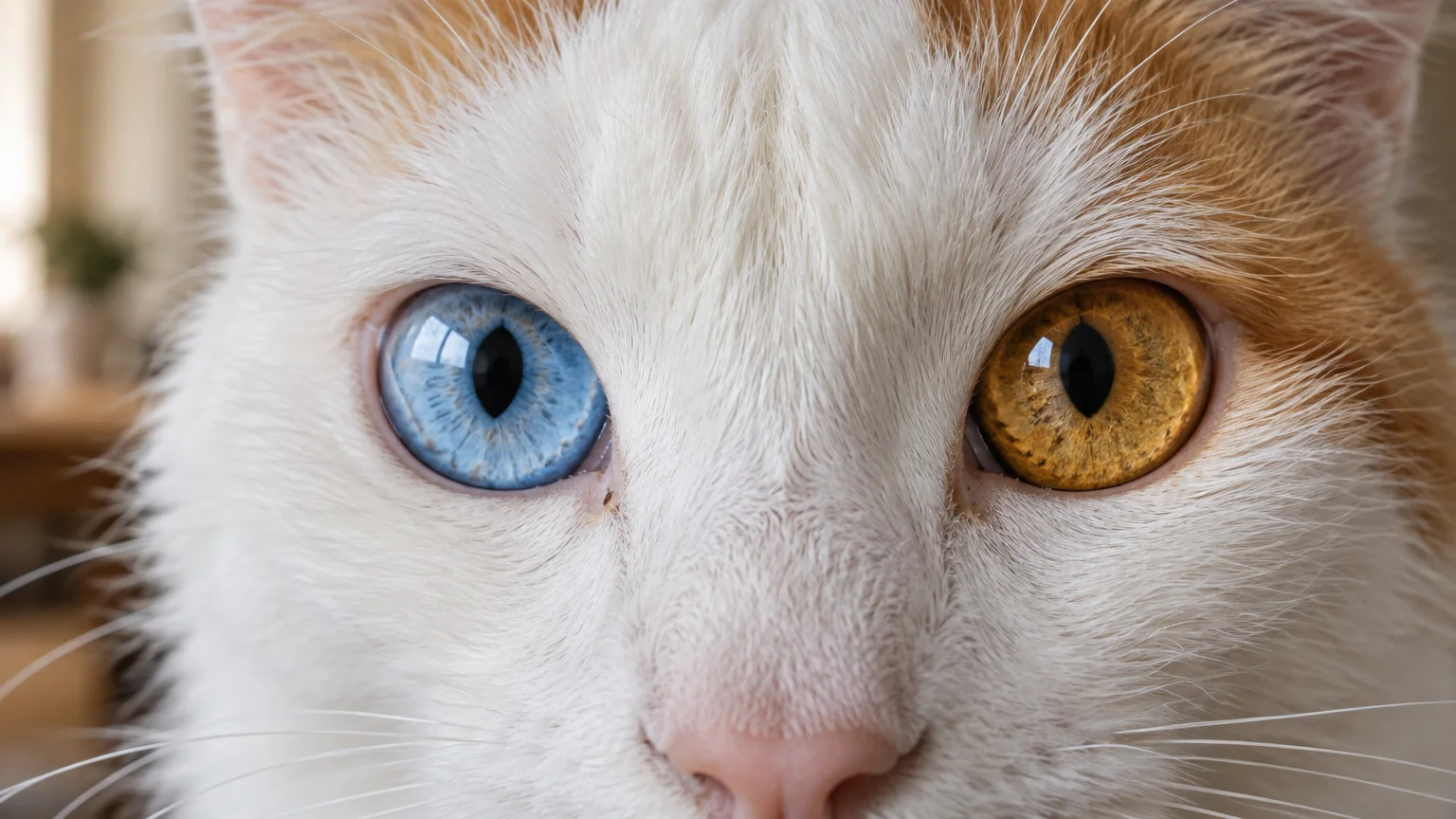
Odd-eyed cats display heterochromia iridis, an ocular condition where each iris develops a different pigment level. This phenomenon occurs in two primary biological forms.
Complete heterochromia results in two entirely distinct eye colors, such as one icy blue eye and one rich amber eye. Sectoral heterochromia occurs when a single iris contains two contrasting colors within different segments.
This condition happens most frequently in cats carrying the dominant white gene or white spotting gene. These genes halt melanocyte migration before pigment cells reach both eyes during fetal growth.
When Eye Color Changes Signal Veterinary Concerns
All kittens enter the world with slate-blue eyes because melanocytes do not begin producing pigment until several weeks after birth. You can expect your kitten’s permanent eye color to settle between seven and twelve weeks of age.
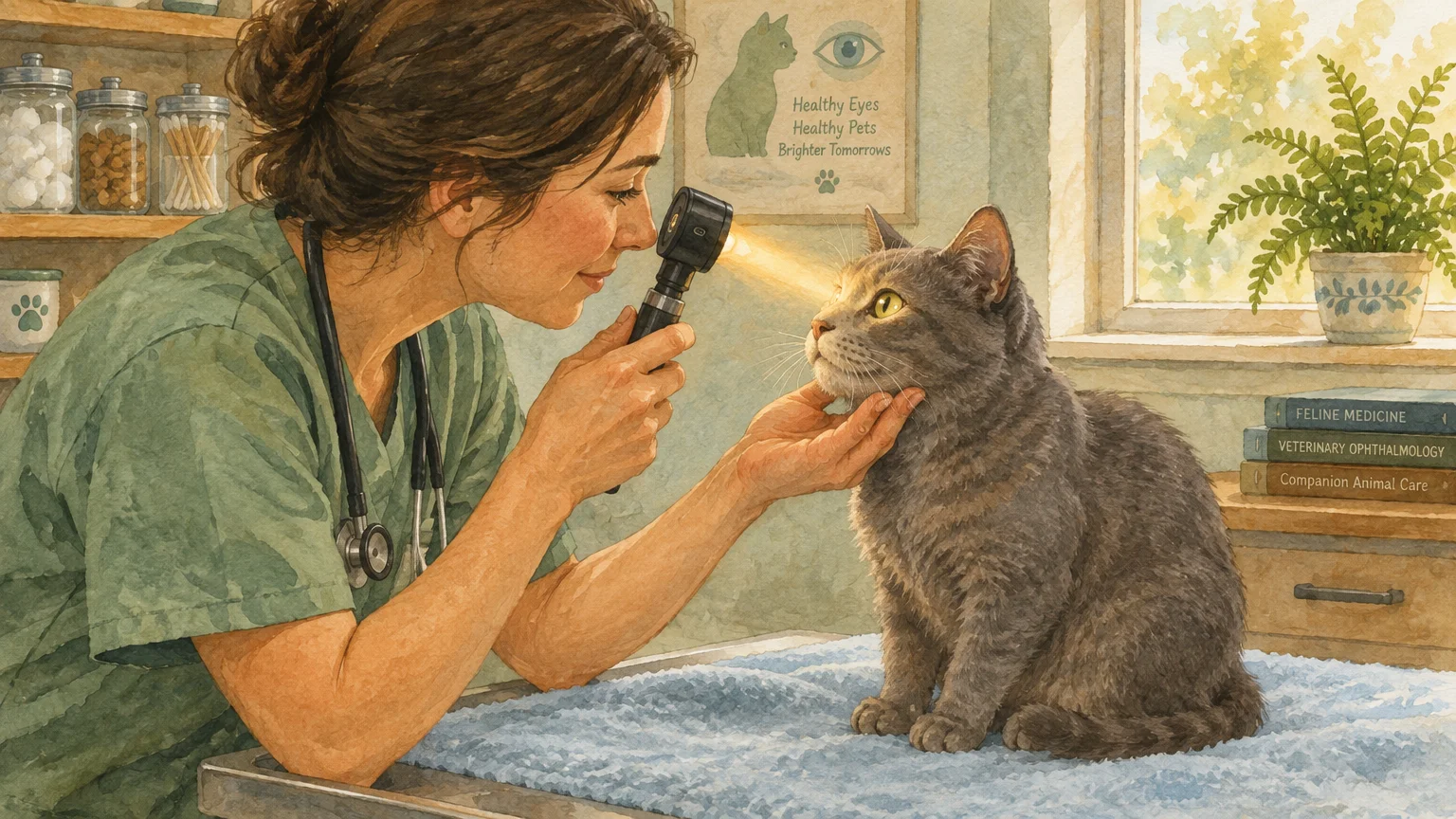
If an adult cat’s eye color shifts suddenly, you should seek immediate veterinary evaluation. According to the Cornell Feline Health Center, sudden eye discoloration often signals underlying medical disorders.
Watch for these specific warning signs in your cat’s eyes:
- Redness, haze, or cloudiness indicating uveitis or systemic infection
- Darkening brown or freckled patches signaling iris melanosis or melanoma
- A milky blue or gray film pointing to cataracts or corneal ulcers
- Persistent pupil asymmetry suggesting neurological trauma or glaucoma
Prompt treatment preserves feline vision and prevents complications from serious systemic diseases. Always consult your veterinarian when you notice changes in iris texture or pupil responsiveness.
Frequently Asked Questions
Can a black cat naturally have blue eyes?
Outside of the rare and discontinued Ojos Azules breed, adult black cats cannot have natural blue eyes. The genetic pathways that produce solid black melanin also deposit pigment into the irises, turning them green, yellow, or copper.
Why do all newborn kittens have blue eyes?
Kittens are born with clear irises because their melanocytes have not yet synthesized melanin. Light scattering through the clear ocular stroma creates an optical blue illusion until pigment activates several weeks after birth.
Are all odd-eyed cats deaf?
No, not all odd-eyed cats are deaf. While the dominant white gene increases deafness risk, many odd-eyed cats retain normal hearing, especially if the white spotting gene caused the mismatched eyes.
What is the rarest natural eye color in cats?
True copper and pure aquamarine rank among the rarest feline eye colors. Solid copper requires intense melanin concentration found only in specific breeds, while aquamarine requires an exact cross of pointed and sepia genetics.
Exploring unusual feline eye colors reveals how complex genetic interactions shape our pets. Whether you admire the fiery copper of a British Shorthair or the jewel-like mismatch of a Khao Manee, these eyes highlight nature’s extraordinary artistry.
This is general informational content based on widely accepted guidance. Individual results vary.
Verify current details—rules, prices, eligibility, regulations—with official sources before making important decisions.
Last updated: May 2026. Rules, prices, and details change—verify current information with official sources before acting on it.