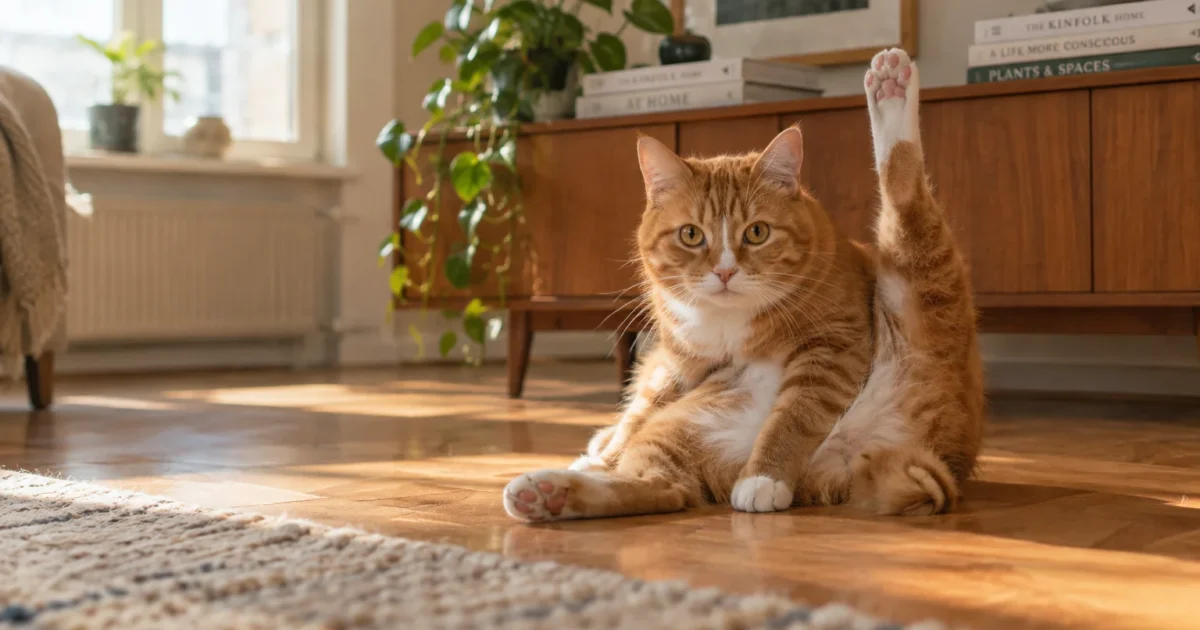
Your cat suddenly sprints across the hallway, freezes mid-stride, and stares intently at an empty ceiling corner. These eccentric rituals often leave pet parents baffled, yet evolutionary biology explains nearly every baffling stunt your feline pulls.
Domestic cats retain up to ninety percent of their wild ancestors’ predatory wiring and defensive instincts. Understanding cat behavior reveals that your pet’s strangest antics represent clever sensory adaptations rather than domestic madness.
Deciphering these normal cat behaviors explained by science strengthens your bond and helps you distinguish playful quirks from underlying distress. Here is what your companion’s fifteen most baffling habits actually mean.
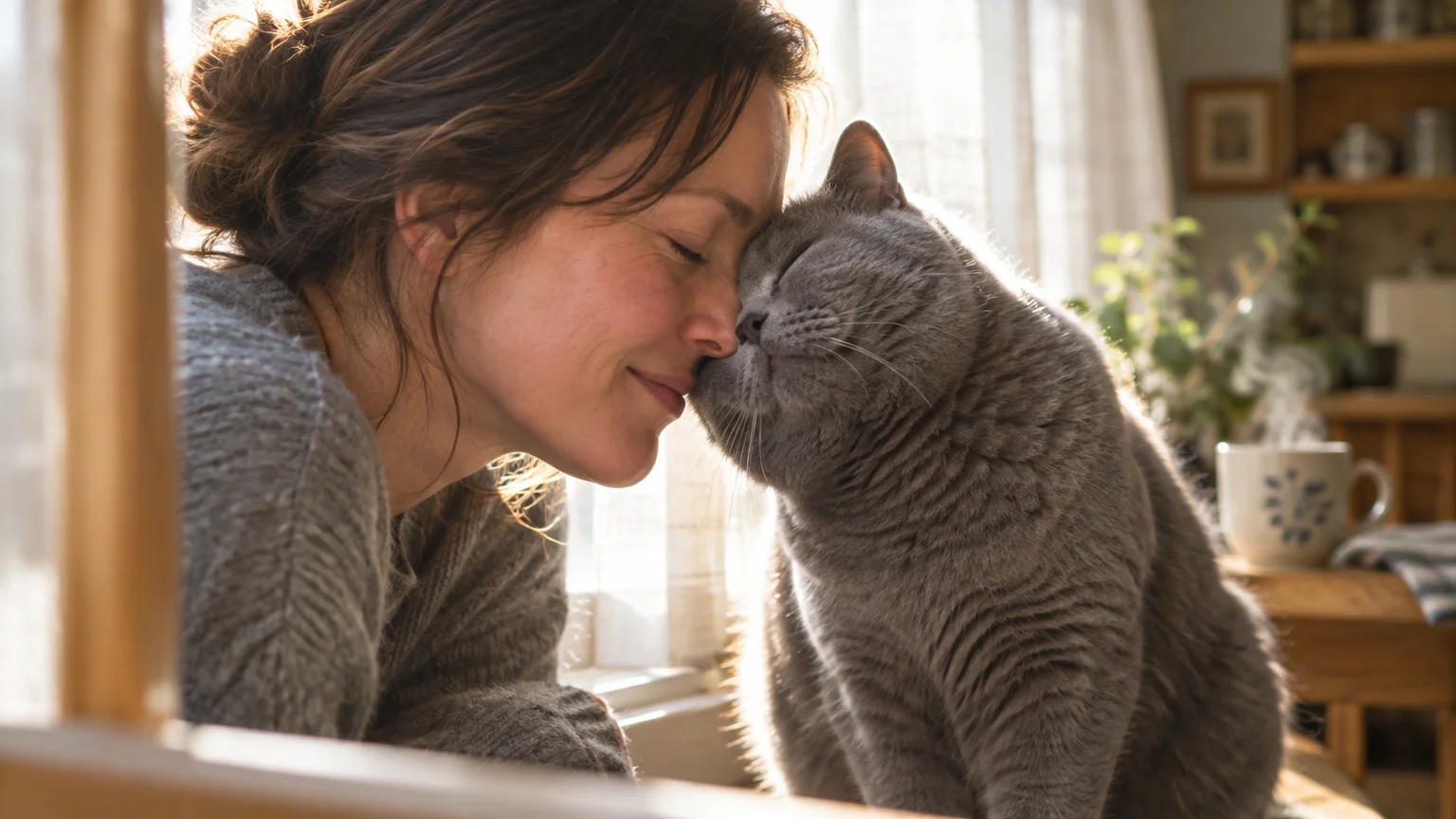
1. Headbutting and Bunting Against Your Face
When your cat firmly presses its forehead against your nose or chin, it performs an action called bunting. This gesture serves as the ultimate feline compliment and trust badge.
Cats possess scent glands concentrated along their temples, cheeks, chin, and lips. Rubbing these areas transfers facial pheromones onto you, marking you as safe, familiar territory.
According to the Cornell Feline Health Center, this tactile scent marking establishes a shared colony odor. You can return the greeting by gently offering your knuckles for a cheek brush.
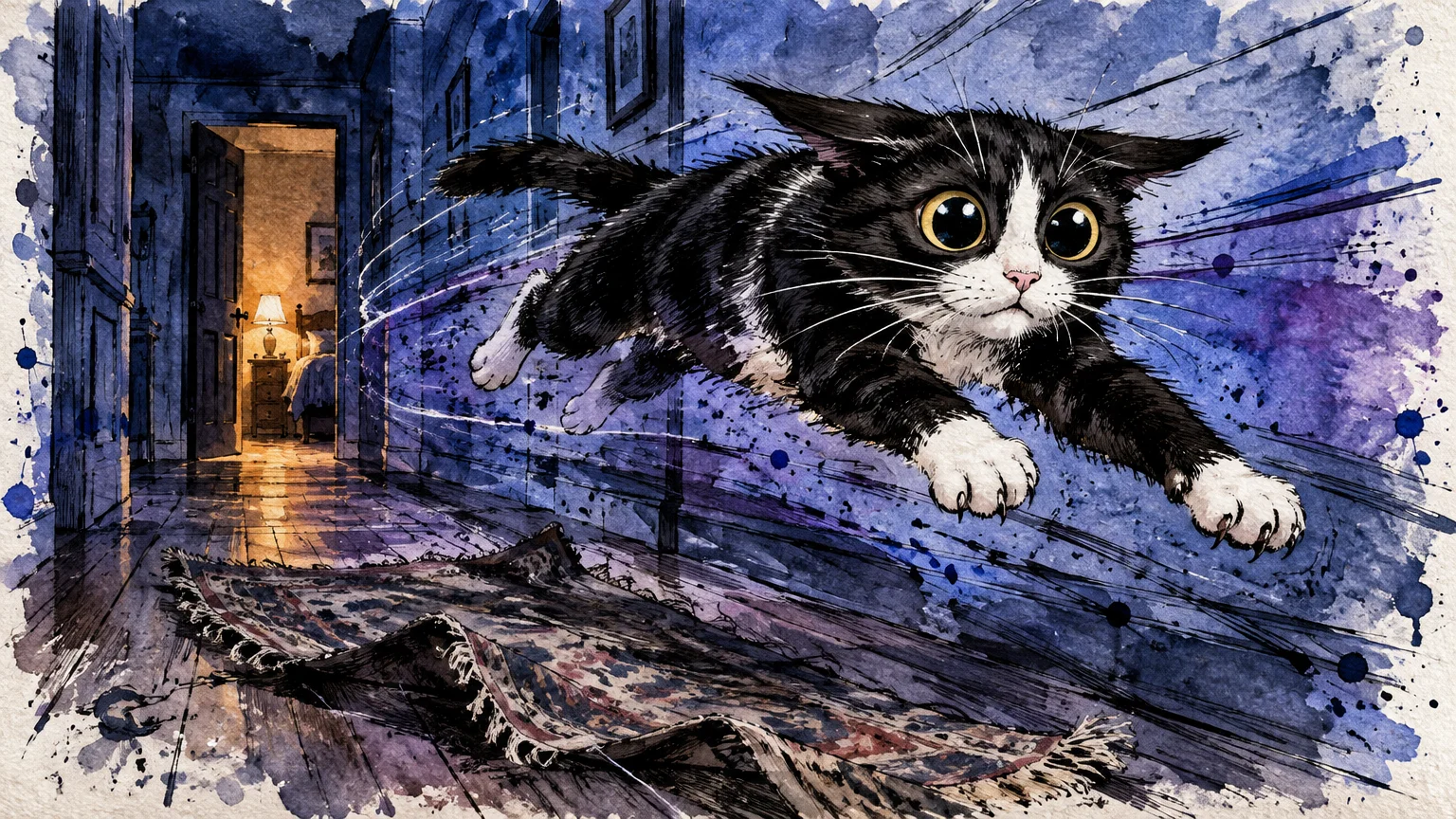
2. The Sudden Midnight Zoomies
Just as your bedroom lights turn off, your calm companion transforms into a high-speed projectile racing through dark corridors. Veterinarians call these sudden explosive outbursts Frenetic Random Activity Periods, or FRAPs.
Cats are crepuscular creatures hardwired to hunt during dawn and dusk. Indoor cats store immense amounts of pent-up predatory energy throughout sixteen hours of daily napping.
When that biological clock strikes twilight, your cat releases that stored momentum through lightning-fast sprints and acrobatic wall leaps. You can curb these midnight marathons by scheduling structured wand-toy chase sessions right before dinner.
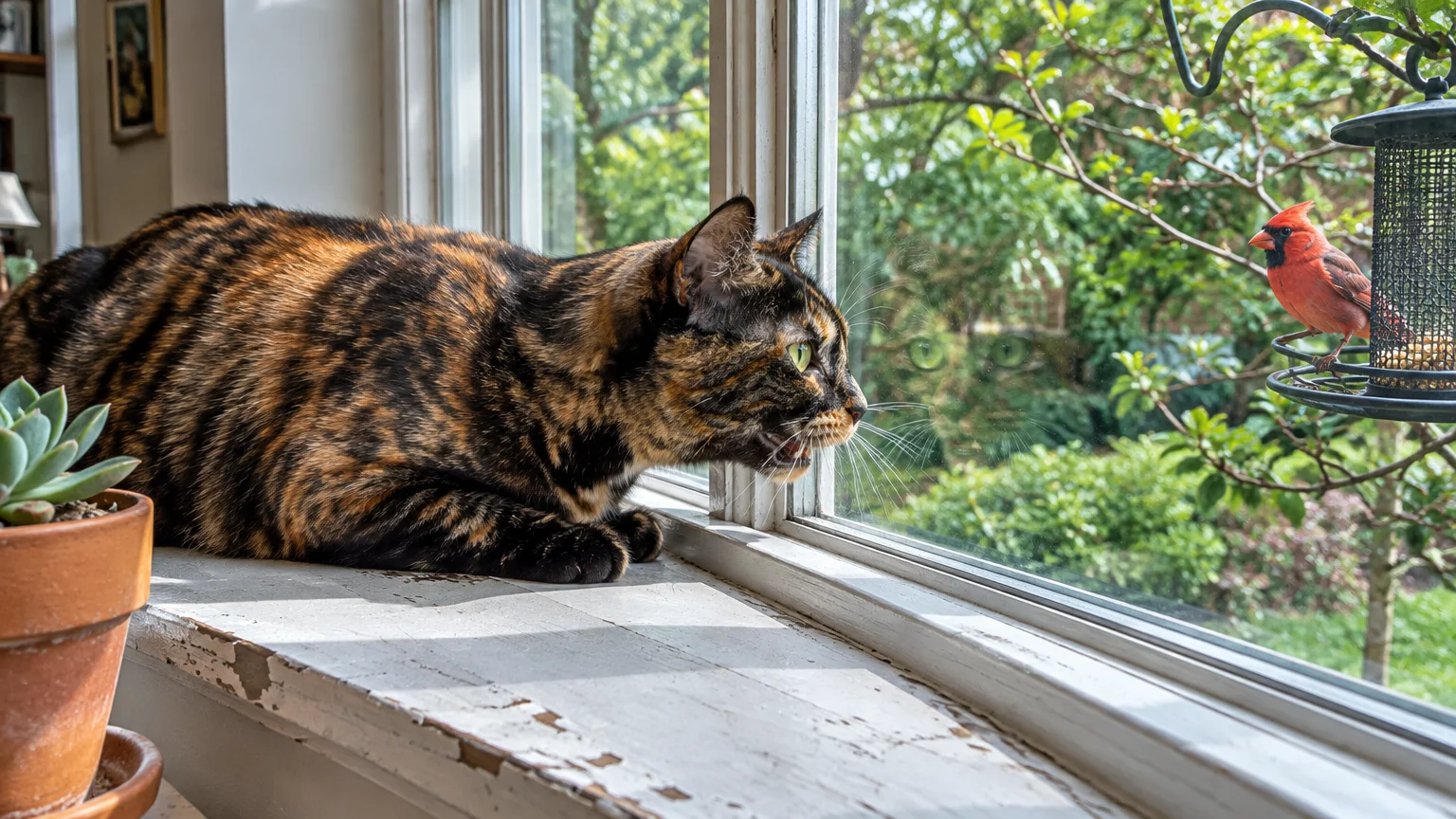
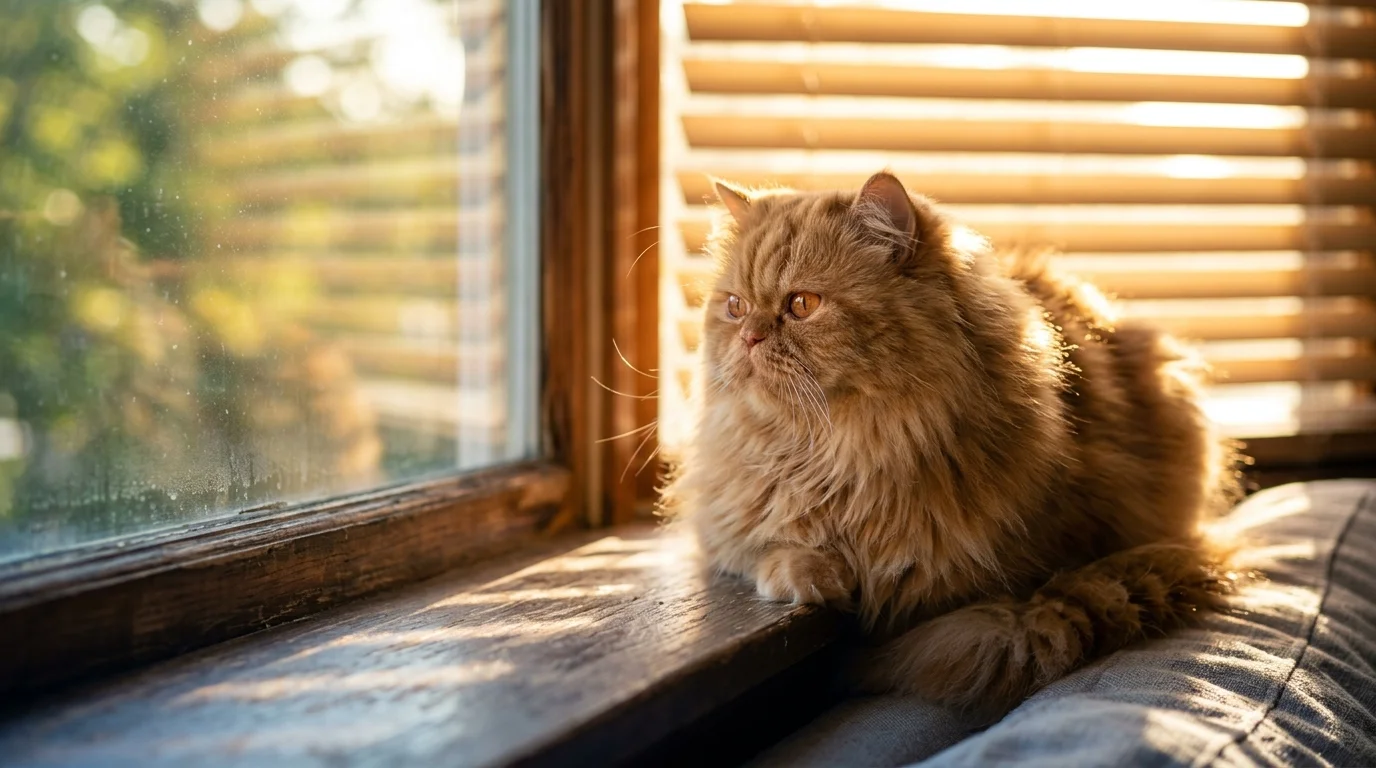
3. Chattering and Chirping at Birds Through Glass
Sit near a sunny window with bird feeders outside, and you will hear rapid, clicking tooth vibrations. Your cat vibrates its lower jaw while emitting high-pitched chirps and squeaks.
Ethologists identify this display as intense predatory anticipation paired with physical frustration. Your cat sees viable prey but cannot physically breach the window pane to complete the strike.
Some wildlife researchers suggest the rapid jaw movement mimics the specialized cervical bite wild cats use to subdue prey instantly. This reflex proves your indoor hunter retains sharp hunting instincts.
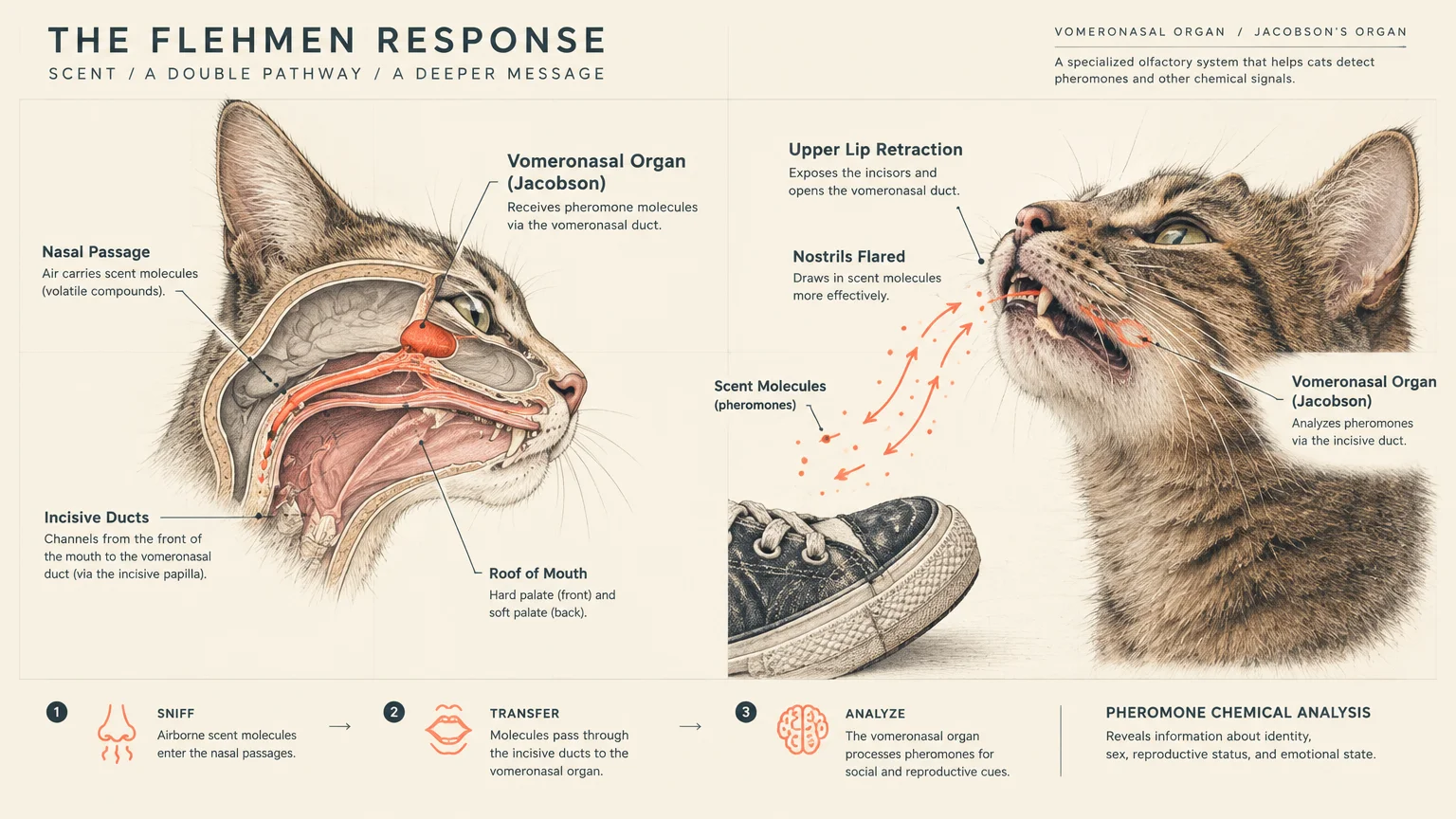
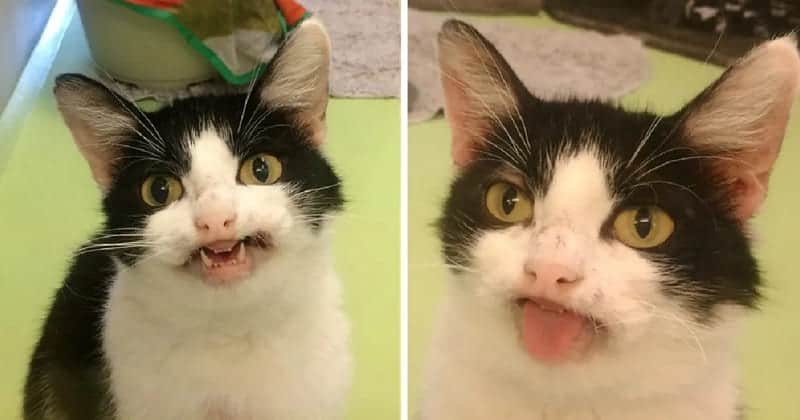
4. The Open-Mouth Grimace (The Flehmen Response)
Your cat sniffs a freshly laundered gym sock, lifts its head, curls its upper lip, and freezes with an open-mouthed sneer. This peculiar expression makes your pet appear utterly disgusted by the smell.
In reality, your cat uses an extra sensory structure known as the vomeronasal organ, or Jacobson’s organ. Located on the roof of the mouth behind the incisors, this duct connects directly to the nasal cavity.
By opening its mouth and curling its lips, your cat pumps pheromones directly into this chemical analyzer. The cat evaluates biological data left behind by other animals without processing it as a standard odor.
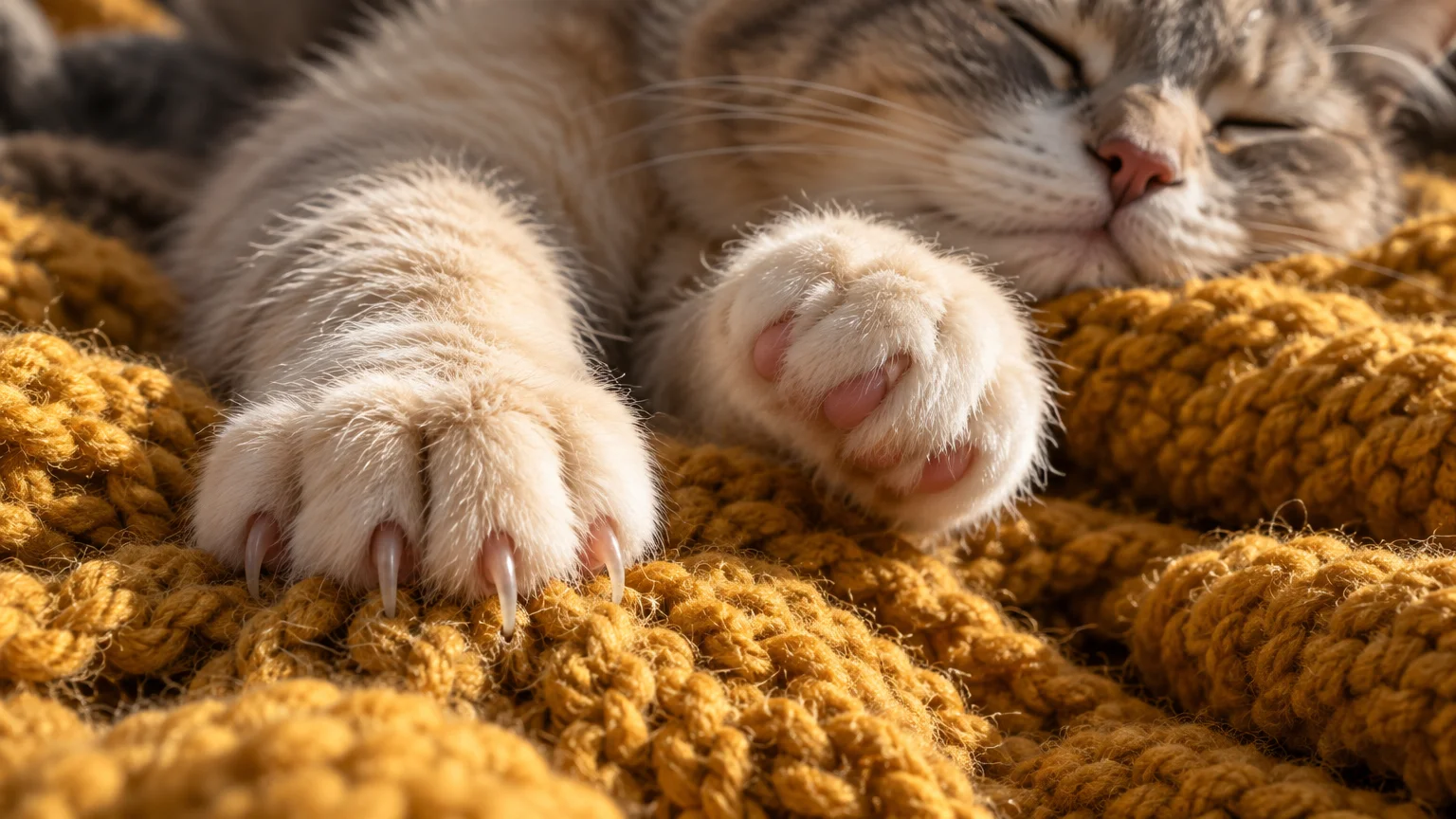
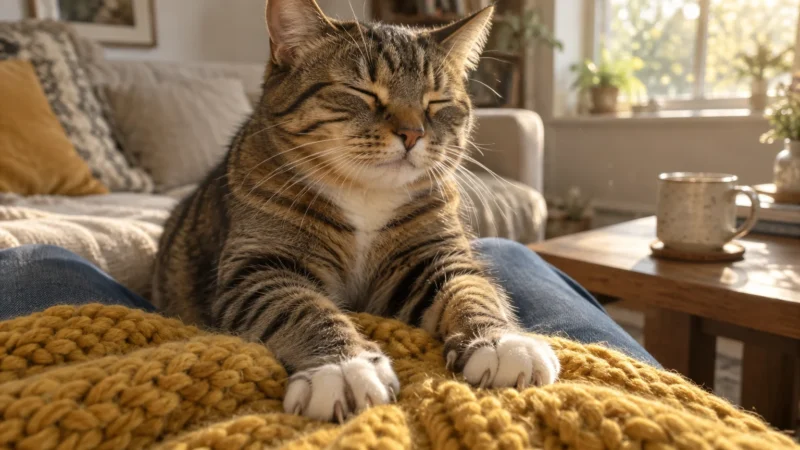
5. Kneading Blankets and Laps (“Making Biscuits”)
Cats frequently push their front paws rhythmically against plush blankets, sofa cushions, or your softest sweater. They alternate left and right paws with focused rhythmic precision, often purring in a trance-like state.
This rhythmic kneading originates during the earliest hours of kittenhood. Nursing kittens push against their mother’s mammary glands to stimulate oxytocin release and milk flow.
Adult cats carry this soothing infantile reflex into maturity when experiencing absolute contentment and relaxation. Furthermore, scent glands between their toe pads deposit subtle territory markers as they knead.
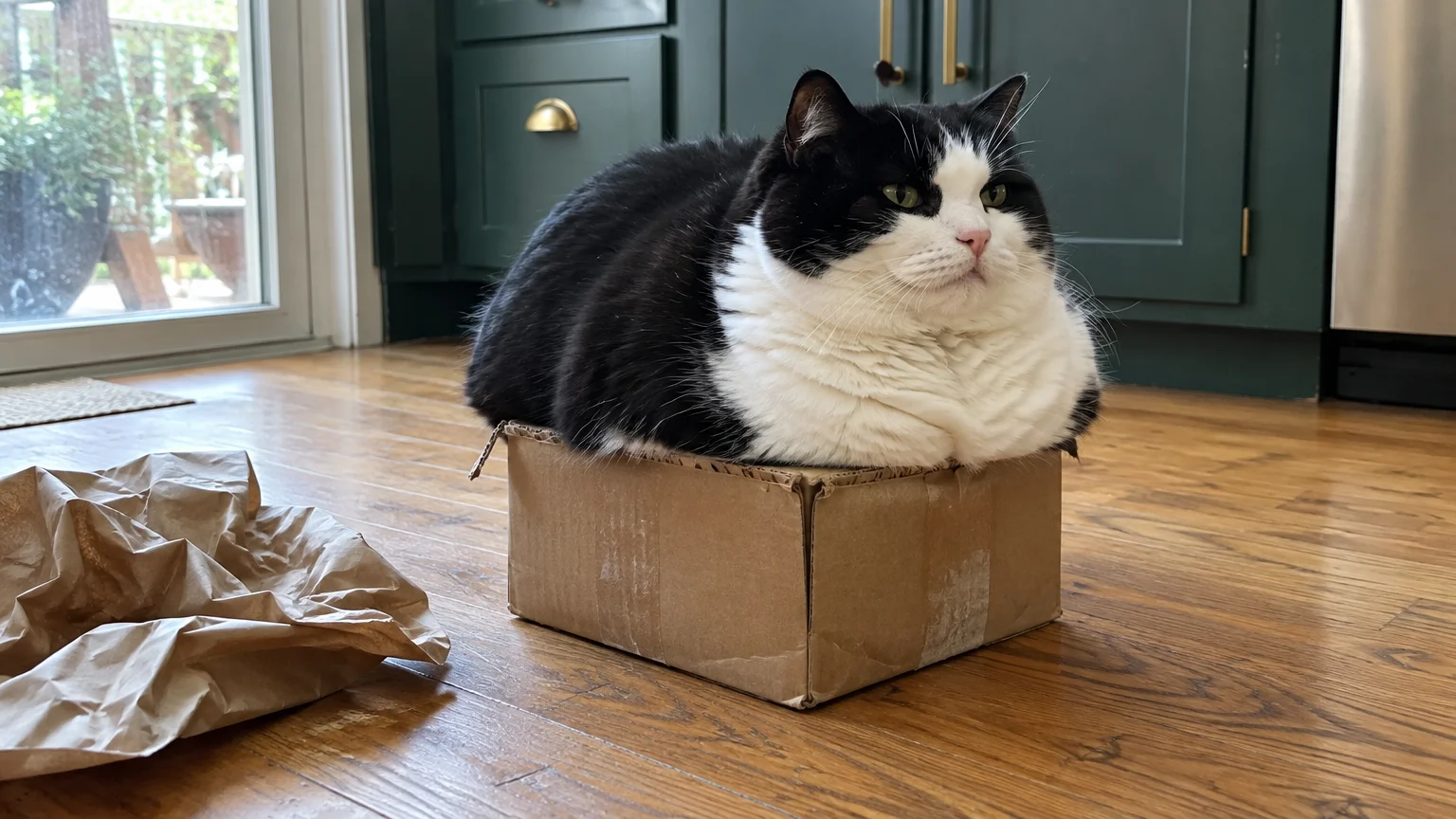
6. Squeezing into Impossibly Small Cardboard Boxes
You buy an expensive orthopedic cat tree, yet your cat promptly ignores it to cram itself into the shipping shoebox. Felines fold their flexible spines into tiny spaces where they barely fit.
This behavior stems from thigmotaxis, which represents an animal’s natural urge to maintain contact with physical borders. Tight perimeter walls prevent stealthy predators from sneaking up on resting cats.
Enclosed cardboard sanctuaries also act as exceptional thermal insulators. Because feline comfort zones hover between 86 and 97 degrees Fahrenheit, compact spaces preserve metabolic warmth without effort.
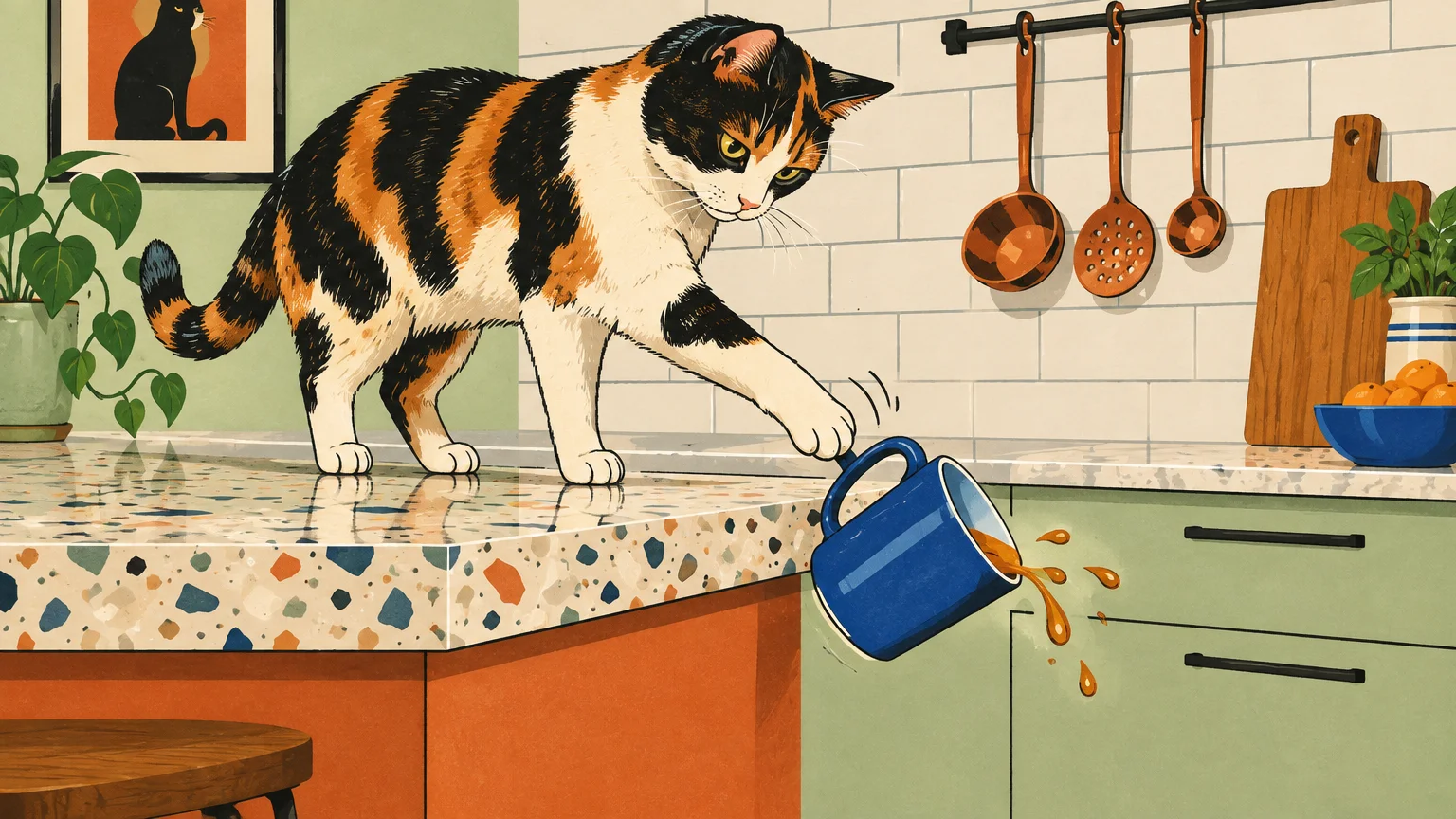
7. Deliberately Swatting Objects Off High Counters
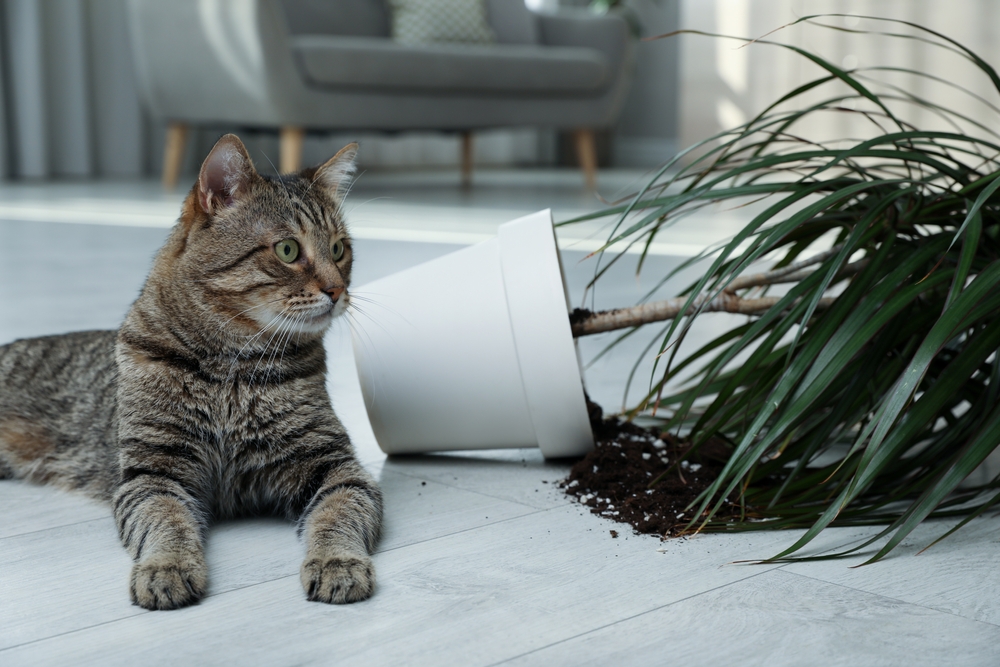
Your cat locks eyes with you, extends a paw, and deliberately pushes your favorite coffee mug off the kitchen island. This seemingly spiteful act tops the list of common cat quirks that exasperate pet owners.
Cats do not understand human spite or the monetary value of ceramic dinnerware. Instead, they use their sensitive front paws as investigative tools to test whether objects are alive.
A dead mouse does not move, but a stunned mouse bolts when nudged. Swatting items mimics this predatory test; the clatter and rapid movement deliver immediate auditory and visual stimulation.
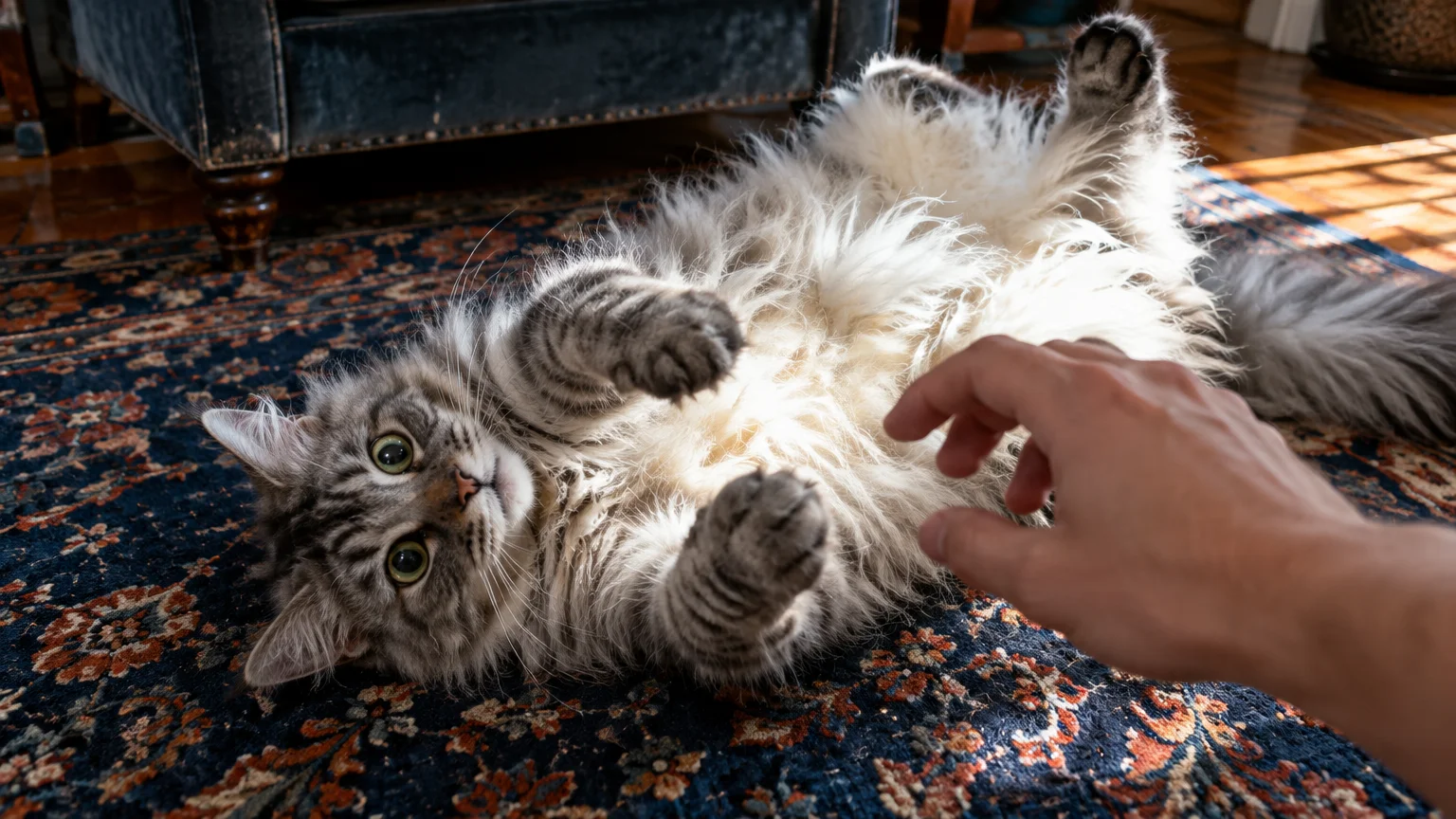
8. Exposing the Belly—Then Attacking Your Hand
Your companion rolls onto its back on the living room rug, revealing a warm, fluffy belly. The moment your hand touches that soft fur, four paws lock around your wrist with claws engaged.
Exposing the belly is an expression of social trust, not an open invitation for physical petting. In feline body language, showing the vulnerable abdomen communicates, “I feel safe enough around you to let my guard down.”
When you reach in to touch that exposed core, predatory defensive reflexes fire automatically. You breach their personal comfort zone, prompting an immediate grasp-and-kick reaction designed to disable attackers.
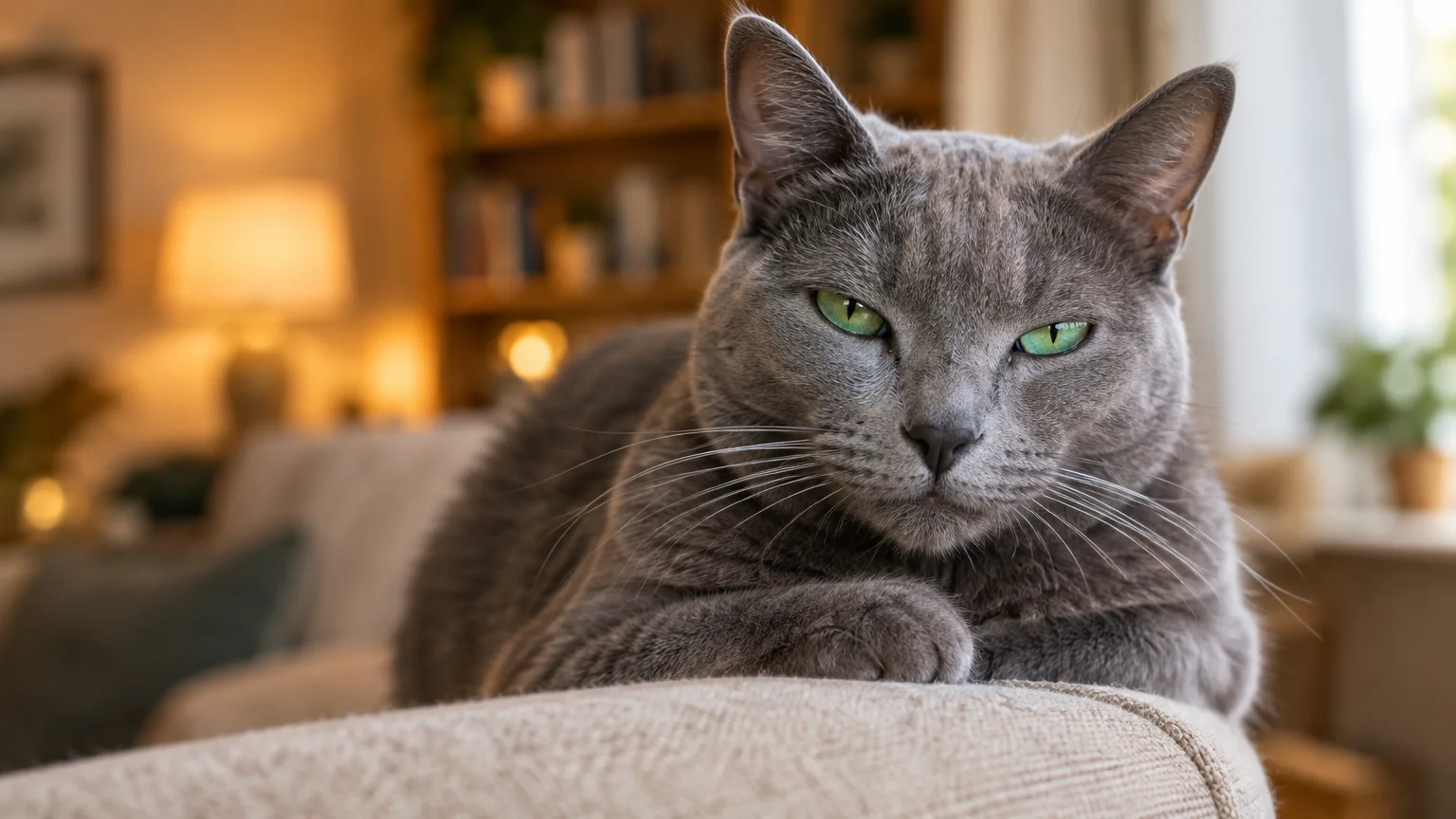
9. The Unbroken Stare and Deliberate Slow Blink
Direct eye contact in the animal kingdom often signifies an imminent challenge or aggressive intent. Predators lock eyes before launching an attack, making unblinking stares deeply intimidating.
When a cat locks eyes with you and slowly closes its eyelids into a soft squint, it offers a feline smile. This deliberate action communicates peaceful intentions and emotional comfort in your presence.
Try returning the gesture across the room by softening your face and blinking slowly at your pet. Your cat will frequently blink back, reinforcing mutual trust and reducing environmental tension.
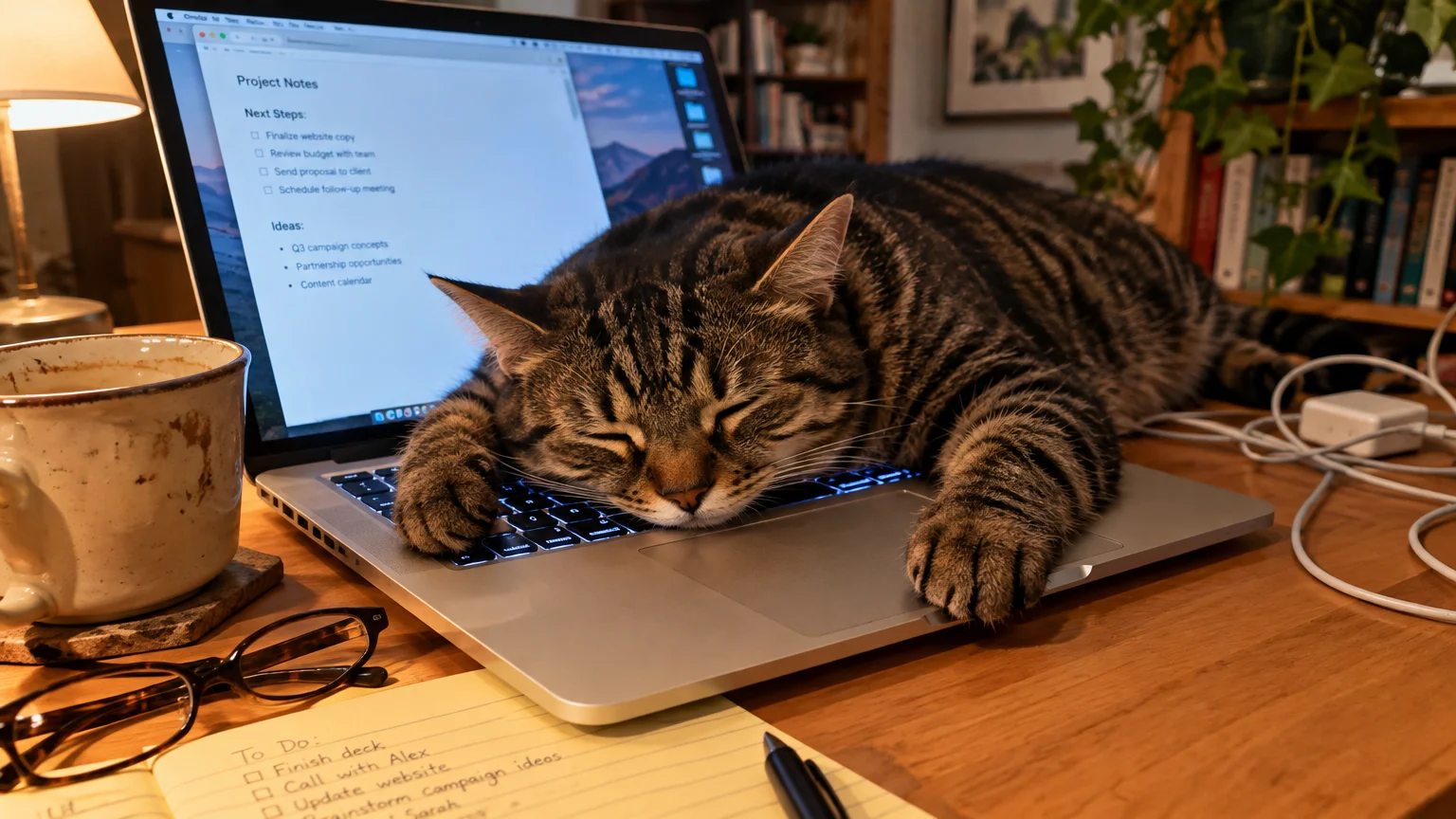
10. Sleeping Directly on Your Laptop or Dirty Laundry
Work-from-home pet parents know the challenge of typing around a cat sprawled across the keyboard. Similarly, cats love burrowing into freshly discarded athletic shirts or dirty laundry piles.
Laptops provide two things cats adore: operational warmth and your undivided physical attention. Modern keyboards produce steady ambient heat that matches feline thermal preferences perfectly.
Dirty laundry attracts them because it carries your concentrated natural scent profile. Blending their fur with your scent reinforces the communal scent blanket that makes home feel safe.
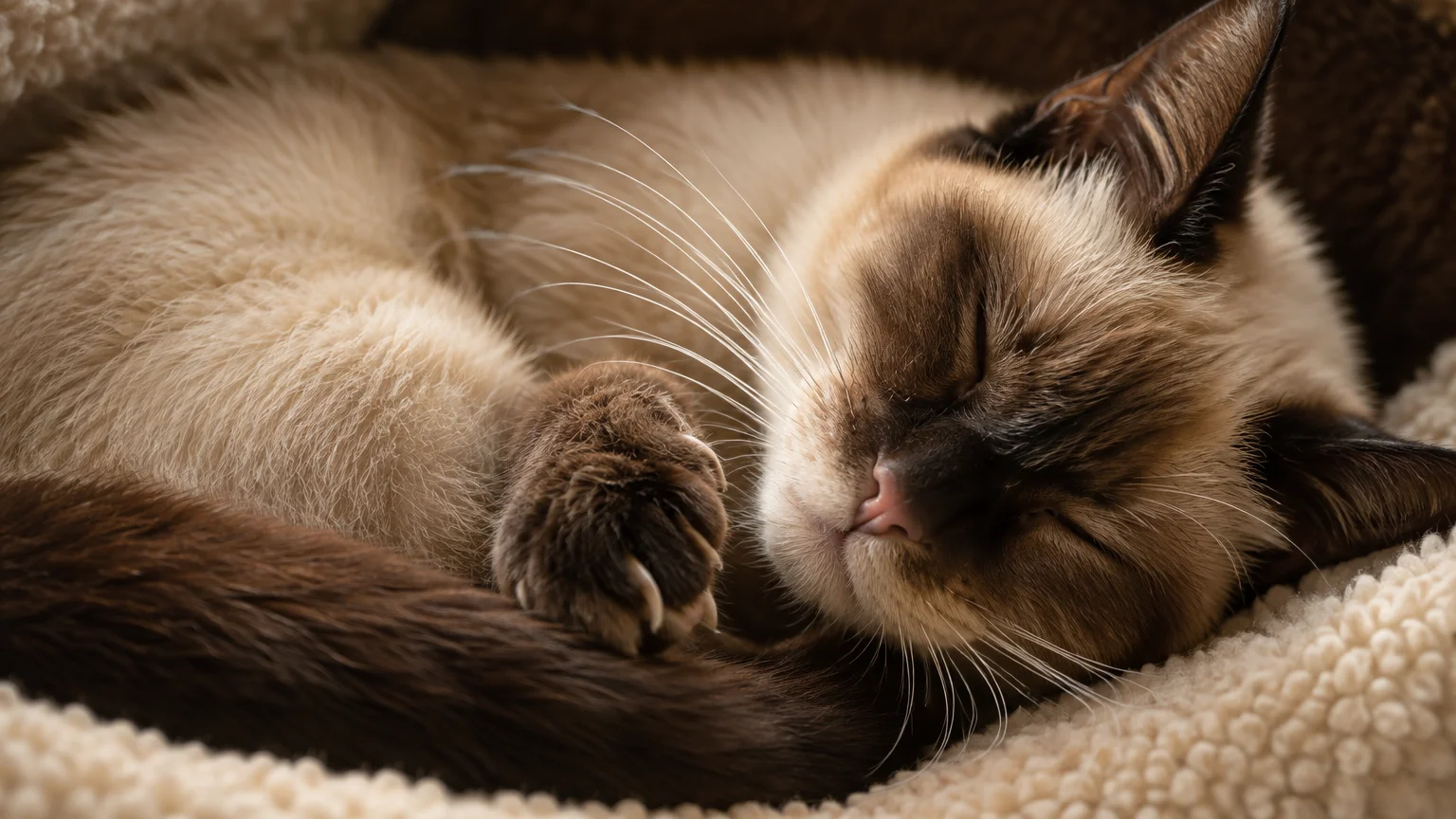
11. Whisker Twitches and Muffled Squeaks During Sleep
While sleeping deeply, your cat may twitch its whiskers, flutter its eyelids, paddle its paws, and emit soft chirps. These involuntary movements can look alarming, but they indicate healthy neurological activity.
Cats experience rapid eye movement (REM) sleep cycles remarkably similar to human dream states. Neuroscientists confirm that feline brains process daily motor patterns and predatory hunting sequences during these restorative deep-sleep periods.
Resist the urge to wake your cat during these twitching episodes. Abruptly interrupting REM sleep disorients your companion and triggers startled defensive reactions.
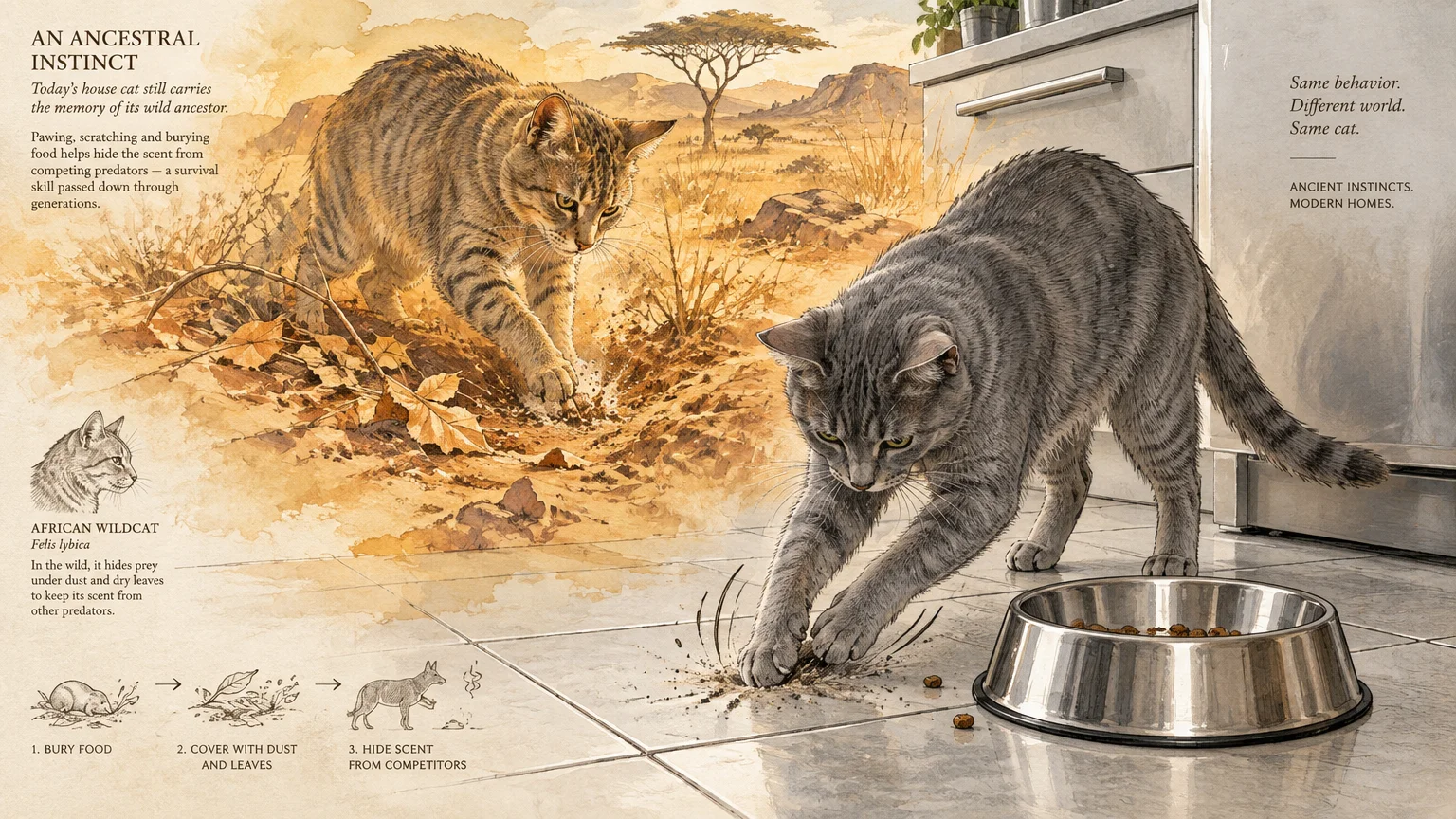
12. Scratching the Floor Around Clean Food Bowls
After finishing a meal—or even taking two polite bites—your cat diligently paws at the kitchen tile around the bowl. Some felines even drag nearby towels, napkins, or paper over their dish.
This quirk represents a wild caching instinct passed down from desert wildcats. In the wild, leaving uneaten food exposed attracts larger apex predators and competitive scavengers.
By scratching around the bowl, your cat attempts to bury remaining food to mask its scent. You can resolve this habit by removing uneaten wet food twenty minutes after serving.
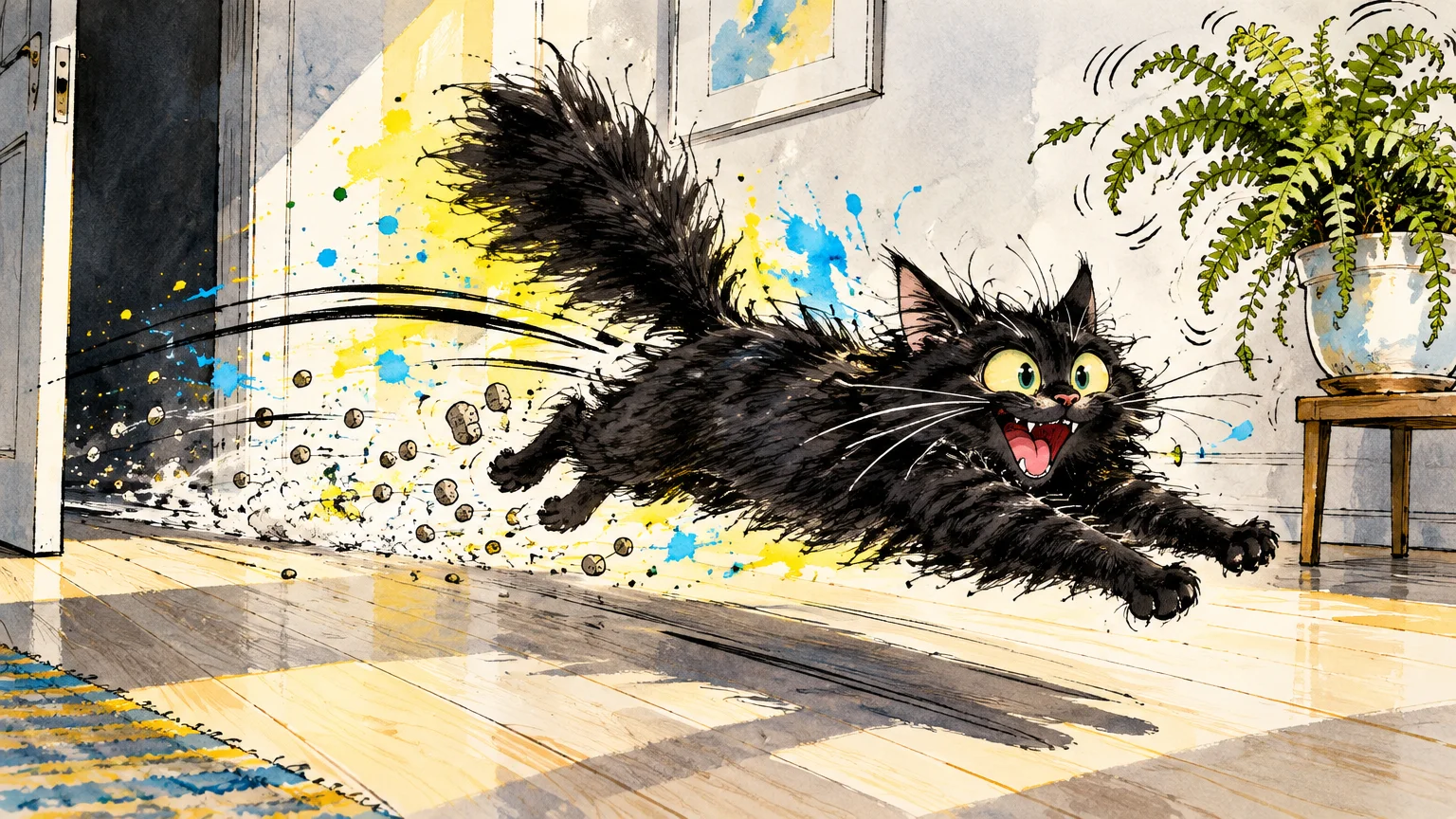
13. The Post-Litter Box Victory Sprint
Immediately after using the litter box, many cats launch out of the tray and gallop across the house like escaped convicts. They often leap onto sofas or run up stairs with wide eyes.
This rapid departure has evolutionary roots in predatory evasion. Waste deposits emit distinct scent plumes that pinpoint a cat’s exact location to predators in the wild.
Additionally, veterinarians note that passing waste stimulates the vagus nerve in mammals. This nerve stimulation produces an energetic sensation of relief that encourages an exhilarating victory lap.
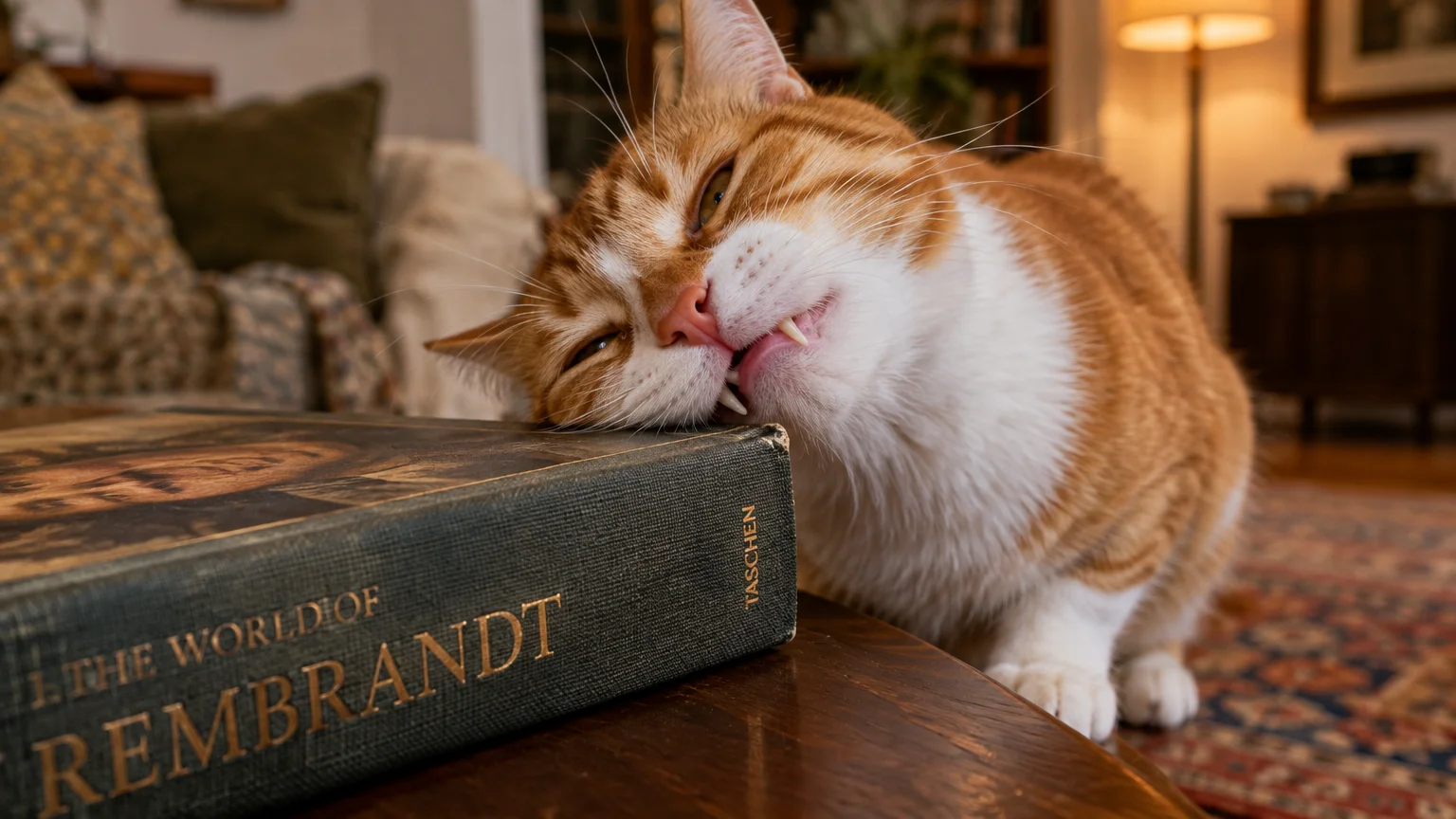
14. Rubbing Gums and Teeth on Hard Book Corners
Cats often chew gently or slide their open lips along the sharp corners of books, mobile phones, and cardboard boxes. This habit looks like teething, but it serves a specific territorial purpose.
Felines have perioral scent glands lining the corners of their mouths and gum lines. Rubbing hard, rigid corners deposits these facial pheromones efficiently across sharp structural boundaries.
The firm surface also massages their gums and cleans tactile whisker roots. Provide safe cardboard chew toys to prevent your companion from gnawing on expensive electronic device corners.
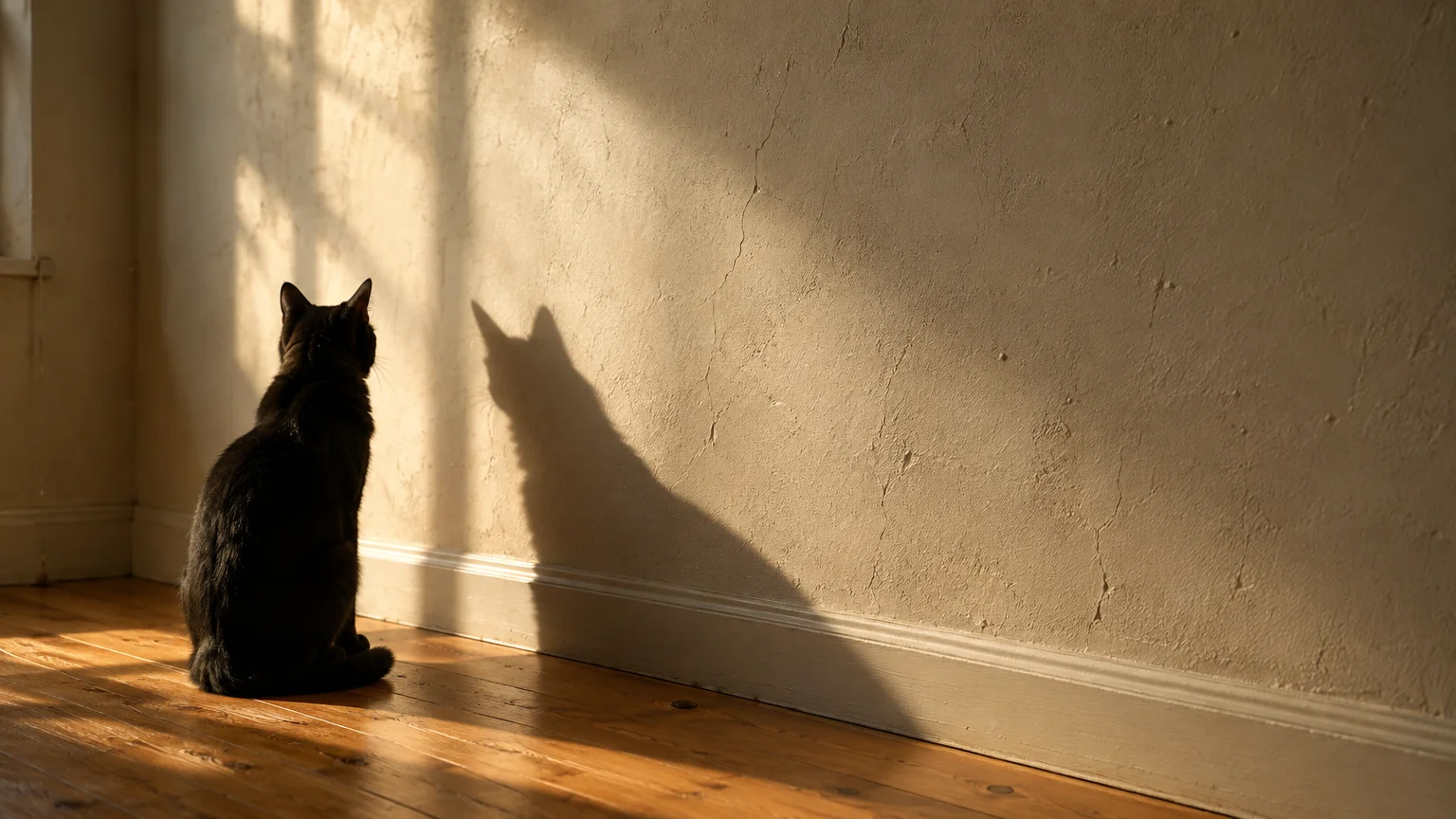
15. Staring Fixatedly at Seemingly Blank Walls
Watching your cat stare intensely at an empty ceiling corner can make you wonder if your house is haunted. Cats remain frozen for minutes, tracking invisible targets with minute head tilts.
Feline senses detect physical phenomena entirely invisible and inaudible to human perception. A cat’s hearing range extends up to 64,000 Hertz, compared to the human limit of 20,000 Hertz.
Your cat hears tiny insects crawling inside wall voids or water dripping through internal plumbing lines. Furthermore, feline retinas register subtle ultraviolet light flickers that human eyes cannot perceive.
Domestic cats live simultaneously in our living rooms and their ancestral wild landscapes; their quirks reflect survival machinery operating exactly as nature designed.
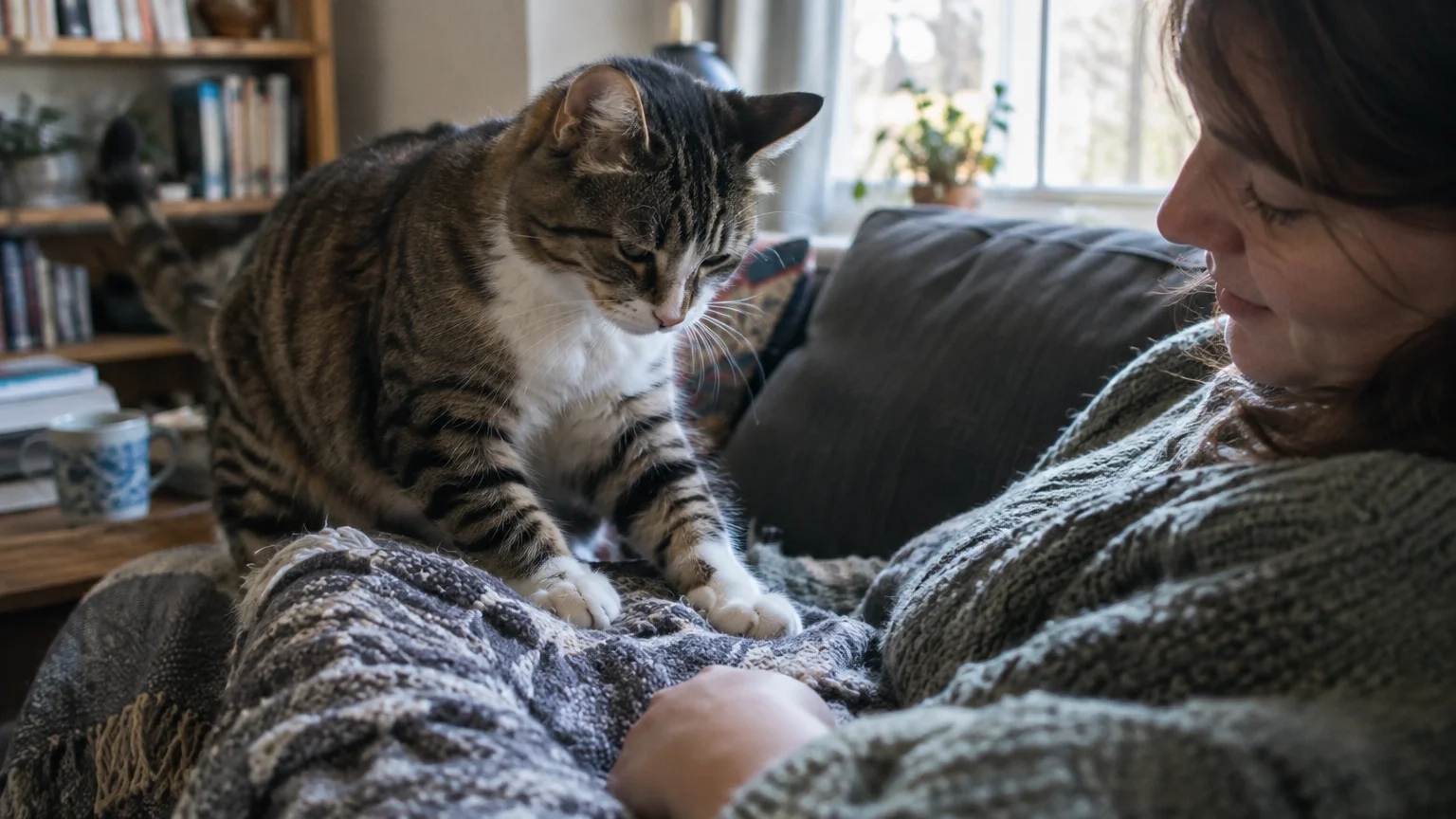
Deciphering Common Quirks vs. Hidden Discomfort
Recognizing the difference between natural evolutionary quirks and behavioral distress prevents unnecessary vet bills and improves daily care. The table below helps you evaluate what your cat’s quirky habits mean.
| Weird Behavior | Instinctive Motivation | Normal Scenario | Recommended Action |
|---|---|---|---|
| Midnight Zoomies | Pent-up crepuscular energy | Brief sprints in evening | Schedule daily wand play |
| Open-Mouth Grimace | Pheromone scent analysis | Sniffing shoes or bedding | Allow scent processing |
| Scratching Floor Near Food | Wild prey-caching reflex | Paw movements near bowls | Remove leftover wet food |
| Swatting Table Objects | Tactile predatory testing | Nudging small, loose pens | Provide interactive puzzles |
| Attacking Hand on Belly | Vulnerable defensive reflex | Clawing after human touches core | Pet cheeks and chin instead |
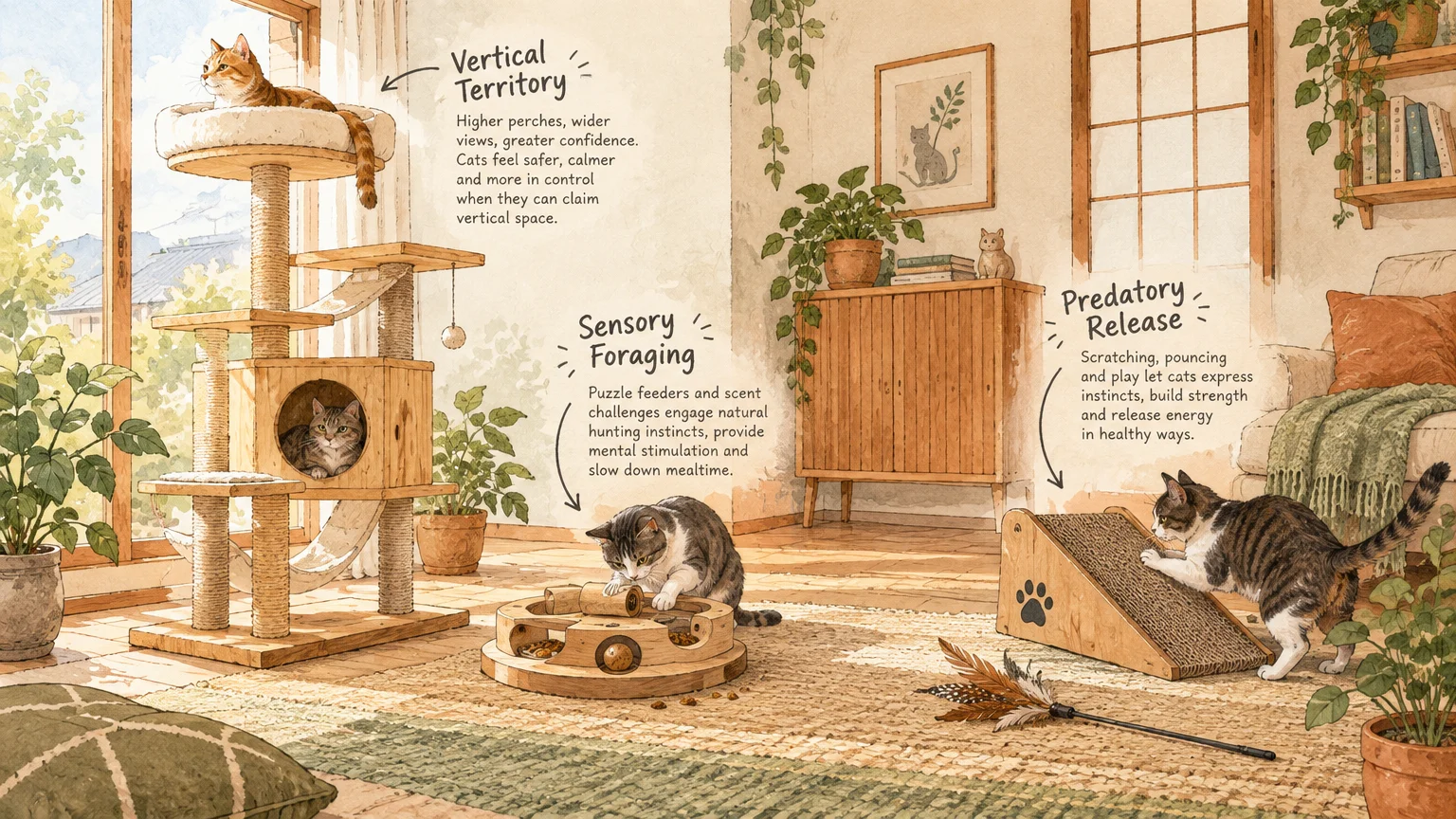
Essential Enrichment Strategies for Natural Feline Quirks
Rather than suppressing instinctive habits, smart pet owners channel these wild drives into healthy daily outlets. Providing environmental enrichment satisfies evolutionary needs and protects your household furnishings.
- Place sturdy sisal scratching posts near sleeping areas so cats can stretch and deposit paw-pad scent markers.
- Install window perches offering clear views of bird baths or outdoor foliage to satisfy visual hunting instincts.
- Rotate cardboard boxes and brown paper bags weekly to satisfy natural thigmotactic hiding urges.
- Use interactive treat puzzle toys to replicate hunting and prevent boredom-induced counter clearing.
- Schedule two interactive fifteen-minute play sessions daily using feather wands to deplete stored predatory momentum.
According to research highlighted by the ASPCA, daily mental stimulation and structured play drastically reduce destructive household habits. Meeting behavioral drives proactively creates a harmonious domestic space.
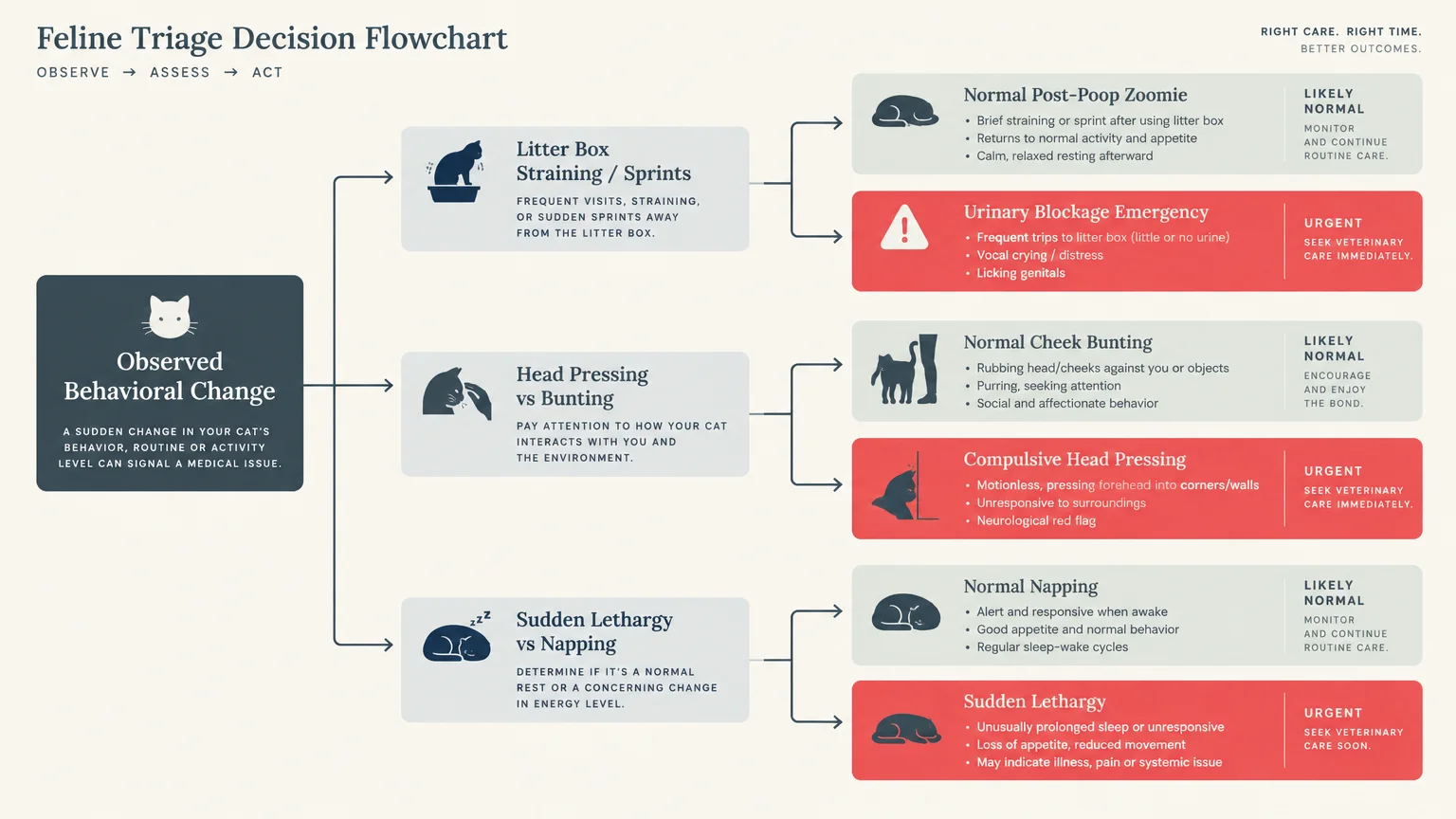
What Can Go Wrong: When Normal Quirks Signal Medical Distress
While quirky behaviors generally reflect sound biology, drastic changes in frequency or intensity warrant prompt attention. Understanding cat behavior myths helps you identify when an innocent quirk masks genuine physical pain.
Post-litter sprinting is normal, but vocalizing while eliminating or visiting the box dozens of times signals feline lower urinary tract disease (FLUTD). Male cats facing urinary blockages face life-threatening emergencies requiring immediate emergency intervention.
Kneading blankets represents pure joy, but chewing and swallowing non-food materials indicates a dangerous condition called pica. Ingesting wool, synthetic threads, or plastic packaging leads to intestinal blockages that necessitate surgical extraction.
Occasional manic sprints represent normal zoomies, but skin rippling along the spine paired with self-directed tail biting suggests feline hyperesthesia syndrome. Consult your veterinarian if manic episodes cause distress, frantic self-grooming, or vocal howling.

Where Outside Advice Pays Off: Navigating Behavioral Shifts
Subtle shifts in everyday habits often serve as the earliest warning system for chronic feline medical conditions. Because cats instinctively mask illness to avoid appearing vulnerable, pet owners must track emerging behavioral changes.
If your senior cat suddenly stops jumping on high counters, avoid assuming it merely outgrew its curiosity. Age-related osteoarthritis affects ninety percent of cats over age twelve, requiring pain management from your veterinarian.
Sudden inappropriate urination outside clean litter boxes requires medical evaluation before assuming it stems from spite. Kidney disease, diabetes, and spinal arthritis commonly make accessing high-sided litter pans painful.
If behavioral quirks escalate into inter-cat household aggression, partnering with a Certified Applied Animal Behaviorist (CAAB) restores order. Professional guidance saves time and prevents relationship breakdowns between bonded family pets.
The American Animal Hospital Association emphasizes that routine wellness exams catch hidden degenerative conditions before subtle habits turn into crises.
Frequently Asked Questions
Why does my cat lick me and then bite me immediately?
Licking deposits saliva and grooms your skin, but the repeated friction can quickly overstimulate delicate nerve endings. The sudden bite communicates that sensory tolerance has peaked and you should pause interaction.
Do indoor cats hold grudges when you leave them alone?
Cats lack the complex emotional framework required to harbor human-style spite or resentment. Behaviors interpreted as revenge—such as urinating on luggage—stem from separation anxiety and attempts to soothe stress using communal scent.
Why does my cat follow me into the bathroom?
Bathrooms contain small, enclosed territories rich in intriguing smells, cool porcelain sinks, and running tap water. Furthermore, you represent a captive audience inside a closed room, offering prime opportunities for affection and play.
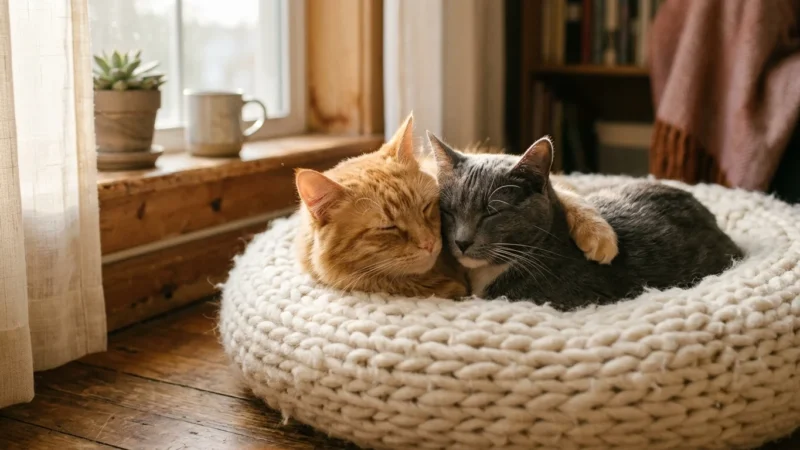
Why do cats sleep curled tightly into a ball?
Curling into a tight crescent shape conserves vital body heat by shielding the uninsulated belly from ambient airflow. It also protects vulnerable abdominal organs from potential predatory threats during deep, defenseless sleep cycles.
Embracing Your Cat’s Wild Legacy
Living alongside a domestic cat means sharing your home with a miniature apex predator that follows ancient evolutionary rules. When you understand the instincts driving their bizarre rituals, baffling antics transform into fascinating demonstrations of natural science.
Support your companion’s wild heritage by offering interactive play, secure hideaways, and structured vertical territory. Observing these normal cat behaviors explained by biology makes daily companionship richer, more entertaining, and infinitely rewarding.
The information here is meant for educational purposes. Specific circumstances—including health conditions, finances, location, and goals—may require different approaches. When in doubt, consult a licensed professional or check official sources directly.
Last updated: May 2026. Rules, prices, and details change—verify current information with official sources before acting on it.