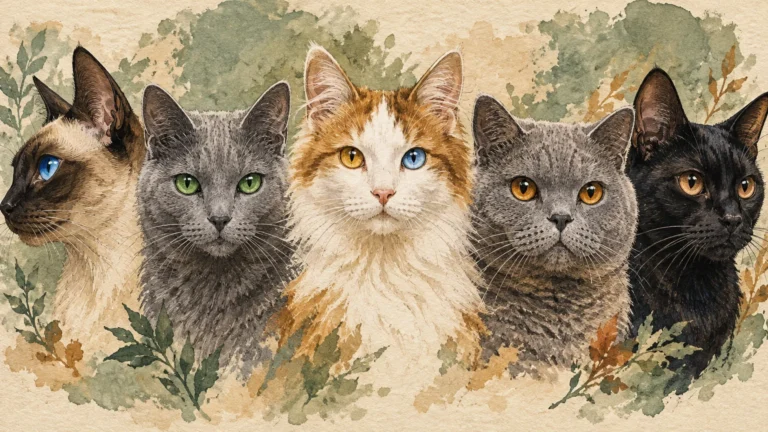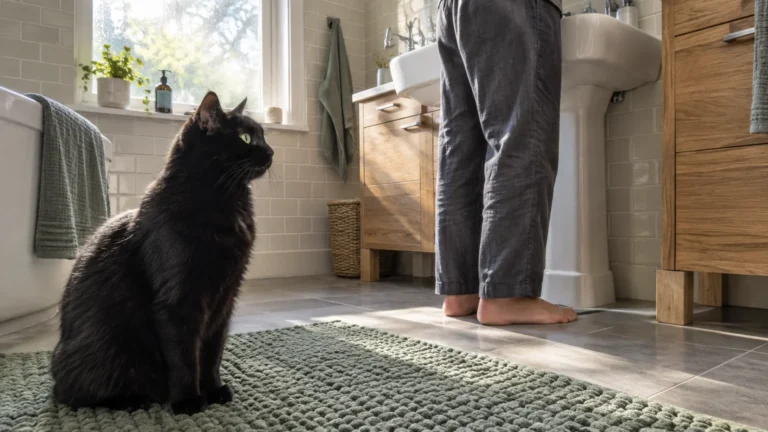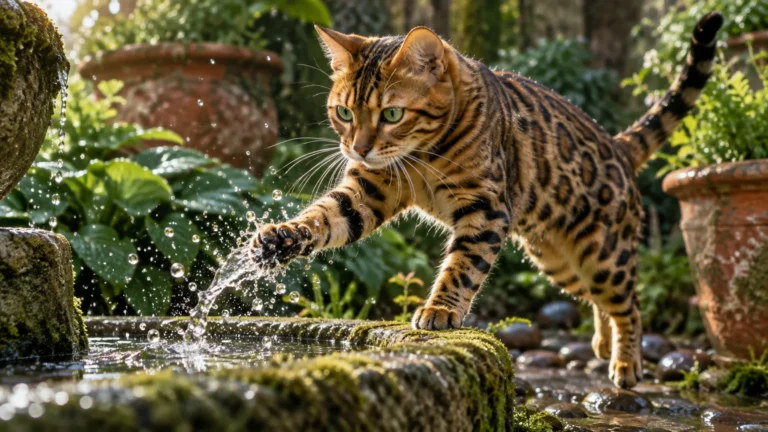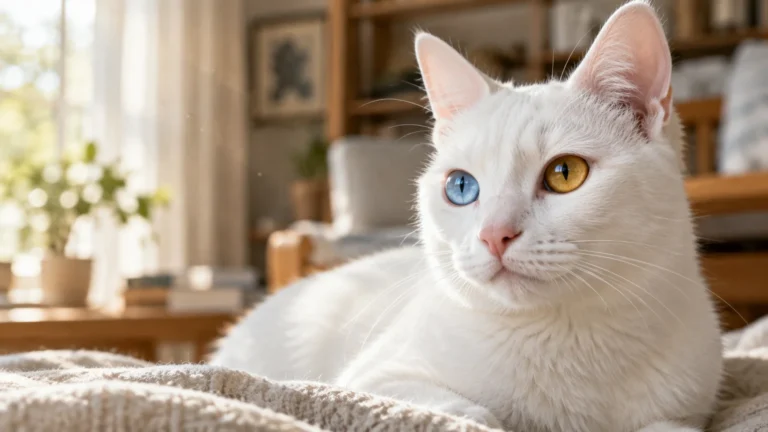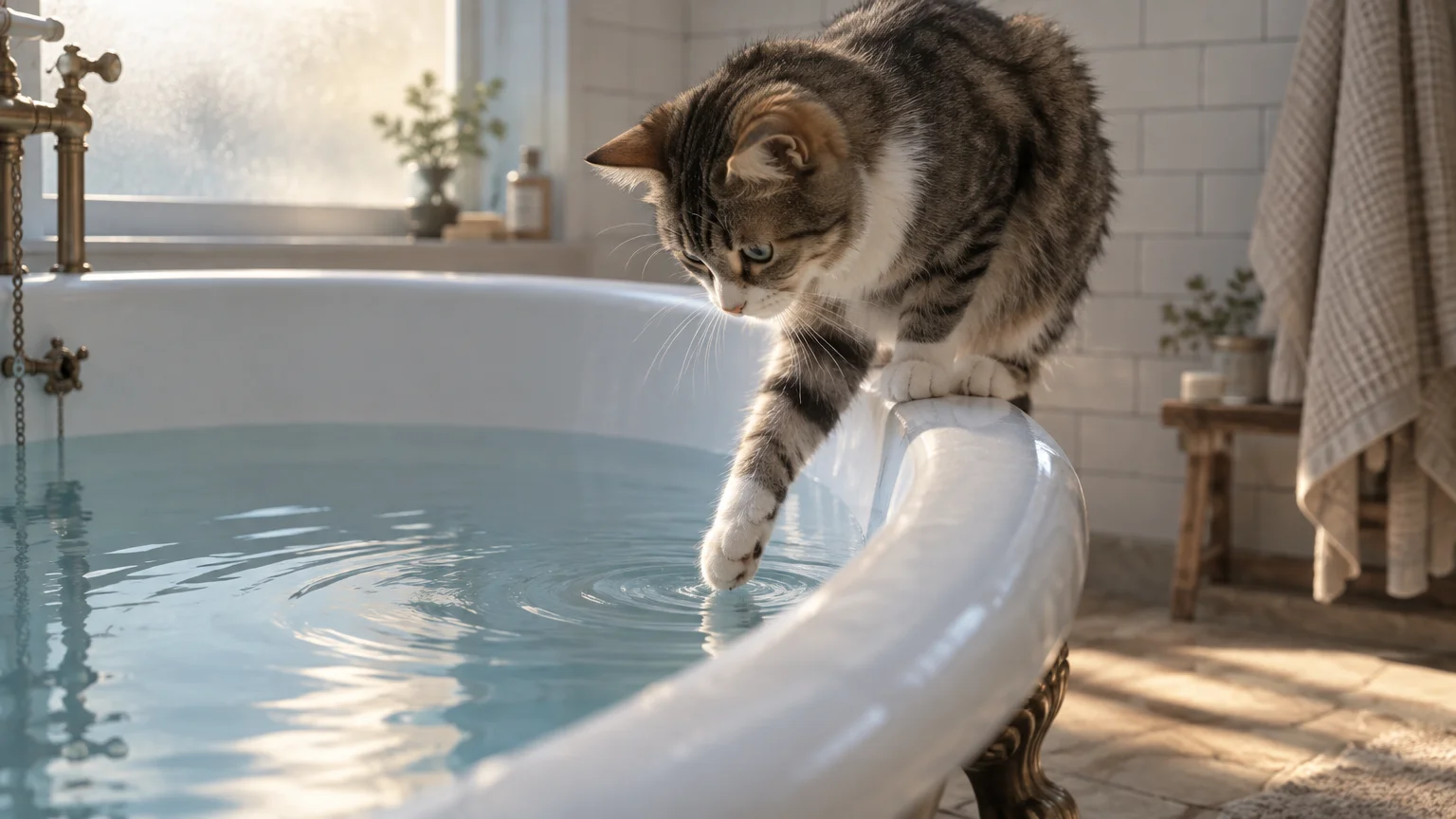
Most domestic felines scatter at the sound of running water, yet certain curious cat breeds deliberately leap into bathtubs and bat at kitchen faucets. You can channel this distinct behavior into safe enrichment once you understand the biology behind it.
Centuries of natural selection near rugged waterways alongside wild genetics created specialized physical traits, such as cashmere-textured, water-repellent coats.
Discovering these seven breeds reveals why some cats love water and gives you practical steps to keep wet play safe, clean, and fun.
Why Most Felines Fear the Bath—and Why Some Defy the Rule
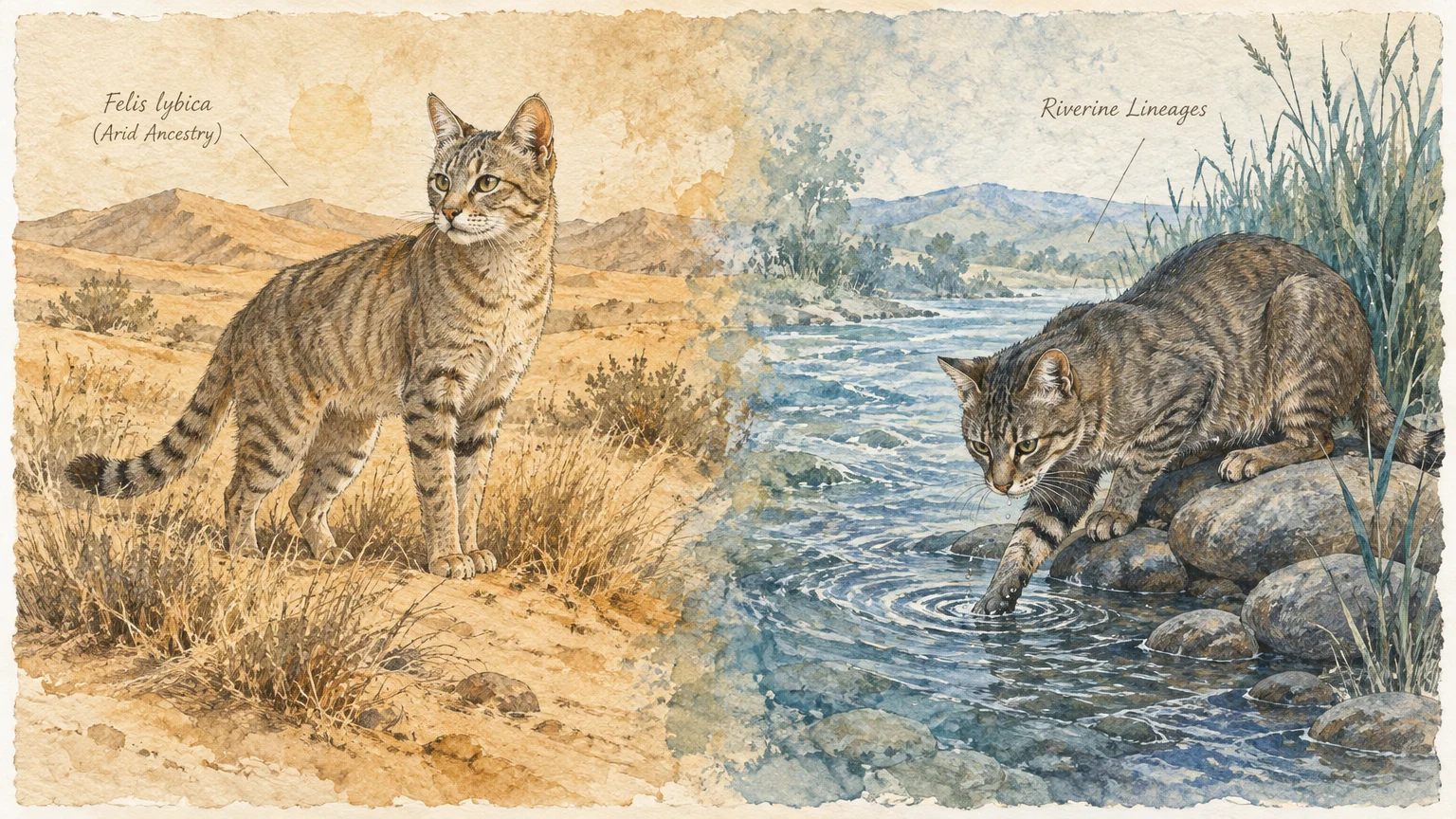
Most domestic cats descend from the African wildcat (Felis lybica), an arid-desert hunter with little exposure to deep bodies of water.
Because standard feline fur absorbs moisture quickly, getting soaked chills a cat’s skin and drastically impairs their trademark athletic agility.
A wet coat also strips away a feline’s natural scent markings; this disruption causes sudden disorientation and stress for a territorial animal.
However, specific geographic lineages evolved along coastlines and river valleys, altering both their physical anatomy and hunting instincts over centuries.
Other modern breeds carry direct ancestry from wild feline species that swim across open currents and hunt fish in wetlands.
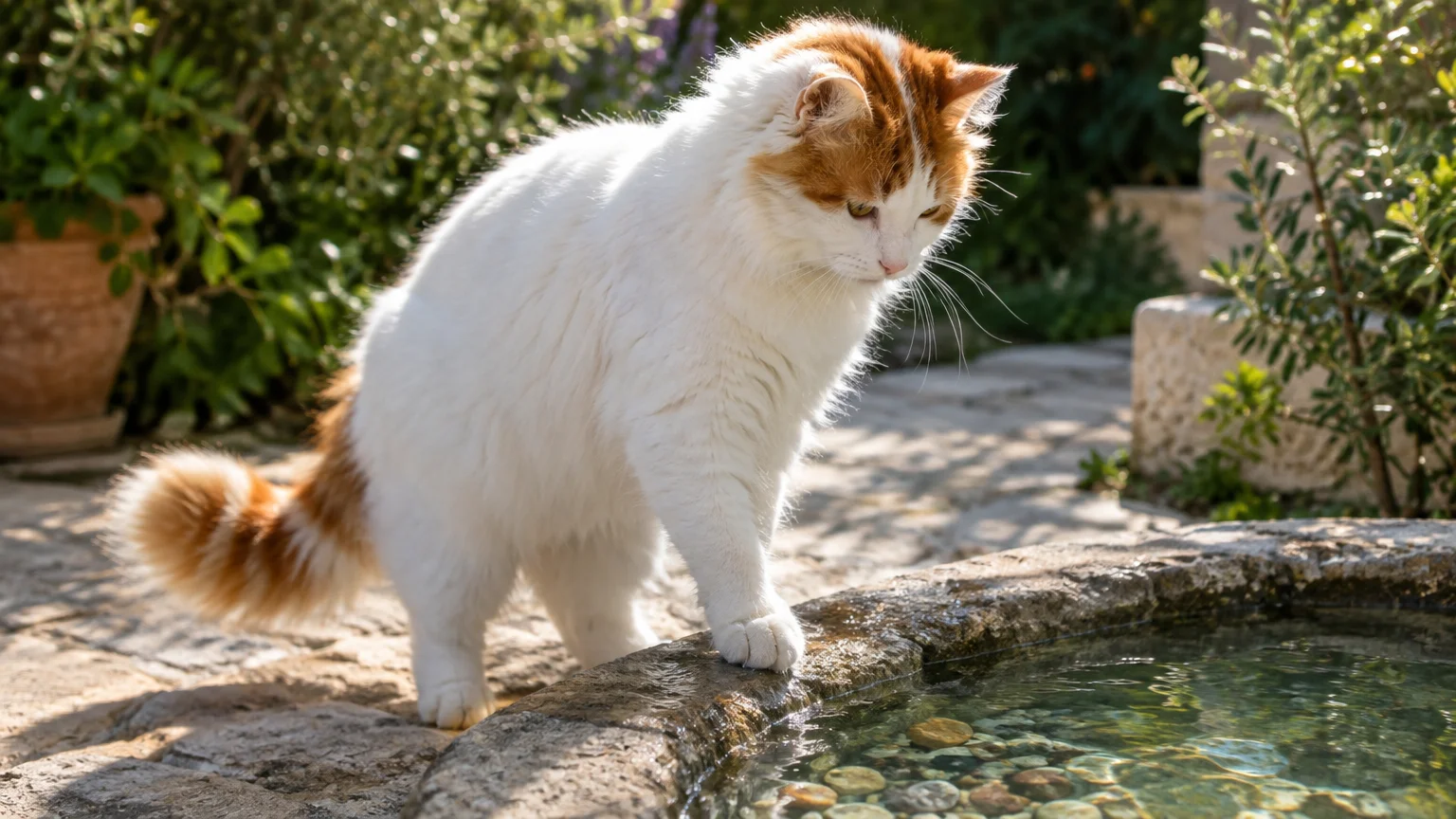
01 The Turkish Van: The Natural Born Swimmer
Originating near the rugged, mountainous region of Lake Van in eastern Turkey, the Turkish Van earned the historic title of “the swimming cat.”
According to the Cat Fanciers’ Association (CFA), which accepted the breed for championship status in 1994, these cats actively seek out wading pools.
The Governing Council of the Cat Fancy (GCCF) first recognized them in 1969, and TICA granted formal championship recognition in 1979.
Unlike standard domestic cats, the Turkish Van lacks a downy undercoat entirely.
Their single coat features a unique cashmere texture that repels moisture, allowing them to dry rapidly after an enthusiastic swim.
You will frequently observe a Turkish Van tossing toys into full sinks or lounging calmly under dripping bathroom showerheads.
If you plan to purchase a purebred kitten from an ethical breeder, expect prices to range between $800 and $2,000.
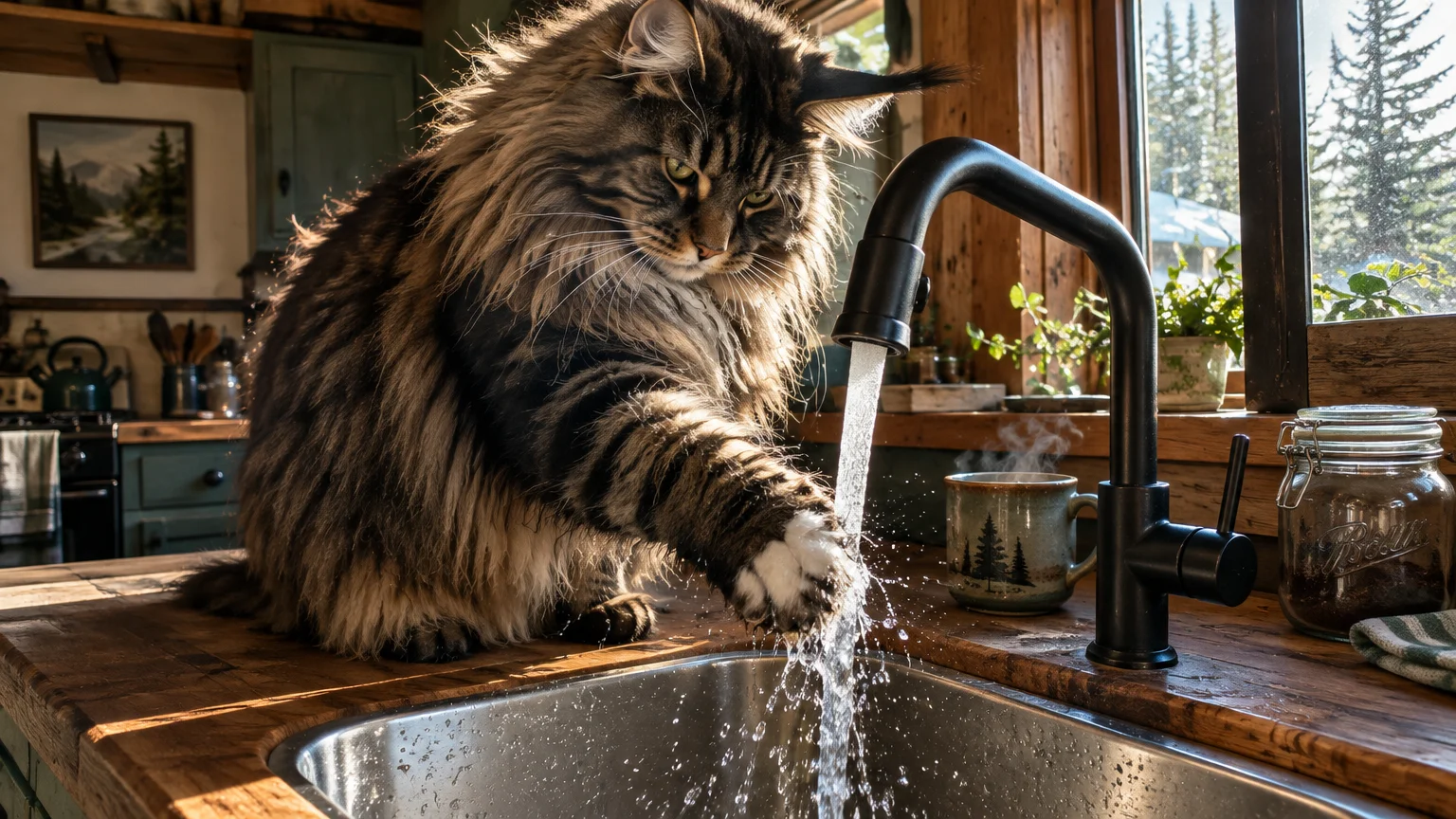
02 The Maine Coon: Cold-Water Pioneers of North America
Official registry figures from the Cat Fanciers’ Association show the Maine Coon consistently ranks as the second most popular pedigreed cat breed worldwide.
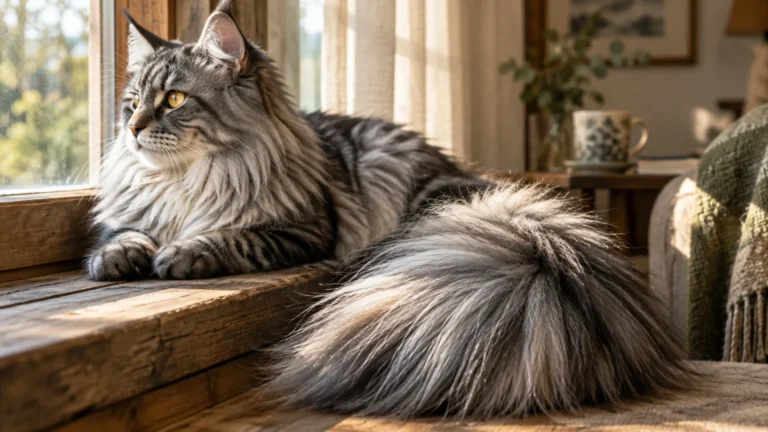
These muscular gentle giants developed in the harsh New England climate, where surviving damp winters required robust physical insulation.
A Maine Coon possesses a dense, water-resistant double coat saturated with natural guard-hair oils that shed rain and melting snow.
Their broad, heavily tufted paws function like snowshoes in winter and double as effective paddles when scooping liquid from bowls.
Many owners report Maine Coons “raking” the floor around their water dishes before drinking or dunking their favorite mice directly into fountains.
Do not be surprised if your Maine Coon nudges open the bathroom door to inspect your morning shower routine.
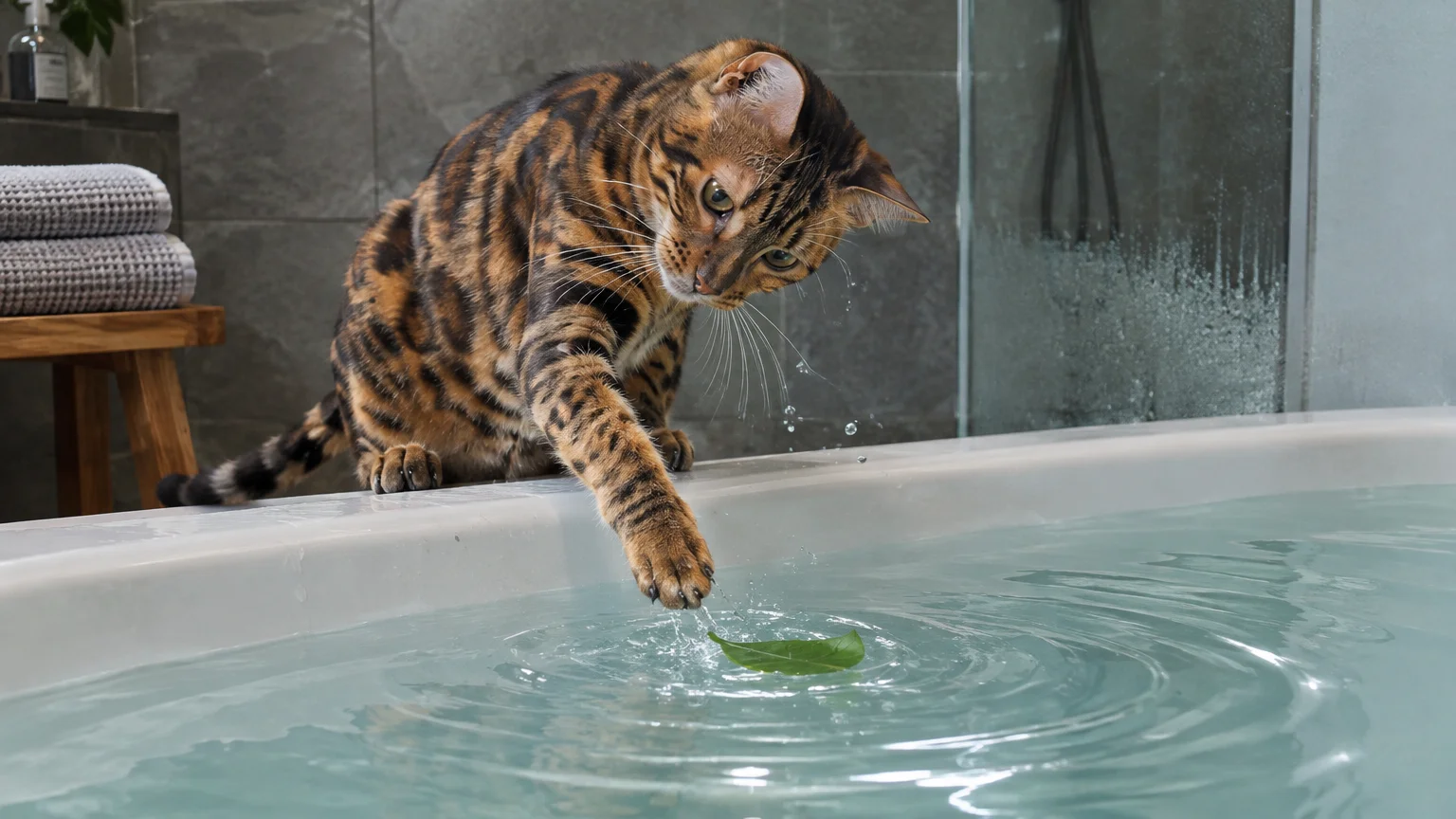
03 The Bengal: Wild River Heritage in a Domestic Coat
Breeders originally developed the striking Bengal by pairing domestic felines with wild Asian leopard cats (Prionailurus bengalensis).
Accepted into championship status by The International Cat Association (TICA) in 1991, Bengals retain their wild ancestors’ fierce fascination with watercourses.
A Bengal will readily leap into a filled tub with you, splash in sinks, or drink by scooping water directly with its paws.
However, prospective owners must carefully verify local municipal ordinances before bringing a Bengal kitten home.
Bengal cats of any generation remain illegal to own as domestic pets in New York City and the state of Hawaii.
Furthermore, early filial generations (F1 through F4) face strict permitting regulations in states like Connecticut.
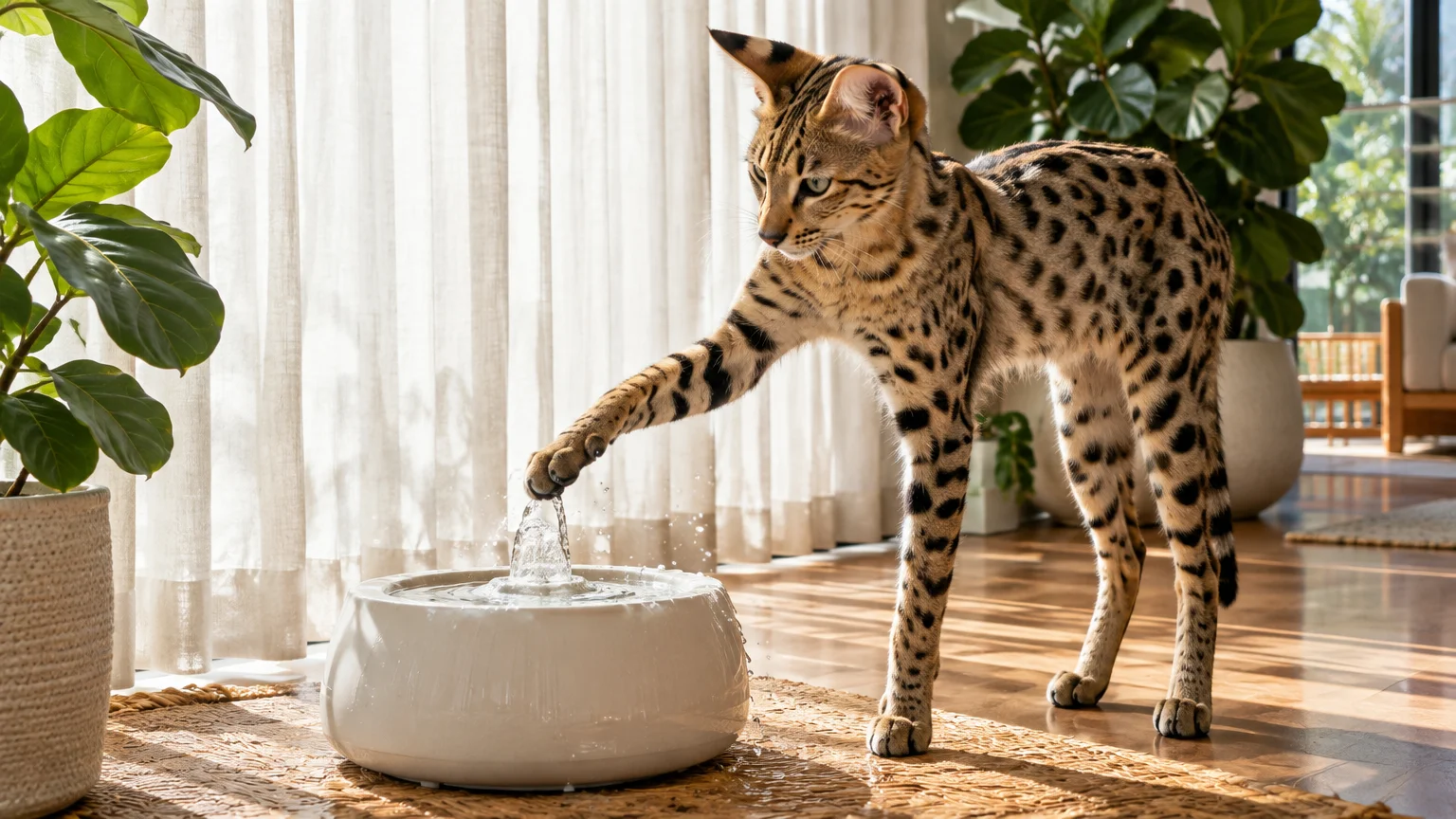
04 The Savannah Cat: African Serval Curiosity Unleashed
Created by crossing domestic cats with the African serval, the Savannah cat possesses an athletic build and boundless physical energy.
Wild servals hunt frequently along marshy wetlands, passing this instinctive aquatic curiosity down to modern domestic Savannah lineages.
TICA officially granted the Savannah cat full championship breed status in 2012.
These towering, spotted cats delight in submerging their heads under running faucets and splashing around inside shallow plastic wading pools.
Ownership laws are strict: Georgia, Hawaii, Nebraska, and Rhode Island ban Savannah cats entirely, as do major cities like Seattle and New York City.
States such as Alaska, Colorado, Iowa, Massachusetts, and Vermont permit only F4 generations or later; New York State mandates F5 or later.
Prices vary by generation: early generations (F1–F3) cost between $4,000 and $20,000+, while domestic generations (F4–F8) typically average $1,500 to $4,000.
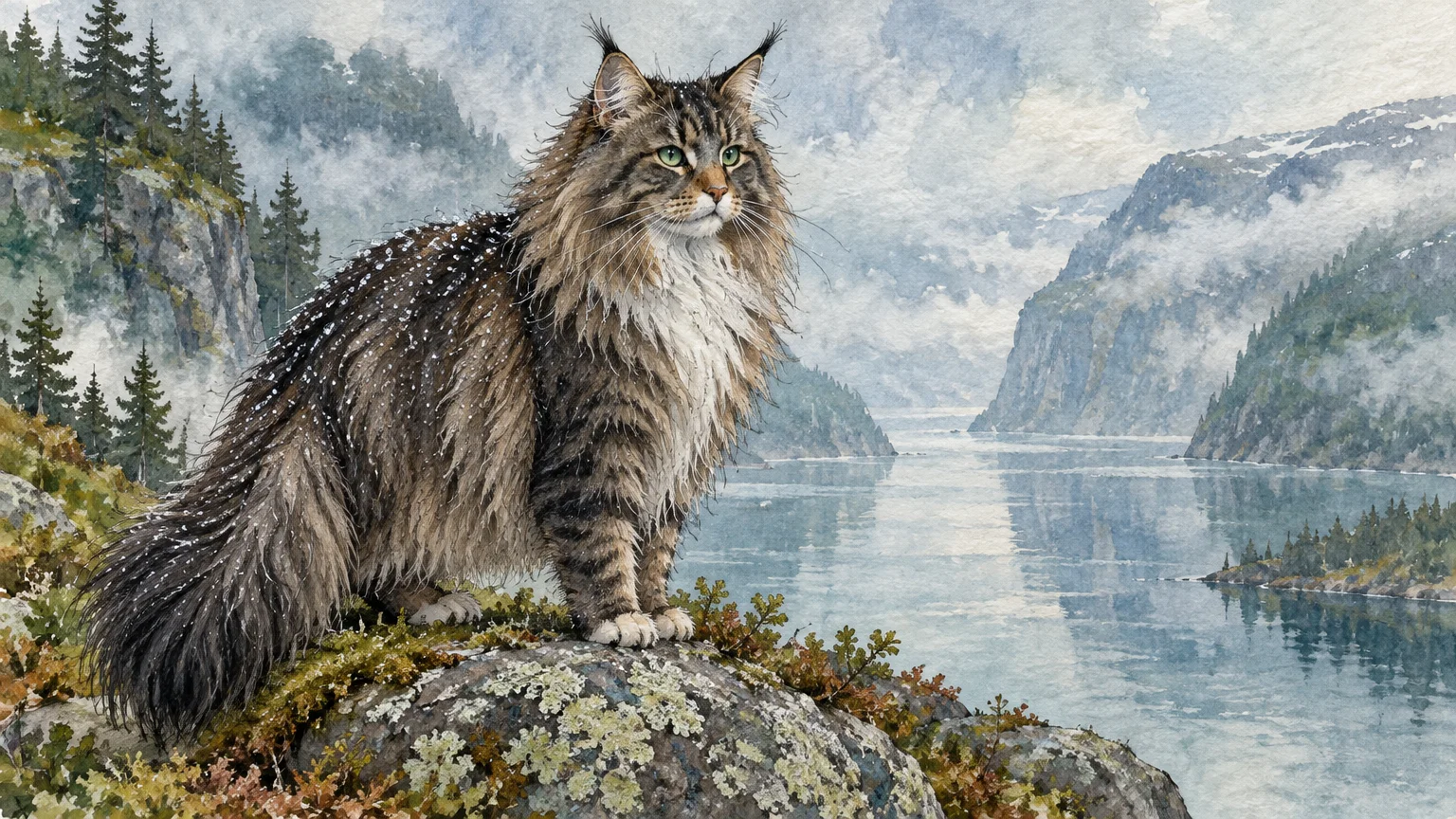
05 The Norwegian Forest Cat: Resilient Fjord Explorers
Known affectionately as the “Wegie,” this ancient Scandinavian breed accompanied Norse explorers across cold, storm-swept sea routes.
Surviving in wild Scandinavian forests for centuries required a heavy barrier against damp, freezing alpine air.
The Norwegian Forest Cat boasts a thick, insulating undercoat shielded by a coarse, water-repellent topcoat.
Because moisture beads up and runs off their outer guard hairs, these cats rarely mind passing rain showers or soggy outdoor ground.
You will often observe them swiping inquisitively at running garden hoses or inspecting fresh puddles on an outdoor patio enclosure.
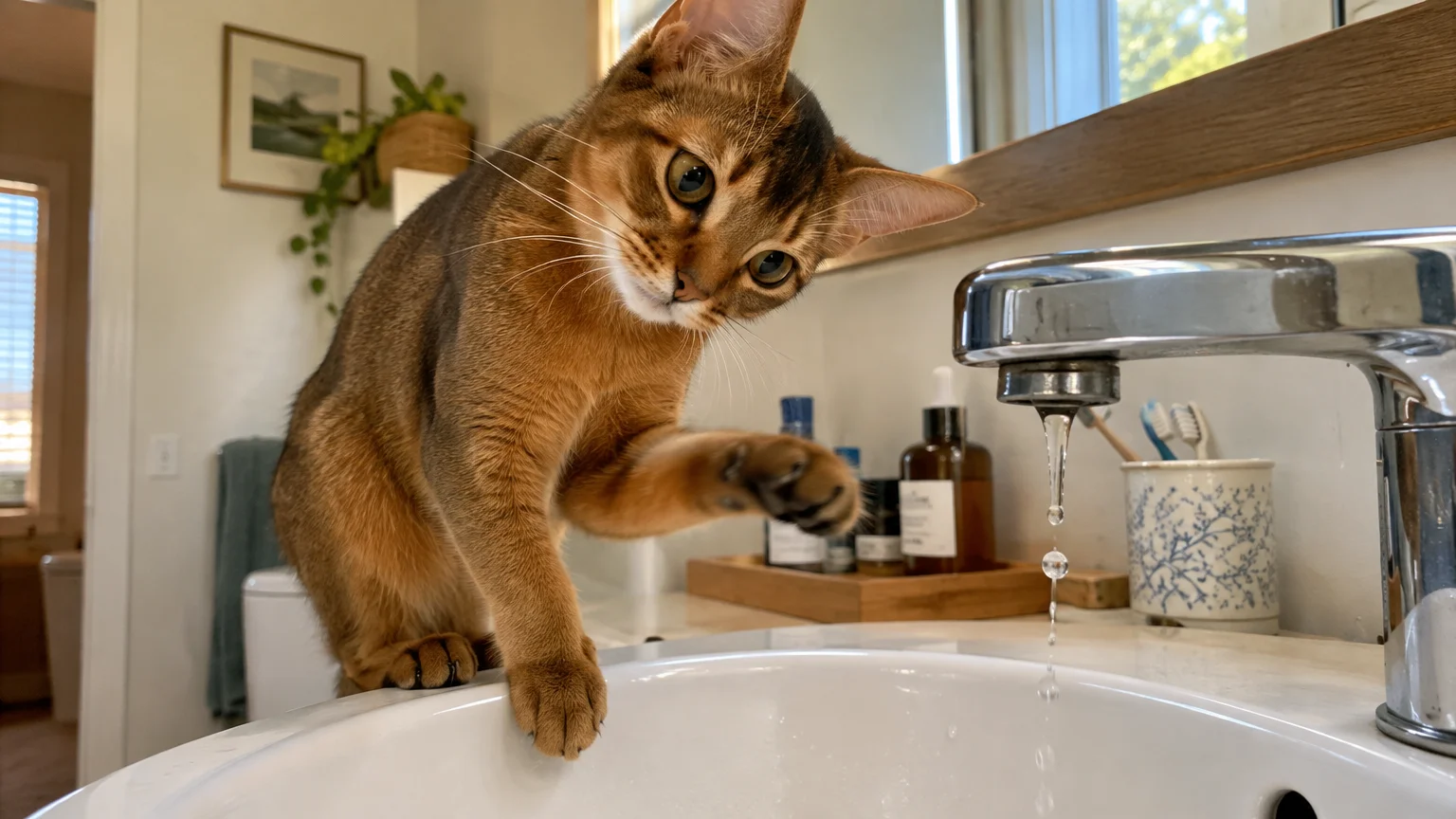
06 The Abyssinian: Playful Jesters Drawn to the Sink
While Abyssinians lack specialized waterproof coats, their relentless intelligence drives them toward anything that moves—including flowing water.
These slender, ticked-coated athletes routinely balance on sink edges to swat at dripping kitchen faucets.
An Abyssinian will happily submerge its paws, tip over stationary water bowls, and watch the resulting ripples with intense focus.
Their curiosity centers on dynamic motion; a bubbling pet fountain provides hours of essential mental stimulation for this high-energy breed.
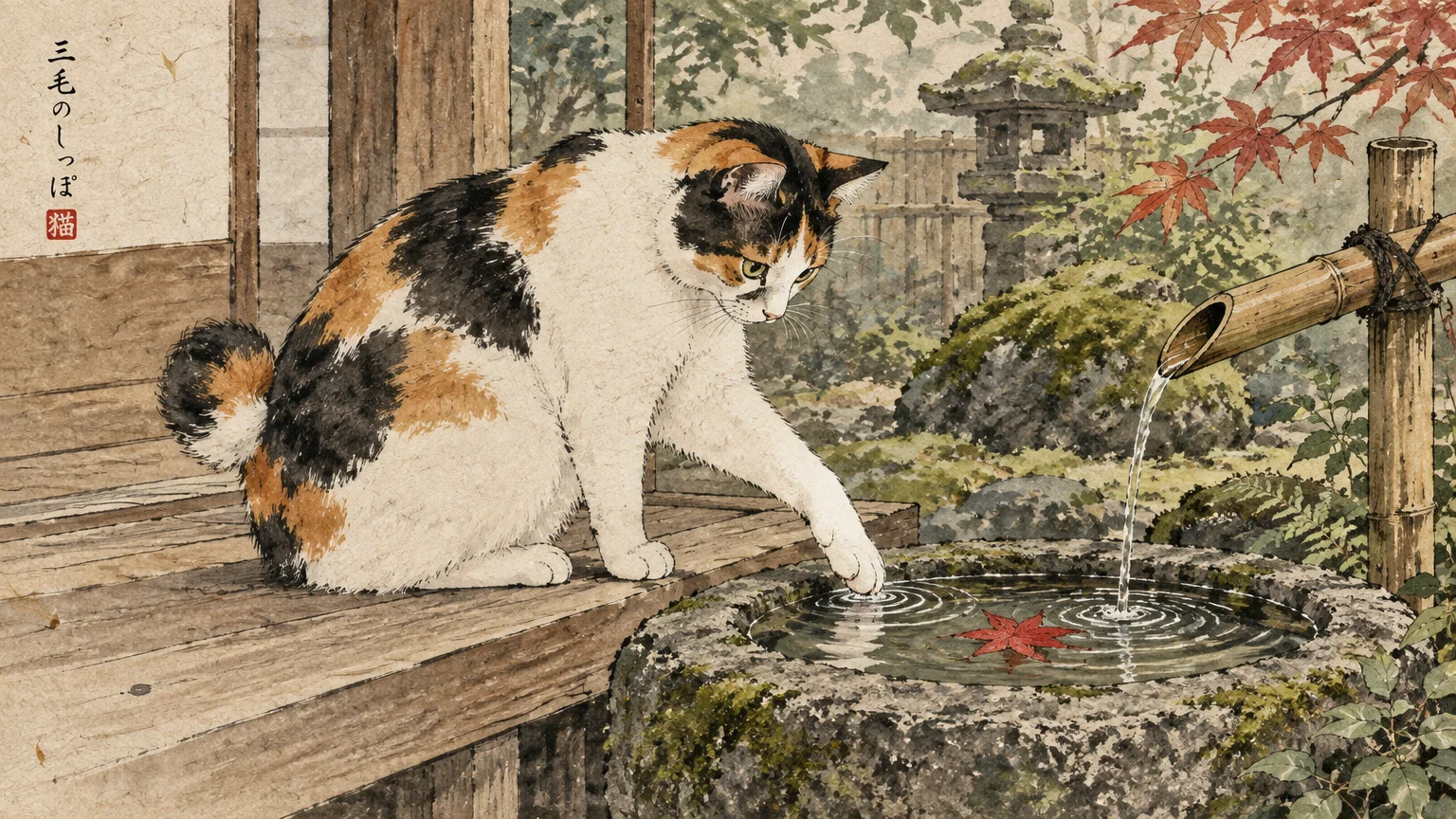
07 The Japanese Bobtail: Centuries of East Asian Curiosity
Renowned for centuries across Japan and featured prominently in traditional folklore, the Japanese Bobtail exhibits a bold, inquisitive personality.
These spirited felines love dipping their forepaws into decorative indoor fountains, shallow basins, and full bathtubs.
They frequently carry small plush toys directly to their water bowl and submerge them before proudly retrieving them.
Their silky, water-resistant coat lacks a dense downy undercoat, which makes grooming after a splash session quick and effortless.
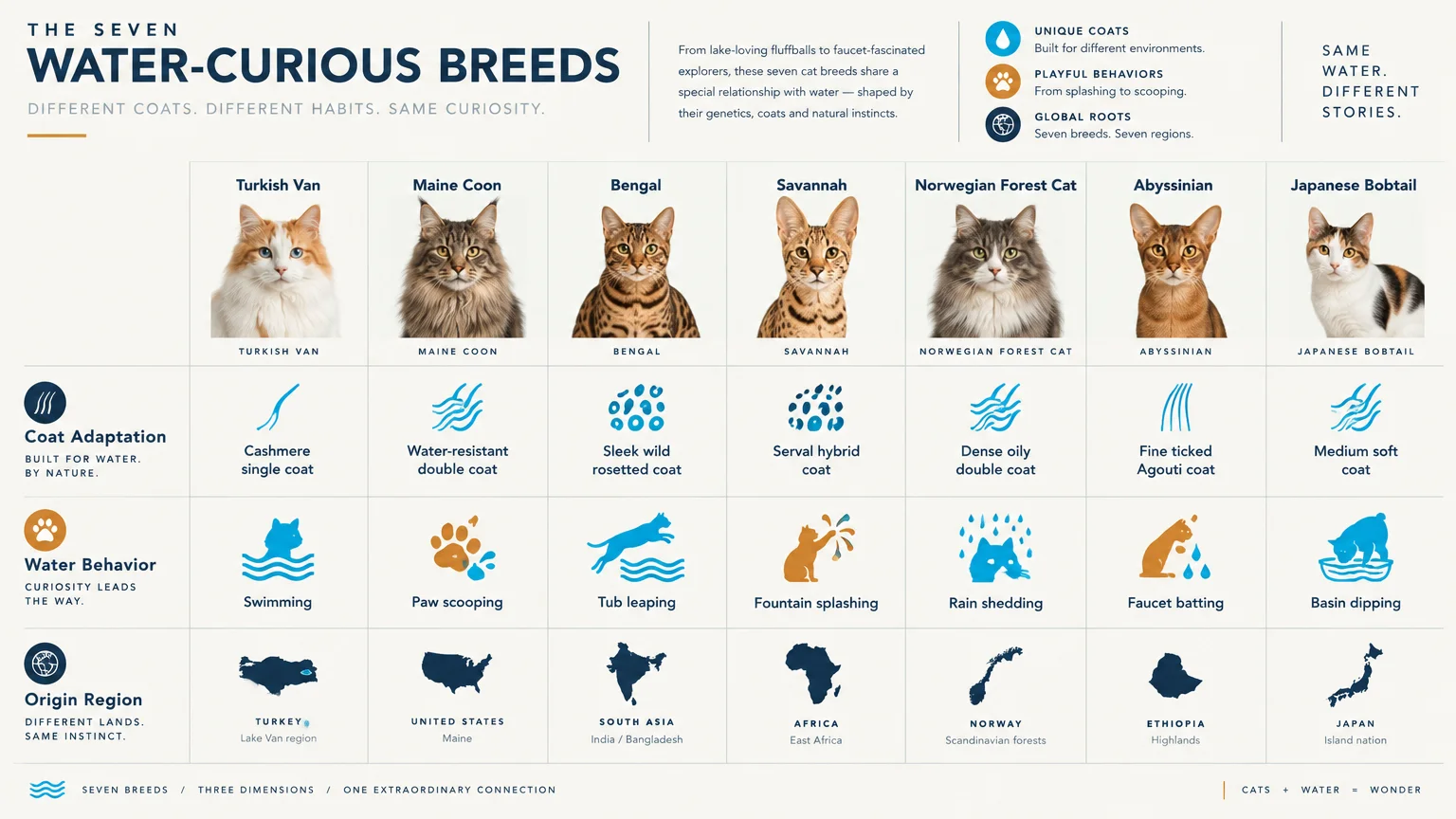
Breed Comparison: Water Traits and Adaptations
Comparing physical traits and legal considerations side-by-side helps clarify which water-curious companion suits your lifestyle.
| Breed | Coat Adaptation | Primary Water Behavior | Legal or Recognition Status |
|---|---|---|---|
| Turkish Van | Single cashmere coat; water-repellent | Swimming, bathtub wading, sink play | CFA Championship (1994) |
| Maine Coon | Dense double coat; oily guard hairs | Paw-dipping, bowl raking, shower curiosity | #2 Most Popular CFA Breed |
| Bengal | Short pelt; wild hybrid heritage | Leaping into baths, sink splashing | Banned in NYC and Hawaii |
| Savannah Cat | Short, coarse coat; serval ancestry | Head dunking, pool wading, tap play | State-by-state filial bans apply |
| Norwegian Forest Cat | Thick double coat; woolly undercoat | Puddle exploration, outdoor hose swatting | Fully recognized purebred |
| Abyssinian | Fine, short ticked coat | Batting at running faucets, splashing | Fully recognized purebred |
| Japanese Bobtail | Silky single coat; low undercoat | Toy dunking, paw scooping | Fully recognized purebred |
What Can Go Wrong: Managing Feline Water Hazards
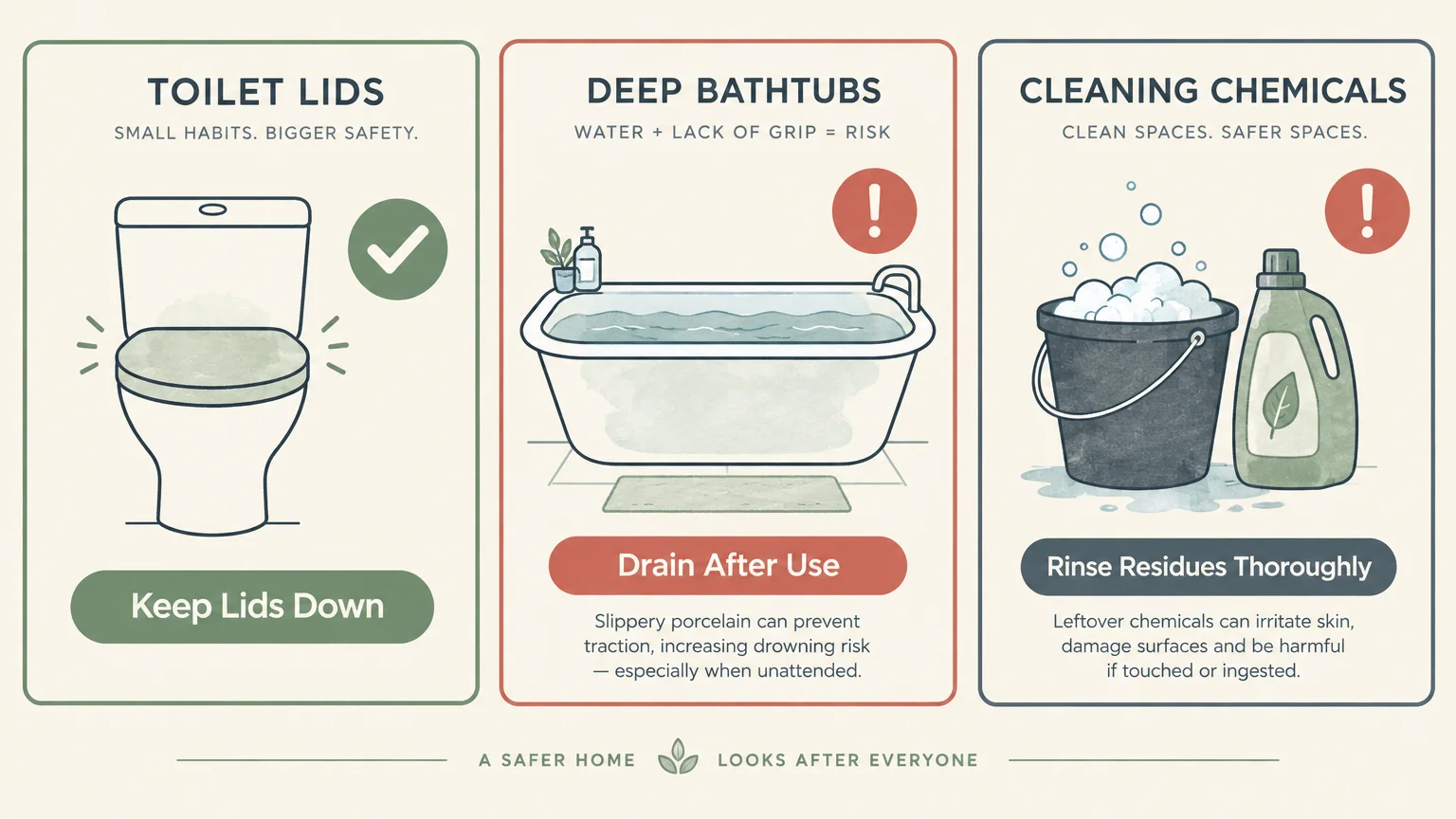
Even an eager feline swimmer faces substantial physical dangers when exposed to domestic water sources without proper safety protocols.
1. Submersion panic and drowning hazards: Open toilet lids and full bathtubs present lethal hazards if an adventurous cat falls in and panics.
Keep toilet lids firmly closed and never fill a recreational play basin deeper than your cat’s standing belly height.
2. Hypothermia and thermal shock: Felines maintain a baseline internal body temperature between 100.5°F and 102.5°F.
According to veterinary guidance from the Cornell Feline Health Center, sudden exposure to cold water triggers rapid core hypothermia.
Always keep recreational play water lukewarm—between 100°F and 102°F—to prevent thermal shock.
3. Toxic chemical ingestion: Cats groom their fur immediately after getting wet, ingesting any bath salts, bubble soaps, or bleach residues left behind.
Rinse your pet thoroughly with clear, fresh water if they ever come into direct contact with treated bathroom surfaces.
4. Chronic ear canal infections: Trapped moisture inside feline ears creates an ideal breeding ground for harmful yeast and bacterial infections.
Gently blot the entrance of your cat’s ears with a dry microfiber cloth after any vigorous splashing session.
Safe Ways to Encourage Your Cat’s Water Curiosity
You do not need to submerge an entire cat to satisfy their natural curiosity about flowing water.
Simple household modifications provide rewarding sensory enrichment without stressing your cat’s nervous system or chilling their body.
- Install a recirculating stainless-steel fountain to encourage hydration and safe paw-tapping.
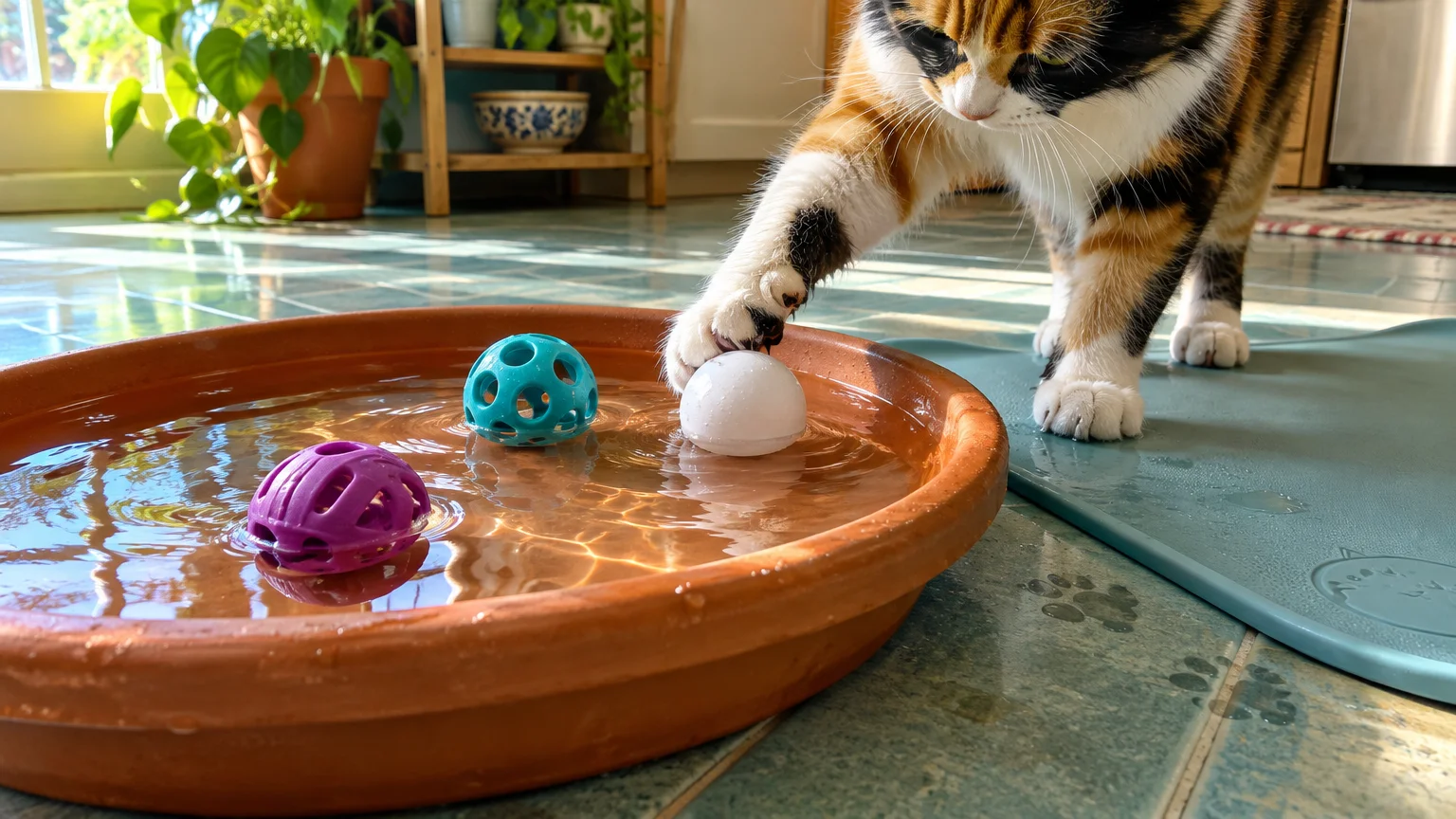
- Float lightweight plastic balls or robotic swimming fish inside a shallow baking pan filled with one inch of warm water.
- Allow a bathroom sink faucet to run at a slow trickle while you brush your teeth.
- Place non-slip silicone mats beneath all water bowls to prevent spills when enthusiastic diggers splash.
Always supervise your pet during water play and ensure they have an unobstructed exit path away from the moisture.
Frequently Asked Questions About Cats and Water
Can you teach any domestic cat to swim?
You should never force any cat into water; forced submersion induces extreme panic, trauma, and potential hypothermia.
Aquatic curiosity must develop entirely on your cat’s terms through voluntary exploration and calm, positive reinforcement.
Why do cats drop toys into their water dishes?
Felines view their feeding and drinking station as a secure core territory; dropping prized “prey” there mirrors natural caching instincts.
Some cats also enjoy batting waterlogged toys across slick floors to observe how moisture alters the toy’s weight and movement.
How often should you bathe a water-loving cat?
Most healthy domestic cats groom themselves meticulously and do not require routine soap-and-water baths.
Reserve full wash sessions for moments when your cat contacts sticky, greasy, or toxic substances that grooming cannot resolve.
Why does your cat scratch the floor before drinking?
Cats struggle to focus their vision on objects closer than ten inches, making still water surfaces difficult to see.
Scratching or pawing creates visible surface ripples, which helps your cat accurately gauge the water level before lapping.
Encouraging Safe Feline Enrichment
Watching a cat splash joyfully in a sink expands your appreciation of natural feline intelligence and diversity.
By tailoring your home environment to your pet’s physical traits, you keep aquatic exploration rewarding, sanitary, and completely safe.
This is general informational content based on widely accepted guidance; individual results vary. Verify current details—rules, prices, eligibility, regulations—with official sources before making important decisions.
Last updated: May 2026. Rules, prices, and details change—verify current information with official sources before acting on it.