Living under the same roof without hissing does not mean your cats are best friends; in many multi-cat homes, felines simply practice polite avoidance and territory sharing.
Determining whether your cats share a genuine social bond or merely tolerate each other comes down to subtle feline body language and evolutionary social habits.
While wild felids are largely solitary hunters, domestic cats can form deep, cooperative social groups when environmental conditions and temperaments align. Recognizing true feline friendship helps you evaluate your pets’ emotional well-being and identify whether your household enjoys true harmony or just quiet coexistence.
Here are seven clear, science-backed signs that your cats are genuine companions.
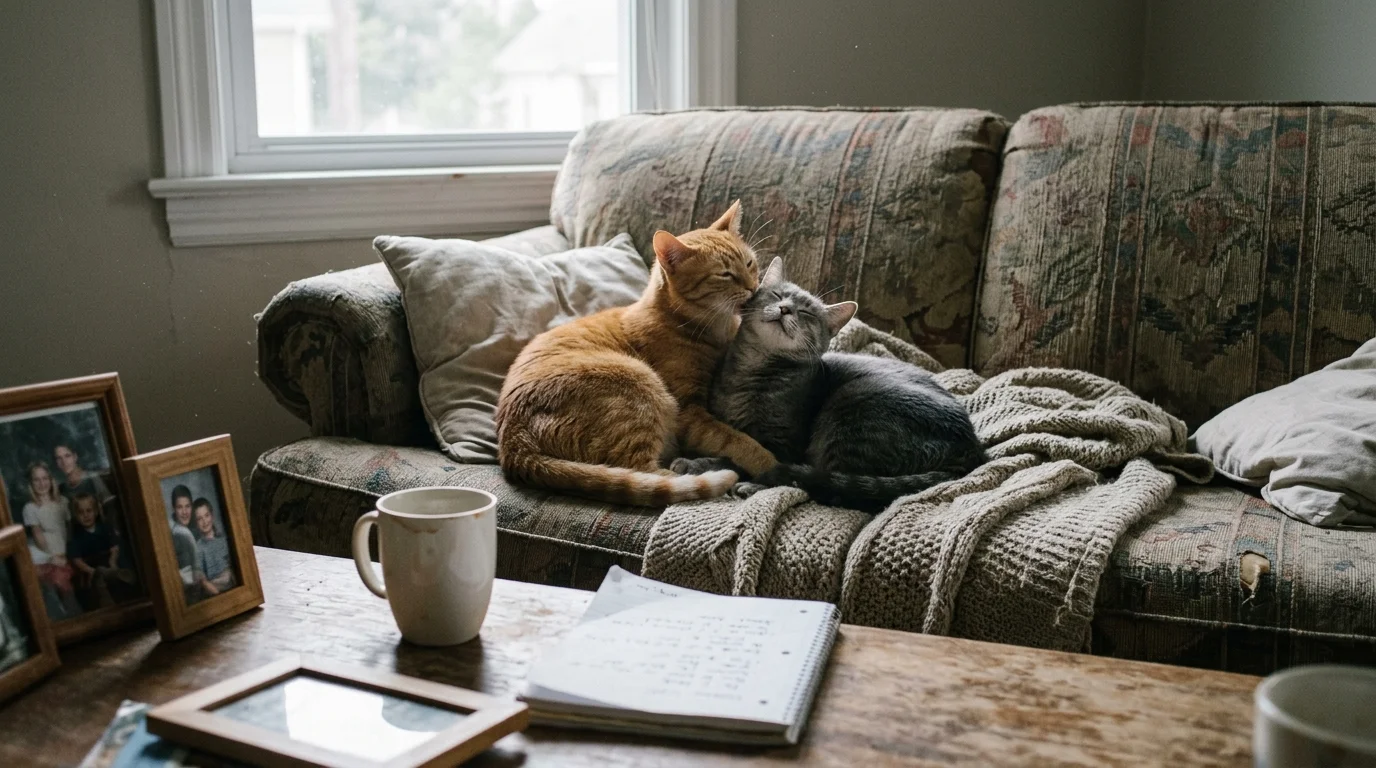
Understanding Feline Social Dynamics: Tolerance vs. True Bonding
Domestic cats (Felis catus) descend from the African wildcat (Felis lybica), a solitary predator that maintained expansive, solitary territories. Domestication altered this social blueprint, allowing cats to develop facultative sociality; they can live alone or form matrilineal social groups when food resources are plentiful.
In modern homes, however, humans choose which cats live together. This dynamic often forces unrelated felines to share finite living spaces.
Feline behavioral biologists classify multi-cat relationships into two primary categories: peaceful coexistence (tolerance) and preferred associate status (bonding). Coexisting cats partition their territory by time and space.
Cat A might use the sunny living room rug from 9:00 AM to 1:00 PM, while Cat B takes over the spot in the late afternoon. They avoid active conflict, but they do not seek out interaction.
Conversely, bonded pairs actively choose each other’s company, share scent profiles, and engage in cooperative social rituals.
According to clinical behavior guidelines from International Cat Care, misinterpreting passive avoidance as friendship can cause owners to overlook subtle, chronic stress in multi-cat households. Recognizing the definitive markers of friendship allows you to support your cats’ social health effectively.
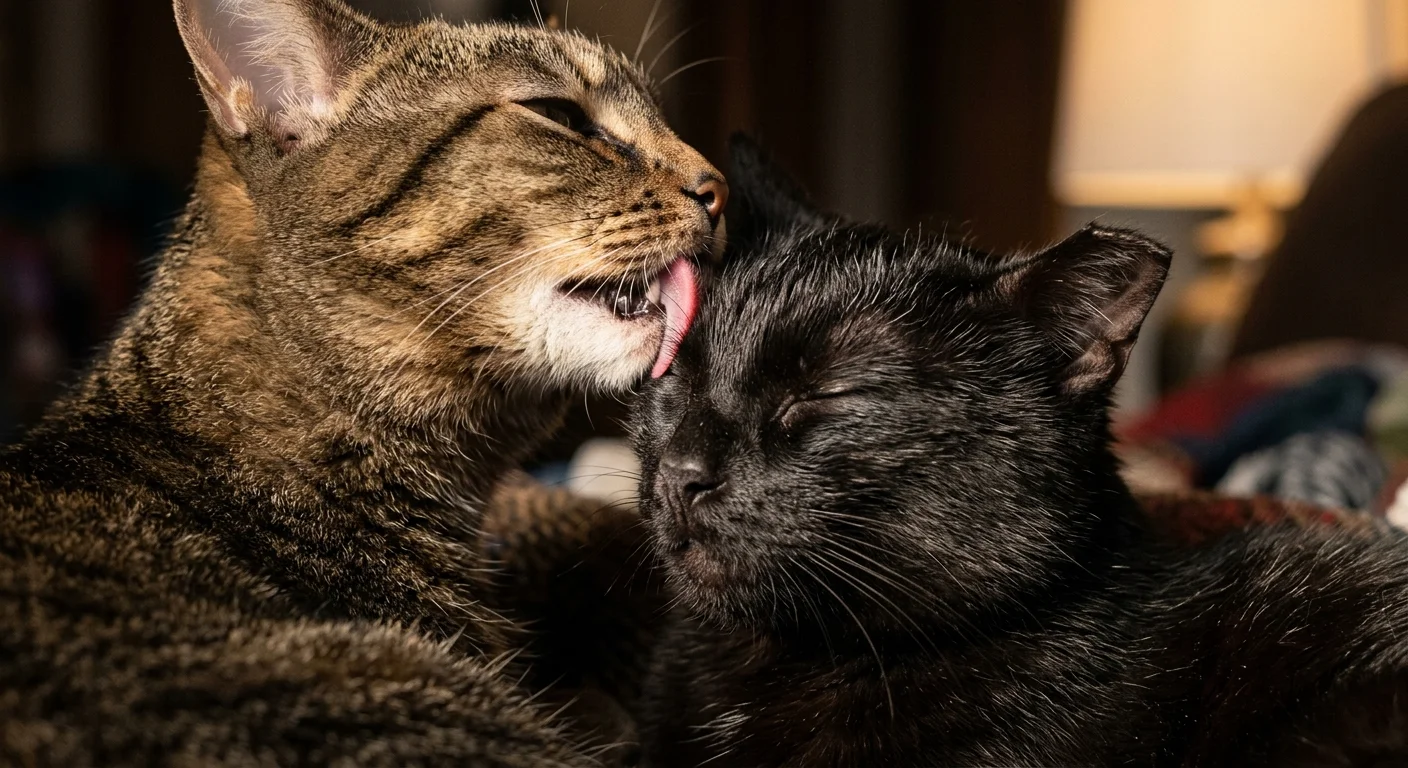
01 Mutual Grooming (Allogrooming) on the Head and Neck
While self-grooming (autogrooming) occupies roughly 30 to 50 percent of a cat’s waking hours, grooming another cat—known as allogrooming—serves an exclusively social purpose.
Cats direct allogrooming toward areas the recipient cannot reach with their own tongue, predominantly the top of the head, behind the ears, cheeks, and neck.
Allogrooming accomplishes several critical social tasks:
- Scent Blending: It mixes saliva, skin oils, and individual scents to create a shared “colony odor,” reinforcing a collective group identity.
- Endorphin Release: Repetitive licking in hard-to-reach areas lowers heart rates and triggers calming neurotransmitters in both the groomer and the recipient.
- Affiliative Reassurance: It confirms social stability and mutual acceptance without aggression.
Watch for body posture during grooming sessions. Genuine friendship features relaxed, soft eyes, purring, and receptive tilting of the head.
If allogrooming looks tense, rigid, or suddenly turns into aggressive biting and chasing after three seconds, the behavior may represent displacement grooming or a mild assertion of control rather than pure affection.
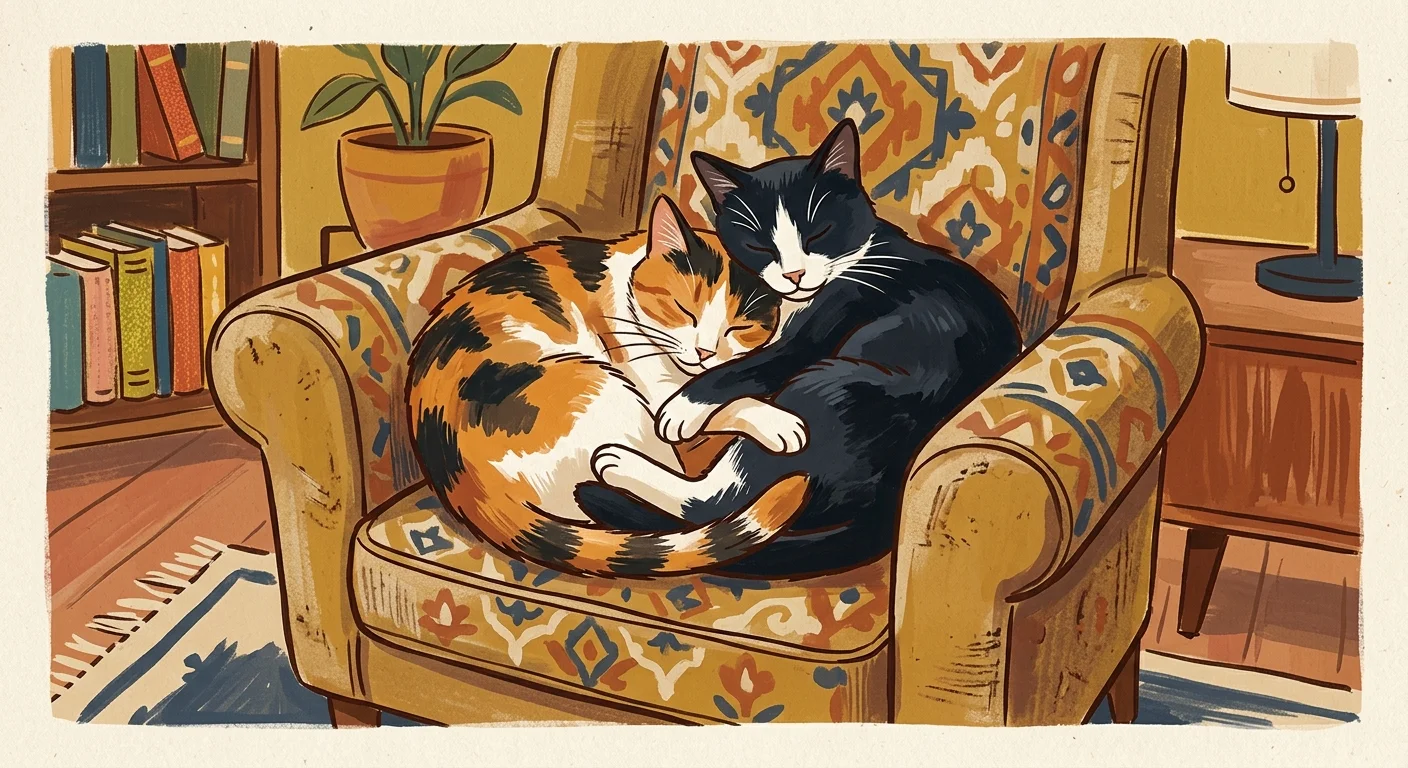
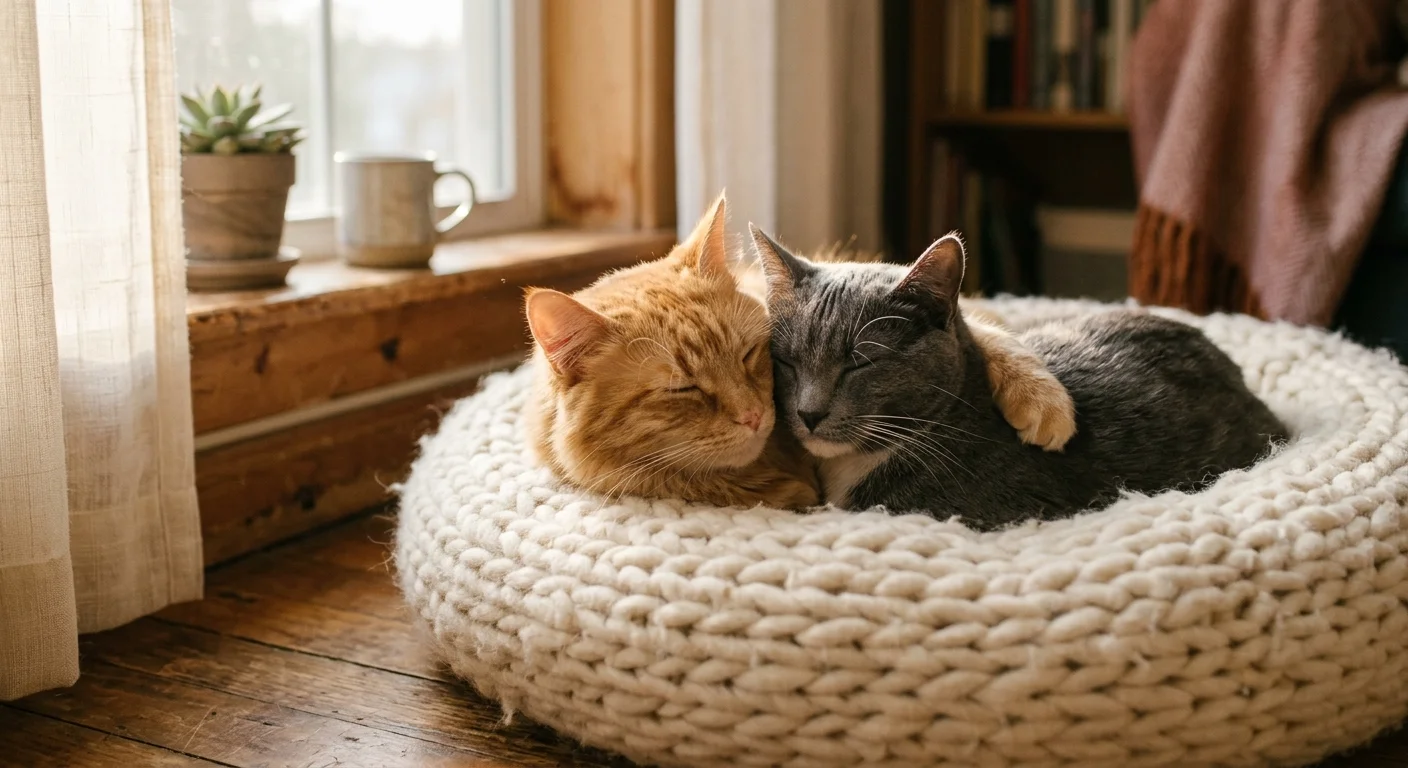
02 Sleeping in Direct Physical Contact (“Pillowing”)
Cats spend 12 to 16 hours a day sleeping, and sleep represents their most vulnerable biological state. A cat will never voluntarily fall into deep, rapid eye movement (REM) sleep next to an individual they distrust.
Notice how your cats arrange themselves during rest:
- The “Fur Pretzel”: Two cats sleeping tightly curled together, limbs entwined, or resting their chins directly on the other’s body (“pillowing”).
- Back-to-Back Contact: Lying with their spines pressed firmly against one another, covering each other’s blind spots.
Context matters when evaluating sleeping habits. If your cats lie two feet apart on a narrow heating vent in mid-winter, they are simply sharing an irresistible heat source.
True feline friends choose to cuddle on broad couches, wide beds, or expansive floor areas where they have plenty of room to sleep separately but deliberately pick physical contact.
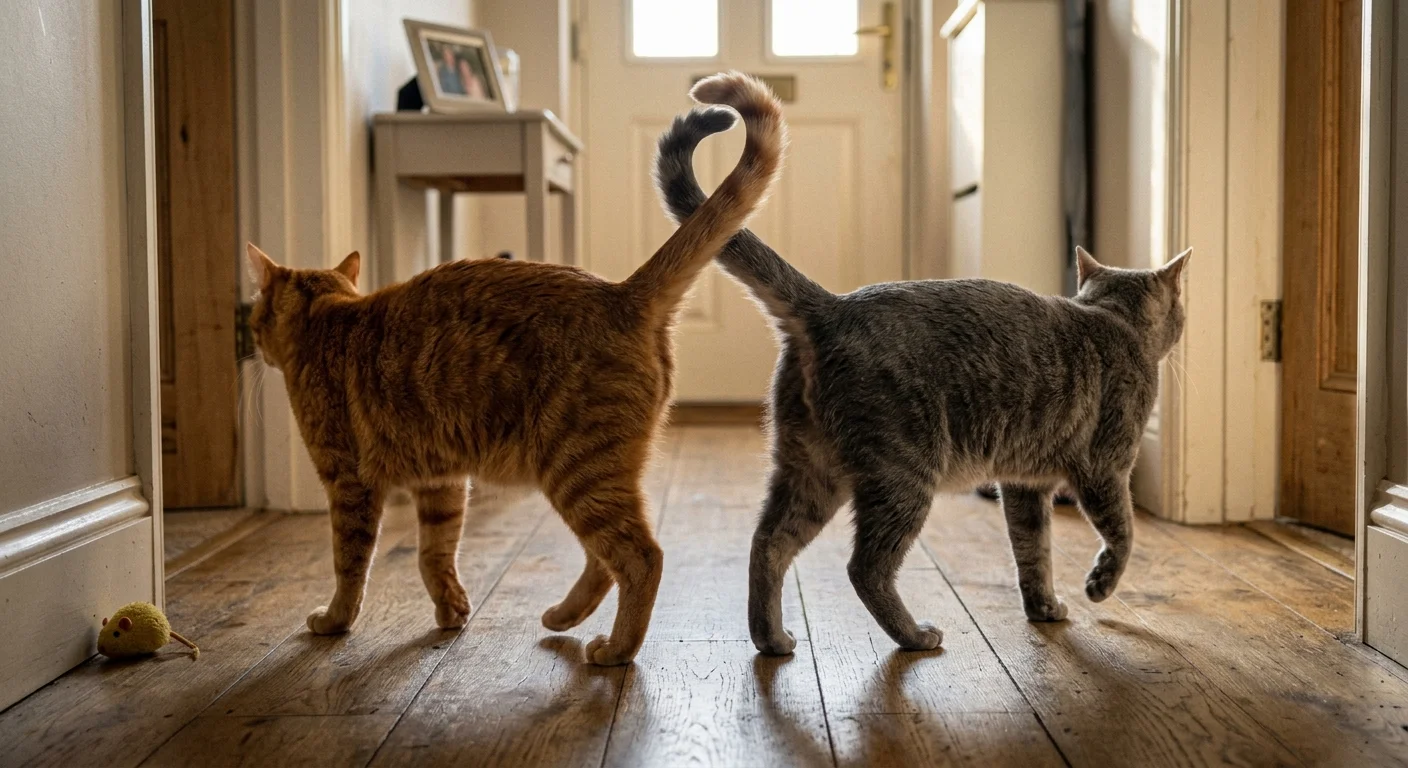
03 Scent Blending Through Allorubbing and Tail Intertwining
Cats communicate heavily through pheromones secreted by specialized sebaceous glands located on their lips, chin, temporal regions (between eye and ear), paw pads, and tail base.
When two cats walk up to each other and rub their heads, cheeks, and flanks together, they are engaging in allorubbing.
Research published by the Cornell Feline Health Center underscores the importance of tactile pheromone exchange in reducing social tension among group-living felines.
When cats rub their bodies together, they create a uniform olfactory signature that identifies both individuals as safe members of the same social unit.
The highest confirmation of this bond occurs at the tail. Bonded cats often approach each other with high tails, lightly wrap their tails together, or drape a tail over the other cat’s back.
This gesture is the feline behavioral equivalent of walking with your arm around a close friend’s shoulder.
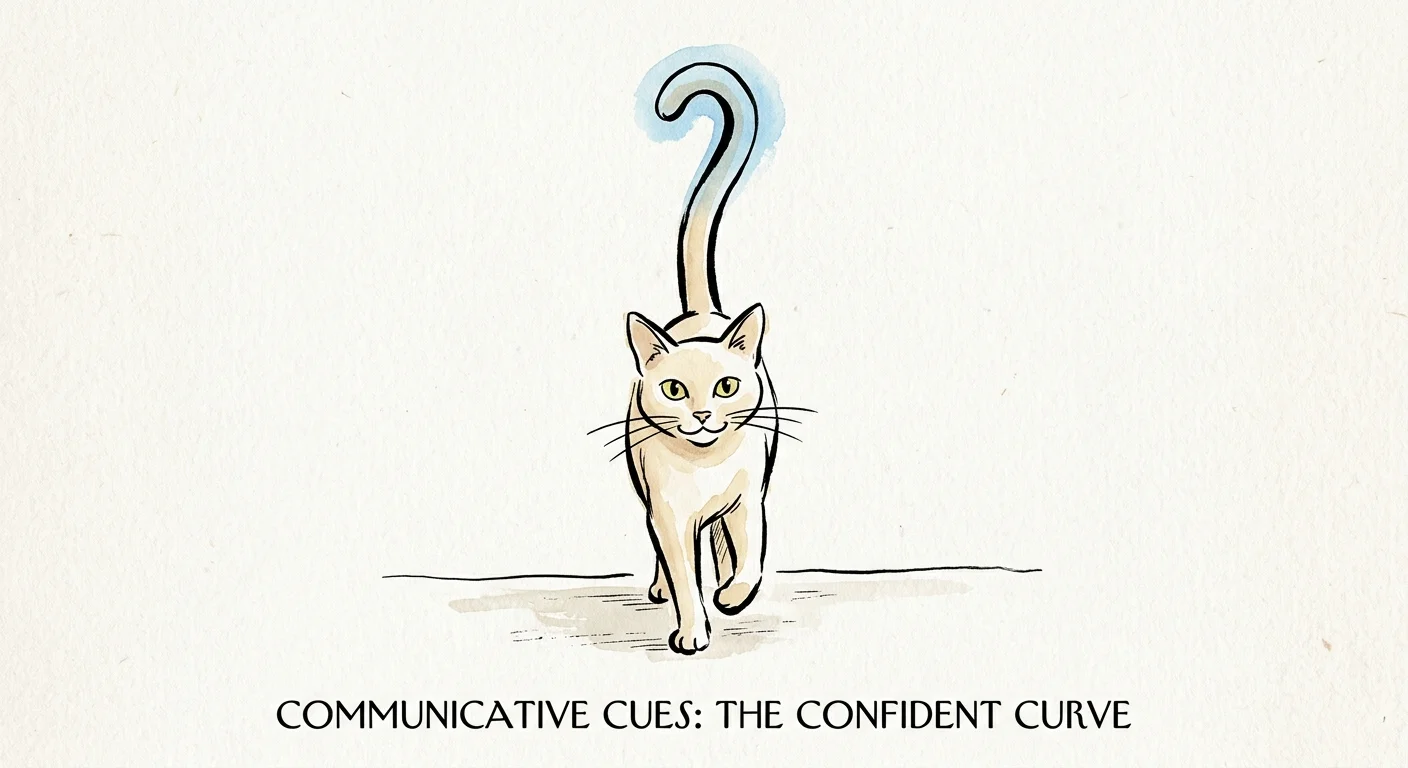
04 The “Tail-Up” Greeting with a Question Mark Curve
A cat’s tail acts as a social barometer. When two cats cross paths in a hallway or meet after spending hours in different rooms, observe their tail positions immediately before they make contact.
A vertical, upright tail signals friendly, non-threatening intentions. If the tip of that upright tail carries a slight forward curve—resembling a question mark—it serves as an explicit invitation for social engagement and peaceful inspection.
When both cats display this posture simultaneously, they confirm mutual comfort and clear communication.
In contrast, cats that merely tolerate each other often pass with neutral, horizontal, or slightly tucked tails, avoiding direct visual contact and maintaining a brisk, businesslike walking pace.
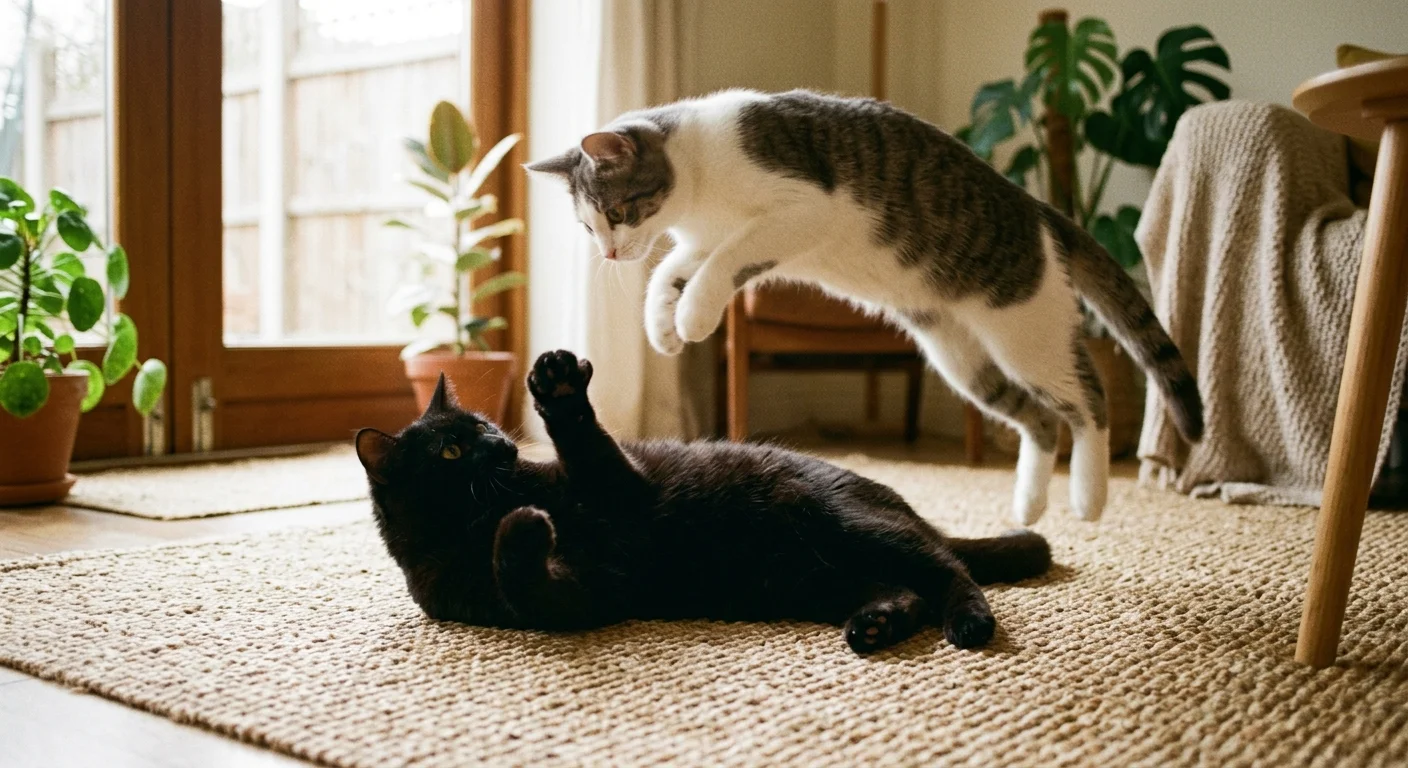
05 Reciprocal, Low-Stress Play Sessions
Play fighting and real fighting can look strikingly similar to human observers, but several behavioral rules separate fun from hostility. In a healthy friendship, play fighting includes:
- Role Reversal: Cat A chases Cat B under the table; thirty seconds later, Cat B turns around and chases Cat A into the living room. Neither cat remains permanently trapped as the target.
- Self-Handicapping: A larger or stronger cat deliberately moderates its bite force and wrestling strength, often exposing its belly without engaging its back claws aggressively.
- Loose, Bouncy Movements: Bodies remain supple rather than stiff and arched.
- Consensual Pauses: Both cats will pause mid-wrestle, shake themselves off, groom a paw for two seconds, and smoothly resume playing without tension.
Real aggression features pinned-back ears, dilated pupils, rigid tail lashing, guttural growls, loud screeching, unsheathed claws that draw blood, and one cat attempting desperately to flee and hide.
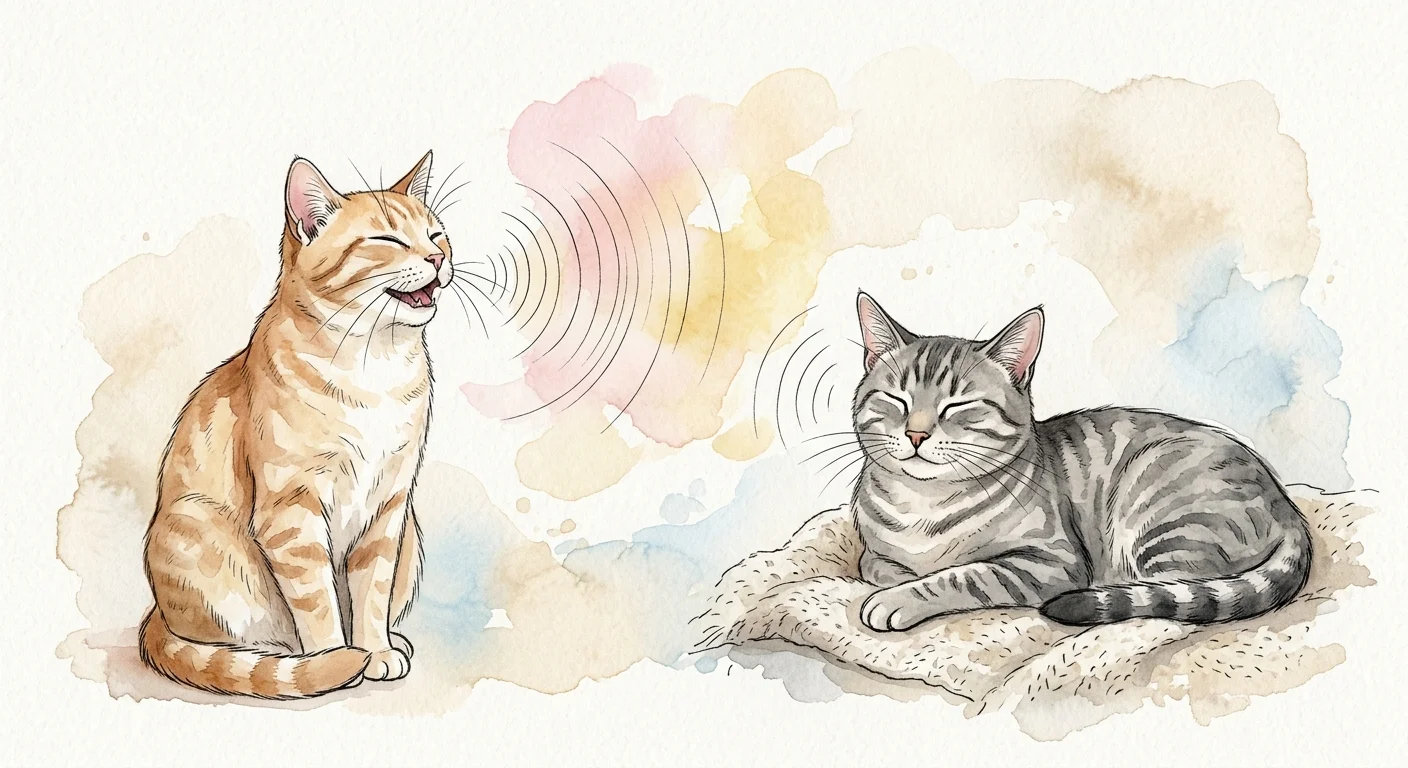
06 Soft Vocalizations: Trilling and Chirping
Adult domestic cats rarely meow at other adult cats; they reserve classical meows almost entirely for communication with humans. Between felines, social vocalizations are much softer and more nuanced.
Bonded cats frequently exchange trills, chirps, and soft, low-frequency purrs when greeting each other or moving into the same room.
A trill—a rolling, melodic sound produced with the mouth closed—functions as a friendly acknowledgment, often translated as “I am here, and I am friendly.” Hearing your cats exchange quiet trills as they pass each other on the stairs indicates genuine companionship and mutual goodwill.
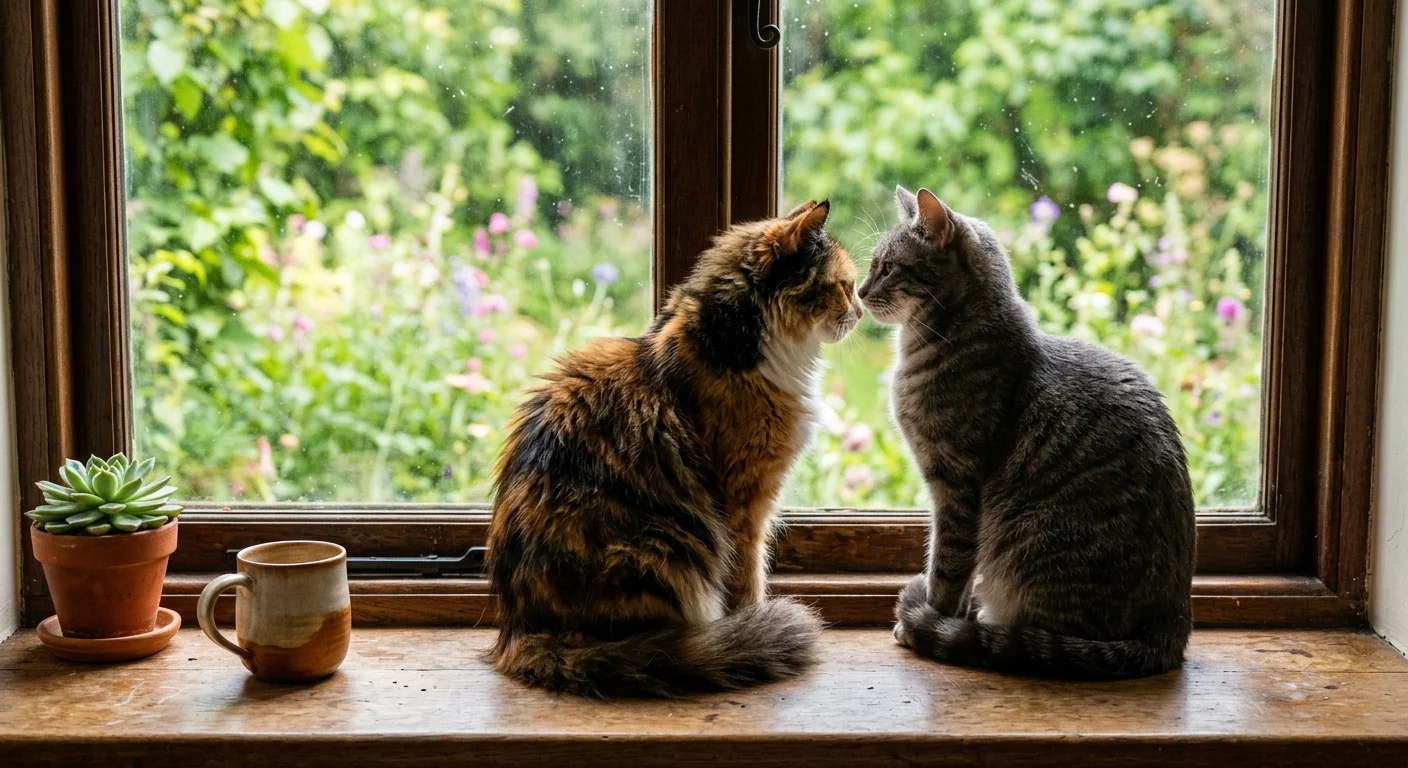
07 Choosing Voluntary Proximity and Coordinated Exploring
Animal behaviorists define a cat’s “preferred associate distance” as the physical space a cat voluntarily maintains between itself and another individual.
In large homes with multiple rooms, a cat that merely tolerates housemates will maximize distance, frequently staying 10 to 20 feet away or remaining in an entirely different zone.
Bonded cats routinely choose to stay within one to three feet of each other, even when the rest of the house sits completely empty. They participate in coordinated daily routines:
- Staring out of the same window at garden birds together, side-by-side on the sill.
- Investigating an open closet door or delivered cardboard box as a cooperative team.
- Following each other from room to room as you move through your daily household tasks.
When proximity is consistent, relaxed, and unforced by environmental constraints, your cats are showing that they genuinely value each other’s physical presence.
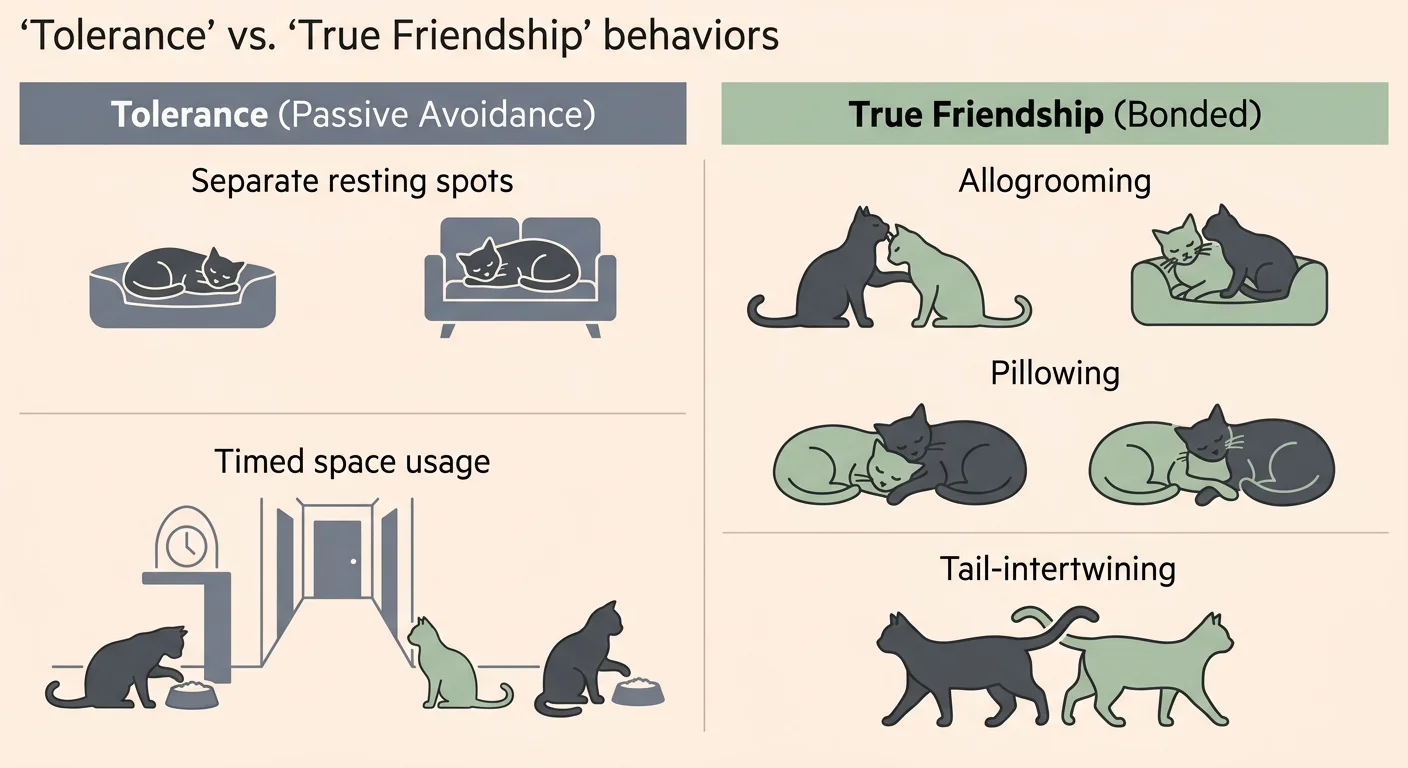
Tolerance vs. True Friendship: Quick Comparison Guide
Use this breakdown to assess where your cats land on the social spectrum:
| Behavioral Category | Tolerating Each Other (Coexistence) | True Friendship (Bonded Pair) |
|---|---|---|
| Sleeping Habits | Sleep in separate rooms or on opposite ends of a room; only share space near high-value resources (heaters, sunny patches). | Sleep touching, entwined, or with chins resting on each other (“pillowing”) across various locations. |
| Greetings | Pass briskly with level tails; avoid direct eye contact; no physical greeting rituals. | Approach with vertical tails (question mark hook), nose-to-nose touches, and soft trills. |
| Scent Exchange | Strictly maintain individual scent; no mutual head-rubbing or flank-rubbing. | Perform allorubbing on cheeks and flanks; intertwine tails to build a collective group scent. |
| Grooming | Self-groom only; grooming the other cat occurs rarely, stays tense, or ends in swatting. | Regularly engage in allogrooming focused on the head, neck, and ears with relaxed posture. |
| Play Dynamics | Do not play together; play attempts by one cat result in hissing, hiding, or defensive strikes. | Engage in reciprocal play with role reversals, inhibited claws/bites, and brief natural pauses. |
| Spatial Proximity | Keep several meters apart; utilize shift-based territory sharing (time-sharing rooms). | Voluntarily remain within 1 to 3 feet of each other; coordinate exploration and resting. |
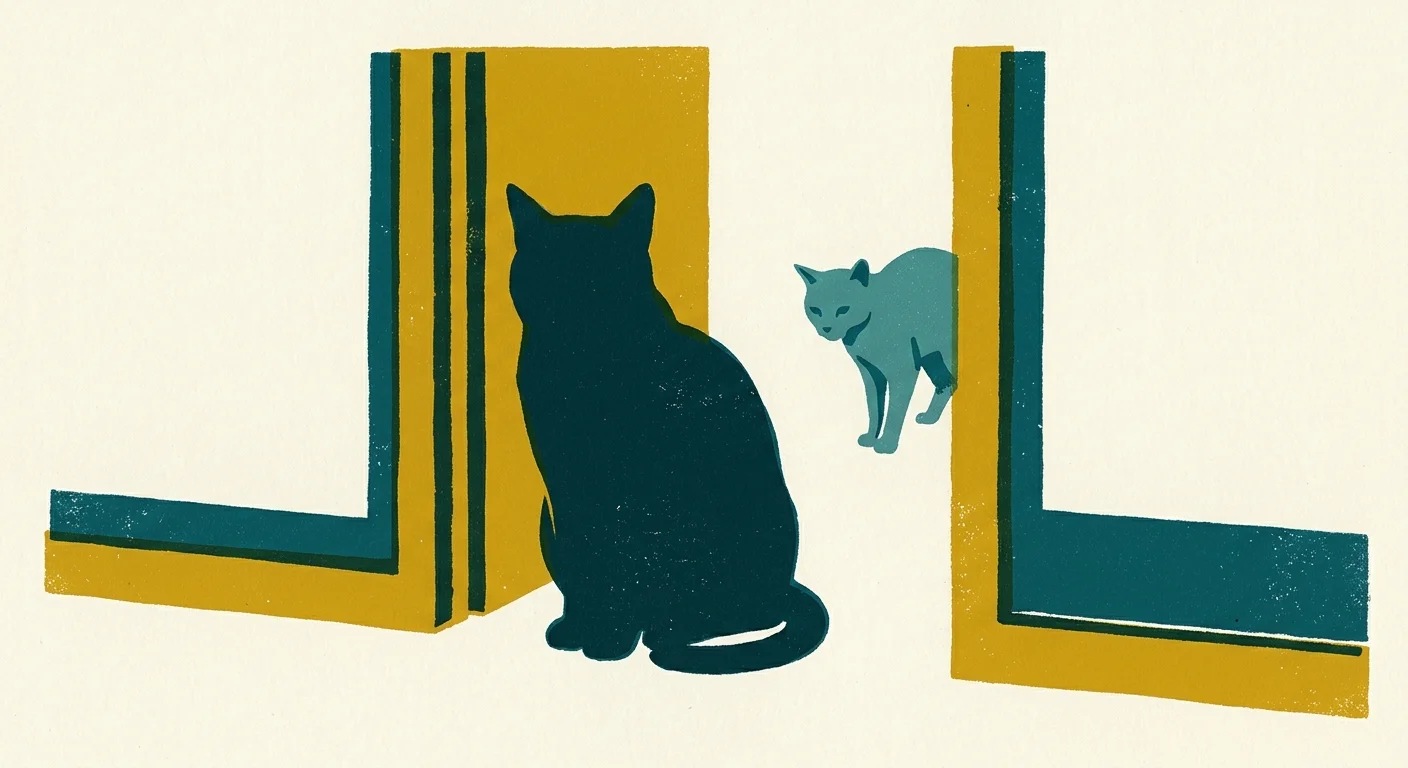
What Can Go Wrong: Misinterpreting Covert Bullying as Friendship
Cats are masters of passive communication, which means feline bullying rarely looks like an explosive, cartoonish brawl. Pet owners frequently misread covert harassment as playful banter or quiet coexistence.
Watch out for these four common pitfalls:
1. Silent Resource Blocking
A dominant or territorial cat will sprawl casually in a narrow doorway, on the stairs, or in front of the litter box room. While the cat looks half-asleep, its posture effectively blocks the other cat from accessing water, food, or elimination areas.
The victim cat will turn around and walk away, which owners often misinterpret as “they just decided to go elsewhere.”
2. The Fixed Stare
Direct, unblinking eye contact in the feline world is an overt threat display. A cat sitting across the room staring intently at a housemate is exerting psychological pressure.
The target cat will crouch, look away, groom nervously, or slink under furniture to escape the intimidating gaze.
3. Dominance Grooming That Escalates
Sometimes allogrooming is weaponized. A cat might stand squarely over a resting cat, hold it down firmly with a forepaw, and lick its head with aggressive, rapid strokes.
If the groomer bites the neck aggressively and pins the other cat down until it squeals or flattens its ears, this is social pressure, not affiliative bonding.
4. Predatory Stalking vs. Mutual Play
If Cat A routinely stalks, ambushes, and corners Cat B, but Cat B never ambushes Cat A in return, they are not playing.
If Cat B hides under beds, crouches with a tucked tail, or shrieks during these interactions, Cat A is treating Cat B as an outlet for unfulfilled predatory drive.

Actionable Steps to Encourage Multi-Cat Harmony
Even if your cats currently fall into the “tolerant coexistence” category, you can actively reduce territorial stress and encourage warmer social interactions using practical environmental adjustments:
- Implement the N+1 Resource Rule: As supported by the ASPCA, provide one resource station per cat plus one extra. If you have two cats, supply three litter boxes, three separate water stations, and three distinct feeding spots located in different rooms to eliminate competitive friction.
- Expand Vertical Real Estate: Cats experience their territory in three dimensions. Installing wall perches, tall cat trees, and wide window shelves allows cats to share the same room comfortably at different vertical elevations without violating personal space bubbles.
- Facilitate Scent Swapping: Rub a soft washcloth around the cheek glands of Cat A, then gently stroke it along the spine and bedding of Cat B, and vice versa. This artificially accelerates the formation of a unified household scent profile.
- Conduct Parallel Interactive Play: Use two separate wand toys (or recruit a family member to help) and engage both cats in energetic play on opposite sides of the same room. Follow the play session immediately with high-value treats or a meal. This pairs the sight of the other cat with dopamine, exercise, and food satisfaction.
Frequently Asked Questions
Can two adult cats who merely tolerate each other ever become close friends?
Yes. While some cats will always prefer polite distance due to differences in age, energy levels, or early socialization, environmental enrichment and reduced competition can shift their relationship over time.
Adding vertical escape routes, separating core resources, and using positive reinforcement during shared activities can gradually build trust and transform cold tolerance into genuine companionship.
Why does one cat groom the other and then suddenly bite?
Allogrooming stimulates sensitive nerve endings in feline skin. If grooming continues for too long or focuses intensely on sensitive spots, sensory overstimulation can occur rapidly.
A sudden nip or swat is often a boundary-setting reflex signaling that the recipient has reached their physical threshold. If both cats disengage without further aggression, this is normal feline communication.
Do bonded pairs need to stay together if one falls ill?
Whenever practical, yes. Separating bonded cats during routine veterinary visits can cause “non-recognition aggression” when the patient returns carrying clinical, unfamiliar hospital odors.
Taking both cats to routine checkups together, or carefully scent-swapping with a familiar blanket before reintroducing them after a veterinary procedure, preserves their shared scent identity and prevents social disruption.
What is the clearest sign that play is turning into a real fight?
Vocalization and ear posture provide the clearest indicators. Playful cats are almost completely silent; genuine fights involve low growling, hissing, or loud yowling.
Furthermore, playing cats keep their ears forward or slightly to the side, while fighting cats pin their ears flat against their skulls to protect them from bites and claws.
Final Thoughts
Feline friendships are subtle, dignified, and built upon deep mutual trust. By learning to distinguish between active avoidance, quiet tolerance, and true bonded companionship, you can better understand your pets’ emotional landscape and craft a living environment that supports their natural instincts.
Celebrate the quiet trills, shared naps, and head-butts—they are your cats’ clearest way of saying they feel completely safe together.
This article provides general information only. Every reader’s situation is different—what works for others may not be the right fit for you.
For personalized guidance on health, legal, or financial matters, consult a qualified professional.
Last updated: May 2026. Rules, prices, and details change—verify current information with official sources before acting on it.