Recognizing whether your cats genuinely enjoy living together or merely tolerate each other comes down to subtle feline body language and daily territorial interactions.
When cats form a bonded social group, they display distinct cooperative behaviors that prove they feel safe, respected, and content in their shared environment.
With roughly 42% of U.S. cat-owning households managing multi-cat families according to the American Pet Products Association, understanding feline social dynamics helps you cultivate a tranquil home.
Looking for verified indicators of harmony allows you to support their emotional well-being, catch subtle friction early, and ensure every feline under your roof enjoys a fulfilling, stress-free life.
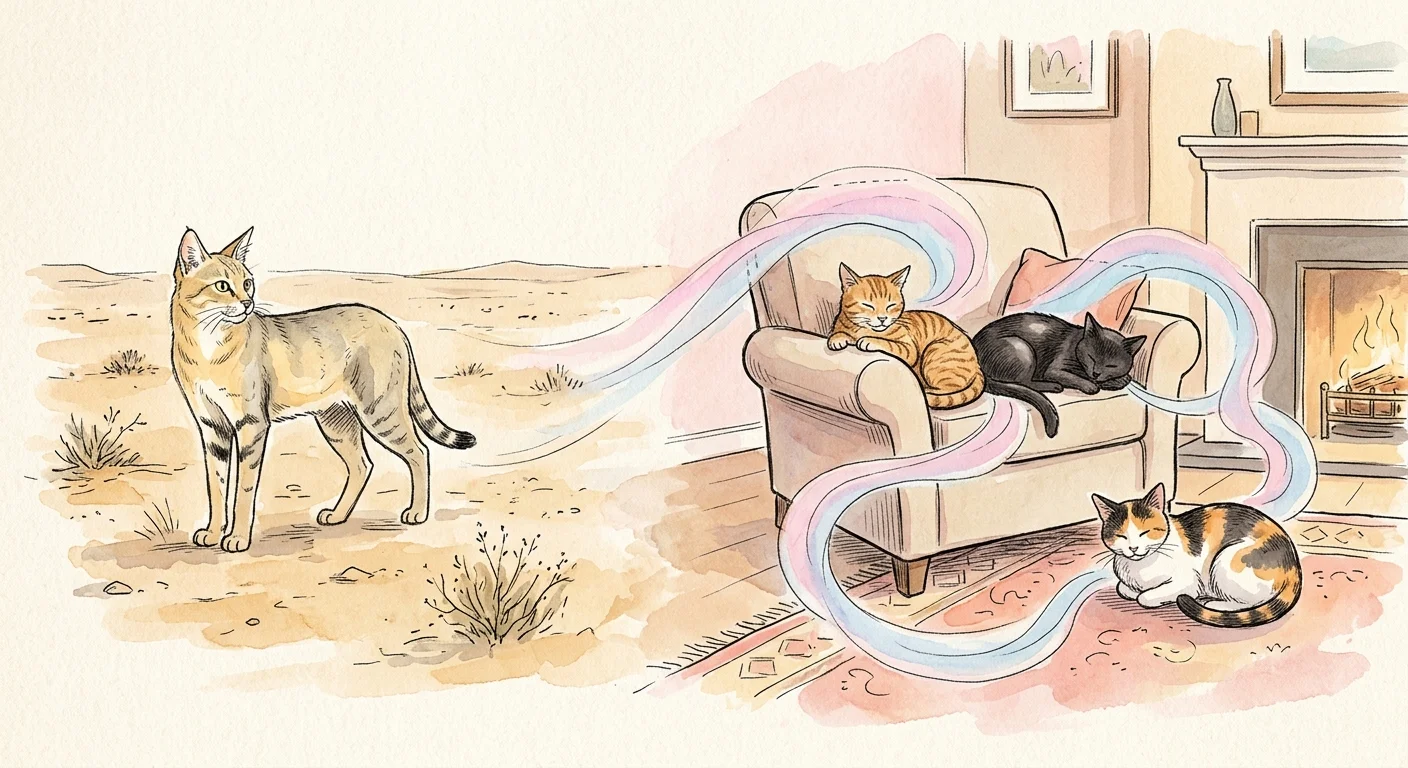
Understanding Feline Social Structure and Colony Dynamics
Domestic cats descend from the African wildcat (Felis lybica), a solitary hunter adapted to defend independent territories. Despite this solitary ancestry, domestic cats possess remarkable social flexibility known in ethology as facultative sociality.
When food, shelter, and territory are abundant, cats readily form complex matriarchal colonies and social alliances.
In a home environment, cats do not organize themselves into rigid linear hierarchies like dogs; instead, they establish dynamic, fluid relationships based on mutual trust, shared resources, and collective scent profiles.
According to data from the American Veterinary Medical Association (AVMA), U.S. cat-owning households care for an average of 1.8 cats, representing a nationwide population of over 76 million feline companions.
Because cats lack the overt appeasement signals common in canine packs, feline social harmony is quiet, nuanced, and easy to misread. Cats that belong to the same social group create a communal “colony odor” by intermingling their scents through physical contact.
Identifying these scent-sharing and affiliative behaviors gives you definitive proof that your household operates as a cohesive, peaceful family rather than a collection of stressed roommates.
8 Signs Your Cat Is Happy in a Multi-Cat Household
Veterinary behaviorists look for specific affiliative behaviors—actions that promote social cohesion and reduce interpersonal conflict—to assess feline welfare. If you observe the following eight behaviors among your cats, your multi-cat home is thriving.
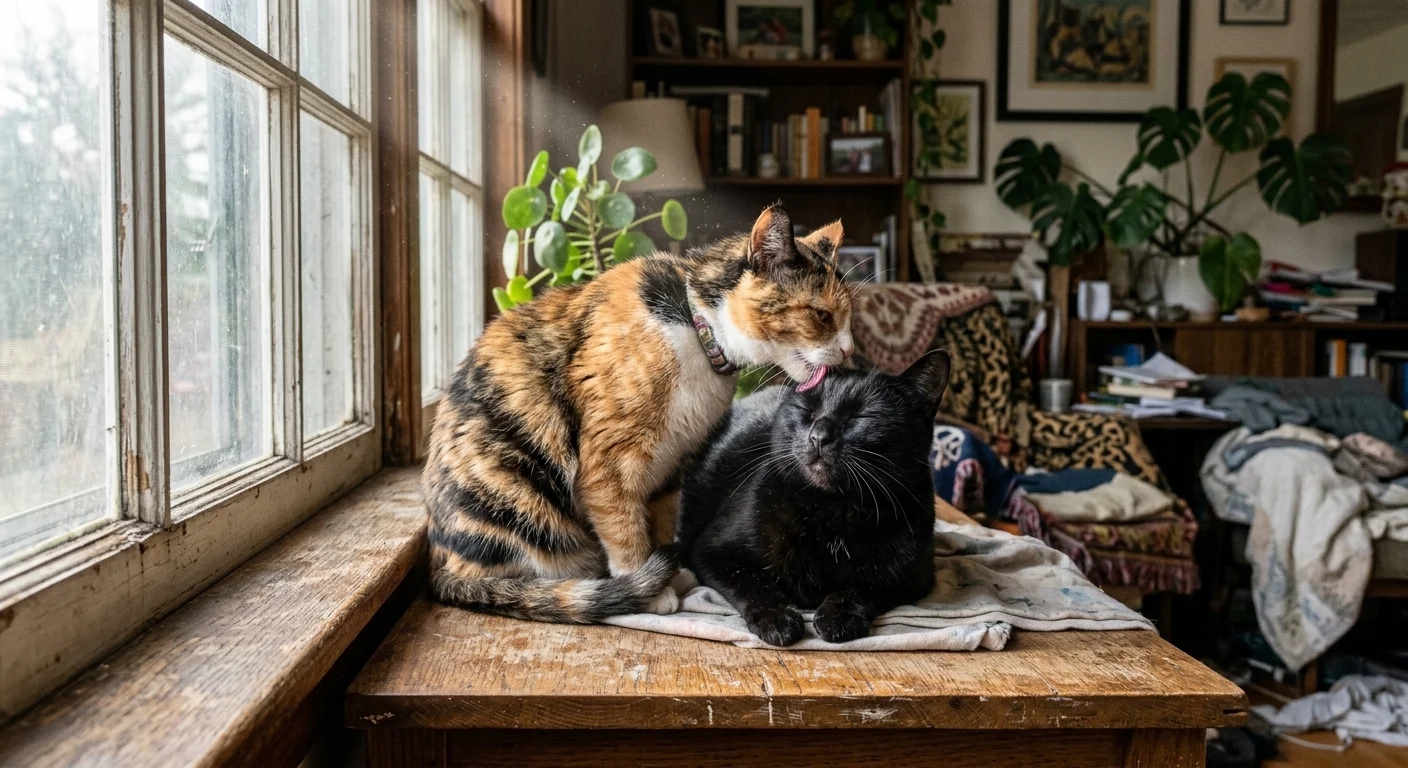
1. Mutual Grooming (Allogrooming)
Allogrooming occurs when one cat licks and grooms another, concentrating primarily on the head, neck, and behind the ears. These anatomical areas represent high-value grooming zones that an individual cat cannot easily reach on their own.
Beyond hygiene, allogrooming serves as a vital social bonding mechanism. During mutual grooming, cats exchange saliva and glandular secretions, reinforcing their shared household scent while triggering the release of calming neurochemicals like oxytocin.
You will typically see one cat initiate grooming while the other closes their eyes and tilts their head to expose the jawline or neck; this mutual vulnerability demonstrates absolute interpersonal trust.
2. Scent-Sharing and Cheek Rubbing (Allorubbing)
Cats communicate extensive biological and emotional information through specialized sebaceous glands located around their cheeks, lips, chin, and temples. When two cats approach each other, bump their heads together (head-bunting or bunting), and rub their cheeks or flanks along one another, they engage in allorubbing.
This behavior physically blends their individual pheromones into a unified group scent mark. Cats frequently wrap their tails around each other’s backs or legs during these greeting rituals.
If your cats routinely rub against each other after waking up or reuniting in a room, they are actively renewing their social bond.
3. Contact Sleeping and Communal Resting
Cats spend between 12 and 16 hours a day resting, but where and how they sleep speaks volumes about their emotional state. In conflicted households, cats maintain strict physical boundaries, often resting several feet apart while keeping their bodies oriented toward escape routes.
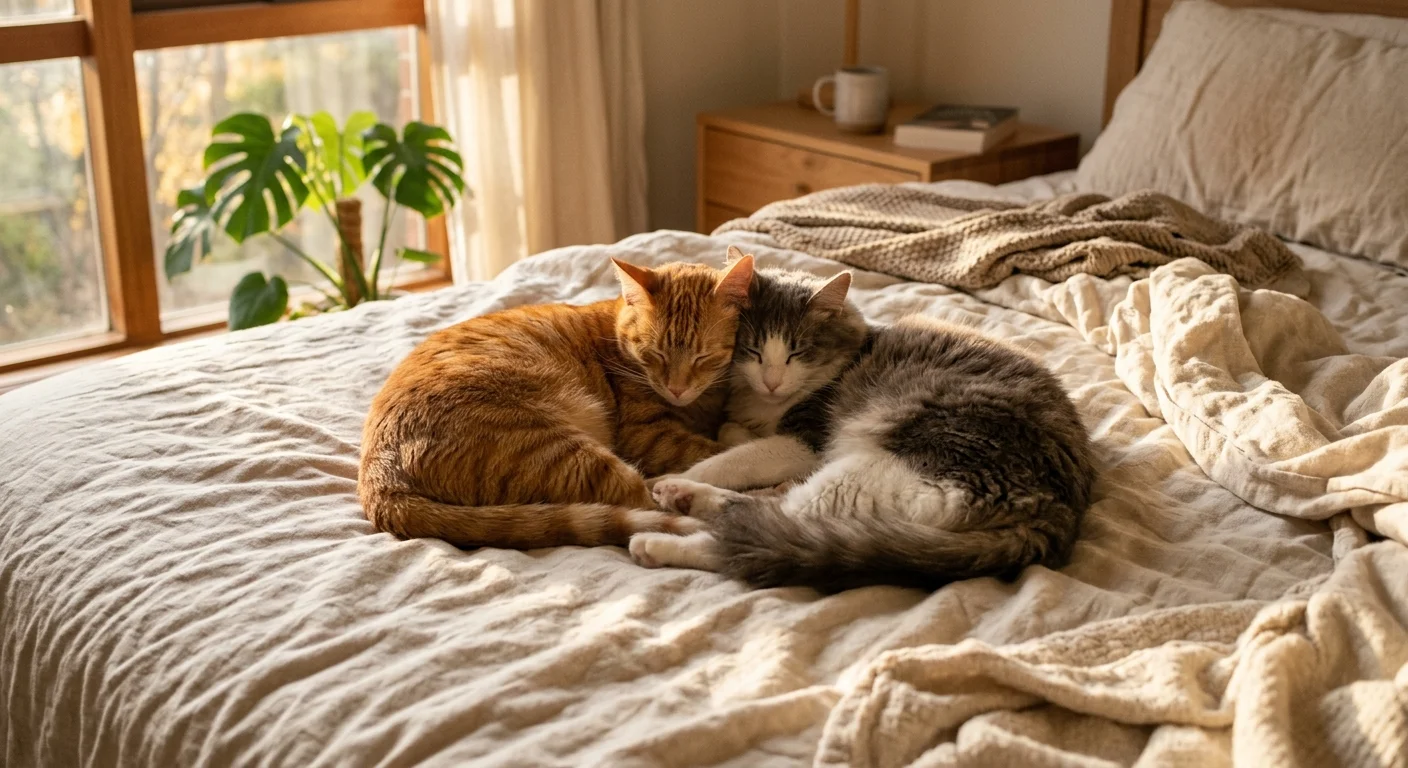
Conversely, cats in a harmonious household choose to sleep in direct physical contact.
Whether they curl into an intertwined ball, rest back-to-back, or simply “pillow” by resting a chin or paw on their companion, this shared vulnerability indicates that neither cat perceives the other as a predatory or territorial threat.
4. Reciprocal Play with Role Reversals
Healthy play between bonded cats involves mutual chase sequences, gentle wrestling, and simulated pouncing.
The defining characteristic of friendly play is reciprocity: Cat A chases Cat B into the hallway, and moments later, Cat B turns around and chases Cat A back into the living room. During wrestling, both cats take turns assuming the top and bottom positions.
You will notice relaxed body language, soft paws with retracted claws, loose tail movements, and brief pauses where both cats catch their breath before resuming the game. This fluid exchange shows that both animals understand the interaction is collaborative fun rather than competitive aggression.
5. Upright Tails with Curved Tips During Greetings
A cat’s tail is one of its most expressive communicative tools.
When two cats encounter each other in a hallway or common living area, a vertical tail held straight up—often with a slight forward curve at the tip forming the shape of a question mark—serves as an unambiguous, friendly greeting signal.
Known in feline ethology as the “tail-up” display, this posture signals friendly intent and an invitation for peaceful physical contact. When both cats approach each other with high, quivering tails, they are expressing mutual confidence and happiness to be in each other’s presence.
6. Uninhibited Navigation Across Shared Territory
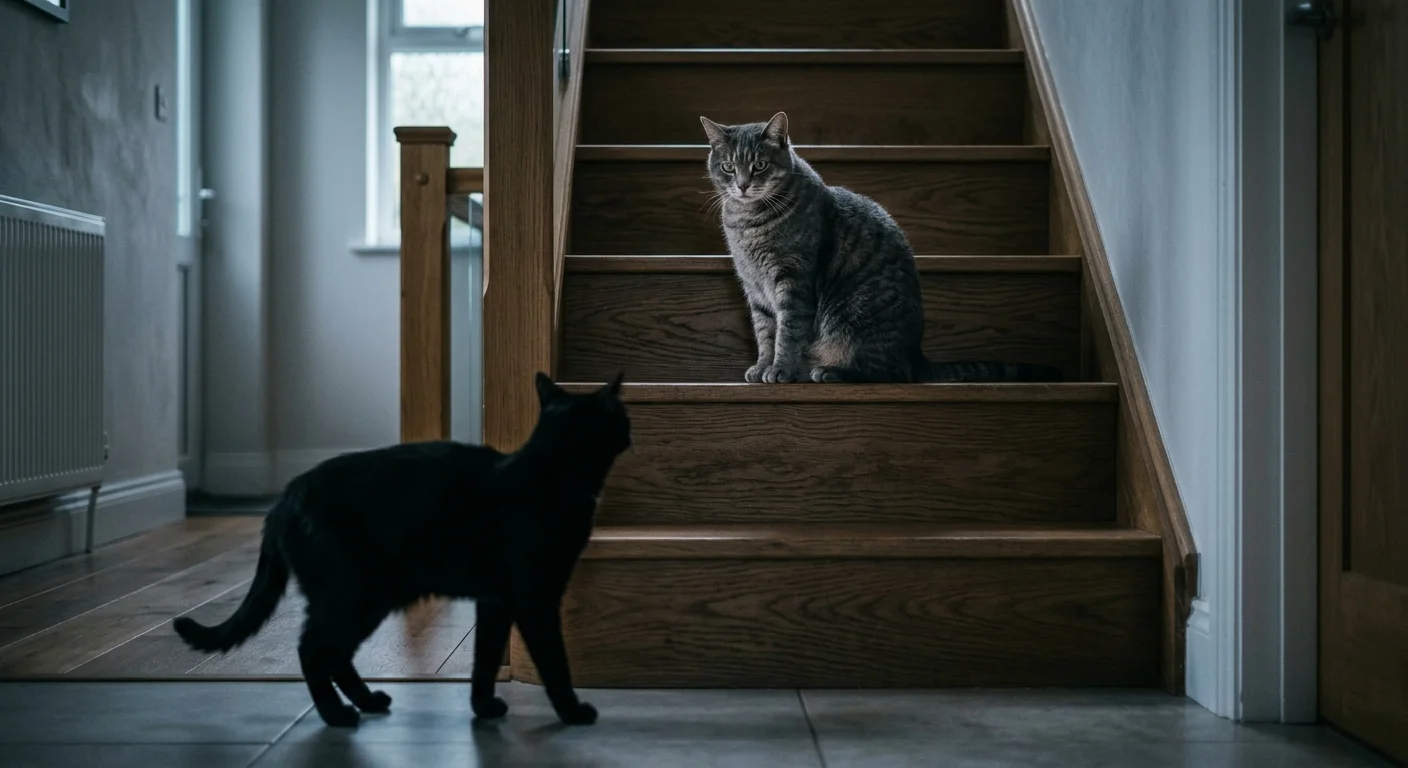
A happy cat moves freely throughout the entire home without hesitation, scanning, or avoidance behaviors. In stressed multi-cat homes, more dominant or anxious cats establish invisible checkpoints, lurking near hallways, stairwells, or doorways to block access to food or litter boxes.
In a harmonious home, all cats walk confidently through central living spaces with loose, flowing strides. They do not freeze before turning a corner, nor do they dart across open rooms to avoid being ambushed.
Equal and unhindered access to vertical perches, sunny resting spots, and floor space proves that territorial equilibrium exists.
7. Relaxed Postures and Slow Blinking in Common Rooms
Feline contentment manifests through open, unshielded resting postures. When cats feel completely safe around their housemates, they expose their bellies while lounging, stretch their limbs out horizontally, and tuck their paws neatly beneath their chests in a “meatloaf” position.
Furthermore, happy cats frequently direct slow blinks toward both their human family members and other feline companions. Slow blinking signals non-aggression and emotional relaxation, lowering physiological arousal across the entire household.
8. Peaceful Resource Sharing Without Interpersonal Guarding
Eating and eliminating represent a cat’s most vulnerable daily activities. In a harmonious multi-cat environment, cats eat their meals without frantic bolting, low growling, or anxious vigilance.
They use litter boxes calmly without having their exits blocked by a lurking companion.
While veterinary guidelines advise against forcing cats to share single resource stations, observing that your cats can calmly eat within sight of each other or peacefully drink from a communal water fountain without posturing confirms a high degree of mutual tolerance and social security.
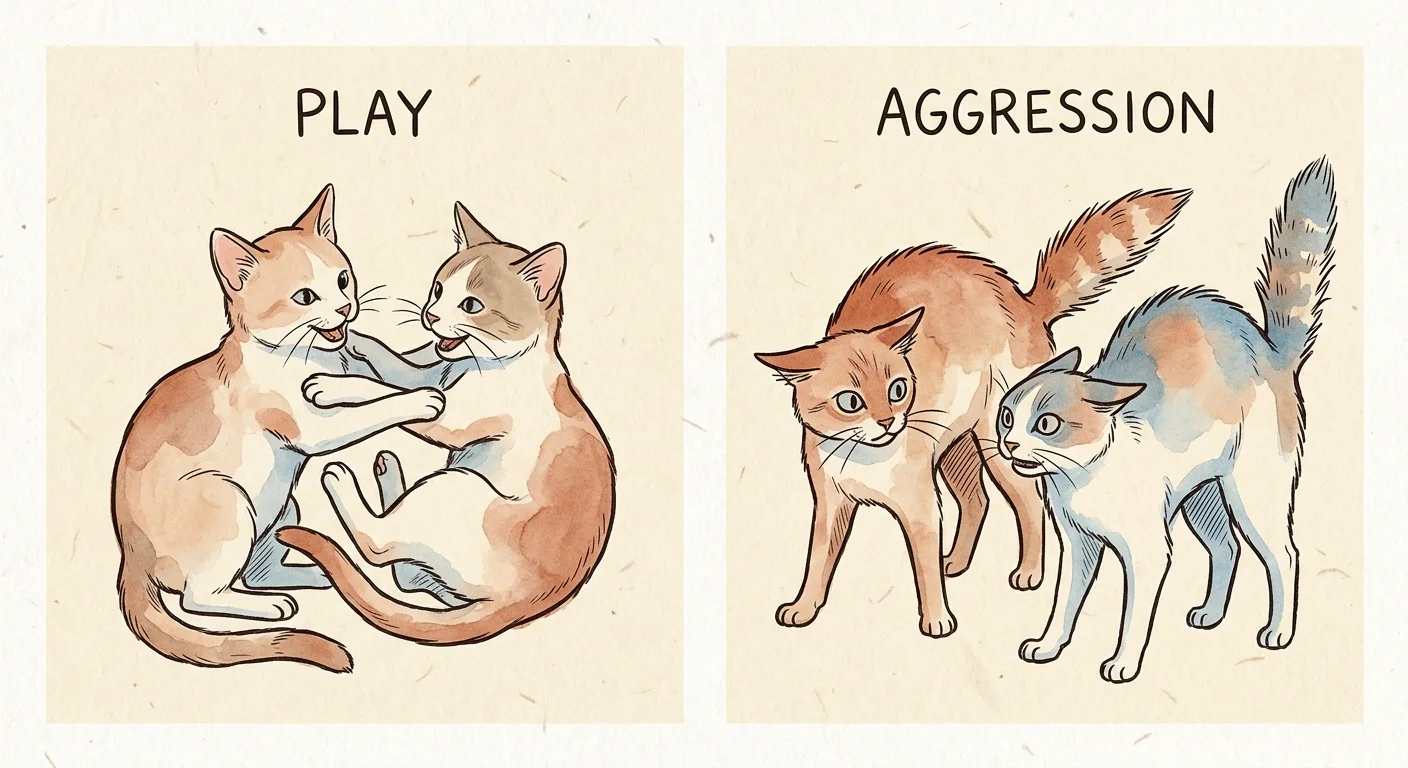
Play Fighting vs. True Aggression: How to Read the Differences
Because feline play mimics predatory and territorial combat, pet parents often struggle to distinguish healthy roughhousing from genuine hostility. Learning the physiological markers of both states prevents unnecessary interruptions during healthy bonding while helping you intervene before real fights escalate.
| Behavioral Indicator | Harmonious Play Interaction | Territorial Tension / True Aggression |
|---|---|---|
| Vocalization | Silent interactions; occasional soft chirps or play squeaks. | Loud, persistent yowling, high-pitched hissing, growling, or snarling. |
| Claw & Bite Control | Inhibited biting; retracted claws; no skin puncture or fur pulling. | Uninhibited biting; extended claws; clumps of flying fur; scratches. |
| Role Dynamics | Balanced role reversals; both cats alternate chasing and being chased. | One-sided pursuit; the victim constantly flees or hides without counter-play. |
| Ear & Facial Posture | Ears forward or slightly out to the sides; soft, open facial muscles. | Ears pinned flat against the skull (“airplane ears”); dilated pupils; snarling muzzle. |
| Tail Posture | Loose, curved, or vertical tails; gentle sweeping motions. | Puffed, bottlebrush tail; tail tucked tightly between legs or thrashing violently. |
| Post-Interaction State | Immediate return to calm exploration, mutual grooming, or nap time. | Prolonged hypervigilance, hiding, pacing, trembling, or redirected human aggression. |
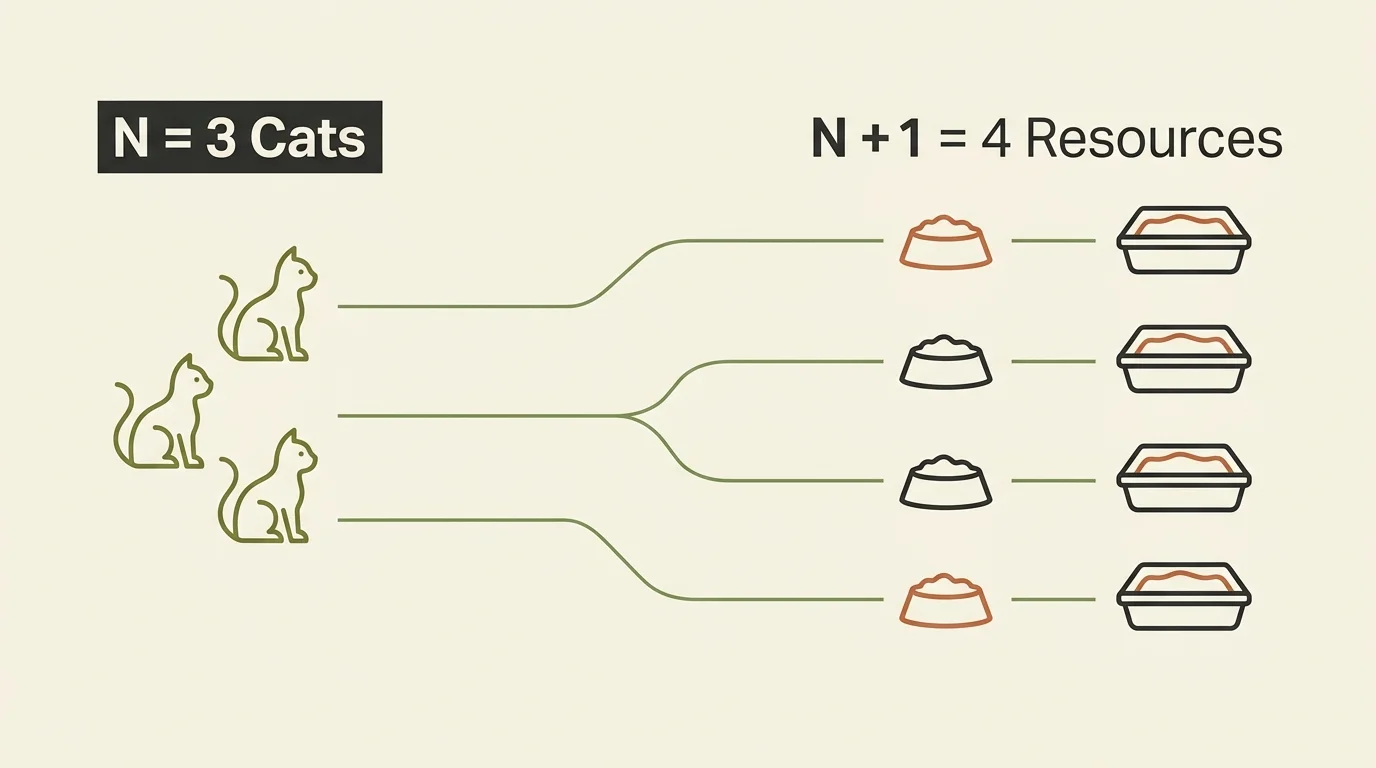
Optimizing the Environment: The N + 1 Resource Formula
Feline behavioral harmony does not happen by accident; it depends heavily on your household layout. Even deeply bonded cats will develop friction if they are forced to compete over limited environmental assets.
Environmental enrichment research highlighted by the Cornell Feline Health Center demonstrates that environmental optimization directly reduces behavioral stress, territorial spraying, and idiopathic urinary tract disorders.
To sustain lasting peace, follow the gold-standard environmental framework established by the American Association of Feline Practitioners (AAFP) and the International Society of Feline Medicine (ISFM).
This framework centers on the “N + 1” Rule, which dictates that you must provide one resource station for every cat in your household, plus one extra, distributed across distinct physical locations.
- Litter Box Distribution: If you have two cats, you need three litter boxes; if you have three cats, you need four. Crucially, placing three boxes side by side in a single laundry room counts as only one resource location in a cat’s mind. Distribute boxes across multiple rooms and different floors to eliminate territorial bottlenecking.
- Separated Feeding Stations: Cats prefer to hunt and eat alone. Position food bowls in distinct areas away from high-traffic corridors so each feline can consume their meal without visual pressure or fear of competition.
- Multiple Hydration Points: Place wide, shallow water dishes or circulating water fountains throughout the home, keeping water stations separate from food bowls to mimic natural foraging instincts.
- Vertical Territory Expansion: Multiply your home’s usable square footage by installing cat trees, window perches, wall shelving, and sturdy scratching posts. Vertical pathways allow cats to share the same physical room while occupying different elevations, diffusing social tension without confrontation.
- Dedicated Safe Zones: Provide multiple enclosed hiding spaces—such as cardboard cubbies, igloo beds, or high closet shelves—where an individual cat can retreat for undisturbed, solitary rest.
What Can Go Wrong: Subtle Red Flags of Household Friction
Unlike dogs, who often express interpersonal stress through overt barking or posturing, cats frequently suffer in silence. Passive aggression and micro-tensions can erode a multi-cat household without producing a single loud screech.
Watch out for these four common, overlooked friction scenarios:
- Doorway and Hallway Blocking: A cat lounges casually in the center of a narrow doorway or at the bottom of the stairs. While this appears harmless to human observers, the cat is intentionally using their physical presence to block access to litter boxes, food, or human affection, forcing other cats to divert or retreat.
- Displacement and Silent Staring: One cat walks over to a cozy window hammock occupied by another cat and stares fixedly without blinking. If the resting cat immediately yields the spot and leaves the area, this represents subtle territorial displacement driven by social pressure rather than peaceful turn-taking.
- Asymmetrical Allogrooming Transitions: Grooming sessions that consistently start sweetly but abruptly end with one cat biting the other’s neck, swatting aggressively, or fleeing indicate that the grooming was an assertion of dominance rather than mutual affection.
- Litter Box Hesitation or Elimination Outside the Box: If a cat begins urinating on carpets or defecating right next to the litter pan, territorial anxiety is often the culprit. A cat may avoid the box because another resident cat ambushes them upon exiting, turning an essential bodily function into a traumatic experience.
Where Outside Advice Pays Off
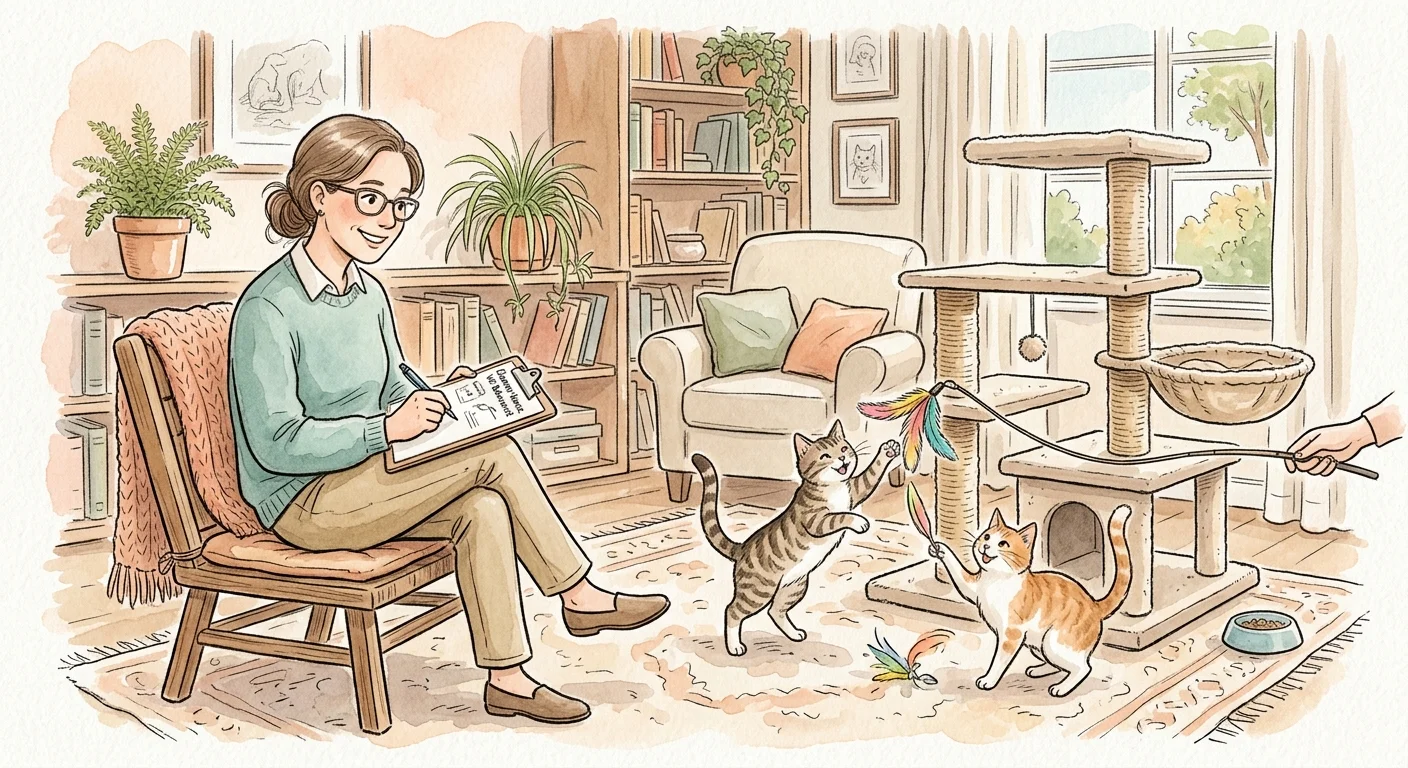
While environmental adjustments resolve many minor multi-cat tensions, certain situations demand specialized professional intervention to safeguard your pets’ welfare and health:
- Sudden Behavioral Shifts: If two cats that previously coexisted peacefully begin fighting violently out of nowhere, schedule an immediate veterinary evaluation. Medical conditions such as hyperthyroidism, osteoarthritis, dental disease, or feline lower urinary tract disease (FLUTD) frequently manifest as irritability and sudden aggression.
- Non-Physical Introductions Failing: If you are integrating a new cat and the animals remain intensely hostile after four to six weeks of gradual, scent-based introduction steps, consult a Certified Applied Animal Behaviorist (CAAB) or a board-certified veterinary behaviorist (DACVB).
- Severe House Soiling and Spraying: When vertical urine marking or inappropriate elimination persists despite adding litter boxes, a veterinarian can rule out underlying cystitis and discuss targeted medical or behavioral therapies.
Frequently Asked Questions About Multi-Cat Dynamics
How long does it take for cats to bond with each other?
The timeline for feline bonding varies significantly based on age, socialization history, and temperament. While young kittens often form bonds within a few weeks, adult cats typically require several months—sometimes up to six to twelve months—to establish mutual trust and social cohesion.
Rushing introductions increases long-term friction, so patient, gradual scent exchanges remain essential.
Can cats live happily together if they do not cuddle or groom each other?
Yes. Cats do not need to be deeply bonded “cuddle buddies” to experience a happy, enriched life together.
Many cats live in peaceful coexistence, sharing space comfortably, exploring together, and relaxing in the same room without engaging in physical contact like allogrooming. As long as neither cat displays signs of fear, resource guarding, or avoidance, peaceful coexistence represents a successful multi-cat dynamic.
What should I do if my cats suddenly start fighting?
Never attempt to physically separate fighting cats with your bare hands, as you risk severe bite injuries.
Instead, interrupt the fight safely by clapping your hands loudly, tossing a soft blanket over one cat, or placing a large piece of cardboard between them to break visual contact.
Once separated, place them in different rooms with separate food, water, and litter facilities for several days before executing a slow, gradual reintroduction process.
Do synthetic pheromone diffusers help multi-cat households?
Maternal appeasing pheromone diffusers (such as Feliway MultiCat / Friends) mimic the natural calming pheromones produced by nursing mother cats. Clinical studies show that these diffusers help reduce social tension, staring, and conflict when used alongside proper environmental enrichment and resource distribution.
Maintaining Lifelong Feline Harmony
Cultivating a peaceful multi-cat household is an ongoing process that blends careful observation with proactive environmental design. By providing ample resources, respecting natural territory preferences, and celebrating affiliative behaviors like allorubbing, upright greetings, and reciprocal play, you create a home where every cat feels secure.
Take time every day to observe your cats during their morning routines and evening play sessions; these quiet moments offer the best window into their collective happiness and health.
The information here is meant for educational purposes. Specific circumstances—including health conditions, finances, location, and goals—may require different approaches.
When in doubt, consult a licensed professional or check official sources directly.
Last updated: May 2026. Rules, prices, and details change—verify current information with official sources before acting on it.