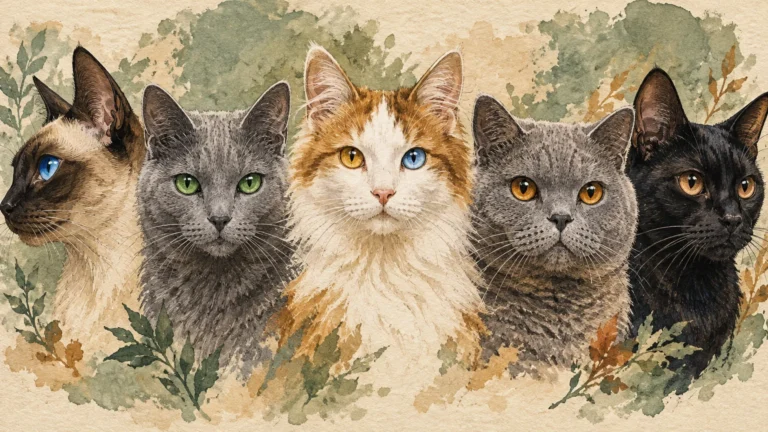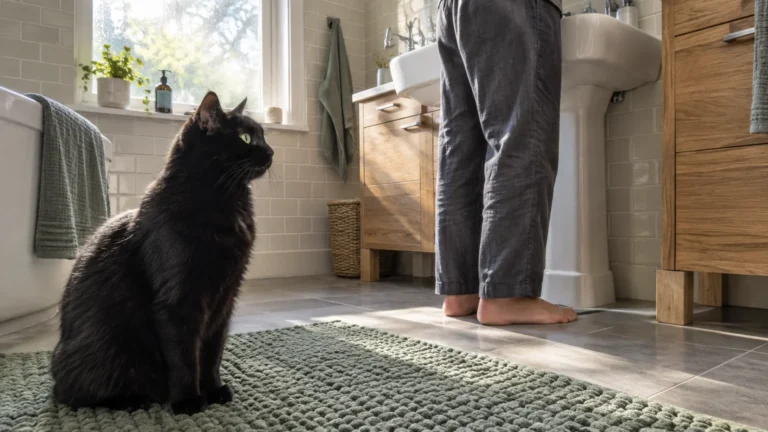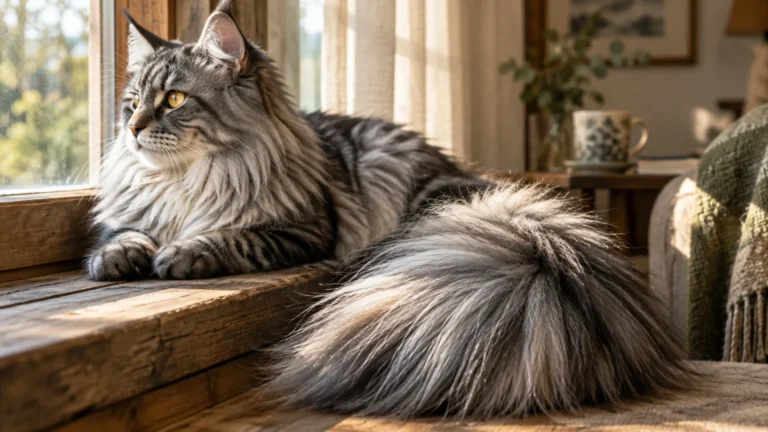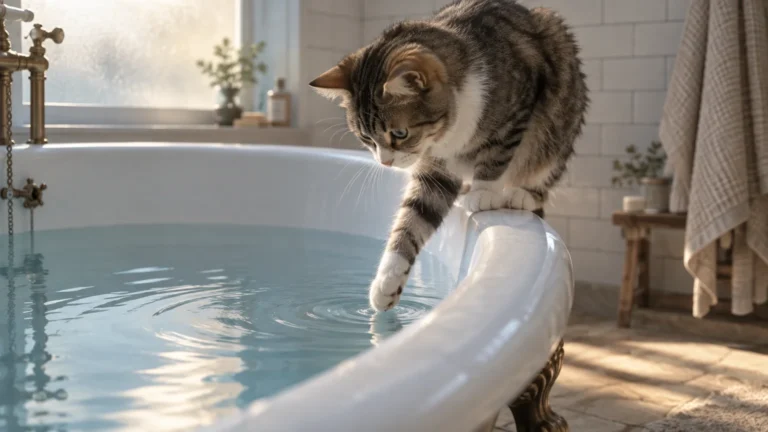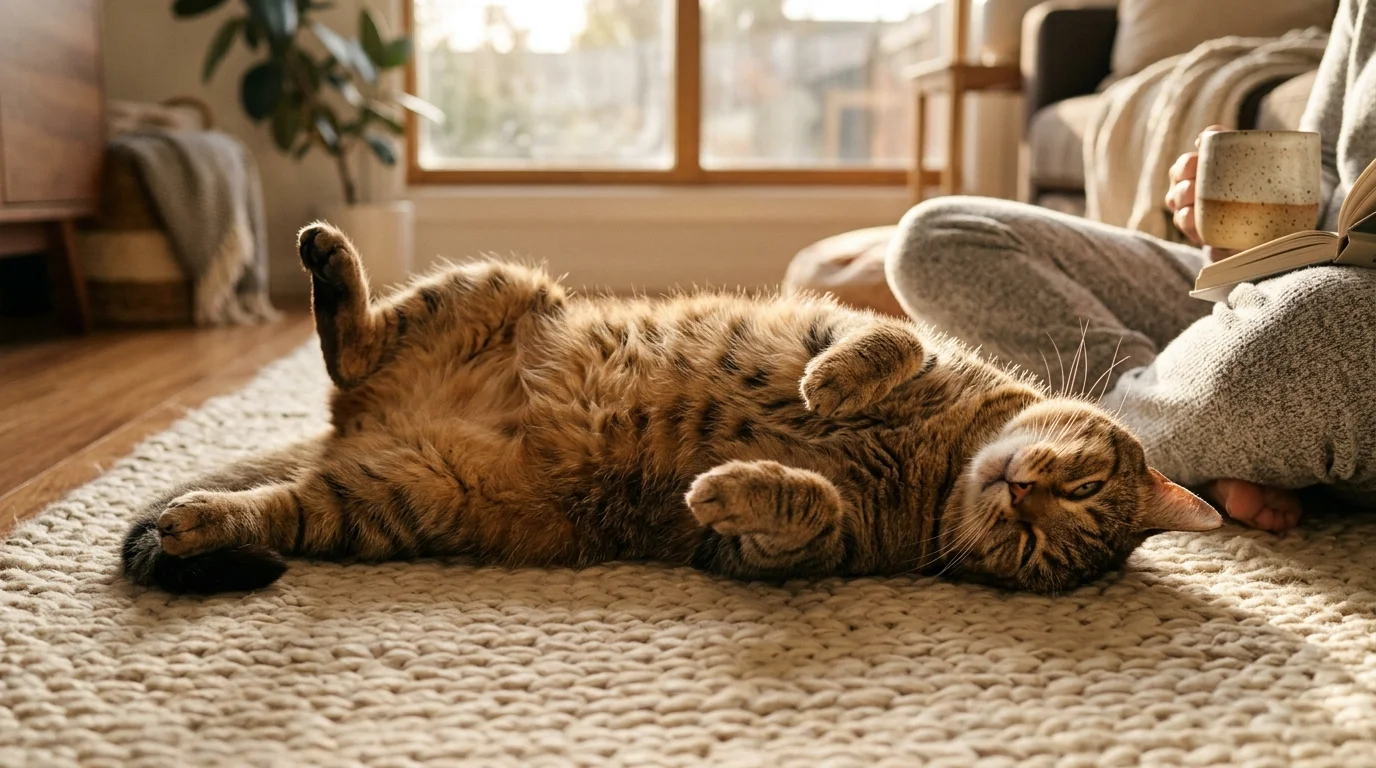
When your cat flops over and reveals its soft underbelly, you are witnessing the ultimate feline compliment. While popular myth suggests every exposed tummy invites an immediate scratch, feline behaviorists confirm that belly presentation primarily signals profound emotional security and vulnerability.
A cat’s abdomen houses its most vital organs, making it the most defended area on its body. When your feline companion rolls onto its back in your presence, it proves your bond has dismantled its hardwired evolutionary defenses.
Recognizing the subtle behavioral markers surrounding this gesture helps you honor that vulnerability, deepen your mutual bond, and avoid accidental defensive scratches.
The Evolutionary Biology of the Exposed Feline Belly
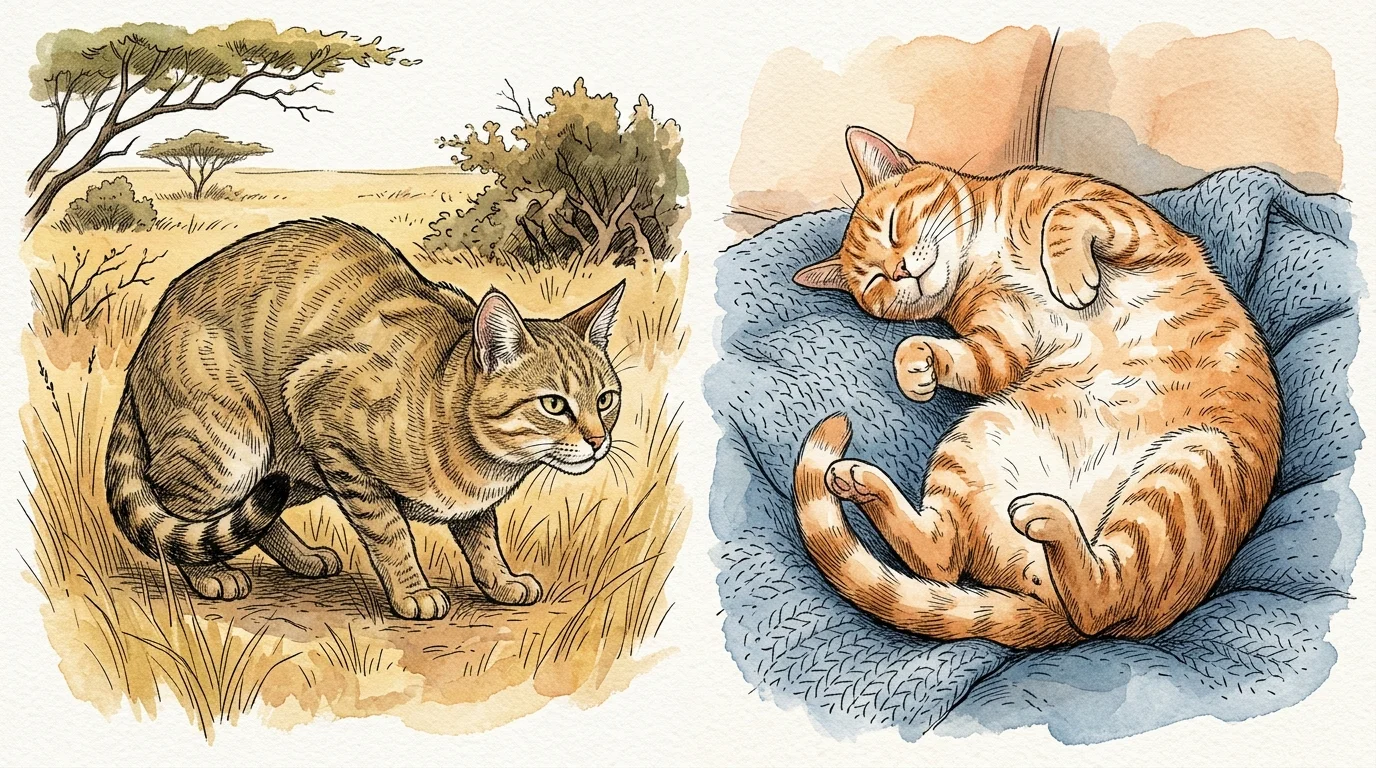
To understand why an exposed belly represents such a profound milestone in feline companionship, you must examine feline evolutionary history. Domestic cats (Felis catus) descend from solitary hunters—specifically the African wildcat (Felis lybica)—that occupy a unique ecological niche as both predators and prey.
In the wild, exposing the ventral region leaves delicate vital organs like the liver, stomach, and intestines entirely unprotected against larger carnivores or rival felines.
According to clinical animal behavior specialists at the Cornell Feline Health Center, a cat’s primary defensive strategy involves keeping its feet firmly on the ground to facilitate immediate escape or tactical defense.
When a cat lies on its side or back and displays its abdomen, it voluntarily gives up its fastest escape mechanism. It communicates a total absence of fear regarding potential ambush or predatory behavior in your household.
However, an exposed belly is rarely an open invitation for human hands. In cat-to-cat communication, presenting the underbelly acts as a social greeting and an appeasement signal, not a tactile request.
When your cat flashes its belly, it communicates peace; how you respond dictates whether that trust endures or dissolves into defensive swatting.
9 Signs Your Cat Trusts You With Its Belly
1. The Dramatic “Flop and Stretch” in High-Traffic Zones
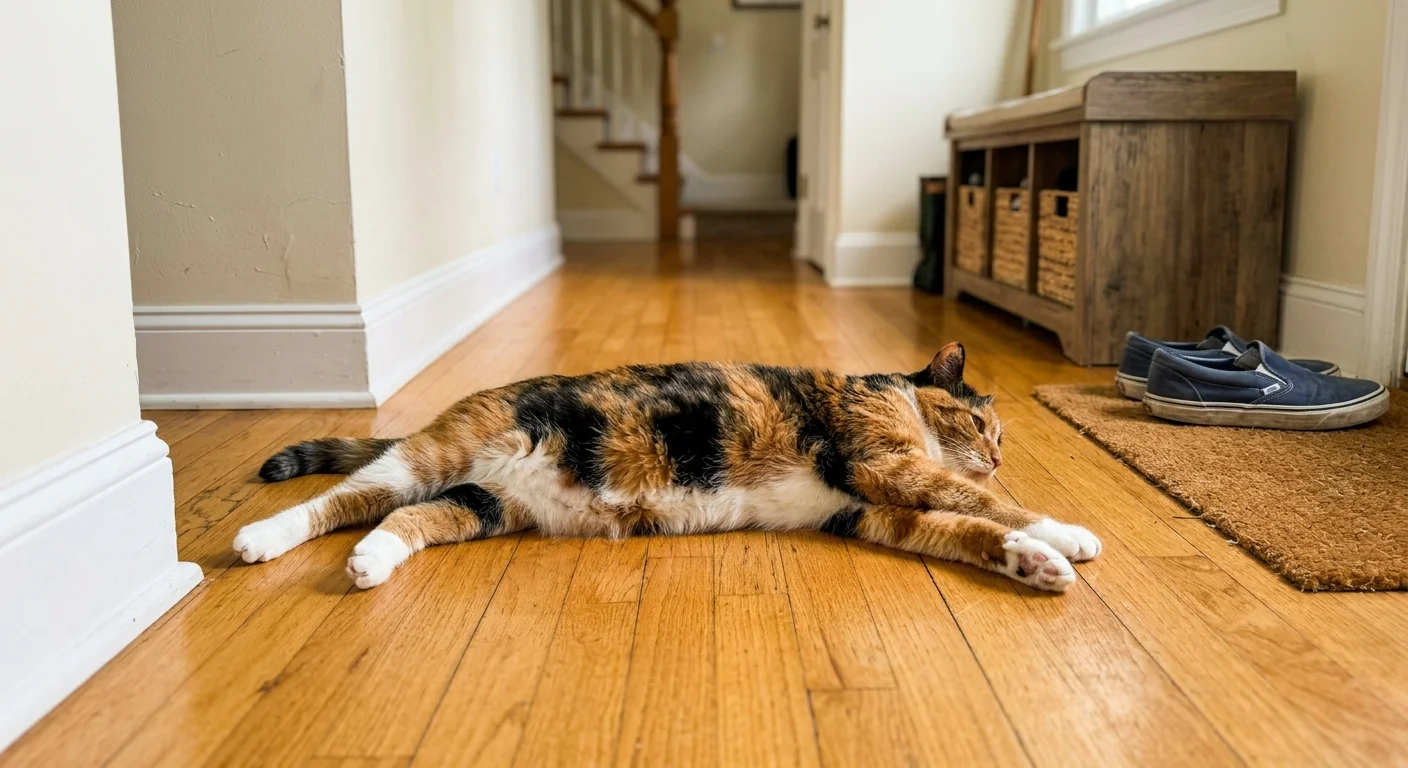
One of the clearest indicators of secure attachment occurs when your cat approaches you, pauses, and dramatically flops onto its side or back with its limbs extended. Cats reserve this behavior for individuals they view as entirely benevolent.
If your cat executes this maneuver right in the middle of a hallway, kitchen, or living room doorway, it demonstrates total confidence that you will neither step on it nor exploit its momentary physical helplessness.
Watch the speed and fluidity of the motion. A tense cat lowers itself gingerly; a trusting cat drops with complete abandon, frequently exhaling a soft sigh as its body settles onto the floorboards or carpet.
2. Sustained Slow Blinking While in the Supine Position
Cats communicate affection and safety through micro-expressions. If your cat rolls onto its back, looks directly into your eyes, and slowly closes and opens its eyelids, it provides double confirmation of emotional security.
Behavioral research published through International Cat Care highlights slow blinking as a cross-species marker of positive emotional states and social bonding.
By pairing belly exposure with slow blinking, your cat willingly surrenders two critical defense systems simultaneously: its protective body posture and its visual vigilance. You can return this compliment by softly squinting your eyes in return, reinforcing the mutual calm.
3. “Air Kneading” with Soft, Unsheathed Claws
Kneading originates in kittenhood, when nursing kittens rhythmically push against their mother’s mammary glands to stimulate milk flow.
When an adult cat lies on its back and flexes its front paws in the empty air—commonly called “air biscuits” or air kneading—it regresses to a state of absolute psychological safety.
Pay close attention to claw tension during this display:
- Trust-based air kneading: Paws remain relaxed, claws stay retracted or extend only softly without tension, and the front limbs move in a slow, rhythmic cadence.
- Defensive posturing: Paws remain stiff, claws stay fully hooked and flared, and the cat tracks your hands with hyper-focused pupils.
4. Pre-Roll Facial Pheromone Marking (Allorubbing)
Cats possess complex sebaceous scent glands around their chin, lips, temples, and base of the ears.
When your cat affectionately rubs its cheeks against your ankles, shins, or hands before dropping onto its back, it engages in allorubbing—a communal scent-sharing behavior that establishes a group scent.
By depositing its facial pheromones onto you right before revealing its belly, your cat actively tags you as safe, familiar territory. It creates an aromatic shield of security, signaling that the environment is completely free from threats.
5. Asymmetrical, Curved Spine and Limp Extremities
Body geometry reveals whether an exposed belly stems from peaceful relaxation or combative defense.
A cat lying on its back in self-defense holds its spine straight, curls its neck forward to keep eyes locked on a target, and pulls all four paws upward in a spring-loaded stance ready to rake with its back claws.
In contrast, a cat displaying deep trust forms an asymmetrical “C” or “S” curve with its spine. Its back legs sprawl outward at loose angles, its head rests flat against the floor, and its abdominal muscles remain visibly supple rather than taut.
6. Neutral Ears and a Still or Gently Quivering Tail Tip
Tail and ear positions serve as real-time barometers of feline arousal.
When your cat lies belly-up with genuine trust, its ears remain in their neutral, forward-facing orientation; they do not flatten against the skull like airplane wings, nor do they rotate rapidly to scan the room for threats.
Simultaneously, observe the tail. A trusting cat keeps its tail still, allows it to rest flat on the floor, or exhibits a tiny, slow twitch at the very tip—a sign of mild contentment.
If the tail thumps against the floor or lashes side-to-side, the cat feels conflicted or overstimulated, signaling that you must step back.
7. Entering Deep REM Sleep with an Exposed Ventral Plane
Cats spend roughly 12 to 16 hours a day sleeping, but most of that time consists of light slow-wave sleep, during which their sensory systems remain alert to ambient sounds. Entering rapid eye movement (REM) sleep requires complete physical muscular atony (paralysis), making the animal totally vulnerable.
If your cat regularly curls into an upside-down position with its belly fully exposed to the room while snoring, twitching its whiskers, and drifting into deep REM sleep near you, it demonstrates the highest tier of domestic feline security.
It trusts that you will protect the perimeter while its conscious guard is down.
8. Trilling or Chirping as It Rolls
Feline vocalizations provide crucial context to physical movements. A defensive cat presents its belly while hissing, growling, or remaining dead silent with wide pupils.
A deeply bonded cat often accompanies its belly roll with a friendly vocalization—specifically a rolling “chirp” or high-pitched “trill.”
Mother cats use trills to call kittens to follow them, and adult cats repurpose this sound to greet humans they hold in high regard. A chirp combined with a belly flash is essentially a friendly, joyful exclamation point on your social interaction.
9. Leaning into Controlled, Respectful Physical Contact
While many cats prefer that humans simply admire their bellies without touching them, a small percentage of deeply bonded cats welcome actual physical contact in this zone.
If your cat actively leans its abdomen into your hand, purrs louder upon contact, and rolls further onto its side to expose more surface area, it trusts you completely with tactile touch.
This behavior develops only through consistent, positive history where you have repeatedly proven that you will not pinch, startle, or overstimulate the sensitive nerve endings around its abdomen.
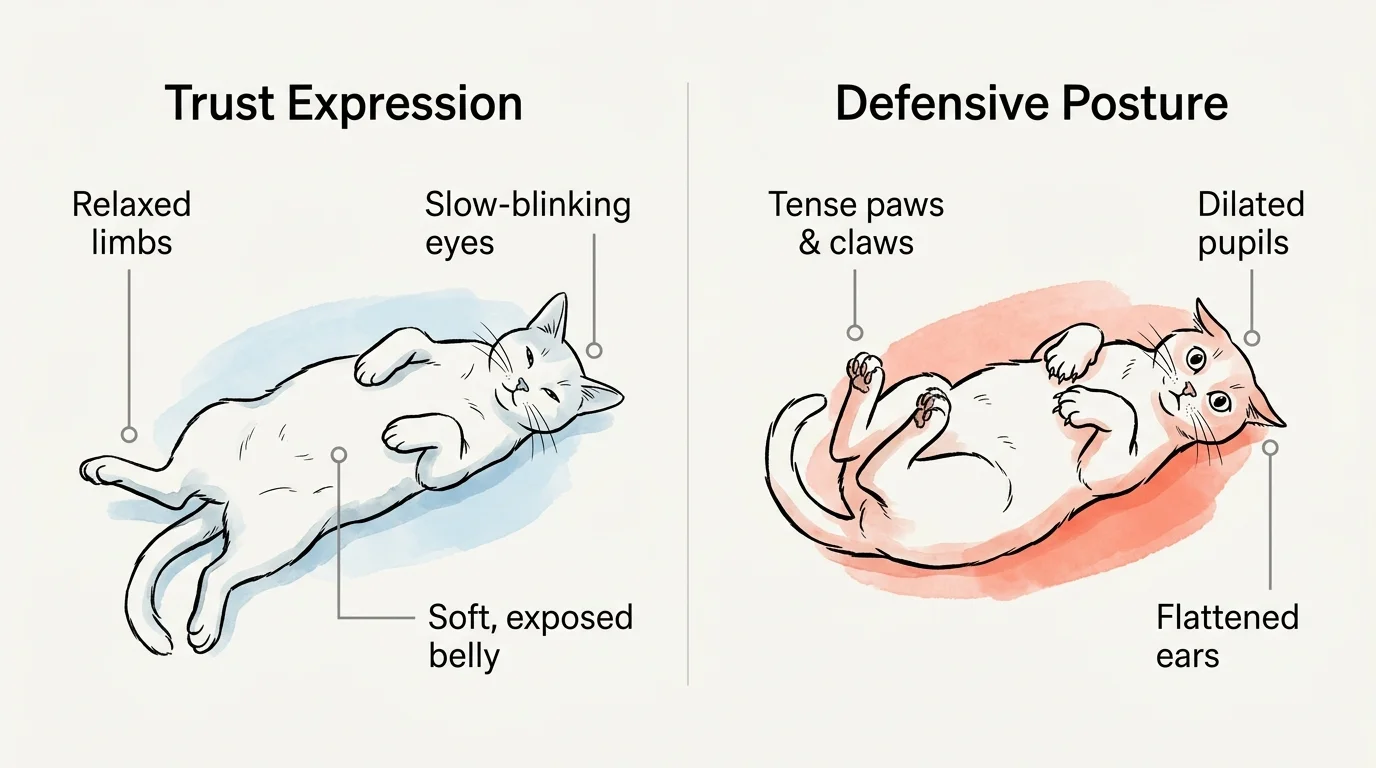
Belly Display Decoding: Trust Expression vs. Defensive Posture
Many cat owners confuse a defensive belly presentation with an affectionate one. Use this quick reference table to accurately assess your cat’s emotional state before you react:
| Body Language Indicator | Deep Trust & Comfort | Defensive Trap / Fight Posture |
|---|---|---|
| Spine & Body Shape | Curved, asymmetrical, soft and loose | Rigid, straight spine, tense musculature |
| Ear Orientation | Neutral, facing forward, relaxed | Flattened back (“airplane ears”) or pinned tight |
| Eye Contact & Pupils | Soft gaze, slow blinks, normal pupils | Staring unblinkingly, fully dilated pupils |
| Tail Movement | Stationary or gently quivering at tip | Thumping hard, swishing, or tucked tight |
| Vocalization | Soft purring, high trills, or silence | Low growls, sharp hissing, or spitting |
| Paw Position | Air kneading, limp wrists, paws splayed | All 4 paws raised, claws unsheathed and poised |
The Science of Overstimulation: Why Belly Rubs Can Turn Painful
You might wonder why a cat that clearly loves and trusts you suddenly clamps its claws around your wrist after three seconds of belly petting. This reaction is rarely malicious; it is a neurological reflex driven by feline physiology.
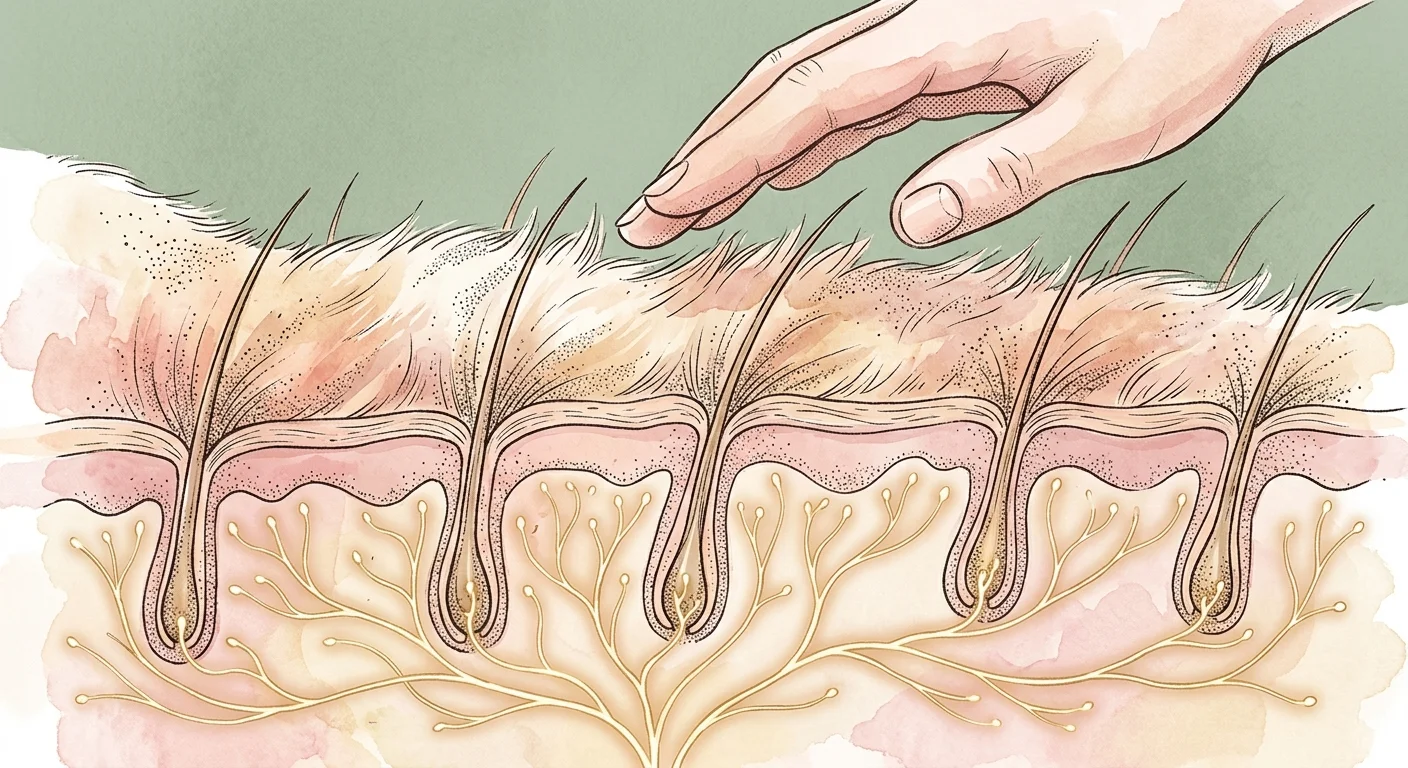
The hair follicles covering a cat’s ventral abdomen and inguinal (groin) area connect directly to hypersensitive tactile nerve networks. Unlike dogs, whose thicker skin tolerates vigorous rubbing, cats experience rapid sensory overload from repetitive friction on their undersides.
When tactile input crosses the threshold into physiological overstimulation, the cat’s autonomic nervous system triggers an involuntary predatory reflex—the classic “grab-and-bunny-kick” response.
Feline welfare guidelines from the ASPCA emphasize that respecting these thresholds preserves human-animal trust. When your cat offers its belly, treat it as a visual masterpiece rather than an interactive toy.
What Can Go Wrong: 4 Common Human Misinterpretations
Even well-meaning pet parents can damage their relationship by misreading feline physical cues. Avoid these common behavioral pitfalls:
- Assuming “Belly Up” Means “Pet Me Here”: The most common error is treating cats like small dogs. For 85% of felines, showing the belly means “I feel safe around you,” not “Please rub my stomach.” Reaching directly for the belly often violates that implicit boundary.
- Ignoring the Pre-Bite Warning Signs: Cats rarely bite without warning. If you pet your cat’s stomach and miss subtle cues—such as a stiffening back, a twitching tail tip, or skin rippling—you risk provoking a defensive nip.
- Punishing the Defensive Reflex: If your cat grabs your arm with its claws during a belly rub, screaming or swatting back shatters trust. The cat reacted to neurological overstimulation; physical retaliation validates its primal fear that its belly was indeed in danger.
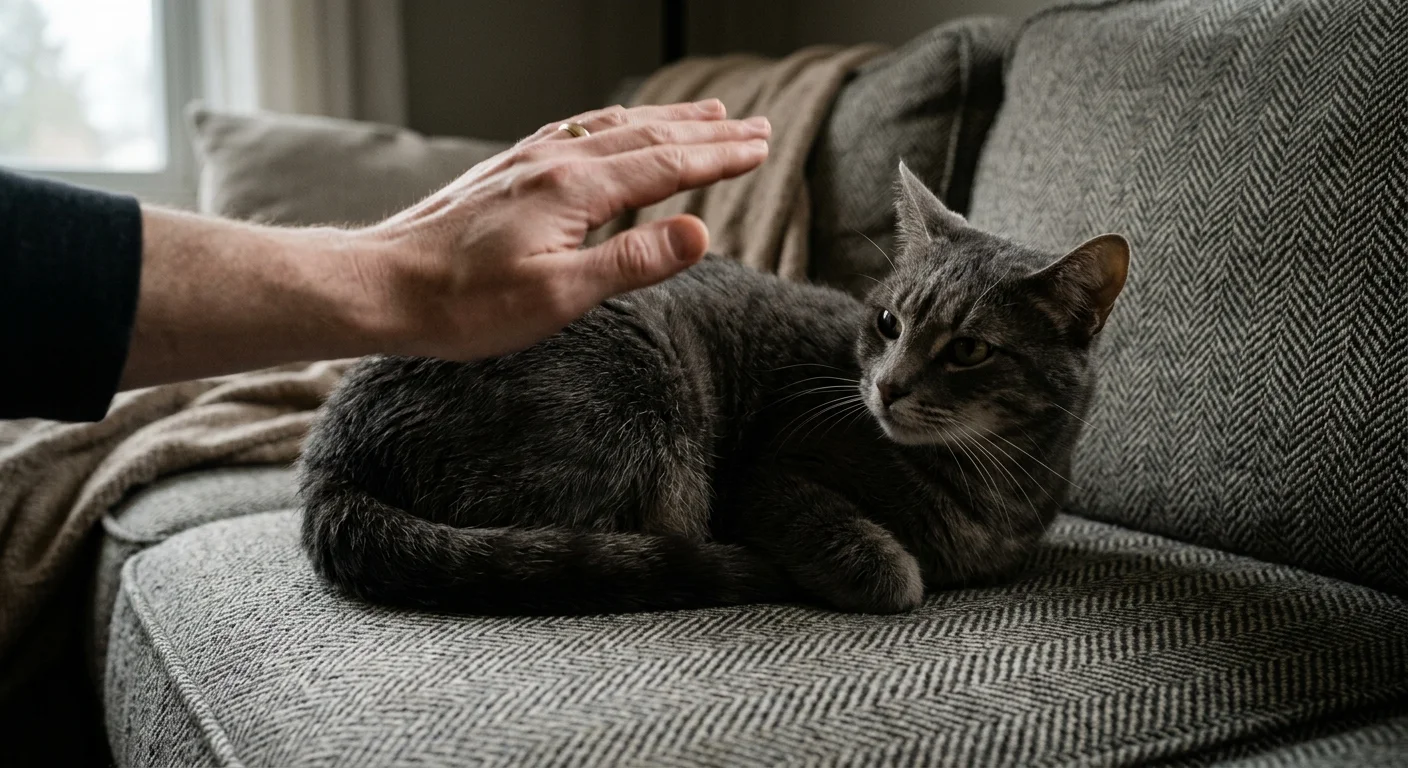
- Approaching with Direct Overhead Hands: Descending your hand directly over a cat’s midsection triggers predatory evasion instincts. If you test touch, approach low and slow from the side, offering your knuckles for a scent check first.
How to Respond Respectfully When Your Cat Shows Its Belly
To preserve and strengthen your cat’s bond, adopt a thoughtful protocol whenever your companion rolls onto its back:
- Offer Verbal Validation: Acknowledge the compliment in a soft, melodic tone. Saying your cat’s name softly reassures it that you appreciate its presence.
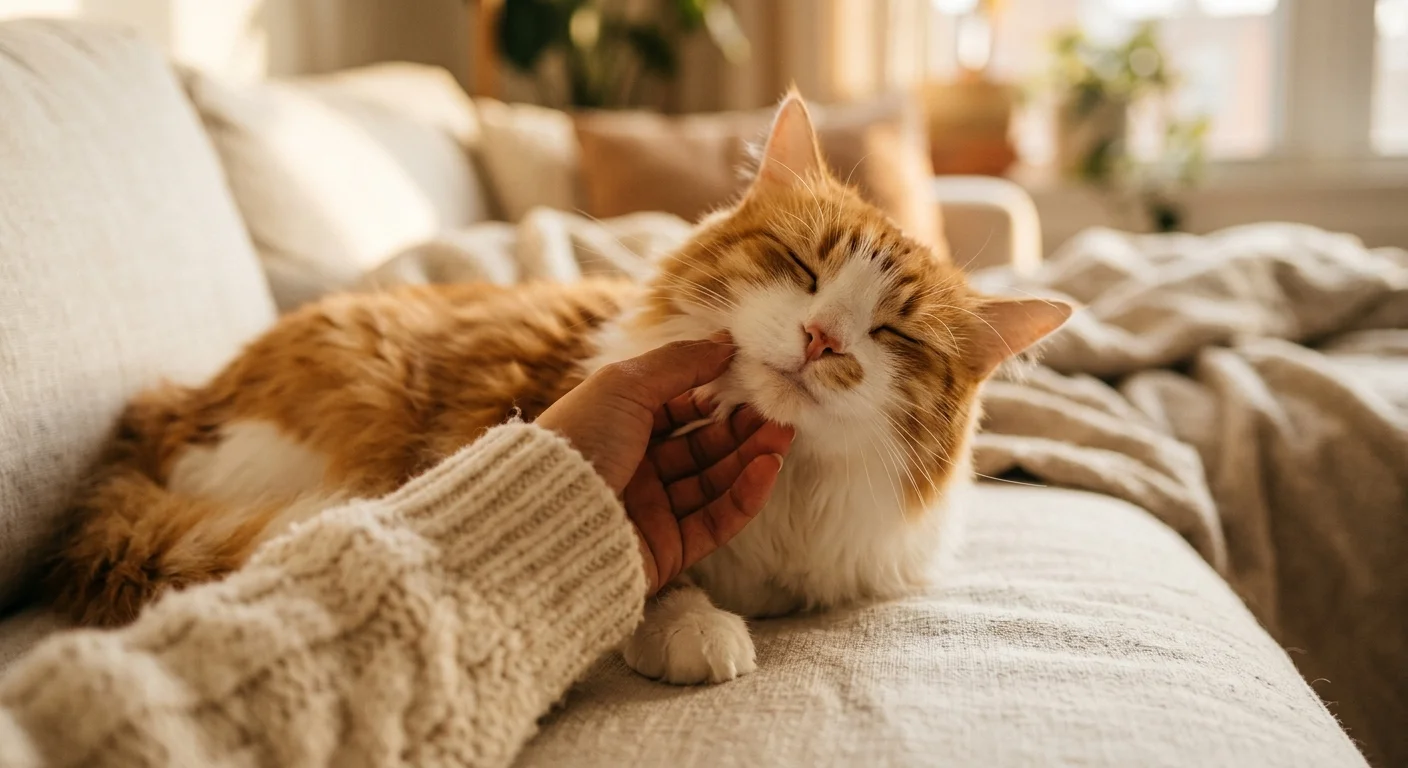
- Target the Low-Risk Zones: When your cat presents its belly, reach for its chin, cheeks, or the base of its ears instead of its stomach. This satisfies your desire for tactile connection while respecting the cat’s vulnerable areas.
- Perform the “Three-Second Consent Test”: If your cat consistently enjoys stomach touches, stroke the upper chest area gently for exactly three seconds, then remove your hand entirely. If your cat nudges your hand or rolls closer, it consents to more touch. If it looks away or remains still, conclude the session.
- Disengage Instantly at the First Sign of Arousal: At the earliest sign of pupil dilation, ear rotation, or tail movement, gently pull your hands back to a neutral position and allow the cat space.
Frequently Asked Questions
Why does my cat show its belly only to bite me when I touch it?
Your cat is exhibiting a natural predatory defense reflex. The exposed belly is an appeasement and trust greeting, not an invitation for physical contact.
Touching the hair follicles on the abdomen causes sensory overload, prompting an automatic grab-and-kick reflex to protect its vital organs.
Can you train a cat to enjoy belly rubs?
Some cats can develop a tolerance or fondness for belly rubs through gradual counter-conditioning using positive reinforcement. Start by lightly touching the upper chest area during calm moments, pairing the touch with high-value treats.
However, always respect your cat’s natural genetic predisposition; never force physical contact if the cat exhibits discomfort.
Why does my cat roll on its back when I arrive home?
Rolling on the back when you walk through the door serves as a formal feline greeting ritual. It combines scent marking, appeasement, and visual communication to say, “I recognize you, I feel secure in your presence, and I welcome your return.”
What does it mean when a stray or shelter cat shows its belly?
When an unfamiliar cat exposes its belly, it typically acts as a defensive appeasement posture rather than established trust. It signals submission and warns you that all four sets of claws are available for defense if you corner it.
Avoid touching the belly of unfamiliar cats.
Building Lifelong Trust with Your Feline Companion
Understanding feline body language requires you to set aside canine expectations and embrace the nuanced, consent-driven nature of cats.
When your feline friend stretches out, turns upside down, and displays its softest, most vulnerable anatomy, celebrate it as definitive proof that you have created a safe sanctuary.
By honoring that vulnerability—admiring from a respectful distance or opting for gentle chin scratches—you confirm to your cat that its profound trust is never misplaced.
The information here is meant for educational purposes. Specific circumstances—including health conditions, finances, location, and goals—may require different approaches.
When in doubt, consult a licensed professional or check official sources directly.
Last updated: May 2026. Rules, prices, and details change—verify current information with official sources before acting on it.