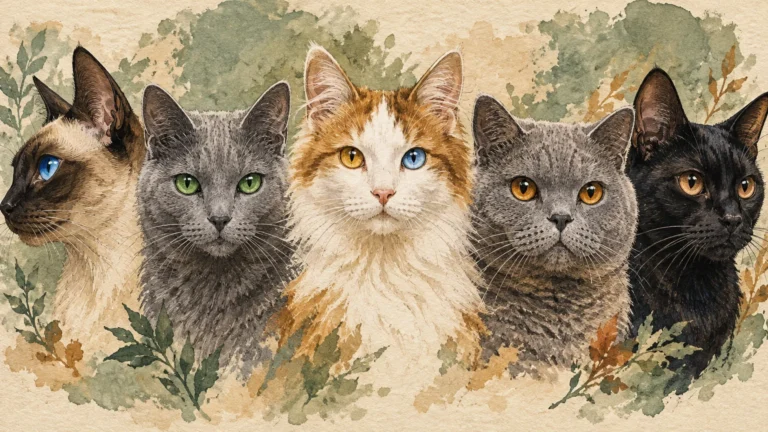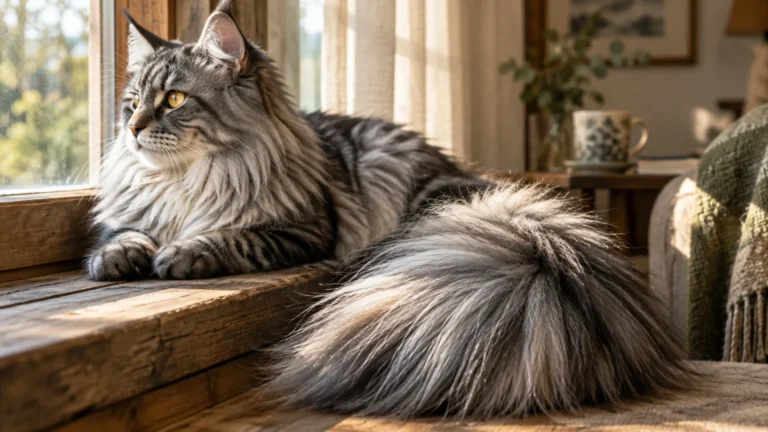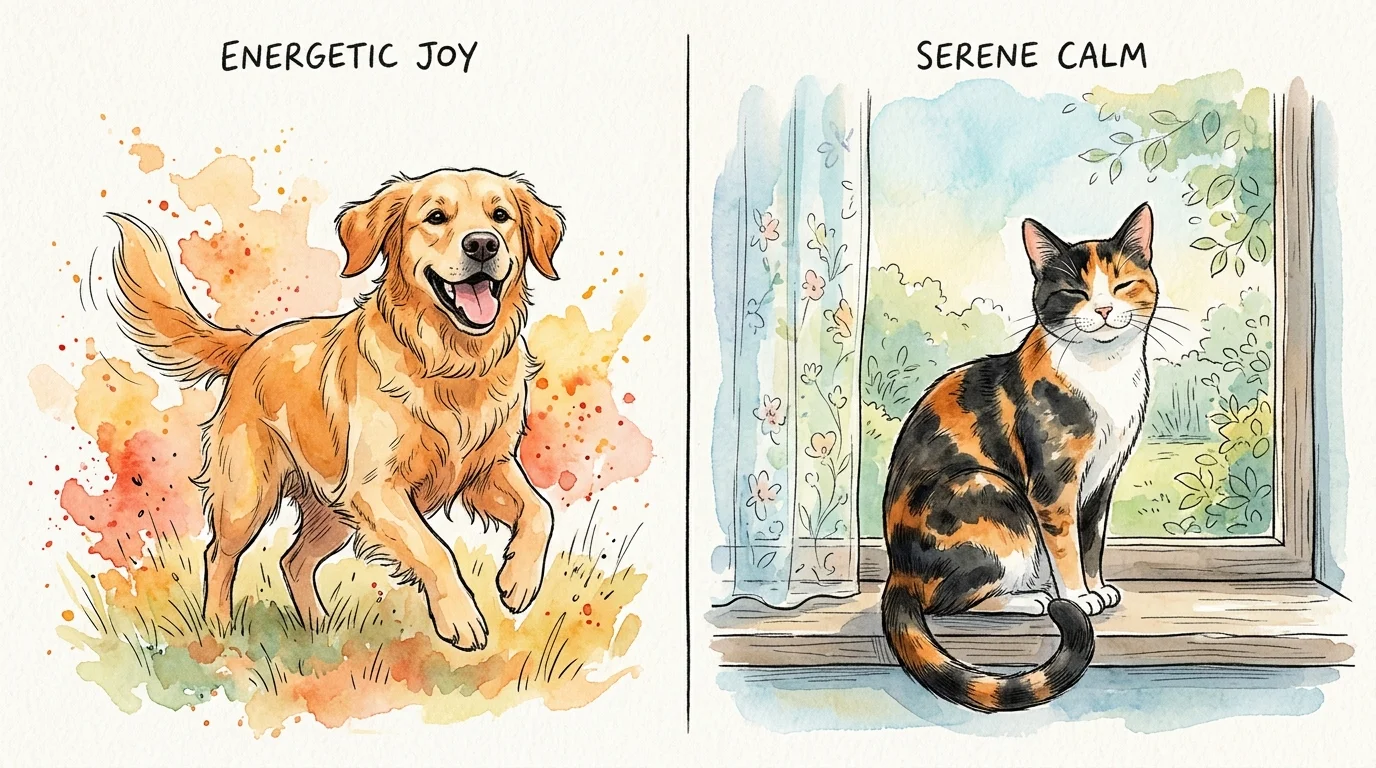
Dogs express devotion through exuberant tail wags, open-mouthed grins, and constant proximity. Cats, stemming from solitary evolutionary origins, express deep emotional bonds through subtle, nuanced signals that human eyes easily overlook.
Research confirms that felines form secure attachments to their human caregivers at rates strikingly similar to dogs and human infants. Understanding cat affection behavior requires shifting your frame of reference from high-energy enthusiasm to quiet, intentional partnership.
When you learn to decode subtle signs cats love you—from slow blinks to gentle headbutts—you uncover a rich landscape of feline devotion that matches any dog’s loyalty.
At a Glance: Key Differences in Cat vs. Dog Affection
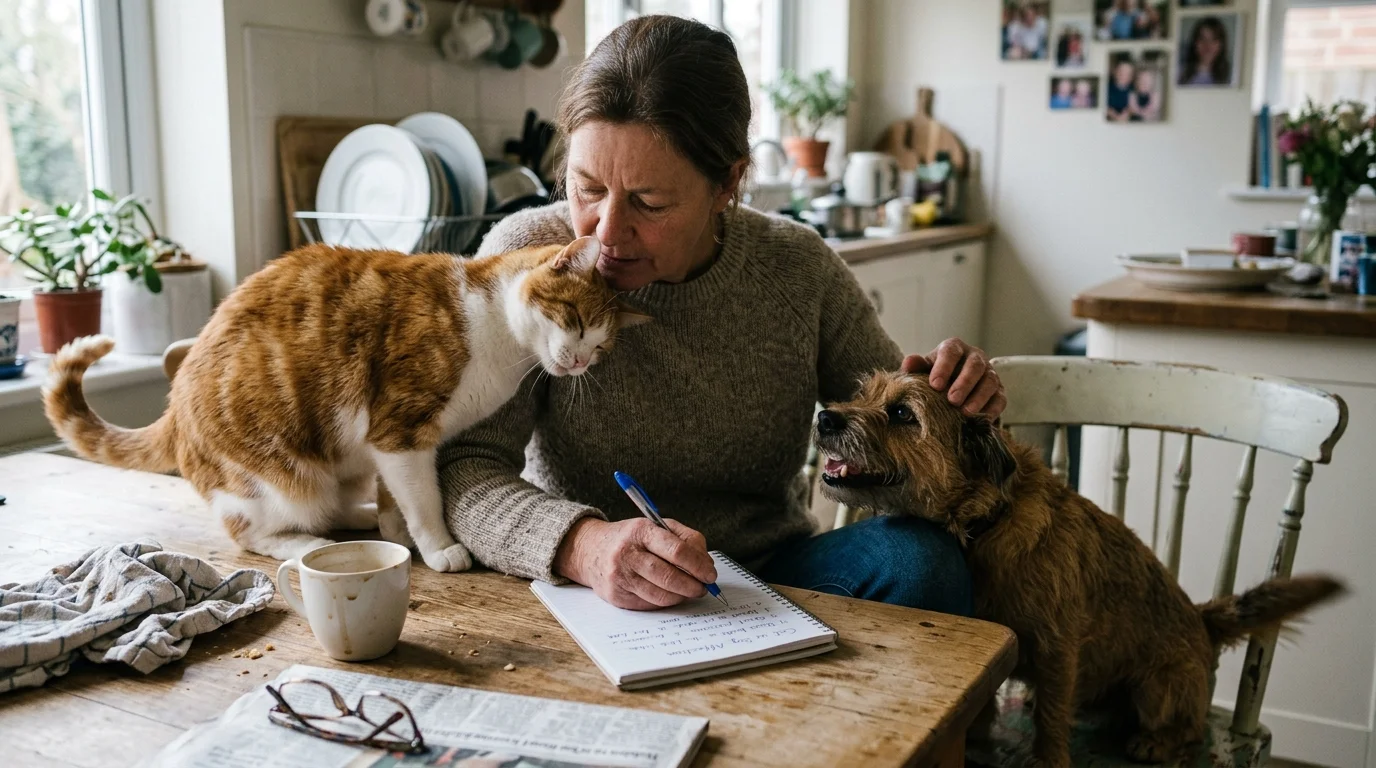
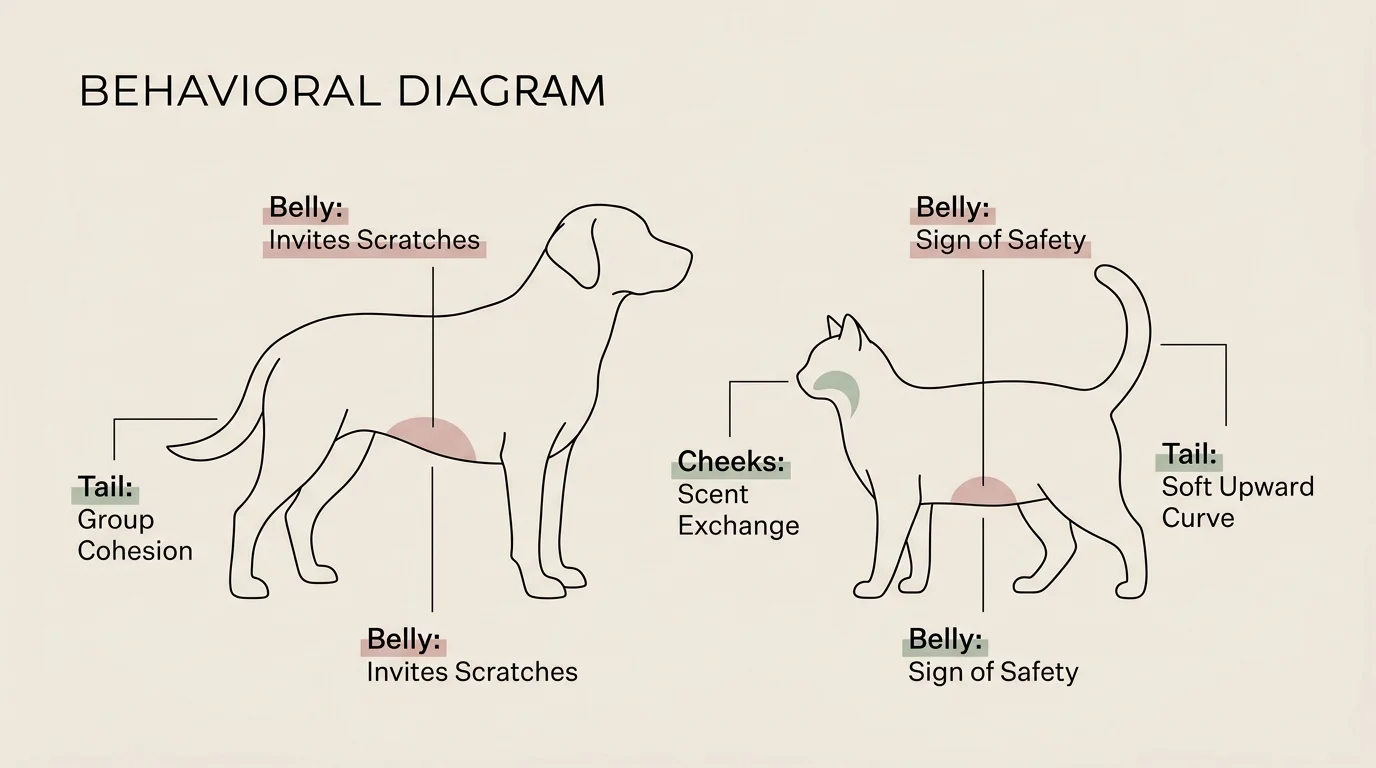
Because cats and dogs evolved from entirely different social systems, their expressions of affection reflect distinct ancestral priorities. Dogs rely on overt visual cues to maintain group cohesion, while cats utilize micro-expressions, scent exchange, and spatial trust.
- Greeting Style: Dogs greet you with full-body tail wags and physical bounces; cats greet you with a elevated tail curve, a soft slow blink, or a gentle cheek rub.
- Physical Contact: Dogs often lean their weight against you or solicit heavy strokes; cats prefer targeted scent-marking through headbutts (“bunting”) or light rhythmic kneading.
- Proximity Preferences: Dogs display “velcro” shadowing from room to room; cats practice parallel companionship, resting nearby in your shared environment.
- Vulnerable Postures: A dog’s exposed belly usually invites physical scratches; a cat’s exposed belly represents an expression of total safety rather than a request for physical touch.
Why Feline and Canine Affection Look So Different
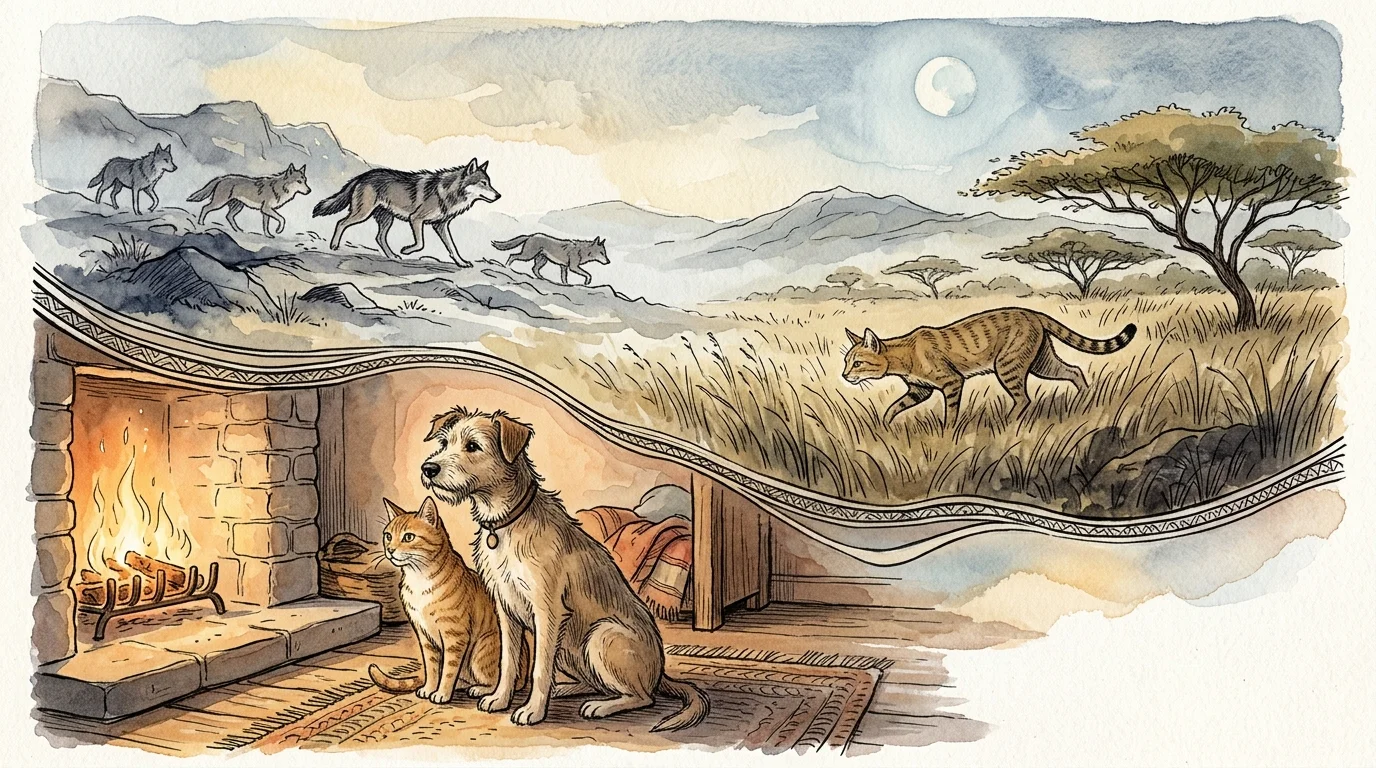
To truly master understanding cat affection behavior, you must first look at evolutionary history. Domestic dogs (*Canis lupus familiaris*) descend from pack-hunting wolves whose survival depended on vocal coordination, clear hierarchical cues, and enthusiastic social displays.
In contrast, domestic cats (*Felis catus*) descend from the African wildcat (*Felis lybica*), a solitary territorial predator that hunted alone and avoided unnecessary conflict with larger animals.
Because wildcats survived by remaining discreet and self-reliant, domestic cats retain a communication style built on efficiency, subtlety, and environmental control. When a dog loves you, they celebrate your presence with obvious jubilation.
When a cat loves you, they accept you into their private safety sphere—an honor that requires immense trust for a species that acts as both predator and prey in nature.
9 Ways Cats Show Love Differently Than Dogs
1. The Slow Blink vs. The Direct Eye Stare
In the canine world, steady eye contact often signifies focus, play readiness, or submissive devotion depending on body posture. In the feline world, an unblinking gaze signals an immediate predatory threat or territorial challenge.
Because predatory eyes remain hyper-focused during a hunt, keeping eyes wide open signals high alertness.
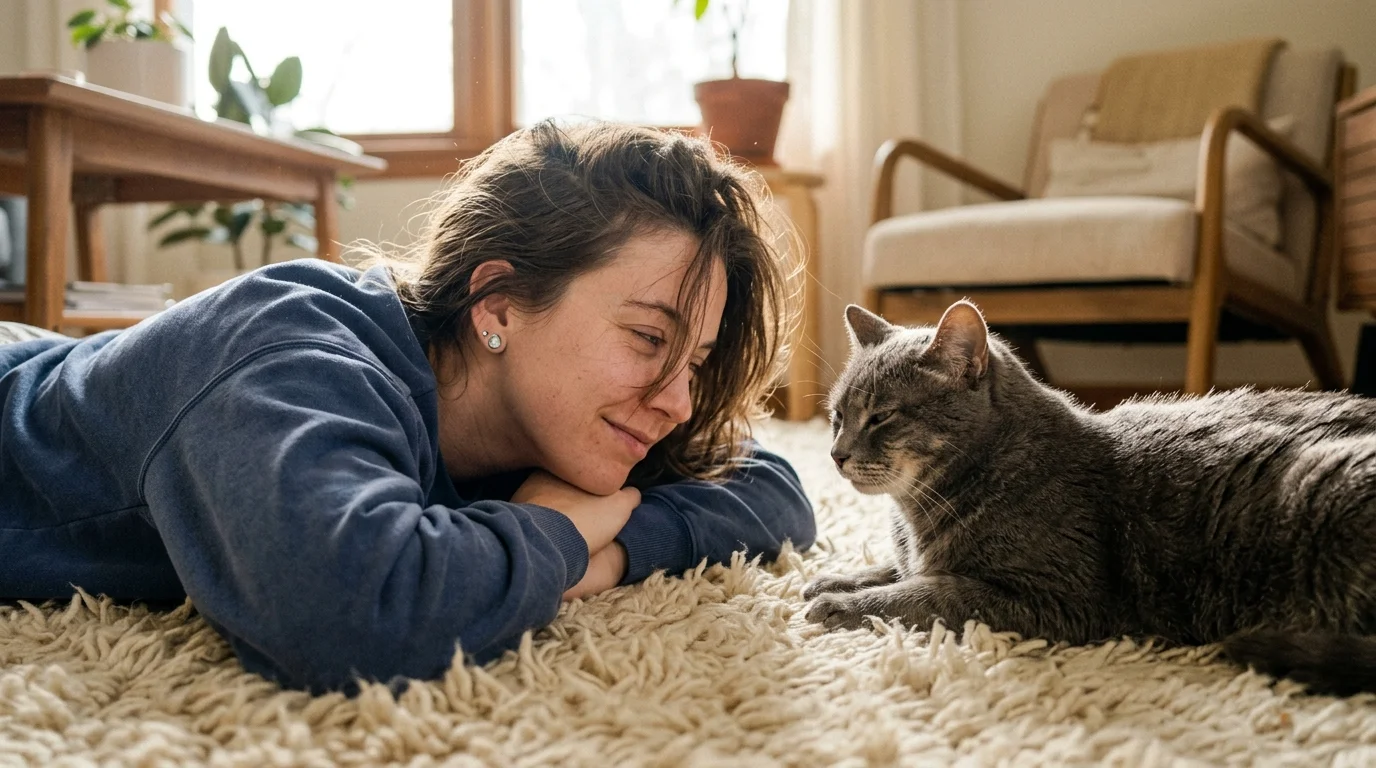
When your cat looks at you and slowly closes and opens their eyes—often referred to as the “feline slow blink” or “cat kiss”—they are sending a profound message. By intentionally closing their eyes in your presence, your cat demonstrates complete vulnerability.
They are declaring that they feel safe enough around you to drop their sensory defenses. You can mirror this subtle sign cats love you by lowering your gaze and slowly blinking back, creating an instant moment of mutual reassurance.
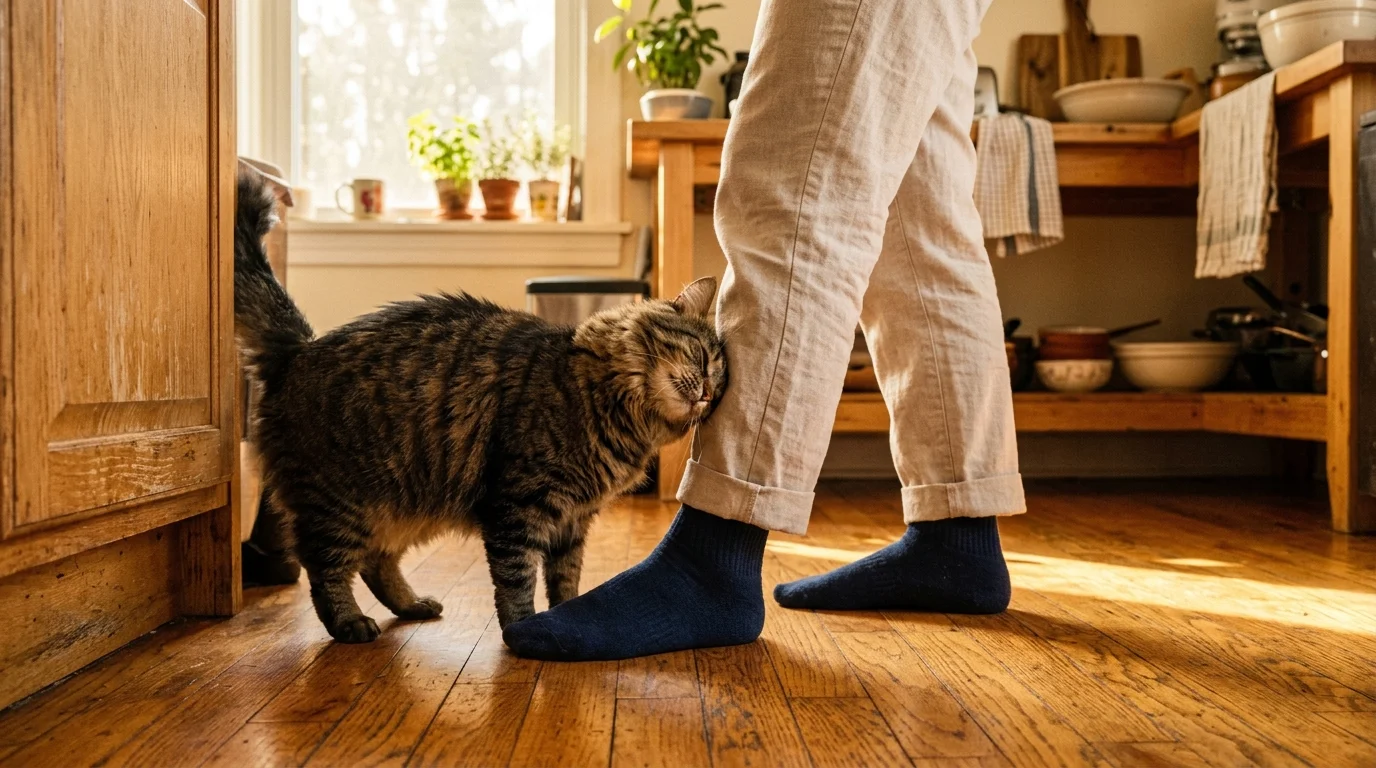
2. Bunting and Cheek-Rubbing vs. Leaning and Tail-Wagging
A dog displays affection by pressing their body against your legs, wagging their hindquarters, or resting their heavy head on your knee. Cats express affection through a sophisticated chemical dialogue called bunting.
Cats possess specialized cutaneous scent glands along their cheeks, chin, forehead, and tail base.
When your cat approaches and firmly rubs their cheek or forehead against your hand, ankle, or face, they deposit facial pheromones.
This behavior blends your scent profile with theirs, creating a harmonious “colony scent.” While a dog physically holds onto you to feel close, a cat chemically marks you as safe, familiar family territory.
3. The Vertical “Question Mark” Tail vs. The Full-Body Wag
A happy dog communicates enthusiasm across their entire torso—sweeping their tail horizontally, wiggling their hips, and relaxing their mouth. Cat tails, however, operate like precision antennas of internal emotion.
When your cat walks toward you holding their tail straight up in the air with a slight crook or curve at the very tip—resembling a question mark—you are witnessing the ultimate feline greeting signal.
Mother cats use this upright tail posture to signal kittens to follow them, and adult cats reserve it exclusively for individuals they trust and welcome into their space.
If the tip of that upright tail gently shivers or quivers as they approach you, your cat is experiencing peak happiness at your return.
4. Rhythmic Kneading (“Making Biscuits”) vs. Excited Pawing
When dogs want affection or attention, they typically use a firm, outstretched paw to tap your knee, drag your hand, or push against your arm.
Cats engage in a much gentler, repetitive motion known as kneading, pushing their paws rhythmically against soft surfaces, blankets, or your lap.
This behavior stems from early kittenhood development. Nursing kittens knead their mother’s mammary glands to stimulate oxytocin release and milk flow.
When an adult cat kneads your lap while purring, they revert to a state of profound infant comfort. They aren’t asking for play or food; they are experiencing absolute comfort and emotional safety in your presence.
5. Purring as Low-Frequency Resonance vs. Barking and Whining
Dogs use audible vocalizations—barks, whines, yips, and groans—to express excitement, solicit help, or initiate play. While cats do vocalize with meows to communicate directly with humans, their deepest emotional bonding signal operates on a physical vibration: the purr.
Feline purring occurs within a frequency range of 20 to 140 Hertz. Veterinary studies suggest these specific frequencies promote bone density, soothe soft tissue, and reduce physical pain.
When your cat curls up against your chest and begins to purr, they create a shared physiological state of calming resonance. They are actively soothing both themselves and you, offering a physical manifestation of comfort that operates beyond simple vocal communication.
6. Quiet Proximity (“Parallel Hanging”) vs. Velcro Shadowing
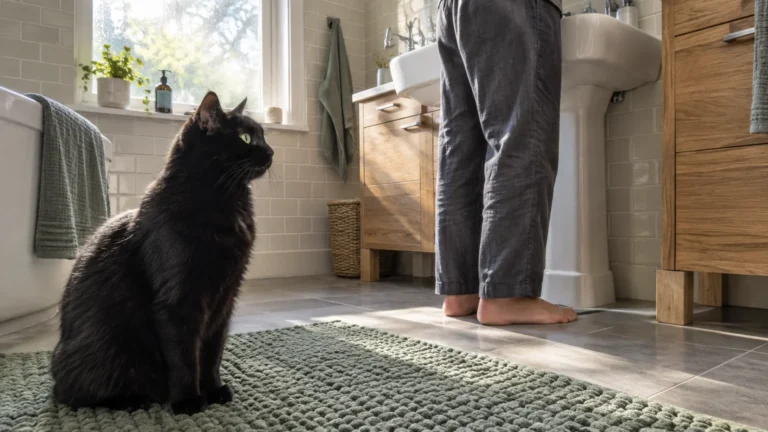
Dog owners are well acquainted with “velcro behavior”—a dog trailing six inches behind your heels from the kitchen to the bathroom, sitting directly on your feet whenever you stop. Because dogs are pack animals, close physical attachment provides them with social security.
Cats demonstrate love through respectful co-presence. Behavioral scientists refer to this as “parallel resting.” Your cat might not sit directly in your lap, but they will choose to sleep on a chair three feet away, facing you.
In feline communication, choosing to share space without needing to monitor or defend against another individual represents maximum trust.
Recognizing how cats show affection differently means realizing that a cat lying across the desk while you work is actively choosing your company over the entire rest of the home.
7. Exposing the Vulnerable Belly vs. Soliciting Belly Rubs
One of the most common points of friction between cat owners and their pets involves the exposed stomach. When a dog flops onto their back and exposes their stomach, they are almost always soliciting physical affection or displaying friendly submission.
They welcome heavy belly rubs and soft scratches.
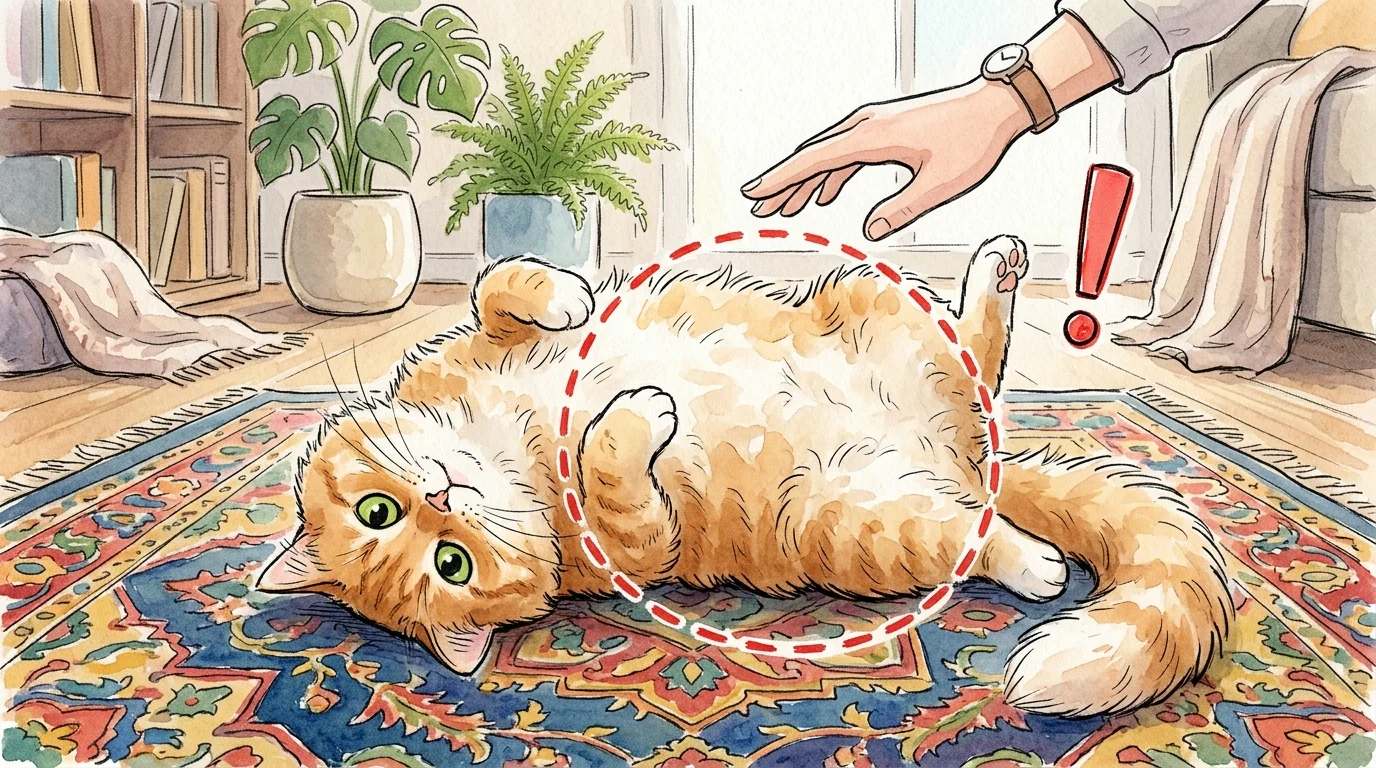
When a cat rolls onto their back and exposes their stomach, they are communicating trust—not soliciting touch. A cat’s belly houses all their vital organs, making it their most physically vulnerable region.
According to body language guidance from the ASPCA, exposing the abdomen shows that the cat feels entirely secure in their environment. If you reach down to stroke their stomach like a dog, your cat may instantly drop into a defensive posture with claws and teeth.
The ultimate sign of cat love here is simply acknowledging their trust verbally or with a slow blink, leaving their belly untouched.
8. Allogrooming (Sandpaper Licks) vs. Canine Kisses
Dogs give kisses by rapidly licking your cheeks, chin, and hands as an expression of excitement and submissive affection. Cats express social bonding through a deliberate behavioral process called allogrooming—the act of one animal grooming another within a social group.
If your cat gently licks your fingers, hair, or forehead with their rough, barbing tongue, they are treating you as an official member of their immediate family line.
In wild feline colonies, cats groom one another to exchange scent markers, remove external parasites, and reinforce social cohesion. Accept those scratchy licks as a high compliment; your cat is performing essential hygiene maintenance on their favorite human.
9. Bringing “Gifts” vs. Fetching Toys
A dog brings you a tennis ball or rope toy because they want to engage in a collaborative game of fetch or tug-of-war. They see you as a play partner in an active physical game.
When an indoor cat drops a toy mouse, a feather, or a soft slipper at your feet—or when an indoor-outdoor cat brings home actual prey—they are following a deeply ingrained parental instinct.
In feline social structures, adult mothers and experienced hunters bring dead or weakened prey back to the nest to feed and educate family members who don’t hunt efficiently.
By bringing you a prize, your cat is sharing resources and caring for your survival, demonstrating their deep commitment to your shared household.
Comparing Feline and Canine Affection Signals
Understanding cat vs dog ways of showing love becomes much easier when you map their behaviors side by side. Use this quick reference guide to reframe how you interpret your pet’s daily actions.
| Emotional Need | Dog Expression | Cat Expression | Best Way to Respond |
|---|---|---|---|
| Greeting You | Full-body wag, jumping, barking, leaning weight | Upright question-mark tail, cheek rub, slow blink | Offer your knuckle at nose height for a scent greeting |
| Deep Bonding | Direct eye contact, resting head on lap, licking face | Slow blinking, rhythmic kneading, allogrooming | Slow blink back; provide a soft blanket for kneading |
| Expressing Safety | Rolling over for belly scratches, deep sighing | Exposing belly while resting, purring loudly | Acknowledge verbally; do not touch the vulnerable belly |
| Seeking Proximity | Shadowing heels, sitting on feet, persistent touching | Parallel hanging, sleeping nearby in the same room | Respect their chosen distance; speak in soft, calm tones |
| Sharing Resources | Fetching toys to invite interactive play | Bringing toy prey or objects to your feet or bed | Calmly accept the gift; reward them with play or treats |

The Science of Feline Attachment Bonds
For decades, popular culture labeled cats as aloof, indifferent, and solitary creatures who merely tolerated humans for food. Modern animal cognition studies completely dismantle this myth.
Landmark research conducted at Oregon State University and published in Current Biology demonstrated that cats form secure attachment bonds with their human caregivers at nearly identical rates to dogs and human infants.
In the study led by Dr. Kristyn Vitale, researchers evaluated cats using a standard secure attachment test. The results were clear:
- 64.3% of cats displayed a secure attachment style to their owners, showing significantly decreased stress levels when their owner was present in a novel environment.
- 35.7% of cats displayed an insecure attachment style, mirroring the exact distributions seen in canine and child attachment studies.
This data confirms that cats look to their human guardians as a primary source of emotional safety, comfort, and environmental confidence. Their expression of that security simply follows feline evolutionary rules rather than canine rules.
How to Mirror Cat Affection in Your Daily Routine
Now that you recognize these subtle signs cats love you, you can actively communicate back in a language your cat understands. Building a deeper bond doesn’t require forcing physical contact; it requires meeting your cat on their sensory terms.
- Master the Finger-Sniff Greeting: Before reaching out to pet your cat, extend a single index finger at their nose height, roughly two inches away. Allow your cat to approach, sniff your finger, and initiate cheek contact. This gives your cat immediate consent and control over the interaction.
- Practice the Slow Blink Ritual: Whenever you catch your cat looking across the room at you, soften your facial muscles, lower your eyelids slowly, hold them closed for one second, and open them gently. Watch closely—your cat will often send a slow blink right back to you.
- Set Up Parallel Workspaces: If your cat insists on sitting on your computer keyboard while you work, place a small cat bed or folded fleece blanket on the desk right next to your monitor. This satisfies their desire for parallel proximity without disrupting your productivity.
- Respect the Petting Threshold: Cats prefer light, focused petting around their facial scent glands—specifically the cheeks, under the chin, and behind the ears. Avoid rough, heavy strokes down the back or near the tail base, which can quickly overstimulate their sensitive nervous system.
Common Mistakes to Avoid
Misinterpreting feline body language often leads to accidental stress or broken trust. Avoid these four common missteps when attempting to bond with your cat:
- Rubbing an exposed cat belly: Treating an exposed cat belly like a dog’s belly usually results in bites or scratches, breaking the trust your cat displayed by exposing their stomach in the first place.
- Forcing physical closeness: Restraining a cat in your arms or trapping them in your lap forces a defensive reaction. Always leave an open exit path so your cat feels safe staying near you.
- Expecting high-energy reactions: Expecting your cat to sprint to the front door and leap into your arms like a golden retriever sets unrealistic expectations. A gentle stretch, an upright tail, and an approach to sniff your shoes represent equal enthusiasm in feline terms.
- Ignoring tail warnings: A twitching, swishing, or thumping cat tail signals rising irritation or overstimulation. When you see a twitching tail tip, pause all physical touch immediately.

Nurturing a Mutual Bond
Recognizing how cats show affection differently allows you to appreciate the profound, quiet partnership your cat offers every single day.
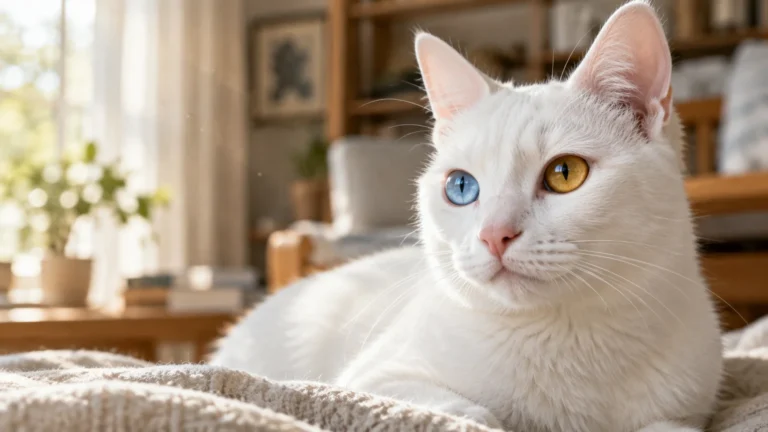
A cat’s love isn’t defined by dramatic displays or noisy demands; it is woven into quiet purrs, shared space, slow blinks across a sunlit room, and gentle headbutts against your knuckles.
By respecting their evolutionary design and responding to their subtle signals with patience and care, you open the door to a deeply rewarding friendship built on mutual trust.
The information here is meant for educational purposes. Specific circumstances—including health conditions, finances, location, and goals—may require different approaches.
When in doubt, consult a licensed professional or check official sources directly.
Last updated: May 2026. Rules, prices, and details change—verify current information with official sources before acting on it.