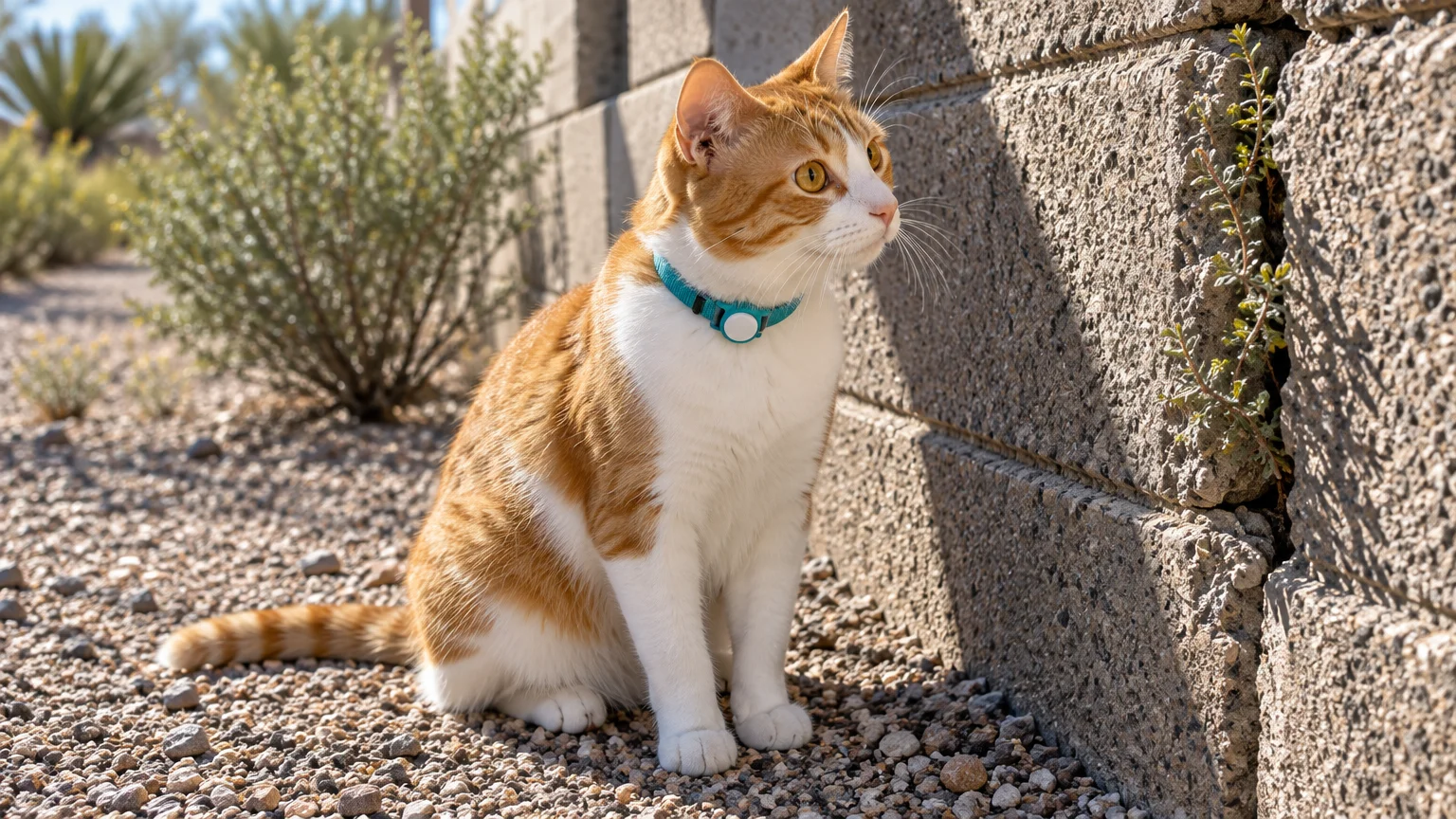
When an adventurous orange-and-white cat vanished outdoors in Indian Wells, California, a tiny piece of consumer tech saved its life. An Apple AirTag on the cat’s collar led its owner directly to an improbable trap.
The curious pet was wedged tightly inside a narrow 4- to 5-inch gap between two massive, eight-foot-tall concrete retaining walls. Firefighters quickly arrived to cut through the solid concrete and pull the animal to safety.
This dramatic pet rescue shows how everyday location tags can pinpoint a trapped cat rescue when every minute counts.
The Dramatic Skylark Trail Rescue
Emergency dispatchers received a call at 10:18 a.m. on Tuesday, November 24, 2026. The caller reported a trapped pet in the 75200 block of Skylark Trail in Indian Wells.
Crews from Cal Fire and Riverside County Fire Department Battalion 12 responded alongside Riverside County Animal Services. They found the frightened cat stuck deep between two 8-foot-tall concrete block retaining walls.
The space measured only 4 to 5 inches wide. The gap left the animal completely unable to turn around, back up, or climb out.
Firefighters used specialized power tools to drill and cut through one of the thick concrete walls. The precise cuts allowed them to reach inside without harming the animal.
Rescuers freed the dirt-covered cat and reunited it with its grateful owner. A local emergency veterinary clinic then admitted the pet to treat unspecified injuries.
Why Cats Get Trapped in Tight Domestic Spaces
Cats possess a flexible spine and free-floating collarbones that let them slip through openings no wider than their whiskers. However, curiosity or sudden fear often drives them into spaces where they cannot turn back.
When panic sets in, a cat naturally tries to push forward rather than retreat. This instinct wedges their shoulders tightly against rough surfaces like brick, concrete, or drywall.
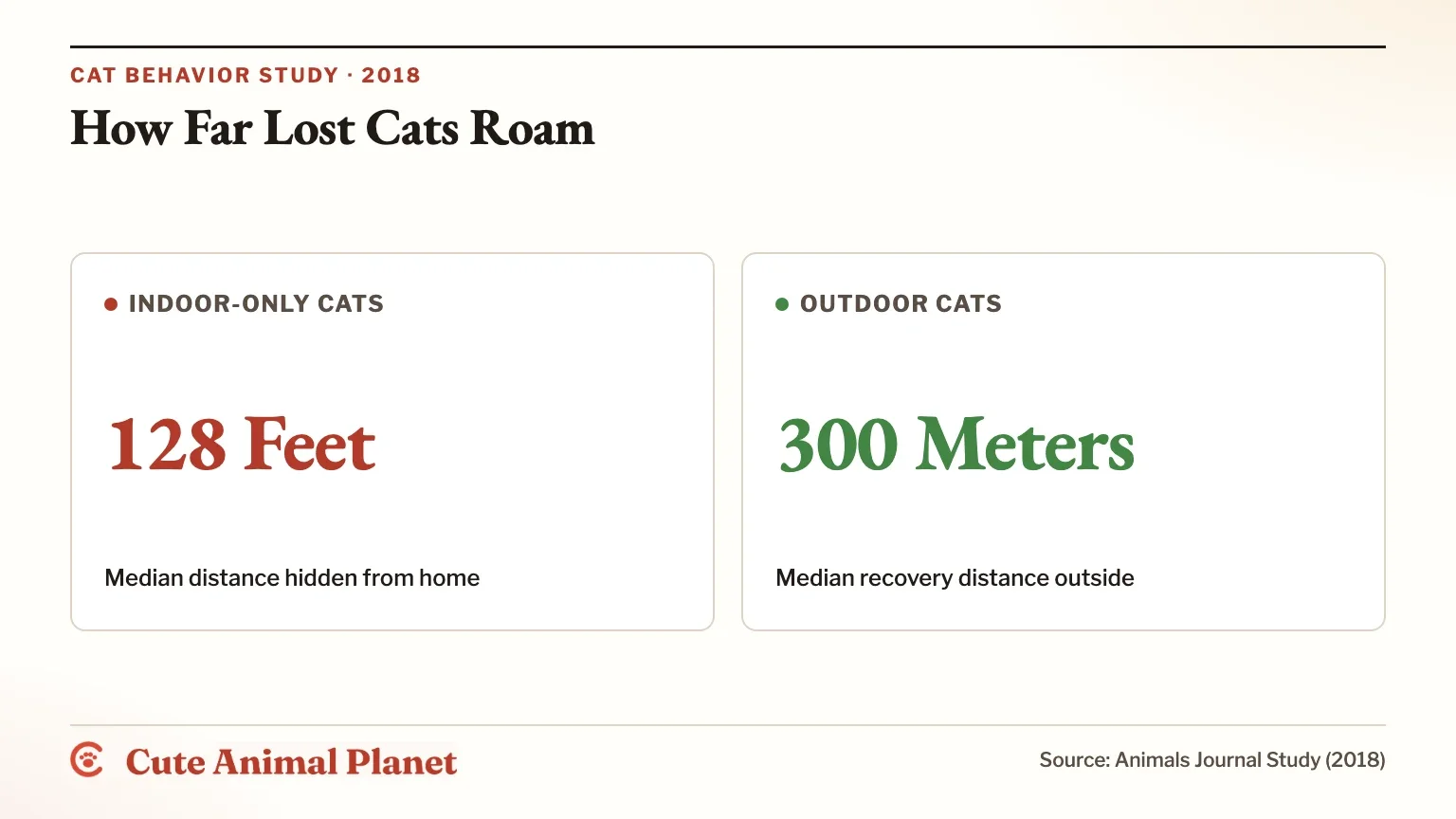
Research shows that missing cats rarely travel far from home. A landmark 2018 study published in Animals found that lost cats stay remarkably close to their escape point.
The researchers discovered that indoor-only cats hide a median distance of just 39 meters—about 128 feet—from home. Outdoor cats roam further, with a median recovery distance of 300 meters.
Because frightened cats hide in silence, owners frequently walk past them during routine searches. An audible chime or digital pointer can turn hours of frantic searching into a fast rescue.
How the AirTag Pet Tracker Aided the Search
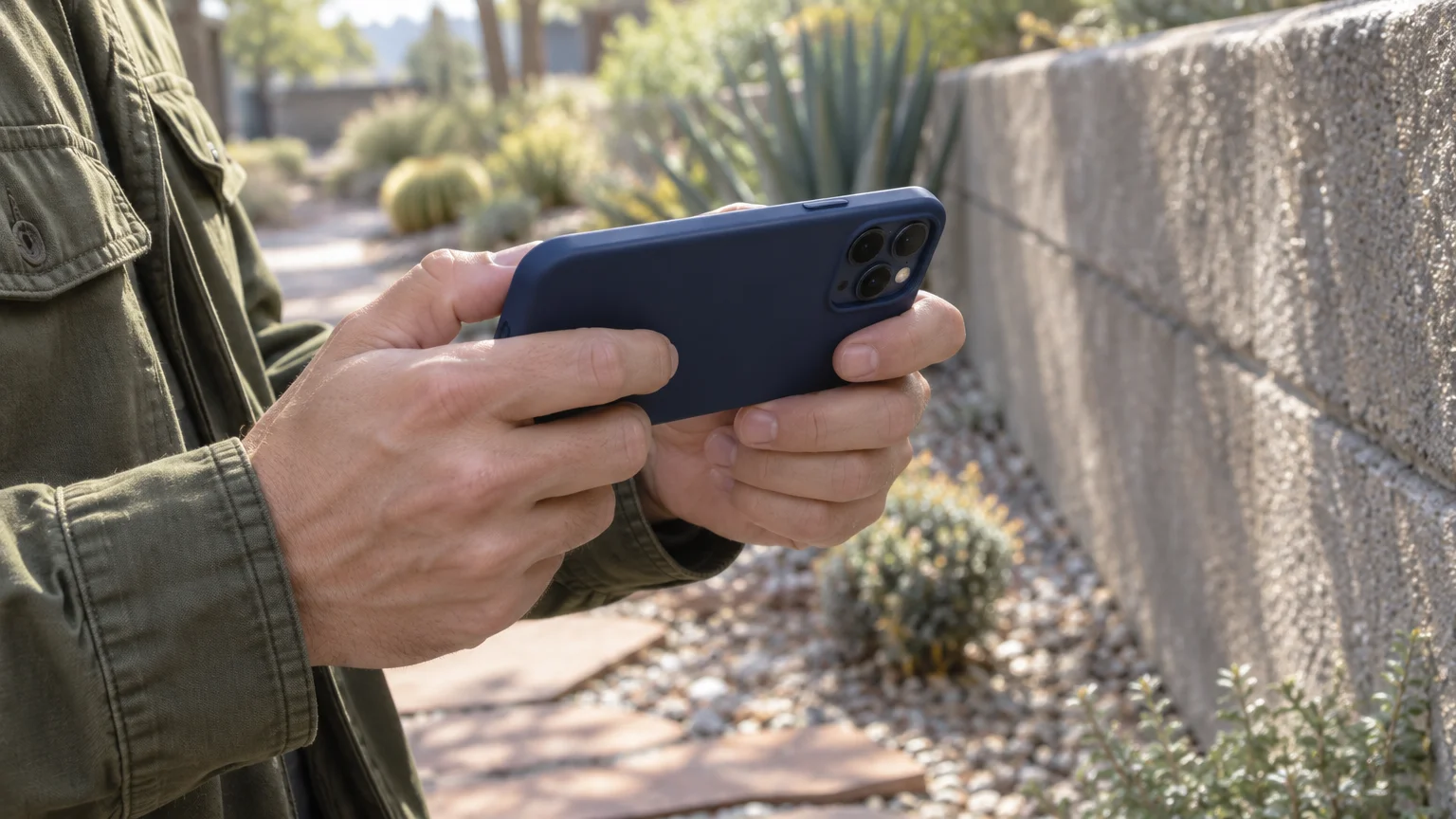
In this Indian Wells rescue, the cat wore an Apple AirTag securely attached to its collar. The owner used Bluetooth signals to trace the cat to the narrow retaining wall boundary.
Apple updated the tracker in January 2026 with a second-generation Ultra Wideband chip. The current model offers a Precision Finding range up to 50% farther and a speaker 50% louder than the original version.
That louder speaker makes a real difference when searching near dense building materials. A pet parent can play a sound that pierces through soil, brick, or concrete block.
Even with these improvements, Apple officially states that AirTags track personal items rather than pets or people. Understanding the device’s limits ensures you use it safely.
An AirTag does not contain a live GPS chip or cellular radio. Instead, it relies on nearby Apple devices in the Find My network to report its location.
Comparing AirTags and Dedicated Pet GPS Trackers
Pet parents often debate whether to use an airtag pet tracker or a dedicated GPS collar device. Each system brings clear benefits and specific trade-offs.
| Feature | Apple AirTag | Dedicated Pet GPS |
|---|---|---|
| Hardware Cost | $29 standard MSRP (often $18 on sale) | $40 to $60 upfront |
| Subscription Fees | None | $8 to $14 monthly cellular plan |
| Tracking Network | Apple Find My (Bluetooth crowd network) | Live cellular and GPS satellites |
| Battery Life | About 1 year (replaceable CR2032) | 2 to 7 days (rechargeable) |
| Best Use Case | Suburban yards and tight neighborhood hiding spots | Rural roaming across open acreage |
An AirTag costs $29 at full retail price, with sales often dropping the price to $18. Dedicated GPS units require ongoing cellular subscriptions that range from $8 to $14 per month.
AirTags excel in suburban areas where neighbors carry iPhones and cats hide in quiet backyard corners. Dedicated GPS collars work better for rural cats that wander across open fields without nearby smartphones.
Vital Cat Safety Rules for Collar Trackers
Attaching a tracker to your cat requires careful preparation to prevent dangerous accidents. Follow these essential cat safety standards before strapping any hardware to your cat’s neck.
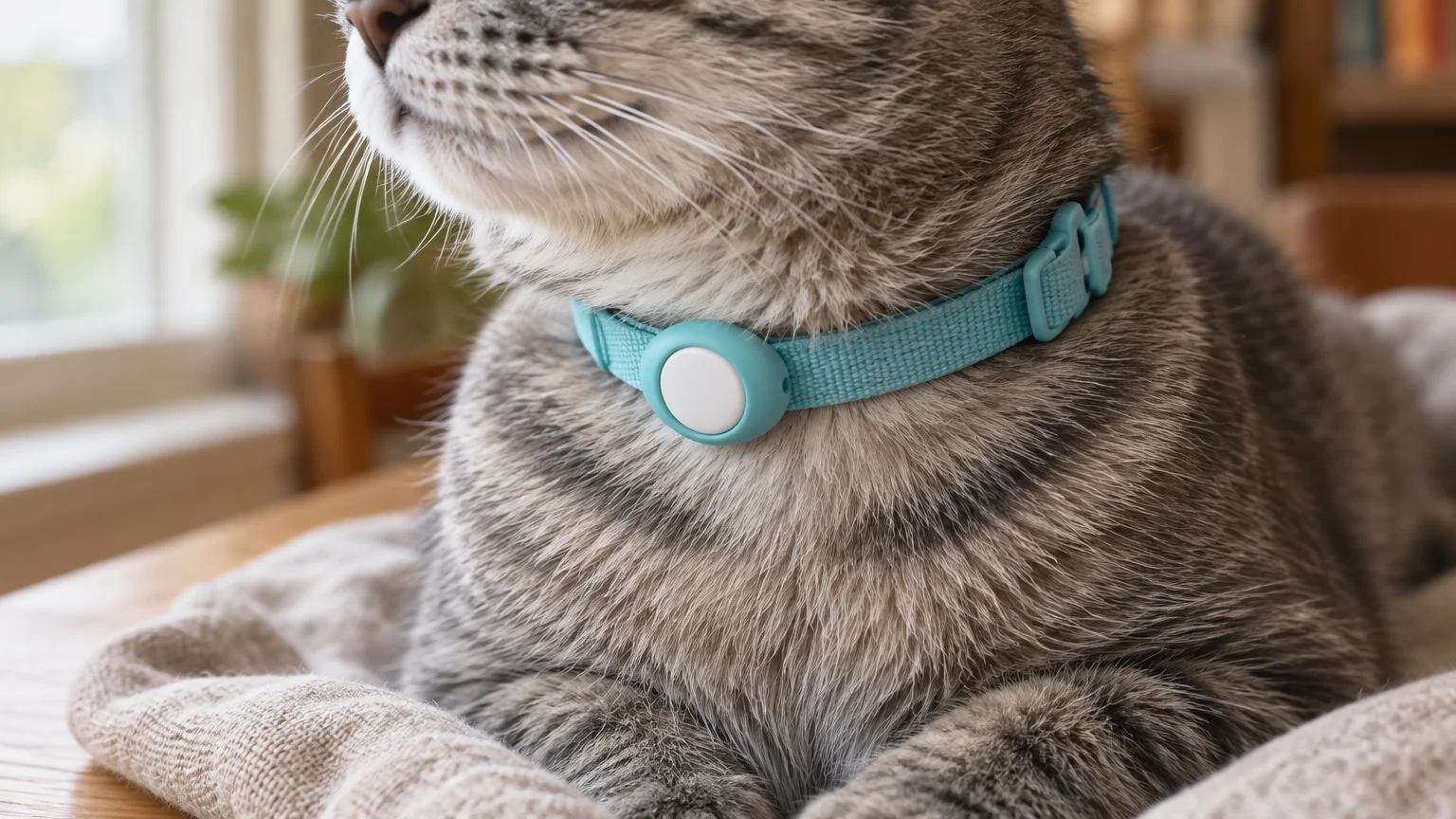
- Always choose a breakaway collar: If your cat snags the tag on a fence, branch, or retaining wall, the latch must release under the cat’s body weight.
- Use a flush-mounted silicone collar sleeve: Dangling keyrings swing loosely, catch on narrow gaps, and knock uncomfortably against food bowls.
- Prevent battery ingestion: The Merck Veterinary Manual warns that swallowing a 3V lithium coin battery can cause severe chemical burns within two hours.
- Keep your pet’s microchip registry updated: Research cited by the American Veterinary Medical Association shows microchipped cats return home at twenty times the rate of unchipped pets.
A tracker helps you find your pet during local emergencies. A registered microchip protects them if a stranger or animal shelter finds them miles away.
What to Do If Your Cat Is Trapped or Missing
If your cat disappears, fast and methodical action yields the best results. Take these practical steps immediately.
- Search your immediate perimeter first: Check crawl spaces, deck footings, sheds, and narrow wall gaps within 150 feet of your home.
- Ping the tracker quietly: Walk slowly through your yard while triggering the tracker sound in brief bursts to listen for muffled chimes.
- Call emergency rescuers for structural traps: Firefighters carry specialized concrete saws and listening equipment that can cut open walls without causing a collapse.
- Visit an emergency veterinarian: Trapped pets can suffer from muscle compression, dehydration, or heat stress that requires prompt medical evaluation.
Never hesitate to contact emergency services if you locate your pet inside a structural void. Professional rescuers possess specialized drills designed to breach concrete without causing collapses.
Worth Keeping in Mind
Concrete and earth significantly reduce Bluetooth signals. If your cat is trapped behind double masonry, you may need to stand directly overhead to connect.
AirTag coin batteries last about one year under regular use. Set an annual calendar reminder to replace the CR2032 cell so the tracker stays operational.
Cats weighing under seven pounds may find collar-mounted trackers too bulky. Always weigh the device against your cat’s comfort and mobility.
Smart technology combined with swift emergency response saved a trapped cat from an impossible concrete crevice in Indian Wells. By pairing safe collar hardware with quick local searches, you can protect your feline friend from similar hidden hazards.
This is general informational content based on widely accepted guidance. Individual results vary.
Verify current details—rules, prices, eligibility, regulations—with official sources before making important decisions.
Last updated: November 2026. Rules, prices, and details change—verify current information with official sources before acting on it.