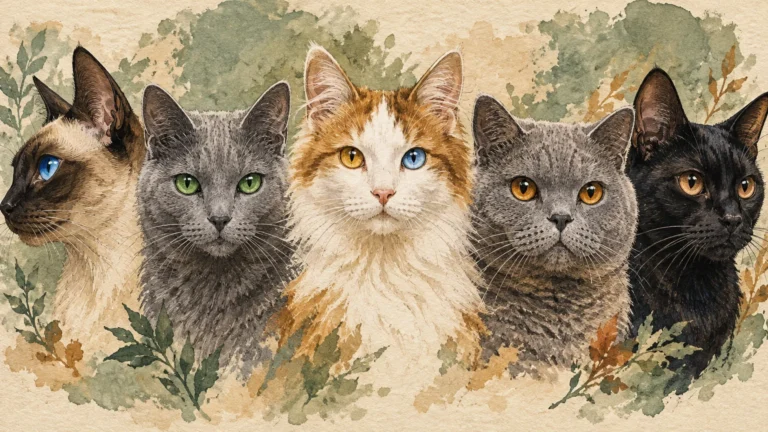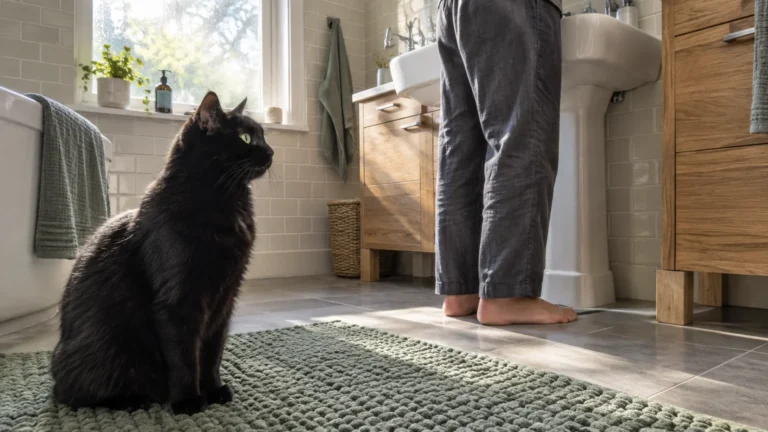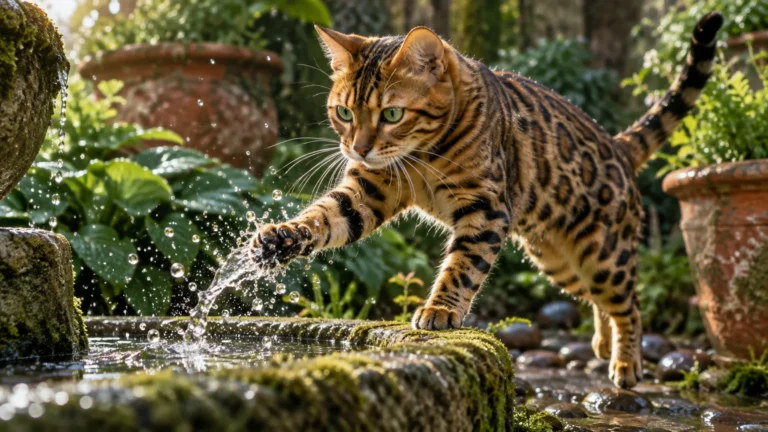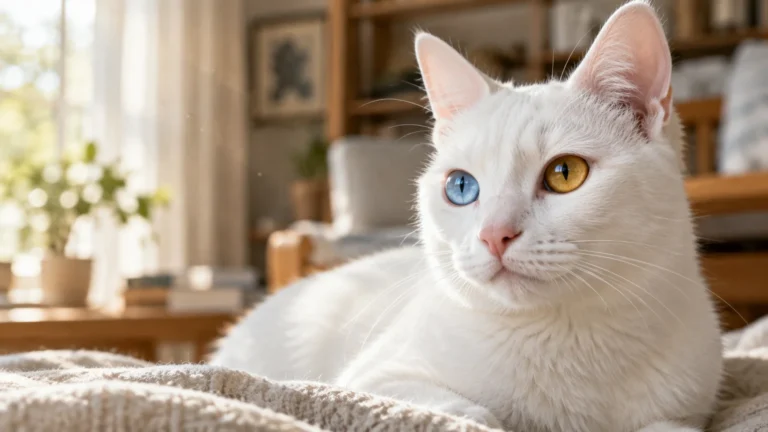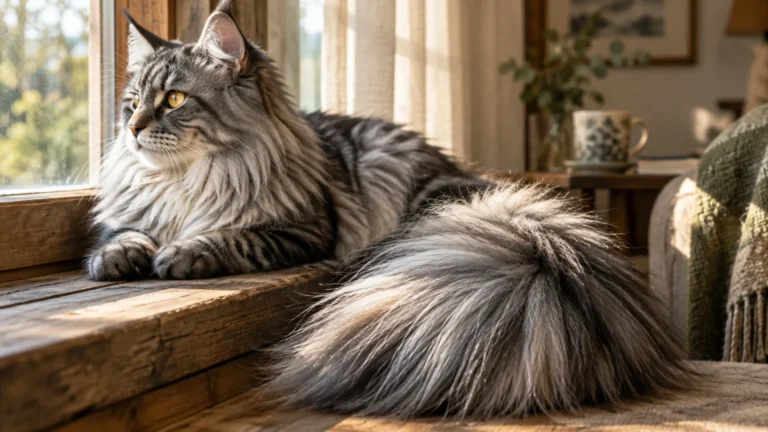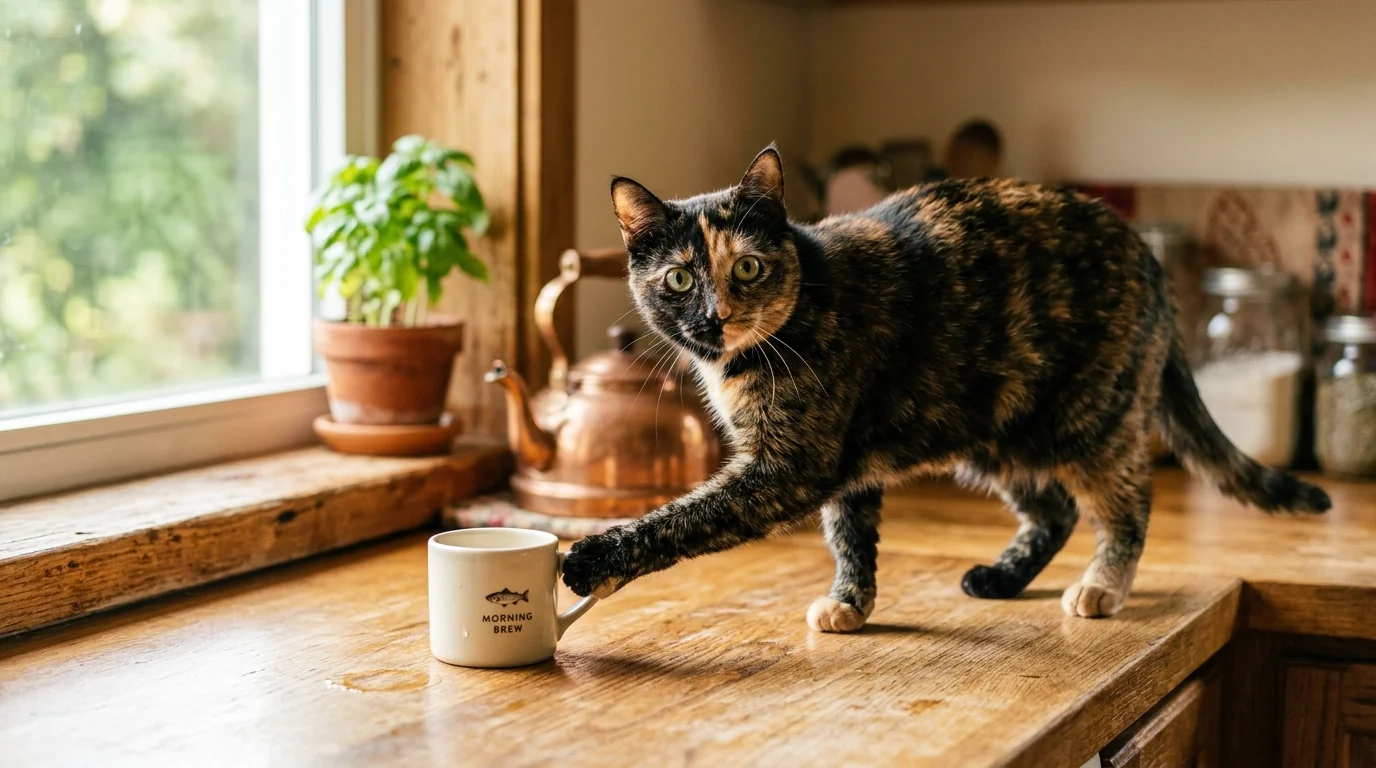
When your cat slowly nudges a glass toward the edge of your counter while maintaining unblinking eye contact, it feels like calculated provocation. In reality, your cat pushing objects off tables stems from a combination of predatory instincts, sensory exploration, and learned social communication.
A feline’s sensitive paw pads rely on tactile feedback to test whether an item is alive, stable, or worth chasing. Furthermore, cats quickly discover that gravity creates a fascinating reaction from both the falling object and their human audience.
Understanding cat mischief helps you channel this natural curiosity into safer outlets without frustrating your clever companion.
Sensory Investigation: How Feline Paw Sensitivity Drives Object Swiping
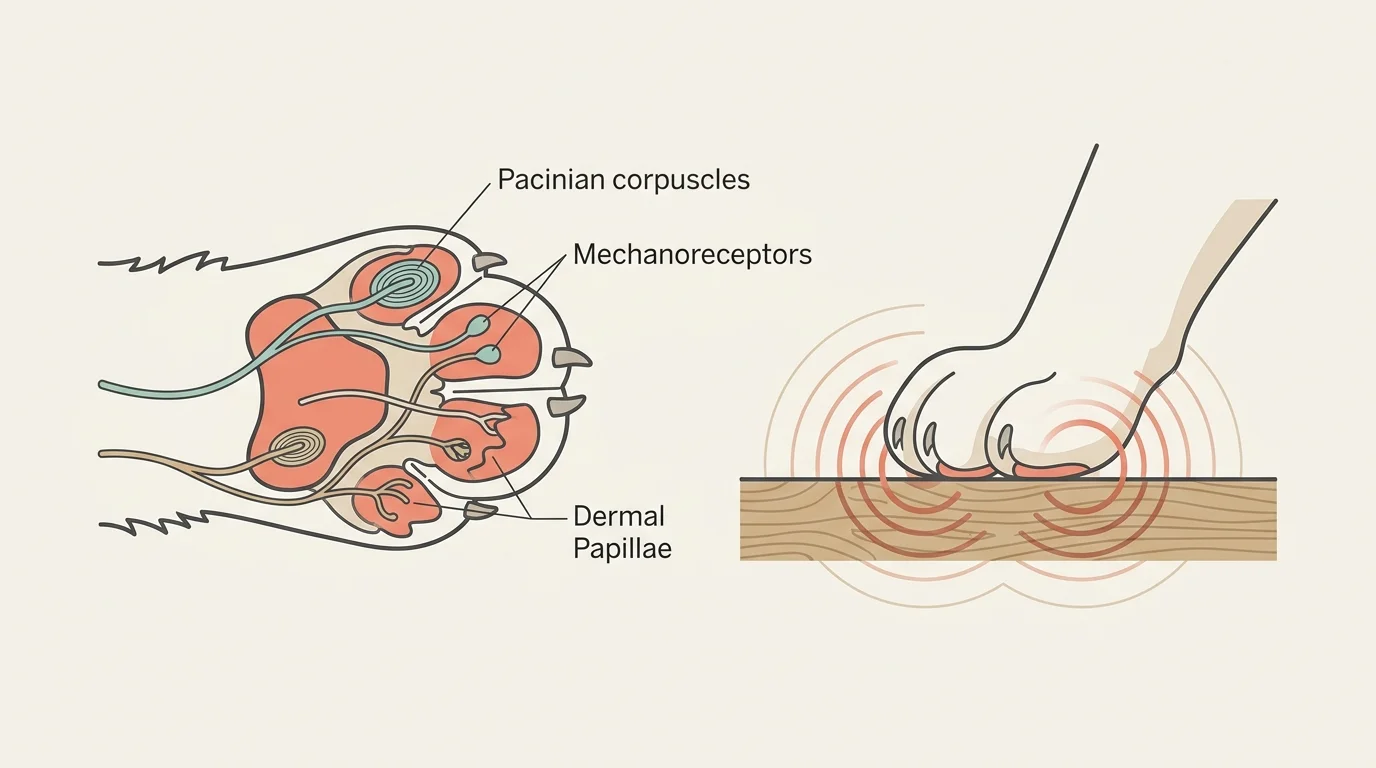
You might assume your cat experiences the world primarily through sight and scent, but their forepaws serve as highly specialized sensory organs. The soft pads on a cat’s feet house thousands of nerve endings, including specialized mechanoreceptors called Pacinian corpuscles.
These sensitive receptors detect subtle vibrations, surface textures, and changes in pressure. When a cat pats a pen, a tube of lip balm, or a glass on a table, they are conducting a physical investigation to gather real-time environmental data.
Unlike dogs, who explore new objects almost exclusively with their mouths, cats use their paws like delicate mechanical tools. As feline curiosity explained by animal behaviorists demonstrates, pushing an item gives a cat immediate feedback about its weight, density, and stability.
A gentle swat tells the cat whether the object is heavy and stationary or light enough to move across a flat surface.
When that object slides off the edge and tumbles to the floor, it provides a satisfying sensory payoff—combining sound, rapid motion, and unpredictable movement.
The Evolutionary Hunting Drive: Testing Potential Prey
Every domestic cat, no matter how spoiled or lazy, retains the biological blueprint of an obligate carnivore and solitary hunter.
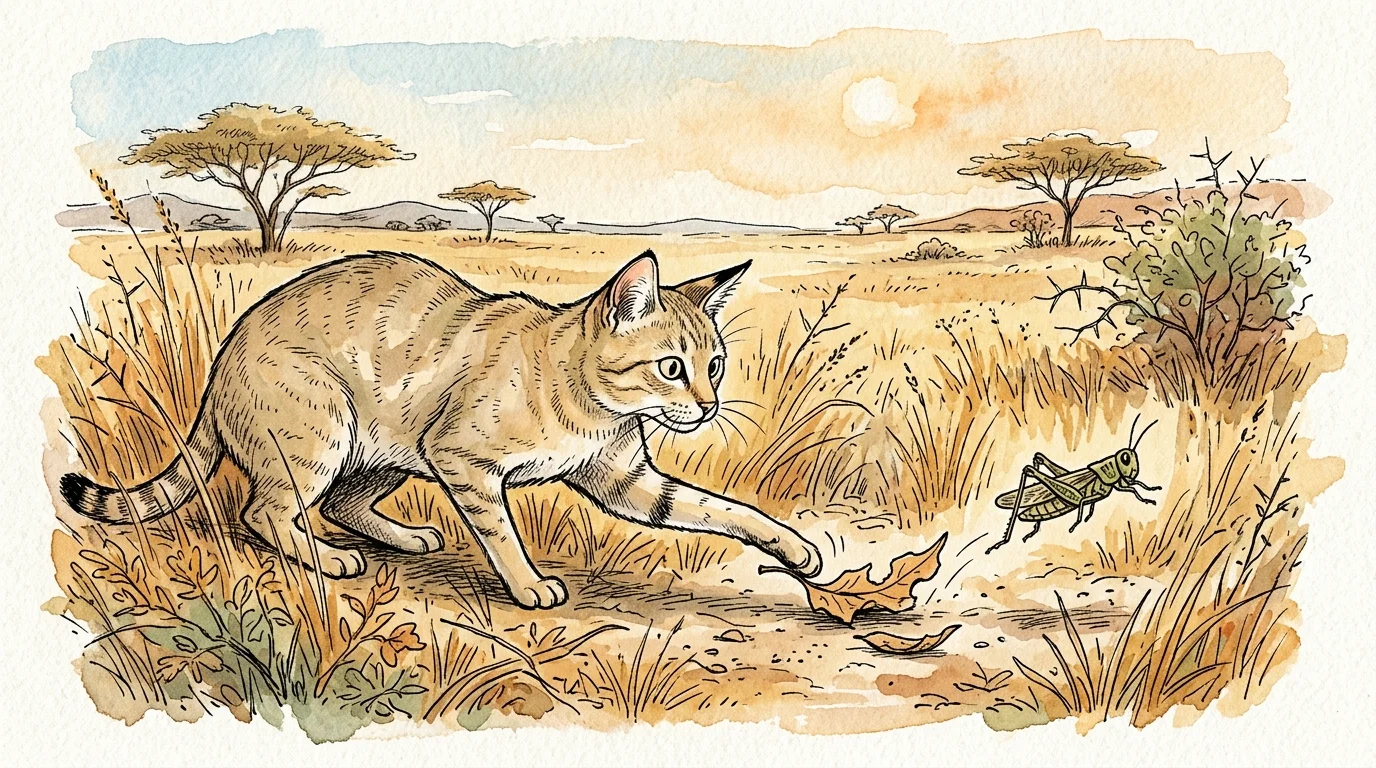
In the wild, ancestral felids like the African wildcat (Felis lybica) spent hours tracking small rodents, birds, reptiles, and insects hidden in brush or burrowed under leaves. These prey species often freeze when threatened, relying on camouflage to avoid detection.
To expose hidden prey, a hunting cat uses a quick swipe of the paw to startle the animal into motion. If an object does not fight back or run away, the cat taps it again to verify whether it is safe or edible.
When your cat swats a car key or a coaster off your coffee table, their brain executes this exact instinctual software.
Gravity mimics the flight response of prey; as the object drops speed and crashes onto the rug below, it activates your cat’s innate prey-drive sequence—causing their pupils to dilate and their muscles to tense for a chase.
Research highlighted by the Cornell Feline Health Center confirms that play behavior in domestic cats serves as an indispensable outlet for these hardwired predatory patterns. Without structured hunting simulations in their daily lives, cats channel that pent-up energy into household items sitting on raised ledges.

Learned Cause and Effect: How Humans Accidentally Reward the Behavior
While biology supplies the initial spark, human behavior frequently turns swatting into a permanent daily habit. Cats excel at associative learning; they continuously monitor their environment to identify patterns that produce desirable results.
In many homes, why cats knock things over comes down to a simple, effective realization: pushing something off a table guarantees instant human attention.
Consider the typical indoor scenario. You are deeply focused on working from home, reading a book, or watching television.
Your cat strolls across the desk, sits next to a coffee mug, and lifts a paw. Sensing impending disaster, you immediately gasp, speak, jump out of your chair, and rush across the room to intercept the mug.
From a human perspective, you are attempting to prevent a mess; from your cat’s perspective, they just discovered a magic button that forces you to abandon whatever you were doing and focus entirely on them.
To a clever cat, even negative attention—such as stern talking, sudden movement, or being picked up—is far more entertaining than being ignored. You become an interactive toy that responds on command whenever an object hits the floor.
This dynamic creates a classic operant conditioning loop. If pushing an eraser off the nightstand gets you to open the bedroom door at five in the morning, your cat will repeat that exact sequence tomorrow.
Over time, cat play behavior blends seamlessly with deliberate social communication.
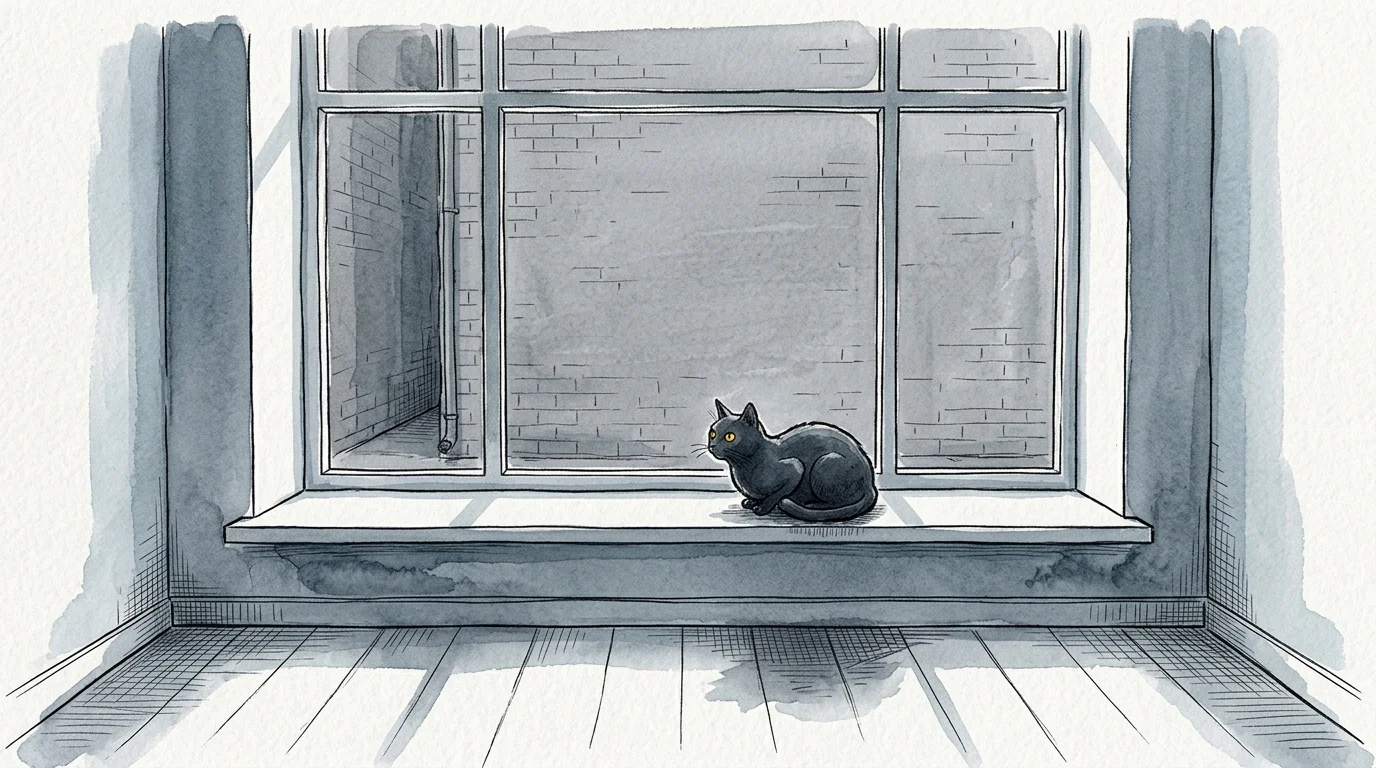
Environmental Boredom: When Your Home Lacks Stimulation
Modern house cats often enjoy warm beds, premium meals, and complete safety from outdoor predators. However, living exclusively indoors can severely limit their cognitive and physical stimulation.
An under-stimulated cat surrounded by flat, empty surfaces will actively invent their own entertainment—and tabletop items offer the ideal props.
When an environment lacks novel textures, vertical climbing routes, or interactive puzzles, your cat turns to physics experiments. Gravity never fails; every item dropped from a kitchen counter produces a distinct sound and lands in a different location.
A plastic bottle bounces erratically, a pencil rolls away, and a set of keys clatters loudly. This variety keeps an under-exercised mind engaged far better than a static plush toy sitting motionless in a corner.
According to veterinary care guidelines published by PetMD, environmental enrichment is a cornerstone of feline mental health. Without dedicated physical and mental exercises, cats resort to destructive or disruptive behaviors to burn off surplus energy.
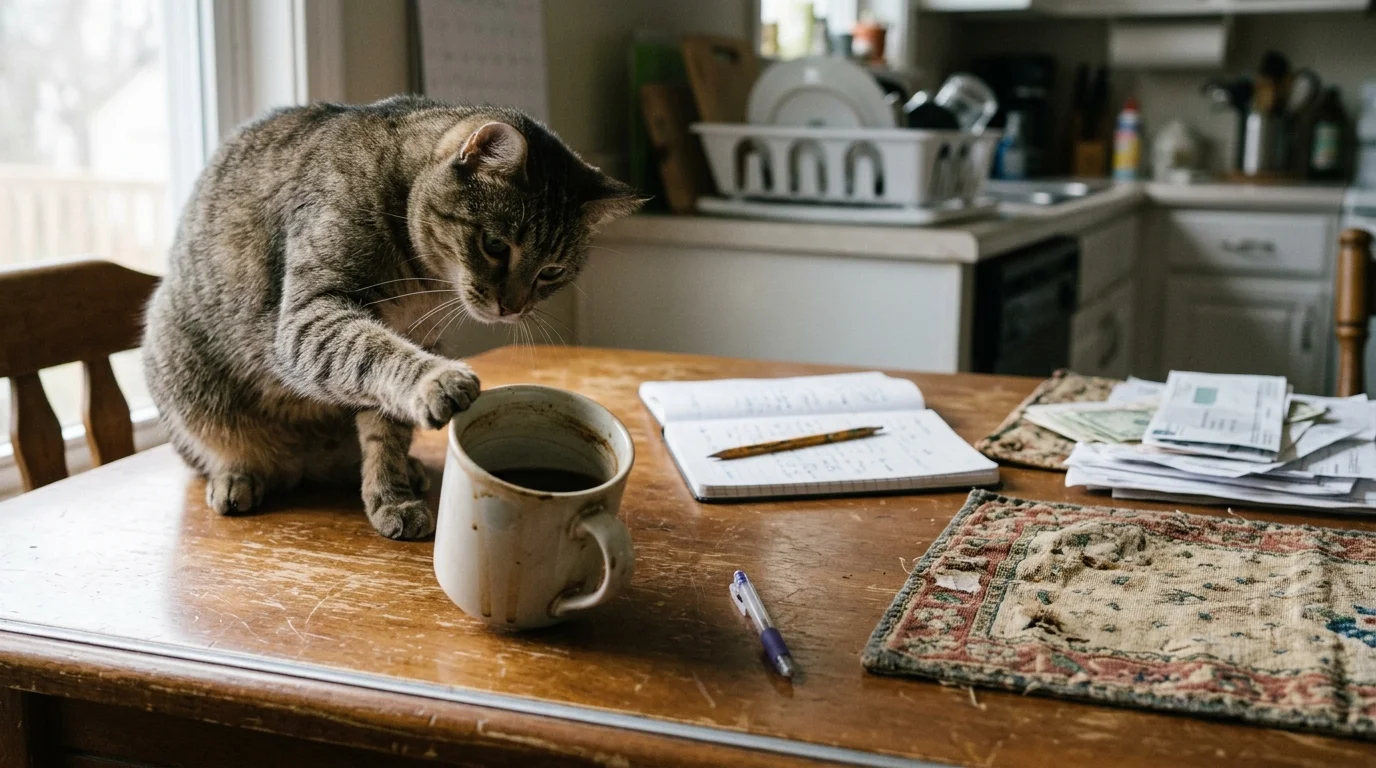
Decoding Your Cat’s Nudge: Motivation and Behavior Comparison
Understanding why your cat targets specific items requires reading their subtle body language and environmental context. The table below outlines common scenarios, physical cues, underlying motives, and immediate solutions to help you decode your pet’s actions.
| Observed Behavior | Physical Body Language | Primary Motivation | Most Effective Solution |
|---|---|---|---|
| Batting small objects slowly off desk edges while looking at you | Ears forward, tail relaxed or twitching slightly, direct eye contact | Attention-seeking and human interaction | Ignore the action entirely; provide scheduled play before work sessions |
| Swatting rapidly at items during early morning or late night hours | Dilated pupils, crouched stance, sudden energetic sprints | Unspent predatory energy and boredom | Establish a rigorous evening play routine followed by a late meal |
| Clearing a shelf or counter spot before lying down | Determined, efficient pushes without following the object with eyes | Spatial requirement and vertical territory preference | Clear dedicated perches on high surfaces specifically for your cat |
| Repeatedly tipping over water glasses or pet fountains | Pawing at the water surface, sniffing intently, watching liquid spill | Tactile curiosity and preference for running liquid | Switch to heavy-bottomed glasses and wide, tip-proof water fountains |
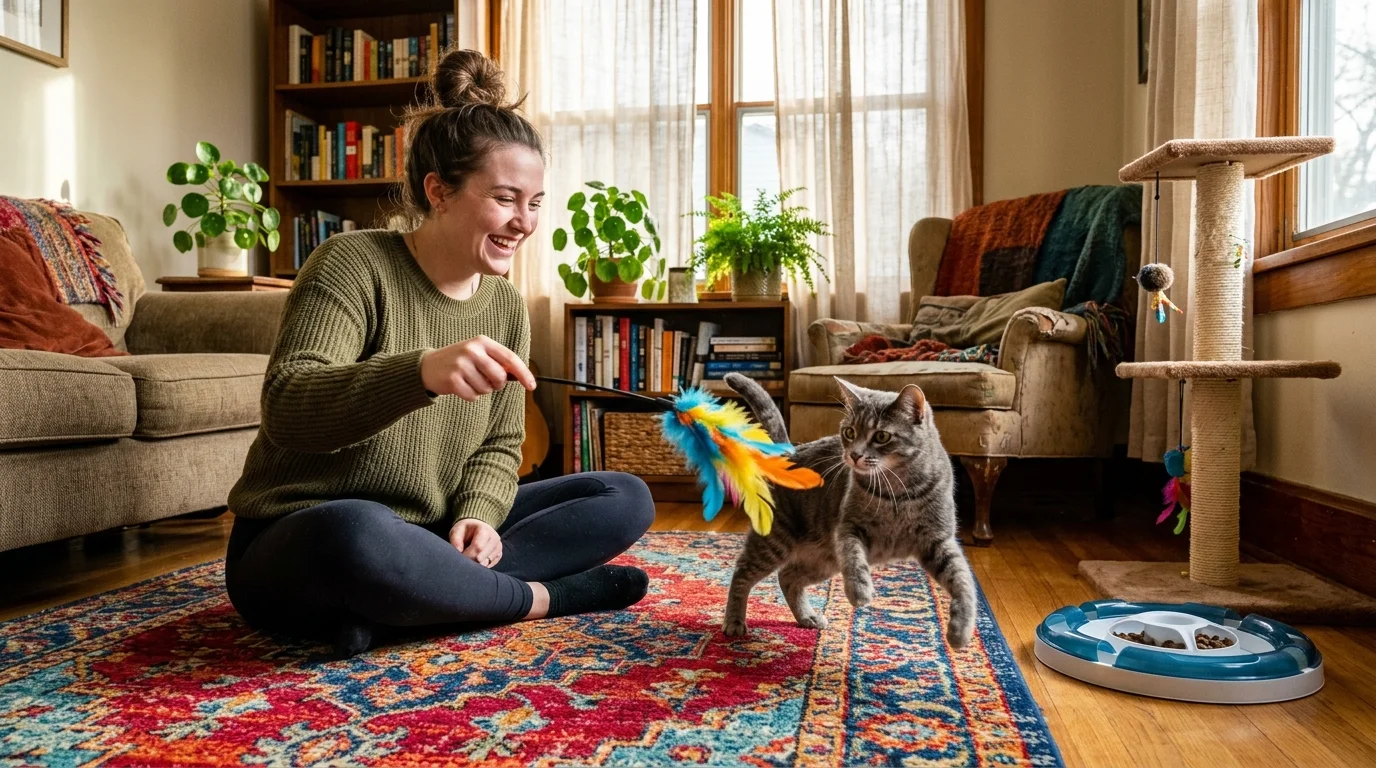
Practical Strategies to Stop Your Cat From Knocking Things Over
You do not have to accept broken glassware or ruined electronics as an inevitable part of living with a feline. By combining environmental management with positive reinforcement, you can redirect your cat pushing objects behavior into constructive channels.
- Secure Valuables with Museum Putty: Apply non-toxic removable museum putty or earthquake wax to the undersides of picture frames, small vases, and decorative trinkets. When your cat swats an item that refuses to budge, the feedback loop breaks immediately, reducing their interest in targeting that object.
- Practice the Extinction Response: When your cat sits near a safe, non-breakable item and prepares to push it, do not make eye contact, yell, or move toward them. Step completely out of the room or turn your back. By removing the social reward, you extinguish the attention-seeking habit over time.
- Schedule Structured Hunting Play: Engage your cat in active play twice a day using interactive wand toys with feathers or ribbons. Move the toy like real prey—darting around corners and stopping under furniture. Finish every 10-to-15-minute play session with a meal or protein treat to complete the natural hunt-eat-sleep cycle.
- Create Dedicated High Perches: Cats naturally seek elevated vantage points to observe their territory safely. Clear off designated shelf spaces or install secure window perches where your cat can lounge without bumping into household knick-knacks.
- Introduce Puzzle Feeders and Foraging Toys: Replace standard food bowls with food puzzle toys or treat-dispensing balls. Forcing your cat to use their paws to extract kibble satisfies their tactile curiosity and problem-solving instincts in a rewarding, productive way.
Guidelines provided by the American Association of Feline Practitioners emphasize that introducing structured environmental modifications significantly lowers stress and stops unwanted behaviors without straining the bond between cats and their owners.
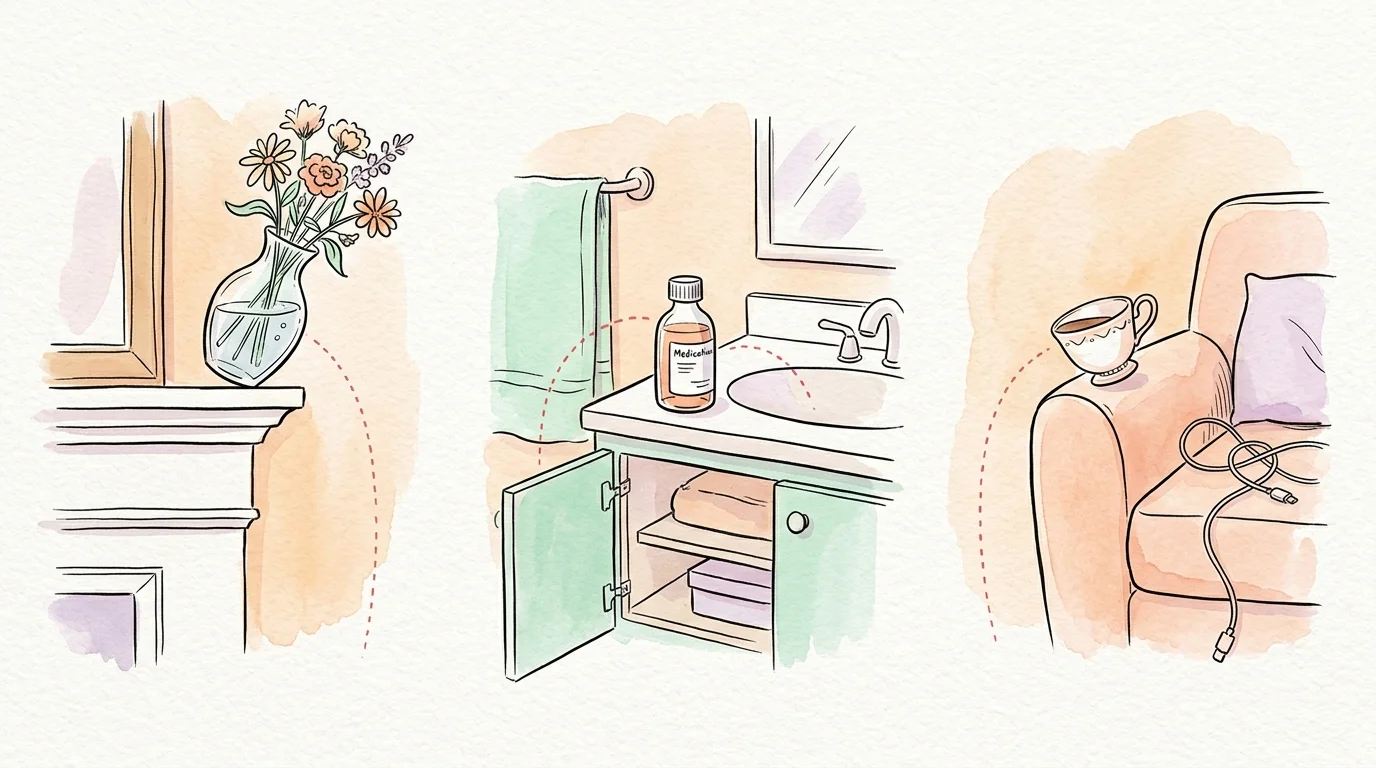
Things to Watch Out For
While knocking items off furniture is usually harmless play, certain situations present genuine safety hazards or signal underlying medical concerns. Paying close attention to what your cat swats—and how their physical abilities change—helps protect them from harm.
First, always secure toxic substances and sharp materials. Pill bottles left on nightstands, essential oil diffusers, string, elastic hair ties, and glass containers can cause life-threatening intestinal blockages or severe lacerations if knocked over and ingested or stepped on.
The ASPCA maintains extensive resources detailing common household hazards that pet owners should keep strictly stored inside closed drawers or cupboards.
Second, watch for sudden changes in physical coordination. If a senior cat suddenly begins knocking items over accidentally while walking across a table, do not dismiss it as newfound mischief.
Abrupt clumsiness, misjudged jumps, or swatting at empty space can point to failing vision, arthritis, neurological issues, or cognitive decline. If you observe rapid behavioral shifts, schedule a comprehensive checkup with your veterinarian to rule out pain or systemic illness.
Frequently Asked Questions
Why does my cat look directly at me while knocking something over?
When your cat holds your gaze while nudging an item toward an edge, they are measuring your response. They have learned through experience that this exact behavior causes you to move, speak, or interact with them, making it an extremely effective visual cue.
Why do cats knock water bowls or cups over specifically?
Cats are naturally skeptical of standing water, which can harbor bacteria in wild settings. Tipping a glass or swatting at a bowl creates motion, helping them gauge the liquid’s surface depth and freshness while providing instant visual and tactile feedback.
Do big wild cats knock things over too?
Yes! Large wild cats, including leopards, lions, and cheetahs, manipulate objects in their habitats using their forepaws.
They frequently flip over logs, rocks, and branches to flush out hidden prey or inspect unfamiliar items in their territory.
Channeling Your Cat’s Natural Curiosity
Knocking things off tables is not a sign of spite or malice; it is the fascinating intersection of an apex predator’s innate hunting instincts, sensitive paw anatomy, and clever social learning.
By providing dedicated vertical spaces, engaging in daily play, and securing fragile items with practical solutions like museum putty, you can enjoy your cat’s quirky personality while keeping your home intact and safe.
The information here is meant for educational purposes. Specific circumstances—including health conditions, finances, location, and goals—may require different approaches.
When in doubt, consult a licensed professional or check official sources directly.
Last updated: May 2026. Rules, prices, and details change—verify current information with official sources before acting on it.