Regular grooming transforms coat care into an affectionate ritual that calms your pet and strengthens your bond. Certain dogs actively crave this physical connection because their coat structure and social temperaments make gentle stroking feel like pure bliss.
When you choose a companion naturally inclined toward hands-on attention, daily detangling feels like a soothing massage rather than an exhausting struggle. You save time, protect their skin, and turn necessary maintenance into quiet quality time together.
Exploring the breeds that thrive under a slicker brush helps you understand their unique grooming instincts and physical needs.
Why Certain Dogs Love Brushing
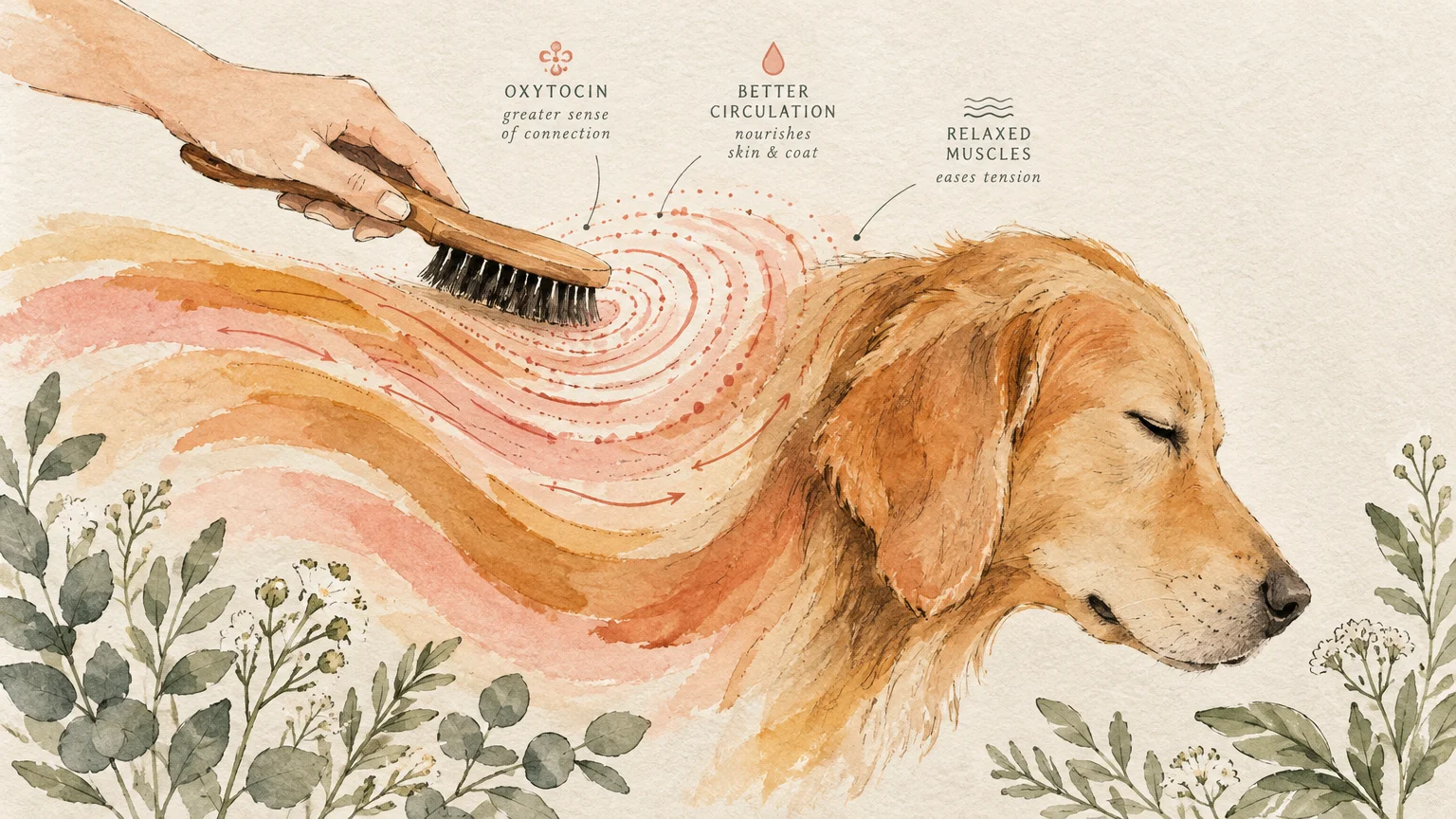
Physical grooming releases feel-good neurochemicals that settle a dog’s nervous system. When you move bristles along their body, rhythmic strokes trigger the release of oxytocin in both you and your pet.
According to the ASPCA, routine brushing removes shed hair and distributes skin oils while offering physical comfort. This tactile contact mimics early maternal licking, which naturally reinforces feelings of security.
Skin sensation plays an enormous role in canine emotional wellbeing. Gentle bristle pressure stimulates nerve endings across the dermis, increasing blood flow and washing away low-level tension.
Breeds with heavy coats also experience immediate physical relief when you remove dead fur. Dense undercoats trap body heat and pull uncomfortably against sensitive epidermal tissue, creating constant tension that brushing immediately relieves.
Many long-coated dogs learn very quickly that grooming brings lasting physical comfort. Over time, they seek out your grooming tools and eagerly offer their backs and bellies for attention.
10 Dog Breeds That Love Being Brushed
1. Golden Retriever
Golden Retrievers possess an eager-to-please nature that makes tactile interaction deeply rewarding. They treat coat care as devoted cuddle time and often greet the brush with excited tail wags.
Their dense, water-repellent double coat sheds continuously throughout every season. Brushing clears loose undercoat before it compacts against the skin and prevents air from circulating properly.
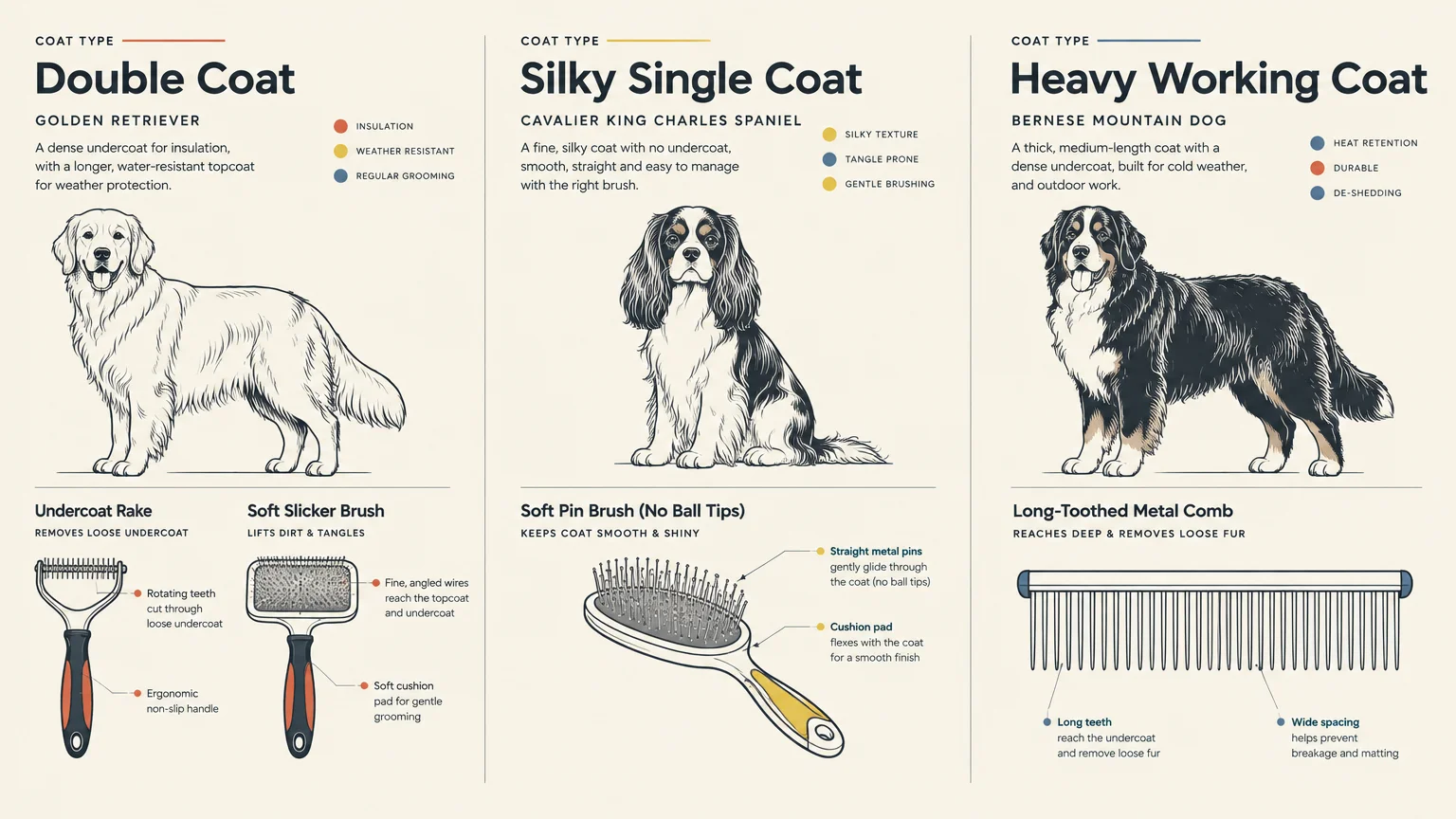
An undercoat rake paired with a soft slicker brush works wonders on their wavy back fur and feathering. These tools lift shed hair without pulling against healthy follicles.
Many Goldens roll happily onto their backs midway through a session, asking for belly brushing with complete trust.
2. Cavalier King Charles Spaniel
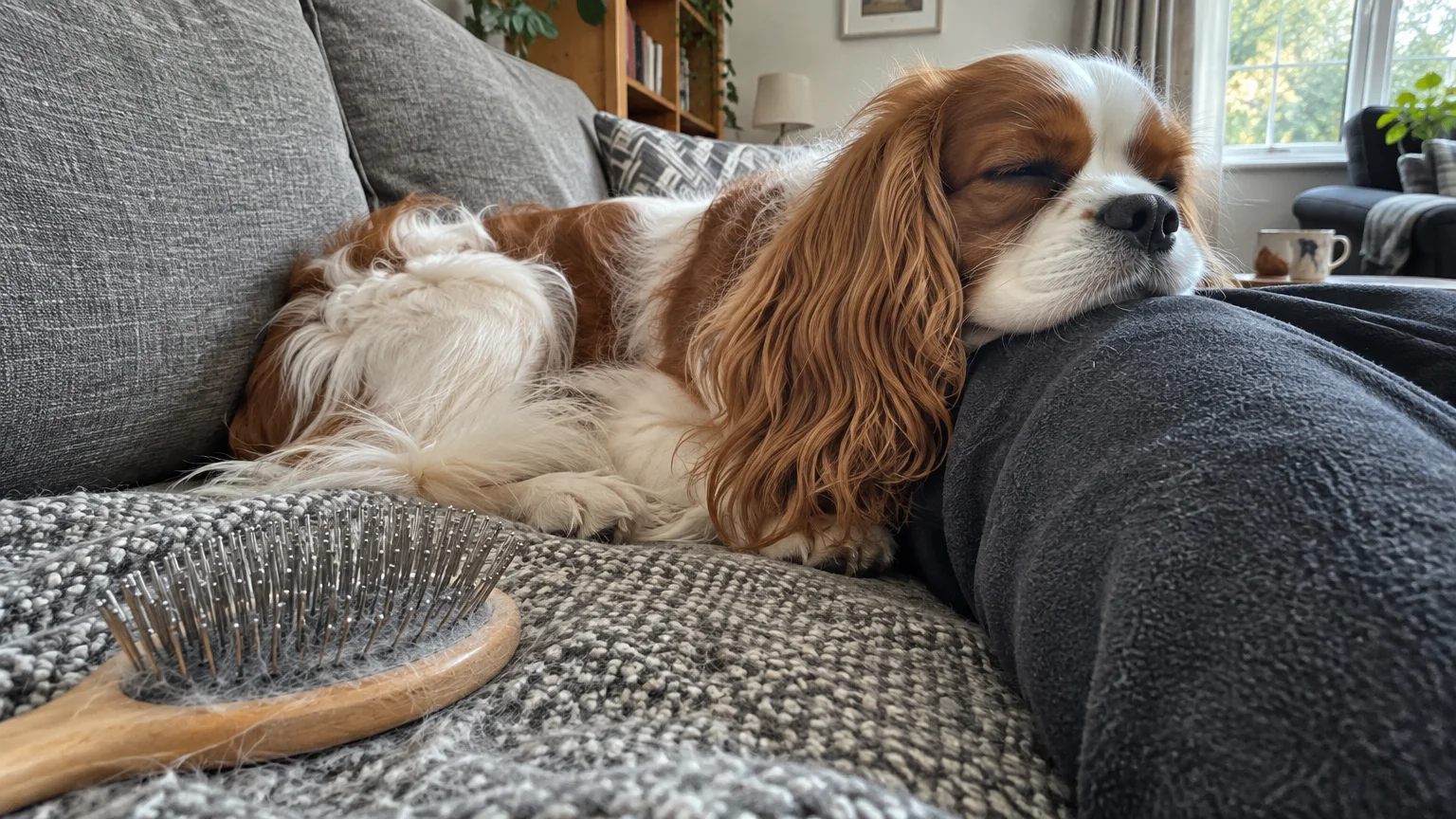
Bred purely as affectionate royal companions, Cavaliers crave continuous lap contact and warm touch. They view everyday coat brushing as an extension of your devoted personal affection.
Their long, silky coat easily tangles behind the ears and around the feathery leg fringes. Gentle brushing eliminates minor snarls before they tighten into uncomfortable friction knots.
Use a soft pin brush without protective ball tips so bare pins glide through fine silk without snagging. This keeps their coat free of painful friction mats without snapping fragile hairs.
Cavaliers often rest their chins on your knees and fall sound asleep while you work through their feathering.
3. Bernese Mountain Dog
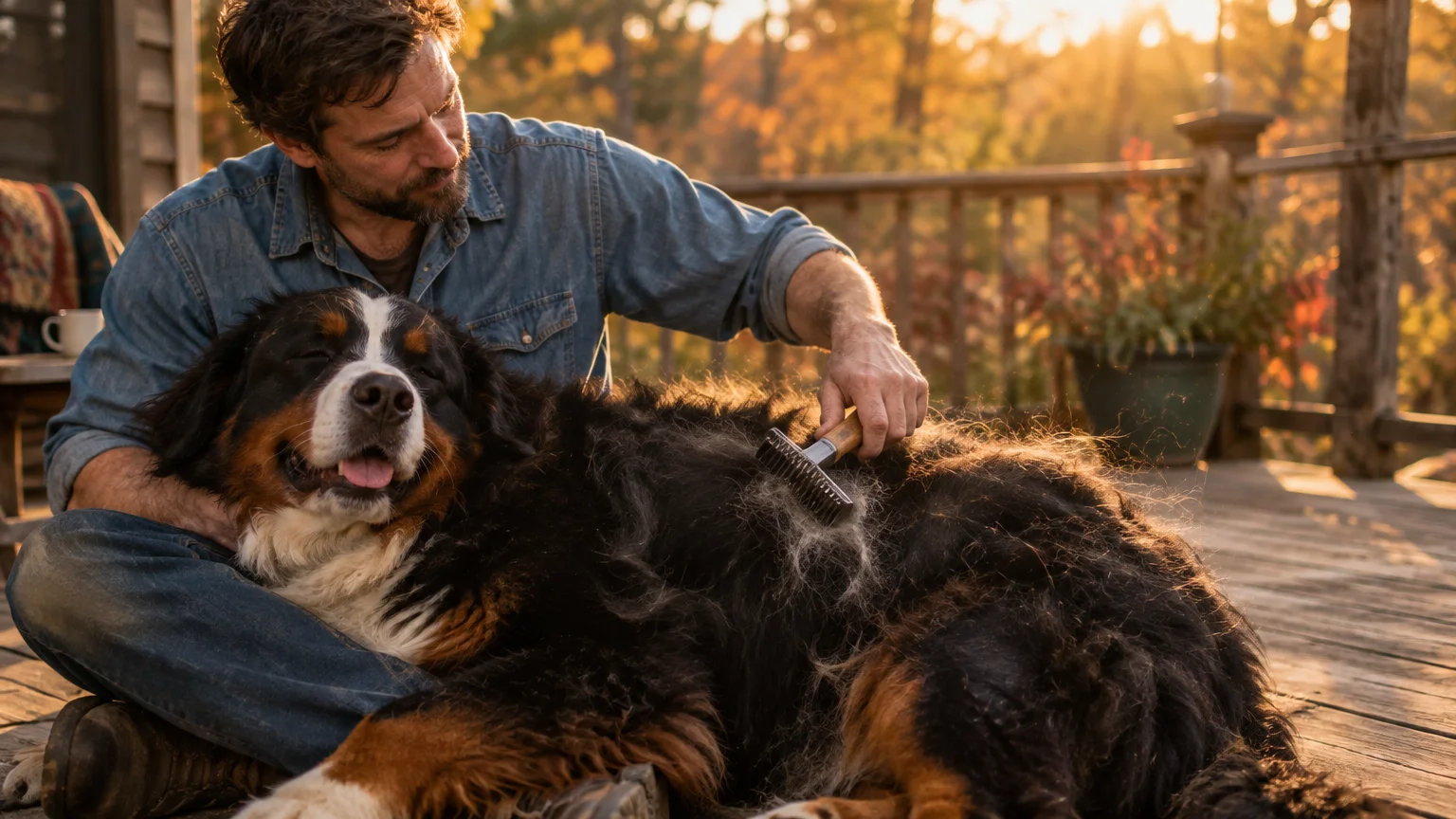
Bernese Mountain Dogs are gentle working giants whose calm temperaments make them ideal grooming partners. Their patient demeanor turns long detangling sessions into a quiet, meditative bonding experience.
Their thick, tri-colored double coat traps outdoor debris and sheds massive amounts of undercoat twice each year. Regular maintenance prevents painful skin hot spots by allowing cooling airflow to reach their skin.
A sturdy undercoat rake combined with a long-toothed metal comb handles their dense fur with ease. Work through the thick hair in gentle, rhythmic strokes from front to back.
These affectionate giants will happily lean their entire weight against your legs, soaking in the soothing contact.
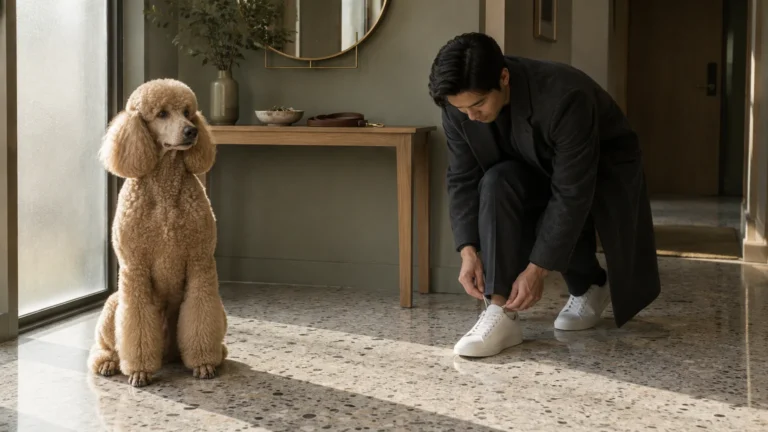
4. Standard Poodle
Standard Poodles combine high intelligence with an athletic, cooperative mindset that thrives during handling. They adapt quickly to grooming routines and learn to anticipate the refreshing feeling of a well-maintained coat.
As clinical guidance from VCA Animal Hospitals explains, non-shedding curly coats trap loose hairs within the curls. Without consistent brushing, trapped shed hairs quickly create tight mats that pull on delicate skin.
Use a curved slicker brush to work through the coat using the line-brushing method. Always follow with a stainless steel comb to verify every tangle is gone down to the skin.
Poodles appreciate the tactile stimulation and strut proudly once their dense curls feel light, fluffy, and clean.
5. Shih Tzu
Shih Tzus were bred as cherished imperial lapdogs in ancient palaces, creating an innate love for pampering. They genuinely relish the close, hands-on attention of daily brush sessions.
Their long, flowing double coat grows continuously and tangles easily around the chest, neck, and beard. Daily grooming keeps their luxurious tresses neat while removing food particles and eye discharge.
A cushioned pin brush and stainless steel comb work best for keeping their silky hair smooth. Comb outward from the face with gentle, steady motions so your dog remains calm.
Most Shih Tzus happily curl up in your lap, relaxing deeply while you work through their delicate fur.
6. Newfoundland
Newfoundlands possess legendary patience and an extraordinarily gentle, sweet nature. These massive water rescue dogs love nothing more than sprawling out quietly while you care for their luxuriant coat.
Their water-resistant double coat consists of an oily outer layer and a dense, insulating undercoat. Brushing pulls away dead undercoat, preventing moisture traps that lead to bacterial skin infections.
Work through their massive frame using an extra-wide rake and a steel greyhound comb. Parting the heavy coat ensures you reach deep undercoat mats before they harden.
Newfies frequently express their contentment with deep, relaxed sighs and heavy, rhythmic tail thumps against the floor.
7. Old English Sheepdog
Old English Sheepdogs are exuberant companions who adore spending quality one-on-one time with their families. They view thorough grooming sessions as interactive social games rather than a chore.
Their profuse, shaggy double coat features a weather-resistant outer texture over a soft, insulating undercoat. Routine brushing keeps their distinct mop-like appearance tidy and prevents hair from matting into solid sheets.
Separate the fur into sections and brush gently from the roots toward the ends with a long-pin slicker. Check your work down to the skin with a wide-toothed metal comb.
These clownish herders often reward your grooming efforts with playful nudges and affectionate, contented grunts.
8. Bichon Frise
Bichon Frises are cheerful, social dynamos that crave the spotlight wherever they go. Being perched on a table or sofa while you groom them makes them feel like beloved stars.
Their plush, powder-puff coat combines a soft undercoat with coarser, corkscrew outer hair. Brushing catches dead hairs before they twist into tight mats, keeping their dense coat light and springy.
A gentle slicker brush followed by a medium metal comb maintains their velvety look. The soft bristles stimulate blood circulation and release beneficial skin oils across the body.
Bichons thoroughly enjoy the gentle scratching sensation that bristles provide against their skin during daily brush routines.
9. Irish Setter
Irish Setters are spirited, affectionate gundogs that form deep emotional attachments to their family members. While high-energy outdoors, they settle remarkably well into calm grooming routines at home.
Their stunning mahogany coat features fine, feathery fringe along the chest, belly, ears, and tail. Daily brushing removes forest debris and prevents small burrs from turning into painful knots.
A natural bristle brush distributes natural protective oils along their coat, creating an enviable, mirror-like gloss. Use a wide pin brush along their leg feathering to prevent hair breakage.
Most Irish Setters lean their slender bodies against you throughout the process, enjoying the soothing, rhythmic contact.
10. Great Pyrenees
The Great Pyrenees is an ancient livestock guardian known for its calm, watchful, and steadfast temperament. They accept steady brushing as a respectful form of bonding and tranquil companionship.
Their heavy double coat is self-cleaning, but it sheds heavily during the spring and autumn months. Removing dead undercoat allows their skin to breathe and keeps your living room floors cleaner.
Use a durable deshedding rake followed by a slicker brush on their dense neck mane. Work slowly around their rear quarters where dense britches collect loose woolly fur.
These noble dogs will typically close their eyes and lean their heavy heads right into your lap.
Breed Coat Types and Tool Comparison
Matching the right brush to your dog’s specific coat prevents discomfort and protects delicate skin. Using the wrong tool can pull live hairs or cause painful brush burn.
The table below details the coat classifications, essential tools, and recommended grooming cadences for these receptive breeds.
| Breed | Coat Category | Primary Grooming Tool | Ideal Frequency |
|---|---|---|---|
| Golden Retriever | Dense Double Coat | Undercoat rake and slicker brush | 3 to 4 times weekly |
| Cavalier King Charles Spaniel | Silky Single Coat | Pin brush without protective balls | Daily |
| Bernese Mountain Dog | Heavy Double Coat | Undercoat rake and steel comb | 3 times weekly |
| Standard Poodle | Curly Low-Shedding Coat | Curved slicker brush and greyhound comb | Daily |
| Shih Tzu | Continuous Long Double Coat | Cushioned pin brush and fine comb | Daily |
| Newfoundland | Water-Resistant Double Coat | Heavy-duty undercoat rake | 3 to 4 times weekly |
| Old English Sheepdog | Shaggy Profuse Double Coat | Long-pin slicker and wide-tooth comb | 3 to 4 times weekly |
| Bichon Frise | Plush Double Coat | Soft slicker brush and metal comb | Daily |
| Irish Setter | Fine Feathered Single Coat | Natural bristle brush and pin brush | 3 times weekly |
| Great Pyrenees | Coarse Protective Double Coat | Deshedding rake and firm slicker | 2 to 3 times weekly |
High-density coats require tools that reach deep through the guard hairs without scraping the dermis. Always select combs with rounded, smooth teeth to protect your dog’s skin from sharp abrasions.
Essential Dog Brushing Tips for a Spa-Like Experience
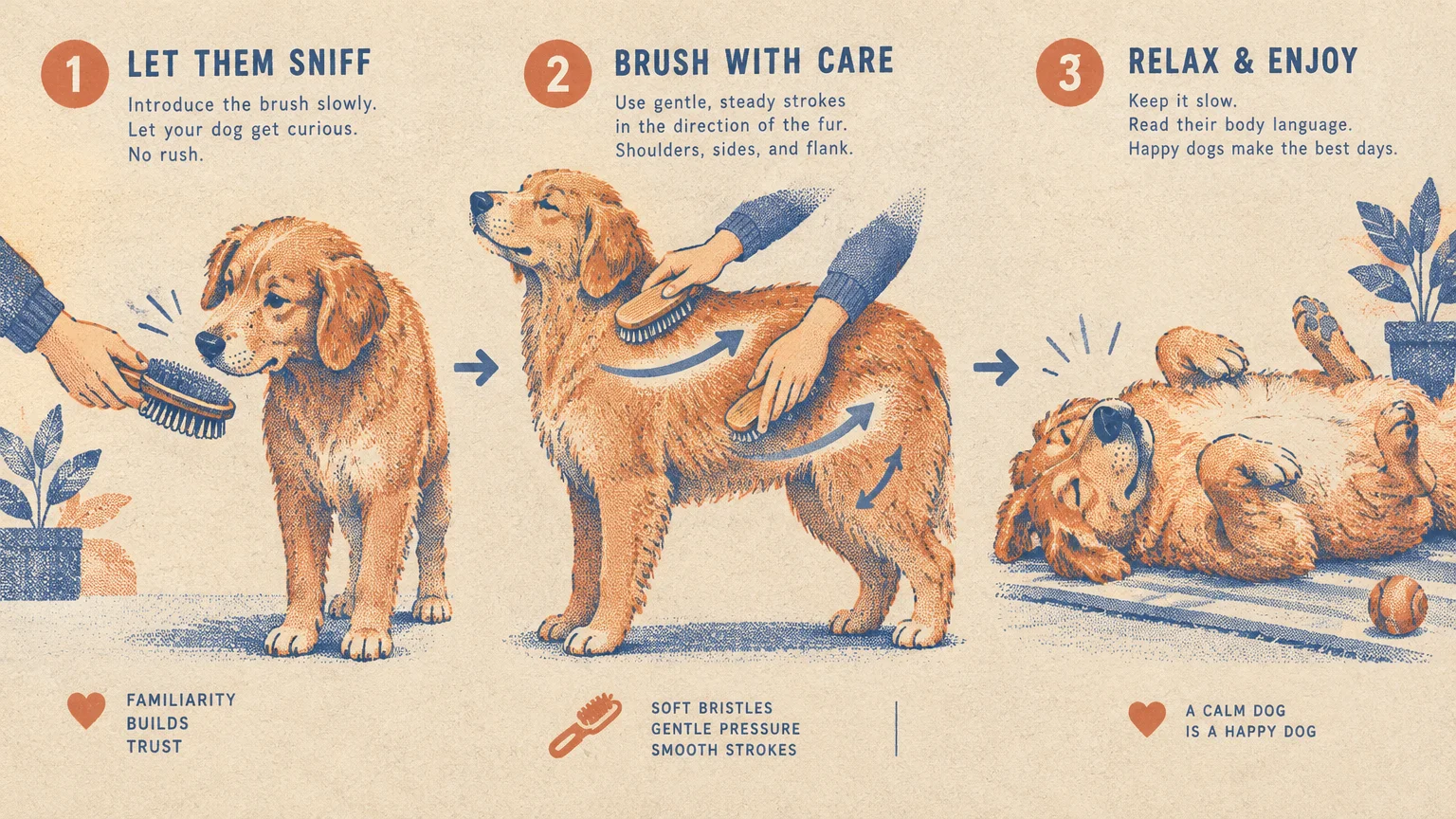
Turning coat care into an enjoyable luxury requires deliberate technique and patient handling. Small adjustments make grooming feel like a comforting massage rather than a medical procedure.
As highlighted by The American Kennel Club, starting grooming sessions early in puppyhood builds lifelong comfort with brushes and handling.
- Warm up with light petting: Stroke your dog with bare hands before picking up tools so your pet relaxes and welcomes your touch.
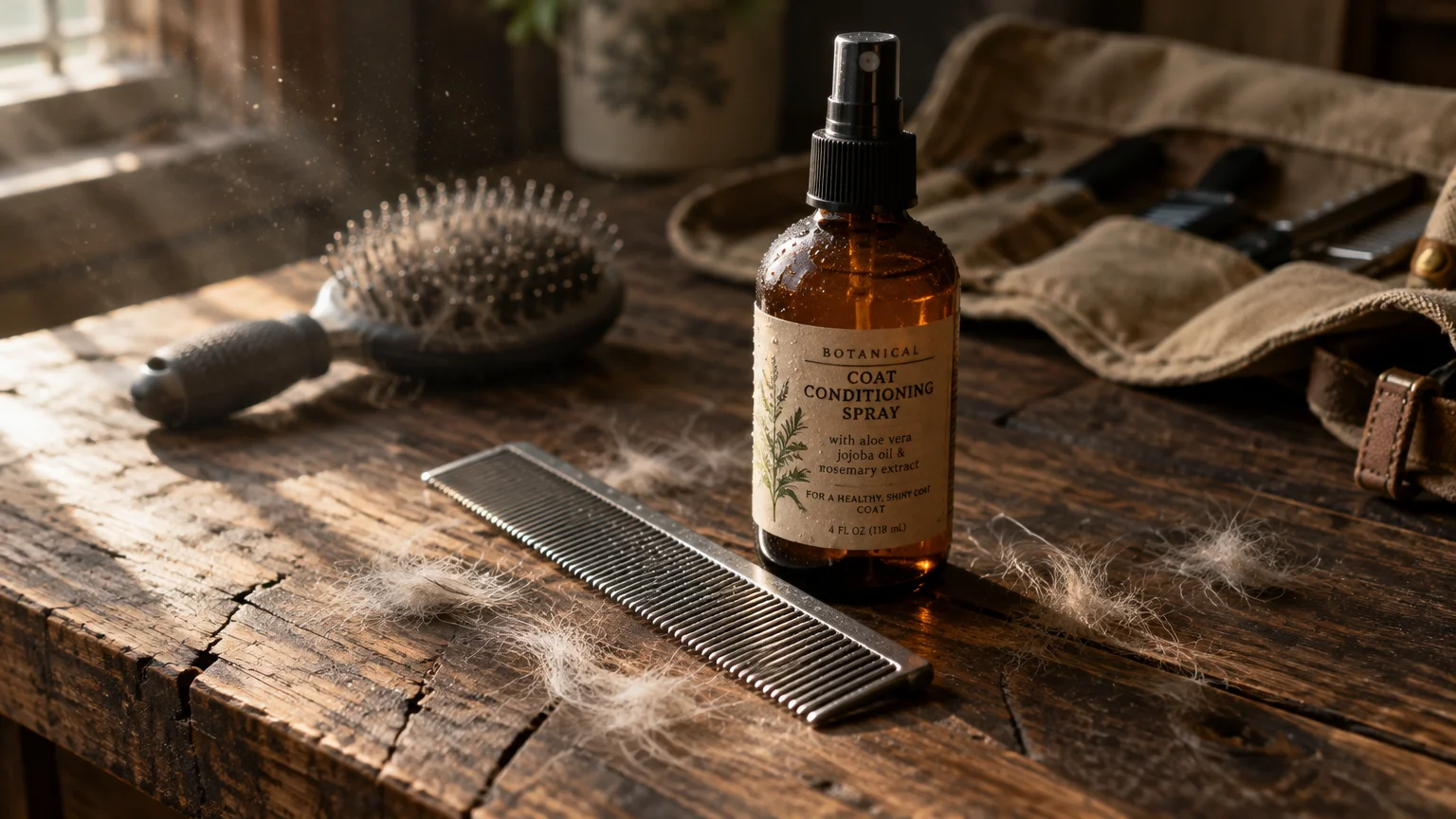
- Use a leave-in conditioning spray: Lightly misting the coat reduces friction, prevents hair breakage, and eliminates painful static electricity.
- Work in small horizontal layers: Part the fur with one hand and brush from the skin outward rather than skimming over surface hairs.
- Watch your wrist pressure: Let the brush pins do the work without digging into delicate skin to prevent brush burn.
- End on a high note: Offer a healthy treat and enthusiastic verbal praise immediately after every completed session.
Keep your initial grooming sessions short, stopping before your dog shows any signs of restlessness. Ten minutes of positive, gentle brushing accomplishes far more than an hour of stressful restraint.
Consistent, brief sessions build a positive association that lasts throughout your dog’s life. Your companion will soon come running whenever you bring out the grooming kit.
Common Mistakes to Avoid During Grooming Sessions
Even cooperative dogs can develop brush anxiety if sessions become uncomfortable or painful. Avoiding a few widespread mistakes ensures your grooming remains a positive experience.
Never brush completely dry fur on long-haired dogs. Dry bristles create friction that breaks hair shafts, increasing the likelihood of future matting and irritating the skin.
Avoid ripping through established tangles with a slicker brush or fine-toothed comb. Instead, gently separate stubborn knots with your fingers and a grooming spray before applying tools.
Do not overlook the high-friction areas where mats form silently. Always check the armpits, inner thighs, groin, and behind the ears during every session.
Never apply excessive pressure when using wire-pinned slicker brushes. Heavy pressure scrapes against the delicate epidermis, causing painful abrasions known as brush burn.
Frequently Asked Questions About Dog Brushing
Why does my dog lean against me while being brushed?
Leaning is a classic canine sign of affection, deep comfort, and trust. Dogs lean into grooming tools because the firm, rhythmic pressure feels like a relaxing body massage.
How often should long-haired dog breeds be brushed?
Most long-haired breeds benefit from brushing at least three to four times per week. Daily brushing sessions lasting just five minutes work even better to prevent severe matting.
Can over-brushing damage a dog’s coat?
Yes, brushing too aggressively or repeating strokes in one spot can cause coat damage. Over-brushing strips healthy natural oils and leads to painful epidermal brush burn.
What should I do if my dog suddenly resists grooming?
Sudden resistance often signals hidden pain, such as a skin infection, ear issue, or tender joint. Stop grooming immediately and check their body carefully for signs of injury or sensitivity.
Building a Lifelong Grooming Bond
Brushing your dog provides far more than just a clean, healthy, and tangle-free coat. It serves as an intimate daily ritual that deepens mutual trust and mutual understanding.
When you listen to your dog’s body language and select proper tools, grooming becomes the highlight of their day. Take your time, stay gentle, and enjoy these peaceful shared moments.
The information here is meant for educational purposes. Specific circumstances—including health conditions, finances, location, and goals—may require different approaches.
When in doubt, consult a licensed professional or check official sources directly.
Last updated: October 2026. Rules, prices, and details change—verify current information with official sources before acting on it.