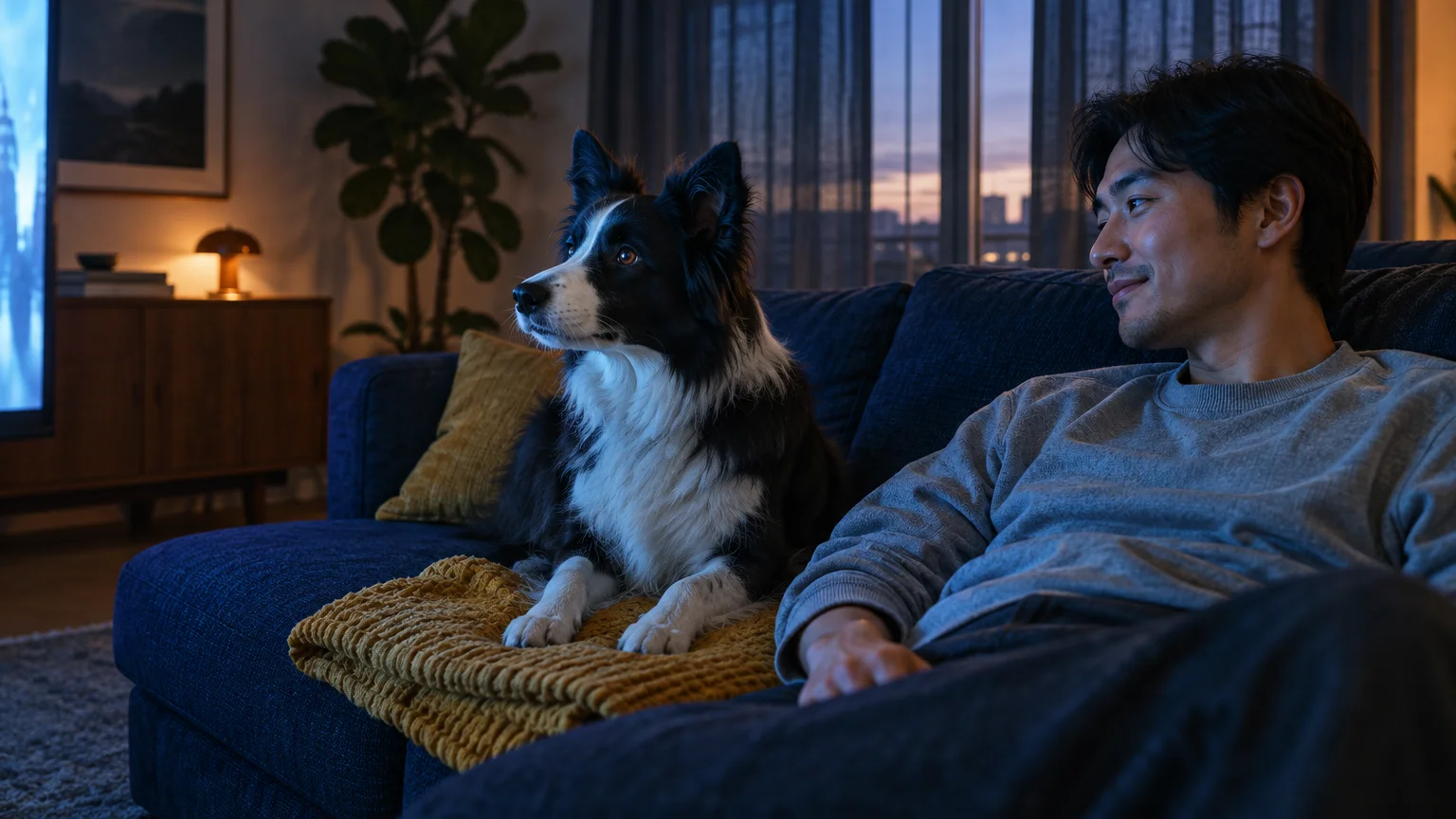
Your dog might track moving wildlife across your television screen with intense, unwavering focus. Modern high-refresh displays allow specific breeds to perceive broadcast video just as smoothly as you do.
Scientific studies show that breed genetics strongly influence how companion animals react to digital media. Certain sporting and herding dogs naturally respond to rapid visual movement, animal silhouettes, and specific audio frequencies.
Understanding these sensory drivers helps you turn living room entertainment into an enriching, stress-free experience. Here is the science behind canine vision and the nine dog breeds most likely to share the couch with you.
Why Modern Dogs Actually Watch Television
If you owned dogs decades ago, you probably noticed they rarely cared about the family television set. Older standard-definition cathode-ray tube (CRT) sets refreshed images at a rate of 60 Hz.
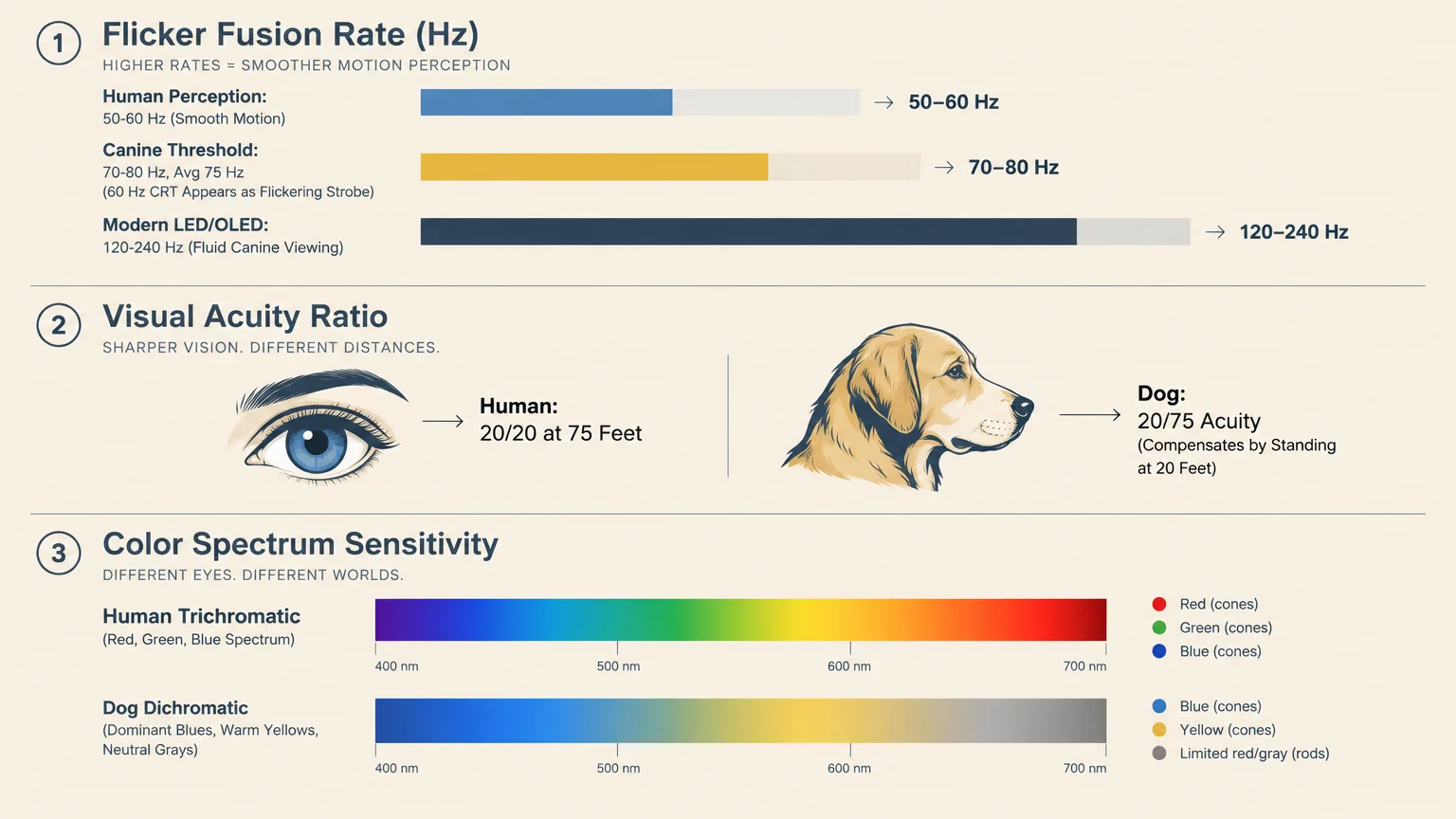
Human eyes blend still images into continuous motion at roughly 50 Hz to 60 Hz. Because our visual threshold sits below that rate, CRT televisions created the convincing illusion of fluid cinematic movement.
Dogs possess a much faster visual processing system than humans. Canine critical flicker fusion rates range between 70 Hz and 80 Hz, averaging around 75 Hz.
To a dog, an older 60 Hz television did not show fluid movement at all. Instead, it appeared as a jarring, flickering strobe light that offered little visual realism.
Modern flat-panel LED, OLED, and QLED screens changed canine viewing habits permanently. These modern screens refresh content at 120 Hz to 240 Hz, far exceeding the canine flicker threshold.
Your dog can now view on-screen action with smooth, uninterrupted motion. This visual clarity triggers natural tracking instincts that remained dormant in front of older televisions.
Canine visual acuity differs significantly from human sight. Dogs have roughly 20/75 vision, meaning they must stand 20 feet away to see details that a human with normal vision sees at 75 feet.
This biological difference explains why your dog often walks right up to the television stand. Standing close allows them to compensate for softer focus and resolve fine edges on the screen.
Color perception also dictates what catches your dog’s eye. Dogs possess dichromatic vision powered by two types of color cones rather than the three cones found in human eyes.
Dogs primarily perceive the world in shades of blue and yellow, while greens and reds appear grayish. Shows with bright blue skies, yellow tennis balls, or sunlit sandy beaches capture their attention far faster than dark, moody dramas.
What Science Says About Dog TV Viewing Habits
Veterinary researchers have moved beyond casual internet videos to measure canine screen engagement in controlled settings. Recent findings confirm that screen-watching behavior is widespread among family pets.
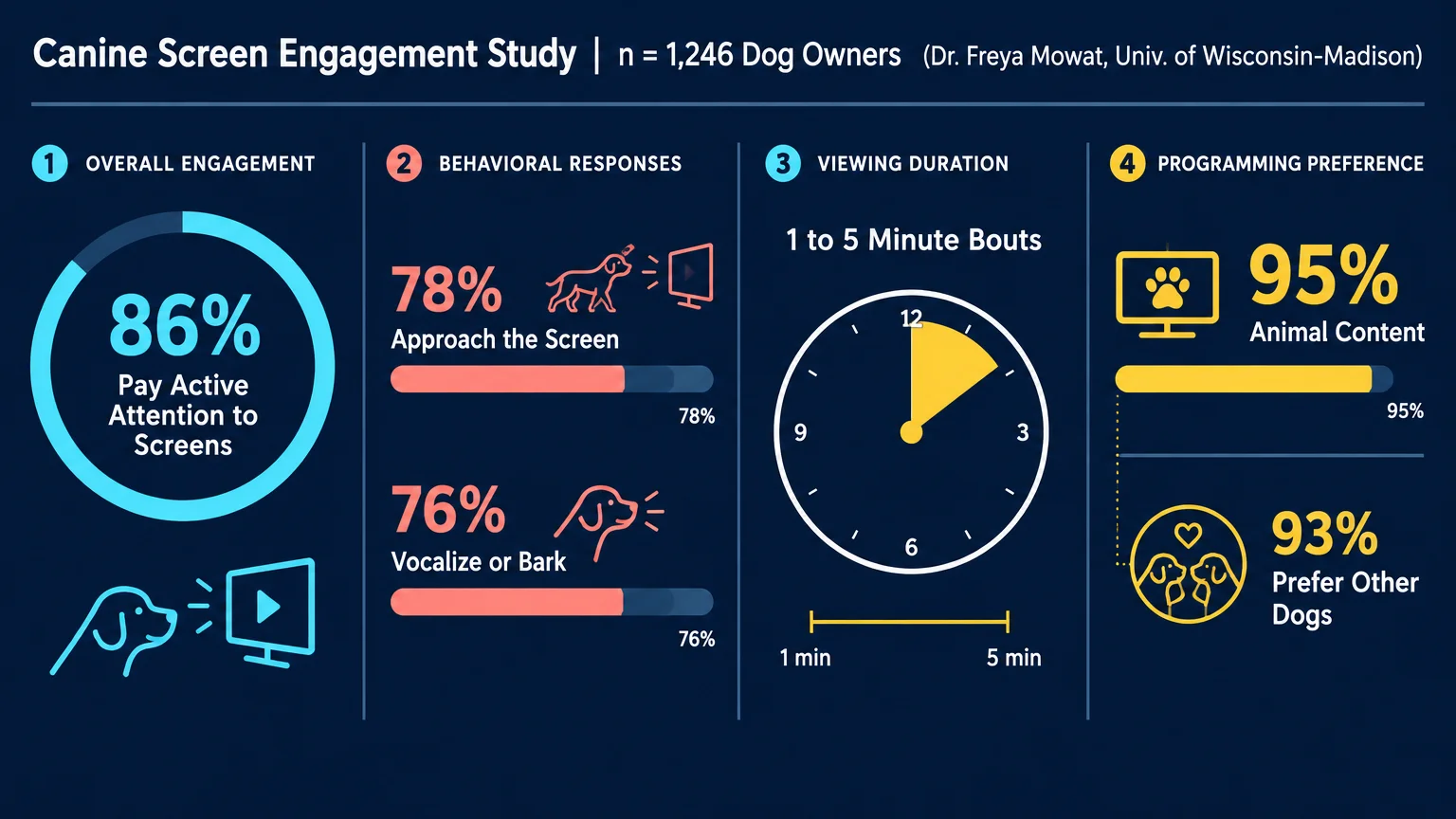
A landmark study published in Applied Animal Behaviour Science by Dr. Freya Mowat at the University of Wisconsin-Madison examined 1,246 dog owners worldwide. The research revealed that 86% of dogs actively pay attention to television screens.
The study found that 78% of companion dogs physically approach the screen during broadcasts. Meanwhile, 76% of participating dogs vocalize, bark, or whine when stimulating visuals appear.
Most canine viewing sessions remain brief and targeted. The researchers observed that typical viewing bouts last between 1 and 5 minutes before the dog redirects its attention.
Content choice plays a decisive role in screen engagement. The Wisconsin study revealed that 95% of screen-watching dogs prefer programming that features animals over programming showing only humans.
Among those animal-focused viewers, 93% showed intense interest in watching other dogs. Another 65% showed sustained attention when wild animals appeared on screen.
Follow-up research published in Scientific Reports introduced the Dog Television Viewing Scale (DTVS). Led by researcher Lane Montgomery at Auburn University, the team analyzed responses from 453 companion dogs.
The Auburn study confirmed that individual canine temperament directly dictates screen response. Dogs with elevated baseline excitement and higher reactivity respond far more intensely to 2D screen motion and sudden audio cues.
The 9 Breeds Most Likely to Tune In
The Wisconsin-Madison study proved that genetics matter when predicting television habits. Herding and sporting dogs engage with broadcast screens far more reliably than hound or toy breeds.
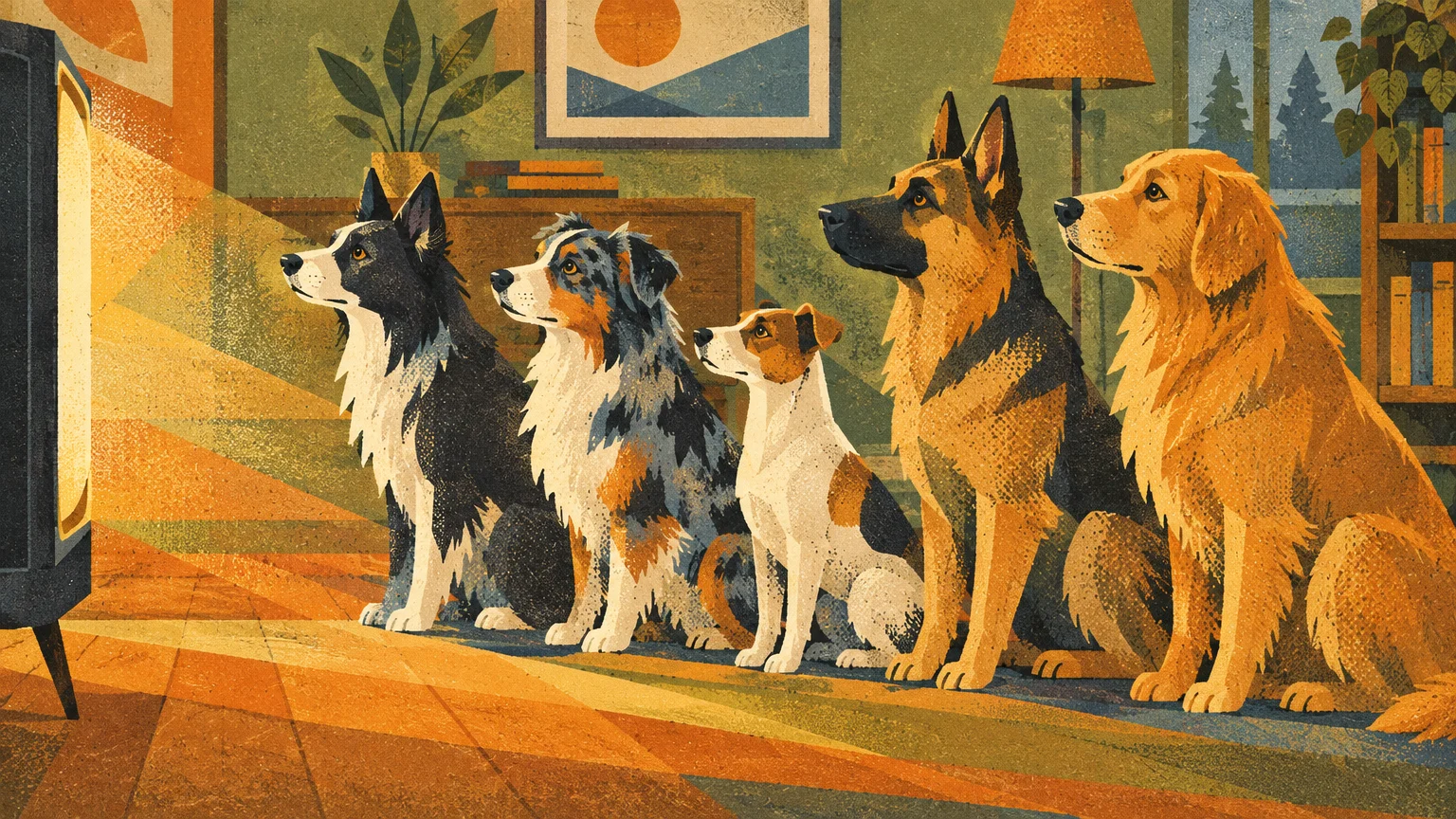
Here are nine breeds that frequently watch television, along with the distinct evolutionary traits that drive their visual curiosity.
1. Border Collie
Border Collies lead the canine world in visual tracking and rapid stimulus processing. Breeders developed this herding icon to scan rolling hillsides for minute sheep movements at great distances.
A Border Collie processes visual motion at the upper limits of the canine flicker fusion rate. They detect subtle changes on modern 120 Hz displays that other breeds overlook entirely.
Your Border Collie will often adopt a classic herding crouch in front of the television. They stare intently at moving objects, tilting their head whenever animals change direction on screen.
Fast-paced sports broadcasts and agility trials frequently trigger their instinctual herding drives. Soccer balls, running horses, and darting sheep will keep a Border Collie transfixed for minutes at a time.
Monitor your Border Collie during intense viewing sessions. Their drive to control motion can cause them to nip at the screen edge or circle the television console obsessively.
2. Australian Shepherd
Australian Shepherds share the herding group’s intense visual focus and love for cooperative observation. These versatile working dogs monitor subtle body language from both livestock and human handlers.
Aussie owners frequently report that their dogs watch television while resting their chins directly on the media console. They use their keen spatial awareness to track objects darting across wide panoramas.
Nature documentaries featuring pack predators or running deer provoke immediate reactions from Aussies. They often shift their gaze behind the flat-screen panel, trying to locate where the moving animal went.
Australian Shepherds also react strongly to high-pitched audio cues. Whistles, yelps, and rustling foliage in outdoor broadcasts immediately snap an Aussie out of a nap.
Provide a designated rug or pet bed a few feet back from your screen. This boundary keeps your Aussie from pacing directly beneath the display during high-energy scenes.
3. German Shepherd
German Shepherds combine herding vigilance with protective perimeter awareness. This double duty makes them acutely sensitive to unexpected shapes, silhouettes, and foreign sounds in their domestic environment.
When a German Shepherd watches television, their iconic ears swivel independently to track every auditory detail. They assess whether on-screen movements pose any threat to the household.
A German Shepherd often barks when unfamiliar large animals appear suddenly in frame. Bears, wolves, and horses walking toward the camera perspective trigger their defensive assessment protocols.
Research confirms that younger German Shepherds engage with displays more frequently than seniors. Young adults often sit upright like sentries during tense action thrillers or police procedural shows.
Teach your German Shepherd an effective “settle” cue before settling down for a movie. Clear structure prevents your dog from feeling responsible for guarding the living room against digital intruders.
4. Golden Retriever
Golden Retrievers represent the sporting group’s enthusiasm for social connection and visual retrieval. Originally bred to mark fallen game across water and marshland, they track lateral flight trajectories naturally.
Golden Retrievers are social watchers that love sharing screen time with their human companions. They often divide their attention between the broadcast and your facial reactions, checking your response.
Outdoor programming with flying waterfowl or splashing water catches a Golden Retriever’s eye instantly. Their predatory motor patterns cause them to follow flying birds until the wings leave the frame.
The breed also responds warmly to cheerful human dialogue and gentle vocal tones. Family sitcoms with expressive speech and playful canine actors frequently keep Golden Retrievers calmly entertained.
Unlike high-strung herding breeds, Golden Retrievers rarely attack television consoles. They generally view screen time as an enjoyable, low-stress cuddle session with the family.
5. Labrador Retriever
Labrador Retrievers possess an exceptional balance of visual alertness and steady temperament. As America’s long-standing companion favorite, their working heritage centered on tracking downed game over long distances.
Labs react enthusiastically to high-contrast outdoor scenes featuring blue skies, lakes, and open fields. Because dogs process blue and yellow wavelengths best, bright aquatic footage provides maximum visual stimulation.
A Labrador will often cock its head back and forth when animal sounds broadcast through home theater speakers. Whimpering puppies or barking screen dogs consistently draw them off the carpet to investigate.
Many service dog programs use video displays to habituate young Labs to strange environments. Their natural confidence allows them to absorb unusual digital visuals without developing severe fear responses.
Keep chew toys nearby when watching action films with your Lab. Giving your retriever an appropriate oral outlet keeps them relaxed while visual stimulation unfolds on screen.
6. English Springer Spaniel
English Springer Spaniels were bred to flush game birds out of deep brush through keen visual and scent tracking. That genetic heritage gives them an intense sensitivity to rapid, erratic movement across their visual field.
Fast-moving graphics, sports balls, and fluttering wildlife on modern 4K displays trigger a Springer Spaniel’s flushing instincts. They track chaotic screen movement with exceptional speed and precision.
A Springer Spaniel often twitches its paws or wags its tail while tracking wildlife documentaries. Their active bird-dog motor patterns run close to the surface even when resting on the rug.
Natural sound effects enhance their engagement dramatically. The mechanical flap of bird wings or rustling leaves from surround sound speakers brings a Springer Spaniel to full attention.
Ensure your Springer Spaniel receives adequate outdoor physical exercise before settling into evening television. A tired spaniel enjoys watching media quietly, whereas an under-exercised dog may leap toward the screen.
7. Jack Russell Terrier
Jack Russell Terriers possess an extraordinary drive to pursue small quarry through underground dens and brush. Their visual processing works rapidly, detecting tiny movements that larger breeds overlook.
Small rodents, animated characters, and bouncing graphics instantly captivate a Jack Russell. Their hyper-reactive nature means they transition from deep sleep to full visual engagement in milliseconds.
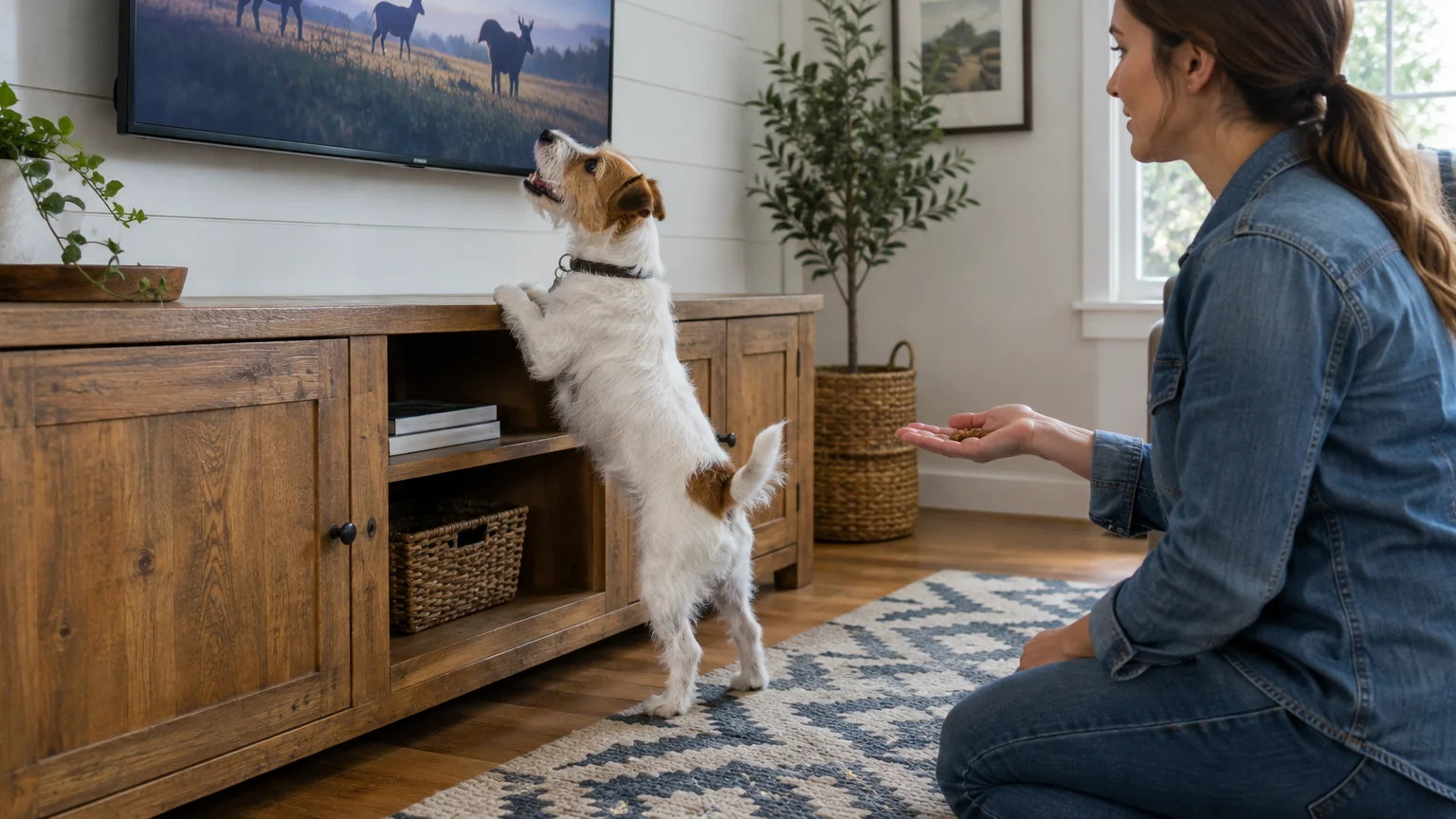
A Jack Russell will frequently jump onto coffee tables or furniture armrests to get closer to the visual stimulus. Their fearless disposition leads them to investigate digital animals without hesitation.
High-pitched squeaks and frantic scuttling sounds trigger intense barking from these tenacious terriers. Cartoon shows and fast-paced commercial breaks often provoke dramatic head tilts and vocal commentary.
Secure your television to the wall with structural anchor brackets if you share your home with an athletic terrier. A leaping Jack Russell can easily dislodge an unanchored flat screen on a lightweight console.
8. Whippet
Whippets belong to the sighthound family, a group bred specifically to hunt by visual detection rather than scent. Sighthounds possess an elongated visual streak in their retinas, providing panoramic peripheral awareness.
A Whippet detects horizontal motion across a wide television screen faster than almost any other breed. In nature, a fleeing rabbit triggers an immediate pursuit sprint, and lateral screen movement mimics this trigger.
Lure coursing footage, greyhound races, and wildlife chases fascinate a resting Whippet. They will track a digital lure from the far left bezel to the far right bezel without moving their neck.
Despite their athletic speed, Whippets are notoriously calm indoor companions who love sofa lounging. They prefer watching television while tucked securely under a fleece blanket beside you.
Whippets rarely bark at screens, preferring quiet visual observation. However, a sudden dash across the display can cause them to launch off the sofa, making floor traction around the TV area essential.
9. Standard Poodle
Standard Poodles rank among the most cognitively sophisticated dog breeds in existence. Historically bred as water retrievers, they combine sharp visual tracking with advanced problem-solving intellect.
Poodles do not merely react to motion; they appear to analyze narrative patterns and repetitive visual sequences. Many owners observe Poodles studying human facial expressions on screen with deliberate curiosity.
Mirror recognition and self-awareness studies frequently highlight the cognitive depth of Poodles. When exposed to dog shows or training tutorials, Poodles watch other dogs demonstrate behaviors with quiet focus.
Their keen auditory discrimination allows them to distinguish between recorded television doorbells and actual front door chimes. A smart Poodle quickly learns whether a broadcast sound warrants an alert.
Interactive puzzle toys paired with gentle nature broadcasts provide excellent mental enrichment for a Poodle. Combining visual stimulation with tactile problem-solving prevents intellectual boredom in the living room.
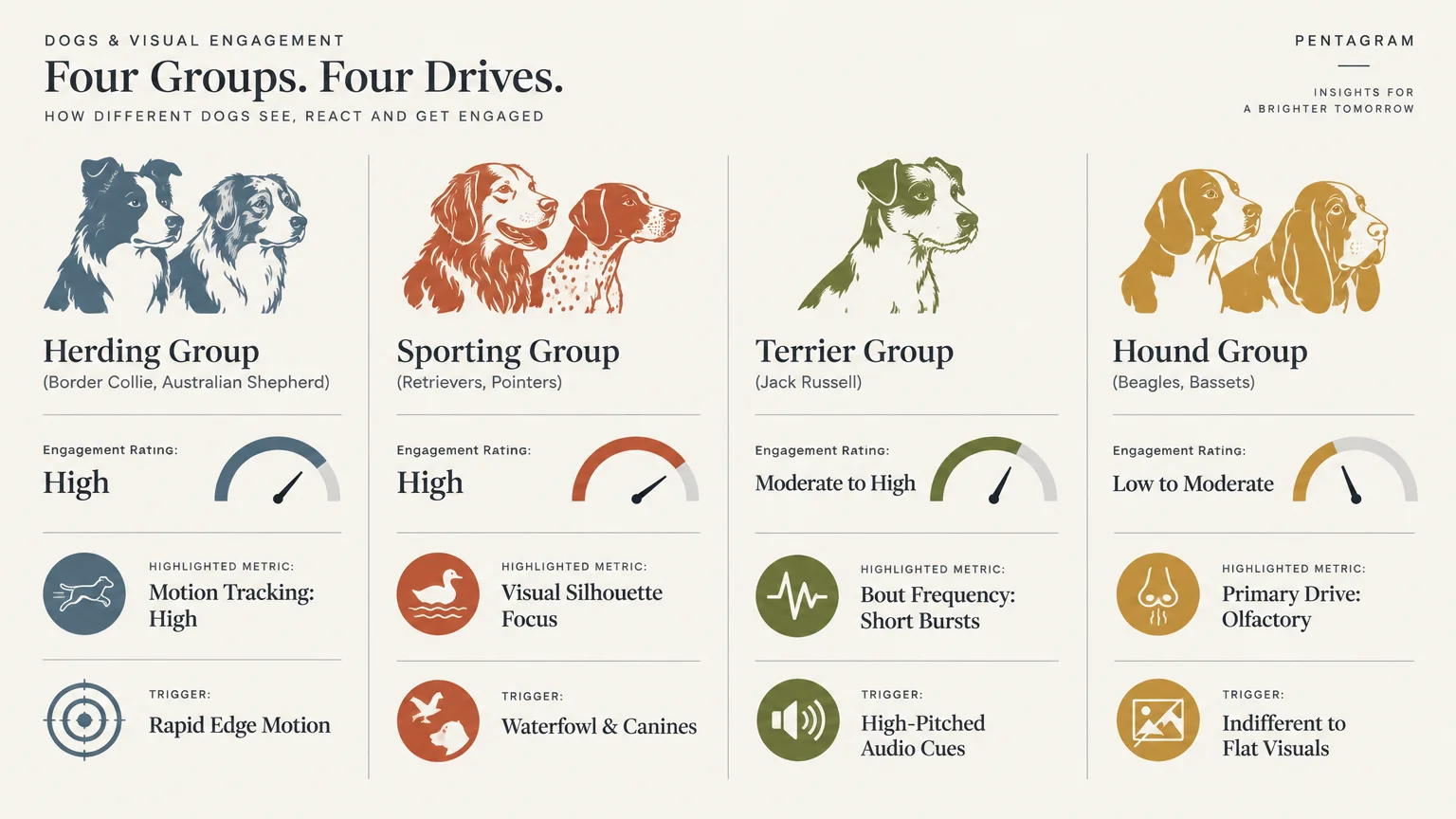
Comparing Television Engagement Across Dog Breeds
Breeds react to television through different sensory pathways based on their original working purposes. Herding breeds track spatial movement, sporting breeds focus on retrieval cues, and sighthounds scan for horizontal bursts.
The following table outlines how distinct breed groups interact with modern displays and what programming suits them best.
| Dog Breed | Breed Group | Primary Screen Trigger | Average Viewing Style | Best Program Content |
|---|---|---|---|---|
| Border Collie | Herding | Rapid directional shifts | Intense crouch and stare | Agility trials, sheepdog trials |
| Australian Shepherd | Herding | Fast panoramas and audio calls | Close-range console vigil | Livestock footage, outdoor sports |
| German Shepherd | Herding | Intruding silhouettes and alarms | Erect sentinel posturing | Wildlife reserves, police dramas |
| Golden Retriever | Sporting | Splashing water and game birds | Relaxed sofa cuddles | Family sitcoms, lake documentaries |
| Labrador Retriever | Sporting | Canine vocalizations and outdoor scenes | Head tilting and sniffing | Puppy training, canine sports |
| English Springer Spaniel | Sporting | Erratic wildlife flight | Tail wagging and pawing | Birdwatching specials, field hunting |
| Jack Russell Terrier | Terrier | Squeaking sounds and tiny targets | Energetic jumping and barking | Animated features, nature shorts |
| Whippet | Hound (Sighthound) | Rapid lateral chases | Silent panoramic tracking | Lure coursing, galloping wildlife |
| Standard Poodle | Non-Sporting | Complex behavior and faces | Reflective intellectual focus | Canine conformation, obedience trials |
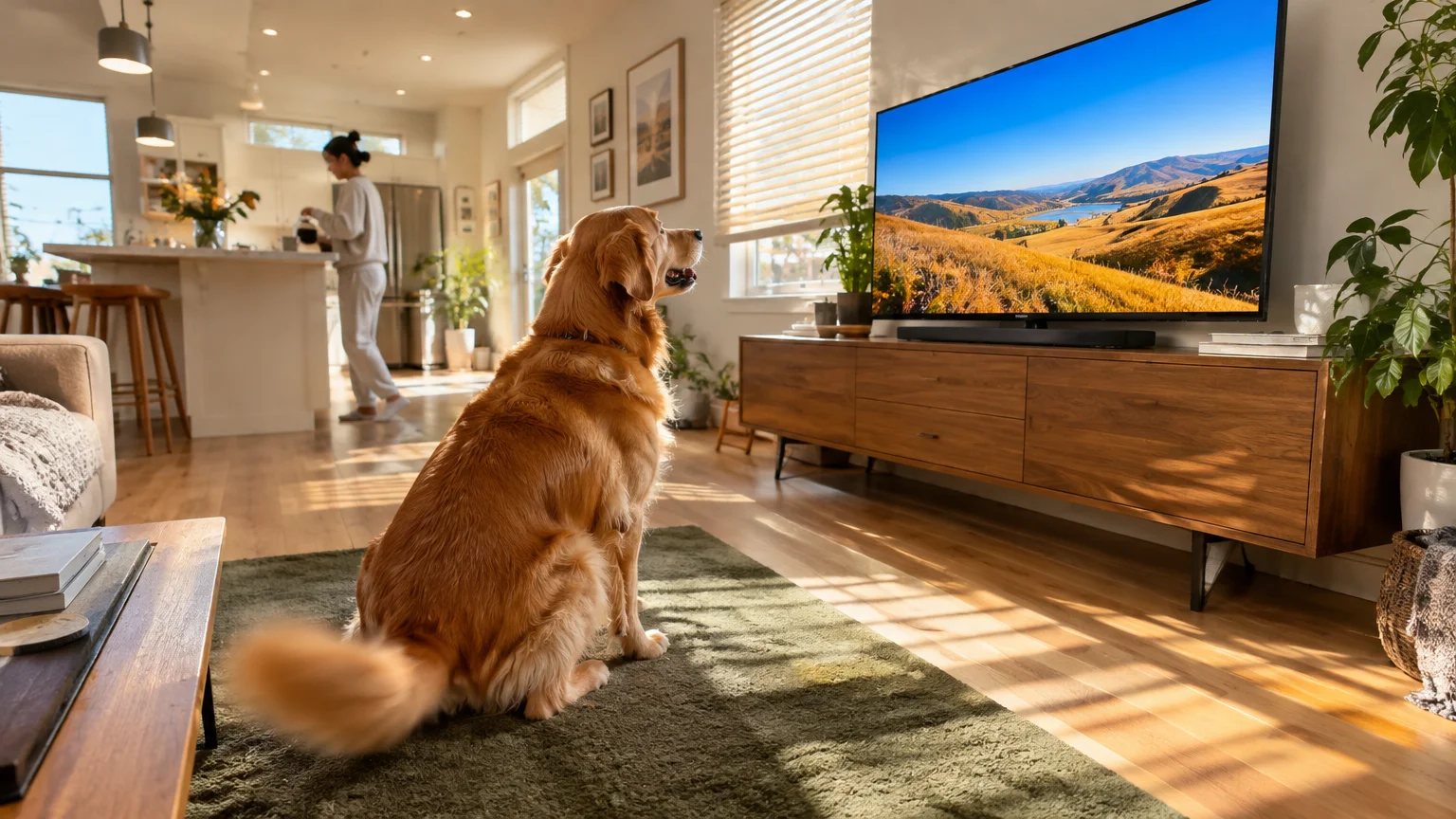
How to Curate the Best Screen Time for Your Dog
Choosing appropriate programming prevents your dog from becoming overwhelmed or anxious while watching television. Tailoring visuals to your dog’s sensory strengths makes viewing sessions mentally enriching.
Look for programming dominated by blue, yellow, and green tones. Vast ocean scapes, prairie landscapes, and sunny forest canopies offer the sharpest contrast for dichromatic canine eyes.
Nature documentaries produced in natural daylight provide exceptional visual engagement for sporting and herding breeds. Programs showcasing grazing herbivores, soaring waterfowl, or swimming marine life trigger natural visual curiosity without inducing stress.
Specialized streaming platforms cater directly to canine sensory needs. The subscription channel DOGTV creates content specifically adjusted to canine visual processing and acoustic sensitivities.
DOGTV offers a free limited-access tier on popular streaming apps, while full access costs $9.99 per month or $74.99 per year. The channel calibrates background audio tracks to a relaxing tempo between 50 and 70 beats per minute.
This tempo mirrors a resting canine heart rate, helping prevent overstimulation during visually active programming. Calming audio tracks help soothe dogs suffering from mild separation anxiety when home alone.
If you prefer standard streaming services, search for slow-paced ambient videos filmed from a canine perspective. Forest walking tours filmed with low camera rigs allow your dog to experience visual exploration safely from the living room floor.
Things to Watch Out For: Screen Reactivity and Safety
While television can provide wonderful mental enrichment, uncontrolled screen time creates behavioral problems for certain sensitive dogs. You must recognize when casual viewing turns into distress or physical danger.
Here are several critical safety and behavioral scenarios to monitor when watching television with reactive breeds:
- Physical Screen Impacts: High-drive terriers and herding dogs often lunge directly at the display during intense chase scenes. Always mount flat screens securely to wall studs using heavy-duty brackets rather than resting them on flimsy open furniture.
- Barrier Frustration: Some dogs become agitated when they cannot access or smell the digital animals they see on screen. If your dog whines, scratches the wall, or pants heavily while looking behind the television, turn the screen off immediately.
- Auditory Stress Triggers: High-frequency sound effects, emergency sirens, or distressed animal cries in movies can induce intense canine anxiety. If your dog pins their ears, trembles, or paces nervously, switch to calming instrumental audio or mute the broadcast.
- Obsessive Fixation: Intelligent breeds like Border Collies can develop compulsive laser-pointer-like obsessions with digital motion. Limit active screen sessions to 10 or 15 minutes, redirecting your dog to a physical chew toy or training game afterward.

Practical Steps to Set Up a Dog-Friendly Viewing Space
You can optimize your home theater environment to match your dog’s visual mechanics and physical comfort. Small adjustments create a safer, more relaxing atmosphere for shared movie nights.
Position your television at a modest viewing angle rather than mounting it near the ceiling. Because dogs sit lower to the ground, severe upward viewing angles cause neck strain and diminish visual clarity.
Place an orthopedic dog bed roughly six to eight feet away from your display. This placement accommodates your dog’s 20/75 visual acuity without encouraging them to stand directly beneath the screen.
Adjust your room lighting to reduce glare across the glass panel. Dogs have a reflective tissue layer behind their retinas called the tapetum lucidum, making them sensitive to harsh light reflections.
Maintain consistent volume levels across your audio system. Sudden dynamic spikes in action blockbusters can frighten dogs, so enable night mode or dialogue boost settings on your soundbar.
Frequently Asked Questions
Do dogs understand that animals on TV are not real?
Dogs do not understand the conceptual nature of digital television broadcasts. They respond to authentic motion patterns, animal silhouettes, and genuine audio recordings as if real animals are nearby.
Because screens omit scent markers, most dogs quickly realize the animal cannot be physically engaged. This lack of scent explains why many dogs glance behind the screen or lose interest after several minutes.
Why does my dog bark at animals on screen but ignore humans?
Dogs evolved to prioritize species-specific social cues and potential predator or prey silhouettes over human digital images. The Wisconsin-Madison study revealed that 95% of screen-focused dogs prefer animal content over human actors.
Your dog perceives human voices and faces daily inside your home, making digital representations of humans unremarkable. Foreign animals, barking dogs, and wildlife represent novel stimuli that trigger immediate investigation or alert barking.
Can watching television damage my dog’s eyesight?
Watching modern LED or OLED screens will not damage your dog’s eyes. Modern displays emit no harmful radiation and refresh at speeds that match natural canine visual processing.
However, you should avoid leaving fast-paced, high-volume shows playing continuously for hours. Excessive screen time can cause mental fatigue, behavioral overstimulation, or barrier frustration in reactive breeds.
What frame rate is required for a dog to see smooth video?
A television requires a refresh rate of at least 75 Hz to 80 Hz for a dog to perceive continuous, fluid motion. Standard modern displays operating at 120 Hz or 240 Hz exceed this biological threshold easily.
Older televisions refreshing at 60 Hz appeared as disjointed, flickering still photographs to canine eyes. High-definition flat panels eliminate this flicker, making television enjoyable for family pets.
Sharing the Sofa with Your Companion
Watching television with your dog provides a relaxing way to bond at the end of a busy workday. Recognizing how your dog’s breed influences their perception transforms screen time into an enriching, shared experience.
Keep your sessions positive by monitoring stress signals and matching content to your pet’s personality. When managed thoughtfully, modern media entertainment offers gentle cognitive stimulation for curious companion animals.
The information here is meant for educational purposes. Specific circumstances—including health conditions, finances, location, and goals—may require different approaches.
When in doubt, consult a licensed professional or check official sources directly.
Last updated: October 2026. Rules, prices, and details change—verify current information with official sources before acting on it.