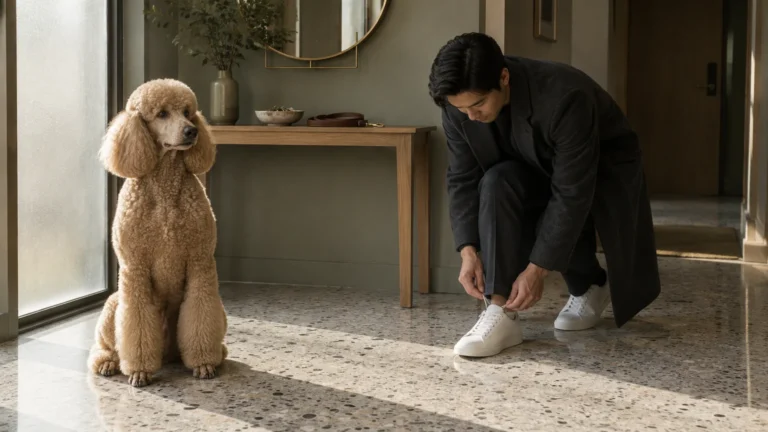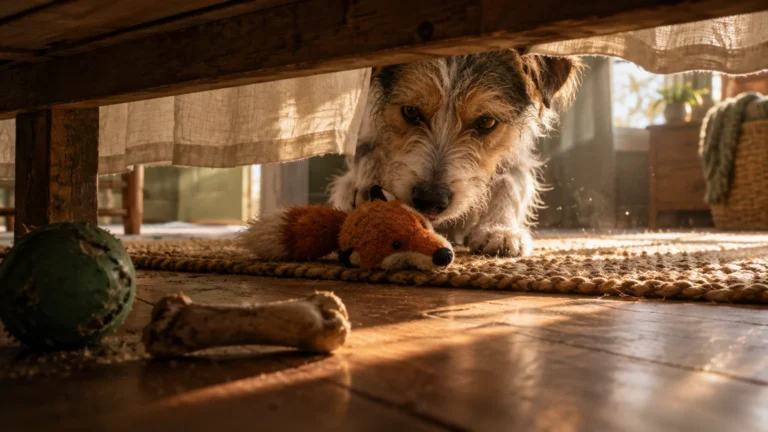
Your dog’s odd sleeping posture reveals immediate insights into their physical comfort, core temperature, and emotional security. A twisted spine or belly-up sprawl is not just a quirky habit; it directly reflects canine physiology and survival instincts.
Observing how your dog rests gives you actionable clues about their daily well-being. Subtle shifts between curling tightly and sprawling outward indicate whether your pet feels completely safe or simply needs to cool down.
Deciphering these nighttime positions helps you optimize your pet’s bedding, identify early joint discomfort, and interpret subtle dog body language.
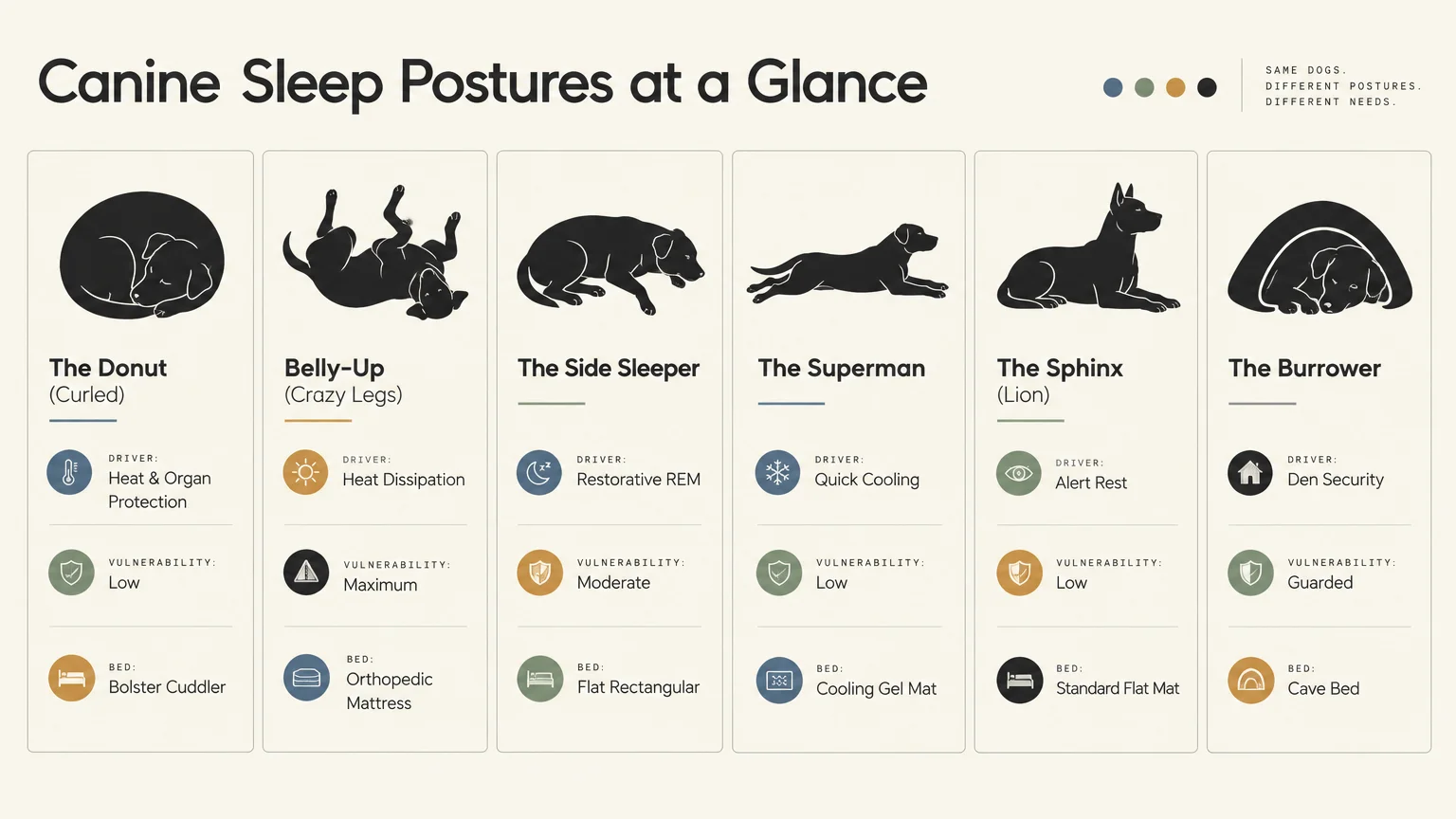
Canine Sleep Postures at a Glance
Dogs rotate through varied postures depending on floor temperature, ambient noise, and physical exhaustion. Understanding these positions helps you select the right dog bed and create an ideal resting environment.
| Sleeping Position | Primary Driver | Vulnerability Level | Recommended Bed Type |
|---|---|---|---|
| The Donut (Curled) | Heat conservation and organ protection | Low vulnerability; guarded | Bolster bed or round donut cuddler |
| Belly-Up (Crazy Legs) | Heat dissipation and muscle relaxation | Maximum vulnerability; absolute trust | Wide orthopedic mattress |
| The Side Sleeper | Entering deep restorative REM sleep | Moderate vulnerability; relaxed | Large flat rectangular bed |
| The Superman | Quick cooling and play readiness | Low vulnerability; ready to spring up | Cooling gel mat or firm pad |
| The Sphinx (Lion) | Light resting while staying alert | Low vulnerability; semi-active state | Standard flat mat or floor rug |
| The Burrower | Seeking den security and darkness | Guarded; sensory isolation | Cave bed or hooded blanket bed |
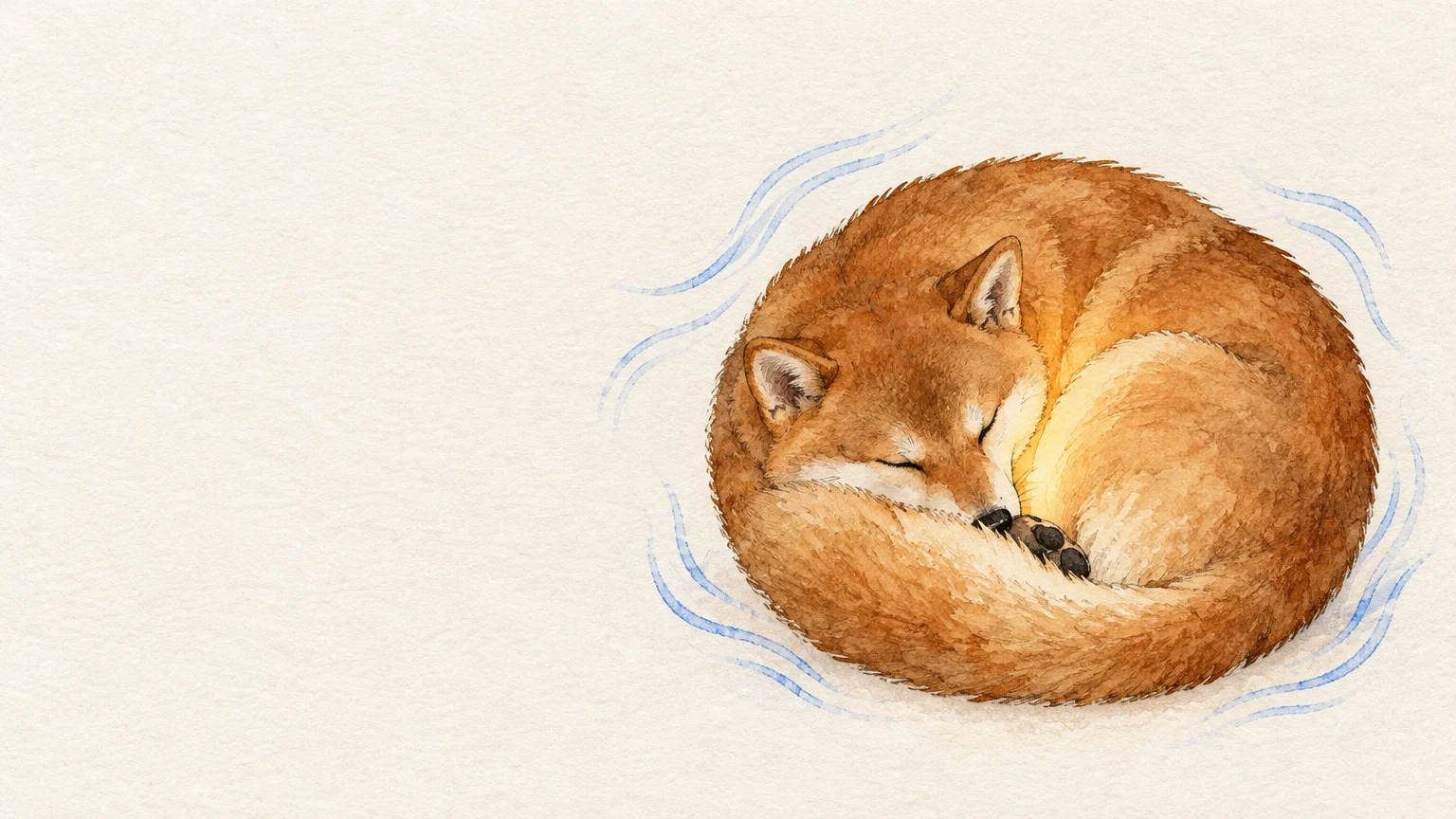
01 The Donut: Conserving Core Heat and Guarding Vital Organs
When your dog curls tightly into a ball with their tail tucked over their nose, they adopt the classic donut posture. This compact shape serves two evolutionary functions: thermal regulation and physical protection.
According to research highlighted by the Sleep Foundation, tucking the paws and nose inward traps body warmth within the chest and abdominal cavities. This posture drastically reduces radiant heat loss during cooler nights.
In the wild, canines sleep curled up to protect vulnerable internal organs from opportunistic predators. Even inside your secure home, this ancestral instinct prompts your dog to shield their belly when feeling cautious or adjusting to a new environment.
If your dog curls up constantly, inspect your home for floor-level drafts or drop the air conditioning slightly. Providing a plush donut bed with raised edges supports their natural tendency to nest while locking in body heat.
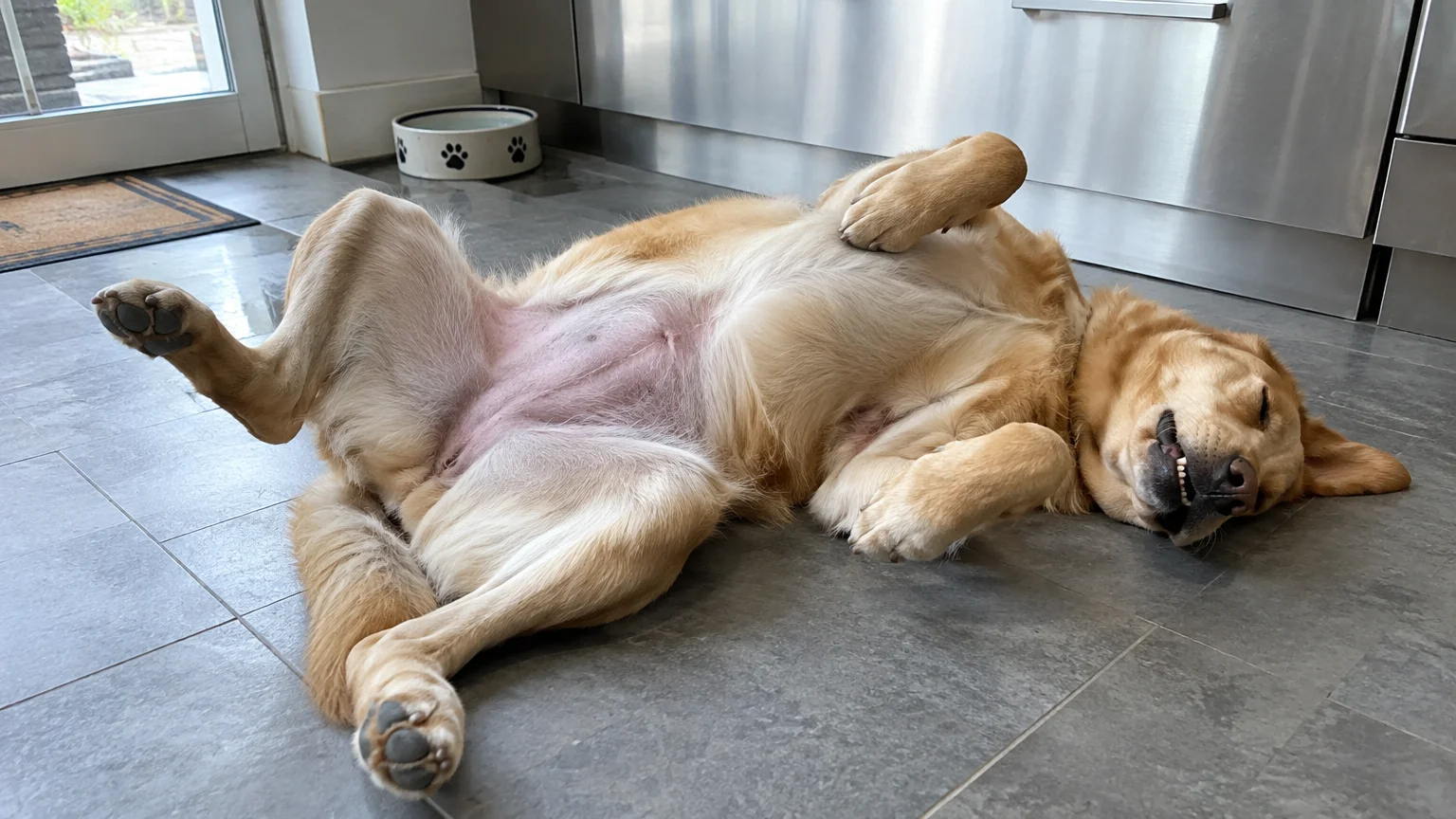
02 Belly-Up “Crazy Legs”: Dissipating Heat and Displaying Complete Trust
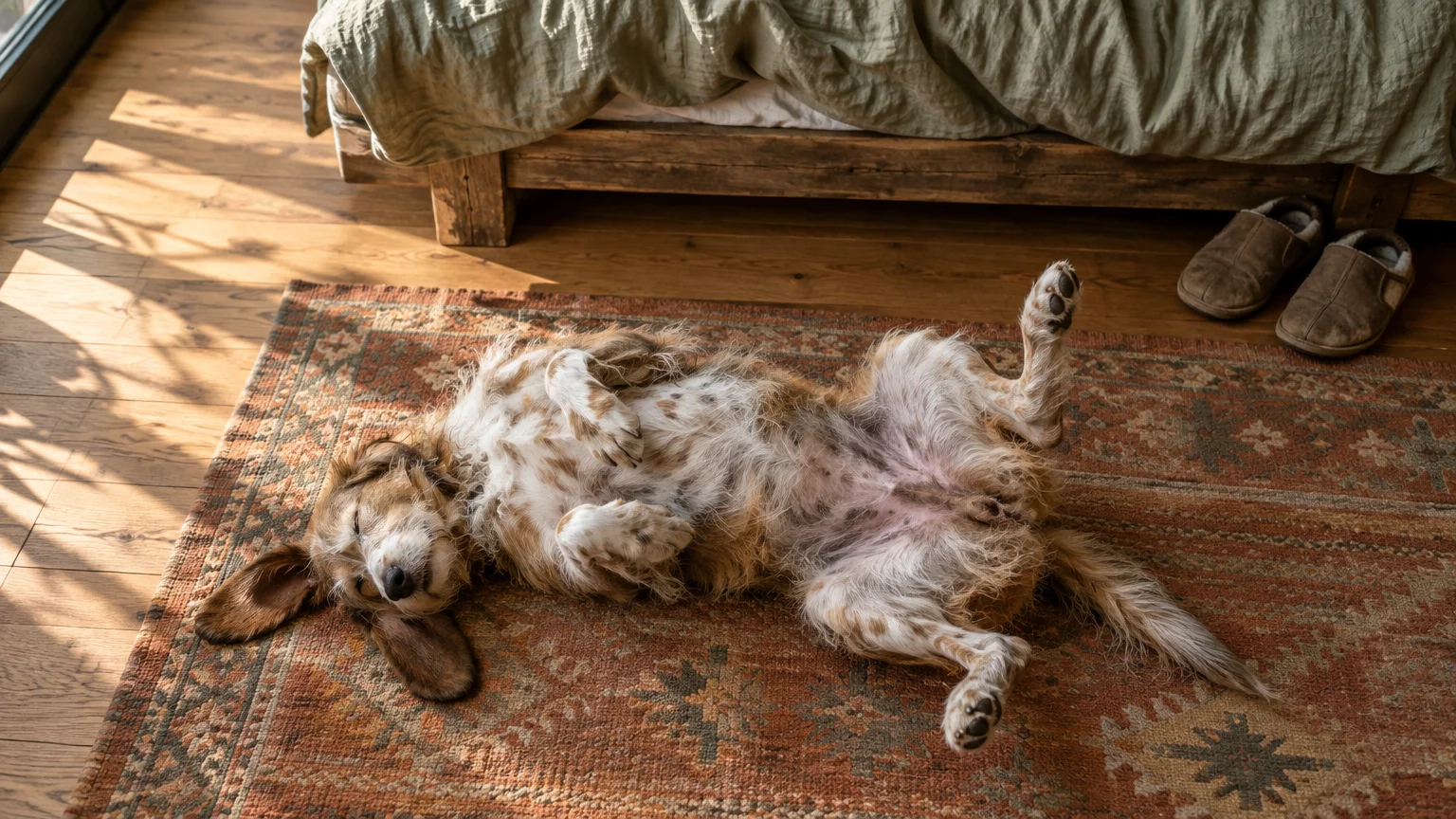
Few sights compare to a dog snoozing flat on their back with all four paws dangling in mid-air. While this posture looks comical, it represents a crucial biological cooling mechanism.
Dogs possess sweat glands primarily in their paw pads; they cannot sweat efficiently through their dense fur coats. A dog sleeping on back exposes their stomach, where hair is thinnest, to open airflow to cool down quickly.
Exposing the throat, chest, and stomach leaves a dog entirely defenseless against threats. When your companion sleeps belly-up in your presence, they demonstrate complete confidence in their home environment and zero perceived danger.
This posture also allows all major skeletal muscle groups to fully relax without bearing weight. Provide a spacious orthopedic bed so your pet can spread their limbs wide without hitting walls or furniture edges.
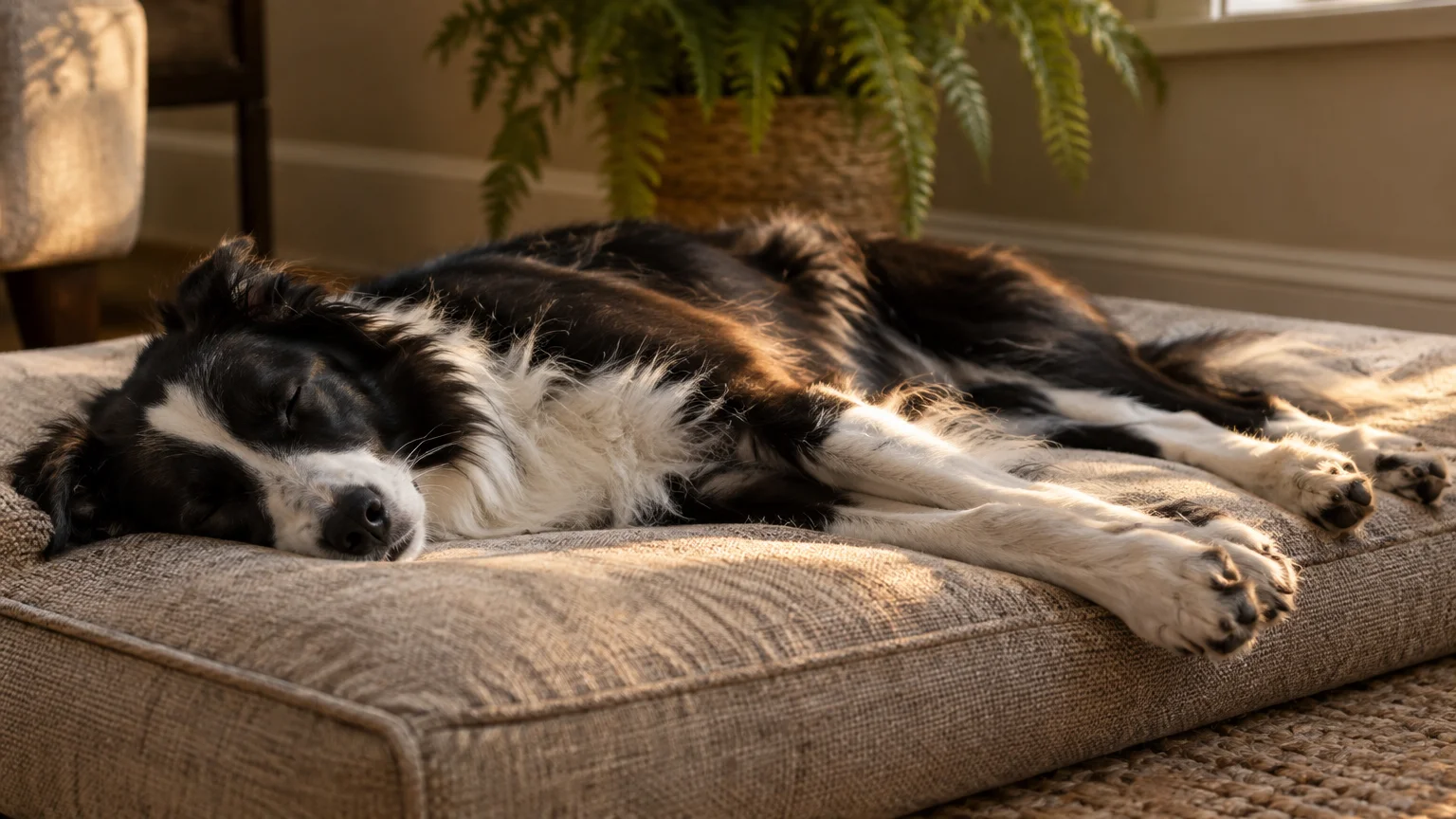
03 The Classic Side Sleeper: Entering Deep, Restorative REM Cycles
The side sleeping posture—limbs extended comfortably outward—serves as the universal indicator of genuine rest. In this position, your dog lets their guard down without exposing themselves as radically as the belly-up sprawl.
Veterinary guidance from the American Kennel Club notes that side sleeping allows the brain to transition smoothly into rapid eye movement (REM) sleep. During this deep stage, your dog processes daytime memories and repairs bodily tissues.
Because the limbs extend freely, side sleeping places minimal tension on joints, discs, and the spine. Dogs experiencing significant environmental anxiety rarely sleep on their sides because rising quickly from this position takes extra seconds.
If your pet favors side sleeping, verify that their bed provides sufficient surface area for full limb extension. When dogs hang their legs off small cushions, spinal alignment suffers and morning stiffness can develop over time.
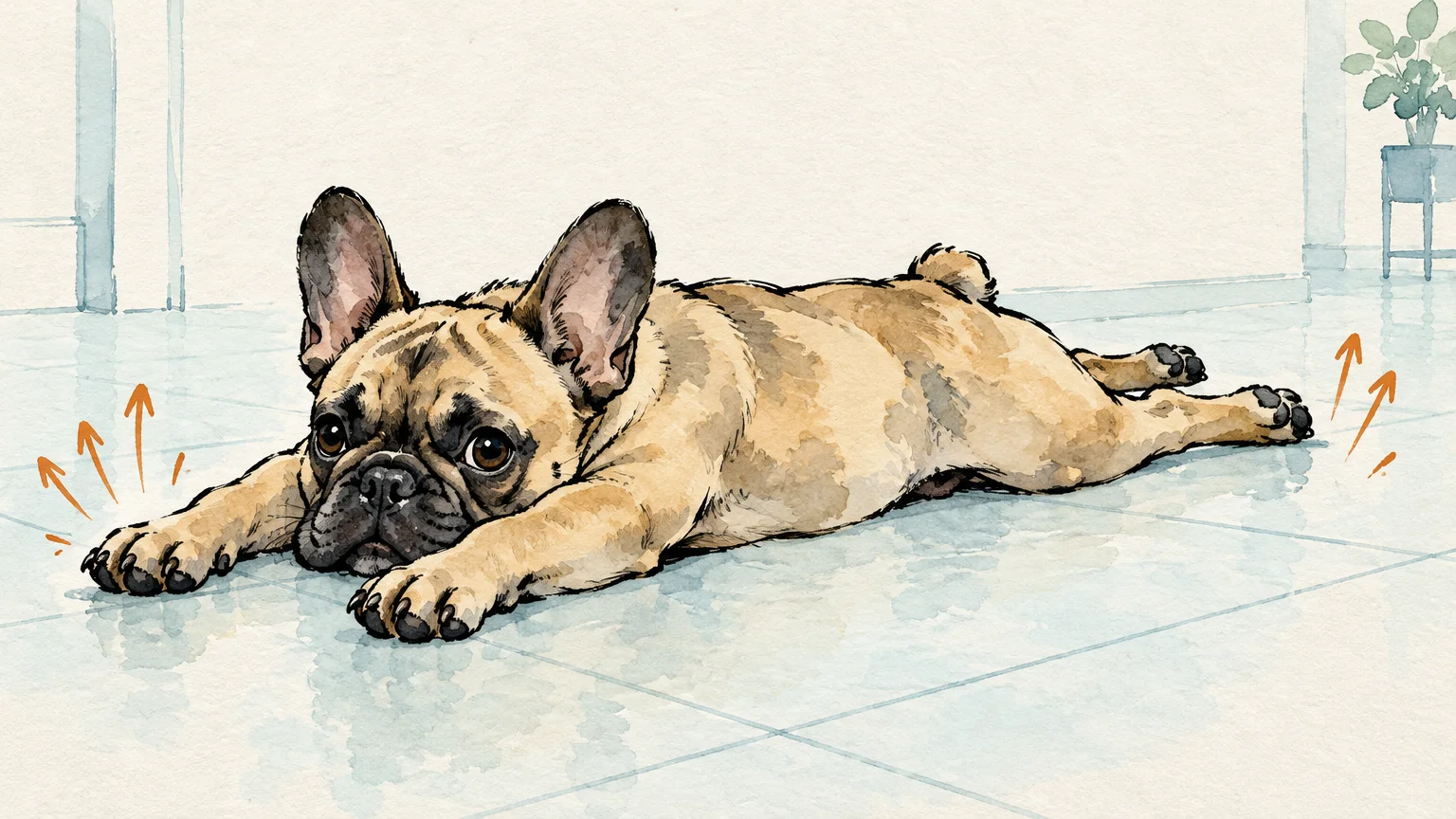
04 The Superman: Rapid Cooling and Instant Readiness
The Superman posture features a dog lying flat on their belly with front paws stretched forward and hind legs kicked backward. You see this position most often in puppies, working breeds, and high-energy dogs.
Pressing the sparsely furred belly directly against tile, hardwood, or cool soil pulls heat away through conductive cooling. It offers an efficient way to recover after a vigorous walk or play session in warm weather.
The Superman pose keeps major joints positioned for immediate propulsion. Your dog can transition from a dead rest to an upright sprint in a single fluid leap if a toy moves or someone enters the room.
Puppies frequently adopt this posture due to exceptional joint flexibility and boundless enthusiasm. Older dogs rarely maintain the Superman pose for extended periods because tight hip flexors and aging joints make the position uncomfortable.
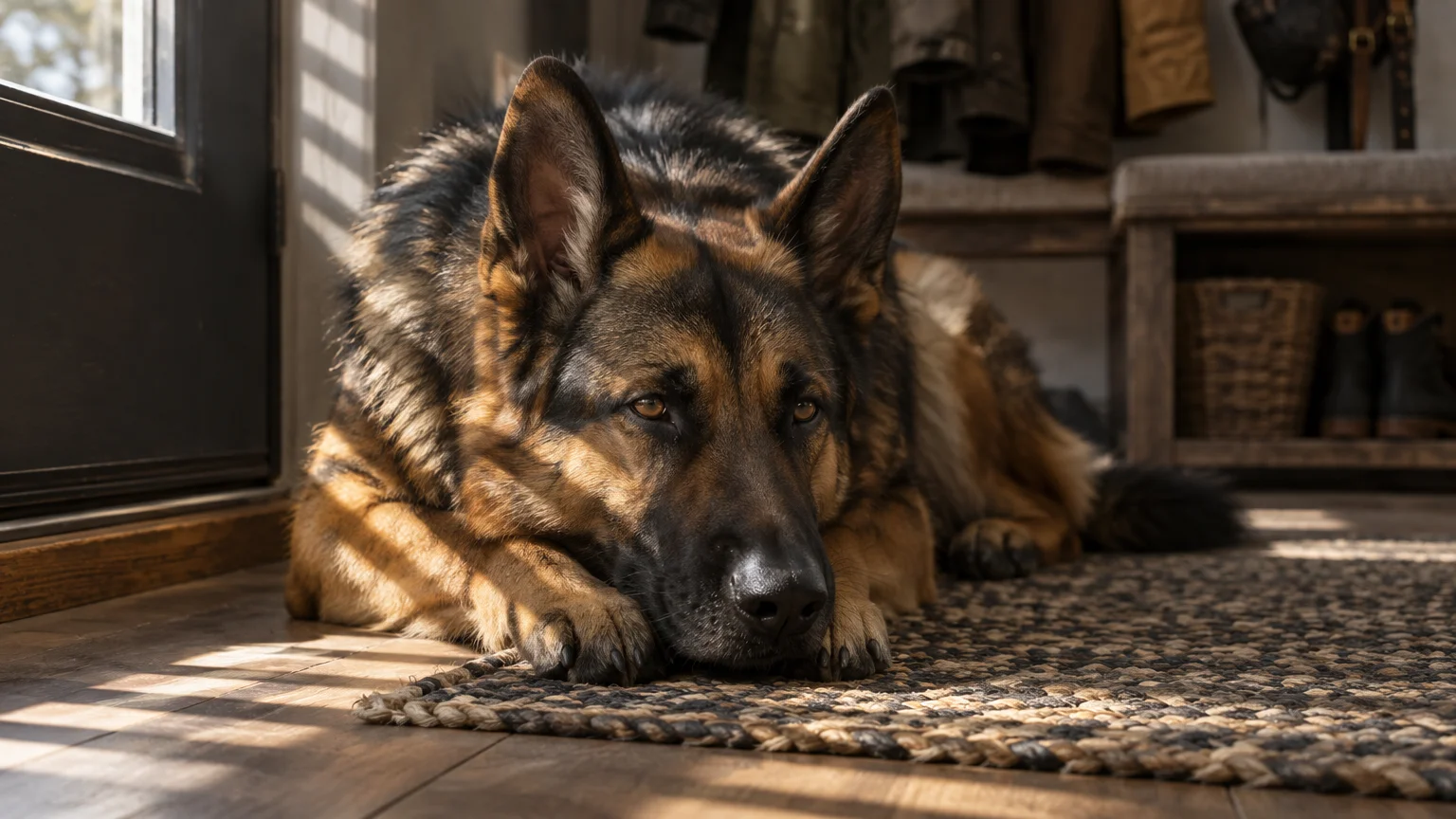
05 The Sphinx (Lion’s Pose): Taking Cautious Power Naps
In the Sphinx pose—often called the Lion’s Pose—a dog rests their front paws forward while keeping their head resting on top. Their hindquarters remain tucked squarely beneath them in a resting crouch.
This posture indicates a light, watchful slumber rather than deep, restorative sleep. The dog rests their tired body while keeping their sensory organs positioned to detect environmental changes immediately.
Muscles along the back, shoulders, and hips remain partially contracted in this posture. If a knock sounds at the door, the dog launches straight onto their feet without needing to reorient themselves.
Working breeds, guard dogs, and naturally vigilant companions spend considerable afternoon hours in this posture. Give your dog quiet space without excessive foot traffic if you want them to shift into deeper, muscle-relaxing postures.
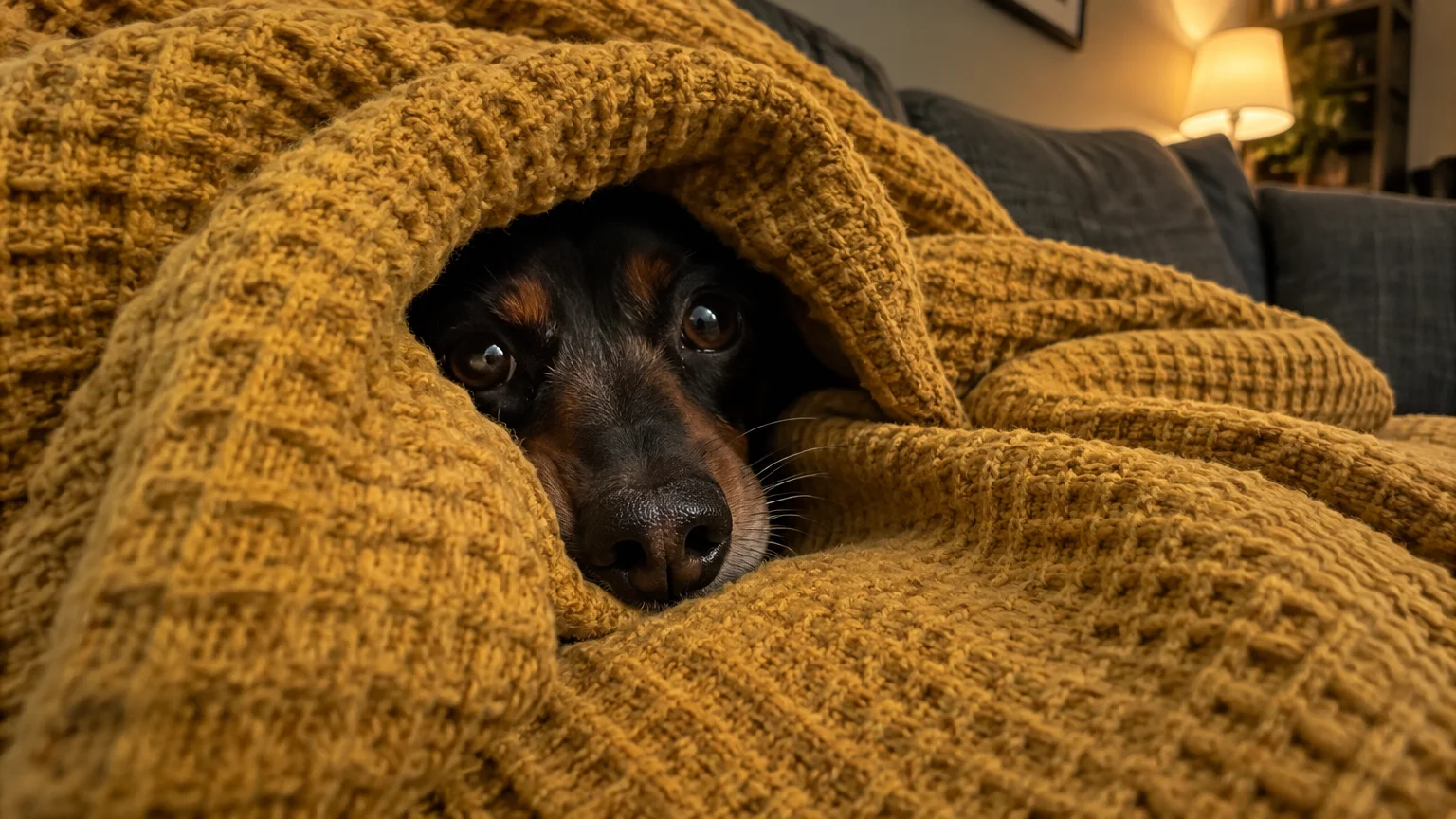
06 Burrowing Under Blankets: Channeling Ancient Denning Instincts
Some dogs crawl under comforters, burrow beneath throw pillows, or tuck themselves behind furniture to sleep. Terriers, Dachshunds, and small companion breeds frequently exhibit this determined nesting behavior.
Burrowing stems from ancestral denning behaviors where wild canines dug secure subterranean pockets to nurse pups and escape harsh weather. Enclosed spaces provide physical boundaries that make dogs feel completely shielded from behind.
Enclosing themselves inside dark spaces also dampens excessive auditory and visual stimulation. For nervous or noise-sensitive pets, burrowing lowers cortisol levels and promotes calm, uninterrupted rest.
You can satisfy this instinct safely by investing in a cave-style pet bed with an integrated plush canopy. Avoid heavy, non-breathable synthetic blankets that could trap dangerous levels of heat or restrict fresh airflow around your dog’s nose.
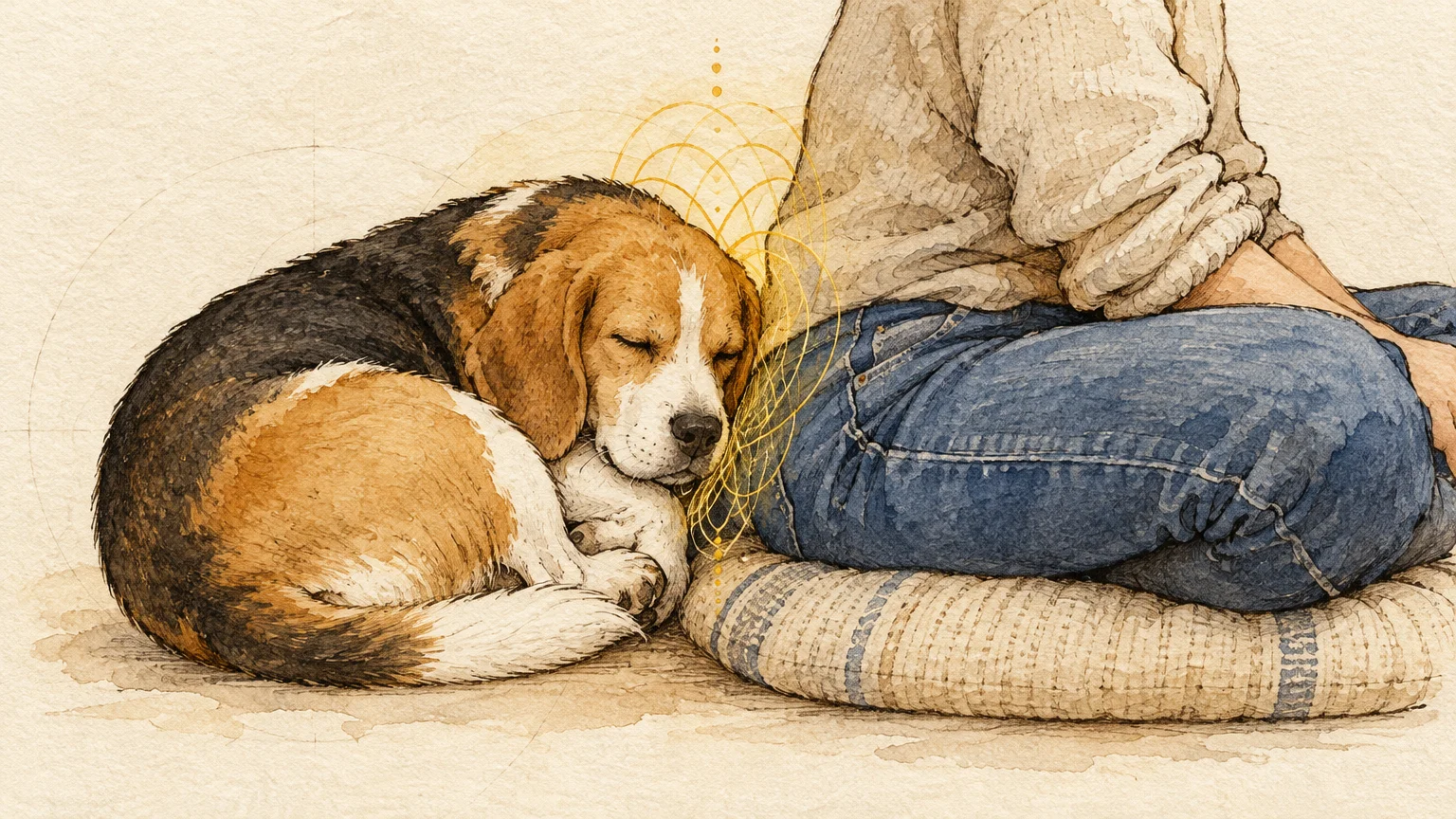
07 Back-to-Back Contact: Affirming Pack Hierarchy and Attachment
When your dog presses their back, hips, or shoulders against your legs—or against a fellow household pet—they perform an ancient bonding ritual. This behavior reflects deep pack affiliation and social trust.
In canine packs, wild dogs sleep huddled together to share thermal energy and watch each other’s blind spots. By leaning their spine against you, your dog establishes that you share a unified defensive front.
This physical contact also triggers the release of oxytocin, a hormone that lowers heart rates and strengthens social bonds. It signals that your dog considers you a source of unconditional safety and family comfort.
If you prefer not to share your mattress, place a dedicated dog bed directly beside your bed frame. Proximity alone satisfies their pack instinct while preserving personal space and clean bedding for both parties.
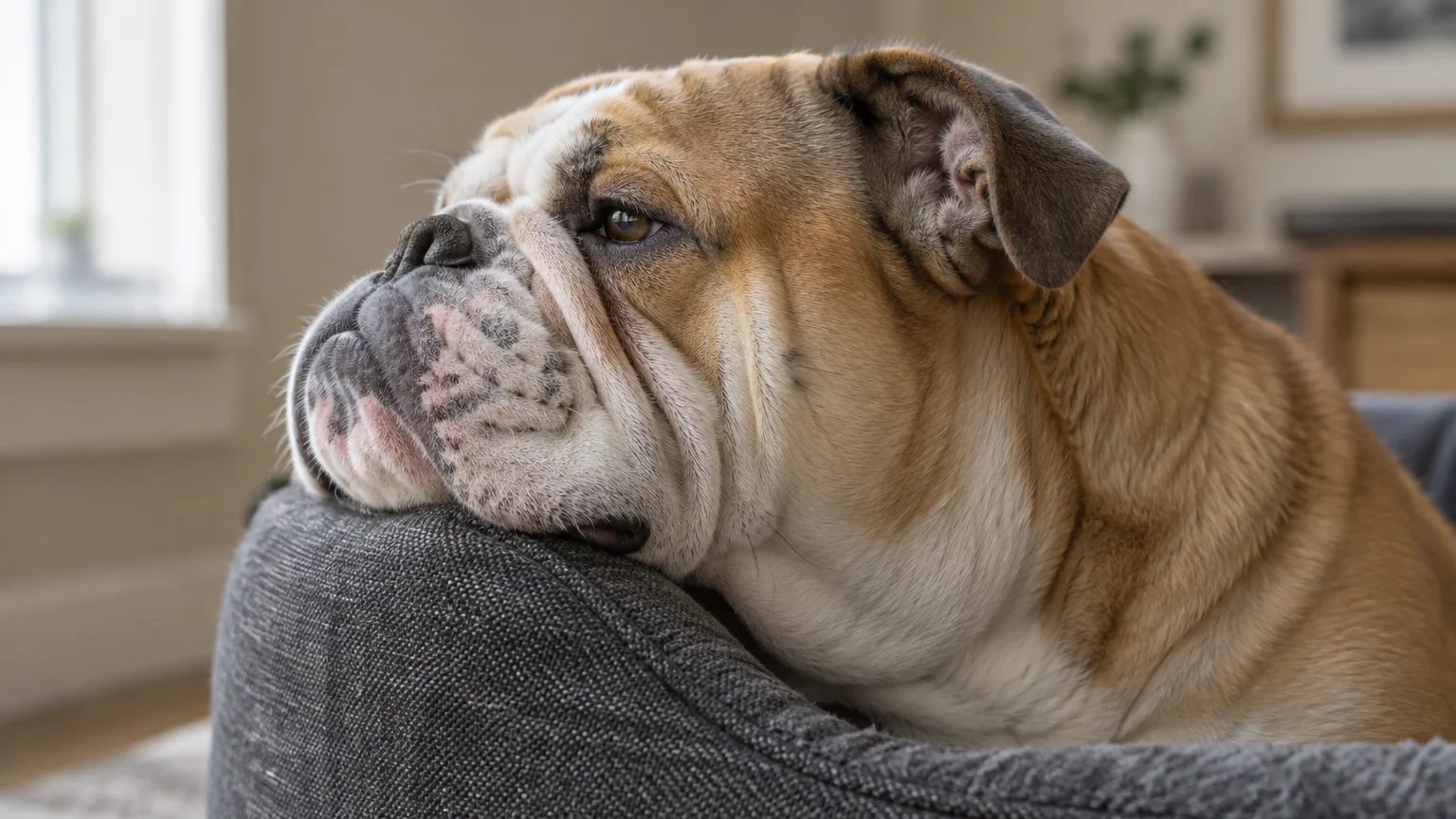
08 Head and Neck Elevated: Clearing Airways and Supporting Respiration
You may spot your dog balancing their chin across a sofa armrest, a raised bed bolster, or your shoe. While this looks slightly awkward, elevating the cranium frequently serves an anatomical function.
Brachycephalic breeds—such as French Bulldogs, Pugs, and Boston Terriers—frequently elevate their heads to optimize airflow. Raising the airway straightens the upper respiratory tract, reducing soft palate collapse and making breathing significantly easier during rest.
Clinical resources from VCA Animal Hospitals emphasize that sleep quality correlates directly with open airways and healthy oxygenation. Elevated head positioning helps dogs avoid waking repeatedly from mild respiratory obstruction.
Bolstered orthopedic beds are ideal for dogs who seek this elevated head angle. If an older dog suddenly begins propping their chest and head upward, schedule a veterinary checkup to rule out congestive heart or lung complications.
09 The Contortionist Twist: Decompressing Joints and Stretching Tendons
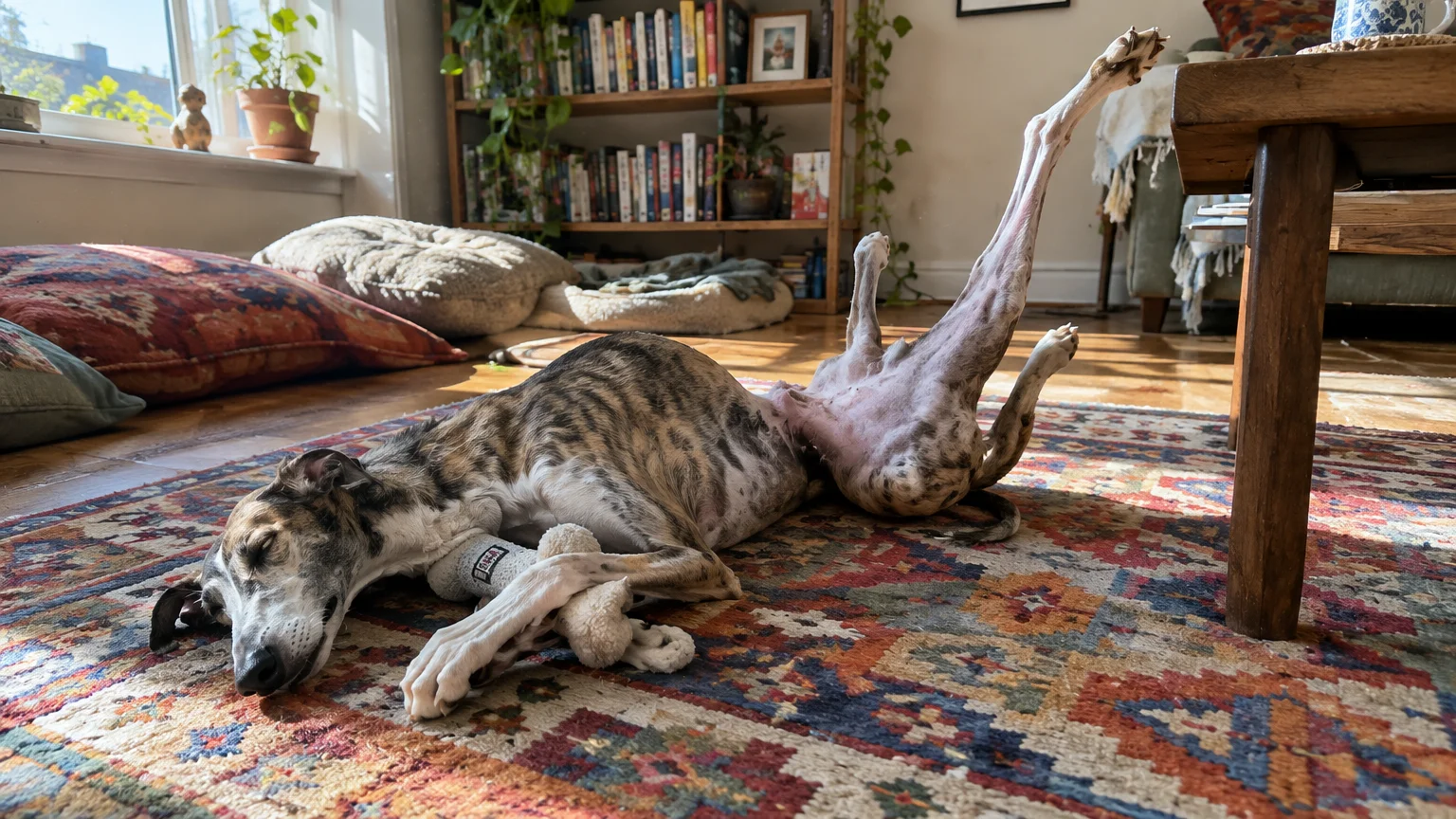
Few things confuse pet owners more than a dog sleeping in a corkscrew shape—hips twisted one direction while the shoulders face the opposite way. This pretzel posture appears uncomfortable to humans, but dogs find it deeply satisfying.
Canine spines possess substantially more rotational flexibility than human spines. Twisting during sleep provides a passive, sustained stretch across the lumbar vertebrae, latissimus dorsi, and hip stabilizers.
This posture frequently occurs when a dog transitions between a side sleep and a belly-up sprawl. The dog relaxes their limbs so completely that gravity pulls their upper and lower body in separate directions.
Provide a supportive memory foam mattress if your dog loves twisting into contorted arrangements. High-density orthopedic foam absorbs pressure points under the shoulders and hips while letting the spine rest comfortably.
The Science of Dog Sleep Cycles and Movement
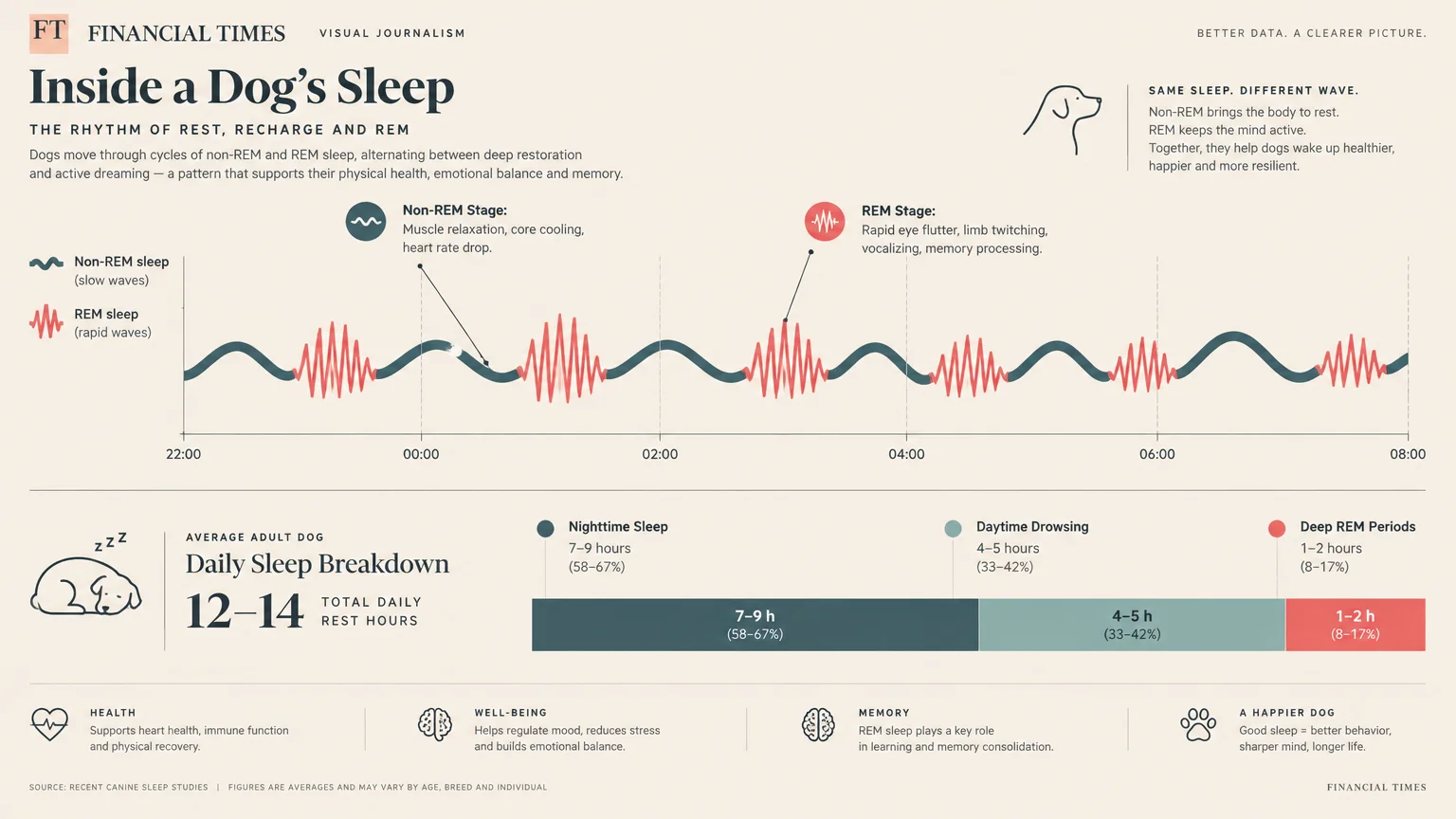
Canine sleep architecture mirrors human cycles but operates on an accelerated timeline. Dogs complete an entire sleep cycle—moving from wakefulness through slow-wave sleep to REM—in roughly 45 to 60 minutes.
During the REM phase, your dog’s brain activity spikes while large muscle groups experience temporary motor inhibition. However, this muscular shutdown is incomplete in canines, resulting in rapid paw twitches, muffled barks, and fluttering eyelids.
These involuntary movements confirm that your dog has entered restorative sleep. Shifting postures throughout the night prevents muscular stiffness and ensures balanced circulation across dependent pressure points.
Never wake a twitching or vocalizing dog abruptly by shaking them. Startling a dog out of deep REM sleep can trigger an involuntary defensive reflex, leaving the dog confused and anxious.
Worth Keeping in Mind: Optimizing Your Dog’s Sleep Environment
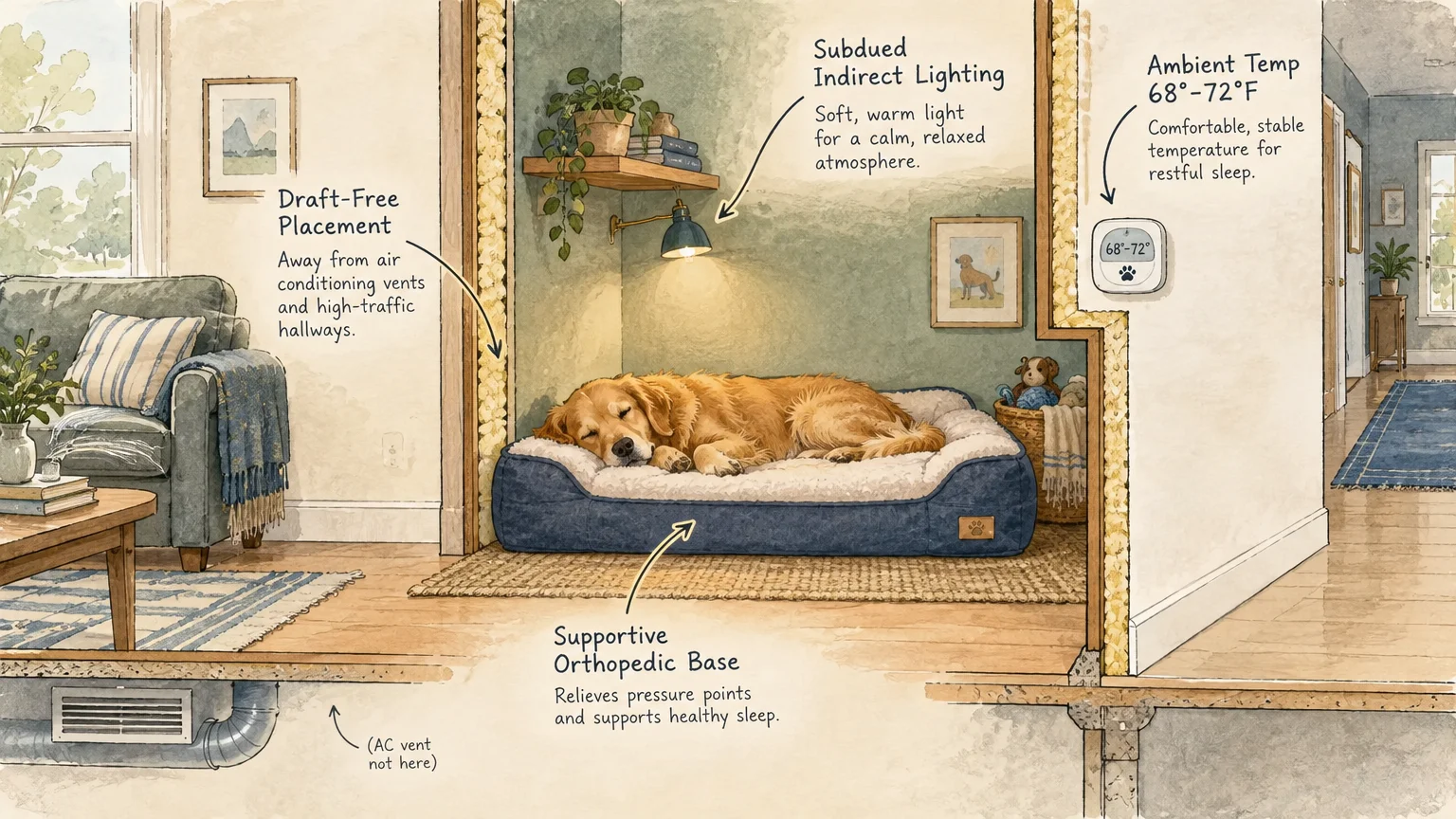
Your dog’s chosen sleeping spot and posture often reveal environmental deficiencies in your home. Adjusting small details can transform restless tossing into deep, restorative rest.
- Floor temperature: Hardwood and tile draw away body heat quickly, which helps in summer but strains arthritic joints during winter months.
- Bed size ratios: Your dog’s bed should measure at least six inches longer than their body length from snout to tail base to allow uninhibited side sleeping.
- Draft corridors: Avoid placing dog beds near exterior doors, uninsulated floor-level windows, or direct air conditioning vents.
- Traffic exposure: Placing beds in central hallways forces sensitive dogs to remain in light, guarded postures like the Sphinx rather than deep REM sleep.
When to Get Professional Help: Posture Shifts That Signal Pain
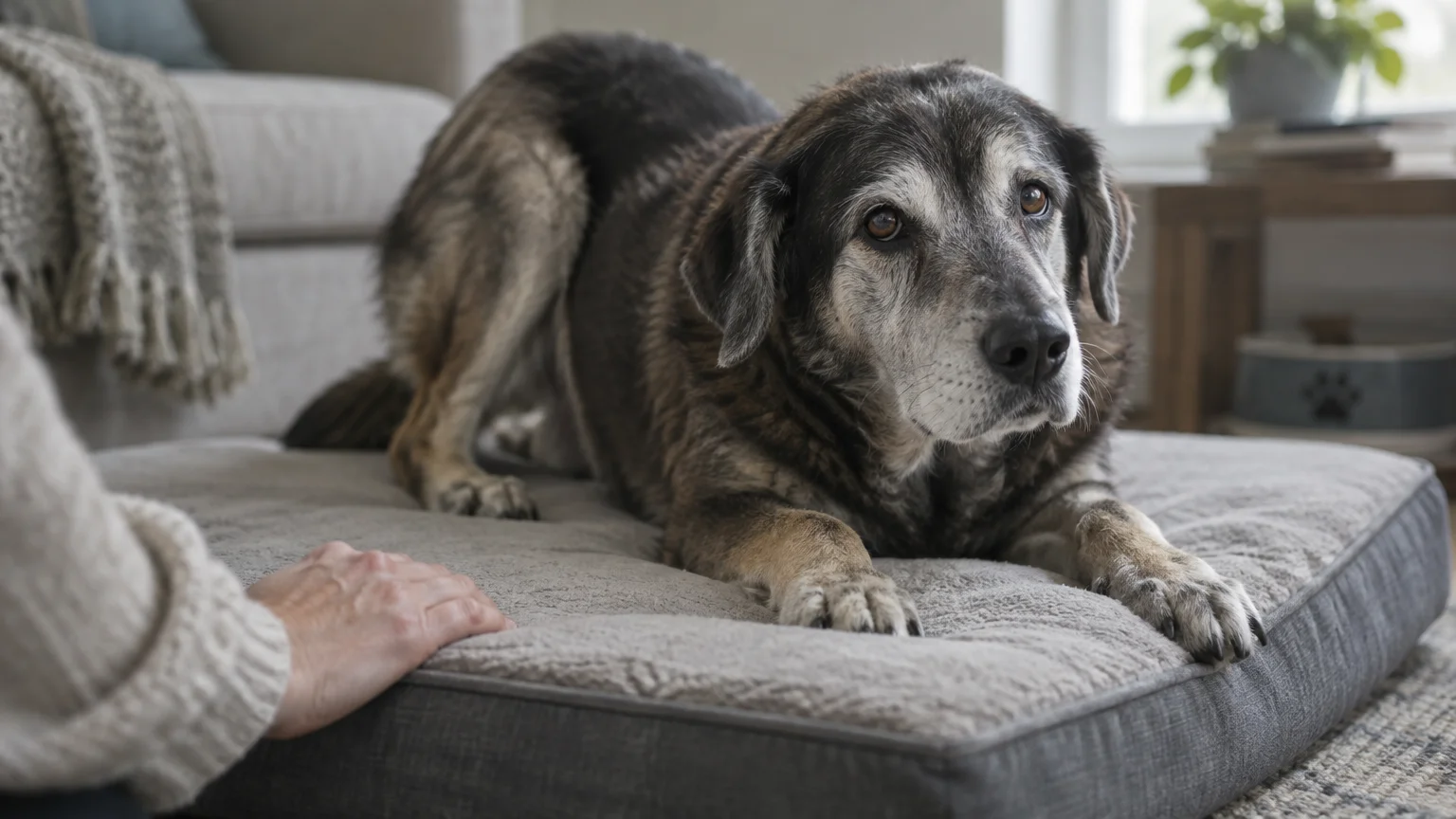
While unusual sleeping poses are completely normal, sudden changes in posture often signal underlying orthopedic, neurological, or cardiopulmonary disease. Monitor your pet for these specific warning signs:
- Inability to lie down comfortably: Circling excessively, pacing nervously, or repeatedly lying down and standing right back up signals acute joint, spinal, or abdominal pain.
- Refusal to curl or bend: A sudden preference for rigid, straight-legged positions often points toward spondylosis, intervertebral disc disease (IVDD), or severe hip dysplasia.
- Upright respiratory sleeping (Orthopnea): A dog that sleeps sitting up with their neck extended and elbows turned outward may suffer from congestive heart failure or pleural effusion.
- Morning stiffness and limping: If your dog struggles to rise from a side or curled posture, request a comprehensive orthopedic exam to evaluate arthritis management options.
Frequently Asked Questions
Why does my dog suddenly sleep in strange positions they never used before?
Sudden changes in sleep posture usually reflect environmental shifts, seasonal temperature changes, or developing joint stiffness. If the new position accompanies limping, reluctance to move, or behavioral changes, consult your veterinarian.
Is it normal for a dog to sleep on their back with their legs straight up?
Yes, this posture is entirely normal and healthy. It indicates that your dog feels completely secure in their home while actively venting excess body heat from their belly.
Do dogs dream when they twitch in funny sleeping positions?
Yes, dogs experience vivid dreams during the REM stage of sleep. Twitching paws, facial tremors, and quiet whines simply indicate your dog is actively visualizing daytime experiences.
Should I wake my dog if they appear stuck in an uncomfortable position?
No, you should avoid waking a resting dog unless they show obvious signs of distress. Dogs possess natural body awareness and will adjust their posture independently when they need to relieve pressure.
Final Takeaways for Pet Parents
Your dog’s peculiar sleeping habits provide a clear, real-time window into their comfort, internal temperature, and physical health. Pay attention to how environmental changes influence their preferred positions.
By investing in high-quality orthopedic bedding, regulating room temperatures, and recognizing posture-related pain signals, you support your pet’s vitality and long-term joint health.
This is general informational content based on widely accepted guidance. Individual results vary.
Verify current details—rules, prices, eligibility, regulations—with official sources before making important decisions.
Last updated: October 2026. Rules, prices, and details change—verify current information with official sources before acting on it.