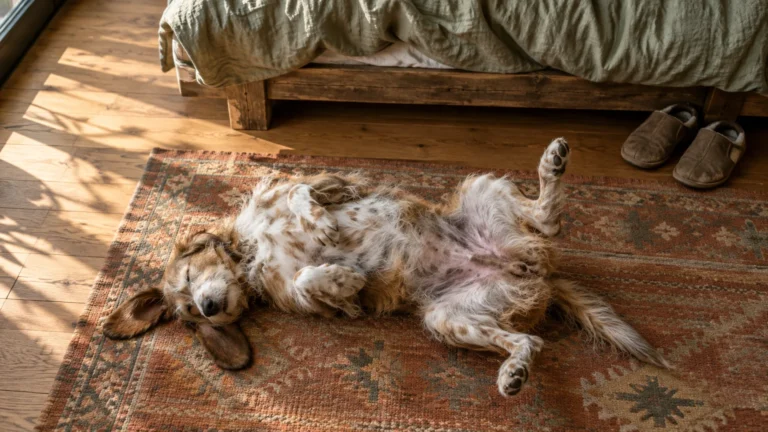
Finding the right canine companion does not mean committing to hour-long morning runs or endless games of fetch in the backyard.
Out of the 202 purebred dog breeds officially recognized by the American Kennel Club (AKC), several canine companions naturally prefer leisurely strolls and cozy naps over strenuous outdoor activities.
Whether you live in a high-rise apartment, manage a demanding work schedule, or simply prefer a calm daily routine, choosing a canine with lower physical requirements makes pet ownership manageable and deeply rewarding.
These low-energy dog breeds thrive on modest activity levels—typically requiring just 20 to 45 minutes of light daily movement—allowing you to enjoy warm companionship without exhausting daily workout regimens.
Understanding Canine Activity Levels and Exercise Needs
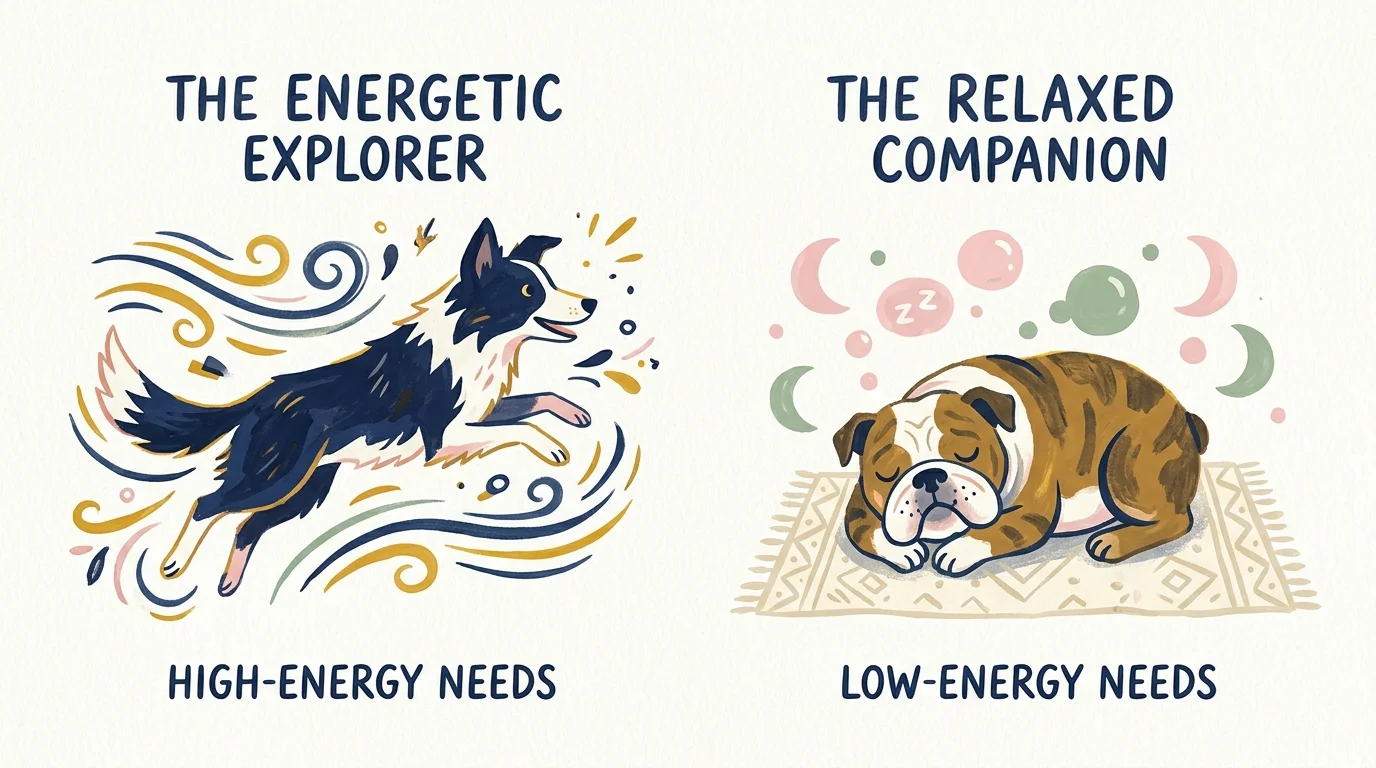
Canine exercise requirements stem from centuries of selective breeding, original working functions, and physical anatomy. Working, herding, and sporting dogs usually require 60 to 90 minutes of vigorous daily exercise to keep their minds and bodies healthy.
By contrast, dogs that don’t need much exercise usually come from toy, non-sporting, or hound groups bred for companionship or short bursts of hunting rather than sustained endurance.
According to official breed standards from the American Kennel Club, body structure plays a massive role in how much movement a dog needs. Brachycephalic (flat-faced) breeds, for example, possess shorter airways that make rapid heat dissipation difficult, making intense physical exertion dangerous for them.
Similarly, heavy-boned scent hounds or giant breeds conserve energy due to the sheer physical effort required to move their weight. Standard pet guidelines suggest that low-energy dog breeds require between 20 and 45 minutes of light daily exercise, usually split into short morning and evening walks.
12 Low-Energy Dog Breeds for Relaxed Lifestyles
1. French Bulldog
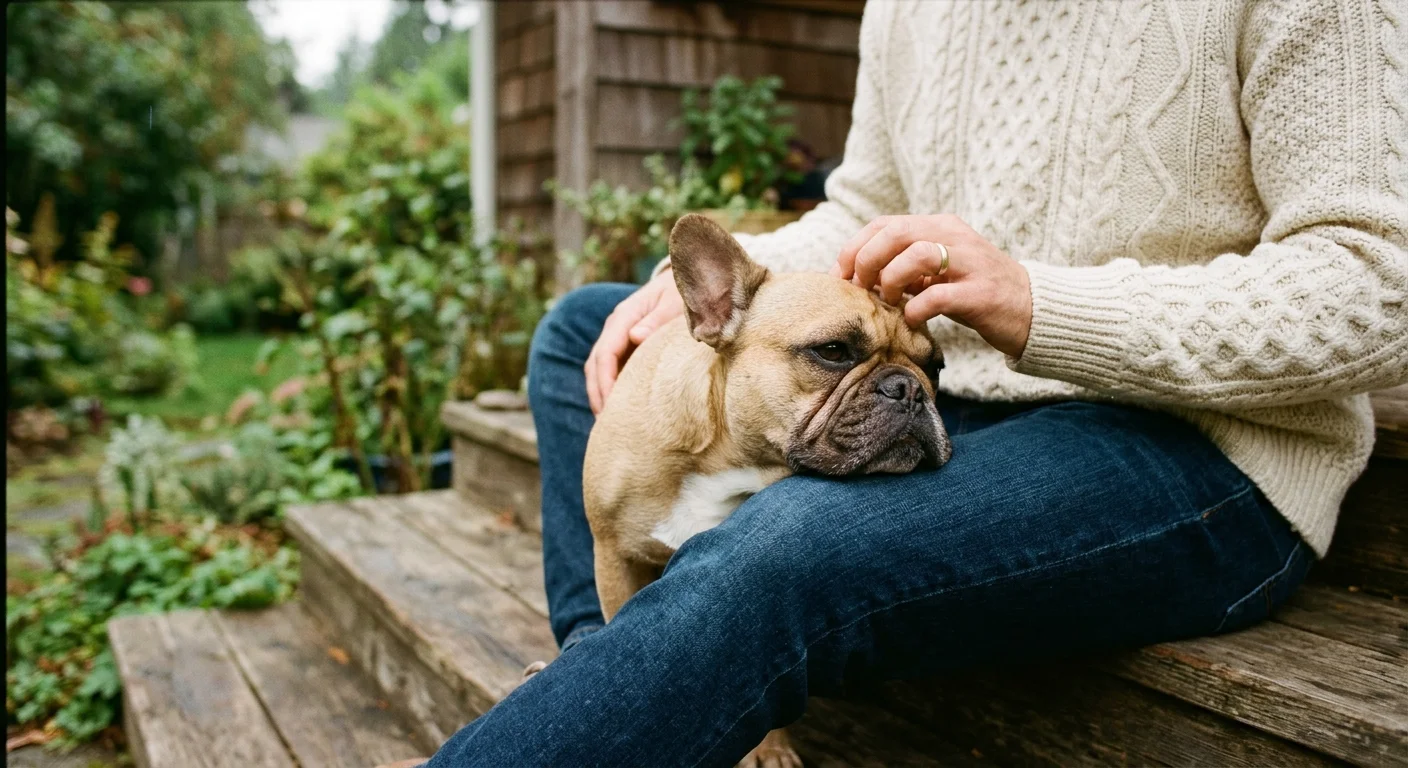
The French Bulldog remains America’s most popular dog breed for good reason. Weighing under 28 pounds, these compact, muscular dogs possess a charmingly goofy personality and an exceptionally low-key approach to physical activity.
Two 15-minute walks around the neighborhood each day satisfy their physical fitness requirements.
Because French Bulldogs feature a brachycephalic facial structure, they overheat easily in hot or humid weather. You should prioritize short, early morning walks during summer months and keep play sessions indoors near air conditioning.
Their calm disposition makes them premier calm dog breeds for apartments.
2. Basset Hound
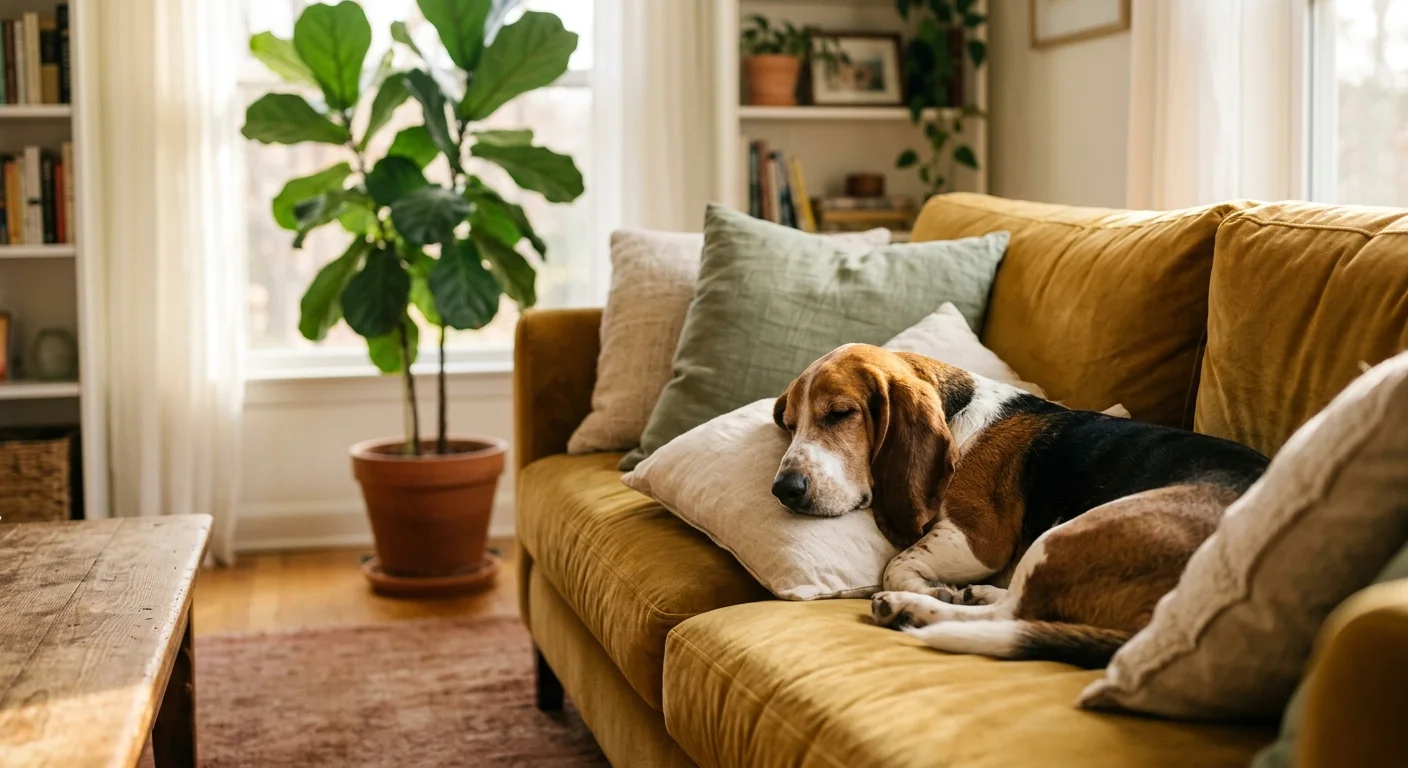
famous for their long, floppy ears and soulful eyes, Basset Hounds are natural scent hounds with a surprisingly lazy indoor demeanor. Although bred to track game across long distances, modern Basset Hounds prefer lounging on comfortable dog beds to chasing balls.
A leisurely 30-minute sniffing walk allows them to engage their powerful olfactory senses without overexerting their heavy frames and short legs. Keep an eye on their weight, as extra pounds place unnecessary stress on their long spines and joints.
3. English Bulldog
The English Bulldog represents the quintessential couch potato of the dog world. These broad, stocky dogs possess very low stamina and prefer long naps to active outdoor games.
A gentle 20-minute daily walk gives them sufficient physical exercise while preserving their respiratory health.
You must monitor English Bulldogs closely in extreme temperatures. Their flat faces make panting inefficient, meaning heavy exertion can lead to heat exhaustion quickly.
Moderate indoor temperature and short outdoor bathroom breaks suit them best.
4. Cavalier King Charles Spaniel
Cavalier King Charles Spaniels offer the perfect balance of gentle affection and moderate adaptability. Weighing between 13 and 18 pounds, these lapdogs happily conform to your activity levels.
While they enjoy brief games of fetch, they feel equally content resting quietly on your couch.
A daily 30-minute stroll satisfies their exercise needs completely. Their eager-to-please nature makes them easy to train, and their quiet indoor behavior fits seamlessly into small living spaces or busy households.
5. Pug
Pugs bring endless humor and affection into a home without demanding hours of active playtime. Bred historically as lapdogs for Chinese emperors, Pugs prioritize human companionship above physical exertion.
They enjoy short bursts of energetic play followed by hours of solid sleep.
Plan for 20 to 30 minutes of light exercise per day, broken into small segments. Avoid intense running, and keep water on hand during outdoor walks to prevent respiratory fatigue.
6. Greyhound
Many prospective owners feel surprised to find Greyhounds on lists of lazy dog breeds, but adoption experts frequently call them 45-mile-per-hour couch potatoes.
While Greyhounds sprint at incredible speeds across short distances, they possess very little aerobic endurance and spend up to 18 hours a day sleeping.
A 35 to 45-minute daily walk along with occasional opportunities to sprint in a securely fenced area provides all the exercise a Greyhound needs. Their gentle, quiet nature makes them surprisingly suitable for apartment living despite their taller frame.
7. Bichon Frise
The Bichon Frise is a small, cheerful companion dog known for its plush white coat and playful personality. Despite their cheerful energy, Bichons possess low physical exercise demands.
Their small size means that brief indoor play sessions cover much of their daily activity.
A 25 to 30-minute daily walk provides enough mental stimulation and physical movement to keep a Bichon healthy. They thrive in active households as long as physical demands remain gentle and moderate.
8. Pekingese
Pekingese were bred to live inside royal palaces, and their aristocratic attitude persists today. These tiny, lion-maned dogs possess very low energy levels and prefer slow-paced indoor living over long outdoor adventures.
15 to 20 minutes of relaxed walking per day fulfills their exercise needs. Their heavy double coat and flat faces mean they overheat quickly, so prioritize climate-controlled indoor spaces during warm weather.
9. Shih Tzu
The Shih Tzu is another ancient lapdog breed designed specifically for indoor companionship. Friendly, affectionate, and low-strung, Shih Tzus enjoy brief walks around the block and interactive indoor toys.
20 to 30 minutes of light daily activity keeps a Shih Tzu fit and mentally satisfied. They adapt exceptionally well to living in small spaces, senior homes, or low-activity households.
10. Great Dane
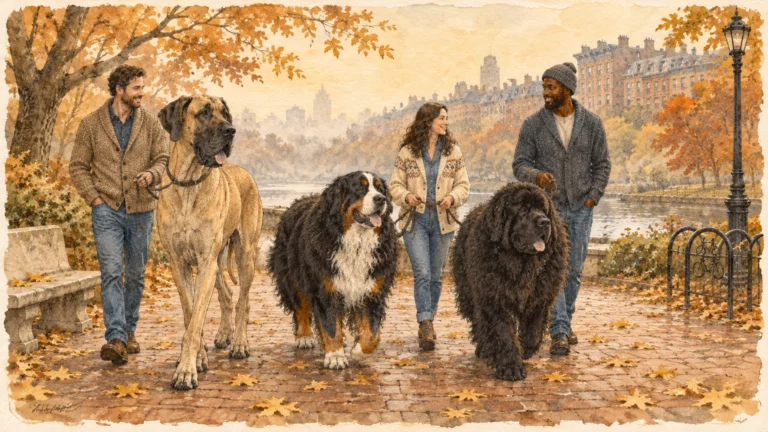
Despite their massive size—often reaching 140 pounds or more—Great Danes are notoriously low-energy giants. Their large strides allow them to cover significant ground quickly, meaning a relaxed 30 to 40-minute walk provides plenty of daily physical stimulation.
Great Danes spend the majority of the day resting indoors. Ensure you provide a large, supportive orthopedic dog bed to protect their large joints, and avoid vigorous exercise immediately before or after meals to prevent gastric torsion (bloat).
11. Chow Chow
Chow Chows are independent, dignified dogs with cat-like temperaments. They naturally display lower energy levels indoors and do not crave constant attention or high-intensity exercise.
A 30-minute daily walk allows a Chow Chow to explore its surroundings while maintaining a healthy body weight. Their dense double coat requires regular grooming, but their physical exercise demands remain surprisingly minimal.
12. Italian Greyhound
Italian Greyhounds are delicate, toy-sized hound companions that love cozy blankets and warm sunshine. They possess the sleek look of their larger Greyhound cousins in a petite, 10-pound package.
A 20 to 30-minute walk or a brief indoor game of chase fulfills their daily exercise needs. Because they lack thick fur and body fat, keep them warm with sweaters during cold weather walks.
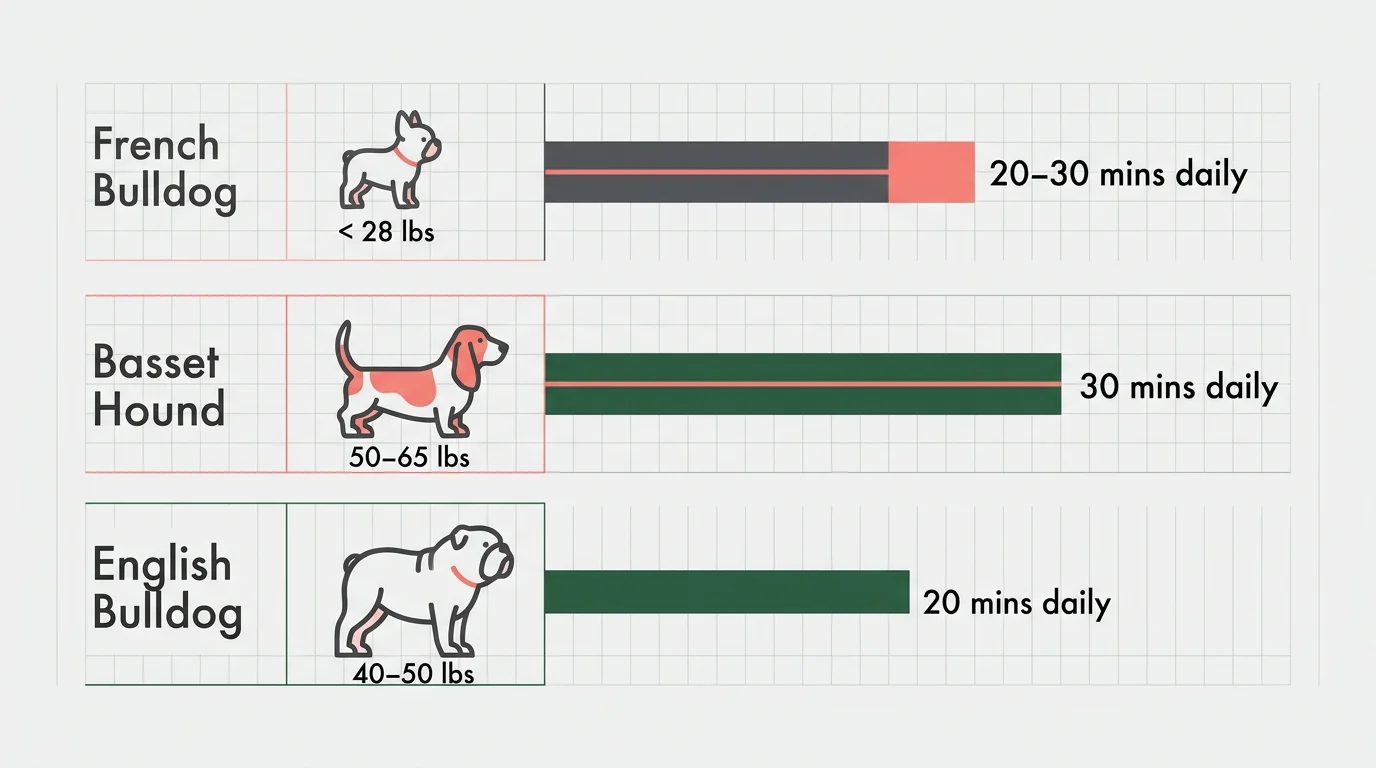
Breed Exercise and Size Comparison
Comparing dog breeds low exercise needs side-by-side helps you determine which canine fits your living arrangement and lifestyle preferences:
| Breed Name | Average Weight | Daily Exercise Benchmark | Ideal Living Space | Primary Temperament |
|---|---|---|---|---|
| French Bulldog | 16–28 lbs | 20–30 minutes | Apartment / House | Playful, adaptable, quiet |
| Basset Hound | 40–65 lbs | 30–40 minutes | House with yard preferred | Patient, easygoing, scent-driven |
| English Bulldog | 40–50 lbs | 20–30 minutes | Apartment / House | Calm, friendly, courageous |
| Cavalier King Charles | 13–18 lbs | 30 minutes | Apartment / House | Affectionate, gentle, sociable |
| Pug | 14–18 lbs | 20–30 minutes | Apartment / House | Charming, mischievous, loving |
| Greyhound | 60–70 lbs | 35–45 minutes | Apartment / House | Gentle, quiet, noble |
| Bichon Frise | 12–18 lbs | 25–35 minutes | Apartment / House | Joyful, curious, affectionate |
| Pekingese | 7–14 lbs | 15–25 minutes | Apartment | Regal, affectionate, stubborn |
| Shih Tzu | 9–16 lbs | 20–30 minutes | Apartment / House | Outgoing, affectionate, playful |
| Great Dane | 110–175 lbs | 30–45 minutes | Spacious House / Apartment | Friendly, patient, dependable |
| Chow Chow | 45–70 lbs | 30 minutes | House / Large Apartment | Dignified, bright, serious |
| Italian Greyhound | 7–14 lbs | 20–30 minutes | Apartment / House | Sensitive, alert, affectionate |
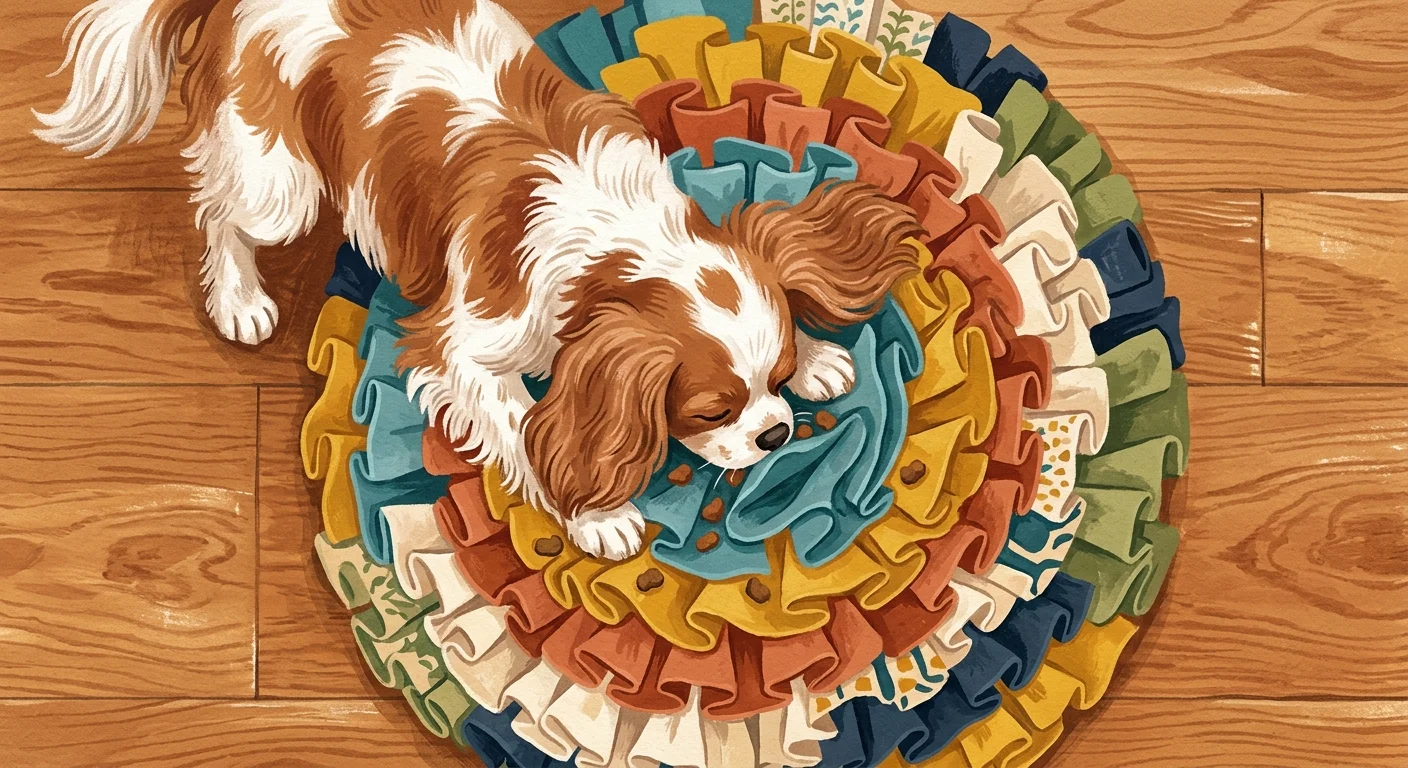
Mental Stimulation and Indoor Enrichment Activities
Low physical energy does not mean a dog requires no stimulation whatsoever. Mental exercise burns brain energy, prevents boredom, and prevents destructive habits like excessive barking or chewing.
Routine care guidance published by the ASPCA highlights that enrichment activities provide essential cognitive health benefits for companion animals of all activity levels.
You can keep low-energy dogs mentally sharp with these simple indoor routines:
- Snuffle Mats and Scent Games: Hide dry kibble or low-calorie treats inside a fabric snuffle mat. Searching for food using scent burns mental energy without physical strain.
- Interactive Puzzle Toys: Use treat-dispensing puzzles that require your dog to slide, tilt, or lift compartments to reach hidden rewards.
- Short Training Sessions: Spend 3 to 5 minutes practicing basic obedience cues or fun tricks. Frequent, short sessions engage their minds without causing fatigue.
- Lick Mats: Spread dog-safe peanut butter or plain Greek yogurt across a textured silicone lick mat. Licking releases soothing hormones that lower stress and keep your dog peacefully occupied.
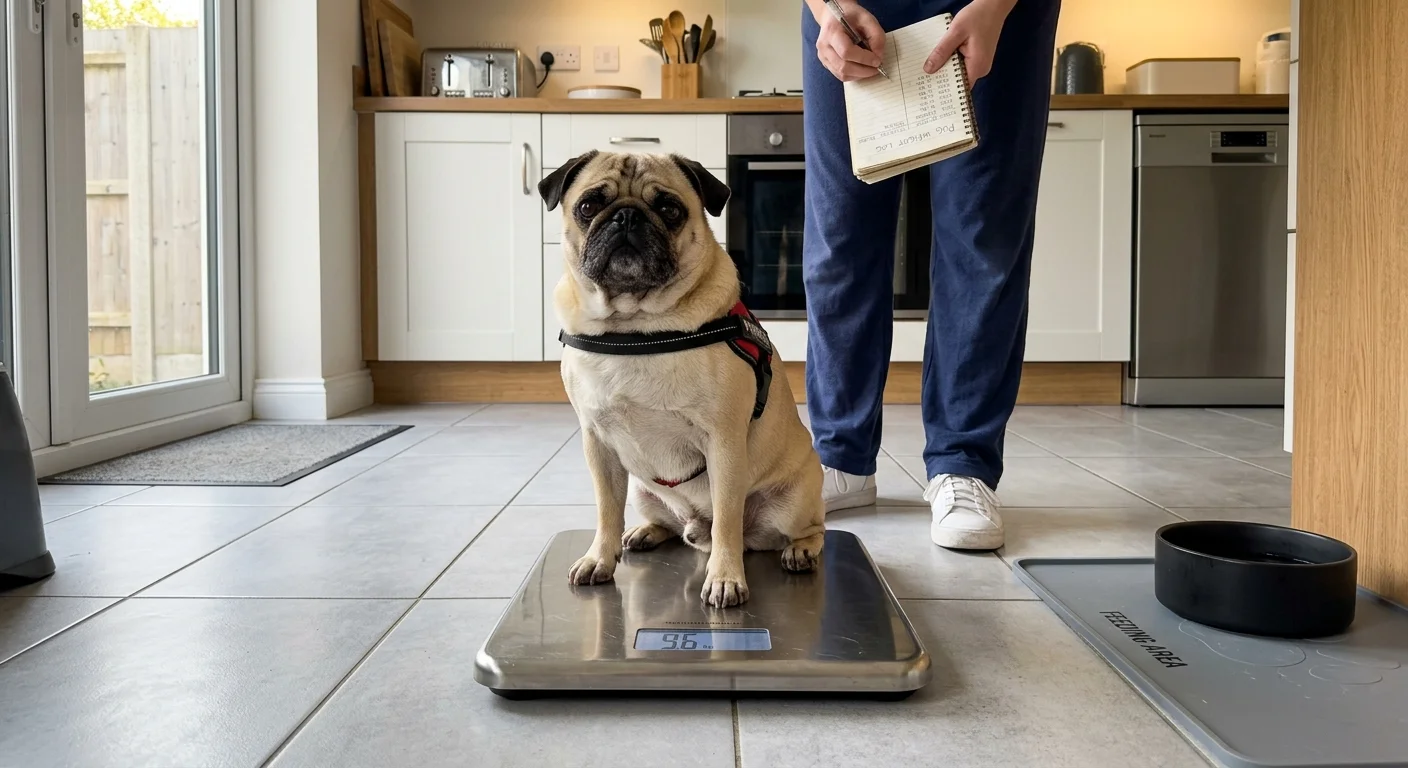
Common Mistakes to Avoid with Low-Exercise Breeds
Even when caring for low energy dog breeds, owners occasionally make critical care errors that affect their dog’s health and longevity. Avoiding these four common mistakes keeps your companion happy and healthy:
1. Eliminating Daily Walks Completely
Low exercise does not mean zero exercise. Skipping walks entirely deprives your dog of essential scent enrichment, social exposure, and joint mobility work.
Aim for at least one or two brief outdoor strolls every day.
2. Overfeeding and Ignoring Weight Gain
Low-energy dogs burn fewer daily calories than active working dogs. Overfeeding leads directly to canine obesity, which damages joints, strains cardiac function, and shortens lifespan.
Proper weight management represents one of the single most impactful choices you can make for a low-energy dog. Extra weight places disproportionate pressure on short limbs and compromised respiratory pathways, turning a naturally calm dog into an uncomfortably lethargic one.
3. Exercising Brachycephalic Dogs in Hot Weather
Flat-faced breeds like Bulldogs, Pugs, and Pekingese struggle to regulate body heat. Walking them during peak summer temperatures can trigger life-threatening heatstroke within minutes.
4. Confusing Sudden Lethargy with Normal Behavior
A low-energy breed should still act alert, curious, and happy to engage with you. If a normally cheerful dog suddenly refuses to stand, walks with pain, or stops eating, seek prompt veterinary evaluation.
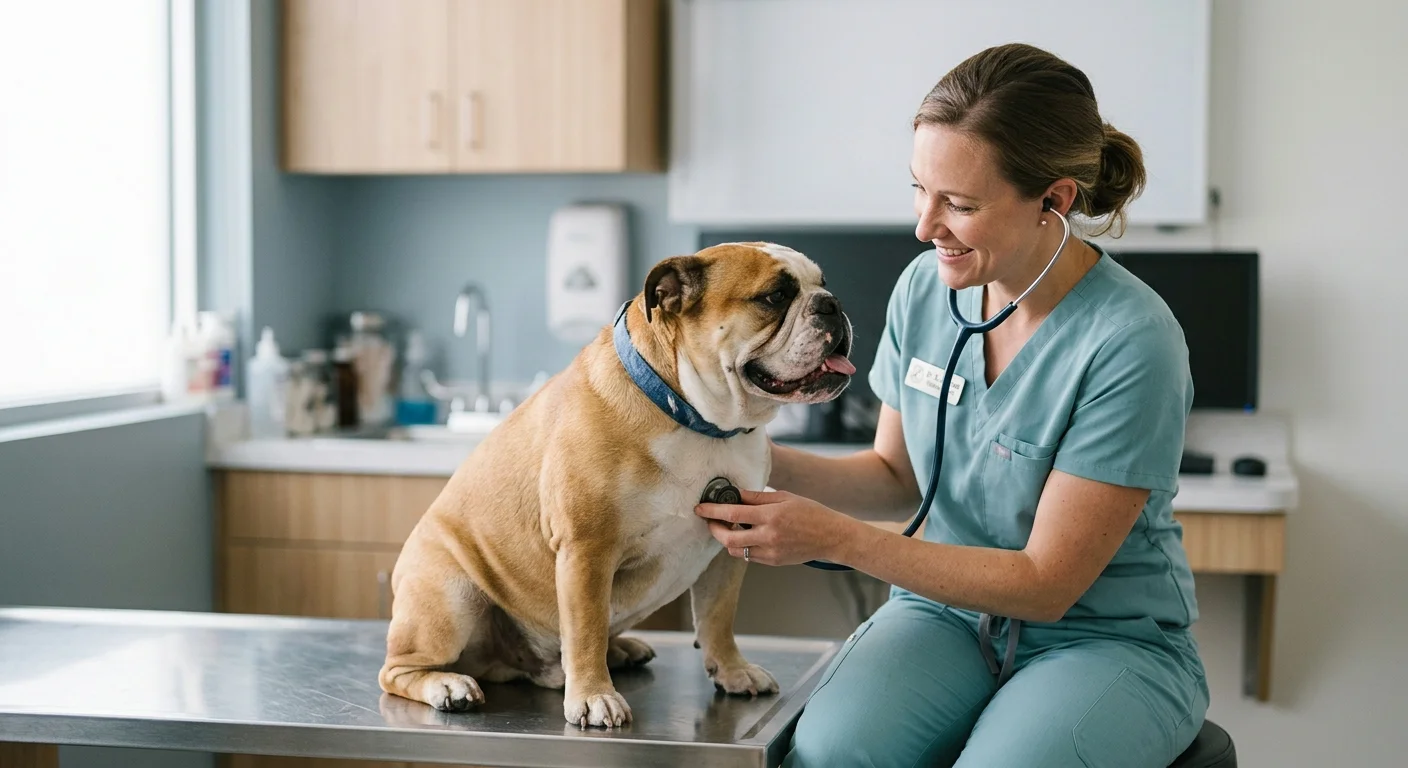
Getting Veterinary Guidance for Your Dog’s Health
Every dog possesses unique health and mobility considerations regardless of breed standards. Age, joint health, heart function, and body weight significantly influence how much movement your specific dog can handle comfortably.
Weight management guidance from VCA Animal Hospitals emphasizes that even low-energy breeds require tailored daily calorie targets to prevent joint degradation and metabolic disorders.
Consult a qualified veterinarian under the following specific circumstances:
- Designing a Weight Loss Plan: If your calm dog starts gaining weight, ask your vet for precise meal portions and safe exercise increases.
- Managing Senior Mobility: As low-energy dogs age, arthritis or hip dysplasia can turn casual walks into uncomfortable outings. Your vet can recommend joint supplements or pain management.
- Evaluating Sudden Energy Drops: If your dog becomes unusually tired, lethargic, or reluctant to climb stairs, schedule a diagnostic checkup to rule out thyroid or heart conditions.
Frequently Asked Questions
Do dogs with low exercise needs still need daily walks?
Yes. Daily walks provide vital mental stimulation through scent exploration and keep joints flexible.
While low-energy breeds do not require long runs, two short 15-minute walks per day are necessary for physical health and routine bathroom breaks.
Can a Great Dane really live comfortably in an apartment?
Great Danes adapt surprisingly well to apartment living provided they receive a quiet 30 to 40-minute walk daily and have a large, supportive bed. Their calm indoor demeanor and low activity levels make them far less chaotic indoors than smaller, high-energy working breeds.
How can I tell if my dog is low energy or sick?
A healthy low-energy dog remains alert, responsive, bright-eyed, and eager to interact during meals or gentle play. A sick or lethargic dog shows signs of depression, refusal to eat, panting while resting, or clear discomfort during movement.
What is the absolute laziest dog breed?
The English Bulldog, Basset Hound, and Pekingese consistently rank among the breeds with the lowest physical energy needs. These breeds prefer resting alongside their owners to energetic outdoor activities.
Choosing the Right Calm Companion
Selecting a canine companion whose energy level aligns with your lifestyle creates a happy home for both you and your pet. Dogs that don’t need much exercise provide unconditional love, warm companionship, and entertainment without demanding grueling daily workout schedules.
By pairing brief daily walks with indoor mental enrichment and attentive weight monitoring, you give your low-energy dog a long, comfortable, and satisfying life.
This article provides general information only. Every reader’s situation is different—what works for others may not be the right fit for you.
For personalized guidance on health, legal, or financial matters, consult a qualified professional.
Last updated: May 2026. Rules, prices, and details change—verify current information with official sources before acting on it.