
You step outside for an afternoon walk, only for your dog to erupt into a frantic barking frenzy the moment a stranger walks by. That sudden outburst feels embarrassing and stressful, especially when you cannot pinpoint what provoked the reaction.
Unraveling why your dog barks at strangers allows you to address the root emotional trigger rather than just suppressing the noise. Once you understand canine communication, you can transform chaotic walks into calm, predictable outings.
Dogs use distinct vocal tones and body postures to signal fear, territorial defense, excitement, or confusion. Here are eight research-backed reasons your dog sounds the alarm around unfamiliar people and the exact steps to manage each trigger.
The Science of Canine Barking: Why Dogs Sound the Alarm
Barking serves as an essential acoustic tool that evolved during domestication to bridge communication between dogs and humans. Wild wolves rarely bark as adults; domestic dogs bark frequently across a wide spectrum of daily emotional contexts.
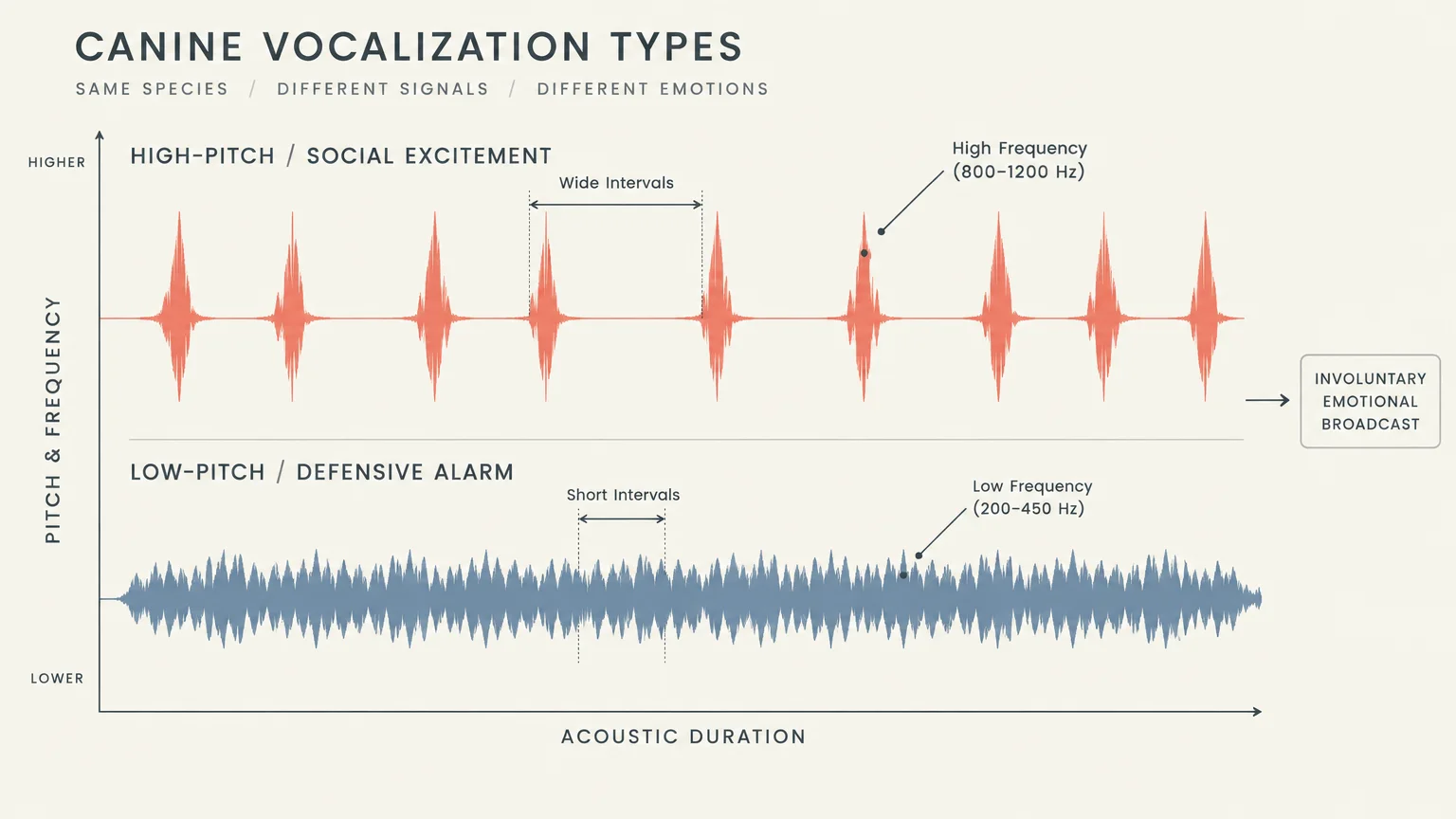
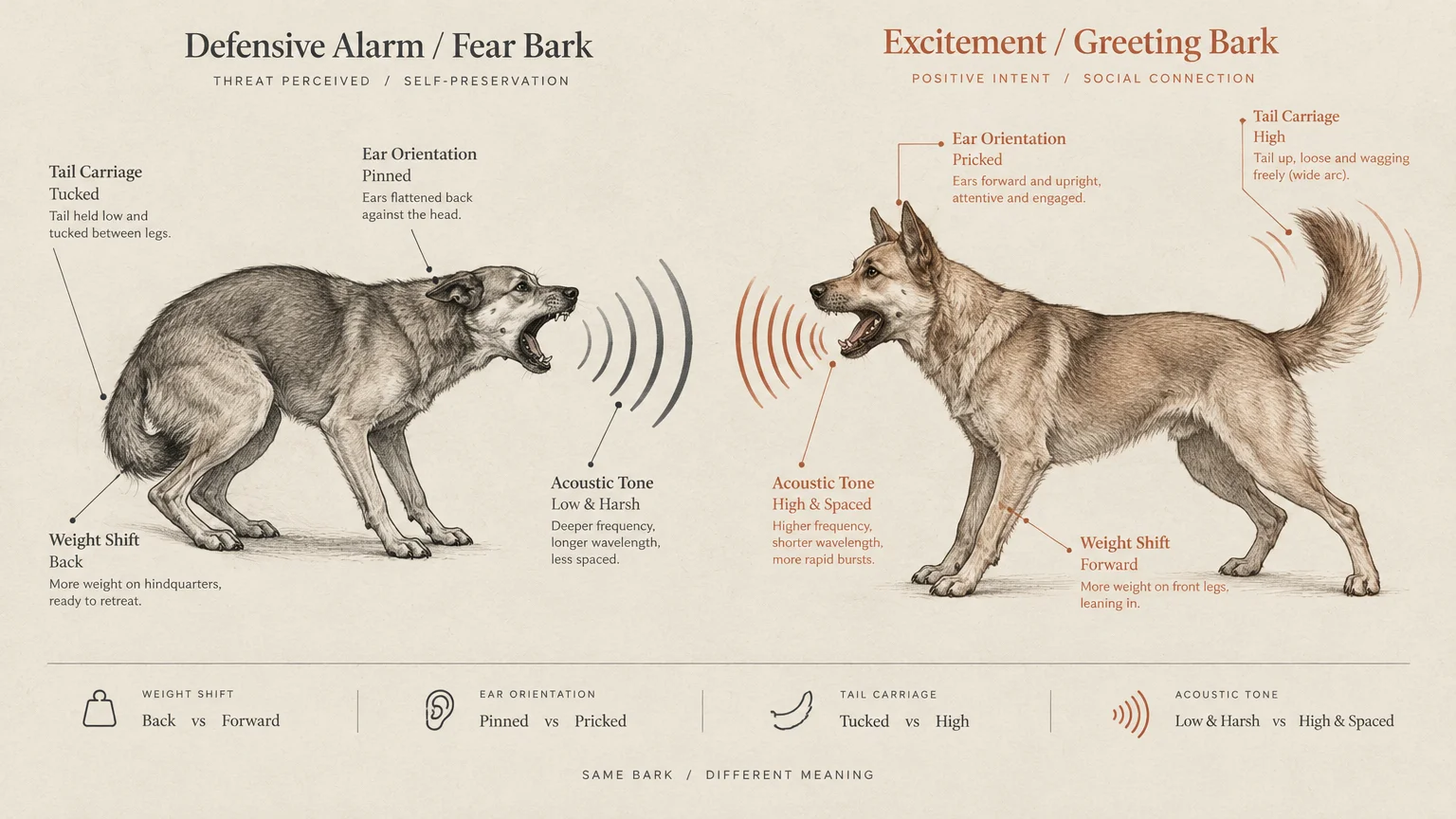
Canine behaviorists classify vocalizations by analyzing acoustic frequency, duration, and the interval between sounds. High-pitched, spaced-out barks typically express social excitement, whereas low-frequency, harsh bursts communicate defensive posturing or acute alarm.
Rather than treating vocalization as intentional misbehavior, view it as an involuntary emotional broadcast. When you identify the underlying emotion, you can change your dog’s physiological response through targeted counterconditioning.
01 Territorial Guarding and Home Turf Defense
Dogs naturally guard spaces they consider valuable territory, including your house, front yard, patio, and car. Territorial behavior stems from ancestral instincts to protect den sites and reliable food resources from outside intruders.
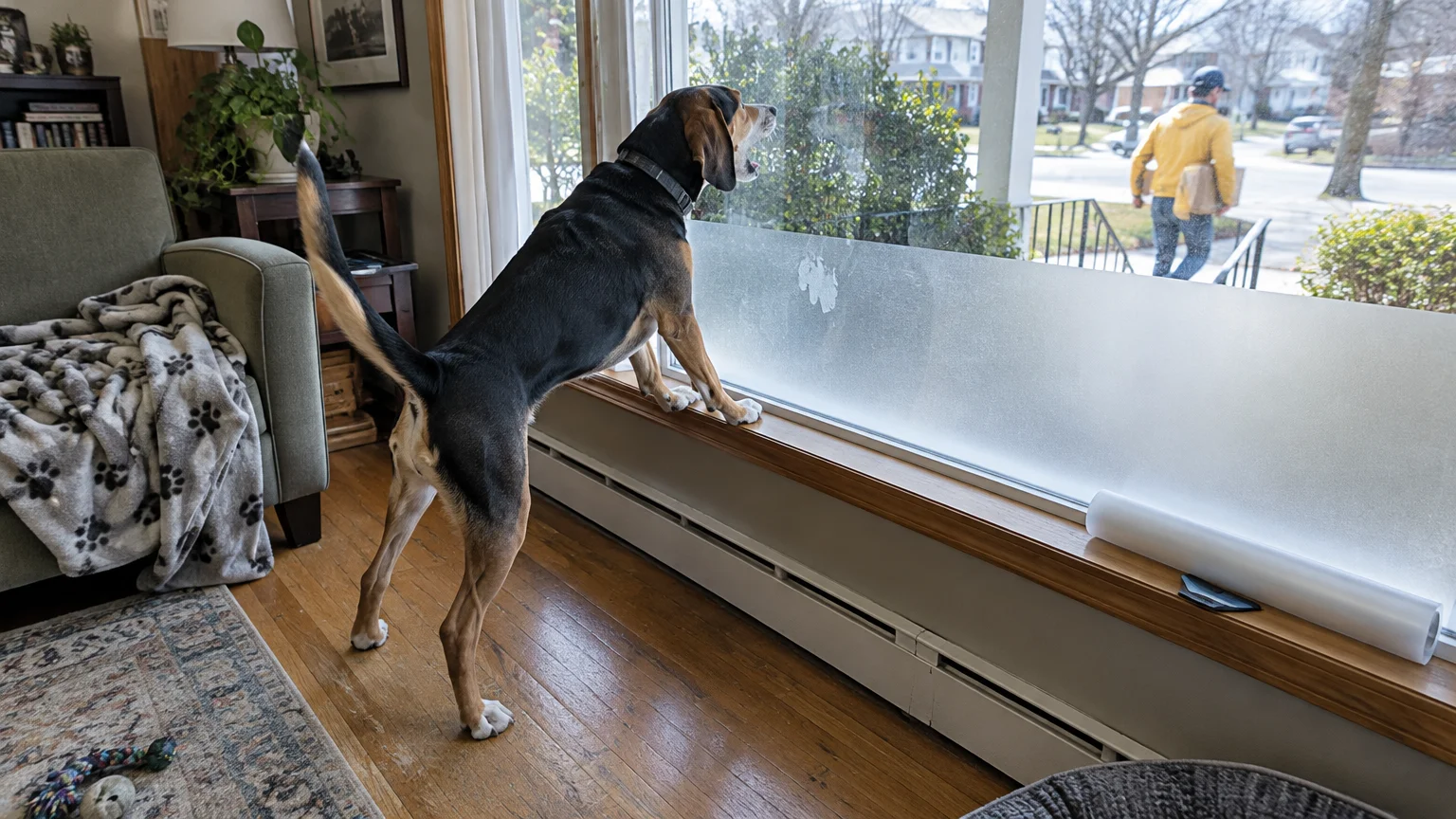
When a mail carrier or delivery driver steps onto your porch, your dog perceives an active border breach. Your pet unleashes an explosive vocal display to warn the intruder to retreat immediately.
Because delivery workers place parcels and depart promptly, your dog believes the vocal warning worked perfectly. In your pet’s perspective, loud barking successfully repelled the trespasser and kept the household safe.
According to the Humane Society of the United States, territorial barking escalates over time when pets rehearse the habit without intervention. Each successful eviction strengthens the dog’s conviction that barking defends the home.
You can manage this response by installing opaque window film across lower panes to block outdoor sightlines. Removing visual access to street traffic immediately lowers territorial arousal inside your living room.
02 Fear, Insecurity, and Social Hesitation
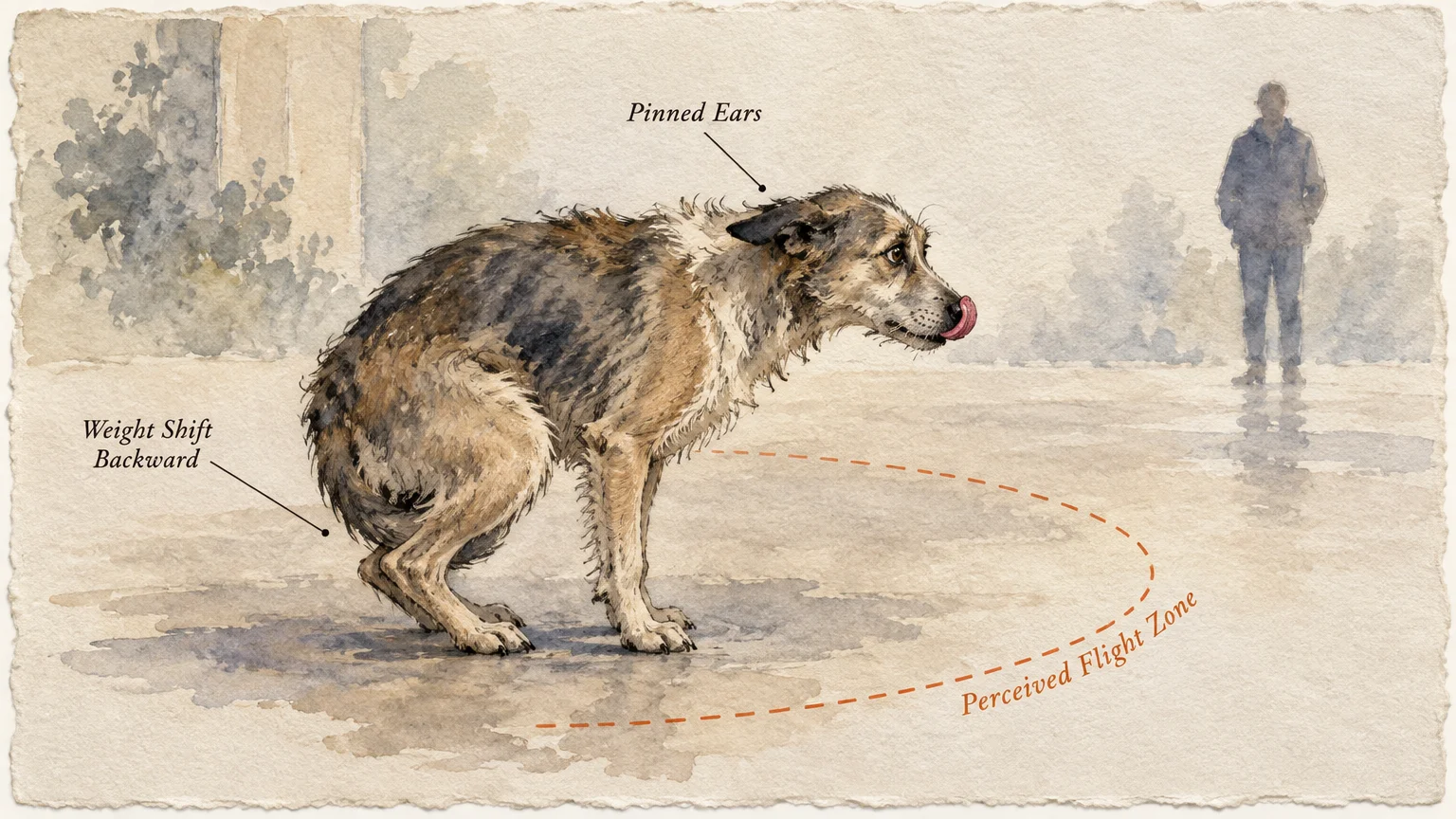
Fear stands as the single most common root cause of stranger-directed barking. An insecure dog barks to manufacture safety when an unfamiliar figure enters their perceived flight zone.
This barking serves one urgent biological objective: driving the frightening stimulus farther away. The dog attempts to scare off the stranger before any physical interaction can occur.
You can identify fear-based barking by watching for subtle signs of dog anxiety. A fearful dog shifts their body weight backward, tucks their tail, pins their ears, and rapidly licks their lips.
If your companion retreats while vocalizing, never force them to greet the approaching individual. Forcing contact strips away your dog’s coping strategies and can escalate defensive barking into defensive snapping.
Instead, create physical separation immediately by turning around or crossing the street. Giving your dog breathing room allows their nervous system to de-escalate naturally.
03 Barrier Frustration and Leash Reactivity
Friendly, highly social dogs often bark furiously at strangers because physical restraints prevent them from greeting people. Veterinary behaviorists refer to this intense emotional conflict as barrier frustration or leash reactivity.
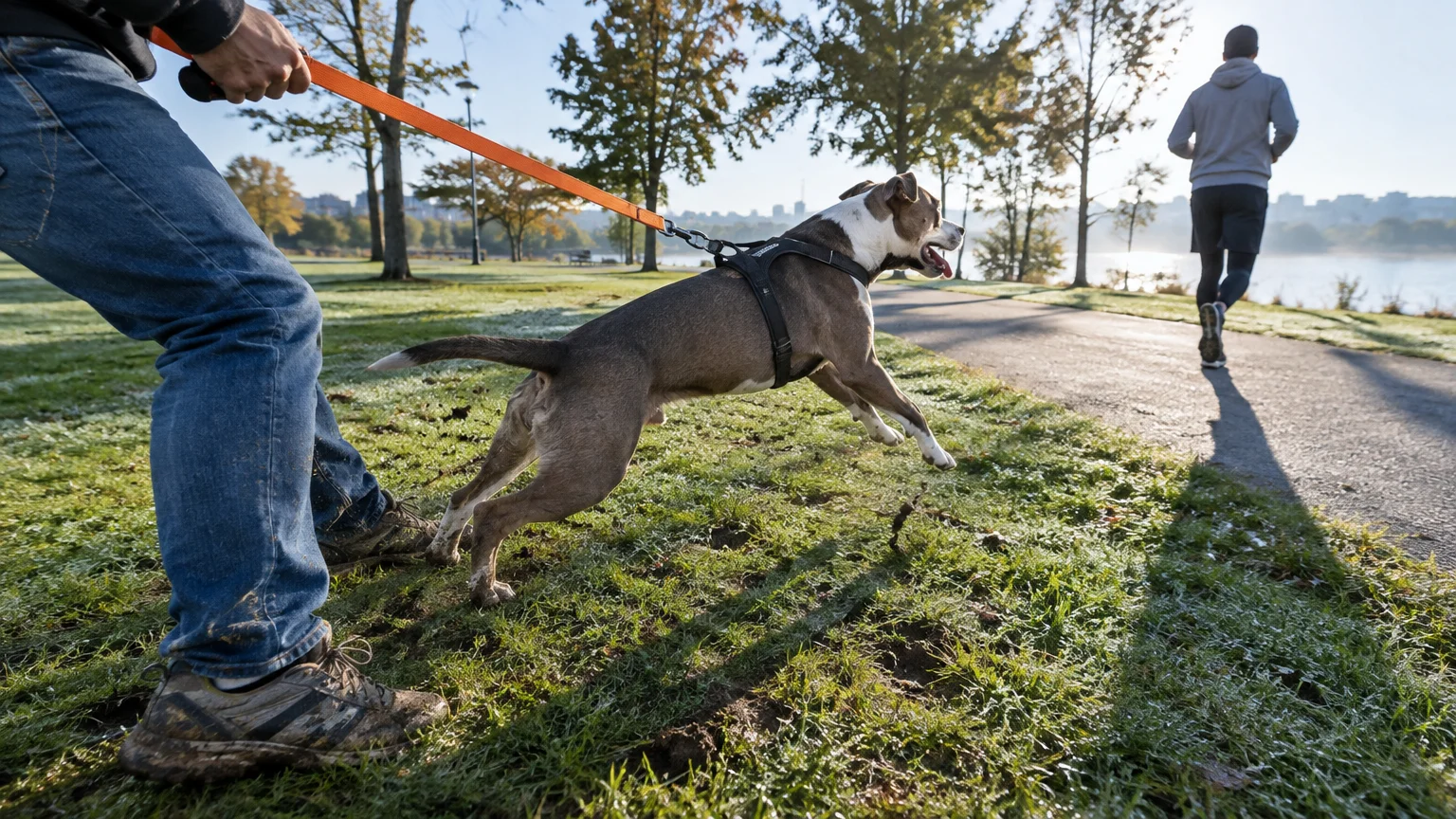
Your dog spots an enticing human, strains forward to say hello, and meets the restrictive tension of a tight leash. That sudden restriction blocks natural social exploration and generates explosive emotional frustration.
Because the dog cannot reach the stranger, they redirect that pent-up social arousal into loud, urgent vocalizations. These outbursts sound surprisingly aggressive, frequently leading passersby to assume the dog poses a dangerous threat.
Teaching a loose-leash heel relieves physical tension and reduces emotional volatility during neighborhood outings. When a leash remains slack, your pet experiences far less tactile frustration.
Pairing a well-fitted front-clip harness with high-value treats helps redirect your dog’s forward momentum without placing pressure on sensitive neck tissues.
04 Social Facilitation and Pack Contagion
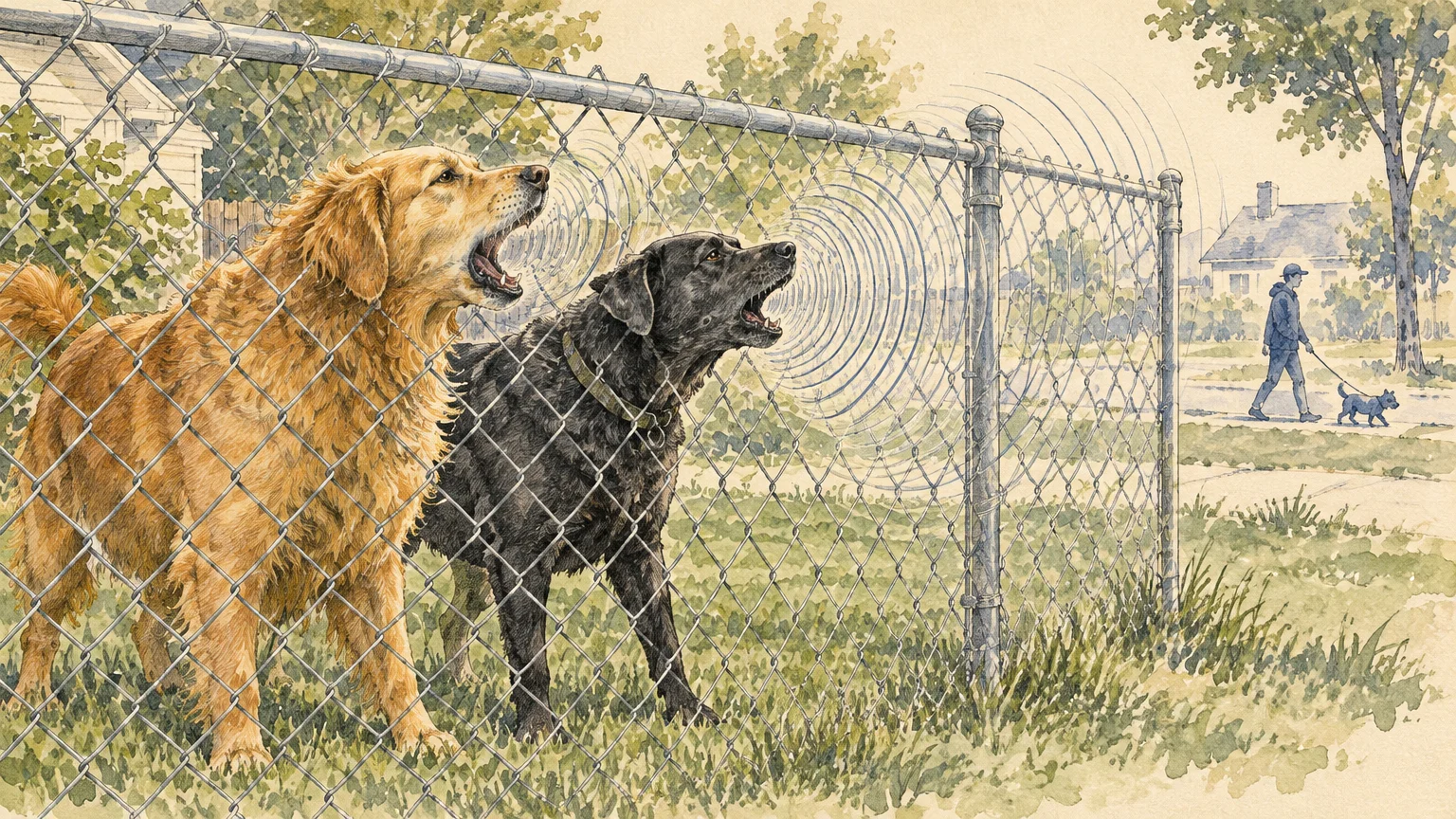
Canines possess a hardwired biological instinct known as social facilitation, where one animal’s actions trigger identical behaviors in surrounding companions. Dog trainers often describe this phenomenon as contagious or copycat barking.
When a neighbor’s dog alarms at a pedestrian three houses away, your pet joins the chorus instantly. Your dog does not need to see the pedestrian to join the vocal alarm.
This collective vocal response helped ancestral canid packs broadcast emergency warnings across substantial territorial distances. In dense modern suburbs, social facilitation turns routine pedestrian traffic into an overwhelming sensory chain reaction.
Masking outdoor noises indoors prevents your dog from tuning into distant neighborhood alerts. Running a dedicated white noise machine or playing soft classical music dampens outdoor auditory triggers effectively.

05 Novelty, Unfamiliar Silhouettes, and Sensory Triggers
Canine vision detects sudden movement exceptionally well, but dogs struggle to perceive fine textural details and unusual shapes. When a human silhouette departs from the familiar baseline, dogs interpret the stranger as an unpredictable anomaly.
Strangers carrying opened umbrellas, wearing bulky parkas, or donning wide-brimmed hats alter the standard human form. To a cautious dog, an approaching person wearing a motorcycle helmet appears bizarre and potentially threatening.
Research published by the American Kennel Club demonstrates that missed socialization opportunities during puppyhood leave dogs sensitive to novel human attire later in life.
Unusual movement styles—such as limping, using crutches, or riding a mobility scooter—can also trigger sharp alarm barks. The unfamiliar gait confuses the dog’s perceptual processing system.
Toss high-value rewards to your pet whenever novel figures appear nearby. Pairing unusual visual silhouettes with savory food replaces initial suspicion with positive anticipation.

06 Physical Pain, Sensory Decline, and Aging
Sudden behavioral changes around strangers frequently stem from underlying physical discomfort or age-related sensory impairment. When a previously calm dog starts barking defensively, a veterinary evaluation should always be your first step.
Senior dogs suffering from nuclear sclerosis or cataracts experience diminished visual clarity, making them prone to startling easily. An approaching stranger can surprise an older pet, prompting an instant vocal defense.
Hearing loss also leaves senior dogs unable to track approaching footsteps, resulting in acute startle reactions when someone suddenly appears. Chronic joint pain from conditions like osteoarthritis exacerbates this defensive posture.
A dog in pain fears that an approaching stranger might bump into a sore hip or step on an aching paw. Canine Cognitive Dysfunction also produces disorientation, leading aging dogs to bark at unfamiliar visitors.
Work closely with your veterinarian to diagnose and treat chronic discomfort through appropriate joint supplements or pain medications.

07 Learned Attention-Seeking Behavior
Intelligent dogs quickly deduce which vocal behaviors command immediate human attention. If barking reliably produces an engaging reaction, your dog will deploy barking as a deliberate communication tool.
When your dog barks and a friendly stranger smiles, talks in a cheerful voice, or reaches down to pet them, the vocalization receives instant reinforcement. The dog learns that barking functions like a service bell to summon human affection.
Even negative attention—such as pulling the leash, scolding, or gasping—rewards an extroverted dog craving social interaction. In your pet’s estimation, an annoyed reaction beats being ignored.
To eliminate attention-seeking barking, ask passing strangers to ignore your dog completely until the animal offers calm behavior. Reward your dog only when all four paws remain planted quietly on the pavement.

08 Predatory Chase and Herding Drive
Fast-moving strangers—such as runners, skateboarders, rollerbladers, and cyclists—trigger predatory chase motor patterns in active breeds. Herding dogs, including Border Collies, Cattle Dogs, and German Shepherds, react instinctively to swift lateral movement.
These dogs bark and lunge to control motion and gather fleeing subjects, just as their ancestors controlled livestock. The rapid movement of a jogger sparks an involuntary neurological urge to pursue and vocally herd.
This reaction does not stem from spite or malice; it reflects generations of specialized working genetics. Without proper outlets, high-drive dogs treat passing neighborhood joggers as unruly herd members requiring immediate containment.
Channel that innate drive into structured physical outlets like agility courses, scent tracking, or flirt-pole games. Giving your dog a constructive outlet reduces their urge to police neighborhood traffic.
Decoding the Bark: Acoustic and Postural Clues
Assessing acoustic vocal patterns alongside real-time body language reveals the exact emotional state fueling your dog’s barking. Paying attention to physical tension helps you differentiate between excitement, acute fear, and territorial defense.
Use the diagnostic comparison table below to identify your dog’s primary motivation and choose the most effective training response.
| Bark Characteristics | Accompanying Body Language | Underlying Motivation | Immediate Handler Action |
|---|---|---|---|
| Rapid, low-pitch bursts with brief pauses | Stiff posture, high flagging tail, forward-leaning stance | Territorial Guarding | Block visual access; redirect to an indoor target mat. |
| High-pitched, repetitive yips and whines | Loose tail wag, front-end bouncing, pulling forward | Barrier Frustration | Increase distance; ask for an incompatible sit-stay. |
| Sharp, piercing barks with backward retreat | Tucked tail, lowered body, lip licking, pinned ears | Fear and Insecurity | Turn around immediately; create space and avoid contact. |
| Single loud alarm barks with head tilted | Alert stance, furrowed brow, ears twitching forward | Novel Silhouette Confusion | Scatter treats on ground; allow voluntary inspection from afar. |
| Rhythmic barking echoing distant sounds | Attentive posture, pacing between windows and doors | Social Facilitation | Turn on white noise; engage dog in a food puzzle. |
| Low grumble progressing to a startled bark | Hesitant gait, slow head turns, stiffened spine | Pain or Sensory Decline | Protect personal space; schedule a thorough veterinary exam. |
Observing whether your dog leans forward or retreats reveals whether frustration or fear drives the outburst. Accurate physical assessment ensures you address the genuine emotional root rather than misinterpreting defensive panic as defiance.
Actionable Training Strategies to Stop Dog Barking at Strangers
Resolving stranger-directed vocalizations requires shifting your dog’s emotional association rather than punishing the vocal symptom. The ASPCA recommends counterconditioning and desensitization as the primary gold-standard approach for reactivity.
Implement the following core training protocols to build emotional neutrality around unfamiliar people:
- Establish the Sub-Threshold Zone: Identify the physical distance at which your dog notices a stranger without barking or stiffening. Always begin training at this calm distance.
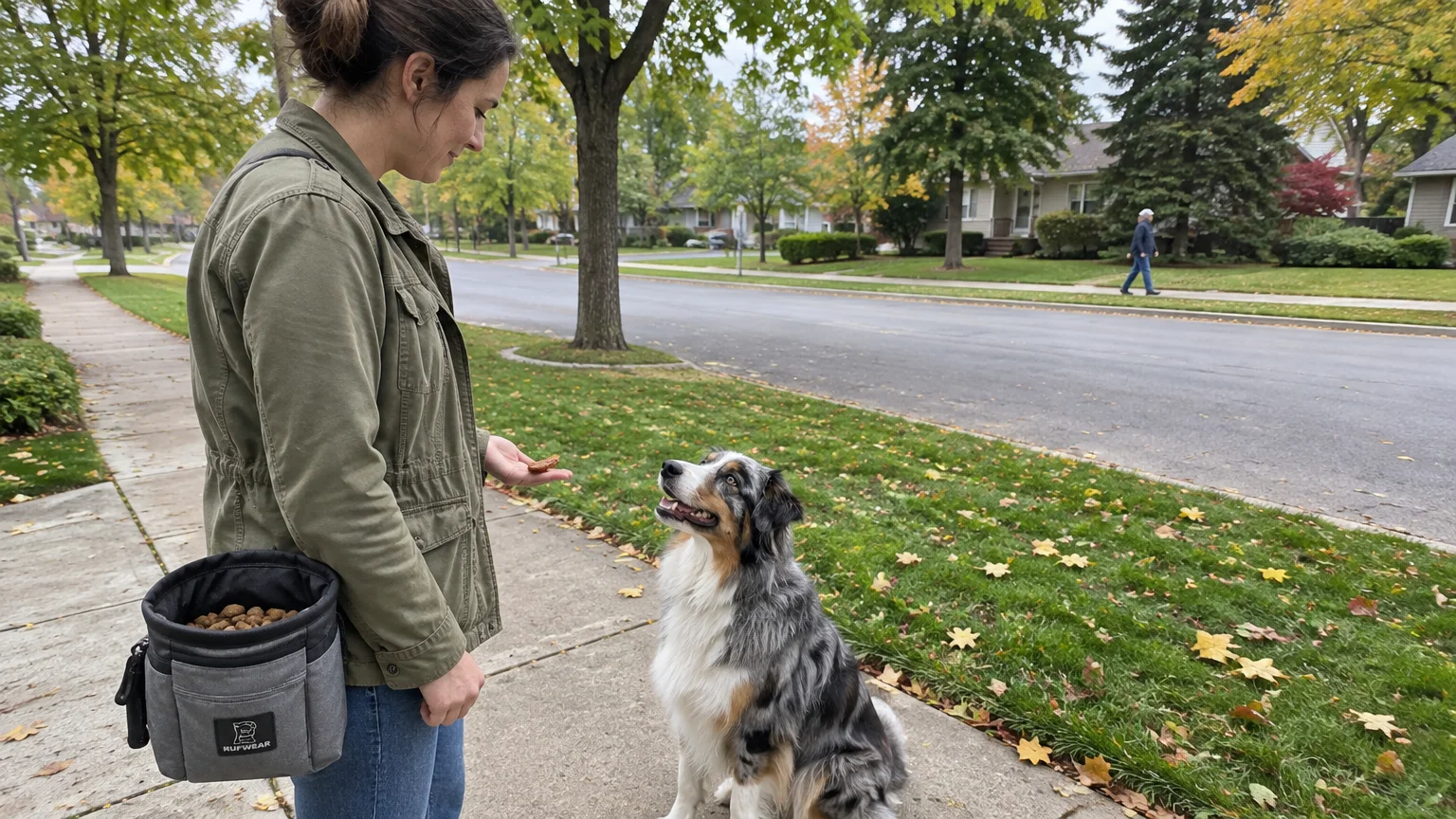
- Execute the “Look at That” Game: Mark the exact second your dog glances at a distant stranger with a verbal cue like “yes,” then deliver a high-value treat. Your dog learns that spotting a person predicts savory rewards.
- Train an Incompatible Behavior: Teach your dog to turn and make direct eye contact with you whenever a stranger appears. A dog engaged in sustained eye contact cannot fixate on a passerby.
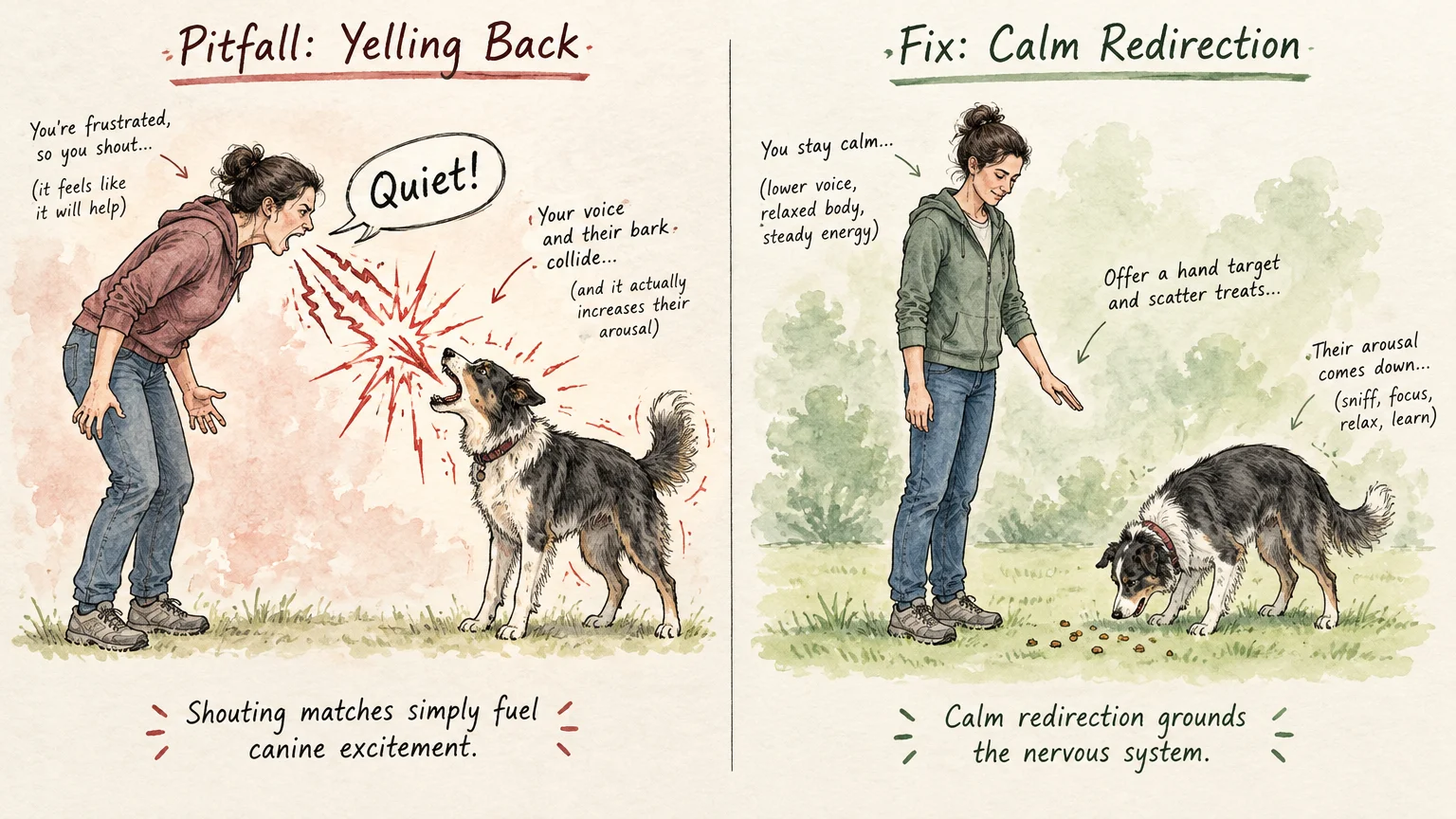
- Scatter High-Value Food: Drop a handful of roasted chicken or freeze-dried liver into the grass when a stranger approaches. Sniffing and foraging naturally lowers heart rates and grounds nervous dogs.
Keep initial training sessions short and manageable, limiting practice to two-minute intervals to prevent mental fatigue. Consistency and high-value rewards establish lasting behavioral change far faster than occasional marathon sessions.
Things to Watch Out For: Common Training Pitfalls
Even well-intentioned handlers can inadvertently prolong barking behavior by falling into common tactical traps. Avoid these four widespread training mistakes during behavior modification:
Relying on Aversive Anti-Bark Collars
Shock collars, citronella sprays, and ultrasonic buzzers suppress vocalizations through acute discomfort or fear. While they may silence barking temporarily, they fail to address the underlying terror or territorial instinct.
Worse, your dog associates the sudden pain with the stranger, intensifying their negative perception of unfamiliar humans. Aversive tools frequently turn vocal reactivity into silent, unpredicted aggression.
Yelling at Your Barking Dog
Shouting “No!” or “Stop barking!” adds vocal arousal to an already chaotic situation. Your dog interprets your raised voice as enthusiastic pack participation, assuming you are barking at the stranger too.
Speak in calm, low-frequency tones to model emotional regulation for your pet. A tranquil handler helps lower a dog’s physiological arousal.
Forcing Unwanted Social Interactions
Handlers often assume that forcing a fearful dog to accept petting from strangers cures social hesitation. In reality, trapping a fearful animal in close quarters causes flooding and heightens defensive hostility.
Always advocate for your dog’s personal space by politely declining greetings from well-meaning strangers on walks. Protecting your pet’s comfort zone builds lasting trust between you and your companion.
Advancing Training Distance Too Rapidly
Moving closer to strangers before your dog demonstrates consistent neutrality at long distances triggers immediate setbacks. Behavior modification requires slow, incremental progress based on your dog’s comfort.
If your dog barks during a training session, you have breached their threshold. Back up several paces until your dog can disengage and accept food calmly again.
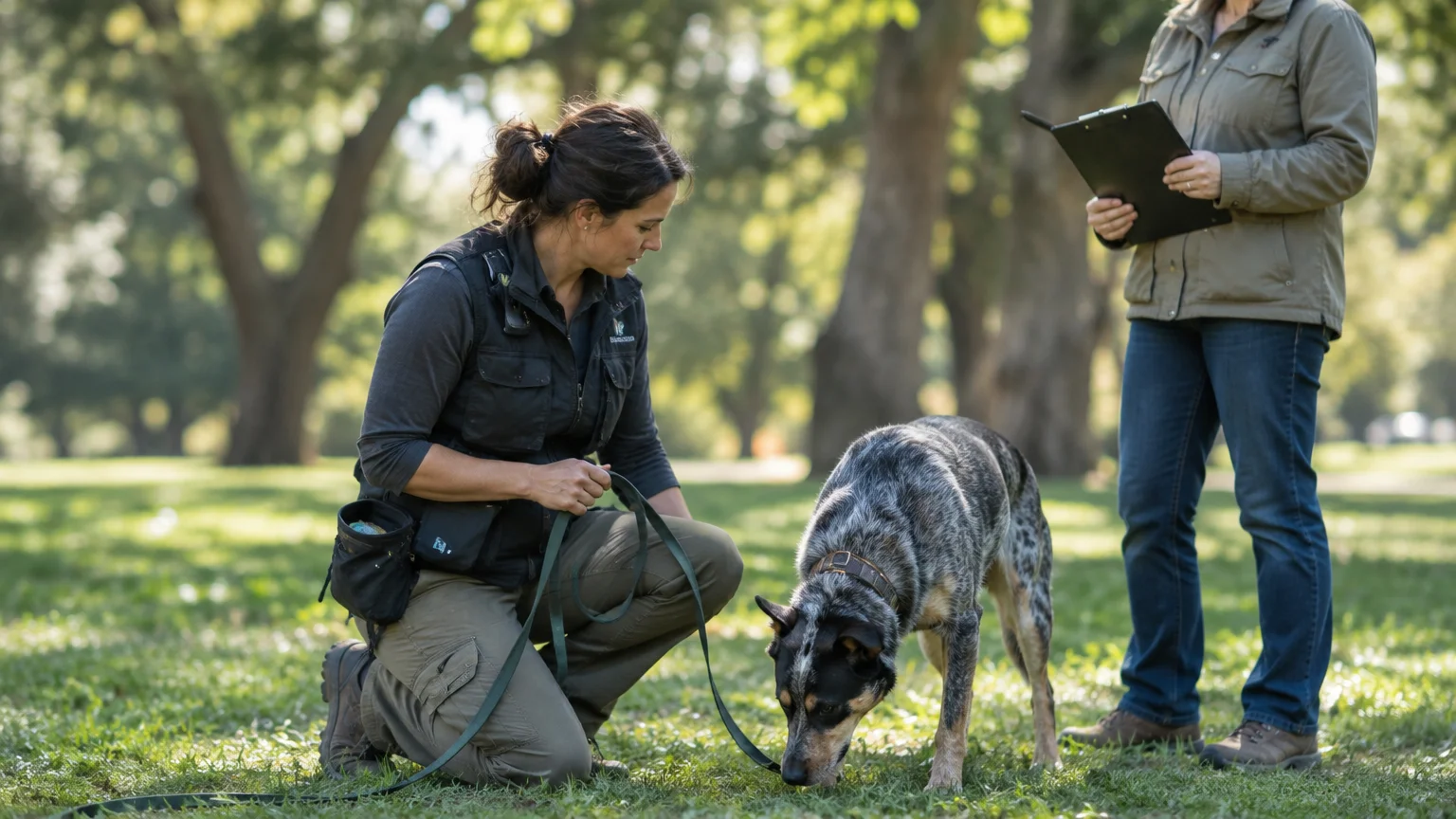
When DIY Isn’t Enough: Professional Support Scenarios
While positive reinforcement resolves minor vocal reactivity, severe behavioral challenges warrant professional diagnostic support. Seek specialized assistance when you encounter any of the following four critical scenarios:
Escalation to Snapping, Lunging, or Biting
If barking escalates into explosive lunging, bared teeth, or attempted snapping, stop independent training immediately. High-level aggression requires hands-on management to guarantee community and household safety.
Consult a certified applied animal behaviorist (CAAB) or a board-certified veterinary behaviorist (DACVB). These certified specialists design comprehensive behavior plans tailored to severe reactivity.
Severe Generalized Anxiety and Panic Responses
Some dogs suffer from pervasive neurochemical imbalances that keep their nervous systems in perpetual fight-or-flight mode. These dogs tremble, refuse food, and vocalize frantically at the slightest sound or distant stranger.
Behavior modification alone rarely succeeds when a dog remains trapped in severe physiological panic. A veterinary behaviorist can prescribe targeted behavioral medications to restore emotional equilibrium so learning can occur.
Sudden Behavioral Regression in Mature Dogs
When an adult dog transforms from a friendly companion into a reactive barker overnight, suspect an underlying medical issue. Painful ear infections, spinal disk disease, and tick-borne illnesses alter temperament abruptly.
Schedule a complete veterinary blood panel, neurological evaluation, and orthopedic screening. Treating the physical pathology often resolves the sudden behavioral reactivity.
Handler Distress and Loss of Physical Control
If your dog’s vocal outbursts cause you overwhelming anxiety or you struggle to maintain physical control of the leash, professional help is essential. Training should never jeopardize your personal safety or mental well-being.
A professional trainer credentialed by the Certification Council for Professional Dog Trainers (CCPDT) can provide hands-on mechanical coaching. Professional guidance restores your confidence and equips you with safe handling mechanics.
Frequently Asked Questions
Why does my dog bark at some strangers but ignore others?
Dogs react to subtle environmental cues that humans routinely miss, such as stiff posture, direct eye contact, or unique accessories. Unfamiliar scents, unusual walking gaits, or bulky equipment like backpacks can also trigger a dog’s suspicion.
Additionally, your dog mirrors your subconscious stress. If you tense your grip on the leash around certain individuals, your dog senses your discomfort and sounds the alarm.
Should I comfort my dog when they bark out of fear?
Offering gentle verbal reassurance and soft petting does not reward or increase fear. Fear is a physiological emotion rather than an operant behavior, and comfort helps soothe an overtaxed nervous system.
However, maintain a calm, relaxed demeanor rather than frantic fussing. Your steady composure shows your dog that the environment remains safe and controlled.
How long does it take to stop dog barking at strangers?
Modifying reactive barking typically requires several months of consistent management, desensitization, and positive reinforcement. The timeline depends heavily on your dog’s age, genetic background, and the duration of the established habit.
Focus on incremental wins—such as your dog recovering faster after spotting a trigger—rather than expecting an immediate overnight transformation.
Do ultrasonic bark deterrents really work?
Ultrasonic devices emit a high-pitched, uncomfortable acoustic tone when they detect barking. While they may startle some dogs into temporary silence, they introduce significant training risks.
These devices cause unneeded stress to neighboring pets and fail to teach the dog what behavior to perform instead. Positive reinforcement produces reliable, humane, and permanent results without acoustic fallout.
Transforming your dog’s reaction to strangers takes time, empathy, and consistent management. By identifying your pet’s underlying trigger and rewarding calm choices, you create a confident companion who navigates the world with ease.
This article provides general information only. Every reader’s situation is different—what works for others may not be the right fit for you.
For personalized guidance on health, legal, or financial matters, consult a qualified professional.
Last updated: October 2026. Rules, prices, and details change—verify current information with official sources before acting on it.