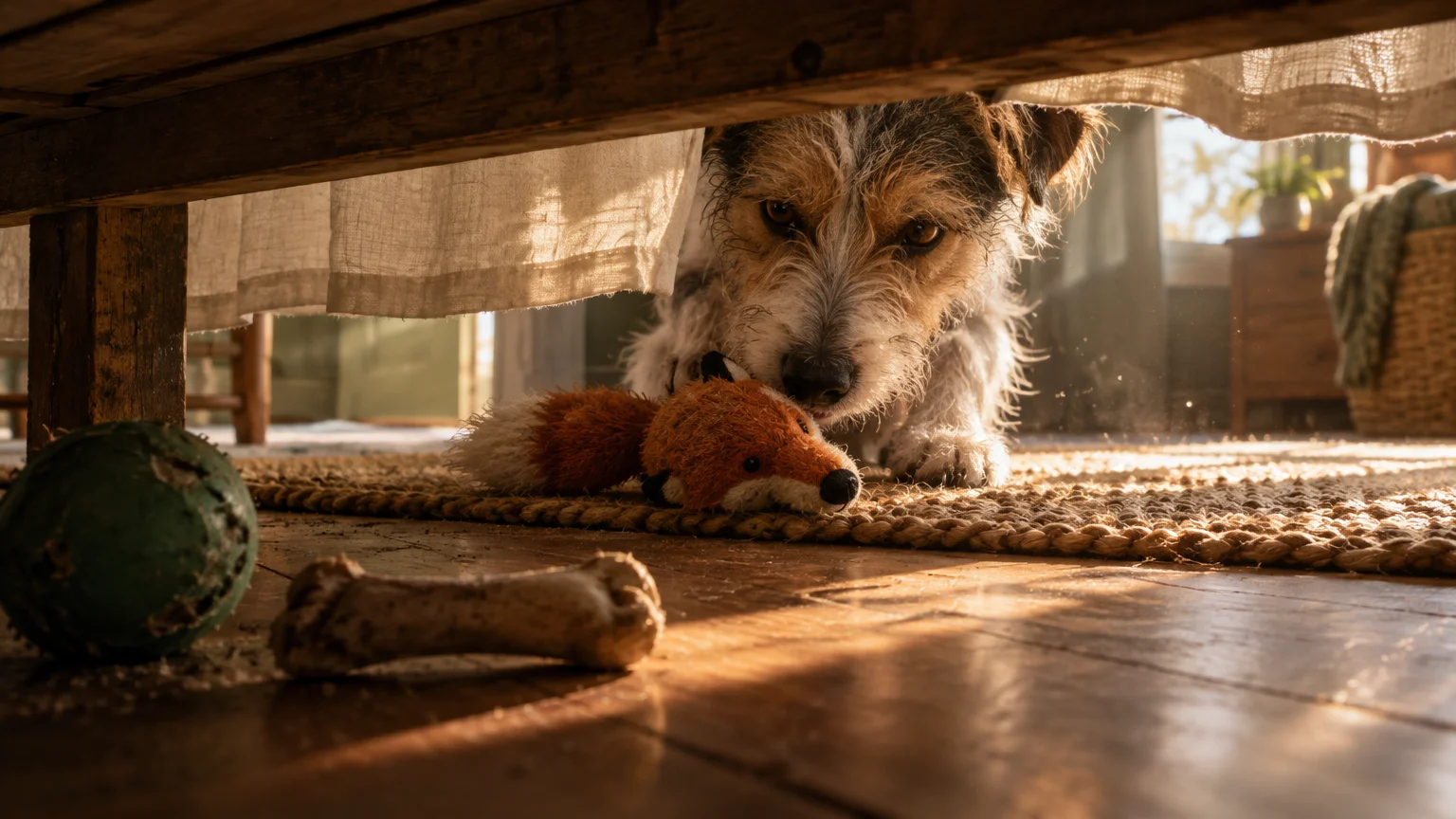
You reach between sofa cushions and discover a damp tennis ball pressed against a squeaky duck. Dogs hide toys to satisfy ancient survival urges, manage emotional stress, or invite you to play.
While finding treasures in your laundry basket feels amusing, this routine offers a clear window into dog behavior. It reveals how your pet processes security, resource value, and daily mental stimulation.
Learning the instincts behind dog hiding things helps you distinguish between harmless fun and stress. Understanding dog behavior also makes it easier to redirect destructive digging habits.
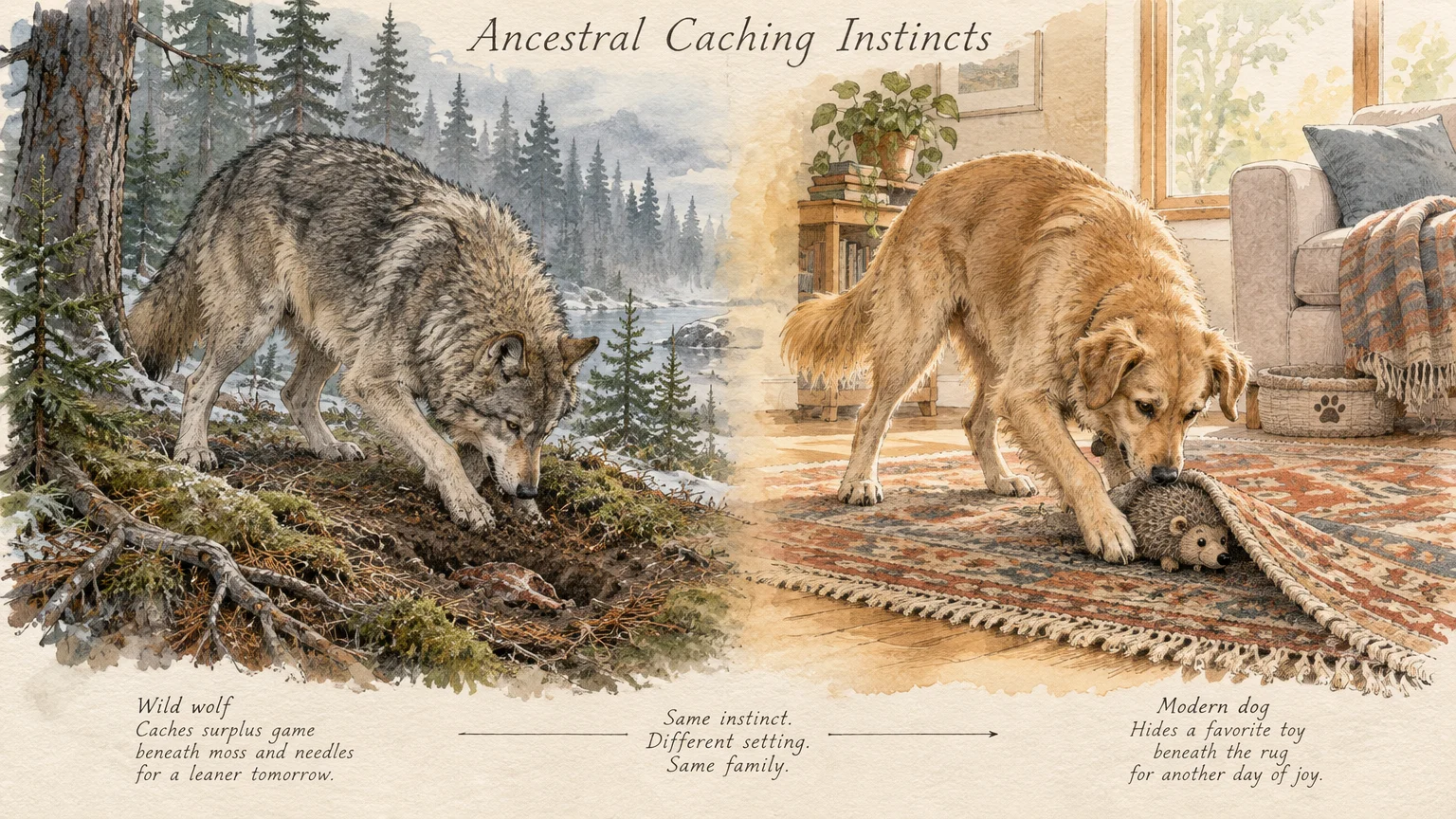
01 Ancestral Caching and Survival Instincts
Modern domesticated canines descend from wild ancestors who faced frequent feast-or-famine cycles. When hunting yielded surplus game, wolves and wild dogs buried carcasses underground to preserve meat and deter scavengers.
Zoologists call this survival mechanism “caching.” Burying food masked its scent from competitors and kept the surplus cool in the earth.
According to the American Kennel Club, your dog retains these ancient canine instincts despite receiving regular meals in a bowl.
A prized rubber ball or plush hedgehog triggers that same biological blueprint. Your dog perceives the item as valuable booty that warrants safekeeping for a lean day.
02 High-Value Resource Guarding
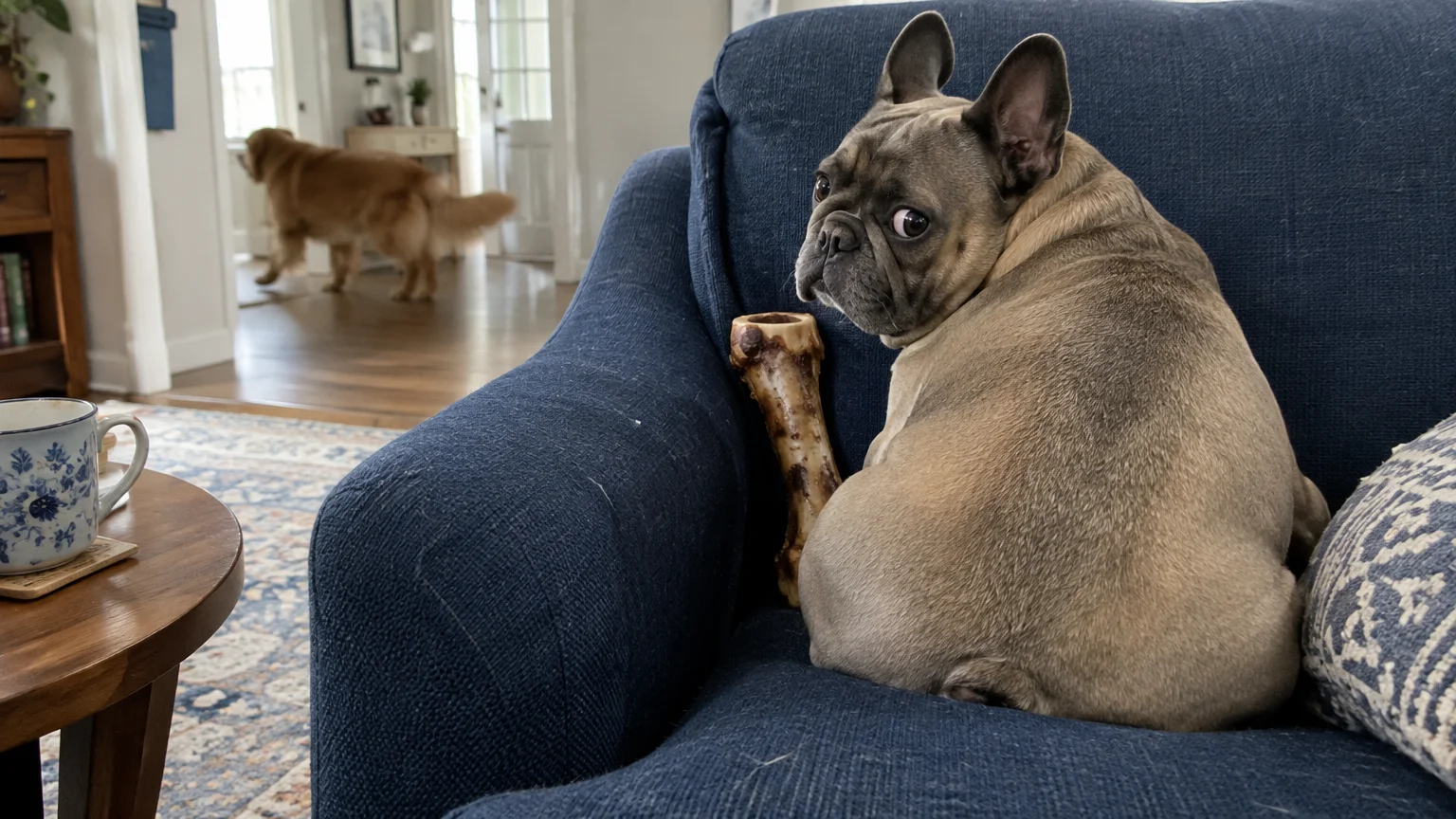
Dogs assign varying degrees of worth to their possessions. A regular tennis ball might hold casual interest, while a marrow bone or brand-new squeaker toy represents royal treasure.
When an item carries immense perceived value, dogs often stash it in secluded spots. They choose areas behind armchairs, under beds, or beneath blankets where household rivals cannot reach.
The ASPCA explains that resource guarding stems from a natural drive to protect vital assets from potential competitors.
Hiding an object serves as a peaceful, preemptive defense mechanism. By tucking the prize away, your dog avoids having to defend it directly with growls or body blocks.
03 Seeking Attention and Initiating Play
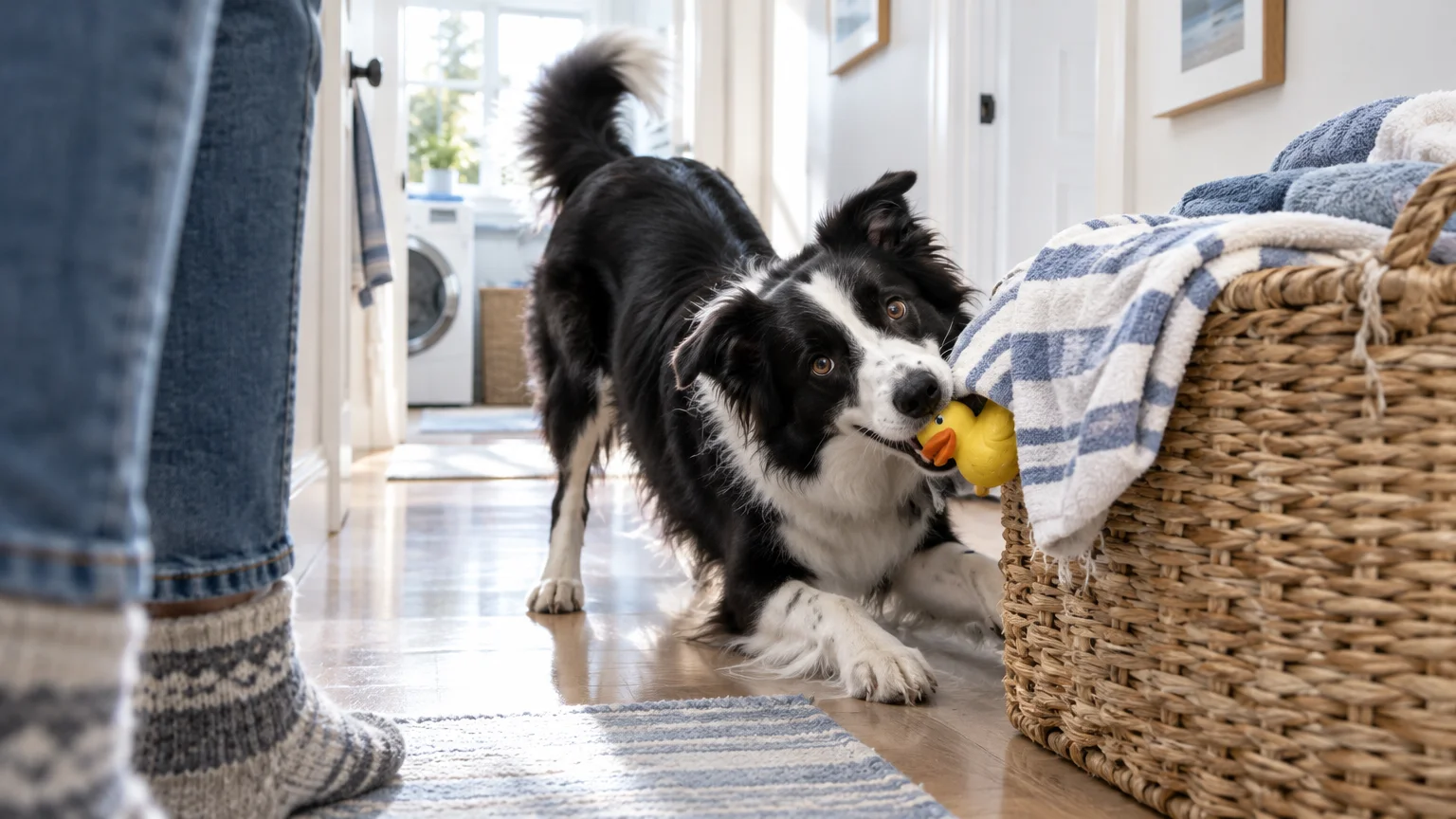
Sometimes your dog hides an object solely to elicit a reaction from you. Smart dogs quickly learn which human belongings or playthings cause you to drop your phone and jump into action.
If your pup parades past you with a forbidden squeaker before tucking it beneath a pillow, you are watching an invitation to play.
They hide the item, look directly into your eyes, and anticipate a spirited round of keep-away. In their mind, the hiding spot functions as the opening move in an interactive game.
04 Boredom and Mental Understimulation
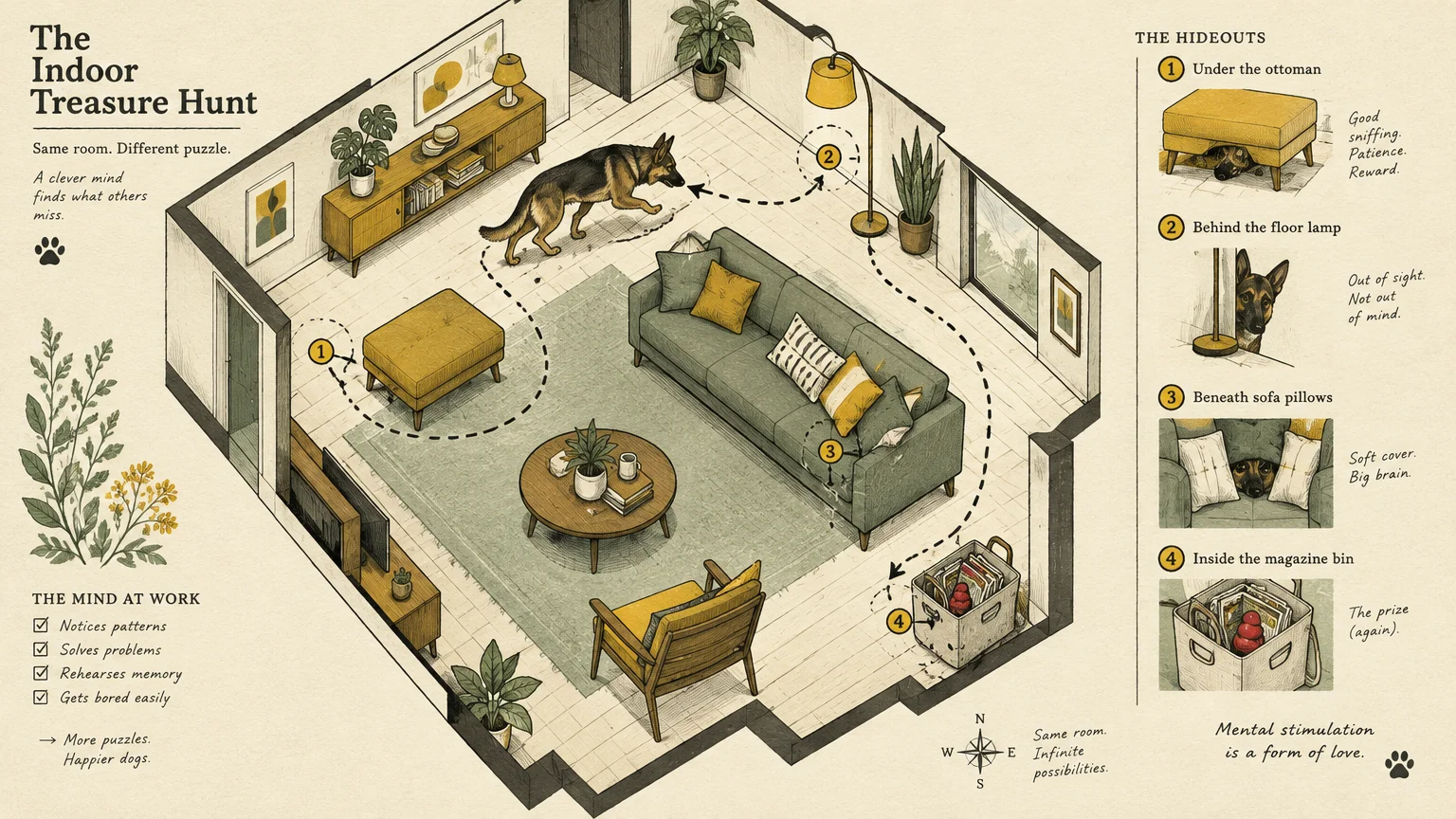
Canines need mental workouts just as much as physical exercise. Without adequate cognitive challenges, intelligent dogs create their own jobs to pass the hours.
Hiding a favorite toy and hunting for it later provides a self-directed puzzle. This solitary treasure hunt engages their powerful sense of smell and burns excess mental energy.
Working breeds like Border Collies and German Shepherds often display this behavior when their daily schedule lacks structured enrichment.
If your pet repeatedly caches items during quiet afternoons, their daily routine likely requires additional mental stimulation.
05 Environmental Stress and Anxiety
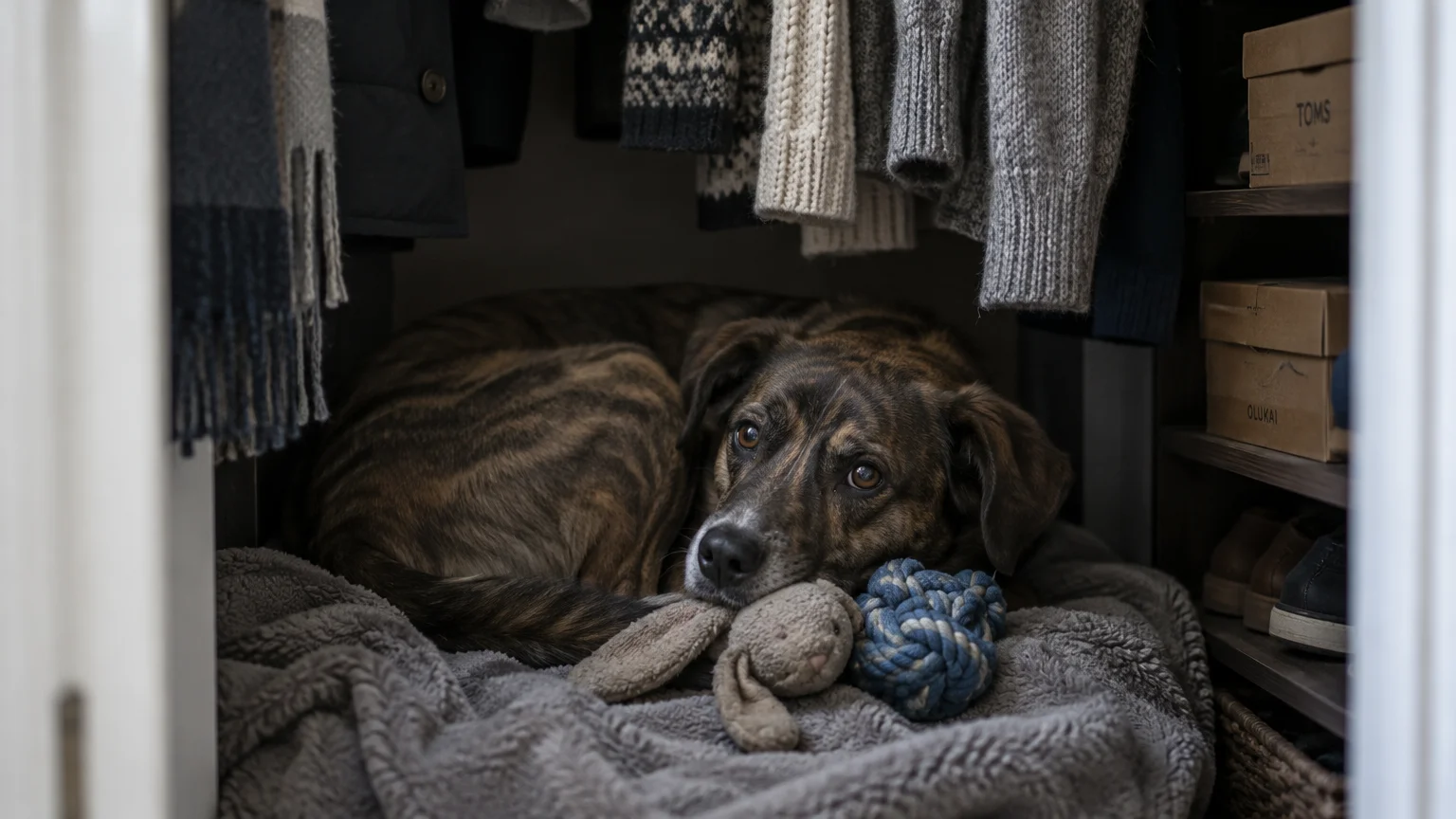
Significant lifestyle changes frequently disrupt a dog’s sense of security. Events such as moving to a new home, hosting houseguests, or welcoming a new pet can trigger subtle anxiety.
Under stressful conditions, dogs gather prized items and conceal them in spaces where they feel most secure. Hoarding toys in your bedroom closet creates a comforting buffer against outside chaos.
Shelter rescues and newly adopted dogs frequently hoard items during their initial transitional weeks. Gathering resources helps them build a sense of stability while learning the rules of their new environment.
06 Breed-Specific Working Drives
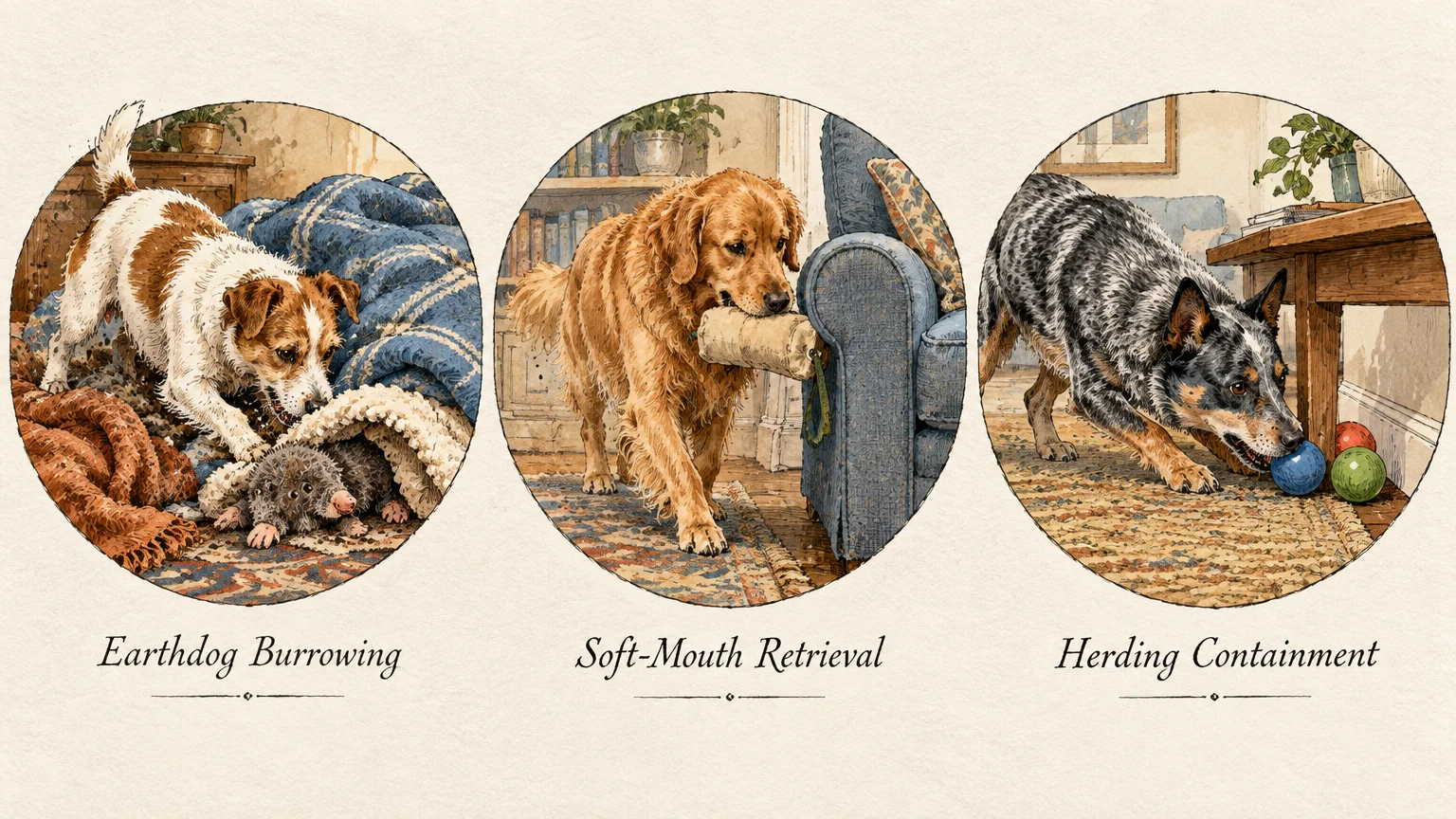
Certain dog breeds carry a genetic inclination to dig, burrow, and stash items. Humans deliberately bred terriers and Dachshunds for generations to pursue badgers, rodents, and foxes down tight subterranean tunnels.
These earthdogs possess an innate compulsion to bury objects and tunnel beneath rugs, laundry piles, and couch cushions.
Similarly, sporting and retrieving breeds love collecting and carrying objects in their mouths. A Golden Retriever or Cocker Spaniel may carefully deposit soft plushies into hidden nooks as part of their carrying heritage.
07 Satiation and Delayed Gratification
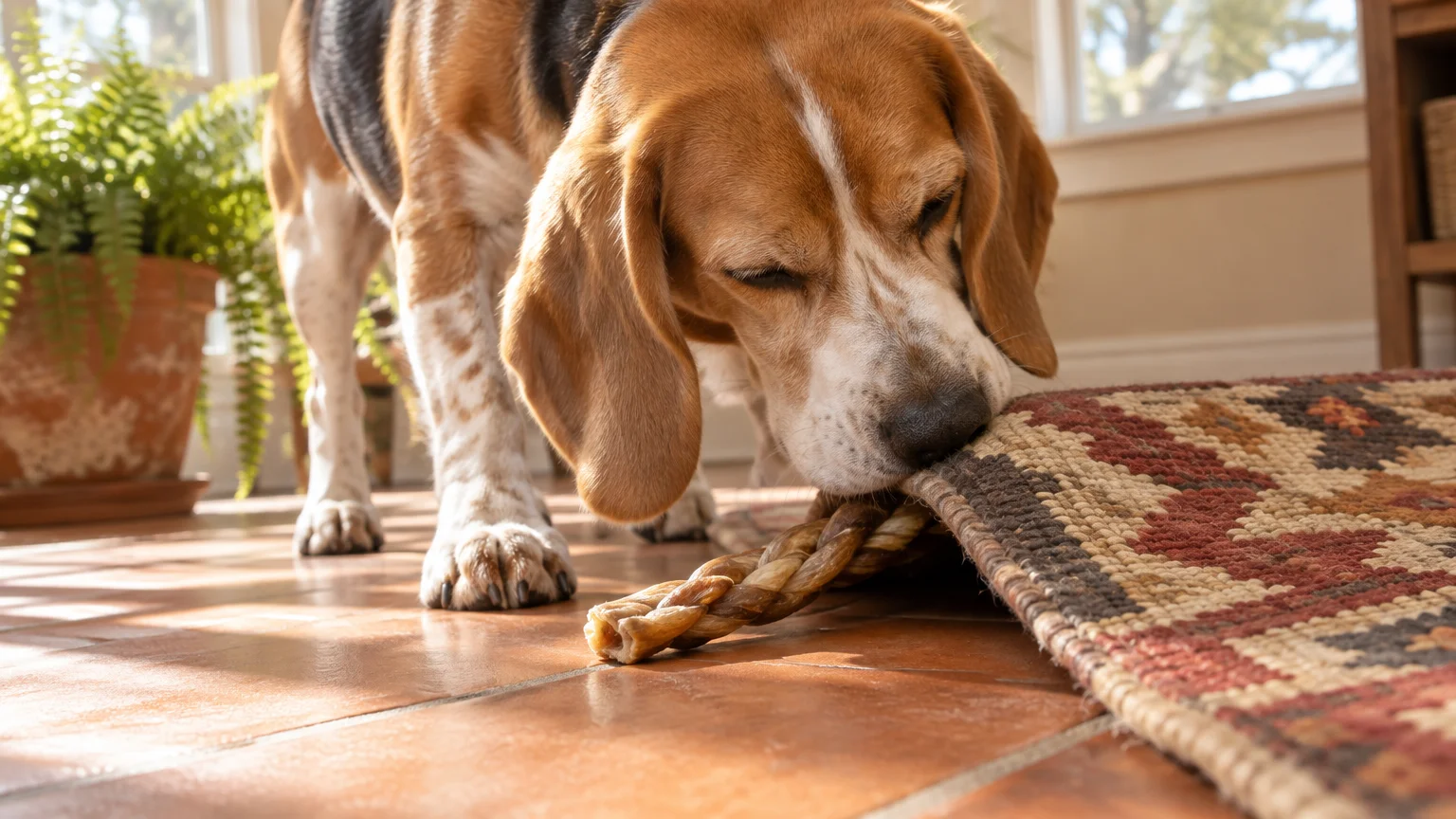
Dogs frequently bury food-dispensing toys, edible chews, or stuffed Kongs when their bellies are already full. If you offer a chew right after mealtime, your dog may feel too full to consume it immediately.
Rather than letting the prize sit out in the open, they store it away for later enjoyment. Dogs understand that left unattended, another pet or person might confiscate the treat.
They bury the prize in the backyard dirt or under a sofa cushion until their appetite returns hours or days later.

08 Hormonal Fluctuations and Maternal Nesting
Unspayed female dogs experiencing a heat cycle or false pregnancy often show distinct hoarding habits. Surging progesterone levels convince their body that they are preparing to nurse a litter of puppies.
These dogs carefully collect soft, squeaky toys and transport them to a secluded nest. They may tuck plush toys into bedding, lick them gently, and defend the cache from intrusion.
Neutered males and spayed females rarely exhibit true nesting drives, but deep maternal instincts occasionally persist in rescue dogs with prior litters.
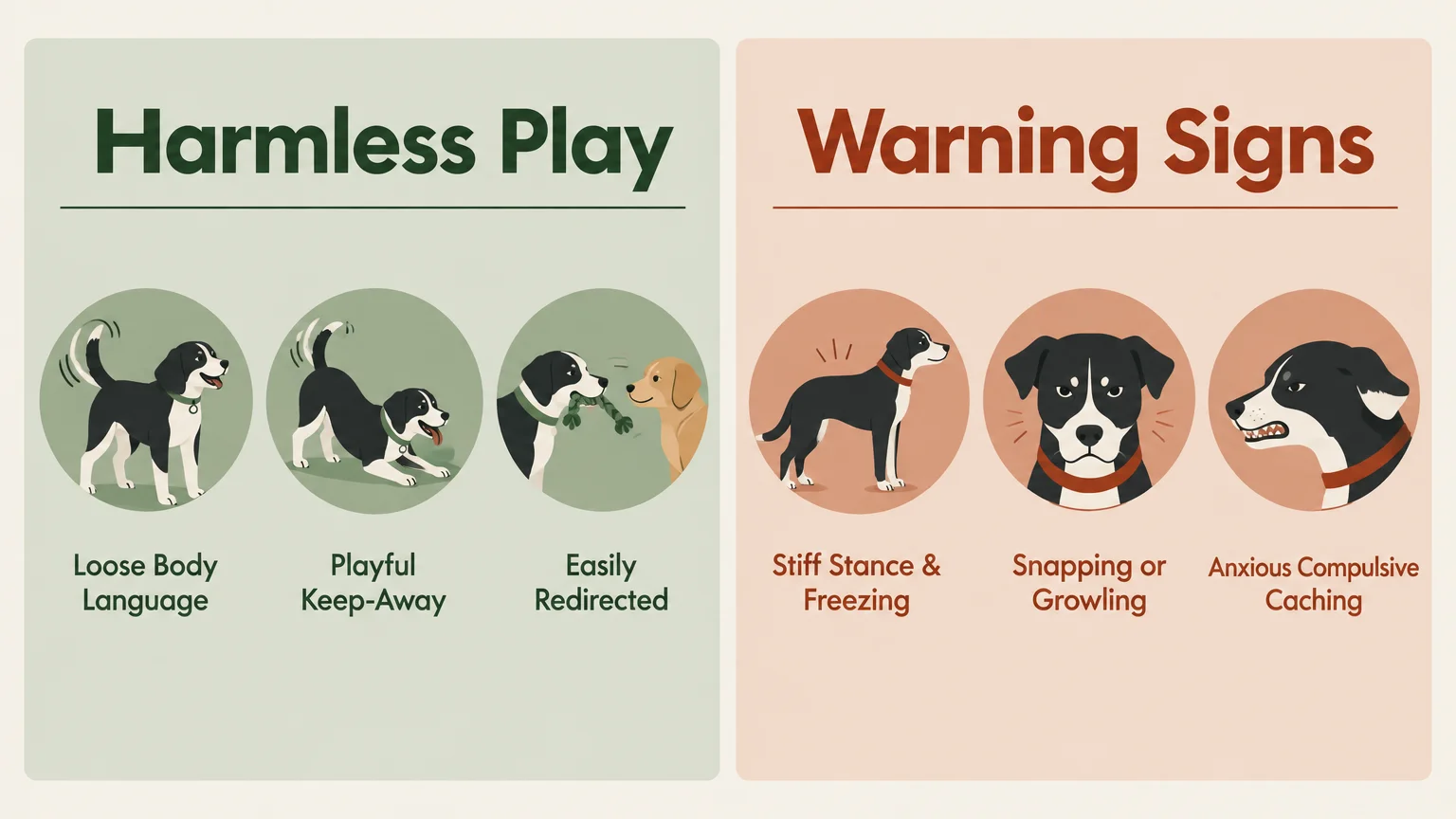
Comparing Hiding Behaviors: Harmless Play vs. Warning Signs
Evaluating your dog’s demeanor while caching reveals whether the habit is playful or rooted in distress. Consult this breakdown to understand the behavioral differences.
| Behavior Indicator | Benign & Playful Caching | Concerning Guarding or Stress |
|---|---|---|
| Body Language | Loose, wiggly posture with an alert, relaxed tail carriage. | Stiff posture, whites of the eyes showing (whale eye), tense jaw. |
| Reaction to Approach | Play bows, wagging tail, or inviting you to find the toy. | Freezing, low growling, lip curling, or hovering over the spot. |
| Object Condition | Intact toys gently tucked under blankets or behind pillows. | Frantic burying leading to shredded carpets, bloody paws, or broken nails. |
| Emotional State | Calm, playful, or cheerfully focused on a self-made game. | Restless pacing, frantic whining, and inability to settle down. |
VCA Animal Hospitals notes that early intervention prevents benign possession from evolving into hazardous guarding.
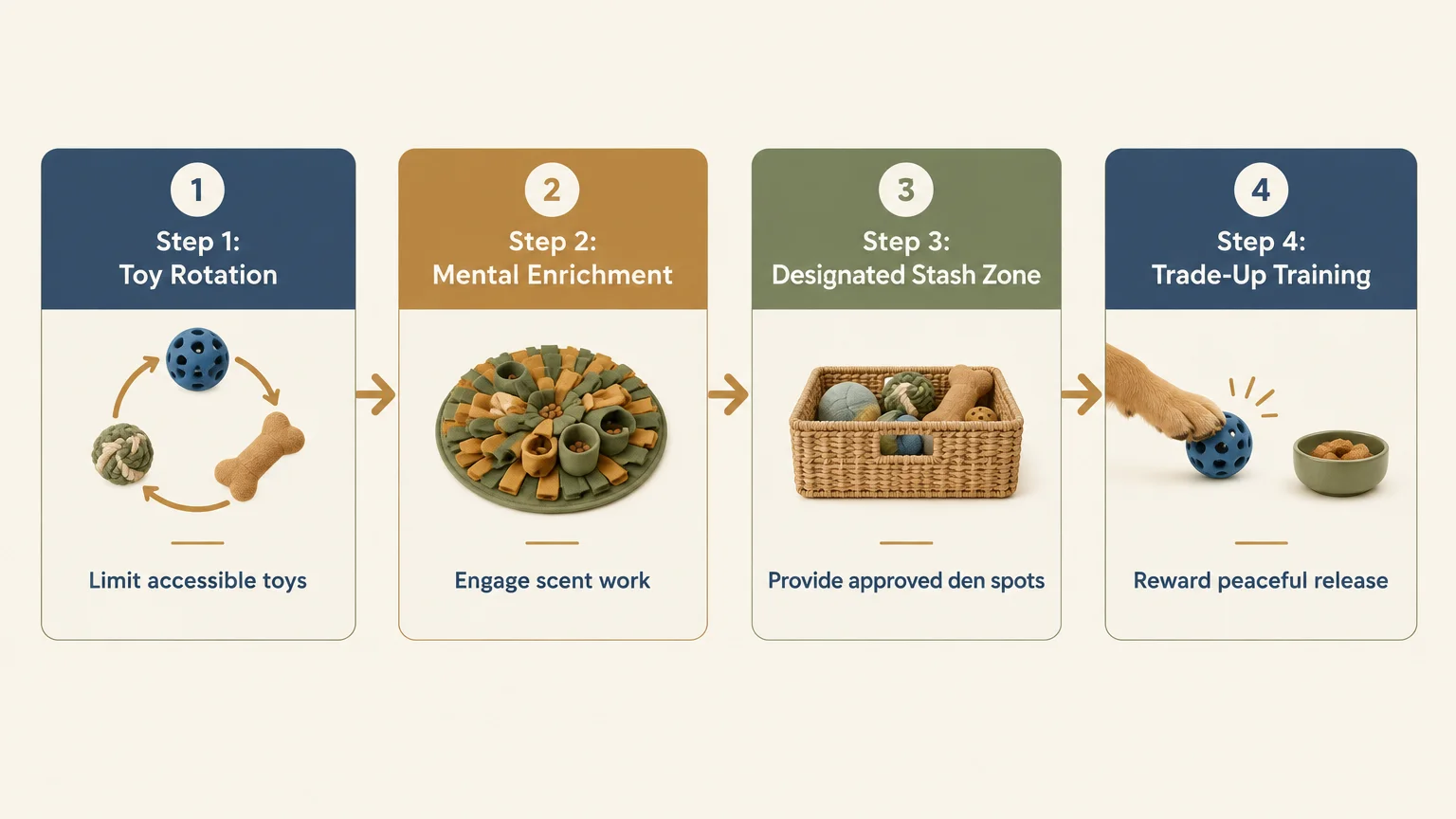
Practical Steps to Manage Toy Caching at Home
You do not need to eliminate natural hiding behaviors entirely if your dog remains relaxed and safe. However, implementing structured management keeps your home tidy and prevents unwanted property damage.
Adopt these practical strategies to satisfy your dog’s natural caching drive safely:
- Rotate toy availability: Keep only three or four toys out at a time, storing the rest in a closed bin. Rotating items weekly maintains high novelty and stops excessive hoarding.
- Provide safe digging alternatives: Build an indoor digging pit using a cardboard box filled with rolled fleece strips. Let your dog bury their rubber toys inside the box rather than clawing your sofa.
- Play the trading game: Never pry a hidden prize directly from your dog’s mouth. Offer a high-value treat in exchange so your dog associates your approach with rewards rather than theft.
- Expand cognitive stimulation: Introduce puzzle feeders, snuffle mats, and structured scent work. Engaging your dog’s brain through tracking games satisfies the urge to hunt and cache.
Consistency helps your dog feel secure while establishing clear boundaries around household furniture and personal possessions.
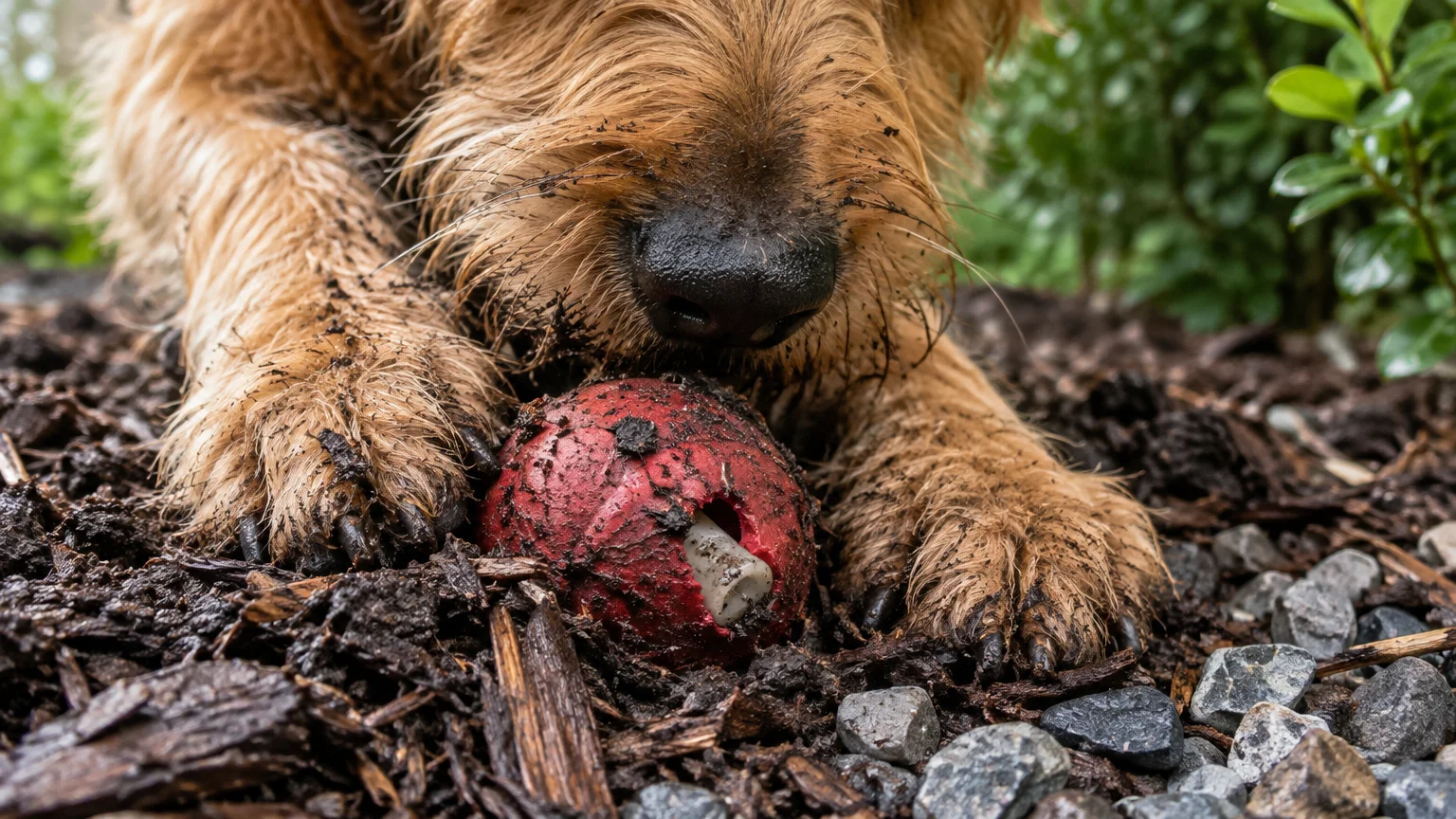
Things to Watch Out For
While stashing a favorite chew is generally harmless, specific caching scenarios require prompt owner intervention. Watch for these potential hazards in your home:
Ingesting foreign debris: Dogs that bury toys outdoors often excavate stones, toxic plants, or fertilizer alongside their treasure. Swallowing dirt or garden mulch can cause severe intestinal blockages.
Physical self-injury: Driven dogs will repeatedly rub their noses against carpet or furniture to push imaginary soil over their prize. This obsessive friction can cause raw abrasions, nasal ulcerations, and torn paw pads.
Decomposing food caches: If your dog hides raw bones, bully sticks, or fresh meat chews, forgotten treasures will spoil. Consuming rotting meat days later risks severe bacterial infection.
Escalating household aggression: Guarding hidden caches from other family pets or children can trigger dangerous fights. Any sign of lip curling or hard staring requires immediate behavioral management.

When DIY Isn’t Enough
Most toy-hiding quirks resolve with basic environmental enrichment and relaxed training routines. Nevertheless, certain behavioral shifts signal deeper clinical challenges that require outside support.
Seek guidance from a veterinarian or certified animal behaviorist under these circumstances:
Sudden behavioral shifts in senior dogs: If an older dog abruptly begins compulsively pacing and hoarding toys, schedule a medical exam. Cognitive Dysfunction Syndrome frequently manifests as obsessive caching or disorientation.
Severe barrier aggression or bite attempts: If your pet lunges or snaps when anyone approaches a hiding location, stop DIY corrections. Professional desensitization plans prevent accidental bites.
Compulsive repetitive disorders: Dogs that spend hours pacing, whining, and re-burying objects without settling may suffer from canine compulsive disorder. Medical therapy and specialized behavior plans offer relief.
Frequently Asked Questions
Why do dogs push imaginary dirt over toys with their noses?
Dogs use their noses to scoop imaginary earth because the ancestral motor pattern remains hardwired. Even on a smooth hardwood floor, the instinctual burying motion persists.
Should you dig up toys your dog hid?
Avoid excavating hidden toys right in front of your dog. Watching you remove their treasure can spark anxiety and intensify resource guarding.
Instead, wait until your dog leaves the room to retrieve items that pose a safety hazard.
Why does my dog whine while carrying a toy around?
Whining usually signals mild conflict or excitement when a dog cannot find a hiding spot that feels sufficiently secure. Provide a quiet blanket or crate to help them settle.
Do dogs remember where they hide their toys?
Dogs possess remarkable spatial memory and acute olfactory systems. Most dogs easily locate cached objects days later using scent markers and visual landmarks.
Understanding the evolutionary instincts and emotional cues behind your dog’s hiding habit brings peace of mind. By meeting your pet’s needs with engaging puzzles and safe spaces, you turn an eccentric quirk into an enriching bonding experience.
This article provides general information only. Every reader’s situation is different—what works for others may not be the right fit for you.
For personalized guidance on health, legal, or financial matters, consult a qualified professional.
Last updated: May 2026. Rules, prices, and details change—verify current information with official sources before acting on it.