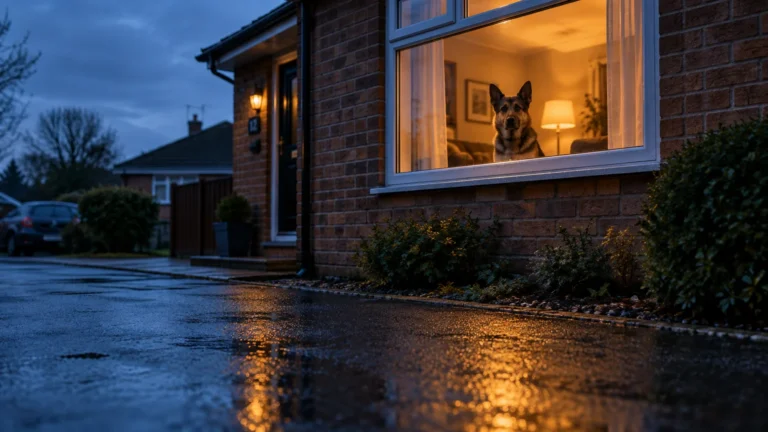
Dogs detect subtle shifts in household emotional energy long before family members raise their voices. Your canine companion decodes domestic friction through sudden changes in posture, vocal pitch, and scent cues.
When stress simmers behind closed doors, dogs absorb that psychological pressure through emotional contagion. Because they cannot articulate their worry out loud, they rely on distinct physiological and behavioral signals.
Identifying these nine common canine behaviors helps you pinpoint when domestic conflict affects your dog, allowing you to offer comfort when they need it most.
The Essentials: Household Tension at a Glance
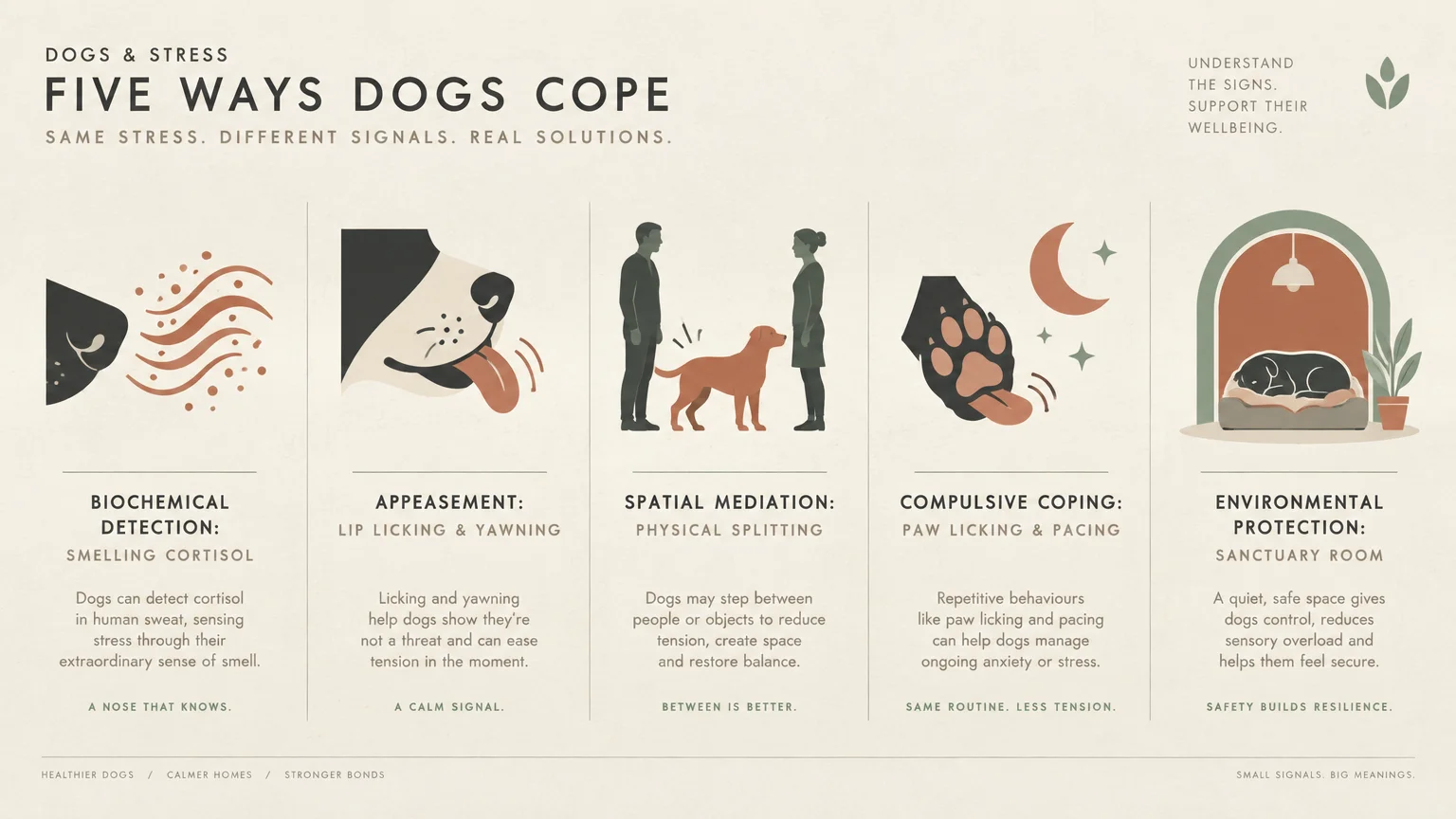
- Biochemical Detection: Dogs smell human cortisol and adrenaline spikes through exhaled breath and skin secretions within seconds.
- Appeasement Gestures: Early stress manifests as displacement behaviors, including lip licking and sudden yawning, long before dogs vocalize.
- Spatial Mediation: Many canines deliberately wedge their bodies between arguing family members to defuse perceived aggression.
- Compulsive Coping: Chronic household tension often drives self-soothing habits such as repetitive paw licking or nocturnal pacing.
- Environmental Protection: Establishing a quiet, predictable sanctuary room helps your pet decompress whenever interpersonal friction escalates.
The Science of How Dogs Sense Human Conflict
Dogs possess an extraordinary sensory apparatus that registers human biological distress within fractions of a second. They do not merely watch our actions; they absorb our internal biochemical shifts.
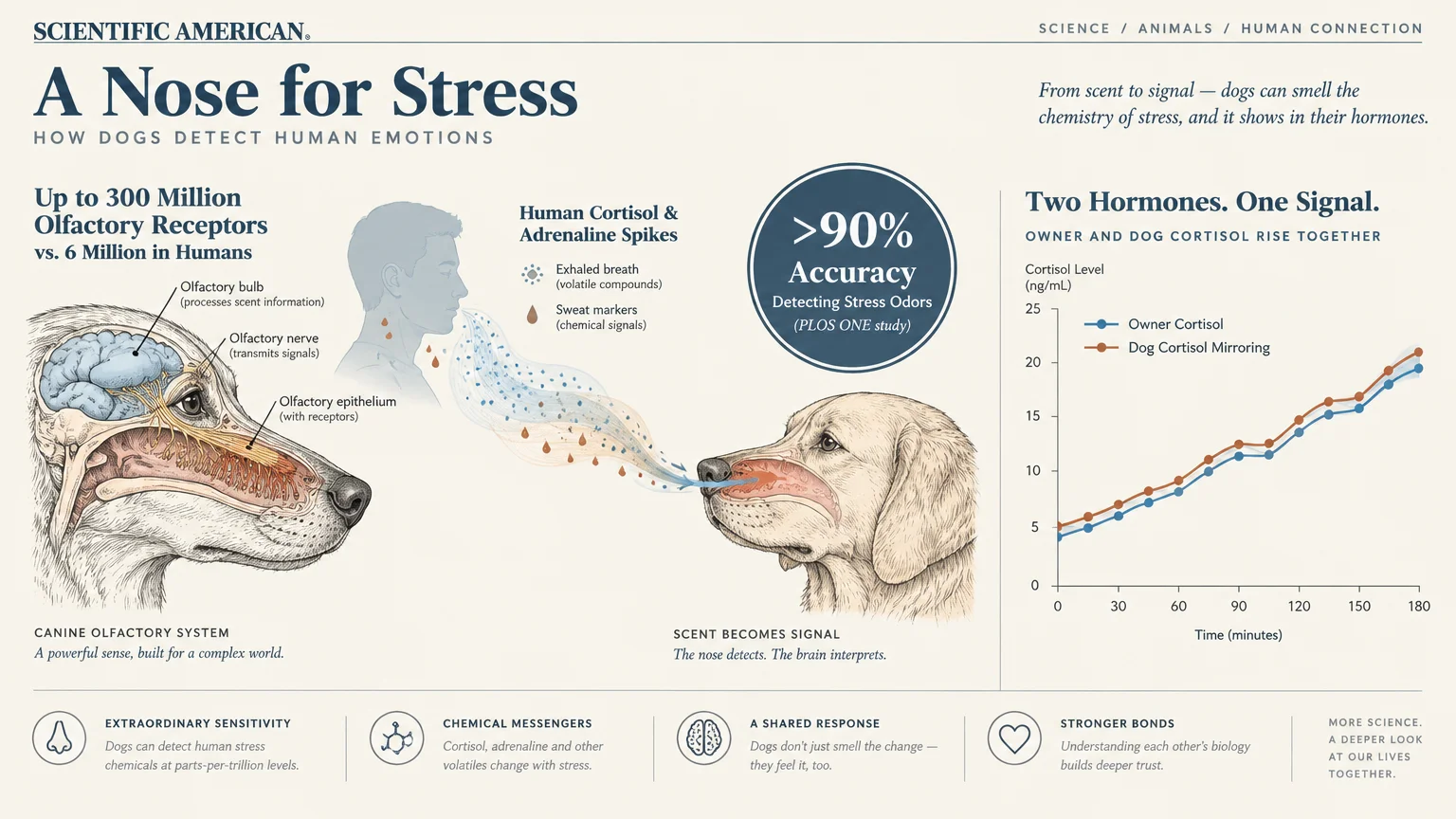
According to research published in Scientific Reports, dogs synchronize their cortisol levels with their owners over extended periods. When your chronic stress spikes, your dog’s adrenal glands mirror that exact hormonal elevation.
Olfactory perception plays an equally profound role in detecting conflict. Canines possess up to 300 million olfactory receptors in their noses, compared to roughly six million in humans.
A study published in PLOS ONE demonstrates that dogs accurately detect human stress odors from breath and sweat samples with over 90 percent accuracy. Your dog literally smells the adrenaline coursing through your body during an argument.
Acoustic sensitivities compound these chemical alerts. Dogs register micro-fluctuations in vocal frequencies, interpreting clipped speech and heavy silences as immediate signs of instability.
Dogs are conflict-solving animals. In a social group, conflict is dangerous, so they develop subtle calming signals to defuse hostility and restore safety.
9 Dog Behaviors That Signal Household Tension
1. Frequent Lip Licking and Rapid Nose Flicks
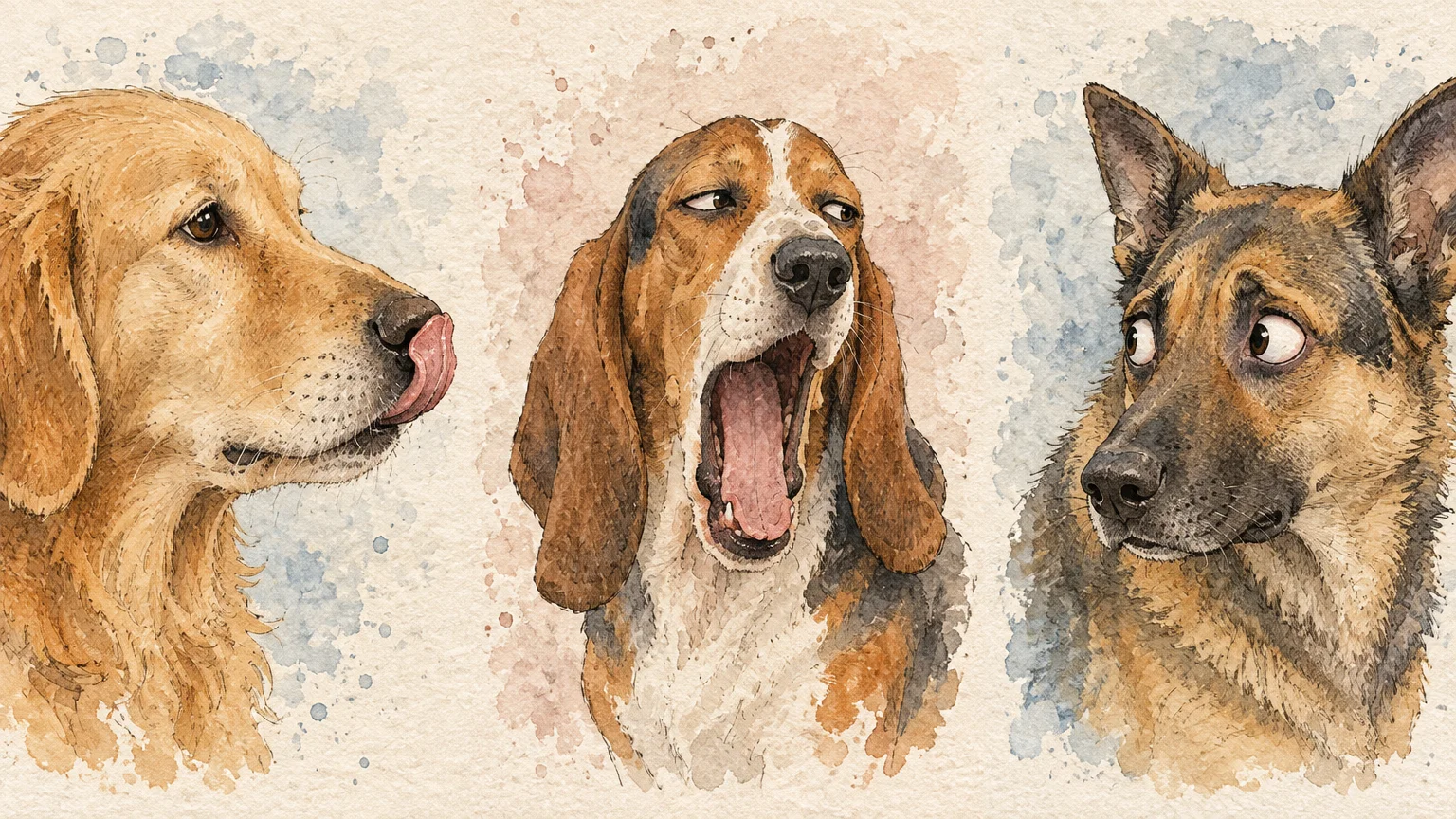
A dog that licks its lips when food is nowhere in sight is usually displaying an appeasement signal. Canines use this involuntary micro-movement to calm themselves and disarm perceived hostility in their social circle.
During domestic arguments, you may notice your dog flicking its tongue rapidly toward its nose. This quick, darting movement signals internal discomfort long before more obvious signs of panic emerge.
2. Displacement Yawning
While dogs yawn when waking from sleep, context dictates whether a yawn represents fatigue or stress. A yawn triggered during an awkward silence or heated conversation is almost always an anxiety response.
Displacement yawning helps a dog regulate its own autonomic nervous system by lowering elevated blood pressure. When your dog yawns while glancing between two people, they are actively attempting to self-soothe.
3. Whale Eye (Sclera Exposure)
Whale eye occurs when a dog turns its head away while keeping its eyes fixed on the perceived threat. This posture reveals the white sclera of the eye in a distinct, tense crescent shape.
Canines avoid direct eye contact during social volatility because prolonged staring signifies aggression in canine communication. By showing whale eye, your dog signals apprehension while avoiding a confrontational direct stare.
4. Physical Triangulation or “Splitting”
Many dogs instinctively insert their physical bodies between two standing people who are arguing. Known in canine ethology as “splitting,” this behavior represents a deliberate intervention to break up confrontational spatial dynamics.
Your dog might wedge their head between your knees, jump up gently, or force their way into the physical space. They are not taking sides; they are actively attempting to diffuse social hostility.
5. Sudden “Velcro” Clinginess
Anxious dogs often seek intense, unrelenting physical proximity during domestic turmoil. Your companion may lean heavily against your shins, press against your side, or follow you into every room.
This hyper-attachment stems from an acute desire for security in an emotionally unpredictable environment. The dog seeks reassurance from you while keeping close tabs on fluctuating household dynamics.
6. Restless Pacing and Hypervigilance
When emotional friction permeates the living room, a stressed dog struggles to find physical rest. They may lie down for twenty seconds, sigh heavily, stand back up, and pace toward the door.
This pacing demonstrates a state of high physiological arousal. The animal’s nervous system remains on alert, scanning the environment for unpredictable shifts in human behavior.
7. Compulsive Paw Licking and Over-Grooming
Repetitive self-grooming behaviors often accelerate when household tension becomes a chronic pattern. Dogs frequently lick their front paws or flank until the fur turns discolored and damp.
As veterinary resources from VCA Animal Hospitals explain, repetitive grooming stimulates endorphin release to counter persistent anxiety. Left unaddressed, this coping mechanism can spiral into painful lick granulomas and secondary skin infections.
8. Retreating to Isolated Hiding Spots
Some canines respond to social friction through avoidance rather than active intervention. Your dog may slink away to hide under beds, behind couches, or inside dimly lit closets.
This flight response signals that the ambient emotional noise has overwhelmed the dog’s coping capacity. Forcing an animal out of its chosen sanctuary during an argument will only exacerbate their distress.
9. Vocal Grumbling, Whining, or Alarm Barking
Verbal domestic friction frequently triggers vocal protests from resident pets. Dogs may emit high-pitched whines, low throaty grumbles, or sharp, explosive barks directed at arguing family members.
These vocalizations express acute auditory and emotional overload. Your dog is communicating that the volume, pitch, and harsh tone of the environment feel deeply unsafe.
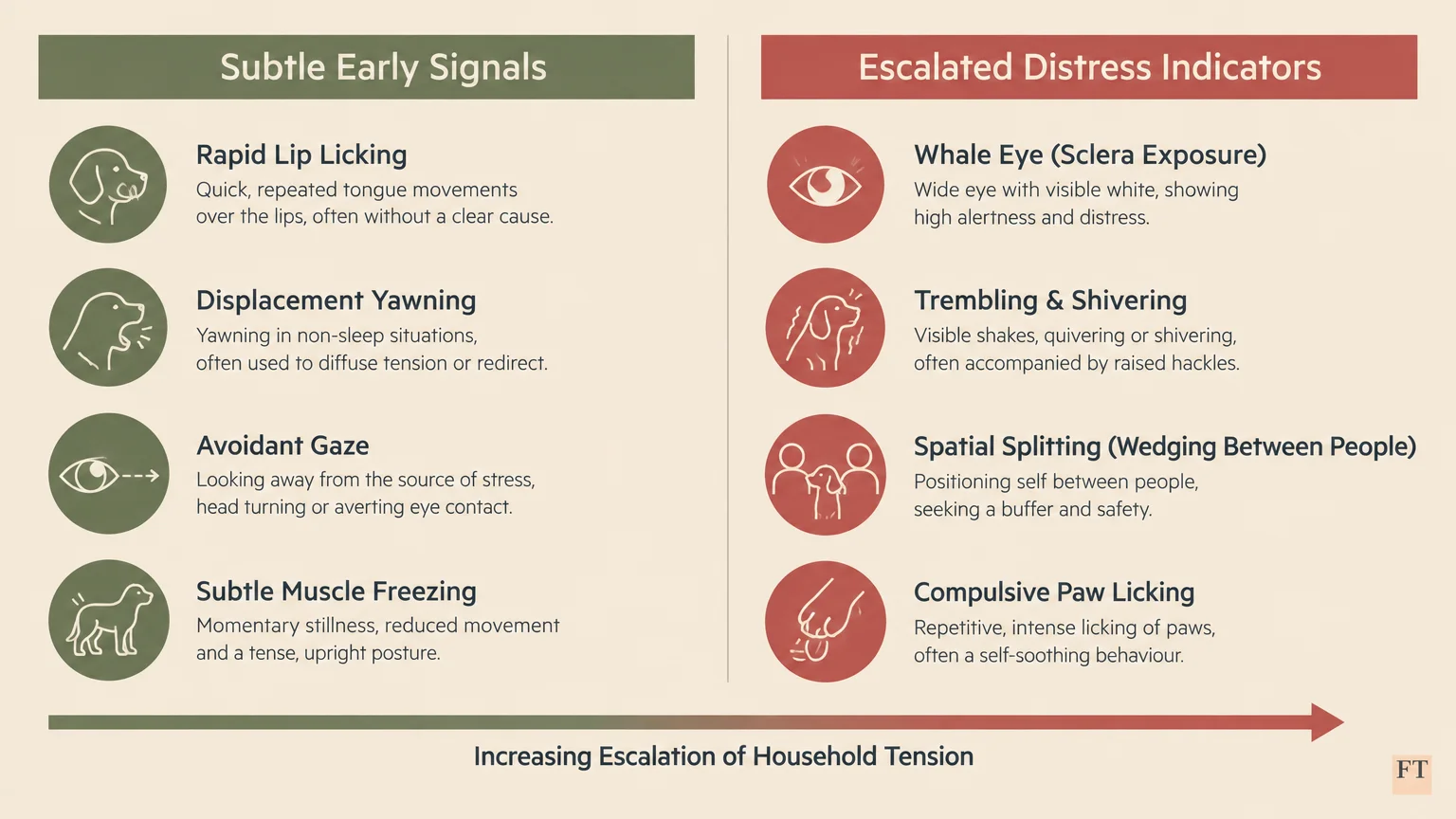
Dog Stress Signs: Subtle vs. Escalated Indicators
Monitoring your dog’s behavioral shifts helps you determine whether they are experiencing mild unease or severe emotional overload. Use this reference table to evaluate their current stress level.
| Stress Category | Primary Behavioral Signs | Underlying Canine Motivation | Recommended Human Action |
|---|---|---|---|
| Mild Appeasement | Lip licking, displacement yawning, sniffing the ground | Attempting to self-soothe and prevent social conflict | Lower vocal volume; soften body language immediately |
| Moderate Anxiety | Whale eye, clinginess, trembling, low-tail carriage | Seeking safety and monitoring unpredictable threats | Direct dog to a quiet room; provide a calming chew |
| Active Intervention | Splitting between humans, nudging hands, jumping up | Physically breaking up aggressive human posturing | Cease argument; separate physically to reassure pet |
| Acute Overload | Alarm barking, pacing, hiding under furniture, vomiting | Total failure of coping mechanisms; flight-or-fight response | Remove dog from the environment entirely; restore quiet |

Actionable Ways to Protect Your Dog During Household Conflict
Protecting your dog’s emotional equilibrium requires deliberate, calm intervention. By implementing practical safeguards, you can prevent domestic stress from compromising your pet’s health and happiness.
Establish a Dedicated Safe Haven
Set up a secure retreat in a quiet bedroom far from central family gathering areas. Furnish this space with an orthopedic bed, a soft crate, and clothing carrying your familiar scent.
Equip the room with a white noise machine or soothing classical music to mask elevated voices. Make this room a designated sanctuary where conflict never enters.
Maintain Strict Daily Predictability
During turbulent family periods, consistency becomes your dog’s greatest anchor. Feed meals, administer medications, and conduct walks at the exact same hours every single day.
Predictable schedules provide dogs with a psychological safety net. Knowing when life’s basic events will happen offsets the unpredictability of human emotional storms.
Offer Calming Chewing and Foraging Outlets
Chewing and licking naturally stimulate the canine parasympathetic nervous system, lowering heart rates. Provide long-lasting natural chews, frozen peanut-butter-stuffed rubber toys, or intricate snuffle mats during tense evenings.
Engaging your dog’s foraging instincts redirects their cognitive focus away from environmental turmoil. This constructive distraction replaces fearful hypervigilance with rewarding mental work.
Take Heated Conversations Off-Site
When difficult family discussions are unavoidable, relocate them away from your pet’s living space. Step into an outdoor patio, take a walk without the dog, or discuss matters outside the house.
Shielding your dog from intense verbal exchanges prevents acute stress responses from hardening into chronic behavioral neuroses. Your companion deserves a home environment defined by peace and stability.
Worth Keeping in Mind: Common Human Missteps
Even well-intentioned pet owners frequently make critical errors when managing pets during domestic stress. Avoid these four common traps to safeguard your dog’s emotional health.
1. Punishing Appeasement Behaviors
Scolding a dog for whining or jumping between arguing people damages trust significantly. The dog is attempting to establish peace, not misbehave; reprimanding them amplifies their terror.
2. Assuming Silent Hostility Goes Unnoticed
Many owners believe that giving each other the silent treatment protects their pets from stress. In reality, stiff posturing, avoided eye contact, and stress pheromones communicate friction just as loudly as yelling.
3. Over-Coddling Panic States
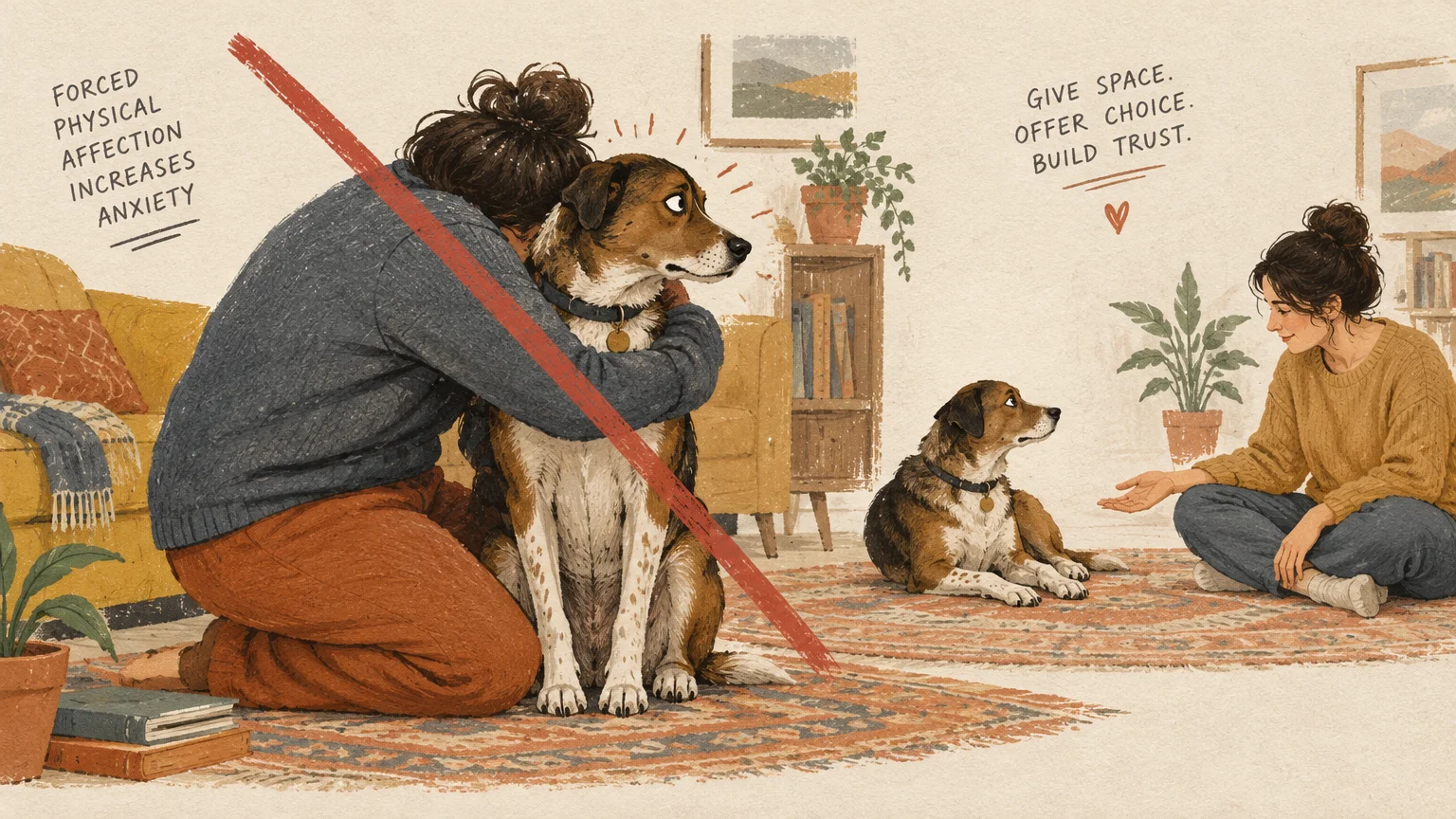
Suffocating a terrified dog with frantic hugs and anxious cooing can inadvertently escalate their arousal. Instead, project grounded, calm leadership through a relaxed posture and gentle, measured tones.
4. Overlooking Secondhand Stress from Children
Teenagers and young children also generate substantial emotional friction during school or social distress. Dogs register a child’s weeping or frustrated outbursts with the same acute intensity as parental conflict.

When to Get Professional Help
Occasional domestic disagreements happen in every home, but chronic dysfunction can cause lasting psychological injury to your pet. Watch for these distinct scenarios that require specialized professional intervention.
Persistent Gastrointestinal Distress
If your dog develops chronic diarrhea, frequent vomiting, or total food refusal coinciding with household tension, visit your veterinarian promptly. Stress alters gut motility and microbiome balance, often triggering acute colitis that requires prescription medical intervention.
Emergence of Redirected Aggression
Contact a board-certified veterinary behaviorist immediately if your dog begins growling, snapping, or lunging at family members during conflicts. Elevated arousal can cause a fearful animal to redirect defensive aggression toward anyone within arm’s reach.
Severe Stereotypic Self-Mutilation
Compulsive behaviors such as relentless flank sucking, tail chasing, or raw skin gnawing demand veterinary attention. These repetitive stereotypic habits indicate severe neurochemical distress that often necessitates behavioral medication alongside environmental modification.
Frequently Asked Questions
Can dogs sense when their owners argue in silence?
Yes, dogs detect silent conflict effortlessly. They read microscopic muscle contractions, stiff postures, avoided eye contact, and chemical stress pheromones excreted through human sweat.
Why does my dog bark whenever family members raise their voices?
Your dog barks because elevated vocal volumes signal an imminent territorial or social threat. The barking is an urgent vocal plea to stop the hostility and re-establish safety.
How long does it take for a dog to recover after a household argument?
A dog’s physiological cortisol levels can remain elevated for two to four hours after a loud dispute. Providing a quiet space, fresh water, and a long chew toy helps shorten this recovery window.
Can chronic household tension shorten a dog’s lifespan?
Prolonged exposure to elevated cortisol weakens a dog’s immune system, impairs organ function, and accelerates biological aging. Maintaining a calm, stable home environment directly supports your dog’s long-term longevity.
Recognizing the earliest behavioral signs of stress empowers you to protect your dog whenever domestic pressures mount. By stepping back, lowering your voice, and offering a dependable safe haven, you ensure your companion stays secure no matter what challenges arise.
This article provides general information only. Every reader’s situation is different—what works for others may not be the right fit for you.
For personalized guidance on health, legal, or financial matters, consult a qualified professional.
Last updated: May 2026. Rules, prices, and details change—verify current information with official sources before acting on it.